Showing posts with label Pentecost 2024. Show all posts

03 July 2024

Daily prayer in Ordinary Time 2024:
55, Wednesday 3 July 2024

The icon of Pentecost in the new iconostasis in the Greek Orthodox Church in Stony Stratford (Photograph: Patrick Comerford, 2024)

Patrick Comerford

This week began with the Fifth Sunday after Trinity (Trinity V). The Calendar of the Church of England today commemorates Saint Thomas the Apostle (3 July), whose faith was described in my reflection on an icon in this prayer diary yesterday. But, before today begins, I am taking some quiet time this morning to give thanks, for reflection, prayer and reading in these ways:

1, today’s Gospel reading;

2, a reflection on the icons in the new iconostasis or icon stand in the Greek Orthodox Church in Stony Stratford.

3, a prayer from the USPG prayer diary;

4, the Collects and Post-Communion prayer of the day.

The icon depicting the Pentecost is ninth from the left among the 12 feasts depicted in the upper tier of the new iconostasis in Stony Stratford (Photograph: Patrick Comerford, 2024; click on images to view full screen)

John 20: 29-27 (NRSVUE):

24 But Thomas (who was called the Twin), one of the twelve, was not with them when Jesus came. 25 So the other disciples told him, “We have seen the Lord.” But he said to them, “Unless I see the mark of the nails in his hands and put my finger in the mark of the nails and my hand in his side, I will not believe.”

26 A week later his disciples were again in the house, and Thomas was with them. Although the doors were shut, Jesus came and stood among them and said, “Peace be with you.” 27 Then he said to Thomas, “Put your finger here and see my hands. Reach out your hand and put it in my side. Do not doubt but believe.” 28 Thomas answered him, “My Lord and my God!” 29 Jesus said to him, “Have you believed because you have seen me? Blessed are those who have not seen and yet have come to believe.”

A detail in the icon of Pentecost in the iconostasis in the Greek Orthodox Church in Stony Stratford (Photograph: Patrick Comerford, 2024)

The Stony Stratford iconostasis 18: Pentecost (Πεντηκοστή):

In recent weeks, I have been watching the building and installation of the new iconostasis or icon screen in the Greek Orthodox Church in Stony Stratford. In my prayer diary over these weeks, I am reflecting on this new iconostasis, and the theological meaning and liturgical significance of its icons and decorations.

The lower, first tier of a traditional iconostasis is sometimes called Sovereign. On the right side of the Beautiful Gates or Royal Doors facing forward is an icon of Christ, often as the Pantokrator, representing his second coming, and on the left is an icon of the Theotokos (the Virgin Mary), symbolising the incarnation. It is another way of saying all things take place between Christ’s first coming and his second coming.

The six icons on the lower, first tier of the iconostasis in Stony Stratford depict Christ to the right of the Royal Doors, as seen from the nave of the church, and the Theotokos or the Virgin Mary to the left. All six icons depict (from left to right): the Dormition, Saint Stylianos, the Theotokos, Christ Pantocrator, Saint John the Baptist and Saint Ambrosios.

Traditionally, the upper tier has an icon of the Mystical Supper in the centre, with icons of the Twelve Great Feasts on either side, in two groups of six: the Nativity of the Theotokos (8 September), the Exaltation of the Cross (14 September), the Presentation of the Theotokos (21 November), the Nativity of Christ (25 December), the Baptism of Christ (6 January), the Presentation of Christ in the Temple (2 February), the Annunciation (25 March), the Entry into Jerusalem (Palm Sunday), the Ascension, Pentecost, the Transfiguration (6 August) and the Dormition (15 August).

In Stony Stratford, these 12 icons in the top tier, on either side of the icon of the Mystical Supper, are (from left): the Ascension, the Nativity, the Baptism of Christ, the Entry into Jerusalem on Palm Sunday, the Raising of Lazarus and the Crucifixion; and the Harrowing of Hell or the Resurrection, the Incredulity of Saint Thomas, Pentecost, the Transfiguration, the Presentation and the Annunciation.

The ninth in this top tier of 12 icons in Stony Stratford is the icon of Pentecost, or Πεντηκοστή.

The Day of Pentecost is the fiftieth day of the Easter seasonand celebrates the gift of the Holy Spirit to the Church, and the fulfilment of the promises of Easter. You could say it is the birthday of the Church.

The word Pentecost is Greek in its origins, and comes from the Koinē Greek πεντηκοστή (pentēkostē), which means literally ‘fiftieth’.

In the Septuagint, the Koine Greek translation of the Hebrew Bible, one of the meanings of Pentecost refers to the festival of Shavuot. It is celebrated on the fiftieth day after Passover, according to Deuteronomy 16: 10 and Exodus 34: 22, where it is referred to as the ‘Festival of Weeks’ or ἑορτὴν ἑβδομάδων (heortēn hebdomádōn).

The Septuagint uses the term πεντηκοστή (pentēkostē) in this context in both the Book of Tobit and II Maccabees. The translators of the Septuagint also use the word in two other senses: to signify the year of Jubilee (see Leviticus 25: 10), which falls every fiftieth year, and in several passages of chronology as an ordinal number. The term is also used in Hellenistic Jewish literature by Philo of Alexandria and Josephus to refer to the Festival of Shavuot.

The festival of Shavuot is one of the Three Pilgrimage Festivals in Judaism and is celebrated seven weeks and one day after the first day of Passover (see Deuteronomy 16: 9), or seven weeks and one day after the Sabbath (see Leviticus 23: 16). It is discussed in the Mishnah and the Babylonian Talmud, tractate Arakhin. The actual mention of 50 days comes from Leviticus 23: 16.

The Festival of Weeks is also known as the Feast of Harvest in Exodus 23: 16 and the Day of First Fruits in Numbers 28: 26. In Exodus 34: 22, it is called the ‘first fruits of the wheat harvest.’

At some time in the Hellenistic period, the ancient harvest festival also became a day of renewing the Noahic covenant, described in Genesis 9: 17, established between God and ‘all flesh that is upon the earth.’ After the destruction of the Temple in 70 CE, offerings could no longer be brought to the Temple in Jerusalem and the focus of the festival shifted from agriculture to the Israelites receiving the Torah.

By that time, many Jews were living in the Diaspora and were Greek-speaking. According to Acts 2: 5-11, there were Jews from ‘every nation under heaven’ in Jerusalem, possibly visiting the city as pilgrims during Pentecost.

The Pentecost narrative in Acts 2 includes numerous references to earlier biblical narratives such as the Tower of Babel, and the flood and creation narratives from Genesis. It also includes references to certain theophanies, particularly God’s presence on Mount Sinai when the Ten Commandments were given to Moses.

Some scholars identify the οἶκος (oikos, ‘house’) that was the location of Pentecost in Acts 2: 2 with one of the 30 halls of the Temple in Jerusalem. However, the text is lacking in specific details, and other scholars suggest that the author of Acts could have chosen the word ἱερόν (hieron, sanctuary, temple) if this meaning were intended, rather than ‘house.’ Some suggest that the ‘house’ could be the ‘upper room’ (ὑπερῷον, huperóon) mentioned in Acts 1: 12-26. But there is no literary evidence to confirm the location with certainty.

The events in Acts 2 are set against the backdrop of the celebration of Pentecost in Jerusalem. The author of Acts notes that the disciples ‘were all together in one place’ on the ‘day of Pentecost’ (ἡμέρα τῆς Πεντηκοστῆς, imera tis Pentekostes).

The gathered disciples were ‘filled with the Holy Spirit and began to speak in other languages, as the Spirit gave them ability.’

The languages are difficult to enumerate, but the vast majority of these people, including the Jews and proselytes living in the diaspora who have come to Jerusalem from Crete, Cappadocia, Pontus, Asia Minor, Phrygia, Pamphylia, Egypt, north Africa, and perhaps even Rome, may have been Greek speakers.

The largest Greek-speaking cities at the time were Alexandria and Ephesus, and at the time Latin was regarded as a vulgar language. Greek as a language had cultural prestige among the Roman upper class, and Saint Paul’s Letter to the Romans is written in Greek. It was not until after 200 CE that the Church in Rome produced documents in Latin, and the first Christian theologian to write in Latin was Tertullian, a North African, writing in the early 200s.

Orthodox Pentecost is celebrated in Greece seven weeks and a day (50 days) following Easter, and marks the end of the Easter cycle that began 92 days before with Orthodox Shrove Monday. This means Orthodox Pentecost usually fall in late May to mid-June in Greece, and the feast traditionally lasts for three days – on Sunday, Monday and Tuesday – and with a public holiday on the Monday.

This year, in the Greek Orthodox Calendar, the Day of Pentecost was celebrated on 23 June. Pentecost is one of the Great Christian Feasts of the year, being second in importance only to Pascha or Easter. It is celebrated with much fanfare in Greece, so much so that it seems like ‘a second Easter.’

Traditionally, the icon of the Feast of Pentecost is an icon of bold colours of red and gold signifying that this is a great event. The movement of the icon is from the top to the bottom. At the top of the icon is a semicircle with rays coming from it. The rays are pointing toward the Apostles, and the tongues of fire are seen descending upon each one of them signifying the descent of the Holy Spirit.

The building in the background of the icon represents the upper room where the Disciples of Christ gathered after the Ascension. The Apostles are shown seated in a semicircle which shows the unity of the Church. Included in the group of the Apostles is Saint Paul, who, though not present with the others on the day of Pentecost, became an Apostle of the Church and the greatest missionary.

Often the four Evangelists – Matthew, Mark, Luke, and John – are also included holding books of the Gospel, while the other Apostles are holding scrolls that represent the teaching authority given to them by Christ.

In the centre of the icon below the Apostles, a royal figure is seen against a dark background. This is a symbolic figure, the κόσμος (cosmos), representing the people of the world living in darkness and in sin. However, this figure carries in his hands a cloth containing scrolls that represent the teaching of the Apostles. The tradition of the Church holds that the Apostles carried the message of the Gospel to all parts of the world.

In the icon of Pentecost we see the fulfilment of the promise of the Holy Spirit, sent down upon the Apostles who will teach the nations and baptise them in the name of the Holy Trinity. Here we see that the Church is brought together and sustained in unity through the presence and work of the Holy Spirit, that the Spirit guides the Church in the missionary endeavour throughout the world, and that the Spirit nurtures the Body of Christ, the Church, in truth and love.

Pentecost depicted in the Church of the Transfiguration in Piskopianó, in the hills above Hersonissos in Crete (Photograph: Patrick Comerford, 2024)

Today’s Prayers (Wednesday 3 July 2024, Saint Thomas the Apostle):

The theme this week in ‘Pray With the World Church,’ the Prayer Diary of the Anglican mission agency USPG (United Society Partners in the Gospel), is ‘Saint Luke’s Hospital, Nablus.’ This theme was introduced on Sunday with a programme update.

The USPG Prayer Diary today (Wednesday 3 July 2024, Saint Thomas the Apostle) invites us to pray:

Creator God, grant to us, like Thomas, who have not seen, that we may also believe and confess Christ as our Lord and our God.

The Collect:

Almighty and eternal God,
who, for the firmer foundation of our faith,
allowed your holy apostle Thomas
to doubt the resurrection of your Son
till word and sight convinced him:
grant to us, who have not seen, that we also may believe
and so confess Christ as our Lord and our God;
who is alive and reigns with you,
in the unity of the Holy Spirit,
one God, now and for ever.

Post Communion Prayer:

Almighty God,
who on the day of Pentecost
sent your Holy Spirit to the apostles
with the wind from heaven and in tongues of flame,
filling them with joy and boldness to preach the gospel:
by the power of the same Spirit
strengthen us to witness to your truth
and to draw everyone to the fire of your love;
through Jesus Christ our Lord.

The new iconostasis or icon stand installed in the Greek Orthodox Church in Stony Stratford in recent weeks (Photograph: Patrick Comerford, 2024)

An introduction to the Stony Stratford iconostasis (15 June 2024)

Yesterday’s reflection

Continued tomorrow

Pentecost depicted in a fresco in Saint John’s Monastery, Tolleshunt Knights, Essex (Photograph: Patrick Comerford)

Scripture quotations are from the New Revised Standard Version, Updated Edition copyright © 2021, National Council of the Churches of Christ in the United States of America. Used by permission. All rights reserved worldwide.

25 May 2024

Daily prayer in Ordinary Time 2024:
17, 25 May 2024

‘Let the children come to me; do not stop them, for it is to such as these that the kingdom of God belongs’ (Mark 10: 14) … a window in Saint Mary’s Church, Nenagh, Co Tipperary (Photograph: Patrick Comerford)

Patrick Comerford

The 50-day season of Easter came to an end last Sunday with the Day of Pentecost (19 May 2024), and tomorrow is Trinity Sunday. The Church Calendar has returned to Ordinary Time, which continues until Advent, and the liturgical colour has returned to green.

This week, between the Day of Pentecost last Sunday and Trinity Sunday tomorrow (26 May 2024), my morning reflections have included the daily Gospel reading, the prayer in the USPG prayer diary, and the prayers in the Collects and Post-Communion Prayer of the day.

The Calendar of the Church of England in Common Worship today remembers the life and witness of the Venerable Bede (735), Monk at Jarrow, Scholar, Historian, and Aldhelm (709), Bishop of Sherborne.

This is a Bank Holiday weekend in England. Before this day and this weekend begin, I am taking some quiet time this morning to give thanks, for reflection, prayer and reading in these ways:

1, today’s Gospel reading;

2, a prayer from the USPG prayer diary;

3, the Collects and Post-Communion prayer of the day.

Holy Wisdom with her children Faith (centre), Hope (left) and Love (right) … a fresco in a church in Rethymnon by the Cretan iconographer Alexandra Kauoki

Mark 10: 13-16 (NRSVUE):

13 People were bringing children to him in order that he might touch them, and the disciples spoke sternly to them. 14 But when Jesus saw this, he was indignant and said to them, “Let the children come to me; do not stop them, for it is to such as these that the kingdom of God belongs. 15 Truly I tell you, whoever does not receive the kingdom of God as a little child will never enter it.” 16 And he took them up in his arms, laid his hands on them, and blessed them.

An icon of the Venerable Bede written by Brother Kenneth Hosley OPC for Saint Bede’s Episcopal Church, Atlanta, Georgia

Today’s Prayers (Saturday 25 May 2024):

The theme this week in ‘Pray With the World Church,’ the Prayer Diary of the Anglican mission agency USPG (United Society Partners in the Gospel), has been ‘Pentecost Reflection.’ This theme was introduced last Sunday with a Reflection by the Revd Duncan Dormor, USPG General Secretary.

The USPG Prayer Diary today (25 May 2024) invites us to pray reflecting on these words:

So what shall I do? I will pray with my spirit, but I will also pray with my understanding; I will sing with my spirit, but I will also sing with my understanding (I Corinthians 14: 15).

The Collect:

God our maker,
whose Son Jesus Christ gave to your servant Bede
grace to drink in with joy the word
that leads us to know you and to love you:
in your goodness
grant that we also may come at length to you,
the source of all wisdom,
and stand before your face;
through Jesus Christ your Son our Lord,
who is alive and reigns with you,
in the unity of the Holy Spirit,
one God, now and for ever.

Post Communion Prayer:

Merciful God,
who gave such grace to your servant Bede
that he served you with singleness of heart
and loved you above all things:
help us, whose communion with you
has been renewed in this sacrament,
to forsake all that holds us back from following Christ
and to grow into his likeness from glory to glory;
through Jesus Christ our Lord.

Collect on the Eve of Trinity Sunday:

Almighty and everlasting God,
you have given us your servants grace,
by the confession of a true faith,
to acknowledge the glory of the eternal Trinity
and in the power of the divine majesty to worship the Unity:
keep us steadfast in this faith,
that we may evermore be defended from all adversities;
through Jesus Christ your Son our Lord,
who is alive and reigns with you,
in the unity of the Holy Spirit,
one God, now and for ever.

Yesterday’s reflection

Continued tomorrow

Saint Aldhelm (709), Bishop of Sherborne and Abbot of Malmesbury … a modern icon

Scripture quotations are from the New Revised Standard Version, Updated Edition copyright © 2021, National Council of the Churches of Christ in the United States of America. Used by permission. All rights reserved worldwide.

22 May 2024

Daily prayer in Ordinary Time 2024:
14, 22 May 2024

‘Let us give thanks for the great diversity of species that inhabit our planet’ … the Globe on a street corner beside Leicester Cathedral (Photograph: Patrick Comerford, 2024)

Patrick Comerford

The 50-day season of Easter came to an end on Sunday with the Day of Pentecost (19 May 2024). The Church Calendar has returned to Ordinary Time, which continues until Advent, and the liturgical colour has returned to green.

This week, between the Day of Pentecost and Trinity Sunday next Sunday (26 May 2024), my morning reflections include the daily Gospel reading, the prayer in the USPG prayer diary, and the prayers in the Collects and Post-Communion Prayer of the day.

I am meeting an academic colleague from London later this morning to discuss a book he is researching, and I have a choir rehearsal in Stony Stratford later this evening. But, before this day begins, I am taking some quiet time this morning to give thanks, for reflection, prayer and reading in these ways:

1, today’s Gospel reading;

2, a prayer from the USPG prayer diary;

3, the Collects and Post-Communion prayer of the day.

A turtle swimming in the harbour in Rethymnon in Crete … today is International Day for Biological Diversity (Photograph: Patrick Comerford)

Mark 9: 38-40 (NRSVUE):

38 John said to him [Jesus], “Teacher, we saw someone casting out demons in your name, and we tried to stop him because he was not following us.” 39 But Jesus said, “Do not stop him, for no one who does a deed of power in my name will be able soon afterward to speak evil of me. 40 Whoever is not against us is for us.”

‘Let us give thanks for the great diversity of species that inhabit our planet’ … protected hatching nests of caretta caretta or loggerhead sea turtles clearly marked out on the beach at Platanias in Rethymnon (Photograph: Patrick Comerford)

Today’s Prayers (Wednesday 22 May 2024):

The theme this week in ‘Pray With the World Church,’ the Prayer Diary of the Anglican mission agency USPG (United Society Partners in the Gospel), is ‘Pentecost Reflection.’ This theme was introduced on Sunday with a Reflection by the Revd Duncan Dormor, USPG General Secretary.

The USPG Prayer Diary today (22 May 2024, International Day for Biological Diversity) invites us to pray:

Let us give thanks for the great diversity of species that inhabit our planet. Bless our efforts to preserve God’s creation.

The Collect:

O Lord, from whom all good things come:
grant to us your humble servants,
that by your holy inspiration
we may think those things that are good,
and by your merciful guiding may perform the same;
through our Lord Jesus Christ,
who is alive and reigns with you,
in the unity of the Holy Spirit,
one God, now and for ever.

Post Communion Prayer:

Gracious God, lover of all,
in this sacrament
we are one family in Christ your Son,
one in the sharing of his body and blood
and one in the communion of his Spirit:
help us to grow in love for one another
and come to the full maturity of the Body of Christ.
We make our prayer through your Son our Saviour.

Yesterday’s reflection

Continued tomorrow

Gia the giant ‘mother’ gorilla welcomes the animals in Paternoster Square into the safety of her embrace … a sculpture by the artists Gillie and Marc (Photograph: Patrick Comerford, 2024)

Scripture quotations are from the New Revised Standard Version, Updated Edition copyright © 2021, National Council of the Churches of Christ in the United States of America. Used by permission. All rights reserved worldwide.

19 May 2024

The Greeks have a word for it:
42, Pentecost, Πεντηκοστή

Pentecost depicted in the Church of the Transfiguration in Piskopianó, in the hills above Hersonissos in Crete (Photograph: Patrick Comerford, 2024)

Patrick Comerford

Today is the Day of Pentecost in the western calendar of the Church (19 May 2024), the fiftieth day of the Easter season, which began on Easter Day (31 March 2024). Today celebrates the gift of the Holy Spirit to the Church, and the fulfilment of the promises of Easter. You could say it is the birthday of the Church.

The Feast of Pentecost has parallels in the Jewish calendar, with Feast of Shavuot or the ‘Festival of Weeks,’ which is sometimes called Pentecost too, and which also comes 50 days after Pesach or the Passover.

But the word Pentecost is Greek in its origins, and comes from the Koinē Greek πεντηκοστή (pentēkostē), which means literally ‘fiftieth’.

In the Septuagint, the Koine Greek translation of the Hebrew Bible, one of the meanings of Pentecost refers to the festival of Shavuot. It is celebrated on the fiftieth day after Passover, according to Deuteronomy 16: 10 and Exodus 34: 22, where it is referred to as the ‘Festival of Weeks’ or ἑορτὴν ἑβδομάδων (heortēn hebdomádōn).

The Septuagint uses the term πεντηκοστή (pentēkostē) in this context in both the Book of Tobit and II Maccabees. The translators of the Septuagint also use the word in two other senses: to signify the year of Jubilee (see Leviticus 25: 10), which falls every fiftieth year, and in several passages of chronology as an ordinal number. The term is also used in Hellenistic Jewish literature by Philo of Alexandria and Josephus to refer to the Festival of Shavuot.

The festival of Shavuot is one of the Three Pilgrimage Festivals in Judaism and is celebrated seven weeks and one day after the first day of Passover (see Deuteronomy 16: 9), or seven weeks and one day after the Sabbath (see Leviticus 23: 16). It is discussed in the Mishnah and the Babylonian Talmud, tractate Arakhin. The actual mention of 50 days comes from Leviticus 23: 16.

The Festival of Weeks is also known as the Feast of Harvest in Exodus 23: 16 and the Day of First Fruits in Numbers 28: 26. In Exodus 34: 22, it is called the ‘first fruits of the wheat harvest.’

At some time in the Hellenistic period, the ancient harvest festival also became a day of renewing the Noahic covenant, described in Genesis 9: 17, established between God and ‘all flesh that is upon the earth.’ After the destruction of the Temple in 70 CE, offerings could no longer be brought to the Temple in Jerusalem and the focus of the festival shifted from agriculture to the Israelites receiving the Torah.

By that time, many Jews were living in the Diaspora and were Greek-speaking. According to Acts 2: 5-11, there were Jews from ‘every nation under heaven’ in Jerusalem, possibly visiting the city as pilgrims during Pentecost.

The Pentecost narrative in Acts 2 includes numerous references to earlier biblical narratives such as the Tower of Babel, and the flood and creation narratives from Genesis. It also includes references to certain theophanies, particularly God’s presence on Mount Sinai when the Ten Commandments were given to Moses.

Some scholars identify the οἶκος (oikos, ‘house’) that was the location of Pentecost in Acts 2: 2 with one of the 30 halls of the Temple in Jerusalem. However, the text is lacking in specific details, and other scholars suggest that the author of Acts could have chosen the word ἱερόν (hieron, sanctuary, temple) if this meaning were intended, rather than ‘house.’ Some suggest that the ‘house’ could be the ‘upper room’ (ὑπερῷον, huperóon) mentioned in Acts 1: 12-26. But there is no literary evidence to confirm the location with certainty.

The events in Acts 2 are set against the backdrop of the celebration of Pentecost in Jerusalem. The author notes that the disciples ‘were all together in one place’ on the ‘day of Pentecost’ (ἡμέρα τῆς Πεντηκοστῆς, imera tis Pentekostes).

The gathered disciples were ‘filled with the Holy Spirit and began to speak in other languages, as the Spirit gave them ability.’

The languages are difficult to enumerate, but the vast majority of these people, including the Jews and proselytes living in the diaspora who have come to Jerusalem from Crete, Cappadocia, Pontus, Asia Minor, Phrygia, Pamphylia, Egypt, north Africa, and perhaps even Rome, may have been Greek speakers.

The largest Greek-speaking cities at the time were Alexandria and Ephesus, and at the time Latin was regarded as a vulgar language. Greek as a language had cultural prestige among the Roman upper class, and Saint Paul’s Letter to the Romans is written in Greek. It was not until after 200 CE that the Church in Rome produced documents in Latin, and the first Christian theologian to write in Latin was Tertullian, a North African, writing in the early 200s.

Orthodox Pentecost is celebrated in Greece seven weeks and a day (50 days) following Easter, and marks the end of the Easter cycle that began 92 days before with Orthodox Shrove Monday. This means Orthodox Pentecost usually fall in late May to mid-June in Greece, and the feast traditionally lasts for three days – on Sunday, Monday and Tuesday – and with a public holiday on the Monday.

This year, in the Greek Orthodox Calendar, the Day of Pentecost is celebrated on 23 June. Pentecost is one of the Great Christian Feasts of the year, being second in importance only to Pascha or Easter. It is celebrated with much fanfare in Greece, so much so that it seems like ‘a second Easter.’

Because Easter Day was late in the Greek calendar this year (5 May 2024), the Day of Pentecost is celebrated in the Greek Orthodox Church this year on Sunday 23 June 2024.

Previous word: 41, Idiotic, Ιδιωτικός

Next word: 43, Apostrophe

Greek was once the principal language in the Mediterranean … lines from Άρνηση (‘Denial’), a poem by George Seferis, on an old Greek door on Carmel Street in the former Jewish quarter of Mdina in Malta (Photograph: Patrick Comerford, 2022)

Daily prayer in Easter 2024:
50, 19 May 2024, Pentecost

Pentecost depicted in the Church of the Transfiguration in Piskopianó, in the hills above Hersonissos in Crete (Photograph: Patrick Comerford, 2024)

Patrick Comerford

The 50-day season of Easter comes to an end today with the Day of Pentecost (19 May 2024), sometimes known as Whit Sunday, celebrating the fulfilment of the promises of Easter.

Throughout this Season of Easter, my morning reflections each day have included the daily Gospel reading, the prayer in the USPG prayer diary, and the prayers in the Collects and Post-Communion Prayer of the day.

Later this morning, I am taking part in the Parish Eucharist in Saint Mary and Saint Giles Church, Stony Stratford, reading one of the lessons and leading the intercessions. But, before this day begins, I am taking some quiet time this morning to give thanks, for reflection, prayer and reading in these ways:

1, today’s Pentecost reading in the Acts of the Apostles and today’s Gospel reading;

2, a prayer from the USPG prayer diary;

3, the Collects and Post-Communion prayer of the day.

The Ascension (left) and Pentecost (right) in the celing of the Church of the Transfiguration in Piskopianó in Crete (Photograph: Patrick Comerford, 2024)

Acts 2: 1-21 (NRSVAUE):

1 When the day of Pentecost had come, they were all together in one place. 2 And suddenly from heaven there came a sound like the rush of a violent wind, and it filled the entire house where they were sitting. 3 Divided tongues, as of fire, appeared among them, and a tongue rested on each of them. 4 All of them were filled with the Holy Spirit and began to speak in other languages, as the Spirit gave them ability.

5 Now there were devout Jews from every people under heaven living in Jerusalem. 6 And at this sound the crowd gathered and was bewildered, because each one heard them speaking in the native language of each. 7 Amazed and astonished, they asked, “Are not all these who are speaking Galileans? 8 And how is it that we hear, each of us, in our own native language? 9 Parthians, Medes, Elamites, and residents of Mesopotamia, Judea and Cappadocia, Pontus and Asia, 10 Phrygia and Pamphylia, Egypt and the parts of Libya belonging to Cyrene, and visitors from Rome, both Jews and proselytes, 11 Cretans and Arabs – in our own languages we hear them speaking about God’s deeds of power.” 12 All were amazed and perplexed, saying to one another, “What does this mean?” 13 But others sneered and said, “They are filled with new wine.”

14 But Peter, standing with the eleven, raised his voice and addressed them, “Fellow Jews and all who live in Jerusalem, let this be known to you, and listen to what I say. 15 Indeed, these are not drunk, as you suppose, for it is only nine o’clock in the morning. 16 No, this is what was spoken through the prophet Joel:

17 ‘In the last days it will be, God declares,
that I will pour out my Spirit upon all flesh,
and your sons and your daughters shall prophesy,
and your young men shall see visions,
and your old men shall dream dreams.
18 Even upon my slaves, both men and women,
in those days I will pour out my Spirit,
and they shall prophesy.
19 And I will show portents in the heaven above
and signs on the earth below,
blood, and fire, and smoky mist.
20 The sun shall be turned to darkness
and the moon to blood,
before the coming of the Lord’s great and glorious day.
21 Then everyone who calls on the name of the Lord shall be saved.’

The Day of Pentecost depicted in Saint John’s Monastery in Tolleshunt Knights (Photograph: Patrick Comerford)

John 15: 26-27, 16: 4b-15 (NRSVUE):

[Jesus said:] 26 “When the Advocate comes, whom I will send to you from the Father, the Spirit of truth who comes from the Father, he will testify on my behalf. 27 You also are to testify, because you have been with me from the beginning.

4b “I did not say these things to you from the beginning, because I was with you. 5 But now I am going to him who sent me, yet none of you asks me, ‘Where are you going?’ 6 But because I have said these things to you, sorrow has filled your hearts. 7 Nevertheless, I tell you the truth: it is to your advantage that I go away, for if I do not go away, the Advocate will not come to you, but if I go, I will send him to you. 8 And when he comes, he will prove the world wrong about sin and righteousness and judgment: 9 about sin, because they do not believe in me; 10 about righteousness, because I am going to the Father, and you will see me no longer; 11 about judgment, because the ruler of this world has been condemned.

12 “I still have many things to say to you, but you cannot bear them now. 13 When the Spirit of truth comes, he will guide you into all the truth, for he will not speak on his own but will speak whatever he hears, and he will declare to you the things that are to come. 14 He will glorify me because he will take what is mine and declare it to you. 15 All that the Father has is mine. For this reason I said that he will take what is mine and declare it to you.”

The 12 Apostles depicted in an icon in the Cathedral in Rethymnon, Crete (Photograph: Patrick Comerford, 2024)

Today’s Prayers (Sunday 19 May 2024):

The theme this week in ‘Pray With the World Church,’ the Prayer Diary of the Anglican mission agency USPG (United Society Partners in the Gospel), is ‘Pentecost Reflection.’ This theme is introduced today with a Reflection by the Revd Duncan Dormor, USPG General Secretary:

‘In our own languages we hear them speaking about God’s deeds of power’.

Pentecost: the day the church was born – through the pouring out of the Spirit – carrying the Gospel message from Jerusalem to the ends of the earth. A defining moment in which we witness the chaotic joy of new birth; the breaking waters of the Spirit of God dramatically issuing forth new life. And just as that first cry of the newborn infant is universally understood – so too, for those gathered – there is a clear understanding that a radical community is being created. And miraculously, everyone understands.

Those present hear the divine, life-giving message. But not because they suddenly grasp the languages of power or privilege – the Latin of Imperial Rome; the Greek of high culture and philosophy or the Hebrew of the religious elite – but rather because the Spirit speaks in their own tongue.

The Spirit speaks into the hearts of all in the language of childhood, with the same tongue whispered or sung by their mothers; with all the distinctiveness and colour, poetry and rhythm and cadence and timbre, and all the associations that come with it: The language of the heart.

‘In our own languages, we hear.’ This simple, powerful, Pentecostal reality still has the potential to transform and challenge an Anglican Communion still dominated by that other imperial language – English. So that the spiritual gifts born of diverse languages and cultures may be released to inspire us all within a truly global Church.

The USPG Prayer Diary today (19 May 2024, Day of Pentecost) invites us to pray:

May we be filled by the Holy Spirit,
And spread your Good News across the nations.
Let us celebrate the diversity of humankind,
Using language as a gift not a barrier.
Amen.

The Collect:

God, who as at this time
taught the hearts of your faithful people
by sending to them the light of your Holy Spirit:
grant us by the same Spirit
to have a right judgement in all things
and evermore to rejoice in his holy comfort;
through the merits of Christ Jesus our Saviour,
who is alive and reigns with you,
in the unity of the Holy Spirit,
one God, now and for ever.

Post Communion Prayer:

Faithful God,
who fulfilled the promises of Easter
by sending us your Holy Spirit
and opening every race and nation
the way of life eternal:
open our lips by your Spirit,
that every tongue may tell of your glory;
through Jesus Christ our Lord.

Additional Collect:

Holy Spirit, sent by the Father,
ignite in us your holy fire;
strengthen your children with the gift of faith,
revive your Church with the breath of love,
and renew the face of the earth,
through Jesus Christ our Lord.

Yesterday’s reflection

Continued tomorrow

Preparing for Penrtecost this weekend in in Saint Mary and Saint Giles Church, Stony Stratford, (Photograph: Patrick Comerford, 2024)

Scripture quotations are from the New Revised Standard Version, Updated Edition copyright © 2021, National Council of the Churches of Christ in the United States of America. Used by permission. All rights reserved worldwide.

18 May 2024

‘Then suddenly we woke,
aflame with love dynamic
as life-giving breath’:
Pentecost in Leicester

‘The Holy Spirit descends at Pentecost’ … a painting by Iain McKillop in his ‘Hope and Tragedy’ exhibition in Leicester Cathedral (Photograph: Patrick Comerford, 2024)

Patrick Comerford

Tomorrow is the Day of Pentecost (19 May 2024), celebrating the fulfilment of all the promises of the Easter, the outpouring of the Holy Spirit and the ‘birthday of the Church.’ I am looking forward to the Parish Eucharist in the Church of Saint Mary and Saint Giles in Stony Stratford, when I am reading one of the lessons and leading the intercessions.

Earlier this week, I was in Leicester for the first time in 13 years. This time it was just a one-day visit, but I visited Leicester Cathedral for the first time, including the current exhibition in the north aisle of ‘Hope and Tragedy’, a collection of ‘Stations of the Resurrection’ by Iain McKillop. The Easter exhibition opened on the Wednesday in Easter Week (3 April 2024) and continues until next Monday (20 May 2024).

The Revd Iain McKillop is a priest, painter, art historian and academic who works mainly in the field of religious art. He also produces paintings of architectural history and related subjects, and he has exhibited works in many cathedrals and churches, including Bradford, Exeter, Gloucester, Guildford, Leicester, Lichfield, St Edmundsbury, Saint Paul’s, Westminster and Worcester cathedrals. He gives talks and retreats on issues of faith, art and art history.

The Stations of the Cross are a tradition inherited from the early Church. The traditional Stations of the Cross end with the burial of Christ, but in the late 20th century it became popular to add the Resurrection as Stations 15.

The Stations of the Resurrection are a modern development, but the idea dates back to early Church murals and sequences found in illustrated mediaeval manuscripts, and in works by Duccio, Giotto and Fra Angelico.

Father Sabino Palumbieri, a Salesian priest in Rome, developed a series of Resurrection Stations in 1994 in ‘The Way of Light’ (Via Lucis) to complement ‘The Way of the Cross’ (Via Crucis), for the Easter season of the 50 days from Easter to Pentecost. ‘The Way of Light’ has developed since then, and in 2006 the Church of England included Stations of the Resurrection in Common Worship: Times and Seasons for Easter, selecting 19 Stations, with the Conversion of Saul as the last Station in an unusual way of ending the sequence.

Iain McKillop initially produced 20 paintings for his ‘Stations of the Resurrection’ theme over 20 months of near isolation during the Covid 19 pandemic. They were first shown in Guildford Cathedral in 2022, and he hopes to exhibit them in cathedrals throughout England as ‘a memorial to all who were affected by the pandemic.’

During the pandemic, he realised he needed ‘to work on creating something that would raise both my own spirits and those of others, when we would eventually be able to meet, exhibit work and visit churches again.’

The series commemorates all who died or have been affected by the pandemic. They are dedicated to his friend and mentor the Revd Alan Elkins who died of cancer in 2021. He also says he wanted to paint a substantial and significant subject in personal gratitude to Archbishop Rowan Williams ‘for the inspiration and encouragement I had gained through his ministry, guided retreats and writings.’

Iain McKillop’s panels follow the Resurrection stories in the Gospels from Christ’s Resurrection through to the Ascension and Pentecost. The New Testament writers record 19 resurrection appearances, from the first encounter with Mary Magdalene on Easter morning to Saint Paul’s life-changing experience on the road to Damascus.

The artist realised how idifficult it is to arrange the resurrection accounts into a clearly unified chronology. He added two larger Resurrection and Pentecostpaintings as introductions and conclusions to the series – an ‘Introit’ and ‘Postlude’ to encourage viewers to prepare spiritually for the journey and end with reflection on the Spirit’s presence in our lives.

His complete series of 26 images now contains all the themes in the Anglican and Roman Catholic stations, including the additional subjects in Times and Seasons.

The series is accompanied by a series of short written meditations. A book linked to the exhibition, Stations of the Resurrection: Encounters with the Risen Christ, was published earlier this year (January 2024 ). It includes copies of the pictures in this series, with texts by Bishop Guli Francis-Dehqani of Chelmsford and sonnets by the Cambridge priest poet Malcolm Guite.

Over 40 years or so, Iain McKillop has used drawing and painting as ways of thinking through the meaning and relevance of scripture. These Stations of the Resurrection involved three years of studying commentaries and theological writings, including re-exploring and reconsidering what we believe about the spiritual mysteries and hope offered by Christ’s resurrection. He sees the creative process as ‘rather like a form of Lectio Divina, using sketchbooks, paint, study, meditation, contemplation and prayer.’

He says: ‘The work strengthened my own belief that there are truths within the resurrection stories which offer strong foundations on which to build a trusting faith. I hope these ideas and images may help others to … offer people hope and to help to transform our suffering, often corrupted world into a better place that Jesus intended God’s Kingdom to become. To do this, it is important to strengthen confidence in the grounds of our faith.’

One of the concluding images in the exhibition in Leicester Cathedral is ‘The Holy Spirit descends at Pentecost.’ A citation below the painting is inspired by Acts 2: 1-42 and Mark 16: 20: ‘Then suddenly we woke, aflame with love dynamic as life-giving breath … knew truths and surged with memories and thoughts of God; found understanding, powers, persuasive words. Of course we were afraid, but none could hide behind closed doors. We dashed into the streets: Enthusiasts, we sang with confidence of love and future life empowered by you.’

Iain McKillop’s exhibition in Leicester Cathedral ends on Monday 20 May (Photograph: Patrick Comerford, 2024)

Daily prayer in Easter 2024:
49, 18 May 2024

The church bell in the Byzantine-style Church of Aghios Vasilios in Koutouloufári, in the hills above Hersonissos in Crete (Photograph: Patrick Comerford, 2024)

Patrick Comerford

Easter is a 50-day season that continues until the Day of Pentecost tomorrow (19 May 2024). We are coming to the end of that in-between time in the Season of Easter, between Ascension Day and the Day of Pentecost, and this Sunday was the end of the Season of Easter.

Throughout this Season of Easter, my morning reflections each day have included the daily Gospel reading, the prayer in the USPG prayer diary, and the prayers in the Collects and Post-Communion Prayer of the day.

Before this day begins, I am taking some quiet time this morning to give thanks, for reflection, prayer and reading in these ways:

1, today’s Gospel reading;

2, a prayer from the USPG prayer diary;

3, the Collects and Post-Communion prayer of the day.

The church bell at Aghios Anargyron, beside Rethymnon General Hospital in Crete (Photograph: Patrick Comerford, 2024)

John 21: 20-25 (NRSVA):

20 Peter turned and saw the disciple whom Jesus loved following them; he was the one who had reclined next to Jesus at the supper and had said, ‘Lord, who is it that is going to betray you?’ 21 When Peter saw him, he said to Jesus, ‘Lord, what about him?’ 22 Jesus said to him, ‘If it is my will that he remain until I come, what is that to you? Follow me!’ 23 So the rumour spread in the community that this disciple would not die. Yet Jesus did not say to him that he would not die, but, ‘If it is my will that he remain until I come, what is that to you?’

24 This is the disciple who is testifying to these things and has written them, and we know that his testimony is true. 25 But there are also many other things that Jesus did; if every one of them were written down, I suppose that the world itself could not contain the books that would be written.

The church bells at the Church of Saint Nicholas, near the bus station in Rethymnon (Photograph: Patrick Comerford)

Today’s Prayers (Saturday 18 May 2024):

The theme this week in ‘Pray With the World Church,’ the Prayer Diary of the Anglican mission agency USPG (United Society Partners in the Gospel), is ‘Triangle of Hope.’ This theme was introduced on Sunday with a programme update.

The USPG Prayer Diary today (18 May 2024) invites us to pray:

We pray especially for those caught up in racial injustice as part of the legacy of the dehumanising trade of enslaved Africans. Circle us with your forgiveness, righteousness and hope that we may do justice, seek mercy and walk humbly with you.

The Collect:

O God the King of glory,
you have exalted your only Son Jesus Christ
with great triumph to your kingdom in heaven:
we beseech you, leave us not comfortless,
but send your Holy Spirit to strengthen us
and exalt us to the place where our Saviour Christ is gone before,
who is alive and reigns with you,
in the unity of the Holy Spirit,
one God, now and for ever.

Post Communion Prayer:

Eternal God, giver of love and power,
your Son Jesus Christ has sent us into all the world
to preach the gospel of his kingdom:
confirm us in this mission,
and help us to live the good news we proclaim;
through Jesus Christ our Lord.

Additional Collect:

Risen, ascended Lord,
as we rejoice at your triumph,
fill your Church on earth with power and compassion,
that all who are estranged by sin
may find forgiveness and know your peace,
to the glory of God the Father.

Yesterday’s reflection

Continued tomorrow

The bell tower at the Church of Saint George on Egeou Street in Rethymnon (Photograph: Patrick Comerford, 2024)

Scripture quotations are from the New Revised Standard Version Bible: Anglicised Edition copyright © 1989, 1995, National Council of the Churches of Christ in the United States of America. Used by permission. All rights reserved worldwide. http://nrsvbibles.org

14 May 2024

Daily prayer in Easter 2024:
45, 14 May 2024

Saint Matthias depicted in a stained-glass window in All Saints’ Church, Calverton, Buckinghamshire (Photograph: Patrick Comerford, 2024)

Patrick Comerford

Easter is a 50-day season that continues until the Day of Pentecost next Sunday (19 May 2024). We are in an in-between time in the Season of Easter, between Ascension Day and the Day of Pentecost, and Sunday was the Seventh Sunday of Easter (Easter VII), or the Sunday after Ascension Day.

Throughout this Season of Easter, my morning reflections each day include the daily Gospel reading, the prayer in the USPG prayer diary, and the prayers in the Collects and Post-Communion Prayer of the day.

Today, the Church Calendar celebrates Saint Matthias the Apostle. After the betrayal of Jesus by Judas Iscariot, the apostles brought their number back to twelve by choosing Matthias to replace him. He was chosen by lot from amongst the disciples. The author of the Acts of the Apostles sees apostleship differently from Saint Paul’s interpretation of the rôle and seems to reflect the understanding found in Saint Luke’s Gospel. The number had to be restored so that they might ‘sit on thrones judging the twelve tribes of Israel’. It was conditional that they had to have been with Jesus during his earthly ministry and witnesses to the resurrection. The point of being chosen by lot, rather than by some democratic method, indicated the election or choosing by God, rather than by mortals.

Before this day begins, I am taking some quiet time this morning to give thanks, for reflection, prayer and reading in these ways:

1, today’s Gospel reading;

2, a prayer from the USPG prayer diary;

3, the Collects and Post-Communion prayer of the day.

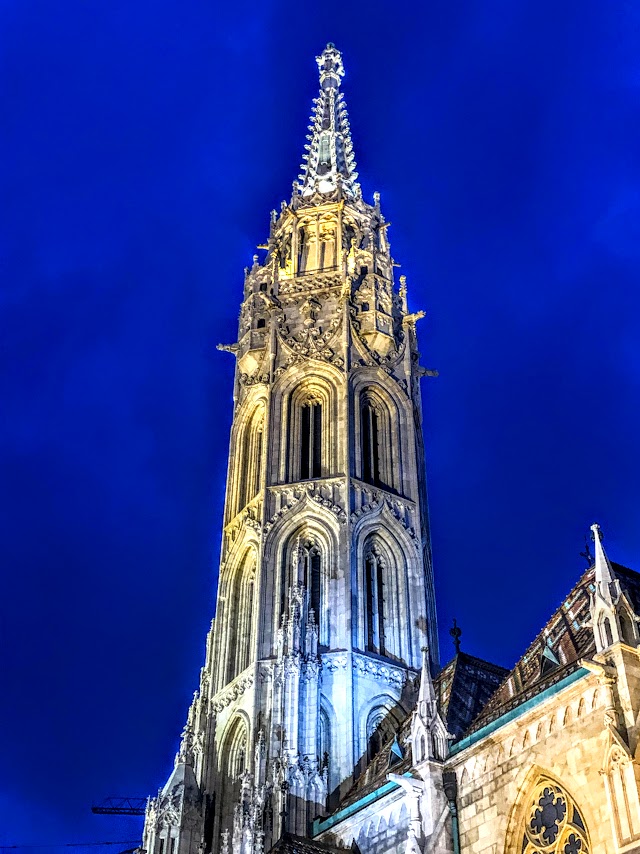
The south-west bell tower of the Matthias Church beside the Fisherman’s Bastion at Buda Castle … the Church Calendar today celebrates Saint Matthias the Apostle (Photograph: Patrick Comerford, 2023)

John 15: 9-17 (NRSVA):

[Jesus said:] 9 ‘As the Father has loved me, so I have loved you; abide in my love. 10 If you keep my commandments, you will abide in my love, just as I have kept my Father’s commandments and abide in his love. 11 I have said these things to you so that my joy may be in you, and that your joy may be complete.

12 ‘This is my commandment, that you love one another as I have loved you. 13 No one has greater love than this, to lay down one’s life for one’s friends. 14 You are my friends if you do what I command you. 15 I do not call you servants any longer, because the servant does not know what the master is doing; but I have called you friends, because I have made known to you everything that I have heard from my Father. 16 You did not choose me but I chose you. And I appointed you to go and bear fruit, fruit that will last, so that the Father will give you whatever you ask him in my name. 17 I am giving you these commands so that you may love one another.’

The Matthias Church stands in Holy Trinity Square, in front of the Fisherman’s Bastion at the heart of Buda’s Castle District (Photograph: Patrick Comerford, 2023)

Today’s Prayers (Tuesday 14 May 2024, Saint Matthias):

The theme this week in ‘Pray With the World Church,’ the Prayer Diary of the Anglican mission agency USPG (United Society Partners in the Gospel), is ‘Triangle of Hope.’ This theme was introduced on Sunday with a programme update.

The USPG Prayer Diary today (14 May 2024) invites us to pray:

O Lord, we are all created in Your image, yet some treat others and You with contempt by considering themselves superior. Let us not rush to the language of healing before understanding the fullness of the injury and the depth of the wound of racism. Help us not to value one life more than other lives.

The Collect:

Almighty God,
who in the place of the traitor Judas
chose your faithful servant Matthias
to be of the number of the Twelve:
preserve your Church from false apostles
and, by the ministry of faithful pastors and teachers,
keep us steadfast in your truth;
through Jesus Christ your Son our Lord,
who is alive and reigns with you,
in the unity of the Holy Spirit,
one God, now and for ever.

Post Communion Prayer:

Almighty God,
who on the day of Pentecost
sent your Holy Spirit to the apostles
with the wind from heaven and in tongues of flame,
filling them with joy and boldness to preach the gospel:
by the power of the same Spirit
strengthen us to witness to your truth
and to draw everyone to the fire of your love;
through Jesus Christ our Lord.

Yesterday’s reflection

Continued tomorrow

The Matthias Church is said to have been founded in 1015 by Saint Stephen and is one of the finest pieces of Gothic architecture in Hungary (Photograph: Patrick Comerford, 2023)

Scripture quotations are from the New Revised Standard Version Bible: Anglicised Edition copyright © 1989, 1995, National Council of the Churches of Christ in the United States of America. Used by permission. All rights reserved worldwide. http://nrsvbibles.org