Good Friday in a Greek Orthodox Church in Rethymnon in Crete (Photograph: Patrick Comerford, 2019)
Rathkeale and Kilnaughtin Group of Parishes
Rathkeale, Askeaton, Castletown and Kilnaughtin
Priest-in-Charge: Revd Canon Patrick Comerford,
The Rectory, Askeaton, Co Limerick.
Celebrating Pentecost:
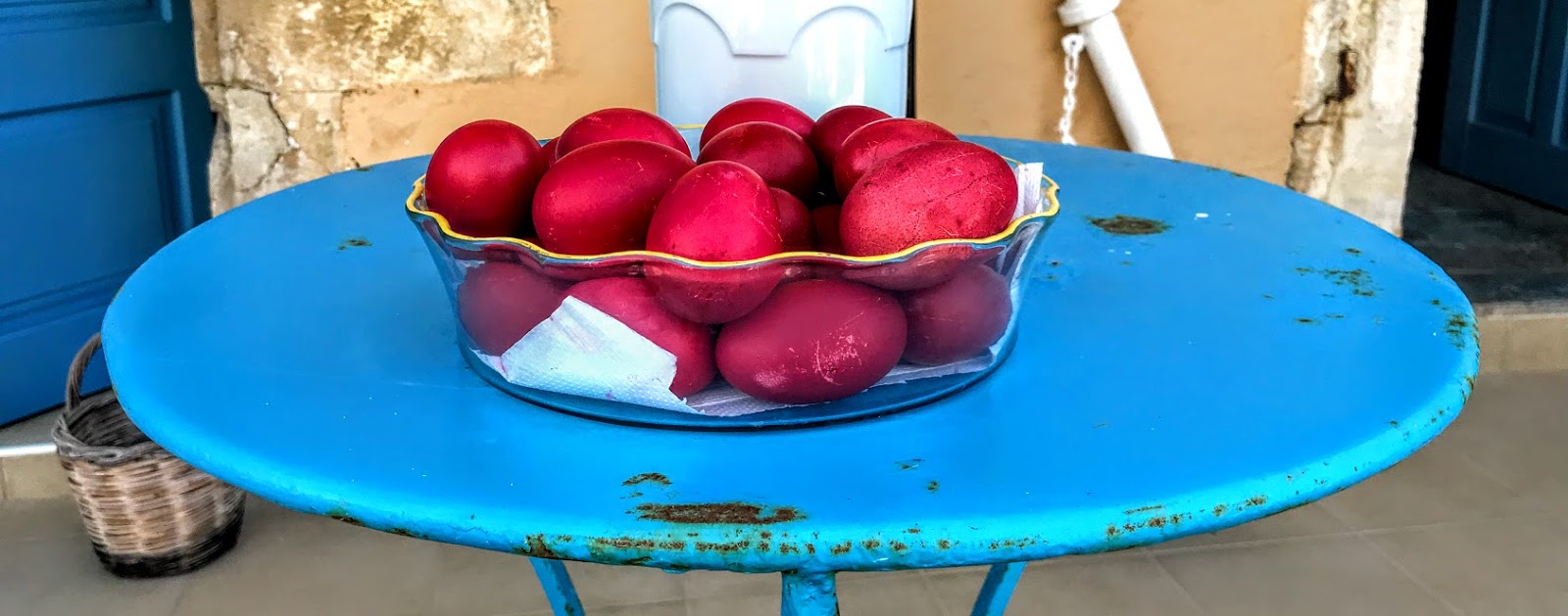
Easter was late this year, and I had the opportunity to celebrate Easter twice, joining in the Holy Week, Good Friday and Easter liturgies in Crete at the end of April and beginning of May.
We are now moving towards the celebration of the Day of Pentecost or Whit Sunday (9 June) and Trinity Sunday (16 June 2019). The Book of Common Prayer describes Pentecost or Whit Sunday as one of the principal holy days to be observed throughout the Church, and one of the days on which ‘the Holy Communion is celebrated in every cathedral and parish church.’
The Day of Pentecost could also be described as the ‘birthday of the Church.’ In a previous parish, the rector asked everybody to ‘wear something red to church’ on this day.
Easter Vestries 2019:
This year’s Easter Vestries met in Kilnaughtin (Tarbert) on Sunday 5 May, for Askeaton and Castletown on Monday 6 May, and for Rathkeale on Tuesday 7 May.
The following elections took place:
Askeaton Select Vestry:
Churchwardens: Simon White (Rector’s), Ann Drew (People’s).
Glebewardens: Simon White (Rector’s), Ralph Drew (People’s).
Treasurer: Ralph Drew.
Secretary: Anne Drew.
Additional vestry members: Hilary White, Betty Cregan, Donogh O’Grady, Gerald Griffin, Richard Langford, Brian Fitzell, Ebie White, Pat Ruttle.
Castletown Select Vestry:
Churchwardens: Declan Shier (Rector’s), David Downes (People’s).
Glebe Committee: Thomas Downes.
Treasurer: Thomas Downes.
Secretary: Raylene Downes.
Additional vestry members: Valerie Downes, Linda Smith, Victor Gardiner.
Kilnaughtin Select Vestry:
Churchwardens: Eric Parkinson (Rector’s), Alan Fitzell (People’s).
Glebewardens: Alan Fitzell (Rector’s), Joe Gleeson (People’s).
Treasurer, Nikki O’Mahony.
Secretary, Margaret Fitzell.
Additional vestry member: Ajay Philip.
Rathkeale Select Vestry:
Churchwardens: Niall West (Rector’s), Daphne Casey (People’s).
Glebewardens: George Shorten (Rector’s), Niall Shorten (People’s).
Treasurer: Jennifer Shorten.
Secretary: Susan Shorten.
Select Vestry: Edward Buckingham, Jean Fitzell, Pearl Mitchell, Evelyn Lambert, Shirley Sheehan, Isaac Langford.
Group Treasurer: Victor Gardiner.
Church Services in June 2019:
Sunday 2 June (Easter 7):
9.30 a.m.: the Parish Eucharist (Holy Communion 2), Saint Mary’s Church, Askeaton.
11.30 a.m.: Morning Prayer, Saint Brendan’s Church, Kilnaughtin (Tarbert).
Sunday 9 June (The Day of Pentecost, Whit Sunday):
9.30 a.m.: Pentecost Eucharist (Holy Communion 2), Castletown Church.
11.30 a.m.: Pentecost Eucharist (Holy Communion 2), Holy Trinity Church, Rathkeale.
Sunday 16 June (Trinity Sunday):
9.30 a.m.: Morning Prayer, Saint Mary’s Church, Askeaton.
11.30 a.m.: the Parish Eucharist (Holy Communion 2), Saint Brendan’s Church, Kilnaughtin (Tarbert).
Sunday 23 June (Trinity I):
9.30 a.m.: Morning Prayer, Castletown Church.
11.30 a.m.: the Parish Eucharist (Holy Communion 2), Holy Trinity Church, Rathkeale.
Sunday 30 June (Trinity II):
11 a.m.: United Group Service (The Parish Eucharist, Holy Communion 2), Saint Mary’s Rectory, Askeaton, with parish barbecue in the rectory garden.
Recent visits and visitors:
In May, the Rectory in Askeaton was the venue for the ‘end-of-term’ workshops for clergy and readers from throughout the diocese, with workshops on ‘Anglican Culture,’ looking at music, poetry, literature, architecture and the arts.
During the past month too, Patrick Comerford has also been invited to speak to Chareleville Heritage Sociey, lectured in Saint Editha’s Parish Church, Tamworth, at the invitation of Tamworth and District and Civic Society and took part in celebrations of Greek Orthodox Easter in Rethymnon in Crete, a one-day meeting in London of the trustees of the Anglican mission agency USPG (United Society Partners in the Gospel), and the three-day meeting in Derry of the General Synod of the Church of Ireland.
Canon Patrick Comerford and Dr David Biggs of Tamworth and District Civic Society at a reception in the Comberford Chapel, Tamworth
This is an edited version of the parish notes for the Rathkeale and Kilnaughtin Group of Parishes in the June 2019 edition of ‘Newslink,’ the magazine of the Church of Ireland United Diocese of Limerick, Killaloe and Ardfert (pp 25-26).
Showing posts with label Easter 2019. Show all posts
03 June 2019
15 May 2019
Finding inspiration in
The Great West Window
in Saint Editha’s, Tamworth
The Great West Window in Saint Editha’s Church, Tamworth, ‘Revelation of the Holy City,’ was designed by Alan Younger (Photograph: Patrick Comerford, 2019)
Patrick Comerford
This is a busy week. I have spent all day [15 May 2019] in London at a meeting of the trustees of the Anglican mission agency USPG (United Society Partners in the Gospel), much of yesterday involved a meeting in Saint Flannan’s Cathedral, Killaloe, of the chapters of Limerick and Killaloe cathedrals, and Monday was given over to workshops with clergy and laity in the diocese, discussing whether there is such a thing as an Anglican culture. Them from tomorrow until Saturday, I am in Derry at a three-day meeting of the General Synod of the Church of Ireland.
But, over the last few days, I have also been working on preaching and liturgical resources for next Sunday [19 May 2019] the Fifth Sunday of Easter, and Sunday week [26 May 2019], which is the Sixth Sunday of Easter, also known as Rogation Sunday.
Among the lectionary readings next Sunday (Revelation 21: 1-6) and the Sunday after (Revelation 21: 10, 22 to 22: 5), we are provided with an edited version of Saint John’s description of his vision of the New Jerusalem, the new heaven and the new earth.
As I think about and reflect on the images and themes in these successive readings, I am taken aback by the fortuitous coincidence that early last Friday afternoon [10 May 2019] I was given a personal guided tour of the stained-glass windows in Saint Editha’s Church, Tamworth, where the tall Great West Window is inspired by these two chapters, Revelation 21-22.
I had been speaking in Saint Editha’s Church the evening before on the Comberford family of Comberford Hall and the Moat House on Lichfield Street, Tamworth. But the volunteer who showed me around the windows and explained their meaning and story, was blissfully unaware of my family connections with the church, and he could never have known that I was preparing resources on two lectionary readings illustrated in that West Window.
This Great West Window, ‘Revelation of the Holy City,’ was designed by Alan Younger (1933-2004), one of the most important stained-glass artists in post-war Britain.
Alan Younger was born and educated in London. He began his career in stained glass in 1953 as an assistant to Carl Edwards, working on large-scale commissions including the House of Lords, the Temple Church in London and Liverpool’s Anglican Cathedral. At the time, he was also inspired by an exhibition for the stained glass in Coventry Cathedral in 1956.
Younger’s later commissions included the large Rose Window in St Albans Cathedral (1989) and the East Window in the Henry VII Chapel in Westminster Abbey (2000). His other works include the Bede Window in the Galilee Chapel at Durham Cathedral and windows in the cathedrals in Chester, Gloucester and Southwark. However, his major secular work is confined to Saudi Arabia.
Younger’s West Window in Tamworth, which was unveiled by Princess Margaret in 1975, is inspired by the account in the Book of Revelation of Saint John’s vision of ‘the new heaven and the new earth’ (see Revelation 21-22).
‘… and [he] showed me the holy city Jerusalem coming down out of heaven from God. It has the glory of God and a radiance like a very rare jewel, like jasper, clear as crystal’ (21: 5).
‘And the city has no need of sun or moon to shine on it, for the glory of God is its light’ (21: 23).
At the base of the window are the 12 foundation stones.
‘The foundations of the wall of the city are adorned with every jewel …’ (21: 19).
Below in the third light, a star: ‘It is I, Jesus, who sent my angel to you … I am the root and the descendant of David, the bright morning star’ (22: 16).
Above the foundations are crowns: ‘The nations will walk by its light, and the kings of the earth will bring their glory into it’ (21: 24).
In the centre, above and below the transom, is the city pierced by the 12 gates, and at the gates 12 angels (21: 12).
To the left is the angel with ‘a measuring rod of gold to measure the city and its gates and walls’ (21: 15).
‘Then one of the seven angels … came and said to me’ (21: 9).
‘The angel who talked to me had a measuring rod of gold to measure the city and its gates and walls’ (21: 15).
Above, in the centre two lights, the Alpha and the Omega represent the Word of God: ‘I am the Alpha and the Omega, the beginning and the end’ (21: 6).
To the right is a white dove, God the Holy Spirit, mysteriously at work in the sanctification of the Church. The concept of the city coming down ‘foursquare’ from above (21: 16) is suggested by the four white shafts at the top of the four centre lights.
Further focus is given to the angel as the golden measuring rod flashes across the city.
How little did I realise last Friday afternoon that my visit to Saint Editha’s Church in Tamworth would help me to focus my attention this week as I prepared my postings for this week and next.
The West Window in Saint Editha’s Church, Tamworth, seen from the Chancel and the East End of the church (Photograph: Patrick Comerford, 2019)
Patrick Comerford
This is a busy week. I have spent all day [15 May 2019] in London at a meeting of the trustees of the Anglican mission agency USPG (United Society Partners in the Gospel), much of yesterday involved a meeting in Saint Flannan’s Cathedral, Killaloe, of the chapters of Limerick and Killaloe cathedrals, and Monday was given over to workshops with clergy and laity in the diocese, discussing whether there is such a thing as an Anglican culture. Them from tomorrow until Saturday, I am in Derry at a three-day meeting of the General Synod of the Church of Ireland.
But, over the last few days, I have also been working on preaching and liturgical resources for next Sunday [19 May 2019] the Fifth Sunday of Easter, and Sunday week [26 May 2019], which is the Sixth Sunday of Easter, also known as Rogation Sunday.
Among the lectionary readings next Sunday (Revelation 21: 1-6) and the Sunday after (Revelation 21: 10, 22 to 22: 5), we are provided with an edited version of Saint John’s description of his vision of the New Jerusalem, the new heaven and the new earth.
As I think about and reflect on the images and themes in these successive readings, I am taken aback by the fortuitous coincidence that early last Friday afternoon [10 May 2019] I was given a personal guided tour of the stained-glass windows in Saint Editha’s Church, Tamworth, where the tall Great West Window is inspired by these two chapters, Revelation 21-22.
I had been speaking in Saint Editha’s Church the evening before on the Comberford family of Comberford Hall and the Moat House on Lichfield Street, Tamworth. But the volunteer who showed me around the windows and explained their meaning and story, was blissfully unaware of my family connections with the church, and he could never have known that I was preparing resources on two lectionary readings illustrated in that West Window.
This Great West Window, ‘Revelation of the Holy City,’ was designed by Alan Younger (1933-2004), one of the most important stained-glass artists in post-war Britain.
Alan Younger was born and educated in London. He began his career in stained glass in 1953 as an assistant to Carl Edwards, working on large-scale commissions including the House of Lords, the Temple Church in London and Liverpool’s Anglican Cathedral. At the time, he was also inspired by an exhibition for the stained glass in Coventry Cathedral in 1956.
Younger’s later commissions included the large Rose Window in St Albans Cathedral (1989) and the East Window in the Henry VII Chapel in Westminster Abbey (2000). His other works include the Bede Window in the Galilee Chapel at Durham Cathedral and windows in the cathedrals in Chester, Gloucester and Southwark. However, his major secular work is confined to Saudi Arabia.
Younger’s West Window in Tamworth, which was unveiled by Princess Margaret in 1975, is inspired by the account in the Book of Revelation of Saint John’s vision of ‘the new heaven and the new earth’ (see Revelation 21-22).
‘… and [he] showed me the holy city Jerusalem coming down out of heaven from God. It has the glory of God and a radiance like a very rare jewel, like jasper, clear as crystal’ (21: 5).
‘And the city has no need of sun or moon to shine on it, for the glory of God is its light’ (21: 23).
At the base of the window are the 12 foundation stones.
‘The foundations of the wall of the city are adorned with every jewel …’ (21: 19).
Below in the third light, a star: ‘It is I, Jesus, who sent my angel to you … I am the root and the descendant of David, the bright morning star’ (22: 16).
Above the foundations are crowns: ‘The nations will walk by its light, and the kings of the earth will bring their glory into it’ (21: 24).
In the centre, above and below the transom, is the city pierced by the 12 gates, and at the gates 12 angels (21: 12).
To the left is the angel with ‘a measuring rod of gold to measure the city and its gates and walls’ (21: 15).
‘Then one of the seven angels … came and said to me’ (21: 9).
‘The angel who talked to me had a measuring rod of gold to measure the city and its gates and walls’ (21: 15).
Above, in the centre two lights, the Alpha and the Omega represent the Word of God: ‘I am the Alpha and the Omega, the beginning and the end’ (21: 6).
To the right is a white dove, God the Holy Spirit, mysteriously at work in the sanctification of the Church. The concept of the city coming down ‘foursquare’ from above (21: 16) is suggested by the four white shafts at the top of the four centre lights.
Further focus is given to the angel as the golden measuring rod flashes across the city.
How little did I realise last Friday afternoon that my visit to Saint Editha’s Church in Tamworth would help me to focus my attention this week as I prepared my postings for this week and next.
The West Window in Saint Editha’s Church, Tamworth, seen from the Chancel and the East End of the church (Photograph: Patrick Comerford, 2019)
06 May 2019
Rathkeale and Kilnaughtin
notes in ‘Newslink’ May 2019
Lighting the Easter Candle in Castletown
Rathkeale and Kilnaughtin Group of Parishes
Rathkeale, Askeaton, Castletown and Kilnaughtin
Priest-in-Charge: Revd Canon Patrick Comerford,
The Rectory, Askeaton, Co Limerick.
Methodist exchanges:
The Church of Ireland and the Methodist Church in Ireland are moving closer in our links with one another. But long before this there were warm relationships between the two traditions in this area.
The two churches have agreed on the interchangeability of ministry, although this still remains to be worked out in practice. Two years ago, the General Synod of the Church of Ireland encouraged parishes to celebrate John Wesley Day on 24 May.
The Revd Ruth Watt is well-known to many parishioners, and as a practical outworking of the links between the Methodist Church and the Church of Ireland in this area, Ruth and Patrick are doing a ‘pulpit swap’ a little ahead of John Wesley Day, on Sunday 12 May. On that Sunday, Ruth is going to lead the services and preach in Castletown and Rathkeale, while Patrick is visiting the Methodist Churches in Adare and Ballingrane.
Lighting the Easter Candle in Tarbert
Ascension Day:
Because Lent and Easter came relatively late this year, the Easter Vestries are late this year too, taking place at the beginning of May.
A late Easter also means Ascension Day is also late this year, coming at the end of May. Ascension Day will be celebrated in Saint Mary’s Church, Askeaton, at 11 a.m. on Thursday 30 May in Saint Mary’s Church, Askeaton, followed by tea and coffee in the Rectory.
During Lent, we had four Lenten study evenings in the Rectory during Lent, looking at the Apostles’ Creed, the Nicene Creed, the Athanasian Creed and the 39 Articles.
Thank you too to the Revd Joe Hardy who looked after services in the parish in the week after Easter.
Parishioner George Shorten takes part in the Saint Patrick’s Day Parade in Askeaton
Ministry training in the Rectory:
The next training day and workshops take place in Askeaton Rectory on Monday 13 May. This month, the day offers readers and clergy an opportunity to explore and enjoy ‘Anglican culture.’
Services in May 2019:
Sunday 5 May (Easter 3): 9.30, the Parish Eucharist (Holy Communion 2), Saint Mary’s Church, Askeaton; 11.30, Morning Prayer, Saint Brendan’s Church, Kilnaughtin (Tarbert).
Sunday 12 May (Easter 4): 9.30, Holy Communion, Castletown Church; 11.30, Morning Prayer, Holy Trinity Church, Rathkeale, with the Revd Ruth Watt of Adare and Ballingrane Methodist Churches.
Sunday 19 May (Easter 5): 9.30, Morning Prayer, Saint Mary’s Church, Askeaton; 11.30, the Parish Eucharist (Holy Communion 2), Saint Brendan’s Church, Kilnaughtin (Tarbert).
Sunday 26 May (Easter 6, Rogation Sunday): 9.30: Morning Prayer, Castletown Church; 11.30, the Parish Eucharist (Holy Communion 2), Holy Trinity Church, Rathkeale.
Thursday 30 May (Ascension Day): 11 a.m., The Eucharist (Holy Communion 2), Saint Mary’s Church, Askeaton, followed by tea/coffee in the Rectory.
Easter Vestries 2019:
● Kilnaughtin (Tarbert): Sunday 5 May, after Morning Prayer at 11.30.
● Askeaton and Castletown: Monday 6 May, 7.30 p.m., in the Rectory, Askeaton.
● Rathkeale: Tuesday 7 May, 7.30 p.m., in the Rectory, Askeaton.
The Easter Candle in Rathkeale
This is an edited version of the parish notes for the Rathkeale and Kilnaughtin Group of Parishes in the May 2019 edition of ‘Newslink,’ the magazine of the Church of Ireland United Diocese of Limerick, Killaloe and Ardfert (p 25), with additional photographs included in the Easter feature.
Rathkeale and Kilnaughtin Group of Parishes
Rathkeale, Askeaton, Castletown and Kilnaughtin
Priest-in-Charge: Revd Canon Patrick Comerford,
The Rectory, Askeaton, Co Limerick.
Methodist exchanges:
The Church of Ireland and the Methodist Church in Ireland are moving closer in our links with one another. But long before this there were warm relationships between the two traditions in this area.
The two churches have agreed on the interchangeability of ministry, although this still remains to be worked out in practice. Two years ago, the General Synod of the Church of Ireland encouraged parishes to celebrate John Wesley Day on 24 May.
The Revd Ruth Watt is well-known to many parishioners, and as a practical outworking of the links between the Methodist Church and the Church of Ireland in this area, Ruth and Patrick are doing a ‘pulpit swap’ a little ahead of John Wesley Day, on Sunday 12 May. On that Sunday, Ruth is going to lead the services and preach in Castletown and Rathkeale, while Patrick is visiting the Methodist Churches in Adare and Ballingrane.
Lighting the Easter Candle in Tarbert
Ascension Day:
Because Lent and Easter came relatively late this year, the Easter Vestries are late this year too, taking place at the beginning of May.
A late Easter also means Ascension Day is also late this year, coming at the end of May. Ascension Day will be celebrated in Saint Mary’s Church, Askeaton, at 11 a.m. on Thursday 30 May in Saint Mary’s Church, Askeaton, followed by tea and coffee in the Rectory.
During Lent, we had four Lenten study evenings in the Rectory during Lent, looking at the Apostles’ Creed, the Nicene Creed, the Athanasian Creed and the 39 Articles.
Thank you too to the Revd Joe Hardy who looked after services in the parish in the week after Easter.
Parishioner George Shorten takes part in the Saint Patrick’s Day Parade in Askeaton
Ministry training in the Rectory:
The next training day and workshops take place in Askeaton Rectory on Monday 13 May. This month, the day offers readers and clergy an opportunity to explore and enjoy ‘Anglican culture.’
Services in May 2019:
Sunday 5 May (Easter 3): 9.30, the Parish Eucharist (Holy Communion 2), Saint Mary’s Church, Askeaton; 11.30, Morning Prayer, Saint Brendan’s Church, Kilnaughtin (Tarbert).
Sunday 12 May (Easter 4): 9.30, Holy Communion, Castletown Church; 11.30, Morning Prayer, Holy Trinity Church, Rathkeale, with the Revd Ruth Watt of Adare and Ballingrane Methodist Churches.
Sunday 19 May (Easter 5): 9.30, Morning Prayer, Saint Mary’s Church, Askeaton; 11.30, the Parish Eucharist (Holy Communion 2), Saint Brendan’s Church, Kilnaughtin (Tarbert).
Sunday 26 May (Easter 6, Rogation Sunday): 9.30: Morning Prayer, Castletown Church; 11.30, the Parish Eucharist (Holy Communion 2), Holy Trinity Church, Rathkeale.
Thursday 30 May (Ascension Day): 11 a.m., The Eucharist (Holy Communion 2), Saint Mary’s Church, Askeaton, followed by tea/coffee in the Rectory.
Easter Vestries 2019:
● Kilnaughtin (Tarbert): Sunday 5 May, after Morning Prayer at 11.30.
● Askeaton and Castletown: Monday 6 May, 7.30 p.m., in the Rectory, Askeaton.
● Rathkeale: Tuesday 7 May, 7.30 p.m., in the Rectory, Askeaton.
The Easter Candle in Rathkeale
This is an edited version of the parish notes for the Rathkeale and Kilnaughtin Group of Parishes in the May 2019 edition of ‘Newslink,’ the magazine of the Church of Ireland United Diocese of Limerick, Killaloe and Ardfert (p 25), with additional photographs included in the Easter feature.
05 May 2019
Christ’s three questions
challenge our idea of fame,
of heaven, and of success
‘Cast the net to the right side of the boat and you will find some [fish]’ (John 21: 6) … a fishing boat with its nets to the right at the harbour in Rethymnon last week (Photograph: Patrick Comerford, 2019)
Patrick Comerford
Sunday 5 May 2019,
The Third Sunday of Easter (Easter III).
11.30 a.m.: Morning Prayer, Saint Brendan’s Church, Kilnaughtin (Tarbert), Co Kerry.
Readings: Acts 9: 1-6, (7-20); Psalm 30; Revelation 5: 11-14; John 21: 1-19.
Christ is risen!
The Lord is risen indeed. Alleluia!
Reading our three readings this morning, I found myself asking three questions before even considering the three questions Christ asks in the Gospel reading:
Question 1, What is your idea of fame?
The Apostle Paul, who at first found it difficult to recognise Christ (Act 9: 5), later describes Christ as the image of the invisible God (II Corinthians 4: 4; Colossians 1: 15; c.f. John 1: 18, 12: 45, 14: 9; Hebrews 1: 3), he is an icon or an image of God.
When I was a child, just as I was about to become a teenager, I became a keen autograph collector.
My uncle, who was my godfather, bought me an autograph book, and I set about earnestly seeking the autographs of great footballers, pop singers, movie stars – and my first girlfriend and my school friends – in the early 1960s.
The pop stars stopped being No 1 hits just as my taste in music matured. The footballers aged as I became more interested in rugby and cricket. The movie stars’ fame faded as my interests shifted to literature and poetry. My first girlfriend lost interest in me. I moved town, changed schools, lost touch with many childhood friends, and I lost that autograph book about the same time.
But I remember basking in the light of Bobbie Charlton and Brendan Bowyer for a few weeks in the schoolyard. I suppose it was a sort of vicarious fame.
I suppose we never really stop behaving like that as adults with our own adult versions of autograph-hunting: asking authors to sign books … standing in for ‘selfies’ with the good and the great …
Who do you want to be photographed with, and who will want to be photographed with you?
Who do you recognise, and who recognises you?
If I encountered the Risen Christ in this post-Easter season, would I, like Saint Paul in our first reading, fall to the ground blinded, and ask, ‘Who are you, Lord?’ (see Acts 9: 5)
Would you recognise Jesus on that seashore that Easter morning?
Where do you see Jesus this morning?
I was in Crete for the week after Easter, enjoying walks each day along the beach at Platanias near Rethymnon. But even there, I wondered: Where do the refugees see Jesus when they land on the shores of more distant Greek islands such as Lesbos and Samos?
I certainly hope they see the love of Jesus in the work of mission agencies such as USPG and other church groups and humanitarian organisations, on the shore, in their plight.
When these refugees look at those workers on those islands, I hope they see the image of Christ, the likeness of the Lamb, an image of the Good Shepherd.
Would you recognise Jesus on the beach that Easter morning? (see John 21: 4) … the beach at Platanias near Rethymnon last week (Photograph: Patrick Comerford, 2019)
Question 2, What is your idea of heaven?
In our reading from the Book of Revelation, Saint John in exile on Patmos catches a glimpse of the heavenly future when he looks up and hears the angels gathered around the Lamb on the Throne and singing:
‘To the one seated on the throne and to the Lamb
be blessing and honour and glory and might
for ever and ever!’
During my reflections on Good Friday in Saint Mary’s Church, Askeaton, I shared how there are places where I think I am given a little glimpse of what heaven must be like. They include the road from Iraklion to Rethymnon in Crete, facing the sun as it sets in the Mediterranean, and where I spent that week after Easter.
But what is your idea of heaven? … Fishing, Golf, Horses, a day’s sailing?
The refugees who arrive on our shores are fleeing their own hell on earth. Are they going to catch a glimpse of heaven on earth when they arrive?
Or do they find we have priorities other than the Kingdom of God?
The Lamb of God in a Trinitarian depiction in a stained-glass window in a church in Charleville, Co Cork … see Revelation 5: 11-14 (Photograph: Patrick Comerford, 2018)
Question 3, What do you mean by success?
The disciples that Sunday morning are not very successful, are they (John 21: 3)? So unsuccessful, indeed, that they are willing to take advice from someone they do not even recognise (verse 4 ff).
The disciples are at the Sea of Galilee or the Sea of Tiberias, back at their old jobs as fishermen. Peter, who denied Christ three times during his Passion, Thomas, who had initially doubted the stories of the Resurrection (see John 20: 24-29), Nathanael, who once wondered whether anything good could come from Nazareth (see John 1: 46), James and John, the sons of Zebedee, who once wanted to be so close to him that they wanted to be seated at his right hand and his left in the kingdom, and two other disciples who remain unnamed … how about that for fame, lasting recognition and success?
They are back on the same shore where there once were so many fish, so much bread left over after feeding the multitude, that they filled 12 baskets (John 6: 1-13). There are not so many fish around this time, at first. But then John tells us that after Christ arrives 153 fish were caught that morning (verse 11).
This number is probably a symbol meaning a complete number. The number 153 is divisible by the sum of its own digits, and it is the smallest number that can be expressed as the sum of cubes of its digits, since 153 = 13 + 53 + 33. Aristotle is said to have taught that there were 153 different species of fish in the Mediterranean.
Whatever they say, the disciples must have thought they had managed the perfect catch that morning.
But the perfect catch was Christ – and, of course, they were the perfect catch for him too. When they came ashore once again he invites them to share bread and fish, to dine with the Risen Lord (21: 12-13).
To eat with the Risen Lord and to invite others to the Heavenly Banquet, so that every creature in heaven and on earth and under the earth and in the sea can say ‘Amen’ before the Throne of God … now that is what I call success (Revelation 5: 11-14).
And when others ask us, Do we love Christ?, when others ask us, Do we love them?, when others ask us, Do we love one another?, will we hesitate, like Peter, not knowing how to answer?
Or when they ask, will the answers be obvious in the ways we worship, in the way we live our lives, in the way we respond to others?
Christ is risen!
The Lord is risen indeed. Alleluia!
Beached … an old fishing boat on the sands at Platanias, near Rethymnon in Crete (Photograph: Patrick Comerford, 2019)
John 21: 1-19 (NRSVA):
1 After these things Jesus showed himself again to the disciples by the Sea of Tiberias; and he showed himself in this way. 2 Gathered there together were Simon Peter, Thomas called the Twin, Nathanael of Cana in Galilee, the sons of Zebedee, and two others of his disciples. 3 Simon Peter said to them, ‘I am going fishing.’ They said to him, ‘We will go with you.’ They went out and got into the boat, but that night they caught nothing.
4 Just after daybreak, Jesus stood on the beach; but the disciples did not know that it was Jesus. 5 Jesus said to them, ‘Children, you have no fish, have you?’ They answered him, ‘No.’ 6 He said to them, ‘Cast the net to the right side of the boat, and you will find some.’ So they cast it, and now they were not able to haul it in because there were so many fish. 7 That disciple whom Jesus loved said to Peter, ‘It is the Lord!’ When Simon Peter heard that it was the Lord, he put on some clothes, for he was naked, and jumped into the lake. 8 But the other disciples came in the boat, dragging the net full of fish, for they were not far from the land, only about a hundred yards off.
9 When they had gone ashore, they saw a charcoal fire there, with fish on it, and bread. 10 Jesus said to them, ‘Bring some of the fish that you have just caught.’ 11 So Simon Peter went aboard and hauled the net ashore, full of large fish, a hundred and fifty-three of them; and though there were so many, the net was not torn. 12 Jesus said to them, ‘Come and have breakfast.’ Now none of the disciples dared to ask him, ‘Who are you?’ because they knew it was the Lord. 13 Jesus came and took the bread and gave it to them, and did the same with the fish. 14 This was now the third time that Jesus appeared to the disciples after he was raised from the dead.
15 When they had finished breakfast, Jesus said to Simon Peter, ‘Simon son of John, do you love me more than these?’ He said to him, ‘Yes, Lord; you know that I love you.’ Jesus said to him, ‘Feed my lambs.’ 16 A second time he said to him, ‘Simon son of John, do you love me?’ He said to him, ‘Yes, Lord; you know that I love you.’ Jesus said to him, ‘Tend my sheep.’ 17 He said to him the third time, ‘Simon son of John, do you love me?’ Peter felt hurt because he said to him the third time, ‘Do you love me?’ And he said to him, ‘Lord, you know everything; you know that I love you.’ Jesus said to him, ‘Feed my sheep. 18 Very truly, I tell you, when you were younger, you used to fasten your own belt and to go wherever you wished. But when you grow old, you will stretch out your hands, and someone else will fasten a belt around you and take you where you do not wish to go.’ 19 (He said this to indicate the kind of death by which he would glorify God.) After this he said to him, ‘Follow me.’
The Lamb of God on the throne (see Revelation 5: 11-13) … a stained glass window in Saint Mary’s Cathedral, Limerick (Photograph: Patrick Comerford)
Liturgical Colour: White
The Greeting (from Easter Day until Pentecost):
Christ is risen!
The Lord is risen indeed. Alleluia!
Penitential Kyries:
Lord God,
you raised your Son from the dead.
Lord, have mercy.
Lord, have mercy.
Lord Jesus,
through you we are more than conquerors.
Christ, have mercy.
Christ, have mercy.
Holy Spirit,
you help us in our weakness.
Lord, have mercy.
Lord, have mercy.
The Collect:
Almighty Father,
who in your great mercy gladdened the disciples
with the sight of the risen Lord:
Give us such knowledge of his presence with us,
that we may be strengthened
and sustained by his risen life
and serve you continually in righteousness and truth;
through Jesus Christ our Lord.
Introduction to the Peace:
The risen Christ came and stood among his disciples and said, Peace be with you. Then were they glad when they saw the Lord. (John 20: 19, 20).
The Blessing:
The God of peace,
who brought again from the dead our Lord Jesus
that great shepherd of the sheep,
through the blood of the eternal covenant,
make you perfect in every good work to do his will,
working in you that which is well-pleasing in his sight:
or:
God the Father,
by whose glory Christ was raised from the dead,
raise you up to walk with him in the newness of his risen life:
Dismissal: (from Easter Day to Pentecost):
Go in the peace of the Risen Christ. Alleluia! Alleluia!
Thanks be to God. Alleluia! Alleluia!
The Lamb of God in a depiction in a stained-glass window in a church in Roscrea, Co Tipperary (Photograph: Patrick Comerford, 2018)
Hymns:
196, O worship the Lord in the beauty of holiness (CD 12)
263, Crown him with many crowns (CD 16)
592, O Love that wilt not let me go (CD 34)
A fishing boat at the harbour in Panormos, east of Rethymnon, last Sunday (Photograph: Patrick Comerford, 2019)
Scripture quotations are taken from the New Revised Standard Version Bible Anglicised Edition, copyright © 1989 by the Division of Christian Education of the National Council of Churches of Christ in the USA, and are used by permission. All rights reserved.
Material from the Book of Common Prayer is copyright © 2004, Representative Body of the Church of Ireland.
Patrick Comerford
Sunday 5 May 2019,
The Third Sunday of Easter (Easter III).
11.30 a.m.: Morning Prayer, Saint Brendan’s Church, Kilnaughtin (Tarbert), Co Kerry.
Readings: Acts 9: 1-6, (7-20); Psalm 30; Revelation 5: 11-14; John 21: 1-19.
Christ is risen!
The Lord is risen indeed. Alleluia!
Reading our three readings this morning, I found myself asking three questions before even considering the three questions Christ asks in the Gospel reading:
Question 1, What is your idea of fame?
The Apostle Paul, who at first found it difficult to recognise Christ (Act 9: 5), later describes Christ as the image of the invisible God (II Corinthians 4: 4; Colossians 1: 15; c.f. John 1: 18, 12: 45, 14: 9; Hebrews 1: 3), he is an icon or an image of God.
When I was a child, just as I was about to become a teenager, I became a keen autograph collector.
My uncle, who was my godfather, bought me an autograph book, and I set about earnestly seeking the autographs of great footballers, pop singers, movie stars – and my first girlfriend and my school friends – in the early 1960s.
The pop stars stopped being No 1 hits just as my taste in music matured. The footballers aged as I became more interested in rugby and cricket. The movie stars’ fame faded as my interests shifted to literature and poetry. My first girlfriend lost interest in me. I moved town, changed schools, lost touch with many childhood friends, and I lost that autograph book about the same time.
But I remember basking in the light of Bobbie Charlton and Brendan Bowyer for a few weeks in the schoolyard. I suppose it was a sort of vicarious fame.
I suppose we never really stop behaving like that as adults with our own adult versions of autograph-hunting: asking authors to sign books … standing in for ‘selfies’ with the good and the great …
Who do you want to be photographed with, and who will want to be photographed with you?
Who do you recognise, and who recognises you?
If I encountered the Risen Christ in this post-Easter season, would I, like Saint Paul in our first reading, fall to the ground blinded, and ask, ‘Who are you, Lord?’ (see Acts 9: 5)
Would you recognise Jesus on that seashore that Easter morning?
Where do you see Jesus this morning?
I was in Crete for the week after Easter, enjoying walks each day along the beach at Platanias near Rethymnon. But even there, I wondered: Where do the refugees see Jesus when they land on the shores of more distant Greek islands such as Lesbos and Samos?
I certainly hope they see the love of Jesus in the work of mission agencies such as USPG and other church groups and humanitarian organisations, on the shore, in their plight.
When these refugees look at those workers on those islands, I hope they see the image of Christ, the likeness of the Lamb, an image of the Good Shepherd.
Would you recognise Jesus on the beach that Easter morning? (see John 21: 4) … the beach at Platanias near Rethymnon last week (Photograph: Patrick Comerford, 2019)
Question 2, What is your idea of heaven?
In our reading from the Book of Revelation, Saint John in exile on Patmos catches a glimpse of the heavenly future when he looks up and hears the angels gathered around the Lamb on the Throne and singing:
‘To the one seated on the throne and to the Lamb
be blessing and honour and glory and might
for ever and ever!’
During my reflections on Good Friday in Saint Mary’s Church, Askeaton, I shared how there are places where I think I am given a little glimpse of what heaven must be like. They include the road from Iraklion to Rethymnon in Crete, facing the sun as it sets in the Mediterranean, and where I spent that week after Easter.
But what is your idea of heaven? … Fishing, Golf, Horses, a day’s sailing?
The refugees who arrive on our shores are fleeing their own hell on earth. Are they going to catch a glimpse of heaven on earth when they arrive?
Or do they find we have priorities other than the Kingdom of God?
The Lamb of God in a Trinitarian depiction in a stained-glass window in a church in Charleville, Co Cork … see Revelation 5: 11-14 (Photograph: Patrick Comerford, 2018)
Question 3, What do you mean by success?
The disciples that Sunday morning are not very successful, are they (John 21: 3)? So unsuccessful, indeed, that they are willing to take advice from someone they do not even recognise (verse 4 ff).
The disciples are at the Sea of Galilee or the Sea of Tiberias, back at their old jobs as fishermen. Peter, who denied Christ three times during his Passion, Thomas, who had initially doubted the stories of the Resurrection (see John 20: 24-29), Nathanael, who once wondered whether anything good could come from Nazareth (see John 1: 46), James and John, the sons of Zebedee, who once wanted to be so close to him that they wanted to be seated at his right hand and his left in the kingdom, and two other disciples who remain unnamed … how about that for fame, lasting recognition and success?
They are back on the same shore where there once were so many fish, so much bread left over after feeding the multitude, that they filled 12 baskets (John 6: 1-13). There are not so many fish around this time, at first. But then John tells us that after Christ arrives 153 fish were caught that morning (verse 11).
This number is probably a symbol meaning a complete number. The number 153 is divisible by the sum of its own digits, and it is the smallest number that can be expressed as the sum of cubes of its digits, since 153 = 13 + 53 + 33. Aristotle is said to have taught that there were 153 different species of fish in the Mediterranean.
Whatever they say, the disciples must have thought they had managed the perfect catch that morning.
But the perfect catch was Christ – and, of course, they were the perfect catch for him too. When they came ashore once again he invites them to share bread and fish, to dine with the Risen Lord (21: 12-13).
To eat with the Risen Lord and to invite others to the Heavenly Banquet, so that every creature in heaven and on earth and under the earth and in the sea can say ‘Amen’ before the Throne of God … now that is what I call success (Revelation 5: 11-14).
And when others ask us, Do we love Christ?, when others ask us, Do we love them?, when others ask us, Do we love one another?, will we hesitate, like Peter, not knowing how to answer?
Or when they ask, will the answers be obvious in the ways we worship, in the way we live our lives, in the way we respond to others?
Christ is risen!
The Lord is risen indeed. Alleluia!
Beached … an old fishing boat on the sands at Platanias, near Rethymnon in Crete (Photograph: Patrick Comerford, 2019)
John 21: 1-19 (NRSVA):
1 After these things Jesus showed himself again to the disciples by the Sea of Tiberias; and he showed himself in this way. 2 Gathered there together were Simon Peter, Thomas called the Twin, Nathanael of Cana in Galilee, the sons of Zebedee, and two others of his disciples. 3 Simon Peter said to them, ‘I am going fishing.’ They said to him, ‘We will go with you.’ They went out and got into the boat, but that night they caught nothing.
4 Just after daybreak, Jesus stood on the beach; but the disciples did not know that it was Jesus. 5 Jesus said to them, ‘Children, you have no fish, have you?’ They answered him, ‘No.’ 6 He said to them, ‘Cast the net to the right side of the boat, and you will find some.’ So they cast it, and now they were not able to haul it in because there were so many fish. 7 That disciple whom Jesus loved said to Peter, ‘It is the Lord!’ When Simon Peter heard that it was the Lord, he put on some clothes, for he was naked, and jumped into the lake. 8 But the other disciples came in the boat, dragging the net full of fish, for they were not far from the land, only about a hundred yards off.
9 When they had gone ashore, they saw a charcoal fire there, with fish on it, and bread. 10 Jesus said to them, ‘Bring some of the fish that you have just caught.’ 11 So Simon Peter went aboard and hauled the net ashore, full of large fish, a hundred and fifty-three of them; and though there were so many, the net was not torn. 12 Jesus said to them, ‘Come and have breakfast.’ Now none of the disciples dared to ask him, ‘Who are you?’ because they knew it was the Lord. 13 Jesus came and took the bread and gave it to them, and did the same with the fish. 14 This was now the third time that Jesus appeared to the disciples after he was raised from the dead.
15 When they had finished breakfast, Jesus said to Simon Peter, ‘Simon son of John, do you love me more than these?’ He said to him, ‘Yes, Lord; you know that I love you.’ Jesus said to him, ‘Feed my lambs.’ 16 A second time he said to him, ‘Simon son of John, do you love me?’ He said to him, ‘Yes, Lord; you know that I love you.’ Jesus said to him, ‘Tend my sheep.’ 17 He said to him the third time, ‘Simon son of John, do you love me?’ Peter felt hurt because he said to him the third time, ‘Do you love me?’ And he said to him, ‘Lord, you know everything; you know that I love you.’ Jesus said to him, ‘Feed my sheep. 18 Very truly, I tell you, when you were younger, you used to fasten your own belt and to go wherever you wished. But when you grow old, you will stretch out your hands, and someone else will fasten a belt around you and take you where you do not wish to go.’ 19 (He said this to indicate the kind of death by which he would glorify God.) After this he said to him, ‘Follow me.’
The Lamb of God on the throne (see Revelation 5: 11-13) … a stained glass window in Saint Mary’s Cathedral, Limerick (Photograph: Patrick Comerford)
Liturgical Colour: White
The Greeting (from Easter Day until Pentecost):
Christ is risen!
The Lord is risen indeed. Alleluia!
Penitential Kyries:
Lord God,
you raised your Son from the dead.
Lord, have mercy.
Lord, have mercy.
Lord Jesus,
through you we are more than conquerors.
Christ, have mercy.
Christ, have mercy.
Holy Spirit,
you help us in our weakness.
Lord, have mercy.
Lord, have mercy.
The Collect:
Almighty Father,
who in your great mercy gladdened the disciples
with the sight of the risen Lord:
Give us such knowledge of his presence with us,
that we may be strengthened
and sustained by his risen life
and serve you continually in righteousness and truth;
through Jesus Christ our Lord.
Introduction to the Peace:
The risen Christ came and stood among his disciples and said, Peace be with you. Then were they glad when they saw the Lord. (John 20: 19, 20).
The Blessing:
The God of peace,
who brought again from the dead our Lord Jesus
that great shepherd of the sheep,
through the blood of the eternal covenant,
make you perfect in every good work to do his will,
working in you that which is well-pleasing in his sight:
or:
God the Father,
by whose glory Christ was raised from the dead,
raise you up to walk with him in the newness of his risen life:
Dismissal: (from Easter Day to Pentecost):
Go in the peace of the Risen Christ. Alleluia! Alleluia!
Thanks be to God. Alleluia! Alleluia!
The Lamb of God in a depiction in a stained-glass window in a church in Roscrea, Co Tipperary (Photograph: Patrick Comerford, 2018)
Hymns:
196, O worship the Lord in the beauty of holiness (CD 12)
263, Crown him with many crowns (CD 16)
592, O Love that wilt not let me go (CD 34)
A fishing boat at the harbour in Panormos, east of Rethymnon, last Sunday (Photograph: Patrick Comerford, 2019)
Scripture quotations are taken from the New Revised Standard Version Bible Anglicised Edition, copyright © 1989 by the Division of Christian Education of the National Council of Churches of Christ in the USA, and are used by permission. All rights reserved.
Material from the Book of Common Prayer is copyright © 2004, Representative Body of the Church of Ireland.
Labels:
Beach Walks,
boats,
Charleville,
Crete 2019,
Easter 2019,
Kilnaughtin,
Panormos,
Platanias,
Rethymnon,
Roscrea,
Saint John's Gospel,
Saint Mary’s Cathedral,
Sermons 2019,
Stained Glass,
Tarbert
Three questions, three answers,
on an early morning at Easter time
Would you recognise Jesus on the beach that Easter morning? (see John 21: 4) … the beach at Platanias near Rethymnon last week (Photograph: Patrick Comerford, 2019)
Patrick Comerford
Sunday 5 May 2019,
The Third Sunday of Easter (Easter III).
9.30 a.m.: The Parish Eucharist (Holy Communion 2), Saint Mary’s Church, Askeaton, Co Limerick
Readings: Acts 9: 1-6, (7-20); Psalm 30; Revelation 5: 11-14; John 21: 1-19.
Christ is risen!
The Lord is risen indeed. Alleluia!
Reading our three readings this morning, I found myself asking three questions before even considering the three questions Christ asks in the Gospel reading:
Question 1, What is your idea of fame?
The Apostle Paul, who at first found it difficult to recognise Christ (Act 9: 5), later describes Christ as the image of the invisible God (II Corinthians 4: 4; Colossians 1: 15; c.f. John 1: 18, 12: 45, 14: 9; Hebrews 1: 3), he is an icon or an image of God.
When I was a child, just as I was about to become a teenager, I became a keen autograph collector.
My uncle, who was my godfather, bought me an autograph book, and I set about earnestly seeking the autographs of great footballers, pop singers, movie stars – and my first girlfriend and my school friends – in the early 1960s.
The pop stars stopped being No 1 hits just as my taste in music matured. The footballers aged as I became more interested in rugby and cricket. The movie stars’ fame faded as my interests shifted to literature and poetry. My first girlfriend lost interest in me. I moved town, changed schools, lost touch with many childhood friends, and I lost that autograph book about the same time.
But I remember basking in the light of Bobbie Charlton and Brendan Bowyer for a few weeks in the schoolyard. I suppose it was a sort of vicarious fame.
I suppose we never really stop behaving like that as adults with our own adult versions of autograph-hunting: asking authors to sign books … standing in for ‘selfies’ with the good and the great …
Who do you want to be photographed with, and who will want to be photographed with you?
Who do you recognise, and who recognises you?
If I encountered the Risen Christ in this post-Easter season, would I, like Saint Paul in our first reading, fall to the ground blinded, and ask, ‘Who are you, Lord?’ (see Acts 9: 5)
Would you recognise Jesus on that seashore that Easter morning?
Where do you see Jesus this morning?
I was in Crete for the week after Easter, enjoying walks each day along the beach at Platanias near Rethymnon. But even there, I wondered: Where do the refugees see Jesus when they land on the shores of more distant Greek islands such as Lesbos and Samos?
I certainly hope they see the love of Jesus in the work of mission agencies such as USPG and other church groups and humanitarian organisations, on the shore, in their plight.
When these refugees look at those workers on those islands, I hope they see the image of Christ, the likeness of the Lamb, an image of the Good Shepherd.
The Lamb of God in a Trinitarian depiction in a stained-glass window in a church in Charleville, Co Cork … see Revelation 5: 11-14 (Photograph: Patrick Comerford, 2018)
Question 2, What is your idea of heaven?
In our reading from the Book of Revelation, Saint John in exile on Patmos catches a glimpse of the heavenly future when he looks up and hears the angels gathered around the Lamb on the Throne and singing:
‘To the one seated on the throne and to the Lamb
be blessing and honour and glory and might
for ever and ever!’
During my reflections on Good Friday here in Saint Mary’s, I shared how there are places where I think I am given a little glimpse of what heaven must be like. They include the road from Iraklion to Rethymnon in Crete, facing the sun as it sets in the Mediterranean, and where I spent that week after Easter.
But what is your idea of heaven? … Fishing, Golf, Horses, a day’s sailing?
The refugees who arrive on our shores are fleeing their own hell on earth. Are they going to catch a glimpse of heaven on earth when they arrive?
Or do they find we have priorities other than the Kingdom of God?
‘Cast the net to the right side of the boat and you will find some [fish]’ (John 21: 6) … a fishing boat with its nets to the right at the harbour in Rethymnon last week (Photograph: Patrick Comerford, 2019)
Question 3, What do you mean by success?
The disciples that Sunday morning are not very successful, are they (John 21: 3)? So unsuccessful, indeed, that they are willing to take advice from someone they do not even recognise (verse 4 ff).
The disciples are at the Sea of Galilee or the Sea of Tiberias, back at their old jobs as fishermen. Peter, who denied Christ three times during his Passion, Thomas, who had initially doubted the stories of the Resurrection (see John 20: 24-29), Nathanael, who once wondered whether anything good could come from Nazareth (see John 1: 46), James and John, the sons of Zebedee, who once wanted to be so close to him that they wanted to be seated at his right hand and his left in the kingdom, and two other disciples who remain unnamed … how about that for fame, lasting recognition and success?
They are back on the same shore where there once were so many fish, so much bread left over after feeding the multitude, that they filled 12 baskets (John 6: 1-13). There are not so many fish around this time, at first. But then John tells us that after Christ arrives 153 fish were caught that morning (verse 11).
This number is probably a symbol meaning a complete number. The number 153 is divisible by the sum of its own digits, and it is the smallest number that can be expressed as the sum of cubes of its digits, since 153 = 13 + 53 + 33. Aristotle is said to have taught that there were 153 different species of fish in the Mediterranean.
Whatever they say, the disciples must have thought they had managed the perfect catch that morning.
But the perfect catch was Christ – and, of course, they were the perfect catch for him too. When they came ashore once again he invites them to share bread and fish, to dine with the Risen Lord (21: 12-13).
To eat with the Risen Lord and to invite others to the Heavenly Banquet, so that every creature in heaven and on earth and under the earth and in the sea can say ‘Amen’ before the Throne of God … now that is what I call success (Revelation 5: 11-14).
And when others ask us, Do we love Christ?, when others ask us, Do we love them?, when others ask us, Do we love one another?, will we hesitate, like Peter, not knowing how to answer?
Or when they ask, will the answers be obvious in the ways we worship, in the way we live our lives, in the way we respond to others?
Christ is risen!
The Lord is risen indeed. Alleluia!
Beached … an old fishing boat on the sands at Platanias, near Rethymnon in Crete (Photograph: Patrick Comerford, 2019)
John 21: 1-19 (NRSVA):
1 After these things Jesus showed himself again to the disciples by the Sea of Tiberias; and he showed himself in this way. 2 Gathered there together were Simon Peter, Thomas called the Twin, Nathanael of Cana in Galilee, the sons of Zebedee, and two others of his disciples. 3 Simon Peter said to them, ‘I am going fishing.’ They said to him, ‘We will go with you.’ They went out and got into the boat, but that night they caught nothing.
4 Just after daybreak, Jesus stood on the beach; but the disciples did not know that it was Jesus. 5 Jesus said to them, ‘Children, you have no fish, have you?’ They answered him, ‘No.’ 6 He said to them, ‘Cast the net to the right side of the boat, and you will find some.’ So they cast it, and now they were not able to haul it in because there were so many fish. 7 That disciple whom Jesus loved said to Peter, ‘It is the Lord!’ When Simon Peter heard that it was the Lord, he put on some clothes, for he was naked, and jumped into the lake. 8 But the other disciples came in the boat, dragging the net full of fish, for they were not far from the land, only about a hundred yards off.
9 When they had gone ashore, they saw a charcoal fire there, with fish on it, and bread. 10 Jesus said to them, ‘Bring some of the fish that you have just caught.’ 11 So Simon Peter went aboard and hauled the net ashore, full of large fish, a hundred and fifty-three of them; and though there were so many, the net was not torn. 12 Jesus said to them, ‘Come and have breakfast.’ Now none of the disciples dared to ask him, ‘Who are you?’ because they knew it was the Lord. 13 Jesus came and took the bread and gave it to them, and did the same with the fish. 14 This was now the third time that Jesus appeared to the disciples after he was raised from the dead.
15 When they had finished breakfast, Jesus said to Simon Peter, ‘Simon son of John, do you love me more than these?’ He said to him, ‘Yes, Lord; you know that I love you.’ Jesus said to him, ‘Feed my lambs.’ 16 A second time he said to him, ‘Simon son of John, do you love me?’ He said to him, ‘Yes, Lord; you know that I love you.’ Jesus said to him, ‘Tend my sheep.’ 17 He said to him the third time, ‘Simon son of John, do you love me?’ Peter felt hurt because he said to him the third time, ‘Do you love me?’ And he said to him, ‘Lord, you know everything; you know that I love you.’ Jesus said to him, ‘Feed my sheep. 18 Very truly, I tell you, when you were younger, you used to fasten your own belt and to go wherever you wished. But when you grow old, you will stretch out your hands, and someone else will fasten a belt around you and take you where you do not wish to go.’ 19 (He said this to indicate the kind of death by which he would glorify God.) After this he said to him, ‘Follow me.’
The Lamb of God on the throne (see Revelation 5: 11-13) … a stained glass window in Saint Mary’s Cathedral, Limerick (Photograph: Patrick Comerford)
Liturgical Colour: White
The Greeting (from Easter Day until Pentecost):
Christ is risen!
The Lord is risen indeed. Alleluia!
Penitential Kyries:
Lord God,
you raised your Son from the dead.
Lord, have mercy.
Lord, have mercy.
Lord Jesus,
through you we are more than conquerors.
Christ, have mercy.
Christ, have mercy.
Holy Spirit,
you help us in our weakness.
Lord, have mercy.
Lord, have mercy.
The Collect:
Almighty Father,
who in your great mercy gladdened the disciples
with the sight of the risen Lord:
Give us such knowledge of his presence with us,
that we may be strengthened
and sustained by his risen life
and serve you continually in righteousness and truth;
through Jesus Christ our Lord.
Introduction to the Peace:
The risen Christ came and stood among his disciples and said, Peace be with you. Then were they glad when they saw the Lord. (John 20: 19, 20).
Preface:
Above all we praise you
for the glorious resurrection of your Son
Jesus Christ our Lord,
the true paschal lamb who was sacrificed for us;
by dying he destroyed our death;
by rising he restored our life:
The Post-Communion Prayer:
Living God,
your Son made himself known to his disciples
in the breaking of bread.
Open the eyes of our faith,
that we may see him in all his redeeming work;
who is alive and reigns with you and the Holy Spirit,
one God, now and for ever.
The Blessing:
The God of peace,
who brought again from the dead our Lord Jesus
that great shepherd of the sheep,
through the blood of the eternal covenant,
make you perfect in every good work to do his will,
working in you that which is well-pleasing in his sight:
or:
God the Father,
by whose glory Christ was raised from the dead,
raise you up to walk with him in the newness of his risen life:
Dismissal: (from Easter Day to Pentecost):
Go in the peace of the Risen Christ. Alleluia! Alleluia!
Thanks be to God. Alleluia! Alleluia!
The Lamb of God in a depiction in a stained-glass window in a church in Roscrea, Co Tipperary (Photograph: Patrick Comerford, 2018)
Hymns:
196, O worship the Lord in the beauty of holiness (CD 12)
263, Crown him with many crowns (CD 16)
592, O Love that wilt not let me go (CD 34)
A fishing boat at the harbour in Panormos, east of Rethymnon, last Sunday (Photograph: Patrick Comerford, 2019)
Scripture quotations are taken from the New Revised Standard Version Bible Anglicised Edition, copyright © 1989 by the Division of Christian Education of the National Council of Churches of Christ in the USA, and are used by permission. All rights reserved.
Material from the Book of Common Prayer is copyright © 2004, Representative Body of the Church of Ireland.
Patrick Comerford
Sunday 5 May 2019,
The Third Sunday of Easter (Easter III).
9.30 a.m.: The Parish Eucharist (Holy Communion 2), Saint Mary’s Church, Askeaton, Co Limerick
Readings: Acts 9: 1-6, (7-20); Psalm 30; Revelation 5: 11-14; John 21: 1-19.
Christ is risen!
The Lord is risen indeed. Alleluia!
Reading our three readings this morning, I found myself asking three questions before even considering the three questions Christ asks in the Gospel reading:
Question 1, What is your idea of fame?
The Apostle Paul, who at first found it difficult to recognise Christ (Act 9: 5), later describes Christ as the image of the invisible God (II Corinthians 4: 4; Colossians 1: 15; c.f. John 1: 18, 12: 45, 14: 9; Hebrews 1: 3), he is an icon or an image of God.
When I was a child, just as I was about to become a teenager, I became a keen autograph collector.
My uncle, who was my godfather, bought me an autograph book, and I set about earnestly seeking the autographs of great footballers, pop singers, movie stars – and my first girlfriend and my school friends – in the early 1960s.
The pop stars stopped being No 1 hits just as my taste in music matured. The footballers aged as I became more interested in rugby and cricket. The movie stars’ fame faded as my interests shifted to literature and poetry. My first girlfriend lost interest in me. I moved town, changed schools, lost touch with many childhood friends, and I lost that autograph book about the same time.
But I remember basking in the light of Bobbie Charlton and Brendan Bowyer for a few weeks in the schoolyard. I suppose it was a sort of vicarious fame.
I suppose we never really stop behaving like that as adults with our own adult versions of autograph-hunting: asking authors to sign books … standing in for ‘selfies’ with the good and the great …
Who do you want to be photographed with, and who will want to be photographed with you?
Who do you recognise, and who recognises you?
If I encountered the Risen Christ in this post-Easter season, would I, like Saint Paul in our first reading, fall to the ground blinded, and ask, ‘Who are you, Lord?’ (see Acts 9: 5)
Would you recognise Jesus on that seashore that Easter morning?
Where do you see Jesus this morning?
I was in Crete for the week after Easter, enjoying walks each day along the beach at Platanias near Rethymnon. But even there, I wondered: Where do the refugees see Jesus when they land on the shores of more distant Greek islands such as Lesbos and Samos?
I certainly hope they see the love of Jesus in the work of mission agencies such as USPG and other church groups and humanitarian organisations, on the shore, in their plight.
When these refugees look at those workers on those islands, I hope they see the image of Christ, the likeness of the Lamb, an image of the Good Shepherd.
The Lamb of God in a Trinitarian depiction in a stained-glass window in a church in Charleville, Co Cork … see Revelation 5: 11-14 (Photograph: Patrick Comerford, 2018)
Question 2, What is your idea of heaven?
In our reading from the Book of Revelation, Saint John in exile on Patmos catches a glimpse of the heavenly future when he looks up and hears the angels gathered around the Lamb on the Throne and singing:
‘To the one seated on the throne and to the Lamb
be blessing and honour and glory and might
for ever and ever!’
During my reflections on Good Friday here in Saint Mary’s, I shared how there are places where I think I am given a little glimpse of what heaven must be like. They include the road from Iraklion to Rethymnon in Crete, facing the sun as it sets in the Mediterranean, and where I spent that week after Easter.
But what is your idea of heaven? … Fishing, Golf, Horses, a day’s sailing?
The refugees who arrive on our shores are fleeing their own hell on earth. Are they going to catch a glimpse of heaven on earth when they arrive?
Or do they find we have priorities other than the Kingdom of God?
‘Cast the net to the right side of the boat and you will find some [fish]’ (John 21: 6) … a fishing boat with its nets to the right at the harbour in Rethymnon last week (Photograph: Patrick Comerford, 2019)
Question 3, What do you mean by success?
The disciples that Sunday morning are not very successful, are they (John 21: 3)? So unsuccessful, indeed, that they are willing to take advice from someone they do not even recognise (verse 4 ff).
The disciples are at the Sea of Galilee or the Sea of Tiberias, back at their old jobs as fishermen. Peter, who denied Christ three times during his Passion, Thomas, who had initially doubted the stories of the Resurrection (see John 20: 24-29), Nathanael, who once wondered whether anything good could come from Nazareth (see John 1: 46), James and John, the sons of Zebedee, who once wanted to be so close to him that they wanted to be seated at his right hand and his left in the kingdom, and two other disciples who remain unnamed … how about that for fame, lasting recognition and success?
They are back on the same shore where there once were so many fish, so much bread left over after feeding the multitude, that they filled 12 baskets (John 6: 1-13). There are not so many fish around this time, at first. But then John tells us that after Christ arrives 153 fish were caught that morning (verse 11).
This number is probably a symbol meaning a complete number. The number 153 is divisible by the sum of its own digits, and it is the smallest number that can be expressed as the sum of cubes of its digits, since 153 = 13 + 53 + 33. Aristotle is said to have taught that there were 153 different species of fish in the Mediterranean.
Whatever they say, the disciples must have thought they had managed the perfect catch that morning.
But the perfect catch was Christ – and, of course, they were the perfect catch for him too. When they came ashore once again he invites them to share bread and fish, to dine with the Risen Lord (21: 12-13).
To eat with the Risen Lord and to invite others to the Heavenly Banquet, so that every creature in heaven and on earth and under the earth and in the sea can say ‘Amen’ before the Throne of God … now that is what I call success (Revelation 5: 11-14).
And when others ask us, Do we love Christ?, when others ask us, Do we love them?, when others ask us, Do we love one another?, will we hesitate, like Peter, not knowing how to answer?
Or when they ask, will the answers be obvious in the ways we worship, in the way we live our lives, in the way we respond to others?
Christ is risen!
The Lord is risen indeed. Alleluia!
Beached … an old fishing boat on the sands at Platanias, near Rethymnon in Crete (Photograph: Patrick Comerford, 2019)
John 21: 1-19 (NRSVA):
1 After these things Jesus showed himself again to the disciples by the Sea of Tiberias; and he showed himself in this way. 2 Gathered there together were Simon Peter, Thomas called the Twin, Nathanael of Cana in Galilee, the sons of Zebedee, and two others of his disciples. 3 Simon Peter said to them, ‘I am going fishing.’ They said to him, ‘We will go with you.’ They went out and got into the boat, but that night they caught nothing.
4 Just after daybreak, Jesus stood on the beach; but the disciples did not know that it was Jesus. 5 Jesus said to them, ‘Children, you have no fish, have you?’ They answered him, ‘No.’ 6 He said to them, ‘Cast the net to the right side of the boat, and you will find some.’ So they cast it, and now they were not able to haul it in because there were so many fish. 7 That disciple whom Jesus loved said to Peter, ‘It is the Lord!’ When Simon Peter heard that it was the Lord, he put on some clothes, for he was naked, and jumped into the lake. 8 But the other disciples came in the boat, dragging the net full of fish, for they were not far from the land, only about a hundred yards off.
9 When they had gone ashore, they saw a charcoal fire there, with fish on it, and bread. 10 Jesus said to them, ‘Bring some of the fish that you have just caught.’ 11 So Simon Peter went aboard and hauled the net ashore, full of large fish, a hundred and fifty-three of them; and though there were so many, the net was not torn. 12 Jesus said to them, ‘Come and have breakfast.’ Now none of the disciples dared to ask him, ‘Who are you?’ because they knew it was the Lord. 13 Jesus came and took the bread and gave it to them, and did the same with the fish. 14 This was now the third time that Jesus appeared to the disciples after he was raised from the dead.
15 When they had finished breakfast, Jesus said to Simon Peter, ‘Simon son of John, do you love me more than these?’ He said to him, ‘Yes, Lord; you know that I love you.’ Jesus said to him, ‘Feed my lambs.’ 16 A second time he said to him, ‘Simon son of John, do you love me?’ He said to him, ‘Yes, Lord; you know that I love you.’ Jesus said to him, ‘Tend my sheep.’ 17 He said to him the third time, ‘Simon son of John, do you love me?’ Peter felt hurt because he said to him the third time, ‘Do you love me?’ And he said to him, ‘Lord, you know everything; you know that I love you.’ Jesus said to him, ‘Feed my sheep. 18 Very truly, I tell you, when you were younger, you used to fasten your own belt and to go wherever you wished. But when you grow old, you will stretch out your hands, and someone else will fasten a belt around you and take you where you do not wish to go.’ 19 (He said this to indicate the kind of death by which he would glorify God.) After this he said to him, ‘Follow me.’
The Lamb of God on the throne (see Revelation 5: 11-13) … a stained glass window in Saint Mary’s Cathedral, Limerick (Photograph: Patrick Comerford)
Liturgical Colour: White
The Greeting (from Easter Day until Pentecost):
Christ is risen!
The Lord is risen indeed. Alleluia!
Penitential Kyries:
Lord God,
you raised your Son from the dead.
Lord, have mercy.
Lord, have mercy.
Lord Jesus,
through you we are more than conquerors.
Christ, have mercy.
Christ, have mercy.
Holy Spirit,
you help us in our weakness.
Lord, have mercy.
Lord, have mercy.
The Collect:
Almighty Father,
who in your great mercy gladdened the disciples
with the sight of the risen Lord:
Give us such knowledge of his presence with us,
that we may be strengthened
and sustained by his risen life
and serve you continually in righteousness and truth;
through Jesus Christ our Lord.
Introduction to the Peace:
The risen Christ came and stood among his disciples and said, Peace be with you. Then were they glad when they saw the Lord. (John 20: 19, 20).
Preface:
Above all we praise you
for the glorious resurrection of your Son
Jesus Christ our Lord,
the true paschal lamb who was sacrificed for us;
by dying he destroyed our death;
by rising he restored our life:
The Post-Communion Prayer:
Living God,
your Son made himself known to his disciples
in the breaking of bread.
Open the eyes of our faith,
that we may see him in all his redeeming work;
who is alive and reigns with you and the Holy Spirit,
one God, now and for ever.
The Blessing:
The God of peace,
who brought again from the dead our Lord Jesus
that great shepherd of the sheep,
through the blood of the eternal covenant,
make you perfect in every good work to do his will,
working in you that which is well-pleasing in his sight:
or:
God the Father,
by whose glory Christ was raised from the dead,
raise you up to walk with him in the newness of his risen life:
Dismissal: (from Easter Day to Pentecost):
Go in the peace of the Risen Christ. Alleluia! Alleluia!
Thanks be to God. Alleluia! Alleluia!
The Lamb of God in a depiction in a stained-glass window in a church in Roscrea, Co Tipperary (Photograph: Patrick Comerford, 2018)
Hymns:
196, O worship the Lord in the beauty of holiness (CD 12)
263, Crown him with many crowns (CD 16)
592, O Love that wilt not let me go (CD 34)
A fishing boat at the harbour in Panormos, east of Rethymnon, last Sunday (Photograph: Patrick Comerford, 2019)
Scripture quotations are taken from the New Revised Standard Version Bible Anglicised Edition, copyright © 1989 by the Division of Christian Education of the National Council of Churches of Christ in the USA, and are used by permission. All rights reserved.
Material from the Book of Common Prayer is copyright © 2004, Representative Body of the Church of Ireland.
Labels:
Askeaton,
Beach Walks,
boats,
Charleville,
Crete 2019,
Easter 2019,
Panormos,
Platanias,
Rethymnon,
Roscrea,
Saint John's Gospel,
Saint Mary’s Cathedral,
Sermons 2019,
Stained Glass
03 May 2019
Services in May 2019 in
Rathkeale and Kilnaughtin
Group of Parishes
Christ Pantocrator … an Easter and Ascensiontide image in the dome of Saint George’s Church, Panormos, near Rethymnon in Crete (Photograph: Patrick Comerford, 2019)
Sunday 5 May (Easter 3):
9.30 a.m.: the Parish Eucharist (Holy Communion 2), Saint Mary’s Church, Askeaton.
11.30 a.m.: Morning Prayer, Saint Brendan’s Church, Kilnaughtin (Tarbert), followed by the Easter Vestry meetings.
Readings:
Acts 9: 1-6, (7-20); Psalm 30; Revelation 5: 11-14; John 21: 1-19.
Hymns:
196, O worship the Lord in the beauty of holiness (CD 12)
263, Crown him with many crowns (CD 16)
592, O Love that wilt not let me go (CD 34)
Sunday 12 May (Easter 4):
9.30 a.m.: Holy Communion, Castletown Church, with the Revd Ruth Watt of Adare and Ballingrane Methodist Churches.
11.30 a.m.: Morning Prayer, Holy Trinity Church, Rathkeale, with the Revd Ruth Watt of Adare and Ballingrane Methodist Churches.
Readings:
Acts 9: 36-43; Psalm 23; Revelation 7: 9-17; John 10: 22-30.
Hymns:
373, To God be the glory (CD 22)
365, Praise to the Lord, the Almighty (CD 16)
466, Here from all nations, all tongues, and all people (CD 27)
Sunday 19 May (Easter 5):
9.30 a.m.: Morning Prayer, Saint Mary’s Church, Askeaton.
11.30 a.m., the Parish Eucharist (Holy Communion 2), Saint Brendan’s Church, Kilnaughtin (Tarbert).
Readings:
Acts 11: 1-18; Psalm 148; Revelation 21: 1-6; John 13: 31-35.
Hymns:
250, All hail the power of Jesu’s name (CD 12)
553, Jesu, lover of my soul (CD 32)
515, A new commandment I give unto you (CD 30)
Sunday 26 May (Easter 6, Rogation Sunday):
9.30 a.m.: Morning Prayer, Castletown Church.
11.30 a.m.: the Parish Eucharist (Holy Communion 2), Holy Trinity Church, Rathkeale.
Readings:
Acts 16: 9-15; Psalm 67; Revelation 21: 10, 22 to 22: 5; John 5: 1-9.
Hymns:
350, For the beauty of the earth (CD 21)
643, Be thou my vision (CD 37)
294, Come down, O Love divine (CD 18)
Ascension Day, Thursday 30 May 2019:
11 a.m.: The Eucharist (Holy Communion 2), Saint Mary’s Church, Askeaton.
Readings:
Acts 1: 1-11; Psalm 47; Ephesians 1: 15-23; Luke 24: 44-53.
Hymns:
281, Rejoice, the Lord is King! (CD 17)
634, Love divine, all loves excelling (CD 36)
Followed by tea/coffee in the Rectory, Askeaton.
Easter Vestries 2019:
● Kilnaughtin (Tarbert): Sunday 5 May, after Morning Prayer at 11.30 a.m.
● Askeaton and Castletown: Monday 6 May, 7.30 p.m., joint meeting in the Rectory, Askeaton.
● Rathkeale: Tuesday 7 May, 7.30 p.m., in the Rectory, Askeaton.
Sunday 5 May (Easter 3):
9.30 a.m.: the Parish Eucharist (Holy Communion 2), Saint Mary’s Church, Askeaton.
11.30 a.m.: Morning Prayer, Saint Brendan’s Church, Kilnaughtin (Tarbert), followed by the Easter Vestry meetings.
Readings:
Acts 9: 1-6, (7-20); Psalm 30; Revelation 5: 11-14; John 21: 1-19.
Hymns:
196, O worship the Lord in the beauty of holiness (CD 12)
263, Crown him with many crowns (CD 16)
592, O Love that wilt not let me go (CD 34)
Sunday 12 May (Easter 4):
9.30 a.m.: Holy Communion, Castletown Church, with the Revd Ruth Watt of Adare and Ballingrane Methodist Churches.
11.30 a.m.: Morning Prayer, Holy Trinity Church, Rathkeale, with the Revd Ruth Watt of Adare and Ballingrane Methodist Churches.
Readings:
Acts 9: 36-43; Psalm 23; Revelation 7: 9-17; John 10: 22-30.
Hymns:
373, To God be the glory (CD 22)
365, Praise to the Lord, the Almighty (CD 16)
466, Here from all nations, all tongues, and all people (CD 27)
Sunday 19 May (Easter 5):
9.30 a.m.: Morning Prayer, Saint Mary’s Church, Askeaton.
11.30 a.m., the Parish Eucharist (Holy Communion 2), Saint Brendan’s Church, Kilnaughtin (Tarbert).
Readings:
Acts 11: 1-18; Psalm 148; Revelation 21: 1-6; John 13: 31-35.
Hymns:
250, All hail the power of Jesu’s name (CD 12)
553, Jesu, lover of my soul (CD 32)
515, A new commandment I give unto you (CD 30)
Sunday 26 May (Easter 6, Rogation Sunday):
9.30 a.m.: Morning Prayer, Castletown Church.
11.30 a.m.: the Parish Eucharist (Holy Communion 2), Holy Trinity Church, Rathkeale.
Readings:
Acts 16: 9-15; Psalm 67; Revelation 21: 10, 22 to 22: 5; John 5: 1-9.
Hymns:
350, For the beauty of the earth (CD 21)
643, Be thou my vision (CD 37)
294, Come down, O Love divine (CD 18)
Ascension Day, Thursday 30 May 2019:
11 a.m.: The Eucharist (Holy Communion 2), Saint Mary’s Church, Askeaton.
Readings:
Acts 1: 1-11; Psalm 47; Ephesians 1: 15-23; Luke 24: 44-53.
Hymns:
281, Rejoice, the Lord is King! (CD 17)
634, Love divine, all loves excelling (CD 36)
Followed by tea/coffee in the Rectory, Askeaton.
Easter Vestries 2019:
● Kilnaughtin (Tarbert): Sunday 5 May, after Morning Prayer at 11.30 a.m.
● Askeaton and Castletown: Monday 6 May, 7.30 p.m., joint meeting in the Rectory, Askeaton.
● Rathkeale: Tuesday 7 May, 7.30 p.m., in the Rectory, Askeaton.
02 May 2019
The Beginning of the Beach,
the End of the Beach
‘Αρχή Ακτής, Beginning of the Beach’ … a sign at Pavlos Beach in Platanias, east of Rethymnon (Photograph: Patrick Comerford, 2019)
Patrick Comerford
There is one signboard with two notices at the entrance to beach at Platanias, where I spent the past week.
On one side, it reads: Αρχή Ακτής, Beginning of the Beach.
On the other side, it reads: Τέλος Ακτής, End of the Beach.
The Greek might be translated more literally as ‘Shore’ rather than ‘Beach’, and perhaps the word Παραλία is used more often for beach in Greek.
In some ways, those signs also came to symbolise this past week in Rethymnon. I had come mainly to experience the Orthodox commemorations and celebrations of Holy Week, Good Friday and Easter.
But each day included a stroll along the long stretch white sands along the shore at Platanias, enjoying the sunshine, the blue skies and the deep blue sea.
Nails remaining from old death notices on the hill leading from Platanias up to Tsesmes (Photograph: Patrick Comerford, 2019)
Reading signs in another country and another language requires more than literal translations.
The hundreds of nails stuck into one old pole on the road leading up from Platanias to the hillside village of Tsesmes may have mystified many a first-time visitor to Crete. But they remain from the old notices that are pinned or nailed to any available space as soon as someone dies, but removed before the celebrations of Easter and the Resurrection began on Saturday night.
Death, denial and a white seashore are images that remind me of the poem ‘Denial’ (Άρνηση) by Giorgos Seferis (1900-1971), first published in 1931 in his collection Turning Point (Στροφή, Strophe).
Seferis received the Nobel Prize for Literature in 1963. After the colonels’ coup in 1967, however, he went into voluntary seclusion and many of his poems were banned, including the musical versions written and arranged by the composer Mikis Theodorakis.
‘Denial’ came to be the anthem of resistance to the colonels and was sung by the enormous crowds lining the streets of Athens at the poet’s funeral in September 1971. He had become a popular hero for his resistance to the regime.
Άρνηση
Στο περιγιάλι το κρυφό κι άσπρο σαν περιστέρι διψάσαμε το μεσημέρι· μα το νερό γλυφό.
Πάνω στην άμμο την ξανθή γράψαμε τ' όνομά της· ωραία που φύσηξεν ο μπάτης και σβήστηκε η γραφή.
Mε τι καρδιά, με τι πνοή, τι πόθους και τι πάθος, πήραμε τη ζωή μας· λάθος! κι αλλάξαμε ζωή.
‘Denial’ (translated by Edmund Keeley and Phillip Sherrard)
On the secret seashore
white like a pigeon
we thirsted at noon;
but the water was brackish.
On the golden sand
we wrote her name;
but the sea-breeze blew
and the writing vanished.
With what spirit, what heart,
what desire and passion
we lived our life; a mistake!
So we changed our life.
‘Τέλος Ακτής, End of the Beach’ … the other side of the sign at Pavlos Beach in Platanias, east of Rethymnon (Photograph: Patrick Comerford, 2019)
Patrick Comerford
There is one signboard with two notices at the entrance to beach at Platanias, where I spent the past week.
On one side, it reads: Αρχή Ακτής, Beginning of the Beach.
On the other side, it reads: Τέλος Ακτής, End of the Beach.
The Greek might be translated more literally as ‘Shore’ rather than ‘Beach’, and perhaps the word Παραλία is used more often for beach in Greek.
In some ways, those signs also came to symbolise this past week in Rethymnon. I had come mainly to experience the Orthodox commemorations and celebrations of Holy Week, Good Friday and Easter.
But each day included a stroll along the long stretch white sands along the shore at Platanias, enjoying the sunshine, the blue skies and the deep blue sea.
Nails remaining from old death notices on the hill leading from Platanias up to Tsesmes (Photograph: Patrick Comerford, 2019)
Reading signs in another country and another language requires more than literal translations.
The hundreds of nails stuck into one old pole on the road leading up from Platanias to the hillside village of Tsesmes may have mystified many a first-time visitor to Crete. But they remain from the old notices that are pinned or nailed to any available space as soon as someone dies, but removed before the celebrations of Easter and the Resurrection began on Saturday night.
Death, denial and a white seashore are images that remind me of the poem ‘Denial’ (Άρνηση) by Giorgos Seferis (1900-1971), first published in 1931 in his collection Turning Point (Στροφή, Strophe).
Seferis received the Nobel Prize for Literature in 1963. After the colonels’ coup in 1967, however, he went into voluntary seclusion and many of his poems were banned, including the musical versions written and arranged by the composer Mikis Theodorakis.
‘Denial’ came to be the anthem of resistance to the colonels and was sung by the enormous crowds lining the streets of Athens at the poet’s funeral in September 1971. He had become a popular hero for his resistance to the regime.
Άρνηση
Στο περιγιάλι το κρυφό κι άσπρο σαν περιστέρι διψάσαμε το μεσημέρι· μα το νερό γλυφό.
Πάνω στην άμμο την ξανθή γράψαμε τ' όνομά της· ωραία που φύσηξεν ο μπάτης και σβήστηκε η γραφή.
Mε τι καρδιά, με τι πνοή, τι πόθους και τι πάθος, πήραμε τη ζωή μας· λάθος! κι αλλάξαμε ζωή.
‘Denial’ (translated by Edmund Keeley and Phillip Sherrard)
On the secret seashore
white like a pigeon
we thirsted at noon;
but the water was brackish.
On the golden sand
we wrote her name;
but the sea-breeze blew
and the writing vanished.
With what spirit, what heart,
what desire and passion
we lived our life; a mistake!
So we changed our life.
‘Τέλος Ακτής, End of the Beach’ … the other side of the sign at Pavlos Beach in Platanias, east of Rethymnon (Photograph: Patrick Comerford, 2019)
30 April 2019
Amid all the changes,
some things stay the
same in Rethymnon
Sunset at Rethymnon in Crete last night (Photograph: Patrick Comerford, 2019; click on image for full-screen view)
Patrick Comerford
I have said often that one of my glimpses of heaven is watching the sun set behind the Fortezza in Rethymnon.
Although this is still late Spring, the tourist season is still not up and running and snow still covers the tops of the mountains in Crete, there is a feeling of summer in the air, and I went to Rethymnon last night to enjoy the sunset and to walk around the old harbour and the marina.
When I first stayed in Rethymnon in the late 1980s, I spent three weeks in a private apartment overlooking the pier at the end of the small, horseshoe-shaped town beach. There were small beach bars on the beach back then and I learned to swim in its crystal-clear waters. The pier at the east end of the beach was little used, and most of fishing, pleasure and commercial boats in Rethymnon tied up in the old harbour.
Over three decades later, the Marina of Rethymnon is a large port zone with a capacity of 176 vessels, land facilities, large car parks, and mooring for cruise ships and passenger ferries.
Modern sculpture on exhibition at the Marina in Rethymnon (Photograph: Patrick Comerford, 2019)
Fishing boats have been encouraged to move here from the old harbour, with facilities to sell their catch, mend their nets and repair the boats. Two tourist pleasure boats in the style of ‘pirate ships’ are moored here too, although I imagine they may move back into the old harbour as the high season approaches.
The new piers feature exhibitions of modern sculpture, children use the vast open areas to skate and cycle, and it is a place for families to promenade in the evening before sunset.
The old town beach, squeezed now between the Marina and the Old Harbour, has all but disappeared, the water has lost its appealing quality, and no-one would think of swimming here today. Indeed, a sign prohibiting swimming here has fallen over and is partly covered in sand.
Lost in the sands of time … an old sign prohibiting swimming and diving at the old town beach (Photograph: Patrick Comerford, 2019)
And yet, the water in the marina must have been clean, as I spotted a sea turtle slowly swimming between the boats and raising his head.
‘There is nothing permanent except change,’ according to the Greek philosopher Heraclitus, who maintained that change is the only reality in nature. Of course, Plato criticised Heraclitus, arguing that if something is constantly in a state of change, it ceases to be real or meaningful.
But, amid all the changes, some things seem to remain constant. As the sun set behind the old harbour, the features that stood out against the skyline included the old Venetian Fortezza, the old Venetian harbour with the lighthouse built by the Egyptians in the 1830s after the Turks briefly handed Crete over to the Egyptians, and the Ottoman minaret of the Nerantze mosque – planned as the tallest minaret in the East Mediterranean, with the snow-capped White Mountains (Λευκά Όρη, Lefka Ori) in the distance to the east.
The lighthouse at the old harbour was built by the Egyptians in the 1830s (Photograph: Patrick Comerford, 2019)
We walked around the harbour and below the Fortezza as darkness began to settle over the old town, and then strolled through the narrow streets with their Byzantine, Venetian and Ottoman reminders, before finding a table for two at Kyria Maria, a small taverna on Moschovitou, a narrow street linking the old harbour with the Rimondi Fountain.
It is still Easter week, and after dinner we were presented with two dyed eggs, one red, one green.
We cracked them against each other and greeted one another:
Χριστός Ανέστη (Christos Anesti!, ‘Christ is risen!’)
Aληθώς Aνέστη (Alithos Anesti!, ‘He is risen indeed!’)
Sunset at the Marina and the Old Harbour in Rethymnon in Crete last night (Photograph: Patrick Comerford, 2019; click on image for full-screen view)
Patrick Comerford
I have said often that one of my glimpses of heaven is watching the sun set behind the Fortezza in Rethymnon.
Although this is still late Spring, the tourist season is still not up and running and snow still covers the tops of the mountains in Crete, there is a feeling of summer in the air, and I went to Rethymnon last night to enjoy the sunset and to walk around the old harbour and the marina.
When I first stayed in Rethymnon in the late 1980s, I spent three weeks in a private apartment overlooking the pier at the end of the small, horseshoe-shaped town beach. There were small beach bars on the beach back then and I learned to swim in its crystal-clear waters. The pier at the east end of the beach was little used, and most of fishing, pleasure and commercial boats in Rethymnon tied up in the old harbour.
Over three decades later, the Marina of Rethymnon is a large port zone with a capacity of 176 vessels, land facilities, large car parks, and mooring for cruise ships and passenger ferries.
Modern sculpture on exhibition at the Marina in Rethymnon (Photograph: Patrick Comerford, 2019)
Fishing boats have been encouraged to move here from the old harbour, with facilities to sell their catch, mend their nets and repair the boats. Two tourist pleasure boats in the style of ‘pirate ships’ are moored here too, although I imagine they may move back into the old harbour as the high season approaches.
The new piers feature exhibitions of modern sculpture, children use the vast open areas to skate and cycle, and it is a place for families to promenade in the evening before sunset.
The old town beach, squeezed now between the Marina and the Old Harbour, has all but disappeared, the water has lost its appealing quality, and no-one would think of swimming here today. Indeed, a sign prohibiting swimming here has fallen over and is partly covered in sand.
Lost in the sands of time … an old sign prohibiting swimming and diving at the old town beach (Photograph: Patrick Comerford, 2019)
And yet, the water in the marina must have been clean, as I spotted a sea turtle slowly swimming between the boats and raising his head.
‘There is nothing permanent except change,’ according to the Greek philosopher Heraclitus, who maintained that change is the only reality in nature. Of course, Plato criticised Heraclitus, arguing that if something is constantly in a state of change, it ceases to be real or meaningful.
But, amid all the changes, some things seem to remain constant. As the sun set behind the old harbour, the features that stood out against the skyline included the old Venetian Fortezza, the old Venetian harbour with the lighthouse built by the Egyptians in the 1830s after the Turks briefly handed Crete over to the Egyptians, and the Ottoman minaret of the Nerantze mosque – planned as the tallest minaret in the East Mediterranean, with the snow-capped White Mountains (Λευκά Όρη, Lefka Ori) in the distance to the east.
The lighthouse at the old harbour was built by the Egyptians in the 1830s (Photograph: Patrick Comerford, 2019)
We walked around the harbour and below the Fortezza as darkness began to settle over the old town, and then strolled through the narrow streets with their Byzantine, Venetian and Ottoman reminders, before finding a table for two at Kyria Maria, a small taverna on Moschovitou, a narrow street linking the old harbour with the Rimondi Fountain.
It is still Easter week, and after dinner we were presented with two dyed eggs, one red, one green.
We cracked them against each other and greeted one another:
Χριστός Ανέστη (Christos Anesti!, ‘Christ is risen!’)
Aληθώς Aνέστη (Alithos Anesti!, ‘He is risen indeed!’)
Sunset at the Marina and the Old Harbour in Rethymnon in Crete last night (Photograph: Patrick Comerford, 2019; click on image for full-screen view)
29 April 2019
Having a cracking good time
at Easter in Crete this year
Easter eggs outside a house in Panormos, east of Rethymnon (Photograph: Patrick Comerford, 2019)
Patrick Comerford
Today is Easter Monday in Greece and was a public holiday throughout Greece, with family celebrations and meals continuing throughout the day. Dyed eggs can be seen everywhere, in baskets and on tables outside houses, shops and restaurants and as decorations in hotel lobbies and on bar counters.
One Easter tradition that every visitor to Greece notices is the tradition of dying red Easter eggs as a symbol of Orthodox Easter. Although it is also quite common to dye eggs in other colours, Greek Easter is rarely or almost never celebrated without red eggs.
The red eggs embody a number of traditions:
1, The deep red dye symbolises the blood of Christ shed at his Passion and Crucifixion.
2, The hard shell symbolises the sealed tomb.
3, Cracking the egg symbolises Christ’s resurrection from the dead.
Eggs are traditionally dyed red on Maundy or Holy Thursday, but this can be done on any day leading up to Sunday. They are the first food eaten after the strict fasting of Lent in some families, while others enjoy them after dinner when everyone is gathered around the table to play the game that involves cracking the eggs.
The first red egg that is dyed is considered to be the egg of the Virgin Mary and is saved in the home for protection against the evil eye until the next year when a new ‘first egg’ is dyed.
One tradition says Mary Magdalene was bringing cooked eggs to share with the other women at the tomb when the eggs in her basket miraculously turned brilliant red as she saw the risen Christ.
A different legend involves Mary Magdalene’s role in spreading the Gospel. According to this story, after the Ascension, she went to the Emperor of Rome and greeted him, saying ‘Christ is Risen!’ (Χριστός ἀνέστη!), which is still the traditional Greek greeting throughout the season of Easter. On hearing this, the Emperor pointed to an egg on his table and stated, ‘Christ has no more risen than that egg is red.’ Immediately the egg on his table turned blood red.
At big family feasts on Easter Day, family members crack their eggs together. One says Χριστός Ανέστη (Christos Anesti!, ‘Christ is risen!’), to which the other replies, Aληθώς Aνέστη (Alithos Anesti!, ‘He is risen indeed!’).
Eggs on a table in Panormos, east of Rethymnon (Photograph: Patrick Comerford, 2019)
The egg-cracking game or τσούγκρισμα (tsougrisma) is an integral part of Easter celebrations and the person with the strongest egg that is not cracked is said the be blessed with good luck for the rest of the year.
Eggs are traditionally dyed red on Maundy or Holy Thursday, but this can be done on any day leading up to Sunday. They are the first food eaten after the strict fasting of Lent in some families, while others enjoy them after dinner when everyone is gathered around the table to play the game.
The first red egg that is dyed is considered to be the egg of the Virgin Mary and is saved in the home for protection against the evil eye until the next year when a new ‘first egg’ is dyed.
Many shops sell packets of blood-red dye. Since Greek Easter eggs are not just for celebration purposes, but they are also meant to be eaten.
After the egg-cracking is over, not a bit of the eggs is wasted. They are peeled, cut, and served with salt and vinegar. Some families make a small tray with the eggs along with leftover cold lamb, and other small pieces to be served with red wine or ouzo to guests who visit today (Easter Monday) or later in this week after Easter.
Easter candles in a shopfront in Rethymnon (Photograph: Patrick Comerford, 2019)
Other family traditions at Easter include:
1, Tsoureki (Τσουρέκι): this delicious sweet Easter bread is a three-braid bread representing the Holy Trinity.
2, Easter candles: God-parents, favourite aunts and grandparents often buy special Easter candles for children with gifts attached to them with brightly-coloured ribbons.
3, Roasting Lamb: Families get together before noon on Easter Day to roast the lamb on a spit and join in a long lunch with lots of meat, potatoes, salads and drinks.
4, Magiritsa (Μαγειρίτσα): This dish contains the offal of the lamb just before it is roasted, along with some green vegetables (lettuce, dill and onion) boiled together. It symbolises the end of the 40-day fast in Lent.
The traditional Easter hymn still being sung throughout this week is:
Χριστὸς ἀνέστη ἐκ νεκρῶν,
θανάτῳ θάνατον πατήσας,
καὶ τοῖς ἐν τοῖς μνήμασι,
ζωὴν χαρισάμενος!
Christ is risen from the dead,
Trampling down death by death,
And upon those in the tombs
Bestowing life!
A decorative basket of multi-coloured dyed eggs in the hotel lobby at La Stella in Platanias, east of Rethymnon (Photograph: Patrick Comerford, 2019)
Patrick Comerford
Today is Easter Monday in Greece and was a public holiday throughout Greece, with family celebrations and meals continuing throughout the day. Dyed eggs can be seen everywhere, in baskets and on tables outside houses, shops and restaurants and as decorations in hotel lobbies and on bar counters.
One Easter tradition that every visitor to Greece notices is the tradition of dying red Easter eggs as a symbol of Orthodox Easter. Although it is also quite common to dye eggs in other colours, Greek Easter is rarely or almost never celebrated without red eggs.
The red eggs embody a number of traditions:
1, The deep red dye symbolises the blood of Christ shed at his Passion and Crucifixion.
2, The hard shell symbolises the sealed tomb.
3, Cracking the egg symbolises Christ’s resurrection from the dead.
Eggs are traditionally dyed red on Maundy or Holy Thursday, but this can be done on any day leading up to Sunday. They are the first food eaten after the strict fasting of Lent in some families, while others enjoy them after dinner when everyone is gathered around the table to play the game that involves cracking the eggs.
The first red egg that is dyed is considered to be the egg of the Virgin Mary and is saved in the home for protection against the evil eye until the next year when a new ‘first egg’ is dyed.
One tradition says Mary Magdalene was bringing cooked eggs to share with the other women at the tomb when the eggs in her basket miraculously turned brilliant red as she saw the risen Christ.
A different legend involves Mary Magdalene’s role in spreading the Gospel. According to this story, after the Ascension, she went to the Emperor of Rome and greeted him, saying ‘Christ is Risen!’ (Χριστός ἀνέστη!), which is still the traditional Greek greeting throughout the season of Easter. On hearing this, the Emperor pointed to an egg on his table and stated, ‘Christ has no more risen than that egg is red.’ Immediately the egg on his table turned blood red.
At big family feasts on Easter Day, family members crack their eggs together. One says Χριστός Ανέστη (Christos Anesti!, ‘Christ is risen!’), to which the other replies, Aληθώς Aνέστη (Alithos Anesti!, ‘He is risen indeed!’).
Eggs on a table in Panormos, east of Rethymnon (Photograph: Patrick Comerford, 2019)
The egg-cracking game or τσούγκρισμα (tsougrisma) is an integral part of Easter celebrations and the person with the strongest egg that is not cracked is said the be blessed with good luck for the rest of the year.
Eggs are traditionally dyed red on Maundy or Holy Thursday, but this can be done on any day leading up to Sunday. They are the first food eaten after the strict fasting of Lent in some families, while others enjoy them after dinner when everyone is gathered around the table to play the game.
The first red egg that is dyed is considered to be the egg of the Virgin Mary and is saved in the home for protection against the evil eye until the next year when a new ‘first egg’ is dyed.
Many shops sell packets of blood-red dye. Since Greek Easter eggs are not just for celebration purposes, but they are also meant to be eaten.
After the egg-cracking is over, not a bit of the eggs is wasted. They are peeled, cut, and served with salt and vinegar. Some families make a small tray with the eggs along with leftover cold lamb, and other small pieces to be served with red wine or ouzo to guests who visit today (Easter Monday) or later in this week after Easter.
Easter candles in a shopfront in Rethymnon (Photograph: Patrick Comerford, 2019)
Other family traditions at Easter include:
1, Tsoureki (Τσουρέκι): this delicious sweet Easter bread is a three-braid bread representing the Holy Trinity.
2, Easter candles: God-parents, favourite aunts and grandparents often buy special Easter candles for children with gifts attached to them with brightly-coloured ribbons.
3, Roasting Lamb: Families get together before noon on Easter Day to roast the lamb on a spit and join in a long lunch with lots of meat, potatoes, salads and drinks.
4, Magiritsa (Μαγειρίτσα): This dish contains the offal of the lamb just before it is roasted, along with some green vegetables (lettuce, dill and onion) boiled together. It symbolises the end of the 40-day fast in Lent.
The traditional Easter hymn still being sung throughout this week is:
Χριστὸς ἀνέστη ἐκ νεκρῶν,
θανάτῳ θάνατον πατήσας,
καὶ τοῖς ἐν τοῖς μνήμασι,
ζωὴν χαρισάμενος!
Christ is risen from the dead,
Trampling down death by death,
And upon those in the tombs
Bestowing life!
A decorative basket of multi-coloured dyed eggs in the hotel lobby at La Stella in Platanias, east of Rethymnon (Photograph: Patrick Comerford, 2019)
27 April 2019
Waiting between Good Friday
and Easter Day in Rethymnon
The Harrowing of Hell and the Resurrection in a fresco in the Church of the Four Martyrs in Rethymnon (Photograph: Patrick Comerford, 2019)
Patrick Comerford
George Koros (1923-2014) was one of the finest Greek solo violinists of our time. He was born on the island of Evia in 1923, and he started playing the violin at the age of eight, when his father – who was a church cantor and a teacher of Byzantine music – decided to replace the mandolin with a violin and a bow without strings.
His professional career began a year later, when he began playing at weddings and feasts with his father.
His mother spurned an opportunity for him to have a classical musical education. But Koros later revolutionised Greek folk music through the introduction of the fiddle as an accepted instrument. He became an acclaimed, self-made musician, who composed about 2,000 songs. But despite his reputation in Greek folk music, for me he stands out for his Byzantine hymns, particularly during this Easter weekend in Crete.
In these hymns, Koros returned to his roots in Byzantine music and with his violin he recreates the tradition of the early hymns he learned from his father in church as a boy.
George Koros died in 2014, and was buried in Kiffisia in Athens.
As I was reflecting here in Crete on this Saturday in the Greek calendar – between Good Friday and Easter Day – I recalled how many years ago (2008), during a series of Saturday reflections in Whitechurch parish in Dublin, I invited people to listed to Koros using his violin to plaintively recall the sorrow of the tomb in two pieces: I see thy resting place (Τον Νυμφωνα Σου Βλεπω) and Life in the Holy Sepulchre (Η Ζωη εν Ταφω).
In the Western tradition of the Church, we seem to have contemplated the cross, and then moved to the empty tomb. At times, the deep joys of the Resurrection have often been overshadowed in the Western Church by the way of the Cross, as though the Cross leads only to death. But we have also neglected Christ’s resting place, his tomb, and given little thought to what was happening in the Holy Sepulchre on this day.
Here in Greece, this day, Holy and Great Saturday, is observed solemnly by the Orthodox Church, with hymns and readings that truly explore the theme of the Harrowing of Hell in depth. For this is the day on which Christ’s body lay in the tomb, this is the day on which he visited those who were dead.
The icon of the Harrowing of Hell reminds us that God reaches into the deepest depths to pull forth souls into the kingdom of light. It reminds us how much we are unable to comprehend – let alone take to heart as our own – the creedal statement about Christ’s descent into Hell – ‘He descended into Hell.’
Christ’s descent into Hell is captured in Saint Peter’s Pentecost sermon in Acts 2. In the Petrine letters, we are told that when Christ died he went and preached to the spirits in prison ‘who in former times did not obey … For this is the reason the Gospel was proclaimed even to the dead, so that … they might live in the spirit as God does’ (see I Peter 3: 15b to 4: 8).
In the NRSV, I Peter 4: 6 reads the gospel was ‘proclaimed even to the dead …’, reflecting the original Greek: “εἰς τοῦτο γὰρ καὶ νεκροῖς εὐηγγελίσθη …’ The New International Version, however, says the Gospel ‘was preached even to those who are now dead …’ But the word ‘now’ is not in the Greek text. It was inserted to rule out the idea that Christ preached to those who were dead when they were preached to, and instead it says that he brought his good news to people who were dead at the time I Peter was written. If you remove the word ‘now,’ the English becomes ambiguous on that point, just like the Greek is ambiguous there.
The Early Church taught that after his death Christ descended into hell and rescued all the souls, starting with Adam and Eve, who had died under the Fall.
The Harrowing of Hell is intimately bound up with the Resurrection, the Raising from the Dead, for as Christ is raised from the dead he also plummets the depths to bring up, to raise up, those who are dead. The Harrowing of Hell carries us into the gap in time between Christ’s death and resurrection.
In Orthodox icons of the Harrowing of Hell, Christ stands on the shattered doors of Hell. Sometimes, two angels are shown in the pit binding Satan. And we see Christ pulling out of Hell Adam and Eve, imprisoned there since their deaths, imprisoned along with all humanity because of sin. Christ breaks down the doors of Hell and leads the souls of the lost into Heaven.
It is the most radical reversal we can imagine. Death does not have the last word, we need not live our lives entombed in fear. If Adam and Eve are forgiven, and the Sin of Adam is annulled and destroyed, who is beyond forgiveness?
In discussing the ‘Descent into Hell,’ Hans Urs von Balthasar argues that if Christ’s mission did not result in the successful application of God’s love to every intended soul, how then can we think of it as a success. He emphasises Christ’s descent into the fullness of death, so as to be ‘Lord of both the dead and the living’ (Romans 5).
However, in her book Light in Darkness, Alyssa Lyra Pitstick, says that Christ did not descend into the lowest depths of hell, and only stayed in the top levels. She finds untenable his view that Christ’s descent into hell entails experiencing the fullness of alienation, sin and death, which he then absorbs, transfigures, and defeats through the Resurrection. Instead, she claims, Christ descends only to the ‘limbo of the Fathers’ in which the righteous, justified dead of the Old Testament awaited the coming of the Messiah.
Her argument robs the Harrowing of Hell of its soteriological significance. For her, Christ does not descend into hell and experience the depths of alienation between God and humanity opened up by sin. She leaves Christ visiting an already-redeemed and justified collection of Old Testament saints to let them know that he has defeated death.
However, Archbishop Rowan Williams has written beautifully in The Indwelling of Light on the Harrowing of Hell. Christ is the new Adam who rescues humanity from its past, and who starts history anew. ‘The resurrection … is an introduction – to our buried selves, to our alienated neighbours, to our physical world.’ He says: ‘Adam and Eve stand for wherever it is in the human story that fear and refusal began … (This) icon declares that wherever that lost moment was or is – Christ (is) there to implant the possibility … of another future.’ [Rowan Williams, The Dwelling of the Light: Praying with Icons of Christ, p 38.]
I ask myself: what is the difference between the top levels and bottom levels of hell? Is my hell in my heart of my own creation? In my mind, in my home, where I live and work, in my society, in this world? Is hell the nightmares from the past I cannot shake off, or the fears for the future when it looks gloomy and desolate for this planet?
But is anything too hard for Christ?
On this day, the icon of the Harrowing of Hell tells us that there are no limits to God’s ability to search us out and to know us. Where are the depths of your heart and your soul – where darkness prevails, and where you feel even Christ can find no welcome? Those crevices even I am afraid to think about, let alone contemplate, may be beyond my reach. I cannot produce or manufacture my own salvation from that deep, interior hell, hidden from others, and often hidden from myself.
Christ breaks down the gates of Hell, and as the icon powerfully shows, he rips all of sinful humanity from the clutches of death. He descends into the depths of our sin and alienation from God; and by plumbing the depths of hell he suffuses all that is lost and sinful with the radiance of divine goodness, joy and light. If hell is where God is not, and Jesus is God, then his decent into hell pushes back hell’s boundaries. In his descent into hell, Christ reclaims this zone for life, pushing back the gates of death, where God is not, to the farthest limits possible.
The music associated with today in the Orthodox tradition, the icons and the reading, remind me that Christ plummets even those deepest depths, and that his love and mercy can raise us again to new life.
On this Saturday in Crete, as I prepared to take part in this evening's Easter celebrations of the Resurrection in the parish church in Tsesmes, in the eastern suburbs of Rethymnon, I have been thinking of Christ lying in the grave, and thin of how we can ask him to take away all that denies life in us, whether it is a hell of our own making, a hell that has been forced on us, or a hell that surrounds us. Christ reaches down, and lifts us up with him in his Risen Glory. Christ is Risen. Χριστός Ανέστη.
Patrick Comerford
George Koros (1923-2014) was one of the finest Greek solo violinists of our time. He was born on the island of Evia in 1923, and he started playing the violin at the age of eight, when his father – who was a church cantor and a teacher of Byzantine music – decided to replace the mandolin with a violin and a bow without strings.
His professional career began a year later, when he began playing at weddings and feasts with his father.
His mother spurned an opportunity for him to have a classical musical education. But Koros later revolutionised Greek folk music through the introduction of the fiddle as an accepted instrument. He became an acclaimed, self-made musician, who composed about 2,000 songs. But despite his reputation in Greek folk music, for me he stands out for his Byzantine hymns, particularly during this Easter weekend in Crete.
In these hymns, Koros returned to his roots in Byzantine music and with his violin he recreates the tradition of the early hymns he learned from his father in church as a boy.
George Koros died in 2014, and was buried in Kiffisia in Athens.
As I was reflecting here in Crete on this Saturday in the Greek calendar – between Good Friday and Easter Day – I recalled how many years ago (2008), during a series of Saturday reflections in Whitechurch parish in Dublin, I invited people to listed to Koros using his violin to plaintively recall the sorrow of the tomb in two pieces: I see thy resting place (Τον Νυμφωνα Σου Βλεπω) and Life in the Holy Sepulchre (Η Ζωη εν Ταφω).
In the Western tradition of the Church, we seem to have contemplated the cross, and then moved to the empty tomb. At times, the deep joys of the Resurrection have often been overshadowed in the Western Church by the way of the Cross, as though the Cross leads only to death. But we have also neglected Christ’s resting place, his tomb, and given little thought to what was happening in the Holy Sepulchre on this day.
Here in Greece, this day, Holy and Great Saturday, is observed solemnly by the Orthodox Church, with hymns and readings that truly explore the theme of the Harrowing of Hell in depth. For this is the day on which Christ’s body lay in the tomb, this is the day on which he visited those who were dead.
The icon of the Harrowing of Hell reminds us that God reaches into the deepest depths to pull forth souls into the kingdom of light. It reminds us how much we are unable to comprehend – let alone take to heart as our own – the creedal statement about Christ’s descent into Hell – ‘He descended into Hell.’
Christ’s descent into Hell is captured in Saint Peter’s Pentecost sermon in Acts 2. In the Petrine letters, we are told that when Christ died he went and preached to the spirits in prison ‘who in former times did not obey … For this is the reason the Gospel was proclaimed even to the dead, so that … they might live in the spirit as God does’ (see I Peter 3: 15b to 4: 8).
In the NRSV, I Peter 4: 6 reads the gospel was ‘proclaimed even to the dead …’, reflecting the original Greek: “εἰς τοῦτο γὰρ καὶ νεκροῖς εὐηγγελίσθη …’ The New International Version, however, says the Gospel ‘was preached even to those who are now dead …’ But the word ‘now’ is not in the Greek text. It was inserted to rule out the idea that Christ preached to those who were dead when they were preached to, and instead it says that he brought his good news to people who were dead at the time I Peter was written. If you remove the word ‘now,’ the English becomes ambiguous on that point, just like the Greek is ambiguous there.
The Early Church taught that after his death Christ descended into hell and rescued all the souls, starting with Adam and Eve, who had died under the Fall.
The Harrowing of Hell is intimately bound up with the Resurrection, the Raising from the Dead, for as Christ is raised from the dead he also plummets the depths to bring up, to raise up, those who are dead. The Harrowing of Hell carries us into the gap in time between Christ’s death and resurrection.
In Orthodox icons of the Harrowing of Hell, Christ stands on the shattered doors of Hell. Sometimes, two angels are shown in the pit binding Satan. And we see Christ pulling out of Hell Adam and Eve, imprisoned there since their deaths, imprisoned along with all humanity because of sin. Christ breaks down the doors of Hell and leads the souls of the lost into Heaven.
It is the most radical reversal we can imagine. Death does not have the last word, we need not live our lives entombed in fear. If Adam and Eve are forgiven, and the Sin of Adam is annulled and destroyed, who is beyond forgiveness?
In discussing the ‘Descent into Hell,’ Hans Urs von Balthasar argues that if Christ’s mission did not result in the successful application of God’s love to every intended soul, how then can we think of it as a success. He emphasises Christ’s descent into the fullness of death, so as to be ‘Lord of both the dead and the living’ (Romans 5).
However, in her book Light in Darkness, Alyssa Lyra Pitstick, says that Christ did not descend into the lowest depths of hell, and only stayed in the top levels. She finds untenable his view that Christ’s descent into hell entails experiencing the fullness of alienation, sin and death, which he then absorbs, transfigures, and defeats through the Resurrection. Instead, she claims, Christ descends only to the ‘limbo of the Fathers’ in which the righteous, justified dead of the Old Testament awaited the coming of the Messiah.
Her argument robs the Harrowing of Hell of its soteriological significance. For her, Christ does not descend into hell and experience the depths of alienation between God and humanity opened up by sin. She leaves Christ visiting an already-redeemed and justified collection of Old Testament saints to let them know that he has defeated death.
However, Archbishop Rowan Williams has written beautifully in The Indwelling of Light on the Harrowing of Hell. Christ is the new Adam who rescues humanity from its past, and who starts history anew. ‘The resurrection … is an introduction – to our buried selves, to our alienated neighbours, to our physical world.’ He says: ‘Adam and Eve stand for wherever it is in the human story that fear and refusal began … (This) icon declares that wherever that lost moment was or is – Christ (is) there to implant the possibility … of another future.’ [Rowan Williams, The Dwelling of the Light: Praying with Icons of Christ, p 38.]
I ask myself: what is the difference between the top levels and bottom levels of hell? Is my hell in my heart of my own creation? In my mind, in my home, where I live and work, in my society, in this world? Is hell the nightmares from the past I cannot shake off, or the fears for the future when it looks gloomy and desolate for this planet?
But is anything too hard for Christ?
On this day, the icon of the Harrowing of Hell tells us that there are no limits to God’s ability to search us out and to know us. Where are the depths of your heart and your soul – where darkness prevails, and where you feel even Christ can find no welcome? Those crevices even I am afraid to think about, let alone contemplate, may be beyond my reach. I cannot produce or manufacture my own salvation from that deep, interior hell, hidden from others, and often hidden from myself.
Christ breaks down the gates of Hell, and as the icon powerfully shows, he rips all of sinful humanity from the clutches of death. He descends into the depths of our sin and alienation from God; and by plumbing the depths of hell he suffuses all that is lost and sinful with the radiance of divine goodness, joy and light. If hell is where God is not, and Jesus is God, then his decent into hell pushes back hell’s boundaries. In his descent into hell, Christ reclaims this zone for life, pushing back the gates of death, where God is not, to the farthest limits possible.
The music associated with today in the Orthodox tradition, the icons and the reading, remind me that Christ plummets even those deepest depths, and that his love and mercy can raise us again to new life.
On this Saturday in Crete, as I prepared to take part in this evening's Easter celebrations of the Resurrection in the parish church in Tsesmes, in the eastern suburbs of Rethymnon, I have been thinking of Christ lying in the grave, and thin of how we can ask him to take away all that denies life in us, whether it is a hell of our own making, a hell that has been forced on us, or a hell that surrounds us. Christ reaches down, and lifts us up with him in his Risen Glory. Christ is Risen. Χριστός Ανέστη.
Good Friday in the streets
and churches of Rethymnon
The Square in front of the Church of the Four Martyrs in Rethymlon was crowded as each church brought its own Epitaphios in procession through the streets (Photograph: Patrick Comerford, 2019)
Patrick Comerford
Throughout the afternoon yesterday [26 April 2019], I spent much of Good Friday visiting the churches in the heart of Rethymnon to see the decoration of the Epitaphios, the ceremonial bier of Christ. In each church, the Epitaphios is dressed with ribbons, topped with the Book of the Four Gospels, and strewn with petals.
All through the day, people queue up in church to reverence the Epitaphios, some coaxing their children to slip under the bier, all kissing the representation of the dead Christ and the Gospels, and then moving on to reverence the tall, bare cross erected in front of the icon screen.
As the day grew longer, the queues in the churches grew longer too.
The tourist season has not started properly yet, although a few hotels and restaurants are opened already. But, apart from tourists, most of the streets of Rethymnon were still and calm throughout the day. The one furtive piece of buying was by godparents, grandparents and kind aunts seeking Easter candles for children.
Before darkness bean to fall, we went to the Church of the Four Martyrs, the newest and largest church in the centre of Rethymnon.
In the evening, people from the cathedral and other parish churches throughout Rethymnon paraded their Epitaphios solemnly through the narrow streets of the town, headed by brass bands and robed clergy. All converged late in the evening in the large public square in front of the Church of the Four Martyrs, the largest church in Rethymnon, where we had waited throughout the evening for the climax of this unique Greek commemoration.
Brass bands, uniformed soldiers, flower-bedecked biers, robed choirs all stood before the steps of the largest church in the town as The Bishop of Rethymnon, Metropolitan Evgenios of Rethymnon and Avlopotamos, spoke from the steps of the church of the need for love and to dispel fear. There was a ripple of titters as he repeated it in English, ‘Don’t panic.’
We followed the procession of the Epitaphios from the Church of the Four Martyrs back to the Cathedral, headed once again by a brass band, uniformed soldiers in red berets, robed clergy and Metropolitan Evgenios. As people dispersed, they carried their candles home with them.
Throughout today, people are preparing to celebrate the Resurrection after dark this evening.
Tomorrow is a day for families, and nothing moves in Greece on Easter Day.
The Epitaphios in the Cathedral in Rethymnon before the Good Friday processions through the streets last night (Photograph: Patrick Comerford, 2019)
Patrick Comerford
Throughout the afternoon yesterday [26 April 2019], I spent much of Good Friday visiting the churches in the heart of Rethymnon to see the decoration of the Epitaphios, the ceremonial bier of Christ. In each church, the Epitaphios is dressed with ribbons, topped with the Book of the Four Gospels, and strewn with petals.
All through the day, people queue up in church to reverence the Epitaphios, some coaxing their children to slip under the bier, all kissing the representation of the dead Christ and the Gospels, and then moving on to reverence the tall, bare cross erected in front of the icon screen.
As the day grew longer, the queues in the churches grew longer too.
The tourist season has not started properly yet, although a few hotels and restaurants are opened already. But, apart from tourists, most of the streets of Rethymnon were still and calm throughout the day. The one furtive piece of buying was by godparents, grandparents and kind aunts seeking Easter candles for children.
Before darkness bean to fall, we went to the Church of the Four Martyrs, the newest and largest church in the centre of Rethymnon.
In the evening, people from the cathedral and other parish churches throughout Rethymnon paraded their Epitaphios solemnly through the narrow streets of the town, headed by brass bands and robed clergy. All converged late in the evening in the large public square in front of the Church of the Four Martyrs, the largest church in Rethymnon, where we had waited throughout the evening for the climax of this unique Greek commemoration.
Brass bands, uniformed soldiers, flower-bedecked biers, robed choirs all stood before the steps of the largest church in the town as The Bishop of Rethymnon, Metropolitan Evgenios of Rethymnon and Avlopotamos, spoke from the steps of the church of the need for love and to dispel fear. There was a ripple of titters as he repeated it in English, ‘Don’t panic.’
We followed the procession of the Epitaphios from the Church of the Four Martyrs back to the Cathedral, headed once again by a brass band, uniformed soldiers in red berets, robed clergy and Metropolitan Evgenios. As people dispersed, they carried their candles home with them.
Throughout today, people are preparing to celebrate the Resurrection after dark this evening.
Tomorrow is a day for families, and nothing moves in Greece on Easter Day.
The Epitaphios in the Cathedral in Rethymnon before the Good Friday processions through the streets last night (Photograph: Patrick Comerford, 2019)
Subscribe to:
Posts (Atom)