Showing posts with label Street art. Show all posts

02 October 2026

Daily prayer in Ordinary Time 2026:
147, Friday 2 October 2026

‘Whoever listens to you listens to me, and whoever rejects you rejects me’ (Luke 10: 16) … listening ears in street art on Tottenham Court Road, London (Photograph: Patrick Comerford)

Patrick Comerford

We are continuing in Ordinary Time in the Church Calendar, and the week began with the Seventeenth Sunday after Trinity (Trinity XV,II 27 September). Later this morning, I expect to sing with the choir of Saint Mary and Saint Giles Church at a funeral Mass in Stony Stratford.

In the Jewish calendar, Shemini Atseret or Shemini Atzeret (שְׁמִינִי עֲצֶרֶת) begins this evening (2 October) and ends at nightfall tomorrow (3 October). Shemini Atzeret is an intimate, sacred Jewish holiday on the 22nd day of Tishrei that immediately follows the seven days of Sukkot.

But, before today begins, I am taking some quiet time this morning to give thanks, and for reflection, prayer and reading in these ways:

1, today’s Gospel reading;

2, a reflection on the Gospel reading;

3, a prayer from the USPG prayer diary;

4, the Collects and Post-Communion prayer of the day.

‘They would have repented long ago, sitting in sackcloth and ashes’ (Luke 10: 13) … could the disciples have expected the same rejection in Galilean towns and in Phoenician towns? (Photograph: Patrick Comerford)

Luke 10: 13-16 (NRSVA):

[Jesus said:] 13 ‘Woe to you, Chorazin! Woe to you, Bethsaida! For if the deeds of power done in you had been done in Tyre and Sidon, they would have repented long ago, sitting in sackcloth and ashes. 14 But at the judgement it will be more tolerable for Tyre and Sidon than for you. 15 And you, Capernaum,

will you be exalted to heaven?
No, you will be brought down to Hades.

16 ‘Whoever listens to you listens to me, and whoever rejects you rejects me, and whoever rejects me rejects the one who sent me.’

‘Whoever listens to you listens to me, and whoever rejects you rejects me’ (Luke 10: 16) … the Ear of Dionysius, near Syracuse in Sicily, where legend says the tyrant Dionysius I eavesdropped on prisoners (Photograph: Patrick Comerford)

Today’s Reflections:

We have been reading in Saint Luke’s Gospel this week how Jesus set his face to go to Jerusalem, and a Samaritan village had refused to welcome his messengers (Luke 9: 51-62). But Christ rebuked James and John for their response to this rejection, and he then sent out 70 (or 72) disciples on a mission of healing and proclaiming the coming of the Kingdom of God.

In this morning’s readings, Christ tells the Seventy to expect but not to be dejected when they meet hostility, and to leave rejection to God’s own judgment and God’s own time.

The term ‘woe’ (Greek: ου̉̀αὶ, ouai) is often used in prophetic literature to express divine displeasure and impending judgment, and it appears frequently in prophetic writings, such as Isaiah, Jeremiah, and in Christ’s teachings.

Could the disciples could have expected to face rejection in these familiar Galilean town or even similar rejections in the Phoenician towns of Tyre and Sidon?

Chorazin was about 3 km (two miles) north of the Sea of Galilee, and archaeological excavations suggests the small town had a thriving Jewish community. Bethsaida, on the north-east shore of the Sea of Galilee, was the hometown of apostles Peter, Andrew and Philip, and the town where Jesus healed a blind man (Mark 8: 22-26). Capernaum is often called Jesus’ own city (Matthew 9: 1), it served as the centre for his Galilean ministry, and he taught and healed in the synagogue there.

Tyre and Sidon were ancient Phoenician coastal cities, known for their wealth and maritime trade. Prophets often denounced them for their pride and wickedness (Ezekiel 26-28, Isaiah 23). Sodom was infamous for its wickedness and destroyed by God in the time of Abraham (Genesis 19), and became a byword for divine judgment and extreme sinfulness among Jews and Christians.

But Jesus and the disciples often retreated to Tyre and Sidon, the Syrophoenician woman in Tyre begged for healing for her daughter (Matthew 15: 21-28; Mark 7: 24-37), and the deaf man was healed in Sidon (Mark 7: 31-36).

The woes serve as both a lament and as a warning, expressing sorrow over the cities’ current state and educating those who are listening about the future consequences of such a state.

They are a challenge too to think of how the very threats we face in life are not always the ones we fear, and those who offer us comfort and support in life may be those we least expect to offer it.

‘Whoever listens to you listens to me, and whoever rejects you rejects me’ (Luke 10: 16)) … part of a sculpture in St Pancras International Station in London (Photograph: Patrick Comerford)

Today’s Prayers (Friday 2 October 2026):

In Pray with the World Church, the prayer diary of the Anglican mission agency USPG (United Society Partners in the Gospel), the theme this week, from 27 September to 3 October 2026 (pp 42-43), is ‘Power of Language’. This theme was introduced on Sunday with a reflection by Rachel Weller, Communications Officer, USPG.

The USPG Prayer Diary today (Friday 2 October 2026) invites us to pray:

Lord God, bless the Anglican Church in Sri Lanka as it brings Tamil, Singala, and English communities together in worship. We thank you for this amazing example of unity in diversity.

The Collect of the Day:

Almighty God,
you have made us for yourself,
and our hearts are restless till they find their rest in you:
pour your love into our hearts and draw us to yourself,
and so bring us at last to your heavenly city
where we shall see you face to face;
through Jesus Christ your Son our Lord,
who is alive and reigns with you,
in the unity of the Holy Spirit,
one God, now and for ever.

The Post-Communion Prayer:

Lord, we pray that your grace
may always precede and follow us,
and make us continually to be given to all good works;
through Jesus Christ our Lord.

Additional Collect:

Gracious God,
you call us to fullness of life:
deliver us from unbelief
and banish our anxieties
with the liberating love of Jesus Christ our Lord.

Yesterday’s Reflections

Continued Tomorrow

div class="separator" style="clear: both;">
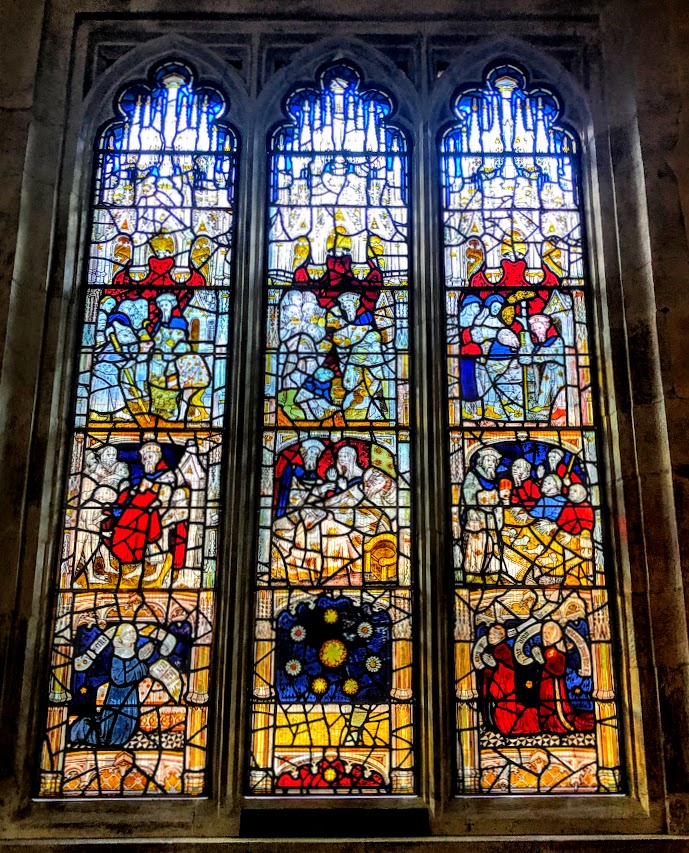
‘Our hearts are restless till they find their rest in you’ (Saint Augustine, Collect of the Day) … Saint Augustine and the Augustinian heart in a window by George W Walsh in the Augustinian Church in Galway (Photograph: Patrick Comerford)

Scripture quotations are from the New Revised Standard Version Bible: Anglicised Edition copyright © 1989, 1995 National Council of the Churches of Christ in the United States of America. Used by permission. All rights reserved worldwide. http://nrsvbibles.org

30 September 2026

Daily prayer in Ordinary Time 2026:
145, Wednesday 30 September 2026

‘Disturb us, Lord … when we arrived safely because we sailed too close to the shore’ … after sunset on the shore below the Fortezza in Rethymnon in Crete (Photograph: Patrick Comerford)

Patrick Comerford

We have arrived at the end of September and we are continuing in Ordinary Time in the Church Calendar. The week began with Seventeenth Sunday after Trinity (Trinity XVII, 27 September 2026), and the calendar of the Church of England in Common Worship today remembers Saint Jerome (420), Translator of the Scriptures, Teacher of the Faith.

Before today begins, I am taking some quiet time this morning to give thanks, and for reflection, prayer and reading in these ways:

1, today’s Gospel reading;

2, a reflection on the Gospel reading;

3, a prayer from the USPG prayer diary;

4, the Collects and Post-Communion prayer of the day.

‘Disturb us, Lord … when we arrived safely because we sailed too close to the shore’ … sails and boats in the harbour in Rethymnon at sunset (Photograph: Patrick Comerford; click on image for full-screen viewing)

Luke 9: 57-62 (NRSVA):

57 As they were going along the road, someone said to him, ‘I will follow you wherever you go.’ 58 And Jesus said to him, ‘Foxes have holes, and birds of the air have nests; but the Son of Man has nowhere to lay his head.’ 59 To another he said, ‘Follow me.’ But he said, ‘Lord, first let me go and bury my father.’ 60 But Jesus said to him, ‘Let the dead bury their own dead; but as for you, go and proclaim the kingdom of God.’ 61 Another said, ‘I will follow you, Lord; but let me first say farewell to those at my home.’ 62 Jesus said to him, ‘No one who puts a hand to the plough and looks back is fit for the kingdom of God.’

Sir Francis Drake … ‘it is not the beginning, but the continuing of the same unto the end, until it be thoroughly finished, which yieldeth the true glory’

Today’s Reflections:

Saint Luke is a great story-teller, and we are all captivated by his stories of healing and his parables: the Good Samaritan, the Prodigal Son, the unjust steward, and so on.

So this morning’s Gospel reading at the Eucharist (Luke 9: 57-62) comes as a little surprise. The first impression is that there is no story here, no drama, no healing, no showing how society’s perceived underdog is really a model for our own behaviour, for my behaviour – indeed a model of how God behaves, and behaves towards us.

Instead, what we have what reads like a series of pithy statements from Jesus: like a collection of sayings from the Desert Fathers or even a collection of popular sayings from Zen masters.

Good stories about wayward sons and muggings on the roadside make for good drama, and healing stories are great soap opera. But they only remain stories and they only remain mini-stage-plays if all we want is good entertainment and forget all about what the main storyline is, what the underlying plot in Saint Luke’s Gospel is.

The context of today’s reading is provided a few verses earlier, when Saint Luke says the days are drawing near and Jesus is setting his face to go to Jerusalem (Luke 9: 51).

It is a challenge to us all. We are called to live not for the pleasure of a dramatic moment, but to live in the one great drama that is taking place: to set our faces on the heavenly Jerusalem; to live as if we really believe in the New Heaven and the New Earth.

We are called not to be conditional disciples – being a Christian when I look after everything else, sometime in the future. We are called to be committed disciples – to live as Christians in the here-and-now.

There is the man who wants to follow Jesus, but only if he can hold on to his wealth and property (Luke 9: 57-58). There is the man who wants to follow Jesus, but not until he has looked after burying his father (Luke 9: 59-60). There is the man who wants to follow Jesus, but who thinks first he must consider what his friends and those at home would think before he leaves them (Luke 10: 61-62).

Of course, it is good to have a home of my own and not to live in a foxhole. Of course, it is good that each of us should take responsibility for ageing parents and to bury them when they die. Of course, it is good that we should not walk out on our families, our friends and our responsibilities.

Of course, domestic security, filial duty and loyal affection are high ideals. But they are conditional, while the call of the kingdom is compelling, urgent and imperative. And it demands commitment in such a way that it puts all other loyalties in second place.

Christ is not saying that these men had the wrong values. But he sees how we can use values so that we can end up with the wrong priorities.

As GB Caird pointed out in his commentary on Saint Luke’s Gospel, sometimes the most difficult choices in life for most of us are not between good and evil, but between the good and the best. I am sure these three ‘wannabe’ disciples presented good excuses. But discipleship on my own terms is not what Christ asks of me. It can only be on his terms. There is no conditional discipleship, there is only committed discipleship.

As advertisers remind us constantly, there are terms and conditions attached to most things in life. But there can be no terms and conditions attached when it comes to being a disciple, to being a follower of Jesus.

As his ship, the Elizabeth Bonaventure, lay at anchor at Cape Sakar on 17 May 1587 after the sacking of Sagress, Sir Francis Drake wrote to Elizabeth I’s secretary of state, Sir Francis Walsingham: ‘There must be a begynnyng of any great matter, but the contenewing unto the end untyll it be thoroughly ffynyshed yeldes the trew glory.’

These words were later adapted by Eric Milner-White (1884-1963), who is credited with introducing the Service of Nine Lessons and Carols when he was the Dean of King’s College, Cambridge (1918-1941). In a collection of prayers he compiled and published in 1941 as he was moving from King’s to become Dean of York, he adapted Drake’s words in what has become a well-known prayer:

O Lord God,
when thou givest to thy servants
to endeavour any great matter,
grant us also to know that it is not the beginning,
but the continuing of the same unto the end,
until it be thoroughly finished, which yieldeth the true glory;
through him who for the finishing of thy work
laid down his life, our Redeemer, Jesus Christ.

— after Francis Drake (c. 1540-1596)

But there is another prayer that is also attributed to Francis Drake. After the Golden Hinde sailed from Portsmouth to raid Spanish Gold before sailing on to California, he is said to have written:

Disturb us, Lord,
when we are too well pleased with ourselves;
when our dreams have come true
because we have dreamed too little,
when we arrived safely
because we sailed too close to the shore.

Disturb us, Lord, when
with the abundance of things we possess
we have lost our thirst
for the waters of life;
having fallen in love with life,
we have ceased to dream of eternity
and in our efforts to build a new earth,
we have allowed our vision
of the new Heaven to dim.

Disturb us, Lord, to dare more boldly –
to venture on wider seas
where storms will show your mastery;
where losing sight of land,
We shall find the stars.

We ask you to push back
the horizons of our hopes;
and to push back the future
in strength, courage, hope, and love.

This we ask in the name of our Captain,
who is Jesus Christ.

This prayer exists in different versions, and many of these versions include lines that sound too modern to be Drake’s own words. Indeed, it is difficult to be certain whether any of this prayer was written or prayed by Drake himself, although, as the first person to circumnavigate the globe, he would certainly have understood its sentiment.

There is a well-known saying: ‘A ship in the harbour is safe, but that’s not what ships are built for.’ Food, shelter, and warmth are not enough on their own. In order to flourish, we need a dream – a sense of purpose. A dream come true is, by definition, not a dream any more. And when our dreams come true, we need to dream new dreams, for: ‘Where there is no vision, the people perish’ (Proverbs 28.19).

So often, it is true, church life is a tussle between young people who want to try new things and older people who so want to keep things as they are. But young adventurers also need older people with wisdom and perspective who can still retain and nurture a healthy sense of adventure.

Drake’s prayer expresses the excitement of faith. It is so easy for some to dismiss faith as a crutch for the weak and prayer as a sign of weakness. But if all our prayers were prayers for help, then would there be nothing more to life than merely coping with it and whatever it brings us?

‘No one who puts a hand to the plough and looks back is fit for the kingdom of God’ (Luke 9: 62) … sculpture in Kanturk, Co Cork, of Thady Kelleher (1935-2004), World and All-Ireland Ploughing Champion (Photograph: Patrick Comerford)

Today’s Prayers (Wednesday 30 September 2026):

In Pray with the World Church, the prayer diary of the Anglican mission agency USPG (United Society Partners in the Gospel), the theme this week, from 27 September to 3 October 2026 (pp 42-43), is ‘Power of Language’. This theme was introduced on Sunday with a reflection by Rachel Weller, Communications Officer, USPG.

The USPG Prayer Diary today (30 September 2026, International Translation Day) invites us to pray:

Gracious God, bless those who translate and interpret, making knowledge, scripture, and worship accessible to all.

The Collect of the Day:

Almighty God,
you have made us for yourself,
and our hearts are restless till they find their rest in you:
pour your love into our hearts and draw us to yourself,
and so bring us at last to your heavenly city
where we shall see you face to face;
through Jesus Christ your Son our Lord,
who is alive and reigns with you,
in the unity of the Holy Spirit,
one God, now and for ever.

The Post-Communion Prayer:

Lord, we pray that your grace
may always precede and follow us,
and make us continually to be given to all good works;
through Jesus Christ our Lord.

Additional Collect:

Gracious God,
you call us to fullness of life:
deliver us from unbelief
and banish our anxieties
with the liberating love of Jesus Christ our Lord.

Yesterday’s Reflections

Continued Tomorrow

‘Foxes have holes … but the Son of Man has nowhere to lay his head’ (Luke 9: 57) … a fox in street art in Lichfield (Photograph: Patrick Comerford)

Scripture quotations are from the New Revised Standard Version Bible: Anglicised Edition copyright © 1989, 1995 National Council of the Churches of Christ in the United States of America. Used by permission. All rights reserved worldwide. http://nrsvbibles.org

11 September 2026

Daily prayer in Ordinary Time 2026:
126, Friday 11 September 2026

‘Why do you see the speck in your neighbour’s eye?’ (Luke 6: 41) … an image in the Talbot Inn in Loughton, Milton Keynes (Photograph: Patrick Comerford, 2026)

Patrick Comerford

We are continuing in Ordinary Time in the Church Calendar and the week began with the and the week began with the Festival of Creation in Christ or the Fourteenth Sunday after Trinity (Trinity XIV, 6 September 2026).

In the Jewish Calendar, Rosh Hashanah (ראש השנה) begins at sunset tonight (Friday 11 September 2026) and ends at nightfall on Sunday (13 September 2026). Rosh Hashanah, literally ‘head of the year’, is the Jewish New Year. According to Jewish tradition, the holiday commemorates the creation of humanity and serves as a day of divine judgment. It is the first of the High Holy Days and begins the Ten Days of Repentance, culminating in Yom Kippur, which begins at sunset on Sunday 20 September and ends at nightfall on Monday 21 September.

Later today, many of us, I am sure, will be reflecting on the horrific events of ‘9/11’ 25 years ago on 11 September 2001. But, before today begins, I am taking some quiet time this morning to give thanks, for reflection, prayer and reading in these ways:

Before today begins, I am taking some quiet time this morning to give thanks, for reflection, prayer and reading in these ways:

1, today’s Gospel reading;

2, a reflection on the Gospel reading;

3, a prayer from the USPG prayer diary;

4, the Collects and Post-Communion prayer of the day.

‘Why do you see the speck in your neighbour’s eye?’ (Luke 6: 41) … street art in Plaza de Judería in Malaga (Photograph: Patrick Comerford)

Luke 6: 39-42 (NRSVA):

39 He also told them a parable: ‘Can a blind person guide a blind person? Will not both fall into a pit? 40 A disciple is not above the teacher, but everyone who is fully qualified will be like the teacher. 41 Why do you see the speck in your neighbour’s eye, but do not notice the log in your own eye? 42 Or how can you say to your neighbour, “Friend, let me take out the speck in your eye”, when you yourself do not see the log in your own eye? You hypocrite, first take the log out of your own eye, and then you will see clearly to take the speck out of your neighbour’s eye.’

‘First take the log out of your own eye’ (Luke 6: 39) … autumn logs by the River Ouse in Stony Stratford (Photograph: Patrick Comerford)

Today’s Reflections:

For some days, the Gospel readings have taken us through the ‘Sermon on the Level Place’, Saint Luke’s equivalent of the Sermon on the Mount, which we began reading yesterday with Saint Luke’s version of the Beatitudes (Luke 6: 20-38).

As we continue this sequence of readings from Saint Luke’s Gospel, we read sayings whose parallels in Saint Matthew’s Gospel (see Matthew 15) are addressed to the Pharisees, but here are addressed to the disciples.

In this reading, Christ makes two points.

Firstly, the blind cannot lead the blind. The disciple, left to himself or herself, does not know very much and depends on the teacher. But once the disciple is fully trained and has learnt everything it is possible to discern from the teacher, then the learner becomes an extension of the teacher. At that point, the disciple shares the teacher’s knowledge and wisdom and can, in turn, be a guide to others.

We ought to listen carefully to what Christ says to us and make it part of our own lives. Only then can we effectively lead others to him.

But, secondly, we need to be mindful about sitting in judgment on others. Christ uses a graphic image of someone trying to remove a speck of dust from another person’s eye while there is a large ‘log’ in their own. How can I see properly to correct the vision of my fellow disciple or Christian when my own vision is so distorted?

The faults I so easily see in others are often trivial in comparison with my own shortcomings. Of course, much of the energy I exert in gossip and in putting down others may be sub-conscious attempts to compensate for my own shortcomings. Instead of lifting myself up by changing my ways, I can try to drag others down.

But then, our judgments so often are based purely on external behaviour. We usually have no idea of the inner motives or intentions of other people, or an awareness of their inability to behave in way other than the way then do.

How often, when I am quick to criticism other people behind their backs am I equally quick to say those things to face-to-face. Yet, how often, when I am asked professionally to offer an objective evaluation of a person’s behaviour or their fitness for some responsibility, do I shy away from those responsibilities?

What is true sight and true light?

During a visit to Liverpool many years ago, I visited Hope Street, and there above the Hope Street entrance to the former Royal School for the Blind was the inscription: ‘Christ heals the blind, for who denies that in the mind dwell truer sight and clearer light than in the eyes?’

Both this morning’s reading and that inscription also find interesting parallels in Plato’s ‘Allegory of the Cave’ (The Republic, Book VII).

No one, of course, denies the idea that the mind possesses truer sight and clearer light than the eyes. In an account of Socrates in The Republic, Plato argues that our earthly senses can be misleading and that true understanding is found through the intellect and the forms, not the physical senses.

In Plato’s ‘Allegory of the Cave’, prisoners mistake shadows on a wall for reality. When one prisoner is freed and sees the true objects and the light of the sun, he finds the ‘reality’ of the cave far less clear than the true world, even though his eyes are pained by the light. This illustrates that physical sight can be deceptive, while the intellect understands a higher reality.

Plato believed that the intellect and reason, not the senses, provide true understanding and wisdom. The mind's perception is superior to the deceptive nature of physical vision.

He recalls Socrates’ allegory of the cave. Socrates has compared a philosophic education to leaving a dark cave and emerging into the light. He notes that, when you leave the dark and enter the light, it takes your eyes awhile to adjust; you cannot see at first.

Imagine leaving a dark cinema in the middle of a sunny day: it is hard to see outside at first.

So, the philosophers need to leave the cave and have their eyes adjust to the bright outside world. Once this happens, though, Socrates argues that they must be forced to go back into the dark cave, to rule.

The cave, it turns out, is an image of the city with its conventional opinions, as opposed to the truth. Socrates notes that, when the philosophers go back into the cave, it will also take some time for their eyes to adjust to the darkness.

Imagine, now, going back into that dark cinema in the middle of that sunny day; it is hard to see inside at first.

Socrates is comparing bodily vision to intellectual vision. There are two possible causes for someone who has bad bodily vision: they might be going from the dark to the light; or they might be going from the light to the dark. So too with intellectual vision: someone with bad intellectual vision may be going from the dark cave of opinions to the light of the truth, or they may be going from the light of the truth back to the dark cave of opinions.

Today’s Gospel sayings warn us against either form of blindness, but also warn us against leading others when we are not aware of suffering from one or other – or both – forms of blindness.

Blind Socrates … a statue by Pietro Magni (1817-1877) of Milan in the Botanic Gardens, Dublin, and previously in the gardens of Iveagh House (Photograph: Patrick Comerford)

Today’s Prayers (Friday 11 September 2026):

In my prayers this morning, I am remembering the horrific events of 9/11 25 years ago, on 11 September 2001, the dead, the injured, the maimed and the traumatised, all who lost family members, friends, colleagues and livelihoods, the brave first responders, and journalists like my colleagues in The Irish Times who worked hard through that difficult day to make sure the world knew the truth and the facts.

In Pray with the World Church, the prayer diary of the Anglican mission agency USPG (United Society Partners in the Gospel), the theme this week, from 6-12 September 2026 (pp 36-37), is ‘Turning Pain into Glory’. This theme was introduced on Sunday with a Reflection by Nolene Sheppard, Leader of a Women’s Empowerment Group, Magnificat, and Ukraine Aid Project Support Lead at Saint Thomas à Becket, Hamburg, Germany.

The USPG Prayer Diary today (Friday 11 September 2026) invites us to pray:

Father in heaven, we pray that by your grace the work of the Magnificat group may be strengthened to bring guidance, stability, and hope to refugee women and children residing in Germany too.

The Collect of the Day:

Almighty God,
whose only Son has opened for us
a new and living way into your presence:
give us pure hearts and steadfast wills
to worship you in spirit and in truth;
through Jesus Christ your Son our Lord,
who is alive and reigns with you,
in the unity of the Holy Spirit,
one God, now and for ever.

The Post-Communion Prayer:

Lord God, the source of truth and love,
keep us faithful to the apostles’ teaching and fellowship,
united in prayer and the breaking of bread,
and one in joy and simplicity of heart,
in Jesus Christ our Lord.

Additional Collect:

Merciful God:
your Son came to save us
and bore our sins on the cross:
may we trust in your mercy
and know your love,
rejoicing in the righteousness
that is ours through Jesus Christ our Lord.

Yesterday’s reflections

Continued tomorrow

An inscription above the Hope Street entrance of the former Royal School for the Blind, Liverpool (Photograph: Patrick Comerford)

Scripture quotations are from the New Revised Standard Version Bible: Anglicised Edition copyright © 1989, 1995, National Council of the Churches of Christ in the United States of America. Used by permission. All rights reserved worldwide. http://nrsvbibles.org

10 September 2026

Daily prayer in Ordinary Time 2026:
125, Thursday 10 September 2026

‘Forgive, and you will be forgiven’ (Luke 6: 36) … street art on North Street, Leighton Buzzard (Photograph: Patrick Comerford)

Patrick Comerford

We are continuing in Ordinary Time in the Church Calendar and the week began with the and the week began with the Festival of Creation in Christ or the Fourteenth Sunday after Trinity (Trinity XIV, 6 September 2026). But, before today begins, I am taking some quiet time this morning to give thanks, for reflection, prayer and reading in these ways:

1, today’s Gospel reading;

2, a reflection on the Gospel reading;

3, a prayer from the USPG prayer diary;

4, the Collects and Post-Communion prayer of the day.

‘Be merciful, just as your Father is merciful’ (Luke 6: 36) … the ‘Corporal Works of Mercy’ window in All Saints’ Church, North Street, York (Photograph: Patrick Comerford)

Luke 6: 27-38 (NRSVA):

[Jesus said:] 27 ‘But I say to you that listen, Love your enemies, do good to those who hate you, 28 bless those who curse you, pray for those who abuse you. 29 If anyone strikes you on the cheek, offer the other also; and from anyone who takes away your coat do not withhold even your shirt. 30 Give to everyone who begs from you; and if anyone takes away your goods, do not ask for them again. 31 Do to others as you would have them do to you.

32 ‘If you love those who love you, what credit is that to you? For even sinners love those who love them. 33 If you do good to those who do good to you, what credit is that to you? For even sinners do the same. 34 If you lend to those from whom you hope to receive, what credit is that to you? Even sinners lend to sinners, to receive as much again. 35 But love your enemies, do good, and lend, expecting nothing in return. Your reward will be great, and you will be children of the Most High; for he is kind to the ungrateful and the wicked. 36 Be merciful, just as your Father is merciful.

37 ‘Do not judge, and you will not be judged; do not condemn, and you will not be condemned. Forgive, and you will be forgiven; 38 give, and it will be given to you. A good measure, pressed down, shaken together, running over, will be put into your lap; for the measure you give will be the measure you get back.’

‘If anyone strikes you on the cheek, offer the other also’ (Luke 6: 29) … street art in Plaza de la Judería in Malaga (Photograph: Patrick Comerford)

Today’s Reflections:

Today’s Gospel reading continues reading from the ‘Sermon on the Level Place’, Saint Luke’s equivalent of the Sermon on the Mount, which we began reading yesterday with Saint Luke’s version of the Beatitudes (Luke 6: 20-26).

After the blessings and woes of the Beatitudes, we read this morning that Jesus tells us as his followers to be merciful as God is merciful. Mercy is one of God’s primary qualities (see Exodus 34: 6-7), and the concept of mercy in Luke 6 has an eschatological frame of reference. God is merciful by offering the possibility of turning away from disobedience through repentance and turning towards him and receiving forgiveness and restoration.

In Mary’s song Magnificat, God is twice identified as merciful (Luke 1: 50, 54). Zechariah too identifies mercy as a sign of God’s faithfulness to God’s promises, creating a people who ‘might serve God without fear in holiness and righteousness’ (Luke 1: 72-78). In today’s reading, Christ shows how to put this mercy into practice.

Luke 6: 27-29 presuppose a situation of conflict, in a time when the religious and political leaders of day were seen by many as their enemies. But Christ calls on us to respond and act in ways that seek the good of the other. This form of nonviolence goes beyond non-retaliation and takes positive steps that promote the welfare of the other parties in the conflict.

Verse 30 presupposes an economic situation in which many people are exploited, live in poverty, and seek to survive by begging. The give to those who beg implies that we have an abundance from which to share (see Luke 6: 39).

Verse 31 repeats the ‘Golden Rule’: ‘Do to others as you would have them do to you.’ But the golden rule is not enough for us, the Children of God (see verse 35) in our covenant relationship with God.

Verses 32-34 challenges the widely accepted notion in the Hellenistic world that relationships are reciprocal, and calls on us to go beyond behaviour is guided merely by the expectation of similar responses.

Verse 35 calls on us to replace old-age pattens of behaviour with ways that reflect the Kingdom of God, and to imitate God who is kind also to the ungrateful and the wicked. To be kind does not mean to approve but means to seek their best interest. Even the ungrateful and the wicked have the potential and the possibility of becoming part of the Kingdom of God.

Verse 36 sums up how to live a life that reflects the Kingdom of God.

Verse 37 is a reminder that we not have the final say ourselves on who is in and who is outside the Kingdom of God. We do not live in the apocalyptic moment, and when he exclude others from the Church we risk finding we have excluded ourselves too.

Verse 38 reminds us that God’s generosity is overflowing and overwhelming and goes beyond any possibility we have of measuring it.

As Shakespeare reminds us, in the words of Portia in The Merchant of Venice,

The quality of mercy is not strained;
It droppeth as the gentle rain from heaven …
(The Merchant of Venice, Act IV, Scene 1).

‘Love your enemies, do good to those who hate you’ (Luke 6: 26) … street art on North Street, Leighton Buzzard (Photograph: Patrick Comerford)

Today’s Prayers (Thursday 10 September 2026):

In Pray with the World Church, the prayer diary of the Anglican mission agency USPG (United Society Partners in the Gospel), the theme this week, from 6-12 September 2026 (pp 36-37), is ‘Turning Pain into Glory’. This theme was introduced on Sunday with a Reflection by Nolene Sheppard, Leader of a Women’s Empowerment Group, Magnificat, and Ukraine Aid Project Support Lead at Saint Thomas à Becket, Hamburg, Germany.

The USPG Prayer Diary today (Thursday 10 September 2026) invites us to pray:

Dear Father, we pray for the refugee women and children supported by the Magnificat group. Grant safety and strength, and may these new friendships be refreshing to their souls.

The Collect of the Day:

Almighty God,
whose only Son has opened for us
a new and living way into your presence:
give us pure hearts and steadfast wills
to worship you in spirit and in truth;
through Jesus Christ your Son our Lord,
who is alive and reigns with you,
in the unity of the Holy Spirit,
one God, now and for ever.

The Post-Communion Prayer:

Lord God, the source of truth and love,
keep us faithful to the apostles’ teaching and fellowship,
united in prayer and the breaking of bread,
and one in joy and simplicity of heart,
in Jesus Christ our Lord.

Additional Collect:

Merciful God:
your Son came to save us
and bore our sins on the cross:
may we trust in your mercy
and know your love,
rejoicing in the righteousness
that is ours through Jesus Christ our Lord.

Yesterday’s reflections

Continued tomorrow

‘A good measure, pressed down, shaken together, running over … the measure you give will be the measure you get back’ (Luke 6: 38) … street art in Dublin (Photograph: Patrick Comerford)

Scripture quotations are from the New Revised Standard Version Bible: Anglicised Edition copyright © 1989, 1995, National Council of the Churches of Christ in the United States of America. Used by permission. All rights reserved worldwide. http://nrsvbibles.org

09 September 2026

Daily prayer in Ordinary Time 2026:
124, Wednesday 9 September 2026

‘Blessed are you when people hate you, and when they exclude you, revile you, and defame you’ (Luke 6: 22) … the Battle of Cable Street mural in the East End, London (Photograph: Patrick Comerford)

Patrick Comerford

We are continuing in Ordinary Time in the Church Calendar and the week began with the and the week began with the Festival of Creation in Christ or the Fourteenth Sunday after Trinity (Trinity XIV, 6 September 2026). Today the Church of England in the Calendar in Common Worship remembers Charles Fuge Lowder (1820-1880), who, in many ways, epitomise the 19th-century Anglo-Catholic ‘slum priest’.

I have another medical appointment later this morning, to review recent blood tests as my sarcoidosis and Vitamin B12 levels continue to be monitored. Later, I hope to return to the choir rehearsals in Saint Mary and Saint Giles Church, Stony Stratford. But, before today begins, I am taking some quiet time this morning to give thanks, for reflection, prayer and reading in these ways:

1, today’s Gospel reading;

2, a reflection on the Gospel reading;

3, a prayer from the USPG prayer diary;

4, the Collects and Post-Communion prayer of the day.

‘Woe to you who are full now, for you will be hungry’ (Luke 6: 25) … full meals at restaurants in Rethymnon in Crete (Photographs: Patrick Comerford)

Luke 6: 20-26 (NRSVA):

20 Then he looked up at his disciples and said:

‘Blessed are you who are poor,
for yours is the kingdom of God.
21 ‘Blessed are you who are hungry now,
for you will be filled.
‘Blessed are you who weep now,
for you will laugh.

22 ‘Blessed are you when people hate you, and when they exclude you, revile you, and defame you on account of the Son of Man. 23 Rejoice on that day and leap for joy, for surely your reward is great in heaven; for that is what their ancestors did to the prophets.

24 ‘But woe to you who are rich,
for you have received your consolation.
25 ‘Woe to you who are full now,
for you will be hungry.
‘Woe to you who are laughing now,
for you will mourn and weep.

26 ‘Woe to you when all speak well of you, for that is what their ancestors did to the false prophets.’

‘Blessed are you who weep now …’ (Luke 6: 21) … street art in Limerick (Photograph: Patrick Comerford)

Today’s Reflections:

The typesetters’ decision to present much of the New Testament as narrative discourse has left us with little poetry in the New Testament compared with the Hebrew Bible.

But there are poetic hymns throughout the New Testament, and Saint Luke’s Gospel has several poems that we continue to use as poems or songs in the form of liturgical canticles:

• The Song of Mary, or Magnificat (Luke 1: 46-55), part of which we read on Monday;
• The Prophecy of Zechariah, known as Benedictus (Luke 1: 68-79);
• The Song of the Heavenly Host, Gloria in Excelsis (Luke 2: 14);
• The Song of Simeon, Nunc Dimittis (Luke 2: 29-32), which inspired TS Eliot’s ‘A Song for Simeon.

Two of the best known poetic passages in the Gospels are the two accounts of the Beatitudes (Matthew 5: 3-10; Luke 6: 20-26). In today’s Gospel reading, Saint Luke then narrates his account of the ‘Sermon on the Mount’ (verses 20-26). He offers four beatitudes and four corresponding woes or warnings.

The word blessed (Greek μακαριοι, makarioi) also means ‘happy’ or ‘fortunate.’ Some people are blessed, happy, fortunate to be included in the Kingdom of God, others are warned of the consequences of their choices in life.

The paired blessings and warnings in today’s Gospel reading are:

• to the poor (verse 20), and to the rich (verse 24);
• to the hungry (verse 21), and to the ‘full’ (verse 25a);
• to those who weep (verse 21), and to those are laughing (verse 25);
• to those who are hated, excluded, reviled and defamed (verse 22), and those who are held in esteem (verse 26).

Saint Luke records the ‘poor’ without any qualification (verse 20), compared with Saint Matthew’s ‘poor in spirit’ (see Matthew 5: 3). In Jewish tradition, the poor and the hungry are not cursed or impure, but are deserving recipients of divine and earthly care (see Deuteronomy 11: 15; Isaiah 49: 10; Jeremiah 31: 25; Ezekiel 34: 29). The poor are to receive the Kingdom of God; the rich have their reward today in their comfortable lifestyles.

Those who are excluded are denied their right to worship in the Temple and in the synagogue. But in the past, the prophets – including Jeremiah – were hated, excluded, reviled and defamed (verse 23), while the people in power spoke well of the false prophets (verse 26; see Jeremiah 5: 31).

This Gospel reading today is set within a large crowd of people who came to hear Jesus and to be healed, and that those who were troubled were cured. If the same people came to our churches today – if they came to me as a priest of the church today – would they know from how we behave – from how I behave – that Jesus cares for them, that he seeks to restore them to the fullness of life?

Poverty comes in many forms today. Exclusion and marginalisation are common experiences for many in our society. Those who hunger and who weep are not just around us, but among us, in the Church, in our community, in this society.

If you feel you are excluded or marginalised, if you know you are hungry and you are often close to tears, do you feel the rest of us in the Church do enough to see to it that you know you are counted in when it comes to the Church being a sign of the Kingdom of God?

If you think you are financially secure, that you have enough to eat, if you have plenty of good reason to laugh and be happy, if you know people respect you and treat you properly, do you see the rest of us in the Church as a blessing to you, as an opportunity to share your blessings, to share your joys, to share your Easter faith in the Risen Christ?

Poor and rich, hungry and ‘full’, those who weep and those who laugh, the hated, excluded, reviled and defamed and those held in esteem: in Oscar Wilde’s satirical play, A Woman of No Importance (1893), Lord Illingworth observes wisely: ‘The only difference between the saint and the sinner is that every saint has a past, and every sinner has a future.’

He was probably paraphrasing a quotation popularly attributed to Saint Augustine: ‘There is no saint without a past, no sinner without a future.’

‘The only difference between the saint and the sinner is that every saint has a past, and every sinner has a future’ … Oscar Wilde or Saint Augustine? (Photograph: Patrick Comerford)

Today’s Prayers (Wednesday 9 September 2026):

In Pray with the World Church, the prayer diary of the Anglican mission agency USPG (United Society Partners in the Gospel), the theme this week, from 6-12 September 2026 (pp 36-37), is ‘Turning Pain into Glory’. This theme was introduced on Sunday with a Reflection by Nolene Sheppard, Leader of a Women’s Empowerment Group, Magnificat, and Ukraine Aid Project Support Lead at Saint Thomas à Becket, Hamburg, Germany.

The USPG Prayer Diary today (Wednesday 9 September 2026) invites us to pray:

Father in heaven, we thank you for Nolene and for carrying her through when she felt overwhelmed and alone. Thank you for walking beside her step by step. Remind us to trust you too and know that you are with us.

The Collect of the Day:

Almighty God,
whose only Son has opened for us
a new and living way into your presence:
give us pure hearts and steadfast wills
to worship you in spirit and in truth;
through Jesus Christ your Son our Lord,
who is alive and reigns with you,
in the unity of the Holy Spirit,
one God, now and for ever.

The Post-Communion Prayer:

Lord God, the source of truth and love,
keep us faithful to the apostles’ teaching and fellowship,
united in prayer and the breaking of bread,
and one in joy and simplicity of heart,
in Jesus Christ our Lord.

Additional Collect:

Merciful God:
your Son came to save us
and bore our sins on the cross:
may we trust in your mercy
and know your love,
rejoicing in the righteousness
that is ours through Jesus Christ our Lord.

Yesterday’s reflections

Continued tomorrow

‘Woe to you when all speak well of you’ (Luke 6: 26) … street art in Dublin (Photograph: Patrick Comerford)

Scripture quotations are from the New Revised Standard Version Bible: Anglicised Edition copyright © 1989, 1995, National Council of the Churches of Christ in the United States of America. Used by permission. All rights reserved worldwide. http://nrsvbibles.org

09 August 2026

Daily prayer in Ordinary Time 2026:
94, Sunday 9 August 2026,
Tenth Sunday after Trinity (Trinity X)

An icon depicting today’s Gospel reading … the Greek text reads ‘Take heart, it is I; do not be afraid’ (Matthew 14: 27)

Patrick Comerford

This is Ordinary Time in the Church Calendar and today is the Tenth Sunday after Trinity (Trinity X, 9 August 2026). Later this morning, I hope to take part in the Parish Eucharist in Saint Mary and Saint Giles Church, Stony Stratford, leading the intercessions. In these early hours, before today begins, I am taking some quiet time this morning to give thanks, for reflection, prayer and reading in these ways:

1, today’s Gospel reading;

2, a reflection on the Gospel reading;

3, a prayer from the USPG prayer diary;

4, the Collects and Post-Communion prayer of the day.

‘Peace. Be still’ … Christ calming the storm … the Cameron window in Saint Seiriol’s Priory Church, Penmon, Anglesey … see Matthew 14: 22-33 (Photograph: Patrick Comerford)

Matthew 14: 22-33 (NRSVA):

22 Immediately [after feeding the crowd with five loaves and two fish,] he [Jesus] made the disciples get into the boat and go on ahead to the other side, while he dismissed the crowds. 23 And after he had dismissed the crowds, he went up the mountain by himself to pray. When evening came, he was there alone, 24 but by this time the boat, battered by the waves, was far from the land, for the wind was against them. 25 And early in the morning he came walking towards them on the lake. 26 But when the disciples saw him walking on the lake, they were terrified, saying, ‘It is a ghost!’ And they cried out in fear. 27 But immediately Jesus spoke to them and said, ‘Take heart, it is I; do not be afraid.’

28 Peter answered him, ‘Lord, if it is you, command me to come to you on the water.’ 29 He said, ‘Come.’ So Peter got out of the boat, started walking on the water, and came towards Jesus. 30 But when he noticed the strong wind, he became frightened, and beginning to sink, he cried out, ‘Lord, save me!’ 31 Jesus immediately reached out his hand and caught him, saying to him, ‘You of little faith, why did you doubt?’ 32 When they got into the boat, the wind ceased. 33 And those in the boat worshipped him, saying, ‘Truly you are the Son of God.’

‘They got into the boat and went on ahead to the other side’ (Matthew 14: 22) … boats at Messonghi in Corfu (Photograph: Patrick Comerford)

Today’s Reflections:

The Gospel reading in the Lectionary today (Matthew 14: 22-33) is the same Gospel reading I reflected on last Monday (3 August 2026) and that was an optional reading on Tuesday (4 August 2026). So, I am reflecting on this reading this morning in the light of today marking the 81st anniversary of the atomic bombing of Nagasaki on 9 August 1945.

The bombing of Nagasaki came three days after the bombing of Hiroshima on 6 August, in the closing days of World War II. Within a week, the Japanese emperor had surrendered, and the war came to an end.

Perhaps there was added poignancy in Nagasaki as it was one of the oldest and one of the largest Christian communities in East Asia, and the cathedral was 500 metres from ground zero.

The first use of nuclear weapons was at the ‘Trinity’ test site in the New Mexico desert, at Hiroshima, and at Nagasaki. But this morning, I am asking yet again: what have we learned about war and peace, hatred and justice, since then?

The nuclear arms race continues apace, so that earlier this year [27 January 2026] the Bulletin of Atomic Scientists said the hands on the Doomsday Clock are now at 85 seconds to midnight, making it the closest it has ever been to global catastrophe in its history.

Their warning was issued just a month before the present conflict involving the US and Iran erupted in the Gulf on 28 February and quickly sucked in the rest of the world. When they reset the Doomsday Clock, the scientists said the nuclear threats have increased due to expiring strategic arms control agreements, the lack of replacement treaties, and an aggressive modernisation of arsenals by major nuclear powers.

Other factors include disruptive technologies, with the unmanaged proliferation of artificial intelligence (AI) in military simulations and disinformation risks. The climate and global crises, with ongoing extreme weather events, are accelerating ecological damage, and there is inadequate international co-operation.

These are our worst nightmares. As we fall further and further into the pit, into the abyss, we see too a rise in racism, antisemitism, Islamophobia and far-right populism that are fuelled by the Trump regime and funded and cheered on by people like Elon Musk and platforms such as X (formerly Twitter).

Too much money is being spent on the arms race and hatred, not enough on hospitals, health care and reaching out to one another.

Ever since the pandemic lockdown, many people have seen themselves descending to social, spiritual and psychological depths that in the past were known only at times of great and intimate crises, such as family tragedies.

Social and spiritual isolation seem to have brought many people deeper into the abyss, and since then many people have asked: ‘Where is God in all this?’

This is the context in which I find myself reading today’s lectionary readings. In the Epistle reading (Romans 10: 5-15), Saint Paul asks, ‘Who will descend into the abyss?’ (verse 7), a reference from the Septuagint (Deuteronomy 30) to crossing the seas. Saint Paul too knows that descending to the abyss is not the end: it leads to the end of oppression and to liberation and freedom.

Each and every one of us is overwhelmed by the pressures of life, by the demands of others, by the state of the world today. Yet we can believe, with the benefit of hindsight and through faith, that God is not neglecting his people.

In the Gospel reading (Matthew 14: 22-33), the disciples feel abandoned as they face their worst fears and face the abyss in the sea, the fear of drowning in the storms of life, of falling into the pit.

It is early in the morning, before dawn, and the boat is far from the shore when it is battered by waves and the wind. The disciples have lost control and are frightened. They see Jesus walking on the sea, and are terrified even more, thinking they are seeing a ghost. They cry out in their fears, but Jesus seeks to calm their fears: ‘Take heart, it is I; do not be afraid.’

In other Gospel accounts, Jesus says, ‘Peace! Be still!’ (see Mark 4: 39).

Both frightened humanity and disorderly nature listen to the word and obey. In their response, the disciples acknowledge Christ as ‘the Son of God’ (verse 33). He is in control of their fears and of the created order, offering to bring a new creation out of chaos and darkness.

Growing complacency and adversarial, nationalistic rhetoric among global leaders are undermining multilateral safety frameworks, the Bulletin of Atomic Scientists has warned.

But concern for the plight of the world in these dangerous times is not an add-on to mission – it is at the very heart of mission. Two of the five marks of mission – hallmarks of Anglican identity and mission – are ‘to challenge violence of every kind and pursue peace and reconciliation’ and ‘to strive to safeguard the integrity of creation, and sustain and renew the life of the earth.’

In words quoted some years ago by Helen Mirren and written inside Anne Frank’s Diary, we must ‘be kind and have courage.’

One of the collects in Common Worship today prays: ‘Lord of heaven and earth, as Jesus taught his disciples to be persistent in prayer, give us patience and courage never to lose hope, but always to bring our prayers before you; through Jesus Christ our Lord.’

There is no need to fear the abyss, the pit, the nightmares we face now, 81 years after the Holocaust and Nagasaki. We are in this boat together as disciples, and Christ offers the hope he brings with calming the storm, a way out of chaos and darkness into light and peace.

‘When they got into the boat, the wind ceased’ (Matthew 14: 32) … a gondolier on the Grand Canal in Venice (Photograph: Patrick Comerford)

Today’s Prayers (Sunday 9 August 2026, Trinity X):

In Pray with the World Church, the prayer diary of the Anglican mission agency USPG (United Society Partners in the Gospel), the theme this week (9-15 August 2026, pp 28-29), is ‘Mission to the Mangyans’. This theme is introduced today with a Programme Update by the Revd Jewel B Tumaliuan, Programme Director, Iglesia Filipina Independiente (IFI):

Nanay Norma Abnay is a lay leader in the IFI Church and a member of the Mangyan, an Indigenous people of Mindoro. She lives in Panhulugan, a remote mountain village on the island of Mindoro in the Philippines.

Access to healthcare is one of the greatest challenges for the community, with travel to medical treatment often long and difficult, and river crossings becoming impossible during the rainy season.

Bishop Ronelio, who began working with Mangyan communities in 1995, adds, ‘Sometimes we cannot reach certain communities due to security threats from armed conflict. If there is an encounter, we cannot be present at the chapels, which makes gathering very difficult.’ Despite these dangers, local leaders like Nanay Norma are given training to ensure that worship and care continue, helping the community remain resilient and looked after.

She explains, ‘When we first got to know IFI, we were given a church, and we already had a good feeling about it. As a lay leader, sometimes it is difficult, especially when there are many tasks to handle. But to the best of my ability, I do everything I can to serve our community.’

By God’s grace, a network of chapels has emerged, led by lay leaders like Nanay Norma from the Indigenous communities they serve. ‘The Church has helped us a lot,’ Norma concludes, ‘especially in fostering unity and teaching us how to work together. Although we experience poverty, they are always there to help without getting tired.’

The USPG Prayer Diary today (Sunday 9 August 2026, International Day of the World’s Indigenous Peoples) invites us to pray:

Creator God, we give thanks for the Mangyan and all Indigenous peoples, for their rich cultures, wisdom, and deep relationship with the land. Thank you that you love them and know them by name.

The Collect of the Day:

Let your merciful ears, O Lord,
be open to the prayers of your humble servants;
and that they may obtain their petitions
make them to ask such things as shall please you;
through Jesus Christ your Son our Lord,
who is alive and reigns with you,
in the unity of the Holy Spirit,
one God, now and for ever.

The Post-Communion Prayer:

God of our pilgrimage,
you have willed that the gate of mercy
should stand open for those who trust in you:
look upon us with your favour
that we who follow the path of your will
may never wander from the way of life;
through Jesus Christ our Lord.

Additional Collect:

Lord of heaven and earth,
as Jesus taught his disciples to be persistent in prayer,
give us patience and courage never to lose hope,
but always to bring our prayers before you;
through Jesus Christ our Lord.

Yesterday’s reflections

Continued tomorrow

Fishing boats tied up at the Quays in Wexford (Photograph: Patrick Comerford)

Scripture quotations are from the New Revised Standard Version Bible: Anglicised Edition copyright © 1989, 1995, National Council of the Churches of Christ in the United States of America. Used by permission. All rights reserved worldwide. http://nrsvbibles.org

04 August 2026

Daily prayer in Ordinary Time 2026:
89, Tuesday 4 August 2026

Looking out from Preveli Monastery in Crete towards the island of Gavdos, said to be the Ogygia of Calypso where Odysseus stayed for seven years (Photograph: Patrick Comerford)

Patrick Comerford

We are continuing in Ordinary Time in the Church Calendar and the week began with the Ninth Sunday after Trinity (Trinity IX, 2 August 2026). The calendar of the Church of England in Common Worship today recalls Jean-Baptiste Vianney (1786-1859), Curé d’Ars and Spiritual Guide.

Before today begins, I am taking some quiet time this morning to give thanks, for reflection, prayer and reading in these ways:

1, today’s Gospel reading;

2, a reflection on the Gospel reading;

3, a prayer from the USPG prayer diary;

4, the Collects and Post-Communion prayer of the day.

‘And if one blind person guides another, both will fall into a pit’ (Matthew 15: 14) … looking into the crater at the top of Mount Vesuvius (Photograph: Patrick Comerford)

Matthew 15: 1-2,10-14 (NRSVA):

1 Then Pharisees and scribes came to Jesus from Jerusalem and said, 2 ‘Why do your disciples break the tradition of the elders? For they do not wash their hands before they eat.’

10 Then he called the crowd to him and said to them, ‘Listen and understand: 11 it is not what goes into the mouth that defiles a person, but it is what comes out of the mouth that defiles.’ 12 Then the disciples approached and said to him, ‘Do you know that the Pharisees took offence when they heard what you said?’ 13 He answered, ‘Every plant that my heavenly Father has not planted will be uprooted. 14 Let them alone; they are blind guides of the blind. And if one blind person guides another, both will fall into a pit.’

Homer, who is traditionally said to have been blind, tells of the 10-year return journey of Odysseus to his home in Ithaka (Photograph: Patrick Comerford)

Today’s Reflections:

‘Let them alone; they are blind guides of the blind. And if one blind person guides another, both will fall into a pit’ (Matthew 15: 14).

There were two choices in the lectionary for Gospel readings at the Eucharist yesterday (Monday 3 August): Matthew 14: 13-21, or Matthew 14: 22-36. The first choice was also the Gospel reading on Sunday, and so in my reflections yesterday I looked at the second choice (Matthew 14: 22-36).

Once again, the lectionary offers two choices in the Gospel readings at the Eucharist today (Tuesday 4 August): Matthew 14: 22-36, which I read and reflected on yesterday, or Matthew 15: 1-2, 10-14, which I am reading and reflecting on this morning.

At a surface level, today’s Gospel passage is about religious rituals, purification rites and liturgical niceties. However, the challenge in this reading is a question of pure religious rather than ritual purification: What defiles a person? Is this a liturgical nicety or a moral problem?

It is far too easy for me to want to be seen to do the right thing, rather than doing the right thing, whether or not anyone sees what I am doing, or even when those nearby are blind to what I am doing … or even to what I am not doing.

What leads me to do the right thing? Am I too easily led by others? Do I blindly follow the demands of others and allow their expectations to lead me into a pit, into a moral abyss, dragging others down with me in the process? And once I am there, how can I get out of that dark cave?

Plato’s ‘Allegory of the Cave’ (The Republic, Book VII) imagines a deep, dark cave in which some chained prisoners are forced to look at a wall. Behind them flickers the pale light of a fire, and between the fire and the prisoners, various objects cast a shadow onto the wall.

The prisoners, born into this condition, know only the shadows and think that they are all there is to the world. And so, they become shadow experts, and spend all of their days classifying, studying and examining them closely.

One day, a prisoner breaks free. He rushes from the cave and finds himself out in the dazzling sun. After savouring all of the marvels of the world, she is overcome with pity, and drags herself back into the cave to save her friends. But since her eyes are still dazzled from the bright sun, she cannot see so well in the dark cave. When she tells the prisoners of the wonders to be seen outside, they mock her inability to see shadows, tell her she is a fool, and threaten to kill her.

Plato’s story is a metaphor, telling us how we need to look behind the first impressions and what appears to be the case to see the truth of the matter. We need to exercise introspection and to examine our thoughts with reasoning and the bright glare of truth. We cannot let the blind lead the blind.

Those particular Pharisees and scribes seem to be more worried about what they have not seen the disciples doing on occasion rather than commending the good they may actually be doing, noticed or unnoticed, day-by-day.

Moral leadership often comes not in the form of great tomes or well-argued books on ethics and philosophy, but in the form of the expectations that are laid on us or projected onto us from within our own peer group, from our contemporaries, from those we do not want to let down, from those we seldom question yet often follow blindly.

It is easier to follow those pressures blindly than risk finding ourselves in the dark and alone simply for doing the right thing for no other reason than it is the right thing to do.

I was talking recently with someone about Chrisopher Nolan’s new film Odyssey, which is continuing to take cinemas everywhere by storm. In a witty response, that person joked: ‘It’s no wonder it took him 10 years to get home. Homer was blind. If I was following his directions I’d be straying take 10 years to get home too.’

In his reflections on ‘Thought for the Day’ on Radio 4 about two weeks ago (24 July 2026), the Revd Dr Giles Fraser talked about some of those blind alleys and diversions that delay Odysseus and frustrate his epic journey home.

On the island of Ogygia, the beautiful nymph Calypso tries to entice him to stay with her, promising he would never age, never die. She offers eternal life, youth and freedom from pain, danger and death if he stays with her on Ogygia. And yet, after seven years, Odysseus eventually refuses the temptation to achieve immortality, preferring risk and death over immortality and agelessness, refuses the goddess and chooses to leave, fully aware that his mortal home of Ithaca is exposed to risk, decay, and death.

Giles Fraser refers to an essay on why Odysseus is right to refuse this, in which the American philosopher Professor Martha Nussbaum of the University of Chicago argues that there are some things that the immortal gods are not able to do that mortal human beings are: not least amongst them is to show courage. If I cannot risk everything because I cannot die, then how could I possibly be courageous?

What sort of life would Odysseus have if he stays with Calypso on her perfect deathless island, and gave up any need for all his craft and resourcefulness?

‘And what would love mean’, he asks ‘if you could never put anything on the line for others? That’s why we cheer Odysseus on as he decides to refuse Calypso her seemingly unrefusable offer.’

Martha Nussbaum, who is Jewish, suggests that there is something about this refusal of invulnerability that explains one of the key features of Christian theology: of God becoming human, of God who is prepared to suffer and die in the name of love.

‘What is attractive about both Odysseus and Jesus is that they are prepared to have skin in the game, which is pretty much the very definition of incarnation’, Giles Fraser says.

He suggests that to live beyond the realm of suffering and death would be to live in a way that is no longer human – without the possibility of heroism, without the possibility of risking all for love. ‘Why is it, for instance, that so often in Greek mythology, perfect gods fall in love with imperfect human beings rather than their own kind? Because fragile humanity can exhibit exciting virtues, risky love-soaked heroism in the way that the gods just cannot.’

Of course, he agrees, none of us wants those we love to be taken from us. Yet also, death is what makes life valuable and precious. As the late Queen Elizabeth put it: ‘Grief is the price we pay for love’.

What Odysseus discovers on Calypso’s Island – often identified by Greeks with the small island of Gavdos, off Preveli and the south coast of Crete – is that without death, life will be drained of its meaning.

Allowing those who are morally blind to lead us because it seems to be the safe thing to do, allowing our priorities in life to be dictated by appearances and being seen to do what is acceptable so that we live risk-free lives, our lives will be drained of meaning and of love too.

‘It is not what goes into the mouth that defiles a person, but it is what comes out of the mouth that defiles’(Matthew 15: 11) … street art in Dublin (Photograph: Patrick Comerford)

Today’s Prayers (Tuesday 4 August 2026):

In my prayers this morning, I am praying for the people of Preveli, Aghia Galini, and other areas south of Rethymnon, who hve seen their natural surroundings destroyed in the recent wildfires that have swept acorss their parts of Crete over the past week or so. In difficult circumstances, may they find wisdom, resilience and hope. And I give thanks too for the two firefighters who died risking their lives so that other people might live.

In Pray with the World Church, the prayer diary of the Anglican mission agency USPG (United Society Partners in the Gospel), the theme this week (2-8 August 2026, pp 24-25), is ‘Faith Under Pressure in Nicaragua’. This theme was introduced on Sunday with a Reflection by the Most Revd Juan David Alvarado, Bishop of El Salvador and Primate of the Province of the Anglican Church in Central America.

The USPG prayer diary today (Tuesday 4 August 2026) invites us to pray:

Gracious God, uphold Bishop Harold Dixon and all clergy serving in difficult circumstances. Give them wisdom, resilience, and hope in their ministry.

The Collect of the Day:

Almighty God,
who sent your Holy Spirit
to be the life and light of your Church:
open our hearts to the riches of your grace,
that we may bring forth the fruit of the Spirit
in love and joy and peace;
through Jesus Christ your Son our Lord,
who is alive and reigns with you,
in the unity of the Holy Spirit,
one God, now and for ever.

The Post Communion Prayer:

Holy Father,
who gathered us here around the table of your Son
to share this meal with the whole household of God:
in that new world where you reveal the fullness of your peace,
gather people of every race and language
to share in the eternal banquet of Jesus Christ our Lord.

Additional Collect:

Gracious Father,
revive your Church in our day,
and make her holy, strong and faithful,
for your glory’s sake
in Jesus Christ our Lord.

Yesterday’s reflections

Continued tomorrow

Plato’s ‘Allegory of the Cave’ tells of the difficulty of the blind agreeing to be led by the once-blind (Photograph: Patrick Comerford)

Scripture quotations are from the New Revised Standard Version Bible: Anglicised Edition copyright © 1989, 1995, National Council of the Churches of Christ in the United States of America. Used by permission. All rights reserved worldwide. http://nrsvbibles.org