Jesus said to them, ‘Fill the jars with water.’ And they filled them up to the brim (John 2: 7) … two large jars or pithoi at the Minoan palace in Knossos, Crete (Photograph: Patrick Comerford)
Let us pray:
‘Your love, O Lord, reaches to the heavens and your faithfulness to the clouds’ (Psalm 36: 5):
Heavenly Father,
we pray for the nations of the world and for own country…
that ‘the nations shall see your vindication’ (Isaiah 62: 2)
This morning, we pray especially for the family, friends and pupils of Ashling Murphy,
for women who fear to be on their own,
for an end to gender-based violence,
and for the safety of all.
Lord have mercy,
Lord have mercy.
‘Jesus did this, the first of his signs … and revealed his glory; and his disciples believed in him’ (John 2: 11):
Lord Jesus Christ,
we thank you for your presence among us,
in word and sacrament, in one another,
we thank you for inviting us to the banquet.
We pray for the Church,
that we may do what you tell us (see John 2: 5) …
In the Church of Ireland this month,
we pray for the Diocese of Armagh and Archbishop John McDowell.
We pray too for the Diocese of Tuam, Limerick and Killaloe,
the Bishop-Elect, Bishop Michael Burrows,
and we give thanks for the work of the Archbishop’s Commissaries,
Archdeacon Stephen McWhirter and Dean Niall Sloane,
and for the Episcopal Electoral College called to fill the vacant see.
In the Anglican Cycle of Prayer,
we pray this week for the Church of England,
the Archbishop of Canterbury, Justin Welby,
and the Archbishop of York, Stephen Cottrell.
In the Diocesan Cycle of Prayer,
we pray for the Birr Group of parishes,
the newly-appointed rector, Canon Arthur Minion,
the Priest-in-Charge, the Revd Denis Sandes,
and the congregations of Saint Brendan’s Birr,
Saint Ruadhan’s, Lorrha, and Lougheen and Dorra churches.
In our community,
we pray for our schools,
we pray for our parishes and people …
we pray for our neighbouring churches and parishes …
and people of faith everywhere,
that we may be blessed in our variety and diversity.
Christ have mercy,
Christ have mercy.
‘There are varieties of gifts, but the same Spirit’ (I Corinthians 12: 4):
Holy Spirit, we pray for one another …
We pray for all who are sick or isolated,
at home, in hospital …
Ruby … Daphne … Sylvia … Ajay …
Cecil … Pat … Mary … Ann … Vanessa …
We pray for those who feel pain and loss …
for those who are bewildered and without answers …
for those we love and those who love us …
for our families, friends and neighbours …
We remember those who are remembered and mourned by parishioners,
those who have died recently, including Louise Corbett …
and those whose anniversaries are at this time,
including Cathy Casey-Byrne, Dorothy Bracken, and Kathleen Shire …
May their memories be a blessing to us.
Lord have mercy,
Lord have mercy.
The Prayer in the USPG Prayer Diary today (16 January 2022, the Second Sunday after the Epiphany) invites us to pray:
God of all things,
help us to discern our gifts
and to use them for the common good.
Let us rejoice in the diversity of creation.
Merciful Father …
Empty tables waiting for the wedding banquet … the miracle at Cana is the third great Epiphany theme (Photograph: Patrick Comerford)
Showing posts with label Birr. Show all posts
16 January 2022
29 November 2021
Praying in Advent 2021:
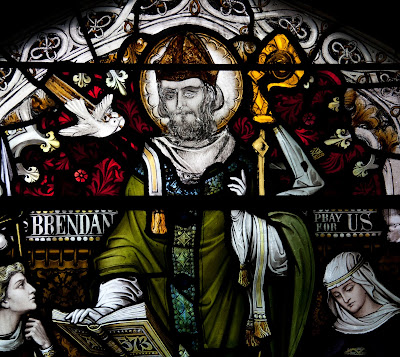
2, Saint Brendan of Birr
Saint Brendan of Birr in a stained-glass window in Saint Brendan’s Church, Birr, Co Offaly (Photograph: Window Andreas F. Borchert, Wikipedia / CC BY-SA 4.0)
Patrick Comerford
The Season of Advent began yesterday (Sunday 28 November 2021), and it was a busy day, concluding with the Advent Procession of Service of Light in Saint Mary’s Cathedral, Limerick.
Before a busy day and a busy week begins, I am taking some time early this morning for prayer, reflection and reading.
Each morning in the Advent, I am reflecting in these ways:
1, Reflections on a saint remembered in the calendars of the Church during Advent;
2, the day’s Gospel reading;
3, a prayer from the USPG prayer diary.
Today (29 November 2021) is the feast day of Saint Brendan of Birr, who died ca 572, one of the saints of this diocese.
Saint Brendan of Birr is one of the early saints of the sixth century. He was a monk and later an abbot, and he is known as Saint Brendan the Elder, to distinguish him from his contemporary and friend Saint Brendan the Navigator of Clonfert.
Saint Brendan of Birr as a friend and disciple of Saint Columba, and was one of the 12 students who studied under Saint Finian at Clonard and became known as the Twelve Apostles of Ireland.
These 12 holy men were:
● Saint Ciaran of Seir-Kieran;
● Saint Ciaran of Clonmacnoise;
● Saint Brendan of Birr;
● Saint Brendan of Clonfert;
● Saint Columba of Terryglass;
● Saint Columba of Kells and Iona;
● Saint Mobhi of Glasnevin;
● Saint Ruadhan of Lorrha;
● Saint Senan of Scattery Island;
● Saint Ninnidh of Inismacsaint on Loch Erne;
● Saint Lasserian of Leighlin;
● Saint Canice of Aghaboe.
At an early age, Brendan became a pupil in Saint Finian’s monastic school at Clonard Abbey, once said to have had up to 3,000 students. At Clonard, he became a friend and companion of Saint Ciarán of Saigir and Saint Brendan of Clonfert.
He founded the monastery at Birr in Co Offaly ca 540, and became its abbot. Early Irish writings depict him as a man of generous hospitality with a reputation for sanctity and spirituality who was an intuitive judge of character.
Saint Brenan attended the synod of Meltown, when Saint Columba was tried for his role in the Battle of Cúl Dreimhne. Saint Brendan spoke on behalf of Saint Columba, and the synod decided to sentence Columba to exile rather to excommunication.
The friendship between Brenan and Columba resulted in important links between Birr and the Columban foundations. It is said that Saint Columba had a vision of Saint Brendan’s soul being carried away by angels after his death.
Saint Brendan’s monastery in Birr later produced the MacRegol Gospels, now in the Bodleian Library in Oxford.
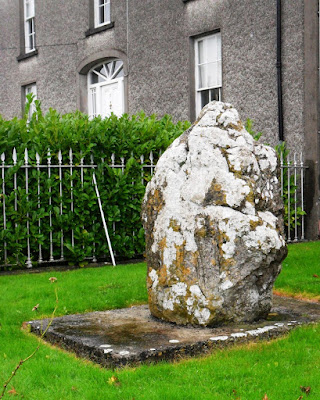
In the late 12th century, Giraldus Cambrensis referred to the ‘Birr Stone’ as umbilicus Hiberniae, the navel of Ireland. The stone is a block of limestone around 250 million years old, and was probably part of a megalithic monument. It is said to have marked a meeting place of the Fianna, and was taken from Birr in 1828 and was used as a Mass rock, but returned to Birr in 1974.
The Birr Stone … described by Giraldus Cambrensis as umbilicus Hiberniae, the navel of Ireland (Photograph: Patrick Comerford, 2010)
Matthew 8: 5-13 (NRSVA):
5 When he [Jesus] entered Capernaum, a centurion came to him, appealing to him 6 and saying, ‘Lord, my servant is lying at home paralysed, in terrible distress.’ 7 And he said to him, ‘I will come and cure him.’ 8 The centurion answered, ‘Lord, I am not worthy to have you come under my roof; but only speak the word, and my servant will be healed. 9 For I also am a man under authority, with soldiers under me; and I say to one, “Go”, and he goes, and to another, “Come”, and he comes, and to my slave, “Do this”, and the slave does it.’ 10 When Jesus heard him, he was amazed and said to those who followed him, ‘Truly I tell you, in no one in Israel have I found such faith. 11 I tell you, many will come from east and west and will eat with Abraham and Isaac and Jacob in the kingdom of heaven, 12 while the heirs of the kingdom will be thrown into the outer darkness, where there will be weeping and gnashing of teeth.’ 13 And to the centurion Jesus said, ‘Go; let it be done for you according to your faith.’ And the servant was healed in that hour.
The Prayer in the USPG Prayer Diary today (29 November 2021) invites us to pray:
Let us pray for the users of Hong Kong Sheng Kung Hui’s social and educational services; may they, through the work of the Church, come to know and experience God’s redemptive love for the humankind.
Yesterday: Saint Stephen the Younger
Tomorrow: Saint Andrew the Apostle
Scripture quotations are from the New Revised Standard Version Bible: Anglicised Edition copyright © 1989, 1995, National Council of the Churches of Christ in the United States of America. Used by permission. All rights reserved worldwide. http://nrsvbibles.org
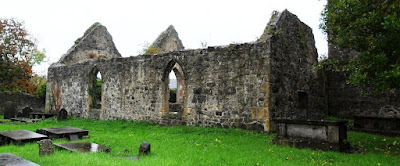
Saint Brendan’s … probably the site of the early monastic settlement in Birr (Photograph: Patrick Comerford)
Patrick Comerford
The Season of Advent began yesterday (Sunday 28 November 2021), and it was a busy day, concluding with the Advent Procession of Service of Light in Saint Mary’s Cathedral, Limerick.
Before a busy day and a busy week begins, I am taking some time early this morning for prayer, reflection and reading.
Each morning in the Advent, I am reflecting in these ways:
1, Reflections on a saint remembered in the calendars of the Church during Advent;
2, the day’s Gospel reading;
3, a prayer from the USPG prayer diary.
Today (29 November 2021) is the feast day of Saint Brendan of Birr, who died ca 572, one of the saints of this diocese.
Saint Brendan of Birr is one of the early saints of the sixth century. He was a monk and later an abbot, and he is known as Saint Brendan the Elder, to distinguish him from his contemporary and friend Saint Brendan the Navigator of Clonfert.
Saint Brendan of Birr as a friend and disciple of Saint Columba, and was one of the 12 students who studied under Saint Finian at Clonard and became known as the Twelve Apostles of Ireland.
These 12 holy men were:
● Saint Ciaran of Seir-Kieran;
● Saint Ciaran of Clonmacnoise;
● Saint Brendan of Birr;
● Saint Brendan of Clonfert;
● Saint Columba of Terryglass;
● Saint Columba of Kells and Iona;
● Saint Mobhi of Glasnevin;
● Saint Ruadhan of Lorrha;
● Saint Senan of Scattery Island;
● Saint Ninnidh of Inismacsaint on Loch Erne;
● Saint Lasserian of Leighlin;
● Saint Canice of Aghaboe.
At an early age, Brendan became a pupil in Saint Finian’s monastic school at Clonard Abbey, once said to have had up to 3,000 students. At Clonard, he became a friend and companion of Saint Ciarán of Saigir and Saint Brendan of Clonfert.
He founded the monastery at Birr in Co Offaly ca 540, and became its abbot. Early Irish writings depict him as a man of generous hospitality with a reputation for sanctity and spirituality who was an intuitive judge of character.
Saint Brenan attended the synod of Meltown, when Saint Columba was tried for his role in the Battle of Cúl Dreimhne. Saint Brendan spoke on behalf of Saint Columba, and the synod decided to sentence Columba to exile rather to excommunication.
The friendship between Brenan and Columba resulted in important links between Birr and the Columban foundations. It is said that Saint Columba had a vision of Saint Brendan’s soul being carried away by angels after his death.
Saint Brendan’s monastery in Birr later produced the MacRegol Gospels, now in the Bodleian Library in Oxford.
In the late 12th century, Giraldus Cambrensis referred to the ‘Birr Stone’ as umbilicus Hiberniae, the navel of Ireland. The stone is a block of limestone around 250 million years old, and was probably part of a megalithic monument. It is said to have marked a meeting place of the Fianna, and was taken from Birr in 1828 and was used as a Mass rock, but returned to Birr in 1974.
The Birr Stone … described by Giraldus Cambrensis as umbilicus Hiberniae, the navel of Ireland (Photograph: Patrick Comerford, 2010)
Matthew 8: 5-13 (NRSVA):
5 When he [Jesus] entered Capernaum, a centurion came to him, appealing to him 6 and saying, ‘Lord, my servant is lying at home paralysed, in terrible distress.’ 7 And he said to him, ‘I will come and cure him.’ 8 The centurion answered, ‘Lord, I am not worthy to have you come under my roof; but only speak the word, and my servant will be healed. 9 For I also am a man under authority, with soldiers under me; and I say to one, “Go”, and he goes, and to another, “Come”, and he comes, and to my slave, “Do this”, and the slave does it.’ 10 When Jesus heard him, he was amazed and said to those who followed him, ‘Truly I tell you, in no one in Israel have I found such faith. 11 I tell you, many will come from east and west and will eat with Abraham and Isaac and Jacob in the kingdom of heaven, 12 while the heirs of the kingdom will be thrown into the outer darkness, where there will be weeping and gnashing of teeth.’ 13 And to the centurion Jesus said, ‘Go; let it be done for you according to your faith.’ And the servant was healed in that hour.
The Prayer in the USPG Prayer Diary today (29 November 2021) invites us to pray:
Let us pray for the users of Hong Kong Sheng Kung Hui’s social and educational services; may they, through the work of the Church, come to know and experience God’s redemptive love for the humankind.
Yesterday: Saint Stephen the Younger
Tomorrow: Saint Andrew the Apostle
Scripture quotations are from the New Revised Standard Version Bible: Anglicised Edition copyright © 1989, 1995, National Council of the Churches of Christ in the United States of America. Used by permission. All rights reserved worldwide. http://nrsvbibles.org
Saint Brendan’s … probably the site of the early monastic settlement in Birr (Photograph: Patrick Comerford)
03 November 2021
A grave at Saint Chad’s Church
links Lichfield with musical
life in Victorian Dublin
Samuel Culwick’s grave in Saint Chad’s Churchyard, Lichfield … a link between the choral traditions of Lichfield Cathedral and Victorian Dublin (Photograph: Patrick Comerford, 2021)
Patrick Comerford
During my visit to Saint Chad’s Church by Stowe Pool in Lichfield a few weeks ago, I came across, quite by accident, the grave of Samuel Culwick, who had been a Vicar Choral at Lichfield Cathedral and a churchwarden of Saint Chad’s for many years.
Samuel Culwick, who died in 1861, is buried in Saint Chad’s churchyard along with his wife Rebecca, who died in 1853, and their eldest daughter, Sarah Jane, who died in 1911. The Culwick family seems to have been part of church music in Lichfield for a number of generations. But there were other reasons too for paying attention to Samuel’s grave.
During another return visits to Lichfield 10 years ago (2011), I realised that that there is an interesting connection between Lichfield Cathedral and one of the high points of musical and cultural life in Dublin.
Everyone in Dublin knows both the Feis Ceoil and the Culwick Choral Society. But I wondered than how many people realise that both were founded within a year of each other by Dr James Cooksey Culwick (1845-1907), or that Culwick was a chorister and assistant organist at Lichfield Cathedral (1865-1866) before moving to Ireland in 1866.
James Culwick was born in West Bromwich on 28 April 1845, and moved in his early childhood to Lichfield, where his father was a musician and vicar choral in Lichfield Cathedral.
At the age of 14, James became a chorister in Lichfield Cathedral, where he took lessons from the cathedral’s assistant organist, Thomas Bedsmore (1833-1881). Bedsmore was a composer and was the assistant organist at Lichfield Cathedral until becoming the organist in 1864. He was also the organist at Saint Chad’s Church.
James Culwick was Bedsmore’s pupil and became assistant organist at Lichfield Cathedral (1865-1866), and also become the organist at Saint Chad’s Church, Lichfield.
Saint Chad’s Church by Stowe Poll, Lichfield … James Culwick was the assistant organist at Lichfield Cathedral and the organist at Saint Chad’s before moving to Ireland in 1866 (Photograph: Patrick Comerford, 2021)
However, Culwick moved from Lichfield to Ireland with his young wife Alice in 1866, and held a succession of appointments as organist, first in Birr, Co Offaly, and then in Bray, Co Wicklow, before finally settling in Dublin.
Culwick moved from Saint Ann’s, in Dawson Street, Dublin, in 1881, to take up the prestigious position of organist and choirmaster in the Chapel Royal in Dublin Castle. He was also Professor of Pianoforte and Theory at Alexandra College, Dublin, for 27 years.
Meanwhile, he was involved in a number of amateur musical bodies, including the Orpheus Choral Society, and was awarded an honorary doctorate by the University of Dublin (Trinity College Dublin) in 1893.
His output as a composer includes church services, anthems, finely-crafted secular songs, and notably the dramatic cantata The Legend of Stauffenberg (1890).
Culwick was a co-founder of Feis Ceoil in 1897, and a year later, in 1898, he founded the Orpheus Choral Society. The society was later renamed the Culwick Choral Society in his honour.
The organ in Saint Chad’s Church, Lichfield (Photograph: Patrick Comerford, 2021)
James Culwick was married twice. His first wife, Alice Mary Harrison of Lichfield, died on 20 October 1875 at the age of 29. He married his second wife, Mary Richardson, in Saint Peter’s Church, Dublin, on 22 November 1876, was a daughter of the Dr Benjamin Richardson, a surgeon of Ely Place, Dublin. The officiant at the wedding, the Revd Alfred Thomas Harvey (1843-1898), was then curate in Saint Ann’s and Warden of Saint Patrick’s Cathedral Grammar School. Mary Culwick died on 31 December 1921 at the age of 72.
The Culwick family lived at 28 Leeson Park, Ranelagh, for many years.
His children included the Revd Arthur James Culwick (1873-1939), curate of Drumcondra (1897-1900) and Zion Church, Rathgar (1901-1906), and incumbent of Saint James, Crinken, Bray (1906-1909). He worked briefly as a missionary in Lucknow and as an organising secretary with CMS, before working in parishes in England until he died in 1939.
James Culwick’s daughter, Florence Culwick (1877-1929), was a conductor and choir director. After her father’s death, she re-formed the Orpheus Choral Society as a mixed choir. For some time, it was known as ‘Miss Culwick’s Choral Society’ before becoming the Culwick Choral Society.
James Culwick died at his home, 57 Upper Mount Street, Dublin, on 5 October 1907 and is buried in Mount Jerome Cemetery in Harold’s Cross, Dublin, with both wives and his daughter Florence A memorial tablet in the south choir aisle of Saint Patrick’s Cathedral, Dublin marks his as organist and choir master of the Chapel Royal, and describes him as ‘A learned musician. A true artist. A good man.’
The Culwick Choral Society is an amateur choir with over 100 active members drawn from all over Dublin and the surrounding counties. For 123 years, the Culwick has maintained an unbroken tradition of music-making in Dublin. The skill and musicianship of a succession of conductors has been crucial to its success. The present Musical Director, David Leigh, follows a long line of distinguished conductors.
The choir offers a major choral performance each Spring and a concert of seasonal music at Christmas. Since 1990, a charity performance of Handel’s Messiah in Saint Patrick’s Cathedral each December is an established event in the Dublin musical calendar.
James Culwick is buried in Mount Jerome Cemetery with his wives and his daughter (Photograph: Patrick Comerford)
Patrick Comerford
During my visit to Saint Chad’s Church by Stowe Pool in Lichfield a few weeks ago, I came across, quite by accident, the grave of Samuel Culwick, who had been a Vicar Choral at Lichfield Cathedral and a churchwarden of Saint Chad’s for many years.
Samuel Culwick, who died in 1861, is buried in Saint Chad’s churchyard along with his wife Rebecca, who died in 1853, and their eldest daughter, Sarah Jane, who died in 1911. The Culwick family seems to have been part of church music in Lichfield for a number of generations. But there were other reasons too for paying attention to Samuel’s grave.
During another return visits to Lichfield 10 years ago (2011), I realised that that there is an interesting connection between Lichfield Cathedral and one of the high points of musical and cultural life in Dublin.
Everyone in Dublin knows both the Feis Ceoil and the Culwick Choral Society. But I wondered than how many people realise that both were founded within a year of each other by Dr James Cooksey Culwick (1845-1907), or that Culwick was a chorister and assistant organist at Lichfield Cathedral (1865-1866) before moving to Ireland in 1866.
James Culwick was born in West Bromwich on 28 April 1845, and moved in his early childhood to Lichfield, where his father was a musician and vicar choral in Lichfield Cathedral.
At the age of 14, James became a chorister in Lichfield Cathedral, where he took lessons from the cathedral’s assistant organist, Thomas Bedsmore (1833-1881). Bedsmore was a composer and was the assistant organist at Lichfield Cathedral until becoming the organist in 1864. He was also the organist at Saint Chad’s Church.
James Culwick was Bedsmore’s pupil and became assistant organist at Lichfield Cathedral (1865-1866), and also become the organist at Saint Chad’s Church, Lichfield.
Saint Chad’s Church by Stowe Poll, Lichfield … James Culwick was the assistant organist at Lichfield Cathedral and the organist at Saint Chad’s before moving to Ireland in 1866 (Photograph: Patrick Comerford, 2021)
However, Culwick moved from Lichfield to Ireland with his young wife Alice in 1866, and held a succession of appointments as organist, first in Birr, Co Offaly, and then in Bray, Co Wicklow, before finally settling in Dublin.
Culwick moved from Saint Ann’s, in Dawson Street, Dublin, in 1881, to take up the prestigious position of organist and choirmaster in the Chapel Royal in Dublin Castle. He was also Professor of Pianoforte and Theory at Alexandra College, Dublin, for 27 years.
Meanwhile, he was involved in a number of amateur musical bodies, including the Orpheus Choral Society, and was awarded an honorary doctorate by the University of Dublin (Trinity College Dublin) in 1893.
His output as a composer includes church services, anthems, finely-crafted secular songs, and notably the dramatic cantata The Legend of Stauffenberg (1890).
Culwick was a co-founder of Feis Ceoil in 1897, and a year later, in 1898, he founded the Orpheus Choral Society. The society was later renamed the Culwick Choral Society in his honour.
The organ in Saint Chad’s Church, Lichfield (Photograph: Patrick Comerford, 2021)
James Culwick was married twice. His first wife, Alice Mary Harrison of Lichfield, died on 20 October 1875 at the age of 29. He married his second wife, Mary Richardson, in Saint Peter’s Church, Dublin, on 22 November 1876, was a daughter of the Dr Benjamin Richardson, a surgeon of Ely Place, Dublin. The officiant at the wedding, the Revd Alfred Thomas Harvey (1843-1898), was then curate in Saint Ann’s and Warden of Saint Patrick’s Cathedral Grammar School. Mary Culwick died on 31 December 1921 at the age of 72.
The Culwick family lived at 28 Leeson Park, Ranelagh, for many years.
His children included the Revd Arthur James Culwick (1873-1939), curate of Drumcondra (1897-1900) and Zion Church, Rathgar (1901-1906), and incumbent of Saint James, Crinken, Bray (1906-1909). He worked briefly as a missionary in Lucknow and as an organising secretary with CMS, before working in parishes in England until he died in 1939.
James Culwick’s daughter, Florence Culwick (1877-1929), was a conductor and choir director. After her father’s death, she re-formed the Orpheus Choral Society as a mixed choir. For some time, it was known as ‘Miss Culwick’s Choral Society’ before becoming the Culwick Choral Society.
James Culwick died at his home, 57 Upper Mount Street, Dublin, on 5 October 1907 and is buried in Mount Jerome Cemetery in Harold’s Cross, Dublin, with both wives and his daughter Florence A memorial tablet in the south choir aisle of Saint Patrick’s Cathedral, Dublin marks his as organist and choir master of the Chapel Royal, and describes him as ‘A learned musician. A true artist. A good man.’
The Culwick Choral Society is an amateur choir with over 100 active members drawn from all over Dublin and the surrounding counties. For 123 years, the Culwick has maintained an unbroken tradition of music-making in Dublin. The skill and musicianship of a succession of conductors has been crucial to its success. The present Musical Director, David Leigh, follows a long line of distinguished conductors.
The choir offers a major choral performance each Spring and a concert of seasonal music at Christmas. Since 1990, a charity performance of Handel’s Messiah in Saint Patrick’s Cathedral each December is an established event in the Dublin musical calendar.
James Culwick is buried in Mount Jerome Cemetery with his wives and his daughter (Photograph: Patrick Comerford)
10 October 2020
A cathedral tribute to
Archdeacon Wayne Carney
Patrick Comerford
The following tribute to Archdeacon Wayne Carney has been published this week in the current (Autumn 2020) edition of Doorways (Volume 1, No 3), the newsletter of the Friends of Saint Mary’s Cathedral, Limerick (p 6):
Death of Archdeacon Carney
It is sad to learn of the sudden death of my friend and colleague, the Ven Wayne Carney, who was Archdeacon of Killaloe, Rector of Birr, Co Offaly, and Prebendary of Taney in the Chapter of Saint Patrick’s Cathedral, Dublin.
Wayne’s sudden death on Monday (10 August 2020) robs the Church and the Diocese of a priest of the highest calibre and an outstanding pastor.
Wayne Carney has been Archdeacon of Killaloe, Kilfenora, Clonfert and Kilmacduagh since 2002.
Wayne Carney was born in 1952 and grew up in south-west Ontario.
After graduating BA from the University of Toronto, he taught in primary schools in Toronto for eight years. After receiving a Master of Divinity from Trinity College Toronto, in 1984, he was ordained deacon in 1984 and priest in 1985.
He was a curate in Scarborough, Toronto, and then the incumbent at Roche’s Point, Newmarket, Ontario, in the Diocese of Toronto from 1984. He came to Ireland in 1995, first as Rector of the Clonfert Cathedral Group of Parishes (1995-2003) and then as Rector of the Birr Group of Parishes from 2003.
He was appointed Archdeacon of Killaloe and Clonfert in 2002. He became the Limerick and Killaloe diocesan member of the Chapter of Saint Patrick’s Cathedral, Dublin, as Prebendary of Taney, in 2012.
His many roles in the Diocese of Limerick and Killaloe included those of president of the United Diocesan Youth Council, Warden of Lay Readers, and Diocesan Director of Ordinands. He was a keen supporter of the Anglican mission agency USPG (United Society Partners in the Gospel). Wayne was a supportive and an active participant in the monthly seminars and training days I organised for clergy and readers in the diocese.
Wayne married Norma-Jean in 1973, and they are the parents of two adult children: Kathleen, who is married and living in France with two children, and Brian, who is married and living in Canada with two children.
Bishop Kenneth Kearon said: ‘It’s impossible to describe the shock and sadness we all feel at Wayne’s sudden passing. He was a good and loyal friend, a true pastor and an able and caring Archdeacon. He will be greatly missed by the church communities in Birr and beyond where his ecumenical commitment and community engagement was well known. He served his diocese in many roles and was widely known and respected throughout the church and in wider society.’
The Precentor, Canon Patrick Comerford
The following tribute to Archdeacon Wayne Carney has been published this week in the current (Autumn 2020) edition of Doorways (Volume 1, No 3), the newsletter of the Friends of Saint Mary’s Cathedral, Limerick (p 6):
Death of Archdeacon Carney
It is sad to learn of the sudden death of my friend and colleague, the Ven Wayne Carney, who was Archdeacon of Killaloe, Rector of Birr, Co Offaly, and Prebendary of Taney in the Chapter of Saint Patrick’s Cathedral, Dublin.
Wayne’s sudden death on Monday (10 August 2020) robs the Church and the Diocese of a priest of the highest calibre and an outstanding pastor.
Wayne Carney has been Archdeacon of Killaloe, Kilfenora, Clonfert and Kilmacduagh since 2002.
Wayne Carney was born in 1952 and grew up in south-west Ontario.
After graduating BA from the University of Toronto, he taught in primary schools in Toronto for eight years. After receiving a Master of Divinity from Trinity College Toronto, in 1984, he was ordained deacon in 1984 and priest in 1985.
He was a curate in Scarborough, Toronto, and then the incumbent at Roche’s Point, Newmarket, Ontario, in the Diocese of Toronto from 1984. He came to Ireland in 1995, first as Rector of the Clonfert Cathedral Group of Parishes (1995-2003) and then as Rector of the Birr Group of Parishes from 2003.
He was appointed Archdeacon of Killaloe and Clonfert in 2002. He became the Limerick and Killaloe diocesan member of the Chapter of Saint Patrick’s Cathedral, Dublin, as Prebendary of Taney, in 2012.
His many roles in the Diocese of Limerick and Killaloe included those of president of the United Diocesan Youth Council, Warden of Lay Readers, and Diocesan Director of Ordinands. He was a keen supporter of the Anglican mission agency USPG (United Society Partners in the Gospel). Wayne was a supportive and an active participant in the monthly seminars and training days I organised for clergy and readers in the diocese.
Wayne married Norma-Jean in 1973, and they are the parents of two adult children: Kathleen, who is married and living in France with two children, and Brian, who is married and living in Canada with two children.
Bishop Kenneth Kearon said: ‘It’s impossible to describe the shock and sadness we all feel at Wayne’s sudden passing. He was a good and loyal friend, a true pastor and an able and caring Archdeacon. He will be greatly missed by the church communities in Birr and beyond where his ecumenical commitment and community engagement was well known. He served his diocese in many roles and was widely known and respected throughout the church and in wider society.’
The Precentor, Canon Patrick Comerford
11 August 2020
Archdeacon Wayne Carney
(1952-2020), a priest,
a friend and a colleague
With Archdeacon Wayne Carney (left) and the then Dean of Killaloe, the Very Revd Gary Paulsen (right), when the Church of Ireland General Synod met in Limerick
Patrick Comerford
It is sad to learn of the sudden death of my friend and colleague, the Ven Wayne Carney, who was Archdeacon of Killaloe, Rector of Birr, Co Offaly, and Prebendary of Taney in the Chapter of Saint Patrick’s Cathedral, Dublin.
Wayne’s sudden death on Monday (10 August 2020) robs the Church and the Diocese of a priest of the highest calibre and an outstanding pastor.
Wayne Carney has been Archdeacon of Killaloe, Kilfenora, Clonfert and Kilmacduagh since 2002.
Wayne Carney was born in 1952 and grew up in south-west Ontario.
After graduating BA from the University of Toronto, he taught in primary schools in Toronto for eight years. After receiving a Master of Divinity from Trinity College Toronto, in 1984, he was ordained deacon in 1984 and priest in 1985.
He was a curate in Scarborough, Toronto, and then the incumbent at Roche’s Point, Newmarket, Ontario, in the Diocese of Toronto from 1984. He came to Ireland in 1995, first as Rector of the Clonfert Cathedral Group of Parishes (1995-2003) and then as Rector of the Birr Group of Parish from 2003.
He was appointed Archdeacon of Killaloe and Clonfert in 2002. He became the Limerick and Killaloe diocesan member of the Chapter of Saint Patrick’s Cathedral, Dublin, as Prebendary of Taney, in 2012.
His many roles in the Diocese of Limerick and Killaloe included those of president of the United Diocesan Youth Council, Warden of Lay Readers, and Diocesan Director of Ordinands. He was a keen supporter of the Anglican mission agency USPG (United Society Partners in the Gospel). Wayne was a supportive and active participant in the monthly seminars and training days I organised for clergy and readers in the diocese.
Wayne married Norma-Jean in 1973, and they are the parents of two adult children: Kathleen, who is married and living in France with two children, and Brian, who is married and living in Canada with two children.
Bishop Kenneth Kearon said: ‘It’s impossible to describe the shock and sadness we all feel at Wayne’s sudden passing. He was a good and loyal friend, a true pastor and an able and caring Archdeacon. He will be greatly missed by the church communities in Birr and beyond where his ecumenical commitment and community engagement was well known. He served his diocese in many roles and was widely known and respected throughout the church and in wider society.’
The Dean of Killaloe, the Very Revd Rod Smyth, is working with the family on the funeral arrangements which will be announced later.
Patrick Comerford
It is sad to learn of the sudden death of my friend and colleague, the Ven Wayne Carney, who was Archdeacon of Killaloe, Rector of Birr, Co Offaly, and Prebendary of Taney in the Chapter of Saint Patrick’s Cathedral, Dublin.
Wayne’s sudden death on Monday (10 August 2020) robs the Church and the Diocese of a priest of the highest calibre and an outstanding pastor.
Wayne Carney has been Archdeacon of Killaloe, Kilfenora, Clonfert and Kilmacduagh since 2002.
Wayne Carney was born in 1952 and grew up in south-west Ontario.
After graduating BA from the University of Toronto, he taught in primary schools in Toronto for eight years. After receiving a Master of Divinity from Trinity College Toronto, in 1984, he was ordained deacon in 1984 and priest in 1985.
He was a curate in Scarborough, Toronto, and then the incumbent at Roche’s Point, Newmarket, Ontario, in the Diocese of Toronto from 1984. He came to Ireland in 1995, first as Rector of the Clonfert Cathedral Group of Parishes (1995-2003) and then as Rector of the Birr Group of Parish from 2003.
He was appointed Archdeacon of Killaloe and Clonfert in 2002. He became the Limerick and Killaloe diocesan member of the Chapter of Saint Patrick’s Cathedral, Dublin, as Prebendary of Taney, in 2012.
His many roles in the Diocese of Limerick and Killaloe included those of president of the United Diocesan Youth Council, Warden of Lay Readers, and Diocesan Director of Ordinands. He was a keen supporter of the Anglican mission agency USPG (United Society Partners in the Gospel). Wayne was a supportive and active participant in the monthly seminars and training days I organised for clergy and readers in the diocese.
Wayne married Norma-Jean in 1973, and they are the parents of two adult children: Kathleen, who is married and living in France with two children, and Brian, who is married and living in Canada with two children.
Bishop Kenneth Kearon said: ‘It’s impossible to describe the shock and sadness we all feel at Wayne’s sudden passing. He was a good and loyal friend, a true pastor and an able and caring Archdeacon. He will be greatly missed by the church communities in Birr and beyond where his ecumenical commitment and community engagement was well known. He served his diocese in many roles and was widely known and respected throughout the church and in wider society.’
The Dean of Killaloe, the Very Revd Rod Smyth, is working with the family on the funeral arrangements which will be announced later.
16 May 2017
Thinking about planning
a ‘Brendan voyage’ in
his diocese on 16 May
Saint Brendan the Voyager … a new icon by Aidan Hart commemorates the saint whose feast day is celebrated today
Patrick Comerford
Saint Brendan’s feast day is celebrated today [16 May]. I am in the Rathkeale and Kilnaughtin Group of parishes less than four months, and I regret that I have not organised something liturgically appropriate and special today to mark Saint Brendan’s Day.
Saint Brendan’s feast day is celebrated on 16 May and in Ireland he is the patron saint of sailors, boatmen, mariners, travellers, elderly adventurers, and of the dioceses of Ardfert and Clonfert.
Saint Brendan is the patron saint of Saint Brendan’s Church in Kilnaughtin, Tarbert, Co Kerry, but is also the patron saint of Saint Brendan’s Cathedral, Clonfert, Co Galway, one of the three cathedrals of which I am the precentor – the other two are Saint Mary’s Cathedral, Limerick, and Saint Flannan’s Cathedral, Killaloe, Co Clare.
Another cathedral in the diocese was also named after him, but Saint Brendan’s Cathedral in Ardfert, Co Kerry, was destroyed by fire almost 400 years ago in 1641.
Saint Brendan’s Church, Kilnaughtin, in Tarbert, Co Kerry (Photograph: Patrick Comerford, 2017)
Saint Brendan of Kerry, or Saint Brendan of Clonfert, is also known as Brendan moccu Altae, Brendan the Navigator, Brendan the Voyager, and Brendan the Anchorite. He is known for his legendary journey to the Isle of the Blessed, narrated in The Voyage of Saint Brendan, and is described as one of the ‘Twelve Apostles of Ireland.’
However, many of the details of Saint Brendan’s life come to us from myth and legend in the Irish annals and genealogies rather than having reliable historical evidence.
He is first mentioned in Adamnan’s Vita Sancti Columbae, written sometime between 679 and 704. The first reference to him as a seafarer appears later in the ninth century in the Martyrology of Tallaght.
The several Latin and Irish versions of the Life of Brendan and the Voyage of Saint Brendan the Abbot (Navigatio sancti Brendani abbatis) date from the end of the 12th century, although earlier versions may have been composed around the year 1000. This makes it difficult to reconstruct details of the life of the real Brendan or to understand the nature of the Brendan legends.
Saint Brendan setting out on his voyage … a sculpture in the square in Bantry, Co Cork, unveiled by Brendan Howlin when he was a cabinet minister (Photograph: Patrick Comerford, 2017)
It is said that Saint Brendan was born in Tralee, Co Kerry, in 484 and was baptised at Tubrid, near Ardfert, by Saint Erc, and that he was later tutored by Saint Finnian of Clonard.
At the age of 26, Brendan was ordained priest by Saint Erc, and he later founded a number of monasteries. His first voyage took him to the Arran Islands, and he also visited Iona, where he is said to have met Saint Columcille or Columba. His travels also brought him to Wales and Brittany, on the northern coast of France.
But Saint Brendan is best known for a legendary journey with 16 pilgrims to the Isle of the Blessed, supposedly in search of the Garden of Eden. This group fasted for 40 days before embarking in the name of the Trinity, and their voyages created one of the most remarkable and enduring European legends.
Over the years there have been many interpretations of the possible geographical location of Saint Brendan’s Island, from places in the southern part of Ireland, to the Canary Islands, the Faroes or the Azores, and Madeira, or even the Americas. It is difficult to tell what is factual and what is folklore, but it is a story of salvation, monastic obedience, pilgrimage.
The Navigatio was known widely throughout mediaeval Europe. Some maps in the time of Christopher Columbus included an island called Saint Brendan’s Isle in the western Atlantic Ocean. But there was never any reliable evidence that Saint Brendan ever reached Greenland or America.
Tim Severin’s film The Brendan Voyage (1978) inspired the Irish composer Shaun Davey to compose his orchestral suite The Brendan Voyage.
The ruins of Saint Brendan’s ... probably the site of the early monastic settlement in Birr, Co Offaly (Photograph: Patrick Comerford)
It is said that after his voyages and after establishing a bishop’s see at Ardfert, Saint Brendan founded a monastery at Annaghdown, where he lived the rest of his life.
Among the many churches associated with Saint Brendan, the name of the Church of Ireland parish church in Birr, Co Offaly, continues the name of a monastery founded nearby on the banks of the River Camco, in the 6th century AD. An important work from this monastery is the illuminated text known as the Macregol Gospels or the Book of Birr, now in the Bodleian Library, Oxford.
In the late 12th century, Giraldus Cambrensis referred to the Birr Stone as umbilicus Hiberniae or the navel of Ireland.
The ruins of Saint Brendan’s Cathedral, Annaghdown, on the eastern shores of Lough Corrib, Co Galway (Photograph: Patrick Comerford)
Saint Brendan is also said to have founded the church and monastery in Clonfert, Co Galway, around 557. He died ca 577 at Annaghdown, Co Galway, and he arranged before his death to have his body carried back to his monastery at Clonfert, where he is buried at Saint Brendan’s Cathedral.
Saint Brendan’s Cathedral, Clonfert, is one of four cathedrals still open in the United Dioceses of Limerick and Killaloe, and the monastic site predates the stories of the saint’s voyages. Clonfert became one of the foremost monastic schools in Ireland and the inspiration for many great missionary ventures across Europe.
The monastery was burned in 1016, 1164, and again in 1179, but in its heyday Clonfert may have had 3,000 monks. The centuries-old Yew Walk, with its cross-shaped paths, looks like church transept with a green ceiling. Local lore says the monks walked under the trees in silence, reading their daily office. However, the Diocese of Clonfert was not organised until 1111 and the diocesan boundaries were not fixed until 1152.
The first stone cathedral here was built around 1167 by Bishop Petrus Ua Mórda, and the earliest part of the cathedral dates from this period. The West Doorway is the crowning glory of the cathedral and the greatest masterpiece of Hiberno-Romanesque work, and the cathedral is listed in the 2000 World Monuments Watch.
The doorway has eight orders of jambs, surmounted by seven orders of arches and crowned by a triangular pediment bordered by carved ropes. The triangular pointed hoods and decorations form a unique mediaeval gallery with a truly fabulous variety of motifs, including human faces, bizarre beasts, formalised flowers and interlacing geometrical shapes, representing the way all creation points to the Trinity.
The West Doorway of Clonfert Cathedral is the greatest Hiberno-Romanesque masterpiece (Photograph: Patrick Comerford)
At Ardfert, the ruins of the ancient Cathedral of Saint Brendan, with its chantries and chapels, form a complete reliquary of Irish ecclesiastical architecture, in its different orders and ages, from the seventh or eighth century to mediaeval Gothic. The cathedral was finally dismantled in 1641.
So, from the south-west of this diocese in many parts of Kerry, to the centre around Birr and the north-east at Clonfert, Saint Brendan is associated with many of the churches, cathedrals and early ecclesiastical centres.
It might be a good idea to organise something appropriate on Saint Brendan’s Day, 16 May, in Kilnaughtin next year, and it seems there is potential for a Saint Brendan’s Way or pilgrim-tourist trail through the diocese, from Ardfert, Tralee or Killarney, through Tarbert, to Birr and on to Clonfert.
Saint Brendan’s Cathedral, Clonfert, is listed in the 2000 World Monuments Watch (Photograph: Patrick Comerford)
Patrick Comerford
Saint Brendan’s feast day is celebrated today [16 May]. I am in the Rathkeale and Kilnaughtin Group of parishes less than four months, and I regret that I have not organised something liturgically appropriate and special today to mark Saint Brendan’s Day.
Saint Brendan’s feast day is celebrated on 16 May and in Ireland he is the patron saint of sailors, boatmen, mariners, travellers, elderly adventurers, and of the dioceses of Ardfert and Clonfert.
Saint Brendan is the patron saint of Saint Brendan’s Church in Kilnaughtin, Tarbert, Co Kerry, but is also the patron saint of Saint Brendan’s Cathedral, Clonfert, Co Galway, one of the three cathedrals of which I am the precentor – the other two are Saint Mary’s Cathedral, Limerick, and Saint Flannan’s Cathedral, Killaloe, Co Clare.
Another cathedral in the diocese was also named after him, but Saint Brendan’s Cathedral in Ardfert, Co Kerry, was destroyed by fire almost 400 years ago in 1641.
Saint Brendan’s Church, Kilnaughtin, in Tarbert, Co Kerry (Photograph: Patrick Comerford, 2017)
Saint Brendan of Kerry, or Saint Brendan of Clonfert, is also known as Brendan moccu Altae, Brendan the Navigator, Brendan the Voyager, and Brendan the Anchorite. He is known for his legendary journey to the Isle of the Blessed, narrated in The Voyage of Saint Brendan, and is described as one of the ‘Twelve Apostles of Ireland.’
However, many of the details of Saint Brendan’s life come to us from myth and legend in the Irish annals and genealogies rather than having reliable historical evidence.
He is first mentioned in Adamnan’s Vita Sancti Columbae, written sometime between 679 and 704. The first reference to him as a seafarer appears later in the ninth century in the Martyrology of Tallaght.
The several Latin and Irish versions of the Life of Brendan and the Voyage of Saint Brendan the Abbot (Navigatio sancti Brendani abbatis) date from the end of the 12th century, although earlier versions may have been composed around the year 1000. This makes it difficult to reconstruct details of the life of the real Brendan or to understand the nature of the Brendan legends.
Saint Brendan setting out on his voyage … a sculpture in the square in Bantry, Co Cork, unveiled by Brendan Howlin when he was a cabinet minister (Photograph: Patrick Comerford, 2017)
It is said that Saint Brendan was born in Tralee, Co Kerry, in 484 and was baptised at Tubrid, near Ardfert, by Saint Erc, and that he was later tutored by Saint Finnian of Clonard.
At the age of 26, Brendan was ordained priest by Saint Erc, and he later founded a number of monasteries. His first voyage took him to the Arran Islands, and he also visited Iona, where he is said to have met Saint Columcille or Columba. His travels also brought him to Wales and Brittany, on the northern coast of France.
But Saint Brendan is best known for a legendary journey with 16 pilgrims to the Isle of the Blessed, supposedly in search of the Garden of Eden. This group fasted for 40 days before embarking in the name of the Trinity, and their voyages created one of the most remarkable and enduring European legends.
Over the years there have been many interpretations of the possible geographical location of Saint Brendan’s Island, from places in the southern part of Ireland, to the Canary Islands, the Faroes or the Azores, and Madeira, or even the Americas. It is difficult to tell what is factual and what is folklore, but it is a story of salvation, monastic obedience, pilgrimage.
The Navigatio was known widely throughout mediaeval Europe. Some maps in the time of Christopher Columbus included an island called Saint Brendan’s Isle in the western Atlantic Ocean. But there was never any reliable evidence that Saint Brendan ever reached Greenland or America.
Tim Severin’s film The Brendan Voyage (1978) inspired the Irish composer Shaun Davey to compose his orchestral suite The Brendan Voyage.
It is said that after his voyages and after establishing a bishop’s see at Ardfert, Saint Brendan founded a monastery at Annaghdown, where he lived the rest of his life.
Among the many churches associated with Saint Brendan, the name of the Church of Ireland parish church in Birr, Co Offaly, continues the name of a monastery founded nearby on the banks of the River Camco, in the 6th century AD. An important work from this monastery is the illuminated text known as the Macregol Gospels or the Book of Birr, now in the Bodleian Library, Oxford.
In the late 12th century, Giraldus Cambrensis referred to the Birr Stone as umbilicus Hiberniae or the navel of Ireland.
The ruins of Saint Brendan’s Cathedral, Annaghdown, on the eastern shores of Lough Corrib, Co Galway (Photograph: Patrick Comerford)
Saint Brendan is also said to have founded the church and monastery in Clonfert, Co Galway, around 557. He died ca 577 at Annaghdown, Co Galway, and he arranged before his death to have his body carried back to his monastery at Clonfert, where he is buried at Saint Brendan’s Cathedral.
Saint Brendan’s Cathedral, Clonfert, is one of four cathedrals still open in the United Dioceses of Limerick and Killaloe, and the monastic site predates the stories of the saint’s voyages. Clonfert became one of the foremost monastic schools in Ireland and the inspiration for many great missionary ventures across Europe.
The monastery was burned in 1016, 1164, and again in 1179, but in its heyday Clonfert may have had 3,000 monks. The centuries-old Yew Walk, with its cross-shaped paths, looks like church transept with a green ceiling. Local lore says the monks walked under the trees in silence, reading their daily office. However, the Diocese of Clonfert was not organised until 1111 and the diocesan boundaries were not fixed until 1152.
The first stone cathedral here was built around 1167 by Bishop Petrus Ua Mórda, and the earliest part of the cathedral dates from this period. The West Doorway is the crowning glory of the cathedral and the greatest masterpiece of Hiberno-Romanesque work, and the cathedral is listed in the 2000 World Monuments Watch.
The doorway has eight orders of jambs, surmounted by seven orders of arches and crowned by a triangular pediment bordered by carved ropes. The triangular pointed hoods and decorations form a unique mediaeval gallery with a truly fabulous variety of motifs, including human faces, bizarre beasts, formalised flowers and interlacing geometrical shapes, representing the way all creation points to the Trinity.
The West Doorway of Clonfert Cathedral is the greatest Hiberno-Romanesque masterpiece (Photograph: Patrick Comerford)
At Ardfert, the ruins of the ancient Cathedral of Saint Brendan, with its chantries and chapels, form a complete reliquary of Irish ecclesiastical architecture, in its different orders and ages, from the seventh or eighth century to mediaeval Gothic. The cathedral was finally dismantled in 1641.
So, from the south-west of this diocese in many parts of Kerry, to the centre around Birr and the north-east at Clonfert, Saint Brendan is associated with many of the churches, cathedrals and early ecclesiastical centres.
It might be a good idea to organise something appropriate on Saint Brendan’s Day, 16 May, in Kilnaughtin next year, and it seems there is potential for a Saint Brendan’s Way or pilgrim-tourist trail through the diocese, from Ardfert, Tralee or Killarney, through Tarbert, to Birr and on to Clonfert.
Saint Brendan’s Cathedral, Clonfert, is listed in the 2000 World Monuments Watch (Photograph: Patrick Comerford)
29 October 2010
Searching for Pugin in the ‘navel of Ireland’
Patrick Comerford
After a very creative and innovative Morning Prayer in the institute chapel this morning, two of us headed off on a two-hour drive to Birr, Co Offaly.
Birr regards itself as the centre of Ireland – in the late 12th century Giraldus Cambrensis referred to the Birr Stone as umbilicus Hiberniae, the navel of Ireland. The stone is a block of limestone around 250 million years old, and was probably part of a megalithic monument. It is said to have marked a meeting place of the Fianna, and was taken from Birr in 1828 and was used as a Mass rock, but returned to Birr in 1974.
I can only remember being here two or three times in the past, and – apart from passing through five or six years ago – it must be 25 years or more since I was last in Birr. I returned today to take some architectural photographs.
Birr is one of the finest examples of a Georgian town in Ireland. It is a virtually intact 18th and 19th century town, with spacious Georgian houses lining its tree-lined streets, malls and avenues. This Georgian architecture is complemented by monuments to some of the Earls of Rosse, including William Parsons (1800-1867), the third Earl of Rosse, a renowned astronomer who built what was once the world’s largest telescope in the grounds of Birr Castle.
Birr Castle has been the seat of the Parsons family and the Earls of Rosse for 14 generations, since it was granted to Sir Laurence Parsons in 1619. While Offaly was known as King’s County, Birr was known as Parsonstown.
Birr stands on the banks of the River Camcor, and the first recorded evidence of a settlement there dates from the 6th century AD, when a monastery was founded by Saint Brendan of Birr. An important work from this monastery is the illuminated text known as the Macregol Gospels or the Book of Birr, now in the Bodleian Library, Oxford.
We parked the car on John’s Mall, close to the statue of the astronomer earl, and John’s Hall, built in the style of a Greek temple to commemorate his brother, John Parsons, who died young.
In Dooly’s Hotel on Emmet Square, one of the Ireland’s oldest coaching inns, an exceptionally helpful receptionist pointed us to the building I had come to photograph: the Convent of Mercy on Wilmer Road, which had been built by AWN Pugin in the mid 19th century.
In recent decades, most of the convent has been converted by Offaly County Council to civic offices and a public library. Martina Needham, executive librarian, Offaly County Library, welcomed us and guided us around the former convent, which was built in stages from 1845 to 1856.
Mother Catherine McAuley, the founder of the Sisters of Mercy, came to Birr in 1840 to help her sisters set up was to be called Saint John’s Convent of Mercy.
Catherine McAuley founded the Sisters of Mercy in Dublin in 1831 to “care for the poor, sick and ignorant.” She established the first Mercy convent in England in Bermondsey in London, and this was Pugin’s first convent too. However, it was one of Pugin’s early failures, and Catherine McAuley complained that the convent, built in 1839-1840, was “not well suited” to her community: she complained to Bishop Walsh that “the sleeping rooms are too large, the corridors confined and not well-lighted, and all the Gothic work made it expensive.”
Pugin was given a second chance in 1840 when the Hardman family offered to pay for another Convent of Mercy near their home in Handsworth on the edges of Birmingham. At the time, Pugin was working on Saint Giles’ in Cheadle. Hardman donated the site, and paid £5,535 for the building and furnishings; the Earl of Shrewsbury donated a further £2,000. This was the first Mercy convent in the English Midlands and Hardman’s daughter, the future Mother Mary Juliana Hardman (1813-1884), who was one of the first Mercy Sisters in Handsworth, eventually became the Mother Superior.
Michael Fisher and Roderick O’Donnell have discovered a letter from Pugin to Herbert Minton, dated 19 September 1840, suggesting that the tiled floor in Handsworth was the first occasion the great architect and the great tilemaker collaborated.
Pugin’s convent in Handsworth was such a success that Catherine McAuley finally saw it she was charmed and described it as “this beautiful convent erected by Mr Pugin in the ancient monastic style.” She said “all is so admirable … no want can be felt.” It is surprising then, that Pugin only designed one convent for the Sisters of Mercy in Ireland.
The foundation stone for his convent in Birr was laid in 1846, although the first portions were not built until 1847. The design is a heavy, stone version of the convents he had built in Handsworth and Liverpool. But Pugin also paid tribute to Irish architectural heritage by attaching a Round Tower to the corner of the building.
The convent was still not complete when Pugin died in 1852. The main front resembles his design, but the larger part of the building was finally completed with slightly different massings by his son, E.W. Pugin, and his son-in-law, George Ashlin.
The Pugin-designed convent chapel was greatly revised at a later stage. When the convent closed, the altars and the furnishings were donated to neighbouring churches or auctioned off. But the convent and chapel have been converted to accommodate a modern library, council offices and a health centre, and many of the original Pugin features have been carefully preserved or restored.
I wonder how many Irish towns can boast such a splendid state-of-the-art library in a Gothic Revival chapel with beamed roof, restored and storm-glazed stained glass windows, a restored ceiling and stencilled mural motifs and lettering. The cloister area has been restored and the library exhibits included a facsimile of the Mcregol Gospels, a modern illuminated vellum manuscript copy of Cáin Adomnáin, a replica of an early Christian bell and other treasures.
From the convent, we headed up to Birr Castle for lunch in the courtyard, where a sculptor was working on a sand sculpture with a Halloween theme. By now the rain was bucketing down. Autumn had come to a wet close, and winter is now threatening.
Instead of wandering around the castle grounds in the rain, we promised to return and headed off to Maynooth to continue photographing the work there by Pugin and McCarthy.
Patrick Comerford is Director of Spiritual Formation, the Church of Ireland Theological Institute, and a canon of Christ Church Cathedral, Dublin
Subscribe to:
Posts (Atom)