Flying over Malahide, Donabate and Portrane and above the Irish Sea … the Irish Sea is one of the smaller regional seas, with a surface area of about 58,000 sq km or 58 million sq metres (Photograph: Patrick Comerford)
Patrick Comerford
This month continues to be an exceptionally busy time on this blog, with a continuing, steady and overwhelming rise in figures for viewing and reading. These figures reached 58 million shortly before 4 pm this afternoon (23 September), having reached 57 million five days ago (18 September), and 56 million three days earlier (15 September).
This is the tenth time these figures have passed the million mark since the end of last month. In a steady climb, the figures reached 55 million on 12 September, 54 million two nights before that (10 September 2026), 53 million hits the day before that (9 September 2026), 52 million hits two days previously (7 September), 51 million on 5 September, 50 million on 4 September and 49 million on 31 August.
These viewing and readership figures are still overpowering, and this blog continues to reach volumes of readers I never expected when I first started blogging 16 years ago. At the end of last year, this blog had 21 million hits (31 December 2025). So far this year, there have been more than 37 million hits or visitors in 2026 alone.
This means half of all hits or reader figures have been within the past six months, with 29 million hits since 25 March 2026. I first began blogging in 2010, and it took almost two years until July 2012 to reach half a million readers. Throughout this year, the daily figures have often been overwhelming. September is already the busiest month for traffic on this blog, with 9 million hits so far.
Of the 10 days of busiest traffic on this blog, seven of them have been in this month alone (1, 5, 7, 8, 9, 11 and 12 September), two were in May (1 and 14 May) and one was in April (29 April):
• 1,124,925 (1 May 2026)
• 671,341 (10 September 2026)
• 647,187 (5 September 2026)
• 618,234 (8 September 2026)
• 583,320 (11 September 2026)
• 563,301 (9 September 2026)
• 557,448 (12 September 2026)
• 525,719 (14 May 2026)
• 513,725 (7 September 2026)
• 509,644 (29 April 2026)
Although traffic has slowed down in the past week or so, the daily average so far this month is still running at almost 400,000 hits a day. Yet, I recall how 10 years ago, back in 2016, the daily average was around 1,000, or 30,000 a month.
The Berliner Dom or Berlin Cathedral … the German population includes about 58 million Christians (Photograph: Patrick Comerford)
Some curious though random statistics help to put this new figure of 58 million into perspective:
The average distance from the Sun to the planet Mercury is roughly 58 million km.
The number of Americans aged 65 and older is projected to increase from 58 million in 2022 to 82 million by 2050, a 42% increase.
Walford, an Edwardian mansion on Shrewsbury Road in Ballsbridge, Dublin, sold for a record-breaking €58 million in 2005 at the height of the Celtic Tiger economic boom, making it Ireland’s most expensive house ever sold.
Spain, the world’s second-most visited country after France, had a record-breaking 58.1 million international tourists between January and July 2026, marking a 4.6% increase compared to the same period in 2025.
Germany is home to about 58 million Christians, the second-highest number of Christians in Europe, after Russia, and the tenth globally.
58 million metres is 58,000 km and 58 million sq metres is 58,000 sq km.
The Irish Sea is one of the smaller regional seas, with a surface area of about 58,000 sq km or 58 million sq metres. 58,000 sq km is the surface area of Lake Michigan, a lake between Canada and the US, and the fifth largest lake in the world measured by surface area, following the Caspian Sea, Lake Superior, Lake Victoria and Lake Huron.
Karl Bushby, an English walking adventurer and author from Hull, is currently attempting to be the first person known to completely walk an unbroken path around the world. His trek, known as the Goliath Expedition, started it in the southern tip of Chile in 1998 and he is expected to return to England this month or next (September or October 2026). He originally expected to finish the 58,000 km trek in 12 years, but with numerous unplanned and unexpected delays, his expedition is now expected to last approximately 27 years.
58 million minutes equals 110 years, 3 months, and 9 days. This means that if this blog was receiving just one hit a minute, I would need to have started blogging back in early June 1916, after the Easter Rising in Dublin, in the middle of World War I, at a time when my grandfather was being sent home from the war in Thessaloniki.
I retired from active parish ministry about 4½ years ago, on 31 March 2022. These days, though, about 150 people on average are reading my daily prayer diary posted on this blog each morning, or more than 1,000 people each week. As this blog moves beyond 58 million hits, I am truly grateful today to the real readers among that 58 million. In particular, I am thankful for the faithful core group of people who join me in prayer, scripture reading and reflections each day.
58 million minutes brings me back to mid-1916, when my grandfather was being invalided home from Thessaloniki during World War (Photograph: Patrick Comerford)
Showing posts with label Berlin. Show all posts
23 September 2026
20 July 2026
Daily prayer in Ordinary Time 2026:
74, Monday 20 July 2026
‘The people of Nineveh … repented at the proclamation of Jonah’ (Matthew 12: 41) … a whale depicted in the Saint Brendan window in Saint Michael’s Church, Sneem, Co Kerry (Photograph: Patrick Comerford)
Patrick Comerford
We are in Ordinary Time in the Church Calendar and yesterday was the Seventh Sunday after Trinity (Trinity VII, 19 July 2026). Today, the calendar of the Church of England in Common Worship remembers Saint Margaret of Antioch, martyr in the fourth century, and Saint Bartolomé de las Casas (1566), Apostle to the Indies.
I stayed up last night watching the World Cup final between Spain and Argentina. I watched the first 90 minutes in the Old George in Stony Stratford, and then watched the rest of the game at home to see Spain 1-0 in extra time. Now I am on my way to Cambridge this morning. But, as the day begins, I am taking some quiet time this morning to give thanks, to reflect, to pray and to read in these ways:
1, reading today’s Gospel reading;
2, a short reflection;
3, a prayer from the USPG prayer diary;
4, the Collects and Post-Communion prayer of the day.
‘The people of Nineveh … repented at the proclamation of Jonah’ (Matthew 12: 41) … a reconstruction of the gates of an Assyrian palace in the Pergamon Museum, Berlin (Photograph: Patrick Comerford)
Matthew 12: 38-42 (NRSVA):
38 Then some of the scribes and Pharisees said to him, ‘Teacher, we wish to see a sign from you.’ 39 But he answered them, ‘An evil and adulterous generation asks for a sign, but no sign will be given to it except the sign of the prophet Jonah. 40 For just as Jonah was for three days and three nights in the belly of the sea monster, so for three days and three nights the Son of Man will be in the heart of the earth. 41 The people of Nineveh will rise up at the judgement with this generation and condemn it, because they repented at the proclamation of Jonah, and see, something greater than Jonah is here! 42 The queen of the South will rise up at the judgement with this generation and condemn it, because she came from the ends of the earth to listen to the wisdom of Solomon, and see, something greater than Solomon is here!’
‘Hold up the sandal, as he has commanded us!’ (Monty Python, ‘The Life of Brian’) … two over-size sandals outside the Antika Irish bar on Arabatzoglou street in Rethymnon (Photograph: Patrick Comerford)
Today’s reflection:
Signs are part of the humour throughout Monty Python’s Life of Brian, also known as Life of Brian, a controversial 1979 film by the Monty Python team, including Graham Chapman, John Cleese, Terry Gilliam, Eric Idle, Terry Jones and Michael Palin.
Scene 18, ‘The Holy Gourd of Jerusalem’, includes this dialogue:
FOLLOWERS: … Look! Ah! Oh! Oh!
ARTHUR: He has given us a sign!
FOLLOWER: Oh!
SHOE FOLLOWER: He has given us … His shoe!
ARTHUR: The shoe is the sign. Let us follow His example.
SPIKE: What?
ARTHUR: Let us, like Him, hold up one shoe and let the other be upon our foot, for this is His sign, that all who follow Him shall do likewise.
EDDIE: Yes.
SHOE FOLLOWER: No, no, no. The shoe is …
YOUTH: No.
SHOE FOLLOWER: … a sign that we must gather shoes together in abundance.
GIRL: Cast off …
SPIKE: Aye. What?
GIRL: … the shoes! Follow the Gourd!
SHOE FOLLOWER: No! Let us gather shoes together!
FRANK: Yes.
SHOE FOLLOWER: Let me!
ELSIE: Oh, get off!
YOUTH: No, no! It is a sign that, like Him, we must think not of the things of the body, but of the face and head!
SHOE FOLLOWER: Give me your shoe!
YOUTH: Get off!
GIRL: Follow the Gourd! The Holy Gourd of Jerusalem!
FOLLOWER: The Gourd!
HARRY: Hold up the sandal, as He has commanded us!
ARTHUR: It is a shoe! It is a shoe!
HARRY: It's a sandal!
ARTHUR: No, it isn't!
GIRL: Cast it away!
ARTHUR: Put it on!
YOUTH: And clear off!
How often do we pray for unusual signs as indications of God’s blessing, favour, approval or intervention, or even God’s judgment?
In this morning’s Gospel reading (Matthew 12: 38-42), Jesus faces this sort of request too in his own day. People wanted some spectacular sign from him to establish beyond doubt that he was who he said he was.
In today’s reading, Jesus addresses the crowds who gather around him as ‘an evil and adulterous generation’ (verse 39) because they are asking for a sign. Today people can be very impressed by visionaries who claim to have visions that are denied to the rest of believers.
The church has traditionally been very wary of all such claims. In the Gospel reading, Jesus accuses his contemporaries of failing to see what is there before them. They want signs and yet all they need already stands in front of them in the person of Jesus, someone greater than Solomon, greater than Jonah, greater than all the prophets and kings.
If the people of Nineveh responded to Jonah, and if the Queen of the South responded to Solomon, how much more should Jesus’ contemporaries respond to him?
God has already given us all we need in and through the church, in Word, in Sacrament and in the community of believers. There we find the living word of God. There we find the Eucharist and the other sacraments. There we find Jesus present among us and within his followers.
In the Eucharist, Christ is present to us in the bread and the wine, saying, ‘This is my body … This is my blood’.
In coming to Christ in the Eucharist, we are coming to one who is greater than Jonah or Solomon. He is present to us in other ways also. We take his presence seriously by responding to his call and following in his way, as the people of Nineveh responded to Jonah’s call. And, in response to Christ’s presence, we are called to respond to his presence by living in as a sign of his presence in the world.
A collection of cluttered signs and over-size sandals outside the Antika Irish Bar in Rethymnon (Photograph: Patrick Comerford)
Today’s Prayers (Monday 20 July 2026):
In Pray with the World Church, the prayer diary of the Anglican mission agency USPG (United Society Partners in the Gospel), the theme this week, from 19 to 25 July 2026 (pp 20-21), is ‘Flood Relief in Mozambique’. This theme was introduced yesterday with a programme update from the Revd Mauricio S Mugunhe, Executive Director Anglican Social Action, Igreja Anglicana de Moçambique e Angola (the Anglican Church of Mozambique and Angola).
The USPG prayer diary today (Monday 20 July 2026) invites us to pray:
Lord of all comfort, we pray for those who mourn loved ones lost in the floods. Hold them in your mercy and bring them your peace.
The Collect of the Day:
Lord of all power and might,
the author and giver of all good things:
graft in our hearts the love of your name,
increase in us true religion,
nourish us with all goodness,
and of your great mercy keep us in the same;
through Jesus Christ your Son our Lord,
who is alive and reigns with you,
in the unity of the Holy Spirit,
one God, now and for ever.
The Post Communion Prayer:
Lord God, whose Son is the true vine and the source of life,
ever giving himself that the world may live:
may we so receive within ourselves
the power of his death and passion
that, in his saving cup,
we may share his glory and be made perfect in his love;
for he is alive and reigns, now and for ever.
Additional Collect
Generous God,
you give us gifts and make them grow:
though our faith is small as mustard seed,
make it grow to your glory
and the flourishing of your kingdom;
through Jesus Christ our Lord.
Yesterday’s reflections
Continued tomorrow
Saint Margaret of Antioch is commemorated on 20 July … the church in Vernazza in Cinque Terre on the Italian Riviera is said to hold a relic of her finger (Photograph: Patrick Comerford)
Scripture quotations are from the New Revised Standard Version Bible: Anglicised Edition copyright © 1989, 1995, National Council of the Churches of Christ in the United States of America. Used by permission. All rights reserved worldwide. http://nrsvbibles.org
Patrick Comerford
We are in Ordinary Time in the Church Calendar and yesterday was the Seventh Sunday after Trinity (Trinity VII, 19 July 2026). Today, the calendar of the Church of England in Common Worship remembers Saint Margaret of Antioch, martyr in the fourth century, and Saint Bartolomé de las Casas (1566), Apostle to the Indies.
I stayed up last night watching the World Cup final between Spain and Argentina. I watched the first 90 minutes in the Old George in Stony Stratford, and then watched the rest of the game at home to see Spain 1-0 in extra time. Now I am on my way to Cambridge this morning. But, as the day begins, I am taking some quiet time this morning to give thanks, to reflect, to pray and to read in these ways:
1, reading today’s Gospel reading;
2, a short reflection;
3, a prayer from the USPG prayer diary;
4, the Collects and Post-Communion prayer of the day.
‘The people of Nineveh … repented at the proclamation of Jonah’ (Matthew 12: 41) … a reconstruction of the gates of an Assyrian palace in the Pergamon Museum, Berlin (Photograph: Patrick Comerford)
Matthew 12: 38-42 (NRSVA):
38 Then some of the scribes and Pharisees said to him, ‘Teacher, we wish to see a sign from you.’ 39 But he answered them, ‘An evil and adulterous generation asks for a sign, but no sign will be given to it except the sign of the prophet Jonah. 40 For just as Jonah was for three days and three nights in the belly of the sea monster, so for three days and three nights the Son of Man will be in the heart of the earth. 41 The people of Nineveh will rise up at the judgement with this generation and condemn it, because they repented at the proclamation of Jonah, and see, something greater than Jonah is here! 42 The queen of the South will rise up at the judgement with this generation and condemn it, because she came from the ends of the earth to listen to the wisdom of Solomon, and see, something greater than Solomon is here!’
‘Hold up the sandal, as he has commanded us!’ (Monty Python, ‘The Life of Brian’) … two over-size sandals outside the Antika Irish bar on Arabatzoglou street in Rethymnon (Photograph: Patrick Comerford)
Today’s reflection:
Signs are part of the humour throughout Monty Python’s Life of Brian, also known as Life of Brian, a controversial 1979 film by the Monty Python team, including Graham Chapman, John Cleese, Terry Gilliam, Eric Idle, Terry Jones and Michael Palin.
Scene 18, ‘The Holy Gourd of Jerusalem’, includes this dialogue:
FOLLOWERS: … Look! Ah! Oh! Oh!
ARTHUR: He has given us a sign!
FOLLOWER: Oh!
SHOE FOLLOWER: He has given us … His shoe!
ARTHUR: The shoe is the sign. Let us follow His example.
SPIKE: What?
ARTHUR: Let us, like Him, hold up one shoe and let the other be upon our foot, for this is His sign, that all who follow Him shall do likewise.
EDDIE: Yes.
SHOE FOLLOWER: No, no, no. The shoe is …
YOUTH: No.
SHOE FOLLOWER: … a sign that we must gather shoes together in abundance.
GIRL: Cast off …
SPIKE: Aye. What?
GIRL: … the shoes! Follow the Gourd!
SHOE FOLLOWER: No! Let us gather shoes together!
FRANK: Yes.
SHOE FOLLOWER: Let me!
ELSIE: Oh, get off!
YOUTH: No, no! It is a sign that, like Him, we must think not of the things of the body, but of the face and head!
SHOE FOLLOWER: Give me your shoe!
YOUTH: Get off!
GIRL: Follow the Gourd! The Holy Gourd of Jerusalem!
FOLLOWER: The Gourd!
HARRY: Hold up the sandal, as He has commanded us!
ARTHUR: It is a shoe! It is a shoe!
HARRY: It's a sandal!
ARTHUR: No, it isn't!
GIRL: Cast it away!
ARTHUR: Put it on!
YOUTH: And clear off!
How often do we pray for unusual signs as indications of God’s blessing, favour, approval or intervention, or even God’s judgment?
In this morning’s Gospel reading (Matthew 12: 38-42), Jesus faces this sort of request too in his own day. People wanted some spectacular sign from him to establish beyond doubt that he was who he said he was.
In today’s reading, Jesus addresses the crowds who gather around him as ‘an evil and adulterous generation’ (verse 39) because they are asking for a sign. Today people can be very impressed by visionaries who claim to have visions that are denied to the rest of believers.
The church has traditionally been very wary of all such claims. In the Gospel reading, Jesus accuses his contemporaries of failing to see what is there before them. They want signs and yet all they need already stands in front of them in the person of Jesus, someone greater than Solomon, greater than Jonah, greater than all the prophets and kings.
If the people of Nineveh responded to Jonah, and if the Queen of the South responded to Solomon, how much more should Jesus’ contemporaries respond to him?
God has already given us all we need in and through the church, in Word, in Sacrament and in the community of believers. There we find the living word of God. There we find the Eucharist and the other sacraments. There we find Jesus present among us and within his followers.
In the Eucharist, Christ is present to us in the bread and the wine, saying, ‘This is my body … This is my blood’.
In coming to Christ in the Eucharist, we are coming to one who is greater than Jonah or Solomon. He is present to us in other ways also. We take his presence seriously by responding to his call and following in his way, as the people of Nineveh responded to Jonah’s call. And, in response to Christ’s presence, we are called to respond to his presence by living in as a sign of his presence in the world.
A collection of cluttered signs and over-size sandals outside the Antika Irish Bar in Rethymnon (Photograph: Patrick Comerford)
Today’s Prayers (Monday 20 July 2026):
In Pray with the World Church, the prayer diary of the Anglican mission agency USPG (United Society Partners in the Gospel), the theme this week, from 19 to 25 July 2026 (pp 20-21), is ‘Flood Relief in Mozambique’. This theme was introduced yesterday with a programme update from the Revd Mauricio S Mugunhe, Executive Director Anglican Social Action, Igreja Anglicana de Moçambique e Angola (the Anglican Church of Mozambique and Angola).
The USPG prayer diary today (Monday 20 July 2026) invites us to pray:
Lord of all comfort, we pray for those who mourn loved ones lost in the floods. Hold them in your mercy and bring them your peace.
The Collect of the Day:
Lord of all power and might,
the author and giver of all good things:
graft in our hearts the love of your name,
increase in us true religion,
nourish us with all goodness,
and of your great mercy keep us in the same;
through Jesus Christ your Son our Lord,
who is alive and reigns with you,
in the unity of the Holy Spirit,
one God, now and for ever.
The Post Communion Prayer:
Lord God, whose Son is the true vine and the source of life,
ever giving himself that the world may live:
may we so receive within ourselves
the power of his death and passion
that, in his saving cup,
we may share his glory and be made perfect in his love;
for he is alive and reigns, now and for ever.
Additional Collect
Generous God,
you give us gifts and make them grow:
though our faith is small as mustard seed,
make it grow to your glory
and the flourishing of your kingdom;
through Jesus Christ our Lord.
Yesterday’s reflections
Continued tomorrow
Saint Margaret of Antioch is commemorated on 20 July … the church in Vernazza in Cinque Terre on the Italian Riviera is said to hold a relic of her finger (Photograph: Patrick Comerford)
Scripture quotations are from the New Revised Standard Version Bible: Anglicised Edition copyright © 1989, 1995, National Council of the Churches of Christ in the United States of America. Used by permission. All rights reserved worldwide. http://nrsvbibles.org
08 June 2026
Daily prayer in Ordinary Time 2026:
32, Monday 8 June 2026
The Berliner Dom in Berlin, popularly known as Berlin Cathedral … the images inside the dome illustrate the Beatitudes (Photograph: Patrick Comerford)
Patrick Comerford
We are in Ordinary Time in the Church Calendar, and yesterday was the First Sunday after Trinity (Trinity I, 7 June 2026). The calendar of the Church of England in Common Worship today recalls Thomas Ken (1637-1711), Bishop of Bath and Wells, Nonjuror, Hymn Writer.
Before today begins, I am taking some quiet time this morning to give thanks, to reflect, to pray and to read in these ways:
1, reading today’s Gospel reading;
2, a short reflection;
3, a prayer from the USPG prayer diary;
4, the Collects and Post-Communion prayer of the day.
‘Blessed are those who mourn, for they will be comforted’ (Matthew 5: 4) … a child’s painting in Ukrainian Space in Budapest (Photograph: Patrick Comerford)
Matthew 5: 1-12 (NRSVA):
1 When Jesus saw the crowds, he went up the mountain; and after he sat down, his disciples came to him. 2 Then he began to speak, and taught them, saying:
3 ‘Blessed are the poor in spirit, for theirs is the kingdom of heaven.
4 ‘Blessed are those who mourn, for they will be comforted.
5 ‘Blessed are the meek, for they will inherit the earth.
6 ‘Blessed are those who hunger and thirst for righteousness, for they will be filled.
7 ‘Blessed are the merciful, for they will receive mercy.
8 ‘Blessed are the pure in heart, for they will see God.
9 ‘Blessed are the peacemakers, for they will be called children of God.
10 ‘Blessed are those who are persecuted for righteousness’ sake, for theirs is the kingdom of heaven.
11 ‘Blessed are you when people revile you and persecute you and utter all kinds of evil against you falsely on my account. 12 Rejoice and be glad, for your reward is great in heaven, for in the same way they persecuted the prophets who were before you.
12 ‘Rejoice and be glad, for your reward is great in heaven, for in the same way they persecuted the prophets who were before you.’
‘Blessed are those who mourn, for they will be comforted’ (Matthew 5: 4) … ‘Divine Teardrop’ by Peter Cassidy in an exhibition in Wexford in 2016 (Photograph: Patrick Comerford)
Today’s Reflection:
The Gospel reading at the Eucharist today (Matthew 5: 1-12) begins a series of weekday readings from the Sermon on the Mount, beginning with the Beatitudes. The scene opens with Christ leaving the crowds and climbing up the mountain, like Moses in the Book Exodus leaving the crowd behind him, and climbing Mount Sinai. In the Sermon on the Mount in Chapters 5 to 7, Saint Matthew presents us with a covenant renewal document.
The Beatitudes are a declaration of the happy or fortunate state of the children of God who possesses particular qualities, and who, because of them, will inherit divine blessings.
It is interesting to compare the delivery of the Beatitudes to the delivery of the Ten Commandments. Here we have the renewal of the covenant, and a restatement, a re-presentation, of who the Children of God are.
Just as we sometimes find the Ten Commandments grouped into two sets, so we might see the Beatitudes set out in two groups of four, the first four being inward looking, the second four being outward looking.
We might see the first four Beatitudes as addressing attitudes, while the second four deal with resulting actions.
Are they ethical requirements for the present?
Or are they eschatological blessings for the future?
Or are they are statements of present fact, identifying the qualities of a child of God and the consequent blessings that follow?
Few of us, I imagine, are ever going to commit murder.
But we all get ‘angry with a brother’ sooner or later.
The Sermon on the Mount exposes our own present reality in a very stark and real way, and the Beatitudes are a core text for Dietrich Bonhoeffer in The Cost of Discipleship and in the writings of towering Christian figures such as Dorothy Day, Martin Luther King, Thomas Merton and Oscar Romero.
Father Brian D’Arcy once recalled during a radio interview how Dorothy Day once spoke of how her fellow Roman Catholics went to confession regularly and confessed to ‘breaking’ one of the Ten Commandments, but she wondered how often they confessed to ‘breaking’ one of the Eight Beatitudes.
Μακάριοι (Makárioi): Does this mean ‘blessed’? Archbishop Makarios was the President of Cyprus in 1974 when he was deposed in a coup that was followed by the Turkish invasion of the island. ‘His Beatitude’ is a term of respect for archbishops and metropolitans in the Orthodox Church.
The word ‘blessed’ is not the best translation for μακάριος (makários). ‘Fortunate,’ ‘well off,’ or ‘happy’ might fit better.
Christ is telling those who hear him that they are fortunate to be this way. They are fortunate to possess these qualities of life. Why? Because it means they inherit the blessings or fortunes of God’s promised kingdom.
The Beatitudes are culturally embedded in our society, in our literature, in our arts. They are so familiar that we all understand the irreverent humour found in a scene in Monty Python’s The Life of Brian.
‘Blessed are the Meek’ – which means the humble, patient, submissive and gentle – is misheard in The Life of Brian as: ‘Blessed is the Greek – apparently he’s going to inherit the earth.’ When they finally get what Jesus actually says, a woman says, ‘Oh it’s the Meek … blessed are the Meek! That’s nice, I’m glad they’re getting something, ’cause they have a hell of a time.’
The political activist and agitator Reg then says: ‘What Jesus blatantly fails to appreciate is that it’s the meek who are the problem.’ This sums up the growing annoyance of the violent with the peaceful attitude of Christ. But it also highlights that the Beatitudes are about ordinary, everyday people.
Too often we see the saints celebrated by the Church as martyrs and apostles, missionaries and hermits, bishops and theologians. How often do we see them as ordinary, meek, everyday people, the people who too often are dismissed as problems, who are living with problems, who often go without attention from politicians and activists alike?
The mother and child separated at birth in the ‘mother and baby’ home and blocked at every stage as they tried to find each other.
The middle-aged mother who hopes that life is going to get better as the years move on, but then finds instead every waking hour is devoted to an adult child with special needs, or to an elderly parent who now needs to be looked after like a child.
The couple filled with faith but afraid to come to church, marginalised because of their colour, class, language, marital status or sexuality.
The lone protester who stands outside a government office or embassy, ignored by those inside and berated outside by passing, hooting motorists, but who knows right is on her side … ‘Blessed are those who hunger and thirst for righteousness.’
If the Church is a sign of the Kingdom of God, a foretaste of that heavenly liturgy, how does our life as the Church, in the parish and in the diocese, offer solace, comfort, a foretaste, hope for the meek, the downtrodden, the lonely, the oppressed, who are praised in the Beatitudes and who are invited as part of the great multitude, the countless number from every nation, tribe, people and language, to gather before the Lamb on the throne?
‘Blessed are the poor in spirit … those who mourn … the meek … those who hunger and thirst …’
May theirs be the kingdom of heaven, may they be comforted, may they inherit the earth, may they be filled.
‘Blessed are the merciful … the pure in heart … the peacemakers … those who are persecuted for righteousness’ sake …’
May we be generous in showing mercy, may we see God, be called children of God, find ourselves in the kingdom of heaven.
Blessed are we even when others revile us for standing up for these values … when we stand up for those values, may we rejoice and be glad.
Writing on the Financial pages of The Guardian many years ago (17 January 2011), Terry Macalister wrote: ‘From Tolstoy to Dostoevsky to Chekov, if anyone can tell a good story it’s the Russians.’ Well, in Chapter 2 of Boris Pasternak’s great Russian novel Doctor Zhivago, we meet Larissa Feodorovna Guishar, who ‘was not religious’ and ‘did not believe in ritual,’ but was startled by the Beatitudes, for she thought they were about herself.
How do we apply the Beatitudes to ourselves, to our own lives?
The reredos in the Unitarian Church, Dublin, is inscribed with the Beatitudes, one on each panel (Photograph: Patrick Comerford)
Today’s Prayers (Monday 8 June 2026):
In Pray with the World Church, the prayer diary of the Anglican mission agency USPG (United Society Partners in the Gospel), the theme this week, from 7 to 13 June 2026 (pp 8-9), is ‘Safe Churches in Zambia’. This theme was introduced yesterday with a programme update from Fran Mate, Senior Regional Manager for Africa, USPG.
The USPG prayer diary today (Monday 8 June 2026) invites us to pray:
Lord of love, thank you for the challenge that ‘documents alone will not keep people safe.’ Stir clergy and congregants alike with courage to act, wisdom to protect, and compassion to care.
The Collect:
O God, from whom all blessings flow,
by whose providence we are kept
and by whose grace we are directed:
help us, through the example of your servant Thomas Ken,
faithfully to keep your word,
humbly to accept adversity
and steadfastly to worship you;
through Jesus Christ your Son our Lord,
who is alive and reigns with you,
in the unity of the Holy Spirit,
one God, now and for ever.
The Post-Communion Prayer:
God, shepherd of your people,
whose servant Thomas Ken revealed the loving service of Christ
in his ministry as a pastor of your people:
by this eucharist in which we share
awaken within us the love of Christ
and keep us faithful to our Christian calling;
through him who laid down his life for us,
but is alive and reigns with you, now and for ever.
Yesterday’s Reflections
Continued Tomorrow
‘Blessed are the pure in heart, for they shall see God’ (Matthew 5: 8) … a window in Saint Mary’s Collegiate Church, Youghal, Co Cork (Photograph: Patrick Comerford)
Scripture quotations are from the New Revised Standard Version Bible: Anglicised Edition copyright © 1989, 1995 National Council of the Churches of Christ in the United States of America. Used by permission. All rights reserved worldwide. http://nrsvbibles.org
Patrick Comerford
We are in Ordinary Time in the Church Calendar, and yesterday was the First Sunday after Trinity (Trinity I, 7 June 2026). The calendar of the Church of England in Common Worship today recalls Thomas Ken (1637-1711), Bishop of Bath and Wells, Nonjuror, Hymn Writer.
Before today begins, I am taking some quiet time this morning to give thanks, to reflect, to pray and to read in these ways:
1, reading today’s Gospel reading;
2, a short reflection;
3, a prayer from the USPG prayer diary;
4, the Collects and Post-Communion prayer of the day.
‘Blessed are those who mourn, for they will be comforted’ (Matthew 5: 4) … a child’s painting in Ukrainian Space in Budapest (Photograph: Patrick Comerford)
Matthew 5: 1-12 (NRSVA):
1 When Jesus saw the crowds, he went up the mountain; and after he sat down, his disciples came to him. 2 Then he began to speak, and taught them, saying:
3 ‘Blessed are the poor in spirit, for theirs is the kingdom of heaven.
4 ‘Blessed are those who mourn, for they will be comforted.
5 ‘Blessed are the meek, for they will inherit the earth.
6 ‘Blessed are those who hunger and thirst for righteousness, for they will be filled.
7 ‘Blessed are the merciful, for they will receive mercy.
8 ‘Blessed are the pure in heart, for they will see God.
9 ‘Blessed are the peacemakers, for they will be called children of God.
10 ‘Blessed are those who are persecuted for righteousness’ sake, for theirs is the kingdom of heaven.
11 ‘Blessed are you when people revile you and persecute you and utter all kinds of evil against you falsely on my account. 12 Rejoice and be glad, for your reward is great in heaven, for in the same way they persecuted the prophets who were before you.
12 ‘Rejoice and be glad, for your reward is great in heaven, for in the same way they persecuted the prophets who were before you.’
‘Blessed are those who mourn, for they will be comforted’ (Matthew 5: 4) … ‘Divine Teardrop’ by Peter Cassidy in an exhibition in Wexford in 2016 (Photograph: Patrick Comerford)
Today’s Reflection:
The Gospel reading at the Eucharist today (Matthew 5: 1-12) begins a series of weekday readings from the Sermon on the Mount, beginning with the Beatitudes. The scene opens with Christ leaving the crowds and climbing up the mountain, like Moses in the Book Exodus leaving the crowd behind him, and climbing Mount Sinai. In the Sermon on the Mount in Chapters 5 to 7, Saint Matthew presents us with a covenant renewal document.
The Beatitudes are a declaration of the happy or fortunate state of the children of God who possesses particular qualities, and who, because of them, will inherit divine blessings.
It is interesting to compare the delivery of the Beatitudes to the delivery of the Ten Commandments. Here we have the renewal of the covenant, and a restatement, a re-presentation, of who the Children of God are.
Just as we sometimes find the Ten Commandments grouped into two sets, so we might see the Beatitudes set out in two groups of four, the first four being inward looking, the second four being outward looking.
We might see the first four Beatitudes as addressing attitudes, while the second four deal with resulting actions.
Are they ethical requirements for the present?
Or are they eschatological blessings for the future?
Or are they are statements of present fact, identifying the qualities of a child of God and the consequent blessings that follow?
Few of us, I imagine, are ever going to commit murder.
But we all get ‘angry with a brother’ sooner or later.
The Sermon on the Mount exposes our own present reality in a very stark and real way, and the Beatitudes are a core text for Dietrich Bonhoeffer in The Cost of Discipleship and in the writings of towering Christian figures such as Dorothy Day, Martin Luther King, Thomas Merton and Oscar Romero.
Father Brian D’Arcy once recalled during a radio interview how Dorothy Day once spoke of how her fellow Roman Catholics went to confession regularly and confessed to ‘breaking’ one of the Ten Commandments, but she wondered how often they confessed to ‘breaking’ one of the Eight Beatitudes.
Μακάριοι (Makárioi): Does this mean ‘blessed’? Archbishop Makarios was the President of Cyprus in 1974 when he was deposed in a coup that was followed by the Turkish invasion of the island. ‘His Beatitude’ is a term of respect for archbishops and metropolitans in the Orthodox Church.
The word ‘blessed’ is not the best translation for μακάριος (makários). ‘Fortunate,’ ‘well off,’ or ‘happy’ might fit better.
Christ is telling those who hear him that they are fortunate to be this way. They are fortunate to possess these qualities of life. Why? Because it means they inherit the blessings or fortunes of God’s promised kingdom.
The Beatitudes are culturally embedded in our society, in our literature, in our arts. They are so familiar that we all understand the irreverent humour found in a scene in Monty Python’s The Life of Brian.
‘Blessed are the Meek’ – which means the humble, patient, submissive and gentle – is misheard in The Life of Brian as: ‘Blessed is the Greek – apparently he’s going to inherit the earth.’ When they finally get what Jesus actually says, a woman says, ‘Oh it’s the Meek … blessed are the Meek! That’s nice, I’m glad they’re getting something, ’cause they have a hell of a time.’
The political activist and agitator Reg then says: ‘What Jesus blatantly fails to appreciate is that it’s the meek who are the problem.’ This sums up the growing annoyance of the violent with the peaceful attitude of Christ. But it also highlights that the Beatitudes are about ordinary, everyday people.
Too often we see the saints celebrated by the Church as martyrs and apostles, missionaries and hermits, bishops and theologians. How often do we see them as ordinary, meek, everyday people, the people who too often are dismissed as problems, who are living with problems, who often go without attention from politicians and activists alike?
The mother and child separated at birth in the ‘mother and baby’ home and blocked at every stage as they tried to find each other.
The middle-aged mother who hopes that life is going to get better as the years move on, but then finds instead every waking hour is devoted to an adult child with special needs, or to an elderly parent who now needs to be looked after like a child.
The couple filled with faith but afraid to come to church, marginalised because of their colour, class, language, marital status or sexuality.
The lone protester who stands outside a government office or embassy, ignored by those inside and berated outside by passing, hooting motorists, but who knows right is on her side … ‘Blessed are those who hunger and thirst for righteousness.’
If the Church is a sign of the Kingdom of God, a foretaste of that heavenly liturgy, how does our life as the Church, in the parish and in the diocese, offer solace, comfort, a foretaste, hope for the meek, the downtrodden, the lonely, the oppressed, who are praised in the Beatitudes and who are invited as part of the great multitude, the countless number from every nation, tribe, people and language, to gather before the Lamb on the throne?
‘Blessed are the poor in spirit … those who mourn … the meek … those who hunger and thirst …’
May theirs be the kingdom of heaven, may they be comforted, may they inherit the earth, may they be filled.
‘Blessed are the merciful … the pure in heart … the peacemakers … those who are persecuted for righteousness’ sake …’
May we be generous in showing mercy, may we see God, be called children of God, find ourselves in the kingdom of heaven.
Blessed are we even when others revile us for standing up for these values … when we stand up for those values, may we rejoice and be glad.
Writing on the Financial pages of The Guardian many years ago (17 January 2011), Terry Macalister wrote: ‘From Tolstoy to Dostoevsky to Chekov, if anyone can tell a good story it’s the Russians.’ Well, in Chapter 2 of Boris Pasternak’s great Russian novel Doctor Zhivago, we meet Larissa Feodorovna Guishar, who ‘was not religious’ and ‘did not believe in ritual,’ but was startled by the Beatitudes, for she thought they were about herself.
How do we apply the Beatitudes to ourselves, to our own lives?
Today’s Prayers (Monday 8 June 2026):
In Pray with the World Church, the prayer diary of the Anglican mission agency USPG (United Society Partners in the Gospel), the theme this week, from 7 to 13 June 2026 (pp 8-9), is ‘Safe Churches in Zambia’. This theme was introduced yesterday with a programme update from Fran Mate, Senior Regional Manager for Africa, USPG.
The USPG prayer diary today (Monday 8 June 2026) invites us to pray:
Lord of love, thank you for the challenge that ‘documents alone will not keep people safe.’ Stir clergy and congregants alike with courage to act, wisdom to protect, and compassion to care.
The Collect:
O God, from whom all blessings flow,
by whose providence we are kept
and by whose grace we are directed:
help us, through the example of your servant Thomas Ken,
faithfully to keep your word,
humbly to accept adversity
and steadfastly to worship you;
through Jesus Christ your Son our Lord,
who is alive and reigns with you,
in the unity of the Holy Spirit,
one God, now and for ever.
The Post-Communion Prayer:
God, shepherd of your people,
whose servant Thomas Ken revealed the loving service of Christ
in his ministry as a pastor of your people:
by this eucharist in which we share
awaken within us the love of Christ
and keep us faithful to our Christian calling;
through him who laid down his life for us,
but is alive and reigns with you, now and for ever.
Yesterday’s Reflections
Continued Tomorrow
‘Blessed are the pure in heart, for they shall see God’ (Matthew 5: 8) … a window in Saint Mary’s Collegiate Church, Youghal, Co Cork (Photograph: Patrick Comerford)
Scripture quotations are from the New Revised Standard Version Bible: Anglicised Edition copyright © 1989, 1995 National Council of the Churches of Christ in the United States of America. Used by permission. All rights reserved worldwide. http://nrsvbibles.org
24 February 2026
Daily prayer in Lent 2026:
8, Wednesday 25 February 2026
‘The shoe is … a sign that we must gather shoes together in abundance’ (Monty Python, ‘The Life of Brian’) … sandals provide street numbers at Antika Irish Bar on Arampatzoglou street in Rethymnon (Photograph: Patrick Comerford)
Patrick Comerford
Lent began a week ago on Ash Wednesday, and this week began with the First Sunday in Lent (Lent I). This visit to Kuching coincides not only with Lent but also with Ramadan and the continuing celebrations of Chinese New Year.
Later this evening, a new book by the Czech artist Josef Ryzecis, My Irish-Norman Ancestor, is being launched in the Irish embassy in Prague, and it includes a number of photographs of me in the context of my genealogical research and the history of the Comerford family. However, this visit to Kuching means there was never a possibility of travelling to Prague for the event. Meanwhile, before this day begins, I am taking some quiet time in Kuching this morning to give thanks, to reflect, to pray and to read in these ways:
1, today’s Gospel reading;
2, a short reflection;
3, a prayer from the USPG prayer diary;
4, the Collects and Post-Communion prayer of the day.
‘The people of Nineveh … repented at the proclamation of Jonah’ (Luke 11: 32) … a reconstruction of the gates of an Assyrian palace in the Pergamon Museum, Berlin (Photograph: Patrick Comerford)
Luke 11: 29-32 (NRSVA):
29 When the crowds were increasing, he began to say, ‘This generation is an evil generation; it asks for a sign, but no sign will be given to it except the sign of Jonah. 30 For just as Jonah became a sign to the people of Nineveh, so the Son of Man will be to this generation. 31 The queen of the South will rise at the judgement with the people of this generation and condemn them, because she came from the ends of the earth to listen to the wisdom of Solomon, and see, something greater than Solomon is here! 32 The people of Nineveh will rise up at the judgement with this generation and condemn it, because they repented at the proclamation of Jonah, and see, something greater than Jonah is here!’
‘Hold up the sandal, as he has commanded us!’ (Monty Python, ‘The Life of Brian’) … sandals outside a shop in Rethymnon (Photograph: Patrick Comerford)
Today’s Reflection:
Signs are part of the humour throughout Monty Python’s Life of Brian, also known as Life of Brian, a controversial 1979 film by the Monty Python team, including Graham Chapman, John Cleese, Terry Gilliam, Eric Idle, Terry Jones and Michael Palin.
Scene 18, ‘The Holy Gourd of Jerusalem’, includes this dialogue:
FOLLOWERS: … Look! Ah! Oh! Oh!
ARTHUR: He has given us a sign!
FOLLOWER: Oh!
SHOE FOLLOWER: He has given us … His shoe!
ARTHUR: The shoe is the sign. Let us follow His example.
SPIKE: What?
ARTHUR: Let us, like Him, hold up one shoe and let the other be upon our foot, for this is His sign, that all who follow Him shall do likewise.
EDDIE: Yes.
SHOE FOLLOWER: No, no, no. The shoe is …
YOUTH: No.
SHOE FOLLOWER: … a sign that we must gather shoes together in abundance.
GIRL: Cast off …
SPIKE: Aye. What?
GIRL: … the shoes! Follow the Gourd!
SHOE FOLLOWER: No! Let us gather shoes together!
FRANK: Yes.
SHOE FOLLOWER: Let me!
ELSIE: Oh, get off!
YOUTH: No, no! It is a sign that, like Him, we must think not of the things of the body, but of the face and head!
SHOE FOLLOWER: Give me your shoe!
YOUTH: Get off!
GIRL: Follow the Gourd! The Holy Gourd of Jerusalem!
FOLLOWER: The Gourd!
HARRY: Hold up the sandal, as He has commanded us!
ARTHUR: It is a shoe! It is a shoe!
HARRY: It's a sandal!
ARTHUR: No, it isn't!
GIRL: Cast it away!
ARTHUR: Put it on!
YOUTH: And clear off!
How often do we pray unusual signs as indications of God’s blessing, favour, approval or intervention, or even God’s judgment?
In today’s Gospel reading (Luke 11: 29-32), Jesus faces this sort of request too. with that in his own day. People wanted some spectacular sign from him to establish beyond doubt that he was who he said he was.
In this reading, he addresses the crowds who gather around him as a wicked generation because they are asking for a sign. Today people can be very impressed by visionaries who claim to have visions that are denied to the rest of believers.
The church has traditionally been very wary of all such claims. In the Gospel reading, Jesus accuses his contemporaries of failing to see what is there before them. They want signs and yet all they need already stands in front of them in the person of Jesus, someone greater than Solomon, greater than Jonah, greater than all the prophets and kings.
If the people of Nineveh responded to Jonah and if the Queen of the South responded to Solomon, how much more should Jesus’ contemporaries respond to him?
Jonah serves 40 days’ notice on the city. These are the years of wandering in the wilderness after the Exodus, the days and nights Moses spends on Mount Sinai, the days the spies spend in the land of Canaan, the days Ezekiel spends repenting for the sins of Judah, the days Elijah spends without food or water on his way to Mount Horeb, the days Jesus spends fasting in the wilderness, the days between the Resurrection and the Ascension …
To Jonah’s dismay, the people of Nineveh take his words to heart; even the king puts on sackcloth and ashes and prays for God’s redemption. They turn from their evil ways, and God changes his mind about the calamity they had faced. They are 40 days that are comparable to our observance of Lent, and at the end the promise of mew life is fulfilled.
But, instead of being pleased with a mission accomplished, Jonah is not only displeased but is angry. He is convinced that the king and the city are not sincere about their repentance. Is he fearful that, having survived, they are now going to turn their attention to his people? This is the Jonah who, only some time earlier, had faced drowning and being devoured, but now he is so angry he would prefer to be dead. And when he survives, he goes away, separating himself from God and people, and sulks.
Even then, when he might have been saved from the harsh weather and climate only to find his shelters destroyed, he is angry with God yet again.
The story of Jonah ends not with an answer to Jonah’s complaints, or a solution to Israel’s conflict with Assyria, or even an indication of whether the king and people of Nineveh remain faithful, but with a question from God: should God not be concerned for the lives of people – even their animals – no matter how immoral or sinful I may see them as being, not knowing their right hand from their left?
It is a salutary lesson for the Church when we think at times that we have heard God’s word, think we are following God’s ways, but are reluctant to share with others – whether they are outside our parish, outside our society or culture, outside our country.
Are there times when I limit God’s salvation to those I want to be counted in?
Are there times when I resent calls to recognise that God loves others beyond my circle or circles of faith, family or friends?
No matter how threatening I see outsiders to be, does this justify putting limits on reaching out to them, on my compassion for them?
‘The people of Nineveh … repented at the proclamation of Jonah’ (Luke 11: 32) … a whale depicted in the Saint Brendan window in Saint Michael’s Church, Sneem, Co Kerry (Photograph: Patrick Comerford)
Today’s Prayers (Wednesday 25 February 2026):
The theme this week (22-28 February 2026) in ‘Pray With the World Church,’ the Prayer Diary of the Anglican mission agency USPG (United Society Partners in the Gospel), is: ‘Behold, I make all things new!’ (pp 30-31). This theme was introduced on Sunday with Reflections by the Right Revd Jorge Pina Cabral Jorge, Diocesan Bishop of the Lusitanian Church (Portugal).
The USPG Prayer Diary today (Wednesday 25 February 2026) invites us to pray:
God of wisdom, guide cooperation in theological training and Christian education across Portugal and Spain. Raise up faithful leaders who will serve with integrity, courage, and truth.
The Collect:
Almighty God,
whose Son Jesus Christ fasted forty days in the wilderness,
and was tempted as we are, yet without sin:
give us grace to discipline ourselves in obedience to your Spirit;
and, as you know our weakness,
so may we know your power to save;
through Jesus Christ your Son our Lord,
who is alive and reigns with you,
in the unity of the Holy Spirit,
one God, now and for ever.
The Post-Communion Prayer:
Lord God,
you have renewed us with the living bread from heaven;
by it you nourish our faith,
increase our hope,
and strengthen our love:
teach us always to hunger for him who is the true and living bread,
and enable us to live by every word
that proceeds from out of your mouth;
through Jesus Christ our Lord.
Additional Collect:
Heavenly Father,
your Son battled with the powers of darkness,
and grew closer to you in the desert:
help us to use these days to grow in wisdom and prayer
that we may witness to your saving love
in Jesus Christ our Lord.
Yesterday’s Reflections
Continued Tomorrow
Saint Michael with the whales in a window depicting the stories of Jonah and Saint Brendan in Saint Michael’s Church, Sneem, Co Kerry (Photograph: Patrick Comerford)
Scripture quotations are from the New Revised Standard Version Bible: Anglicised Edition copyright © 1989, 1995, National Council of the Churches of Christ in the United States of America. Used by permission. All rights reserved worldwide. http://nrsvbibles.org
Patrick Comerford
Lent began a week ago on Ash Wednesday, and this week began with the First Sunday in Lent (Lent I). This visit to Kuching coincides not only with Lent but also with Ramadan and the continuing celebrations of Chinese New Year.
Later this evening, a new book by the Czech artist Josef Ryzecis, My Irish-Norman Ancestor, is being launched in the Irish embassy in Prague, and it includes a number of photographs of me in the context of my genealogical research and the history of the Comerford family. However, this visit to Kuching means there was never a possibility of travelling to Prague for the event. Meanwhile, before this day begins, I am taking some quiet time in Kuching this morning to give thanks, to reflect, to pray and to read in these ways:
1, today’s Gospel reading;
2, a short reflection;
3, a prayer from the USPG prayer diary;
4, the Collects and Post-Communion prayer of the day.
‘The people of Nineveh … repented at the proclamation of Jonah’ (Luke 11: 32) … a reconstruction of the gates of an Assyrian palace in the Pergamon Museum, Berlin (Photograph: Patrick Comerford)
Luke 11: 29-32 (NRSVA):
29 When the crowds were increasing, he began to say, ‘This generation is an evil generation; it asks for a sign, but no sign will be given to it except the sign of Jonah. 30 For just as Jonah became a sign to the people of Nineveh, so the Son of Man will be to this generation. 31 The queen of the South will rise at the judgement with the people of this generation and condemn them, because she came from the ends of the earth to listen to the wisdom of Solomon, and see, something greater than Solomon is here! 32 The people of Nineveh will rise up at the judgement with this generation and condemn it, because they repented at the proclamation of Jonah, and see, something greater than Jonah is here!’
‘Hold up the sandal, as he has commanded us!’ (Monty Python, ‘The Life of Brian’) … sandals outside a shop in Rethymnon (Photograph: Patrick Comerford)
Today’s Reflection:
Signs are part of the humour throughout Monty Python’s Life of Brian, also known as Life of Brian, a controversial 1979 film by the Monty Python team, including Graham Chapman, John Cleese, Terry Gilliam, Eric Idle, Terry Jones and Michael Palin.
Scene 18, ‘The Holy Gourd of Jerusalem’, includes this dialogue:
FOLLOWERS: … Look! Ah! Oh! Oh!
ARTHUR: He has given us a sign!
FOLLOWER: Oh!
SHOE FOLLOWER: He has given us … His shoe!
ARTHUR: The shoe is the sign. Let us follow His example.
SPIKE: What?
ARTHUR: Let us, like Him, hold up one shoe and let the other be upon our foot, for this is His sign, that all who follow Him shall do likewise.
EDDIE: Yes.
SHOE FOLLOWER: No, no, no. The shoe is …
YOUTH: No.
SHOE FOLLOWER: … a sign that we must gather shoes together in abundance.
GIRL: Cast off …
SPIKE: Aye. What?
GIRL: … the shoes! Follow the Gourd!
SHOE FOLLOWER: No! Let us gather shoes together!
FRANK: Yes.
SHOE FOLLOWER: Let me!
ELSIE: Oh, get off!
YOUTH: No, no! It is a sign that, like Him, we must think not of the things of the body, but of the face and head!
SHOE FOLLOWER: Give me your shoe!
YOUTH: Get off!
GIRL: Follow the Gourd! The Holy Gourd of Jerusalem!
FOLLOWER: The Gourd!
HARRY: Hold up the sandal, as He has commanded us!
ARTHUR: It is a shoe! It is a shoe!
HARRY: It's a sandal!
ARTHUR: No, it isn't!
GIRL: Cast it away!
ARTHUR: Put it on!
YOUTH: And clear off!
How often do we pray unusual signs as indications of God’s blessing, favour, approval or intervention, or even God’s judgment?
In today’s Gospel reading (Luke 11: 29-32), Jesus faces this sort of request too. with that in his own day. People wanted some spectacular sign from him to establish beyond doubt that he was who he said he was.
In this reading, he addresses the crowds who gather around him as a wicked generation because they are asking for a sign. Today people can be very impressed by visionaries who claim to have visions that are denied to the rest of believers.
The church has traditionally been very wary of all such claims. In the Gospel reading, Jesus accuses his contemporaries of failing to see what is there before them. They want signs and yet all they need already stands in front of them in the person of Jesus, someone greater than Solomon, greater than Jonah, greater than all the prophets and kings.
If the people of Nineveh responded to Jonah and if the Queen of the South responded to Solomon, how much more should Jesus’ contemporaries respond to him?
Jonah serves 40 days’ notice on the city. These are the years of wandering in the wilderness after the Exodus, the days and nights Moses spends on Mount Sinai, the days the spies spend in the land of Canaan, the days Ezekiel spends repenting for the sins of Judah, the days Elijah spends without food or water on his way to Mount Horeb, the days Jesus spends fasting in the wilderness, the days between the Resurrection and the Ascension …
To Jonah’s dismay, the people of Nineveh take his words to heart; even the king puts on sackcloth and ashes and prays for God’s redemption. They turn from their evil ways, and God changes his mind about the calamity they had faced. They are 40 days that are comparable to our observance of Lent, and at the end the promise of mew life is fulfilled.
But, instead of being pleased with a mission accomplished, Jonah is not only displeased but is angry. He is convinced that the king and the city are not sincere about their repentance. Is he fearful that, having survived, they are now going to turn their attention to his people? This is the Jonah who, only some time earlier, had faced drowning and being devoured, but now he is so angry he would prefer to be dead. And when he survives, he goes away, separating himself from God and people, and sulks.
Even then, when he might have been saved from the harsh weather and climate only to find his shelters destroyed, he is angry with God yet again.
The story of Jonah ends not with an answer to Jonah’s complaints, or a solution to Israel’s conflict with Assyria, or even an indication of whether the king and people of Nineveh remain faithful, but with a question from God: should God not be concerned for the lives of people – even their animals – no matter how immoral or sinful I may see them as being, not knowing their right hand from their left?
It is a salutary lesson for the Church when we think at times that we have heard God’s word, think we are following God’s ways, but are reluctant to share with others – whether they are outside our parish, outside our society or culture, outside our country.
Are there times when I limit God’s salvation to those I want to be counted in?
Are there times when I resent calls to recognise that God loves others beyond my circle or circles of faith, family or friends?
No matter how threatening I see outsiders to be, does this justify putting limits on reaching out to them, on my compassion for them?
‘The people of Nineveh … repented at the proclamation of Jonah’ (Luke 11: 32) … a whale depicted in the Saint Brendan window in Saint Michael’s Church, Sneem, Co Kerry (Photograph: Patrick Comerford)
Today’s Prayers (Wednesday 25 February 2026):
The theme this week (22-28 February 2026) in ‘Pray With the World Church,’ the Prayer Diary of the Anglican mission agency USPG (United Society Partners in the Gospel), is: ‘Behold, I make all things new!’ (pp 30-31). This theme was introduced on Sunday with Reflections by the Right Revd Jorge Pina Cabral Jorge, Diocesan Bishop of the Lusitanian Church (Portugal).
The USPG Prayer Diary today (Wednesday 25 February 2026) invites us to pray:
God of wisdom, guide cooperation in theological training and Christian education across Portugal and Spain. Raise up faithful leaders who will serve with integrity, courage, and truth.
The Collect:
Almighty God,
whose Son Jesus Christ fasted forty days in the wilderness,
and was tempted as we are, yet without sin:
give us grace to discipline ourselves in obedience to your Spirit;
and, as you know our weakness,
so may we know your power to save;
through Jesus Christ your Son our Lord,
who is alive and reigns with you,
in the unity of the Holy Spirit,
one God, now and for ever.
The Post-Communion Prayer:
Lord God,
you have renewed us with the living bread from heaven;
by it you nourish our faith,
increase our hope,
and strengthen our love:
teach us always to hunger for him who is the true and living bread,
and enable us to live by every word
that proceeds from out of your mouth;
through Jesus Christ our Lord.
Additional Collect:
Heavenly Father,
your Son battled with the powers of darkness,
and grew closer to you in the desert:
help us to use these days to grow in wisdom and prayer
that we may witness to your saving love
in Jesus Christ our Lord.
Yesterday’s Reflections
Continued Tomorrow
Saint Michael with the whales in a window depicting the stories of Jonah and Saint Brendan in Saint Michael’s Church, Sneem, Co Kerry (Photograph: Patrick Comerford)
Scripture quotations are from the New Revised Standard Version Bible: Anglicised Edition copyright © 1989, 1995, National Council of the Churches of Christ in the United States of America. Used by permission. All rights reserved worldwide. http://nrsvbibles.org
Labels:
Berlin,
Books,
Crete 2026,
Humour,
Job,
Kuching,
Lent 2026,
Mission,
Movies,
Portugal,
Prague,
Prayer,
Ramadan,
Rethymnon,
Saint Luke's Gospel,
Sneem,
Spain,
theological education,
USPG
23 December 2025
Daily prayer in Advent 2025:
24, Tuesday 23 December 2025
Saint John the Baptist with his parents, Saint Zechariah and Saint Elizabeth, in a mosaic at the Monastery of Saint John the Baptist in Tolleshunt Knights, Essex (Photograph: Patrick Comerford)
Patrick Comerford
We are drawing near to the end of Advent and tomorrow is Christmas Eve. Later this morning I am involved in Santa’s visit to the Christmas Fayre and Farmers’ Market in Stoy Stratford. But, before today begins, I am taking some quiet time this morning to give thanks, to reflect, to pray and to read in these ways:
1, today’s Gospel reading;
2, a short reflection;
3, a prayer from the USPG prayer diary;
4, the Collects and Post-Communion prayer of the day.
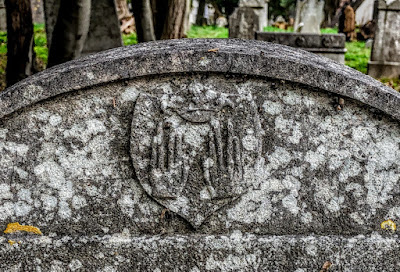
A priest’s hands raised for the blessing of the cohanim … a gravestone in the new Jewish cemetery on the Lido in Venice (Photograph: Patrick Comerford)
Luke 1: 57-66 (NRSVA):
57 Now the time came for Elizabeth to give birth, and she bore a son. 58 Her neighbours and relatives heard that the Lord had shown his great mercy to her, and they rejoiced with her.
59 On the eighth day they came to circumcise the child, and they were going to name him Zechariah after his father. 60 But his mother said, ‘No; he is to be called John.’ 61 They said to her, ‘None of your relatives has this name.’ 62 Then they began motioning to his father to find out what name he wanted to give him. 63 He asked for a writing-tablet and wrote, ‘His name is John.’ And all of them were amazed. 64 Immediately his mouth was opened and his tongue freed, and he began to speak, praising God. 65 Fear came over all their neighbours, and all these things were talked about throughout the entire hill country of Judea. 66 All who heard them pondered them and said, ‘What then will this child become?’ For, indeed, the hand of the Lord was with him.
Dreidels in a synagogue in Prague, part of children’s games at Hanukkah … did John the Baptist and Jesus spin dredels together at Hanukkah? (Photograph: Patrick Comerford)
Today’s Reflections:
In the Gospel reading at the Eucharist today (Luke 1: 57-66), we continue a series of readings before Christmas that draw on the two nativity narratives found in Matthew 1: 1-24 and Luke 1: 5-79.
During the week before Christmas, the great canticle Magnificat at Evensong traditionally has a refrain or antiphon attached to it proclaiming the ascriptions or ‘names’ given to God through the Old Testament. Each name develops into a prophecy of the coming of the Messiah.
O Sapientia, or O Wisdom, is the first of these days, and was marked on Wednesday (17 December). It was followed on Thursday (18 December) by O Adonai, by O Root of Jesse on Friday (19 December), O Key of David on Saturday (20 December), O Dayspring on Sunday (21 December), O King of the Nations yesterday (22 December), and, finally O Emmanuel today (23 December).
The seven majestic Messianic titles for Christ are based on Biblical prophecies, and they help the Church to recall the variety of the ills of humanity before the coming of the Redeemer as each antiphon in turn pleads with mounting impatience for Christ to save his people.
The Gospel reading at the Eucharist today (Luke 1: 57-66) continues on from the story of the Visitation of the Virgin Mary to her cousin Saint Elizabeth, with the only Gospel account of the birth, circumcision and naming of Saint John the Baptist.
Zechariah (זְכַרְיָה or Ζαχαρίας), also named in translations as Zacharias, Zachariah and Zachary, the husband of Elizabeth and the father of John the Baptist, is a priest, one of the cohanim descended from the sons of Aaron. Origen suggests that the Zechariah mentioned in Matthew 23: 35 as being killed between the temple and the altar may be the father of John the Baptist.
His name means ‘remember Yah’ or ‘remember God’ or ‘God remembers’. There are several Biblical figures with the name, including the Prophet Zachariah in Judah, a martyred son of a high priest, a king who reigned in Judah for six months, and several minor characters.
On the other hand, the Greek name Ἰωάννης (Ioannes) is a rendering of the Hebrew name Yohanan (יוֹחָנָן), a shorter form of the name Yəhôḥānān (יְהוֹחָנָן), which means ‘God is gracious’.
In the Hebrew Bible, Yohanan was the son of King Josiah of Judah (7th century BCE); Yohanan, son of Kareah, was a leader of the army who led the remnant of the population of Judah to Egypt for safety after the Babylonian dismantling of the kingdom in 586 BCE; Yohanan ben Yehoyada is a high priest named in the Book of Nehemiah and was the fourth in the line of high priests after Joshua the High Priest, who returned from the Babylonian captivity with Zerubbabel.
During the Hasmonean or Maccabean period, Yohanan was the father of Matityahu; John Gaddi, the eldest of the sons of Mattathias and brother of Judas Maccabeus, was one of the leaders of the revolt of the Maccabees in the 2nd century BCE; John Hyrcanus was a Maccabean leader and Jewish high priest from 134 BCE until his death in 104 BCE; and John Hyrcanus II (1st century BCE) was a member of the Hasmonean dynasty, High Priest, King, and ethnarch of Judea.
So, the name John, in its variant forms, was both a priestly and a royal name, and was associated with the leaders of resistance to occupation and resistance.
In idle moments, I sometimes wonder whether Jesus and John grew up knowing each other.
Did Mary and Joseph regularly visit Zechariah and Elizabeth?
Was Zechariah present as a priest in the Temple at the Presentation, or when the teenage Jesus was lost in the Temple?
Did Jesus and John send birthday greetings to one another?
Did they go to each other’s bar mitzvah?
Did they celebrate and major holidays of Holy Days together … Purim, Passover, Shavuot, Sukkot, Rosh Hashanah, Yom Kippur, Simchat Torah, Hanukkah … ?
Did they dress up together at Purim?
Did they spin dreidels with each other and play games together at Hanukkah? – Incidentally, yesterday (Monday) was the last day of Hanukkah this year, but Christmas Day and the first day of Hanukkah fell on the same day last year, for the first time in 19 years.
Did John the Baptist ever take up his duties and responsibilities as a priest in the Temple before going out into the Wilderness?
Was he in the Temple when Jesus visited, healed, taught, debated Caesar’s coins, or overturned the tables of the moneychangers?
Did John offer Jesus the priestly blessing that the cohanim alone impart?
The priestly blessing (Numbers 6: 24-26) that Zechariah and John would have pronounced, with their hands outstretched in the traditional way, is:
May the Lord bless and protect you.
May the Lord make his face shine on you and be gracious to you
May the Lord turn his face toward you, and give you peace.
The Priestly Blessing (ברכת כהנים, birkat cohanim) is known in rabbinic literature as raising the hands or rising to the platform because the blessing is given from a raised rostrum.
The Jewish Sages stressed that although the priests are the ones carrying out the blessing, it is not them or the ceremonial practice of raising their hands that results in the blessing, but rather it is God’s desire that his blessing should be symbolised by the hands of the cohanim.
The former Chief Rabbi, the late Lord (Jonathan) Sacks, says the Torah explicitly says that while the cohanim say the words, it is God who sends the blessing: ‘When the cohanim bless the people, they are not doing anything in and of themselves. Instead they are acting as channels through which God’s blessing flows into the world and into our lives.’
He adds, ‘Only love does this. Love means that we are focused not on ourselves but on another. Love is selflessness. And only selflessness allows us to be a channel through which flows a force greater than ourselves, the love that as Dante said, “moves the sun and the other stars”, the love that brings new life into the world.’
Hands raised in the priestly blessing on a gravestone in the Jewish cemetery in Kraków (Photograph: Patrick Comerford)
Today’s Prayers (Tuesday 23 December 2025):
The theme this week (21 to 27 December 2025) in Pray with the World Church, the prayer diary of the Anglican mission agency USPG (United Society Partners in the Gospel), is ‘Love Brings Life in Tanzania’ (pp 12-13). This theme was introduced on Sunday with a Programme Update by Imran Englefield, Individual Giving Manager, USPG.
The USPG Prayer Diary today (Tuesday 23 December 2025) invites us to pray:
Gracious Lord, we give thanks for the success of the Prevention of Mother-to-Child Transmission programme. Strengthen those who care, comfort those who suffer, and let hope, healing, and life flourish in this place.
The Collect:
God our redeemer,
who prepared the Blessed Virgin Mary
to be the mother of your Son:
grant that, as she looked for his coming as our saviour,
so we may be ready to greet him
when he comes again as our judge;
who is alive and reigns with you,
in the unity of the Holy Spirit,
one God, now and for ever.
The Post-Communion Prayer:
Heavenly Father,
who chose the Blessed Virgin Mary
to be the mother of the promised saviour
: fill us your servants with your grace,
that in all things we may embrace your holy will
and with her rejoice in your salvation;
through Jesus Christ our Lord.
Additional Collect:
Eternal God,
as Mary waited for the birth of your Son,
so we wait for his coming in glory;
bring us through the birth pangs of this present age
to see, with her, our great salvation
in Jesus Christ our Lord.
Yesterday’s Reflections
Continued Tomorrow
Hands raised in the priestly blessing on a Holocaust memorial in Berlin (Photograph: Patrick Comerford)
Scripture quotations are from the New Revised Standard Version Bible: Anglicised Edition copyright © 1989, 1995 National Council of the Churches of Christ in the United States of America. Used by permission. All rights reserved worldwide. http://nrsvbibles.org
Patrick Comerford
We are drawing near to the end of Advent and tomorrow is Christmas Eve. Later this morning I am involved in Santa’s visit to the Christmas Fayre and Farmers’ Market in Stoy Stratford. But, before today begins, I am taking some quiet time this morning to give thanks, to reflect, to pray and to read in these ways:
1, today’s Gospel reading;
2, a short reflection;
3, a prayer from the USPG prayer diary;
4, the Collects and Post-Communion prayer of the day.
A priest’s hands raised for the blessing of the cohanim … a gravestone in the new Jewish cemetery on the Lido in Venice (Photograph: Patrick Comerford)
Luke 1: 57-66 (NRSVA):
57 Now the time came for Elizabeth to give birth, and she bore a son. 58 Her neighbours and relatives heard that the Lord had shown his great mercy to her, and they rejoiced with her.
59 On the eighth day they came to circumcise the child, and they were going to name him Zechariah after his father. 60 But his mother said, ‘No; he is to be called John.’ 61 They said to her, ‘None of your relatives has this name.’ 62 Then they began motioning to his father to find out what name he wanted to give him. 63 He asked for a writing-tablet and wrote, ‘His name is John.’ And all of them were amazed. 64 Immediately his mouth was opened and his tongue freed, and he began to speak, praising God. 65 Fear came over all their neighbours, and all these things were talked about throughout the entire hill country of Judea. 66 All who heard them pondered them and said, ‘What then will this child become?’ For, indeed, the hand of the Lord was with him.
Dreidels in a synagogue in Prague, part of children’s games at Hanukkah … did John the Baptist and Jesus spin dredels together at Hanukkah? (Photograph: Patrick Comerford)
Today’s Reflections:
In the Gospel reading at the Eucharist today (Luke 1: 57-66), we continue a series of readings before Christmas that draw on the two nativity narratives found in Matthew 1: 1-24 and Luke 1: 5-79.
During the week before Christmas, the great canticle Magnificat at Evensong traditionally has a refrain or antiphon attached to it proclaiming the ascriptions or ‘names’ given to God through the Old Testament. Each name develops into a prophecy of the coming of the Messiah.
O Sapientia, or O Wisdom, is the first of these days, and was marked on Wednesday (17 December). It was followed on Thursday (18 December) by O Adonai, by O Root of Jesse on Friday (19 December), O Key of David on Saturday (20 December), O Dayspring on Sunday (21 December), O King of the Nations yesterday (22 December), and, finally O Emmanuel today (23 December).
The seven majestic Messianic titles for Christ are based on Biblical prophecies, and they help the Church to recall the variety of the ills of humanity before the coming of the Redeemer as each antiphon in turn pleads with mounting impatience for Christ to save his people.
The Gospel reading at the Eucharist today (Luke 1: 57-66) continues on from the story of the Visitation of the Virgin Mary to her cousin Saint Elizabeth, with the only Gospel account of the birth, circumcision and naming of Saint John the Baptist.
Zechariah (זְכַרְיָה or Ζαχαρίας), also named in translations as Zacharias, Zachariah and Zachary, the husband of Elizabeth and the father of John the Baptist, is a priest, one of the cohanim descended from the sons of Aaron. Origen suggests that the Zechariah mentioned in Matthew 23: 35 as being killed between the temple and the altar may be the father of John the Baptist.
His name means ‘remember Yah’ or ‘remember God’ or ‘God remembers’. There are several Biblical figures with the name, including the Prophet Zachariah in Judah, a martyred son of a high priest, a king who reigned in Judah for six months, and several minor characters.
On the other hand, the Greek name Ἰωάννης (Ioannes) is a rendering of the Hebrew name Yohanan (יוֹחָנָן), a shorter form of the name Yəhôḥānān (יְהוֹחָנָן), which means ‘God is gracious’.
In the Hebrew Bible, Yohanan was the son of King Josiah of Judah (7th century BCE); Yohanan, son of Kareah, was a leader of the army who led the remnant of the population of Judah to Egypt for safety after the Babylonian dismantling of the kingdom in 586 BCE; Yohanan ben Yehoyada is a high priest named in the Book of Nehemiah and was the fourth in the line of high priests after Joshua the High Priest, who returned from the Babylonian captivity with Zerubbabel.
During the Hasmonean or Maccabean period, Yohanan was the father of Matityahu; John Gaddi, the eldest of the sons of Mattathias and brother of Judas Maccabeus, was one of the leaders of the revolt of the Maccabees in the 2nd century BCE; John Hyrcanus was a Maccabean leader and Jewish high priest from 134 BCE until his death in 104 BCE; and John Hyrcanus II (1st century BCE) was a member of the Hasmonean dynasty, High Priest, King, and ethnarch of Judea.
So, the name John, in its variant forms, was both a priestly and a royal name, and was associated with the leaders of resistance to occupation and resistance.
In idle moments, I sometimes wonder whether Jesus and John grew up knowing each other.
Did Mary and Joseph regularly visit Zechariah and Elizabeth?
Was Zechariah present as a priest in the Temple at the Presentation, or when the teenage Jesus was lost in the Temple?
Did Jesus and John send birthday greetings to one another?
Did they go to each other’s bar mitzvah?
Did they celebrate and major holidays of Holy Days together … Purim, Passover, Shavuot, Sukkot, Rosh Hashanah, Yom Kippur, Simchat Torah, Hanukkah … ?
Did they dress up together at Purim?
Did they spin dreidels with each other and play games together at Hanukkah? – Incidentally, yesterday (Monday) was the last day of Hanukkah this year, but Christmas Day and the first day of Hanukkah fell on the same day last year, for the first time in 19 years.
Did John the Baptist ever take up his duties and responsibilities as a priest in the Temple before going out into the Wilderness?
Was he in the Temple when Jesus visited, healed, taught, debated Caesar’s coins, or overturned the tables of the moneychangers?
Did John offer Jesus the priestly blessing that the cohanim alone impart?
The priestly blessing (Numbers 6: 24-26) that Zechariah and John would have pronounced, with their hands outstretched in the traditional way, is:
May the Lord bless and protect you.
May the Lord make his face shine on you and be gracious to you
May the Lord turn his face toward you, and give you peace.
The Priestly Blessing (ברכת כהנים, birkat cohanim) is known in rabbinic literature as raising the hands or rising to the platform because the blessing is given from a raised rostrum.
The Jewish Sages stressed that although the priests are the ones carrying out the blessing, it is not them or the ceremonial practice of raising their hands that results in the blessing, but rather it is God’s desire that his blessing should be symbolised by the hands of the cohanim.
The former Chief Rabbi, the late Lord (Jonathan) Sacks, says the Torah explicitly says that while the cohanim say the words, it is God who sends the blessing: ‘When the cohanim bless the people, they are not doing anything in and of themselves. Instead they are acting as channels through which God’s blessing flows into the world and into our lives.’
He adds, ‘Only love does this. Love means that we are focused not on ourselves but on another. Love is selflessness. And only selflessness allows us to be a channel through which flows a force greater than ourselves, the love that as Dante said, “moves the sun and the other stars”, the love that brings new life into the world.’
Hands raised in the priestly blessing on a gravestone in the Jewish cemetery in Kraków (Photograph: Patrick Comerford)
Today’s Prayers (Tuesday 23 December 2025):
The theme this week (21 to 27 December 2025) in Pray with the World Church, the prayer diary of the Anglican mission agency USPG (United Society Partners in the Gospel), is ‘Love Brings Life in Tanzania’ (pp 12-13). This theme was introduced on Sunday with a Programme Update by Imran Englefield, Individual Giving Manager, USPG.
The USPG Prayer Diary today (Tuesday 23 December 2025) invites us to pray:
Gracious Lord, we give thanks for the success of the Prevention of Mother-to-Child Transmission programme. Strengthen those who care, comfort those who suffer, and let hope, healing, and life flourish in this place.
The Collect:
God our redeemer,
who prepared the Blessed Virgin Mary
to be the mother of your Son:
grant that, as she looked for his coming as our saviour,
so we may be ready to greet him
when he comes again as our judge;
who is alive and reigns with you,
in the unity of the Holy Spirit,
one God, now and for ever.
The Post-Communion Prayer:
Heavenly Father,
who chose the Blessed Virgin Mary
to be the mother of the promised saviour
: fill us your servants with your grace,
that in all things we may embrace your holy will
and with her rejoice in your salvation;
through Jesus Christ our Lord.
Additional Collect:
Eternal God,
as Mary waited for the birth of your Son,
so we wait for his coming in glory;
bring us through the birth pangs of this present age
to see, with her, our great salvation
in Jesus Christ our Lord.
Yesterday’s Reflections
Continued Tomorrow
Hands raised in the priestly blessing on a Holocaust memorial in Berlin (Photograph: Patrick Comerford)
Scripture quotations are from the New Revised Standard Version Bible: Anglicised Edition copyright © 1989, 1995 National Council of the Churches of Christ in the United States of America. Used by permission. All rights reserved worldwide. http://nrsvbibles.org
Labels:
Advent 2025,
Berlin,
Christmas 2025,
Hanukkah,
Kraków,
Lido,
Mission,
Prague,
Prayer,
Saint John the Baptist,
Saint Luke's Gospel,
Stony Stratford,
Tanzania,
Tolleshunt Knights,
USPG,
Venice
18 December 2025
20 million olive trees in Crete,
20 million in classical Greece,
a $20 million pay-out to Trump,
and 20 million blog readers
The Parthenon on the Acropolis … Ancient Greece had 20 million people by 400 BCE (Photograph: Patrick Comerford)
Patrick Comerford
Once again, this blog continues to reach more and more readers, reaching yet another overwhelming landmark, with 20 million hits at about 7 am this morning (18 December 2025), and more than 800,000 readers this week alone. There have been almost 1.5 million visitors to this blog so far this month, an average of about 80,000 hits each day so far in December.
Earlier this week, this blog had reached 19.5 million readers by early Sunday afternoon (14 December 2025), having passed the 19 million mark last week (9 December).
I began blogging in 2010, and it took almost two years until July 2012 to reach half a million readers. It more than another year before this figure rose to 1 million by September 2013. This blog reached the 10 million mark earlier this year (12 January), almost 15 years later.
So far this year, the daily figures have been overwhelming on many occasions. Eight of the 12 days of busiest traffic on this blog were this month alone and four were in January:
• 289,076 (11 January 2025)
• 285,366 (12 January 2025)
• 261,422 (13 January 2025)
• 166,155 (15 December 2025)
• 146,944 (14 December 2025)
• 140,417 (16 December 2025)
• 122,398 (17 December 2025)
• 112,221 (13 December 2025)
• 100,291 (10 January 2025)
• 94,824 (12 December 2025)
• 93,575 (11 December 2025)
• 88,333 (10 December 2025)
The latest figure of 20 million is all the more staggering as half of those hits (10 million) have been within this year, since 12 January 2025. The rise in the number of readers has been phenomenal throughout this year, and the daily figures have been overwhelming at times. With this latest landmark figure of 20 million readers, I once again find myself asking questions such as:
• What do 20 million people look like?
• Where do we find 20 million people?
• What does £20 million, €20 million or $20 million mean?
• What would it buy, how far would it stretch, how much of a difference would that much make to people’s lives?
When countries have passed the 20 million mark (vividmaps.com)
The world’s population hovered is now well over 8 billion, and projections say there could be 10.3 billion of us by the 2080s. Alex Egoshin of vividmaps is a GIS specialist and ecologist working as a researcher in a national park. He has created a series of maps based on Wikipedia’s List of Population Milestones by Country database and he concludes that ‘crossing the 20 million mark was like lighting a great bonfire – a signal that a civilisation had grown too large to ignore.’
He suggests only a few ancient societies reached that mark at an early stage: China may have passed 20 million by 1000 BCE, Persia by 480 BCE, classical Greece by 400 BCE, and Rome by 60 BCE. France joined around 1100 CE, ancient Mexico ca 1250, and the Mali Empire by 1400.
In the modern era, Russia crossed the 20 million line in 1765, Germany by 1770, and Japan by 1815 or earlier. Britain reached 20 million during the early Victorian surge in 1837, the US soon followed in 1844, Poland in 1882, Ukraine in 1883, and Spain in 1911. A wave of nations followed after World War II – including Egypt, Thailand, South Korea and the Philippines by the 1950s, followed by countries like Romania in 1968 and Malaysia in 1995.
Today, cities such as Cairo, Mumbai, Beijing and Dhaka all have close to 20 million inhabitants.
The Brandenburg Gate in Berlin … Germany had 20 million people by 1770 (Photograph: Patrick Comerford)
Earlier this year, Donald Trump claimed that Paramount, the new owners of the US TV network CBS, are to provide him with $20 million worth of advertising and programming – just months before filing legal action seeking to squeeze $10 billion out of the BBC.
Winston Churchill’s published work is estimated to come to a total of 20 million words.
20 Million Miles to Earth (also known as The Beast from Space) was a 1957 science-fiction monster film directed by Nathan Juran, with stop-motion animation by Ray Harryhausen and starring William Hopper, Joan Taylor, and Frank Puglia. Set in Italy, the film involves an alien lifeform from Venus that arrives on a crashed rocket, and begins rapidly growing.
The US has a coastline of approximately 20 million metres (20,000 km or 12,400 miles), which is also close to half the circumference of the Earth.
Last month (November) was the olive picking season in Crete, where over 20 million olive trees are cultivated the length and breadth of the island. Olives and olive oil account for one of the main sources of income throughout Crete, so that olive oil is often called ‘Crete’s liquid gold’.
The olive groves on the hillsides between Piskopianó and Koutouloufári above Hersonissos … Crete has more than 20 million olive trees (Photograph: Patrick Comerford, 2024)
And 20 million minutes is approximately 38 years 4 months. If this blog was getting one hit a minute, it would have taken over 38 years to reach this 20 million mark.
So, yet again, this blog has reached another humbling statistic and a sobering figure, and once more I am left with a feeling of gratitude to all who read and support this blog and my writing.
A continuing and warming figure in the midst of all these statistics continues to be the one that shows my morning prayer diary continues to reach up to 90-100 people each day, with similar figures for my daily Advent Calendar postings at noon. It is almost four years now since I retired from active parish ministry, but I think many of my priest-colleagues would be prayerfully thankful if the congregations in their churches totalled 600 to 700 people twice a week.
Today, I am very grateful to all the 20 million readers of this blog to date, and in particular I am grateful for the small and faithful core group among you who join me in prayer, reading and reflection each morning.
Notre Dame Cathedral in Paris … France had around 20 million inhabitants by the year 1100 (Photograph: Patrick Comerford, 2024)
Patrick Comerford
Once again, this blog continues to reach more and more readers, reaching yet another overwhelming landmark, with 20 million hits at about 7 am this morning (18 December 2025), and more than 800,000 readers this week alone. There have been almost 1.5 million visitors to this blog so far this month, an average of about 80,000 hits each day so far in December.
Earlier this week, this blog had reached 19.5 million readers by early Sunday afternoon (14 December 2025), having passed the 19 million mark last week (9 December).
I began blogging in 2010, and it took almost two years until July 2012 to reach half a million readers. It more than another year before this figure rose to 1 million by September 2013. This blog reached the 10 million mark earlier this year (12 January), almost 15 years later.
So far this year, the daily figures have been overwhelming on many occasions. Eight of the 12 days of busiest traffic on this blog were this month alone and four were in January:
• 289,076 (11 January 2025)
• 285,366 (12 January 2025)
• 261,422 (13 January 2025)
• 166,155 (15 December 2025)
• 146,944 (14 December 2025)
• 140,417 (16 December 2025)
• 122,398 (17 December 2025)
• 112,221 (13 December 2025)
• 100,291 (10 January 2025)
• 94,824 (12 December 2025)
• 93,575 (11 December 2025)
• 88,333 (10 December 2025)
The latest figure of 20 million is all the more staggering as half of those hits (10 million) have been within this year, since 12 January 2025. The rise in the number of readers has been phenomenal throughout this year, and the daily figures have been overwhelming at times. With this latest landmark figure of 20 million readers, I once again find myself asking questions such as:
• What do 20 million people look like?
• Where do we find 20 million people?
• What does £20 million, €20 million or $20 million mean?
• What would it buy, how far would it stretch, how much of a difference would that much make to people’s lives?
When countries have passed the 20 million mark (vividmaps.com)
The world’s population hovered is now well over 8 billion, and projections say there could be 10.3 billion of us by the 2080s. Alex Egoshin of vividmaps is a GIS specialist and ecologist working as a researcher in a national park. He has created a series of maps based on Wikipedia’s List of Population Milestones by Country database and he concludes that ‘crossing the 20 million mark was like lighting a great bonfire – a signal that a civilisation had grown too large to ignore.’
He suggests only a few ancient societies reached that mark at an early stage: China may have passed 20 million by 1000 BCE, Persia by 480 BCE, classical Greece by 400 BCE, and Rome by 60 BCE. France joined around 1100 CE, ancient Mexico ca 1250, and the Mali Empire by 1400.
In the modern era, Russia crossed the 20 million line in 1765, Germany by 1770, and Japan by 1815 or earlier. Britain reached 20 million during the early Victorian surge in 1837, the US soon followed in 1844, Poland in 1882, Ukraine in 1883, and Spain in 1911. A wave of nations followed after World War II – including Egypt, Thailand, South Korea and the Philippines by the 1950s, followed by countries like Romania in 1968 and Malaysia in 1995.
Today, cities such as Cairo, Mumbai, Beijing and Dhaka all have close to 20 million inhabitants.
The Brandenburg Gate in Berlin … Germany had 20 million people by 1770 (Photograph: Patrick Comerford)
Earlier this year, Donald Trump claimed that Paramount, the new owners of the US TV network CBS, are to provide him with $20 million worth of advertising and programming – just months before filing legal action seeking to squeeze $10 billion out of the BBC.
Winston Churchill’s published work is estimated to come to a total of 20 million words.
20 Million Miles to Earth (also known as The Beast from Space) was a 1957 science-fiction monster film directed by Nathan Juran, with stop-motion animation by Ray Harryhausen and starring William Hopper, Joan Taylor, and Frank Puglia. Set in Italy, the film involves an alien lifeform from Venus that arrives on a crashed rocket, and begins rapidly growing.
The US has a coastline of approximately 20 million metres (20,000 km or 12,400 miles), which is also close to half the circumference of the Earth.
Last month (November) was the olive picking season in Crete, where over 20 million olive trees are cultivated the length and breadth of the island. Olives and olive oil account for one of the main sources of income throughout Crete, so that olive oil is often called ‘Crete’s liquid gold’.
The olive groves on the hillsides between Piskopianó and Koutouloufári above Hersonissos … Crete has more than 20 million olive trees (Photograph: Patrick Comerford, 2024)
And 20 million minutes is approximately 38 years 4 months. If this blog was getting one hit a minute, it would have taken over 38 years to reach this 20 million mark.
So, yet again, this blog has reached another humbling statistic and a sobering figure, and once more I am left with a feeling of gratitude to all who read and support this blog and my writing.
A continuing and warming figure in the midst of all these statistics continues to be the one that shows my morning prayer diary continues to reach up to 90-100 people each day, with similar figures for my daily Advent Calendar postings at noon. It is almost four years now since I retired from active parish ministry, but I think many of my priest-colleagues would be prayerfully thankful if the congregations in their churches totalled 600 to 700 people twice a week.
Today, I am very grateful to all the 20 million readers of this blog to date, and in particular I am grateful for the small and faithful core group among you who join me in prayer, reading and reflection each morning.
Notre Dame Cathedral in Paris … France had around 20 million inhabitants by the year 1100 (Photograph: Patrick Comerford, 2024)
21 July 2025
Daily prayer in Ordinary Time 2025:
73, Monday 21 July 2025
‘The people of Nineveh … repented at the proclamation of Jonah’ (Matthew 12: 41) … a whale depicted in the Saint Brendan window in Saint Michael’s Church, Sneem, Co Kerry (Photograph: Patrick Comerford)
Patrick Comerford
We are in Ordinary Time in the Church Calendar and yesterday was the Fifth Sunday after Trinity (Trinity V, 20 July 2025).
Before today begins, I am taking some quiet time this morning to give thanks, to reflect, to pray and to read in these ways:
1, reading today’s Gospel reading;
2, a short reflection;
3, a prayer from the USPG prayer diary;
4, the Collects and Post-Communion prayer of the day.
‘The people of Nineveh … repented at the proclamation of Jonah’ (Matthew 12: 41) … a reconstruction of the gates of an Assyrian palace in the Pergamon Museum, Berlin (Photograph: Patrick Comerford)
Matthew 12: 38-42 (NRSVA):
38 Then some of the scribes and Pharisees said to him, ‘Teacher, we wish to see a sign from you.’ 39 But he answered them, ‘An evil and adulterous generation asks for a sign, but no sign will be given to it except the sign of the prophet Jonah. 40 For just as Jonah was for three days and three nights in the belly of the sea monster, so for three days and three nights the Son of Man will be in the heart of the earth. 41 The people of Nineveh will rise up at the judgement with this generation and condemn it, because they repented at the proclamation of Jonah, and see, something greater than Jonah is here! 42 The queen of the South will rise up at the judgement with this generation and condemn it, because she came from the ends of the earth to listen to the wisdom of Solomon, and see, something greater than Solomon is here!’
‘Hold up the sandal, as he has commanded us!’ (Monty Python, ‘The Life of Brian’) … two over-size sandals outside the Antika Irish bar on Arabatzoglou street in Rethymnon (Photograph: Patrick Comerford, 2025)
Today’s reflection:
Signs are part of the humour throughout Monty Python’s Life of Brian, also known as Life of Brian, a controversial 1979 film by the Monty Python team, including Graham Chapman, John Cleese, Terry Gilliam, Eric Idle, Terry Jones and Michael Palin.
Scene 18, ‘The Holy Gourd of Jerusalem’, includes this dialogue:
FOLLOWERS: … Look! Ah! Oh! Oh!
ARTHUR: He has given us a sign!
FOLLOWER: Oh!
SHOE FOLLOWER: He has given us … His shoe!
ARTHUR: The shoe is the sign. Let us follow His example.
SPIKE: What?
ARTHUR: Let us, like Him, hold up one shoe and let the other be upon our foot, for this is His sign, that all who follow Him shall do likewise.
EDDIE: Yes.
SHOE FOLLOWER: No, no, no. The shoe is …
YOUTH: No.
SHOE FOLLOWER: … a sign that we must gather shoes together in abundance.
GIRL: Cast off …
SPIKE: Aye. What?
GIRL: … the shoes! Follow the Gourd!
SHOE FOLLOWER: No! Let us gather shoes together!
FRANK: Yes.
SHOE FOLLOWER: Let me!
ELSIE: Oh, get off!
YOUTH: No, no! It is a sign that, like Him, we must think not of the things of the body, but of the face and head!
SHOE FOLLOWER: Give me your shoe!
YOUTH: Get off!
GIRL: Follow the Gourd! The Holy Gourd of Jerusalem!
FOLLOWER: The Gourd!
HARRY: Hold up the sandal, as He has commanded us!
ARTHUR: It is a shoe! It is a shoe!
HARRY: It's a sandal!
ARTHUR: No, it isn't!
GIRL: Cast it away!
ARTHUR: Put it on!
YOUTH: And clear off!
How often do we pray for unusual signs as indications of God’s blessing, favour, approval or intervention, or even God’s judgment?
In this morning’s Gospel reading (Matthew 12: 38-42), Jesus faces this sort of request too in his own day. People wanted some spectacular sign from him to establish beyond doubt that he was who he said he was.
In today’s reading, Jesus addresses the crowds who gather around him as ‘an evil and adulterous generation’ (verse 39) because they are asking for a sign. Today people can be very impressed by visionaries who claim to have visions that are denied to the rest of believers.
The church has traditionally been very wary of all such claims. In the Gospel reading, Jesus accuses his contemporaries of failing to see what is there before them. They want signs and yet all they need already stands in front of them in the person of Jesus, someone greater than Solomon, greater than Jonah, greater than all the prophets and kings.
If the people of Nineveh responded to Jonah and if the Queen of the South responded to Solomon, how much more should Jesus’ contemporaries respond to him?
God has already given us all we need in and through the church, in Word, in Sacrament and in the community of believers. There we find the living word of God. There we find the Eucharist and the other sacraments. There we find Jesus present among us and within his followers.
In the Eucharist, Christ is present to us in the bread and the wine, saying, ‘This is my body … This is my blood’.
In coming to Christ in the Eucharist, we are coming to one who is greater than Jonah or Solomon. He is present to us in other ways also. We take his presence seriously by responding to his call and following in his way, as the people of Nineveh responded to Jonah’s call. And, in response to Christ’s presence, we are called to respond to his presence by living in as a sign of his presence in the world.
A collection of cluttered signs and over-size sandals outside the Antika Irish Bar in Rethymnon (Photograph: Patrick Comerford, 2025)
Today’s Prayers (Monday 21 July 2025):
The theme this week (20 to 26 July) in Pray with the World Church, the prayer diary of the Anglican mission agency USPG (United Society Partners in the Gospel), is ‘Diversity in Sarawak’ (pp 20-21). I introduced this theme yesterday with reflections from Sarawak and the Diocese of Kuching.
The USPG prayer diary today (Monday 21 July 2025) invites us to pray:
Lord God, we pray for the Church of the Province of southeast Asia, the Diocese of Kuching, and for the ministry and mission of the bishops, including The Right Revd Danald Jute, Bishop of Kuching and Brunei since 2017.
The Collect:
Almighty and everlasting God,
by whose Spirit the whole body of the Church
is governed and sanctified:
hear our prayer which we offer for all your faithful people,
that in their vocation and ministry
they may serve you in holiness and truth
to the glory of your name;
through our Lord and Saviour Jesus Christ,
who is alive and reigns with you,
in the unity of the Holy Spirit,
one God, now and for ever.
The Post-Communion Prayer:
Grant, O Lord, we beseech you,
that the course of this world may be so peaceably ordered
by your governance,
that your Church may joyfully serve you in all godly quietness;
through Jesus Christ our Lord.
Additional Collect:
Almighty God,
send down upon your Church
the riches of your Spirit,
and kindle in all who minister the gospel
your countless gifts of grace;
through Jesus Christ our Lord.
Collect on the Eve of Mary Magdalene:
Almighty God,
whose Son restored Mary Magdalene
to health of mind and body
and called her to be a witness to his resurrection:
forgive our sins and heal us by your grace,
that we may serve you in the power of his risen life;
who is alive and reigns with you,
in the unity of the Holy Spirit,
one God, now and for ever.
Yesterday’s reflections
Continued tomorrow
At Saint Patrick’s School, Semadang, introducing the theme of ‘Diversity in Sarawak’ as the theme in the USPG Prayer Diary this week
Scripture quotations are from the New Revised Standard Version Bible: Anglicised Edition copyright © 1989, 1995, National Council of the Churches of Christ in the United States of America. Used by permission. All rights reserved worldwide. http://nrsvbibles.org
Patrick Comerford
We are in Ordinary Time in the Church Calendar and yesterday was the Fifth Sunday after Trinity (Trinity V, 20 July 2025).
Before today begins, I am taking some quiet time this morning to give thanks, to reflect, to pray and to read in these ways:
1, reading today’s Gospel reading;
2, a short reflection;
3, a prayer from the USPG prayer diary;
4, the Collects and Post-Communion prayer of the day.
‘The people of Nineveh … repented at the proclamation of Jonah’ (Matthew 12: 41) … a reconstruction of the gates of an Assyrian palace in the Pergamon Museum, Berlin (Photograph: Patrick Comerford)
Matthew 12: 38-42 (NRSVA):
38 Then some of the scribes and Pharisees said to him, ‘Teacher, we wish to see a sign from you.’ 39 But he answered them, ‘An evil and adulterous generation asks for a sign, but no sign will be given to it except the sign of the prophet Jonah. 40 For just as Jonah was for three days and three nights in the belly of the sea monster, so for three days and three nights the Son of Man will be in the heart of the earth. 41 The people of Nineveh will rise up at the judgement with this generation and condemn it, because they repented at the proclamation of Jonah, and see, something greater than Jonah is here! 42 The queen of the South will rise up at the judgement with this generation and condemn it, because she came from the ends of the earth to listen to the wisdom of Solomon, and see, something greater than Solomon is here!’
‘Hold up the sandal, as he has commanded us!’ (Monty Python, ‘The Life of Brian’) … two over-size sandals outside the Antika Irish bar on Arabatzoglou street in Rethymnon (Photograph: Patrick Comerford, 2025)
Today’s reflection:
Signs are part of the humour throughout Monty Python’s Life of Brian, also known as Life of Brian, a controversial 1979 film by the Monty Python team, including Graham Chapman, John Cleese, Terry Gilliam, Eric Idle, Terry Jones and Michael Palin.
Scene 18, ‘The Holy Gourd of Jerusalem’, includes this dialogue:
FOLLOWERS: … Look! Ah! Oh! Oh!
ARTHUR: He has given us a sign!
FOLLOWER: Oh!
SHOE FOLLOWER: He has given us … His shoe!
ARTHUR: The shoe is the sign. Let us follow His example.
SPIKE: What?
ARTHUR: Let us, like Him, hold up one shoe and let the other be upon our foot, for this is His sign, that all who follow Him shall do likewise.
EDDIE: Yes.
SHOE FOLLOWER: No, no, no. The shoe is …
YOUTH: No.
SHOE FOLLOWER: … a sign that we must gather shoes together in abundance.
GIRL: Cast off …
SPIKE: Aye. What?
GIRL: … the shoes! Follow the Gourd!
SHOE FOLLOWER: No! Let us gather shoes together!
FRANK: Yes.
SHOE FOLLOWER: Let me!
ELSIE: Oh, get off!
YOUTH: No, no! It is a sign that, like Him, we must think not of the things of the body, but of the face and head!
SHOE FOLLOWER: Give me your shoe!
YOUTH: Get off!
GIRL: Follow the Gourd! The Holy Gourd of Jerusalem!
FOLLOWER: The Gourd!
HARRY: Hold up the sandal, as He has commanded us!
ARTHUR: It is a shoe! It is a shoe!
HARRY: It's a sandal!
ARTHUR: No, it isn't!
GIRL: Cast it away!
ARTHUR: Put it on!
YOUTH: And clear off!
How often do we pray for unusual signs as indications of God’s blessing, favour, approval or intervention, or even God’s judgment?
In this morning’s Gospel reading (Matthew 12: 38-42), Jesus faces this sort of request too in his own day. People wanted some spectacular sign from him to establish beyond doubt that he was who he said he was.
In today’s reading, Jesus addresses the crowds who gather around him as ‘an evil and adulterous generation’ (verse 39) because they are asking for a sign. Today people can be very impressed by visionaries who claim to have visions that are denied to the rest of believers.
The church has traditionally been very wary of all such claims. In the Gospel reading, Jesus accuses his contemporaries of failing to see what is there before them. They want signs and yet all they need already stands in front of them in the person of Jesus, someone greater than Solomon, greater than Jonah, greater than all the prophets and kings.
If the people of Nineveh responded to Jonah and if the Queen of the South responded to Solomon, how much more should Jesus’ contemporaries respond to him?
God has already given us all we need in and through the church, in Word, in Sacrament and in the community of believers. There we find the living word of God. There we find the Eucharist and the other sacraments. There we find Jesus present among us and within his followers.
In the Eucharist, Christ is present to us in the bread and the wine, saying, ‘This is my body … This is my blood’.
In coming to Christ in the Eucharist, we are coming to one who is greater than Jonah or Solomon. He is present to us in other ways also. We take his presence seriously by responding to his call and following in his way, as the people of Nineveh responded to Jonah’s call. And, in response to Christ’s presence, we are called to respond to his presence by living in as a sign of his presence in the world.
A collection of cluttered signs and over-size sandals outside the Antika Irish Bar in Rethymnon (Photograph: Patrick Comerford, 2025)
Today’s Prayers (Monday 21 July 2025):
The theme this week (20 to 26 July) in Pray with the World Church, the prayer diary of the Anglican mission agency USPG (United Society Partners in the Gospel), is ‘Diversity in Sarawak’ (pp 20-21). I introduced this theme yesterday with reflections from Sarawak and the Diocese of Kuching.
The USPG prayer diary today (Monday 21 July 2025) invites us to pray:
Lord God, we pray for the Church of the Province of southeast Asia, the Diocese of Kuching, and for the ministry and mission of the bishops, including The Right Revd Danald Jute, Bishop of Kuching and Brunei since 2017.
The Collect:
Almighty and everlasting God,
by whose Spirit the whole body of the Church
is governed and sanctified:
hear our prayer which we offer for all your faithful people,
that in their vocation and ministry
they may serve you in holiness and truth
to the glory of your name;
through our Lord and Saviour Jesus Christ,
who is alive and reigns with you,
in the unity of the Holy Spirit,
one God, now and for ever.
The Post-Communion Prayer:
Grant, O Lord, we beseech you,
that the course of this world may be so peaceably ordered
by your governance,
that your Church may joyfully serve you in all godly quietness;
through Jesus Christ our Lord.
Additional Collect:
Almighty God,
send down upon your Church
the riches of your Spirit,
and kindle in all who minister the gospel
your countless gifts of grace;
through Jesus Christ our Lord.
Collect on the Eve of Mary Magdalene:
Almighty God,
whose Son restored Mary Magdalene
to health of mind and body
and called her to be a witness to his resurrection:
forgive our sins and heal us by your grace,
that we may serve you in the power of his risen life;
who is alive and reigns with you,
in the unity of the Holy Spirit,
one God, now and for ever.
Yesterday’s reflections
Continued tomorrow
At Saint Patrick’s School, Semadang, introducing the theme of ‘Diversity in Sarawak’ as the theme in the USPG Prayer Diary this week
Scripture quotations are from the New Revised Standard Version Bible: Anglicised Edition copyright © 1989, 1995, National Council of the Churches of Christ in the United States of America. Used by permission. All rights reserved worldwide. http://nrsvbibles.org
09 June 2025
Daily prayer in Ordinary Time 2025:
31, Monday 9 June 2025
The Berliner Dom in Berlin, popularly known as Berlin Cathedral … the images inside the dome illustrate the Beatitudes (Photograph: Patrick Comerford)
Patrick Comerford
The 50-day season of Easter, which began on Easter Day (20 April 2025), came to an end yesterday with the Day of Pentecost or Whit Sunday (8 June 2025), and we return in the Church Calendar today to Ordinary Time. The calendar of the Church of England in Common Worship today recalls Saint Columba (597), Abbot of Iona, Missionary, and Saint Ephrem of Syria 373), Deacon, Hymn Writer, and Teacher of the Faith.
Later this morning, I have an appointment in London. But before today begins, I am taking some quiet time this morning to give thanks, to reflect, to pray and to read in these ways:
1, reading today’s Gospel reading;
2, a short reflection;
3, a prayer from the USPG prayer diary;
4, the Collects and Post-Communion prayer of the day.
‘Blessed are those who mourn, for they will be comforted’ (Matthew 5: 4) … a child’s painting in Ukrainian Space in Budapest (Photograph: Patrick Comerford)
Matthew 5: 1-11 (NRSVA):
1 When Jesus saw the crowds, he went up the mountain; and after he sat down, his disciples came to him. 2 Then he began to speak, and taught them, saying:
3 ‘Blessed are the poor in spirit, for theirs is the kingdom of heaven.
4 ‘Blessed are those who mourn, for they will be comforted.
5 ‘Blessed are the meek, for they will inherit the earth.
6 ‘Blessed are those who hunger and thirst for righteousness, for they will be filled.
7 ‘Blessed are the merciful, for they will receive mercy.
8 ‘Blessed are the pure in heart, for they will see God.
9 ‘Blessed are the peacemakers, for they will be called children of God.
10 ‘Blessed are those who are persecuted for righteousness’ sake, for theirs is the kingdom of heaven.
11 ‘Blessed are you when people revile you and persecute you and utter all kinds of evil against you falsely on my account. 12 Rejoice and be glad, for your reward is great in heaven, for in the same way they persecuted the prophets who were before you.’
‘Blessed are those who mourn, for they will be comforted’ (Matthew 5: 4) … ‘Divine Teardrop’ by Peter Cassidy in an exhibition in Wexford in 2016 (Photograph: Patrick Comerford)
Today’s Reflection:
The Gospel reading at the Eucharist today (Matthew 5: 1-11) begins a series of weekday readings from the Sermon on the Mount, beginning with the Beatitudes. The scene opens with Christ leaving the crowds and climbing up the mountain, like Moses in the Book Exodus leaving the crowd behind him, and climbing Mount Sinai. In the Sermon on the Mount in Chapters 5 to 7, Saint Matthew presents us with a covenant renewal document.
The Beatitudes are a declaration of the happy or fortunate state of the children of God who possesses particular qualities, and who, because of them, will inherit divine blessings.
It is interesting to compare the delivery of the Beatitudes to the delivery of the Ten Commandments. Here we have the renewal of the covenant, and a restatement, a re-presentation, of who the Children of God are.
Just as we sometimes find the Ten Commandments grouped into two sets, so we might see the Beatitudes set out in two groups of four, the first four being inward looking, the second four being outward looking.
We might see the first four Beatitudes as addressing attitudes, while the second four deal with resulting actions.
Are they ethical requirements for the present?
Or are they eschatological blessings for the future?
Or are they are statements of present fact, identifying the qualities of a child of God and the consequent blessings that follow?
Few among us, I imagine, are ever going to commit murder.
But we all get ‘angry with a brother’ sooner or later.
The Sermon on the Mount exposes our own present reality in a very stark and real way, and the Beatitudes are a core text for Dietrich Bonhoeffer in The Cost of Discipleship and in the writings of towering Christian figures such as Dorothy Day, Martin Luther King, Thomas Merton and Oscar Romero.
Father Brian D’Arcy once recalled during a radio interview how Dorothy Day once spoke of how her fellow Roman Catholics went to confession regularly and confessed to ‘breaking’ one of the Ten Commandments, but she wondered how often they confessed to ‘breaking’ one of the Eight Beatitudes.
Μακάριοι (Makárioi): Does this mean ‘blessed’? Archbishop Makarios was the President of Cyprus in 1974 when he was deposed in a coup that was followed by the Turkish invasion of the island. ‘His Beatitude’ is a term of respect for archbishops and metropolitans in the Orthodox Church.
The word ‘blessed’ is not the best translation for μακάριος (makários). ‘Fortunate,’ ‘well off,’ or ‘happy’ might fit better.
Christ is telling those who hear him that they are fortunate to be this way. They are fortunate to possess these qualities of life. Why? Because it means they inherit the blessings or fortunes of God’s promised kingdom.
The Beatitudes are culturally embedded in our society, in our literature, in our arts. They are so familiar that we all understand the irreverent humour found in a scene in Monty Python’s The Life of Brian.
‘Blessed are the Meek’ – which means the humble, patient, submissive and gentle – is misheard in The Life of Brian as: ‘Blessed is the Greek – apparently he’s going to inherit the earth.’ When they finally get what Jesus actually says, a woman says, ‘Oh it’s the Meek … blessed are the Meek! That’s nice, I’m glad they’re getting something, ’cause they have a hell of a time.’
The political activist and agitator Reg then says: ‘What Jesus blatantly fails to appreciate is that it’s the meek who are the problem.’ This sums up the growing annoyance of the violent with the peaceful attitude of Christ. But it also highlights that the Beatitudes are about ordinary, everyday people.
Too often we see the saints celebrated by the Church as martyrs and apostles, missionaries and hermits, bishops and theologians. How often do we see them as ordinary, meek, everyday people, the people who too often are dismissed as problems, who are living with problems, who often go without attention from politicians and activists alike?
The mother and child separated at birth in the ‘mother and baby’ home and blocked at every stage as they tried to find each other.
The middle-aged mother who hopes that life is going to get better as the years move on, but then finds instead every waking hour is devoted to an adult child with special needs, or to an elderly parent who now needs to be looked after like a child.
The couple filled with faith but afraid to come to church, marginalised because of their colour, class, language, marital status or sexuality.
The lone protester who stands outside a government office or embassy, ignored by those inside and berated outside by passing, hooting motorists, but who knows right is on her side … ‘Blessed are those who hunger and thirst for righteousness.’
If the Church is a sign of the Kingdom of God, a foretaste of that heavenly liturgy, how does our life as the Church, in the parish and in the diocese, offer solace, comfort, a foretaste, hope for the meek, the downtrodden, the lonely, the oppressed, who are praised in the Beatitudes and who are invited as part of the great multitude, the countless number from every nation, tribe, people and language, to gather before the Lamb on the throne?
‘Blessed are the poor in spirit … those who mourn … the meek … those who hunger and thirst …’
May theirs be the kingdom of heaven, may they be comforted, may they inherit the earth, may they be filled.
‘Blessed are the merciful … the pure in heart … the peacemakers … those who are persecuted for righteousness’ sake …’
May we be generous in showing mercy, may we see God, be called children of God, find ourselves in the kingdom of heaven.
Blessed are we even when others revile us for standing up for these values … when we stand up for those values, may we rejoice and be glad.
Writing on the Financial pages of The Guardian many years ago (17 January 2011), Terry Macalister wrote: ‘From Tolstoy to Dostoevsky to Chekov, if anyone can tell a good story it’s the Russians.’ Well, in Chapter 2 of Boris Pasternak’s great Russian novel Doctor Zhivago, we meet Larissa Feodorovna Guishar, who ‘was not religious’ and ‘did not believe in ritual,’ but was startled by the Beatitudes, for she thought they were about herself.
How do we apply the Beatitudes to ourselves, to our own lives?
The reredos in the Unitarian Church, Dublin, is inscribed with the Beatitudes, one on each panel (Photograph: Patrick Comerford)
Today’s Prayers (Monday 9 June 2025):
‘Pentecost’ is the theme this week (8-14 June) in Pray with the World Church, the prayer diary of the Anglican mission agency USPG (United Society Partners in the Gospel). This theme was introduced yesterday with reflections by Dr Paulo Ueti - Theological Advisor and Regional Manager for the Americas and the Caribbean, USPG.
The USPG prayer diary today (Monday 9 June 2025) invites us to pray:
Heavenly Father, we praise you for sending your Holy Spirit, connecting our hearts to you and igniting them with courage, hope, and love for a world in need.
The Collect:
Almighty God,
who filled the heart of Columba
with the joy of the Holy Spirit
and with deep love for those in his care:
may your pilgrim people follow him,
strong in faith, sustained by hope,
and one in the love that binds us to you;
through Jesus Christ your Son our Lord,
who is alive and reigns with you,
in the unity of the Holy Spirit,
one God, now and for ever.
The Post-Communion Prayer:
Holy Father,
who gathered us here around the table of your Son
to share this meal with the whole household of God:
in that new world where you reveal
the fullness of your peace,
gather people of every race and language
to share with Columba and all your saints
in the eternal banquet of Jesus Christ our Lord.
Yesterday’s Reflections
Continued Tomorrow
‘Blessed are the pure in heart, for they shall see God’ (Matthew 5: 8) … a window in Saint Mary’s Collegiate Church, Youghal, Co Cork (Photograph: Patrick Comerford, 2025)
Scripture quotations are from the New Revised Standard Version Bible: Anglicised Edition copyright © 1989, 1995 National Council of the Churches of Christ in the United States of America. Used by permission. All rights reserved worldwide. http://nrsvbibles.org
Patrick Comerford
The 50-day season of Easter, which began on Easter Day (20 April 2025), came to an end yesterday with the Day of Pentecost or Whit Sunday (8 June 2025), and we return in the Church Calendar today to Ordinary Time. The calendar of the Church of England in Common Worship today recalls Saint Columba (597), Abbot of Iona, Missionary, and Saint Ephrem of Syria 373), Deacon, Hymn Writer, and Teacher of the Faith.
Later this morning, I have an appointment in London. But before today begins, I am taking some quiet time this morning to give thanks, to reflect, to pray and to read in these ways:
1, reading today’s Gospel reading;
2, a short reflection;
3, a prayer from the USPG prayer diary;
4, the Collects and Post-Communion prayer of the day.
‘Blessed are those who mourn, for they will be comforted’ (Matthew 5: 4) … a child’s painting in Ukrainian Space in Budapest (Photograph: Patrick Comerford)
Matthew 5: 1-11 (NRSVA):
1 When Jesus saw the crowds, he went up the mountain; and after he sat down, his disciples came to him. 2 Then he began to speak, and taught them, saying:
3 ‘Blessed are the poor in spirit, for theirs is the kingdom of heaven.
4 ‘Blessed are those who mourn, for they will be comforted.
5 ‘Blessed are the meek, for they will inherit the earth.
6 ‘Blessed are those who hunger and thirst for righteousness, for they will be filled.
7 ‘Blessed are the merciful, for they will receive mercy.
8 ‘Blessed are the pure in heart, for they will see God.
9 ‘Blessed are the peacemakers, for they will be called children of God.
10 ‘Blessed are those who are persecuted for righteousness’ sake, for theirs is the kingdom of heaven.
11 ‘Blessed are you when people revile you and persecute you and utter all kinds of evil against you falsely on my account. 12 Rejoice and be glad, for your reward is great in heaven, for in the same way they persecuted the prophets who were before you.’
‘Blessed are those who mourn, for they will be comforted’ (Matthew 5: 4) … ‘Divine Teardrop’ by Peter Cassidy in an exhibition in Wexford in 2016 (Photograph: Patrick Comerford)
Today’s Reflection:
The Gospel reading at the Eucharist today (Matthew 5: 1-11) begins a series of weekday readings from the Sermon on the Mount, beginning with the Beatitudes. The scene opens with Christ leaving the crowds and climbing up the mountain, like Moses in the Book Exodus leaving the crowd behind him, and climbing Mount Sinai. In the Sermon on the Mount in Chapters 5 to 7, Saint Matthew presents us with a covenant renewal document.
The Beatitudes are a declaration of the happy or fortunate state of the children of God who possesses particular qualities, and who, because of them, will inherit divine blessings.
It is interesting to compare the delivery of the Beatitudes to the delivery of the Ten Commandments. Here we have the renewal of the covenant, and a restatement, a re-presentation, of who the Children of God are.
Just as we sometimes find the Ten Commandments grouped into two sets, so we might see the Beatitudes set out in two groups of four, the first four being inward looking, the second four being outward looking.
We might see the first four Beatitudes as addressing attitudes, while the second four deal with resulting actions.
Are they ethical requirements for the present?
Or are they eschatological blessings for the future?
Or are they are statements of present fact, identifying the qualities of a child of God and the consequent blessings that follow?
Few among us, I imagine, are ever going to commit murder.
But we all get ‘angry with a brother’ sooner or later.
The Sermon on the Mount exposes our own present reality in a very stark and real way, and the Beatitudes are a core text for Dietrich Bonhoeffer in The Cost of Discipleship and in the writings of towering Christian figures such as Dorothy Day, Martin Luther King, Thomas Merton and Oscar Romero.
Father Brian D’Arcy once recalled during a radio interview how Dorothy Day once spoke of how her fellow Roman Catholics went to confession regularly and confessed to ‘breaking’ one of the Ten Commandments, but she wondered how often they confessed to ‘breaking’ one of the Eight Beatitudes.
Μακάριοι (Makárioi): Does this mean ‘blessed’? Archbishop Makarios was the President of Cyprus in 1974 when he was deposed in a coup that was followed by the Turkish invasion of the island. ‘His Beatitude’ is a term of respect for archbishops and metropolitans in the Orthodox Church.
The word ‘blessed’ is not the best translation for μακάριος (makários). ‘Fortunate,’ ‘well off,’ or ‘happy’ might fit better.
Christ is telling those who hear him that they are fortunate to be this way. They are fortunate to possess these qualities of life. Why? Because it means they inherit the blessings or fortunes of God’s promised kingdom.
The Beatitudes are culturally embedded in our society, in our literature, in our arts. They are so familiar that we all understand the irreverent humour found in a scene in Monty Python’s The Life of Brian.
‘Blessed are the Meek’ – which means the humble, patient, submissive and gentle – is misheard in The Life of Brian as: ‘Blessed is the Greek – apparently he’s going to inherit the earth.’ When they finally get what Jesus actually says, a woman says, ‘Oh it’s the Meek … blessed are the Meek! That’s nice, I’m glad they’re getting something, ’cause they have a hell of a time.’
The political activist and agitator Reg then says: ‘What Jesus blatantly fails to appreciate is that it’s the meek who are the problem.’ This sums up the growing annoyance of the violent with the peaceful attitude of Christ. But it also highlights that the Beatitudes are about ordinary, everyday people.
Too often we see the saints celebrated by the Church as martyrs and apostles, missionaries and hermits, bishops and theologians. How often do we see them as ordinary, meek, everyday people, the people who too often are dismissed as problems, who are living with problems, who often go without attention from politicians and activists alike?
The mother and child separated at birth in the ‘mother and baby’ home and blocked at every stage as they tried to find each other.
The middle-aged mother who hopes that life is going to get better as the years move on, but then finds instead every waking hour is devoted to an adult child with special needs, or to an elderly parent who now needs to be looked after like a child.
The couple filled with faith but afraid to come to church, marginalised because of their colour, class, language, marital status or sexuality.
The lone protester who stands outside a government office or embassy, ignored by those inside and berated outside by passing, hooting motorists, but who knows right is on her side … ‘Blessed are those who hunger and thirst for righteousness.’
If the Church is a sign of the Kingdom of God, a foretaste of that heavenly liturgy, how does our life as the Church, in the parish and in the diocese, offer solace, comfort, a foretaste, hope for the meek, the downtrodden, the lonely, the oppressed, who are praised in the Beatitudes and who are invited as part of the great multitude, the countless number from every nation, tribe, people and language, to gather before the Lamb on the throne?
‘Blessed are the poor in spirit … those who mourn … the meek … those who hunger and thirst …’
May theirs be the kingdom of heaven, may they be comforted, may they inherit the earth, may they be filled.
‘Blessed are the merciful … the pure in heart … the peacemakers … those who are persecuted for righteousness’ sake …’
May we be generous in showing mercy, may we see God, be called children of God, find ourselves in the kingdom of heaven.
Blessed are we even when others revile us for standing up for these values … when we stand up for those values, may we rejoice and be glad.
Writing on the Financial pages of The Guardian many years ago (17 January 2011), Terry Macalister wrote: ‘From Tolstoy to Dostoevsky to Chekov, if anyone can tell a good story it’s the Russians.’ Well, in Chapter 2 of Boris Pasternak’s great Russian novel Doctor Zhivago, we meet Larissa Feodorovna Guishar, who ‘was not religious’ and ‘did not believe in ritual,’ but was startled by the Beatitudes, for she thought they were about herself.
How do we apply the Beatitudes to ourselves, to our own lives?
Today’s Prayers (Monday 9 June 2025):
‘Pentecost’ is the theme this week (8-14 June) in Pray with the World Church, the prayer diary of the Anglican mission agency USPG (United Society Partners in the Gospel). This theme was introduced yesterday with reflections by Dr Paulo Ueti - Theological Advisor and Regional Manager for the Americas and the Caribbean, USPG.
The USPG prayer diary today (Monday 9 June 2025) invites us to pray:
Heavenly Father, we praise you for sending your Holy Spirit, connecting our hearts to you and igniting them with courage, hope, and love for a world in need.
The Collect:
Almighty God,
who filled the heart of Columba
with the joy of the Holy Spirit
and with deep love for those in his care:
may your pilgrim people follow him,
strong in faith, sustained by hope,
and one in the love that binds us to you;
through Jesus Christ your Son our Lord,
who is alive and reigns with you,
in the unity of the Holy Spirit,
one God, now and for ever.
The Post-Communion Prayer:
Holy Father,
who gathered us here around the table of your Son
to share this meal with the whole household of God:
in that new world where you reveal
the fullness of your peace,
gather people of every race and language
to share with Columba and all your saints
in the eternal banquet of Jesus Christ our Lord.
Yesterday’s Reflections
Continued Tomorrow
‘Blessed are the pure in heart, for they shall see God’ (Matthew 5: 8) … a window in Saint Mary’s Collegiate Church, Youghal, Co Cork (Photograph: Patrick Comerford, 2025)
Scripture quotations are from the New Revised Standard Version Bible: Anglicised Edition copyright © 1989, 1995 National Council of the Churches of Christ in the United States of America. Used by permission. All rights reserved worldwide. http://nrsvbibles.org
Subscribe to:
Posts (Atom)