Showing posts with label Murano. Show all posts

12 June 2025

The Venetian-style mosaics by
Antonio Salviati have survived
changes at Apple’s flagship store
on Regent Street in London

The Apple Store at 235 Regent Street is Apple’s flagship store in London (Photograph: Patrick Comerford, 2025)

Patrick Comerford

The Apple Store at 235 Regent Street is Apple’s flagship store in London, and when the shop opened in 2004, it was Apple’s first store in Europe. It was redesigned by Foster + Partners who removed the shop’s original U-shaped mezzanine floor and glass stair, and pushed back the back of the store to create a large open space that they claim is designed to have the feeling of a town square.

The 7.2m-tall space allows the building’s full-height Portland stone-clad arches to form the front façade while flooding the store with natural light.

I stepped inside the building earlier this week to see the forum with seating for up to 75 people, and the ‘avenues’ along the perimeter walls that display Apple’s products. There are terrazzo floors, a grove of 12 Ficus Ali trees set in planters that double up as seating, and the walls are clad in sandblasted Italian limestone.

But none of these explain why I wanted to visit this building on Regent Street and its enduring façade and arches a few days ago.

Beautiful, colourful mosaics adorn the façade of the former studio of the business eastablisged by Antonio Salviati of Venice (Photograph: Patrick Comerford, 2025)

Regent Street is named after the Prince Regent, later George IV, and was designed by John Nash ca 1813 as one of the first planned developments in London. The architectural historian Sir Niklaus Pevsner calls it ‘quite simply the greatest piece of town planning London has ever seen.’

Regent Street was completely redeveloped in a unified style under the control of the Crown Estate in 1895-1927, and none of the original Nash buildings remain.

The central domed building at 235-241 Regent Street was designed in 1898 by the architect George Dennis Martin (1847-1915) and was built on by Sir Thomas Henry Brooke-Hitching (1858-1926) on the site of the former Hanover Chapel.

People walking along Regent Street should look up to see the façade, which is Grade II-listed. Beautiful, colourful mosaics adorn the façade, for this was originally the studio of the business esablished by the Victorian mosaicist Antonio Salviati (1816-1890) from Venice.

Antonio Salviati revived glass making on the island of Murano in Venice (Photograph: Patrick Comerford)

The Salviati family were glass makers and makers of mosaics based on the island of Murano in Venice and in London. They worked first as Salviati and Co and later, after 1866, as the Venice and Murano Glass and Mosaic Company.

The founder of the business, Antonio Salviati, was born in Vicenza, 60 km west of Venice, on 18 March 1816. He began in life as a lawyer. However, at an early age he became interested in glasswork after taking part in restoration work by Lorenzo Radi on the mosaics in Saint Mark’s Basilica in Venice.

When Venice was at a low point in the early 19th century, John Ruskin visited and drew attention to its plight. He published his The Stones of Venice in three volumes between 1851 and 1853, and revised it after he had witnessed the demolition of important parts of Saint Mark’s Basilica.

Ruskin warned then that Venice ‘is still left for our beholding in the final period of her decline: a ghost upon the sands of the sea, so weak – so quiet, – so bereft of all but her loveliness, that we might well doubt, as we watched her faint reflection in the mirage of the lagoon, which was the City, and which the Shadow. I would endeavour to trace the lines of this image before it be for ever lost, and to record, as far as I may, the warning which seems to me to be uttered by every one of the fast-gaining waves, that beat, like passing bells, against the Stones of Venice.’

Ruskin is credited with preventing the destruction of Venice. The momentum he created inspired the revival of several Venetian crafts, including glass and mosaics, and with the backing of British banks backing them they produced works for export to Britain.

The lion of Victoria and the lion of Venice are complementary figures on the Regent Street façade (Photographs: Patrick Comerford, 2025)

Against this background, Antonio Salviati founded Compagnia Venezia Murano in 1866 with the British diplomat and archaeologist Sir Austen Henry Layard (1817-1894), who lived in Ca Cappello, a 16th century palazzo on the Grand Canal just behind Campo San Polo.

Murano had been a centre of fine glasswork since the Middle Ages. Murano Glass was lavish and at the time only the wealthy could afford the expensive specialty pieces. Salviati transformed the reputation of Murano glass, opening the first glass factory to employ a large number of skilled workers to mass-produce glass for export. He produced ornamental pieces that could be bought by millions, and so he re-established Murano as a centre of glass-making.

Salviati’s fame and work spread to England and France, where his work was usually in association with architectural designs. His mosaics can be seen in many European churches.

The decorative façade tells the story of Salviati’s move from Venice and Murano to London and Westminster (Photograph: Patrick Comerford, 2025)

By 1867, the firm had premises on Oxford Street, and Salviati opened showrooms in other fashionable parts of London, including St James’s, Piccadilly, Regent Street and, for a time, New Bond Street. The most impressive showroom was that at 235 Regent Street, which was built in 1898.

The mosaics above the windows have been preserved, and so, like those of the Palazzo Salviati on the Grand Canal in Venice, can still be seen today. The names of the great world cities of the world, ranged above the spandrels, suggest its global standing.

Salviati produced the reredos above the high altar in Westminster Abbey, erected between 1867 and 1873 to Sir George Gilbert Scott’s designs. He produced several mosaics for the grand dome in Saint Paul’s Cathedral, London. Five mosaics by Salviati are behind the altar in the east apse in the chapel in Gonville and Caius College, Cambridge. In Saint Editha’s Church, Tamworth, his iridescent mosaic glass panels in the reredos were completed in 1887 and form a striking backdrop to the High Altar.

Salviati died in Venice on 25 January 1890. His work can be seen in churches throughout England, and he also worked in Saint David’s Cathedral, Wales, Saint Paul’s Episcopal Cathedral, Dundee, and Aachen Cathedral. Mosaics by Salviati and his companies are also in the Central Lobby in the Palace of Westminster, the Albert Memorial in Hyde Park, the Council House and the Chamberlain Memorial Fountain in Birmingham, and the Paris Opera House.

The heraldic symbols of British royalty and London and Westminster (Photograph: Patrick Comerford, 2025)

Regent House on Regent Street was built in 1898, eight years after Antonio Salviati’s death. The façade displays a series of mosaics produced by the Salviati firm, with the lions of Britain and Venice, civic coats of arms and reminders of the international appeal of Salviati’s work.

On the left are the coats of arms of the City of London and the City Westminster: the red cross of Saint George, with the smaller sword of Saint Paul; and the golden portcullis. Between them stands the British lion, holding up the shield of the royal coat of arms, the initials VR of Queen Victoria, the royal motto, and the red rose of England. The starry sky comes from Saint Mark’s Basilica, Venice.


Four golden spaces once intended to bear the names of cities where Salviati’s work was sold and can be seen were never filled with the planned lettering.

The symbols of Venice, Murano and Burano, and the names of international cities (Photograph: Patrick Comerford, 2025)

On the right, the dominant figure is the winged lion of Saint Mark, the symbol of Venice. The lion rests his paw on an open book with the words: ‘Pax Tibi Marce Evangelista Meus’ (‘Peace unto you, Mark, my Evangelist’). these words, according to a legend, were uttered by an angel who identified Saint Mark’s body when it was moved from Alexandria to Venice, and became the motto of Venice.

The starry sky behind the lion reflects, once again, Saint Mark’s Basilica in Venice. Streamers on either side read ‘Dandolo’ and ‘Loredano’, the names of two powerful patrician families in Venice: the House of Dandolo produced four Doges of Venice, and the Palazzo Dandolo is now part of Hotel Danieli; the House of Loredan produced three doges.

On either side of the lion of Venice are two more heraldic representations of two islands in the Lagoon of Venice known for their glassmaking traditions: a black cockerel biting a snake for Murano; and a mounted white knight for Burano.

The lettering above displays the some of the cities where Salviati’s wares were found: Paris, New York, St Petersburg and Berlin. Below is the crown of the Doges of Venice.

But the façade also hides tells the tragic story of the Salviati family. In 1898, the very year the Salviati studio and shop opened on Regent Street, Salviati’s middle-aged son Guilio shot himself at his desk. According to the inquests, his death was brought about by ‘temporary insanity’. He left a suicide note claiming he had no money left and was in despair, although his lack of funds was a complete delusion. Guilio Salviati was buried in Brookwood Cemetery, Surrey, where his grave is marked by a decorated headstone.

The Palazzo Salviati on the Grand Canal in Venice was built as a shop and the furnace of the Salviati family (Photograph: Patrick Comerford)

I have often admired the Palazzo Salviati on the Grand Canal, between the Palazzo Barbaro Wolkoff and the Palazzo Orio Semitecolo. It was built as a shop and the furnace of the Salviati family in Venice, and was designed by the architect Giacomo Dell’Olivo. The building underwent a major renovation in 1924, with the addition of an extra floor and the placement of large mosaics on the façade.

As for Salviati’s Compagnia Venezia Murano, it continued as an important producer of Venetian art glass. Today, the company is Pauly & C – Compagnia Venezia Murano, and remains an important producer of Venetian art glass.

Glassmaking remains the main industry of Murano, where the artisans continue to employ centuries-old techniques, crafting items from contemporary art glass and glass jewellery to Murano glass chandeliers and wine stoppers.

The interior of the Apple Store on Regent Street was reshaped by Foster + Partners (Photograph: Patrick Comerford, 2025)

13 May 2025

Daily prayer in Easter 2025:
24, Tuesday 13 May 2025

‘My sheep hear my voice. I know them, and they follow me’ (John 10: 27) … street art in Carlingford, Co Louth (Photograph: Patrick Comerford)

Patrick Comerford

Easter is a 50-day season, beginning on Easter Day (20 April 2025) and continuing until the Day of Pentecost (8 June 2025), or Whit Sunday. This week began with the Fourth Sunday of Easter (Easter IV, 11 May 2025), sometimes known as ‘Good Shepherd Sunday’.

Later this evening, I hope to take part in a meeting of the Town Centre Working Group in Stony Stratford. But, before today begins, I am taking some quiet time this morning to give thanks, to reflect, to pray and to read in these ways:

1, reading today’s Gospel reading;

2, a short reflection;

3, a prayer from the USPG prayer diary;

4, the Collects and Post-Communion prayer of the day.

‘Jesus was walking in the temple, in the portico of Solomon’ (John 10: 23) … the Temple-like portico at Plassey House in the University of Limerick (Photograph: Patrick Comerford)

John 10: 22-30 (NRSVA):

22 At that time the festival of the Dedication took place in Jerusalem. It was winter, 23 and Jesus was walking in the temple, in the portico of Solomon. 24 So the Jews gathered around him and said to him, ‘How long will you keep us in suspense? If you are the Messiah, tell us plainly.’ 25 Jesus answered, ‘I have told you, and you do not believe. The works that I do in my Father’s name testify to me; 26 but you do not believe, because you do not belong to my sheep. 27 My sheep hear my voice. I know them, and they follow me. 28 I give them eternal life, and they will never perish. No one will snatch them out of my hand. 29 What my Father has given me is greater than all else, and no one can snatch it out of the Father’s hand. 30 The Father and I are one.’

‘Jesus was walking in the Temple, in the portico of Solomon’ (John 10: 23) … the portico of the Duomo di Sant’Andrea in Amalfi (Photograph: Patrick Comerford)

Today’s Reflection:

This week’s theme in the lectionary of the Good Shepherd in the ‘Good Shepherd Discourse’ (John 10: 1-42) continues in the Gospel reading at the Eucharist today. We read verses 1-10 yesterday, and today we return to verses 22-30, which we also read on Sunday.

Saint John’s Gospel focuses on major biblical festivals, such as Passover and Sukkot or the Feast of Tabernacles (which this year begins on 1 June 2025), and Jesus is seen to connect his mission with each of the these major festivals.

In Saint John’s Gospel, Jesus celebrates Hanukkah or the Festival of Lights in Jerusalem: At that time the festival of the Dedication took place in Jerusalem. It was winter, and Jesus was walking in the temple, in the portico of Solomon (John 10: 22-23, NRSVA).

Hanukkah is not one of the major Jewish festivals. It is not included in the Torah, nor is it referred to in the writings of the Prophets. It is a feast of dedication, remembering the Maccabees who recaptured the Temple from Antiochus Epiphanius after it had been captured and desecrated more than 150 years before Jesus was born (see I Maccabees 3-4; II Maccabees 8: 1 to 10: 18).

The Books of Maccabees describe the events over eight days that Hanukkah commemorates. The requirements for the rededication of the Temple seemed impossible, with only one day’s supply of oil for the temple menorah or lampstand remaining. According to these accounts, God miraculously allowed the oil to last the full eight days so that the dedication would be complete.

The name of Antiochus Epiphanes means ‘god manifest’. He was one of the successors of Alexander the Great and sought to unify his empire by establishing a single religion. Judaism and its practices, including Sabbath observance, scripture reading and the circumcision of eight-day-old boys, were outlawed, and the Temple was desecrated when a pig was sacrificed to Zeus there.

Under the leadership of Judas Maccabeus, a nickname meaning ‘hammer’, the Jewish people fought a guerrilla-style war against the forces of Antiochus Epiphanes. Although greatly outnumbered, the Jewish rebels were victorious and retook the Temple. On the 25th day of the month Kislev 164 BCE, the defiled Temple was reconsecrated and sacrifices were offered to God.

The people joyfully celebrated the rededication of the Temple for eight days. At the conclusion of the festivities, it was decreed that a similar festival be held each year beginning on 25 Kislev (I Maccabees 4: 36-39).

Hanukkah was not one of the required pilgrimage festivals (see Exodus 23), but those who attended celebrated the days with great rejoicing.

According to Saint John’s Gospel, Jesus is in Jerusalem during Hanukkah or the Festival of Lights, a celebration of hope and justice against dark oppression and tyranny. The account in John 10: 22-42 concludes a festival cycle in John 5: 1 to 10: 42: Sabbath (John 5), Passover (John 6), Tabernacles (John 7: 1 to 10: 21), and Dedication (John 10: 22-42).

In other places, Jesus tells his followers that they are the light of the world and should not be hidden away but to be like a lamp stand (or menorah), and to ‘let your light shine before others, so that they may see your good works and give glory to your Father in heaven’ (Matthew 5: 14-16).

Hanukkah continues to be celebrated in Jewish homes and communities. Hanukkah and Christmas are not the same, nor are they equivalent. But, during both festivals, we are called to be lights in the midst of darkness.

With all the evil, division, oppression and injustice that is taking place in the world today, it is important for us too to be the lights of this world for all around us who desperately need light in their darkness.

Christ is risen!
The Lord is risen indeed. Alleluia!

‘Jesus was walking in the temple, in the portico of Solomon’ (John 10: 23) … the Temple-like portico built by the Williamson brothers at Emo Court in Co Laois (Photograph: Patrick Comerford)

Today’s Prayers (Tuesday 13 May 2025):

‘Health and Hope in the Manyoni District’ provides the theme this week in ‘Pray With the World Church’, the Prayer Diary of the Anglican mission agency USPG (United Society Partners in the Gospel). This theme was introduced on Sunday with a programme update from Dr Frank Mathew Haji of the Integrated Child Health and End Mother-to-Child Transmission of HIV Programme in Tanzania.

The USPG Prayer Diary today (Tuesday 13 May 2025) invites us to pray:

Lord, we pray that this project contributes to lowering the national rate of mother and child mortality in the Manyoni district. May lives be saved, and families strengthened as husbands and relatives all gain a greater knowledge and understanding of the issue.

The Collect:

Almighty God,
whose Son Jesus Christ is the resurrection and the life:
raise us, who trust in him,
from the death of sin to the life of righteousness,
that we may seek those things which are above,
where he reigns with you
in the unity of the Holy Spirit,
one God, now and for ever.

The Post-Communion Prayer:

Merciful Father,
you gave your Son Jesus Christ to be the good shepherd,
and in his love for us to lay down his life and rise again:
keep us always under his protection,
and give us grace to follow in his steps;
through Jesus Christ our Lord.

Additional Collect:

Risen Christ,
faithful shepherd of your Father’s sheep:
teach us to hear your voice
and to follow your command,
that all your people may be gathered into one flock,
to the glory of God the Father.

Collect on the Eve of Saint Matthias:

Almighty God,
who in the place of the traitor Judas
chose your faithful servant Matthias
to be of the number of the Twelve:
preserve your Church from false apostles
and, by the ministry of faithful pastors and teachers,
keep us steadfast in your truth;
through Jesus Christ your Son our Lord,
who is alive and reigns with you,
in the unity of the Holy Spirit,
one God, now and for ever.

Yesterday’s Reflections

Continued Tomorrow

A Hanukkiah or Hanukkah menorah in Murano glass in Venice (Photograph: Patrick Comerford)

Scripture quotations are from the New Revised Standard Version Bible: Anglicised Edition copyright © 1989, 1995 National Council of the Churches of Christ in the United States of America. Used by permission. All rights reserved worldwide. http://nrsvbibles.org

25 December 2024

‘Creator of All and Rock of Ages,
Too many lights have been extinguished.
The world has grown too dark’

This year, for the first time in 19 years, the first day of Hanukkah and Christmas Day fall on the same day

Patrick Comerford

For the first time in 19 years, Christmas Day and the first day of Hanukkah are falling on the same day. Hanukkah, or Chanukah, is sometimes referred to as the Festival of Dedication or the Festival of Lights.

The word ‘Hanukkah’ means dedication. The festival commemorates the rededication of the Temple in Jerusalem by Judas Maccabaeus in 165 BCE, after it was desecrated by Antiochus Epiphanes.

Saint John’s Gospel focuses on major biblical festivals, such as Passover and Sukkot or the Feast of Tabernacles, and Jesus is seen to connect his mission with each of the these major festivals.

In Saint John’s Gospel, he celebrates Hanukkah or the Festival of Lights in Jerusalem: At that time the festival of the Dedication took place in Jerusalem. It was winter, and Jesus was walking in the temple, in the portico of Solomon (John 10: 22-23, NRSVA).

But Hanukkah is not one of the major Jewish festivals. It is not included in the Torah, nor is referred to it in the writings of the Prophets. It is a feast of dedication, remembering the Maccabees who recaptured the Temple from Antiochus Epiphanius after it had been captured and desecrated more than 150 years before Jesus was born (see I Maccabees 3-4; II Maccabees 8: 1 to 10: 18).

The Books of Maccabees describe the eight-days that Hanukkah commemorates. The requirements for the rededication of the Temple seemed impossible, with only one day’s supply of oil for the temple menorah or lampstand remaining. According to these accounts, God miraculously allowed the oil to last the full eight days so that the dedication would be complete.

The name of Antiochus Epiphanes means ‘god manifest’. He was one of the successors of Alexander the Great and sought to unify his empire by establishing a single religion. Judaism and its practices, including Sabbath observance, scripture reading and the circumcision of eight-day-old boys, were outlawed, and the Temple was desecrated when a pig was sacrificed to Zeus there.

Under the leadership of Judas Maccabeus, a nickname meaning ‘hammer’, the Jewish people fought a guerrilla-style war against the forces of Antiochus Epiphanes. Although greatly outnumbered, the Jewish rebels were victorious and retook the Temple. On the 25th day of the month Kislev 164 BCE, the defiled Temple was reconsecrated and sacrifices were offered to God.

The people joyfully celebrated the rededication of the Temple for eight days. At the conclusion of the festivities, it was decreed that a similar festival be held each year beginning on 25 Kislev (I Maccabees 4: 36–39).

Hanukkah was not one of the required pilgrimage festivals (see Exodus 23), but those who attended celebrated the days with great rejoicing.

According to Saint John’s Gospel, Jesus is in Jerusalem during Hanukkah or the Festival of Lights, a celebration of hope and justice against dark oppression and tyranny. The account in John 10: 22-42 concludes a festival cycle in John 5: 1 to 10: 42: Sabbath (John 5), Passover (John 6), Tabernacles (John 7: 1 to 10: 21), and Dedication (John 10: 22-42).

In other places, Jesus tells his followers that they are the light of the world and should not be hidden away but to be like a lamp stand (or menorah), to and ‘let your light shine before others, so that they may see your good works and give glory to your Father in heaven’ (Matthew 5: 14-16).

Hanukkah continues to be celebrated in Jewish homes and communities. Hanukkah and Christmas are not the same, nor are they equivalent. But, during this season, we are called to be lights in the midst of darkness. With all the evil, division, oppression and injustice that take place in this world, it is important that all who celebrate the lights of this season become the lights of this world for all around us who desperately need light in their darkness.

I recently came ‘A Hanukkah Prayer for a Time of Darkness’, a poem by Marla Baker:

Creator of All,
In the beginning You made the night sky luminous with the light of the moon and the stars and
You made the daytime bright with the light of the sun and
Saw that it was good.

And You created human beings in Your own image, with capacity
To distinguish dark from light, with capacity
To create holy sparks, see into the shadows and
Shine light where it is dark.
And You saw that it was very good.

Creator of All and Rock of Ages,
In the time of the Maccabees once more You worked a miracle of light,
Permitting our ancestors to rededicate holy space.
And it lasted eight days and eight nights.

Creator of All and Rock of Ages,
In the dark of night, at the darkest time of year
We light candles in remembrance of the miracle,
One more each night until there are eight.

Creator of All and Rock of Ages,
Too many lights have been extinguished.
The world has grown too dark.

Creator of Light and Dark,
Teach us once more to see into the shadows,
To shed our light in all the dark corners and to
Create holy sparks for all humankind
So that once more we can say
It is very good.

Chag Chanukah Sameach, חַג חֲנוּכָּה שַׂמֵחַ‎

A Hanukkiah or Hanukkah menorah in Murano glass in Venice (Photograph: Patrick Comerford)

01 October 2024

Three former churches
in Hampstead, how they
survived, and the new
uses they have found

Saint Stephen’s Church on Rosslyn Hill, Hampstead, has been rescued from vandalism and near-loss (Photograph: Patrick Comerford, 2024)

Patrick Comerford

During my rambles around Hampstead last week, I visited the two Saint John’s: Saint John-at-Hampstead, the ancient parish church on Church Row, and Saint John’s Downshire Hill, the last remaining proprietary chapel within the Diocese of London.

But I also took time to see three of the many former churches found throughout Hampstead: Saint Stephen’s Church, considered the masterpiece of SS Teulon; the former Lyndhurst Road Congregational Church with its unusual hexagonal shape and now one of the world’s largest recording rooms; and the former Trinity Presbyterian Church, now a private house on the corner of the High Street and Willoughby Road.

Saint Stephen’s Church on Rosslyn Hill is a remarkable, restored Grade I listed building that has been rescued from vandalism and near-loss and is being used by the public and the community once again.

The initiative to build Saint Stephen’s came from churchgoers at Saint John’s, Downshire Hill, in 1864 when they decided to build a district church for the people living on new streets between Belsize Park and Hampstead such as Lyndhurst Road and Thurlow Road.

The site for a new church on Rosslyn Hill was donated by Sir Thomas Maryon Wilson (1800-1869), who was the lord of the manor of Hampstead and patron of the living. He had wanted to develop the area with housing but was frustrated by the terms of his father’s will and by protests from the local residents.

The Church Commissioners offered the commission to design a new church to the architect Ewan Christian (1814-1895), who lived in Hampstead and who restored Southwell Minster, Carlisle Cathedral, Christ Church, Spitalfields, and Saint Peter’s Collegiate Church, Wolverhampton. When he declined, the post went to Samuel Sanders Teulon (1812-1873), who also lived in Hampstead.

Work on Teulon’s ‘mighty church’ began in January 1869 and it was consecrated within a year on 31 December 1869 by the Bishop of London. A district was assigned for a new church in 1870 and the Vicar of Hampstead was the patron.

Saint Stephen’s was finished within three years of its consecration. The steeple was completed 1871, with a peal of 10 bells by Taylors of Loughborough added in 1872. The clock and carillon were installed in 1873.

Inside Saint Stephen’s, considered by many to be Teulon’s masterwork (Photograph: Saint Stephen’s Restoration and Preservation Trust)

Saint Stephen’s, considered by many to be Teulon’s masterwork, is in Gothic style and markedly French in outline, with steep roofs and a massive square tower. The church has an apsidal chancel with north and south transepts, a massive tower with spires, an aisled nave with a west gallery and north, west and south porches.

The broad nave was well-lit. Placing the tower east of the nave created a long chancel, which led to much decoration. It was said to have one of most moving Victorian interiors.

When Teulon was offered the commission, he had requested to build the church in brick. For the exterior, he chose brick from Dunstable, which when new was described as varying in colour from pale grey to Indian red giving the church a mottled appearance.

The decorative stone bands on the exterior were of Kentish Rag from Maidstone and, as if to contrast the exterior, the inside walls were faced with grey, tallow and white bricks from Huntingdonshire laid in stripes and panels.

The most spectacular ornamental brickwork was under the tower and in the transepts and was slightly Moorish in style. The sculptural and mosaic decoration was unusually rich and varied, much of which was created by Thomas Earp and Antonio Salviati (1816-1890).

Salviati was originally from Venice, and had trained in Murano. He had already installed Venetian mosaics in more than 50 churches in England, including work on the altars, the walls, the choirs, the pavements, and the baptismal fonts. His work can be seen in Westminster Abbey, Saint Paul’s Cathedral, London, and Saint Editha’s Church, Tamworth, and in the Houses of Parliament and the Chamberlain Memorial Fountain in Birmingham.

The alabaster roundels, dating from 1880, included one of Latimer given by the architect Ewan Christian, who had become a member of the congregation, in a personal protest against Anglo-Catholicism.

The stained glass windows were by Lavers and Westlake, and Clayton and Bell, including a memorial window to Teulon.

Soon after Saint Stephen’s was completed, a school was established in the crypt. The chapel in south transept was in place in 1905, and the stalls and screen were designed by Temple Moore in 1912.

The cost of building was first estimated at £7,500, but with its rich ornamentation it cost three times more than estimated. The money was raised entirely by subscriptions and large donations from local people.

Saint Stephen’s was intended for ‘Low Church’ services, and had seating for 1,200 people. By 1886, the attendance figures were 752 in the morning and 620 evening; by 1903, these figures had dropped to 301 in the morning and 242 in the evening.

The church suffered from subsidence in 1896, 1898 and 1901, and serious cracking appeared in 1969 when the foundations for a new Royal Free Hospital were being dug. The church closed in 1977 and the parish was united with All Hallows’, Gospel Oak. The bells were returned to Taylors of Loughborough in 1982.

While new uses were being sought for the church, the interior was severely vandalised over the next 20 years. The Diocese of London appeared to have no firm plans for the building, and was criticised for neglect, as most of the fittings were stolen or vandalised.

Local campaigners were worried about a deteriorating structure that the Church of England was accused of leaving to rot. The Greater London Council made a grant for urgent repairs in 1985, and English Heritage deemed the restoration and preservation of Saint Stephen’s of the utmost importance.

After decades of neglect, when it was occupied by squatters, the church was joined with the school next door in 1998. Saint Stephen’s was restored over three phases in the early 21st century when it was leased to the Saint Stephen’s Restoration and Preservation Trust.

Salviati’s mosaic roundels of various Passion symbols can still be seen in the former chancel, and a few roundels featuring angels that surround a rose window above the entrance to the side chapel are intact. But most of his work in the nave seems to have been lost.

Michael and Andrea Taylor have been credited with a lengthy but successful struggle to rescue the building. Saint Stephen’s is now a venue for public and social events, music, wedding receptions and corporate functions and a focal point for educational and local community enterprises. Hampstead Hill School has a Nursery and Pre-Preparatory School based at Saint Stephen’s and the adjacent School Hall.

Lyndhurst Road Congregational Church was designed by Alfred Waterhouse with an unusual hexagonal shape (Photograph: Patrick Comerford, 2024)

The number of ‘nonconformist’ chapels in Hampstead remained small until the late 19th century. The former Congregational Church on the corner of Lyndhurst Road and Rosslyn Hill faces the former Saint Andrew’s Church, was built in 1884.

Congregationalists had no place of worship in Hampstead until New College at College Crescent, Finchley Road, was opened in 1851. New College Chapel was built on the corner of Upper Avenue and Adelaide Road in 1853. Although it was not part of the college, it was closely linked with it.

But Congregationalists did not have a chapel nearer Hampstead until the 1880s, partly because of the hostility of Anglican landowners. Lyndhurst Road Congregationalist Church on Rosslyn Hill originated in services held in an iron building on Willoughby Road by the Revd JB French from 1876. It was supported for two years by London Congregational Union until progress ceased and French resigned.

The theologian Robert Forman Horton (1855-1934) was persuaded by the stockbroker TT Curwen, a Hampstead resident, to preach at Sunday services in 1879-1880. Enthusiastic followers began mission work in Kentish Town and formed a church with about 60 members in 1880. Membership had reached 220 by 1883 and the iron church often held 600 people in a space for 440.

The Ecclesiastical Commissioners sold the four-acre site at Rosslyn Grove to four of the church members, who kept less than an acre as a church site and sold the rest to finance the building.

The church was designed in 1884 by Alfred Waterhouse (1830-1905) as an irregular hexagon of deep red brick with majolica dressings in Romanesque style, and a seating capacity of 1,500. A lecture hall and school were added later.

Waterhouse is associated with Gothic Revival architecture, and is best known for his designs for Manchester Town Hall and the Natural History Museum in London. His other works include Eaton Hall in Cheshire, designed for the Duke of Westminster, the Hall in Balliol College, Oxford, the former Foster’s Bank on Sidney Street, Cambridge, and the Royal Institution of Chartered Surveyors on Great George Street, Westminster.

Lyndhurst Road Congregational Church was unusual as the body of the church is hexagonal, built in purple brick with red brick and terracotta dressings in a Romanesque style. The builders were J Parnell & Son and the church cost £15,970 to build.

Horton, the first non-Anglican to have a teaching position at the Oxford University since the Reformation, became the full-time minister in 1884, and remained until 1930. He was an influential writer and preacher, and his Sunday night lectures drew many working men. Attendance in 1886 was 857 in the morning and 1,165 in the evening.

Membership peaked at 1,276 in 1913, but fell to about 1,000 during World War I and to 613 in 1939.

The United Reformed Church (URC) was formed in 1972 with the union of the Presbyterian Church of England and the Congregational Church of England and Wales. Lyndhurst Road Church became part of the URC in 1972, but it finally closed in 1978.

Lyndhurst Hall is now one of the world’s largest recording rooms. It was opened by Sir George Martin in 1992, and the music recorded here has been heard in cinemas and homes across the globe. The live area can accommodate a full symphony orchestra and choir simultaneously, with space for film scoring, orchestral recordings and live performances.

Trinity Close on the corner of Willoughby Road and Hampstead High Street is a former Presbyterian chapel (Photograph: Patrick Comerford, 2024)

Trinity Close at the south end of Willoughby Road, close to Hampstead High Street and the Heath, is a former Presbyterian chapel in Hampstead dating back to 1862 which has been converted to residential use.

The house was part of a former Scottish Presbyterian Church that stood on the site and that dated back to the mid-19th century. Scottish Presbyterians began to worship regularly in Hampstead in 1832 in the house of Dr John Thompson on Pond Street. The Temperance hall in Perrin’s Court was rented in 1844 and recognised as preaching station.

It became known as Trinity Presbyterian Church and by the end of 1845 average Sunday attendances were 130 in the morning 80 in the evening. A pastor was appointed in 1846, the congregation moved to Well Walk Chapel in 1853, and when that building became dilapidated a site was bought on the corner of High Street and Willoughby Road in 1861.

The church was designed by Campbell Douglas and opened in 1862. The early members were mostly Scottish. The church was enlarged in 1882 and 1889. When the church closed in 1962, the members joined Saint Andrew’s Presbyterian Church, Finchley Road. Shops were built on part of the site and the rest of the building was converted into Trinity Close in the 1970s.

Trinity Close is now a four-bedroom home of almost 2,000 sq ft, with living spaces set over a vaulted upper level, two terraces, a private front garden and designated off-street parking.

The original Presbyterian presence in Hampstead dates back to the decade after the Caroline restoration. Those early Presbyterians met in Ralph Honeywood’s house on Red Lion Hill, where he had a chaplain from 1666, and they continued meeting there until Red Lion chapel was built close by. That congregation became Unitarian in the mid-18th century, and the story of Rosslyn Hill Unitarian Chapel is one for another blog posting.

Saint Stephen’s, considered by many to be Teulon’s masterwork, has steep roofs and a massive square tower (Photograph: Patrick Comerford, 2024)

24 July 2023

Chamberlain Memorial
Fountain in Birmingham:
Venetian masterpiece or
‘architectural scarecrow’?

The Chamberlain Memorial Fountain in Birmingham was erected in 1880 in honour of Joseph Chamberlain (Photograph: Patrick Comerford, 2023)

Patrick Comerford

When I was in Birmingham last week, I revisited the Chamberlain Memorial Fountain in Chamberlain Square. I was particularly interested in seeing it once again to see the mosaics by Antonio Salviati (1816-1890) of Venice.

Salviati was singularly responsible for rejuvenating the glass-making traditions on the island of Murano, and on Saturday (22 July 2023) I was discussing how his works in England include the five mosaic panels in the reredos at the High Altar in Saint Editha’s Collegiate Church in Tamworth.

The Salviati family were glass makers and makers of mosaics based on the island of Murano in Venice and in London. They worked first as Salviati and Co and later, after 1866, as the Venice and Murano Glass and Mosaic Company.

Antonio Salviati of Venice crafted the mosaics on the Chamberlain Memorial Fountain in Birmongham (Photograph: Patrick Comerford, 2023)

Antonio Salviati became interested in glasswork after taking part in restoration work on the mosaics in Saint Mark’s Basilica in Venice by Lorenzo Radi, and he founded Compagnia Venezia Murano in 1866, transforming the reputation of Murano glass and re-establishing Murano as a centre of glass making.

Salviati’s work can be seen in many European churches, and they include the altar screen for the high altar in Westminster Abbey, several mosaics for the grand dome in Saint Paul’s Cathedral, London, mosaics in the chapel in Gonville and Caius College, Cambridge, and his iridescent mosaic glass panels in the reredos in Tamworth, completed in 1887. He died in Venice on 25 January 1890.

His works in Birmingham can be seen at the Council House and in the Chamberlain Memorial Fountain.

Antonio Salviati transformed the reputation of Murano glass and re-established Murano as a centre of glass making (Photograph: Patrick Comerford, 2023)

The Chamberlain Memorial Fountain was erected in 1880 to honour the public service of Joseph Chamberlain (1836-1914), a prominent businessman, councillor, mayor and MP in Birmingham and the city’s leading statesman. Chamberlain himself was present at inauguration ceremony on 20 October 1880.

£3,000 was raised in public funds to create the monument. It was designed by the architect John Henry Chamberlain (1831-1883), and is one of several monuments in the city to Joseph Chamberlain.

The statesman and the architect were not related, but they were personal friends and both were members of the Liberal elite that dominated civic life in Birmingham at the time.

JH Chamberlain was known for his Victorian Gothic style. He was one of the earliest exponents of the architectural ideas of John Ruskin, and his later works were increasingly influenced by the early Arts and Crafts movement.

Many of JH Chamberlain’s projects in Birmingham were designed in partnership with William Martin, the city’s public works architect, and they were among the architects who shaped Birmingham. JH Chamberlain tended to take the lead in design matters while Martin saw to the more practical side of running their practice.

JH Chamberlain’s notable, surviving works include Highbury Hall and the Chamberlain Memorial Fountain. Shortly before he died, he completed the designs for the Birmingham School of Art.

The carvings on the fountain are the work of Samuel Barfield of Leicester, JH Chamberlain’s favourite sculptor (Photograph: Patrick Comerford, 2023)

The Chamberlain Memorial Fountain is Grade II listed. It is 20 metres (65 ft) tall and in neo-gothic style, reminiscent of the Albert Memorial.

The Gothic-style memorial has a spire and four gabled faces with arches filled with diaper and mosaic work. The south side has a 50 cm (20 in) portrait medallion of Joseph Chamberlain by Thomas Woolner on the south side. The south side has a portrait medallion of Chamberlain by Thomas Woolner. There are corner pinnacles and a crocketted spire with lucarnes and an iron finial.

The carvings of the capitals and the crocketted spire are the work of Samuel Barfield of Leicester, JH Chamberlain’s favourite sculptor. Salviati was commissioned to do the mosaics after their success with the Birmingham Council House.

A granite plaque recalls how much Chamberlain did for the city, including establishing a safe, reliable water supply and a gas supply for all citizens. The plaque reads:

‘This memorial is erected in gratitude for public service given to this town by Joseph Chamberlain, who was elected Town Councillor in November 1869, Mayor in November 1873, and resigned that office in June 1876 on being returned as one of the representatives of the Borough of Birmingham in Parliament, and during whose Mayoralty many great public works were notably advanced, and mainly by whose ability & devotion the Gas & Water Undertakings were acquired for the town to the great and lasting benefit of the inhabitants.’

The pools around the fountain were removed in the late 1960s, but in 1978, the Birmingham Civic Society celebrated its Diamond Jubilee by designing and paying for the pools to be reinstated. The Portland stone spire underwent a major clean-up in 1994.

Many sculptors and architects have reacted negatively to the memorial. The architectural historian Sir Nikolaus Pevsner, writing in 1966, said the memorial is an ‘ungainly combination of shapes.’ John Roddis, a local sculptor, described it as ‘an architectural scarecrow’ and a’ hash of ornamental details.’

The modern library building beside the fountain has been much criticised, mostly due to the staining of the stone chip and concrete cladding panels which have not been cleaned or replaced with stone cladding. The building was once described by King Charles as ‘looking more like a place for burning books, than keeping them.’

Sir Nikolaus Pevsner dismissed the memorial as an ‘ungainly combination of shapes’ (Photograph: Patrick Comerford, 2023)

22 July 2023

Antonio Salviati’s reredos
in Tamworth is part of
the revival of mosaics in
Venice and glass in Murano

The reredos above the High Altar in Saint Editha’s Church, Tamworth, was made by Antonio Salviati of Venice (Photograph: Patrick Comerford, 2023)

Patrick Comerford

In my search this morning for the mediaeval Altar of the Holy Trinity in Saint Editha’s Church, Tamworth, I described the late 19th century reredos above the High Altar made in 1887-1893 by the Salviati family firm, working with John Birnie Philip when the church was extensively restored in the mid-19th century by Benjamin Ferrey, Sir George Gilbert Scott and William Butterfield.

The glass manufacturing business founded in 1859 by Antonio Salviati (1816-1890) of Venice, revived the glass-making traditions in Murano and a strong impact and influence on the arts in Victorian England. Salviati’s reredos in Saint Editha’s Church links Tamworth with an important element in architectural decoration and the decorative arts in Europe.

A new interest in Catholic liturgy and ritual led to a revival of Gothic architecture that, in turn, boosted a demand for traditional church decoration. The Anglo-Catholic revival in the Church of England and the writings of John Ruskin inspired a renewed popularity of Venetian mosaic architectural decoration.

During Sir George Gilbert Scott’s restoration of Saint Editha’s Church, Tamworth, the sculptor John Birnie Philip (1824-1875) designed the beautiful reredos at the High Altar, with its cusped arcading with marble shafts flanking five cusped gabled arches.

John Birnie Philip was the father-in-law of the American painter James Abbott McNeill Whistler. He carried out most of his work with Scott. His works in English churches and cathedrals include the statues for Scott’s reredos in Lichfield Cathedral, and the reredos in both Ely Cathedral and Saint George’s Chapel, Windsor. In London, he carved the decorations for the porch at Saint Michael, Cornhill, built by Scott as part of his Gothic embellishment of Wren’s church, including an elaborate tympanum sculpture depicting Saint Michael.

Philip’s five arched niches in the reredos in Tamworth were filled with mosaics that are the work of the Italian glass manufacturer Antonio Salviati (1816-1890). The five mosaic panels in the reredos commemorate five pre-Reformation altars in the church.

They depict (from left): Saint George with a flag and sword; Saint Nicholas, robed as a bishop and holding a ship, his symbol; the central figure of the Risen Christ, surrounded by the words Pax Vobis, perhaps representing the Blessed Trinity Altar and the High Altar; Saint Katherine, with the wheel of her martyrdom and a palm branch; and Saint Editha, holding her crozier as Abbess and a model of her church.

Antonio Salviati revived glass making on the island of Murano in Venice (Photograph: Patrick Comerford)

The Salviati family were glass makers and makers of mosaics based on the island of Murano in Venice and in London. They worked first as Salviati and Co and later, after 1866, as the Venice and Murano Glass and Mosaic Company.

The founder of the business, Antonio Salviati, was born in Vicenza, 60 km west of Venice, on 18 March 1816. He began in life as a lawyer. However, at an early age he became interested in glasswork after taking part in restoration work on the mosaics in Saint Mark’s Basilica in Venice by Lorenzo Radi.

Salviati founded Compagnia Venezia Murano in 1866 with the British diplomat and archaeologist Sir Austen Henry Layard (1817-1894), who lived in Ca Cappello, a 16th century palazzo on the Grand Canal just behind Campo San Polo.

Murano had been a centre of fine glasswork since the Middle Ages, producing the glass that bears its name. But the pieces were lavish and expensive specialty pieces that only the wealthy could afford.

Salviati transformed the reputation of Murano glass, opening the first glass factory to employ a large number of skilled workers to mass-produce glass for export. Murabo glass had once been rare pieces enjoyed only by a wealthy few. But Salviati produced ornamental pieces that could be bought by millions, and so he re-established Murano as a centre of glass making.

The Salviati workshop in Murano made a mosaic portrait of Abraham Lincoln that was donated to the US by Antonio Salviati in 1866. It is now in a corridor off the Senate floor in Washington.

Antonio Salviati produced the mosaic glass for the altar screen for the high altar in Westminster Abbey

Salviati’s fame and work spread to England and France, where his work was usually in association with architectural designs. His mosaics can be seen in many European churches, while his smaller, mass produced works were sold throughout Italy.

He produced the mosaic glass for the altar screen for the high altar in Westminster Abbey. The altar and screen was erected between 1867 and 1873 to Scott’s designs. The sculpted figures of Moses, Saint Peter, Saint Paul and King David on the screen are by HH Armistead. Behind the altar, the mosaic of the Last Supper was designed by JR Clayton and executed by Salviati.

Salviati produced several mosaics for the grand dome in Saint Paul’s Cathedral, London. Five mosaics by Salviati are behind the altar in the new east apse in the chapel in Gonville and Caius College, Cambridge, and depict teaching incidents in the Bible.

In Saint Editha’s Church, Tamworth, Salviati’s iridescent mosaic glass panels in the reredos form a striking backdrop to the High Altar. He completed this reredos in 1887, and died three years later in Venice on 25 January 1890.

Apart from his work in Tamworth and Westminster Abbey, Salviati’s works in churches in England include the reredos in Saint Andrew’s Church, Biggleswade; the reredos in the chapel in Fulham Palace, London; a large reredos in Saint Mary’s Church, West Rainton, Durham; a mosaic of the Last Supper in Saint Thomas of Canterbury Church, Elsfield; a mosaic depicting the Last Supper after da Vinci in the Church of Saint Bridget with Saint Thomas in Wavertree, Liverpool; a reredos depicting the Last Supper in All Saints’ Church, Reading; mosaics in Exeter College Chapel, Oxford; and the chancel mosaics in in Saint John’s Church, Torquay.

He also worked in Saint David’s Cathedral, Wales, and Saint Paul’s Episcopal Cathedral, Dundee.

In Germany, Salviati produced the mosaic decoration of the dome of Aachen Cathedral and mosaics for churches in Berlin and Heringsdorf.

Mosaics by Salviati and his companies are also in the Central Lobby of the Housse of Parliament (Palace of Westminster), London, the ceiling and walls at the entrance to the Royal Mausoleum at Frogmore, the Paris Opera House, the Albert Memorial, the Council House, Birmingham, the Chamberlain Memorial Fountain in Birmingham (which I visited earlier this week), Ajuda National Palace, Lisbon, and Carl von Scheibler’s Palace, now the Museum of Polish Cinematography in Łodz.

The Palazzo Salviati on the Grand Canal in Venice was built as a shop and the furnace of the Salviati family (Photograph: Patrick Comerford)

I have often admired the Palazzo Salviati on the Grand Canal, between the Palazzo Barbaro Wolkoff and the Palazzo Orio Semitecolo. It was built as a shop and the furnace of the Salviati family in Venice, and was designed by the architect Giacomo Dell’Olivo.

The building underwent a major renovation in 1924, with the addition of an extra floor and the placement of large mosaics on the façade.

Structurally, the façade is relatively simple, with arched doors on the first and third floors and matching arched windows on the second floor. The mosaic figures that cover most of the façade include a large mosaic in the centre of the building and smaller mosaics over the doors on the first floor and at the top of the third.

To the left, the Palazzo Orio Semitecolo Benzon was built by the Orio family and was owned by the Benzoni family by the 14th or 15th century. It was integrated with the Palazzo Salviati in the 20th century. The Gothic façade has a different style on each floor: the first floor is in typical 14th century style, the second is in 15th century, while the top floor was added in the 19th century.

To the left again, the Casa Santomaso stands between the Palazzo Orio Semitecolo Benzon and the Palazzetto Nani Mocenigo, close to the Basilica of Santa Maria della Salute. This is a typical 15th-century building, with Gothic and Renaissance forms.

Salviati’s Compagnia Venezia Murano continued as an important producer of Venetian art glass. Today, the company is Pauly & C – Compagnia Venezia Murano, and continues to be an important producer of Venetian art glass. Glassmaking remains the main industry of Murano, where the artisans continue to employ centuries-old techniques, crafting items from contemporary art glass and glass jewellery to Murano glass chandeliers and wine stoppers.

The Casa Santomaso, the Palazzo Orio Semitecolo Benzon and the Palazzo Salviati (right) form an interesting group of three smaller palaces on the Grand Canal in Venice (Photograph: Patrick Comerford)

08 November 2022

Praying in Ordinary Time with USPG
and TS Eliot’s ‘The Waste Land’:
Tuesday 8 November 2022

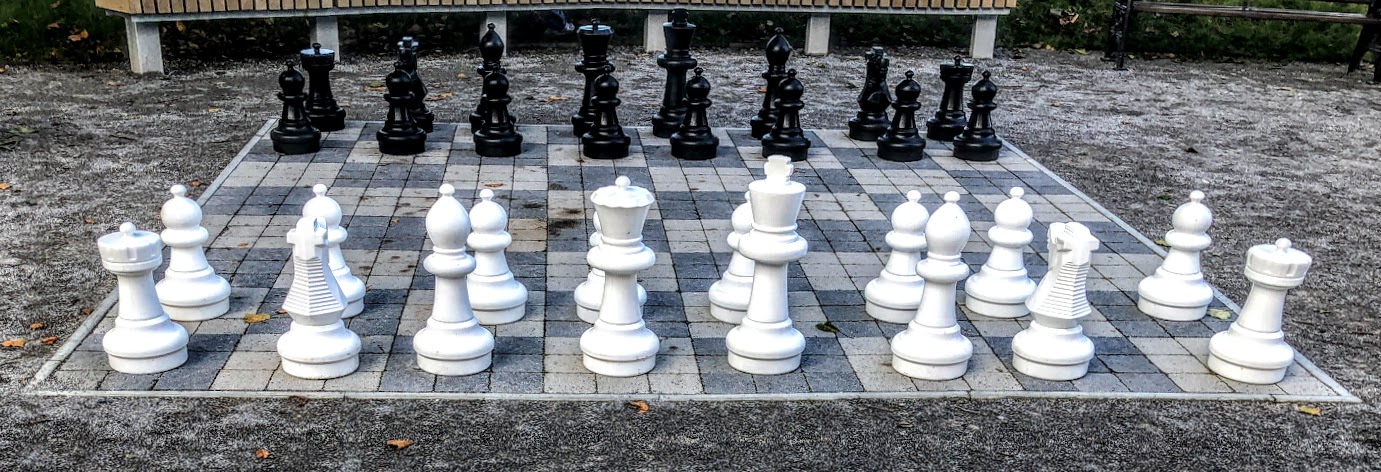
‘And we shall play a game of chess, / Pressing lidless eyes and waiting for a knock upon the door’ (TS Eliot, ‘The Waste Land’) … an outdoor game of chess in the grounds of the Hunt Museum in Limerick (Photograph: Patrick Comerford, 2021)

Patrick Comerford

Today, the Calendar of the Church of England in Common Worship remembers the Saints and Martyrs of England with a Lesser Festival (8 November 2022).

The date when Christianity first came to these islands is not known, but bishops from Britain attended the Council of Arles in the year 314, indicating a Church with order and worship. Since those days, Christians from these lands have shared the message of the good news at home and around the world. As the worldwide fellowship of the Anglican Communion has developed, incorporating peoples of many nations and cultures, individual Christian men and women have shone as beacons, heroically bearing witness to their Lord, some through a simple life of holiness, others by giving their lives for the sake of Christ.

Before this day gets busy, I am taking some time this morning for reading, prayer and reflection.

Throughout this week, I am reflecting in these ways:

1, One of the readings for the morning;

2, A reflection based on TS Eliot’s ‘The Waste Land,’ first published 100 years ago, in 1922;

3, a prayer from the USPG prayer diary, ‘Pray with the World Church.’

‘Held up by standards wrought with fruited vines’ (TS Eliot, ‘The Waste Land’) … fruitful vines in Panormos, near Rethymnon in Crete (Photograph: Patrick Comerford, 2021)

John 17: 18-23 (NRSVA):

[Jesus said:] 18 ‘As you have sent me into the world, so I have sent them into the world. 19 And for their sakes I sanctify myself, so that they also may be sanctified in truth.

20 ‘I ask not only on behalf of these, but also on behalf of those who will believe in me through their word, 21 that they may all be one. As you, Father, are in me and I am in you, may they also be in us, so that the world may believe that you have sent me. 22 The glory that you have given me I have given them, so that they may be one, as we are one, 23 I in them and you in me, that they may become completely one, so that the world may know that you have sent me and have loved them even as you have loved me.’

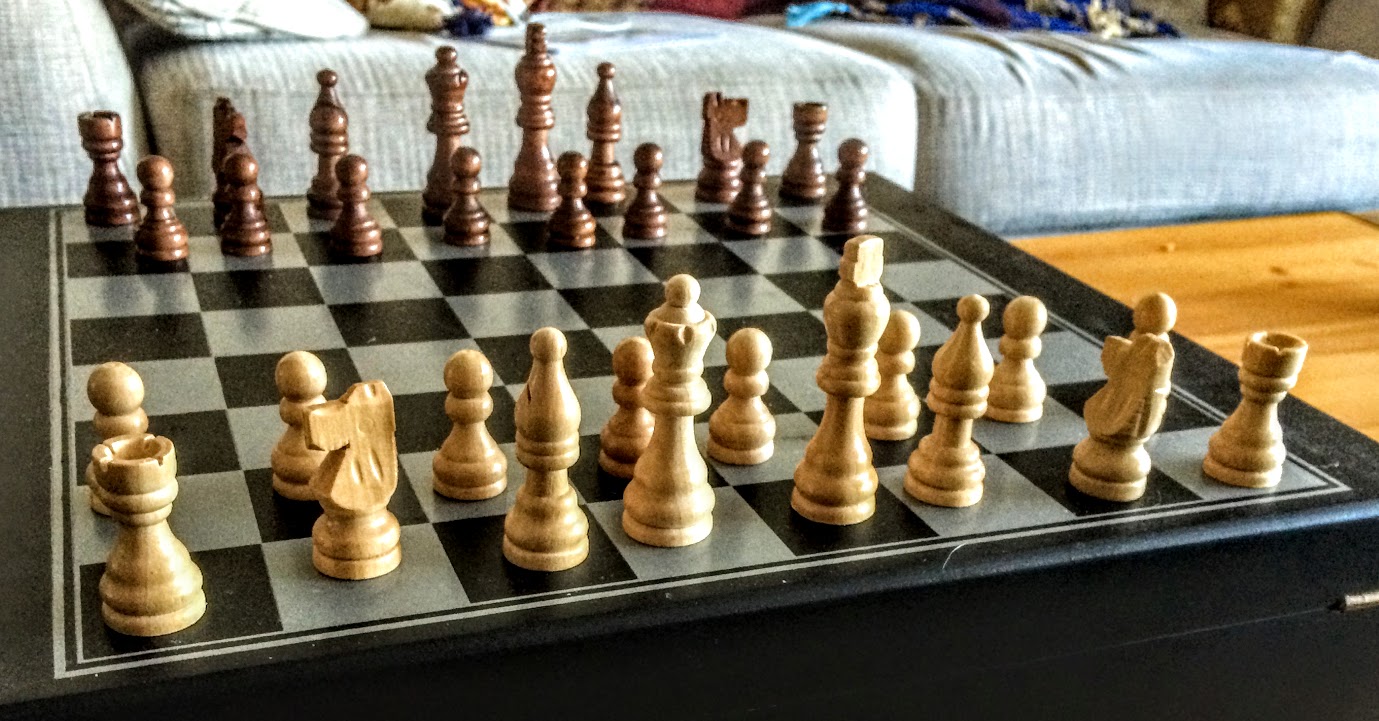
‘A Game of Chess’, Part 2 of ‘The Waste Land’, employs alternating narrations, with vignettes of several characters (Photograph: Patrick Comerford)

The Waste Land 2: ‘A Game of Chess’

In 1922, the same year as James Joyce published Ulysses, TS Eliot published ‘The Waste Land.’ The poem includes well-known phrases such as ‘April is the cruellest month,’ and ‘I will show you fear in a handful of dust.’ Recent studies see in ‘The Waste Land’ a description of Eliot’s pilgrimage from the Unitarianism of his childhood to his life-lasting Anglo-Catholicism.

‘The Waste Land’, which I am reflecting on throughout this week, was first published 100 years ago at the end in 1922. It is a masterpiece of modern literature and one of the greatest poems in the English language. Its opening lines are often quoted, even by people who have never read all five sections and 434 lines of the poem.

‘The Waste Land’ was published in Eliot’s The Criterion in October 1922 – this was the same year James Joyce’s Ulysses was published in Paris. ‘The Waste Land’ was then published in the US in the November issue of The Dial, and was published in book form in December 1922.

To mark the 100th anniversary of the publication of The Waste Land in 1922, I am dipping in and out of the five sections of The Waste Land in this prayer diary each day this week. ‘The Waste Land’ is divided into five sections:

1, ‘The Burial of the Dead’, introduces the diverse themes of disillusionment and despair.

2, ‘A Game of Chess’, employs alternating narrations, in which vignettes of several characters address those themes experientially.

3, ‘The Fire Sermon’, offers a philosophical meditation in relation to the imagery of death and views of self-denial in juxtaposition, influenced by Augustine of Hippo and Eastern religions.

4, ‘Death by Water’, includes a brief lyrical petition.

5, ‘What the Thunder Said’, the culminating fifth section, concludes with an image of judgment.

The second section, of ‘The Waste Land,’ ‘A Game of Chess,’ employs alternating narrations, in which vignettes of several characters address those themes experientially.

In ‘The Waste Land,’ TS Eliot constantly uses images of the undead as a metaphor for modern life. For Eliot, our society has become so spiritually numb that we cannot even really say if we are alive or dead anymore.

The title of the second section, ‘A Game of Chess,’ is also symbolic of the wicked play with emotions and sexual desires. Eliot’s reference to Cleopatra is significant because it indicates the destructive effects of excessive desire. In the case of the lovers Antony and Cleopatra, their inability to control their sexual desires has wiped out a whole empire. This failure to control desire is considered the central reason behind the discontent and degeneration of modern civilisation.

In ‘A Game of Chess’, Eliot compares humans to simple pieces like those on a chessboard, and the people who inhabit ‘The Waste Land’ are afraid of salvation.

Looking at the post-war condition of society, he portrays the people, who live in a waste land, and have been squeezed into a desperate situation just like pieces in a game of chess.

In line with the ‘Fisher King’ myth, which underlies the infertility of humanity in the post-war period, the couples in this section have no communication with each other, and, therefore, there is no love and reproduction.

The concept of nothingness, which also stands for the social reality in the 1920s, dominates the whole poem, with this part being no exception.

The solitary married couple, whose failing efforts at conversation are dramatised in ‘A Game of Chess,’ symbolise the loss of intimacy in the better-parts of modern society. They are alone together, the wife mad to be loved to the point of being unlovable, the husband receding into himself further with every passing moment.

In the vignette that follows, we move to a working-class pub, where we meet Lil, a woman whose fertility has been tested to the point of desperation by a husband who, in his brutishness, could hardly rise even to the most modest levels of love for his wife. The middle-class couple appears so isolated they cannot imagine physical intimacy, while Lil and her husband are broken by the emptiness of their iterated physical union.

The citizens of the modern world, Eliot suggests, are like bones broken off from a once complete body, bones once enfleshed in an organic human community bound by love. Eliot traces the source of this fragmentation to the modern attempt to substitute romantic love for the love of God, erasing two distinct realities by conflating them and, in the process, putting much too great a sanctifying pressure on intimacies.

In his Clark lectures, Eliot would trace this tendency back to the Spanish mystics, particularly to Saint Teresa of Avila, who tried to make the life of divine contemplation too psychological, to make it too much resemble the incommunicable, because of the entirely private, intimacy of man and woman. The consequence of such conflation is that we lose the capacity to imagine religious belief in itself as we try to make romance its stand-in.

It is only later in ‘A Game of Chess’ that this fragile sense of order starts to break down.

This section could also refer to the loss of religion and spirituality in modern life, which leaves people speechless when it comes to figuring out what to do with their lives.

These lines speak about how people wish to kill time in their lives, staying up all night and playing a game of chess. In this sense, perhaps Eliot means that without spirituality, modern life is just a long game we play with ourselves, always competing, setting goals, and simply ‘playing the game.’

‘… where the glass / Doubled the flames of the sevenbranched candelabra’ (TS Eliot, ‘The Waste Land’) … a menorah or seven-branched candelabra in a synagogue in Prague (Photograph: Patrick Comerford, 2019)

Today’s Prayer (Tuesday 8 November 2022):

The Collect:

God, whom the glorious company of the redeemed adore,
assembled from all times and places of your dominion:
we praise you for the saints of our own land
and for the many lamps their holiness has lit;
and we pray that we also may be numbered at last
with those who have done your will
and declared your righteousness;
through Jesus Christ your Son our Lord,
who is alive and reigns with you,
in the unity of the Holy Spirit,
one God, now and for ever.

The Post Communion Prayer:

God, the source of all holiness
and giver of all good things:
may we who have shared at this table
as strangers and pilgrims here on earth
be welcomed with all your saints
to the heavenly feast on the day of your kingdom;
through Jesus Christ our Lord.

The theme in the USPG Prayer Diary this week is ‘A New Commandment.’ This theme was introduced on Sunday by Sue Claydon, chair of the Anglican Pacifist Fellowship.

The USPG Prayer Diary invites us to pray today in these words:

Bring release to those with abiding memories of hurt and injury, especially in the Yemen, the Democratic Republic of the Congo and Ukraine and all those places where peace seems so elusive.

Yesterday’s reflection

Continued tomorrow

‘Footsteps shuffled on the stair’ (TS Eliot, ‘The Waste Land’) … stairs in the Moat House, the former Comberford family home on Lichfield Street, Tamworth (Photograph: Patrick Comerford, 2022)

Scripture quotations are from the New Revised Standard Version Bible: Anglicised Edition copyright © 1989, 1995, National Council of the Churches of Christ in the United States of America. Used by permission. All rights reserved worldwide. http://nrsvbibles.org

In ‘A Game of Chess’, Eliot speaks of the loss of religion and spirituality in modern life … Sephardic and Asheknazic chess figures in a shop window in Murano in Venice (Photograph: Patrick Comerford, 2021)

24 June 2022

‘A single nation’ where
‘exclusionary segregation
… is not our way’

Sephardim against Ashkenazim … a chess set in Murano glass seen in a shopfront in Murano in the Venetian lagoon (Photograph: Patrick Comerford)

Patrick Comerford

Quite often, when I discuss Jewish spirituality, traditions and customs in my blog postings, I am asked why refer more often to Sephardic rather than Ashkenazic customs and traditions.

At times, the portrayal of Jewish culture in popular media outlets, from comedy shows and films to music and clothing, is dominated by sounds and images created in the US: think of, say, a Woody Allen movie or the lifestyles, music and songs Fiddler on the Roof.

Of course, there is a line of Sephardic descent in one branch of the Comerford family. But in my travels through Europe – especially in Spain, Portugal, Italy and Greece – or in visits to the Bevis Marks synagogue in London, I have been enriched by Sephardic cultural approaches.

Indeed, Sephardim were the dominant majority among the Jewish communities in these islands until the arrival of the first Jewish immigrants from central and eastern Europe in the 18th and 19th centuries. Early Sephardic families arrived in Britain and Ireland from Spain and Portugal through Italy and Amsterdam.

American popular culture, including films, comedy and television programmes, often creates or reinforces stereotypes and clichés that are informed by or based on American Ashkenazi Jews. In this way, Sephardic customs, culture and traditions are in danger of not fitting in or being seen as ‘foreign,’ sometimes not even Jewish, in what sometimes becomes a monochromatic Jewish world.

The responses to these differences can sometimes hurt people. I recently came across a tongue-in-cheek exploration of Sephardic culture for Ashkenazic readers, written for the Times of Israel by Professor Carlos Zarur, an American anthropologist born into a Mizrahi-Sephardic family.

I have adapted some of his humorous yet salient points for my Friday evening reflections this evening:

Sephardic ancestors did not live in shtetls but in major cities in Spain, Portugal, the Mediterranean and Middle East.

Adafina or Hamin are not the Sephardic versions of Cholent (a traditional Jewish stew); indeed, the addition of beans to the Shabbat stew started in Spain.

Ladino is not the Sephardic version of Yiddish; Ladino is a Castilian-based language.

When praying, Sephardim do not ‘Daven,’ the phrase is to do Tefillot.

Ashkenazim call a synagogue ‘Shul,’ but Sephardim call synagogues Kal, Snoga or Knist.

Eating kitniyot (grains) at Pesach (Passover), singing Ladino songs and having Moroccan miracle makers are not the only characteristics in the very rich Sephardic traditions.

Sephardim do not say Gut Shabbos or Shabbes. Besides the generic Shabbat Shalom, the phrases include Boas entradas de Saba (Portuguese), Sabado dulse i bueno (Ladino) and Sbit Salam (Arabic).

While Yiddish speakers mark the anniversaries of death with Yahrzeits, the Sephardim have Meldados and Ereyes.

There are clear differences in pronunciation too, such as the Sephardic Pa-ra-sha instead of Parsha, Se-fa-ra-di instead of Sfardi, or She-lo-mo and She-mu-el instead of Shlomo and Shmuel; Talet rather than Tallit, and Shiva or Enlutados, Mikva or Mikwah and Torah rather than Shive, Mikve or Toire.

Sephardim call the rite of circumcision rT’hur in Arabic, Berith Milah, or just ‘the Milah,’ and not Bris.

To introduce female babies to the community, the Sephardim have a baby-naming ceremony, Zeved Habat, fadar a las ishas, or just Las Fadas, and rejoice in both genders receiving communal acceptance.

Rather than playing dreidel or sevivon in Hanukkah, Sephardim sing lots of songs and eat almond pastries and Syrian and Greek sweets, adding a new one every day.

The greatest Jewish sage was Sephardic. Maimonides, philosopher, physician and author of Guide for the Perplexed, was born in Cordoba. Hundreds of other sages were born in Spain and Portugal or in the Sephardic Diaspora.

Sephardim wear kippot and tarbushes and not yarmulkes.

Those Sephardim who are Hassidim or Haredim have abandoned Sephardic traditions and adopted Ashkenazic ways of life for themselves.

In the past, Sephardic Hakhamim (rabbis) never wore black hats, also known as fedoras and shtreimels, but turbans, kippot and the fes.

The Sephardim say they have no notion of Reform, Conservative, Orthodox or Ultra-Orthodox. They do not have denominations within the Sephardic tradition, and see themselves as a single nation of Jews with varying levels of observance. ‘Exclusionary segregation … is not our way’ says Carlos Zarur.

Shabbat Shalom