The Big Lie in the Brexit campaign … and the Real Truth (Photograph: Liberal Democrats)
Patrick Comerford
It is ten years since the United Kingdom voted 52-48 per cent in a referendum on 23 June 2016 to leave the European Union. The leave campaign sold their message with a tissue of lies that have not gone away in those ten years since, and the nation is more divided than ever.
Not satisfied with the wind of division they had then sown across the land, in every village, town and cities, many of the key figures in the ‘Leave’ campaign are now reaping the whirlwind of racism and hatred, stirring up ‘cold rage’, misogyny, Islamophobia on the streets, calling for mass deportations, and targeting minorities that include Muslims, Sikhs and any other group they decide to hate today.
That year we were approaching the 200th anniversary of the death of Jane Austen, and when a number of bookshops placed some of her best-known works on display in 2017, I wondered whether the juxtaposition of the titles was a reminder that the Brexit vote was 48% ‘Sense and Sensibility’ but 52% ‘Pride and Prejudice’.
I remember the big red bus rolling into Lichfield, and how the then Conservative MP was grinning like a Cheshire Cat, prattling on as he repeated the lies and half-truths peddled by Boris Johnson, Michael Gove, Jacob Rees-Mogg and Nigel Farage.
On the Remain side, the attempts to talk about the damage that would be inflicted on the UK economy by leaving were supported by almost every prominent economist. Michael Gove declared dismissively ‘we have had enough of experts’, presumably meaning all those economists and business leaders who said Brexit would be a disaster. One of the few economists who disagreed, Patrick Minford of Cardiff University, claimed Brexit would increase GDP by 6.8% and would reduce prices for consumers. So much for his expertise.
Was the Brexit vote 48% ‘Sense and Sensibility’ but 52% ‘Pride and Prejudice’? (Photograph: Patrick Comerford)
The lies of that campaign still rankle, as those the lack of political leadership, still less bravery, from both David Cameron as Prime Minister and Jeremy Corbyn as leader of the Labour Party.
David Cameron could have had enough foresight to demand a two-thirds majority and to rule out a paper-thin divisive margin. It was a dereliction of political responsibility on a fundamental issue for short-term political gain. He whistled a little tune as he turned back into No 10 after announcing his resignation. It was the same frivolity that had had marked his role in the whole campaign.
The Labour Party could have energetically pointed out that the EU had ensured women’s rights, children’s rights, workers’ rights, students’ rights, consumer rights, human rights, that the EU had brought economic and political stability in the decades immediately after World War II, that trade within the EU had created jobs and brought hope to the regions, that the Common Agricultural Policy had benefitted farmers and regional communities, that more open borders had benefitted trade and been a boon to tourism.
That’s a list of ten or more benefits of EU membership that ought to have been repeated by Cameron and Corbyn, and repeated again and again. But there are ten lies that were repeated throughout the campaign and that have never been swept away in the ten years since.
Brexit did not take away Britain’s international responsibilities, commitments and obligations (Photograph: Patrick Comerford)
The Brexit campaign repeated numerous high-profile pledges, misrepresentations and claims that failed to materialise, that never amounted to even half-truths, and that are still embedded in my memory:
1, The big red bus was plastered with claims that Britain sends £350 million a week to the EU, and pretending that the same money could be used instead to fund the NHS instead. The UK’s net contribution to the EU was significantly lower, and no such £350 million dividend was ever realised. Instead, successive Tory governments, from David Cameron and Teresa May to Boris Johnson, Liz ‘Lettuce’ Truss and Rishi Sunak, continued to underfund and under-resource the NHS, while Nigel Farage seems intent on seeing the NHS scrapped and health care privatised, so that it is available only an ability-to-pay rather than a needs basis.
2, ‘Take back control of our borders’: This lie had many voters believe the Brexit vote would give powers to deport and turn people away who wanted to make a life in Britain, either by choice or by necessity, and resolve all immigration issues. But this closed-border, small-island big lie is having a lasting and damaging impacts. The number of hate crimes doubled in the days after the referendum and jumped by 41% in the month following it. Their promise was not just empty, it was also divisive and dangerous. Net migration to the UK continued to rise, while British passport-holders found they were facing rigorous border checks and sometimes missing flights or even holidays. Michael Fabricant seems not to have realised the irony in his complaints last weekend that he had to queue with his passport at airports in France.
3, Leave campaigners claimed negotiating a free trade deal with the EU would be the easiest thing imaginable and that the UK would sign numerous deals soon after leaving. Instead, negotiations took years, new trade barriers were introduced, and the UK had to leave both the single market and the customs union.
4, Leave campaigners, including Penny Mordaunt, then the Armed Forces Minister, claimed Britain would be forced to join an EU army if it stayed in the EU. Ten years later, the EU does not have a unified standing army, and both the US and Russia have done their utmost to divide Europe, particularly in terms of a response to the war in Ukraine and Putin’s campaign to undermine European unity.
5, The Leave campaign, with barely disguised anti-Muslim rhetoric, claimed Turkey, with a population of 76 million, was joining the EU. The implication was that millions of Muslim migrants would flock to the UK. Needless to say, Turkey has not joined the EU, is a further than ever from joining.
6, The more intolerant campaigners tried to insist that leaving the EU would mean leaving all international agreements. They soon learned that European Court of Human Rights has nothing to do with the EU, and was in fact the brainchild of Winston Churchill – the same Winston Churchill the far-right wants to own when it comes to rotating images on £5 notes. The UK still has responsibilities and obligations in international law.
7, Jacob Rees-Mogg claimed that Brexit would reduce the cost of clothes, food and wine by 20%. He has probably never shopped in Asda, or talked to people doing the weekly big shop, or parents on budgets buying school clothes for their children. He may know the price of a bottle of his favourite Bordeaux, Cos d’Estournel, but does he know the price of a pint of milk?
8, It was claimed that Britain’s energy bills would be slashed by £2 billion a year if voters backed Brexit, because ministers could scrap the ‘unfair’ VAT tax on gas and electricity. Boris Johnson claimed Brexit would benefit the poorest families because they pay three times more of their income on household energy bills than the richest households. Surely even Boris Johnson has noticed the rise in energy bills. This is the same Boris Johnson who later spoke about ‘levelling up’, which proved to be nothing more than empty words.
9, Tim Martin of Wetherspoons claimed he had calculated that Brexit would offer a saving of 3.5p per meal. Instead, costs in any of his pubs that I have visited have risen above inflation in the past ten years. Although, I have to admit, I have been in fewer than ten Wetherspoons in my life.
10, The greatest lie after the vote ten years ago was that Britain had voted, that No means No, and there was going to be no going back. The false logic in that would mean there should be no more general elections, the people have voted, and that’s that. And what, then, of the referendum in 1975 that decided to stay in the Common Market? Who said, in addition, that 52% of voters all voted for a ‘hard Brexit’. If even half of that 52% voted only for a ‘soft Brexit’, then 74% voted against a ‘hard Brexit’. And everyone is entitled to change her or his mind ten years later.
How long must we live with the consequences of a vote ten years ago?
It was clear during the run-up to referendum in 2016, that anti-immigrant feeling could easily turn into violence. The murder of Jo Cox by a neo-Nazi was the most horrific example and came a week before the vote. We have seen in recent weeks how the most vocal Brexit campaigners have been the least willing to condemn the racist violence on the streets, and Farage traduced Jo Cox’s memory and ignored her murder when he claimed this morning in a BBC interview ‘I have been physically the most attacked and endangered politician for now well over a decade.’
Indeed, the British people had not spoken: Scotland and Northern Ireland voted to remain, Wales voted by a whisker to leave, England alone voted by a large margin to leave. It was hardly a united nation or a united kingdom.
All the lies I list this evening have gone unexamined and unquestioned by the right-wing newspapers that printed them. There has been no soul-searching, no acceptance that they gave the oxygen of publicity to lies and to liars, no taking responsibility for an entire nation being gaslit into voting for something that has brought immense economic damage down on the nation. There has been no remorse, no apology, no accountability. The liars still peddle their lies ten years later and a nation continues to suffer as the consequence.
A voice for sanity at Birkbeck University of London in Bloomsbury (Photograph: Patrick Comerford, 2026)
Showing posts with label France. Show all posts
23 June 2026
06 March 2026
Daily prayer in Lent 2026:
17, Friday 6 March 2026
‘Now when the owner of the vineyard comes, what will he do …’ (Matthew 21: 40) … vineyards, vines, groves and terraces near San Gimignano in Tuscany (Photograph: Patrick Comerford)
Patrick Comerford
Lent began more than two weeks ago on Ash Wednesday (18 February 2026), and this week began with was the Second Sunday in Lent (Lent II). I caught a flight on an Oman Air flight from Muscat that lands in London Heathrow at 5:55 this morning, but my travel plans were facing disruptions caused by the chaos and confusion in the Middle East since last weekend. In all the confusion, I caught this flight with just minutes to spare, and I hop to find a suitable place in Stony Stratford to see the match between Ireland and Wales in the Six Nations Championship this evening.
Before today begins, between flights, airports and the chaos that surrounds me, I am taking some quiet time this morning to give thanks, to reflect, to pray and to read in these ways:
1, reading today’s Gospel reading;
2, a short reflection;
3, a prayer from the USPG prayer diary;
4, the Collects and Post-Communion prayer of the day.
‘Now when the owner of the vineyard comes, what will he do?’ (Matthew 21: 40) … ripening grapes on the vines at the Hedgehog in Lichfield (Photograph: Patrick Comerford)
Matthew 21: 33-43, 45-46 (NRSVA):
[Jesus said to them:] 33 ‘Listen to another parable. There was a landowner who planted a vineyard, put a fence around it, dug a wine press in it, and built a watch-tower. Then he leased it to tenants and went to another country. 34 When the harvest time had come, he sent his slaves to the tenants to collect his produce. 35 But the tenants seized his slaves and beat one, killed another, and stoned another. 36 Again he sent other slaves, more than the first; and they treated them in the same way. 37 Finally he sent his son to them, saying, “They will respect my son.” 38 But when the tenants saw the son, they said to themselves, “This is the heir; come, let us kill him and get his inheritance.” 39 So they seized him, threw him out of the vineyard, and killed him. 40 Now when the owner of the vineyard comes, what will he do to those tenants?’ 41 They said to him, ‘He will put those wretches to a miserable death, and lease the vineyard to other tenants who will give him the produce at the harvest time.’
42 Jesus said to them, ‘Have you never read in the scriptures:
“The stone that the builders rejected
has become the cornerstone;
this was the Lord’s doing,
and it is amazing in our eyes”?
43 Therefore I tell you, the kingdom of God will be taken away from you and given to a people that produces the fruits of the kingdom.’
45 When the chief priests and the Pharisees heard his parables, they realized that he was speaking about them. 46 They wanted to arrest him, but they feared the crowds, because they regarded him as a prophet.
‘The stone that the builders rejected has become the cornerstone’ (Matthew 21: 42) … a cross cut into a cornerstone in the main church in the Monastery of Vlatádon in Thessaloniki (Photograph: Patrick Comerford)
Today’s Reflection:
It is sometimes said that the parables are ways in which Christ makes truth more accessible, taking complicated theological ideas and rephrasing them in terms that anyone can understand. But sometimes he says he is telling his parables for the opposite reason, so that the crowds might not understand (see Matthew 13: 1-9, Mark 4: 1-9, and Luke 8: 9-10).
When confronted with these puzzling parables, we are sometimes tempted to resolve the ambiguities by interpreting them allegorically. We start out by deciding immediately the characters, the objects and the actions represent; we decide before we interpret or try to apply those parables which character or object represents God, which one is Christ, who represent the Disciples, and so on.
In other words, we try to harmonise difficult parables with our own already-formed views, rather than allowing those parables to challenge and reshape our views.
But Christ tries through his parables to get us to challenge what we already presume to be simply true.
In today’s Gospel reading (Matthew 21: 33-43), do we read the parable in the way we have learned to read it? We already presume the landowner is God. God sends messengers to people (in particular, to Israel). The people reject the messengers. God sends his son. The people kill the son. So God is going to reject Israel and choose another people. But how well does the parable really fit that interpretation? How well does that interpretation fit the weight of the canon regarding the role of Israel?
As a point of comparison, it might be useful to look at the theology of Israel in Saint Luke’s Gospel and the Acts of the Apostles, where we find a continuing and central role for Israel. There the invitation extended to Gentiles through Christ is to join Israel, God’s people.
At the apostolic council in Jerusalem (see Acts 15), the Christian leaders present include Pharisees (see verse 5) – not former Pharisees, but Pharisees. In the Acts of the Apostles (23: 6), Saint Paul continues to identify himself as a Pharisee – not as a former Pharisee.
For Saint Luke, the vineyard of Israel has not been taken away to be given to others. Instead, Christ has opened it to new workers called to gather in God’s abundant harvest.
The setting of the parable is the estate of a wealthy landowner. This landowner does not live on the land, and does not work at planting or harvesting. The hard work is carried out by the hired labourers, who must turn over most of what they grow to the landowner. The landowner in the parallel parable in Luke 19 is a harsh, demanding man, reaping what he does not sow (see Luke 19: 20).
This absentee landlord does not send messengers out of any great love for the people or the land, but to collect the profits from their labour that sustain his life of ease in the cosmopolitan city where he lives.
In Saint Matthew’s version of parable, the farmers have had enough. The next time the landowner sends one of his servants to collect the rent, the farmers send him packing. Forget how you have consistently read this parable for years. Those who listened to Christ telling this parable for the first time probably smiled at the demanding landlord getting a revolutionary response from the exploited tenants living on the edge and on the margins.
After all, Saint Paul tells us in the Pastoral Epistles: ‘for the scripture says, “You shall not muzzle an ox while it is treading out the grain,” and, “The labourer deserves to be paid”.’ (I Timothy 5: 18).
Then the landowner sends another agent to collect the rent. Again, the farmers get together to send him away empty-handed. More cause for rejoicing among the first listeners.
Then the son of the landowner arrives. He has a different standing than the messengers. He is the son, perhaps the ‘beloved son,’ probably the only son. If he is the heir and the landowner had died, then he has inherited the estate himself. If the son dies and he does not have an heir, the land goes to those who live on it, and the farmers will be free. The farmers have been resisting years of what they feel has been exploitation, and now they rise up and kill the son.
But the twist in the story is that the landowner is not dead. He does exactly what we expect him to do in the circumstances. He wreaks revenge, slaughters the farmers and replaces them with others. He does this so he can return to his life of ease in the city, living on the income provided by the labour of others.
However, no-one among those who hear this ending to the story for the first time would hardly regard it as comforting or good news.
The chief priests and the scribes who are listening the audience, and who come from the same social class as the rich landowner and his hirelings, must realise that they have just heard a scathing condemnation from Christ of how they exploit their fellow Jews.
The peasants or tenant farmers who hear the story are reminded that escalating the spiral of violence only results in more violence being visited upon them and their children.
Everyone who listens is challenged to rethink their prejudices and their judgmental values. In this, the parable is a challenge to us today.
In what ways are we like the absentee landlord, dependent on the exploitation of others to support our lives of relative ease?
How much do we consume without knowing or caring about where our clothes, our coffee, our computers, our gadgets and toys come from, or about the cost to poor people and the environments in which they live?
In what ways are we like the agents, willing to do wrong to achieve what we think is right, to escalate interpersonal and international conflict in ways that will be visited upon generations to come?
And in what ways are we responding to Christ’s challenge to care for those the world disregards and to disregard the world’s standards of strength and honour?
As Sarah Dylan writes, Christ challenges us to do the unthinkable, to turn the other cheek and let others think us weak, to care as much for God’s children who make our clothes and shoes, who mine the ore for our electronics and dispose of the toxic computer monitors we discard when want newer and better ones, as we do for our own children.
Christ challenges us to bless and honour the peacemakers rather than the mighty, to strive for justice and peace and the dignity of every human being above our own comfort.
<>iIn a vineyard in Rivesaltes in the south of France (Photograph: Patrick Comerford)
Today’s Prayers (Friday 6 March 2026):
The theme this week (1-7 March 2026) in ‘Pray With the World Church,’ the Prayer Diary of the Anglican mission agency USPG (United Society Partners in the Gospel), is: ‘Saint David’s Day’ (pp 34-35). This theme was introduced on Sunday with Reflections by the Revd Sarah Rosser, Team Vicar in the Netherwent Ministry Area, Diocese of Monmouth, Church in Wales.
The USPG Prayer Diary today (Friday 6 March 2026) invites us to pray:
We remember those who showed us your love in word and deed. We give thanks for those who have died in faith, and we pray to share with them the joy of your presence for ever.
The Collect:
Almighty God,
you show to those who are in error the light of your truth,
that they may return to the way of righteousness:
grant to all those who are admitted
into the fellowship of Christ’s religion,
that they may reject those things
that are contrary to their profession,
and follow all such things as are agreeable to the same;
through our Lord Jesus Christ,
who is alive and reigns with you,
in the unity of the Holy Spirit,
one God, now and for ever.
The Post Communion Prayer:
Almighty God,
you see that we have no power of ourselves to help ourselves:
keep us both outwardly in our bodies,
and inwardly in our souls;
that we may be defended from all adversities
which may happen to the body,
and from all evil thoughts which may assault and hurt the soul;
through Jesus Christ our Lord.
Additional Collect:
Almighty God,
by the prayer and discipline of Lent
may we enter into the mystery of Christ’s sufferings,
and by following in his Way
come to share in his glory;
through Jesus Christ our Lord.
Yesterday’s Reflections
Continued Tomorrow
Ripening grapes on a vine in Tsesmes, east of Rethymnon in Crete (Photograph: Patrick Comerford)
Scripture quotations are from the New Revised Standard Version Bible: Anglicised Edition copyright © 1989, 1995 National Council of the Churches of Christ in the United States of America. Used by permission. All rights reserved worldwide. http://nrsvbibles.org
Patrick Comerford
Lent began more than two weeks ago on Ash Wednesday (18 February 2026), and this week began with was the Second Sunday in Lent (Lent II). I caught a flight on an Oman Air flight from Muscat that lands in London Heathrow at 5:55 this morning, but my travel plans were facing disruptions caused by the chaos and confusion in the Middle East since last weekend. In all the confusion, I caught this flight with just minutes to spare, and I hop to find a suitable place in Stony Stratford to see the match between Ireland and Wales in the Six Nations Championship this evening.
Before today begins, between flights, airports and the chaos that surrounds me, I am taking some quiet time this morning to give thanks, to reflect, to pray and to read in these ways:
1, reading today’s Gospel reading;
2, a short reflection;
3, a prayer from the USPG prayer diary;
4, the Collects and Post-Communion prayer of the day.
‘Now when the owner of the vineyard comes, what will he do?’ (Matthew 21: 40) … ripening grapes on the vines at the Hedgehog in Lichfield (Photograph: Patrick Comerford)
Matthew 21: 33-43, 45-46 (NRSVA):
[Jesus said to them:] 33 ‘Listen to another parable. There was a landowner who planted a vineyard, put a fence around it, dug a wine press in it, and built a watch-tower. Then he leased it to tenants and went to another country. 34 When the harvest time had come, he sent his slaves to the tenants to collect his produce. 35 But the tenants seized his slaves and beat one, killed another, and stoned another. 36 Again he sent other slaves, more than the first; and they treated them in the same way. 37 Finally he sent his son to them, saying, “They will respect my son.” 38 But when the tenants saw the son, they said to themselves, “This is the heir; come, let us kill him and get his inheritance.” 39 So they seized him, threw him out of the vineyard, and killed him. 40 Now when the owner of the vineyard comes, what will he do to those tenants?’ 41 They said to him, ‘He will put those wretches to a miserable death, and lease the vineyard to other tenants who will give him the produce at the harvest time.’
42 Jesus said to them, ‘Have you never read in the scriptures:
“The stone that the builders rejected
has become the cornerstone;
this was the Lord’s doing,
and it is amazing in our eyes”?
43 Therefore I tell you, the kingdom of God will be taken away from you and given to a people that produces the fruits of the kingdom.’
45 When the chief priests and the Pharisees heard his parables, they realized that he was speaking about them. 46 They wanted to arrest him, but they feared the crowds, because they regarded him as a prophet.
‘The stone that the builders rejected has become the cornerstone’ (Matthew 21: 42) … a cross cut into a cornerstone in the main church in the Monastery of Vlatádon in Thessaloniki (Photograph: Patrick Comerford)
Today’s Reflection:
It is sometimes said that the parables are ways in which Christ makes truth more accessible, taking complicated theological ideas and rephrasing them in terms that anyone can understand. But sometimes he says he is telling his parables for the opposite reason, so that the crowds might not understand (see Matthew 13: 1-9, Mark 4: 1-9, and Luke 8: 9-10).
When confronted with these puzzling parables, we are sometimes tempted to resolve the ambiguities by interpreting them allegorically. We start out by deciding immediately the characters, the objects and the actions represent; we decide before we interpret or try to apply those parables which character or object represents God, which one is Christ, who represent the Disciples, and so on.
In other words, we try to harmonise difficult parables with our own already-formed views, rather than allowing those parables to challenge and reshape our views.
But Christ tries through his parables to get us to challenge what we already presume to be simply true.
In today’s Gospel reading (Matthew 21: 33-43), do we read the parable in the way we have learned to read it? We already presume the landowner is God. God sends messengers to people (in particular, to Israel). The people reject the messengers. God sends his son. The people kill the son. So God is going to reject Israel and choose another people. But how well does the parable really fit that interpretation? How well does that interpretation fit the weight of the canon regarding the role of Israel?
As a point of comparison, it might be useful to look at the theology of Israel in Saint Luke’s Gospel and the Acts of the Apostles, where we find a continuing and central role for Israel. There the invitation extended to Gentiles through Christ is to join Israel, God’s people.
At the apostolic council in Jerusalem (see Acts 15), the Christian leaders present include Pharisees (see verse 5) – not former Pharisees, but Pharisees. In the Acts of the Apostles (23: 6), Saint Paul continues to identify himself as a Pharisee – not as a former Pharisee.
For Saint Luke, the vineyard of Israel has not been taken away to be given to others. Instead, Christ has opened it to new workers called to gather in God’s abundant harvest.
The setting of the parable is the estate of a wealthy landowner. This landowner does not live on the land, and does not work at planting or harvesting. The hard work is carried out by the hired labourers, who must turn over most of what they grow to the landowner. The landowner in the parallel parable in Luke 19 is a harsh, demanding man, reaping what he does not sow (see Luke 19: 20).
This absentee landlord does not send messengers out of any great love for the people or the land, but to collect the profits from their labour that sustain his life of ease in the cosmopolitan city where he lives.
In Saint Matthew’s version of parable, the farmers have had enough. The next time the landowner sends one of his servants to collect the rent, the farmers send him packing. Forget how you have consistently read this parable for years. Those who listened to Christ telling this parable for the first time probably smiled at the demanding landlord getting a revolutionary response from the exploited tenants living on the edge and on the margins.
After all, Saint Paul tells us in the Pastoral Epistles: ‘for the scripture says, “You shall not muzzle an ox while it is treading out the grain,” and, “The labourer deserves to be paid”.’ (I Timothy 5: 18).
Then the landowner sends another agent to collect the rent. Again, the farmers get together to send him away empty-handed. More cause for rejoicing among the first listeners.
Then the son of the landowner arrives. He has a different standing than the messengers. He is the son, perhaps the ‘beloved son,’ probably the only son. If he is the heir and the landowner had died, then he has inherited the estate himself. If the son dies and he does not have an heir, the land goes to those who live on it, and the farmers will be free. The farmers have been resisting years of what they feel has been exploitation, and now they rise up and kill the son.
But the twist in the story is that the landowner is not dead. He does exactly what we expect him to do in the circumstances. He wreaks revenge, slaughters the farmers and replaces them with others. He does this so he can return to his life of ease in the city, living on the income provided by the labour of others.
However, no-one among those who hear this ending to the story for the first time would hardly regard it as comforting or good news.
The chief priests and the scribes who are listening the audience, and who come from the same social class as the rich landowner and his hirelings, must realise that they have just heard a scathing condemnation from Christ of how they exploit their fellow Jews.
The peasants or tenant farmers who hear the story are reminded that escalating the spiral of violence only results in more violence being visited upon them and their children.
Everyone who listens is challenged to rethink their prejudices and their judgmental values. In this, the parable is a challenge to us today.
In what ways are we like the absentee landlord, dependent on the exploitation of others to support our lives of relative ease?
How much do we consume without knowing or caring about where our clothes, our coffee, our computers, our gadgets and toys come from, or about the cost to poor people and the environments in which they live?
In what ways are we like the agents, willing to do wrong to achieve what we think is right, to escalate interpersonal and international conflict in ways that will be visited upon generations to come?
And in what ways are we responding to Christ’s challenge to care for those the world disregards and to disregard the world’s standards of strength and honour?
As Sarah Dylan writes, Christ challenges us to do the unthinkable, to turn the other cheek and let others think us weak, to care as much for God’s children who make our clothes and shoes, who mine the ore for our electronics and dispose of the toxic computer monitors we discard when want newer and better ones, as we do for our own children.
Christ challenges us to bless and honour the peacemakers rather than the mighty, to strive for justice and peace and the dignity of every human being above our own comfort.
<>iIn a vineyard in Rivesaltes in the south of France (Photograph: Patrick Comerford)
Today’s Prayers (Friday 6 March 2026):
The theme this week (1-7 March 2026) in ‘Pray With the World Church,’ the Prayer Diary of the Anglican mission agency USPG (United Society Partners in the Gospel), is: ‘Saint David’s Day’ (pp 34-35). This theme was introduced on Sunday with Reflections by the Revd Sarah Rosser, Team Vicar in the Netherwent Ministry Area, Diocese of Monmouth, Church in Wales.
The USPG Prayer Diary today (Friday 6 March 2026) invites us to pray:
We remember those who showed us your love in word and deed. We give thanks for those who have died in faith, and we pray to share with them the joy of your presence for ever.
The Collect:
Almighty God,
you show to those who are in error the light of your truth,
that they may return to the way of righteousness:
grant to all those who are admitted
into the fellowship of Christ’s religion,
that they may reject those things
that are contrary to their profession,
and follow all such things as are agreeable to the same;
through our Lord Jesus Christ,
who is alive and reigns with you,
in the unity of the Holy Spirit,
one God, now and for ever.
The Post Communion Prayer:
Almighty God,
you see that we have no power of ourselves to help ourselves:
keep us both outwardly in our bodies,
and inwardly in our souls;
that we may be defended from all adversities
which may happen to the body,
and from all evil thoughts which may assault and hurt the soul;
through Jesus Christ our Lord.
Additional Collect:
Almighty God,
by the prayer and discipline of Lent
may we enter into the mystery of Christ’s sufferings,
and by following in his Way
come to share in his glory;
through Jesus Christ our Lord.
Yesterday’s Reflections
Continued Tomorrow
Ripening grapes on a vine in Tsesmes, east of Rethymnon in Crete (Photograph: Patrick Comerford)
Scripture quotations are from the New Revised Standard Version Bible: Anglicised Edition copyright © 1989, 1995 National Council of the Churches of Christ in the United States of America. Used by permission. All rights reserved worldwide. http://nrsvbibles.org
Labels:
Crete 2026,
France,
Greece 2026,
Kuala Lumpur,
Lent 2026,
Lichfield,
Middle East,
Muscat,
Oman,
Platanias,
Rethymnon,
Rivesaltes,
Saint Matthew's Gospel,
Thessaloniki,
Travel,
Tsesmes,
Tuscany,
Wales
27 January 2026
A ‘virtual tour’ of Holocaust
memorials on Holocaust
Memorial Day, a reminder
that we must never forget
‘Arbeit macht frei’ … the gate at Auschwitz … today is Holocaust Memorial Day (Photograph: Patrick Comerford)
Patrick Comerford
Today is Holocaust Memorial Day, marking the anniversary of the liberation of Auschwitz in 1945 and the beginning of the liberation of the concentration camps in Europe.
In a ‘virtual tour’ today, I visit Holocaust memorials in a dozen European countries: Austria, Czech Republic, England, France, Germany, Greece, Hungary, Ireland, Italy, Poland, Slovakia and Slovenia.
Looking back on many visits over the years, my images today include monuments, memorials, plaques, sculptures, shattered grave stones and Stolpersteine or ‘stumbling stones’, in cemeteries, libraries, museums, parks, schools, squares, streets, synagogues, railway stations, and bridges.
There are photographs from the concentration camps in Auschwitz, Birkenau and Sachsenhausen. There are Jewish families and individuals, mothers and children, the murdered and the survivors, resistance fighters and the ‘Righteous Among the Nations’.
Austria:
Rachel Whiteread’s Holocaust Memorial in Judenplatz in Vienna (Photograph: Patrick Comerford)
Czech Republic:
The walls of the Pinkas Synagogue in Prague are covered with the names of 78,000 victims of the Holocaust (Photograph: Patrick Comerford)
The names of the concentration camps surround the Aron haKodesh or Holy Ark in the Pinkas Synagogue, Prague (Photograph: Patrick Comerford)
England:
The Holocaust Memorial Stone at the east end of Bourton Park, Buckingham, was installed in 2021 (Photograph: Patrick Comerford)
France:
The Mur des Names or Wall of Names in the Mémorial de la Shoah lists 76,000 French Jews deported and murdered by the Nazis (Photograph: Patrick Comerford)
A plaque on a school in the Marais in Paris recalling the children of the Shoah (Photograph: Patrick Comerford)
Germany:
The Memorial to the Murdered Jews of Europe in Berlin (Photograph: Patrick Comerford)
A memorial to Jewish children at the Jewish Cemetery in Berlin (Photograph: Patrick Comerford)
The memorial to the victims of the Sachsenhausen Concentration Camp 1936-1945 … the victims included gays, Gypsies, political prisoners and disabled people (Photograph: Patrick Comerford)
Greece:
The Jewish Holocaust Memorial at Plateia Eleftherias (Liberty Square) in Thessaloniki (Photograph: Patrick Comerford)
Chief Rabbi Gabriel Negrin places candles in the Holocaust memorial in Etz Hayyim Synagogue in Chania (Photograph: Patrick Comerford)
The Holocaust Memorial by Georgios Karahalios (2001) in Corfu remembers the 2,000 Jews of Corfu who were murdered in Auschwitz in 1944 (Photograph: Patrick Comerford)
The monument in the Nuova or New Synagogue in Corfu to families who died in the Holocaust (Photograph: Patrick Comerford)
Hungary:
The Memorial of the Hungarian Jewish Martyrs by Imre Varga at the Dohány Street Synagogue in Budapest (Photograph: Patrick Comerford)
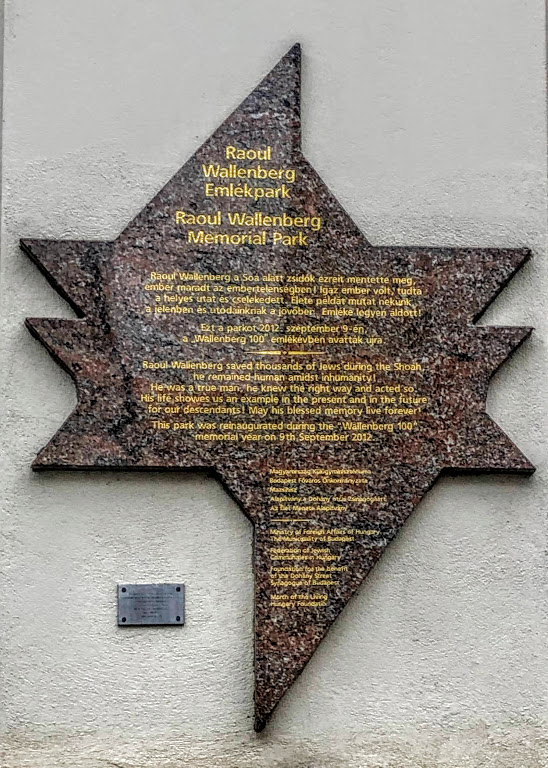
The Holocaust Memorial Park at the Dohány Street Synagogue in Budapest (Photograph: Patrick Comerford)
Italy:
A monument in Bologna commemorating victims of the Holocaust (Photograph: Patrick Comerford)
The Holocaust Memorial outside the railway station in Gorizia, a town that straddles the border of Italy and Slovenia (Photograph: Patrick Comerford)
The Holocaust Memorial at the Synagogue in Padua (Photograph: Patrick Comerford)
A monument to Jewish partisans and resistance to the Nazis and Fascists in Rome (Photograph: Patrick Comerford)
The memorial wall to victims of the Holocaust in the Ghetto in Venice (Photograph: Patrick Comerford)
The Holocaust memorial in the Ghetto in Venice (Photograph: Patrick Comerford)
Poland:
Multilingual memorials in Birkenau … a reminder of the many nationalities of the victims of the Holocaust (Photographs: Patrick Comerford)
Shattered gravestones make a Holocaust memorial in a Jewish cemetery in Kraków (Photograph: Patrick Comerford)
The Empty Chairs Memorial in Ghetto Heroes Square in Kazimierz , symbolising abandoned homes and mass deportations from the Kraków Ghetto in 1943 (Photograph: Patrick Comerford)
Slovakia:
The Holocaust Memorial in the centre of Bratislava on the site of the former Neolog Synagogue (Photograph: Patrick Comerford)
Stolpersteine or ‘stumbling stones’
Berlin:
Stolpersteine or Stumbling stones on Rosenthaler Straße 39, Berlin-Mitte, remembering members of the Salinger family murdered by the Nazis in Auschwtiz and Riga (Photograph: Patrick Comerford)
Dublin:
Dublin’s first Stolpersteine or ‘stumbling stones’, recalling six Irish Holocaust victims, at Saint Catherine’s National School on Donore Avenue (photograph: Patrick Comerford)
Prague:
‘Stolpersteine’ or ‘Stumbling Stones’ on the streets of Prague remember members of the Bergmann family deported to Terezín during the Holocaust (Photograph: Patrick Comerford)
Thessaloniki:
‘Stolpersteine’ or ‘Stumbling Stones’ on the pavement on Vassilisis Olgas Avenue in Thessaloniki commemorate Greek Jews deported to Auschwitz (Photograph: Patrick Comerford)
Venice:
Stolpersteine or stumbling stones (Pietre d’inciampo) in Venice recall victims of the Holocaust (Photograph: Patrick Comerford)
Remembering individuals:
Remembering Anne Frank in street art in Berlin (Photograph: Patrick Comerford)
The sculpture of Anne Frank by Doreen Kern in the British Library, London (Photograph: Patrick Comerford)
The Kindertransport monument at Liverpool Street Station … a reminder in the heart of London of the Holocaust (Photograph: Patrick Comerford)
A plaque on Heydukova Street in Bratislava marks the former home of Aron Grünhut (1895-1974), involved in heroic rescues during the Holocaust (Photograph: Patrick Comerford)
Monuments to ‘Righteous Among the Nations’:
Philip Jackson’s monument of the Swedish diplomat Raoul Wallenberg at Wallenberg Place, near Hyde Park, London (Photograph: Patrick Comerford)
A memorial to Raoul Wallenberg in the Raoul Wallenberg Holocaust Memorial Park at the Dohány Street Synagogue, Budapest (Photograph: Patrick Comerford)
The Mary Elmes Bridge in Cork … the centrepiece of the bridge is designed to look like a menorah (Photograph: Patrick Comerford)
The Wall of the Righteous in Paris lists 3,300 French people who have been recognised as ‘Righteous Among the Nations’ (Photograph: Patrick Comerford)
These images are reminders not only of the Holocaust and its victims, but of real individuals who suffered and were humiliated, whose lives were shattered and who were murdered.
They are reminders of why we must never forget. The Holocaust happened not just because of one evil man but because many good people stood by and remained silent.
Over 80 years after the end of the Holocaust, antisemitism is on the rise once again. We are seeing the rise of the far-right in Britain across Europe and a resurgence of the far-right in Latin America, far-right ideology and vocabulary has become part and parcel of the language of the Trump regime, its spokespersons and those who support street murders by ICE in Minneapolis.
We must never forget.
The Eternal Flame in the Mémorial de la Shoah, Paris (Patrick Comerford)
Patrick Comerford
Today is Holocaust Memorial Day, marking the anniversary of the liberation of Auschwitz in 1945 and the beginning of the liberation of the concentration camps in Europe.
In a ‘virtual tour’ today, I visit Holocaust memorials in a dozen European countries: Austria, Czech Republic, England, France, Germany, Greece, Hungary, Ireland, Italy, Poland, Slovakia and Slovenia.
Looking back on many visits over the years, my images today include monuments, memorials, plaques, sculptures, shattered grave stones and Stolpersteine or ‘stumbling stones’, in cemeteries, libraries, museums, parks, schools, squares, streets, synagogues, railway stations, and bridges.
There are photographs from the concentration camps in Auschwitz, Birkenau and Sachsenhausen. There are Jewish families and individuals, mothers and children, the murdered and the survivors, resistance fighters and the ‘Righteous Among the Nations’.
Austria:
Rachel Whiteread’s Holocaust Memorial in Judenplatz in Vienna (Photograph: Patrick Comerford)
Czech Republic:
The walls of the Pinkas Synagogue in Prague are covered with the names of 78,000 victims of the Holocaust (Photograph: Patrick Comerford)
The names of the concentration camps surround the Aron haKodesh or Holy Ark in the Pinkas Synagogue, Prague (Photograph: Patrick Comerford)
England:
The Holocaust Memorial Stone at the east end of Bourton Park, Buckingham, was installed in 2021 (Photograph: Patrick Comerford)
France:
The Mur des Names or Wall of Names in the Mémorial de la Shoah lists 76,000 French Jews deported and murdered by the Nazis (Photograph: Patrick Comerford)
A plaque on a school in the Marais in Paris recalling the children of the Shoah (Photograph: Patrick Comerford)
Germany:
The Memorial to the Murdered Jews of Europe in Berlin (Photograph: Patrick Comerford)
A memorial to Jewish children at the Jewish Cemetery in Berlin (Photograph: Patrick Comerford)
The memorial to the victims of the Sachsenhausen Concentration Camp 1936-1945 … the victims included gays, Gypsies, political prisoners and disabled people (Photograph: Patrick Comerford)
Greece:
The Jewish Holocaust Memorial at Plateia Eleftherias (Liberty Square) in Thessaloniki (Photograph: Patrick Comerford)
Chief Rabbi Gabriel Negrin places candles in the Holocaust memorial in Etz Hayyim Synagogue in Chania (Photograph: Patrick Comerford)
The Holocaust Memorial by Georgios Karahalios (2001) in Corfu remembers the 2,000 Jews of Corfu who were murdered in Auschwitz in 1944 (Photograph: Patrick Comerford)
The monument in the Nuova or New Synagogue in Corfu to families who died in the Holocaust (Photograph: Patrick Comerford)
Hungary:
The Memorial of the Hungarian Jewish Martyrs by Imre Varga at the Dohány Street Synagogue in Budapest (Photograph: Patrick Comerford)
The Holocaust Memorial Park at the Dohány Street Synagogue in Budapest (Photograph: Patrick Comerford)
Italy:
A monument in Bologna commemorating victims of the Holocaust (Photograph: Patrick Comerford)
The Holocaust Memorial outside the railway station in Gorizia, a town that straddles the border of Italy and Slovenia (Photograph: Patrick Comerford)
The Holocaust Memorial at the Synagogue in Padua (Photograph: Patrick Comerford)
A monument to Jewish partisans and resistance to the Nazis and Fascists in Rome (Photograph: Patrick Comerford)
The memorial wall to victims of the Holocaust in the Ghetto in Venice (Photograph: Patrick Comerford)
The Holocaust memorial in the Ghetto in Venice (Photograph: Patrick Comerford)
Poland:
Multilingual memorials in Birkenau … a reminder of the many nationalities of the victims of the Holocaust (Photographs: Patrick Comerford)
Shattered gravestones make a Holocaust memorial in a Jewish cemetery in Kraków (Photograph: Patrick Comerford)
The Empty Chairs Memorial in Ghetto Heroes Square in Kazimierz , symbolising abandoned homes and mass deportations from the Kraków Ghetto in 1943 (Photograph: Patrick Comerford)
Slovakia:
The Holocaust Memorial in the centre of Bratislava on the site of the former Neolog Synagogue (Photograph: Patrick Comerford)
Stolpersteine or ‘stumbling stones’
Berlin:
Stolpersteine or Stumbling stones on Rosenthaler Straße 39, Berlin-Mitte, remembering members of the Salinger family murdered by the Nazis in Auschwtiz and Riga (Photograph: Patrick Comerford)
Dublin:
Dublin’s first Stolpersteine or ‘stumbling stones’, recalling six Irish Holocaust victims, at Saint Catherine’s National School on Donore Avenue (photograph: Patrick Comerford)
Prague:
‘Stolpersteine’ or ‘Stumbling Stones’ on the streets of Prague remember members of the Bergmann family deported to Terezín during the Holocaust (Photograph: Patrick Comerford)
Thessaloniki:
‘Stolpersteine’ or ‘Stumbling Stones’ on the pavement on Vassilisis Olgas Avenue in Thessaloniki commemorate Greek Jews deported to Auschwitz (Photograph: Patrick Comerford)
Venice:
Stolpersteine or stumbling stones (Pietre d’inciampo) in Venice recall victims of the Holocaust (Photograph: Patrick Comerford)
Remembering individuals:
Remembering Anne Frank in street art in Berlin (Photograph: Patrick Comerford)
The sculpture of Anne Frank by Doreen Kern in the British Library, London (Photograph: Patrick Comerford)
The Kindertransport monument at Liverpool Street Station … a reminder in the heart of London of the Holocaust (Photograph: Patrick Comerford)
A plaque on Heydukova Street in Bratislava marks the former home of Aron Grünhut (1895-1974), involved in heroic rescues during the Holocaust (Photograph: Patrick Comerford)
Monuments to ‘Righteous Among the Nations’:
Philip Jackson’s monument of the Swedish diplomat Raoul Wallenberg at Wallenberg Place, near Hyde Park, London (Photograph: Patrick Comerford)
A memorial to Raoul Wallenberg in the Raoul Wallenberg Holocaust Memorial Park at the Dohány Street Synagogue, Budapest (Photograph: Patrick Comerford)
The Mary Elmes Bridge in Cork … the centrepiece of the bridge is designed to look like a menorah (Photograph: Patrick Comerford)
The Wall of the Righteous in Paris lists 3,300 French people who have been recognised as ‘Righteous Among the Nations’ (Photograph: Patrick Comerford)
These images are reminders not only of the Holocaust and its victims, but of real individuals who suffered and were humiliated, whose lives were shattered and who were murdered.
They are reminders of why we must never forget. The Holocaust happened not just because of one evil man but because many good people stood by and remained silent.
Over 80 years after the end of the Holocaust, antisemitism is on the rise once again. We are seeing the rise of the far-right in Britain across Europe and a resurgence of the far-right in Latin America, far-right ideology and vocabulary has become part and parcel of the language of the Trump regime, its spokespersons and those who support street murders by ICE in Minneapolis.
We must never forget.
The Eternal Flame in the Mémorial de la Shoah, Paris (Patrick Comerford)
Labels:
#HolocaustMemorialDay,
antisemitism,
Austria,
Crete 2026,
Czech Republic,
France,
Germany,
Greece,
Greece 2026,
Holocaust,
Hungary,
Jewish history,
Poland,
Sculpture,
Slovakia,
Slovenia,
Street art,
Synagogues,
Virtual Tours
10 January 2026
Why Denmark’s fears about Greenland
may be shared by many EU member
states in their Caribbean islands
Katie Miller, wife of the White House insider Steve Miller, has posted a map of Greenland in the colours of the American flag emblazoned with the word ‘Soon’
Patrick Comerford
JD Vance is meeting the Prime Ministers of Denmark and Greenland next week to push Trump’s bullying demands to hand over the island. In advance of those talks, Greenland’s prime minister Jens-Frederik Nielsen says the island’s 57,000 residents will not be bullied by the US into selling its sovereignty to the US.
It is 80 years since Denmark said no to the Truman administration’s offer of $100 million in gold for Greenland. The answer remains unchanged.
Donald Trump in his bluster and threats, says he wants to annex Greenland, by purchase or, if necessary, by force if necessary. ‘We need Greenland,’ one senior US official. ‘It’s so strategic.’
A third option mentioned by the White House is a new form of association between the two, although the scope of this is not clear.
Under a 75-year-old agreement, the US already has the only military base in Greenland and the island government has been open to it expanding its presence and to encouraging US investment in extracting rare minerals.
Under the terms of this agreement, the US is supposed to consult Denmark and Greenland before making ‘any significant changes’ in its military operations on the island and the US explicitly recognises it as ‘an equal part of the Kingdom of Denmark’.
But the US military presence in Greenland in the past has regularly involved egregious breaches of those legal agreements. In the 1960s, the US tried to build a subterranean network of secret nuclear missile launch sites in the Greenlandic ice cap, without ever seeking consent from the Danish Government.
Project Iceworm was run from Camp Century from 1960 to 1966 before it was deemed unworkable and abandoned. The missiles were never fielded, the reactor was removed and Camp Century was abandoned. However, hazardous waste remains buried under the ice and has become an environmental concern.
The Danish government did not know about the programme at the time and only heard about it three decades later in 1997, when Danes was perusing declassified US documents and searching for records of the crash of a nuclear-equipped B-52 bomber near the Thule air base in 1968.
On the other hand, Denmark and Greenland have always shown an ability to reach amicable settlements to territorial disputes with Greenland’s nearest geographical neighbour, Canada. A border dispute began in 1973 over the ownership of Hans Island, a small island in Nares Strait directly between Greenland and the Canadian territory of Nunavut. The dispute was amicable and was resolved in 2022, when Denmark and Canada agreed to divide the island in half, meaning Greenland’s one and only land border is not with Denmark or the US, but with Canada.
Canadians may well fear that if the US forcibly acquires Greenland, Canada will be surrounded on three sides by the US, with Alaska to the west.
The flag of Greenland … the well-founded fears of Canada and Denmark may also be shared by many EU member states
Indeed, the well-founded fears of Canada and Denmark may also be shared by many EU member states whose sovereign territories may become the target of US covetous eyes. Any US aggression in Greenland may give permission to Putin to think he can be aggressive, and with impunity, towards other member EU member states, particularly Finland, the three Baltic states that were once part of the Soviet Union, Estonia, Latvia and Lithuania, and perhaps Poland and Romania too. The US claims to Greenland, and recent unilateral actions in the Caribbean – abducting Nicolás Maduro in Caracas and imposing a blockade on and attacking ships and boats – show the Trump regime regards the North Atlantic and the Caribbean as its backyard, and has no fears about how once friendly NATO and EU member states respond.
If Trump can claim Greenland, which is Danish, what’s to stop him from claiming Guadeloupe and Guiana which are French, or any of the other islands that are French Dutch, Spanish, Danish and Portuguese sovereign territories and that are parts of the European Union in a variety of ways.
Although Greenland is part of the Kingdom of Denmark, it is not officially a part of the European Union, yet it relates to the EU through the Overseas Countries and Territories (OCT) and receives support from the European Development Fund, Multiannual Financial Framework, European Investment Bank and other EU programmes.
It is often forgotten that the EU includes sovereign territory of a number of member states not just in Europe, but on all continents. French sovereign territory, for example, includes the five overseas departments and regions of France: French Guiana in South America, a part of the Guianas; Guadeloupe in the Caribbean Sea, a part of the Leeward Islands in the Lesser Antilles; Martinique in the Lesser Antilles; Mayotte in the Mozambique Channel and the Comoro Islands; and Réunion in the Indian Ocean.
Collectively, the special territories of the EU have a population of 6.1 million people and a land area of about 2,733,792 sq km, and Greenland makes up around 80 percent of that area. The smallest by land area is the island of Saba in the Caribbean (13 sq km). The largest region by population, the Canary Islands, accounts for more than a third of the total population of the special territories. The French Southern and Antarctic Lands is the only special territory without a permanent population.
The European Economic Area (EEA) has 32 special territories of EU member states and EFTA member states that for historical, geographical, or political reasons have a special status with the EU and the European Free Trade Association (EFTA).
The special territories of EU member states fall into three separate categorises:
• 9 Outermost Regions (OMR) that form part of the EU, though they benefit from derogations from some EU laws due to their geographical remoteness from mainland Europe;
• 13 Overseas Countries and Territories (OCT) that do not form part of the EU, but co-operate with the EU through the Overseas Countries and Territories Association;
• 10 special cases that form part of the EU.
The Outermost Regions were recognised in the Maastricht Treaty (1992), and confirmed by the Treaty of Lisbon (2007) form part of a member state of the EU. EU law applies in these outermost regions, but because of their significant distance from mainland Europe they have derogations from some EU policies. They are part of the EU customs area, although some fall outside the Schengen Area and the EU VAT Area.
The status of an uninhabited French territory, the abandoned island of Clipperton – in the North Pacific and 1,280 km off the coast of Mexico – remains unclear and it is not explicitly mentioned in primary EU law. It is an interesting place in this discussion because it was briefly occupied by the US in 1944-1945.
Today, the nine Outermost Regions of the EU are parts of the national territories of France, Portugal and Spain:
• France (6) : French Guiana, Guadeloupe, Martinique, St Martin, Mayotte, Reunion;
• Portugal (2): Azores, Madeira;
• Spain (1): the Canary Islands.
We all know of Trump’s golf courses in Scotland and Ireland. But he has also owned a holiday home in one of these EU Caribbean islands since 2013. Le Château des Palmiers in a beachfront estate on Plum Bay in the French part of the island of St Martin, which is shared by France and the Netherlands. The estate once had a price tag of £21.5 million; after a tropical storm he dropped the asking price to £13 million but he still has not been able to sell it.
The 13 Overseas Countries and Territories of the EU are parts of Denmark, France and the Netherlands:
• Denmark (1): Greenland;
• France (6): French Polynesia, the French Southern and Antarctic Lands, New Caledonia, Saint Barthélemy, Saint Pierre and Miquelon, Wallis-et-Futuna;
• the Netherlands (6): Aruba, Bonaire, Curaçao, Saba, Sint Eustatius, Sint Maarten.
As a group, the Dutch islands are still known as the Dutch Caribbean. Aruba, Bonaire and Curaçao form the ABC islands, 80 km off the coast of Venezuela, and in Dutch law Aruba and Curaçao are defined as countries; Saba, Sint Eustatius and Sint Maarten are known as the SSS islands. These islands are so close to Venezuela, the Netherlands can identify with Danish fears about Trumps threats to Denmark’s sovereignty in Greenland.
In addition, there are 10 special cases involving territories that are part of Cyprus, Denmark, Finland, Germany, Greece, Italy and Spain but with unusual political borders and geographical locations:
• Cyprus (1): the UN Buffer Zone;
• Denmark (1): Faroe Islands;
• Finland (1): Åland;
• Germany (2): Büsingen am Hochrhein and Heligoland;
• Greece (1): Mount Athos;
• Italy (2): Livigno and Campione d’Italia;
• Spain (2): Ceuta and Melilla.
The cities of Melilla and Ceuta have had an autonomous system of rule since 1995. In addition, the plazas de soberanía or ‘strongholds of sovereignty’ are a series of Spanish territories scattered along the Mediterranean coast bordering Morocco. They are closer to Africa than Europe.
Quite separately, there are five European microstates that are not EU members: Andorra, Monaco, Liechtenstein, San Marino and Vatican City. Gibraltar left the EU with the UK at Brexit, but an agreement last year (June 2025) creates a special relationship, joining Gibraltar to the Schengen Area and establishing a customs union with the EU, yet preserving UK sovereignty.
If Trump gets his small grubby hands on Greenland this year, could it be Guiana, or Guadeloupe soon after? He has already spoken of Gaza as desirable real estate; could he also have eyes on Gibraltar, with desires for the Mediterranean as a playground to twin with the Caribbean? Nothing is beyond the realm of possibility when it comes to the capricious whims of an autocrat. The fears of Denmark today should be the fears of all EU member states too.
A humorous Danish response to US claims on Greenland
Patrick Comerford
JD Vance is meeting the Prime Ministers of Denmark and Greenland next week to push Trump’s bullying demands to hand over the island. In advance of those talks, Greenland’s prime minister Jens-Frederik Nielsen says the island’s 57,000 residents will not be bullied by the US into selling its sovereignty to the US.
It is 80 years since Denmark said no to the Truman administration’s offer of $100 million in gold for Greenland. The answer remains unchanged.
Donald Trump in his bluster and threats, says he wants to annex Greenland, by purchase or, if necessary, by force if necessary. ‘We need Greenland,’ one senior US official. ‘It’s so strategic.’
A third option mentioned by the White House is a new form of association between the two, although the scope of this is not clear.
Under a 75-year-old agreement, the US already has the only military base in Greenland and the island government has been open to it expanding its presence and to encouraging US investment in extracting rare minerals.
Under the terms of this agreement, the US is supposed to consult Denmark and Greenland before making ‘any significant changes’ in its military operations on the island and the US explicitly recognises it as ‘an equal part of the Kingdom of Denmark’.
But the US military presence in Greenland in the past has regularly involved egregious breaches of those legal agreements. In the 1960s, the US tried to build a subterranean network of secret nuclear missile launch sites in the Greenlandic ice cap, without ever seeking consent from the Danish Government.
Project Iceworm was run from Camp Century from 1960 to 1966 before it was deemed unworkable and abandoned. The missiles were never fielded, the reactor was removed and Camp Century was abandoned. However, hazardous waste remains buried under the ice and has become an environmental concern.
The Danish government did not know about the programme at the time and only heard about it three decades later in 1997, when Danes was perusing declassified US documents and searching for records of the crash of a nuclear-equipped B-52 bomber near the Thule air base in 1968.
On the other hand, Denmark and Greenland have always shown an ability to reach amicable settlements to territorial disputes with Greenland’s nearest geographical neighbour, Canada. A border dispute began in 1973 over the ownership of Hans Island, a small island in Nares Strait directly between Greenland and the Canadian territory of Nunavut. The dispute was amicable and was resolved in 2022, when Denmark and Canada agreed to divide the island in half, meaning Greenland’s one and only land border is not with Denmark or the US, but with Canada.
Canadians may well fear that if the US forcibly acquires Greenland, Canada will be surrounded on three sides by the US, with Alaska to the west.
The flag of Greenland … the well-founded fears of Canada and Denmark may also be shared by many EU member states
Indeed, the well-founded fears of Canada and Denmark may also be shared by many EU member states whose sovereign territories may become the target of US covetous eyes. Any US aggression in Greenland may give permission to Putin to think he can be aggressive, and with impunity, towards other member EU member states, particularly Finland, the three Baltic states that were once part of the Soviet Union, Estonia, Latvia and Lithuania, and perhaps Poland and Romania too. The US claims to Greenland, and recent unilateral actions in the Caribbean – abducting Nicolás Maduro in Caracas and imposing a blockade on and attacking ships and boats – show the Trump regime regards the North Atlantic and the Caribbean as its backyard, and has no fears about how once friendly NATO and EU member states respond.
If Trump can claim Greenland, which is Danish, what’s to stop him from claiming Guadeloupe and Guiana which are French, or any of the other islands that are French Dutch, Spanish, Danish and Portuguese sovereign territories and that are parts of the European Union in a variety of ways.
Although Greenland is part of the Kingdom of Denmark, it is not officially a part of the European Union, yet it relates to the EU through the Overseas Countries and Territories (OCT) and receives support from the European Development Fund, Multiannual Financial Framework, European Investment Bank and other EU programmes.
It is often forgotten that the EU includes sovereign territory of a number of member states not just in Europe, but on all continents. French sovereign territory, for example, includes the five overseas departments and regions of France: French Guiana in South America, a part of the Guianas; Guadeloupe in the Caribbean Sea, a part of the Leeward Islands in the Lesser Antilles; Martinique in the Lesser Antilles; Mayotte in the Mozambique Channel and the Comoro Islands; and Réunion in the Indian Ocean.
Collectively, the special territories of the EU have a population of 6.1 million people and a land area of about 2,733,792 sq km, and Greenland makes up around 80 percent of that area. The smallest by land area is the island of Saba in the Caribbean (13 sq km). The largest region by population, the Canary Islands, accounts for more than a third of the total population of the special territories. The French Southern and Antarctic Lands is the only special territory without a permanent population.
The European Economic Area (EEA) has 32 special territories of EU member states and EFTA member states that for historical, geographical, or political reasons have a special status with the EU and the European Free Trade Association (EFTA).
The special territories of EU member states fall into three separate categorises:
• 9 Outermost Regions (OMR) that form part of the EU, though they benefit from derogations from some EU laws due to their geographical remoteness from mainland Europe;
• 13 Overseas Countries and Territories (OCT) that do not form part of the EU, but co-operate with the EU through the Overseas Countries and Territories Association;
• 10 special cases that form part of the EU.
The Outermost Regions were recognised in the Maastricht Treaty (1992), and confirmed by the Treaty of Lisbon (2007) form part of a member state of the EU. EU law applies in these outermost regions, but because of their significant distance from mainland Europe they have derogations from some EU policies. They are part of the EU customs area, although some fall outside the Schengen Area and the EU VAT Area.
The status of an uninhabited French territory, the abandoned island of Clipperton – in the North Pacific and 1,280 km off the coast of Mexico – remains unclear and it is not explicitly mentioned in primary EU law. It is an interesting place in this discussion because it was briefly occupied by the US in 1944-1945.
Today, the nine Outermost Regions of the EU are parts of the national territories of France, Portugal and Spain:
• France (6) : French Guiana, Guadeloupe, Martinique, St Martin, Mayotte, Reunion;
• Portugal (2): Azores, Madeira;
• Spain (1): the Canary Islands.
We all know of Trump’s golf courses in Scotland and Ireland. But he has also owned a holiday home in one of these EU Caribbean islands since 2013. Le Château des Palmiers in a beachfront estate on Plum Bay in the French part of the island of St Martin, which is shared by France and the Netherlands. The estate once had a price tag of £21.5 million; after a tropical storm he dropped the asking price to £13 million but he still has not been able to sell it.
The 13 Overseas Countries and Territories of the EU are parts of Denmark, France and the Netherlands:
• Denmark (1): Greenland;
• France (6): French Polynesia, the French Southern and Antarctic Lands, New Caledonia, Saint Barthélemy, Saint Pierre and Miquelon, Wallis-et-Futuna;
• the Netherlands (6): Aruba, Bonaire, Curaçao, Saba, Sint Eustatius, Sint Maarten.
As a group, the Dutch islands are still known as the Dutch Caribbean. Aruba, Bonaire and Curaçao form the ABC islands, 80 km off the coast of Venezuela, and in Dutch law Aruba and Curaçao are defined as countries; Saba, Sint Eustatius and Sint Maarten are known as the SSS islands. These islands are so close to Venezuela, the Netherlands can identify with Danish fears about Trumps threats to Denmark’s sovereignty in Greenland.
In addition, there are 10 special cases involving territories that are part of Cyprus, Denmark, Finland, Germany, Greece, Italy and Spain but with unusual political borders and geographical locations:
• Cyprus (1): the UN Buffer Zone;
• Denmark (1): Faroe Islands;
• Finland (1): Åland;
• Germany (2): Büsingen am Hochrhein and Heligoland;
• Greece (1): Mount Athos;
• Italy (2): Livigno and Campione d’Italia;
• Spain (2): Ceuta and Melilla.
The cities of Melilla and Ceuta have had an autonomous system of rule since 1995. In addition, the plazas de soberanía or ‘strongholds of sovereignty’ are a series of Spanish territories scattered along the Mediterranean coast bordering Morocco. They are closer to Africa than Europe.
Quite separately, there are five European microstates that are not EU members: Andorra, Monaco, Liechtenstein, San Marino and Vatican City. Gibraltar left the EU with the UK at Brexit, but an agreement last year (June 2025) creates a special relationship, joining Gibraltar to the Schengen Area and establishing a customs union with the EU, yet preserving UK sovereignty.
If Trump gets his small grubby hands on Greenland this year, could it be Guiana, or Guadeloupe soon after? He has already spoken of Gaza as desirable real estate; could he also have eyes on Gibraltar, with desires for the Mediterranean as a playground to twin with the Caribbean? Nothing is beyond the realm of possibility when it comes to the capricious whims of an autocrat. The fears of Denmark today should be the fears of all EU member states too.
A humorous Danish response to US claims on Greenland
Subscribe to:
Posts (Atom)