Showing posts with label Cheadle. Show all posts

03 July 2026

The Shrewsbury peerage
case and how branches of
the Talbot family fought
over old titles and lands

The Talbot Arms in Rugeley became the Shrewsbury Arms after Lord Talbot became the Earl of Shrewsbury in 1860 … it is now called ‘The Shrew’ (Photograph: Patrick Comerford, 2026)

Patrick Comerford

I was saying in a posting yesterday how the intricacies in the family trees of the Talbot and Chetwynd families are difficult to untangle, and produce many obstacles and problems for genealogists and family historians.

The Shrewsbury Peerage Case (1858-1860) was a landmark case before the House of Lords in a dispute over the succession to prestigious titles in both England and Ireland and to vast estates in Staffordshire and other parts of England. The decision by the House of Lords in the case established legal precedents in peerage law and estate inheritance.

The Earls of Shrewsbury were the premier earls in both England and Ireland, and their string of titles include Earl of Shrewsbury, Earl of Waterford and Earl of Wexford. The titles dated back to mid-15th century, when the celebrated warrior John Talbot was made the first Earl of Shrewsbury in 1442 and first Earl of Waterford and Wexford in 1445. The earls also held the hereditary title of Lord High Steward of Ireland, an office that traditionally allowed them to carry bear a white staff at the coronation of the monarch.

John Talbot, 1st Earl of Shrewsbury, in 1445 … a detail from the Talbot Shrewsbury Book … note the white talbot at his feet to the left

George Talbot (1719-1787), 14th Earl of Shrewsbury, had succeeded his uncle in 1743. George had no children, and when he died, he was succeeded by his nephew, Charles Talbot, as the 15th Earl of Shrewsbury. In 1812, Charles Talbot to lay out the extensive gardens at Alveton Lodge, Staffordshire, which had been in the Talbot family since the 15th century and would become Alton Towers.

When the 15th earl died, the titles were inherited by his nephew John Talbot as the 16th earl. When the principal home of the Talbot family at Heythrop, near Chipping Norton in Oxfordshire, was destroyed by fire in 1831, he moved to Alton Towers.

John Talbot, 16th Earl of Shrewsbury, who lived at Alton Towers, commissioned AWN Pugin to build many churches in Staffordshire, including Saint Giles’s Church, Cheadle (Photograph: Patrick Comerford)

The 16th earl was a noted patron of the architect AWN Pugin. This John Talbot married Maria Theresa Talbot (1795-1856), daughter of William Talbot of Castle Talbot, Co Wexford, Mary (O’Toole) in Bath on 27 June 1814, and both branches of the Talbot family were patrons of Pugin and his church building programmes in Staffordshire and Co Wexford.

Maria died on 6 June 1856, in Paris, France, at the age of 61, and was buried at Alton Towers. Maria and John were the parents of three children, a son who died in infancy, and two daughters:

1, Lady Mary Althea Beatrix Talbot (1815-1858), born on 29 May 1815, married Prince Filippo Andrea Doria-Pamphili-Landi, and died in Rome on 18 December 1858, aged 43.

2, John Talbot (1816-1817), their only son, born 27 November 1816, died 20 March 1817 in Paris.

3, Lady Gwendoline Catherine Talbot (1817-1840), born on 5 December 1817 in Cheltenham, married Prince Marcantonio Borghese, and died in Rome on 27 October 1840.

John Talbot, 16th Earl of Shrewsbury, died from malaria in Naples on 9 November 1852. Because he had no surviving sons, he was succeeded as the 17th Earl of Shrewsbury by his second cousin once removed and his adopted heir, Bertram Arthur Talbot, according to the rules of male-preference primogeniture. Bertram was the great-grandson of George Talbot, a younger son of Gilbert Talbot (died 1711), second son of the 10th Earl of Shrewsbury.

The Tame of the Talbot family and the Earls of Shrewsbury has gives name to pubs and inns throughout England (Photograph: Patrick Comerford)

Bertram, who has been described as having a mild disposition, was an invalid with delicate health. He had been informally adopted by the 16th earl and he was a Knight Commander of Malta, and a Knight Grand Cross of the Order of Pope Pius IX. He was also about to be nominated a knight of the Order of Saint Patrick.

When Bertram succeeded to the title in 1852, he was still under age, and when he. Having reached the age of 21, he took his seat in the House of Lords in February 1854, and he began proceedings to claim the office of Hereditary Lord High Steward of Ireland, a claim that was referred to the Committee of Privileges of the House of Lords.

Bertram arrived at Lisbon hoping to travel on to Cintra, and accompanied on the trip by Anne Talbot from Castle Talbot, Co Wexford, a sister the late Mary Talbot, Countess of Shrewsbury, Father Charles Brierley Garside (1818-1876), his domestic chaplain, and Dr Mervyn Crawford, his personal doctor. But their plans were delayed by an outbreak of cholera in Lisbon. Bertram moved into the Hotel Braganza, where his symptoms deteriorated rapidly. Bertram died on 10 August 1856 in Lisbon at the age of 23; he was unmarried and childless, and left no direct Catholic successor.

The arms of the Talbot family, Earls of Shrewsbury, represented on the doors of Saint Giles’s Church in Cheadle, Staffordshire (Photograph: Patrick Comerford)

The Talbot family tree is widespread, with many branches, and when Bertram died it became difficult to disentangle the tree and to identify clearly the heir to the family estates and titles. His will reflected his staunch Catholicism by making the inheritance of the Talbot family estates conditional on the heir being a Roman Catholic.

The 17th earl believed he was the last descendant in the male line of the first Earl of Shrewsbury and so he tried to leave much of his extensive property to a younger son of the Duke of Norfolk. Without a Catholic heir, the terms of Bertram’s will devolved the properties were to devolve to two prominent Catholics, Ambrose Lisle March Phillipps de Lisle (1809-1878) and Lord Edmund Bernard FitzAlan-Howard (1855-1947), a son of the Duke of Norfolk. To conform to the terms of Bertram’s will, Edmund later changed his name by royal licence and was known from 1876 to 1922 as Lord Edmund Talbot.

But Bertram’s will was contested by relatives, and there were four separate contenders for the title of Earl of Shrewsbury, the associated titles and the Talbot family estates:

1, Henry John Chetwynd-Talbot, 3rd Earl Talbot, the primary contender for the titles and estates, who also held the titles of Viscount of Ingestre and Baron Talbot. Bertram Talbot and Henry John Chetwynd-Talbot were so distantly related that their shared ancestor was nine generations back: John Talbot, who died in 1549. He was a descendant in the male line of Sir Gilbert Talbot (died 1518), third son of the 2nd Earl of Shrewsbury.

2, The Duke of Norfolk, as guardian of the interests of his infant son, to whom Bertram Talbot had tried to bequeath Alton Towers.

3, Lady Mary Althea Beatrix Talbot (1815-1858), known as Princess Doria-Pamphili-Landi, the only surviving child of John Talbot, 16th Earl of Shrewsbury.

4, Major William Talbot (JP (1789-1861) of Castle Talbot, Co Wexford, who traced his ancestry back to William Talbot, fourth son of George Talbot, 4th Earl of Shrewsbury. His sister, Maria Theresa Talbot (1795-1856), had married John Talbot, 16th Earl of Shrewsbury, in 1814, and he was an uncle of Princess Doria-Pamphili-Landi.

The ‘Great Shrewsbury Case’ was heard by the House of Lords, and hearings began in 1857.

The Shrewsbury Chapel in Sheffield Cathedral was built in the 16th century to house the Tudor monuments of the Earls of Shrewsbury (Photograph: Patrick Comerford)

When Earl Talbot’s printed document formally asserting his claims to the earldoms of Shrewsbury, Waterford and Wexford was laid on the table of the House of Lords it ran to 41 pages of genealogical and other matters. The House of Lords referred it to the committee of privileges on 9 May 1857.

After a long and expensive legal case, the Committee for Privileges of the House of Lords ruled in 1860 in favour of Henry John Chetwynd-Talbot, 3rd Earl Talbot, who then became the 18th Earl of Shrewsbury, Waterford and Wexford. He was also awarded much of the family estates. The Committee of Privileges rejected the rival petitions from Major Talbot, the Duke of Norfolk on behalf of his infant son, and Princess Doria Pamphili, who was dead by then, having died in Rome on 18 December 1858.

A further suit was heard in the Court of Chancery for possession of the Talbot estates at Alton Towers and other places in Staffordshire, Oxfordshire, Worcestershire and Berkshire. Legal costs depleted the intended legacies, reducing Phillipps de Lisle’s share to £11,000, and so thwarting the 16th Earl's efforts to preserve Catholic control over his family patrimony.

Saint Michael’s Church, Brereton, was Saint Michael’s Church was built on a site donated by Charles Chetwynd Chetwynd-Talbot, 2nd Earl Talbot, father of Henry John Chetwynd-Talbot, 3rd Earl Talbot and 18th Earl of Shrewsbury (Photograph: Patrick Comerford, 2026)

The protracted litigation, lasting many months, resulted in exorbitant costs that eroded intended bequests. Phillipps de Lisle eventually received only £11,000 of his £40,000 legacy after legal expenses.

The other beneficiary, Edmund Bernard FitzAlan-Howard, was the second son of the 14th Duke of Norfolk. He was known as the Hon Edmund Fitzalan-Howard and later as Lord Edmund Fitzalan-Howard until 1876, and then as Lord Edmund Talbot from 1876 and 1921. He was the principal beneficiary in Bertram Talbot’s will, provided he took the surname and arms of Talbot, which he did in 1876. However, the legal litigation and contests over the titles and the terms of the wills, eventually left Edmund with only scattered minor lands.

He was the Conservative MP for Chichester from 1894 to 1921. On 27 April 1921, he was appointed Lord Lieutenant of Ireland, the first Roman Catholic to hold the office since 1685 during the reign of James II. His appointment was made possible through the Government of Ireland Act 1920.

He returned to the use of his paternal name in 1921, shortly after being made a peer in his own right with the title of Viscount FitzAlan of Derwent, a day after his appointment as Lord Lieutenant. However, he was in office for only a year and a half. The post was abolished when the Irish Free State came into existence in 1922, and he was replaced by the Governor-General of the Irish Free State and the Governor of Northern Ireland. He died on 18 May 1947 at 91, and was succeeded in his titles by his only son, Henry.

Dublin Castle … Lord Edmund Talbot, later Lord Derwent, was the last Lord Lieutenant of Ireland (Photograph: Patrick Comerford)

The Shrewsbury peerage case drew attention to the tensions the creation of religious stipulations in wills and statutory inheritance rules that seemed to continue to favour Protestant lines of descent in the decades immediately after Catholic Emancipation. The verdict also served to emphasise underscored the legal primacy of bloodline inheritance over testamentary conditions favouring religious affiliation in 19th-century peerage law.

The 18th Earl of Shrewsbury had an eventful naval career. He had been a senior naval office, commanding the Philomel at the battle of Navarino on 20 October 1827, and eventually became an Admiral in 1865 and naval ADC to Queen Victoria. He was also MP for South Staffordshire (1837-1849). With his new titles he also became Hereditary High Steward of Ireland, and took part in the installation of the Prince of Wales as a Knight of Saint Patrick in Saint Patrick’s Cathedral, Dublin, in 1868. As Earl of Shrewsbury, he was also Earl of Waterford, while, interestingly, his wife Lady Sarah Elizabeth Beresford (1807-1884), was a daughter of the Marquess of Waterford.

When the 18th earl died, he was succeeded by his eldest son, Charles John Chetwynd-Talbot (1830-1877), as the 19th earl. This was the first time in over 200 years, since the death of the 11th earl in 1667, that the title of Earl of Shrewsbury had passed from father to son.

The 20th earl created a scandal in Victorian England by eloping with a married woman, Ellen Miller-Mundy. They were later married, but after he died in 1921, another bitter court battle over the estate was fought by his widow Ellen and his grandson, John Talbot, 21st Earl of Shrewsbury, who claimed his grandfather was not of sound mind when writing his will and won a court settlement.

Today, the titles are held by Charles Chetwynd-Talbot, 22nd Earl of Shrewsbury, who succeeded his father in 1980. He was suspended from the House of Lords for his part in a lobbying scandal in 2022, and was barred from carrying out his family’s role at the coronation of King Charles in May 2023. Since then, he was suspended again for making false travel expenses claims and using a House of Lords rail season ticket for non-parliamentary business.

Ironically, the present Earl of Shrewsbury is also known for selling off alluring but meaningless titles such as ‘deputy lord high stewardship of Ireland’. Some years ago, Manorial Auctioneers were offering the title of the ‘Barony of Dungarvan,’ Co Waterford. Later, this supposed feudal barony was back on the market again with an online business known as nobility.co.uk. Although the Barony of Dungarvan was granted to the Earl of Shrewsbury in 1446, it is doubtful that the title still survives as any kind of legal entity.

There is no territorial Barony of Dungarvan in Co Waterford, yet the site was offering the ‘Barony of Dungarvan, Ireland,’ along with the titles of ‘Baron and Baroness,’ and said it was ‘once held by Earl of Shrewsbury, Premier Earl of England and High Steward of Ireland.’ Potential buyers were told that ‘the list price’ for this title was once £45,000, but the selling price had been reduced to £20,000.

Lord Shrewsbury also called in recent years for a change of law so daughters can inherit hereditary titles from their parents. If such a change had been made before the ruling in the Shrewsbury case in 1860, Lord Shrewsbury would not hold his present titles, and they might be held by some Italian prince or princess, or by a member of the Talbot family in Co Wexford.

The Talbot Hotel, Wexford … remembering the link between two branches of the Talbot family (Photograph: Patrick Comerford)

01 September 2025

A whirlwind tour on
Saint Giles Day of
half a dozen churches
dedicated to Saint Giles

A statue of Saint Giles above the west door of Saint Mary and Saint Giles Church, Stony Stratford … today is feast of Saint Giles (Photograph: Patrick Comerford, 2025)

The church calendar today remembers Saint Giles (1 September). I visited Saint Giles-in-the-Fields Church in London a few days ago, and hope to describe the church in the days to come. But, on his feast day, I thought I should look at some of the churches I know that are dedicated to Saint Giles.

Saint Giles is said to have been born in Athens ca 645-650, the son of King Theodore and Queen Elizabeth. He is the patron of beggars and people with disabilities because, although he was disabled, he devoted his life and his personal wealth to helping people in their sufferings and afflictions.

Saint Giles died ca 710. The monastery he founded at Saint-Gilles in Provence became an important place on the pilgrimage routes both to Compostela and to the Holy Land. Most mediaeval churches dedicated to Saint Giles stand by roadsides, offering weary travellers a sign of rest and peace.

1, Saint Mary and Saint Giles, Stony Stratford:

The Church of Saint Mary and Saint Giles, the parish church of Stony Stratford (Photograph: Patrick Comerford, 2025)

The Church of Saint Mary and Saint Giles, the parish church of Stony Stratford, is part of the rich tapestry of a pretty market town on the banks of the River Ouse that marks the boundary between Buckinghamshire and Northamptonshire.

Stony Stratford first developed along the Roman Watling Street, on the boundary between the ancient manors of Calverton and Wolverton. The de Veres, Earls of Oxford, held Calverton from 1244 until 1526, while on the Wolverton side the title was inherited by the de Wolvertons who held the land until the 14th century. Both manors provided chapels of ease from the 13th century, and so Stony Stratford became the first town in Buckinghamshire to have two churches. The church in the Calverton part of the town was dedicated to Saint Giles, while the other within the Manor of Wolverton was dedicated to Saint Mary Magdalene, and fairs were held in the town on the festivals of both saints.

The chancel or east end of Saint Giles was so ruinous in 1757 that it was taken down, and Saint Giles was rebuilt in 1776-1777 to designs by the Warwick-based architect Francis Hiorne (1744-1789). He was the architect of the Church of Saint Mary the Virgin in Tetbury, Gloucestershire, and may have used his church in Stony Stratford as a prototype for his much larger church.

At the same time, Arthur Chichester (1739-1799), 5th Earl of Donegall, commissioned Hiorne to design Saint Anne’s Church on Donegall Street, Belfast (1776), later replaced by Saint Anne’s Cathedral. Hiorne was also consulted on the design of Rosemary Street Presbyterian Church, Belfast (1783). Donegall was a large landowner in Belfast, Co Donegal, Co Wexford, and Staffordshire, his properties once included Comberford Hall, and he gave his name to Donegal House in Lichfield.

When he was rebuilding Saint Giles, Hiorne retained the 15th century tower, and this is the only part of the original structure still standing. The 80 ft tower with embattlements is in the perpendicular style and has a clock and a peal of six bells.

Inside Saint Mary and Saint Giles, Stony Stratford, looking east … the church was rebuilt by Francis Hiorne in 1776-1777 (Photograph: Patrick Comerford)

Hiorne redesigned the church in ‘Strawberry Hill Gothic,’ a style marking the beginnings of the Gothic Revival in architecture. The church is a lofty building, with a nave, two side aisles, a chancel, and galleries on either side.

A Lady Chapel was created in the south-east corner of the nave in the late 19th century, stained-glass windows were installed, a Gothic chancel screen was installed, and the side galleries were added and decorated. A series of stained glass tableaux by NHJ Westlake was installed beneath the galleries in 1889-1897. Above the galleries, stained-glass lozenges depict saints and martyrs and scenes from Scripture.

When the old vestry in the basement of the west tower was inadequate by 1892, two new vestries for the clergy and choir were built beside the north side of the chancel. They were designed in the 13th century English Gothic style by the local architect, Edward Swinfen Harris (1841-1924).

Changes continued in the 20th century. The statue of Saint Giles and the hind above the west doors and a stained-glass window by Kempe & Co date from 1903. The apsidal sanctuary was replaced by a squared-off sanctuary in 1928. The Lychgate and Calvary in the south-east corner of the churchyard were built in 1931.

A fire caused considerable damage to the interior of Saint Giles in 1964. The Diocese of Oxford questioned the need for two churches and parish priests in Stony Stratford. At first it was thought the Church of Saint Mary the Virgin should be extended and become the parish church. It was decided, however, to close Saint Mary the Virgin and to retain Saint Giles and to reorder the church. Saint Mary the Virgin was closed, the two parishes were combined and Saint Giles Church was reconsecrated as the Church of Saint Mary and Saint Giles, on Palm Sunday 7 April 1968.

2, Saint Giles, Oxford:

Saint Giles Church at the north end of the wide thoroughfare of Saint Giles in Oxford (Photograph: Patrick Comerford)

Saint Giles Church in Oxford is at the north end of the wide thoroughfare of Saint Giles, best known for the Martyrs’ Memorial to the south. The 900-year-old church stands at the point where Saint Giles forks and divides to become Woodstock Road to the left or west and Banbury Road to the right or east, and it faces both Little Clarendon Street and Keble Road.

Oxford’s main war memorial adjoins the south end of Saint Giles churchyard, and other nearby landmarks on the west side include the former Radcliffe Infirmary and Observatory, Somerville College, Saint Aloysius Oratory Church, the Eagle and Child, which sadly has been closed too long, Saint Cross College, Pusey House and Blackfriars; to the east, the nearby landmarks include Saint John’s College and the Lamb and Flag.

Inside Saint Giles Church, Oxford, facing the east end (Photograph: Patrick Comerford)

Saint Giles is a pretty church first built in the 12th and 13th centuries. But the first record of a church on the site dates from the Domesday Book in 1086, when a landowner named Edwin declared that he wanted to build a church adjoining his land, outside the north wall of the city.

When the church was first built it stood in open fields, 500 metres north of the city walls, with no other building between it and the city’s north gate, where the Church of Saint Michael at the North Gate stands. About 1,000 people lived within the walls of Oxford at the time.

Soon, however, before the area outside the city walls began to be settled, and Saint Giles had a parish of its own that had become widely spread and thinly settled. Oxford has expanded over the centuries, and Saint Giles is now a city centre church.

The incumbents of Saint Giles have included two notable associates of Archbishop William Laud: William Juxon (1609-1615), who later became President of Saint John’s College, Vice-Chancellor of Oxford, Bishop of London and Archbishop of Canterbury; and Thomas Turner (1624-1629), later Dean of Canterbury

3, Saint Giles, Cambridge:

Saint Giles Church is at the corner of Castle Street and Chesterton Road in Cambridge, beside Cambridge Castle and to the north of Magdalene College (Photograph: Patrick Comerford)

Saint Giles Church at the junction of Castle Street and Chesterton Road, Cambridge, dates from 1092, but the original Norman building underwent various transformations until 1875, when a new church was built on the site and the old church was demolished.

The church added ‘with Saint Peter’ to its name when neighbouring Saint Peter’s Church became redundant. It is home to both a Church of England parish and the Romanian Orthodox Parish of Saint John the Evangelist.

Saint Giles Church is also a venue for concerts, musical events, conferences, celebrations, commemorations, charity sales, an annual parish Summer Fair and a Christmas Tree Festival.

Saint Giles Church is a Grade II* listed church at the corner of Castle Street and Chesterton Road, beside Cambridge Castle and to the north Magdalene College.

From the outside, the church is simple and austere in style, without a spire. But inside it is richly furnished in the style favoured by the Oxford Movement and the Tractarians.

Some parts of the older building were incorporated into the new, Victorian church, including the 11th century former chancel arch, which is now the entrance to the Lady Chapel, and a 12th century doorway.

Inside Saint Giles Church, Cambridge, facing east (Photograph: Patrick Comerford)

Saint Giles Church was founded in 1092 by an endowment from Hugolina de Gernon, the wife of Picot of Cambridge, baron of Bourn and county sheriff, who lived at Cambridge Castle. According to Alfred of Beverley, writing in the 12th century, Hugolina was suffering from a long illness and the king’s physician and other doctors were unable to treat her. She had prayed to Saint Giles on her deathbed, promising to build a church in his honour if she were to recover. She recovered and she built the church.

The Victorian church was designed by the architects TH and F Healey of Bradford, and was built a little north of the church it replaced. The church is built of brick with Doulton stone dressings and a Westmorland slate roof, and retains a collection of mediaeval and 18th details. It also has 19th century fittings by many leading church decorators.

The 18 stained glass windows on the south and south sides of the nave are by Robert Turnhill of Heaton, Butler and Bayne, and were installed in 1888. They depict saints arranged in chronological sequence, beginning with Saint Clement of Rome and ending with Bishop Samuel Seabury.

4, Saint Giles, Cheadle:

Saint Giles’s Church and its 200 ft spire dominate the Staffordshire market town of Chealde (Photograph: Patrick Comerford)

The architectural historian Sir Nikolaus Pevsner once described Staffordshire as ‘Pugin-land’ after visiting Cheadle, the market town dominated by Saint Giles’s Church and its 200 ft spire. He wrote: ‘Nowhere can one study and understand Pugin better than in Staffordshire – not only his forms and features but his mind, and not only his churches but his secular architecture as well.’

John Talbot (1791-1852), 16th Earl of Shrewsbury, who lived at Alton Towers and commissioned AWN Pugin to build many churches in Staffordshire, including Saint Giles’s Church, Cheadle.

Pugin’s interior, including his rood screen, remain largely intact in Saint Giles’s Church, Cheadle (Photograph: Patrick Comerford)

Lord Shrewsbury, once ‘the most prominent British Catholic of day,’ extended his family’s Irish connections when he married Maria Theresa Talbot, daughter of Thomas William Talbot of Castle Talbot, Co Wexford – an Irish branch of the Talbot family that were patrons of Pugin too.

Pugin died when he was only 40 on14 September 1852; Lord Shrewsbury died two months later, on 9 November 1852. But church architecture and church decoration would never be the same again – in England or in Ireland.

5, Saint Giles on the Hill, Norwich:

Saint Giles on the Hill, also known as the Wisteria Church, has the tallest church tower in Norwich (Photograph: Patrick Comerford)

Although we stayed overnight in Norwich last year in Saint Giles House Hotel on Saint Giles Street, I never managed to get inside the church that gives its name to the street. Saint Giles on the Hill sits is also known as the Wisteria Church. Saint Giles has the tallest church tower in Norwich at a height of 120 ft. The wisteria was planted by a former priest at the church in celebration of his daughter’s wedding over 100 years ago and it still flourishes each year.

Saint Giles is the patron of lepers and nursing mothers, and a hospital for lepers was formerly close by beside the gate in the city walls, called Saint Giles Gate. The church was originally founded by a priest called Elwyn and given by him to the Benedictine monks of Norwich Cathedral. Later, the dean and chapter who appointed a chaplain.

Saint Giles (centre) above the south porch in Norwich, with statues above by David Holgate of Saint Margaret and Saint Benedict (Photograph: Patrick Comerford)

The church is noted in the Domesday Book (1086), but the present church dates from 1386. The tower was almost finished by 1424, and the building was complete by 1430. The porch was added about a century after the main church was built, and which has a noble carved stone façade, a fine fan vaulted roof and a small room above, called a parvise.

The main church consists of a nave with two side aisles, separated by an arcade of five bays. The church was restored by Richard Phipson in 1866-1867.

6, Saint Giles, Git, Sarawak:

Saint Giles Chapel in Git stands on a hilltop location above the village,and is reached by a steep climb of steps (Photographs: Patrick Comerford)

During our extended visit to Kuching last October and November, the Revd Dr Jeffry Renos Nawie took us on a number of whirlwind tours of the seven churches and chapels in his parishes and seven other churches and chapels in the Diocese of Kuching. His parish and mission area in the Diocese of Kuching covers vast rural areas south of Kuching.

Father Jeffry is a former principal of Saint Thomas’s, the Anglican diocesan boys’ school in Kuching, and has a doctorate in education. After he retired, he worked as the diocesan secretary in the diocesan office close to Saint Thomas’s Cathedral, and at weekends he served in Saint George’s Church, Punau, on the fringes of Padawan.

Today, Father Jeffry is the parish priest of Saint Augustine’s Church, Mambong, which was designated a mission district last year (26 May 2024) by Bishop Danald Jute of Kuching.

Saint Giles Chapel in Kampung Git marked its 60th anniversary last year (Photographs: Patrick Comerford)

Saint Giles Chapel in Kampung Git, near Siburan, south of Kuching, marked its sixtieth anniversary last year. Kampung Git is a small Bidayuh village about 30 km south-west of Kuching. The chapel stands on a hilltop location above the village, and is reached by a steep climb of steps.

Saint Giles Chapel has an interesting belltower, with an old graveyard behind the chapel, and a school below the chapel.

The arms of the Talbot family, Earls of Shrewsbury, represented on the doors of Saint Giles’s Church in Cheadle, Staffordshire (Photograph: Patrick Comerford)

01 August 2022

The ‘Scourge of France’ and
the former Talbot Inn on
High Street, Stony Stratford

The site of the former Talbot Inn at 81-83 High Street, Stony Stratford (Photograph: Patrick Comerford, 2022)

Patrick Comerford

I was musing last week about Shakespeare’s links not with Stratford upon Avon, but with Stony Stratford.

Shakespeare uses this town as the setting for one of the events in his telling of the story associated with the Princes in the Tower. ‘I hear they lay at Stony Stratford,’ it is said in Richard III, Act II, Scene IV, when the uncrowned Edward V is abducted in the Rose and Crown at the other end of the High Street, at Nos 26-28.

I wondered too about the site on High Street of the Horseshoe or Lyon and Horseshoe Inn mentioned in ‘Sir John Oldcastle’, a play once attributed to Shakespeare.

But, I suggested then that perhaps the one true link with Shakespeare on the High Street is the choice of name for the Talbot, a mediaeval pub that once stood at 81-83 High Street, beside the Fox and Hound and close to the corner with York Street.

The pub no longer exists and the ground floor premises are now divided between an estate agent’s and an antique shop, Michael Graham and the Siren Vintage, with flats on the first floor. But the name of the Talbot may date back to the late medieval period and the end of the time of chivalry.

John Talbot, 1st Earl of Shrewsbury, in 1445 … a detail from the Talbot Shrewsbury Book … note the white talbot at his feet to the left

The talbot was a popular hunting dog in mediaeval England, and became popular as the heraldic symbol of many English families, including the Comberford and Wolseley families in the Tamworth, Lichfield and Rugeley corners of Staffordshire.

Talbot was also the family name of one of the powerful political families in the Midlands, with extensive estates in Shropshire, Staffordshire and Hereford. In Buckinghamshire, Sir Gilbert Talbot held the church of Loughton at his death in 1399, and other Talbot manors and estates in Buckinghamshire included the Grafton estate, the former hamlet of Addingrove, and the manor of Pollicott in Ashendon.

However, the origins of the name of both the family and the hunting dog are uncertain. Which came first? In a quotation from about 1449, the king referred to John Talbot (1387-1453), 1st Earl of Shrewsbury, as ‘Talbott, oure good dogge.’

John Talbot was the very model of the late mediaeval, aristocratic soldier, and he is praised lavishly in the plays of Shakespeare. His military prowess was such that he was known as the ‘English Achilles’ and the ‘Terror of the French.’ He spent much of his career on the battlefield he quarrelled so violently with all around him that his feud with the Butlers of Kilkenny over rival claims to lands in Co Wexford, threatened Crown rule in Ireland.

In his teens, Talbot may have fought in the Battle of Shrewsbury for King Henry IV against the powerful Percy family. By the beginning of the reign of Henry V in 1413, he was quarrelling with several leading figures in his Shropshire and in Herefordshire, where he was a friend of Sir John Oldcastle, the Lollard who gave his name to the play once attributed to Shakespeare and that refers to the Horseshoe or Lyon and Horseshoe Inn in Stony Stratford.

Henry V appointed Talbot Lord Lieutenant of Ireland in 1414, and he stayed in Ireland for the next seven years. Initially, he seemed a good choice for Ireland as he had a claim to the lordship of Westmeath, his elder brother was titular lord of Wexford, while another brother, Richard Talbot (1390-1449), would became Archbishop of Dublin (1417-1449). Their grandfather was Gilbert Talbot (1332–1387), 3rd Baron Talbot; their grandmother, Lady Petronella Butler, was a daughter of James Butler, 1st Earl of Ormonde.

However, Talbot soon had a dispute with James Butler, 4th Earl of Ormond, over the inheritance of the Lordship of Wexford, which Talbot inherited at the death of his niece in 1421. The Butler-Talbot feud dominated Irish politics for decades and seriously weakened the authority of the Crown in Ireland.

Henry IV recalled Talbot from Ireland to fight in the Hundred Years War in France. Talbot made a name for himself, taking part in several sieges, including at Meaux, where Henry V died of dysentery.

Talbot was lord lieutenant in Ireland again for a short time in 1425. But he was recalled to France by Henry V’s brother, the Duke of Bedford, who had become Regent of France under the new infant King Henry VI.

Henry VI giving John Talbot the Sword of the Constable of France

The French united under the new King Charles VII and Joan of Arc. Talbot fought valiantly but was captured at Patay in 1429 and remained a prisoner for four years.

Joan of Arc was burnt at the stake in 1431. But there were bigger losses for the English in 1435 with the death of Bedford and the Duke of Burgundy’s defection to the French. Talbot and his generals are credited with preserving the English presence in Normandy throughout the 1430s and 1440s, and he was rewarded when he was made Earl of Shrewsbury in 1442.

Talbot was Lord Lieutenant of Ireland again in 1446-1447, and on this occasion was made Earl of Waterford and Wexford and hereditary Lord High Steward of Ireland. During this period in Ireland, the feud between Talbot the Ormonde Butlers reached its height, with every senior official in Ireland taking sides in the quarrel. Friendly relations were finally secured with the marriage of Talbot’s son and heir to Ormond’s daughter, Lady Elizabeth Butler.

By 1450, all of France was lost apart from Calais – which would remain English until 1558 – and a small part of Gascony; Bordeaux was taken by the French in 1451. Talbot, then his 60s, was disillusioned with the quarrel between the Dukes of York and Somerset that tore apart the court of Henry VI and he returned to France to launch one last effort to save what little the English still controlled.

Talbot retook Bordeaux in 1452. But in the summer of 1453 Charles VII invaded Gascony and engaged Talbot in a hard-fought battle at Castillon. Talbot’s more traditional tactics were no match for the French use of cannons, Talbot was killed on the field along with his son John, and the Hundred Years War came to an end.

The death of John Talbot, Earl of Shrewsbury, at the Battle of Castillon in 1453, from a French manuscript of ca 1484

Talbot’s death marks the end of the age of chivalry, and many portray him as the last of the great mediaeval knights.

Shakespeare based Henry VI Part 1 largely on Talbot’s deeds in war in France. Talbot is the tragic hero of the play, fighting against insurmountable odds and losing only because of the actions of his own countrymen.

At the play’s beginning, Talbot has been captured by the French after the Battle of Patay, due to the cowardly acts of Sir John Fastolf, who later deserts Talbot for a second time and is humiliated himself by Talbot for his actions.

Bedford makes sure that Talbot is immediately ransomed, although historically Talbot remained a French prisoner for four years. Talbot continues to fight for the English at Orleans, where his friend Salisbury is killed, and at Rouen, even fighting in single combat with Joan of Arc. For his bravery he is created Earl of Shrewsbury by King Henry.

In the end, Talbot’s life is cut short when he is deserted by the armies of the Dukes of York and Somerset, who are quarrelling over who should relieve the earl against the French. After first seeing his son die in battle, Talbot dies and is mocked by the French.

The figure of Talbot represents one of Shakespeare’s major historical inaccuracies. Historically, Talbot was killed in battle in 1453. By the end of play, he has dead and several characters who are still alive had died before him, including the Duke of Suffolk (died 1450), the Duke of Gloucester and Cardinal Beaufort (died 1447), and the Duke of Exeter (died 1426).

Shakespeare was aware of these facts. But he chose to create a better drama by making Henry VI Part 1 about the loss of France and Talbot’s downfall. Henry VI Part 2 is about the downfalls of Gloucester, Winchester and Suffolk, as well as the beginning of the Wars of the Roses.

John Talbot’s fame brought the Talbot name to pubs and inns throughout England (Photograph: Patrick Comerford)

Long before Shakespeare lionised Talbot as ‘the scourge of France’ and ‘the terror of the French’, he was a popular figure throughout England. As Bryan Dunleavy, Ken Daniels and Andy Powell discuss in their book, Inns of Stony Stratford, it is likely that Talbot gave his name to the Talbot Inn on High Street, making the place much older than its recorded history suggests, probably dating from the 16th century.

There was probably a central entrance at one time, although this has now been filled in. It has not been inn since 1762, and it was substantially rebuilt in the 18th and 19th centuries, although some mediaeval timbers survive in the roof. Today, the building is separated into two separate premises.

Talbot probably gave his name to other inns and pubs in the Milton Keynes area. The Talbot Inn on London Road in Loughton is a public house and restaurant dating from the l7th century with l8th century re-fronting, added when the coaching trade was at its peak.. Despite many later alterations, the Talbot in Loughton has retained a large inglenook fireplace with a cambered lintel.

The arms of the Talbot family, Earls of Shrewsbury, represented on the doors of Saint Giles’s Church, Cheadle (Photograph: Patrick Comerford)

As for the Talbot connection with Wexford, John Talbot (1791-1852), 16th Earl of Shrewsbury, also used the titles of Earl of Waterford and Wexford. He lived at Alton Towers in Staffordshire, and in 1814 he married Maria Talbot, eldest daughter of William Talbot, of Castle Talbot, Co Wexford, and the favourite niece of John Hyacinth Talbot MP, of Ballytrent, Co Wexford.

Lord Shrewsbury’s patronage led to Pugin rebuilding Alton Towers and designing great works of architecture including Saint Giles’s, Cheadle, and Saint Mary’s, Uttoxeter. The patronage of Lady Shrewsbury’s uncle brought Pugin to Wexford the following year. The Talbots of Castle Talbot were patrons of Pugin too and for generations claimed close kinship with the Talbots, Earls of Shrewsbury, in a way that parallels the claims of the Comerford family in Ireland to kinship with the Comberford family in Staffordshire.

Pugin died when he was only 40 in 1852; Lord Shrewsbury died later that year. But church architecture and church decoration would never be the same again – in England or in Ireland.

There is a Talbot Street in Dublin and there is the Talbot Hotel in Wexford. The present holder of the family title, Charles Benedict Crofton Chetwynd Talbot, is 22nd Earl of Shrewsbury. He has profited from the hereditary title of Lord High Steward of Ireland, and ‘created and preferred’ the supposedly hereditary positions of ‘Deputy High Steward of Ireland’ and ‘Lord Steward of Waterford,’ titles that have constantly been offered for sale at auctions.

The Talbot Hotel, Wexford, … remembering the link between two branches of the Talbot family and their patronage of AWN Pugin (Photograph: Patrick Comerford, 2022)

20 February 2022

Fifty Catholic Churches to See Before You Die:
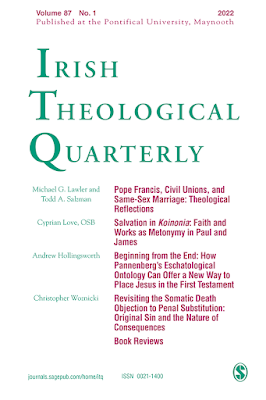
a book review in the ‘Irish Theological Quarterly’

Fifty Catholic Churches to See Before You Die. By Elena Curti. Leominster: Gracewing, 2000. Pp 280. Price £14.99 (pbk). ISBN 978-0-85244-962-2.

Reviewed by: Patrick Comerford, Diocese of Limerick and Killaloe

For much of this year, I have been blogging a daily prayer diary, focussing each morning on a cathedral, church or place of worship, linked each week with a common theme, such as Pugin or Wren churches, Spanish cathedrals, Dublin synagogues, Greek monasteries, Benedictine abbeys or Carmelite friaries.

Each theme has allowed me to draw on rich stream of spirituality week after week. But, inevitably, someone asks why their favourite place was not included in a selection of seven in any one week. It is an envious task to list your favourite restaurants, holiday destinations, movies or books, and omissions are seldom forgiven by those who would have made a very different choice.

But, on a positive note, there are those who come back, saying they had never thought of a visit to a church or cathedral, and promising to visit it when the next opportunity arises.

Elena Curti has set herself an impossible and thankless task with this book. She has limited her scope, confining herself not only to Catholic churches but also to Catholic churches in England and Wales, which is not indicated in the title, but it is confirmed on the back cover.

Elena Curti is an Italian-born English writer and journalist. She has been a Deputy Editor of The Tablet and now specialises in writing about Catholic heritage and conservation.

It is easy to ask why she chose England and Wales, and not just England, or all these islands. But perhaps this is because England and Wales have one hierarchy separate from Scotland and, of course, from Ireland, and she has worked closely during this project with the Patrimony Committee of the Bishops’ Conference of England and Wales.

Limiting herself to churches, Elena Curti has ruled out some of the great Catholic cathedrals of England, including Westminster Cathedral, Saint George’s Cathedral, Southwark, Saint Chad’s Cathedral by Pugin in Birmingham, and – love it or hate it – the Cathedral of Christ the King or ‘Paddy’s Wigwam’ in Liverpool.

But here is a very personal, if not eclectic, choice of 50 churches. They include Gothic Revival, neo-Classical, Byzantine, Arts and Crafts and Modernist buildings, mostly built after Catholic Emancipation, but a few built before the Reformation.

Everyone is going to find some of their favourite churches are missing, everyone is going to question some of the choices, and every reader is going to find churches that must be added to the ‘must-see’ list.

My favourite church is included in her shortlist: Saint Giles in Cheadle was commissioned by John Talbot, 16th Earl of Shrewsbury, whose marriage to Maria Theresa Talbot of Castle Talbot, Co Wexford, brought about Pugin’s introduction to Ireland. Pugin called this ‘perfect Cheadle, my consolation in all afflictions.’

There is a short selection of other Pugin works, including Saint Augustine’s, Ramsgate, and Saint Cuthbert’s Chapel at Ushaw College, Durham, but not, for example, his chapel at Saint Mary’s College, Oscott; (a personal favourite) Holy Cross Church, Lichfield, which influenced his designs for Saint Michael’s Church, Gorey, Co Wexford; or Saint Mary, Uttoxeter, which is relegated to a footnote in her account of Cheadle.

Her pre-Reformation churches include Saint Ethelreda, a late 13th century church at Ely Place in Holborn, which was acquired for the Rosminians in 1873, and the Slipper Chapel in Walsingham.

There are the peculiar stories of how Lord Arundell built All Saints’ Chapel in 1776 as part of his private chapel at Wardour Castle; of the ‘Hidden Chapel’ in a roof at Bar Convent in York; of Saint David’s, Pantasaph, an Anglican Church until the Earl of Denbigh decided to become a Catholic, causing a celebrated court case; and of Saint John and Saint Mary, built a year apart and within 200 yards of each other in Wigan.

Perhaps Saint John the Baptist in Brighton was selected because of its curious links with Mrs FitzHerbert, who entered a clandestine marriage with George IV when he was Prince of Wales.

There are ugly churches too, including Saint Monica’s, Bootle, which looks more like a power station; and Saint Francis Xavier, Hereford, dismissed by Pugin as ‘the new Catholic concert room.’

There are churches that every reader will be familiar with, including Farm Street Church in London, Brompton Oratory, or know the names of, such as Buckfast Abbey, Ampleforth, Downside, or Saint James, Spanish Place.

And there are churches to add ‘must-visit’ lists. Mine now includes Saint John the Baptist, Rochdale, with its mosaics of ‘powerful emotional intensity,’ and the Sacred Heart and Saint Catherine in Droitwich, modelled on the basilicas of Ravenna.

There are more than 50 churches, when one counts in the footnotes and addenda, and there are useful notes on architects, artists and architectural vocabulary. But, because the churches are listed alphabetically by town, rather than being held together by architect, style or region, this may not succeed in being a useful guide. But it is certainly going to inspire readers to draw up their own ‘must-visit’ lists, or to return again with a fresh approach to churches they are already familiar with.

This book review is published in The Irish Theological Quarterly (Maynooth), Vol 87 No 1 (February 2022), pp 78-80.

22 March 2021

Praying in Lent and Easter 2021:
34, Saint Giles’s Church, Cheadle

Saint Giles’s Church and its 200 ft spire dominate the Staffordshire market town of Chealde (Photograph: Patrick Comerford)

Patrick Comerford

During Lent and Easter this year, I am taking some time each morning to reflect in these ways:

1, a photograph of a church or place of worship that has been significant in my spiritual life;

2, the day’s Gospel reading;

3, a prayer from the prayer diary of the Anglican mission agency USPG (United Society Partners in the Gospel).

This week I am offering photographs from seven churches that were designed by Augustus Welby Pugin (1812-1852), the architect singularly responsible for shaping and influencing the Gothic revival in church architecture on these islands.

My photographs this morning (22 March 2021) are from Saint Giles’s Church, Cheadle, Staffordshire.

The architectural historian Sir Nikolaus Pevsner once described Staffordshire as ‘Pugin-land’ after visiting Cheadle, the market town dominated by Saint Giles’s Church and its 200 ft spire. He wrote: ‘Nowhere can one study and understand Pugin better than in Staffordshire – not only his forms and features but his mind, and not only his churches but his secular architecture as well.’

John Talbot (1791-1852), 16th Earl of Shrewsbury, who lived at Alton Towers and commissioned AWN Pugin to build many churches in Staffordshire, including Saint Giles’s Church, Cheadle.

Lord Shrewsbury, once ‘the most prominent British Catholic of day,’ extended his family’s Irish connections when he married Maria Theresa Talbot, daughter of Thomas William Talbot of Castle Talbot, Co Wexford – an Irish branch of the Talbot family that were patrons of Pugin too.

Pugin’s interior, including his rood screen, remain largely intact in Saint Giles’s Church, Cheadle (Photograph: Patrick Comerford)

John 8: 1-11 (NRSVA):

1 … Jesus went to the Mount of Olives. 2 Early in the morning he came again to the temple. All the people came to him and he sat down and began to teach them. 3 The scribes and the Pharisees brought a woman who had been caught in adultery; and making her stand before all of them, 4 they said to him, ‘Teacher, this woman was caught in the very act of committing adultery. 5 Now in the law Moses commanded us to stone such women. Now what do you say?’ 6 They said this to test him, so that they might have some charge to bring against him. Jesus bent down and wrote with his finger on the ground. 7 When they kept on questioning him, he straightened up and said to them, ‘Let anyone among you who is without sin be the first to throw a stone at her.’ 8 And once again he bent down and wrote on the ground. 9 When they heard it, they went away, one by one, beginning with the elders; and Jesus was left alone with the woman standing before him. 10 Jesus straightened up and said to her, ‘Woman, where are they? Has no one condemned you?’ 11 She said, ‘No one, sir.’ And Jesus said, ‘Neither do I condemn you. Go your way, and from now on do not sin again.’

Prayer in the USPG Prayer Diary:

The Prayer in the USPG Prayer Diary today (22 March 2021), also World Water Day, prays:

Let us give thanks for all USPG’s partner organisations that are working towards giving communities access to clean water and good sanitation.

Yesterday’s reflection

Continued tomorrow

The arms of the Talbot family, Earls of Shrewsbury, represented on the doors of Saint Giles’s Church in Cheadle, Staffordshire (Photograph: Patrick Comerford)

Scripture quotations are from the New Revised Standard Version Bible: Anglicised Edition copyright © 1989, 1995, National Council of the Churches of Christ in the United States of America. Used by permission. All rights reserved worldwide. http://nrsvbibles.org

04 October 2020

Religious diversity and pluralism
in a time of pandemic lockdown

Sandy’s Row Synagogue in London … antisemitism is a virus without a vaccine (Photograph: Patrick Comerford, 2020)

Patrick Comerford

I have a little (just a little) twinge of guilt in realising that during the pandemic lockdown I have bought so many books online. My eclectic buying ranges from Strangest Genius, the book by Lucy Costigan and Michael Cullen on the stained glass of Harry Clarke; to Jewtown, a collection of poetry by Simon Lewis, inspired by stories of the Jewish community in Cork.

In Catholic Staffordshire, Michael Greenslade shows how Roman Catholicism survived in Staffordshire more strongly than anywhere else in post-Reformation England except Lancashire. Prominent Recusant families in post-Elizabethan Staffordshire included the Aston, Biddulph, Clifford, Comberford, Draycott, Fitzherbert, Fowler, Giffard, Harcourt, Howard, Littleton, Perry, Stafford, Stanford, Sutton, Talbot, Weld and Whitgreave families.

Later members of the Wolseley family also became Roman Catholics through marriages with some of these families. Some early Irish connections with these Staffordshire Catholics include the marriages between the Dillon family and the heirs of the Stafford family and of the Lee family, Earls of Lichfield.

John Talbot (1791-1852), 16th Earl of Shrewsbury, who lived at Alton Towers and commissioned AWN Pugin to build many churches in Staffordshire, including Saint Giles’s Church in Cheadle, was once ‘the most prominent British Catholic of day.’

Lord Shrewsbury extended his family’s Irish connections when he married Maria Theresa Talbot, daughter of Thomas William Talbot of Castle Talbot, Co Wexford – an Irish branch of the Talbot family that were patrons of Pugin too.

The arms of the Talbot family, Earls of Shrewsbury, represented on the doors of Saint Giles’s Church in Cheadle, Staffordshire (Photograph: Patrick Comerford)

* * *

Despite Irish connections by marriage and descent, the perceived wealth and social status of the Dillon-Lee, Fitzgerald, Talbot, Wolseley and other recusant families in Staffordshire, isolated them from the Irish silk weavers who arrived in the early 19th century, and the impoverished Irish immigrants who arrived in from the mid-19th century on.

The composition of Father John Kirk’s parish in Lichfield, for example, changed as a large number of Irish people moved into the Sandford Street area by the mid-19th century. New Irish workers were attracted to the Potteries by expanding local industries in the 1840s.

The Rugeley mission was described in 1847 as ‘paralysed with poverty.’ At Walsall, the priest said an early mass on Sunday mornings in 1851 ‘for poor people who from want of proper clothes do not like to appear out of doors at a later period of the day.’

The people who arrived in Staffordshire in a new ‘influx of Irish’ in the early 1850s were described by one priest as ‘mostly very destitute.’ Mother Margaret Hallahan, a Dominican nun who moved to Stone in 1853, described the area as ‘a complete range of dust hills. The people say it is the fag-end of the Potteries; I think it is the fag-end of the world.’

The old recusant families had become a minority within the Roman Catholic population of Staffordshire by the mid-19th century, and immigrant Irish families were becoming the majority. Today, the Roman Catholic population of Staffordshire is much more diverse, and descendants of those poor Irish immigrants are completely integrated into English life.

The Irish population in Lichfield in the mid-19th century was living mainly in the Sandford Street area (Photograph: Patrick Comerford)

An Irish king of Albania?

Back in the 1980s, there was an old joke among journalists that it was a sure sign of folly to be the pretender to the throne of Albania; it was an even greater folly to go to Albania to claim that throne. But an Irish peer was offered the throne of Albania, possibly on three occasions, in the 1920s.

Lord Headley was one of the most prominent early converts to Islam in England, generations before Muslims arrived in significant numbers from India and Pakistan, and he was an early member of the Shah Jahan Mosque in Woking.

The mosque was built in 1889 as the first purpose-built mosque in Britain and is now an architectural treasure. It was the inspiration of a German-born orientalist, Gottlieb Wilhelm Leitner (1840-1899), and was built in the grounds of Leitner’s Oriental College.

The mosque was built in a ‘Persian-Saracenic Revival’ style, with a dome, minarets and a courtyard. It is described by the Pevsner Architectural Guides as ‘extraordinarily dignified.’ It was funded mainly by Shahjehan, Begum of Bhopal (1868-1901), one of only four women to become the Muslim royal ruler of Bhopal.

A prominent early member of the mosque in Woking was the Irish peer Rowland George Allanson Allanson-Winn (1855-1935), 5th Baron Headley. The title of Lord Headley, Baron Allanson and Winn, of Aghadoe in Co Kerry, dates back to 1797.

The Shah Jahan Mosque in Woking … Britain’s first purpose-built mosque (Photograph: Patrick Comerford)

* * *

Lord Headley qualified as a barrister but later became a civil engineer. As an engineer, he superintended coastal defence works at Youghal, Co Cork, and Glenbeigh, Co Kerry, and carried out similar work north of Bray Harbour, Co Wicklow. When he stood as the Conservative candidate in South Kerry in 1892, he received only 86 votes. Later, he worked on building roads in India, and in 1902 and 1903 he won the Silver Medals of the Institute of Civil Engineers of Ireland.

The Arklow Harbour Commissioners appointed him the chief engineer for extending the south breakwater of the harbour in 1906. But his plans were abandoned the following year in favour of a different scheme by John Purser Griffith.

Lord Headley’s homes in Ireland were at Inseidin, Coliemore Road, Dalkey, and Glenbeigh, Killarney. When he inherited his family title in 1913, he also inherited the family estates in Co Kerry. That year, he converted to Islam and took the Muslim name Shaikh Rahmatullah al-Farooq. He set up the British Muslim Society, was the author of several books on Islam, and twice made the Hajj to Mecca.

Headley was declared bankrupt in 1922. A year later, he was offered the throne of Albania, along with $500,000 and an annual income of $50,000, but turned down the offer. He claimed to have been offered the throne of Albania on three occasions, but turned down each invitation, saying ‘the only thing that goes with it is trouble and the almost certainty of assassination.’

Lord Headley died on 22 June 1935, and was buried in Brookwood Cemetery, near Woking.

Inside the Shah Jahan Mosque in Woking … Lord Headley, an Irish peer from Co Kerry, was a prominent early member (Photograph: Patrick Comerford)

The virus without a vaccine

As we learn to live with the Covid-19 virus, there is another virus with no vaccine that has been spreading virulently across the world: the virus of antisemitism, ‘an ancient virus without an antidote or vaccine.’

This virus is described and analysed by Rabbi Julia Neuberger in her new book, Anti-Semitism: What it is. What it isn’t. Why it matters (Weidenfeld and Nicolson).

Julia Neuberger is known to many people in Ireland. She was Britain’s second female rabbi, has a house in west Cork and is a life peer. She points out that antisemitism runs deeply and more perversely that most religious prejudice, with catastrophic results. There are signs of a recent resurgence not only in Trump’s America but across Europe too.

In Europe this year, we have been marking the 75th anniversary of the end of the Holocaust. But antisemitism continues to find new expressions in every generation. After Michael Cohen’s incriminating testimony before Congress, Donald Trump is reported to have found a new way to fall back on a centuries-old trope when he said, ‘Jews always flip.’

The Labour Party once seemed to be the natural home for Jewish voters in Britain. But the exposure of antisemitism at many levels throughout the party, and Jeremy Corbyn’s perceived inability or unwillingness to deal with it was one of the contributing factors to Labour’s defeat at the general election last December.

The Jewish Chronicle devoted an entire front page to an appeal to non-Jews not to vote Labour for as long as it was led by Corbyn, and 24 public figures wrote to the Guardian saying they would not vote Labour because of the party’s problems with antisemitism.

* * *

In Trump’s America, Jews have been shot to death at Shabbat prayer in synagogues by hate-filled white nationalists in Pittsburgh and Poway, California; and visibly Orthodox men and women have been violently attacked in Brooklyn and Monsey, New York, and shot down next door to a synagogue in Jersey City. The past year has brought the third-highest spike in antisemitism in the US on record.

In a speech to the Israeli American Council, Trump made several comments that drew criticism from the American Jewish Committee and other Jewish organisations for his ‘money references that feed age-old and ugly stereotypes.’

Trump’s language about immigrants and minorities; his reluctance to condemn white supremacists; and his opinion that there were ‘very fine people on both sides’ of the neo-Nazi march in Charlottesville, Virginia, combine to create an ugly climate.

In her book, How to Fight Anti-Semitism, Bari Weiss of the New York Times decries Trump’s ‘shameless and savage style of politics.’ Trump, she writes, ‘dismissed civility and decency as virtues for chumps, and cultivated a climate of rage and paranoia that has already proven deadly.’

The virus without a vaccine is just one more reason to watch next month’s presidential election with a mixture of hope and fear, anticipation and trepidation.

Bevis Marks Synagogue in London … antisemitism contributed to Labour’s defeat and the fall of Jeremy Corbyn (Photograph: Patrick Comerford, 2020)

Canon Patrick Comerford blogs at www.patrickcomerford.com. This feature was first published in the October 2020 edition of the ‘Church Review,’ the Dublin and Glendalough diocesan magazine.

29 June 2020

When Catholic Staffordshire
was once pitied as
‘the fag-end of the world’

Inside Holy Cross Church, Lichfield … built before the arrival of Irish Catholics in Lichfield in large numbers (Photograph: Patrick Comerford)

Patrick Comerford

In my stories in recent weeks about Staffordshire Catholics and the Wolseley family, many families emerge as prominent Roman Catholics in Staffordshire for successive generations, so that, as Michael Greenslade says in his book Catholic Staffordshire, it is obvious how Catholicism survived in Staffordshire more strongly that anywhere else in England except Lancashire.

These families included the Aston, Biddulph, Clifford, Comberford, Draycott, Fitzherbert, Fowler, Giffard, Harcourt, Howard, Littleton, Perry, Stafford, Stanford, Sutton, Talbot, Weld and Whitgreave families.

The late Sir Charles Wolseley was anxious to point out to me that his family were Catholics too. Some 16th and 17th century members of the family, including Cassandra, Erasmus and Walter Wolseley, were Catholics. But later members of the family became Catholics through marriages with some of these families, including the Clifford and Weld families. So, in the traditional understanding of the term, his family were not one of the old recusant families in Staffordshire.

Some of these families had early Irish connections, including the Wolseleys, and in the complex, tangled web that is their family tree, the English title of baronet was inherited in the Irish branch of the family, and another Irish branch of the family who received their own title became, in turn, heirs to the English title.

Saint Giles’s Church, Cheadle … designed by AWN Pugin and built for the Earl of Shrewsbury (Photograph: Patrick Comerford)

Some of the early Irish connections with Staffordshire Catholics include the marriages between the Dillon family and the heirs of the Stafford family and of the Lee family, Earls of Lichfield.

The self-styled Sir James Fitzgerald, who used an Irish title of baronet from Co Limerick or Co Cork, was living at Wolseley Hall at the time of his death in 1839. His widow, Lady Fitzgerald, lived at Maple Hayes, near Pipe Hall, Lichfield, before moving to Castle Ishen, Co Cork, with her children in the 1840s or 1850s.

John Talbot (1791-1852), 16th Earl of Shrewsbury, who lived at Alton Towers and commissioned AWN Pugin to build many churches in Staffordshire, including Saint Giles’s Church in Cheadle, was once ‘the most prominent British Catholic of day’ – although he was the last Earl of Shrewsbury to be a Roman Catholic.

Lord Shrewsbury extended his family’s Irish connections when he married Maria Theresa Talbot, daughter of Thomas William Talbot of Castle Talbot, Co Wexford – an Irish branch of the Talbot family that were patrons of Pugin too and that for generations claimed close kinship with the Talbots, Earls of Shrewsbury, in a way that parallels the claims of the Comerford family in Ireland to kinship with the Comberford family in Staffordshire.

The Talbot mausoleum dating from the early 19th-century in the mediaeval churchyard at John Street, Wexford (Photograph: Patrick Comerford, 2019)

John and Maria were the parents of two daughters who married two Italian princes. Their elder daughter, Lady Mary Alathea Beatrix Talbot, married Prince Filippo Andrea Doria-Pamphilj Landi in Rome in 1832 after meeting at the coronation of Queen Victoria, who suggested Lady Mary as one of the eight coronal train-bearers as a gesture towards her father who was then the oldest earl in the kingdom and a Roman Catholic. Later, Mary was given the title of Prinzessin von Bayern, or a Princess of Bavaria, by King Ludwig I of Bavaria.

Their younger daughter, Lady Gwendoline Catherine Talbot (1817-1840), was described by William IV as the ‘greatest beauty in the realm.’ She too married an Italian prince: Prince Marcantonio Borghese, Prince of Sulmona, in Rome in 1835.

The families of both daughters – like many leading Staffordshire Catholic families of the day – attended the society wedding of Sir Charles Wolseley and Anita Murphy in London in 1883. Today, the Anglican Centre in Rome is housed in the Palazzo Doria Pamphilj.

A carved portrait at Oscott College of Father John Kirk … he built new churches in Lichfield and Tamworth in the 1820s

But, despite these Irish connections by marriage and descent in earlier families, the perceived wealth and social status of the Dillon-Lee, Fitzgerald, Talbot, Wolseley and other old recusant families in Staffordshire, isolated them from the Irish silk weavers who arrived in Staffordshire in the early 19th century, and the impoverished Irish immigrants who arrived in Lichfield and other parts of Staffordshire from the mid-19th century on.

Irish immigrants had settled in the potteries by the late 1820s, but those Irish silk weavers who late moved on to Manchester and Macclesfield in the 1830s.

Meanwhile, Father John Kirk built Holy Cross Church in Lichfield in the 1820s and a new church in Tamworth partly endowed by Lord Shrewsbury in Tamworth.

When Kirk extended the church in Lichfield in the 1830s and the 1840s, there were about 60 communicants and a small number of children. Numbers increased slightly with the arrival of French prisoners of war, but even when the core congregation increased to 75 or 80 in the early 1840s, the few Irish people – apart from Lady Fitzgerald and her family – may have been people stopping off on the road between Liverpool and London, bringing the number of churchgoers to about 90.

The Irish population in Lichfield in the mid-19th century was living mainly in the Sandford Street area (Photograph: Patrick Comerford)

However, the composition or makeup of his parish changed as a large number of Irish people moved into the Sandford Street area of Lichfield by the middle of the century. At the same time, new Catholic churches were built in Bilston and Burton-upon-Trent in response to the arrival of new Irish workers attracted by expanding local industries in the 1840s.

The Rugeley mission was described in 1847 as ‘paralysed with poverty.’ At Walsall, the priest said an early mass on Sunday mornings in 1851 ‘for poor people who from want of proper clothes do not like to appear out of doors at a later period of the day.’

The people who arrived in Staffordshire in a new ‘influx of Irish’ in the early 1850s were described by one priest as ‘mostly very destitute.’ Mother Margaret Hallahan, a Dominican nun who established a convent at the Foley in Fenton in 1851 before moving to Stone in 1853, described the area as ‘a complete range of dust hills. The people say it is the fag-end of the Potteries; I think it is the fag-end of the world.’

By the mid-19th century, the old recusant families had become a minority among the Catholic population of Staffordshire, and the immigrant Irish families were fast becoming the majority.

Today, the Catholic population of Staffordshire is much more diverse, and descendants of those poor Irish immigrants of over a century and a half ago are completely integrated into English life.

The arms of the Talbot family, Earls of Shrewsbury, represented on the doors of Saint Giles’s Church, Cheadle (Photograph: Patrick Comerford)