Flying over Malahide, Donabate and Portrane and above the Irish Sea … the Irish Sea is one of the smaller regional seas, with a surface area of about 58,000 sq km or 58 million sq metres (Photograph: Patrick Comerford)
Patrick Comerford
This month continues to be an exceptionally busy time on this blog, with a continuing, steady and overwhelming rise in figures for viewing and reading. These figures reached 58 million shortly before 4 pm this afternoon (23 September), having reached 57 million five days ago (18 September), and 56 million three days earlier (15 September).
This is the tenth time these figures have passed the million mark since the end of last month. In a steady climb, the figures reached 55 million on 12 September, 54 million two nights before that (10 September 2026), 53 million hits the day before that (9 September 2026), 52 million hits two days previously (7 September), 51 million on 5 September, 50 million on 4 September and 49 million on 31 August.
These viewing and readership figures are still overpowering, and this blog continues to reach volumes of readers I never expected when I first started blogging 16 years ago. At the end of last year, this blog had 21 million hits (31 December 2025). So far this year, there have been more than 37 million hits or visitors in 2026 alone.
This means half of all hits or reader figures have been within the past six months, with 29 million hits since 25 March 2026. I first began blogging in 2010, and it took almost two years until July 2012 to reach half a million readers. Throughout this year, the daily figures have often been overwhelming. September is already the busiest month for traffic on this blog, with 9 million hits so far.
Of the 10 days of busiest traffic on this blog, seven of them have been in this month alone (1, 5, 7, 8, 9, 11 and 12 September), two were in May (1 and 14 May) and one was in April (29 April):
• 1,124,925 (1 May 2026)
• 671,341 (10 September 2026)
• 647,187 (5 September 2026)
• 618,234 (8 September 2026)
• 583,320 (11 September 2026)
• 563,301 (9 September 2026)
• 557,448 (12 September 2026)
• 525,719 (14 May 2026)
• 513,725 (7 September 2026)
• 509,644 (29 April 2026)
Although traffic has slowed down in the past week or so, the daily average so far this month is still running at almost 400,000 hits a day. Yet, I recall how 10 years ago, back in 2016, the daily average was around 1,000, or 30,000 a month.
The Berliner Dom or Berlin Cathedral … the German population includes about 58 million Christians (Photograph: Patrick Comerford)
Some curious though random statistics help to put this new figure of 58 million into perspective:
The average distance from the Sun to the planet Mercury is roughly 58 million km.
The number of Americans aged 65 and older is projected to increase from 58 million in 2022 to 82 million by 2050, a 42% increase.
Walford, an Edwardian mansion on Shrewsbury Road in Ballsbridge, Dublin, sold for a record-breaking €58 million in 2005 at the height of the Celtic Tiger economic boom, making it Ireland’s most expensive house ever sold.
Spain, the world’s second-most visited country after France, had a record-breaking 58.1 million international tourists between January and July 2026, marking a 4.6% increase compared to the same period in 2025.
Germany is home to about 58 million Christians, the second-highest number of Christians in Europe, after Russia, and the tenth globally.
58 million metres is 58,000 km and 58 million sq metres is 58,000 sq km.
The Irish Sea is one of the smaller regional seas, with a surface area of about 58,000 sq km or 58 million sq metres. 58,000 sq km is the surface area of Lake Michigan, a lake between Canada and the US, and the fifth largest lake in the world measured by surface area, following the Caspian Sea, Lake Superior, Lake Victoria and Lake Huron.
Karl Bushby, an English walking adventurer and author from Hull, is currently attempting to be the first person known to completely walk an unbroken path around the world. His trek, known as the Goliath Expedition, started it in the southern tip of Chile in 1998 and he is expected to return to England this month or next (September or October 2026). He originally expected to finish the 58,000 km trek in 12 years, but with numerous unplanned and unexpected delays, his expedition is now expected to last approximately 27 years.
58 million minutes equals 110 years, 3 months, and 9 days. This means that if this blog was receiving just one hit a minute, I would need to have started blogging back in early June 1916, after the Easter Rising in Dublin, in the middle of World War I, at a time when my grandfather was being sent home from the war in Thessaloniki.
I retired from active parish ministry about 4½ years ago, on 31 March 2022. These days, though, about 150 people on average are reading my daily prayer diary posted on this blog each morning, or more than 1,000 people each week. As this blog moves beyond 58 million hits, I am truly grateful today to the real readers among that 58 million. In particular, I am thankful for the faithful core group of people who join me in prayer, scripture reading and reflections each day.
58 million minutes brings me back to mid-1916, when my grandfather was being invalided home from Thessaloniki during World War (Photograph: Patrick Comerford)
Showing posts with label Germany. Show all posts
23 September 2026
06 September 2026
Daily prayer in Ordinary Time 2026:
121, Sunday 6 September 2026,
Creation in Christ, Trinity XIV
‘All things came into being through him, and without him not one thing came into being’ (John 1: 3) … Christ the Pantocrator in the dome of the parish church in Panormos in Crete (Photograph: Patrick Comerford, 2025)
Patrick Comerford
We are continuing in Ordinary Time in the Church Calendar and today is the Festival of Creation in Christ or the Fourteenth Sunday after Trinity (Trinity XIV, 6 September 2026).
This weekend includes the Festal Weekend in Saint Mary and Saint Giles Church, Stony Stratford, coming between the Feast of Saint Giles (1 September) and the Feast of the Birth of the Blessed Virgin Mary (8 September). There were children’s activities in the church yesterday, a Festal Eucharist this morning at which I hope to sing with the choir, and Calverton Fete is at All Saints’ Church, Calverton, this afternoon.
Before today begins, I am taking some quiet time this morning to give thanks, for reflection, prayer and reading in these ways:
1, today’s Gospel reading;
2, a reflection on the Gospel reading;
3, a prayer from the USPG prayer diary;
4, the Collects and Post-Communion prayer of the day.
‘The light shines in the darkness, and the darkness did not overcome it’ (John 1: 5) … light pours into the darkness in the Church of the Transfiguration in Piskopiano in Crete (Photograph: Patrick Comerford)
John 1: 1-14 (NRSVA):
1 In the beginning was the Word, and the Word was with God, and the Word was God. 2 He was in the beginning with God. 3 All things came into being through him, and without him not one thing came into being. What has come into being 4 in him was life, and the life was the light of all people. 5 The light shines in the darkness, and the darkness did not overcome it.
6 There was a man sent from God, whose name was John. 7 He came as a witness to testify to the light, so that all might believe through him. 8 He himself was not the light, but he came to testify to the light. 9 The true light, which enlightens everyone, was coming into the world.
10 He was in the world, and the world came into being through him; yet the world did not know him. 11 He came to what was his own, and his own people did not accept him. 12 But to all who received him, who believed in his name, he gave power to become children of God, 13 who were born, not of blood or of the will of the flesh or of the will of man, but of God.
14 And the Word became flesh and lived among us, and we have seen his glory, the glory as of a father’s only son, full of grace and truth.
The statue of Pythagoras (1989) by Nikolaos Ikaris (1920-1994) on the harbour front in Pythagóreio on the Greek island of Samos (Photograph: Patrick Comerford)
Today’s Reflections:
The Prologue to Saint John’s Gospel is the traditional Gospel reading on Christmas morning. Now we hear it again this morning (John 1: 1-14), when the Church Calendar in the Church of England marks Creation in Christ.
These opening verses in Saint John’s Gospel are like the opening verses of the Bible, in the Book of Genesis. They talk of a new creation, and a creation in which God is pleased, God is very pleased.
In this reading, we are introduced to key concepts in Saint John’s thinking: word or logos (λόγος, logos), life (ζωή, zoe), light (φῶς, phos), belief and being sent, testimony or witness, truth, and the cosmos (κόσμος, cosmos).
The word cosmos appears in this passage four times, and later, when Saint John goes on to tell us that ‘God so loved the world …’, he actually says ‘God so loved the cosmos that he sent his only Son …’ (John 3: 16).
The cosmos is the Universe, but the word specifically refers to a complex and orderly system or entity, the very opposite of chaos. The word cosmos gives us words in the English language like: cosmology, trying to understand the reasons for existence and its significance; or, more simply, cosmetics, an equal presence of order and beauty, an attempt to bring order or even beauty to the chaos of our skin, our facial appearance.
The term was first used by the Greek philosopher Pythagoras (ca 570 BCE to ca 495 BCE), the philosopher we remember because everyone in school learned the theorem to which he gives his name: ‘The square on the hypotenuse is equal to the sum of the squares on the other two sides.’
Pythagoras lived on the Greek island of Samos, and he influenced every Greek philosopher who came after him, including Plato and Aristotle. He is said to have been the first to prove that the earth is a sphere; he shaped how we think of numbers and musical notation, the perfect consonances of music; he taught the immortality of the soul; … and he was the first philosopher to develop the concept of the cosmos, the harmony of the created universe.
His followers, the Pythagoreans, believed in a superior divinity, the One God, above all other gods. Because of this belief in one God, and their rejection of the pantheon of mythical Greek gods, Pythagoras and his followers were labelled as atheists.
He was the first philosopher to give the word cosmos to the universe on the basis of his concepts of order and harmony which he believed govern all things.
He said that humanity and the universe are made in the image and likeness of God, and that understanding God, the universe and humanity are inter-connected.
In Pythagorean thinking, the cosmos is not just the whole world, but the whole universe, the whole created order; it is the earth and all that encircles the earth like its skin.
For Pythagoras, all things are related, just as in an ecosystem. In this thinking, the universe is a living organism and not an inanimate machine.
His followers compared a just and well-ordered society to a well-tuned lyre. While each note retains its individuality, all are proportionally linked together in a larger whole to form a musical scale, and all are interdependent in terms of their reliance on one another (Plato, Republic 443 D-444). Justice is present in any well-functioning organism, society, and the soul.
The word cosmopolitan, an important concept in modern philosophy and political discourse, is, of course, derived from the κοσμοπολίτης (kosmopoliítes) found in classical and koine Greek, formed from the words κόσμος (kosmos), world, universe, cosmos or created order, and πολίτης (politês), citizen, one of a city.
Contemporary usage defines the term as ‘citizen of the world’. But the word cosmopolitan was coined by the Greek philosopher Diogenes the Cynic or Diogenes of Sinope in the fourth century BCE. When Diogenes was asked from what city he hailed, he replied that he was a citizen of the world, κόσμος πολίτης (kósmos polítēs), or κοσμοπολίτης (kosmopolites), a citizen of the world, rejecting narrow local loyalties.
The plural, κόσμου πολῖται (kosmou politai), means ‘citizens of the world’ or even ‘citizens of the universe’, of the whole created order. The phrase originates from Cynic and Stoic philosophy, describing the idea that human beings belong to a single, universal community rather than being defined solely by their local city-state or nation. At the time, the broadest basis of social identity among Greeks was either the individual city-state or the culturally and linguistically homogeneous Hellenic group.
Diogenes lived from ca 413/403 to ca 324/321 BCE, and he was one of the founders of Cynicism. He was renowned for his ascetic lifestyle and radical critiques of social conventions, and he became a legendary figure whose life and teachings have been recounted, often through anecdote, in both antiquity and modernity. He Diogenes advocated a return to nature, the renunciation of wealth, and introduced early ideas of cosmopolitanism by proclaiming himself a citizen of the world. Rather than declaring his lineage, city, social class, or gender, he defined himself as a human being, implicitly asserting the equal worth of all human beings.
When Saint John the Divine wrote the Book of Revelation, he was in exile on Patmos, the neighbouring island of Samos, where Pythagoras was born, and like Pythagoras, he too was in exile in a cave.
So, is it any wonder that the idea of the cosmos, the harmony of the created universe, is a key concept in the writings of Saint John?
The word cosmos occurs 188 times in the New Testament, and the vast majority of these occurrences (104) are in Saint John’s Gospel and his three letters.
The first use of the word cosmos in the New Testament is in the Gospel reading this morning. When Saint John uses the word here – ‘He was in the cosmos, and the cosmos came into being because of him’ (John 1: 10) – he is referring not to humanity, not to the world as our planet Earth, but to the created universe, the sum total of everything, not here and now but past, present and future, the orderly universe created by God to be in harmony.
When we care for the cosmos, the created order, we reflect the life of Christ. It is not a marginal, side issue for the Church, but it is at the heart of the mission of the Church, because it is at the heart of why the Word has become flesh and dwells among us (John 1: 14).
The fifth of the five marks of mission agreed in the Anglican Communion is: ‘To strive to safeguard the integrity of creation and sustain and re-new the life of the earth.’
As we celebrate Creation in Christ and continue to mark Creation Time, it is good to be reminded that the care of creation, the cosmos, is not an added-on extra to our priorities in mission; rather, it underpins and explains all we do in mission. When we care for the cosmos, the integrity of creation, we are being like Christ.
The Tower of Lysicrates in the Plaka in Athens was once known as the Lantern of Diogenes (Photograph: Patrick Comerford)
Today’s Prayers (Sunday 6 September 2026, Creation in Christ):
In Pray with the World Church, the prayer diary of the Anglican mission agency USPG (United Society Partners in the Gospel), the theme this week, from 6 to 12 September 2026 (pp 36-37), is ‘Turning Pain into Glory’. This theme is introduced today with a Reflection by Nolene Sheppard, Leader of a Women’s Empowerment Group, Magnificat, and Ukraine Aid Project Support Lead at Saint Thomas à Becket, Hamburg, Germany:
It was a deep pain that hurt so bad it made me feel sick. I looked into the mirror and saw black and brown lines. The image couldn’t possibly be me - an unrecognisable, swollen face. My head continued to spin out of control. All I felt was helplessness, anger and frustration.
Traumatic experiences like these are not an unusual experience – a first for me, but nothing that other women haven’t experienced. Could I find my way back from the depths of such overwhelming despair? How can I do this when I am in a country where I am a foreigner, and at a disadvantage in every aspect of the word.
“Are other women going through this same emotional and psychological torture due to similar experiences?”, I asked myself. The findings were overwhelming. With the power of prayer, I knew I was not walking the journey back to the top on my own. God was at my side every step of the way. He showed me the path, gave me wisdom, strength and vision.
Now on a road better than I could have ever imagined, in the same country, I created a group within the English Anglican Church in Hamburg called “Magnificat”. This group is all about empowering women. We give financial support to Ukrainian refugees, made up of women and children, in Romania and put on activities for women in Hamburg too. I listen to each of their stories. It’s been a year now and the bond is still there. Magnificat continues to uplift them, as it does me.
The USPG Prayer Diary today (Sunday 6 September 2026, Creation in Christ) invites us to pray as we read and meditate on Matthew 18: 15-20.
‘The light shines in the darkness, and the darkness did not overcome it’ (John 1: 4) … by Minster Pool in Lichfield at night (Photograph: Patrick Comerford)
The Collect of the Day:
Holy and eternal God,
you are the Maker of heaven and earth,
you are the Word through whom all things were made,
and you are the Spirit, the giver of life:
draw us into the mystery of your love,
that with all creation we may proclaim your praise,
through Jesus Christ our Lord.
or
O God and Father of all that was, is and ever shall be,
help us to be thankful for all that is made
at the hands of your Son
and through the wisdom of your Spirit,
that we may care in heart and in deed for the life of our world,
to the praise and glory of your holy name.
The Post-Communion Prayer:
God our Creator,
by your gift the tree of life was set
at the heart of the earthly paradise,
and the bread of life at the heart of your Church:
may we who have been nourished at your table on earth
be transformed by the glory of the Saviour’s cross
and enjoy the delights of eternity;
through Jesus Christ our Lord.
Yesterday’s reflections
Continued tomorrow
‘The light shines in the darkness, and the darkness did not overcome it’ (John 1: 4) … My Village Barok by the Sarawak River in Kuching at night (Photograph: Patrick Comerford)
Scripture quotations are from the New Revised Standard Version Bible: Anglicised Edition copyright © 1989, 1995, National Council of the Churches of Christ in the United States of America. Used by permission. All rights reserved worldwide. http://nrsvbibles.org
Patrick Comerford
We are continuing in Ordinary Time in the Church Calendar and today is the Festival of Creation in Christ or the Fourteenth Sunday after Trinity (Trinity XIV, 6 September 2026).
This weekend includes the Festal Weekend in Saint Mary and Saint Giles Church, Stony Stratford, coming between the Feast of Saint Giles (1 September) and the Feast of the Birth of the Blessed Virgin Mary (8 September). There were children’s activities in the church yesterday, a Festal Eucharist this morning at which I hope to sing with the choir, and Calverton Fete is at All Saints’ Church, Calverton, this afternoon.
Before today begins, I am taking some quiet time this morning to give thanks, for reflection, prayer and reading in these ways:
1, today’s Gospel reading;
2, a reflection on the Gospel reading;
3, a prayer from the USPG prayer diary;
4, the Collects and Post-Communion prayer of the day.
‘The light shines in the darkness, and the darkness did not overcome it’ (John 1: 5) … light pours into the darkness in the Church of the Transfiguration in Piskopiano in Crete (Photograph: Patrick Comerford)
John 1: 1-14 (NRSVA):
1 In the beginning was the Word, and the Word was with God, and the Word was God. 2 He was in the beginning with God. 3 All things came into being through him, and without him not one thing came into being. What has come into being 4 in him was life, and the life was the light of all people. 5 The light shines in the darkness, and the darkness did not overcome it.
6 There was a man sent from God, whose name was John. 7 He came as a witness to testify to the light, so that all might believe through him. 8 He himself was not the light, but he came to testify to the light. 9 The true light, which enlightens everyone, was coming into the world.
10 He was in the world, and the world came into being through him; yet the world did not know him. 11 He came to what was his own, and his own people did not accept him. 12 But to all who received him, who believed in his name, he gave power to become children of God, 13 who were born, not of blood or of the will of the flesh or of the will of man, but of God.
14 And the Word became flesh and lived among us, and we have seen his glory, the glory as of a father’s only son, full of grace and truth.
The statue of Pythagoras (1989) by Nikolaos Ikaris (1920-1994) on the harbour front in Pythagóreio on the Greek island of Samos (Photograph: Patrick Comerford)
Today’s Reflections:
The Prologue to Saint John’s Gospel is the traditional Gospel reading on Christmas morning. Now we hear it again this morning (John 1: 1-14), when the Church Calendar in the Church of England marks Creation in Christ.
These opening verses in Saint John’s Gospel are like the opening verses of the Bible, in the Book of Genesis. They talk of a new creation, and a creation in which God is pleased, God is very pleased.
In this reading, we are introduced to key concepts in Saint John’s thinking: word or logos (λόγος, logos), life (ζωή, zoe), light (φῶς, phos), belief and being sent, testimony or witness, truth, and the cosmos (κόσμος, cosmos).
The word cosmos appears in this passage four times, and later, when Saint John goes on to tell us that ‘God so loved the world …’, he actually says ‘God so loved the cosmos that he sent his only Son …’ (John 3: 16).
The cosmos is the Universe, but the word specifically refers to a complex and orderly system or entity, the very opposite of chaos. The word cosmos gives us words in the English language like: cosmology, trying to understand the reasons for existence and its significance; or, more simply, cosmetics, an equal presence of order and beauty, an attempt to bring order or even beauty to the chaos of our skin, our facial appearance.
The term was first used by the Greek philosopher Pythagoras (ca 570 BCE to ca 495 BCE), the philosopher we remember because everyone in school learned the theorem to which he gives his name: ‘The square on the hypotenuse is equal to the sum of the squares on the other two sides.’
Pythagoras lived on the Greek island of Samos, and he influenced every Greek philosopher who came after him, including Plato and Aristotle. He is said to have been the first to prove that the earth is a sphere; he shaped how we think of numbers and musical notation, the perfect consonances of music; he taught the immortality of the soul; … and he was the first philosopher to develop the concept of the cosmos, the harmony of the created universe.
His followers, the Pythagoreans, believed in a superior divinity, the One God, above all other gods. Because of this belief in one God, and their rejection of the pantheon of mythical Greek gods, Pythagoras and his followers were labelled as atheists.
He was the first philosopher to give the word cosmos to the universe on the basis of his concepts of order and harmony which he believed govern all things.
He said that humanity and the universe are made in the image and likeness of God, and that understanding God, the universe and humanity are inter-connected.
In Pythagorean thinking, the cosmos is not just the whole world, but the whole universe, the whole created order; it is the earth and all that encircles the earth like its skin.
For Pythagoras, all things are related, just as in an ecosystem. In this thinking, the universe is a living organism and not an inanimate machine.
His followers compared a just and well-ordered society to a well-tuned lyre. While each note retains its individuality, all are proportionally linked together in a larger whole to form a musical scale, and all are interdependent in terms of their reliance on one another (Plato, Republic 443 D-444). Justice is present in any well-functioning organism, society, and the soul.
The word cosmopolitan, an important concept in modern philosophy and political discourse, is, of course, derived from the κοσμοπολίτης (kosmopoliítes) found in classical and koine Greek, formed from the words κόσμος (kosmos), world, universe, cosmos or created order, and πολίτης (politês), citizen, one of a city.
Contemporary usage defines the term as ‘citizen of the world’. But the word cosmopolitan was coined by the Greek philosopher Diogenes the Cynic or Diogenes of Sinope in the fourth century BCE. When Diogenes was asked from what city he hailed, he replied that he was a citizen of the world, κόσμος πολίτης (kósmos polítēs), or κοσμοπολίτης (kosmopolites), a citizen of the world, rejecting narrow local loyalties.
The plural, κόσμου πολῖται (kosmou politai), means ‘citizens of the world’ or even ‘citizens of the universe’, of the whole created order. The phrase originates from Cynic and Stoic philosophy, describing the idea that human beings belong to a single, universal community rather than being defined solely by their local city-state or nation. At the time, the broadest basis of social identity among Greeks was either the individual city-state or the culturally and linguistically homogeneous Hellenic group.
Diogenes lived from ca 413/403 to ca 324/321 BCE, and he was one of the founders of Cynicism. He was renowned for his ascetic lifestyle and radical critiques of social conventions, and he became a legendary figure whose life and teachings have been recounted, often through anecdote, in both antiquity and modernity. He Diogenes advocated a return to nature, the renunciation of wealth, and introduced early ideas of cosmopolitanism by proclaiming himself a citizen of the world. Rather than declaring his lineage, city, social class, or gender, he defined himself as a human being, implicitly asserting the equal worth of all human beings.
When Saint John the Divine wrote the Book of Revelation, he was in exile on Patmos, the neighbouring island of Samos, where Pythagoras was born, and like Pythagoras, he too was in exile in a cave.
So, is it any wonder that the idea of the cosmos, the harmony of the created universe, is a key concept in the writings of Saint John?
The word cosmos occurs 188 times in the New Testament, and the vast majority of these occurrences (104) are in Saint John’s Gospel and his three letters.
The first use of the word cosmos in the New Testament is in the Gospel reading this morning. When Saint John uses the word here – ‘He was in the cosmos, and the cosmos came into being because of him’ (John 1: 10) – he is referring not to humanity, not to the world as our planet Earth, but to the created universe, the sum total of everything, not here and now but past, present and future, the orderly universe created by God to be in harmony.
When we care for the cosmos, the created order, we reflect the life of Christ. It is not a marginal, side issue for the Church, but it is at the heart of the mission of the Church, because it is at the heart of why the Word has become flesh and dwells among us (John 1: 14).
The fifth of the five marks of mission agreed in the Anglican Communion is: ‘To strive to safeguard the integrity of creation and sustain and re-new the life of the earth.’
As we celebrate Creation in Christ and continue to mark Creation Time, it is good to be reminded that the care of creation, the cosmos, is not an added-on extra to our priorities in mission; rather, it underpins and explains all we do in mission. When we care for the cosmos, the integrity of creation, we are being like Christ.
The Tower of Lysicrates in the Plaka in Athens was once known as the Lantern of Diogenes (Photograph: Patrick Comerford)
Today’s Prayers (Sunday 6 September 2026, Creation in Christ):
In Pray with the World Church, the prayer diary of the Anglican mission agency USPG (United Society Partners in the Gospel), the theme this week, from 6 to 12 September 2026 (pp 36-37), is ‘Turning Pain into Glory’. This theme is introduced today with a Reflection by Nolene Sheppard, Leader of a Women’s Empowerment Group, Magnificat, and Ukraine Aid Project Support Lead at Saint Thomas à Becket, Hamburg, Germany:
It was a deep pain that hurt so bad it made me feel sick. I looked into the mirror and saw black and brown lines. The image couldn’t possibly be me - an unrecognisable, swollen face. My head continued to spin out of control. All I felt was helplessness, anger and frustration.
Traumatic experiences like these are not an unusual experience – a first for me, but nothing that other women haven’t experienced. Could I find my way back from the depths of such overwhelming despair? How can I do this when I am in a country where I am a foreigner, and at a disadvantage in every aspect of the word.
“Are other women going through this same emotional and psychological torture due to similar experiences?”, I asked myself. The findings were overwhelming. With the power of prayer, I knew I was not walking the journey back to the top on my own. God was at my side every step of the way. He showed me the path, gave me wisdom, strength and vision.
Now on a road better than I could have ever imagined, in the same country, I created a group within the English Anglican Church in Hamburg called “Magnificat”. This group is all about empowering women. We give financial support to Ukrainian refugees, made up of women and children, in Romania and put on activities for women in Hamburg too. I listen to each of their stories. It’s been a year now and the bond is still there. Magnificat continues to uplift them, as it does me.
The USPG Prayer Diary today (Sunday 6 September 2026, Creation in Christ) invites us to pray as we read and meditate on Matthew 18: 15-20.
‘The light shines in the darkness, and the darkness did not overcome it’ (John 1: 4) … by Minster Pool in Lichfield at night (Photograph: Patrick Comerford)
The Collect of the Day:
Holy and eternal God,
you are the Maker of heaven and earth,
you are the Word through whom all things were made,
and you are the Spirit, the giver of life:
draw us into the mystery of your love,
that with all creation we may proclaim your praise,
through Jesus Christ our Lord.
or
O God and Father of all that was, is and ever shall be,
help us to be thankful for all that is made
at the hands of your Son
and through the wisdom of your Spirit,
that we may care in heart and in deed for the life of our world,
to the praise and glory of your holy name.
The Post-Communion Prayer:
God our Creator,
by your gift the tree of life was set
at the heart of the earthly paradise,
and the bread of life at the heart of your Church:
may we who have been nourished at your table on earth
be transformed by the glory of the Saviour’s cross
and enjoy the delights of eternity;
through Jesus Christ our Lord.
Yesterday’s reflections
Continued tomorrow
‘The light shines in the darkness, and the darkness did not overcome it’ (John 1: 4) … My Village Barok by the Sarawak River in Kuching at night (Photograph: Patrick Comerford)
Scripture quotations are from the New Revised Standard Version Bible: Anglicised Edition copyright © 1989, 1995, National Council of the Churches of Christ in the United States of America. Used by permission. All rights reserved worldwide. http://nrsvbibles.org
Labels:
Athens,
Calverton,
Creation,
Crete 2026,
Germany,
Greece 2026,
Kuching,
Lichfield,
Mission,
Panormos,
Philosophy,
Piskopiano,
Prayer,
refugees,
River walks,
Saint John's Gospel,
Samos,
Sarawak River,
Sculpture,
USPG
27 January 2026
A ‘virtual tour’ of Holocaust
memorials on Holocaust
Memorial Day, a reminder
that we must never forget
‘Arbeit macht frei’ … the gate at Auschwitz … today is Holocaust Memorial Day (Photograph: Patrick Comerford)
Patrick Comerford
Today is Holocaust Memorial Day, marking the anniversary of the liberation of Auschwitz in 1945 and the beginning of the liberation of the concentration camps in Europe.
In a ‘virtual tour’ today, I visit Holocaust memorials in a dozen European countries: Austria, Czech Republic, England, France, Germany, Greece, Hungary, Ireland, Italy, Poland, Slovakia and Slovenia.
Looking back on many visits over the years, my images today include monuments, memorials, plaques, sculptures, shattered grave stones and Stolpersteine or ‘stumbling stones’, in cemeteries, libraries, museums, parks, schools, squares, streets, synagogues, railway stations, and bridges.
There are photographs from the concentration camps in Auschwitz, Birkenau and Sachsenhausen. There are Jewish families and individuals, mothers and children, the murdered and the survivors, resistance fighters and the ‘Righteous Among the Nations’.
Austria:
Rachel Whiteread’s Holocaust Memorial in Judenplatz in Vienna (Photograph: Patrick Comerford)
Czech Republic:
The walls of the Pinkas Synagogue in Prague are covered with the names of 78,000 victims of the Holocaust (Photograph: Patrick Comerford)
The names of the concentration camps surround the Aron haKodesh or Holy Ark in the Pinkas Synagogue, Prague (Photograph: Patrick Comerford)
England:
The Holocaust Memorial Stone at the east end of Bourton Park, Buckingham, was installed in 2021 (Photograph: Patrick Comerford)
France:
The Mur des Names or Wall of Names in the Mémorial de la Shoah lists 76,000 French Jews deported and murdered by the Nazis (Photograph: Patrick Comerford)
A plaque on a school in the Marais in Paris recalling the children of the Shoah (Photograph: Patrick Comerford)
Germany:
The Memorial to the Murdered Jews of Europe in Berlin (Photograph: Patrick Comerford)
A memorial to Jewish children at the Jewish Cemetery in Berlin (Photograph: Patrick Comerford)
The memorial to the victims of the Sachsenhausen Concentration Camp 1936-1945 … the victims included gays, Gypsies, political prisoners and disabled people (Photograph: Patrick Comerford)
Greece:
The Jewish Holocaust Memorial at Plateia Eleftherias (Liberty Square) in Thessaloniki (Photograph: Patrick Comerford)
Chief Rabbi Gabriel Negrin places candles in the Holocaust memorial in Etz Hayyim Synagogue in Chania (Photograph: Patrick Comerford)
The Holocaust Memorial by Georgios Karahalios (2001) in Corfu remembers the 2,000 Jews of Corfu who were murdered in Auschwitz in 1944 (Photograph: Patrick Comerford)
The monument in the Nuova or New Synagogue in Corfu to families who died in the Holocaust (Photograph: Patrick Comerford)
Hungary:
The Memorial of the Hungarian Jewish Martyrs by Imre Varga at the Dohány Street Synagogue in Budapest (Photograph: Patrick Comerford)
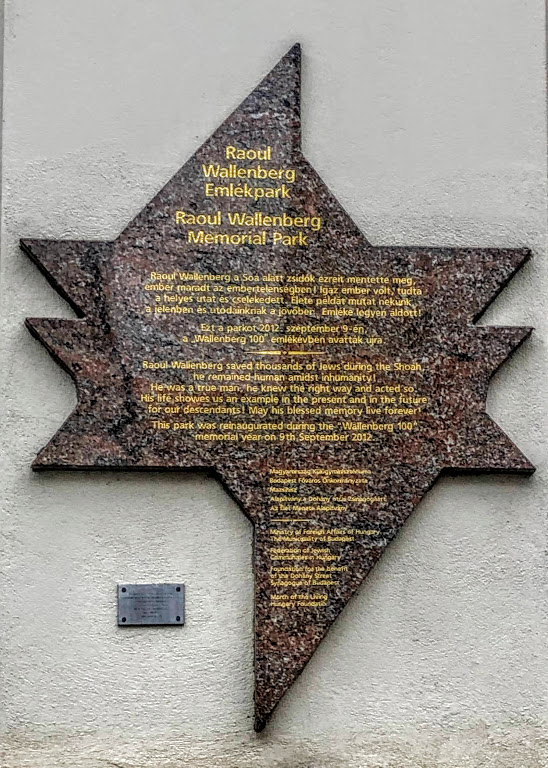
The Holocaust Memorial Park at the Dohány Street Synagogue in Budapest (Photograph: Patrick Comerford)
Italy:
A monument in Bologna commemorating victims of the Holocaust (Photograph: Patrick Comerford)
The Holocaust Memorial outside the railway station in Gorizia, a town that straddles the border of Italy and Slovenia (Photograph: Patrick Comerford)
The Holocaust Memorial at the Synagogue in Padua (Photograph: Patrick Comerford)
A monument to Jewish partisans and resistance to the Nazis and Fascists in Rome (Photograph: Patrick Comerford)
The memorial wall to victims of the Holocaust in the Ghetto in Venice (Photograph: Patrick Comerford)
The Holocaust memorial in the Ghetto in Venice (Photograph: Patrick Comerford)
Poland:
Multilingual memorials in Birkenau … a reminder of the many nationalities of the victims of the Holocaust (Photographs: Patrick Comerford)
Shattered gravestones make a Holocaust memorial in a Jewish cemetery in Kraków (Photograph: Patrick Comerford)
The Empty Chairs Memorial in Ghetto Heroes Square in Kazimierz , symbolising abandoned homes and mass deportations from the Kraków Ghetto in 1943 (Photograph: Patrick Comerford)
Slovakia:
The Holocaust Memorial in the centre of Bratislava on the site of the former Neolog Synagogue (Photograph: Patrick Comerford)
Stolpersteine or ‘stumbling stones’
Berlin:
Stolpersteine or Stumbling stones on Rosenthaler Straße 39, Berlin-Mitte, remembering members of the Salinger family murdered by the Nazis in Auschwtiz and Riga (Photograph: Patrick Comerford)
Dublin:
Dublin’s first Stolpersteine or ‘stumbling stones’, recalling six Irish Holocaust victims, at Saint Catherine’s National School on Donore Avenue (photograph: Patrick Comerford)
Prague:
‘Stolpersteine’ or ‘Stumbling Stones’ on the streets of Prague remember members of the Bergmann family deported to Terezín during the Holocaust (Photograph: Patrick Comerford)
Thessaloniki:
‘Stolpersteine’ or ‘Stumbling Stones’ on the pavement on Vassilisis Olgas Avenue in Thessaloniki commemorate Greek Jews deported to Auschwitz (Photograph: Patrick Comerford)
Venice:
Stolpersteine or stumbling stones (Pietre d’inciampo) in Venice recall victims of the Holocaust (Photograph: Patrick Comerford)
Remembering individuals:
Remembering Anne Frank in street art in Berlin (Photograph: Patrick Comerford)
The sculpture of Anne Frank by Doreen Kern in the British Library, London (Photograph: Patrick Comerford)
The Kindertransport monument at Liverpool Street Station … a reminder in the heart of London of the Holocaust (Photograph: Patrick Comerford)
A plaque on Heydukova Street in Bratislava marks the former home of Aron Grünhut (1895-1974), involved in heroic rescues during the Holocaust (Photograph: Patrick Comerford)
Monuments to ‘Righteous Among the Nations’:
Philip Jackson’s monument of the Swedish diplomat Raoul Wallenberg at Wallenberg Place, near Hyde Park, London (Photograph: Patrick Comerford)
A memorial to Raoul Wallenberg in the Raoul Wallenberg Holocaust Memorial Park at the Dohány Street Synagogue, Budapest (Photograph: Patrick Comerford)
The Mary Elmes Bridge in Cork … the centrepiece of the bridge is designed to look like a menorah (Photograph: Patrick Comerford)
The Wall of the Righteous in Paris lists 3,300 French people who have been recognised as ‘Righteous Among the Nations’ (Photograph: Patrick Comerford)
These images are reminders not only of the Holocaust and its victims, but of real individuals who suffered and were humiliated, whose lives were shattered and who were murdered.
They are reminders of why we must never forget. The Holocaust happened not just because of one evil man but because many good people stood by and remained silent.
Over 80 years after the end of the Holocaust, antisemitism is on the rise once again. We are seeing the rise of the far-right in Britain across Europe and a resurgence of the far-right in Latin America, far-right ideology and vocabulary has become part and parcel of the language of the Trump regime, its spokespersons and those who support street murders by ICE in Minneapolis.
We must never forget.
The Eternal Flame in the Mémorial de la Shoah, Paris (Patrick Comerford)
Patrick Comerford
Today is Holocaust Memorial Day, marking the anniversary of the liberation of Auschwitz in 1945 and the beginning of the liberation of the concentration camps in Europe.
In a ‘virtual tour’ today, I visit Holocaust memorials in a dozen European countries: Austria, Czech Republic, England, France, Germany, Greece, Hungary, Ireland, Italy, Poland, Slovakia and Slovenia.
Looking back on many visits over the years, my images today include monuments, memorials, plaques, sculptures, shattered grave stones and Stolpersteine or ‘stumbling stones’, in cemeteries, libraries, museums, parks, schools, squares, streets, synagogues, railway stations, and bridges.
There are photographs from the concentration camps in Auschwitz, Birkenau and Sachsenhausen. There are Jewish families and individuals, mothers and children, the murdered and the survivors, resistance fighters and the ‘Righteous Among the Nations’.
Austria:
Rachel Whiteread’s Holocaust Memorial in Judenplatz in Vienna (Photograph: Patrick Comerford)
Czech Republic:
The walls of the Pinkas Synagogue in Prague are covered with the names of 78,000 victims of the Holocaust (Photograph: Patrick Comerford)
The names of the concentration camps surround the Aron haKodesh or Holy Ark in the Pinkas Synagogue, Prague (Photograph: Patrick Comerford)
England:
The Holocaust Memorial Stone at the east end of Bourton Park, Buckingham, was installed in 2021 (Photograph: Patrick Comerford)
France:
The Mur des Names or Wall of Names in the Mémorial de la Shoah lists 76,000 French Jews deported and murdered by the Nazis (Photograph: Patrick Comerford)
A plaque on a school in the Marais in Paris recalling the children of the Shoah (Photograph: Patrick Comerford)
Germany:
The Memorial to the Murdered Jews of Europe in Berlin (Photograph: Patrick Comerford)
A memorial to Jewish children at the Jewish Cemetery in Berlin (Photograph: Patrick Comerford)
The memorial to the victims of the Sachsenhausen Concentration Camp 1936-1945 … the victims included gays, Gypsies, political prisoners and disabled people (Photograph: Patrick Comerford)
Greece:
The Jewish Holocaust Memorial at Plateia Eleftherias (Liberty Square) in Thessaloniki (Photograph: Patrick Comerford)
Chief Rabbi Gabriel Negrin places candles in the Holocaust memorial in Etz Hayyim Synagogue in Chania (Photograph: Patrick Comerford)
The Holocaust Memorial by Georgios Karahalios (2001) in Corfu remembers the 2,000 Jews of Corfu who were murdered in Auschwitz in 1944 (Photograph: Patrick Comerford)
The monument in the Nuova or New Synagogue in Corfu to families who died in the Holocaust (Photograph: Patrick Comerford)
Hungary:
The Memorial of the Hungarian Jewish Martyrs by Imre Varga at the Dohány Street Synagogue in Budapest (Photograph: Patrick Comerford)
The Holocaust Memorial Park at the Dohány Street Synagogue in Budapest (Photograph: Patrick Comerford)
Italy:
A monument in Bologna commemorating victims of the Holocaust (Photograph: Patrick Comerford)
The Holocaust Memorial outside the railway station in Gorizia, a town that straddles the border of Italy and Slovenia (Photograph: Patrick Comerford)
The Holocaust Memorial at the Synagogue in Padua (Photograph: Patrick Comerford)
A monument to Jewish partisans and resistance to the Nazis and Fascists in Rome (Photograph: Patrick Comerford)
The memorial wall to victims of the Holocaust in the Ghetto in Venice (Photograph: Patrick Comerford)
The Holocaust memorial in the Ghetto in Venice (Photograph: Patrick Comerford)
Poland:
Multilingual memorials in Birkenau … a reminder of the many nationalities of the victims of the Holocaust (Photographs: Patrick Comerford)
Shattered gravestones make a Holocaust memorial in a Jewish cemetery in Kraków (Photograph: Patrick Comerford)
The Empty Chairs Memorial in Ghetto Heroes Square in Kazimierz , symbolising abandoned homes and mass deportations from the Kraków Ghetto in 1943 (Photograph: Patrick Comerford)
Slovakia:
The Holocaust Memorial in the centre of Bratislava on the site of the former Neolog Synagogue (Photograph: Patrick Comerford)
Stolpersteine or ‘stumbling stones’
Berlin:
Stolpersteine or Stumbling stones on Rosenthaler Straße 39, Berlin-Mitte, remembering members of the Salinger family murdered by the Nazis in Auschwtiz and Riga (Photograph: Patrick Comerford)
Dublin:
Dublin’s first Stolpersteine or ‘stumbling stones’, recalling six Irish Holocaust victims, at Saint Catherine’s National School on Donore Avenue (photograph: Patrick Comerford)
Prague:
‘Stolpersteine’ or ‘Stumbling Stones’ on the streets of Prague remember members of the Bergmann family deported to Terezín during the Holocaust (Photograph: Patrick Comerford)
Thessaloniki:
‘Stolpersteine’ or ‘Stumbling Stones’ on the pavement on Vassilisis Olgas Avenue in Thessaloniki commemorate Greek Jews deported to Auschwitz (Photograph: Patrick Comerford)
Venice:
Stolpersteine or stumbling stones (Pietre d’inciampo) in Venice recall victims of the Holocaust (Photograph: Patrick Comerford)
Remembering individuals:
Remembering Anne Frank in street art in Berlin (Photograph: Patrick Comerford)
The sculpture of Anne Frank by Doreen Kern in the British Library, London (Photograph: Patrick Comerford)
The Kindertransport monument at Liverpool Street Station … a reminder in the heart of London of the Holocaust (Photograph: Patrick Comerford)
A plaque on Heydukova Street in Bratislava marks the former home of Aron Grünhut (1895-1974), involved in heroic rescues during the Holocaust (Photograph: Patrick Comerford)
Monuments to ‘Righteous Among the Nations’:
Philip Jackson’s monument of the Swedish diplomat Raoul Wallenberg at Wallenberg Place, near Hyde Park, London (Photograph: Patrick Comerford)
A memorial to Raoul Wallenberg in the Raoul Wallenberg Holocaust Memorial Park at the Dohány Street Synagogue, Budapest (Photograph: Patrick Comerford)
The Mary Elmes Bridge in Cork … the centrepiece of the bridge is designed to look like a menorah (Photograph: Patrick Comerford)
The Wall of the Righteous in Paris lists 3,300 French people who have been recognised as ‘Righteous Among the Nations’ (Photograph: Patrick Comerford)
These images are reminders not only of the Holocaust and its victims, but of real individuals who suffered and were humiliated, whose lives were shattered and who were murdered.
They are reminders of why we must never forget. The Holocaust happened not just because of one evil man but because many good people stood by and remained silent.
Over 80 years after the end of the Holocaust, antisemitism is on the rise once again. We are seeing the rise of the far-right in Britain across Europe and a resurgence of the far-right in Latin America, far-right ideology and vocabulary has become part and parcel of the language of the Trump regime, its spokespersons and those who support street murders by ICE in Minneapolis.
We must never forget.
The Eternal Flame in the Mémorial de la Shoah, Paris (Patrick Comerford)
Labels:
#HolocaustMemorialDay,
antisemitism,
Austria,
Crete 2026,
Czech Republic,
France,
Germany,
Greece,
Greece 2026,
Holocaust,
Hungary,
Jewish history,
Poland,
Sculpture,
Slovakia,
Slovenia,
Street art,
Synagogues,
Virtual Tours
18 December 2025
20 million olive trees in Crete,
20 million in classical Greece,
a $20 million pay-out to Trump,
and 20 million blog readers
The Parthenon on the Acropolis … Ancient Greece had 20 million people by 400 BCE (Photograph: Patrick Comerford)
Patrick Comerford
Once again, this blog continues to reach more and more readers, reaching yet another overwhelming landmark, with 20 million hits at about 7 am this morning (18 December 2025), and more than 800,000 readers this week alone. There have been almost 1.5 million visitors to this blog so far this month, an average of about 80,000 hits each day so far in December.
Earlier this week, this blog had reached 19.5 million readers by early Sunday afternoon (14 December 2025), having passed the 19 million mark last week (9 December).
I began blogging in 2010, and it took almost two years until July 2012 to reach half a million readers. It more than another year before this figure rose to 1 million by September 2013. This blog reached the 10 million mark earlier this year (12 January), almost 15 years later.
So far this year, the daily figures have been overwhelming on many occasions. Eight of the 12 days of busiest traffic on this blog were this month alone and four were in January:
• 289,076 (11 January 2025)
• 285,366 (12 January 2025)
• 261,422 (13 January 2025)
• 166,155 (15 December 2025)
• 146,944 (14 December 2025)
• 140,417 (16 December 2025)
• 122,398 (17 December 2025)
• 112,221 (13 December 2025)
• 100,291 (10 January 2025)
• 94,824 (12 December 2025)
• 93,575 (11 December 2025)
• 88,333 (10 December 2025)
The latest figure of 20 million is all the more staggering as half of those hits (10 million) have been within this year, since 12 January 2025. The rise in the number of readers has been phenomenal throughout this year, and the daily figures have been overwhelming at times. With this latest landmark figure of 20 million readers, I once again find myself asking questions such as:
• What do 20 million people look like?
• Where do we find 20 million people?
• What does £20 million, €20 million or $20 million mean?
• What would it buy, how far would it stretch, how much of a difference would that much make to people’s lives?
When countries have passed the 20 million mark (vividmaps.com)
The world’s population hovered is now well over 8 billion, and projections say there could be 10.3 billion of us by the 2080s. Alex Egoshin of vividmaps is a GIS specialist and ecologist working as a researcher in a national park. He has created a series of maps based on Wikipedia’s List of Population Milestones by Country database and he concludes that ‘crossing the 20 million mark was like lighting a great bonfire – a signal that a civilisation had grown too large to ignore.’
He suggests only a few ancient societies reached that mark at an early stage: China may have passed 20 million by 1000 BCE, Persia by 480 BCE, classical Greece by 400 BCE, and Rome by 60 BCE. France joined around 1100 CE, ancient Mexico ca 1250, and the Mali Empire by 1400.
In the modern era, Russia crossed the 20 million line in 1765, Germany by 1770, and Japan by 1815 or earlier. Britain reached 20 million during the early Victorian surge in 1837, the US soon followed in 1844, Poland in 1882, Ukraine in 1883, and Spain in 1911. A wave of nations followed after World War II – including Egypt, Thailand, South Korea and the Philippines by the 1950s, followed by countries like Romania in 1968 and Malaysia in 1995.
Today, cities such as Cairo, Mumbai, Beijing and Dhaka all have close to 20 million inhabitants.
The Brandenburg Gate in Berlin … Germany had 20 million people by 1770 (Photograph: Patrick Comerford)
Earlier this year, Donald Trump claimed that Paramount, the new owners of the US TV network CBS, are to provide him with $20 million worth of advertising and programming – just months before filing legal action seeking to squeeze $10 billion out of the BBC.
Winston Churchill’s published work is estimated to come to a total of 20 million words.
20 Million Miles to Earth (also known as The Beast from Space) was a 1957 science-fiction monster film directed by Nathan Juran, with stop-motion animation by Ray Harryhausen and starring William Hopper, Joan Taylor, and Frank Puglia. Set in Italy, the film involves an alien lifeform from Venus that arrives on a crashed rocket, and begins rapidly growing.
The US has a coastline of approximately 20 million metres (20,000 km or 12,400 miles), which is also close to half the circumference of the Earth.
Last month (November) was the olive picking season in Crete, where over 20 million olive trees are cultivated the length and breadth of the island. Olives and olive oil account for one of the main sources of income throughout Crete, so that olive oil is often called ‘Crete’s liquid gold’.
The olive groves on the hillsides between Piskopianó and Koutouloufári above Hersonissos … Crete has more than 20 million olive trees (Photograph: Patrick Comerford, 2024)
And 20 million minutes is approximately 38 years 4 months. If this blog was getting one hit a minute, it would have taken over 38 years to reach this 20 million mark.
So, yet again, this blog has reached another humbling statistic and a sobering figure, and once more I am left with a feeling of gratitude to all who read and support this blog and my writing.
A continuing and warming figure in the midst of all these statistics continues to be the one that shows my morning prayer diary continues to reach up to 90-100 people each day, with similar figures for my daily Advent Calendar postings at noon. It is almost four years now since I retired from active parish ministry, but I think many of my priest-colleagues would be prayerfully thankful if the congregations in their churches totalled 600 to 700 people twice a week.
Today, I am very grateful to all the 20 million readers of this blog to date, and in particular I am grateful for the small and faithful core group among you who join me in prayer, reading and reflection each morning.
Notre Dame Cathedral in Paris … France had around 20 million inhabitants by the year 1100 (Photograph: Patrick Comerford, 2024)
Patrick Comerford
Once again, this blog continues to reach more and more readers, reaching yet another overwhelming landmark, with 20 million hits at about 7 am this morning (18 December 2025), and more than 800,000 readers this week alone. There have been almost 1.5 million visitors to this blog so far this month, an average of about 80,000 hits each day so far in December.
Earlier this week, this blog had reached 19.5 million readers by early Sunday afternoon (14 December 2025), having passed the 19 million mark last week (9 December).
I began blogging in 2010, and it took almost two years until July 2012 to reach half a million readers. It more than another year before this figure rose to 1 million by September 2013. This blog reached the 10 million mark earlier this year (12 January), almost 15 years later.
So far this year, the daily figures have been overwhelming on many occasions. Eight of the 12 days of busiest traffic on this blog were this month alone and four were in January:
• 289,076 (11 January 2025)
• 285,366 (12 January 2025)
• 261,422 (13 January 2025)
• 166,155 (15 December 2025)
• 146,944 (14 December 2025)
• 140,417 (16 December 2025)
• 122,398 (17 December 2025)
• 112,221 (13 December 2025)
• 100,291 (10 January 2025)
• 94,824 (12 December 2025)
• 93,575 (11 December 2025)
• 88,333 (10 December 2025)
The latest figure of 20 million is all the more staggering as half of those hits (10 million) have been within this year, since 12 January 2025. The rise in the number of readers has been phenomenal throughout this year, and the daily figures have been overwhelming at times. With this latest landmark figure of 20 million readers, I once again find myself asking questions such as:
• What do 20 million people look like?
• Where do we find 20 million people?
• What does £20 million, €20 million or $20 million mean?
• What would it buy, how far would it stretch, how much of a difference would that much make to people’s lives?
When countries have passed the 20 million mark (vividmaps.com)
The world’s population hovered is now well over 8 billion, and projections say there could be 10.3 billion of us by the 2080s. Alex Egoshin of vividmaps is a GIS specialist and ecologist working as a researcher in a national park. He has created a series of maps based on Wikipedia’s List of Population Milestones by Country database and he concludes that ‘crossing the 20 million mark was like lighting a great bonfire – a signal that a civilisation had grown too large to ignore.’
He suggests only a few ancient societies reached that mark at an early stage: China may have passed 20 million by 1000 BCE, Persia by 480 BCE, classical Greece by 400 BCE, and Rome by 60 BCE. France joined around 1100 CE, ancient Mexico ca 1250, and the Mali Empire by 1400.
In the modern era, Russia crossed the 20 million line in 1765, Germany by 1770, and Japan by 1815 or earlier. Britain reached 20 million during the early Victorian surge in 1837, the US soon followed in 1844, Poland in 1882, Ukraine in 1883, and Spain in 1911. A wave of nations followed after World War II – including Egypt, Thailand, South Korea and the Philippines by the 1950s, followed by countries like Romania in 1968 and Malaysia in 1995.
Today, cities such as Cairo, Mumbai, Beijing and Dhaka all have close to 20 million inhabitants.
The Brandenburg Gate in Berlin … Germany had 20 million people by 1770 (Photograph: Patrick Comerford)
Earlier this year, Donald Trump claimed that Paramount, the new owners of the US TV network CBS, are to provide him with $20 million worth of advertising and programming – just months before filing legal action seeking to squeeze $10 billion out of the BBC.
Winston Churchill’s published work is estimated to come to a total of 20 million words.
20 Million Miles to Earth (also known as The Beast from Space) was a 1957 science-fiction monster film directed by Nathan Juran, with stop-motion animation by Ray Harryhausen and starring William Hopper, Joan Taylor, and Frank Puglia. Set in Italy, the film involves an alien lifeform from Venus that arrives on a crashed rocket, and begins rapidly growing.
The US has a coastline of approximately 20 million metres (20,000 km or 12,400 miles), which is also close to half the circumference of the Earth.
Last month (November) was the olive picking season in Crete, where over 20 million olive trees are cultivated the length and breadth of the island. Olives and olive oil account for one of the main sources of income throughout Crete, so that olive oil is often called ‘Crete’s liquid gold’.
The olive groves on the hillsides between Piskopianó and Koutouloufári above Hersonissos … Crete has more than 20 million olive trees (Photograph: Patrick Comerford, 2024)
And 20 million minutes is approximately 38 years 4 months. If this blog was getting one hit a minute, it would have taken over 38 years to reach this 20 million mark.
So, yet again, this blog has reached another humbling statistic and a sobering figure, and once more I am left with a feeling of gratitude to all who read and support this blog and my writing.
A continuing and warming figure in the midst of all these statistics continues to be the one that shows my morning prayer diary continues to reach up to 90-100 people each day, with similar figures for my daily Advent Calendar postings at noon. It is almost four years now since I retired from active parish ministry, but I think many of my priest-colleagues would be prayerfully thankful if the congregations in their churches totalled 600 to 700 people twice a week.
Today, I am very grateful to all the 20 million readers of this blog to date, and in particular I am grateful for the small and faithful core group among you who join me in prayer, reading and reflection each morning.
Notre Dame Cathedral in Paris … France had around 20 million inhabitants by the year 1100 (Photograph: Patrick Comerford, 2024)
Subscribe to:
Posts (Atom)