Who hears the voice of those who cannot speak out for themselves? … street art in Leighton Buzzard (Photograph: Patrick Comerford)
Patrick Comerford
We are in Ordinary Time in the Church Calendar. This week began with the Fourth Sunday before Lent (8 February 2026), and Ash Wednesday and the beginning of Lent are only five days away (18 February 2025).
Before today begins, I am taking some quiet time this morning to give thanks, to reflect, to pray and to read in these ways:
1, today’s Gospel reading;
2, a short reflection;
3, a prayer from the USPG prayer diary;
4, the Collects and Post-Communion prayer of the day.
Who hears the voice of the oppressed? Whose cries are we deaf to?
Mark 7: 31-37 (NRSVA):
31 Then he returned from the region of Tyre, and went by way of Sidon towards the Sea of Galilee, in the region of the Decapolis. 32 They brought to him a deaf man who had an impediment in his speech; and they begged him to lay his hand on him. 33 He took him aside in private, away from the crowd, and put his fingers into his ears, and he spat and touched his tongue. 34 Then looking up to heaven, he sighed and said to him, ‘Ephphatha’, that is, ‘Be opened.’ 35 And immediately his ears were opened, his tongue was released, and he spoke plainly. 36 Then Jesus ordered them to tell no one; but the more he ordered them, the more zealously they proclaimed it. 37 They were astounded beyond measure, saying, ‘He has done everything well; he even makes the deaf to hear and the mute to speak.’
Martin Niemöller’s cell in Sachsenhausen … if we do not speak out today, who is going to speak out for us? (Photograph: Patrick Comerford)
Today’s Reflections:
Jesus returns from region of Tyre and Sidon, where he has healed the daughter of a Greek-speaking Syrophoenician woman in Tyre, which we read about yesterday (Mark 7: 24-30). In this morning’s reading, he is still in a culturally Hellenised region, the Decapolis. But, from a very dramatic healing, that I have compared with the best of Greek classical drama, we move to what is intended to be a very private, one-to-one healing, that was not even meant to be a sideshow.
There are two languages at play in these two readings: Greek and Aramaic. The single word Jesus uses in verse 34, Ephphatha (Εφφαθα) is not so much an Aramaic word as the Greek form of a Syro-Chaldaic or Aramaic word, meaning ‘Be opened’. It is as though Mark has to regularly translate the Aramaic words he hears so that they can be heard by his Greek-speaking readers (see Mark 3: 17; 5: 41; 7: 11; 14: 36; 15: 34).
But this word is so guttural that even in polite parishes it can sound vulgar as people try to read it out. No matter how polite they try to be, the double F (Φ) sound can sometimes cause blushes and giggles, or even embarrass the reader.
English is such a polite language, and the translators add their own polite priorities and good manners to how they translate what Jesus says in the original and very direct Greek into palatable, modern English.
During this week, we have heard a Gospel reading on Tuesday in which Jesus is being rude to some very religious people, who come with real doubts and with polite questions and end up being called hypocrites (Mark 7: 1-13). The blunt conversations continued on Wednesday (Mark 7: 14-23), with Jesus speaking about human waste, and then about fornication, theft, murder, adultery, avarice, wickedness, deceit, licentiousness, envy, slander, pride and folly … hardly safe topics for most Sunday services.
To add to that, in the Gospel reading yesterday (Mark 7: 24-30), Jesus later goes on to compare a woman who comes to him in distress with dogs, and he seems to call her daughter what amounts to – in the original Greek – a ‘little bitch’ (Mark 7: 24-30, 13 February 2025).
Then in the reading today, he meets a man who is deaf and dumb – and he sticks his fingers in his ears and spits on him. (Mark 7: 31-37).
It is interesting how Jesus calls this man aside for a private one-to-one. How did he do this? If the man is deaf, how could he hear what Jesus is saying to him, both in public and in private? In this area, as a deaf mute, how had he learned to speak both Greek and Aramaic?
Yes, with one, single, perhaps even coarse word, the man can hear and speak.
It has become very difficult for people in the US in the past year to speak out about events at the moment, with one disastrous and catastrophic edict following another. Children have been detained cruelly, family lives are being destroyed, protesters have been shot dead in their cars and on the streets. Many are now afraid to speak out in case they become be the victims of the next diktat signed in the Oval Office by that capricious and vengeful President. Who sees and hears what he does, but is afraid to speak out?
But if people do not speak out now, who is going to be left to speak out three years from now?
Perhaps one, simple, blunt and direct word from Jesus may empower some people to speak out before it is too late. That word may be εφφαθα. But perhaps, on the eve of Saint Valentine’s Day, we might also need to be reminded that that word may simply be ‘Love!’
I am reminded again of the words of the German theologian and Lutheran pastor Martin Niemöller (1892-1984), whose cell I once visited in Sachsenhausen:
They came first for the Communists,
and I didn’t speak up because I wasn’t a Communist.
Then they came for the Jews,
and I didn’t speak up because I wasn’t a Jew.
Then they came for the trade unionists,
and I didn’t speak up because I wasn’t a trade unionist.
Then they came for the Catholics,
and I didn’t speak up because I was a Protestant.
Then they came for me,
and by that time no one was left to speak up.
The two healing stories of the mother and her daughter and the deaf mute find their context in – are sandwiched between – the two stories about feeding the crowds. The two feeding stories and the healing store in Tyre involve feeding with bread. Christ’s invitation to the Eucharist needs to be opened out, from being a rite of the Church to being a banquet for the world.
Only when we break down our limitations or prejudices, and when we are bold enough to speak out, can Christ’s healing message be brought to a world that cries out for God’s healing, God’s mercy, God’s justice … that cries out to be called into God’s Kingdom.
The Collect today prays that God who has ‘created the heavens and the earth ‘and made us in’ God’s own image my teach us ‘to discern your hand in all your works and your likeness in all your children.’
‘Christ’s invitation to the Eucharist needs to be opened out, from being a rite of the Church to being a banquet for the world’ … one of three monochrome round paintings of Christ the Pantocrator by Hanna-Leena Ward in her current exhibition in Lichfield Cathedral (Photograph: Patrick Comerford, 2026)
Today’s Prayers (Friday 13 February 2026):
The theme this week in ‘Pray With the World Church,’ the Prayer Diary of the Anglican mission agency USPG (United Society Partners in the Gospel), is: ‘Safe Routes’ (pp 26-27). This theme was introduced on Sunday with a Programme Update by Bradon Muilenburg, Anglican Refugee Support Lead.
The USPG Prayer Diary today (Friday 13 February 2026) invites us to pray:
Inspire local leaders, the EU and UK authorities to choose hospitality over harmful policies. May decisions protect all who are stranded and in danger.
The Collect of the Day:
Almighty God,
you have created the heavens and the earth
and made us in your own image:
teach us to discern your hand in all your works
and your likeness in all your children;
through Jesus Christ your Son our Lord,
who with you and the Holy Spirit reigns supreme over all things,
now and for ever.
The Post-Communion Prayer:
God our creator,
by your gift
the tree of life was set at the heart of the earthly paradise,
and the bread of life at the heart of your Church:
may we who have been nourished at your table on earth
be transformed by the glory of the Saviour’s cross
and enjoy the delights of eternity;
through Jesus Christ our Lord.
Additional Collect:
Almighty God,
give us reverence for all creation
and respect for every person,
that we may mirror your likeness
in Jesus Christ our Lord.
Yesterday’s Reflections
Continued Tomorrow
How can we be empowered to speak out before it is too late? … street sculpture in Beford (Photograph: Patrick Comerford)
Scripture quotations are from the New Revised Standard Version Bible: Anglicised Edition copyright © 1989, 1995 National Council of the Churches of Christ in the United States of America. Used by permission. All rights reserved worldwide. http://nrsvbibles.org
Showing posts with label Leighton Buzzard. Show all posts
13 February 2026
14 January 2026
How Methodists and Baptists
had a variety of chapels and
churches in Leighton Buzzard
Three Methodist churches or chapels in Leighton Buzzard came together to form Trinity Methodist Church on North Street (Photograph: Patrick Comerford)
Patrick Comerford
I have been catching up in recent days on memories of visiting churches and chapels in Leighton Buzzard in recent months. Leighton Buzzard has a long tradition of ‘independent’ and ‘nonconformist’ churches and chapels, and once had a strong Quaker presence, which continues in the Quaker Meeting House in North Street. But the other ‘nonconformist’ traditions in the town on the borders of Bedfordshire and Buckinghamshire include Methodists and Baptists, and there is interesting connection between these traditions.
Leighton Buzzard once had three Methodist churches or chapels, and so it seems theologically appropriate that when they came together the new church they built should be called Trinity Methodist Church.
The Bedford Circuit Book records the first society in the town in 1801 led by Samuel Copleston. His father had been the curate in Luton when John Wesley preached there.
Although Methodists in Leighton Buzzard first met in private homes, they grew rapidly and a chapel was built on Hockliffe Street in 1804, and was dedicated in 1805. At first, Leighton Buzzard was in the Bedford Circuit, but a separate Leighton Buzzard Circuit was formed in 1812.
The chapel on Hockliffe Street was said to be an unattractive building but it was extended twice. However, each time it quickly became insufficient for the needs congregation, and it was replaced by a much larger new chapel in 1865, and the old chapel was then bought by one the Baptist groups.
The former Wesleyan Church on Hockliffe Street, Leighton Buzzard was demolished in 1969
The new Methodist chapel was further along Hockliffe Street, it was capable of seating 1,500 people. This number was exceeded on special occasions, and there was a large Sunday School too. The basement was used for classrooms and a library, and two houses or manses were built on either side of the chapel for the ministers.
The Wesleyan and Primitive Methodists united in 1932 as the Methodist Church of Great Britain and in 1960 the Wesleyans at Hockliffe Street and the Atterbury Mission Hall gave up their premises and moved into the old Primitive Methodist chapel in North Street, which was renamed as Trinity Methodist Church.
The former Wesleyan church at Hockliffe Street was subsequently sold to the council and was finally demolished in 1969. All that remained was the former right-hand manse, at the entrance to the Hockliffe Street car park. A modern office building stands where the chapel used to be, and the left-hand manse disappeared to make way for the ring road.
Meanwhile, the Primitive Methodists made several attempts to consolidate their presence in the town with regular preaching from 1837 into the early 1840s. A local society was recorded later in the 1840s. A chapel was built in Mill Road in 1851 and a new Primitive Methodist circuit based on Leighton Buzzard was formed from Aylesbury Mission in 1862.
The original chapel was replaced in 1870 with a much larger one seating 400 people. This building was plagued with problems and eventually burnt down in 1889. This was a huge set-back for the ‘Prims’, but they secured land for a new chapel on North Street, and this was in 1890, on the site of the present Trinity Methodist Church.
This new chapel cost £2,340 to build and had seating for 500 people. A residence for the minister was also built, on the north side of the chapel. The chapel later had many changes, and was enlarged in 1967, when the adjoining residence was demolished to make room for the work.
There was also a Primitive Methodist Chapel in Linslade. The Primitive Methodist Jubilee Chapel was built in 1861 at the corner of Old Road and Station Road. During World War II, the chapel was converted to an engineering works. When it was demolished housing was built on the site.
In addition to the Wesleyan and Primitive Methodists, there was also an Atterbury Mission in Leighton Buzzard. This was at a small Methodist Mission House, built in 1885, at 83 Vandyke Road. The three Methodist congregations in the town – the Wesleyans, the Primitive Methodists and the Atterbury Mission – came together in 1960 to form the present Trinity Methodist Church.
Lake Street Baptist Chapel was built in an Italianate style in 1864, closed in 1972 and was demolished in 1983
The earliest references to Baptists in Leighton Buzzard are in returns by the Vicar of All Saints. ‘Anabaptists’ are mentioned in the returns for 1706, 1709, 1717 and 1720. Forty Anabaptists were recorded in 1706, with their own meeting house. An Anabaptist meeting was being once a fortnight In 1709 with about 40 people present. By 1717, about 15 families were meeting in the home of William Fenner, in 1720 they were meeting in two houses.
The General Baptist Church in Leighton Buzzard was founded at Lake Street by seven people ca 1772-1775. When the first pastor Joseph James arrived he reported that the ‘moral state of the town was deplorable, with bull-baiting and cock-fighting abounding’. A chapel and house were soon given to the church, and baptisms took place in the River Ouzel. By 1812 The Baptists had also opened a Sunday School by 1812.
A split divided the Baptists in Leighton Buzzard in 1832 when some members were dissatisfied with the pastor and with his open communion policy, left and formed the Strict Baptist Church. The original chapel was extended in 1834, and a new chapel was built on the site of the old one in Lake Street by 1864. This new chapel was built in an Italianate style, could swet 500 people and cost £900 to build.
As for the group that split from the original church, they moved into the former Wesleyan Methodist chapel in Hockliffe Street in 1865. The Baptist Church on Hockiliffe Street was rebuilt in 1892 at a cost of £4,000 and with seating for 670 people.
The Revd John Forrest Neilson became pastor of both Lake Street and Hockliffe Street Baptist church in 1961. The Lake Street Chapel closed in 1972 and the building was demolished in 1983. The site was later developed as a residential housing estate, named Chapel Mews.
Hockliffe Street Baptist Church in Leighton Buzzard (Photograph: Patrick Comerford)
Lecton House, beside Chapel Mews in Leighton Buzzard, is a Grade II building with many associations in the past with the town’s ‘nonconformist’ communities. It was built in 1845 as the Leighton Institute, a temperance hall. It has a Neoclassical stucco pedimented front with a tetrastyle Greek Ionic ‘pseudo portia’ and the date 1845 in Roman numerals, sash windows, panelled doors and a Welsh slate roof.
The building was financed by two local Quakers, John Dolin Bassett of Bassett’s Bank, and Hannah Grant. It served as an adult education centre and could accommodate 400 people.
The building was later transferred to a committee of 12 members of Lake Street Baptist Church, and by 1927, the Temperance Hall was owned by the trustees of Lake Street Baptist Chapel. Concerts were held there occasionally for the up-keep of the chapel, but as a Baptist building there were no whist drives or dances.
After World War II, the Temperance Hall on Lake Street was leased to the county authorities by the Baptist church trustees and in 1949 it became a branch library, with accommodation for the librarian. The library closed in 1979, when a new purpose-built library and arts centre opened on the opposite side of Lake Street. By 2009, the building was a gym or fitness centre known as Colloseum (sic). Today it is private housing.
Lecton House, beside Chapel Mews, was founded by Quakers and was later owned by the trustees of Lake Street Baptist Chapel (Photograph: Patrick Comerford)
• The Revd Seung-Wook Jung, the minister in Trinity Methodist Church, is on sabbatical, and the Revd Patrick Kandeh is providing cover; Sunday services are at 10:30, Morning Worship; 4 pm, Messy Church; and 6 pm, Evening Worship. Hockiliffe Street Baptist Church is in the early stages of a process to appoint a new senior minister; Sunday services are at 10:30 and 5:30.
Sunday services in Trinity Methodist Church are at 10:30, 4 pm and 6 pm (Photograph: Patrick Comerford)
Patrick Comerford
I have been catching up in recent days on memories of visiting churches and chapels in Leighton Buzzard in recent months. Leighton Buzzard has a long tradition of ‘independent’ and ‘nonconformist’ churches and chapels, and once had a strong Quaker presence, which continues in the Quaker Meeting House in North Street. But the other ‘nonconformist’ traditions in the town on the borders of Bedfordshire and Buckinghamshire include Methodists and Baptists, and there is interesting connection between these traditions.
Leighton Buzzard once had three Methodist churches or chapels, and so it seems theologically appropriate that when they came together the new church they built should be called Trinity Methodist Church.
The Bedford Circuit Book records the first society in the town in 1801 led by Samuel Copleston. His father had been the curate in Luton when John Wesley preached there.
Although Methodists in Leighton Buzzard first met in private homes, they grew rapidly and a chapel was built on Hockliffe Street in 1804, and was dedicated in 1805. At first, Leighton Buzzard was in the Bedford Circuit, but a separate Leighton Buzzard Circuit was formed in 1812.
The chapel on Hockliffe Street was said to be an unattractive building but it was extended twice. However, each time it quickly became insufficient for the needs congregation, and it was replaced by a much larger new chapel in 1865, and the old chapel was then bought by one the Baptist groups.
The former Wesleyan Church on Hockliffe Street, Leighton Buzzard was demolished in 1969
The new Methodist chapel was further along Hockliffe Street, it was capable of seating 1,500 people. This number was exceeded on special occasions, and there was a large Sunday School too. The basement was used for classrooms and a library, and two houses or manses were built on either side of the chapel for the ministers.
The Wesleyan and Primitive Methodists united in 1932 as the Methodist Church of Great Britain and in 1960 the Wesleyans at Hockliffe Street and the Atterbury Mission Hall gave up their premises and moved into the old Primitive Methodist chapel in North Street, which was renamed as Trinity Methodist Church.
The former Wesleyan church at Hockliffe Street was subsequently sold to the council and was finally demolished in 1969. All that remained was the former right-hand manse, at the entrance to the Hockliffe Street car park. A modern office building stands where the chapel used to be, and the left-hand manse disappeared to make way for the ring road.
Meanwhile, the Primitive Methodists made several attempts to consolidate their presence in the town with regular preaching from 1837 into the early 1840s. A local society was recorded later in the 1840s. A chapel was built in Mill Road in 1851 and a new Primitive Methodist circuit based on Leighton Buzzard was formed from Aylesbury Mission in 1862.
The original chapel was replaced in 1870 with a much larger one seating 400 people. This building was plagued with problems and eventually burnt down in 1889. This was a huge set-back for the ‘Prims’, but they secured land for a new chapel on North Street, and this was in 1890, on the site of the present Trinity Methodist Church.
This new chapel cost £2,340 to build and had seating for 500 people. A residence for the minister was also built, on the north side of the chapel. The chapel later had many changes, and was enlarged in 1967, when the adjoining residence was demolished to make room for the work.
There was also a Primitive Methodist Chapel in Linslade. The Primitive Methodist Jubilee Chapel was built in 1861 at the corner of Old Road and Station Road. During World War II, the chapel was converted to an engineering works. When it was demolished housing was built on the site.
In addition to the Wesleyan and Primitive Methodists, there was also an Atterbury Mission in Leighton Buzzard. This was at a small Methodist Mission House, built in 1885, at 83 Vandyke Road. The three Methodist congregations in the town – the Wesleyans, the Primitive Methodists and the Atterbury Mission – came together in 1960 to form the present Trinity Methodist Church.
Lake Street Baptist Chapel was built in an Italianate style in 1864, closed in 1972 and was demolished in 1983
The earliest references to Baptists in Leighton Buzzard are in returns by the Vicar of All Saints. ‘Anabaptists’ are mentioned in the returns for 1706, 1709, 1717 and 1720. Forty Anabaptists were recorded in 1706, with their own meeting house. An Anabaptist meeting was being once a fortnight In 1709 with about 40 people present. By 1717, about 15 families were meeting in the home of William Fenner, in 1720 they were meeting in two houses.
The General Baptist Church in Leighton Buzzard was founded at Lake Street by seven people ca 1772-1775. When the first pastor Joseph James arrived he reported that the ‘moral state of the town was deplorable, with bull-baiting and cock-fighting abounding’. A chapel and house were soon given to the church, and baptisms took place in the River Ouzel. By 1812 The Baptists had also opened a Sunday School by 1812.
A split divided the Baptists in Leighton Buzzard in 1832 when some members were dissatisfied with the pastor and with his open communion policy, left and formed the Strict Baptist Church. The original chapel was extended in 1834, and a new chapel was built on the site of the old one in Lake Street by 1864. This new chapel was built in an Italianate style, could swet 500 people and cost £900 to build.
As for the group that split from the original church, they moved into the former Wesleyan Methodist chapel in Hockliffe Street in 1865. The Baptist Church on Hockiliffe Street was rebuilt in 1892 at a cost of £4,000 and with seating for 670 people.
The Revd John Forrest Neilson became pastor of both Lake Street and Hockliffe Street Baptist church in 1961. The Lake Street Chapel closed in 1972 and the building was demolished in 1983. The site was later developed as a residential housing estate, named Chapel Mews.
Hockliffe Street Baptist Church in Leighton Buzzard (Photograph: Patrick Comerford)
Lecton House, beside Chapel Mews in Leighton Buzzard, is a Grade II building with many associations in the past with the town’s ‘nonconformist’ communities. It was built in 1845 as the Leighton Institute, a temperance hall. It has a Neoclassical stucco pedimented front with a tetrastyle Greek Ionic ‘pseudo portia’ and the date 1845 in Roman numerals, sash windows, panelled doors and a Welsh slate roof.
The building was financed by two local Quakers, John Dolin Bassett of Bassett’s Bank, and Hannah Grant. It served as an adult education centre and could accommodate 400 people.
The building was later transferred to a committee of 12 members of Lake Street Baptist Church, and by 1927, the Temperance Hall was owned by the trustees of Lake Street Baptist Chapel. Concerts were held there occasionally for the up-keep of the chapel, but as a Baptist building there were no whist drives or dances.
After World War II, the Temperance Hall on Lake Street was leased to the county authorities by the Baptist church trustees and in 1949 it became a branch library, with accommodation for the librarian. The library closed in 1979, when a new purpose-built library and arts centre opened on the opposite side of Lake Street. By 2009, the building was a gym or fitness centre known as Colloseum (sic). Today it is private housing.
Lecton House, beside Chapel Mews, was founded by Quakers and was later owned by the trustees of Lake Street Baptist Chapel (Photograph: Patrick Comerford)
• The Revd Seung-Wook Jung, the minister in Trinity Methodist Church, is on sabbatical, and the Revd Patrick Kandeh is providing cover; Sunday services are at 10:30, Morning Worship; 4 pm, Messy Church; and 6 pm, Evening Worship. Hockiliffe Street Baptist Church is in the early stages of a process to appoint a new senior minister; Sunday services are at 10:30 and 5:30.
Sunday services in Trinity Methodist Church are at 10:30, 4 pm and 6 pm (Photograph: Patrick Comerford)
02 November 2025
Daily prayer in the Kingdom Season 2025:
2, Sunday 2 November 2025,
All Saints’ Sunday
Saints and Martyrs … the ten martyrs of the 20th century above the West Door of Westminster Abbey (Photograph: Patrick Comerford)
Patrick Comerford
Today in the Church Calendar is All Souls’ Day (2 November). However, many churches and parishes are celebrating All Saints’ Day today as All Saints’ Sunday, transferring their All Saints celebrations from yesterday (1 November), including, for example, Saint Mary and Saint Giles Church in Stony Stratford, and All Saints’ Church, Margaret Street, London.
With All Saints’ Day, we move on in Ordinary Time in the Church Calendar to the Kingdom Season, the time between All Saints’ Day and Advent. Meanwhile, before today begins, before having breakfast, I am taking some quiet time early this morning to give thanks, and for reflection, prayer and reading in these ways:
1, today’s Gospel reading;
2, a short reflection;
3, a prayer from the USPG prayer diary;
4, the Collects and Post-Communion prayer of the day.
The 190 ft spire of All Saints’ Church, Leighton Buzzard, Bedfordshire, can be seen for miles around (Photograph: Patrick Comerford, 2025)
Luke 6: 20-31 (NRSVA):
20 Then he looked up at his disciples and said:
‘Blessed are you who are poor,
for yours is the kingdom of God.
21 ‘Blessed are you who are hungry now,
for you will be filled.
‘Blessed are you who weep now,
for you will laugh.
22 ‘Blessed are you when people hate you, and when they exclude you, revile you, and defame you on account of the Son of Man. 23 Rejoice on that day and leap for joy, for surely your reward is great in heaven; for that is what their ancestors did to the prophets.
24 ‘But woe to you who are rich,
for you have received your consolation.
25 ‘Woe to you who are full now,
for you will be hungry.
‘Woe to you who are laughing now,
for you will mourn and weep.
26 ‘Woe to you when all speak well of you, for that is what their ancestors did to the false prophets.
27 ‘But I say to you that listen, Love your enemies, do good to those who hate you, 28 bless those who curse you, pray for those who abuse you. 29 If anyone strikes you on the cheek, offer the other also; and from anyone who takes away your coat do not withhold even your shirt. 30 Give to everyone who begs from you; and if anyone takes away your goods, do not ask for them again. 31 Do to others as you would have them do to you.
Christ the Pantocrator surrounded by the saints in the Dome of the Church of Analipsi in Georgioupoli, Crete (Photograph: Patrick Comerford)
Today’s Reflections:
All Saints’ Day is one of the 12 ‘Principal Holy Days’ of the Church. November is a month when we traditionally remember the saints, the Communion of Saints, those who are blessed, those we love and who are now gathered around the throne of God, those who have died and who we still love.
We do that on All Souls’ Day, we do that on Remembrance Day and Remembrance Sunday, and we do that on All Saints; Day, all at the beginning of this month.
In today’s Gospel reading (Luke 6: 20-31), Saint Luke gives us his version of the beatitudes, with a different emphasis that the way Saint Matthew lists them (see Matthew 5: 3-12).
Christ speaks of four blessings or beatitudes and four parallel woes or warnings of the age to come. Some people are ‘blessed’ or ‘happy’ (μακάριος, makários) by being included in the Kingdom, but they are paired with those who are warned of coming woes:
• those who are poor now (verse 20) and those who are rich now (verse 24)
• those who are hungry now (verse 21) and those who are full now (verse 25)
• those who weep now (verse 21) and those who laugh now (verse 25)
• those who are persecuted, or hated, excluded, reviled and defamed (verse 22) and those who are popular (verse 26)
Who are the poor, the hungry, those who weep and those who are persecuted today? And do we see them as saints?
Bishop William Walsham How (1823-1897) wrote his hymn, ‘For all the saints, who from their labours rest’ (459), as a processional hymn for All Saints’ Day.
The saints recalled in his hymn are ordinary people in their weaknesses and their failings. In its original form, it had 11 verses, although three are omitted from most versions – the verses extolling ‘the glorious company of the Apostles,’ ‘the godly fellowship of the prophets’ and ‘the noble army of martyrs’ were inspired by the 1662 Book of Common Prayer version of the canticle Te Deum.
The tune Sine Nomine (‘Without Name,’ referring to the great multitude of unknown saints) was written for the hymn by Ralph Vaughan Williams (1872-1958) while he was editing the English Hymnal (1906) with Canon Percy Dearmer (1867-1936).
When he wrote this hymn, Walsham How was the Rector of Whittington, Shropshire, and a canon St Asaph Cathedral. He had spent time in Rome as chaplain of the Anglican Church there, All Saints’ Church, before returning to England.
While he was Bishop of Bedford, Walsham How became known as ‘the poor man’s bishop.’ He became the first Bishop of Wakefield, and died in Leenane, Co Mayo, in 1897 while he was on an Irish fishing holiday in Dulough.
The hymn vibrates with images from the Book of Revelation. The saints recalled by ‘the poor man’s bishop’ in this hymn are ordinary people who, in spite of their weaknesses and their failings, are able to respond in faith to Christ’s call to service and love, and who have endured the battle against the powers of evil and darkness.
The heart of the hymn is in the stanza that sings about the unity of the Church in heaven and on earth, ‘knit together in one communion and fellowship, in the mystical body of … Christ our Lord.’ Despite our ‘feeble struggles’ we are united in Christ and with one another in one ‘blest communion’ and ‘fellowship divine.’
It is a hymn that celebrates that there among the saints are the ordinary people, the people who are blessed and happy in Saint Luke’s version of the Beatitudes this morning.
All Saints’ Church, Rome … the Anglican church where the hymn writer Bishop William Walsham How was chaplain (Photograph: Patrick Comerford)
Today’s Prayers (Sunday 2 November 2025, All Saints’ Sunday):
The theme this week (2 to 8 November) in Pray with the World Church, the prayer diary of the Anglican mission agency USPG (United Society Partners in the Gospel), is ‘From Solitude to Connection’ (pp 52-53). This theme is introduced today with a Programme Update from Ljudmila, a Ukrainian Refugee living in Budapest, Hungary:
Next Step Hungary is a refugee-led NGO providing practical, costeffective interventions to support integration in Hungary. It is a partner organisation with Saint Margaret’s, Budapest, who reached out as part of USPG and the Diocese in Europe's joint appeal for Ukraine. Next Step is a lifeline for many like Ljudmila.
‘As a Ukrainian living in Budapest, my life was taken up by responsibilities – caring for my 12-year-old son, my parents, and even my cat – while balancing a demanding career as an architect. Despite my lifelong passion for art and design, the past few years had drained me emotionally and psychologically. Loneliness weighed heavily, and time for creativity felt like a luxury I couldn’t afford.
Then, at the end of summer, I signed up for a beading workshop run by Next Step. I was uncertain of what to expect, but from the very first session it turned out to be more than just a craft class. It was a welcoming community, a vibrant space for women filled with laughter, support, and shared creativity. Under the guidance of a fantastic teacher, I completed my first beaded ring and saw endless possibilities for new projects.
Each class became a highlight of my week, a space where I could reconnect with myself and others. This workshop didn’t just teach me a new skill – it rekindled my joy, creativity, and sense of belonging. For that, I am deeply grateful to Next Step.’
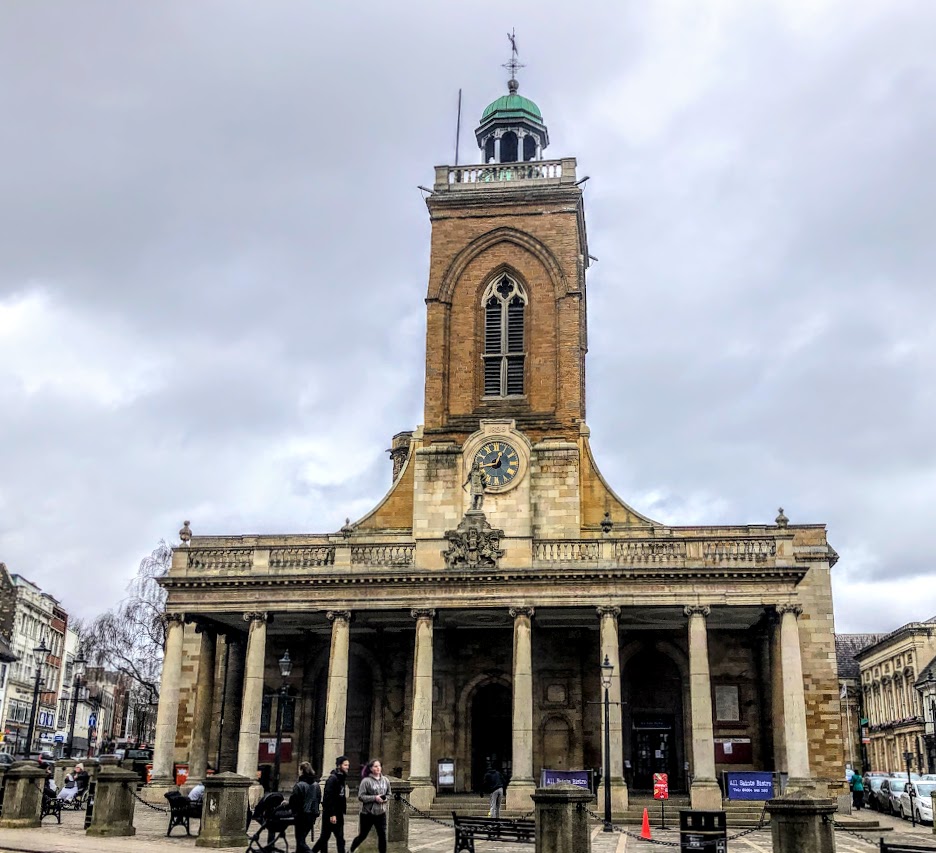
All Saints’ Church is the parish church in the centre of Northampton (Photograph: Patrick Comerford)
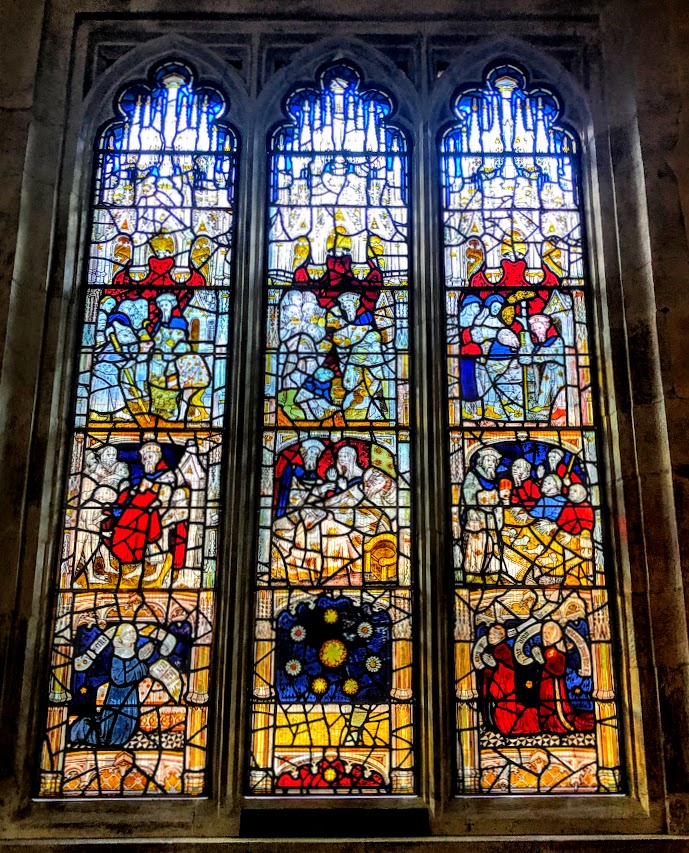
ions from the 17th to the 19th century (Photograph: Patrick Comerford, 2024)
The USPG Prayer Diary today (Sunday 2 November 2025, All Saints’ Sunday, All Souls’ Day) invites us to pray:
God of hope, grant that we, with all who have believed in you, may be united in the full knowledge of your love and the unclouded vision of your glory; through Jesus Christ our Lord. Amen (A Prayer Book for Australia, 1995).
The Collect:
Almighty God,
you have knit together your elect
in one communion and fellowship
in the mystical body of your Son Christ our Lord:
grant us grace so to follow your blessed saints
in all virtuous and godly living
that we may come to those inexpressible joys
that you have prepared for those who truly love you;
through Jesus Christ your Son our Lord,
who is alive and reigns with you,
in the unity of the Holy Spirit,
one God, now and for ever.
The Post Communion Prayer:
God, the source of all holiness and giver of all good things:
may we who have shared at this table
as strangers and pilgrims here on earth
be welcomed with all your saints
to the heavenly feast on the day of your kingdom;
through Jesus Christ our Lord.
Additional Collect:
God of holiness,
your glory is proclaimed in every age:
as we rejoice in the faith of your saints,
inspire us to follow their example
with boldness and joy;
through Jesus Christ our Lord.
Yesterday’s Reflections
Continued Tomorrow
Christ the King and the saints on the panels of the altar in All Saints’ Church, Berkhamsted (Photograph: Patrick Comerford)
Scripture quotations are from the New Revised Standard Version Bible: Anglicised Edition copyright © 1989, 1995 National Council of the Churches of Christ in the United States of America. Used by permission. All rights reserved worldwide. http://nrsvbibles.org
All Saints’ Church in Yelvertoft, Northamptonshire, was connected with the Comberford family for about a century … Henry Comberford of Lichfield Cathedral was the rector in 1546-1560 (Photograph: Patrick Comerford)
Patrick Comerford
Today in the Church Calendar is All Souls’ Day (2 November). However, many churches and parishes are celebrating All Saints’ Day today as All Saints’ Sunday, transferring their All Saints celebrations from yesterday (1 November), including, for example, Saint Mary and Saint Giles Church in Stony Stratford, and All Saints’ Church, Margaret Street, London.
With All Saints’ Day, we move on in Ordinary Time in the Church Calendar to the Kingdom Season, the time between All Saints’ Day and Advent. Meanwhile, before today begins, before having breakfast, I am taking some quiet time early this morning to give thanks, and for reflection, prayer and reading in these ways:
1, today’s Gospel reading;
2, a short reflection;
3, a prayer from the USPG prayer diary;
4, the Collects and Post-Communion prayer of the day.
The 190 ft spire of All Saints’ Church, Leighton Buzzard, Bedfordshire, can be seen for miles around (Photograph: Patrick Comerford, 2025)
Luke 6: 20-31 (NRSVA):
20 Then he looked up at his disciples and said:
‘Blessed are you who are poor,
for yours is the kingdom of God.
21 ‘Blessed are you who are hungry now,
for you will be filled.
‘Blessed are you who weep now,
for you will laugh.
22 ‘Blessed are you when people hate you, and when they exclude you, revile you, and defame you on account of the Son of Man. 23 Rejoice on that day and leap for joy, for surely your reward is great in heaven; for that is what their ancestors did to the prophets.
24 ‘But woe to you who are rich,
for you have received your consolation.
25 ‘Woe to you who are full now,
for you will be hungry.
‘Woe to you who are laughing now,
for you will mourn and weep.
26 ‘Woe to you when all speak well of you, for that is what their ancestors did to the false prophets.
27 ‘But I say to you that listen, Love your enemies, do good to those who hate you, 28 bless those who curse you, pray for those who abuse you. 29 If anyone strikes you on the cheek, offer the other also; and from anyone who takes away your coat do not withhold even your shirt. 30 Give to everyone who begs from you; and if anyone takes away your goods, do not ask for them again. 31 Do to others as you would have them do to you.
Christ the Pantocrator surrounded by the saints in the Dome of the Church of Analipsi in Georgioupoli, Crete (Photograph: Patrick Comerford)
Today’s Reflections:
All Saints’ Day is one of the 12 ‘Principal Holy Days’ of the Church. November is a month when we traditionally remember the saints, the Communion of Saints, those who are blessed, those we love and who are now gathered around the throne of God, those who have died and who we still love.
We do that on All Souls’ Day, we do that on Remembrance Day and Remembrance Sunday, and we do that on All Saints; Day, all at the beginning of this month.
In today’s Gospel reading (Luke 6: 20-31), Saint Luke gives us his version of the beatitudes, with a different emphasis that the way Saint Matthew lists them (see Matthew 5: 3-12).
Christ speaks of four blessings or beatitudes and four parallel woes or warnings of the age to come. Some people are ‘blessed’ or ‘happy’ (μακάριος, makários) by being included in the Kingdom, but they are paired with those who are warned of coming woes:
• those who are poor now (verse 20) and those who are rich now (verse 24)
• those who are hungry now (verse 21) and those who are full now (verse 25)
• those who weep now (verse 21) and those who laugh now (verse 25)
• those who are persecuted, or hated, excluded, reviled and defamed (verse 22) and those who are popular (verse 26)
Who are the poor, the hungry, those who weep and those who are persecuted today? And do we see them as saints?
Bishop William Walsham How (1823-1897) wrote his hymn, ‘For all the saints, who from their labours rest’ (459), as a processional hymn for All Saints’ Day.
The saints recalled in his hymn are ordinary people in their weaknesses and their failings. In its original form, it had 11 verses, although three are omitted from most versions – the verses extolling ‘the glorious company of the Apostles,’ ‘the godly fellowship of the prophets’ and ‘the noble army of martyrs’ were inspired by the 1662 Book of Common Prayer version of the canticle Te Deum.
The tune Sine Nomine (‘Without Name,’ referring to the great multitude of unknown saints) was written for the hymn by Ralph Vaughan Williams (1872-1958) while he was editing the English Hymnal (1906) with Canon Percy Dearmer (1867-1936).
When he wrote this hymn, Walsham How was the Rector of Whittington, Shropshire, and a canon St Asaph Cathedral. He had spent time in Rome as chaplain of the Anglican Church there, All Saints’ Church, before returning to England.
While he was Bishop of Bedford, Walsham How became known as ‘the poor man’s bishop.’ He became the first Bishop of Wakefield, and died in Leenane, Co Mayo, in 1897 while he was on an Irish fishing holiday in Dulough.
The hymn vibrates with images from the Book of Revelation. The saints recalled by ‘the poor man’s bishop’ in this hymn are ordinary people who, in spite of their weaknesses and their failings, are able to respond in faith to Christ’s call to service and love, and who have endured the battle against the powers of evil and darkness.
The heart of the hymn is in the stanza that sings about the unity of the Church in heaven and on earth, ‘knit together in one communion and fellowship, in the mystical body of … Christ our Lord.’ Despite our ‘feeble struggles’ we are united in Christ and with one another in one ‘blest communion’ and ‘fellowship divine.’
It is a hymn that celebrates that there among the saints are the ordinary people, the people who are blessed and happy in Saint Luke’s version of the Beatitudes this morning.
All Saints’ Church, Rome … the Anglican church where the hymn writer Bishop William Walsham How was chaplain (Photograph: Patrick Comerford)
Today’s Prayers (Sunday 2 November 2025, All Saints’ Sunday):
The theme this week (2 to 8 November) in Pray with the World Church, the prayer diary of the Anglican mission agency USPG (United Society Partners in the Gospel), is ‘From Solitude to Connection’ (pp 52-53). This theme is introduced today with a Programme Update from Ljudmila, a Ukrainian Refugee living in Budapest, Hungary:
Next Step Hungary is a refugee-led NGO providing practical, costeffective interventions to support integration in Hungary. It is a partner organisation with Saint Margaret’s, Budapest, who reached out as part of USPG and the Diocese in Europe's joint appeal for Ukraine. Next Step is a lifeline for many like Ljudmila.
‘As a Ukrainian living in Budapest, my life was taken up by responsibilities – caring for my 12-year-old son, my parents, and even my cat – while balancing a demanding career as an architect. Despite my lifelong passion for art and design, the past few years had drained me emotionally and psychologically. Loneliness weighed heavily, and time for creativity felt like a luxury I couldn’t afford.
Then, at the end of summer, I signed up for a beading workshop run by Next Step. I was uncertain of what to expect, but from the very first session it turned out to be more than just a craft class. It was a welcoming community, a vibrant space for women filled with laughter, support, and shared creativity. Under the guidance of a fantastic teacher, I completed my first beaded ring and saw endless possibilities for new projects.
Each class became a highlight of my week, a space where I could reconnect with myself and others. This workshop didn’t just teach me a new skill – it rekindled my joy, creativity, and sense of belonging. For that, I am deeply grateful to Next Step.’
All Saints’ Church is the parish church in the centre of Northampton (Photograph: Patrick Comerford)
ions from the 17th to the 19th century (Photograph: Patrick Comerford, 2024)
The USPG Prayer Diary today (Sunday 2 November 2025, All Saints’ Sunday, All Souls’ Day) invites us to pray:
God of hope, grant that we, with all who have believed in you, may be united in the full knowledge of your love and the unclouded vision of your glory; through Jesus Christ our Lord. Amen (A Prayer Book for Australia, 1995).
The Collect:
Almighty God,
you have knit together your elect
in one communion and fellowship
in the mystical body of your Son Christ our Lord:
grant us grace so to follow your blessed saints
in all virtuous and godly living
that we may come to those inexpressible joys
that you have prepared for those who truly love you;
through Jesus Christ your Son our Lord,
who is alive and reigns with you,
in the unity of the Holy Spirit,
one God, now and for ever.
The Post Communion Prayer:
God, the source of all holiness and giver of all good things:
may we who have shared at this table
as strangers and pilgrims here on earth
be welcomed with all your saints
to the heavenly feast on the day of your kingdom;
through Jesus Christ our Lord.
Additional Collect:
God of holiness,
your glory is proclaimed in every age:
as we rejoice in the faith of your saints,
inspire us to follow their example
with boldness and joy;
through Jesus Christ our Lord.
Yesterday’s Reflections
Continued Tomorrow
Christ the King and the saints on the panels of the altar in All Saints’ Church, Berkhamsted (Photograph: Patrick Comerford)
Scripture quotations are from the New Revised Standard Version Bible: Anglicised Edition copyright © 1989, 1995 National Council of the Churches of Christ in the United States of America. Used by permission. All rights reserved worldwide. http://nrsvbibles.org
All Saints’ Church in Yelvertoft, Northamptonshire, was connected with the Comberford family for about a century … Henry Comberford of Lichfield Cathedral was the rector in 1546-1560 (Photograph: Patrick Comerford)
Labels:
All Saints,
All Souls,
Berkhamsted,
Budapest,
Crete 2025,
Georgioupoli,
Greece 2025,
Hymns,
Kingdom Season,
Leighton Buzzard,
Mission,
Northampton,
Prayer,
refugees,
Rome,
Saint Luke's Gospel,
Ukraine,
USPG,
Westminster,
Yelvertoft
11 September 2025
Daily prayer in Ordinary Time 2025:
124, Thursday 11 September 2025
‘Forgive, and you will be forgiven’ (Luke 6: 36) … street art on North Street, Leighton Buzzard (Photograph: Patrick Comerford, 2025)
Patrick Comerford
We are continuing in Ordinary Time in the Church Calendar and the week began with the Twelfth Sunday after Trinity (Trinity XII, 7 September 2025). Later this morning, I am speaking in Buckingham Library on the work of the Stony Stratford architect Edward Swinfen Harris at the invitation of the Buckingham U3A Architecture Group.
But, before today begins, I am taking some quiet time this morning to give thanks, for reflection, prayer and reading in these ways:
1, today’s Gospel reading;
2, a reflection on the Gospel reading;
3, a prayer from the USPG prayer diary;
4, the Collects and Post-Communion prayer of the day.
‘Be merciful, just as your Father is merciful’ (Luke 6: 36) … the ‘Corporal Works of Mercy’ window in All Saints’ Church, North Street, York (Photograph: Patrick Comerford)
Luke 6: 27-38 (NRSVA):
[Jesus said:] 27 ‘But I say to you that listen, Love your enemies, do good to those who hate you, 28 bless those who curse you, pray for those who abuse you. 29 If anyone strikes you on the cheek, offer the other also; and from anyone who takes away your coat do not withhold even your shirt. 30 Give to everyone who begs from you; and if anyone takes away your goods, do not ask for them again. 31 Do to others as you would have them do to you.
32 ‘If you love those who love you, what credit is that to you? For even sinners love those who love them. 33 If you do good to those who do good to you, what credit is that to you? For even sinners do the same. 34 If you lend to those from whom you hope to receive, what credit is that to you? Even sinners lend to sinners, to receive as much again. 35 But love your enemies, do good, and lend, expecting nothing in return. Your reward will be great, and you will be children of the Most High; for he is kind to the ungrateful and the wicked. 36 Be merciful, just as your Father is merciful.
37 ‘Do not judge, and you will not be judged; do not condemn, and you will not be condemned. Forgive, and you will be forgiven; 38 give, and it will be given to you. A good measure, pressed down, shaken together, running over, will be put into your lap; for the measure you give will be the measure you get back.’
‘If anyone strikes you on the cheek, offer the other also’ (Luke 6: 29) … street art in Plaza de la Judería in Malaga (Photograph: Patrick Comerford)
Today’s Reflection:
Today’s Gospel reading continues reading from the ‘Sermon on the Level Place’, Saint Luke’s equivalent of the Sermon on the Mount, which we began reading yesterday with Saint Luke’s version of the Beatitudes (Luke 6: 20-26).
After the blessings and woes of the Beatitudes, we read this morning that Jesus tells us as his followers to be merciful as God is merciful. Mercy is one of God’s primary qualities (see Exodus 34: 6-7), and the concept of mercy in Luke 6 has an eschatological frame of reference. God is merciful by offering the possibility of turning away from disobedience through repentance and turning towards him and receiving forgiveness and restoration.
In Mary’s song Magnificat, God is twice identified as merciful (Luke 1: 50, 54). Zechariah too identifies mercy as a sign of God’s faithfulness to God’s promises, creating a people who ‘might serve God without fear in holiness and righteousness (Luke 1: 72-78). In this morning’s reading, Christ shows how to put this mercy into practice.
Luke 6: 27-29 presuppose a situation of conflict, in a time when the religious and political leaders of day were seen by many as their enemies. But Christ calls on us to respond and act in ways that seek the good of the other. This form of nonviolence goes beyond non-retaliation and takes positive steps that promote the welfare of the other parties in the conflict.
Luke 6: 30 presupposes an economic situation in which many people are exploited, live in poverty, and seek to survive by begging. The give to those who beg implies that we have an abundance from which to share (see Luke 6: 39).
Luke 6: 31 repeats the ‘Golden Rule’: ‘Do to others as you would have them do to you.’ But the golden rule is not enough for us, the Children of God (see verse 35) in our covenant relationship with God.
uke 6: 32-34 challenges the widely accepted notion in the Hellenistic world that relationships are reciprocal, and calls on us to go beyond behaviour is guided merely by the expectation of similar responses.
Luke 6: 35 calls on us to replace old-age pattens of behaviour with ways that reflect the Kingdom of God, and to imitate God who is kind also to the ungrateful and the wicked. To be kind does not mean to approve but means to seek their best interest. Even the ungrateful and the wicked have the potential and the possibility of becoming part of the Kingdom of God.
Luke 6: 36 sums up how to live a life that reflects the Kingdom of God.
Luke 6: 37 is a reminder that we not have the final say ourselves on who is in and who is outside the Kingdom of God. We do not live in the apocalyptic moment, and when he exclude others from the Church we risk finding we have excluded ourselves too.
Luke 6: 38 reminds us that God’s generosity is overflowing and overwhelming and goes beyond any possibility we have of measuring it.
As Shakespeare reminds us, in the words of Portia in The Merchant of Venice,
The quality of mercy is not strained;
It droppeth as the gentle rain from heaven … (The Merchant of Venice, Act IV, Scene 1).
‘Love your enemies, do good to those who hate you’ (Luke 6: 26) … street art on North Street, Leighton Buzzard (Photograph: Patrick Comerford, 2025)
Today’s Prayers (Thursday 11 September 2025):
The theme this week (7 to 13 September) in Pray with the World Church, the prayer diary of the Anglican mission agency USPG (United Society Partners in the Gospel), is ‘Cementing a Legacy’ (pp 36-37). This theme was introduced on Sunday with reflections from Rachel Weller, Communications Officer, USPG.
The USPG Prayer Diary today (Thursday 11 September 2025) invites us to pray:
Lord, thank you for the dedication and hard work that has brought this vision to life. Encourage us that great fruit comes from small seeds of faithful service.
The Collect:
Almighty and everlasting God,
you are always more ready to hear than we to pray
and to give more than either we desire or deserve:
pour down upon us the abundance of your mercy,
forgiving us those things of which our conscience is afraid
and giving us those good things
which we are not worthy to ask
but through the merits and mediation
of Jesus Christ your Son our Lord,
who is alive and reigns with you,
in the unity of the Holy Spirit,
one God, now and for ever.
The Post Communion Prayer:
God of all mercy,
in this eucharist you have set aside our sins
and given us your healing:
grant that we who are made whole in Christ
may bring that healing to this broken world,
in the name of Jesus Christ our Lord.
Additional Collect:
God of constant mercy,
who sent your Son to save us:
remind us of your goodness,
increase your grace within us,
that our thankfulness may grow,
through Jesus Christ our Lord.
Yesterday’s reflections
Continued tomorrow
‘A good measure, pressed down, shaken together, running over … the measure you give will be the measure you get back’ (Luke 6: 38) … street art in Dublin (Photograph: Patrick Comerford)
Scripture quotations are from the New Revised Standard Version Bible: Anglicised Edition copyright © 1989, 1995, National Council of the Churches of Christ in the United States of America. Used by permission. All rights reserved worldwide. http://nrsvbibles.org
Patrick Comerford
We are continuing in Ordinary Time in the Church Calendar and the week began with the Twelfth Sunday after Trinity (Trinity XII, 7 September 2025). Later this morning, I am speaking in Buckingham Library on the work of the Stony Stratford architect Edward Swinfen Harris at the invitation of the Buckingham U3A Architecture Group.
But, before today begins, I am taking some quiet time this morning to give thanks, for reflection, prayer and reading in these ways:
1, today’s Gospel reading;
2, a reflection on the Gospel reading;
3, a prayer from the USPG prayer diary;
4, the Collects and Post-Communion prayer of the day.
‘Be merciful, just as your Father is merciful’ (Luke 6: 36) … the ‘Corporal Works of Mercy’ window in All Saints’ Church, North Street, York (Photograph: Patrick Comerford)
Luke 6: 27-38 (NRSVA):
[Jesus said:] 27 ‘But I say to you that listen, Love your enemies, do good to those who hate you, 28 bless those who curse you, pray for those who abuse you. 29 If anyone strikes you on the cheek, offer the other also; and from anyone who takes away your coat do not withhold even your shirt. 30 Give to everyone who begs from you; and if anyone takes away your goods, do not ask for them again. 31 Do to others as you would have them do to you.
32 ‘If you love those who love you, what credit is that to you? For even sinners love those who love them. 33 If you do good to those who do good to you, what credit is that to you? For even sinners do the same. 34 If you lend to those from whom you hope to receive, what credit is that to you? Even sinners lend to sinners, to receive as much again. 35 But love your enemies, do good, and lend, expecting nothing in return. Your reward will be great, and you will be children of the Most High; for he is kind to the ungrateful and the wicked. 36 Be merciful, just as your Father is merciful.
37 ‘Do not judge, and you will not be judged; do not condemn, and you will not be condemned. Forgive, and you will be forgiven; 38 give, and it will be given to you. A good measure, pressed down, shaken together, running over, will be put into your lap; for the measure you give will be the measure you get back.’
‘If anyone strikes you on the cheek, offer the other also’ (Luke 6: 29) … street art in Plaza de la Judería in Malaga (Photograph: Patrick Comerford)
Today’s Reflection:
Today’s Gospel reading continues reading from the ‘Sermon on the Level Place’, Saint Luke’s equivalent of the Sermon on the Mount, which we began reading yesterday with Saint Luke’s version of the Beatitudes (Luke 6: 20-26).
After the blessings and woes of the Beatitudes, we read this morning that Jesus tells us as his followers to be merciful as God is merciful. Mercy is one of God’s primary qualities (see Exodus 34: 6-7), and the concept of mercy in Luke 6 has an eschatological frame of reference. God is merciful by offering the possibility of turning away from disobedience through repentance and turning towards him and receiving forgiveness and restoration.
In Mary’s song Magnificat, God is twice identified as merciful (Luke 1: 50, 54). Zechariah too identifies mercy as a sign of God’s faithfulness to God’s promises, creating a people who ‘might serve God without fear in holiness and righteousness (Luke 1: 72-78). In this morning’s reading, Christ shows how to put this mercy into practice.
Luke 6: 27-29 presuppose a situation of conflict, in a time when the religious and political leaders of day were seen by many as their enemies. But Christ calls on us to respond and act in ways that seek the good of the other. This form of nonviolence goes beyond non-retaliation and takes positive steps that promote the welfare of the other parties in the conflict.
Luke 6: 30 presupposes an economic situation in which many people are exploited, live in poverty, and seek to survive by begging. The give to those who beg implies that we have an abundance from which to share (see Luke 6: 39).
Luke 6: 31 repeats the ‘Golden Rule’: ‘Do to others as you would have them do to you.’ But the golden rule is not enough for us, the Children of God (see verse 35) in our covenant relationship with God.
uke 6: 32-34 challenges the widely accepted notion in the Hellenistic world that relationships are reciprocal, and calls on us to go beyond behaviour is guided merely by the expectation of similar responses.
Luke 6: 35 calls on us to replace old-age pattens of behaviour with ways that reflect the Kingdom of God, and to imitate God who is kind also to the ungrateful and the wicked. To be kind does not mean to approve but means to seek their best interest. Even the ungrateful and the wicked have the potential and the possibility of becoming part of the Kingdom of God.
Luke 6: 36 sums up how to live a life that reflects the Kingdom of God.
Luke 6: 37 is a reminder that we not have the final say ourselves on who is in and who is outside the Kingdom of God. We do not live in the apocalyptic moment, and when he exclude others from the Church we risk finding we have excluded ourselves too.
Luke 6: 38 reminds us that God’s generosity is overflowing and overwhelming and goes beyond any possibility we have of measuring it.
As Shakespeare reminds us, in the words of Portia in The Merchant of Venice,
The quality of mercy is not strained;
It droppeth as the gentle rain from heaven … (The Merchant of Venice, Act IV, Scene 1).
‘Love your enemies, do good to those who hate you’ (Luke 6: 26) … street art on North Street, Leighton Buzzard (Photograph: Patrick Comerford, 2025)
Today’s Prayers (Thursday 11 September 2025):
The theme this week (7 to 13 September) in Pray with the World Church, the prayer diary of the Anglican mission agency USPG (United Society Partners in the Gospel), is ‘Cementing a Legacy’ (pp 36-37). This theme was introduced on Sunday with reflections from Rachel Weller, Communications Officer, USPG.
The USPG Prayer Diary today (Thursday 11 September 2025) invites us to pray:
Lord, thank you for the dedication and hard work that has brought this vision to life. Encourage us that great fruit comes from small seeds of faithful service.
The Collect:
Almighty and everlasting God,
you are always more ready to hear than we to pray
and to give more than either we desire or deserve:
pour down upon us the abundance of your mercy,
forgiving us those things of which our conscience is afraid
and giving us those good things
which we are not worthy to ask
but through the merits and mediation
of Jesus Christ your Son our Lord,
who is alive and reigns with you,
in the unity of the Holy Spirit,
one God, now and for ever.
The Post Communion Prayer:
God of all mercy,
in this eucharist you have set aside our sins
and given us your healing:
grant that we who are made whole in Christ
may bring that healing to this broken world,
in the name of Jesus Christ our Lord.
Additional Collect:
God of constant mercy,
who sent your Son to save us:
remind us of your goodness,
increase your grace within us,
that our thankfulness may grow,
through Jesus Christ our Lord.
Yesterday’s reflections
Continued tomorrow
‘A good measure, pressed down, shaken together, running over … the measure you give will be the measure you get back’ (Luke 6: 38) … street art in Dublin (Photograph: Patrick Comerford)
Scripture quotations are from the New Revised Standard Version Bible: Anglicised Edition copyright © 1989, 1995, National Council of the Churches of Christ in the United States of America. Used by permission. All rights reserved worldwide. http://nrsvbibles.org
31 August 2025
The Quaker Meeting House on
North Street and its garden
are among the hidden gems
to be found in Leighton Buzzard
Friends’ Meeting House in Leighton Buzzard was first built in 1787 and registered in 1789 (Photograph: Patrick Comerford, 2025)
Patrick Comerford
I walked around Leighton Buzzard and Linslade recently, spending an afternoon looking at the historic buildings and churches, including All Saints’ Church in the centre of Leighton Buzzard, and Saint Barnabas Church in Linslade, two or three minutes walk from Leighton Buzzard railway station.
I also visited the Quaker Meeting House at 25 North Street, one of the hidden gems of the Leighton Buzzard is, tucked away out of sight behind the behind the houses and tall narrow gates.
There were Quakersor members of the Religious Society of Friends in Leighton Buzzard in the mid-18th century, but there was no meeting house there so they travelled to worship in Woburn Sands, where there was a meeting at Hogsty End.
The house of Joseph Brooks in Leighton Buzzard was registered for Quaker worship in 1761, but a regular meeting was not settled in the town until 1776, when meetings were held in a loft at the rear of premises in Market Square owned by John Grant, a grocer and chandler. John Grant built what is now the small meeting room in 1787 and registered it as a meeting house in 1789.
The Quaker Meeting House in Leighton Buzzard is tucked away behind houses on North Street and tall narrow gates (Photograph: Patrick Comerford, 2025)
The main meeting room was added when the building was extended in 1812. At the time, the extension was for the women’s meeting. John Grant’s widow finalised the transfer to Friends of the meeting house to Friends in 1844, along with the adjoining cottages, which Grant had also bought. The cottages are now managed by a housing association.
The plain interior of the meeting house expressed the simplicity demanded of Friends at the time. The high windows and lack of distracting ornament were designed to help Friends detach from the world outside during the period of worship.
The meeting house was restored in 1953 and the wood stained to the colour it is today. The benches remain but are set to the side of the building, clearing a space for a circle of chairs in the centre of the room.
There is no hierarchy in meeting today, and worshippers are welcome to sit where they please, but this was not the case when the meeting house was built. The ministers’ gallery and facing benches remain where they were at the beginning of the 19th century when the endorsed ministers and the elders sat there.
The benches now placed at the side of the meeting room were once arranged in two rows, one for men and one for women, and faced towards the elders and ministers.
At the opposite end of the meeting room to the minsters’ gallery is the 19th century room divide. Since 1670, men and women Friends had held separate business meetings. The room divide made a space for each meeting and has shutters that can be opened for large meetings and for weddings and funerals.
When men’s and women’s meetings were set up, it was intended that they had spiritual equality and parallel agendas on church affairs but the meetings soon became gendered. Thus the women became responsible for the care of the poor and for the domestic arrangements in the meeting house and so on, while the men took responsibility for church affairs.
Towards the end of the 19th century, women began to question the separation and Quakers held their first fully United Yearly Meeting in 1909.
There is a further room divide in the small meeting room. This divide was built in the 1960s and provides a sound barrier between the two rooms, particularly when there are enough children for a children’s meeting or tea is being prepare while a meeting continues.
The meeting house seen from the garden or former burial ground (Photograph: Patrick Comerford, 2025)
As part of the 1953 restoration, the gravestones were moved from the graves to the sides of the burial ground, and a lawn was laid over the burial area. In keeping with Quaker practice, the gravestones are of the same size and materials and have the same form of words. They were placed in the same manner in the burial ground to avoid distinction between rich and poor. Some of the gravestones have been re-laid to make a path to the far end of the garden.
Quakers established a Lancastrian or British School in Leighton Buzzard in 1813 and in 1835-1839 Leighton Monthly Meeting donated to American Quaker efforts to help runaway slaves from the southern plantations.
A number of prominent Friends in Leighton Buzzard were bankers such as the Bassett and Harris families. The Bassett family were probably the best known of these Quaker families. Peter Bassett was influential in creating a bank in the town, now Barclay’s Bank. Mary Bassett has a school named after her in the town. She died in London but her ashes are buried in Leighton Buzzard burial ground.
The garden in the burial ground behind the meeting house is now a quiet place to be still and find peace. There are occasional garden working parties and a labyrinth of sorts cut into the grass offers a spiral walk for meditation.
• Meeting for Worship is held in the Meeting House each Sunday at 10:45 am, and there is a 30-minute Meeting for Worship on the first Wednesdays at 12:30.
The garden behind the meeting house is now a quiet place to be still and find peace (Photograph: Patrick Comerford, 2025)
Patrick Comerford
I walked around Leighton Buzzard and Linslade recently, spending an afternoon looking at the historic buildings and churches, including All Saints’ Church in the centre of Leighton Buzzard, and Saint Barnabas Church in Linslade, two or three minutes walk from Leighton Buzzard railway station.
I also visited the Quaker Meeting House at 25 North Street, one of the hidden gems of the Leighton Buzzard is, tucked away out of sight behind the behind the houses and tall narrow gates.
There were Quakersor members of the Religious Society of Friends in Leighton Buzzard in the mid-18th century, but there was no meeting house there so they travelled to worship in Woburn Sands, where there was a meeting at Hogsty End.
The house of Joseph Brooks in Leighton Buzzard was registered for Quaker worship in 1761, but a regular meeting was not settled in the town until 1776, when meetings were held in a loft at the rear of premises in Market Square owned by John Grant, a grocer and chandler. John Grant built what is now the small meeting room in 1787 and registered it as a meeting house in 1789.
The Quaker Meeting House in Leighton Buzzard is tucked away behind houses on North Street and tall narrow gates (Photograph: Patrick Comerford, 2025)
The main meeting room was added when the building was extended in 1812. At the time, the extension was for the women’s meeting. John Grant’s widow finalised the transfer to Friends of the meeting house to Friends in 1844, along with the adjoining cottages, which Grant had also bought. The cottages are now managed by a housing association.
The plain interior of the meeting house expressed the simplicity demanded of Friends at the time. The high windows and lack of distracting ornament were designed to help Friends detach from the world outside during the period of worship.
The meeting house was restored in 1953 and the wood stained to the colour it is today. The benches remain but are set to the side of the building, clearing a space for a circle of chairs in the centre of the room.
There is no hierarchy in meeting today, and worshippers are welcome to sit where they please, but this was not the case when the meeting house was built. The ministers’ gallery and facing benches remain where they were at the beginning of the 19th century when the endorsed ministers and the elders sat there.
The benches now placed at the side of the meeting room were once arranged in two rows, one for men and one for women, and faced towards the elders and ministers.
At the opposite end of the meeting room to the minsters’ gallery is the 19th century room divide. Since 1670, men and women Friends had held separate business meetings. The room divide made a space for each meeting and has shutters that can be opened for large meetings and for weddings and funerals.
When men’s and women’s meetings were set up, it was intended that they had spiritual equality and parallel agendas on church affairs but the meetings soon became gendered. Thus the women became responsible for the care of the poor and for the domestic arrangements in the meeting house and so on, while the men took responsibility for church affairs.
Towards the end of the 19th century, women began to question the separation and Quakers held their first fully United Yearly Meeting in 1909.
There is a further room divide in the small meeting room. This divide was built in the 1960s and provides a sound barrier between the two rooms, particularly when there are enough children for a children’s meeting or tea is being prepare while a meeting continues.
The meeting house seen from the garden or former burial ground (Photograph: Patrick Comerford, 2025)
As part of the 1953 restoration, the gravestones were moved from the graves to the sides of the burial ground, and a lawn was laid over the burial area. In keeping with Quaker practice, the gravestones are of the same size and materials and have the same form of words. They were placed in the same manner in the burial ground to avoid distinction between rich and poor. Some of the gravestones have been re-laid to make a path to the far end of the garden.
Quakers established a Lancastrian or British School in Leighton Buzzard in 1813 and in 1835-1839 Leighton Monthly Meeting donated to American Quaker efforts to help runaway slaves from the southern plantations.
A number of prominent Friends in Leighton Buzzard were bankers such as the Bassett and Harris families. The Bassett family were probably the best known of these Quaker families. Peter Bassett was influential in creating a bank in the town, now Barclay’s Bank. Mary Bassett has a school named after her in the town. She died in London but her ashes are buried in Leighton Buzzard burial ground.
The garden in the burial ground behind the meeting house is now a quiet place to be still and find peace. There are occasional garden working parties and a labyrinth of sorts cut into the grass offers a spiral walk for meditation.
• Meeting for Worship is held in the Meeting House each Sunday at 10:45 am, and there is a 30-minute Meeting for Worship on the first Wednesdays at 12:30.
The garden behind the meeting house is now a quiet place to be still and find peace (Photograph: Patrick Comerford, 2025)
25 August 2025
With its Market Cross, canal
and listed buildings, there is
more to Leighton Buzzard than
selling sand to the Sahara
The Market Cross in the centre of Leighton Buzzard stands in front of the former Cross Keys and the old Town Hall (Photograph: Patrick Comerford, 2025)
Patrick Comerford
We have all heard of bringing coal to Newcastle, an English idiom dating back to at least the 1660s. Similar sayings include selling snow to the Eskimos, or, in Greek, ‘taking owls to Athens’ (γλαῦκ’ εἰς Ἀθήνας). If you’ve heard of these, you have also pondered the futility of selling sand to the Sahara. But Leighton Buzzard has a sizeable sand quarrying industry, and the good enough quality building sand is exported to Egypt.
In recent days, I have been discussing some churches in Leighton Buzzard and Linslade, two neighbouring towns in south-west Bedfordshire, including All Saints’ Church, Leighton Buzzard, and Saint Barnabas Church, Linslade, and in the days to come I hope to look at Friends’ Meeting House on North Street, one of the oldest Quaker meeting houses in England.
Leighton Buzzard, between Aylesbury, Tring, Luton and Milton Keynes, is a market town on the banks of the River Ouzel and the Grand Union Canal and close to the Chiltern Hills. It is only 58 km (36 miles) from Central London and I pass through it regularly on the train between Milton Keynes and Euston. Indeed, many of my generation still recall that the Great Train Robbery in 1963 took place near Leighton Buzzard.
But this was my first time to walk around the streets of Leighton Buzzard and Linslade, to visit some of its churches and to explore the High Street, the alleyways and the mews and with an eclectic mix of historic buildings and monuments.
The Grand Junction Canal opened in 1800 (Photograph: Patrick Comerford, 2025)
The Grand Junction Canal opened in 1800. It skirted the west edge of the town, but lay just over the parish and county boundary marked by the River Ouzel, and was in the neighbouring parish of Linslade in Buckinghamshire.
The London and Birmingham Railway was built in the 1830s and passed just over half a mile west of the centre of Leighton Buzzard. Leighton railway station opened in 1838. Although the station was named after Leighton Buzzard, it was actually a mile south of the village of Linslade, in open countryside. New streets were laid out and houses built between the station and the canal in an area known initially as Chelsea.
Linslade has long been effectively a part of Leighton Buzzard but it was not until 1965 that it was transferred from Buckinghamshire to Bedfordshire, and the two urban districts were merged. Leighton-Linslade Town Council is based at the White House on Hockliffe Street and the town, which has a population of 43,203, is expanding to the south and to the east.
The River Ouzel once marked the boundaries between Leighton Buzzard and Linslade, between Bedfordshire and Buckinghamshire (Photograph: Patrick Comerford, 2025)
It is not clear when Leighton Buzzard first grew up and developed, but some historians suggest there was a settlement in the area from as early as the year 571, and there are many theories about the origins of the town’s name.
The Leighton part of the name come from Old English Lēah-tūn, meaning a ‘farm in a clearing in the woods’. One version of the addition of ‘Buzzard’ says it was added by the Dean of Lincoln in the 12th century from Beau-desert. Another suggestion is that because there were two places called ‘Leighton’ in the Diocese of Lincoln, the dean added the name of the local Prebendary of Leighton, Theobald de Busar, and so over the years the town became Leighton Buzzard.
Leighton Buzzard developed and expanded in the 19th century with the arrival of road, canal and rail links. But the town had been a market town for centuries and its first market charter was granted in 1086.
The Market Cross is said to have been donated by Alice Chaucer in the 15th century (Photograph: Patrick Comerford, 2025)
The Market Cross is a prominent landmark at the heart of the town and for centuries it has been a focus for public events. It is said to date from the 15th century and to have been donated by Alice Chaucer (1404-1475), Duchess of Suffolk and a granddaughter of the poet Geoffrey Chaucer.
A crowd gathered at the Market Cross in 1750 to denounce Jane Massey and Catherine Hawkes as witches, even though witchcraft laws had been repealed 16 years earlier. The crowd planned to drag the women to Luton to ‘float’ them in the river – the river at Leighton Buzzard was not deep enough. But several local men intervened and the mob was dispersed.
The Market Cross stands on a five-sided base and rises to a height of 27 ft. The lower storey rests on five buttresses, and the cornice has gargoyles and grotesques.
Above are five statues: facing down the High Street is the Virgin Mary with the Christ Child; to her right is a bishop and Saint John the Baptist with the Lamb of God; to her left is a crowned king and the Risen Christ.
Old figures from the Market Cross were placed around the Town Hall during restoration work in the 19th century (Photograph: Patrick Comerford, 2025)
By 1650, the cross was ‘in a ruinous state that it greatly endangered the lives of those persons who were passing near it.’ A tax was levied on the residents to pay for its repair, but 200 years later the Market Cross was once again in need of repair in 1852.
The restoration included the addition of a stone parapet, new steps and an iron palisade. The statues were replaced with new ones, and the old figures were placed around the Town Hall.
The Market Cross needed further restoration in 1900. The old figures were placed back on the cross replacing the newer figures that had decayed badly. A new parapet with pinnacles and new steps were added.
The old Town Hall on the Market Square was built in 1851 and is now a Pizza Express restaurant (Photograph: Patrick Comerford, 2025)
The old Town Hall on the Market Square stands on the site of the Market Toll House, a timbered building with open arcades at ground floor level, a bell tower and a clock.
A new town hall was built in 1851. The market traders used the open ground floor while the upper storey was the town gall and was also used by the county court. The open arches on the ground floor were bricked up in the early 20th century to form a ground floor room.
The town council bought the market rights and the town hall from the lord of the manor, J Trueman Mills, for £1,200 in 1918, with the condition that it would be retained by the town council for ever for the use of the town. The building was used as a fire station from 1919 to 1963 and is now a Pizza Express restaurant.
The former Cross Keys Inn stands on the site of the chapter house of the Guild of Corpus Christi (Photograph: Patrick Comerford, 2025)
The former Cross Keys Inn on Middle Row stands on an island site at 35 Market Square, facing the High Street and the Market Cross. This is the site of the chapter house of the Fraternity or Guild of Corpus Christi, founded by Alice Chaucer as lady of the manor in 1473. The guild had two guardians and brothers and sisters from the parish and they supported a chaplain who said daily Mass in All Saints’ Church.
The guild was abolished in 1547 with the dissolution of monastic houses during the Tudor Reformation and the Brotherhood House was leased to Christopher Hoddesdon.
When the Cross Keys burned down in 1899, it was rebuilt on a much larger scale, twice the size of the old inn. It has been described as modified Carolean in style and is a Grade II listed building. The Cross Keys closed in 1988, later became Lloyds TSB Bank. Lloyds closed in Leighton Buzzard last November, and the building is vacant once again.
The former Barclays Bank was designed by Alfred Waterhouse but dates back to the foundation of Bassett’s Bank in 1812 (Photograph: Patrick Comerford, 2025)
In all, more than 70 buildings on the High Street are listed, including some of the town’s prominent bank buildings.
The former Barclays Bank on High Street dates back to 1812 when the Leighton Buzzard Bank was founded by five of the town’s Quakers: Peter Bassett, John Grant, William Exton, Joseph Sharples and John Dollin Bassett. The bank later traded as Bassett, Grant & Co, then as Bassett & Grant, Bassett Grant & Bassett and then Bassett Grant Bassett & Co. By 1854, it was Bassett Son & Harris.
The bank was rebuilt in 1866, and was designed by the Gothic revival architect Alfred Waterhouse (1830-1905), whose parents were also Quakers. He is best known for his designs for Manchester Town Hall and the Natural History Museum in London. His other works include Eaton Hall in Cheshire, designed for the Duke of Westminster, the Hall in Balliol College, Oxford, and other college buildings in Cambridge and Oxford, the former Foster’s Bank on Sidney Street, Cambridge, and the Royal Institution of Chartered Surveyors on Great George Street, Westminster.
Bassett’s Bank amalgamated with Barclays and other banks owned by Quaker families in 1896 forming Barclays & Company. The Bassett family interests in the bank continued well into the 20th century. The Leighton Buzzard branch closed in October 18, 2023
The NatWest bank was designed in the style of an Italian palazzo and is an example of Neo-Renaissance architecture (Photograph: Patrick Comerford, 2025)
The NatWest bank on High Street was built later in the 19th century in the style of an Italian palazzo and is an example of Neo-Renaissance architecture. It is a three-storey stucco building with ground floor round arches, five sash windows, segmental arches on the upper floors and sash windows.
The bank is expected to close its doors in October 2025.
The Swan Hotel dominates the north half of the High Street and the building dates from the early 19th century. But there has been a Swan in Leighton Buzzard since 1600 or earlier, when it was owned by the Carvell and Osmond families. Today, it is owned by Wetherspoons.
The former Peacock Inn was once the oldest inn in Leighton Buzzard (Photograph: Patrick Comerford, 2025)
The Peacock Inn was reputedly the oldest inn in Leighton Buzzard. It was listed as Grade II in 1954, when the architect thought it was a 16th or early 17th century building. It is a timber-framed building with a steeply pitched old tile roof with a gable, plaster infilling and some early 19th century brickwork to the front. A more detailed inspection in 1979 found the building is much older and probably dates to the early 15th century, making it the earliest secular building in the town.
The name of the Peacock Inn first appears in documents in the late 17th century, when it was owned in 1690 by the Peacock family. It closed in 1979 and was converted to a shop in the newly named Peacock Mews.
The now-closed Post Office on Church Square … once Pulford’s School (Photograph: Patrick Comerford, 2025)
At the other end of High Street, the Golden Bell on Church Square opened as an inn in 1603. But it claims to stand on the site of a 13th-century thatched lodging house used by stonemasons who were building All Saints’ Church.
Beside it, the Post Office was Leighton Buzzard’s first purpose built-school, and was the gift of Lady Mary Leigh in 1790, when two endowed schools, the Joshua Pulford School and the Leigh Charity School, were amalgamated came to be known as Pulford’s.
The school moved to Parson’s Close in 1884, and the building became the Post Office. But the Post Office too has closed in recent months.
Wilkes Almshouses on North Street date back to 1630 (Photograph: Patrick Comerford, 2025)
At the other end of the town, Wilkes Almshouses on North Street date back to 1630. The original almshouses were built for ten poor widows by Edward Wilkes in memory of his father John Wilkes. The almshouses were rebuilt in 1857 and then extended in 1873.
Edward’s son, Matthew Wilkes, bequeathed funds in his will for an annual commemoration to take place on Rogation Monday at the almshouses, and this ceremony continues every year. All Saints’ Church is the starting point for the annual Wilkes Walk, described as ‘a curious procession of the church choir, clergy, and churchwardens across town to the almshouses in North Street.’
When the choir and the trustees of the Wilkes Charity reach the almshouses, an extract of Wilkes will is read out as a member of the choir stands on their head … a spectacle I must return to see.
The Swan Hotel dominates the north half of the High Street (Photograph: Patrick Comerford, 2025)
Patrick Comerford
We have all heard of bringing coal to Newcastle, an English idiom dating back to at least the 1660s. Similar sayings include selling snow to the Eskimos, or, in Greek, ‘taking owls to Athens’ (γλαῦκ’ εἰς Ἀθήνας). If you’ve heard of these, you have also pondered the futility of selling sand to the Sahara. But Leighton Buzzard has a sizeable sand quarrying industry, and the good enough quality building sand is exported to Egypt.
In recent days, I have been discussing some churches in Leighton Buzzard and Linslade, two neighbouring towns in south-west Bedfordshire, including All Saints’ Church, Leighton Buzzard, and Saint Barnabas Church, Linslade, and in the days to come I hope to look at Friends’ Meeting House on North Street, one of the oldest Quaker meeting houses in England.
Leighton Buzzard, between Aylesbury, Tring, Luton and Milton Keynes, is a market town on the banks of the River Ouzel and the Grand Union Canal and close to the Chiltern Hills. It is only 58 km (36 miles) from Central London and I pass through it regularly on the train between Milton Keynes and Euston. Indeed, many of my generation still recall that the Great Train Robbery in 1963 took place near Leighton Buzzard.
But this was my first time to walk around the streets of Leighton Buzzard and Linslade, to visit some of its churches and to explore the High Street, the alleyways and the mews and with an eclectic mix of historic buildings and monuments.
The Grand Junction Canal opened in 1800 (Photograph: Patrick Comerford, 2025)
The Grand Junction Canal opened in 1800. It skirted the west edge of the town, but lay just over the parish and county boundary marked by the River Ouzel, and was in the neighbouring parish of Linslade in Buckinghamshire.
The London and Birmingham Railway was built in the 1830s and passed just over half a mile west of the centre of Leighton Buzzard. Leighton railway station opened in 1838. Although the station was named after Leighton Buzzard, it was actually a mile south of the village of Linslade, in open countryside. New streets were laid out and houses built between the station and the canal in an area known initially as Chelsea.
Linslade has long been effectively a part of Leighton Buzzard but it was not until 1965 that it was transferred from Buckinghamshire to Bedfordshire, and the two urban districts were merged. Leighton-Linslade Town Council is based at the White House on Hockliffe Street and the town, which has a population of 43,203, is expanding to the south and to the east.
The River Ouzel once marked the boundaries between Leighton Buzzard and Linslade, between Bedfordshire and Buckinghamshire (Photograph: Patrick Comerford, 2025)
It is not clear when Leighton Buzzard first grew up and developed, but some historians suggest there was a settlement in the area from as early as the year 571, and there are many theories about the origins of the town’s name.
The Leighton part of the name come from Old English Lēah-tūn, meaning a ‘farm in a clearing in the woods’. One version of the addition of ‘Buzzard’ says it was added by the Dean of Lincoln in the 12th century from Beau-desert. Another suggestion is that because there were two places called ‘Leighton’ in the Diocese of Lincoln, the dean added the name of the local Prebendary of Leighton, Theobald de Busar, and so over the years the town became Leighton Buzzard.
Leighton Buzzard developed and expanded in the 19th century with the arrival of road, canal and rail links. But the town had been a market town for centuries and its first market charter was granted in 1086.
The Market Cross is said to have been donated by Alice Chaucer in the 15th century (Photograph: Patrick Comerford, 2025)
The Market Cross is a prominent landmark at the heart of the town and for centuries it has been a focus for public events. It is said to date from the 15th century and to have been donated by Alice Chaucer (1404-1475), Duchess of Suffolk and a granddaughter of the poet Geoffrey Chaucer.
A crowd gathered at the Market Cross in 1750 to denounce Jane Massey and Catherine Hawkes as witches, even though witchcraft laws had been repealed 16 years earlier. The crowd planned to drag the women to Luton to ‘float’ them in the river – the river at Leighton Buzzard was not deep enough. But several local men intervened and the mob was dispersed.
The Market Cross stands on a five-sided base and rises to a height of 27 ft. The lower storey rests on five buttresses, and the cornice has gargoyles and grotesques.
Above are five statues: facing down the High Street is the Virgin Mary with the Christ Child; to her right is a bishop and Saint John the Baptist with the Lamb of God; to her left is a crowned king and the Risen Christ.
Old figures from the Market Cross were placed around the Town Hall during restoration work in the 19th century (Photograph: Patrick Comerford, 2025)
By 1650, the cross was ‘in a ruinous state that it greatly endangered the lives of those persons who were passing near it.’ A tax was levied on the residents to pay for its repair, but 200 years later the Market Cross was once again in need of repair in 1852.
The restoration included the addition of a stone parapet, new steps and an iron palisade. The statues were replaced with new ones, and the old figures were placed around the Town Hall.
The Market Cross needed further restoration in 1900. The old figures were placed back on the cross replacing the newer figures that had decayed badly. A new parapet with pinnacles and new steps were added.
The old Town Hall on the Market Square was built in 1851 and is now a Pizza Express restaurant (Photograph: Patrick Comerford, 2025)
The old Town Hall on the Market Square stands on the site of the Market Toll House, a timbered building with open arcades at ground floor level, a bell tower and a clock.
A new town hall was built in 1851. The market traders used the open ground floor while the upper storey was the town gall and was also used by the county court. The open arches on the ground floor were bricked up in the early 20th century to form a ground floor room.
The town council bought the market rights and the town hall from the lord of the manor, J Trueman Mills, for £1,200 in 1918, with the condition that it would be retained by the town council for ever for the use of the town. The building was used as a fire station from 1919 to 1963 and is now a Pizza Express restaurant.
The former Cross Keys Inn stands on the site of the chapter house of the Guild of Corpus Christi (Photograph: Patrick Comerford, 2025)
The former Cross Keys Inn on Middle Row stands on an island site at 35 Market Square, facing the High Street and the Market Cross. This is the site of the chapter house of the Fraternity or Guild of Corpus Christi, founded by Alice Chaucer as lady of the manor in 1473. The guild had two guardians and brothers and sisters from the parish and they supported a chaplain who said daily Mass in All Saints’ Church.
The guild was abolished in 1547 with the dissolution of monastic houses during the Tudor Reformation and the Brotherhood House was leased to Christopher Hoddesdon.
When the Cross Keys burned down in 1899, it was rebuilt on a much larger scale, twice the size of the old inn. It has been described as modified Carolean in style and is a Grade II listed building. The Cross Keys closed in 1988, later became Lloyds TSB Bank. Lloyds closed in Leighton Buzzard last November, and the building is vacant once again.
The former Barclays Bank was designed by Alfred Waterhouse but dates back to the foundation of Bassett’s Bank in 1812 (Photograph: Patrick Comerford, 2025)
In all, more than 70 buildings on the High Street are listed, including some of the town’s prominent bank buildings.
The former Barclays Bank on High Street dates back to 1812 when the Leighton Buzzard Bank was founded by five of the town’s Quakers: Peter Bassett, John Grant, William Exton, Joseph Sharples and John Dollin Bassett. The bank later traded as Bassett, Grant & Co, then as Bassett & Grant, Bassett Grant & Bassett and then Bassett Grant Bassett & Co. By 1854, it was Bassett Son & Harris.
The bank was rebuilt in 1866, and was designed by the Gothic revival architect Alfred Waterhouse (1830-1905), whose parents were also Quakers. He is best known for his designs for Manchester Town Hall and the Natural History Museum in London. His other works include Eaton Hall in Cheshire, designed for the Duke of Westminster, the Hall in Balliol College, Oxford, and other college buildings in Cambridge and Oxford, the former Foster’s Bank on Sidney Street, Cambridge, and the Royal Institution of Chartered Surveyors on Great George Street, Westminster.
Bassett’s Bank amalgamated with Barclays and other banks owned by Quaker families in 1896 forming Barclays & Company. The Bassett family interests in the bank continued well into the 20th century. The Leighton Buzzard branch closed in October 18, 2023
The NatWest bank was designed in the style of an Italian palazzo and is an example of Neo-Renaissance architecture (Photograph: Patrick Comerford, 2025)
The NatWest bank on High Street was built later in the 19th century in the style of an Italian palazzo and is an example of Neo-Renaissance architecture. It is a three-storey stucco building with ground floor round arches, five sash windows, segmental arches on the upper floors and sash windows.
The bank is expected to close its doors in October 2025.
The Swan Hotel dominates the north half of the High Street and the building dates from the early 19th century. But there has been a Swan in Leighton Buzzard since 1600 or earlier, when it was owned by the Carvell and Osmond families. Today, it is owned by Wetherspoons.
The former Peacock Inn was once the oldest inn in Leighton Buzzard (Photograph: Patrick Comerford, 2025)
The Peacock Inn was reputedly the oldest inn in Leighton Buzzard. It was listed as Grade II in 1954, when the architect thought it was a 16th or early 17th century building. It is a timber-framed building with a steeply pitched old tile roof with a gable, plaster infilling and some early 19th century brickwork to the front. A more detailed inspection in 1979 found the building is much older and probably dates to the early 15th century, making it the earliest secular building in the town.
The name of the Peacock Inn first appears in documents in the late 17th century, when it was owned in 1690 by the Peacock family. It closed in 1979 and was converted to a shop in the newly named Peacock Mews.
The now-closed Post Office on Church Square … once Pulford’s School (Photograph: Patrick Comerford, 2025)
At the other end of High Street, the Golden Bell on Church Square opened as an inn in 1603. But it claims to stand on the site of a 13th-century thatched lodging house used by stonemasons who were building All Saints’ Church.
Beside it, the Post Office was Leighton Buzzard’s first purpose built-school, and was the gift of Lady Mary Leigh in 1790, when two endowed schools, the Joshua Pulford School and the Leigh Charity School, were amalgamated came to be known as Pulford’s.
The school moved to Parson’s Close in 1884, and the building became the Post Office. But the Post Office too has closed in recent months.
Wilkes Almshouses on North Street date back to 1630 (Photograph: Patrick Comerford, 2025)
At the other end of the town, Wilkes Almshouses on North Street date back to 1630. The original almshouses were built for ten poor widows by Edward Wilkes in memory of his father John Wilkes. The almshouses were rebuilt in 1857 and then extended in 1873.
Edward’s son, Matthew Wilkes, bequeathed funds in his will for an annual commemoration to take place on Rogation Monday at the almshouses, and this ceremony continues every year. All Saints’ Church is the starting point for the annual Wilkes Walk, described as ‘a curious procession of the church choir, clergy, and churchwardens across town to the almshouses in North Street.’
When the choir and the trustees of the Wilkes Charity reach the almshouses, an extract of Wilkes will is read out as a member of the choir stands on their head … a spectacle I must return to see.
The Swan Hotel dominates the north half of the High Street (Photograph: Patrick Comerford, 2025)
24 August 2025
Saint Barnabas in Linslade
began with the canal and
the railway in Leighton Buzzard
Saint Barnabas Church in Linslade developed with the arrival of the canal and the railway two centuries ago (Photograph: Patrick Comerford, 2025)
Patrick Comerford
I walked around Leighton Buzzard and Linslade recently, spending an afternoon looking at the historic buildings and churches, including All Saints’ Church in the centre of Leighton Buzzard, and Saint Barnabas Church in Linslade, two or three minutes walk from Leighton Buzzard railway station.
The Benefice of Linslade includes Saint Barnabas Church in Linslade and Saint Mary’s Church, Old Linslade, and is part of the Ouzel Valley Team ministry in the Diocese of St Albans, which includes All Saints’ Church, Leighton Buzzard, Saint Leonard’s, Heath and Reach and the surrounding villages of Hockliffe, Eggington and Billington.
The original village of Linslade was a market town with an annual fair from the late 13th century on. Many pilgrims visited Holy Well in Linslade, just a few hundred yards north of the church, with a reputation for their miraculous healing powers. However, the Bishop of Lincoln banned pilgrimages to the well in 1299, threatening anyone who defied his ban with excommunication.
Linslade developed rapidly in the last two centuries with the arrival of the canal in 1805 and the railway in 1838, and many houses were built on new streets for railway workers. Saint Mary’s Church in Old Linslade was the original parish church. But the old church was two miles from the new housing, and as New Linslade developed the clergy and parishioners identified the need for a new church that was more accessible.
The foundation stone of Saint Barnabas was laid in 1848, and the church was consecrated in 1849 (Photograph: Patrick Comerford, 2025)
The Revd Benjamin Perkins circulated a handbill in June 1840 seeking donations to build a new church. However, the raised appeal only £240 and the plans were put on hold. Then in 1847, a new incumbent, the Revd Peter Thomas Ouvry, launched a second and more successful campaign. Edward Lawford donated a site for a new church, vicarage and school, now the church hall, in the area known as Chelsea.
The London and North Western Railway Company supported the new church. The foundation stone was laid on 31 May 1848, and the church was consecrated by the Bishop of Oxford on 15 June 1849. The new church had a nave, chancel, west gallery and north porch.
The vicarage was built in 1854, the organ was installed in 1861, and the south aisle and tower were added in 1868. The five bells from Saint Mary’s were hung in the tower in 1869, along a new bell, and a further two new bells were added in 1904.
The architect was Benjamin Ferrey (1810-1880), who studied under Augustus Charles Pugin, alongside Pugin’s son AWN Pugin and became his biographer (1861). Charles Eastlake described Ferrey as ‘one of the earliest, ablest, and most zealous pioneers of the modern Gothic school,’ and said his work ‘possessed the rare charm of simplicity, without lacking interest.’
Ferrey began his own practice in 1834. He was the diocesan architect for Bath and Wells from 1841 until his death, and a large amount of hiswork was in that diocese. He was succeeded by his son Edmund Benjamin Ferrey (1845–1900).
The architect Benjamin Ferrey (1810-1880) studied alongside AWN Pugin (Photograph: Patrick Comerford, 2025)
Ferrey’s church in Linslade was built in 1848-1849. The south aisle and south-west tower, also by Ferrey, were added in 1868-1889, the Lady Chapel and part of north aisle by JT Lawrence were added in 1905, the north aisle was finished and the north and west porches were added in 1912-1913. The chancel was extended by 15 ft under a separate plan designed by GH Fellowes Prynne in 1913-1914.
This means the 1840s church has been greatly expanded and it is now a very spreading composition, yet surprisingly consistent in appearance given its long building history. It is in the Gothic Revival style and is inspired by the architecture of the late 13th century.
The walls are of native stone with Bath stone dressings. There is a spacious nave and chancel. The font (1913) has a bowl of Verona marble with carved sides on a cylindrical stone base with green and red marble shafts.
In the west end wall is a series of Early English arcading with stone shafts. Between them are four lights forming the west window.
Saint Barnabas Church and Linslade were transferred to the Diocese of St Albans in 2008 (Photograph: Patrick Comerford, 2025)
There are four two-light windows in the north and south walls of the nave with geometrical headings. The hammer-beams of the roof of the nave rest on plain corbels of stone, while the corbels of the chancel roof are sculptured. The chancel is lighted by four single windows in the side walls and a four-light window with geometrical tracery in the east end.
Some of the windows were filled in 1994-1995 with glass made by Charles Eamer Kempe for Ely Theological College. Two windows in the north aisle (1878, 1885) are by Kempe and are original to the church. The single-light window of Saint Barnabas in the vestry is an early work by Morris and Co. The east window (1873) is by Heaton, Butler and Bayne and was reset when the chancel was extended. The Lady Chapel and west windows are by Percy Bacon.
Saint Barnabas Church and the rest of Linslade were in Buckinghamshire until 1965 and in the Diocese of Oxford. When Linslade was transferred to Bedfordshire, the ecclesiastical parish remained in the Diocese of Oxford until it was transferred to the Diocese of St Albans in 2008.
The old church of Saint Mary the Virgin in Old Linslade now appears isolated, with just a few houses nearby.
Saint Barnabas Church in Linslade is part of the Ouzel Valley Team ministry in the Diocese of St Albans (Photograph: Patrick Comerford, 2025)
The clergy team at Saint Barnabas is led by Rev Dr Bernard Minton who is assisted by Rev Wyn Jones and by three readers.
The main service in Saint Barnabas is the Parish Eucharist on Sundays at 10 am, with Sunday School and creche. There is a said Eucharist every Sunday at 8 am, the Sung Parish Eucharist is every first, second, fourth and fifth Sunday at 10 am, and a less formal All-Age Eucharist on the third Sunday of the month.
Sung Evensong is every Sunday at 6 pm, with Choral Evensong once a month and Benediction every third Sunday at 7 pm. Morning Prayer is on Wednesday, Friday and Saturday at 9 am and the Eucharist every Wednesday at 9:30 am. Evening Prayer is on Mondays at 5 pm and every Tuesday, Wednesday and Friday at 6 pm.
The main service in Saint Barnabas is the Parish Eucharist on Sundays at 10 am (Photograph: Patrick Comerford, 2025)
Patrick Comerford
I walked around Leighton Buzzard and Linslade recently, spending an afternoon looking at the historic buildings and churches, including All Saints’ Church in the centre of Leighton Buzzard, and Saint Barnabas Church in Linslade, two or three minutes walk from Leighton Buzzard railway station.
The Benefice of Linslade includes Saint Barnabas Church in Linslade and Saint Mary’s Church, Old Linslade, and is part of the Ouzel Valley Team ministry in the Diocese of St Albans, which includes All Saints’ Church, Leighton Buzzard, Saint Leonard’s, Heath and Reach and the surrounding villages of Hockliffe, Eggington and Billington.
The original village of Linslade was a market town with an annual fair from the late 13th century on. Many pilgrims visited Holy Well in Linslade, just a few hundred yards north of the church, with a reputation for their miraculous healing powers. However, the Bishop of Lincoln banned pilgrimages to the well in 1299, threatening anyone who defied his ban with excommunication.
Linslade developed rapidly in the last two centuries with the arrival of the canal in 1805 and the railway in 1838, and many houses were built on new streets for railway workers. Saint Mary’s Church in Old Linslade was the original parish church. But the old church was two miles from the new housing, and as New Linslade developed the clergy and parishioners identified the need for a new church that was more accessible.
The foundation stone of Saint Barnabas was laid in 1848, and the church was consecrated in 1849 (Photograph: Patrick Comerford, 2025)
The Revd Benjamin Perkins circulated a handbill in June 1840 seeking donations to build a new church. However, the raised appeal only £240 and the plans were put on hold. Then in 1847, a new incumbent, the Revd Peter Thomas Ouvry, launched a second and more successful campaign. Edward Lawford donated a site for a new church, vicarage and school, now the church hall, in the area known as Chelsea.
The London and North Western Railway Company supported the new church. The foundation stone was laid on 31 May 1848, and the church was consecrated by the Bishop of Oxford on 15 June 1849. The new church had a nave, chancel, west gallery and north porch.
The vicarage was built in 1854, the organ was installed in 1861, and the south aisle and tower were added in 1868. The five bells from Saint Mary’s were hung in the tower in 1869, along a new bell, and a further two new bells were added in 1904.
The architect was Benjamin Ferrey (1810-1880), who studied under Augustus Charles Pugin, alongside Pugin’s son AWN Pugin and became his biographer (1861). Charles Eastlake described Ferrey as ‘one of the earliest, ablest, and most zealous pioneers of the modern Gothic school,’ and said his work ‘possessed the rare charm of simplicity, without lacking interest.’
Ferrey began his own practice in 1834. He was the diocesan architect for Bath and Wells from 1841 until his death, and a large amount of hiswork was in that diocese. He was succeeded by his son Edmund Benjamin Ferrey (1845–1900).
The architect Benjamin Ferrey (1810-1880) studied alongside AWN Pugin (Photograph: Patrick Comerford, 2025)
Ferrey’s church in Linslade was built in 1848-1849. The south aisle and south-west tower, also by Ferrey, were added in 1868-1889, the Lady Chapel and part of north aisle by JT Lawrence were added in 1905, the north aisle was finished and the north and west porches were added in 1912-1913. The chancel was extended by 15 ft under a separate plan designed by GH Fellowes Prynne in 1913-1914.
This means the 1840s church has been greatly expanded and it is now a very spreading composition, yet surprisingly consistent in appearance given its long building history. It is in the Gothic Revival style and is inspired by the architecture of the late 13th century.
The walls are of native stone with Bath stone dressings. There is a spacious nave and chancel. The font (1913) has a bowl of Verona marble with carved sides on a cylindrical stone base with green and red marble shafts.
In the west end wall is a series of Early English arcading with stone shafts. Between them are four lights forming the west window.
Saint Barnabas Church and Linslade were transferred to the Diocese of St Albans in 2008 (Photograph: Patrick Comerford, 2025)
There are four two-light windows in the north and south walls of the nave with geometrical headings. The hammer-beams of the roof of the nave rest on plain corbels of stone, while the corbels of the chancel roof are sculptured. The chancel is lighted by four single windows in the side walls and a four-light window with geometrical tracery in the east end.
Some of the windows were filled in 1994-1995 with glass made by Charles Eamer Kempe for Ely Theological College. Two windows in the north aisle (1878, 1885) are by Kempe and are original to the church. The single-light window of Saint Barnabas in the vestry is an early work by Morris and Co. The east window (1873) is by Heaton, Butler and Bayne and was reset when the chancel was extended. The Lady Chapel and west windows are by Percy Bacon.
Saint Barnabas Church and the rest of Linslade were in Buckinghamshire until 1965 and in the Diocese of Oxford. When Linslade was transferred to Bedfordshire, the ecclesiastical parish remained in the Diocese of Oxford until it was transferred to the Diocese of St Albans in 2008.
The old church of Saint Mary the Virgin in Old Linslade now appears isolated, with just a few houses nearby.
Saint Barnabas Church in Linslade is part of the Ouzel Valley Team ministry in the Diocese of St Albans (Photograph: Patrick Comerford, 2025)
The clergy team at Saint Barnabas is led by Rev Dr Bernard Minton who is assisted by Rev Wyn Jones and by three readers.
The main service in Saint Barnabas is the Parish Eucharist on Sundays at 10 am, with Sunday School and creche. There is a said Eucharist every Sunday at 8 am, the Sung Parish Eucharist is every first, second, fourth and fifth Sunday at 10 am, and a less formal All-Age Eucharist on the third Sunday of the month.
Sung Evensong is every Sunday at 6 pm, with Choral Evensong once a month and Benediction every third Sunday at 7 pm. Morning Prayer is on Wednesday, Friday and Saturday at 9 am and the Eucharist every Wednesday at 9:30 am. Evening Prayer is on Mondays at 5 pm and every Tuesday, Wednesday and Friday at 6 pm.
The main service in Saint Barnabas is the Parish Eucharist on Sundays at 10 am (Photograph: Patrick Comerford, 2025)
Subscribe to:
Posts (Atom)