Showing posts with label Chess. Show all posts

10 March 2026

How many moves in chess?
Are there more grains of sand
or stars in the sky than there
are miles on a long journey?

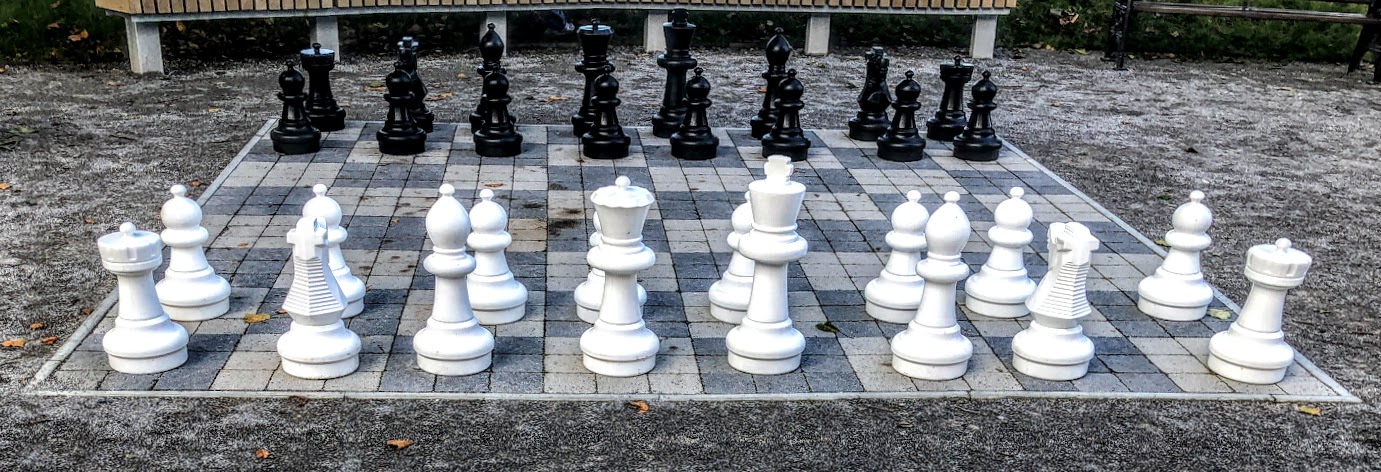
The ‘Shannon Number’ calculates there are more possible ways to play a game of chess than the amount of atoms in the observable universe (Photograph: Patrick Comerford)

Patrick Comerford

I arrived in Walsingham in Norfolk, this afternoon for an ecumenical pilgrimage that lasts for much of the week, and I have been invited to speak on Thursday evening. It’s been a long, cross-country journey from Stony Stratford that took all morning, and I am grateful for the lift that has saved an even-longer and complicated journey that would have taken up to six hours, involving a bus to Milton Keynes, a train to Euston, a Tube trip across London, another but much longer train journey from Liverpool Street to King’s Lynn and yet another bus from there to Walsingham.

The journey by public transport this morning, as calculated by Rome to Rio, seems more arduous and more demanding that either of the flights I had last week from Kuala Lumpur to Oman or from Oman to Heathrow, and almost as long and as fraught.

Since three flights last week, and similar flights on the way out to Kuching two weeks before that, I have succumbed to inexplicable bouts of jet lag like nothing I have experienced before, despite all my journeys over the years to both East Asia and the Middle East.

There were six flights in all over those two weeks, and I found it difficult to sleep on any of them. I found it difficult to concentrate enough to read, so instead of counting sheep (21 Across in the Guardian Quick Crossword yesterday), I whiled away my time watching the flight map in front of me or playing Chess.

I thought I would recover some of my chess-playing skills, but it seemed akin to the risks of betting on horses in a bookie’s shop: the computers and those who commute the odds always seem to win.

Waiting to make the opening move … a humorous chess set in a shop window in the Ghetto in Venice (Photograph: Patrick Comerford)

In Matt Haig’s novel, The Midnight Library, one of the characters, Mrs Elm, provides a commentary on a game of chess. She points out that at the beginning of a game, ‘there are no variations. There is only one way to set up a board.’ There are 9 million variations after the first six moves. After eight moves, there are 288 billion different positions.

‘And those possibilities keep growing,’ she says.

‘There are more possible ways to play a game of chess than the amount of atoms in the observable universe,’ she tells Nora as she lets her win the game.

This value, known as the Shannon Number, represents all of the possible move variations in the game of chess. It is estimated to be between 10111 and 10123. By comparison, there are 1081 atoms that make up the known universe.

The Shannon Number, named after the US mathematician Claude Shannon (1916-2001), is a conservative lower bound of the game-tree complexity of chess of 10120, based on an average of about 103 possibilities for a pair of moves consisting of a move for White followed by a move for Black, and a typical game lasting about 40 such pairs of moves.

Considering chess is a human invention, and that it allows us to imagine something greater than the number of atoms in the observable universe, how much more majestic, divine and sublime is it to consider the number of stars and the grains of sand?

In the Biblical story of Abraham in the Book of Genesis, Abraham is worried about his survival, his future, and what is going to happen after he dies, for he has no children and so has no heirs.

God brings Abraham outside and says to him, ‘Look towards heaven and count the stars, if you are able to count them.’ Then he says to him, ‘So shall your descendants be’ (Genesis 15: 1-5)

In the Psalms, we are told that God’s counsels are ‘more in number than the sand’ (Psalm 139: 17-18), and if were to count them all we would still be in God’s presence. It is a majestic image of the scope of God’s presence.

But, how many stars are in the sky?

And, how many grains of sand cover the earth’s beaches?

Did you ever look up on a clear bright night and ask how many stars can I see above?

When I look up into the night sky, it stretches out in a pitch-black canvas washed with streaks and studs of brightness. We are surrounded by light that has travelled the expanse of the universe to reach our eyes. And it makes me feel tiny and enormous at one and the same time.

But how many stars do I actually see?

There is really no definitive answer to this question. No one has counted all the stars in the night sky, and astronomers use different numbers as theoretical estimates.

Considering all the stars visible in all directions around Earth, some estimates say there are between 5,000 and 10,000 visible stars. But that’s just the stars visible to the naked eye tonight.

But why limit my calculations and my imagination to my own failing, aging, shortsighted pair of eyes?

Why should I simply marvel at the majesty and mystery of it all when I can do some calculations and think of how many stars are visible to God?

Let me start with the galaxies. Astronomers estimate there are around 170 billion galaxies in the observable universe, stretching out over a radius of some 45.7 billion light years.

Those galaxies vary in terms of the numbers of stars they contain. Some galaxies have more than a trillion stars. Some giant elliptical galaxies have 100 trillion stars. There are also tiny dwarf galaxies – tiny, of course, is a relative term here – some tiny dwarf galaxies that have significantly fewer stars.

On the other hand, the Milky Way, our little corner of the observable universe, has 400 billion stars alone.

So, if we multiply the estimated average number of stars in each galaxy by the number of galaxies in the observable universe – and carry the billion, &c – I get a rough estimate of all the stars I am capable of observing. And what I find is there are roughly a septillion stars in the observable universe. That brings us to 1,000,000,000,000,000,000,000,000 stars (1024, or 1 followed by 24 zeros). Which is, well, put simply, an awesome lot of stars.

Other astronomers calculate that there are 10 stars for every grain of sand, 11 times the number of cups of water in all the Earth’s oceans, 10,000 times the number of wheat kernels that have ever been produced on Earth, and 10 billion times the number of cells in a human being.

This is a staggering number: 70 sextillion (or 7 followed by 22 zeros or 70 thousand million million million) stars in the observable universe.

This too is probably a very, very low estimate because the number of galaxies filling the Universe is thought to be much larger than those the Hubble can see.

In his 1980 bestseller, Cosmos, the astronomer Carl Sagan wrote that there are more stars in the heavens than all the grains of sands covering the world’s beaches. He calculated that a handful of sand contains about 10,000 separate grains.

So, how many grains of sand cover the earth’s beaches?

Some years ago, researchers at the University of Hawaii tried to calculate this number by dividing the volume of an average sand grain by the volume of sand covering the Earth’s shorelines.

The volume of sand was obtained by multiplying the length of the world’s beaches by their average width and depth. The number they calculated was seven quintillion five quadrillion (that is 7.5 followed by 17 zeros or 7.5 billion billion) grains of sand.

And that is a lot of sand. And, to be fair, I gave up playing chess in the early hours of Friday morning under the star-lit skies, probably somewhere over the peaks of Mount Sinai, the shores of the Red Sea, or the sandy beaches of Crete, places I intend to refer to when I talk about pilgrimage later this week.

How many grains of sand are there by the sea? The town beach by the old harbour in Rethymnon in Crete (Photograph: Patrick Comerford)

23 September 2024

Two Belfast sculptures
challenge stereotypical
images of the political
divisions in the city

‘The Monument to the Unknown Woman Worker’, a 1992 sculpture by Louise Walsh on Great Victoria Street in Belfast (Photograph: Patrick Comerford, 2024)

Patrick Comerford

I know from recent experiences in a civic project in Stony Stratford how controversial public sculptures can be, and I have a little taste of the difficult criticism sculptors receive for the topics and the design of their work.

During our recent visit to Belfast, I returned to seem two of my favourite sculptures in the city, although they been controversial in ways that stand outside the usual political debates in Northern Ireland.

These two sculptures challenge the stereotype of political divisions based on sectarian and national conflict and instead encourage debate about women’s rights and the left/right divide that is often absent from political discussion in Northern Ireland.

‘The Monument to the Unknown Woman Worker’ is a 1992 sculpture by Louise Walsh on Great Victoria Street, near the Europa Hotel. It is cast in bronze and features two working class women with symbols of low paid work and unpaid women’s work embedded on the surfaces.

The domestic items include colanders, a shopping basket and clothes pegs, while the workplace items include a typist’s typewriter and a switchboard operator’s telephone. The older woman has a handle weaving in and out of her breasts, her earrings are ‘dummies,’ a hanger makes up her shoulder blades, and a slotted spatula and colander protrude from her buttocks.

The younger woman has multiple hairbrushes on her head. You also see a waitress’s apron, a hairdressing scissors and newspaper headlines from the 1940s such as ‘she’s engaged’ and ‘doesn’t she look lovely!’ – an ironic take on typical media references to women at the time.

The workplace items carried by the younger woman include a typist’s typewriter (Photograph: Patrick Comerford, 2024)

Louise Walsh was born in Co Cork, studied at Crawford Municipal School of Art in Cork and gained her MA in Sculpture from the University of Ulster, Belfast (1986). She has been a lecturer in the Sculpture Department at National College of Art and Design, Dublin (1996-2002) and is known for many public artworks in Belfast, Cavan, Dublin, Limerick and at Heathrow Airport.

Louise Walsh’s work is marked by her life-size energetic figures that challenge conventional depictions of women. She has exhibited at the Irish Museum of Modern Art (IMMA) and Temple Bar Gallery in Dublin, the Belltable Arts Centre, Limerick, and in Graz in Austria in Dublin, Cavan and Limerick.

The Department of the Environment’s original commission for her work in Belfast in the late 1980s was for a work near the Crown Bar reflecting the history of nearby Amelia Street as a former red-light district, with ‘two colourful life-size ‘cartoon’ female figures’.

Louise Walsh argued it is offensive to portray women this way. The proposal was framed by a narrow view of this part of Belfast, overlooking the its diverse social history. It was once densely populated, with people working in a variety of employment, including in the linen factories and on the railways, with many women working in unpaid or low-paying jobs.

Until then, the only depiction of the female in sculpture in Northern Ireland was Queen Victoria, while all the men in sculptures were famous military men, political figures or religious leaders.

‘The Monument to the Unknown Woman Worker’ now faces the Crown Bar on the corner of Great Victoria Street and Amelia Street (Photograph: Patrick Comerford, 2024)

Louise Walsh submitted a proposal for two bronze female figures, addressing the underlying issues of women’s low-paid jobs and unpaid housework. Her design for her ‘Monument to the Unknown Woman Worker’ was accepted by the project’s landscape architect and the Art in Public Spaces Research Group.

However, the Belfast Development Office and the Belfast City Council opposed the project and the selected design, and the project was dropped in 1989.

Louise Walsh believes the political opposition to her proposal was fuelled by the sectarian politics of the time and debates about who is worthy of being commemorated in Northern Ireland. There was little or discussion about what art is or about the meaning of commemoration, and debate is said to have been one the longest ever debate in Belfast City Council.

‘Belfast has no heart for tarts,’ read one headline. ‘Shady ladies get the boot,’ read another. ‘Protest at the red light sculpture,’ said a third.

A few years later, a private developer recommissioned the work and eventually it was erected in 1992 facing the Crown Bar on the corner of Great Victoria Street and Amelia Street. Technically it stands on private land outside the former Great Victoria Street rail station. But to this day it is banned from public land in Belfast.

‘No Pasaran! They Shall Not Pass’ … a bronze figure of a Brigadista head by Anto Brennan, opposite Saint Anne’s Cathedral (Photograph: Patrick Comerford, 2024)

The second sculpture I visited in Belfast is ‘No Pasaran! They Shall Not Pass’, a bronze figure of a Brigadista head by Anto Brennan in Writers’ Square on Donegall Street, opposite Saint Anne’s Cathedral.

The Spanish Civil War in 1936-1939 gave many an opportunity to stand against the rise of fascism across Europe. Men and women from all over the world answered the call to defend democracy and their working-class counterparts. About 320 Irish volunteers fought against Franco’s forces as members of the XV International Brigade, although others from Ireland fought in Franco’s right-wing nationalist forces.

Belfast was deeply divided in the 1930s by political and religious conflict, yet 78 men from Northern Ireland fought in the Spanish Civil War. Breaking down sectarian divisions, 48 Catholics and Protestants served side-by-side in the ranks of the International Brigades, including 12 who died in Spain.

There are other memorials in Belfast recalling the Spanish Civil War. A plaque in the John Hewitt Bar recalls how Roberta and John Hewitt housed Basque refugees during the Spanish Civil War. The Spanish Civil War window by Alpha Glass in Belfast City Hall was unveiled by the Lord Mayor, Arder Carson, in 2015, with the support of all political parties on the council.

Anto Brennan’s statue in Writers’ Square was commissioned by the International Brigade Commemoration Committee and erected by the Open Window Production Team. It was unveiled by Bob Doyle, a veteran of the International Brigade, on 13 October 2007.

Jack Jones, President of the IBMT and former general secretary of the TGWU, who also fought in the International Brigades, was also present day, as were Jack Edwards, a Liverpool volunteer, and at least 18 families of Irish veterans.

The plaque reads:

Dedicated to the people of Belfast,
the island of Ireland and beyond who joined
the XV International Brigade to fight Fascism
in the Spanish Civil War 1936-1939,
and those men and women from all traditions
who supported the Spanish working people
and their Republic.

No Pasaran! They Shall Not Pass

The sculptor Anto Brennan is probably best known for his satirical ‘Piece Process’ chess set and his client list includes Bill Clinton, Tony Blair, Mary McAleese and Mo Mowlam.

He was inspired to turn to sculpture while he was working as a builder in London in the early 1990s, when he started making clay figures. He returned to Belfast in 1993 and turned his craft into a career, taking a stall in Smithfield Market with his brother Geraldo.

His ‘Piece Process’ chess board includes caricatures of Ian Paisley, Gerry Adams, Tony Blair, David Trimble, Mary McAleese and John Hume, while the pawns are RUC and IRA figures. Large versions of the ‘Piece Process’ are on display in City Hall and McHugh’s bar in Belfast, and in Hillsborough Castle.

Anto Brennan was brought up in a socialist family, and was always interested in politics.

His 6 foot statue of James Larkin, the Labour leader and founder of the Irish Congress of Trade Unions (ICTU), was commissioned by ICTU in 2007 to commemorate the 100th anniversary of Larkin’s arrival in Belfast. Other recent works include a 6 ft stone model of the Titanic to mark its centenary, and 8 ft high sculptures of shipyard workers for the Kremlin nightclub in Belfast.

Earlier this month, there were critical responses to Anto Brennan’s new statue of Queen Elizabeth II in Antrim Castle Gardens. The bronze sculpture was commissioned by Antrim and Newtownabbey Borough Council and also features Prince Philip and two corgis. But public responses have compared his depiction of Queen Elizabeth to a fisherwoman, Little Bo-Peep and Mrs Doubtfire.

Anto Brennan’s statue in Writers’ Square was unveiled in 2007 by Bob Doyle, a veteran of the International Brigade (Photograph: Patrick Comerford, 2024)

08 November 2022

Praying in Ordinary Time with USPG
and TS Eliot’s ‘The Waste Land’:
Tuesday 8 November 2022

‘And we shall play a game of chess, / Pressing lidless eyes and waiting for a knock upon the door’ (TS Eliot, ‘The Waste Land’) … an outdoor game of chess in the grounds of the Hunt Museum in Limerick (Photograph: Patrick Comerford, 2021)

Patrick Comerford

Today, the Calendar of the Church of England in Common Worship remembers the Saints and Martyrs of England with a Lesser Festival (8 November 2022).

The date when Christianity first came to these islands is not known, but bishops from Britain attended the Council of Arles in the year 314, indicating a Church with order and worship. Since those days, Christians from these lands have shared the message of the good news at home and around the world. As the worldwide fellowship of the Anglican Communion has developed, incorporating peoples of many nations and cultures, individual Christian men and women have shone as beacons, heroically bearing witness to their Lord, some through a simple life of holiness, others by giving their lives for the sake of Christ.

Before this day gets busy, I am taking some time this morning for reading, prayer and reflection.

Throughout this week, I am reflecting in these ways:

1, One of the readings for the morning;

2, A reflection based on TS Eliot’s ‘The Waste Land,’ first published 100 years ago, in 1922;

3, a prayer from the USPG prayer diary, ‘Pray with the World Church.’

‘Held up by standards wrought with fruited vines’ (TS Eliot, ‘The Waste Land’) … fruitful vines in Panormos, near Rethymnon in Crete (Photograph: Patrick Comerford, 2021)

John 17: 18-23 (NRSVA):

[Jesus said:] 18 ‘As you have sent me into the world, so I have sent them into the world. 19 And for their sakes I sanctify myself, so that they also may be sanctified in truth.

20 ‘I ask not only on behalf of these, but also on behalf of those who will believe in me through their word, 21 that they may all be one. As you, Father, are in me and I am in you, may they also be in us, so that the world may believe that you have sent me. 22 The glory that you have given me I have given them, so that they may be one, as we are one, 23 I in them and you in me, that they may become completely one, so that the world may know that you have sent me and have loved them even as you have loved me.’

‘A Game of Chess’, Part 2 of ‘The Waste Land’, employs alternating narrations, with vignettes of several characters (Photograph: Patrick Comerford)

The Waste Land 2: ‘A Game of Chess’

In 1922, the same year as James Joyce published Ulysses, TS Eliot published ‘The Waste Land.’ The poem includes well-known phrases such as ‘April is the cruellest month,’ and ‘I will show you fear in a handful of dust.’ Recent studies see in ‘The Waste Land’ a description of Eliot’s pilgrimage from the Unitarianism of his childhood to his life-lasting Anglo-Catholicism.

‘The Waste Land’, which I am reflecting on throughout this week, was first published 100 years ago at the end in 1922. It is a masterpiece of modern literature and one of the greatest poems in the English language. Its opening lines are often quoted, even by people who have never read all five sections and 434 lines of the poem.

‘The Waste Land’ was published in Eliot’s The Criterion in October 1922 – this was the same year James Joyce’s Ulysses was published in Paris. ‘The Waste Land’ was then published in the US in the November issue of The Dial, and was published in book form in December 1922.

To mark the 100th anniversary of the publication of The Waste Land in 1922, I am dipping in and out of the five sections of The Waste Land in this prayer diary each day this week. ‘The Waste Land’ is divided into five sections:

1, ‘The Burial of the Dead’, introduces the diverse themes of disillusionment and despair.

2, ‘A Game of Chess’, employs alternating narrations, in which vignettes of several characters address those themes experientially.

3, ‘The Fire Sermon’, offers a philosophical meditation in relation to the imagery of death and views of self-denial in juxtaposition, influenced by Augustine of Hippo and Eastern religions.

4, ‘Death by Water’, includes a brief lyrical petition.

5, ‘What the Thunder Said’, the culminating fifth section, concludes with an image of judgment.

The second section, of ‘The Waste Land,’ ‘A Game of Chess,’ employs alternating narrations, in which vignettes of several characters address those themes experientially.

In ‘The Waste Land,’ TS Eliot constantly uses images of the undead as a metaphor for modern life. For Eliot, our society has become so spiritually numb that we cannot even really say if we are alive or dead anymore.

The title of the second section, ‘A Game of Chess,’ is also symbolic of the wicked play with emotions and sexual desires. Eliot’s reference to Cleopatra is significant because it indicates the destructive effects of excessive desire. In the case of the lovers Antony and Cleopatra, their inability to control their sexual desires has wiped out a whole empire. This failure to control desire is considered the central reason behind the discontent and degeneration of modern civilisation.

In ‘A Game of Chess’, Eliot compares humans to simple pieces like those on a chessboard, and the people who inhabit ‘The Waste Land’ are afraid of salvation.

Looking at the post-war condition of society, he portrays the people, who live in a waste land, and have been squeezed into a desperate situation just like pieces in a game of chess.

In line with the ‘Fisher King’ myth, which underlies the infertility of humanity in the post-war period, the couples in this section have no communication with each other, and, therefore, there is no love and reproduction.

The concept of nothingness, which also stands for the social reality in the 1920s, dominates the whole poem, with this part being no exception.

The solitary married couple, whose failing efforts at conversation are dramatised in ‘A Game of Chess,’ symbolise the loss of intimacy in the better-parts of modern society. They are alone together, the wife mad to be loved to the point of being unlovable, the husband receding into himself further with every passing moment.

In the vignette that follows, we move to a working-class pub, where we meet Lil, a woman whose fertility has been tested to the point of desperation by a husband who, in his brutishness, could hardly rise even to the most modest levels of love for his wife. The middle-class couple appears so isolated they cannot imagine physical intimacy, while Lil and her husband are broken by the emptiness of their iterated physical union.

The citizens of the modern world, Eliot suggests, are like bones broken off from a once complete body, bones once enfleshed in an organic human community bound by love. Eliot traces the source of this fragmentation to the modern attempt to substitute romantic love for the love of God, erasing two distinct realities by conflating them and, in the process, putting much too great a sanctifying pressure on intimacies.

In his Clark lectures, Eliot would trace this tendency back to the Spanish mystics, particularly to Saint Teresa of Avila, who tried to make the life of divine contemplation too psychological, to make it too much resemble the incommunicable, because of the entirely private, intimacy of man and woman. The consequence of such conflation is that we lose the capacity to imagine religious belief in itself as we try to make romance its stand-in.

It is only later in ‘A Game of Chess’ that this fragile sense of order starts to break down.

This section could also refer to the loss of religion and spirituality in modern life, which leaves people speechless when it comes to figuring out what to do with their lives.

These lines speak about how people wish to kill time in their lives, staying up all night and playing a game of chess. In this sense, perhaps Eliot means that without spirituality, modern life is just a long game we play with ourselves, always competing, setting goals, and simply ‘playing the game.’

‘… where the glass / Doubled the flames of the sevenbranched candelabra’ (TS Eliot, ‘The Waste Land’) … a menorah or seven-branched candelabra in a synagogue in Prague (Photograph: Patrick Comerford, 2019)

Today’s Prayer (Tuesday 8 November 2022):

The Collect:

God, whom the glorious company of the redeemed adore,
assembled from all times and places of your dominion:
we praise you for the saints of our own land
and for the many lamps their holiness has lit;
and we pray that we also may be numbered at last
with those who have done your will
and declared your righteousness;
through Jesus Christ your Son our Lord,
who is alive and reigns with you,
in the unity of the Holy Spirit,
one God, now and for ever.

The Post Communion Prayer:

God, the source of all holiness
and giver of all good things:
may we who have shared at this table
as strangers and pilgrims here on earth
be welcomed with all your saints
to the heavenly feast on the day of your kingdom;
through Jesus Christ our Lord.

The theme in the USPG Prayer Diary this week is ‘A New Commandment.’ This theme was introduced on Sunday by Sue Claydon, chair of the Anglican Pacifist Fellowship.

The USPG Prayer Diary invites us to pray today in these words:

Bring release to those with abiding memories of hurt and injury, especially in the Yemen, the Democratic Republic of the Congo and Ukraine and all those places where peace seems so elusive.

Yesterday’s reflection

Continued tomorrow

‘Footsteps shuffled on the stair’ (TS Eliot, ‘The Waste Land’) … stairs in the Moat House, the former Comberford family home on Lichfield Street, Tamworth (Photograph: Patrick Comerford, 2022)

Scripture quotations are from the New Revised Standard Version Bible: Anglicised Edition copyright © 1989, 1995, National Council of the Churches of Christ in the United States of America. Used by permission. All rights reserved worldwide. http://nrsvbibles.org

In ‘A Game of Chess’, Eliot speaks of the loss of religion and spirituality in modern life … Sephardic and Asheknazic chess figures in a shop window in Murano in Venice (Photograph: Patrick Comerford, 2021)

28 April 2021

Counting possible chess moves,
atoms in the universe, grains of
sand and the number of stars

How many grains of sand are there by the sea … the sandy beach at Ballinskelligs, Co Kerry (Photograph: Patrick Comerford)

Patrick Comerford

In the Biblical story of Abraham in the Book of Genesis, Abraham is worried about his survival, his future, and what is going to happen after he dies, for he has no children and so has no heirs.

God brings Abraham outside and says to him, ‘Look towards heaven and count the stars, if you are able to count them.’ Then he said to him, ‘So shall your descendants be’ (Genesis 15: 1-5)

In the Psalms, we are told that God’s counsels are ‘more in number than the sand’ (Psalm 139: 17-18), and if were to count them all we would still be in God’s presence. It is a majestic image of the scope of God’s presence.

But, how many stars are in the sky?

And, how many grains of sand cover the earth’s beaches?

Did you ever look up on a clear, moonless night and ask how many stars can I see above?

When you look up into the night sky it stretches a pitch-black canvas washed with streaks and studs of brightness. We are surrounded by light that has travelled the expanse of the universe to reach our eyes. And it makes me feel tiny and enormous at one and the same time.

But how many stars do I actually see?

There is really no definitive answer to this question. No one has counted all the stars in the night sky, and astronomers use different numbers as theoretical estimates.

Considering all the stars visible in all directions around Earth, some estimates say there are between 5,000 and 10,000 visible stars. But that’s just the stars visible to the naked eye tonight.

But why limit my calculations and my imagination to my own failing, short-sighted pair of eyes?

Why should I simply marvel at the majesty and mystery of it all when I can do some calculations and think of how many stars are visible to God?

Let me start with the galaxies. Astronomers estimate there are around 170 billion galaxies in the observable universe, stretching out over a radius of some 45.7 billion light years.

Those galaxies vary in terms of the numbers of stars they contain. Some galaxies have more than a trillion stars. Some giant elliptical galaxies have 100 trillion stars. There are also tiny dwarf galaxies – tiny, of course, is a relative term here – some tiny dwarf galaxies that have significantly fewer stars.

On the other hand, the Milky Way, our little corner of the observable universe, has 400 billion stars alone.

So, if we multiply the estimated average number of stars in each galaxy by the number of galaxies in the observable universe – and carry the billion, &c – I get a rough estimate of all the stars I am capable of observing. And what I find is there are roughly a septillion stars in the observable universe. That brings us to 1,000,000,000,000,000,000,000,000 stars (1024, or 1 followed by 24 zeros). Which is, well, put simply, an awesome lot of stars.

Other astronomers calculate that there are 10 stars for every grain of sand, 11 times the number of cups of water in all the Earth’s oceans, ten thousand times the number of wheat kernels that have ever been produced on Earth, and 10 billion times the number of cells in a human being.

This is a staggering number: 70 sextillion (or 7 followed by 22 zeros or 70 thousand million million million) stars in the observable universe.

This too is probably a very, very low estimate because the number of galaxies filling the Universe is thought to be much larger than those the Hubble can see.

In his 1980 bestseller, Cosmos, the astronomer Carl Sagan wrote that there are more stars in the heavens than all the grains of sands covering the world’s beaches. He calculated that a handful of sand contains about 10,000 separate grains.

So, how many grains of sand cover the earth’s beaches?

Some years ago, researchers at the University of Hawaii tried to calculate this number by dividing the volume of an average sand grain by the volume of sand covering the Earth’s shorelines.

The volume of sand was obtained by multiplying the length of the world’s beaches by their average width and depth. The number they calculated was seven quintillion five quadrillion (that is 7.5 followed by 17 zeros or 7.5 billion billion) grains of sand.

Mrs Elm, a character in Matt Haig’s novel, The Midnight Library, provides a commentary on a game of chess. She says points out that at the beginning of a game, ‘there are no variations. There is only one way to set up a board.’ There are 9 million variations after the first six moves. After eight moves, there are 288 billion different positions.

‘And those possibilities keep growing,’ she says.

‘There are more possible ways to play a game of chess than the amount of atoms in the observable universe,’ she tells Nora as she lets her win the game.

This value, known as the Shannon Number, represents all of the possible move variations in the game of chess. It is estimated to be between 10111 and 10123. By comparison, there are 1081 atoms that make up the known universe.

The Shannon Number, named after the US mathematician Claude Shannon (1916-2001), is a conservative lower bound of the game-tree complexity of chess of 10120, based on an average of about 103 possibilities for a pair of moves consisting of a move for White followed by a move for Black, and a typical game lasting about 40 such pairs of moves.

Considering chess is a human invention, and that it allows us to imagine something greater than the number of atoms in the observable universe, how much more majestic, divine and sublime is it to consider the number of stars and the grains of sand?

The ‘Shannon Number’ calculates there are more possible ways to play a game of chess than the amount of atoms in the observable universe … an exhibit on the chess grandmaster Richard Réti in the Museum of Jewish Culture, Bratislava (Photograph: Patrick Comerford)

22 October 2020

Philip Baker, the Jewish
refugee from Latvia who
became Irish chess champion

Philip Baker (1879-1932) was the Irish Chess Champion on four occasions in the 1920s (Photograph: Patrick Comerford)

Patrick Comerford

When Philip Baker filled out the census form in his small, single lodging room on Castle Street, Tralee, on the night of 31 March 1901, he may well have thought he was the only Jew living in Co Kerry.

He was a 22-year-old draper, and he gave his religion as ‘Hebrew’ and his place of birth as ‘Russia.’ There were four Jewish short-term guests staying at the Great Southern Hotel in Killarney that night, all linen manufacturers from London in their 20s. But the only other Jew who was resident in Kerry at that time was Amélie Bischoffsheim (1858-1947), wife of Sir Peter FitzGerald, Knight of Kerry, who were living at Glanleam on Valentia Island.

The paths of Philip Baker and Lady FitzGerald probably never crossed. She was the London-born daughter of the Dutch banker Henri Louis Bischoffsheim (1829-1908); her sister Ellen (1857-1933), the Dowager Countess of Desart, later became a Senator in the new Irish Free State and has been described as ‘the most important Jewish woman in Irish history.’

But Philip Baker’s accomplishments as a poor Latvian Jewish refugee fleeing the pogroms in the Tsarist empire are worth recounting. For Philip Baker (1879-1932) was an Irish Chess Grand Master who won the Irish Championship on four occasions in the 1920s, including three consecutive years, and a clothing factory owner who was regarded as a model employer. In time, he became the patriarch of an important Irish legal family.

The brothers David and Philip Baker were born in Riga in Latvia, then part of Imperial Russia. They were the sons of Simon Baker, a Jewish grocer or draper, and they came to Ireland at a young age, fleeing the pogroms in Tsarist Russia.

David Baker began his working life in Dublin as a ‘rags and metal merchant,’ a ‘draper’ and a ‘wool merchant,’ and at the turn of the 19th and 20th centuries, he lived in a number of houses in the narrow streets off the South Circular Road that became known as Dublin’s ‘Little Jerusalem,’ including Spencer Street, Raymond Street, and Greenville Terrace.

He married Yetty (Gertrude) Berman on 25 July 1899. She was a daughter of Abraham Berman, a self-employed draper and traveller, of 5 Oakfield Place, and his wife Rachel, both originally from Telshi in the Kovno district of Lithuania. David and Yetty were the parents of at least three daughters and a son. Like his brother Philip, David Baker too was noted chess player and played first board for the Clontarf Chess Club. He later moved with his family to Leeds.

Philip Baker was born in Riga on 31 March 1879. He began his working life in Ireland as a draper and a cap factory representative, and eventually owned his own clothing factory. He was a 22-year-old draper and was living in Upper Castle Street, Tralee, Co Kerry, at the time of the 1901 census.

The Aliens Register (1914-1918) shows he arrived in Dublin from Tralee on 31 January 1903. He was living at 15 Vernon Street, Dublin, on 9 September 1904 when he married Fanny Berman, a sister of David Baker’s wife Yetty. Her father Abraham Berman was 71 when he died at 5 Oakfield Place on 26 October 1919. Her widowed mother, Rachel Freda Berman, died at the age of 73 on 27 May 1922.

At first, Philip and Fanny also lived in the streets of ‘Little Jerusalem’ off the South Circular Road, including St Alban’s Road, Raymond Street and Wolseley Street. Their children included Edmund Salem Adam Baker, born 1905, died an infant; Joshua Baker (1906-1979); David Baker, born 1908; Isaac Baker, born 1911 (married Ellen Kelly); Sarah Rebecca, born 1911 (married Lazare Scheps); Sheila, born 1916 (married Barry Spain); and Sylvia ‘Lammie’ (1918-1984), who married Henry Aimers Wheeler (1916-1993), archaeologist, Office of Public Works and a president of the Royal Society of Antiquaries of Ireland.

Philip joined the Sackville Chess Club, which was founded in 1902, and soon became an Irish Grand Master. He was the Leinster champion in 1922 and 1926, and first became the Chess champion of Ireland in 1924, when he finished first in the Tailteann Games. With the Sackville Chess Club, he won the Armstrong Cup in 1926 and 1929, and he was the Irish Champion again for three consecutive years, in 1927, 1928 and 1929.

Later, as the proprietor of his own clothing factory, Philip was recognised as a model employer. He died at 77 Kenilworth Square, Rathmines, Dublin, on 18 April 1932, aged 53.

Philip Baker’s son, Professor Joshua Baker (1906-1979), earned a double first in Hebrew and Oriental Studies and Legal Science at Trinity College Dublin, and earned a gold medal and a scholarship to the US, where he completed his doctorate.

Josh Baker had a demanding practice as a senior counsel and legal expert, yet he lectured at TCD for 30 years in Hebrew and as Reid Professor of Criminal Law. His friend and colleague, Professor Jacob Weingreen, in his obituary in the Jewish Chronicle, praised his ‘lucid, analytical mind, genial personality, special sense of humour, and many acts of friendship.’

Another son, David Baker, was the Hebrew/Gaelic interpreter when the leaders of Israel and Ireland met.

Philip Baker’s eldest daughter Sarah married Leslie (Lazare) Scheps, a Swiss Jewish immigrant. Their daughter Rosalind married Judge Henry Barron (1928-2010), who was appointed to the Supreme Court in 1997. He presided over the inquiry into the Dublin and Monaghan bombings, in which 33 people were killed in 1974, and granted Ireland’s first legal divorce in 1997. He was also president of the Irish Jewish Museum.

A chess set in a shop window on the island of Murano in the Venetian lagoon (Photograph: Patrick Comerford)

16 December 2019

Hidden stories of Jewish
Bratislava: 2, Richard Réti,
chess grandmaster, author

Richard Réti (1889-1929) was a chess grandmaster, chess author, and composer of endgame studies … an exhibition in the Museum of Jewish Culture in Bratislava (Photograph: Patrick Comerford, 2019)

Patrick Comerford

During last month’s visit to Bratislava, two of us waited for over half an hour for a booked guide who never showed. Eventually, we made our own impromptu tour of Jewish Bratislava, visiting major sites associated with the stories of the Jewish community in the Slovak capital.

The sites we visited included the area that was once the mediaeval Jewish ghetto, the site of the earliest synagogue at the present Ursuline Church, the Chatam Sofer Memorial commemorating the city’s most famous rabbi, the site of the former Neolog Synagogue, the Holocaust Memorial on Rybné Square, the city’s last surviving synagogue on Heydukova Street, and the Museum of Jewish Culture on Židovská Street.

As I pored over my photographs from Bratislava in recent days, I realised I had also come across many other stories of Bratislava’s Jewish communities, including a world chess grandmaster and author, a resistance hero who saved lives during the Holocaust, the lost portal of a mediaeval synagogue, an international wrestler, a visiting Russian pianist and composer, an antiquarian bookshop, and a man who stood up bravely to anti-Semitic gangs.

Rather than tell these hidden stories in detail in one or two blog postings, I decided – as with my recent tales of Viennese Jews – to post occasional blog postings over the next few weeks that re-tell some of these stories, celebrating a culture and a community whose stories should never be forgotten.

Richard Selig Réti (1889-1929) was an Austro-Hungarian, later Czechoslovak chess grandmaster, chess author, and composer of endgame studies.

He was one of the principal proponents of hypermodernism in chess. With the exception of Nimzowitsch’s book, My System, he is considered the movement’s foremost literary contributor.

Réti was born into a Jewish family in Bazin, now Pezinok, near Bratislava, on 28 May 1889. The town was then in Hungary and is now in Slovakia. His father, Dr Samuel Réti, worked there as a medical doctor in the Austrian army and was the head of the local, iron-rich, medical spa. The family later moved to Vienna, where his father set up a private practice.

The magic of chess enchanted Richard Réti from a young age, but his start in chess was so inauspicious that he came in last in tournament in Vienna in 1908. However, his talent was exceptional, by 1912 he was recognised as a brilliant player and he became a member of the famed Vienna Chess Club.

Richard also excelled in mathematics, and studied mathematics at Vienna University.

His colleague the chess grandmaster Savielly Tartakower wrote, ‘Réti studies mathematics, and yet is no dry mathematician; he represent Vienna, though he is no Viennese; he was born in Hungary and doesn’t speak Hungarian; he speaks uncommonly quickly, yet makes no premature decisions; one day he will be the best chess player but he won’t be world champion.’

It could be said Réti began his chess career because of his forgetfulness: he forgot his thesis in the café where he played and analysed games of chess, and did not want to rewrite it; and so he started making a living as a chess player.

He began his career as a combinative classical player, favouring openings such as the King’s Gambit (1.e4 e5 2.f4). He played in tournaments and simultaneous exhibitions, wrote articles and books about chess, and gave lectures about chess.

His playing style changed after the end of World War I, and he became one of the principal proponents of hypermodernism, along with Aron Nimzowitsch and others. With the exception of Aron Nimzowitsch’s book My System, he is considered to be the movement’s foremost literary contributor.

Throughout the 1910s and 1920s, Réti was one of the top players in the world, travelling throughout Europe and America. His most significant early successes were from 1918 to 1922, in tournaments in Košice or Kaschau (1918), Rotterdam (1919), Amsterdam (1920), Vienna (1920), Gothenburg (1921), and in 1922 in Teplice-Šanov, Czechoslovakia (1922), when he triumphed over an entire multitude of European masters.

The Réti Opening (1.Nf3 d5 2.c4) is named after him. Réti defeated World Champion José Raúl Capablanca in the New York 1924 chess tournament using this opening – Capablanca’s first defeat in eight years, his only loss to Réti, and his first since becoming world champion.

This tournament was also the only occasion in which Réti beat future world champion Alexander Alekhine, accomplishing this feat in the same number of moves, and with the same final move (31.Rd1–d5). He won the ‘brilliancy prize’ for the most brilliant game in the tournament that year.

In 1925, Réti set a world record for blindfold chess with 29 games played simultaneously: he won 21 games, drew 6, and lost 2.

Réti was an exception among grandmasters, being keenly interested in composing chess problems and studies, and he was a notable composer of endgame studies. His writings have become classics of chess literature, including Modern Ideas in Chess (1923) and Masters of the Chess Board (1933).

Réti died 90 years ago on 6 June 1929 in Prague of scarlet fever. He was buried in his father’s grave in the Jewish section of Zentralfriedhof cemetery in Vienna.

His older brother Rudolph Reti (1885-1957) was a noted pianist, musical theorist and composer. Richard Réti’s son, Simon Reti, was murdered in Auschwitz; his grandson, Benjamin Reti, was killed as he tried to escape Hungary after the Soviet invasion in 1956; his great-grandson is the German painter Elias Maria Reti.

Richard Réti was an exception among grandmasters, being keenly interested in composing chess problems and studies (Photograph: Patrick Comerford, 2019)

07 September 2019

Finding Philhellenes
and poets in the
side streets of Corfu

A street in Corfu honours the memory of the Philhellene Lord Guilford (Photograph: Patrick Comerford, 2019)

Patrick Comerford

Like every Greek city and town, Corfu has street names that commemorate philosophers, poets and politicians, composers, saints and sinners, as well as figures from the Classics and the arts, Church life, and the history of Greece’s struggle for independence and unity.

As I wandered around the streets of Corfu over the past two weeks, I noticed a park named after the Durrell brothers, who lived in Corfu, and a street named after the British Philhellene, Lord Guilford.

Frederick North (1766-1827), 5th Earl of Guilford, was a younger son of Frederick North (1732-1792), 2nd Earl of Guilford, usually referred to as Lord North, who was Prime Minister (1770-1782) during the American War of Independence.

The younger Frederick North was educated at Eton and Christ Church, Oxford. He secretly converted to Orthodoxy during his first visit to Corfu, and was baptised on the night of 23-24 January 1791 (OS) or 3-4 February (NS) 1791, probably in the Church of Panagia Mandrakina.

Metropolitan Kalistos Ware has debated the degree to which he was a practicing member of the Greek Orthodox Church and the actual date of his baptism in his paper ‘The fifth Earl of Guilford and his Secret Conversion to the Orthodox Church’ Anglicanism and Orthodoxy: 300 years after the ‘Greek College’ in Oxford.

He was the first British Governor of Ceylon (1798-1805) before succeeding his elder brother as the 5th Earl of Guilford in 1817. He moved to Corfu, and in 1824 established the Ionian Academy on the island, then under British administration as part of the United States of the Ionian Islands, and this became the first university in modern Greece.

The academy has since closed, but a there is statue of Guilford in front of the Old Fortress in Corfu, close to the Church of Panagia Mandrakina, where he was baptised, and a library and a street in the town are also named after him.

His niece, Lady Susan North, married John Sydney Doyle (1804-1894) in 1835, and in 1838 Doyle changed his name legally to North. As John Sydney North he was MP for Oxford (1852-1855) and the North titles later descended through their children.

Frederick North was secretly baptised in the Greek Orthodox Church during his first visit to Corfu in 1791, probably in the Church of Panagia Mandrakina (Photograph: Patrick Comerford, 2019)

Holy Trinity Church, the Anglican church in Corfu, opens onto a side-street off Guilford Street that is named after the poet and chess player Lorentzos Mavilis (Λορέντζος Μαβίλης) who is best known for his sonnets.

Lorentzos Mavilis (1860-1912) was born on the Ionian island of Ithaki on 6 September 1860, but lived for most of his life in Corfu, and his family background is an interesting example of the cultural mosaic that has contributed to modern Greek identity.

The poet’s father, Paolo Mabili (1814-1893), was born in Naples and became a judge in Corfu, where he died in 1893. In turn, his father, Don Lorenzo Eliodoro Mabili de Bouligny (1765-1853), who was of mixed Spanish, Italian and French ancestry, was born in Alicante and was the Spanish consul in Corfu, where he died on 7 October 1853.

The poet’s mother, Cecilia, was born Cecilia Capodistria-Suffi in Corfu in 1839, the daughter of Baron Andrea Capodistria-Suffi, who was descended from one of the Venetian noble families of Corfu. Some accounts say she was a niece of Ioannis Kapodistrias (1776-1831), the first Governor of Greece, who is considered the founder of the modern Greek state and the architect of Greek independence.

Mavilis went to Athens in 1877 to study philosophy and literature, and there he began to write poetry. He then moved to Germany, where he studied philology and philosophy, and began his life’s work on chess problems.

A fellow student from Corfu, Helias Pantazopoulos, wrote to Lorentzos’ mother, telling her that ‘German girls call him the new Apollo,’ describing he spoke five languages fluently, and reporting on his drinking and duelling. It was rumoured he had grown his beard to cover a scar received in one sword duel.

Pantazopoulos quotes Mavilis saying: ‘All philosophical systems are intellectual exercises, like a good game of chess. They are not related with truth at all …’

Lorenztos returned to Corfu in 1884 for a short time, but he was soon back in Germany and earned his PhD at the University of Erlangen in 1890, where he was appointed professor of classical studies.

Mavilis returned to live in Corfu in 1893, but he was a restless nationalist. He joined the Cretan revolt against Ottoman rule of 1895-1898 in 1896, and in 1897 he went to Epirus with a group of 70 Corfiot volunteers during the Greek-Turkish War of 1896-1897, when his arm was injured.

He supported the Goudi coup in 1909 that led to the eventual appointment of Eleftherios Venizelos as Prime Minister and that put an end to the old political order. He was elected as a member of the Greek Parliament for Corfu in 1910. As a deputy, he took part actively in the debates about the Greek language. He was a champion of the use of the language of the people, or demotic Greek, as opposed to the artificial or purified form known as katharevousa (καθαρεύουσα).

He told the Greek parliament in 1911: ‘Vulgar Language does not exist. There is a vulgar people, and many vulgar speakers of the Language of the scholars.’ Those words are paraphrased in popular Greek lore as: There are no vulgar words, only vulgar people.’

As a poet, Mavilis is seen as the last representative of the Heptanesian School of poets, founded by Dionysios Solomos, and he is regarded as Greece’s most important sonnet writer.

The core theme throughout all Mavilis’ works is his love for Greece. His most notable sonnets – including ‘Fatherland,’ ‘For the Fatherland,’ ‘Olive’ and ‘In the Fullness of Time’ – are all odes to Hellenism, to all who gave their lives for Greece and the higher values of life that lead to virtue.

Mavilis was also an avid chess player and a renowned composer of chess problems, playing chess under the pseudonyms of Sillivam and Dr L Greco. As a polyglot, he translated many works, including poems by Shelley and Lord Byron, the works of Virgil and part of the Indian epic Mahabharata.

At the outbreak of the First Balkan War in 1912, Mavilis enlisted as a volunteer in the Greek army, although by then he was already 52, and became a captain in a group of volunteers from Italy under the command of Ricciotti Garibaldi.

During the Battle of Driskos, near Ioannina, he was shot in the face and throat and died on 28 November 1912. His dying words were: ‘I was expecting honours from this war, but not the honour to sacrifice myself for Greece.’

His last sonnet was found in the pocket of his uniform.

His passionate affair with the Greek poet and actor Myrtiotissa – born Teona Draκopoulou (1885-1965) in Constantinople – inspired much of her love poetry.

The poet Lorentzos Mavilis lived in a house close to Holy Trinity Church (Photograph: Patrick Comerford, 2019)

His sonnet Ληθη (‘Lethe’, or ‘Oblivion’) is a pessimistic poem in which Mavilis mingles ancient Greek belief about the underworld, described by Homer in the Odyssey (XXIV, 1-14), and the modern Greek tradition about the realm of the dead.

It has been set to music by the Greek composer Mikis Theodorakis in ‘Eros and Death,’ four songs for voice and string orchestra.

Ληθη

Καλότυχ' οι νεκροί, που λησμονάνε
την πίκρια της ζωής. Όντας βυθήσει
ο ήλιος και το σούρουπο ακλουθήσει,
μήν τους κλαις, ο καϋμός σου όσος και νά 'ναι!

Τέτοιαν ώρα οι ψυχές διψούν και πάνε
στης λησμονιάς την κρουσταλλένια βρύση.
Μα βούρκος το νεράκι θα μαυρίσει,
Σα στάξει γι' αυτές δάκρυ, όθε αγαπάνε.

Κι αν πιουν θολό νερό, ξαναθυμούνται
διαβαίνοντας λιβάδι' απ' ασφοδήλι,
πόνους παλιούς, που μέσα τους κοιμούνται.-

Α δε μπορείς παρά να κλαις, το δείλι,
τους ζωντανούς τα μάτια σου ας θρηνήσουν,
θέλουν -μα δε βολεί να λησμονήσουν.

Lethe, by Lorentzos Mavilis (translated by Rae Dalven)

Lucky are the dead who forget
life’s bitterness. When the sun
goes down and twilight follows,
do not weep however you grieve.

At that hour, souls thirst and go
to oblivion’s icy fountain;
but the water will blacken like slime,
if a tear falls from those they love.

And if they drink cloudy water they recall
crossing asphodel prairies and old pains
that lie dormant within them.

If you must weep at twilight,
let your eyes lament the living;
they long to but know not how to forget.


15 March 2014

The higher math needed to calculate
all possible moves in rugby and chess

How many moves are needed? How many moves are possible?

Patrick Comerford

I know of someone who was studying for a degree in math at Maynooth many years ago. He was the first in his family to get to university, and his mother was understandably proud of him.

When she was asked what he was doing in Maynooth, she replied: “A course.”

When asked what the course was, she said: “Sums.”

But I cannot afford to laugh. I got a pass on the pass paper in math in the Leaving Certificate in 1969, and counting beyond four sometimes seems to require higher calculus.

Ireland can win the Six Nations’ Championship later today [15 March 2014] at the showdown in Stade de France in Paris … but only on points difference. And the calculations for this nail-biting day of wall-to-wall rugby involve a level of math that is far higher and is far more difficult than anything I learned while I was at school.

This has happened on four times in the past 41 years, and this was a task that foiled Ireland three out of four years.

So let’s look at the permutations, combinations and calculations if Ireland is to win the title today for the first time since 2009 and for only the time since 1985.

Three sides have six points, England has already won the Triple Crown. In order of their favourable points’ difference, they are:

Ireland (81)

England (32)

France (3)

England plays Italy in the Stadio Olimpico in Rome, starting at 12.30.

If England beats Italy by any margin and later in the day Ireland and France draw in Paris, then it is impossible for England not to win the Six Nations title.

If England beats Italy by 50 points or more, then an Irish win in Stade de France by any margin means Ireland still wins.

If England beats Italy by any margin, and later in the day France wins in Paris, it seems impossible for England not to secure the Triple Crown and the Six Nations title.

I say it seems … because, when it comes to points’ difference, France is 29 points behind England. So, for every point England wins by in Rome, it ratchets up the French target of a 30-point winning margin over Ireland.

If Italy beats England, or the two sides draw, and Ireland wins in Paris, then Ireland wins the Six Nations title.

If Italy beats England, or the two sides draw, and France beats Ireland, then France wins the Six Nations title.

It all explains why Ireland had to pile on all the points possible when Ireland beat Italy last Saturday.

If all that seems difficult to calculate, then consider the calculations that have to be made in playing chess, where the possibilities are boundless, it seems.

In the G2 section of the Guardian, Stephen Moss of Kingston-upon-Thames, Surrey, posed this dilemma:

In Paul Hoffman’s book, King’s Gambit: A Son, a Father and the World’s Most Dangerous Game (published by Hyperion in New York in 2007), he states that: “In practice the possibilities in chess are boundless, although theoretically it is a mathematically finite activity – there are, for example, 988 million positions that can be reached after four moves for white and four for black.” Can that figure possibly be correct? It seems far too big a number after so few moves for each side. And is the often quoted “fact” that there are more possible moves in a chess game than there are atoms in the universe really correct?

His query has drawn a number of interesting answers in the weeks since. I was overcome by the submission from ‘ThomasD’ the Thursday before last [6 March 2013]. He points out:

“There are different answers available depending on how you define the game’s complexity, though the ‘top end’ answer was calculated by Victor Allis as 10123, which compares to estimates of 1081 for the number of atoms in the observable universe.”

More moves in chess than there are atoms in the observable universe? That is almost beyond comprehension. But it certainly illustrates that God’s love and compassion for all is not beyond comprehension.

No wonder I have been a life-long reader of the Guardian.

Meanwhile, how many moves can Brian O’Driscoll make in his last international fixture this afternoon.

It’s wall-to-wall rugby for me today.