‘Comforting the Afflicted
and Afflicting the Comfortable’
In the run-up to Saint Patrick’s Day on March 17, Patrick Comerford, an Irish-born Anglican priest, writer and theologian, spoke to ‘Profiles in Catholicism’ about his life and his commitment to ‘comforting the afflicted and afflicting the comfortable’
Gordon: Please share with our readers your experience as a journalist and what were some of most memorable articles that you wrote?
Father Patrick: I was training as a chartered surveyor when I began working as a freelance journalist, contributing features to local, provincial newspapers in England. I soon became a staff journalist with the Wexford People group of newspapers in south-east Ireland, and then moved to The Irish Times, the leading daily newspaper in Ireland.
I worked as a journalist for about 30 years, and spent eight years as Foreign Desk Editor of The Irish Times. I travelled the world, from the Far East to South Africa, the Middle East and North America, but, of course, I had my particular interests, including politics and life in Greece, Christian-Muslim dialogue, and the impact of faith on the lives of people in the public sphere.
Journalists don’t always get it right when we are analysing the present or looking at the future. I left Israel just as the first Intifada was breaking out in 1987, and I left South Africa just days before Nelson Mandela was released from prison.
It is dangerous for journalists to become involved in the news they are working with. But I was primarily a desk journalist and page editor, and I became what some people call a campaigning journalist. I was involved in the Campaign for Nuclear Disarmament and the Anti-Apartheid Movement, for example, and wrote extensively in the 1980s and 1990s about the ordination of women.
My first book was on the nuclear arms race, and I also wrote a short biography of Archbishop Desmond Tutu.
But my faith and my work as a journalist were always interwoven. As a former colleague who was ordained a few years before me told me, journalists and priests have the same task: to afflict the comfortable and to comfort the afflicted.
While I was working with The Irish Times, I returned to college, completed my degrees in theology, trained for ordination, and was ordained deacon (2000) and priest (2001) in the Church of Ireland, a member Church of the Anglican Communion.
Gordon: Tell me a little about your work with Anglican mission agencies, including CMS and USPG?
Father Patrick: I working as a journalist and a part-time, unpaid curate in a suburban parish in Dublin when I was ‘head-hunted’ to join the staff of the Church Mission Society Ireland.
All my adult life I had been a supporter of the Anglican mission agency USPG (United Society Partners in the Gospel). But my four years with CMS gave me opportunities to work with a programme on Christian-Muslim dialogue, and to work in partnership with the churches in Romania and China.
I wrote a short book on cultural and religious diversity in Ireland, and advised the bishops of the Church of Ireland when they were drawing up their guidelines for interfaith dialogue and engagement.
During that time, I also chaired the Association of Mission Societies and the Dublin University Far Eastern Mission, and served on the board of the National Bible Society of Ireland. Later, I served on USPG’s boards in Ireland, and I have recently completed six years as a Trustee of USPG.
Gordon: When did you join the staff of the Church of Ireland Theological Institute and what are some of your favourite memories when you were there?
Father Patrick: While I was working with CMS, I was a visiting lecturer at what was then the Church of Ireland Theological College, teaching social theology on a BTh programme and on adult education programmes.
I joined the full-time staff of what later became the Church of Ireland Theological Institute in 2006, first as Director of Spiritual Formation, working as the college chaplain. I was there until 2017, teaching Liturgy, Anglicanism, Church History and Patristics on the BTh and MTh degree courses leading to ordination.
I supervised dissertations and research, and also became an Adjunct Assistant Professor at Trinity College Dublin, Ireland’s oldest university.
At the same time, Archbishop John Neill appointed me a canon of Christ Church Cathedral, Dublin, and for ten years I was a member of the cathedral chapter, taking a full part in the life and liturgy of the cathedral.
Like many academics, I was invited to be a visiting lecturer in other, similar colleges and institutes, including the Mater Dei Institute of Education, All Hallows College and Saint Patrick’s College, Drumcondra, which have since become parts of Dublin City, and outside Dublin at Maynooth University, the University of Limerick and Edgehill College Belfast. Of course, I continued to pursue my own educational interests at the same time, taking courses in patristics and Orthodoxy at Cambridge.
Gordon: When did you move to Co Limerick?
Father Patrick: The university expected me to retire after reaching the age of 65, and I wanted to spend a few years in parish ministry before fully retiring. I was considering a move to the Diocese of Lichfield, in the Church of England, when the Bishop of Limerick persuaded me to move to his diocese instead.
I spent five years from 2017 to 2022 as Priest-in-Charge of the Rathkeale and Kilnaughtin Group of Parishes in south-west Ireland, a collection of four small parishes in a beautiful rural part of West Limerick and North Kerry.
The parishioners were mainly farmers and involved in small-town businesses. The parishes were on the banks of the River Shannon, and faced onto the west coast of Ireland, in an area known as the ‘Wild Atlantic Way.’ There were four churches, with small but faithful congregations, and the usual rounds of Sunday services, baptisms, weddings and funerals.
I had often told my students that they were preparing not to be bishops or exalted church leaders, but to be ordinary priests with ordinary people in ordinary parishes, and now I was putting this into practice, enjoying the ordinariness of people and places as reflections of the beauty and majesty of God, in whose image and likeness we are created.
Parish ministry was a half-time commitment, and I spent the other half of that time as Director of Ministerial Education, providing resources and continuing ministerial education for priests across the western seaboard of Ireland. In that role, I was also asked to be Canon Precentor of the cathedrals in the diocese, in Limerick, Killaloe and Clonfert.
Gordon: Now that you are retired, what you enjoy doing most?
Father Patrick: A stroke at the age of 70 last year brought me to decide to retire from parish ministry earlier than I expected. But as priests we never retire. I am now living in retirement in Milton Keynes, half-way between London and Birmingham, in the Diocese of Oxford.
I am continuing to write for newspapers and magazines and to write chapters for books in theology and history. My latest contributions include chapters for a book on ‘Christmas and the Irish’ and co-authoring a book in Greece on Irish figures involved in the Greek War of Independence in the early 19th century.
I continue to take an active role in interfaith dialogue, particularly Jewish-Christian dialogue, and in the work of USPG. In recent weeks, I have visited Hungary and Finland, to see at first-hand the work of Anglican churches in Budapest and Helsinki with Ukrainian refugees. These have been moving experiences of how the church can work ecumenically and have an impact on the lives of people in need and in desperation. This is the challenge to continue afflicting the comfortable and comforting the afflicted.
Gordon: Thank you for a fascinating interview and I ask our readers to pray for your health.
This interview with Gordon Nary was published online by ‘Profiles in Catholicism’ in February 2023.
Showing posts with label media interviews. Show all posts
18 February 2023
Profiles in Catholicism:
An Interview with Father Patrick Comerford
by Gordon Nary
Labels:
Apartheid,
Askeaton,
CITI,
CND,
Greece 2023,
Inter-Faith Dialogue,
Journalism,
Kilnaughtin,
Lichfield,
media interviews,
Ministry,
Rathkeale,
Stony Stratford,
The Irish Times,
USPG,
Wexford People
01 May 2022
Praying with the Psalms in Easter:
1 May 2022 (Psalm 67)
‘The earth has yielded its increase; God, our God, has blessed us’ (Psalm 67: 6) … the earth and the landscape at Old Wolverton near Milton Keynes (Photograph: Patrick Comerford, 2022)
Patrick Comerford
Today is the Third Sunday of Easter (1 May 2022). During this season of Easter, I am reflecting each morning on the Psalms.
Later this morning, I hope to attend the Parish Eucharist in the Church of Saint Mary and Saint Giles in Stony Stratford. But, before this day begins, I am taking some time this morning to reflect in this Prayer Diary on my blog in these ways:
1, Short reflections on a psalm or psalms;
2, reading the psalm or psalms;
3, a prayer from the USPG prayer diary.
Psalm 67:
Psalm 67 is often known by its opening words in Latin, Deus misereatur. In Jewish tradition, this is one of the psalms recited at the Service for the Conclusion of the Shabbat. In the variation in numbering in the Greek Septuagint and Latin Vulgate, this is known as Psalm 66.
Psalm 67 an be divided it into three sections:
1 and 2,, verses 1-3 and 4-5: two broadly parallel sections in that seek God’s favour and blessing;
3, verses 6-7: this third section express universal joy as ‘all the nations’ experience God’s blessing.
Verses 3 and 5 are a repeated refrain:
Let the peoples praise you, O God;
let all the peoples praise you.
Psalm 67 shows how embracing and inclusive is God’s vision, God’s mission, God’s love. It is a psalm of thanksgiving whose key phrase is ‘The earth has yielded its increase’ or ‘The earth has yielded its harvest’ (verse 6).
The word ‘earth’ appears four times throughout this psalm in a variety of senses, suggesting that when we do God’s will on earth, the earth yields its blessings with the result that God is recognised by all nations of the earth.
The opening verse is reminiscent of the priestly blessing of the Cohanim: ‘May God be gracious to us and bless us and make his face to shine upon us’ (verse 1):
May the Lord bless and protect you.
May the Lord make his face shine on you and be gracious to you
May the Lord turn his face toward you, and give you peace (Numbers 6: 24-26)
This psalm is a plea for the mercy of God, for his ‘saving health’ to be seen in all nations, for his righteous judgment, and for his governance of the world. When all of that is in place, ‘Then shall the earth bring forth her increase, and God, our own God, will bless us. God will bless us, and all the ends of the world shall fear him.’
God raises up his own, in the face of popular prejudice, and in spite of our prejudices, so that his saving health may be received and may be a blessing in all nations.
This psalm can be read as thanksgiving for an abundant harvest or a prayer for a good harvest. The blessing God gave to the people is extended to all nations, for he is the universal just ruler and guide and all people everywhere may hold God in awe.
When Adam was exiled from Eden, it was said, ‘Cursed be the ground because of you.’ This is reversed in this psalm, as we pray for the earth to be blessed.
In Jewish tradition, Psalm 67 is read during these evenings of ‘Counting of the Omer,’ the 49 evenings or seven complete weeks between the festivals of Pesach or Passover and Shavout or Pentecost. In the original Hebrew text, excluding the superscription, this psalm contains 49 words, corresponding to the days of Counting of the Omer.
Psalm 67 as Deus Misereatur was introduced into the Book of Common Prayer by Thomas Cranmer as a Canticle for Evening Prayer, as an alternative to the main canticles.
This one of only four canticles that are provided in the traditional language in the Book of Common Prayer (2004) of the Church of Ireland [see p 134] – the others are Urbs Fortitudinis, Cantate Domino, and A Song of the Light, although modern language versions may be found either in the Psalms in the Book of Common Prayer or in the Irish Church Hymnal.
Thomas Tallis, Samuel Adler and Charles Ives composed musical settings of Psalm 67. The Revd Henry Francis Lyte, the author of ‘Abdie with me’ and a former curate of Taghmon, Co Wexford, wrote an English hymn paraphrase of this psalm, ‘God of mercy, God of grace,’ generally sung to the tune ‘Heathlands’ by Henry Smart.
‘Let the nations be glad and sing for joy’ (Psalm 67: 4) … flags of the nations at a shop in Kalambaka near the monasteries of Meteora in central Greece (Photograph: Patrick Comerford)
Psalm 67 (NRSVA):
To the leader: with stringed instruments. A Psalm. A Song.
1 May God be gracious to us and bless us
and make his face to shine upon us,
Selah
2 that your way may be known upon earth,
your saving power among all nations.
3 Let the peoples praise you, O God;
let all the peoples praise you.
4 Let the nations be glad and sing for joy,
for you judge the peoples with equity
and guide the nations upon earth.
Selah
5 Let the peoples praise you, O God;
let all the peoples praise you.
6 The earth has yielded its increase;
God, our God, has blessed us.
7 May God continue to bless us;
let all the ends of the earth revere him.
Today’s Prayer:
The theme in this week’s prayer diary of the Anglican mission agency USPG (United Society Partners in the Gospel) is ‘Truth Telllers,’ and is introduced this morning by Steve Cox, Chair of Christians in the Media. He writes:
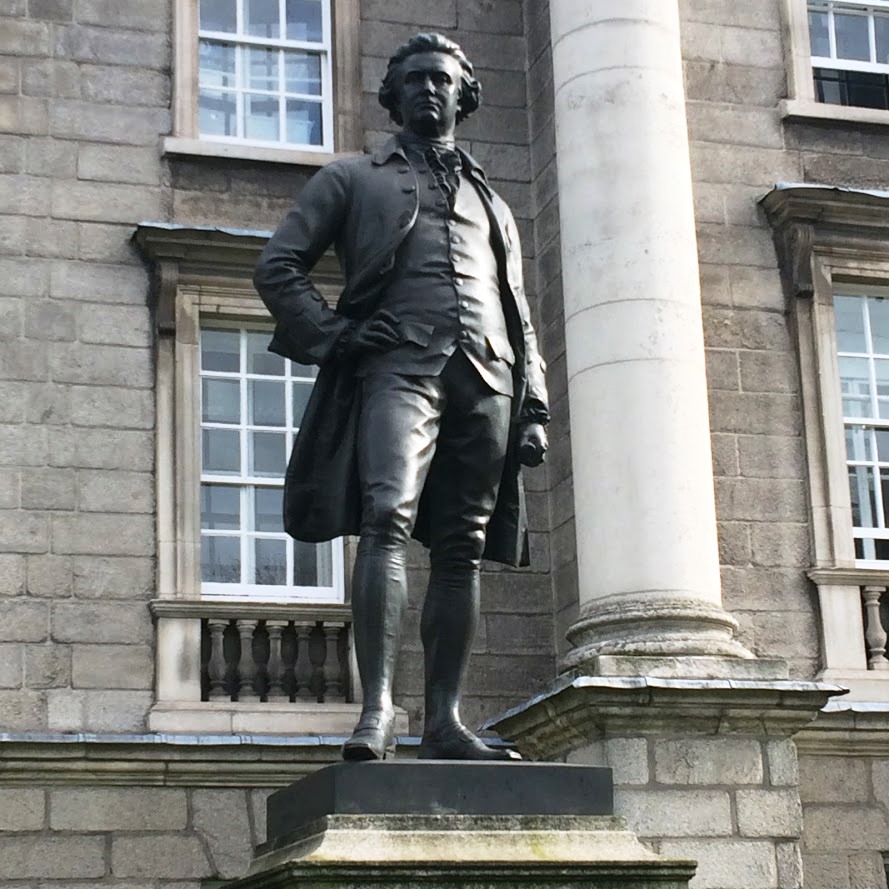
Edmund Burke, the 18th Century Anglo-Irish statesman, was reported to have said; ‘There are Three Estates in Parliament; but, in the Reporters’ Gallery yonder, there sits a Fourth Estate more important far than they all.’
This respect for the media has been severely shaken in recent years. Yet, at its very best, the media continues to hold those in power to account, to call out injustice where it is seen, and unseen, and to be a voice to the voiceless.
It is crucial we support a free and independent press, while maintaining strong regulatory oversight. In a world of powerful, and quickly emerging, media platforms, Christians in Media will always be objective, and question where necessary, but not be afraid to highlight a media that brings us facts, information and truth.
As Christians, we pray for those in the media to uncover the beauty of hope, love and renewal that blossom in the debris of conflict, greed and exploitation. We pray that everyone in the media turn their weapons of word and image into ploughshares of peace and reconciliation.
We pray World Press Freedom Day continues to support the ‘Truth Tellers’ and uphold freedom of expression and information as a public good.
The USPG Prayer Diary this morning (1 May 2022) invites us to pray:
Amazing God,
you reach the stubborn and the cynical.
Teach us to be empathetic and understanding
as we seek to spread the Word.
Yesterday’s reflection
Continued tomorrow
‘There are Three Estates in Parliament; but, in the Reporters’ Gallery yonder, there sits a Fourth Estate more important far than they all’ … Edmund Burke’s statue outside Trinity College Dublin (Photograph: Patrick Comerford)
Scripture quotations are from the New Revised Standard Version Bible: Anglicised Edition copyright © 1989, 1995, National Council of the Churches of Christ in the United States of America. Used by permission. All rights reserved worldwide. http://nrsvbibles.org
Patrick Comerford
Today is the Third Sunday of Easter (1 May 2022). During this season of Easter, I am reflecting each morning on the Psalms.
Later this morning, I hope to attend the Parish Eucharist in the Church of Saint Mary and Saint Giles in Stony Stratford. But, before this day begins, I am taking some time this morning to reflect in this Prayer Diary on my blog in these ways:
1, Short reflections on a psalm or psalms;
2, reading the psalm or psalms;
3, a prayer from the USPG prayer diary.
Psalm 67:
Psalm 67 is often known by its opening words in Latin, Deus misereatur. In Jewish tradition, this is one of the psalms recited at the Service for the Conclusion of the Shabbat. In the variation in numbering in the Greek Septuagint and Latin Vulgate, this is known as Psalm 66.
Psalm 67 an be divided it into three sections:
1 and 2,, verses 1-3 and 4-5: two broadly parallel sections in that seek God’s favour and blessing;
3, verses 6-7: this third section express universal joy as ‘all the nations’ experience God’s blessing.
Verses 3 and 5 are a repeated refrain:
Let the peoples praise you, O God;
let all the peoples praise you.
Psalm 67 shows how embracing and inclusive is God’s vision, God’s mission, God’s love. It is a psalm of thanksgiving whose key phrase is ‘The earth has yielded its increase’ or ‘The earth has yielded its harvest’ (verse 6).
The word ‘earth’ appears four times throughout this psalm in a variety of senses, suggesting that when we do God’s will on earth, the earth yields its blessings with the result that God is recognised by all nations of the earth.
The opening verse is reminiscent of the priestly blessing of the Cohanim: ‘May God be gracious to us and bless us and make his face to shine upon us’ (verse 1):
May the Lord bless and protect you.
May the Lord make his face shine on you and be gracious to you
May the Lord turn his face toward you, and give you peace (Numbers 6: 24-26)
This psalm is a plea for the mercy of God, for his ‘saving health’ to be seen in all nations, for his righteous judgment, and for his governance of the world. When all of that is in place, ‘Then shall the earth bring forth her increase, and God, our own God, will bless us. God will bless us, and all the ends of the world shall fear him.’
God raises up his own, in the face of popular prejudice, and in spite of our prejudices, so that his saving health may be received and may be a blessing in all nations.
This psalm can be read as thanksgiving for an abundant harvest or a prayer for a good harvest. The blessing God gave to the people is extended to all nations, for he is the universal just ruler and guide and all people everywhere may hold God in awe.
When Adam was exiled from Eden, it was said, ‘Cursed be the ground because of you.’ This is reversed in this psalm, as we pray for the earth to be blessed.
In Jewish tradition, Psalm 67 is read during these evenings of ‘Counting of the Omer,’ the 49 evenings or seven complete weeks between the festivals of Pesach or Passover and Shavout or Pentecost. In the original Hebrew text, excluding the superscription, this psalm contains 49 words, corresponding to the days of Counting of the Omer.
Psalm 67 as Deus Misereatur was introduced into the Book of Common Prayer by Thomas Cranmer as a Canticle for Evening Prayer, as an alternative to the main canticles.
This one of only four canticles that are provided in the traditional language in the Book of Common Prayer (2004) of the Church of Ireland [see p 134] – the others are Urbs Fortitudinis, Cantate Domino, and A Song of the Light, although modern language versions may be found either in the Psalms in the Book of Common Prayer or in the Irish Church Hymnal.
Thomas Tallis, Samuel Adler and Charles Ives composed musical settings of Psalm 67. The Revd Henry Francis Lyte, the author of ‘Abdie with me’ and a former curate of Taghmon, Co Wexford, wrote an English hymn paraphrase of this psalm, ‘God of mercy, God of grace,’ generally sung to the tune ‘Heathlands’ by Henry Smart.
‘Let the nations be glad and sing for joy’ (Psalm 67: 4) … flags of the nations at a shop in Kalambaka near the monasteries of Meteora in central Greece (Photograph: Patrick Comerford)
Psalm 67 (NRSVA):
To the leader: with stringed instruments. A Psalm. A Song.
1 May God be gracious to us and bless us
and make his face to shine upon us,
Selah
2 that your way may be known upon earth,
your saving power among all nations.
3 Let the peoples praise you, O God;
let all the peoples praise you.
4 Let the nations be glad and sing for joy,
for you judge the peoples with equity
and guide the nations upon earth.
Selah
5 Let the peoples praise you, O God;
let all the peoples praise you.
6 The earth has yielded its increase;
God, our God, has blessed us.
7 May God continue to bless us;
let all the ends of the earth revere him.
Today’s Prayer:
The theme in this week’s prayer diary of the Anglican mission agency USPG (United Society Partners in the Gospel) is ‘Truth Telllers,’ and is introduced this morning by Steve Cox, Chair of Christians in the Media. He writes:
Edmund Burke, the 18th Century Anglo-Irish statesman, was reported to have said; ‘There are Three Estates in Parliament; but, in the Reporters’ Gallery yonder, there sits a Fourth Estate more important far than they all.’
This respect for the media has been severely shaken in recent years. Yet, at its very best, the media continues to hold those in power to account, to call out injustice where it is seen, and unseen, and to be a voice to the voiceless.
It is crucial we support a free and independent press, while maintaining strong regulatory oversight. In a world of powerful, and quickly emerging, media platforms, Christians in Media will always be objective, and question where necessary, but not be afraid to highlight a media that brings us facts, information and truth.
As Christians, we pray for those in the media to uncover the beauty of hope, love and renewal that blossom in the debris of conflict, greed and exploitation. We pray that everyone in the media turn their weapons of word and image into ploughshares of peace and reconciliation.
We pray World Press Freedom Day continues to support the ‘Truth Tellers’ and uphold freedom of expression and information as a public good.
The USPG Prayer Diary this morning (1 May 2022) invites us to pray:
Amazing God,
you reach the stubborn and the cynical.
Teach us to be empathetic and understanding
as we seek to spread the Word.
Yesterday’s reflection
Continued tomorrow
‘There are Three Estates in Parliament; but, in the Reporters’ Gallery yonder, there sits a Fourth Estate more important far than they all’ … Edmund Burke’s statue outside Trinity College Dublin (Photograph: Patrick Comerford)
Scripture quotations are from the New Revised Standard Version Bible: Anglicised Edition copyright © 1989, 1995, National Council of the Churches of Christ in the United States of America. Used by permission. All rights reserved worldwide. http://nrsvbibles.org
Labels:
Canticles,
Easter 2022,
Flags,
Hymns,
Jewish Spirituality,
Journalism,
Justice,
media interviews,
Meteora,
Milton Keynes,
Mission,
Prayer,
Psalms,
Sabbath,
Taghmon,
TCD,
USPG,
Wolverton
12 September 2019
‘The Spiritual Journey of Ireland’
arrives back in Askeaton Rectory
An interview with David Patton in Saint Mary’s Church, Askeaton, for ‘The Spiritual Journey of Ireland’ (Photograph: Beniamin Sobotka)
Patrick Comerford
I returned to the rectory in Askeaton, Co Limerick, from two weeks in Greece to find a very welcome package was waiting for me at the Post Office.
The package included five copies of the DVD The Spiritual Journey of Ireland, launched earlier this summer in the Arc Cinema, Drogheda, and a number of thank you presents for having taken part in this documentary.
The Spiritual Journey of Ireland is a documentary that invites viewers to journey around the island of Ireland, exploring places, people and monuments that have helped to define the spiritual heritage of the people and the island from the earliest inhabitants to the present day.
Along with me, the other contributors include Nick Park, Executive Director of the Evangelical Alliance Ireland, and Dr John Scally, Professor in Ecclesiastical History at Trinity College Dublin, and Matthew Knell, Lecturer in Historical Theology and Church History in the London School of Theology.
David Patton, the director and producer of The Spiritual Journey of Ireland, says it features ‘contributors who each bring a unique voice.’
The documentary, with a run time of 64 minutes, ‘is full of inspiring and thought-provoking conversations set to a backdrop of breath-taking local scenery,’ David says.
‘Our incredibly beautiful landscape provides stunning visuals from start to finish. This film will help you better understand how we became the nation that we are and connect you to our spiritual past while inspiring you towards our future.’
This independent production has been made possible by individual contributions to a successful crowd-funding campaign, and is described as a ‘gripping and breath-taking dive into our spiritual past and present.’
This is an amazing and eye-opening project that is sure to open countless dialogues about the developing relationship between the Irish people and spirituality, and catapult many of its viewers to interrogate their role in the future of the nation's spiritual dimension.
I spent the afternoon in Askeaton last year working with David Patton and his Polish-born brother-in-law Beniamin Sobotka, on The Spiritual Journey of Ireland.
David is from Dundalk, Co Louth, and the concept for this documentary has been with him since 2002 when he first started investigating Ireland’s rich spiritual heritage. Since then, he has always dreamt of researching this in more detail and bringing out ‘the pivotal stories that make up our spiritual journey as a nation and see what impact it has both on our present and future.’
He says the topic gripped him then and has stayed with him ever since.
He is a leader in a local church in Drogheda, and describes himself as ‘a passionate communicator and student of faith.’
Filming took David and Beniamin to heritage sites across Ireland, enjoying the opportunity this bright summer weather provides to capture the beautiful landscape as a visual backdrop to the spoken content delivered by many contributors.
To stay connected with SJOI through Facebook you can search SJOI and like their page.
The Spiritual Journey of Ireland: Run time, 64 minutes; RRP: €12, £10, $15.
‘The Spiritual Journey of Ireland’ … a ‘gripping and breath-taking dive into our spiritual past and present’
Patrick Comerford
I returned to the rectory in Askeaton, Co Limerick, from two weeks in Greece to find a very welcome package was waiting for me at the Post Office.
The package included five copies of the DVD The Spiritual Journey of Ireland, launched earlier this summer in the Arc Cinema, Drogheda, and a number of thank you presents for having taken part in this documentary.
The Spiritual Journey of Ireland is a documentary that invites viewers to journey around the island of Ireland, exploring places, people and monuments that have helped to define the spiritual heritage of the people and the island from the earliest inhabitants to the present day.
Along with me, the other contributors include Nick Park, Executive Director of the Evangelical Alliance Ireland, and Dr John Scally, Professor in Ecclesiastical History at Trinity College Dublin, and Matthew Knell, Lecturer in Historical Theology and Church History in the London School of Theology.
David Patton, the director and producer of The Spiritual Journey of Ireland, says it features ‘contributors who each bring a unique voice.’
The documentary, with a run time of 64 minutes, ‘is full of inspiring and thought-provoking conversations set to a backdrop of breath-taking local scenery,’ David says.
‘Our incredibly beautiful landscape provides stunning visuals from start to finish. This film will help you better understand how we became the nation that we are and connect you to our spiritual past while inspiring you towards our future.’
This independent production has been made possible by individual contributions to a successful crowd-funding campaign, and is described as a ‘gripping and breath-taking dive into our spiritual past and present.’
This is an amazing and eye-opening project that is sure to open countless dialogues about the developing relationship between the Irish people and spirituality, and catapult many of its viewers to interrogate their role in the future of the nation's spiritual dimension.
I spent the afternoon in Askeaton last year working with David Patton and his Polish-born brother-in-law Beniamin Sobotka, on The Spiritual Journey of Ireland.
David is from Dundalk, Co Louth, and the concept for this documentary has been with him since 2002 when he first started investigating Ireland’s rich spiritual heritage. Since then, he has always dreamt of researching this in more detail and bringing out ‘the pivotal stories that make up our spiritual journey as a nation and see what impact it has both on our present and future.’
He says the topic gripped him then and has stayed with him ever since.
He is a leader in a local church in Drogheda, and describes himself as ‘a passionate communicator and student of faith.’
Filming took David and Beniamin to heritage sites across Ireland, enjoying the opportunity this bright summer weather provides to capture the beautiful landscape as a visual backdrop to the spoken content delivered by many contributors.
To stay connected with SJOI through Facebook you can search SJOI and like their page.
The Spiritual Journey of Ireland: Run time, 64 minutes; RRP: €12, £10, $15.
‘The Spiritual Journey of Ireland’ … a ‘gripping and breath-taking dive into our spiritual past and present’
18 June 2019
Discussing married priests
and clerical celibacy with
Ivan Yates on ‘Newstalk’
Pope Francis with Archbishop Justin Welby … is Pope Francis about to soften the rules on clerical celibacy?
Patrick Comerford
I was part of a panel on Newstalk this earlier this afternoon [18 June 2019] being interviewed by Ivan Yates on the topic of clerical celibacy and married priests.
I was invited with Father Tony Flannery, the Redemptorist priest and former editor of Reality onto the Hard Shoulder programme to discuss my experiences as a married Anglican priest with a grown-up family in response proposals this week that many see as a potentially ground-breaking move in the Roman Catholic Church.
A document released by the Vatican this week is seen as having the potential to open a new discussion on ordained married priests, with its invitation to bishops in Latin America to hold a discussion in the Vatican next October on the ordination of elderly men to the priesthood, albeit to meet pastoral needs in remote parts of the Amazon.
The proposal comes as a response to the dearth of priests in many parts of South America. It would involve ordaining viri probati, or ‘men of proven character,’ as they are known in Canon Law.
Some people, obviously, wonder whether conceding this exception would be a step towards ordaining married men in other areas of the world.
The Vatican document published this week affirms celibacy as ‘a gift for the Church, but notes that there have been requests to consider, for the most remote areas of the Amazon, ‘the possibility of conferring priestly ordination on elderly men, preferably indigenous, respected and accepted members of their community.’
Such men, the document says, could be ordained ‘even if they already have an established and stable family.’
Pope Francis has already said that he would consider the possibility of ordaining viri probati in remote areas that are deprived of the sacraments. But he has also made clear that his Church retains its broader commitment to priestly celibacy.
The Vatican proposal was drawn up after consultations with bishops and church leaders in the Amazon region.
Even if this proposal is accepted, these married priests would not be the first within the Roman Catholic tradition. Pope Benedict XVI allowed the ordination of some married Anglican priests who moved across to the Roman Catholic tradition.
Some Eastern-rite Catholic churches that are in communion with Rome, such as the Greek Catholics in Eastern Europe and the Melkites, Maronites and Coptic Catholics in the Middle East, have always had married priests alongside priests who are celibate monks. However, married priests in any of these traditions have never been allowed to become bishops unless they are widowed.
The proposed exception for remote areas of South America would address the extreme shortage of priests that is found in many parts of the world today.
The change is proposed in a working document for a meeting of bishops in Rome in October to discuss the pastoral needs communities in Bolivia, Brazil, Colombia, Ecuador, French Guiana, Guyana, Peru, Suriname and Venezuela, which are known collectively as the Pan-Amazon Region.
The Vatican document also contains a proposal for an ‘official ministry’ for women in the Pan-Amazon region, although it does not specify what type of ministry.
Pope Francis had convened a panel of experts to study the history of women deacons in the early Church, but he said in May that the panel’s findings were inconclusive.
Parishes in the Amazon area often experience frequent and lengthy periods of difficulty in celebrating the Eucharist and of waiting for with Baptisms, Confessions and Church weddings because of the lack of priests.
The working paper was released on Monday by the Synod of Bishops, the Vatican department overseeing the world’s bishops. ‘For this reason, instead of leaving the communities without the Eucharist, the criteria of selection and preparation of the ministers authorised to celebrate it should be changed.’
The document urges the bishops meeting in October to address the pastoral needs of moving the Church from one ‘that visits’ to a ‘Church that remains.’ However, the Vatican insists that the working document of the Amazonian Synod is no more that a working document, and it remains open to being discussed and modified.
The Vatican proposal also suggests that the Church should incorporate indigenous ‘music and dance, in native languages and clothes, in communion with nature and with the community.’
Cardinal Walter Kasper said earlier this month that if bishops from the Amazon together propose that married men should be ordained to the priesthood, Pope Francis would ‘in principle probably accept it.’
In an interview with the German daily Frankfurter Rundschau, the former president of the Pontifical Council for Promoting Christian Unity said the change to the tradition of a celibate priesthood in the Latin Church could come at the Synod on the Amazon in October.
Cardinal Kasper, who is considered one of Pope Francis’s preferred theological advisors, said in the interview that ‘celibacy is not a dogma, it is not an unalterable practice.’
The First and Second Lateran Councils in 1123 and 1139 explicitly forbade priests in the Western Church from marrying, so celibacy has been part of that tradition for almost 1,000 years. Eliminating the prospect of marriage ensured that children or wives of priests did not make claims on property acquired throughout a priest’s life, and this helped to prevent the alienation of land and property belonging to the Church.
However, it took centuries for the practice of priestly celibacy to become widespread. As Tony Flannery pointed out this afternoon, there were married priests, and perhaps even married bishops, in Ireland until as late as the 16th century. But while celibacy eventually became the norm in the Western Catholic Church, it was rejected by many parts of the western Church, and in the East remains a tradition only within monasticism.
Sandro Magister, a Vatican expert at the Italian magazine L’Espresso, said that he was confident that allowing married priests in the Amazon would ‘open the door for other bishops’ conferences all over the world to allow married priests,’ including in the heart of Europe. He said that German bishops plan to hold a synod on this topic next year.
Patrick Comerford
I was part of a panel on Newstalk this earlier this afternoon [18 June 2019] being interviewed by Ivan Yates on the topic of clerical celibacy and married priests.
I was invited with Father Tony Flannery, the Redemptorist priest and former editor of Reality onto the Hard Shoulder programme to discuss my experiences as a married Anglican priest with a grown-up family in response proposals this week that many see as a potentially ground-breaking move in the Roman Catholic Church.
A document released by the Vatican this week is seen as having the potential to open a new discussion on ordained married priests, with its invitation to bishops in Latin America to hold a discussion in the Vatican next October on the ordination of elderly men to the priesthood, albeit to meet pastoral needs in remote parts of the Amazon.
The proposal comes as a response to the dearth of priests in many parts of South America. It would involve ordaining viri probati, or ‘men of proven character,’ as they are known in Canon Law.
Some people, obviously, wonder whether conceding this exception would be a step towards ordaining married men in other areas of the world.
The Vatican document published this week affirms celibacy as ‘a gift for the Church, but notes that there have been requests to consider, for the most remote areas of the Amazon, ‘the possibility of conferring priestly ordination on elderly men, preferably indigenous, respected and accepted members of their community.’
Such men, the document says, could be ordained ‘even if they already have an established and stable family.’
Pope Francis has already said that he would consider the possibility of ordaining viri probati in remote areas that are deprived of the sacraments. But he has also made clear that his Church retains its broader commitment to priestly celibacy.
The Vatican proposal was drawn up after consultations with bishops and church leaders in the Amazon region.
Even if this proposal is accepted, these married priests would not be the first within the Roman Catholic tradition. Pope Benedict XVI allowed the ordination of some married Anglican priests who moved across to the Roman Catholic tradition.
Some Eastern-rite Catholic churches that are in communion with Rome, such as the Greek Catholics in Eastern Europe and the Melkites, Maronites and Coptic Catholics in the Middle East, have always had married priests alongside priests who are celibate monks. However, married priests in any of these traditions have never been allowed to become bishops unless they are widowed.
The proposed exception for remote areas of South America would address the extreme shortage of priests that is found in many parts of the world today.
The change is proposed in a working document for a meeting of bishops in Rome in October to discuss the pastoral needs communities in Bolivia, Brazil, Colombia, Ecuador, French Guiana, Guyana, Peru, Suriname and Venezuela, which are known collectively as the Pan-Amazon Region.
The Vatican document also contains a proposal for an ‘official ministry’ for women in the Pan-Amazon region, although it does not specify what type of ministry.
Pope Francis had convened a panel of experts to study the history of women deacons in the early Church, but he said in May that the panel’s findings were inconclusive.
Parishes in the Amazon area often experience frequent and lengthy periods of difficulty in celebrating the Eucharist and of waiting for with Baptisms, Confessions and Church weddings because of the lack of priests.
The working paper was released on Monday by the Synod of Bishops, the Vatican department overseeing the world’s bishops. ‘For this reason, instead of leaving the communities without the Eucharist, the criteria of selection and preparation of the ministers authorised to celebrate it should be changed.’
The document urges the bishops meeting in October to address the pastoral needs of moving the Church from one ‘that visits’ to a ‘Church that remains.’ However, the Vatican insists that the working document of the Amazonian Synod is no more that a working document, and it remains open to being discussed and modified.
The Vatican proposal also suggests that the Church should incorporate indigenous ‘music and dance, in native languages and clothes, in communion with nature and with the community.’
Cardinal Walter Kasper said earlier this month that if bishops from the Amazon together propose that married men should be ordained to the priesthood, Pope Francis would ‘in principle probably accept it.’
In an interview with the German daily Frankfurter Rundschau, the former president of the Pontifical Council for Promoting Christian Unity said the change to the tradition of a celibate priesthood in the Latin Church could come at the Synod on the Amazon in October.
Cardinal Kasper, who is considered one of Pope Francis’s preferred theological advisors, said in the interview that ‘celibacy is not a dogma, it is not an unalterable practice.’
The First and Second Lateran Councils in 1123 and 1139 explicitly forbade priests in the Western Church from marrying, so celibacy has been part of that tradition for almost 1,000 years. Eliminating the prospect of marriage ensured that children or wives of priests did not make claims on property acquired throughout a priest’s life, and this helped to prevent the alienation of land and property belonging to the Church.
However, it took centuries for the practice of priestly celibacy to become widespread. As Tony Flannery pointed out this afternoon, there were married priests, and perhaps even married bishops, in Ireland until as late as the 16th century. But while celibacy eventually became the norm in the Western Catholic Church, it was rejected by many parts of the western Church, and in the East remains a tradition only within monasticism.
Sandro Magister, a Vatican expert at the Italian magazine L’Espresso, said that he was confident that allowing married priests in the Amazon would ‘open the door for other bishops’ conferences all over the world to allow married priests,’ including in the heart of Europe. He said that German bishops plan to hold a synod on this topic next year.
16 January 2019
‘A light for revelation
to the Gentiles and
for glory to your people’
Sunset this week seen from the scaffolding at the west end of Saint Mary’s Church, Askeaton, Co Limerick (Photograph: Patrick Comerford, 2019; click on image for full-screen view)
Patrick Comerford
The spell of dry weather, with bright blue skies and wonderful winter sunrises and sunsets seems to be coming to an end this week.
As I strolled from the Rectory in Askeaton to buy the daily newspapers this morning [16 January 2019, I was caught in a sudden, intense rainstorm. I calculated I would get as wet if I turned back as I would if I continued on to see the work being carried on at Saint Mary’s Church.
The scaffolding is now in placed and secured at the west end of the church as builders and engineers try to assess the work that needs to be done on the façade to secure the church for future generations in the parish and in the community.
On Tuesday afternoon, I climbed the scaffolding to see the work at first hand. It was almost sunset, and a caught a beautiful view of the landscape to the west beyond Askeaton, stretching across West Limerick and probably into North Kerry.
Behind me I could see the Rectory, and to the north there were views across the Shannon Estuary and into Co Clare. But those views were not as spectacular as the view to the west looking into the setting sun.
This evening I was part of a discussion on Newstalk with Ivan Yates and David Quinn on religious freedom and toleration. I cited recent examples I have seen on the streets of Limerick of Buddhist monks walking in a line along O’Connell Street in their saffron robes and Muslim women in traditional scarves as indicators of pluralism and diversity in Ireland today.
We have moved a long way in Ireland from the ‘pogroms’ in Limerick in the early 20th century that deprived the city of the presence of a vibrant Jewish community, or the intolerance in the south-east in the 1950s that was expressed in the Fethard-on-Sea boycott.
In reflecting on the mistakes and the extremism of the past, we can learn to value some of the freedoms we have today.
But during the day, I have been preparing in advance resources for preaching and liturgy for the Feast of the Presentation (2 February) and the Fourth Sunday of Epiphany (4 February).
In the story of the Presentation, old Simeon speaks words that are familiar to many of us in the canticle Nunc Dimittis:
‘for my eyes have seen your salvation,
which you have prepared in the presence of all peoples,
a light for revelation to the Gentiles
and for glory to your people Israel’ (Luke 2: 31-32)
They are words not only about the beauty of light but a reminder of the need to celebrate the diversity and pluralism we enjoy in Ireland today.
Scaffolding at the west end of Saint Mary’s Church, Askeaton, this week (Photograph: Patrick Comerford, 2019)
Patrick Comerford
The spell of dry weather, with bright blue skies and wonderful winter sunrises and sunsets seems to be coming to an end this week.
As I strolled from the Rectory in Askeaton to buy the daily newspapers this morning [16 January 2019, I was caught in a sudden, intense rainstorm. I calculated I would get as wet if I turned back as I would if I continued on to see the work being carried on at Saint Mary’s Church.
The scaffolding is now in placed and secured at the west end of the church as builders and engineers try to assess the work that needs to be done on the façade to secure the church for future generations in the parish and in the community.
On Tuesday afternoon, I climbed the scaffolding to see the work at first hand. It was almost sunset, and a caught a beautiful view of the landscape to the west beyond Askeaton, stretching across West Limerick and probably into North Kerry.
Behind me I could see the Rectory, and to the north there were views across the Shannon Estuary and into Co Clare. But those views were not as spectacular as the view to the west looking into the setting sun.
This evening I was part of a discussion on Newstalk with Ivan Yates and David Quinn on religious freedom and toleration. I cited recent examples I have seen on the streets of Limerick of Buddhist monks walking in a line along O’Connell Street in their saffron robes and Muslim women in traditional scarves as indicators of pluralism and diversity in Ireland today.
We have moved a long way in Ireland from the ‘pogroms’ in Limerick in the early 20th century that deprived the city of the presence of a vibrant Jewish community, or the intolerance in the south-east in the 1950s that was expressed in the Fethard-on-Sea boycott.
In reflecting on the mistakes and the extremism of the past, we can learn to value some of the freedoms we have today.
But during the day, I have been preparing in advance resources for preaching and liturgy for the Feast of the Presentation (2 February) and the Fourth Sunday of Epiphany (4 February).
In the story of the Presentation, old Simeon speaks words that are familiar to many of us in the canticle Nunc Dimittis:
‘for my eyes have seen your salvation,
which you have prepared in the presence of all peoples,
a light for revelation to the Gentiles
and for glory to your people Israel’ (Luke 2: 31-32)
They are words not only about the beauty of light but a reminder of the need to celebrate the diversity and pluralism we enjoy in Ireland today.
Scaffolding at the west end of Saint Mary’s Church, Askeaton, this week (Photograph: Patrick Comerford, 2019)
25 October 2017
‘A well-kept beard’ and
‘the vision of a
benevolent clergyman’
This full-page feature was published earlier this month in the newspaper ‘Limerick Life’ (11 October 2017, p 20):
People like us
Canon Patrick Comerford
Darragh Roche
“I think God calls me Patrick, and that’s good enough,” Canon Patrick Comerford recalls telling a little girl who asked him what she should call him, a familiar problem for someone with as many letters before and after his name as he has. Comerford is Canon Precentor at St. Mary’s Cathedral, a former professor of theology and the new Director for Education and Training in the Church of Ireland Diocese of Limerick and Killaloe. He’s also priest in charge of the Rathkeale group of parishes, where he preaches in several churches every Sunday.
Sporting a well-kept beard reminiscent of a biblical patriarch, Comerford is the vision of a benevolent clergyman. But the road to the pulpit didn’t wend a straight path for him.
He had ambitions to be an architect, though he admits he was too ‘mathematically challenged’ to make that a reality. He had some training as a chartered surveyor, even working in that area before landing his first newspaper job at the Lichfield Mercury [near] Birmingham.
“I found it was much more fun being a journalist,” he says, and he quickly found success in the field, becoming a sub-editor at the Wexford People before joining the Irish Times in 1974, ending up as Foreign Desk Editor. me his years as a journalist, religious faith remained a powerful theme. In 1982, he returned to college to study theology, receiving, receiving his MA in Ecumenical Theology while still handling foreign news for the nation’s newspaper of record.
For Comerford, his faith was strongly connected to his political beliefs. He was involved in the Campaign for Nuclear Disarmament, opposing the proposed nuclear plant at Carnsore Point, Co. Wexford and supporting Dunnes workers striking about Apartheid in South Africa.
“I suppose I was radical in my theology,” he says, preferring to think of it as a “cutting edge” theology – a movement that made him aware of South African Archbishop Desmond Tutu “when people didn’t even know him.”
He returned to education at the same time as his wife, Barbara, who pursued a degree in peace studies; their sons were born shortly afterwards. Eventually, his commitment to the Church of Ireland became more serious. “I was conscious of my degree in theology not being used,” Comerford says.
“I became a reader in the Church of Ireland. It occurred to me I should [be] offering myself for ordination.”
Comerford was ordained, first a deacon and then a priest, but continued at the Irish Times. But his time as a “work[er] priest” would eventually come to a close.
“I had no interest in becoming religious affairs correspondent for the Irish Times,” he says without hesitation, though the choice might have seemed an obvious one. A major restructuring at the newspaper gave him the opportunity to take voluntary redundancy. Though his job was not at risk, he decided to take the offer. Was it serendipity or a sign from God? “It’s part of God’s prompting,” he gently suggests.
After several years teaching theology, he was asked to come to Limerick and lead the training of Church of Ireland ministers in the diocese. He recently moderated a lecture hosted by Limerick Civic Trust on censorship and isn’t shy about expressing his opinion. He admits he’s received criticism online.
“The voice of Christ needs to be heard,” he says. “It’s not party-political speech. There are some absolute no-nos for Christians, like discrimination. You cannot discriminate.” While he’s happy the church has a good track record on discrimination, he’s not dismissive of past injustice.
“We lived in a society that was much more racist,” Comerford says.
“It only slowly dawns on us about discrimination. The Church of Ireland has processes that allow us to discuss more openly. We’re more transparent but we have a long way to go in terms of democracy.”
While attendance at churches is declining and religious beliefs seem weaker than ever in Ireland, Comerford doesn’t seem too worried.
We are not in the business of marketing and advertising,” he says. “It’s not about filling pews. Church services are the engine room but there are other people on other decks. It’s more important to be on the journey and get to the destination.”
“People who are questioning God are in a relationship with God,” Canon Comerford is certain.
People like us
Canon Patrick Comerford
Darragh Roche
“I think God calls me Patrick, and that’s good enough,” Canon Patrick Comerford recalls telling a little girl who asked him what she should call him, a familiar problem for someone with as many letters before and after his name as he has. Comerford is Canon Precentor at St. Mary’s Cathedral, a former professor of theology and the new Director for Education and Training in the Church of Ireland Diocese of Limerick and Killaloe. He’s also priest in charge of the Rathkeale group of parishes, where he preaches in several churches every Sunday.
Sporting a well-kept beard reminiscent of a biblical patriarch, Comerford is the vision of a benevolent clergyman. But the road to the pulpit didn’t wend a straight path for him.
He had ambitions to be an architect, though he admits he was too ‘mathematically challenged’ to make that a reality. He had some training as a chartered surveyor, even working in that area before landing his first newspaper job at the Lichfield Mercury [near] Birmingham.
“I found it was much more fun being a journalist,” he says, and he quickly found success in the field, becoming a sub-editor at the Wexford People before joining the Irish Times in 1974, ending up as Foreign Desk Editor. me his years as a journalist, religious faith remained a powerful theme. In 1982, he returned to college to study theology, receiving, receiving his MA in Ecumenical Theology while still handling foreign news for the nation’s newspaper of record.
For Comerford, his faith was strongly connected to his political beliefs. He was involved in the Campaign for Nuclear Disarmament, opposing the proposed nuclear plant at Carnsore Point, Co. Wexford and supporting Dunnes workers striking about Apartheid in South Africa.
“I suppose I was radical in my theology,” he says, preferring to think of it as a “cutting edge” theology – a movement that made him aware of South African Archbishop Desmond Tutu “when people didn’t even know him.”
He returned to education at the same time as his wife, Barbara, who pursued a degree in peace studies; their sons were born shortly afterwards. Eventually, his commitment to the Church of Ireland became more serious. “I was conscious of my degree in theology not being used,” Comerford says.
“I became a reader in the Church of Ireland. It occurred to me I should [be] offering myself for ordination.”
Comerford was ordained, first a deacon and then a priest, but continued at the Irish Times. But his time as a “work[er] priest” would eventually come to a close.
“I had no interest in becoming religious affairs correspondent for the Irish Times,” he says without hesitation, though the choice might have seemed an obvious one. A major restructuring at the newspaper gave him the opportunity to take voluntary redundancy. Though his job was not at risk, he decided to take the offer. Was it serendipity or a sign from God? “It’s part of God’s prompting,” he gently suggests.
After several years teaching theology, he was asked to come to Limerick and lead the training of Church of Ireland ministers in the diocese. He recently moderated a lecture hosted by Limerick Civic Trust on censorship and isn’t shy about expressing his opinion. He admits he’s received criticism online.
“The voice of Christ needs to be heard,” he says. “It’s not party-political speech. There are some absolute no-nos for Christians, like discrimination. You cannot discriminate.” While he’s happy the church has a good track record on discrimination, he’s not dismissive of past injustice.
“We lived in a society that was much more racist,” Comerford says.
“It only slowly dawns on us about discrimination. The Church of Ireland has processes that allow us to discuss more openly. We’re more transparent but we have a long way to go in terms of democracy.”
While attendance at churches is declining and religious beliefs seem weaker than ever in Ireland, Comerford doesn’t seem too worried.
We are not in the business of marketing and advertising,” he says. “It’s not about filling pews. Church services are the engine room but there are other people on other decks. It’s more important to be on the journey and get to the destination.”
“People who are questioning God are in a relationship with God,” Canon Comerford is certain.
11 October 2017
Trump, Brexit and Denis O’Brien:
Civic Trust lectures bring
public debate to Limerick
This half-age news report is published in the newspaper ‘Limerick Life’ on 11 October 2017 (p 4):
Trump, Brexit and Denis O’Brien: Civic Trust
lectures bring public debate to Limerick
Jodie Ginsberg of Index on Censorship speaks with Canon Patrick Comerford (Picture: Cian Reinhardt/ilovelimerick)
Limerick Civic Trust is bringing a new sense of public debate and engagement to the city with its autumn lecture series. For the second year in a row, the Civic Trust is hosting speakers whose views have often sparked controversy and who are willing to share their experiences and expertise with the public. The lectures are held in St. Mary’s Cathedral, an imposing Medieval venue, which has opened its doors to all comers.
One of the most talked-about events so far was the visit of Jodie Ginsberg, CEO of Index on Censorship, which took place on 28 September. Ginsberg is controversial herself, as her organisation has defended speech some considered blasphemous and insulting. A media furore about Kevin Meyers’ planned appearance did not deter a crowd from hearing Ginsberg discuss the dangers of censorship with Canon Patrick Comerford.
Speaking during banned books week, Ginsberg, who is a former Reuters’ journalist, warned that outrage at certain opinion – such as Holocaust denial and racism – can lead to an impulse to censor people. She warned that this a ‘slippery slope’ that could easily have ‘authoritarian use.’
Ginsberg, ironically speaking from the pulpit, criticised ‘self-appointed spokespeople for offended groups’ who are impinging on freedom of expression.’ “Rich individuals can influence politics and mould the narrative to suit their ends.” She later made clear that she would have ‘no self-censorship on Denis O’Brien’ and criticised Rupert Murdoch for ‘hypocrisy on free speech.’
She noted that Ireland had a ‘very concentrated media market’ and that Ireland’s blasphemy law is a model for countries keen to crack down on religious dissenters, though she welcomed the Government’s move to hold a referendum on the subject.
“It is clear that something is going wrong at universities,” Ginsberg said, referring to campus protests against invited speakers and online campaigners to ‘no platform’ guests whose views some students consider dangerous.
On 5 October, former Irish Times Washington Correspondent Simon Carswell took centre stage, discussing his thoughts on Donald Trump, Brexit and the 2016 US presidential election. Carswell, who attended Crescent College Comprehensive in Limerick, referred to Trump as a ‘slick salesman’ and criticised Hillary Clinton for not appealing to a wider range of voters. He compared Trump favourably to Bill Clinton, however. He also drew parallels between Trump’s victory and the successful campaign for the UK to leave the European Union, citing the feelings of people who have been ‘left behind’ by contemporary political institutions, as well as economic anxiety and a desire for political leaders to feel their voters’ anger.
The Civic Trust will hold two more lectures this autumn. Ian Ritchie, a renowned international architect, will visit St. Mary’s on 12 October. That talk will be moderated by LIT President Dr Vincent Cunnane. And on 16 October, property developer Roger Madelin will share his insights about urban regeneration. Madelin worked on the refurbishment of King’s Cross Station in London and has toured Limerick personally in recent weeks, giving him a chance to fully analyse the state of regeneration in the city.
Trump, Brexit and Denis O’Brien: Civic Trust
lectures bring public debate to Limerick
Jodie Ginsberg of Index on Censorship speaks with Canon Patrick Comerford (Picture: Cian Reinhardt/ilovelimerick)
Limerick Civic Trust is bringing a new sense of public debate and engagement to the city with its autumn lecture series. For the second year in a row, the Civic Trust is hosting speakers whose views have often sparked controversy and who are willing to share their experiences and expertise with the public. The lectures are held in St. Mary’s Cathedral, an imposing Medieval venue, which has opened its doors to all comers.
One of the most talked-about events so far was the visit of Jodie Ginsberg, CEO of Index on Censorship, which took place on 28 September. Ginsberg is controversial herself, as her organisation has defended speech some considered blasphemous and insulting. A media furore about Kevin Meyers’ planned appearance did not deter a crowd from hearing Ginsberg discuss the dangers of censorship with Canon Patrick Comerford.
Speaking during banned books week, Ginsberg, who is a former Reuters’ journalist, warned that outrage at certain opinion – such as Holocaust denial and racism – can lead to an impulse to censor people. She warned that this a ‘slippery slope’ that could easily have ‘authoritarian use.’
Ginsberg, ironically speaking from the pulpit, criticised ‘self-appointed spokespeople for offended groups’ who are impinging on freedom of expression.’ “Rich individuals can influence politics and mould the narrative to suit their ends.” She later made clear that she would have ‘no self-censorship on Denis O’Brien’ and criticised Rupert Murdoch for ‘hypocrisy on free speech.’
She noted that Ireland had a ‘very concentrated media market’ and that Ireland’s blasphemy law is a model for countries keen to crack down on religious dissenters, though she welcomed the Government’s move to hold a referendum on the subject.
“It is clear that something is going wrong at universities,” Ginsberg said, referring to campus protests against invited speakers and online campaigners to ‘no platform’ guests whose views some students consider dangerous.
On 5 October, former Irish Times Washington Correspondent Simon Carswell took centre stage, discussing his thoughts on Donald Trump, Brexit and the 2016 US presidential election. Carswell, who attended Crescent College Comprehensive in Limerick, referred to Trump as a ‘slick salesman’ and criticised Hillary Clinton for not appealing to a wider range of voters. He compared Trump favourably to Bill Clinton, however. He also drew parallels between Trump’s victory and the successful campaign for the UK to leave the European Union, citing the feelings of people who have been ‘left behind’ by contemporary political institutions, as well as economic anxiety and a desire for political leaders to feel their voters’ anger.
The Civic Trust will hold two more lectures this autumn. Ian Ritchie, a renowned international architect, will visit St. Mary’s on 12 October. That talk will be moderated by LIT President Dr Vincent Cunnane. And on 16 October, property developer Roger Madelin will share his insights about urban regeneration. Madelin worked on the refurbishment of King’s Cross Station in London and has toured Limerick personally in recent weeks, giving him a chance to fully analyse the state of regeneration in the city.
29 July 2016
A briefing paper on the vote to go ahead
with a new reactor at Hinkley Point C
A computer-generated image of the Hinkley Point C nuclear power plant. Photograph: EDF Energy/The Guardian
Patrick Comerford
I was interviewed on Newstalk FM this morning by Kieran Cuddihy about the decision late yesterday that could give the go-ahead to building Britain’s first new nuclear power station for a generation.
I was speaking as President of the Irish Campaign for Nuclear Disarmament (Irish CND). Also on the programme was Dr David Robert Grimes of Oxford University, a Dublin-born physicist who writes regularly for The Irish Times and the Guardian.
In advance of the programme, I prepared this briefing paper last night.
The setting
Britain is likely to get its first new nuclear power station for a generation after the directors of the French energy group EDF voted in favour of building the Hinkley Point C power station. After a decade of debate about the controversial £18 billion project, the EDF board approved the project by 10 votes to seven.
If the plan gets the expected British government approval in a few weeks’ time, there will be not one, but two new EPR-style reactors at the Hinkley Point C power station in Somerset.
But it will be too big, too slow, and too expensive.
A more dangerous nuclear world
Nuclear safety has been back in the public eye with the 30th anniversary of the Chernobyl accident recently, along with fifth anniversary of the Fukushima crisis.
The decision comes just weeks after the British government pushed through a decision on replacing Britain’s Trident nuclear submarine force. Britain is on a mad roll towards making this a more-nuclear world and more dangerous world.
Hinkley C is going to produce weapons-grade uranium and weapons-grade plutonium. At a time when world tensions are rising, when Cold War tensions are at a height we have not seen since the 1980s, at a time when we are worried about terrorists and rogue states gaining access to the uncontrolled production of dangerous material like this, this seems like lemmings rushing to the edge of the cliff.
How can the world argue morally that it is wrong for Iran to have its nuclear programme when Britain is stepping up the nuclear race with both nuclear weapons and nuclear power stations?
In addition, it is only five years since the Fukushima nuclear disaster in 2011 led Japan and Germany to shut down all their nuclear reactors. Japan has since restarted some, but Germany still plans to close all its plants permanently by 2022.
Why should we be concerned?
Of course, we should be concerned in Ireland.
The site of the Hinkley Point C is just 240 km from the Irish coast, and is a greater distance from London – a 265 km drive.
Yet the British government insists it does not have to consult with its European neighbours because there is little or no likelihood of “significant transboundary environmental impacts.”
In the past, British courts have ruled against An Taisce, the Irish National Trust, when it tried to block Hinkley. An Taisce’s lawyers say there was a failure to undertake “transboundary consultation” as required by the European Commission’s Environmental Impact Assessment Directive.
Ireland, The Netherlands, Norway and other European countries have argued they should have been consulted about Hinkley, and even more distant Austria has raised the possibility of a severe accident that could lead to radioactive materials being spread by wind across Europe.
Others are worried too. A UN committee has already ruled that Britain failed to consult European countries properly over potential environmental risks. The committee said Britain “is in non-compliance with its obligations” to discuss the possible impact of any accident or other event that could affect those nations in proximity to Hinkley.
Paul Dorfman, a senior researcher at UCL’s energy institute, said the ruling from the UN Economic and Social Council throws great uncertainty over Hinkley.
Why now?
Ironically, the British government, which supports the project heavily, has welcomed this vote from EDF as a vote of confidence in the British economy just a month after the UK voted to leave the EU.
The cost of the project
The construction of Hinkley Point C is due to be completed by 2025, and its advocates claim it will provide 7% of Britain’s electricity, enough power for six million homes, for almost 60 years.
The British government wants to phase out coal by 2025, and claims nuclear energy offers a lower-carbon option that produces enough electricity to fill the gap created by closing existing plants.
But who said nuclear is cleaner than coal? This is simply exporting the dirt to the Third World, where open-cast uranium mines are radioactive isolated landscapes that blight vast areas for the foreseeable future. Looking at how similar projects have been delayed in France, Finland and other countries, how can we believe that the target date of 2025 is realistic? A similar project has overrun costings in France.
The £18 billion cost of Hinkley Point C is being borne by EDF, which is 85% owned by the French government, and China General Nuclear Power Corporation, which has agreed to take a 33% stake in the project. But the costing must also take account of £3030 billion in subsidies.
EDF’s own flagship project in Flamanville is more than three times over budget and years behind schedule. EDF’s workers in France have campaigned for Hinkley Point C to be delayed or scrapped amid fears it could ruin the company’s finances.
The cost to consumers
This reactor would be the most expensive nuclear reactor in the world, and on top of this it would be poor value for tax payers and consumers.
John Sauven, executive director of Greenpeace, has pointed out that the project is “terrible value for money” for British families.
“This is a bitter pill to swallow for hard up people who have been told that the government is trying to keep bills down while dealing with energy security and lowering carbon emissions. Today’s decision doesn’t prove the UK is open for business post Brexit. It just shows the Hinkley deal became too big to fail in the eyes of British and French politicians.”
And, of course, there is a cost to consumers.
The British government has guaranteed EDF a ‘strike price’ of £92.50 for each megawatt hour of energy it generates. But the present wholesale price of that amount of electricity to the British consumer is £38.
Either consumer prices for electricity are going to rise rapidly in Britain – at a time when they are falling fast in other countries, as we know in Ireland; or the British government, the British taxpayers is going to subside the cost, and in the process subsidise the French and Chinese nuclear programmes.
The delays
Can Hinkley Point C (HPC) provide 7% of Britain’s electricity during its estimated lifetime of 60 years? Even these estimates depend on HPC beginning to generate power in 2025, and that is several years later than planned.
In 2007, EDF’s chief executive, Vincent de Rivaz, made the brash claim that people in Britain would be cooking their Christmas turkeys on new nuclear power by Christmas next year [2017]. Now, however, Hinkley Point C is not going to be completed before 2025, at least.
John Sauven of Greenpeace points out: “Every time EDF has tried to build a reactor like Hinkley, it has failed. There isn’t a shred of evidence that Hinkley can be built on time or on budget, and if it hits the same problems as its predecessors, it can’t be relied on to keep the lights on in the UK.”
The main reason for the delays has been worries over the financing of the project by EDF. EDF is 85% owned by the French government, and French trade unions warn Hinkley could ruin the company’s finances.
Look at what’s happening in France
In the run-up to the meeting, an EDF director opposed to the project resigned. in his resignation letter, GĂ©rard Magnin said Hinkley C is “very risky.” He did not attend the board meeting in Paris yesterday [28 July 2016].
His walk-out follows the resignation of EDF’s finance director, Thomas Piquemal, in March. He too expressed concerns about the cost of Hinkley Point C, and he resigned because he felt his warnings that Hinkley Point C could bankrupt the company were being ignored.
In June 2016, EDF executives and managers told MPs that Hinkley Point C should be postponed, until it has “solved a litany of problems,” including EDF’s “soaring debts.” At the time, EDF said it was delaying a final investment decision until at least September 2016.
Apart from financial concerns, there are concerns in France too about how to deal with nuclear waste. France’s nuclear safety authority has found weaknesses in a reactor EDF is building in Flamanville, which is the same design as Hinkley Point C.
Flamanville is over-budget and behind schedule. The €10.5 billion nuclear reactor has faced problems that some say could now be repeated in Britain.
It stands on granite cliffs overlooking the Channel and has become France’s most famous building site.
The technology behind the European pressurised reactor (EPR) is meant to be safer than anything that has gone before. But the project is more than three times over budget and years behind schedule, and France’s nuclear safety authority has found weaknesses in the reactor’s steel.
If and when it comes online, perhaps late in 2018, the Flamanville EPR will be the world’s largest nuclear reactor. It is being claimed that the reinforced concrete core is being built to withstand plane crashes and earth tremors. But the combination of the EPR’s size and its safety features have turned it into a construction nightmare.
The proposed waste disposal scheme remains a proposal. No similar scheme has been built yet, indeed the design has yet to be completed, let alone tested or tried.
Today, there is not one single EPR reactor that is operating anywhere in the world. In Flamanville, the first concrete was poured in 2007. Since then costs have more than tripled to €10.5 billion, and the project is six years behind schedule.
In Finland, the location of another EPR, the picture is even worse: the Olkiluoto reactor is nearly a decade behind schedule and three times over budget, with the added headache of legal battles over who is to blame.
We know less about the two EPR reactors being built in China.
In 2015, it emerged that weak spots had been found in the Flamanville reactor’s steel, which is made by another French industrial champion, Areva. France’s Nuclear Safety Authority (ASN) said it had found “very serious anomalies” in the reactor vessel.
As the regulator deepened its investigation, it warned that the problems could affect other reactors in operation. In its latest annual report, the ASN expressed “significant concerns” for the future of France’s nuclear industry.
Mycle Schneider, a Paris-based nuclear policy analyst, accuses the industry of over-estimating its capacity to build highly complex reactors, while under-estimating its skills gaps.
He is worried that relentless cost-cutting pressures could compromise safety, as Areva bids to save €1 billion by 2017 through job cuts. “To me, it is very obvious that you will cut into safety and security and that is what makes me most nervous,” he says. “The financial and economic pressure on all the stakeholders is completely unparalleled.”
The French nuclear regulator, ASN, said it had been informed by Areva that its investigation had found evidence of irregularities in about 400 components produced since 1965, of which some 50 are believed to be in use in French nuclear plants. Areva found faults at a new reactor being built at Flamanville in Normandy. That scheme, like another at Olkiluoto in Finland, is using an EPR like the one planned for Hinkley and is both massively delayed and over budget.
The alternatives
Kevin Coyne, the national officer for energy of the union Unite, was absurd when he said that going ahead “could result in the lights going out in Britain.”
Environmental groups including Greenpeace have criticised any go-ahead, calling for investment in homegrown renewable energy like offshore wind.
John Sauven of Greenpeace says: “We need to invest in reliable home-grown renewable energy like off-shore wind which is powering other northern European countries more cheaply than Hinkley, even taking into account the back-up cost when the wind doesn’t blow.”
The supporters of Hinkley claim it is going to provide 7% of Britain’s electricity from about 2025, at a time when old coal and atomic plants are closing down.
This dash for brash, costly projects comes just as electricity production is moving to a smaller, more dispersed model with the arrival of renewables. Meanwhile, demand for power has been falling in continental Europe as a result of factory efficiency drives.
Britain too should be thinking about smaller, easier-to-build, more-flexible nuclear power stations.
The nitty-gritty of the finances
The unhedged British wholesale electricity price in January 2015 was about £50/MWh. EDF has negotiated a guaranteed fixed price – a “strike price” – for electricity from Hinkley Point C of £92.50/MWh (in 2012 prices), which will be adjusted and linked to inflation during the building period and over the subsequent 35-year tariff period. The price could fall to £89.50/MWh if a new plant at Sizewell is also approved.
The National Audit Office estimates that the additional cost to consumers of “future top-up payments under the proposed HPC CfD have increased from £6.1 billion in October 2013, when the strike price was agreed, to £29.7 billion in March 2016.”
Research by Imperial College Business School argues that no new nuclear power plants would be built in the UK without government intervention.
Compared with other power generation sources, actual UK strike prices in 2015 were in the range of £50-£79.23/MWh for photovoltaic, £80/MWh for energy from waste, £79.23-£82.5/MWh for onshore wind, and £114.39-£119.89/MWh for offshore wind and conversion technologies (all expressed in 2012 prices). These prices are indexed to inflation.
In 2012, maximum strike prices were £55/MWh for landfill gas, £75/MWh for sewage gas, £95/MWh for onshore wind power, £100/MWh for hydroelectricity, £120/MWh for photovoltaic power stations, £145/MWh for geothermal and £155/MWh for offshore wind farms.
For projects commissioned in 2018-2019, maximum strike prices are set to decline by £5/MWh for geothermal and onshore wind power, and by £15/MW for offshore wind projects and large-scale photovoltaic, while hydro power remains unchanged at £100/MWh.
A 2014 Agora Energiewende study found that new wind and solar can provide carbon-free power at up to 50% lower generation costs than new nuclear, based on a conservative comparison of current feed-in tariffs in Germany with the agreed strike price for Hinkley Point C, and neglecting future technology cost reductions in any of the technologies.
Patrick Comerford
I was interviewed on Newstalk FM this morning by Kieran Cuddihy about the decision late yesterday that could give the go-ahead to building Britain’s first new nuclear power station for a generation.
I was speaking as President of the Irish Campaign for Nuclear Disarmament (Irish CND). Also on the programme was Dr David Robert Grimes of Oxford University, a Dublin-born physicist who writes regularly for The Irish Times and the Guardian.
In advance of the programme, I prepared this briefing paper last night.
The setting
Britain is likely to get its first new nuclear power station for a generation after the directors of the French energy group EDF voted in favour of building the Hinkley Point C power station. After a decade of debate about the controversial £18 billion project, the EDF board approved the project by 10 votes to seven.
If the plan gets the expected British government approval in a few weeks’ time, there will be not one, but two new EPR-style reactors at the Hinkley Point C power station in Somerset.
But it will be too big, too slow, and too expensive.
A more dangerous nuclear world
Nuclear safety has been back in the public eye with the 30th anniversary of the Chernobyl accident recently, along with fifth anniversary of the Fukushima crisis.
The decision comes just weeks after the British government pushed through a decision on replacing Britain’s Trident nuclear submarine force. Britain is on a mad roll towards making this a more-nuclear world and more dangerous world.
Hinkley C is going to produce weapons-grade uranium and weapons-grade plutonium. At a time when world tensions are rising, when Cold War tensions are at a height we have not seen since the 1980s, at a time when we are worried about terrorists and rogue states gaining access to the uncontrolled production of dangerous material like this, this seems like lemmings rushing to the edge of the cliff.
How can the world argue morally that it is wrong for Iran to have its nuclear programme when Britain is stepping up the nuclear race with both nuclear weapons and nuclear power stations?
In addition, it is only five years since the Fukushima nuclear disaster in 2011 led Japan and Germany to shut down all their nuclear reactors. Japan has since restarted some, but Germany still plans to close all its plants permanently by 2022.
Why should we be concerned?
Of course, we should be concerned in Ireland.
The site of the Hinkley Point C is just 240 km from the Irish coast, and is a greater distance from London – a 265 km drive.
Yet the British government insists it does not have to consult with its European neighbours because there is little or no likelihood of “significant transboundary environmental impacts.”
In the past, British courts have ruled against An Taisce, the Irish National Trust, when it tried to block Hinkley. An Taisce’s lawyers say there was a failure to undertake “transboundary consultation” as required by the European Commission’s Environmental Impact Assessment Directive.
Ireland, The Netherlands, Norway and other European countries have argued they should have been consulted about Hinkley, and even more distant Austria has raised the possibility of a severe accident that could lead to radioactive materials being spread by wind across Europe.
Others are worried too. A UN committee has already ruled that Britain failed to consult European countries properly over potential environmental risks. The committee said Britain “is in non-compliance with its obligations” to discuss the possible impact of any accident or other event that could affect those nations in proximity to Hinkley.
Paul Dorfman, a senior researcher at UCL’s energy institute, said the ruling from the UN Economic and Social Council throws great uncertainty over Hinkley.
Why now?
Ironically, the British government, which supports the project heavily, has welcomed this vote from EDF as a vote of confidence in the British economy just a month after the UK voted to leave the EU.
The cost of the project
The construction of Hinkley Point C is due to be completed by 2025, and its advocates claim it will provide 7% of Britain’s electricity, enough power for six million homes, for almost 60 years.
The British government wants to phase out coal by 2025, and claims nuclear energy offers a lower-carbon option that produces enough electricity to fill the gap created by closing existing plants.
But who said nuclear is cleaner than coal? This is simply exporting the dirt to the Third World, where open-cast uranium mines are radioactive isolated landscapes that blight vast areas for the foreseeable future. Looking at how similar projects have been delayed in France, Finland and other countries, how can we believe that the target date of 2025 is realistic? A similar project has overrun costings in France.
The £18 billion cost of Hinkley Point C is being borne by EDF, which is 85% owned by the French government, and China General Nuclear Power Corporation, which has agreed to take a 33% stake in the project. But the costing must also take account of £3030 billion in subsidies.
EDF’s own flagship project in Flamanville is more than three times over budget and years behind schedule. EDF’s workers in France have campaigned for Hinkley Point C to be delayed or scrapped amid fears it could ruin the company’s finances.
The cost to consumers
This reactor would be the most expensive nuclear reactor in the world, and on top of this it would be poor value for tax payers and consumers.
John Sauven, executive director of Greenpeace, has pointed out that the project is “terrible value for money” for British families.
“This is a bitter pill to swallow for hard up people who have been told that the government is trying to keep bills down while dealing with energy security and lowering carbon emissions. Today’s decision doesn’t prove the UK is open for business post Brexit. It just shows the Hinkley deal became too big to fail in the eyes of British and French politicians.”
And, of course, there is a cost to consumers.
The British government has guaranteed EDF a ‘strike price’ of £92.50 for each megawatt hour of energy it generates. But the present wholesale price of that amount of electricity to the British consumer is £38.
Either consumer prices for electricity are going to rise rapidly in Britain – at a time when they are falling fast in other countries, as we know in Ireland; or the British government, the British taxpayers is going to subside the cost, and in the process subsidise the French and Chinese nuclear programmes.
The delays
Can Hinkley Point C (HPC) provide 7% of Britain’s electricity during its estimated lifetime of 60 years? Even these estimates depend on HPC beginning to generate power in 2025, and that is several years later than planned.
In 2007, EDF’s chief executive, Vincent de Rivaz, made the brash claim that people in Britain would be cooking their Christmas turkeys on new nuclear power by Christmas next year [2017]. Now, however, Hinkley Point C is not going to be completed before 2025, at least.
John Sauven of Greenpeace points out: “Every time EDF has tried to build a reactor like Hinkley, it has failed. There isn’t a shred of evidence that Hinkley can be built on time or on budget, and if it hits the same problems as its predecessors, it can’t be relied on to keep the lights on in the UK.”
The main reason for the delays has been worries over the financing of the project by EDF. EDF is 85% owned by the French government, and French trade unions warn Hinkley could ruin the company’s finances.
Look at what’s happening in France
In the run-up to the meeting, an EDF director opposed to the project resigned. in his resignation letter, GĂ©rard Magnin said Hinkley C is “very risky.” He did not attend the board meeting in Paris yesterday [28 July 2016].
His walk-out follows the resignation of EDF’s finance director, Thomas Piquemal, in March. He too expressed concerns about the cost of Hinkley Point C, and he resigned because he felt his warnings that Hinkley Point C could bankrupt the company were being ignored.
In June 2016, EDF executives and managers told MPs that Hinkley Point C should be postponed, until it has “solved a litany of problems,” including EDF’s “soaring debts.” At the time, EDF said it was delaying a final investment decision until at least September 2016.
Apart from financial concerns, there are concerns in France too about how to deal with nuclear waste. France’s nuclear safety authority has found weaknesses in a reactor EDF is building in Flamanville, which is the same design as Hinkley Point C.
Flamanville is over-budget and behind schedule. The €10.5 billion nuclear reactor has faced problems that some say could now be repeated in Britain.
It stands on granite cliffs overlooking the Channel and has become France’s most famous building site.
The technology behind the European pressurised reactor (EPR) is meant to be safer than anything that has gone before. But the project is more than three times over budget and years behind schedule, and France’s nuclear safety authority has found weaknesses in the reactor’s steel.
If and when it comes online, perhaps late in 2018, the Flamanville EPR will be the world’s largest nuclear reactor. It is being claimed that the reinforced concrete core is being built to withstand plane crashes and earth tremors. But the combination of the EPR’s size and its safety features have turned it into a construction nightmare.
The proposed waste disposal scheme remains a proposal. No similar scheme has been built yet, indeed the design has yet to be completed, let alone tested or tried.
Today, there is not one single EPR reactor that is operating anywhere in the world. In Flamanville, the first concrete was poured in 2007. Since then costs have more than tripled to €10.5 billion, and the project is six years behind schedule.
In Finland, the location of another EPR, the picture is even worse: the Olkiluoto reactor is nearly a decade behind schedule and three times over budget, with the added headache of legal battles over who is to blame.
We know less about the two EPR reactors being built in China.
In 2015, it emerged that weak spots had been found in the Flamanville reactor’s steel, which is made by another French industrial champion, Areva. France’s Nuclear Safety Authority (ASN) said it had found “very serious anomalies” in the reactor vessel.
As the regulator deepened its investigation, it warned that the problems could affect other reactors in operation. In its latest annual report, the ASN expressed “significant concerns” for the future of France’s nuclear industry.
Mycle Schneider, a Paris-based nuclear policy analyst, accuses the industry of over-estimating its capacity to build highly complex reactors, while under-estimating its skills gaps.
He is worried that relentless cost-cutting pressures could compromise safety, as Areva bids to save €1 billion by 2017 through job cuts. “To me, it is very obvious that you will cut into safety and security and that is what makes me most nervous,” he says. “The financial and economic pressure on all the stakeholders is completely unparalleled.”
The French nuclear regulator, ASN, said it had been informed by Areva that its investigation had found evidence of irregularities in about 400 components produced since 1965, of which some 50 are believed to be in use in French nuclear plants. Areva found faults at a new reactor being built at Flamanville in Normandy. That scheme, like another at Olkiluoto in Finland, is using an EPR like the one planned for Hinkley and is both massively delayed and over budget.
The alternatives
Kevin Coyne, the national officer for energy of the union Unite, was absurd when he said that going ahead “could result in the lights going out in Britain.”
Environmental groups including Greenpeace have criticised any go-ahead, calling for investment in homegrown renewable energy like offshore wind.
John Sauven of Greenpeace says: “We need to invest in reliable home-grown renewable energy like off-shore wind which is powering other northern European countries more cheaply than Hinkley, even taking into account the back-up cost when the wind doesn’t blow.”
The supporters of Hinkley claim it is going to provide 7% of Britain’s electricity from about 2025, at a time when old coal and atomic plants are closing down.
This dash for brash, costly projects comes just as electricity production is moving to a smaller, more dispersed model with the arrival of renewables. Meanwhile, demand for power has been falling in continental Europe as a result of factory efficiency drives.
Britain too should be thinking about smaller, easier-to-build, more-flexible nuclear power stations.
The nitty-gritty of the finances
The unhedged British wholesale electricity price in January 2015 was about £50/MWh. EDF has negotiated a guaranteed fixed price – a “strike price” – for electricity from Hinkley Point C of £92.50/MWh (in 2012 prices), which will be adjusted and linked to inflation during the building period and over the subsequent 35-year tariff period. The price could fall to £89.50/MWh if a new plant at Sizewell is also approved.
The National Audit Office estimates that the additional cost to consumers of “future top-up payments under the proposed HPC CfD have increased from £6.1 billion in October 2013, when the strike price was agreed, to £29.7 billion in March 2016.”
Research by Imperial College Business School argues that no new nuclear power plants would be built in the UK without government intervention.
Compared with other power generation sources, actual UK strike prices in 2015 were in the range of £50-£79.23/MWh for photovoltaic, £80/MWh for energy from waste, £79.23-£82.5/MWh for onshore wind, and £114.39-£119.89/MWh for offshore wind and conversion technologies (all expressed in 2012 prices). These prices are indexed to inflation.
In 2012, maximum strike prices were £55/MWh for landfill gas, £75/MWh for sewage gas, £95/MWh for onshore wind power, £100/MWh for hydroelectricity, £120/MWh for photovoltaic power stations, £145/MWh for geothermal and £155/MWh for offshore wind farms.
For projects commissioned in 2018-2019, maximum strike prices are set to decline by £5/MWh for geothermal and onshore wind power, and by £15/MW for offshore wind projects and large-scale photovoltaic, while hydro power remains unchanged at £100/MWh.
A 2014 Agora Energiewende study found that new wind and solar can provide carbon-free power at up to 50% lower generation costs than new nuclear, based on a conservative comparison of current feed-in tariffs in Germany with the agreed strike price for Hinkley Point C, and neglecting future technology cost reductions in any of the technologies.
28 September 2015
An interview with ‘Soul Waves Radio’
about ‘Understanding Islam’
Understanding Islam … my photograph on the ‘Soul Waves Radio’ website
Patrick Comerford
Soul Waves Radio supplies over 30 local and community radio stations throughout Ireland with news, reaction stories and features. Each week, three interviews, edited and ready for transmission, are broadcast and posted to their website, reaching an estimated audience of 300,000.
The topics are of a religious and social nature and can fit into a number of categories: Church Year, Calendar Year, Faith/Spirituality, Current Topics, Social Issues, Third World Issues, Human Interest Stories.
In the latest set of interviews, Miriam Gormally talks to me on the topic of “Understanding Islam.”
She interviewed me in my office late last week, and the Soul Waves Radio website says today [28 September 2015]:
“The Islamic religion has come under increasing scrutiny as the rise of the extremist group Isis are causing more and more people to flee Syria and come to Europe. Canon Patrick Comerford is a lecturer in Anglicanism, Liturgy and Church History in The Church of Ireland Theological Institute.
“His research interests include Christian–Muslim relations, and has published, Reflections of the Bible in the Quran: a comparison of Scriptural Traditions in Christianity and Islam.
“Here he talks with Miriam Gormally about the rise of ISIS and some of the confusion and misunderstandings that have arisen about Islam as a result. Miriam began by asking him if there is great distrust towards Islam than there has been in the past.”
The interview was originally posted on 24 September 2015, in three cateogories: Immigrants, Islam, Media.
Patrick Comerford
Soul Waves Radio supplies over 30 local and community radio stations throughout Ireland with news, reaction stories and features. Each week, three interviews, edited and ready for transmission, are broadcast and posted to their website, reaching an estimated audience of 300,000.
The topics are of a religious and social nature and can fit into a number of categories: Church Year, Calendar Year, Faith/Spirituality, Current Topics, Social Issues, Third World Issues, Human Interest Stories.
In the latest set of interviews, Miriam Gormally talks to me on the topic of “Understanding Islam.”
She interviewed me in my office late last week, and the Soul Waves Radio website says today [28 September 2015]:
“The Islamic religion has come under increasing scrutiny as the rise of the extremist group Isis are causing more and more people to flee Syria and come to Europe. Canon Patrick Comerford is a lecturer in Anglicanism, Liturgy and Church History in The Church of Ireland Theological Institute.
“His research interests include Christian–Muslim relations, and has published, Reflections of the Bible in the Quran: a comparison of Scriptural Traditions in Christianity and Islam.
“Here he talks with Miriam Gormally about the rise of ISIS and some of the confusion and misunderstandings that have arisen about Islam as a result. Miriam began by asking him if there is great distrust towards Islam than there has been in the past.”
The interview was originally posted on 24 September 2015, in three cateogories: Immigrants, Islam, Media.
Subscribe to:
Posts (Atom)