Saint Fintan of Doone … he is said to have fed a man with leprosy with bread made from corn lately ripened
Patrick Comerford
Christmas is a season that continues for 40 days until the Feast of the Presentation or Candlemas (2 February).
As a new week begins, and before this day gets busy, I am taking some time early this morning for prayer, reflection and reading.
I have been continuing my Prayer Diary on my blog each morning, reflecting in these ways:
1, Reflections on a saint remembered in the calendars of the Church during Christmas;
2, the day’s Gospel reading;
3, a prayer from the USPG prayer diary.
This morning, I am reflecting on the life of Saint Fintan of Doone. Although he is a much-forgotten saint, he is, nevertheless, a saint of the Diocese of Limerick.
There are many Irish saints with the name Fintan, including Fintan of Clonenagh (17 February), Saint Fintan, surnamed Munna (21 October), Saint Fintan, Prince of Leinster (15 November) and other Fintans remembered on 1 and 7 January, 21 February, 27 March, 11 May, 9 October, and 14 December.
Saint Fintan of Doone, Co Limerick, however, is clearly identified as the brother of Saint Finlugh and the son of and son to Pipan, son of Tule, who lived at Cliach, according to the life of this saint. Other sources say his father was Diman, a descendant of Mured Manderig, King of Ulster. His mother Alinna was of noble birth, belonging to a family who lived in present-day Co Limerick.
Saint Fintan was a student in Saint Comgall’s school in Bangor, perhaps ca AD 550. His future mission and miracles, for the most part, seem to have been confined to the southern parts of Ireland.
Saint Fintan once asked Saint Finian of Maghbile to lend a book of the Gospels so he could study it, but his request was refused. Saint Comgall, when he heard of this refusal, said to Saint Fintan: ‘If faithful, perhaps, next day you will be in possession of that book of the Gospels.’ And so it came about.
A legend recalls a man suffering with leprosy approaching Saint Comgall and asking for bread made from corn lately ripened. The bread was found miraculously, made from grain that had been produced prematurely.
It is said that Calathmagh, an irreligious king in a district then known as Calathmagh, refused to meet Saint Fintan when he was on a mission, and tried to way as he travelled. But when the king’s agents were blinded, Saint Fintan restored their sight.
Saint Fintan went to a live in a place named Tulach Bennain, but was expelled, only to return later by invitation. Stories are also told of him exorcising demons, and he is celebrated for his generous hospitality.
Saint Fintain later settled in a place named Dunbleisque, later known as Doone in Co Limerick. He is said to have lived to the incredible age of 260, and to have been quite decrepit at the time of his death on 3 January.
The parish of Doone is in the Diocese of Emly. Although the site of his old monastery is no longer known in local or popular tradition, he is associated with a holy well in the area.
John 1: 29-34 (NRSVA):
29 The next day he saw Jesus coming towards him and declared, ‘Here is the Lamb of God who takes away the sin of the world! 30 This is he of whom I said, “After me comes a man who ranks ahead of me because he was before me.” 31 I myself did not know him; but I came baptizing with water for this reason, that he might be revealed to Israel.’ 32 And John testified, ‘I saw the Spirit descending from heaven like a dove, and it remained on him. 33 I myself did not know him, but the one who sent me to baptize with water said to me, “He on whom you see the Spirit descend and remain is the one who baptizes with the Holy Spirit.” 34 And I myself have seen and have testified that this is the Son of God.’
The prayer in the prayer diary of the Anglican mission agency USPG (United Society Partners in the Gospel) invites us to pray this morning (3 January 2022):
Let us pray for the Church of South India, a thriving example of a united and uniting Church.
Yesterday: Bishop Samuel Azariah
Tomorrow: Elizabeth Ann Seton
Scripture quotations are from the New Revised Standard Version Bible: Anglicised Edition copyright © 1989, 1995, National Council of the Churches of Christ in the United States of America. Used by permission. All rights reserved worldwide. http://nrsvbibles.org
Showing posts with label Bangor. Show all posts
15 November 2021
Praying in Ordinary Time 2021:
170, Saint Deiniol’s Cathedral, Bangor
Saint Deiniol’s Cathedral, Bangor … the diocese covers much of North Wales (Photograph: Patrick Comerford)
Patrick Comerford
This looks like a busy day, with meetings later today of both the Church of Ireland Inter-Faith Working Group and the Commission for Christian Unity and Dialogue, followed by a meeting of the Standing Committee tomorrow.
Each morning in the time in the Church Calendar known as Ordinary Time, I am reflecting in these ways:
1, photographs of a church or place of worship;
2, the day’s Gospel reading;
3, a prayer from the USPG prayer diary.
My theme on this prayer diary for the rest of this week is cathedrals and churches in Wales. As part of my reflections and this prayer diary this morning, my photographs today (15 November 2021) are of Saint Deiniol’s Cathedral, Bangor.
The high altar and sanctuary in Bangor Cathedral (Photograph: Patrick Comerford)
The Diocese of Bangor includes the island of Anglesey, as well as most of Caernarfonshire and Merionethshire, and a small part of Montgomeryshire. Originally, this was the diocese in the Welsh Kingdom of Gwynedd, and tradition says it was founded around 546 by Saint Deiniol.
Saint Deiniol’s Cathedral has been a place of worship since the sixth century. The site of the cathedral was originally the home of Saint Deiniol’s monastery, built around 525 on land given to him by the King of Gwynedd, Maelgwn Gwynedd. Saint Deiniol is said to have been consecrated a bishop by Saint David, making him the first Bishop of Bangor. However, the monastery was sacked in 634 and again in 1073, so that nothing remains of the original building.
The Synod of Westminster in 1102 took measures to restore Bangor Cathedral, but the earliest part of the present building was built when Bishop David was bishop (1120-1139). He received financial support from the King of Gwynedd, Gruffudd ap Cynan, who was buried by the high altar when he died in 1137. This 12th century cathedral was cruciform in shape in the Norman style, and about 130 ft in length. King Gruffudd’s son, Owain Gwynedd, was also buried here, as was his brother, Cadwaladr.
Giraldus Cambrensis describes the liturgy here in 1188 when the Archbishop of Canterbury celebrated Mass. But the cathedral was destroyed again in 1211, this time by the army of King John of England during a raid into Gwynedd. Later in the 13th century, the original apse was removed and the choir was extended to its present length.
When King Edward I of England invaded Gwynedd in 1282, The church was badly damaged. Two years later, in 1284, the Dean and Chapter of Bangor were given £60 as compensation for the damage. During this period, extensive rebuilding was carried out under the first Bishop Anian, and the transepts and crossing were rebuilt, while the nave was rebuilt in the late 14th century.
The cathedral was said to have been burnt to the ground in 1402 during the rebellion of Owain Glyndŵr, but there is no contemporary evidence for this.
Extensive rebuilding was carried out from the end of the 15th century. The present arcade and clerestory were built from 1510 on and were completed in 1532. A Latin inscription over the tower doorway records that Bishop Thomas Skevington built the tower in 1532, although it was not complete when Skevington died in 1533.
Rowland Meyrick, the second son of Meyric ap Llewelyn, was the first Bishop of Bangor following the Reformation (1559-1566). He was buried in the cathedral, but his monument has long disappeared.
Some restoration work was carried out on the cathedral in the 18th century, £2,000 was spent on repairs in 1824, and the interior was altered and refitted in 1825 at a cost of a further £3,252.
The building as we see it today is the result of extensive work carried out by Sir George Gilbert Scott, beginning in 1868. Scott’s design originally called for a high central tower and spire. However, this was never completed after cracks appeared, raising fears about the subsidence of the foundations, and the tower was left as a low structure.
£11,000 was spent on the restoration of the nave, chapter house and central tower in 1879.
The stump of Scott’s central tower was finished off in 1966-1967, with battlements, a pyramidical cap and a tall weather cock. Major restoration of the outside stonework and roofs began in 1987 and continues.
Bangor Cathedral can boast of a rich and varied library. Its greatest treasure is Bishop Anian’s Pontifical, which dates from the early 14th century. It is written on vellum with illustrations inlaid with gold leaf and bordered in blue, green and black.
A pontifical is a book containing the texts of liturgical ceremonies performed by the bishop, such as ordinations, benedictions, confirmations and the consecration of churches. The Pontifical of Anian included all these and almost all that was necessary for a bishop’s public duties, as well as the appropriate music.
The Bangor Pontifical survived the ravages of war, and although it was lost after Owain Glyndŵr’s rebellion in 1402, it was returned to Bangor Cathedral by Bishop Ednam in 1485. After the injunctions in the reign of King Edward VI ordering the destruction of Roman service books, the Pontifical may have found a safe and private hiding place thanks to Bishop Rowland Meyrick (1559–1566), until it was presented to the cathedral by Bishop Humphrey Humphreys in 1701. Bishop Humphreys was a patron of Welsh literature, genealogical research and of the then newly-formed Society for Promoting Christian Knowledge (SPCK).
During World War II, the Bangor Pontifical was moved for safekeeping with other treasures to the tunnels beneath the National Library of Wales at Aberystwyth. It was finally returned in 1946, and is now kept in the Library of the University of Wales Bangor.
The Bible Garden in the grounds of the cathedral is said to be planted with an example of every plant mentioned in the Bible.
One of the major pieces of work in the cathedral is the ‘Mostyn Christ,’ a figure of the Pensive Christ carved in oak and thought to date from ca 1450. It depicts Christ before his crucifixion, chained seated on a rock and wearing the crown of thorns. The Mostyn Christ reflects the meaning of the Passion through the intense depiction of human suffering and the symbolic inclusion of a skull at the feet of Christ.
The Mostyn Christ is on loan to the cathedral from the Mostyn Estates, which manages the interests of the Mostyn family across North Wales and elsewhere, including commercial, residential and agricultural holdings in Llandudno and agricultural estates in Rhewl and Tremostyn, Flintshire.
This wooden carving is an iconic religious representation surviving from 15th century Wales and its origins have been the subject of debate, with suggestions including Maenan Abbey, Gwydir Chapel, Rhuddlan Friary and the chapel in the home of the Catholic Pue family in Penrhyn. It is possible that it was rescued by the Mostyn family sometime during the Reformation. By the early 19th century, it was owned by the Mostyn family who lived at Gloddaith Hall, where the early chapel was decorated throughout with Catholic iconography. The branch of the Mostyn family that lived at Talacre and Basingwerk was renowned for its allegiance to the ‘Old Faith’.
The Bishop of Bangor, the Right Revd Andrew John, was consecrated in 2008 and enthroned in 2009. The Very Revd Kathy Louise Jones, who was Dean of Bangor from 2016, retired earlier this year (27 June 2021) to take up a new role of Family Support Leader to Katharine House Hospice in Stafford.
A Latin inscription over the tower doorway records that Bishop Skevington built the tower in 1532 (Photograph: Patrick Comerford)
Luke 18: 35-43 (NRSVA):
35 As he approached Jericho, a blind man was sitting by the roadside begging. 36 When he heard a crowd going by, he asked what was happening. 37 They told him, ‘Jesus of Nazareth is passing by.’ 38 Then he shouted, ‘Jesus, Son of David, have mercy on me!’ 39 Those who were in front sternly ordered him to be quiet; but he shouted even more loudly, ‘Son of David, have mercy on me!’ 40 Jesus stood still and ordered the man to be brought to him; and when he came near, he asked him, 41 ‘What do you want me to do for you?’ He said, ‘Lord, let me see again.’ 42 Jesus said to him, ‘Receive your sight; your faith has saved you.’ 43 Immediately he regained his sight and followed him, glorifying God; and all the people, when they saw it, praised God.
Inside Bangor Cathedral, looking towards the west door (Photograph: Patrick Comerford)
The Prayer in the USPG Prayer Diary today (15 November 2021) invites us to pray:
We pray for Saint Hugh’s High School in the Diocese of Jamaica and the Cayman Islands. May students and staff at the school feel transformed by God’s love for them.
The pyramidical cap on the tower finishes off Scott’s restoration work (Photograph: Patrick Comerford)
Yesterday’s reflection
Continued tomorrow
The Mostyn Christ, dating from 1450, is one of the principal treasures in Bangor Cathedral (Photograph: Patrick Comerford)
Scripture quotations are from the New Revised Standard Version Bible: Anglicised Edition copyright © 1989, 1995, National Council of the Churches of Christ in the United States of America. Used by permission. All rights reserved worldwide. http://nrsvbibles.org
The chapter and choir stalls in Bangor Cathedral (Photograph: Patrick Comerford)
Patrick Comerford
This looks like a busy day, with meetings later today of both the Church of Ireland Inter-Faith Working Group and the Commission for Christian Unity and Dialogue, followed by a meeting of the Standing Committee tomorrow.
Each morning in the time in the Church Calendar known as Ordinary Time, I am reflecting in these ways:
1, photographs of a church or place of worship;
2, the day’s Gospel reading;
3, a prayer from the USPG prayer diary.
My theme on this prayer diary for the rest of this week is cathedrals and churches in Wales. As part of my reflections and this prayer diary this morning, my photographs today (15 November 2021) are of Saint Deiniol’s Cathedral, Bangor.
The high altar and sanctuary in Bangor Cathedral (Photograph: Patrick Comerford)
The Diocese of Bangor includes the island of Anglesey, as well as most of Caernarfonshire and Merionethshire, and a small part of Montgomeryshire. Originally, this was the diocese in the Welsh Kingdom of Gwynedd, and tradition says it was founded around 546 by Saint Deiniol.
Saint Deiniol’s Cathedral has been a place of worship since the sixth century. The site of the cathedral was originally the home of Saint Deiniol’s monastery, built around 525 on land given to him by the King of Gwynedd, Maelgwn Gwynedd. Saint Deiniol is said to have been consecrated a bishop by Saint David, making him the first Bishop of Bangor. However, the monastery was sacked in 634 and again in 1073, so that nothing remains of the original building.
The Synod of Westminster in 1102 took measures to restore Bangor Cathedral, but the earliest part of the present building was built when Bishop David was bishop (1120-1139). He received financial support from the King of Gwynedd, Gruffudd ap Cynan, who was buried by the high altar when he died in 1137. This 12th century cathedral was cruciform in shape in the Norman style, and about 130 ft in length. King Gruffudd’s son, Owain Gwynedd, was also buried here, as was his brother, Cadwaladr.
Giraldus Cambrensis describes the liturgy here in 1188 when the Archbishop of Canterbury celebrated Mass. But the cathedral was destroyed again in 1211, this time by the army of King John of England during a raid into Gwynedd. Later in the 13th century, the original apse was removed and the choir was extended to its present length.
When King Edward I of England invaded Gwynedd in 1282, The church was badly damaged. Two years later, in 1284, the Dean and Chapter of Bangor were given £60 as compensation for the damage. During this period, extensive rebuilding was carried out under the first Bishop Anian, and the transepts and crossing were rebuilt, while the nave was rebuilt in the late 14th century.
The cathedral was said to have been burnt to the ground in 1402 during the rebellion of Owain Glyndŵr, but there is no contemporary evidence for this.
Extensive rebuilding was carried out from the end of the 15th century. The present arcade and clerestory were built from 1510 on and were completed in 1532. A Latin inscription over the tower doorway records that Bishop Thomas Skevington built the tower in 1532, although it was not complete when Skevington died in 1533.
Rowland Meyrick, the second son of Meyric ap Llewelyn, was the first Bishop of Bangor following the Reformation (1559-1566). He was buried in the cathedral, but his monument has long disappeared.
Some restoration work was carried out on the cathedral in the 18th century, £2,000 was spent on repairs in 1824, and the interior was altered and refitted in 1825 at a cost of a further £3,252.
The building as we see it today is the result of extensive work carried out by Sir George Gilbert Scott, beginning in 1868. Scott’s design originally called for a high central tower and spire. However, this was never completed after cracks appeared, raising fears about the subsidence of the foundations, and the tower was left as a low structure.
£11,000 was spent on the restoration of the nave, chapter house and central tower in 1879.
The stump of Scott’s central tower was finished off in 1966-1967, with battlements, a pyramidical cap and a tall weather cock. Major restoration of the outside stonework and roofs began in 1987 and continues.
Bangor Cathedral can boast of a rich and varied library. Its greatest treasure is Bishop Anian’s Pontifical, which dates from the early 14th century. It is written on vellum with illustrations inlaid with gold leaf and bordered in blue, green and black.
A pontifical is a book containing the texts of liturgical ceremonies performed by the bishop, such as ordinations, benedictions, confirmations and the consecration of churches. The Pontifical of Anian included all these and almost all that was necessary for a bishop’s public duties, as well as the appropriate music.
The Bangor Pontifical survived the ravages of war, and although it was lost after Owain Glyndŵr’s rebellion in 1402, it was returned to Bangor Cathedral by Bishop Ednam in 1485. After the injunctions in the reign of King Edward VI ordering the destruction of Roman service books, the Pontifical may have found a safe and private hiding place thanks to Bishop Rowland Meyrick (1559–1566), until it was presented to the cathedral by Bishop Humphrey Humphreys in 1701. Bishop Humphreys was a patron of Welsh literature, genealogical research and of the then newly-formed Society for Promoting Christian Knowledge (SPCK).
During World War II, the Bangor Pontifical was moved for safekeeping with other treasures to the tunnels beneath the National Library of Wales at Aberystwyth. It was finally returned in 1946, and is now kept in the Library of the University of Wales Bangor.
The Bible Garden in the grounds of the cathedral is said to be planted with an example of every plant mentioned in the Bible.
One of the major pieces of work in the cathedral is the ‘Mostyn Christ,’ a figure of the Pensive Christ carved in oak and thought to date from ca 1450. It depicts Christ before his crucifixion, chained seated on a rock and wearing the crown of thorns. The Mostyn Christ reflects the meaning of the Passion through the intense depiction of human suffering and the symbolic inclusion of a skull at the feet of Christ.
The Mostyn Christ is on loan to the cathedral from the Mostyn Estates, which manages the interests of the Mostyn family across North Wales and elsewhere, including commercial, residential and agricultural holdings in Llandudno and agricultural estates in Rhewl and Tremostyn, Flintshire.
This wooden carving is an iconic religious representation surviving from 15th century Wales and its origins have been the subject of debate, with suggestions including Maenan Abbey, Gwydir Chapel, Rhuddlan Friary and the chapel in the home of the Catholic Pue family in Penrhyn. It is possible that it was rescued by the Mostyn family sometime during the Reformation. By the early 19th century, it was owned by the Mostyn family who lived at Gloddaith Hall, where the early chapel was decorated throughout with Catholic iconography. The branch of the Mostyn family that lived at Talacre and Basingwerk was renowned for its allegiance to the ‘Old Faith’.
The Bishop of Bangor, the Right Revd Andrew John, was consecrated in 2008 and enthroned in 2009. The Very Revd Kathy Louise Jones, who was Dean of Bangor from 2016, retired earlier this year (27 June 2021) to take up a new role of Family Support Leader to Katharine House Hospice in Stafford.
A Latin inscription over the tower doorway records that Bishop Skevington built the tower in 1532 (Photograph: Patrick Comerford)
Luke 18: 35-43 (NRSVA):
35 As he approached Jericho, a blind man was sitting by the roadside begging. 36 When he heard a crowd going by, he asked what was happening. 37 They told him, ‘Jesus of Nazareth is passing by.’ 38 Then he shouted, ‘Jesus, Son of David, have mercy on me!’ 39 Those who were in front sternly ordered him to be quiet; but he shouted even more loudly, ‘Son of David, have mercy on me!’ 40 Jesus stood still and ordered the man to be brought to him; and when he came near, he asked him, 41 ‘What do you want me to do for you?’ He said, ‘Lord, let me see again.’ 42 Jesus said to him, ‘Receive your sight; your faith has saved you.’ 43 Immediately he regained his sight and followed him, glorifying God; and all the people, when they saw it, praised God.
Inside Bangor Cathedral, looking towards the west door (Photograph: Patrick Comerford)
The Prayer in the USPG Prayer Diary today (15 November 2021) invites us to pray:
We pray for Saint Hugh’s High School in the Diocese of Jamaica and the Cayman Islands. May students and staff at the school feel transformed by God’s love for them.
The pyramidical cap on the tower finishes off Scott’s restoration work (Photograph: Patrick Comerford)
Yesterday’s reflection
Continued tomorrow
The Mostyn Christ, dating from 1450, is one of the principal treasures in Bangor Cathedral (Photograph: Patrick Comerford)
Scripture quotations are from the New Revised Standard Version Bible: Anglicised Edition copyright © 1989, 1995, National Council of the Churches of Christ in the United States of America. Used by permission. All rights reserved worldwide. http://nrsvbibles.org
The chapter and choir stalls in Bangor Cathedral (Photograph: Patrick Comerford)
28 July 2018
How an Irish nationalist
was arrested at the new
railway station in Thurles
The Victorian railway station in Thurles, Co Tipperary … typical of the Gothic Revival style of Sancton Wood (Photograph: Patrick Comerford, 2018)
Patrick Comerford
My day-week trip to Thurles, Co Tipperary, was by train and was made easy by the regular train link between Limerick and Limerick Junction that connects with the Cork-Dublin route.
I was surprised to learn there is no direct bus service between Limerick and Thurles, but the train journey also gave me time to appreciate the story and architecture of Thurles Railway Station, which was built 170 years ago, and which was an interesting link with the West Limerick nationalist leader William Smith O’Brien of Cahermoyle House.
The railway station and the footbridge in Thurles were built in 1848. The station is an asymmetrical multiple-bay single- and two-storey building. The entrance façade has three central bays, flanked by slightly projecting gabled bays with projecting bay windows, and with single recessed bays to the north and south.
There are pitched slate roofs, ashlar limestone chimneystacks and timber bargeboards.
The eastern elevation facing the railway tracks has two tall pointed arched openings flanking a lower central one, in turn flanked by a recessed three-bay waiting room and a toilet block to the south and a one-bay office to the north. There are snecked ashlar limestone walls with a plinth.
There are chamfered canted arch window openings and triple square-headed window openings with continuous hood mouldings to the entrance façade, with timber sash windows and some replacement timber windows.
The partly-blocked triangular-headed former door opening in the entrance façade is flanked by carved pilasters. A later ticket office has been inserted inside the trackside elevation.
A Victorian post box at the railway station in Thurles (Photograph: Patrick Comerford, 2018)
This building was designed by the English-born architect Sancton Wood (1815-1886), who also designed Colbert Station in Limerick and Heuston Station and Kingsbridge, Dublin, as well as stations in Kilkenny and Portlaoise.
Sancton Wood was born in Hackney, the son of John Wood and Harriet Russell, a niece of the painter Richard Smirke (1778–1815). He first worked in the office of his cousin, the architect Sir Robert Smirke (1781–1867), who rebuilt Covent Garden Theatre in 1809 and who is best known for the General Post Office in St Martin’s-le-Grand and the British Museum.
Later Wood worked for Robert Smirke’s brother, Sir Sydney Smirke (1798–1877), who restored the Temple Church and the Savoy Chapel and completed the British Museum.
Wood studied in the Antique School at the Royal Academy before travelling on the Continent, where he spent much time in Spain and Portugal and made drawings of many significant buildings.
On his return to England, Wood set up his own practice, designing stations for the growing railway networks in British and Ireland. He also designed houses in London, including some at Lancaster Gate.
In 1844, Wood presented drawings for railway stations for the Great Southern and Western Railway Company in Ireland. A year later, in 1845, he won the company’s competition for designing Kingsbridge Station in Dublin. His design was selected unanimously by the company’s London committee, although the Dublin Committee had favoured the design of John Skipton Mulvany.
That year, Wood was also appointed architect to the company. He designed the stations between Monasterevin and Limerick Junction, all in a gabled picturesque Gothic style. He was also architect to the Irish South Eastern Railway, which developed a line from Carlow to Kilkenny in 1848-1850.
The multiple gables and broken massing of his station in Thurles are typical of the Gothic Revival style. The variety of styles of openings is also typical of railway buildings, with his pointed arches, square-headed openings and chamfered openings.
His station in Thurles forms part of an interesting group with the other railway structures built by the Great Southern and Western Railway, including the footbridge, road bridge, workers’ houses, and waiting room.
The railway foot bridge in Thurles was also built in 1848 (Photograph: Patrick Comerford, 2018)
The railway foot bridge, also built 1848, has a cast-iron depressed-arch with latticed parapets, and is supported on cast-iron columns with ornate foliate capitals. There are cast-iron staircases with latticed sides and decorative stair risers, cast-iron balusters and ball-topped newel posts. The steel girders of a later date support west staircase.
This foot bridge is of high artistic value, with its decorative foliate motifs on the balustrades and the foliate capitals to the cast-iron capitals.
Details on the cast-iron railway foot bridge in Thurles (Photograph: Patrick Comerford, 2018)
Shortly after Wood’s station opened in Thurles, the Young Ireland leader, William Smith O’Brien (1803-1864), was arrested there at 8 p.m. on 5 August 1848 while he was trying to board a train after leading the failed insurrection in Ballingarry in South Tipperary.
Meanwhile, Wood’s work in Ireland seems to have come to an end by 1856, the same year William Smith O’Brien was pardoned and allowed to return to Ireland.
Smith O’Brien died in Bangor in North Wales on 16 June 1864; Sancton Wood, who had returned to live in London, died at his home at Putney Hill on 18 April 1886.
A plaque recalls the arrest of William Smith O’Brien on the station platform in Thurles in 1848 (Photograph: Patrick Comerford, 2018)
Patrick Comerford
My day-week trip to Thurles, Co Tipperary, was by train and was made easy by the regular train link between Limerick and Limerick Junction that connects with the Cork-Dublin route.
I was surprised to learn there is no direct bus service between Limerick and Thurles, but the train journey also gave me time to appreciate the story and architecture of Thurles Railway Station, which was built 170 years ago, and which was an interesting link with the West Limerick nationalist leader William Smith O’Brien of Cahermoyle House.
The railway station and the footbridge in Thurles were built in 1848. The station is an asymmetrical multiple-bay single- and two-storey building. The entrance façade has three central bays, flanked by slightly projecting gabled bays with projecting bay windows, and with single recessed bays to the north and south.
There are pitched slate roofs, ashlar limestone chimneystacks and timber bargeboards.
The eastern elevation facing the railway tracks has two tall pointed arched openings flanking a lower central one, in turn flanked by a recessed three-bay waiting room and a toilet block to the south and a one-bay office to the north. There are snecked ashlar limestone walls with a plinth.
There are chamfered canted arch window openings and triple square-headed window openings with continuous hood mouldings to the entrance façade, with timber sash windows and some replacement timber windows.
The partly-blocked triangular-headed former door opening in the entrance façade is flanked by carved pilasters. A later ticket office has been inserted inside the trackside elevation.
A Victorian post box at the railway station in Thurles (Photograph: Patrick Comerford, 2018)
This building was designed by the English-born architect Sancton Wood (1815-1886), who also designed Colbert Station in Limerick and Heuston Station and Kingsbridge, Dublin, as well as stations in Kilkenny and Portlaoise.
Sancton Wood was born in Hackney, the son of John Wood and Harriet Russell, a niece of the painter Richard Smirke (1778–1815). He first worked in the office of his cousin, the architect Sir Robert Smirke (1781–1867), who rebuilt Covent Garden Theatre in 1809 and who is best known for the General Post Office in St Martin’s-le-Grand and the British Museum.
Later Wood worked for Robert Smirke’s brother, Sir Sydney Smirke (1798–1877), who restored the Temple Church and the Savoy Chapel and completed the British Museum.
Wood studied in the Antique School at the Royal Academy before travelling on the Continent, where he spent much time in Spain and Portugal and made drawings of many significant buildings.
On his return to England, Wood set up his own practice, designing stations for the growing railway networks in British and Ireland. He also designed houses in London, including some at Lancaster Gate.
In 1844, Wood presented drawings for railway stations for the Great Southern and Western Railway Company in Ireland. A year later, in 1845, he won the company’s competition for designing Kingsbridge Station in Dublin. His design was selected unanimously by the company’s London committee, although the Dublin Committee had favoured the design of John Skipton Mulvany.
That year, Wood was also appointed architect to the company. He designed the stations between Monasterevin and Limerick Junction, all in a gabled picturesque Gothic style. He was also architect to the Irish South Eastern Railway, which developed a line from Carlow to Kilkenny in 1848-1850.
The multiple gables and broken massing of his station in Thurles are typical of the Gothic Revival style. The variety of styles of openings is also typical of railway buildings, with his pointed arches, square-headed openings and chamfered openings.
His station in Thurles forms part of an interesting group with the other railway structures built by the Great Southern and Western Railway, including the footbridge, road bridge, workers’ houses, and waiting room.
The railway foot bridge in Thurles was also built in 1848 (Photograph: Patrick Comerford, 2018)
The railway foot bridge, also built 1848, has a cast-iron depressed-arch with latticed parapets, and is supported on cast-iron columns with ornate foliate capitals. There are cast-iron staircases with latticed sides and decorative stair risers, cast-iron balusters and ball-topped newel posts. The steel girders of a later date support west staircase.
This foot bridge is of high artistic value, with its decorative foliate motifs on the balustrades and the foliate capitals to the cast-iron capitals.
Details on the cast-iron railway foot bridge in Thurles (Photograph: Patrick Comerford, 2018)
Shortly after Wood’s station opened in Thurles, the Young Ireland leader, William Smith O’Brien (1803-1864), was arrested there at 8 p.m. on 5 August 1848 while he was trying to board a train after leading the failed insurrection in Ballingarry in South Tipperary.
Meanwhile, Wood’s work in Ireland seems to have come to an end by 1856, the same year William Smith O’Brien was pardoned and allowed to return to Ireland.
Smith O’Brien died in Bangor in North Wales on 16 June 1864; Sancton Wood, who had returned to live in London, died at his home at Putney Hill on 18 April 1886.
A plaque recalls the arrest of William Smith O’Brien on the station platform in Thurles in 1848 (Photograph: Patrick Comerford, 2018)
09 February 2018
‘Feeding anchovy sandwiches to the
monkeys – the general and Parnell’
Inside Saint Mary’s Church, Rathkeale … the reredos and east windows tell the story of the Southwell family and their marriages (Photograph: Patrick Comerford)
‘Feeding anchovy sandwiches to the monkeys – the general and Parnell’
The Southwell Family and their connection with the stained-glass windows in Saint Mary’s Church, Rathkeale
Patrick Comerford
Rathkeale and District Historical Society
9 February 2018,
8.30 p.m., Community Arts Centre, Rathkeale, Co Limerick
Introduction:
Since the post-Vatican II reordering of churches, the altar has been moved away from the east end and the apse, into an area that allows the priest presiding at the Eucharist to engage in a liturgical dialogue with the people.
Of course, liturgically, this has helped to develop and shape the liturgy for the past half century, and I am happy, as a priest and liturgist, that similar or parallel liturgical developments took place in all the Anglican churches at the same time.
But the aesthetic consequences include the fact that most of us have had our attention drawn away from the decoration of the east end or apses of church buildings, so that we have lost an understanding of the significance of how they were decorated in the past, no longer notice these decorations, and sometimes have not even noticed how they have been changed, modified or altered.
This evening, I want to draw our attention to the apse at the East End of Saint Mary’s Church in Rathkeale, and to say something about the significance and importance of two sets of decorative art that were part of the original design of the altar area: the stained-glass windows and the reredos.
An estate church:
Saint Mary’s Roman Catholic Church, Rathkeale … designed by JJ McCarthy (Photograph: Patrick Comerford)
The conversion of the Southwell family to the Roman Catholic Church may have caused a stir here and there at the time, but it was eased socially by a number of strategic marriages in the family over the space of a few short generations.
It is also interesting because it came in stages, with a number of family marriages indicating the Catholic sympathies of the family long before formal conversion. And these family connections, generation after generation, were far more influential than the Oxford Movement and the Tractarians, who had influenced the decisions of many of their social class in this part of Co Limerick.
Their ancestor, Thomas Southwell, was a grandson of Murrough ‘the Burner’ O’Brien, Lord Inchiquin, who had been an ardent Anglican but became a Roman Catholic while he was in exile in Paris with the Caroline court in the 1650s.
That relationship, and that change in Church identity or membership, also show how the Southwells were embedded in society in this part of Ireland. Despite their ancestry in the male line from English minor gentry, they were part and parcel of the nexus of old Irish chiefdom families in this area, through their immediate descent from the O’Briens and their kinship with families such as the McNamaras of Cratloe.
Many of us associate the Southwell family with bringing the Palatines to Rathkeale and this part of west Limerick.
Once they became Roman Catholics, the Southwell family in Rathkeale started to revise and to embellish their entries in Burke’s Peerage and similar genealogical tomes. In a new elitist understanding of lineage and aristocracy, long-tailed Catholic credentials became more important than rustic English roots.
In doing this, the Southwell family sought, in a gauche way, to construct a more ancient lineage that found its origins in rural Nottinghamshire rather than the Essex and East Anglia were the originated. In doing this, they were also trying to claim a kinship with a young Elizabethan Jesuit poet and martyr, Robert Southwell.
Their gradual Catholic conversion and assimilation should not be dismissed as being merely superficial or socially convenient at a time of social change and upheaval in Ireland. Their Catholic identity has been passed on to successive generations, so that to this day male members of the family have been sent to Catholic public schools in England such as Ampleforth.
Nor did these conversions incur any loss of social status for a family like this – indeed, quite the opposite. Over the generations, the Southwell family became embedded in the Irish Catholic aristocracy, through marriage, for example with the Prestons of Gormanston Castle in Co Meath. It was an experience that they shared with many in their social group in Co Limerick society – consider, for example, Edward Wyndham-Quin 3rd Earl of Dunraven, the de Vere family of Curraghchase, and William Monsell, 1st Lord Emly.
Nor did they lose their political standing and credibility. They continued to be appointed to positions with prestige, such Lord Lieutenant of Co Leitrim, to be admitted to ranks of the Knights of Saint Patrick, the equivalent of the Knights of the Garter, and their name was invoked by Cardinal Manning as he lobbied the government in Westminster for more Catholic peers in the House of Lords.
The Southwell memorial in Holy Trinity Church, Rathkeale (Photograph: Patrick Comerford)
There were consequences for the Church of Ireland parish, needless to say. There are few Southwell family graves in the churchyard at Holy Trinity Church, the Church of Ireland parish church in Rathkeale. There is only one Southwell monument is in the church, and this was moved from the old church to the new church.
There may have been a Southwell vault, but the church was rebuilt in 1831, and we would probably need to bring in a post-graduate archaeology student to work on the church floor to see how many of the Southwells are buried there.
Holy Trinity Church, the Church of Ireland parish church in Rathkeale (Photograph: Patrick Comerford)
Indeed, Holy Trinity Church, the Church of Ireland parish church, looks quite a poor church when you consider that this was once the largest commercial town in West Limerick and when you compare it with other, better-built Church of Ireland parish churches on the estates of landed aristocrats.
Instead, the Southwells put their interests and their capital into helping to pay for Saint Mary’s Church, the new Roman Catholic Church in Rathkeale. This was a time when the de Vere family and the Spring-Rice family brought in JJ McCarthy to build a new Gothic revival church in Foynes, when the family of William Smith O’Brien brought the same architect in to remodel Cahermoyle House, and when the Earls of Dunraven were remodelling the parish churches in Adare.
Had the Southwell family remained Anglicans, they might have rebuilt Holy Trinity Church as a proud Gothic revival church in the 1860s that followed the pattern of other ‘estate churches.’
Yes, the Southwell family did build such an ‘estate church’ – but it is Saint Mary’s Roman Catholic Church, built by JJ McCarthy, the most prestigious architect of the Gothic Revival in the Victorian era, who claimed the mantel AWN Pugin. And they built it proudly, on the hill that makes it the single most noticeable landmark as you arrive into Rathkeale from Limerick.
The Southwell name heads the last of donors found in the porch of Saint Mary’s Church (Photograph: Patrick Comerford)
The decoration and the windows in the apse or east end are nothing less than a retelling of the genealogy of the Southwell in paintings and stained glass, in hagiography and heraldry.
A genealogical tale in stained glass
Thomas Southwell and his descendants (Patrick Comerford)
Let me begin exploring these genealogical decorations with Thomas Anthony Southwell (1777-1860), who became 3rd Viscount Southwell in 1796. He married Jane, daughter of John Berkeley of Spetchley, and they became Roman Catholics.
His sisters also married members of two prominent Catholic families in Co Meath:
Mary married Jenico Preston, 12th Viscount Gormanston;
Paulina married Richard O’Ferrall-Cadel.
Thomas and Jane were joint owners of vast estates in England that totalled almost 3,000 acres, but Lord Southwell only visited his English estates on a few occasions, and then to shoot pheasants. He divided the rest of the time between Ireland, London and the south of France.
They had two sons and three daughters, but neither of their sons survived to succeed to his titles or the estates, which passed to the only son of his younger brother, Colonel Arthur Francis Southwell (1789-1849), who had predeceased him.
In 1834, Arthur Southwell too had married into a prominent Catholic family: his wife Mary Anne Agnes Dillon was a daughter of Thomas Dillon of Mount Dillon, in Paris in 1834.
He died in 1849, before his elder brother. His six children, two sons and four daughters, were later given the style and titles of the children of a peer. They were:
1, Marcella Maria Agnes Southwell (1835-1901), who never married.
2, Thomas Arthur Joseph Southwell (1836-1878), who succeeded his uncle as 4th Viscount Southwell in 1860.
3, Jane Mary Matilda Southwell (1838-1910), who married John David FitzGerald, Attorney-General of Ireland.
4, Charles Francis Xavier Southwell (1839-1875), who never married.
5, Mary Paulina Anne Southwell (1842-1891), who married Field-Marshal Sir Henry Evelyn Wood.
6, Margaret Mary Southwell (1844-1916), who married Charles Standish Barry.
Saints in the reredos in Saint Mary’s Church, Rathkeale (Photographs: Patrick Comerford)
The saints that are painted in the reredos represent the names in this family. Although the Jesuit martyr Robert Southwell would not be canonised until 1970, another Saint Robert was found to take his place, upholding the church in his arms.
But an equally decorative representation of these members of the family is found in the heraldic symbolism in the windows in the apse.
The coat of arms of Thomas Arthur Southwell, as 4th Viscount Southwell, is in the centre of the three-light window above the High Altar in Saint Mary’s Church.
The coat of arms of Thomas Arthur Southwell, 4th Viscount Southwell, in the centre of the three-light window above the High Altar in Saint Mary’s Church, Rathkeale (Photograph: Patrick Comerford)
The elder son: Thomas Arthur Joseph Southwell (1836-1878), 4th Viscount Southwell
Thomas Arthur Joseph Southwell, 4th Viscount Southwell, married Charlotte Mary Barbara Mostyn (Photograph: Patrick Comerford)
The elder son, Thomas Arthur Joseph Southwell (1836-1878), became 4th Viscount Southwell when his uncle, Thomas Southwell, 3rd Viscount Southwell, died in 1860. He was Lord Lieutenant of Co Leitrim in 1872-1878.
This Lord Southwell married Charlotte Mary Barbara Mostyn, daughter of Sir Pyers Mostyn (1811–1882), a member of a leading Roman Catholic family in North Wales.
The Mostyn family were leading Roman Catholics with large estates across North Wales and elsewhere, including commercial, residential and agricultural holdings in Llandudno. Long after these windows were completed, Charlotte’s younger brother, Francis Edward Joseph Mostyn (1860-1939), became the Roman Catholic Bishop of Menevia (1898-1921) in Wales and Archbishop of Cardiff (1921-1939).
The ‘Mostyn Christ,’ dating from 1450, is one of the principal treasures in Bangor Cathedral (Photograph: Patrick Comerford)
One of the major pieces of work in Saint Deiniol’s Cathedral, Bangor, is the ‘Mostyn Christ,’ a figure of the Pensive Christ carved in oak and thought to date from ca 1450. It depicts Christ before the Crucifixion, chained and seated on a rock, wearing the crown of thorns. The Mostyn Christ reflects the meaning of the Passion through the intense depiction of human suffering and the symbolic inclusion of a skull at the feet of Christ.
The ‘Mostyn Christ’ is on loan to Bangor Cathedral from the Mostyn Estates. The Mostyn Estates is a private limited company that manages the interests of the Mostyn family across North Wales and elsewhere, including commercial, residential and agricultural holdings in Llandudno and agricultural estates in Rhewl and Tremostyn, Flintshire.
This wooden carving is one of the most iconic religious representations surviving from 15th century Wales. Its story is shrouded in mystery and its origins have been subject to intense debate. It is possible that it was rescued by the Mostyn family sometime during the Reformation. By the early 19th century, it was owned by the Mostyn family who lived Gloddaith Hall, where the early chapel was decorated throughout with Catholic iconography. The branch of the Mostyn family that lived at Talacre and Basingwerk was renowned for its allegiance to the ‘Old Faith’.
I am interested in another family connection here: this Sir Pyers Mostyn was a grandson of another Sir Pyers Mostyn (1749-1823) and his wife, Barbara Slaughter (1757-1841), who, through her mother, Barbara Giffard, was a direct descendant of the Comberford family of Comberford Hall, between Lichfield and Tamworth in Staffordshire.
This means the descendants of this Lord Southwell are also descended from the Comberford family. But this is a digression, and instead of taking us off the track this evening, I plan to blog about this connection tomorrow morning.
The second son: Charles Francis Xavier Southwell (1839-1875)
The second son and fourth child was Charles Francis Xavier Southwell (1839-1875), who never married.
The eldest daughter: Marcella Maria Agnes Southwell (1835-1901)
Marcella Maria Agnes Southwell was not married (Photograph: Patrick Comerford)
The eldest daughter in the family, Marcella Maria Agnes Southwell (1835-1901), was born in Paris while her parents were living there. Her individual coat-of-arms is shown in a diamond shape to indicate she never married. This diamond is then placed within a ‘ghost shield’ to lend artistic balance to the composition.
The second daughter: Jane Mary Matilda Southwell (1838-1910)
Jane Mary Matilda married John David FitzGerald, MP for Ennis and Attorney General of Ireland (Photograph: Patrick Comerford)
The second daughter in the family, Jane Mary Matilda Southwell (1838-1910), married John David FitzGerald, Attorney-General of Ireland. The FitzGerald arms are on the viewer’s left, and in heraldic terms are impaling the Southwell arms, to the viewer’s right (but the heraldic left).
John David FitzGerald (1818-1889), Baron FitzGerald, was MP for Ennis, Co Clare (1852-1860), Solicitor General, Attorney General of Ireland and a law lord. Jane Mary Matilda Southwell was his second wife. He was the presiding judge at the trial in Dublin in 1880-1881 of Charles Stewart Parnell and 21 other prominent members of the Land League.
Their son, Major Arthur Southwell FitzGerald (1861-1922) of Monkstown, Co Dublin, was the father of Maurice FitzGerald (1904-1991), whose daughter, Eithne (FitzGerald) Rudd, is the mother of the present British Home Secretary, Amber Rudd.
The third daughter: Mary Paulina Anne Southwell (1842-1891), who married Field-Marshal Sir Henry Evelyn Wood
Mary Paulina Anne Southwell married Sir Evelyn Wood (Photograph: Patrick Comerford)
The third daughter and fifth child was Mary Paulina Anne Southwell (1842-1891). The figure of Saint Paula above her coat-arms indicates she was known in the family as Paula; he was known in his family as Evelyn. She married Field-Marshal Sir Henry Evelyn Wood, and their coat of arms in the window includes his field marshal’s baton which is an additional honour on his heraldic representation.
They are such an interesting couple, I am going to return to them in a few moments, with stories about anchovy sandwiches and monkeys, and stories about Kitty O’Shea and Charles Stewart Parnell.
The fourth daughter: Margaret Mary Southwell (1844-1916), who married Charles Standish Barry
Margaret Mary married Charles Standish Barry (Photograph: Patrick Comerford)
The fourth daughter and sixth child in the family, Margaret Mary Southwell (1844-1916), married Charles Standish Barry, a wealthy Co Cork landowner, whose uncle, Garrett Standish Barry, was the first Catholic to be elected a Member of Parliament after the 1829 Emancipation Act.
Anchovy sandwiches, monkeys and Parnell
I promised a few moments ago to return to Field Marshal Sir Henry Evelyn Wood (1838-1919), who married Mary Paulina Anne Southwell, known in the family as Paula.
Sir Evelyn Wood was a distinguished army figure, and a recipient of the Victoria Cross (VC). The Southwell family opposed this marriage in 1867 when Wood refused to leave the Church of England and become a Roman Catholic. There may have been further family embarrassment later, for Wood’s sister Katherine is better known as Kitty O’Shea, the lover of Charles Stewart Parnell.
Nevertheless, his coat-of-arms are up there in the chancel of Saint Mary’s Church, alongside the other Southwell sisters, with Mary Paulina and her other sisters.
Wood was born at Cressing near Braintree, Essex, on 9 February 1838. He was the fifth and youngest son of the Revd Sir John Page Wood (1796-1866), a baronet and an Anglican priest; his mother, Lady Wood, was born Emma Caroline Mitchell.
His paternal grandfather was Sir Matthew Wood, and his uncles included the Lord Chancellor, William Wood, 1st Baron Hatherley. His maternal grandfather, Sampson Mitchell, was an admiral in the Portuguese navy, and his maternal uncles included a British admiral, and a Surveyor-General of Cape Colony.
Wood was educated at Marlborough Grammar School (1847-1849) and Marlborough College (1849-1852), but he ran away from school after an unjust beating.
After an early career in the Royal Navy, Wood joined the British army in 1855. He fought in several major conflicts and wars, including the Indian Mutiny where, as a lieutenant, he was awarded the Victoria Cross, the highest award for valour in the face of the enemy, for rescuing a local merchant from a band of robbers who had taken their captive into the jungle with the intention of hanging him.
Wood was a commander in several other conflicts, including the Third Anglo-Ashanti War, the Anglo-Zulu War, the First Boer War and the Mahdist War in Egypt and Sudan. His role in Egypt led to his appointment as Sirdar where he reorganised the Egyptian Army. He returned to Britain to become General Officer Commanding-in-Chief Aldershot Command from 1889, Quartermaster-General to the Forces from 1893 and Adjutant General from 1897. His last appointment was as commander of the 2nd Army Corps, later renamed Southern Command, from 1901 to 1904.
Wood’s mother was left short of money after 1866 when her husband died. She was then 66. But despite her age, she went on to write 14 novels.
Wood’s sister, Anna Caroline Steele (1841-1920), married Colonel Charles Steel (sic) in 1858, but left him on their wedding night – apparently still a virgin – when she realised he expected to have sex with her. Wood was sued for assault after striking Colonel Steele in one of his many attempts to ‘reclaim’ his wife.
Like her mother, she became a writer too, and her first novel, Gardenhurst (1867), which follows the trials of a large upper middle-class family, was dedicated to her sister Katie, better known as Kitty O’Shea. Anna followed this novel with half-a-dozen more, including Lesbia: A Study in One Volume (1896), and her translation of Victor Hugo’s L’Homme qui Rit as By Order of the King (1870). One of her novels featured a henpecked VC, a character probably based on her brother. Anna Steele was very close to her brother and it is said she helped to write his speeches.
During the Indian Mutiny, another sister, Maria Chambers, conveyed her children to safety through mutineer-controlled country carrying a phial of poison for each child.
In 1867, Wood married the Hon Mary Paulina Anne Southwell, a sister of Thomas Southwell, 4th Viscount Southwell, a friend from his days in India. But Lord Southwell opposed Paula’s marriage because the Southwells were Roman Catholics and Wood, although not a man of particularly strong religious views, refused to leave the Church of England in which his father had been a priest.
Wood had barely seen Paula for four years, but he proposed to her by letter in 1867 on the understanding that she would never ‘by a word or even by a look’ try to prevent him from volunteering for war service. His marriage hurt his career, as neither Lord Wolseley nor the Duke of Cambridge, two of the key generals of the day, was impressed by his home life.
In November 1888, the Duke of Cambridge, who was Commander-in-Chief of the Forces, opposed Wood’s appointment as General Officer Commanding of Aldershot Command, one of the most important posts in the army at home, as the Woods were ‘a very rough couple.’
Despite refusing to join his wife’s church, Wood had a generous ecumenical spirit. With the help of some high-ranking Roman Catholic friends, he agreed on an ecumenical service for Irish regiments which was acceptable to soldiers, officers and chaplains.
Evelyn and Paula were the parents of three sons and three daughters. She died on 11 May 1891 while Wood was commanding at Aldershot. After her death, Wood was deeply touched to receive 46 letters of condolence from NCOs and private soldiers who had served under him.
Wood hunted, on average, 46 days out of his 60 days leave each year, almost up until his death. He was often injured, and on one occasion while he fell on the crown of his head so badly that he did severe damage to his neck. During the Second Boer War he was injured in the chest when he fell against a crucifix, worn under his shirt, that had belonged to his late wife.
After the First Boer War, Wood had to appeal to his Aunt Ben for cash, The Wood family was financially dependent on this wealthy, eccentric spinster Aunt Ben. She gave each sibling £5,000, but Evelyn received nothing since he had married a Roman Catholic. Later, she paid him an allowance for a time. His brother-in-law, Lord Southwell, later paid him enough of a salary to keep horses, grooms, hounds and servants. This was supposedly for supervising his estates in Co Limerick, but it is not clear that he ever devoted much time to this task.
Wood and his siblings, Charles and Anna, demanded equal shares of their Aunt Ben’s inheritance. But in March 1888 she made a new will, leaving everything (£150,000 plus lands, equivalent to over £15 million at 2016 prices) in a trust for the sole benefit of her favourite niece, Wood’s sister Katherine, better known as Kitty O’Shea.
The other siblings tried to have Aunt Ben declared insane. But their petition was dismissed after she was examined by an eminent physician, Sir Andrew Clark.
When Aunt Ben died in May 1889, the siblings alleged undue influence by Kitty O’Shea. Her husband was Captain William O’Shea (1840-1905) of the 18th Hussars, who was MP for Clare (1880-1885) and for Galway City (1886).
Now, you may remember how I mentioned that Paula’s sister Jane was married to Judge John FitzGerald, who as the presiding judge at the trial in Dublin in 1880-1881 of Charles Stewart Parnell and 21 other prominent members of the Land League. Wood’s sister Kitty O’Shea had separated from William O’Shea in 1875 and she had been the lover of Charles Stewart Parnell since 1880.
Captain O’Shea also contested Aunt Ben’s will, claiming it contravened his marriage contract. At the same time, he also sued for divorce. The scandal that followed destroyed his career and scuppered the prospects at the time of Irish Home Rule.
It is unclear whether the Wood siblings had encouraged O’Shea in his divorce to blacken Kitty’s name. It has been suggested that another sister, Anna Steele, was herself a former lover of William O’Shea.
Eventually, when the will was overturned, Anna Steele used her share to live as a recluse, keeping a pet monkey to which she fed anchovy sandwiches. Sir Evelyn probably received about £20,000 in the eventual settlement, the equivalent of about £2 million in 2016 prices.
Wood died of heart failure in 1919. His sister Anna, who never returned to her husband, died the following year (1920). Wood’s will was valued for probate at £11,196 4s 10d – about £500,000 in today’s money. He was buried with full military honours in the Military Cemetery at Aldershot in Hampshire. His Victoria Cross is displayed at the National Army Museum in Chelsea. There is a pub on Widford Road in Chelmsford known as the ‘Sir Evelyn Wood.’
(Revd Canon Professor) Patrick Comerford is priest-in-charge, the Rathkeale and Kilnaughtin Group of Parishes and Canon Precentor of Saint Mary’s Cathedral, Limerick. He is a former Adjunct Assistant Professor at Trinity College Dublin, and has lectured on Church History in the Church of Ireland Theological Institute. He worked as a journalist for over 30 years and is a former Foreign Desk Editor of The Irish Times. He has studied at TCD, Maynooth and in Cambridge and has contributed to many books and journals.
‘Feeding anchovy sandwiches to the monkeys – the general and Parnell’
The Southwell Family and their connection with the stained-glass windows in Saint Mary’s Church, Rathkeale
Patrick Comerford
Rathkeale and District Historical Society
9 February 2018,
8.30 p.m., Community Arts Centre, Rathkeale, Co Limerick
Introduction:
Since the post-Vatican II reordering of churches, the altar has been moved away from the east end and the apse, into an area that allows the priest presiding at the Eucharist to engage in a liturgical dialogue with the people.
Of course, liturgically, this has helped to develop and shape the liturgy for the past half century, and I am happy, as a priest and liturgist, that similar or parallel liturgical developments took place in all the Anglican churches at the same time.
But the aesthetic consequences include the fact that most of us have had our attention drawn away from the decoration of the east end or apses of church buildings, so that we have lost an understanding of the significance of how they were decorated in the past, no longer notice these decorations, and sometimes have not even noticed how they have been changed, modified or altered.
This evening, I want to draw our attention to the apse at the East End of Saint Mary’s Church in Rathkeale, and to say something about the significance and importance of two sets of decorative art that were part of the original design of the altar area: the stained-glass windows and the reredos.
An estate church:
Saint Mary’s Roman Catholic Church, Rathkeale … designed by JJ McCarthy (Photograph: Patrick Comerford)
The conversion of the Southwell family to the Roman Catholic Church may have caused a stir here and there at the time, but it was eased socially by a number of strategic marriages in the family over the space of a few short generations.
It is also interesting because it came in stages, with a number of family marriages indicating the Catholic sympathies of the family long before formal conversion. And these family connections, generation after generation, were far more influential than the Oxford Movement and the Tractarians, who had influenced the decisions of many of their social class in this part of Co Limerick.
Their ancestor, Thomas Southwell, was a grandson of Murrough ‘the Burner’ O’Brien, Lord Inchiquin, who had been an ardent Anglican but became a Roman Catholic while he was in exile in Paris with the Caroline court in the 1650s.
That relationship, and that change in Church identity or membership, also show how the Southwells were embedded in society in this part of Ireland. Despite their ancestry in the male line from English minor gentry, they were part and parcel of the nexus of old Irish chiefdom families in this area, through their immediate descent from the O’Briens and their kinship with families such as the McNamaras of Cratloe.
Many of us associate the Southwell family with bringing the Palatines to Rathkeale and this part of west Limerick.
Once they became Roman Catholics, the Southwell family in Rathkeale started to revise and to embellish their entries in Burke’s Peerage and similar genealogical tomes. In a new elitist understanding of lineage and aristocracy, long-tailed Catholic credentials became more important than rustic English roots.
In doing this, the Southwell family sought, in a gauche way, to construct a more ancient lineage that found its origins in rural Nottinghamshire rather than the Essex and East Anglia were the originated. In doing this, they were also trying to claim a kinship with a young Elizabethan Jesuit poet and martyr, Robert Southwell.
Their gradual Catholic conversion and assimilation should not be dismissed as being merely superficial or socially convenient at a time of social change and upheaval in Ireland. Their Catholic identity has been passed on to successive generations, so that to this day male members of the family have been sent to Catholic public schools in England such as Ampleforth.
Nor did these conversions incur any loss of social status for a family like this – indeed, quite the opposite. Over the generations, the Southwell family became embedded in the Irish Catholic aristocracy, through marriage, for example with the Prestons of Gormanston Castle in Co Meath. It was an experience that they shared with many in their social group in Co Limerick society – consider, for example, Edward Wyndham-Quin 3rd Earl of Dunraven, the de Vere family of Curraghchase, and William Monsell, 1st Lord Emly.
Nor did they lose their political standing and credibility. They continued to be appointed to positions with prestige, such Lord Lieutenant of Co Leitrim, to be admitted to ranks of the Knights of Saint Patrick, the equivalent of the Knights of the Garter, and their name was invoked by Cardinal Manning as he lobbied the government in Westminster for more Catholic peers in the House of Lords.
The Southwell memorial in Holy Trinity Church, Rathkeale (Photograph: Patrick Comerford)
There were consequences for the Church of Ireland parish, needless to say. There are few Southwell family graves in the churchyard at Holy Trinity Church, the Church of Ireland parish church in Rathkeale. There is only one Southwell monument is in the church, and this was moved from the old church to the new church.
There may have been a Southwell vault, but the church was rebuilt in 1831, and we would probably need to bring in a post-graduate archaeology student to work on the church floor to see how many of the Southwells are buried there.
Holy Trinity Church, the Church of Ireland parish church in Rathkeale (Photograph: Patrick Comerford)
Indeed, Holy Trinity Church, the Church of Ireland parish church, looks quite a poor church when you consider that this was once the largest commercial town in West Limerick and when you compare it with other, better-built Church of Ireland parish churches on the estates of landed aristocrats.
Instead, the Southwells put their interests and their capital into helping to pay for Saint Mary’s Church, the new Roman Catholic Church in Rathkeale. This was a time when the de Vere family and the Spring-Rice family brought in JJ McCarthy to build a new Gothic revival church in Foynes, when the family of William Smith O’Brien brought the same architect in to remodel Cahermoyle House, and when the Earls of Dunraven were remodelling the parish churches in Adare.
Had the Southwell family remained Anglicans, they might have rebuilt Holy Trinity Church as a proud Gothic revival church in the 1860s that followed the pattern of other ‘estate churches.’
Yes, the Southwell family did build such an ‘estate church’ – but it is Saint Mary’s Roman Catholic Church, built by JJ McCarthy, the most prestigious architect of the Gothic Revival in the Victorian era, who claimed the mantel AWN Pugin. And they built it proudly, on the hill that makes it the single most noticeable landmark as you arrive into Rathkeale from Limerick.
The Southwell name heads the last of donors found in the porch of Saint Mary’s Church (Photograph: Patrick Comerford)
The decoration and the windows in the apse or east end are nothing less than a retelling of the genealogy of the Southwell in paintings and stained glass, in hagiography and heraldry.
A genealogical tale in stained glass
Thomas Southwell and his descendants (Patrick Comerford)
Let me begin exploring these genealogical decorations with Thomas Anthony Southwell (1777-1860), who became 3rd Viscount Southwell in 1796. He married Jane, daughter of John Berkeley of Spetchley, and they became Roman Catholics.
His sisters also married members of two prominent Catholic families in Co Meath:
Mary married Jenico Preston, 12th Viscount Gormanston;
Paulina married Richard O’Ferrall-Cadel.
Thomas and Jane were joint owners of vast estates in England that totalled almost 3,000 acres, but Lord Southwell only visited his English estates on a few occasions, and then to shoot pheasants. He divided the rest of the time between Ireland, London and the south of France.
They had two sons and three daughters, but neither of their sons survived to succeed to his titles or the estates, which passed to the only son of his younger brother, Colonel Arthur Francis Southwell (1789-1849), who had predeceased him.
In 1834, Arthur Southwell too had married into a prominent Catholic family: his wife Mary Anne Agnes Dillon was a daughter of Thomas Dillon of Mount Dillon, in Paris in 1834.
He died in 1849, before his elder brother. His six children, two sons and four daughters, were later given the style and titles of the children of a peer. They were:
1, Marcella Maria Agnes Southwell (1835-1901), who never married.
2, Thomas Arthur Joseph Southwell (1836-1878), who succeeded his uncle as 4th Viscount Southwell in 1860.
3, Jane Mary Matilda Southwell (1838-1910), who married John David FitzGerald, Attorney-General of Ireland.
4, Charles Francis Xavier Southwell (1839-1875), who never married.
5, Mary Paulina Anne Southwell (1842-1891), who married Field-Marshal Sir Henry Evelyn Wood.
6, Margaret Mary Southwell (1844-1916), who married Charles Standish Barry.
Saints in the reredos in Saint Mary’s Church, Rathkeale (Photographs: Patrick Comerford)
The saints that are painted in the reredos represent the names in this family. Although the Jesuit martyr Robert Southwell would not be canonised until 1970, another Saint Robert was found to take his place, upholding the church in his arms.
But an equally decorative representation of these members of the family is found in the heraldic symbolism in the windows in the apse.
The coat of arms of Thomas Arthur Southwell, as 4th Viscount Southwell, is in the centre of the three-light window above the High Altar in Saint Mary’s Church.
The coat of arms of Thomas Arthur Southwell, 4th Viscount Southwell, in the centre of the three-light window above the High Altar in Saint Mary’s Church, Rathkeale (Photograph: Patrick Comerford)
The elder son: Thomas Arthur Joseph Southwell (1836-1878), 4th Viscount Southwell
Thomas Arthur Joseph Southwell, 4th Viscount Southwell, married Charlotte Mary Barbara Mostyn (Photograph: Patrick Comerford)
The elder son, Thomas Arthur Joseph Southwell (1836-1878), became 4th Viscount Southwell when his uncle, Thomas Southwell, 3rd Viscount Southwell, died in 1860. He was Lord Lieutenant of Co Leitrim in 1872-1878.
This Lord Southwell married Charlotte Mary Barbara Mostyn, daughter of Sir Pyers Mostyn (1811–1882), a member of a leading Roman Catholic family in North Wales.
The Mostyn family were leading Roman Catholics with large estates across North Wales and elsewhere, including commercial, residential and agricultural holdings in Llandudno. Long after these windows were completed, Charlotte’s younger brother, Francis Edward Joseph Mostyn (1860-1939), became the Roman Catholic Bishop of Menevia (1898-1921) in Wales and Archbishop of Cardiff (1921-1939).
The ‘Mostyn Christ,’ dating from 1450, is one of the principal treasures in Bangor Cathedral (Photograph: Patrick Comerford)
One of the major pieces of work in Saint Deiniol’s Cathedral, Bangor, is the ‘Mostyn Christ,’ a figure of the Pensive Christ carved in oak and thought to date from ca 1450. It depicts Christ before the Crucifixion, chained and seated on a rock, wearing the crown of thorns. The Mostyn Christ reflects the meaning of the Passion through the intense depiction of human suffering and the symbolic inclusion of a skull at the feet of Christ.
The ‘Mostyn Christ’ is on loan to Bangor Cathedral from the Mostyn Estates. The Mostyn Estates is a private limited company that manages the interests of the Mostyn family across North Wales and elsewhere, including commercial, residential and agricultural holdings in Llandudno and agricultural estates in Rhewl and Tremostyn, Flintshire.
This wooden carving is one of the most iconic religious representations surviving from 15th century Wales. Its story is shrouded in mystery and its origins have been subject to intense debate. It is possible that it was rescued by the Mostyn family sometime during the Reformation. By the early 19th century, it was owned by the Mostyn family who lived Gloddaith Hall, where the early chapel was decorated throughout with Catholic iconography. The branch of the Mostyn family that lived at Talacre and Basingwerk was renowned for its allegiance to the ‘Old Faith’.
I am interested in another family connection here: this Sir Pyers Mostyn was a grandson of another Sir Pyers Mostyn (1749-1823) and his wife, Barbara Slaughter (1757-1841), who, through her mother, Barbara Giffard, was a direct descendant of the Comberford family of Comberford Hall, between Lichfield and Tamworth in Staffordshire.
This means the descendants of this Lord Southwell are also descended from the Comberford family. But this is a digression, and instead of taking us off the track this evening, I plan to blog about this connection tomorrow morning.
The second son: Charles Francis Xavier Southwell (1839-1875)
The second son and fourth child was Charles Francis Xavier Southwell (1839-1875), who never married.
The eldest daughter: Marcella Maria Agnes Southwell (1835-1901)
Marcella Maria Agnes Southwell was not married (Photograph: Patrick Comerford)
The eldest daughter in the family, Marcella Maria Agnes Southwell (1835-1901), was born in Paris while her parents were living there. Her individual coat-of-arms is shown in a diamond shape to indicate she never married. This diamond is then placed within a ‘ghost shield’ to lend artistic balance to the composition.
The second daughter: Jane Mary Matilda Southwell (1838-1910)
Jane Mary Matilda married John David FitzGerald, MP for Ennis and Attorney General of Ireland (Photograph: Patrick Comerford)
The second daughter in the family, Jane Mary Matilda Southwell (1838-1910), married John David FitzGerald, Attorney-General of Ireland. The FitzGerald arms are on the viewer’s left, and in heraldic terms are impaling the Southwell arms, to the viewer’s right (but the heraldic left).
John David FitzGerald (1818-1889), Baron FitzGerald, was MP for Ennis, Co Clare (1852-1860), Solicitor General, Attorney General of Ireland and a law lord. Jane Mary Matilda Southwell was his second wife. He was the presiding judge at the trial in Dublin in 1880-1881 of Charles Stewart Parnell and 21 other prominent members of the Land League.
Their son, Major Arthur Southwell FitzGerald (1861-1922) of Monkstown, Co Dublin, was the father of Maurice FitzGerald (1904-1991), whose daughter, Eithne (FitzGerald) Rudd, is the mother of the present British Home Secretary, Amber Rudd.
The third daughter: Mary Paulina Anne Southwell (1842-1891), who married Field-Marshal Sir Henry Evelyn Wood
Mary Paulina Anne Southwell married Sir Evelyn Wood (Photograph: Patrick Comerford)
The third daughter and fifth child was Mary Paulina Anne Southwell (1842-1891). The figure of Saint Paula above her coat-arms indicates she was known in the family as Paula; he was known in his family as Evelyn. She married Field-Marshal Sir Henry Evelyn Wood, and their coat of arms in the window includes his field marshal’s baton which is an additional honour on his heraldic representation.
They are such an interesting couple, I am going to return to them in a few moments, with stories about anchovy sandwiches and monkeys, and stories about Kitty O’Shea and Charles Stewart Parnell.
The fourth daughter: Margaret Mary Southwell (1844-1916), who married Charles Standish Barry
Margaret Mary married Charles Standish Barry (Photograph: Patrick Comerford)
The fourth daughter and sixth child in the family, Margaret Mary Southwell (1844-1916), married Charles Standish Barry, a wealthy Co Cork landowner, whose uncle, Garrett Standish Barry, was the first Catholic to be elected a Member of Parliament after the 1829 Emancipation Act.
Anchovy sandwiches, monkeys and Parnell
I promised a few moments ago to return to Field Marshal Sir Henry Evelyn Wood (1838-1919), who married Mary Paulina Anne Southwell, known in the family as Paula.
Sir Evelyn Wood was a distinguished army figure, and a recipient of the Victoria Cross (VC). The Southwell family opposed this marriage in 1867 when Wood refused to leave the Church of England and become a Roman Catholic. There may have been further family embarrassment later, for Wood’s sister Katherine is better known as Kitty O’Shea, the lover of Charles Stewart Parnell.
Nevertheless, his coat-of-arms are up there in the chancel of Saint Mary’s Church, alongside the other Southwell sisters, with Mary Paulina and her other sisters.
Wood was born at Cressing near Braintree, Essex, on 9 February 1838. He was the fifth and youngest son of the Revd Sir John Page Wood (1796-1866), a baronet and an Anglican priest; his mother, Lady Wood, was born Emma Caroline Mitchell.
His paternal grandfather was Sir Matthew Wood, and his uncles included the Lord Chancellor, William Wood, 1st Baron Hatherley. His maternal grandfather, Sampson Mitchell, was an admiral in the Portuguese navy, and his maternal uncles included a British admiral, and a Surveyor-General of Cape Colony.
Wood was educated at Marlborough Grammar School (1847-1849) and Marlborough College (1849-1852), but he ran away from school after an unjust beating.
After an early career in the Royal Navy, Wood joined the British army in 1855. He fought in several major conflicts and wars, including the Indian Mutiny where, as a lieutenant, he was awarded the Victoria Cross, the highest award for valour in the face of the enemy, for rescuing a local merchant from a band of robbers who had taken their captive into the jungle with the intention of hanging him.
Wood was a commander in several other conflicts, including the Third Anglo-Ashanti War, the Anglo-Zulu War, the First Boer War and the Mahdist War in Egypt and Sudan. His role in Egypt led to his appointment as Sirdar where he reorganised the Egyptian Army. He returned to Britain to become General Officer Commanding-in-Chief Aldershot Command from 1889, Quartermaster-General to the Forces from 1893 and Adjutant General from 1897. His last appointment was as commander of the 2nd Army Corps, later renamed Southern Command, from 1901 to 1904.
Wood’s mother was left short of money after 1866 when her husband died. She was then 66. But despite her age, she went on to write 14 novels.
Wood’s sister, Anna Caroline Steele (1841-1920), married Colonel Charles Steel (sic) in 1858, but left him on their wedding night – apparently still a virgin – when she realised he expected to have sex with her. Wood was sued for assault after striking Colonel Steele in one of his many attempts to ‘reclaim’ his wife.
Like her mother, she became a writer too, and her first novel, Gardenhurst (1867), which follows the trials of a large upper middle-class family, was dedicated to her sister Katie, better known as Kitty O’Shea. Anna followed this novel with half-a-dozen more, including Lesbia: A Study in One Volume (1896), and her translation of Victor Hugo’s L’Homme qui Rit as By Order of the King (1870). One of her novels featured a henpecked VC, a character probably based on her brother. Anna Steele was very close to her brother and it is said she helped to write his speeches.
During the Indian Mutiny, another sister, Maria Chambers, conveyed her children to safety through mutineer-controlled country carrying a phial of poison for each child.
In 1867, Wood married the Hon Mary Paulina Anne Southwell, a sister of Thomas Southwell, 4th Viscount Southwell, a friend from his days in India. But Lord Southwell opposed Paula’s marriage because the Southwells were Roman Catholics and Wood, although not a man of particularly strong religious views, refused to leave the Church of England in which his father had been a priest.
Wood had barely seen Paula for four years, but he proposed to her by letter in 1867 on the understanding that she would never ‘by a word or even by a look’ try to prevent him from volunteering for war service. His marriage hurt his career, as neither Lord Wolseley nor the Duke of Cambridge, two of the key generals of the day, was impressed by his home life.
In November 1888, the Duke of Cambridge, who was Commander-in-Chief of the Forces, opposed Wood’s appointment as General Officer Commanding of Aldershot Command, one of the most important posts in the army at home, as the Woods were ‘a very rough couple.’
Despite refusing to join his wife’s church, Wood had a generous ecumenical spirit. With the help of some high-ranking Roman Catholic friends, he agreed on an ecumenical service for Irish regiments which was acceptable to soldiers, officers and chaplains.
Evelyn and Paula were the parents of three sons and three daughters. She died on 11 May 1891 while Wood was commanding at Aldershot. After her death, Wood was deeply touched to receive 46 letters of condolence from NCOs and private soldiers who had served under him.
Wood hunted, on average, 46 days out of his 60 days leave each year, almost up until his death. He was often injured, and on one occasion while he fell on the crown of his head so badly that he did severe damage to his neck. During the Second Boer War he was injured in the chest when he fell against a crucifix, worn under his shirt, that had belonged to his late wife.
After the First Boer War, Wood had to appeal to his Aunt Ben for cash, The Wood family was financially dependent on this wealthy, eccentric spinster Aunt Ben. She gave each sibling £5,000, but Evelyn received nothing since he had married a Roman Catholic. Later, she paid him an allowance for a time. His brother-in-law, Lord Southwell, later paid him enough of a salary to keep horses, grooms, hounds and servants. This was supposedly for supervising his estates in Co Limerick, but it is not clear that he ever devoted much time to this task.
Wood and his siblings, Charles and Anna, demanded equal shares of their Aunt Ben’s inheritance. But in March 1888 she made a new will, leaving everything (£150,000 plus lands, equivalent to over £15 million at 2016 prices) in a trust for the sole benefit of her favourite niece, Wood’s sister Katherine, better known as Kitty O’Shea.
The other siblings tried to have Aunt Ben declared insane. But their petition was dismissed after she was examined by an eminent physician, Sir Andrew Clark.
When Aunt Ben died in May 1889, the siblings alleged undue influence by Kitty O’Shea. Her husband was Captain William O’Shea (1840-1905) of the 18th Hussars, who was MP for Clare (1880-1885) and for Galway City (1886).
Now, you may remember how I mentioned that Paula’s sister Jane was married to Judge John FitzGerald, who as the presiding judge at the trial in Dublin in 1880-1881 of Charles Stewart Parnell and 21 other prominent members of the Land League. Wood’s sister Kitty O’Shea had separated from William O’Shea in 1875 and she had been the lover of Charles Stewart Parnell since 1880.
Captain O’Shea also contested Aunt Ben’s will, claiming it contravened his marriage contract. At the same time, he also sued for divorce. The scandal that followed destroyed his career and scuppered the prospects at the time of Irish Home Rule.
It is unclear whether the Wood siblings had encouraged O’Shea in his divorce to blacken Kitty’s name. It has been suggested that another sister, Anna Steele, was herself a former lover of William O’Shea.
Eventually, when the will was overturned, Anna Steele used her share to live as a recluse, keeping a pet monkey to which she fed anchovy sandwiches. Sir Evelyn probably received about £20,000 in the eventual settlement, the equivalent of about £2 million in 2016 prices.
Wood died of heart failure in 1919. His sister Anna, who never returned to her husband, died the following year (1920). Wood’s will was valued for probate at £11,196 4s 10d – about £500,000 in today’s money. He was buried with full military honours in the Military Cemetery at Aldershot in Hampshire. His Victoria Cross is displayed at the National Army Museum in Chelsea. There is a pub on Widford Road in Chelmsford known as the ‘Sir Evelyn Wood.’
(Revd Canon Professor) Patrick Comerford is priest-in-charge, the Rathkeale and Kilnaughtin Group of Parishes and Canon Precentor of Saint Mary’s Cathedral, Limerick. He is a former Adjunct Assistant Professor at Trinity College Dublin, and has lectured on Church History in the Church of Ireland Theological Institute. He worked as a journalist for over 30 years and is a former Foreign Desk Editor of The Irish Times. He has studied at TCD, Maynooth and in Cambridge and has contributed to many books and journals.
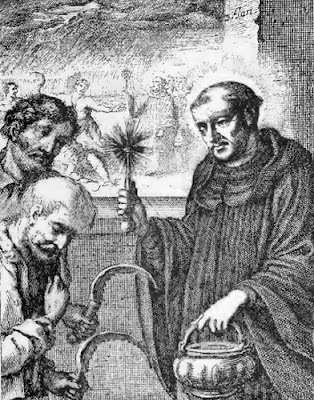
31 August 2016
A Sidney Sussex don and father
of the architect of Portmeirion
The Sidney Sussex boathouse by the River Cam … John Clough Williams-Ellis (1833-1913) was a good oarsman and swimmer and received a medal for rescuing a friend from drowning in the River Cam (Photograph: Patrick Comerford)
Patrick Comerford
I was writing last month about Sir Bertram Clough Williams-Ellis (1883-1978), the English-born architect from a Welsh family who is best remembered as the designer of Portmeirion.
I am staying this week in Sidney Sussex College, Cambridge, during the annual Summer School organised by the Institute for Orthodox Christian Studies, and I was interested to learn that the architect’s father, the Revd John Clough Williams-Ellis (1833-1913), was a leading don at Sidney Sussex.
John Clough Williams-Ellis was a don at Sidney Sussex College in the Victorian era before returning to Wales, and was descended from a long line of Welsh Anglican priests.
The Williams family can be traced back to Thomas Ellis Anwyl, of Porthdinllaen, Edern, Caernarfonshire, who died in 1703. Later, the Ven John Ellis (1721-1785), Rector of Bangor, Chancellor of Bangor Cathedral and Archdeacon of Merioneth. His son, Canon Thomas Ellis MA (died 1833), was Rector of Llanfachreth, Anglesey, and the Treasurer of Bangor Cathedral.
The architect’s grandfather, the Revd John Williams-Ellis, adopted the additional name of Williams when he inherited the Brondanw estates. He was born 21 January 1808, and educated at the Friars’ Grammar School, Bangor, and Saint John’s College, Cambridge (BA, 1830). Later, he was the Rector of Llanaelhaiarn and the Rector of Beddgelert. On 21 February 1831, he married Harriet Ellen, only child of James Henry Clough, of Plas Clough, Denbighshire, and they had two sons and a daughter.
His eldest son, Thomas Parr Clough (1832-1897), succeeded to the Plas Clough estate in 1878 and assumed by royal licence the name of Clough in accordance with the will of his grandfather.
His second son, the architect’s father, the Revd John Clough Williams-Ellis (1833-1913), succeeded to the Glasfryn and Brondanw estates. He was born in Plas Clough, Denbighshire, Wales, on 11 March 1833. He was brought up in Brondanw, Llanfrothen, and later, when his father became the Rector of Llanaelhaearn, in Glasfryn, Llangybi. He was educated in Rossall School and came to Cambridge in 1852 when was admitted a pensioner at Sidney Sussex on 28 April 1852 and matriculated at Michaelmas 1852.
Although he was proficient in Welsh, he seems to have written only in English. He won prizes for poetry in Cambridge, and while he was proficient in Welsh and assumed the pen-name, ‘Shon Pentyrch.’
He was also a good oarsman and swimmer. In 1855, he received the Royal Humane Society’s Silver Medal for rescuing a friend from drowning in the River Cam.
Williams-Ellis graduated BA (3rd Wrangler) in 1856. The Wranglers are those students at Cambridge who gain first-class degrees in mathematics. The Cambridge undergraduate mathematics course, or Mathematical Tripos, is famously difficult. The Senior Wrangler is the top mathematics undergraduate at Cambridge, a position that has been described as ‘the greatest intellectual achievement attainable in Britain.’
Following his graduation 160 years ago, Williams-Ellis was elected a fellow of Sidney Sussex College in 1856. Two years later, he was ordained deacon by Thomas Turton, Bishop of Ely and former Regius Professor of Divinity in Cambridge, in 1858. He proceeded MA in 1859, and was ordained priest by Bishop Turton that year.
He was admitted MA at Oxford (ad eundem) on 7 June 1860, when he was described as ‘Of Glasfryn, Co Carnarvon, and of Brondanw, Co Merioneth.’
He remained a Fellow of Sidney Sussex College for over 20 years from 1856 to 1877, and was also a Tutor from 1859 to 1876. He was Senior Moderator of the University of Cambridge in 1866-1867.
Williams-Ellis may have been the first Welshman to climb one of the highest mountains in the Alps. He was familiar with the mountains of Snowdonia and in 1857 he went on a tour in the Alps with the Revd JF Hardy, also a don at Sidney Sussex College.
On 13 August 1857, accompanied by JF Hardy, William and St John Mathews, ES Kennedy (1817–1898), and five guides, he climbed the Finsteraarhorn (4,274 metres), the highest peak in Bern Oberland. The mountain had been scaled earlier, possibly in 1812, but this was the first British climb and the venture inspired William Mathews and Kennedy to establish an Alpine Club.
However, Williams-Ellis did not join the Alpine Club and there is no mention of him visiting the Alps again, although his family still has his alpenstock.
Meanwhile, the reforms to the university in the 1850s would change Sidney’s intellectual course forever. From the largely theological and mathematical college of the first two centuries or so, it became a power-house in the rapidly expanding medical, natural, physical and chemical sciences, and this direction was much inspired by John Clough Williams-Ellis.
John Wale Hicks, later Bishop of Bloemfontein, was typical of the time, publishing books on both doctrine and inorganic chemistry. The laboratories that stood along the Sidney Street wall beyond ‘A’ staircase, were among the first in Cambridge. Later, they were the site of a string of important experiments by the world famous metallurgist FH Neville and others such as EH Griffiths until they fell into disuse by 1910.
Their fame led Dorothy L Sayers to propose Sidney Sussex as the Cambridge college Sherlock Holmes attended in 1871-1873. Developing this theme, Professor Richard Chorley of Sidney Sussex College later allocated Holmes a room on the first floor of Staircase A, overlooking both Hall Court and Sidney Street.
The fame of John Clough Williams-Ellis and others led to Sherlock Holmes being ascribed rooms on the first floor of Staircase A in Sidney Sussex College (Photograph: Patrick Comerford, 2016)
As a brilliant mathematician and a successful tutor, Williams-Ellis contributed to enhancing the reputation of Sidney Sussex College. When the Cambridge chair in mechanics became vacant all the eminent scholars in the field supported him, but another person was elected as a result of the influence of the larger colleges.
While he was still a Fellow of Sidney Sussex College, Williams-Ellis became the Vicar of Madingley, Cambridgeshire, in 1865. His predecessor, Robert Mackray, who was Vicar from 1862 to 1865, was later the first Anglican Primate of Canada. As Vicar of Madingley, Williams-Ellis restored Saint Mary’s Church, and he planned the new vicarage, which allowed Madingley to have a resident vicar.
In 1876, he became the Rector of Gayton, Northamptonshire. Within a year, he married Ellen Mabel Greaves on 2 January 1877, and resigned his fellowship at Sidney Sussex. They had six sons, including Sir Clough Williams-Ellis, the architect (1883-1978), who was their fourth son.
Meanwhile, Williams-Ellis invested his earnings as a tutor in expanding his Glasfryn estate in North Wales, and he retired there in1889. A year later, he became a Justice of the Peace in 1890.
Williams-Ellis died on 27 May 1913 at the age of 80, and was buried in a glade near Glasfryn in North Wales. Had he remained a don at Sidney Sussex College and never returned to Wales, I wonder whether his son, Sir Clough Williams-Ellis, would ever have dreamt of building Portmeririon.
Rowing by the Sidney Sussex boathouse on the River Cam (Photograph: Patrick Comerford)
Patrick Comerford
I was writing last month about Sir Bertram Clough Williams-Ellis (1883-1978), the English-born architect from a Welsh family who is best remembered as the designer of Portmeirion.
I am staying this week in Sidney Sussex College, Cambridge, during the annual Summer School organised by the Institute for Orthodox Christian Studies, and I was interested to learn that the architect’s father, the Revd John Clough Williams-Ellis (1833-1913), was a leading don at Sidney Sussex.
John Clough Williams-Ellis was a don at Sidney Sussex College in the Victorian era before returning to Wales, and was descended from a long line of Welsh Anglican priests.
The Williams family can be traced back to Thomas Ellis Anwyl, of Porthdinllaen, Edern, Caernarfonshire, who died in 1703. Later, the Ven John Ellis (1721-1785), Rector of Bangor, Chancellor of Bangor Cathedral and Archdeacon of Merioneth. His son, Canon Thomas Ellis MA (died 1833), was Rector of Llanfachreth, Anglesey, and the Treasurer of Bangor Cathedral.
The architect’s grandfather, the Revd John Williams-Ellis, adopted the additional name of Williams when he inherited the Brondanw estates. He was born 21 January 1808, and educated at the Friars’ Grammar School, Bangor, and Saint John’s College, Cambridge (BA, 1830). Later, he was the Rector of Llanaelhaiarn and the Rector of Beddgelert. On 21 February 1831, he married Harriet Ellen, only child of James Henry Clough, of Plas Clough, Denbighshire, and they had two sons and a daughter.
His eldest son, Thomas Parr Clough (1832-1897), succeeded to the Plas Clough estate in 1878 and assumed by royal licence the name of Clough in accordance with the will of his grandfather.
His second son, the architect’s father, the Revd John Clough Williams-Ellis (1833-1913), succeeded to the Glasfryn and Brondanw estates. He was born in Plas Clough, Denbighshire, Wales, on 11 March 1833. He was brought up in Brondanw, Llanfrothen, and later, when his father became the Rector of Llanaelhaearn, in Glasfryn, Llangybi. He was educated in Rossall School and came to Cambridge in 1852 when was admitted a pensioner at Sidney Sussex on 28 April 1852 and matriculated at Michaelmas 1852.
Although he was proficient in Welsh, he seems to have written only in English. He won prizes for poetry in Cambridge, and while he was proficient in Welsh and assumed the pen-name, ‘Shon Pentyrch.’
He was also a good oarsman and swimmer. In 1855, he received the Royal Humane Society’s Silver Medal for rescuing a friend from drowning in the River Cam.
Williams-Ellis graduated BA (3rd Wrangler) in 1856. The Wranglers are those students at Cambridge who gain first-class degrees in mathematics. The Cambridge undergraduate mathematics course, or Mathematical Tripos, is famously difficult. The Senior Wrangler is the top mathematics undergraduate at Cambridge, a position that has been described as ‘the greatest intellectual achievement attainable in Britain.’
Following his graduation 160 years ago, Williams-Ellis was elected a fellow of Sidney Sussex College in 1856. Two years later, he was ordained deacon by Thomas Turton, Bishop of Ely and former Regius Professor of Divinity in Cambridge, in 1858. He proceeded MA in 1859, and was ordained priest by Bishop Turton that year.
He was admitted MA at Oxford (ad eundem) on 7 June 1860, when he was described as ‘Of Glasfryn, Co Carnarvon, and of Brondanw, Co Merioneth.’
He remained a Fellow of Sidney Sussex College for over 20 years from 1856 to 1877, and was also a Tutor from 1859 to 1876. He was Senior Moderator of the University of Cambridge in 1866-1867.
Williams-Ellis may have been the first Welshman to climb one of the highest mountains in the Alps. He was familiar with the mountains of Snowdonia and in 1857 he went on a tour in the Alps with the Revd JF Hardy, also a don at Sidney Sussex College.
On 13 August 1857, accompanied by JF Hardy, William and St John Mathews, ES Kennedy (1817–1898), and five guides, he climbed the Finsteraarhorn (4,274 metres), the highest peak in Bern Oberland. The mountain had been scaled earlier, possibly in 1812, but this was the first British climb and the venture inspired William Mathews and Kennedy to establish an Alpine Club.
However, Williams-Ellis did not join the Alpine Club and there is no mention of him visiting the Alps again, although his family still has his alpenstock.
Meanwhile, the reforms to the university in the 1850s would change Sidney’s intellectual course forever. From the largely theological and mathematical college of the first two centuries or so, it became a power-house in the rapidly expanding medical, natural, physical and chemical sciences, and this direction was much inspired by John Clough Williams-Ellis.
John Wale Hicks, later Bishop of Bloemfontein, was typical of the time, publishing books on both doctrine and inorganic chemistry. The laboratories that stood along the Sidney Street wall beyond ‘A’ staircase, were among the first in Cambridge. Later, they were the site of a string of important experiments by the world famous metallurgist FH Neville and others such as EH Griffiths until they fell into disuse by 1910.
Their fame led Dorothy L Sayers to propose Sidney Sussex as the Cambridge college Sherlock Holmes attended in 1871-1873. Developing this theme, Professor Richard Chorley of Sidney Sussex College later allocated Holmes a room on the first floor of Staircase A, overlooking both Hall Court and Sidney Street.
The fame of John Clough Williams-Ellis and others led to Sherlock Holmes being ascribed rooms on the first floor of Staircase A in Sidney Sussex College (Photograph: Patrick Comerford, 2016)
As a brilliant mathematician and a successful tutor, Williams-Ellis contributed to enhancing the reputation of Sidney Sussex College. When the Cambridge chair in mechanics became vacant all the eminent scholars in the field supported him, but another person was elected as a result of the influence of the larger colleges.
While he was still a Fellow of Sidney Sussex College, Williams-Ellis became the Vicar of Madingley, Cambridgeshire, in 1865. His predecessor, Robert Mackray, who was Vicar from 1862 to 1865, was later the first Anglican Primate of Canada. As Vicar of Madingley, Williams-Ellis restored Saint Mary’s Church, and he planned the new vicarage, which allowed Madingley to have a resident vicar.
In 1876, he became the Rector of Gayton, Northamptonshire. Within a year, he married Ellen Mabel Greaves on 2 January 1877, and resigned his fellowship at Sidney Sussex. They had six sons, including Sir Clough Williams-Ellis, the architect (1883-1978), who was their fourth son.
Meanwhile, Williams-Ellis invested his earnings as a tutor in expanding his Glasfryn estate in North Wales, and he retired there in1889. A year later, he became a Justice of the Peace in 1890.
Williams-Ellis died on 27 May 1913 at the age of 80, and was buried in a glade near Glasfryn in North Wales. Had he remained a don at Sidney Sussex College and never returned to Wales, I wonder whether his son, Sir Clough Williams-Ellis, would ever have dreamt of building Portmeririon.
Rowing by the Sidney Sussex boathouse on the River Cam (Photograph: Patrick Comerford)
05 May 2016
Images of the Ascension and the Kingdom
in Penmon Priory and Bangor Cathedral
The Ascension depicted in the East Window in Saint Seiriol’s Church at Penmon Priory, near Beaumaris (Photograph: Patrick Comerford, 2016)
Patrick Comerford
Today is Ascension Day [5 May 2016]. This afternoon, I hope to bring a visiting group from the Church of Sweden to visit Christ Church Cathedral, Dublin, and later in the day I hope to take part in the Choral Eucharist for Ascension Day sung by the Cathedral Choir.
The procession hymn this evening is ‘Hail the day that sees him rise,’ by Charles Wesley and Thomas Cottrill, vicar of Lane End, Staffordshire, sung to the tune Llanfair. This tune is said to have been written by the Welsh singer and blind composer Robert Williams (1781–1821) of Anglesey. The Llanfair that gives its name to this hymn is Llanfair PG, the village with the longest name on these islands, near the place where Williams was born and which I visited last weekend.
I am sure the editors and typesetters of many hymnals, and the person who put together this evening’s service sheet are happy, for the sake of appearances alone, that the tune was written before the longer name of the village was concocted and that it is known by the town’s shorter name.
Earlier this week [2 May 2016] in Anglesey, when I was visiting Saint Seiriol’s Church at Penmon Priory, outside Beaumaris, I photographed a beautiful stained glass window illustrating the Ascension.
This three-light East Window in the Chancel of Penmon Priory Church, dates from 1912. The centre window depicts Christ in glory, holding the chalice and the host, with rays of light emanating from the wounds in his hands and feet. He is surrounded by the symbols of the four evangelists.
The three-light East Window was given in memory of Sarah and Henry Owen Williams in 1912 (Photograph: Patrick Comerford, 2016)
This window, with its Anglo-Catholic sacramental imagery, was given in 1912 in memory of Henry Owen Williams and his wife Sarah (Holborn) of Tre-Castell, near Beaumaris, by their children. Their children included the Revd Raymond Owen Williams, who was presented to the Vicarage of Fisherton Delamere in Wiltshire by Athelstan Riley (1858—1945), the Anglo-Catholic hymn writer and hymn translator.
In the left-hand light window, Sarah Williams is shown with the women and children being blessed by Christ. Henry Williams is depicted in the right-hand light, in a scene depicting the blessing and distribution of the loaves and fishes.
Saint Christopher and Saint Seiriol … a window by David Evans (Photograph: Patrick Comerford, 2016)
Fragments of the original East Window in the Priory Church can be seen in a small stained glass window that is the east window of the south transept. This window depicts the Priory’s founder, Saint Seiriol, watching Saint Christopher carrying the Christ Child across a river.
The head of Saint Christopher, his right hand, Christ’s orb, and the right hand of Saint Seiriol with parts of his staff are mediaeval. These were worked into a new window ca 1855 by David Evans (1793-1861), who imitated mediaeval styles in the remaining work in the window. A second window by Evans in the Priory Church from the same time shows Saint Catherine and a bishop.
David Evans was born at Llanllwchaiarn near Newtown. He worked in partnership with Sir John Betton of Shrewsbury (1765-1849) from 1815 as Betton & Evans, and I am familiar with some of their windows in Lichfield Cathedral (1819).
Evans retained the name of the firm after Betton retired in 1825. Examples of Evans’s work in Wales can also be seen in Bangor Cathedral, including three of the Evangelists – Saint Luke Saint Matthew and Saint Mark – three prophets, Aaron, Moses and David, and three Epistle writers, Saint Peter, Saint John and Saint Paul.
The Kingdom of Heaven is at hand … but the left hand is missing (Photograph: Patrick Comerford, 2016)
The salvaged right hand of Saint Seiriol in this window in Penmon Priory came to mind later on Monday afternoon as I wondered about the mysterious, missing left hand of Saint John the Baptist in a panel on the pulpit in Bangor Cathedral.
The two relief panels on the sides of the pulpit are carved in Caen stone and were designed around 1880 by Sir George Gilbert Scott as part of his restoration of Bangor Cathedral.
One panel depicts the mission commission to the disciples after the resurrection, with the text: ‘Go ye into all the world & preach the Gospel to every creature’ (Mark 16: 15).
The other panel depicts Saint the Baptist preaching to a group of six, including two Roman soldiers and a mother and child. The inscription on this panel reads: ‘Repent ye for the Kingdom of Heaven is at hand’ (Matthew 3: 2). Saint John the Baptist has his right hand raised as he preaches. But the one part of the panel that is missing – whether by vandalism or accident, I do not know – is his left hand.
The opening words of this evening’s Psalm at the Choral Eucharist are: ‘O clap your hands together all ye peoples’ (Psalm 47: 1).
Collect:
Grant, we pray, Almighty God,
that as we believe your only-begotten Son our Lord Jesus Christ
to have ascended into the heavens;
so we in heart and mind may also ascend
and with him continually dwell;
who is alive and reigns with you and the Holy Spirit,
one God, now and for ever.
Readings:
Acts 1: 1-11 or Daniel 7: 9-14; Psalm 47 or Psalm 93; Ephesians 1: 15-23 or Acts 1: 1-11; Luke 24: 44-53.
Post Communion Prayer:
God our Father,
you have raised our humanity in Christ
and feed us with the bread of heaven.
Mercifully grant that, nourished with such spiritual blessings,
we may set our hearts in the heavenly places;
where he now lives and reigns for ever.
Patrick Comerford
Today is Ascension Day [5 May 2016]. This afternoon, I hope to bring a visiting group from the Church of Sweden to visit Christ Church Cathedral, Dublin, and later in the day I hope to take part in the Choral Eucharist for Ascension Day sung by the Cathedral Choir.
The procession hymn this evening is ‘Hail the day that sees him rise,’ by Charles Wesley and Thomas Cottrill, vicar of Lane End, Staffordshire, sung to the tune Llanfair. This tune is said to have been written by the Welsh singer and blind composer Robert Williams (1781–1821) of Anglesey. The Llanfair that gives its name to this hymn is Llanfair PG, the village with the longest name on these islands, near the place where Williams was born and which I visited last weekend.
I am sure the editors and typesetters of many hymnals, and the person who put together this evening’s service sheet are happy, for the sake of appearances alone, that the tune was written before the longer name of the village was concocted and that it is known by the town’s shorter name.
Earlier this week [2 May 2016] in Anglesey, when I was visiting Saint Seiriol’s Church at Penmon Priory, outside Beaumaris, I photographed a beautiful stained glass window illustrating the Ascension.
This three-light East Window in the Chancel of Penmon Priory Church, dates from 1912. The centre window depicts Christ in glory, holding the chalice and the host, with rays of light emanating from the wounds in his hands and feet. He is surrounded by the symbols of the four evangelists.
The three-light East Window was given in memory of Sarah and Henry Owen Williams in 1912 (Photograph: Patrick Comerford, 2016)
This window, with its Anglo-Catholic sacramental imagery, was given in 1912 in memory of Henry Owen Williams and his wife Sarah (Holborn) of Tre-Castell, near Beaumaris, by their children. Their children included the Revd Raymond Owen Williams, who was presented to the Vicarage of Fisherton Delamere in Wiltshire by Athelstan Riley (1858—1945), the Anglo-Catholic hymn writer and hymn translator.
In the left-hand light window, Sarah Williams is shown with the women and children being blessed by Christ. Henry Williams is depicted in the right-hand light, in a scene depicting the blessing and distribution of the loaves and fishes.
Saint Christopher and Saint Seiriol … a window by David Evans (Photograph: Patrick Comerford, 2016)
Fragments of the original East Window in the Priory Church can be seen in a small stained glass window that is the east window of the south transept. This window depicts the Priory’s founder, Saint Seiriol, watching Saint Christopher carrying the Christ Child across a river.
The head of Saint Christopher, his right hand, Christ’s orb, and the right hand of Saint Seiriol with parts of his staff are mediaeval. These were worked into a new window ca 1855 by David Evans (1793-1861), who imitated mediaeval styles in the remaining work in the window. A second window by Evans in the Priory Church from the same time shows Saint Catherine and a bishop.
David Evans was born at Llanllwchaiarn near Newtown. He worked in partnership with Sir John Betton of Shrewsbury (1765-1849) from 1815 as Betton & Evans, and I am familiar with some of their windows in Lichfield Cathedral (1819).
Evans retained the name of the firm after Betton retired in 1825. Examples of Evans’s work in Wales can also be seen in Bangor Cathedral, including three of the Evangelists – Saint Luke Saint Matthew and Saint Mark – three prophets, Aaron, Moses and David, and three Epistle writers, Saint Peter, Saint John and Saint Paul.
The Kingdom of Heaven is at hand … but the left hand is missing (Photograph: Patrick Comerford, 2016)
The salvaged right hand of Saint Seiriol in this window in Penmon Priory came to mind later on Monday afternoon as I wondered about the mysterious, missing left hand of Saint John the Baptist in a panel on the pulpit in Bangor Cathedral.
The two relief panels on the sides of the pulpit are carved in Caen stone and were designed around 1880 by Sir George Gilbert Scott as part of his restoration of Bangor Cathedral.
One panel depicts the mission commission to the disciples after the resurrection, with the text: ‘Go ye into all the world & preach the Gospel to every creature’ (Mark 16: 15).
The other panel depicts Saint the Baptist preaching to a group of six, including two Roman soldiers and a mother and child. The inscription on this panel reads: ‘Repent ye for the Kingdom of Heaven is at hand’ (Matthew 3: 2). Saint John the Baptist has his right hand raised as he preaches. But the one part of the panel that is missing – whether by vandalism or accident, I do not know – is his left hand.
The opening words of this evening’s Psalm at the Choral Eucharist are: ‘O clap your hands together all ye peoples’ (Psalm 47: 1).
Collect:
Grant, we pray, Almighty God,
that as we believe your only-begotten Son our Lord Jesus Christ
to have ascended into the heavens;
so we in heart and mind may also ascend
and with him continually dwell;
who is alive and reigns with you and the Holy Spirit,
one God, now and for ever.
Readings:
Acts 1: 1-11 or Daniel 7: 9-14; Psalm 47 or Psalm 93; Ephesians 1: 15-23 or Acts 1: 1-11; Luke 24: 44-53.
Post Communion Prayer:
God our Father,
you have raised our humanity in Christ
and feed us with the bread of heaven.
Mercifully grant that, nourished with such spiritual blessings,
we may set our hearts in the heavenly places;
where he now lives and reigns for ever.
03 May 2016
Bangor Cathedral has a history that
dates back almost 1,500 years
Bangor Cathedral … serving a diocese that covers much of North Wales (Photograph: Patrick Comerford, 2016)
Patrick Comerford
It was only a 10- or 15-minute drive yesterday afternoon [2 May 2016] from Beaumaris to Bangor on the opposite side of the Menai Strait, where I visited Saint Deiniol’s Cathedral, which has been a place of worship since the sixth century.
The Diocese of Bangor includes the island of Anglesey, as well as most of Caernarfonshire and Merionethshire, and a small part of Montgomeryshire. Originally, this was the diocese in the Welsh Kingdom of Gwynedd, and tradition says it was founded around 546 by Saint Deiniol.
The site of the cathedral was originally the home of Saint Deiniol’s monastery, built around 525 on land given to him by the King of Gwynedd, Maelgwn Gwynedd. Saint Deiniol is said to have been consecrated a bishop by Saint David, making him the first Bishop of Bangor. However, the monastery was sacked in 634 and again in 1073, so that nothing remains of the original building.
In 1102, the Synod of Westminster took measures to restore Bangor Cathedral, but the earliest part of the present building was built when Bishop David was bishop (1120-1139). He received financial support from the King of Gwynedd, Gruffudd ap Cynan, who was buried by the high altar when he died in 1137. This 12th century cathedral was cruciform in shape in the Norman style, and about 130 ft in length. King Gruffudd’s son, Owain Gwynedd, was also buried here, as was his brother, Cadwaladr.
The high altar and sanctuary in Bangor Cathedral (Photograph: Patrick Comerford, 2016)
Giraldus Cambrensis describes the liturgy here in 1188 when the Archbishop of Canterbury celebrated Mass. But the cathedral was destroyed again in 1211, this time by the army of King John of England during a raid into Gwynedd. Later in the 13th century, the original apse was removed and the choir was extended to its present length.
When King Edward I of England invaded Gwynedd in 1282, The church was badly damaged. Two years later, in 1284, the Dean and Chapter of Bangor were given £60 as compensation for the damage. During this period, extensive rebuilding was carried out under the first Bishop Anian, and the transepts and crossing were rebuilt, while the nave was rebuilt in the late 14th century.
The cathedral was said to have been burnt to the ground in 1402 during the rebellion of Owain Glyndŵr, but there is no contemporary evidence for this.
A Latin inscription over the tower doorway records that Bishop Skevington built the tower in 1532 (Photograph: Patrick Comerford, 2016)
Extensive rebuilding was carried out from the end of the 15th century. The present arcade and clerestory were built from 1510 on and were completed in 1532. A Latin inscription over the tower doorway records that Bishop Thomas Skevington built the tower in 1532, although it was not complete when Skevington died in 1533.
Rowland Meyrick, the second son of Meyric ap Llewelyn, was the first Bishop of Bangor following the Reformation (1559-1566). He was buried in the cathedral, but his monument has long disappeared.
Some restoration work was carried out on the cathedral in the 18th century, £2,000 was spent on repairs in 1824, and the interior was altered and refitted in 1825 at a cost of a further £3,252.
Inside Bangor Cathedral, looking towards the west door (Photograph: Patrick Comerford, 2016)
The building as we see it today is the result of extensive work carried out by George Gilbert Scott, beginning in 1868. Scott’s design originally called for a high central tower and spire. However, this was never completed after cracks appeared, raising fears about the subsidence of the foundations, and the tower was left as a low structure.
In 1879, £11,000 was spent on the restoration of the nave, chapter house and central tower.
In 1966-1967, the stump of Scott’s central tower was finished off with battlements, a pyramidical cap and a tall weather cock. Major restoration of the outside stonework and roofs began in 1987 and continues.
The pyramidical cap on the tower finishes off Scott’s restoration work (Photograph: Patrick Comerford, 2016)
Bangor Cathedral can boast of a rich and varied library. Its greatest treasure is Bishop Anian’s Pontifical, which dates from the early 14th century. It is written on vellum with illustrations inlaid with gold leaf and bordered in blue, green and black.
A pontifical is a book containing the texts of liturgical ceremonies performed by the bishop, such as ordinations, benedictions, confirmations and the consecration of churches. The Pontifical of Anian included all these and almost all that was necessary for a bishop’s public duties, as well as the appropriate music.
The Bangor Pontifical survived the ravages of war, and although it was lost after Owain Glyndŵr’s rebellion in 1402, it was returned to Bangor Cathedral by Bishop Ednam in 1485. After the injunctions in the reign of King Edward VI ordering the destruction of Roman service books, the Pontifical may have found a safe and private hiding place thanks to Bishop Rowland Meyrick (1559–1566), until it was presented to the cathedral by Bishop Humphrey Humphreys in 1701. Bishop Humphreys was a patron of Welsh literature, genealogical research and of the then newly formed Society for Promoting Christian Knowledge (SPCK).
During World War II, the Bangor Pontifical was moved for safe-keeping with other treasures to the tunnels beneath the National Library of Wales at Aberystwyth. It was finally returned in 1946, and is now kept in the Library of the University of Wales Bangor.
The Mostyn Christ, dating from 1450, is one of the principal treasures in Bangor Cathedral (Photograph: Patrick Comerford, 2016)
One of the major pieces of work in the cathedral is the “Mostyn Christ,” a figure of the Pensive Christ carved in oak and thought to date from ca 1450. It depicts Christ before his crucifixion, chained seated on a rock and wearing the crown of thorns. The Mostyn Christ reflects the meaning of the Passion through the intense depiction of human suffering and the symbolic inclusion of a skull at the feet of Christ.
The Mostyn Christ is on loan to the cathedral from the Mostyn Estates. The Mostyn Estates is a private limited company that manages the interests of the Mostyn family across North Wales and elsewhere, including commercial, residential and agricultural holdings in Llandudno and agricultural estates in Rhewl and Tremostyn, Flintshire.
This wooden carving is one of the most iconic religious representations surviving from 15th century Wales and its story is shrouded in mystery. Its origins have been subject to intense debate, with suggestions including Maenan Abbey, Gwydir Chapel, Rhuddlan Friary and the chapel in the home of the Catholic Pue family in Penrhyn. It is possible that the item was rescued by the Mostyn family sometime during the Reformation. By the early 19th century, it was owned by the Mostyn family who lived Gloddaith Hall, where the early chapel was decorated throughout with Catholic iconography. The branch of the Mostyn family that lived at Talacre and Basingwerk was renowned for its allegiance to the ‘Old Faith’.
The chapter and choir stalls in Bangor Cathedral (Photograph: Patrick Cmerford, 2016)
The Bishop of Bangor, the Right Revd Andrew John, was consecrated in 2008 and enthroned in 2009.
In all, there have been 57 Deans of Bangor Cathedral, and since the beginning of this year [January 2016], the Very Revd Kathy Louise Jones has been Dean of Bangor. Previously, she was the Lead Chaplain of the Northumbria Healthcare NHS Foundation Trust in the Diocese of Newcastle in the Church of England. She studied theology at Cardiff University, Queen’s College, Birmingham, and the University of Wales, Bangor. She was ordained deacon in Bangir Cathedrals in 1992, and priest in 1997.
Her predecessor, the Very Revd Sue Jones, who is now Director of Mission and Ministry in the Diocese of Derby, was the first woman to be appointed a dean in the Church in Wales.
The Bible Garden in the grounds of the cathedral is said to be planted with an example of every plant mentioned in the Bible, although it looked a little shabby yesterday afternoon and I decided not to start counting.
The Bible Garden in the grounds of Bangor Cathedral(Photograph: Patrick Comerford, 2016)
Patrick Comerford
It was only a 10- or 15-minute drive yesterday afternoon [2 May 2016] from Beaumaris to Bangor on the opposite side of the Menai Strait, where I visited Saint Deiniol’s Cathedral, which has been a place of worship since the sixth century.
The Diocese of Bangor includes the island of Anglesey, as well as most of Caernarfonshire and Merionethshire, and a small part of Montgomeryshire. Originally, this was the diocese in the Welsh Kingdom of Gwynedd, and tradition says it was founded around 546 by Saint Deiniol.
The site of the cathedral was originally the home of Saint Deiniol’s monastery, built around 525 on land given to him by the King of Gwynedd, Maelgwn Gwynedd. Saint Deiniol is said to have been consecrated a bishop by Saint David, making him the first Bishop of Bangor. However, the monastery was sacked in 634 and again in 1073, so that nothing remains of the original building.
In 1102, the Synod of Westminster took measures to restore Bangor Cathedral, but the earliest part of the present building was built when Bishop David was bishop (1120-1139). He received financial support from the King of Gwynedd, Gruffudd ap Cynan, who was buried by the high altar when he died in 1137. This 12th century cathedral was cruciform in shape in the Norman style, and about 130 ft in length. King Gruffudd’s son, Owain Gwynedd, was also buried here, as was his brother, Cadwaladr.
The high altar and sanctuary in Bangor Cathedral (Photograph: Patrick Comerford, 2016)
Giraldus Cambrensis describes the liturgy here in 1188 when the Archbishop of Canterbury celebrated Mass. But the cathedral was destroyed again in 1211, this time by the army of King John of England during a raid into Gwynedd. Later in the 13th century, the original apse was removed and the choir was extended to its present length.
When King Edward I of England invaded Gwynedd in 1282, The church was badly damaged. Two years later, in 1284, the Dean and Chapter of Bangor were given £60 as compensation for the damage. During this period, extensive rebuilding was carried out under the first Bishop Anian, and the transepts and crossing were rebuilt, while the nave was rebuilt in the late 14th century.
The cathedral was said to have been burnt to the ground in 1402 during the rebellion of Owain Glyndŵr, but there is no contemporary evidence for this.
A Latin inscription over the tower doorway records that Bishop Skevington built the tower in 1532 (Photograph: Patrick Comerford, 2016)
Extensive rebuilding was carried out from the end of the 15th century. The present arcade and clerestory were built from 1510 on and were completed in 1532. A Latin inscription over the tower doorway records that Bishop Thomas Skevington built the tower in 1532, although it was not complete when Skevington died in 1533.
Rowland Meyrick, the second son of Meyric ap Llewelyn, was the first Bishop of Bangor following the Reformation (1559-1566). He was buried in the cathedral, but his monument has long disappeared.
Some restoration work was carried out on the cathedral in the 18th century, £2,000 was spent on repairs in 1824, and the interior was altered and refitted in 1825 at a cost of a further £3,252.
Inside Bangor Cathedral, looking towards the west door (Photograph: Patrick Comerford, 2016)
The building as we see it today is the result of extensive work carried out by George Gilbert Scott, beginning in 1868. Scott’s design originally called for a high central tower and spire. However, this was never completed after cracks appeared, raising fears about the subsidence of the foundations, and the tower was left as a low structure.
In 1879, £11,000 was spent on the restoration of the nave, chapter house and central tower.
In 1966-1967, the stump of Scott’s central tower was finished off with battlements, a pyramidical cap and a tall weather cock. Major restoration of the outside stonework and roofs began in 1987 and continues.
The pyramidical cap on the tower finishes off Scott’s restoration work (Photograph: Patrick Comerford, 2016)
Bangor Cathedral can boast of a rich and varied library. Its greatest treasure is Bishop Anian’s Pontifical, which dates from the early 14th century. It is written on vellum with illustrations inlaid with gold leaf and bordered in blue, green and black.
A pontifical is a book containing the texts of liturgical ceremonies performed by the bishop, such as ordinations, benedictions, confirmations and the consecration of churches. The Pontifical of Anian included all these and almost all that was necessary for a bishop’s public duties, as well as the appropriate music.
The Bangor Pontifical survived the ravages of war, and although it was lost after Owain Glyndŵr’s rebellion in 1402, it was returned to Bangor Cathedral by Bishop Ednam in 1485. After the injunctions in the reign of King Edward VI ordering the destruction of Roman service books, the Pontifical may have found a safe and private hiding place thanks to Bishop Rowland Meyrick (1559–1566), until it was presented to the cathedral by Bishop Humphrey Humphreys in 1701. Bishop Humphreys was a patron of Welsh literature, genealogical research and of the then newly formed Society for Promoting Christian Knowledge (SPCK).
During World War II, the Bangor Pontifical was moved for safe-keeping with other treasures to the tunnels beneath the National Library of Wales at Aberystwyth. It was finally returned in 1946, and is now kept in the Library of the University of Wales Bangor.
The Mostyn Christ, dating from 1450, is one of the principal treasures in Bangor Cathedral (Photograph: Patrick Comerford, 2016)
One of the major pieces of work in the cathedral is the “Mostyn Christ,” a figure of the Pensive Christ carved in oak and thought to date from ca 1450. It depicts Christ before his crucifixion, chained seated on a rock and wearing the crown of thorns. The Mostyn Christ reflects the meaning of the Passion through the intense depiction of human suffering and the symbolic inclusion of a skull at the feet of Christ.
The Mostyn Christ is on loan to the cathedral from the Mostyn Estates. The Mostyn Estates is a private limited company that manages the interests of the Mostyn family across North Wales and elsewhere, including commercial, residential and agricultural holdings in Llandudno and agricultural estates in Rhewl and Tremostyn, Flintshire.
This wooden carving is one of the most iconic religious representations surviving from 15th century Wales and its story is shrouded in mystery. Its origins have been subject to intense debate, with suggestions including Maenan Abbey, Gwydir Chapel, Rhuddlan Friary and the chapel in the home of the Catholic Pue family in Penrhyn. It is possible that the item was rescued by the Mostyn family sometime during the Reformation. By the early 19th century, it was owned by the Mostyn family who lived Gloddaith Hall, where the early chapel was decorated throughout with Catholic iconography. The branch of the Mostyn family that lived at Talacre and Basingwerk was renowned for its allegiance to the ‘Old Faith’.
The chapter and choir stalls in Bangor Cathedral (Photograph: Patrick Cmerford, 2016)
The Bishop of Bangor, the Right Revd Andrew John, was consecrated in 2008 and enthroned in 2009.
In all, there have been 57 Deans of Bangor Cathedral, and since the beginning of this year [January 2016], the Very Revd Kathy Louise Jones has been Dean of Bangor. Previously, she was the Lead Chaplain of the Northumbria Healthcare NHS Foundation Trust in the Diocese of Newcastle in the Church of England. She studied theology at Cardiff University, Queen’s College, Birmingham, and the University of Wales, Bangor. She was ordained deacon in Bangir Cathedrals in 1992, and priest in 1997.
Her predecessor, the Very Revd Sue Jones, who is now Director of Mission and Ministry in the Diocese of Derby, was the first woman to be appointed a dean in the Church in Wales.
The Bible Garden in the grounds of the cathedral is said to be planted with an example of every plant mentioned in the Bible, although it looked a little shabby yesterday afternoon and I decided not to start counting.
The Bible Garden in the grounds of Bangor Cathedral(Photograph: Patrick Comerford, 2016)
Subscribe to:
Posts (Atom)


