‘Arbeit macht frei’ … the gate at Auschwitz … today is Holocaust Memorial Day (Photograph: Patrick Comerford)
Patrick Comerford
Today is Holocaust Memorial Day, marking the anniversary of the liberation of Auschwitz in 1945 and the beginning of the liberation of the concentration camps in Europe.
In a ‘virtual tour’ today, I visit Holocaust memorials in a dozen European countries: Austria, Czech Republic, England, France, Germany, Greece, Hungary, Ireland, Italy, Poland, Slovakia and Slovenia.
Looking back on many visits over the years, my images today include monuments, memorials, plaques, sculptures, shattered grave stones and Stolpersteine or ‘stumbling stones’, in cemeteries, libraries, museums, parks, schools, squares, streets, synagogues, railway stations, and bridges.
There are photographs from the concentration camps in Auschwitz, Birkenau and Sachsenhausen. There are Jewish families and individuals, mothers and children, the murdered and the survivors, resistance fighters and the ‘Righteous Among the Nations’.
Austria:
Rachel Whiteread’s Holocaust Memorial in Judenplatz in Vienna (Photograph: Patrick Comerford)
Czech Republic:
The walls of the Pinkas Synagogue in Prague are covered with the names of 78,000 victims of the Holocaust (Photograph: Patrick Comerford)
The names of the concentration camps surround the Aron haKodesh or Holy Ark in the Pinkas Synagogue, Prague (Photograph: Patrick Comerford)
England:
The Holocaust Memorial Stone at the east end of Bourton Park, Buckingham, was installed in 2021 (Photograph: Patrick Comerford)
France:
The Mur des Names or Wall of Names in the Mémorial de la Shoah lists 76,000 French Jews deported and murdered by the Nazis (Photograph: Patrick Comerford)
A plaque on a school in the Marais in Paris recalling the children of the Shoah (Photograph: Patrick Comerford)
Germany:
The Memorial to the Murdered Jews of Europe in Berlin (Photograph: Patrick Comerford)
A memorial to Jewish children at the Jewish Cemetery in Berlin (Photograph: Patrick Comerford)
The memorial to the victims of the Sachsenhausen Concentration Camp 1936-1945 … the victims included gays, Gypsies, political prisoners and disabled people (Photograph: Patrick Comerford)
Greece:
The Jewish Holocaust Memorial at Plateia Eleftherias (Liberty Square) in Thessaloniki (Photograph: Patrick Comerford)
Chief Rabbi Gabriel Negrin places candles in the Holocaust memorial in Etz Hayyim Synagogue in Chania (Photograph: Patrick Comerford)
The Holocaust Memorial by Georgios Karahalios (2001) in Corfu remembers the 2,000 Jews of Corfu who were murdered in Auschwitz in 1944 (Photograph: Patrick Comerford)
The monument in the Nuova or New Synagogue in Corfu to families who died in the Holocaust (Photograph: Patrick Comerford)
Hungary:
The Memorial of the Hungarian Jewish Martyrs by Imre Varga at the Dohány Street Synagogue in Budapest (Photograph: Patrick Comerford)
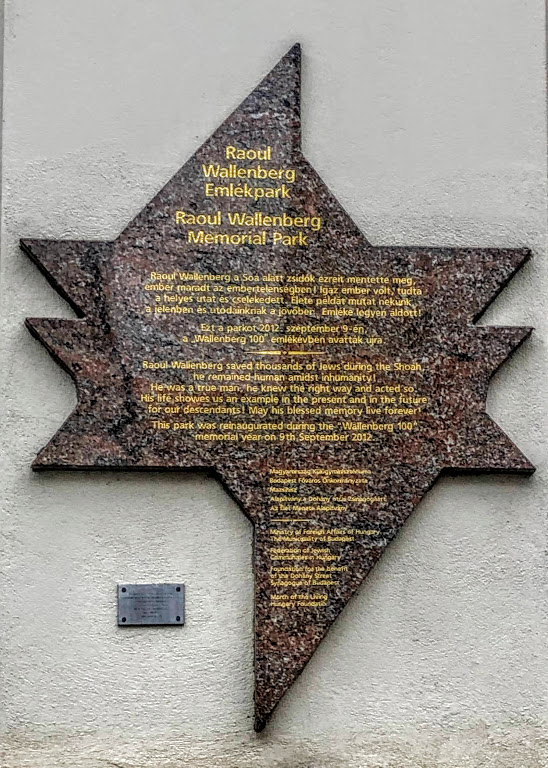
The Holocaust Memorial Park at the Dohány Street Synagogue in Budapest (Photograph: Patrick Comerford)
Italy:
A monument in Bologna commemorating victims of the Holocaust (Photograph: Patrick Comerford)
The Holocaust Memorial outside the railway station in Gorizia, a town that straddles the border of Italy and Slovenia (Photograph: Patrick Comerford)
The Holocaust Memorial at the Synagogue in Padua (Photograph: Patrick Comerford)
A monument to Jewish partisans and resistance to the Nazis and Fascists in Rome (Photograph: Patrick Comerford)
The memorial wall to victims of the Holocaust in the Ghetto in Venice (Photograph: Patrick Comerford)
The Holocaust memorial in the Ghetto in Venice (Photograph: Patrick Comerford)
Poland:
Multilingual memorials in Birkenau … a reminder of the many nationalities of the victims of the Holocaust (Photographs: Patrick Comerford)
Shattered gravestones make a Holocaust memorial in a Jewish cemetery in Kraków (Photograph: Patrick Comerford)
The Empty Chairs Memorial in Ghetto Heroes Square in Kazimierz , symbolising abandoned homes and mass deportations from the Kraków Ghetto in 1943 (Photograph: Patrick Comerford)
Slovakia:
The Holocaust Memorial in the centre of Bratislava on the site of the former Neolog Synagogue (Photograph: Patrick Comerford)
Stolpersteine or ‘stumbling stones’
Berlin:
Stolpersteine or Stumbling stones on Rosenthaler Straße 39, Berlin-Mitte, remembering members of the Salinger family murdered by the Nazis in Auschwtiz and Riga (Photograph: Patrick Comerford)
Dublin:
Dublin’s first Stolpersteine or ‘stumbling stones’, recalling six Irish Holocaust victims, at Saint Catherine’s National School on Donore Avenue (photograph: Patrick Comerford)
Prague:
‘Stolpersteine’ or ‘Stumbling Stones’ on the streets of Prague remember members of the Bergmann family deported to Terezín during the Holocaust (Photograph: Patrick Comerford)
Thessaloniki:
‘Stolpersteine’ or ‘Stumbling Stones’ on the pavement on Vassilisis Olgas Avenue in Thessaloniki commemorate Greek Jews deported to Auschwitz (Photograph: Patrick Comerford)
Venice:
Stolpersteine or stumbling stones (Pietre d’inciampo) in Venice recall victims of the Holocaust (Photograph: Patrick Comerford)
Remembering individuals:
Remembering Anne Frank in street art in Berlin (Photograph: Patrick Comerford)
The sculpture of Anne Frank by Doreen Kern in the British Library, London (Photograph: Patrick Comerford)
The Kindertransport monument at Liverpool Street Station … a reminder in the heart of London of the Holocaust (Photograph: Patrick Comerford)
A plaque on Heydukova Street in Bratislava marks the former home of Aron Grünhut (1895-1974), involved in heroic rescues during the Holocaust (Photograph: Patrick Comerford)
Monuments to ‘Righteous Among the Nations’:
Philip Jackson’s monument of the Swedish diplomat Raoul Wallenberg at Wallenberg Place, near Hyde Park, London (Photograph: Patrick Comerford)
A memorial to Raoul Wallenberg in the Raoul Wallenberg Holocaust Memorial Park at the Dohány Street Synagogue, Budapest (Photograph: Patrick Comerford)
The Mary Elmes Bridge in Cork … the centrepiece of the bridge is designed to look like a menorah (Photograph: Patrick Comerford)
The Wall of the Righteous in Paris lists 3,300 French people who have been recognised as ‘Righteous Among the Nations’ (Photograph: Patrick Comerford)
These images are reminders not only of the Holocaust and its victims, but of real individuals who suffered and were humiliated, whose lives were shattered and who were murdered.
They are reminders of why we must never forget. The Holocaust happened not just because of one evil man but because many good people stood by and remained silent.
Over 80 years after the end of the Holocaust, antisemitism is on the rise once again. We are seeing the rise of the far-right in Britain across Europe and a resurgence of the far-right in Latin America, far-right ideology and vocabulary has become part and parcel of the language of the Trump regime, its spokespersons and those who support street murders by ICE in Minneapolis.
We must never forget.
The Eternal Flame in the Mémorial de la Shoah, Paris (Patrick Comerford)
Showing posts with label #HolocaustMemorialDay. Show all posts
27 January 2026
A ‘virtual tour’ of Holocaust
memorials on Holocaust
Memorial Day, a reminder
that we must never forget
Labels:
#HolocaustMemorialDay,
antisemitism,
Austria,
Crete 2026,
Czech Republic,
France,
Germany,
Greece,
Greece 2026,
Holocaust,
Hungary,
Jewish history,
Poland,
Sculpture,
Slovakia,
Slovenia,
Street art,
Synagogues,
Virtual Tours
Daily prayer in Christmas 2025-2026:
34, Tuesday 27 January 2026
‘Here are my mother and my brothers! Whoever does the will of God is my brother and sister and mother’ (Mark 3: 34-35)
Patrick Comerford
This is the last week in the 40-day season of Christmas, which continues until Candlemas or the Feast of the Presentation next Monday (2 February 2026). This week began with the Third Sunday of Epiphany (Epiphany III, 25 January 2026), and today is Holocaust Memorial Day. this year's Holocaust Memorial Day event in Milton Keynes takes place this morning at the MK Rose at 11 am, and the theme is: ‘Building generations’.
Before today begins, I am taking some quiet time this morning to give thanks, to reflect, to pray and to read in these ways:
1, today’s Gospel reading;
2, a short reflection;
3, a prayer from the USPG prayer diary;
4, the Collects and Post-Communion prayer of the day.
‘A crowd was sitting around him … And looking at those who sat around him, he said, ‘Here are my mother and my brothers!’ (Mark 3: 32-35) … the crowd on Good Friday in Tsesmes near Rethymnon in Crete (Photograph: Patrick Comerford)
Mark 3: 31-35 (NRSVA):
31 Then his mother and his brothers came; and standing outside, they sent to him and called him. 32 A crowd was sitting around him; and they said to him, ‘Your mother and your brothers and sisters are outside, asking for you.’ 33 And he replied, ‘Who are my mother and my brothers?’ 34 And looking at those who sat around him, he said, ‘Here are my mother and my brothers! 35 Whoever does the will of God is my brother and sister and mother.’
A crowd was sitting around him; and they said to him, ‘Your mother and your brothers and sisters are outside, asking for you’ (Mark 3: 32) … a crowd on the streets at a Ukrainian religious celebration (Photograph: Patrick Comerford)
Today’s Reflection:
Saint Mark’s Gospel is very sparse in its account of the story of Christ’s temptations in the wilderness – just two verses (see Mark 1: 12-13). In the much fuller accounts given by Saint Matthew (Matthew 4: 1-11) and Saint Luke (Luke 4: 1-13), Christ is tempted to do the right things for the wrong reason.
In our recent Gospel readings, Christ is challenged in two fundamental ways: he is challenged about whether his work is the work of God or the work of the Devil (Mark 3: 22); and he is challenged to think about what his family thinks about what he is doing (Mark 3: 32).
The Gospels name the brothers of Jesus as James, Jude, Simon and Joses or Joseph (Matthew 13: 55; Mark 6: 3; see also Galatians 1: 19).
Saint James is described in the New Testament as a ‘brother of the Lord.’ Josephus in his Jewish Antiquities (20.9.1) describes James as ‘the brother of Jesus who is called Christ.’ In the Liturgy of Saint James, he is described as ‘the brother of God’ (Iάκωβος ο Αδελφόθεος, Iácobos ho Adelphótheos).
Some say Jesus and James could have been cousins, saying ‘brothers’ and ‘sisters’ in the Aramaic spoken by Jesus also applied to cousins, and that the Greek words ἀδελφός (adelphos) and ἀδελφή (adelphe) were not restricted to their literal meaning of a full brother or full sister. However, in the classical Greek from the time of Homer on, these words convey an idea about being ‘from the same womb.’
The Letter of James can be compared with some of the wonderful Wisdom Literature in the Hebrew Scriptures, with, for example, its challenging words of wisdom on true worship (James 1: 19-20), on discrimination and respect for the poor (2: 1-13), on the false dichotomy of faith and works (2: 14-26), on truth and careful speech (3: 1-12), on godliness and worldliness (4: 1 to 5:6), on putting love at the heart of all our relationships in the Christian community … and so on.
They are words of wisdom that we can all take to heart in any community or society – how we speak about one another, how we respect one another, how we hold up one another, how we love each other, in spite of our failings towards one another.
We are to value one another, but not because of wealth or status or intellect. We are to listen to one another, to be slow to speak and equally slow to anger; to bridle our tongues and not to speak loosely about one another. We are not just called to be Christians, but we must do Christianity too.
How many of us would like to be so close to Christ that we could be called brothers or sisters of the Lord, still more ‘the brother of God’ (Iάκωβος ο Αδελφόθεος Iákobos o Adelphótheos)?
To be a real brother or sister of Christ, to be a real brother or sister of God, is to be brothers and sisters to one another in Christ. And when we do that we are true brothers and sisters of Christ, true witnesses to the Risen Christ, and worthy to share the name ‘Christian.’
Saint James the Brother of the Lord … an icon written by Tobias Stanislas Haller, BSG, for Saint James Episcopal Church, Parkton, Maryland, in 2008
Today’s Prayers (27 January 2026):
The theme this week (25-31 January 2026) in Pray with the World Church, the prayer diary of the Anglican mission agency USPG (United Society Partners in the Gospel), is ‘Connections That Last’ (pp 22-23). This theme was introduced on Sunday with Reflections from Paula de Mello Alves, a Brazilian lawyer and theologian, Executive Secretary of the Southern Diocese, and former co-leader of the Anglican Communion Youth Network (ACYN).
The USPG Prayer Diary today (27 January 2026) invites us to pray:
We pray for the Anglican Communion Youth Network, that it may continue to nurture young leaders and foster understanding across cultures and communities.
The Collect:
Almighty God,
whose Son revealed in signs and miracles
the wonder of your saving presence:
renew your people with your heavenly grace,
and in all our weakness
sustain us by your mighty power;
through Jesus Christ your Son our Lord,
who is alive and reigns with you,
in the unity of the Holy Spirit,
one God, now and for ever.
The Post-Communion Prayer:
Almighty Father,
whose Son our Saviour Jesus Christ is the light of the world:
may your people,
illumined by your word and sacraments,
shine with the radiance of his glory,
that he may be known, worshipped, and obeyed
to the ends of the earth;
for he is alive and reigns, now and for ever.
Additional Collect:
God of all mercy,
your Son proclaimed good news to the poor,
release to the captives,
and freedom to the oppressed:
anoint us with your Holy Spirit
and set all your people free
to praise you in Christ our Lord.
Yesterday’s Reflections
Continued Tomorrow
The crowds at the Good Friday processions in Rethymnon (Patrick Comerford)
Scripture quotations are from the New Revised Standard Version Bible: Anglicised Edition copyright © 1989, 1995 National Council of the Churches of Christ in the United States of America. Used by permission. All rights reserved worldwide. http://nrsvbibles.org
Patrick Comerford
This is the last week in the 40-day season of Christmas, which continues until Candlemas or the Feast of the Presentation next Monday (2 February 2026). This week began with the Third Sunday of Epiphany (Epiphany III, 25 January 2026), and today is Holocaust Memorial Day. this year's Holocaust Memorial Day event in Milton Keynes takes place this morning at the MK Rose at 11 am, and the theme is: ‘Building generations’.
Before today begins, I am taking some quiet time this morning to give thanks, to reflect, to pray and to read in these ways:
1, today’s Gospel reading;
2, a short reflection;
3, a prayer from the USPG prayer diary;
4, the Collects and Post-Communion prayer of the day.
‘A crowd was sitting around him … And looking at those who sat around him, he said, ‘Here are my mother and my brothers!’ (Mark 3: 32-35) … the crowd on Good Friday in Tsesmes near Rethymnon in Crete (Photograph: Patrick Comerford)
Mark 3: 31-35 (NRSVA):
31 Then his mother and his brothers came; and standing outside, they sent to him and called him. 32 A crowd was sitting around him; and they said to him, ‘Your mother and your brothers and sisters are outside, asking for you.’ 33 And he replied, ‘Who are my mother and my brothers?’ 34 And looking at those who sat around him, he said, ‘Here are my mother and my brothers! 35 Whoever does the will of God is my brother and sister and mother.’
A crowd was sitting around him; and they said to him, ‘Your mother and your brothers and sisters are outside, asking for you’ (Mark 3: 32) … a crowd on the streets at a Ukrainian religious celebration (Photograph: Patrick Comerford)
Today’s Reflection:
Saint Mark’s Gospel is very sparse in its account of the story of Christ’s temptations in the wilderness – just two verses (see Mark 1: 12-13). In the much fuller accounts given by Saint Matthew (Matthew 4: 1-11) and Saint Luke (Luke 4: 1-13), Christ is tempted to do the right things for the wrong reason.
In our recent Gospel readings, Christ is challenged in two fundamental ways: he is challenged about whether his work is the work of God or the work of the Devil (Mark 3: 22); and he is challenged to think about what his family thinks about what he is doing (Mark 3: 32).
The Gospels name the brothers of Jesus as James, Jude, Simon and Joses or Joseph (Matthew 13: 55; Mark 6: 3; see also Galatians 1: 19).
Saint James is described in the New Testament as a ‘brother of the Lord.’ Josephus in his Jewish Antiquities (20.9.1) describes James as ‘the brother of Jesus who is called Christ.’ In the Liturgy of Saint James, he is described as ‘the brother of God’ (Iάκωβος ο Αδελφόθεος, Iácobos ho Adelphótheos).
Some say Jesus and James could have been cousins, saying ‘brothers’ and ‘sisters’ in the Aramaic spoken by Jesus also applied to cousins, and that the Greek words ἀδελφός (adelphos) and ἀδελφή (adelphe) were not restricted to their literal meaning of a full brother or full sister. However, in the classical Greek from the time of Homer on, these words convey an idea about being ‘from the same womb.’
The Letter of James can be compared with some of the wonderful Wisdom Literature in the Hebrew Scriptures, with, for example, its challenging words of wisdom on true worship (James 1: 19-20), on discrimination and respect for the poor (2: 1-13), on the false dichotomy of faith and works (2: 14-26), on truth and careful speech (3: 1-12), on godliness and worldliness (4: 1 to 5:6), on putting love at the heart of all our relationships in the Christian community … and so on.
They are words of wisdom that we can all take to heart in any community or society – how we speak about one another, how we respect one another, how we hold up one another, how we love each other, in spite of our failings towards one another.
We are to value one another, but not because of wealth or status or intellect. We are to listen to one another, to be slow to speak and equally slow to anger; to bridle our tongues and not to speak loosely about one another. We are not just called to be Christians, but we must do Christianity too.
How many of us would like to be so close to Christ that we could be called brothers or sisters of the Lord, still more ‘the brother of God’ (Iάκωβος ο Αδελφόθεος Iákobos o Adelphótheos)?
To be a real brother or sister of Christ, to be a real brother or sister of God, is to be brothers and sisters to one another in Christ. And when we do that we are true brothers and sisters of Christ, true witnesses to the Risen Christ, and worthy to share the name ‘Christian.’
Saint James the Brother of the Lord … an icon written by Tobias Stanislas Haller, BSG, for Saint James Episcopal Church, Parkton, Maryland, in 2008Today’s Prayers (27 January 2026):
The theme this week (25-31 January 2026) in Pray with the World Church, the prayer diary of the Anglican mission agency USPG (United Society Partners in the Gospel), is ‘Connections That Last’ (pp 22-23). This theme was introduced on Sunday with Reflections from Paula de Mello Alves, a Brazilian lawyer and theologian, Executive Secretary of the Southern Diocese, and former co-leader of the Anglican Communion Youth Network (ACYN).
The USPG Prayer Diary today (27 January 2026) invites us to pray:
We pray for the Anglican Communion Youth Network, that it may continue to nurture young leaders and foster understanding across cultures and communities.
The Collect:
Almighty God,
whose Son revealed in signs and miracles
the wonder of your saving presence:
renew your people with your heavenly grace,
and in all our weakness
sustain us by your mighty power;
through Jesus Christ your Son our Lord,
who is alive and reigns with you,
in the unity of the Holy Spirit,
one God, now and for ever.
The Post-Communion Prayer:
Almighty Father,
whose Son our Saviour Jesus Christ is the light of the world:
may your people,
illumined by your word and sacraments,
shine with the radiance of his glory,
that he may be known, worshipped, and obeyed
to the ends of the earth;
for he is alive and reigns, now and for ever.
Additional Collect:
God of all mercy,
your Son proclaimed good news to the poor,
release to the captives,
and freedom to the oppressed:
anoint us with your Holy Spirit
and set all your people free
to praise you in Christ our Lord.
Yesterday’s Reflections
Continued Tomorrow
The crowds at the Good Friday processions in Rethymnon (Patrick Comerford)
Scripture quotations are from the New Revised Standard Version Bible: Anglicised Edition copyright © 1989, 1995 National Council of the Churches of Christ in the United States of America. Used by permission. All rights reserved worldwide. http://nrsvbibles.org
Labels:
#HolocaustMemorialDay,
Brazil,
Christmas 2025,
Crete 2026,
Epiphany 2026,
family,
Greece 2026,
Holocaust,
Icons,
Mission,
Prayer,
Rethymnon,
Saint James,
Saint Mark's Gospel,
Tsesmes,
Ukraine,
USPG
10 October 2025
By the river in Buckingham
and its weeping willows,
I visited a Holocaust memorial
The Holocaust Memorial Stone at the east end of Bourton Park, Buckingham, was installed in 2021 (Photograph: Patrick Comerford, 2025)
Patrick Comerford
In the Jewish calendar, Shabbat Chol Hamoed Sukkot begins at sunset this evening and end at sunset tomorrow evening. This is the Shabbat that falls in the middle of the week-long festival of Sukkot, known as the ‘Intermediate Shabbat’. It is a significant Shabbat that features special Torah readings from the Book of Exodus, discussing Moses’s request to see God’s glory and God’s proclamation of his attributes. The Haftarah reading is from the Book of Ezekiel, prophesying the war of Gog and Magog, and the Book of Ecclesiastes is also read in some synagogues.
On a warm sunny autumn morning last week, I visited the Holocaust Memorial Stone in Bourton Park, Buckingham. The memorial has become the venue for the Holocaust Memorial Day ceremony in Buckingham each year.
The Holocaust Memorial Stone was installed at the east end of Bourton Park in 2021. Several years ago, Ruth Newell, a past mayor, initiated a fundraising drive to place a Holocaust memorial in one of the town’s parks. What began as a small initiative grew into a significant community event.
Buckingham Town Council commissioned Louis Francis, a local stonemason and master letter carver, to engrave the Holocaust Memorial Day emblem and the lettering. The stone is bedrock, sourced from the Brackley Road cemetery in Buckingham. It was transported, as a gesture to the community, by a local firm Paragon Tool Hire.
The Holocaust Day ceremony earlier this year (27 January 2025) was led by the Mayor of Buckingham, with readings from Ruth Newell, a former mayor, and from Stan Cohen, a representative of the Milton Keynes Synagogue. The service included readings, survivors’ stories and moments of silence, with time to pause and reflect on the immense loss and the vital lessons learned from this tragic period in history.
Around 25 primary school students from Bourton Meadow Academy showcased their recent work on the Holocaust, following a visit to Bletchley Park. Staff and sixth form students from Furze Down School contributed a vibrant hand-painted banner to the event, with bright colours and thoughtful designs symbolising hope and resilience.
Buckinghamshire has a total of 1,688 Jewish people, according to census figures, making up 0.3% of the population. There are at least two Jewish communities in Buckinghamshire, represented by the Milton Keynes and District Reform Synagogue, based in north Milton Keynes, and the South Bucks Jewish Community, which holds its services and events near Amersham.
Louis Francis engrave the Holocaust Memorial Day emblem and the lettering in Buckingham (Photograph: Patrick Comerford, 2025)
After visiting the Holocaust memorial I went for a long walk by the banks of the River Great Ouse and through Bourton Park. It was a sunny day, and it was still within the Ten Days of Awe, the High Holy Days that ended with Yom Kippur, the Day of Atonement, last week (2 October 2025).
It is the most popular of Buckingham’s three main parks, with plenty of space to explore nature, exercise and play. The river and a series of ponds create a diverse eco-system including otters, kingfishers and dragonflies as well as wildflower and meadow areas.
Bourton Park’s hard-surface paths are accessible and suitable for running or long walks, and the park is the home of Buckingham Parkrun and Junior Parkrun. The Trim Trail has outdoor exercise equipment for pull-ups, hurdles, sit-ups and more. There is a multi-use games area for basketball and football and a table tennis table. A fenced area caters for toddlers, while a senior play area has a zip wire, balance trail and spinners.
As I walked by River Great Ouse in the park, with a vast number of weeping willows along the river bank, I found myself repeating the opening words of Psalm 137, so often associated with Holocaust commemorations:
1 By the rivers of Babylon –
there we sat down and there we wept
when we remembered Zion.
2 On the willows there
we hung up our harps.
3 For there our captors
asked us for songs,
and our tormentors asked for mirth, saying,
‘Sing us one of the songs of Zion!’
4 How could we sing the Lord’s song
in a foreign land?
5 If I forget you, O Jerusalem,
let my right hand wither!
6 Let my tongue cling to the roof of my mouth,
if I do not remember you,
if I do not set Jerusalem
above my highest joy.
Shabbat Shalom, שבת שלום
‘By the rivers of Babylon – there we sat down and there we wept (Psalm 137: 1) … by the River Great Ouse in Bourton Park, Buckingham (Photograph: Patrick Comerford, 2025)
Patrick Comerford
In the Jewish calendar, Shabbat Chol Hamoed Sukkot begins at sunset this evening and end at sunset tomorrow evening. This is the Shabbat that falls in the middle of the week-long festival of Sukkot, known as the ‘Intermediate Shabbat’. It is a significant Shabbat that features special Torah readings from the Book of Exodus, discussing Moses’s request to see God’s glory and God’s proclamation of his attributes. The Haftarah reading is from the Book of Ezekiel, prophesying the war of Gog and Magog, and the Book of Ecclesiastes is also read in some synagogues.
On a warm sunny autumn morning last week, I visited the Holocaust Memorial Stone in Bourton Park, Buckingham. The memorial has become the venue for the Holocaust Memorial Day ceremony in Buckingham each year.
The Holocaust Memorial Stone was installed at the east end of Bourton Park in 2021. Several years ago, Ruth Newell, a past mayor, initiated a fundraising drive to place a Holocaust memorial in one of the town’s parks. What began as a small initiative grew into a significant community event.
Buckingham Town Council commissioned Louis Francis, a local stonemason and master letter carver, to engrave the Holocaust Memorial Day emblem and the lettering. The stone is bedrock, sourced from the Brackley Road cemetery in Buckingham. It was transported, as a gesture to the community, by a local firm Paragon Tool Hire.
The Holocaust Day ceremony earlier this year (27 January 2025) was led by the Mayor of Buckingham, with readings from Ruth Newell, a former mayor, and from Stan Cohen, a representative of the Milton Keynes Synagogue. The service included readings, survivors’ stories and moments of silence, with time to pause and reflect on the immense loss and the vital lessons learned from this tragic period in history.
Around 25 primary school students from Bourton Meadow Academy showcased their recent work on the Holocaust, following a visit to Bletchley Park. Staff and sixth form students from Furze Down School contributed a vibrant hand-painted banner to the event, with bright colours and thoughtful designs symbolising hope and resilience.
Buckinghamshire has a total of 1,688 Jewish people, according to census figures, making up 0.3% of the population. There are at least two Jewish communities in Buckinghamshire, represented by the Milton Keynes and District Reform Synagogue, based in north Milton Keynes, and the South Bucks Jewish Community, which holds its services and events near Amersham.
Louis Francis engrave the Holocaust Memorial Day emblem and the lettering in Buckingham (Photograph: Patrick Comerford, 2025)
After visiting the Holocaust memorial I went for a long walk by the banks of the River Great Ouse and through Bourton Park. It was a sunny day, and it was still within the Ten Days of Awe, the High Holy Days that ended with Yom Kippur, the Day of Atonement, last week (2 October 2025).
It is the most popular of Buckingham’s three main parks, with plenty of space to explore nature, exercise and play. The river and a series of ponds create a diverse eco-system including otters, kingfishers and dragonflies as well as wildflower and meadow areas.
Bourton Park’s hard-surface paths are accessible and suitable for running or long walks, and the park is the home of Buckingham Parkrun and Junior Parkrun. The Trim Trail has outdoor exercise equipment for pull-ups, hurdles, sit-ups and more. There is a multi-use games area for basketball and football and a table tennis table. A fenced area caters for toddlers, while a senior play area has a zip wire, balance trail and spinners.
As I walked by River Great Ouse in the park, with a vast number of weeping willows along the river bank, I found myself repeating the opening words of Psalm 137, so often associated with Holocaust commemorations:
1 By the rivers of Babylon –
there we sat down and there we wept
when we remembered Zion.
2 On the willows there
we hung up our harps.
3 For there our captors
asked us for songs,
and our tormentors asked for mirth, saying,
‘Sing us one of the songs of Zion!’
4 How could we sing the Lord’s song
in a foreign land?
5 If I forget you, O Jerusalem,
let my right hand wither!
6 Let my tongue cling to the roof of my mouth,
if I do not remember you,
if I do not set Jerusalem
above my highest joy.
Shabbat Shalom, שבת שלום
‘By the rivers of Babylon – there we sat down and there we wept (Psalm 137: 1) … by the River Great Ouse in Bourton Park, Buckingham (Photograph: Patrick Comerford, 2025)
27 January 2024
Daily prayers during
Christmas and Epiphany:
34, 27 January 2024
The Supper at Emmaus … a window by Daniel Bell of Bell and Almond in Holy Trinity Church, Old Wolverton (Photograph: Patrick Comerford, 2023)
Patrick Comerford
The celebrations of Epiphany-tide continue today. Tomorrow is the Fourth Sunday of Epiphany (Epiphany IV, 28 January 2024), and today is Holocaust Memorial Day (27 January 2024).
Before this day begins, I am taking some time for reading, reflection and prayer. Christmas is a season that lasts for 40 days that continues from Christmas Day (25 December) to Candlemas or the Feast of the Presentation next Friday (2 February). The Gospel reading last Sunday (John 2: 1-11) told of the Wedding at Cana, one of the traditional Epiphany stories.
In keeping with the theme of Sunday’s Gospel reading, my reflections each morning throughout the seven days of this week have included:
1, A reflection on one of seven meals Jesus has with family, friends or disciples;
2, the Gospel reading of the day;
3, a prayer from the USPG prayer diary.
‘The Road to Emmaus’ icon by Sister Marie Paul OSB of the Mount of Olives Monastery, Jerusalem (1990), commissioned by the Canadian theologian Father Thomas Rosica
7, The Meal on the Road to Emmaus (Luke 24: 13-35):
By a huge margin, the Bible story quoted most often at the first week of the world Synod of Bishops on the Bible in 2008 was the story of disciples meeting Jesus on the road to Emmaus, according to the Canadian theologian Father Thomas Rosica, who briefed English-speaking journalists on the synod speeches.
It is said the story kept coming up at the synod in Rome because so many bishops and other synod members saw it as the perfect example of what the Church must do with the Scriptures: discuss them with people, explain them and let them lead people to recognise Jesus.
The Superior General of the Salesians, Father Pasual Chavez Villanueva, told the synod that the story gives precise instructions for how to evangelise the young, emphasising that it is Jesus who evangelises through his word and that evangelisation takes place by walking alongside people, listening to their sorrows, and then giving them a word of hope and a community in which to live it.
Father Chavez told that synod that today’s young people definitely share with the disciples ‘the frustration of their dreams, the tiredness of their faith and being disenchanted with discipleship.’ They ‘need a church that walks alongside them where they are.’
The story of Jesus and the Disciples on the Road to Emmaus is a rich one and one that offers a model for Christian life and mission.
After seeing all their hopes shattered on Good Friday, two disciples – Cleopas and another unnamed disciple – head out of Jerusalem, and are walking and talking on the road as their make their way together.
Emmaus was about 11 km (seven miles) from Jerusalem, so it would have taken them two hours, perhaps, to get there, maybe more if they were my age.
Somewhere along the way, they are joined by a third person, ‘but their eyes were kept from recognising him’ (verse 16, NRSV), or to be more precise, as the Greek text says, ‘but their eyes were being held so that they did not recognise him.’
They cannot make sense of what has happened over the last few days, and they cannot make sense of the questions their new companion puts to them. When Jesus asks them a straight question, they look sad and downcast.
I get the feeling that Cleopas is a bit cynical, treating Jesus as one of the visitors to Jerusalem for the feast of the Passover, and asking him if he really does not know what has happened in the city. In his cynicism, Cleopas almost sounds like Simon the Pharisee asking his visitor Jesus whether he really knows who the woman with the alabaster jar is.
Like Simon, Cleopas and his friend thought Jesus was a Prophet. But now they doubt it. And the sort of Messiah they hoped for was not the sort of Messiah Jesus had been preparing them for, was he?
And they have heard the report of the women visiting the tomb, and finding it empty. Hearing is not believing. Seeing is not believing. And believing is not the same as faith.
When I find myself disagreeing fundamentally with people, I wonder do I listen to them even half as patiently as Jesus did with these two.
There are no interruptions, no corrections, no upbraidings. Jesus listens passively and patiently, like all good counsellors should, and only speaks when they have finished speaking.
And then, despite their cynicism, despite their failure to understand, despite their lack of faith, these two disciples do something extraordinary. They press the stranger in their company not to continue on his journey. It is late in the evening, and they invite him to join them.
On re-reading this story I found myself comparing their action and their hospitality with the Good Samaritan who comes across the bruised and battered stranger on the side of the road, and offers him healing hospitality, offering to pay for his meals and his accommodation in the inn.
These two have also come across a bruised and battered stranger on the road, and they offer him healing hospitality, offering him a meal and accommodation in the inn.
Jesus had once imposed himself on Zacchaeus and presumes on his hospitality. Now Cleopas and his companion insist on imposing Jesus on their hospitality. The guest becomes the host and the host becomes the guest, once again.
He goes in to stay with them. And it is not just a matter of finding him a room for the night. They dine together.
And so, in a manner that is typical of the way Saint Luke tells his stories, the story of the road to Emmaus ends with a meal with Jesus.
And at the meal – as he did with the multitude on the hillside, and with the disciples in the Upper Room – Jesus takes the bread, blesses it, breaks it, and gives it to those at the table with him (verse 30).
Their time in the wilderness is over, the Lenten preparation has been completed. The one who has received their hospitality now invites them to receive the hospitality of God, and to join him at the Heavenly Banquet.
Their journey continues. Our journey continues. Christ is not physically present with us on the road. But we recognise him in the breaking of the bread. And we, being many, become one body, for we all share in the one bread.
The Supper at Emmaus … a mosaic in the Church of the Holy Name, Beechwood Avenue, Ranelagh, Dublin (Photograph: Patrick Comerford)
Mark 4: 35-41 (NRSVA):
35 On that day, when evening had come, he said to them, ‘Let us go across to the other side.’ 36 And leaving the crowd behind, they took him with them in the boat, just as he was. Other boats were with him. 37 A great gale arose, and the waves beat into the boat, so that the boat was already being swamped. 38 But he was in the stern, asleep on the cushion; and they woke him up and said to him, ‘Teacher, do you not care that we are perishing?’ 39 He woke up and rebuked the wind, and said to the sea, ‘Peace! Be still!’ Then the wind ceased, and there was a dead calm. 40 He said to them, ‘Why are you afraid? Have you still no faith?’ 41 And they were filled with great awe and said to one another, ‘Who then is this, that even the wind and the sea obey him?’
He was made ‘known to them in the breaking of the bread’ (Luke 24: 35) … bread baked for the Easter Eucharist at Mount Athos (Photograph: Patrick Comerford)
Today’s Prayers (Saturday 27 January 2024):
The theme this week in ‘Pray With the World Church,’ the Prayer Diary of the Anglican mission agency USPG (United Society Partners in the Gospel), is: ‘Provincial Programme on Capacity Building in Paraná.’ This theme was introduced on Sunday by Christina Takatsu Winnischofer, Igreja Episcopal Anglicana do Brasil.
The USPG Prayer Diary today (27 January 2024, Holocaust Remembrance Day) invites us to pray in these words:
Today we remember the atrocities of the Holocaust. May we continue to commemorate these tragic events in the hope that they will never happen again.
The Collect:
Almighty God,
whose Son revealed in signs and miracles
the wonder of your saving presence:
renew your people with your heavenly grace,
and in all our weakness
sustain us by your mighty power;
through Jesus Christ your Son our Lord,
who is alive and reigns with you,
in the unity of the Holy Spirit,
one God, now and for ever.
The Post-Communion Prayer:
Almighty Father,
whose Son our Saviour Jesus Christ is the light of the world:
may your people,
illumined by your word and sacraments,
shine with the radiance of his glory,
that he may be known, worshipped, and obeyed
to the ends of the earth;
for he is alive and reigns, now and for ever.
Additional Collect:
God of all mercy,
your Son proclaimed good news to the poor,
release to the captives,
and freedom to the oppressed:
anoint us with your Holy Spirit
and set all your people free
to praise you in Christ our Lord.
Collect on the Eve of Epiphany IV:
God our creator,
who in the beginning
commanded the light to shine out of darkness:
we pray that the light of the glorious gospel of Christ
may dispel the darkness of ignorance and unbelief,
shine into the hearts of all your people,
and reveal the knowledge of your glory
in the face of Jesus Christ your Son our Lord,
who is alive and reigns with you,
in the unity of the Holy Spirit,
one God, now and for ever.
Yesterday’s reflection (The Last Supper)
Continued tomorrow (Breakfast by the shore, John 21: 1-17)
The reredos in the Priory Church of the Holy Trinity, Micklegate, York, depicts the Supper at Emmaus and six saints associated with the north (Photograph: Patrick Comerford, 2023)
Scripture quotations are from the New Revised Standard Version Bible: Anglicised Edition copyright © 1989, 1995, National Council of the Churches of Christ in the United States of America. Used by permission. All rights reserved worldwide. http://nrsvbibles.org
The Supper at Emmaus (left) and the Apostle Thomas (right) in a window in Christ Church, Leomansley, Lichfield (Photograph: Patrick Comerford)
Patrick Comerford
The celebrations of Epiphany-tide continue today. Tomorrow is the Fourth Sunday of Epiphany (Epiphany IV, 28 January 2024), and today is Holocaust Memorial Day (27 January 2024).
Before this day begins, I am taking some time for reading, reflection and prayer. Christmas is a season that lasts for 40 days that continues from Christmas Day (25 December) to Candlemas or the Feast of the Presentation next Friday (2 February). The Gospel reading last Sunday (John 2: 1-11) told of the Wedding at Cana, one of the traditional Epiphany stories.
In keeping with the theme of Sunday’s Gospel reading, my reflections each morning throughout the seven days of this week have included:
1, A reflection on one of seven meals Jesus has with family, friends or disciples;
2, the Gospel reading of the day;
3, a prayer from the USPG prayer diary.
‘The Road to Emmaus’ icon by Sister Marie Paul OSB of the Mount of Olives Monastery, Jerusalem (1990), commissioned by the Canadian theologian Father Thomas Rosica7, The Meal on the Road to Emmaus (Luke 24: 13-35):
By a huge margin, the Bible story quoted most often at the first week of the world Synod of Bishops on the Bible in 2008 was the story of disciples meeting Jesus on the road to Emmaus, according to the Canadian theologian Father Thomas Rosica, who briefed English-speaking journalists on the synod speeches.
It is said the story kept coming up at the synod in Rome because so many bishops and other synod members saw it as the perfect example of what the Church must do with the Scriptures: discuss them with people, explain them and let them lead people to recognise Jesus.
The Superior General of the Salesians, Father Pasual Chavez Villanueva, told the synod that the story gives precise instructions for how to evangelise the young, emphasising that it is Jesus who evangelises through his word and that evangelisation takes place by walking alongside people, listening to their sorrows, and then giving them a word of hope and a community in which to live it.
Father Chavez told that synod that today’s young people definitely share with the disciples ‘the frustration of their dreams, the tiredness of their faith and being disenchanted with discipleship.’ They ‘need a church that walks alongside them where they are.’
The story of Jesus and the Disciples on the Road to Emmaus is a rich one and one that offers a model for Christian life and mission.
After seeing all their hopes shattered on Good Friday, two disciples – Cleopas and another unnamed disciple – head out of Jerusalem, and are walking and talking on the road as their make their way together.
Emmaus was about 11 km (seven miles) from Jerusalem, so it would have taken them two hours, perhaps, to get there, maybe more if they were my age.
Somewhere along the way, they are joined by a third person, ‘but their eyes were kept from recognising him’ (verse 16, NRSV), or to be more precise, as the Greek text says, ‘but their eyes were being held so that they did not recognise him.’
They cannot make sense of what has happened over the last few days, and they cannot make sense of the questions their new companion puts to them. When Jesus asks them a straight question, they look sad and downcast.
I get the feeling that Cleopas is a bit cynical, treating Jesus as one of the visitors to Jerusalem for the feast of the Passover, and asking him if he really does not know what has happened in the city. In his cynicism, Cleopas almost sounds like Simon the Pharisee asking his visitor Jesus whether he really knows who the woman with the alabaster jar is.
Like Simon, Cleopas and his friend thought Jesus was a Prophet. But now they doubt it. And the sort of Messiah they hoped for was not the sort of Messiah Jesus had been preparing them for, was he?
And they have heard the report of the women visiting the tomb, and finding it empty. Hearing is not believing. Seeing is not believing. And believing is not the same as faith.
When I find myself disagreeing fundamentally with people, I wonder do I listen to them even half as patiently as Jesus did with these two.
There are no interruptions, no corrections, no upbraidings. Jesus listens passively and patiently, like all good counsellors should, and only speaks when they have finished speaking.
And then, despite their cynicism, despite their failure to understand, despite their lack of faith, these two disciples do something extraordinary. They press the stranger in their company not to continue on his journey. It is late in the evening, and they invite him to join them.
On re-reading this story I found myself comparing their action and their hospitality with the Good Samaritan who comes across the bruised and battered stranger on the side of the road, and offers him healing hospitality, offering to pay for his meals and his accommodation in the inn.
These two have also come across a bruised and battered stranger on the road, and they offer him healing hospitality, offering him a meal and accommodation in the inn.
Jesus had once imposed himself on Zacchaeus and presumes on his hospitality. Now Cleopas and his companion insist on imposing Jesus on their hospitality. The guest becomes the host and the host becomes the guest, once again.
He goes in to stay with them. And it is not just a matter of finding him a room for the night. They dine together.
And so, in a manner that is typical of the way Saint Luke tells his stories, the story of the road to Emmaus ends with a meal with Jesus.
And at the meal – as he did with the multitude on the hillside, and with the disciples in the Upper Room – Jesus takes the bread, blesses it, breaks it, and gives it to those at the table with him (verse 30).
Their time in the wilderness is over, the Lenten preparation has been completed. The one who has received their hospitality now invites them to receive the hospitality of God, and to join him at the Heavenly Banquet.
Their journey continues. Our journey continues. Christ is not physically present with us on the road. But we recognise him in the breaking of the bread. And we, being many, become one body, for we all share in the one bread.
The Supper at Emmaus … a mosaic in the Church of the Holy Name, Beechwood Avenue, Ranelagh, Dublin (Photograph: Patrick Comerford)
Mark 4: 35-41 (NRSVA):
35 On that day, when evening had come, he said to them, ‘Let us go across to the other side.’ 36 And leaving the crowd behind, they took him with them in the boat, just as he was. Other boats were with him. 37 A great gale arose, and the waves beat into the boat, so that the boat was already being swamped. 38 But he was in the stern, asleep on the cushion; and they woke him up and said to him, ‘Teacher, do you not care that we are perishing?’ 39 He woke up and rebuked the wind, and said to the sea, ‘Peace! Be still!’ Then the wind ceased, and there was a dead calm. 40 He said to them, ‘Why are you afraid? Have you still no faith?’ 41 And they were filled with great awe and said to one another, ‘Who then is this, that even the wind and the sea obey him?’
He was made ‘known to them in the breaking of the bread’ (Luke 24: 35) … bread baked for the Easter Eucharist at Mount Athos (Photograph: Patrick Comerford)
Today’s Prayers (Saturday 27 January 2024):
The theme this week in ‘Pray With the World Church,’ the Prayer Diary of the Anglican mission agency USPG (United Society Partners in the Gospel), is: ‘Provincial Programme on Capacity Building in Paraná.’ This theme was introduced on Sunday by Christina Takatsu Winnischofer, Igreja Episcopal Anglicana do Brasil.
The USPG Prayer Diary today (27 January 2024, Holocaust Remembrance Day) invites us to pray in these words:
Today we remember the atrocities of the Holocaust. May we continue to commemorate these tragic events in the hope that they will never happen again.
The Collect:
Almighty God,
whose Son revealed in signs and miracles
the wonder of your saving presence:
renew your people with your heavenly grace,
and in all our weakness
sustain us by your mighty power;
through Jesus Christ your Son our Lord,
who is alive and reigns with you,
in the unity of the Holy Spirit,
one God, now and for ever.
The Post-Communion Prayer:
Almighty Father,
whose Son our Saviour Jesus Christ is the light of the world:
may your people,
illumined by your word and sacraments,
shine with the radiance of his glory,
that he may be known, worshipped, and obeyed
to the ends of the earth;
for he is alive and reigns, now and for ever.
Additional Collect:
God of all mercy,
your Son proclaimed good news to the poor,
release to the captives,
and freedom to the oppressed:
anoint us with your Holy Spirit
and set all your people free
to praise you in Christ our Lord.
Collect on the Eve of Epiphany IV:
God our creator,
who in the beginning
commanded the light to shine out of darkness:
we pray that the light of the glorious gospel of Christ
may dispel the darkness of ignorance and unbelief,
shine into the hearts of all your people,
and reveal the knowledge of your glory
in the face of Jesus Christ your Son our Lord,
who is alive and reigns with you,
in the unity of the Holy Spirit,
one God, now and for ever.
Yesterday’s reflection (The Last Supper)
Continued tomorrow (Breakfast by the shore, John 21: 1-17)
The reredos in the Priory Church of the Holy Trinity, Micklegate, York, depicts the Supper at Emmaus and six saints associated with the north (Photograph: Patrick Comerford, 2023)
Scripture quotations are from the New Revised Standard Version Bible: Anglicised Edition copyright © 1989, 1995, National Council of the Churches of Christ in the United States of America. Used by permission. All rights reserved worldwide. http://nrsvbibles.org
The Supper at Emmaus (left) and the Apostle Thomas (right) in a window in Christ Church, Leomansley, Lichfield (Photograph: Patrick Comerford)
Labels:
#HolocaustMemorialDay,
Emmaus,
Epiphany,
Holocaust,
Icons,
Lichfield,
Mission,
Mount Athos,
Prayer,
Ranelagh,
Saint Luke's Gospel,
Saint Mark's Gospel,
Stained Glass,
USPG,
Wolverton,
York
Subscribe to:
Posts (Atom)