Showing posts with label Berkhamsted. Show all posts

23 November 2025

Daily prayer in the Kingdom Season:
23, Sunday 23 November 2025,
Christ the King

Christ enthroned in majesty in the centre of the Christ the King or Cooper Window in Saint Peter’s Church, Berkhamsted (Photograph: Patrick Comerford)

Patrick Comerford

We are in the Kingdom Season, the time between All Saints’ Day and Advent, and today is the Feast of Christ the King, the Sunday next before Advent. Later this morning, I hope to be part of the choir at the Parish Eucharist in the Church of Saint Mary and Saint Giles in Stony Stratford. The music this morning includes the motet Locus Ipse composed in 1869 by Anton Bruckner (1824-1896) and a version of Psalm 46 (Deus Noster Refugium, God is our hope and strength) by Martin Luther.

Before the day begins, before having breakfast, I am taking some quiet time early this morning to give thanks, to reflect, to pray and to read in these ways:

1, today’s Gospel reading;

2, a short reflection;

3, a prayer from the USPG prayer diary;

4, the Collects and Post-Communion prayer of the day.

Three royal crowns for Christ the King … a window in Saint Mary’s Church, Lichfield (Photograph: Patrick Comerford)

Luke 23: 33-43:

33 When they came to the place that is called The Skull, they crucified Jesus there with the criminals, one on his right and one on his left. [34 Then Jesus said, ‘Father, forgive them; for they do not know what they are doing.’] And they cast lots to divide his clothing. 35 And the people stood by, watching; but the leaders scoffed at him, saying, ‘He saved others; let him save himself if he is the Messiah of God, his chosen one!’ 36 The soldiers also mocked him, coming up and offering him sour wine, 37 and saying, ‘If you are the King of the Jews, save yourself!’ 38 There was also an inscription over him, ‘This is the King of the Jews.’

39 One of the criminals who were hanged there kept deriding him and saying, ‘Are you not the Messiah? Save yourself and us!’ 40 But the other rebuked him, saying, ‘Do you not fear God, since you are under the same sentence of condemnation? 41 And we indeed have been condemned justly, for we are getting what we deserve for our deeds, but this man has done nothing wrong.’ 42 Then he said, ‘Jesus, remember me when you come into your kingdom.’ 43 He replied, ‘Truly I tell you, today you will be with me in Paradise.’

Christ the King depicted in the East Window (1948) by Lilian Josephine Pocock in the Church of Christ the King in Gordon Square, Bloomsbury (Photograph: Patrick Comerford, 2025)

Today’s Reflections:

Today is the Feast of Christ the King and the Sunday next before Advent (23 November 2025). Our readings bring us to the end of the Church Year. The Gospel reading also marks the last Sunday at the end of our journey in the Lectionary with Christ on his journey to Jerusalem. We will begin it all again next Sunday, with a new cycle of readings, beginning with Advent Sunday (30 November 2025), and reading through Saint Matthew’s Gospel.

But this morning’s Gospel reading (Luke 23: 33-43) gives us time to pause and reflect on the fact that we have followed Christ for seven months or so through Saint Luke’s Gospel. We have seen Saint Luke’s distinctive emphases on the poor and their inclusion in the Kingdom, the inclusion of those not normally invited as guests to the great feasts.

In the Gospel reading, we are at the moment when Christ is crucified. The crucifixion is truly emphasised on Good Friday, but this morning the emphasis is on Christ the King and the request by one of the criminals to ‘remember me’ in the kingdom.

The Epistle reading (Colossians 1: 11-20) includes a hymn praising Christ as the king of this kingdom, listing his royal attributes in poetic form (verse 15-20):

‘In him all the fullness of God was pleased to dwell, and through him God was pleased to reconcile to himself all things, whether on earth or in heaven, by making peace through the blood of his cross.’

The Gospel reading may seem out of sequence as we approach Advent and prepare for Christmas. However, the Crucifixion is one of the ways in which we see Christ revealed to the world as King. The Crucifixion is his triumph rather than his defeat, and it leads not to our death but to his Resurrection and our promise of life in all its fullness, personalised in the way Christ assures the second criminal of the immediate promise of a place with him in Paradise.

This reading challenges to accept that today, this day (σήμερον, símeron), this very day, is the time to respond to the claims the kingdom makes on us (verse 43).

This reading may seem to be a little out of sequence on a Sunday morning. We are preparing for Christmas, you may think, not for Good Friday and Easter. But we forget that so easily. I hear on all the radio chat shows people already talking about this being the Christmas Season … before Advent has even started. In Britain, people are even talking about a Christmas election, rather than an Advent election.

But Advent is the season of preparation for Christmas, with the Lectionary readings telling us about the Coming of Christ.

We have made Christmas a far-too comfortable story. Christmas is a story about poverty and about people who are homeless and rejected and who can find no place to stay.

It is a messy story about a child born surrounded by the filth of animals and the dirt of squalor.

It is a story of shepherds who are involved in dangerous work, staying up all night, out in the winter cold, watching out for wolves and sheep stealers.

It is a story of trickery, deceit and the corruption of political power that eventually leads to a cruel dictator stooping to murder, even the murder of innocent children, to secure his own grip on power.

That is why in the weeks before Advent we have readings that remind us about what the coming of Christ into the world means, what the Kingdom of God is like, and how we should prepare for the coming of Christ and the coming of the Kingdom of God.

Marking the Sunday before Advent by crowning Christ as King helps us to focus on Advent from next Sunday (30 November), and Advent is supposed to be a time and a season of preparing for the coming of Christ.

Kingship may not be a good role model for people living in modern democratic societies where the heads of state are elected – although many of the elected heads of state in many countries good models for democratic leadership either. Nor are the models of kingship in history or in contemporary society so good. Let me share some examples:

• We are familiar with a model of monarchy that paradoxically appears to be benign on the one hand and appears aloof and remote on the other hand, at the very apex of a class system defined by birth, title and inherited privilege.

• In other northern European countries, the model of monarchy is portrayed in the media by figureheads who are slightly daft do-gooders, riding around on bicycles in parks and by canals in ways that threaten to rob kingship of majesty, dignity and grace.

• Or, take emperors deposed in my own lifetime: Halie Selassie sat back in luxury as his people starved to death; Emperor Bokassa, was a tyrant accused of eating his people and having them butchered at whim.

• In the United States, it seems Trump would rather be king than a President with the usual checks and balances of a democratic society. • Even in Britain and Ireland, we sometimes need to be reminded that the word minister, whether we use it for government ministers or church ministers, is supposed to convey the idea of service, serving the people and serving God. The petition in the Book of Common Prayer pleads: ‘Endue thy ministers with righteousness’; and the response is ‘And make thy chosen people joyful’.

This morning, this Sunday before Advent, gives us time to pause and reflect on why, as we were reading our way through Saint Luke’s Gospel, we have been following Christ on his journey to Jerusalem. For it is there that he will be revealed in glory as the Son of Man and the King.

Discussing how the Lectionary can at times provide readings that are incongruous or out of season, Canon Giles Fraser – who resigned as Canon Chancellor of Saint Paul’s because of the cathedral’s response to the Occupy protests – wrote in the Church Times many years ago [4 November 2011]:

‘For too long the Church has been obsessed with its own internal workings and with silly arguments about sex. Now is the time for a new debate and a new emphasis. For if we are not fully involved with complex discussions about the relationship between financial justice and the way our financial institutions work, then we might as well give up on being a proper Church and admit that we are the spiritual arm of the heritage industry.’

He recalls that the Evensong readings set for his last sermon in Saint Paul’s Cathedral included: ‘Blessed are you who are poor, for yours is the kingdom of God… But woe to you who are rich, for you have received your consolation’ (Luke 6: 20, 25).

This morning’s Gospel reading challenges us in a way that is uncomfortable, but with things that must stay on the agenda of the Church.

The genius of power is revealed in those who have it and can use it but only do so sparingly. Christ’s choice is not to gratify those who want a worldly king, whether he is benign or barmy. Instead, he displays supreme majesty in his priorities for those who are counted out when it comes to other kingdoms.

Christ rejects all the dysfunctional models of majesty and kingship. He is not coming again as a king who is haughty and aloof, daft and barmy, or despotic and tyrannical. Instead he shows a model of kingship that emphasises what majesty and graciousness should mean for us today – giving priority in the kingdom to the hungry, the thirsty, the stranger, the naked, the sick, the prisoner and the refugee.

In the current negative stormy debate about refugees, asylum seekers and migrants on small boats, a debate fuelled by racism, prejudice and extremism, I find comfort in the opening words of the Psalm this morning and its descrption of God as ‘our refuge and strength, a very present help in trouble’ (Psalm 46: 1). The Psalmist goes on to say, ‘Therefore we will not fear, though the earth should change, though the mountains shake in the heart of the sea; though its waters roar and foam’ (verses 2-3).

As we prepare for Christmas, we should be preparing to enjoy time with our families and friends, time for a good winter’s holiday. But we should also remember the reason we have Christmas, the reason Christ came into the world, and the reason he is coming again.

We can look forward to seeing the Christ Child in the crib and to singing about him in the carols. But let us also look forward to seeing him in glory.

Let us be prepared on this Feast of Christ the King to see him in the hungry, the thirsty, the unwelcome stranger, those who are naked and vulnerable, those who have no access to adequate health care, the refugees and asylum seekers facing endless taunts and bullying day-by-day, those who are prisoners, those who have no visitors and those who are lonely and marginalised.

A sculpture of Christ the King at the Church of Christ the King in Gordon Square, Bloomsbury (Photograph: Patrick Comerford, 2025)

Today’s Prayers (Sunday 23 November 2025):

The theme this week (23 to 29 November) in Pray with the World Church, the prayer diary of the Anglican mission agency USPG (United Society Partners in the Gospel), is ‘Gender Justice’ (pp 58-59). This theme is introduced today with Reflections by Rachael Anderson, former Senior Communications and Engagement Manager, USPG, who writes:

Since its launch 30 years ago, the Global 16 Days Campaign has brought together over 6,000 organisations across 185 countries, reaching more than 300 million people in the fight against gender-based violence (GBV). I first encountered it when I worked for a grassroots women’s organisation and now, over eight years on, I am pleased that USPG also lend their voice to the campaign. The ‘16 Days’ initiative enables USPG to amplify our commitment to gender justice, raise awareness, and reflect on the progress that our church partners have made in ending gender-based violence.

However, the campaign lives on because there is still so much work to be done in the fight against gender-based violence. These 16 days provide us with an opportunity to reflect on the ongoing reality of GBV across the globe and to consider our responsibility, as Christians, to demand accountability and work towards an end to GBV and discrimination in all areas of life. As we are called to ‘mourn with those who mourn’ (Romans 12: 15), true activism cannot exist without empathy. Yet, mourning alone is not enough – our faith compels us to take action and make a tangible difference for the women and girls who endure injustice.

During these 16 days, I encourage you not only to reflect but also to look within your own communities for ways to practically support survivors of GBV and advocate for an end to discrimination.

The USPG Prayer Diary today (Sunday 23 November 2025, Christ the King) invites us to pray as we read and meditate on Luke 23: 33-43.

Christ the King in the Selby-Lowndes family war memorial window in Saint Mary’s Church, Bletchley (Photograph: Patrick Comerford)

The Collect of the Day:

Eternal Father,
whose Son Jesus Christ ascended to the throne of heaven
that he might rule over all things as Lord and King:
keep the Church in the unity of the Spirit
and in the bond of peace,
and bring the whole created order to worship at his feet;
who is alive and reigns with you,
in the unity of the Holy Spirit,
one God, now and for ever.

The Post Communion Prayer:

Stir up, O Lord,
the wills of your faithful people;
that they, plenteously bringing forth the fruit of good works,
may by you be plenteously rewarded;
through Jesus Christ our Lord.

This Post Communion prayer may be used as the Collect at Morning and Evening Prayer during this week.

Additional Collect:

God the Father,
help us to hear the call of Christ the King
and to follow in his service,
whose kingdom has no end;
for he reigns with you and the Holy Spirit,
one God, one glory.

Yesterday’s Reflections

Continued Tomorrow

Christ the King … an image in this weekend’s notices at the Anglican Church of Saint Thomas in Kefalas, Crete,

Scripture quotations are from the New Revised Standard Version Bible: Anglicised Edition copyright © 1989, 1995, National Council of the Churches of Christ in the United States of America. Used by permission. All rights reserved worldwide. http://nrsvbibles.org

02 November 2025

Daily prayer in the Kingdom Season 2025:
2, Sunday 2 November 2025,
All Saints’ Sunday

Saints and Martyrs … the ten martyrs of the 20th century above the West Door of Westminster Abbey (Photograph: Patrick Comerford)

Patrick Comerford

Today in the Church Calendar is All Souls’ Day (2 November). However, many churches and parishes are celebrating All Saints’ Day today as All Saints’ Sunday, transferring their All Saints celebrations from yesterday (1 November), including, for example, Saint Mary and Saint Giles Church in Stony Stratford, and All Saints’ Church, Margaret Street, London.

With All Saints’ Day, we move on in Ordinary Time in the Church Calendar to the Kingdom Season, the time between All Saints’ Day and Advent. Meanwhile, before today begins, before having breakfast, I am taking some quiet time early this morning to give thanks, and for reflection, prayer and reading in these ways:

1, today’s Gospel reading;

2, a short reflection;

3, a prayer from the USPG prayer diary;

4, the Collects and Post-Communion prayer of the day.

The 190 ft spire of All Saints’ Church, Leighton Buzzard, Bedfordshire, can be seen for miles around (Photograph: Patrick Comerford, 2025)

Luke 6: 20-31 (NRSVA):

20 Then he looked up at his disciples and said:
‘Blessed are you who are poor,
for yours is the kingdom of God.
21 ‘Blessed are you who are hungry now,
for you will be filled.
‘Blessed are you who weep now,
for you will laugh.

22 ‘Blessed are you when people hate you, and when they exclude you, revile you, and defame you on account of the Son of Man. 23 Rejoice on that day and leap for joy, for surely your reward is great in heaven; for that is what their ancestors did to the prophets.

24 ‘But woe to you who are rich,
for you have received your consolation.
25 ‘Woe to you who are full now,
for you will be hungry.
‘Woe to you who are laughing now,
for you will mourn and weep.

26 ‘Woe to you when all speak well of you, for that is what their ancestors did to the false prophets.

27 ‘But I say to you that listen, Love your enemies, do good to those who hate you, 28 bless those who curse you, pray for those who abuse you. 29 If anyone strikes you on the cheek, offer the other also; and from anyone who takes away your coat do not withhold even your shirt. 30 Give to everyone who begs from you; and if anyone takes away your goods, do not ask for them again. 31 Do to others as you would have them do to you.

Christ the Pantocrator surrounded by the saints in the Dome of the Church of Analipsi in Georgioupoli, Crete (Photograph: Patrick Comerford)

Today’s Reflections:

All Saints’ Day is one of the 12 ‘Principal Holy Days’ of the Church. November is a month when we traditionally remember the saints, the Communion of Saints, those who are blessed, those we love and who are now gathered around the throne of God, those who have died and who we still love.

We do that on All Souls’ Day, we do that on Remembrance Day and Remembrance Sunday, and we do that on All Saints; Day, all at the beginning of this month.

In today’s Gospel reading (Luke 6: 20-31), Saint Luke gives us his version of the beatitudes, with a different emphasis that the way Saint Matthew lists them (see Matthew 5: 3-12).

Christ speaks of four blessings or beatitudes and four parallel woes or warnings of the age to come. Some people are ‘blessed’ or ‘happy’ (μακάριος, makários) by being included in the Kingdom, but they are paired with those who are warned of coming woes:

• those who are poor now (verse 20) and those who are rich now (verse 24)
• those who are hungry now (verse 21) and those who are full now (verse 25)
• those who weep now (verse 21) and those who laugh now (verse 25)
• those who are persecuted, or hated, excluded, reviled and defamed (verse 22) and those who are popular (verse 26)

Who are the poor, the hungry, those who weep and those who are persecuted today? And do we see them as saints?

Bishop William Walsham How (1823-1897) wrote his hymn, ‘For all the saints, who from their labours rest’ (459), as a processional hymn for All Saints’ Day.

The saints recalled in his hymn are ordinary people in their weaknesses and their failings. In its original form, it had 11 verses, although three are omitted from most versions – the verses extolling ‘the glorious company of the Apostles,’ ‘the godly fellowship of the prophets’ and ‘the noble army of martyrs’ were inspired by the 1662 Book of Common Prayer version of the canticle Te Deum.

The tune Sine Nomine (‘Without Name,’ referring to the great multitude of unknown saints) was written for the hymn by Ralph Vaughan Williams (1872-1958) while he was editing the English Hymnal (1906) with Canon Percy Dearmer (1867-1936).

When he wrote this hymn, Walsham How was the Rector of Whittington, Shropshire, and a canon St Asaph Cathedral. He had spent time in Rome as chaplain of the Anglican Church there, All Saints’ Church, before returning to England.

While he was Bishop of Bedford, Walsham How became known as ‘the poor man’s bishop.’ He became the first Bishop of Wakefield, and died in Leenane, Co Mayo, in 1897 while he was on an Irish fishing holiday in Dulough.

The hymn vibrates with images from the Book of Revelation. The saints recalled by ‘the poor man’s bishop’ in this hymn are ordinary people who, in spite of their weaknesses and their failings, are able to respond in faith to Christ’s call to service and love, and who have endured the battle against the powers of evil and darkness.

The heart of the hymn is in the stanza that sings about the unity of the Church in heaven and on earth, ‘knit together in one communion and fellowship, in the mystical body of … Christ our Lord.’ Despite our ‘feeble struggles’ we are united in Christ and with one another in one ‘blest communion’ and ‘fellowship divine.’

It is a hymn that celebrates that there among the saints are the ordinary people, the people who are blessed and happy in Saint Luke’s version of the Beatitudes this morning.

All Saints’ Church, Rome … the Anglican church where the hymn writer Bishop William Walsham How was chaplain (Photograph: Patrick Comerford)

Today’s Prayers (Sunday 2 November 2025, All Saints’ Sunday):

The theme this week (2 to 8 November) in Pray with the World Church, the prayer diary of the Anglican mission agency USPG (United Society Partners in the Gospel), is ‘From Solitude to Connection’ (pp 52-53). This theme is introduced today with a Programme Update from Ljudmila, a Ukrainian Refugee living in Budapest, Hungary:

Next Step Hungary is a refugee-led NGO providing practical, costeffective interventions to support integration in Hungary. It is a partner organisation with Saint Margaret’s, Budapest, who reached out as part of USPG and the Diocese in Europe's joint appeal for Ukraine. Next Step is a lifeline for many like Ljudmila.

‘As a Ukrainian living in Budapest, my life was taken up by responsibilities – caring for my 12-year-old son, my parents, and even my cat – while balancing a demanding career as an architect. Despite my lifelong passion for art and design, the past few years had drained me emotionally and psychologically. Loneliness weighed heavily, and time for creativity felt like a luxury I couldn’t afford.

Then, at the end of summer, I signed up for a beading workshop run by Next Step. I was uncertain of what to expect, but from the very first session it turned out to be more than just a craft class. It was a welcoming community, a vibrant space for women filled with laughter, support, and shared creativity. Under the guidance of a fantastic teacher, I completed my first beaded ring and saw endless possibilities for new projects.

Each class became a highlight of my week, a space where I could reconnect with myself and others. This workshop didn’t just teach me a new skill – it rekindled my joy, creativity, and sense of belonging. For that, I am deeply grateful to Next Step.’

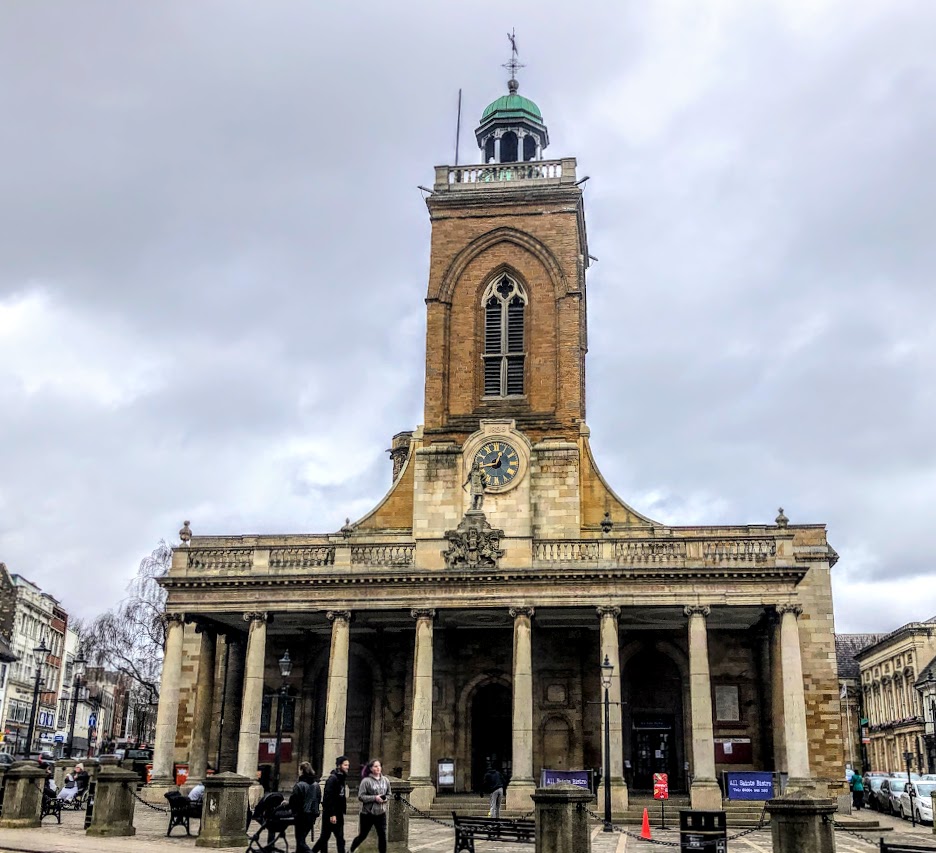
All Saints’ Church is the parish church in the centre of Northampton (Photograph: Patrick Comerford)

ions from the 17th to the 19th century (Photograph: Patrick Comerford, 2024)

The USPG Prayer Diary today (Sunday 2 November 2025, All Saints’ Sunday, All Souls’ Day) invites us to pray:

God of hope, grant that we, with all who have believed in you, may be united in the full knowledge of your love and the unclouded vision of your glory; through Jesus Christ our Lord. Amen (A Prayer Book for Australia, 1995).

The Collect:

Almighty God,
you have knit together your elect
in one communion and fellowship
in the mystical body of your Son Christ our Lord:
grant us grace so to follow your blessed saints
in all virtuous and godly living
that we may come to those inexpressible joys
that you have prepared for those who truly love you;
through Jesus Christ your Son our Lord,
who is alive and reigns with you,
in the unity of the Holy Spirit,
one God, now and for ever.

The Post Communion Prayer:

God, the source of all holiness and giver of all good things:
may we who have shared at this table
as strangers and pilgrims here on earth
be welcomed with all your saints
to the heavenly feast on the day of your kingdom;
through Jesus Christ our Lord.

Additional Collect:

God of holiness,
your glory is proclaimed in every age:
as we rejoice in the faith of your saints,
inspire us to follow their example
with boldness and joy;
through Jesus Christ our Lord.

Yesterday’s Reflections

Continued Tomorrow

Christ the King and the saints on the panels of the altar in All Saints’ Church, Berkhamsted (Photograph: Patrick Comerford)

Scripture quotations are from the New Revised Standard Version Bible: Anglicised Edition copyright © 1989, 1995 National Council of the Churches of Christ in the United States of America. Used by permission. All rights reserved worldwide. http://nrsvbibles.org

All Saints’ Church in Yelvertoft, Northamptonshire, was connected with the Comberford family for about a century … Henry Comberford of Lichfield Cathedral was the rector in 1546-1560 (Photograph: Patrick Comerford)

26 May 2025

Daily prayer in Easter 2025:
37, Monday 26 May 2025

‘And the fire and the rose are one’ (TS Eliot) … a candle and a rose on a dinner table in Minares on Vernardou Street, Rethymnon, in Crete (Photograph: Patrick Comerford)

Patrick Comerford

Easter is a 50-day season, beginning on Easter Day (20 April 2025) and continuing until the Day of Pentecost (8 June 2025), or Whit Sunday. This week began with the Sixth Sunday of Easter (Easter VI, 25 May 2025), and this Thursday is Ascension Day (29 May 2025).

The Calendar of the Church of England in Common Worship today remembers Saint Augustine (605), first Archbishop of Canterbury; John Calvin (1564), reformer; and Saint Philip Neri (1591), founder of the Oratorians and spiritual guide. Today is the Spring Bank holiday in England. Before today begins though, I am taking some quiet time this morning to give thanks, to reflect, to pray and to read in these ways:

1, reading today’s Gospel reading;

2, a short reflection;

3, a prayer from the USPG prayer diary;

4, the Collects and Post-Communion prayer of the day.

‘The Advocate … whom I will send to you from the Father’ (John 15: 26) … Christ with the Holy Spirit depicted above as a dove on a gravestone in Calverton Road Cemetery, Stony Stratford (Photograph: Patrick Comerford, 2025)

John 15: 26 to 16: 4 (NRSVA):

[Jesus said:] 26 ‘When the Advocate comes, whom I will send to you from the Father, the Spirit of truth who comes from the Father, he will testify on my behalf. 27 You also are to testify because you have been with me from the beginning.

1 ‘I have said these things to you to keep you from stumbling. 2 They will put you out of the synagogues. Indeed, an hour is coming when those who kill you will think that by doing so they are offering worship to God. 3 And they will do this because they have not known the Father or me. 4 But I have said these things to you so that when their hour comes you may remember that I told you about them.’

‘… all shall be well and / All manner of thing shall be well’ … sunset seen from the Sunset Taverna in Rethymnon (Photograph: Patrick Comerford)

Today’s Reflection:

The Gospel reading provided in the Lectionary at the Eucharist today (John 15: 26 to 16: 4) continues our readings from the ‘Farewell Discourse’ at the Last Supper in Saint John’s Gospel. Christ continues to prepare his followers for his departure, and repeats once again his promise of the gift of the Holy Spirit at Pentecost: ‘When the Advocate comes, whom I will send to you from the Father, the Spirit of truth who comes from the Father, he will testify on my behalf’ (verse 26).

I think our thinking about the Holy Spirit is made difficult by traditional images of a dove that looks more like a homing pigeon; or tongues of fire dancing around meekly-bowed heads of people cowering and hiding in the upper room in Jerusalem, rather than a room that is bursting at the seams and ready to overflow.

But the Holy Spirit is not something added on as an extra course, as an after-thought after the Resurrection and the Ascension.

This month we are marking the 1,700th anniversary of the Council of Nicaea and the agreement on the Nicene Creed, in which we say: ‘We believe in the Holy Spirit’. Do we really believe in the Holy Spirit as ‘the Lord, the giver of life,’ in the Holy Spirit as the way in which God ‘has spoken through the prophets’?

The gift of the Holy Spirit does not stop being effective the day after confirmation, the day after ordination, the day after hearing someone speaking in tongues, or the day after the Day of Pentecost.

God never leaves us alone. This is what Christ promises the disciples, the whole Church, in today’s Gospel reading. We need have no fears, for the Resurrection breaks through all the barriers of time and space, of gender and race, of language and colour.

If the Holy Spirit is the Advocate and is living in me and you, then who am I an advocate for? Who do I speak up for when there is no-one else to speak up for them?

Pentecost includes all – even those we do not like. Who do you not want in the Kingdom of God? Who do I find it easy to think of excluding from the demands the Holy Spirit makes on me and on the Church?

Pentecost promises hope. But hope is not certainty, manipulating the future for our own ends, it is trusting in God’s purpose.

‘Little Gidding,’ the fourth and final poem in the Four Quartets, is TS Eliot’s own Pentecost poem. ‘Little Gidding’ begins in ‘the dark time of the year’, when a brief and glowing afternoon sun ‘flames the ice, on pond and ditches’ as it ‘stirs the dumb spirit’, not with wind but with ‘pentecostal fire.’

At the end of the poem, Eliot describes how the eternal is contained within the present and how history exists in a pattern, and repeating the words of Julian of Norwich, he is assured:

And all shall be well and
All manner of thing shall be well
When the tongues of flame are in-folded
Into the crowned knot of fire
And the fire and the rose are one.


I have no doubts that the Holy Spirit works in so many ways that we cannot understand. And no doubts that the Holy Spirit works best and works most often in the quiet small ways that bring hope rather than in the big dramatic ways that seek to control.

Sometimes, even when it seems foolish, sometimes, even when it seems extravagant, it is worth being led by the Holy Spirit. Because the Holy Spirit may be leading us to surprising places, and, surprisingly, leading others there too, counting them in when we thought they were counted out.

Whether they are persecuted minorities in the Middle East, immigrants threatened with deportation to a third country, or people who are marginalised at home, or those we are uncomfortable with because of how they sound, seem, look or smell, God’s generosity counts them in and offers them hope.

And if God counts them in, so should the Church. And so should I.

Christ is risen!
The Lord is risen indeed. Alleluia!

Saint Augustine of Canterbury (left), the Archangel Michael and Saint Alban in a window by Charles Eamer Kempe in Saint Peter’s Church, Berkhamsted (Photograph: Patrick Comerford)

Today’s Prayers (Monday 26 May 2025):

The Feast of the Ascension is on Thursday next (29 May 2025) and provides the theme for this week in ‘Pray With the World Church’, the Prayer Diary of the Anglican mission agency USPG (United Society Partners in the Gospel). This theme was introduced yesterday with reflections from Dr Paulo Ueti, Theological Advisor and Regional Manager for Latin America and the Caribbean, USPG.

The USPG Prayer Diary today (Monday 26 May 2025) invites us to pray:

Lord creator of the earth, air, waters, and sky, creator of our homeland, we cry out for people and communities most affected by climate change, especially the vulnerable and marginalised. Guide us to act with love, justice, and mercy as stewards of your creation.

The Collect:

Almighty God,
whose servant Augustine was sent as the apostle
of the English people:
grant that as he laboured in the Spirit
to preach Christ’s gospel in this land,
so all who hear the good news
may strive to make your truth known in all the world;
through Jesus Christ your Son our Lord,
who is alive and reigns with you,
in the unity of the Holy Spirit,
one God, now and for ever.

The Post-Communion Prayer:

God, shepherd of your people,
whose servant Augustine revealed the loving service of Christ
in his ministry as a pastor of your people:
by this eucharist in which we share
awaken within us the love of Christ
and keep us faithful to our Christian calling;
through him who laid down his life for us,
but is alive and reigns with you, now and for ever.

Yesterday’s Reflections

Continued Tomorrow

The Chiesa Nuova or the Church of Santa Maria in Vallicella is closely associated with the life of Saint Philip Neri (Photograph: Patrick Comerford)

Scripture quotations are from the New Revised Standard Version Bible: Anglicised Edition copyright © 1989, 1995 National Council of the Churches of Christ in the United States of America. Used by permission. All rights reserved worldwide. http://nrsvbibles.org

23 March 2024

Daily prayer in Lent with
early English saints:
39, 23 March 2024,
Saint Hugh of Lincoln

Saint Hugh of Lincoln depicted in a statue at Saint Mary Magdalen Church, Oxford (Photograph: Patrick Comerford, 2024)

Patrick Comerford

We are approaching the last week of Lent, and tomorrow is Palm Sunday, the Sixth Sunday in Lent (24 March 2024). In the Jewish calendar, the festival of Purim begins this evening (23 March) and continues until tomorrow evening (24 March).

Throughout Lent this year, I am taking time each morning to reflect on the lives of early, pre-Reformation English saints commemorated in Common Worship.

Before today begins, I am taking some quiet time this morning for reflection, prayer and reading in these ways:

1, A reflection on an early, pre-Reformation English saint;

2, today’s Gospel reading;

3, a prayer from the USPG prayer diary.

Saint Hugh of Lincoln (left) and Saint Frideswide of Oxford depicted in a window in Saint Mary’s Church, Shenley Church End (Photograph: Patrick Comerford)

Early English pre-Reformation saints: 39, Saint Hugh of Lincoln

Saint Hugh of Lincoln is remembered in Common Worship on 17 November.

Hugh was born at Avalon in Burgundy in 1140 and at first made his profession with the Augustinian canons but, when he was 25, he became a monk at the Carthusian Grande Chartreuse. In about 1175, he was invited by the King Henry II, to become prior of his Charterhouse foundation at Witham in Somerset, badly in need of reform even though it had been only recently founded.

In 1186, Hugh was persuaded to accept the See of Lincoln, then the largest diocese in England. He brought huge energy to the diocese and, together with discerning appointments to key posts, he revived the schools in Lincoln, repaired and enlarged the cathedral, visited the See extensively, drew together the clergy to meet in synod and generally brought an efficiency and stability to the Church.

Hugh also showed great compassion for the poor and the oppressed, ensuring that sufferers of leprosy were cared for and that Jews were not persecuted. He both supported his monarch yet also held out against any royal measures he felt to be extreme, while managing not to make an enemy of the king. He died in London on 17 November 1200.

Saint Hugh of Lincoln (right) and King Edward the Confessor in the Cooper Window in Saint Peter’s Church, Berkhamsted (Photograph: Patrick Comerford, 2023)

John 11: 45-57 (NRSVA):

45 Many of the Jews therefore, who had come with Mary and had seen what Jesus did, believed in him. 46 But some of them went to the Pharisees and told them what he had done. 47 So the chief priests and the Pharisees called a meeting of the council, and said, ‘What are we to do? This man is performing many signs. 48 If we let him go on like this, everyone will believe in him, and the Romans will come and destroy both our holy place and our nation.’ 49 But one of them, Caiaphas, who was high priest that year, said to them, ‘You know nothing at all! 50 You do not understand that it is better for you to have one man die for the people than to have the whole nation destroyed.’ 51 He did not say this on his own, but being high priest that year he prophesied that Jesus was about to die for the nation, 52 and not for the nation only, but to gather into one the dispersed children of God. 53 So from that day on they planned to put him to death.

54 Jesus therefore no longer walked about openly among the Jews, but went from there to a town called Ephraim in the region near the wilderness; and he remained there with the disciples.

55 Now the Passover of the Jews was near, and many went up from the country to Jerusalem before the Passover to purify themselves. 56 They were looking for Jesus and were asking one another as they stood in the temple, ‘What do you think? Surely he will not come to the festival, will he?’ 57 Now the chief priests and the Pharisees had given orders that anyone who knew where Jesus was should let them know, so that they might arrest him.

The pet swan of Saint Hugh of Lincoln is an amusing detail in the Cooper Window in Saint Peter’s Church, Berkhamsted (Photograph: Patrick Comerford, 2023)

Today’s Prayers (Saturday 23 March 2024):

The theme this week in ‘Pray With the World Church,’ the Prayer Diary of the Anglican mission agency USPG (United Society Partners in the Gospel), has been ‘Lent Reflection: True repentance is the key to Christian Freedom.’ This theme was introduced on Sunday by the Revd Dr Simon Ro, Dean of Graduate School of Theology at Sungkonghoe (Anglican) University, Seoul, Korea.

The USPG Prayer Diary today (23 March 2024) invites us to pray in these words:

We pray Lord for the work and mission of the Anglican Church of Korea. We pray too for the Graduate School of Theology at Sungkonghoe – may they continue to nurture and teach theology for all those seeking to learn.

The Collect:

Most merciful God,
who by the death and resurrection of your Son Jesus Christ
delivered and saved the world:
grant that by faith in him who suffered on the cross
we may triumph in the power of his victory;
through Jesus Christ your Son our Lord,
who is alive and reigns with you,
in the unity of the Holy Spirit,
one God, now and for ever.

The Post-Communion Prayer:

Lord Jesus Christ,
you have taught us
that what we do for the least of our brothers and sisters
we do also for you:
give us the will to be the servant of others
as you were the servant of all,
and gave up your life and died for us,
but are alive and reign, now and for ever.

Additional Collect:

Gracious Father,
you gave up your Son
out of love for the world:
lead us to ponder the mysteries of his passion,
that we may know eternal peace
through the shedding of our Saviour’s blood,
Jesus Christ our Lord.

Collect on the Eve of Palm Sunday:

Almighty and everlasting God,
who in your tender love towards the human race
sent your Son our Saviour Jesus Christ
to take upon him our flesh
and to suffer death upon the cross:
grant that we may follow the example of his patience and humility,
and also be made partakers of his resurrection;
through Jesus Christ your Son our Lord,
who is alive and reigns with you,
in the unity of the Holy Spirit,
one God, now and for ever.

Yesterday: Saint Gilbert of Sempringham

Tomorrow: Saint Edmund Rich of Abingdon

The Christ the King or Cooper Window in Saint Peter’s Church, Berkhamsted, with Saint Hugh of Lincoln in the bottom left corner (Photograph: Patrick Comerford, 2023)

Scripture quotations are from the New Revised Standard Version Bible: Anglicised Edition copyright © 1989, 1995, National Council of the Churches of Christ in the United States of America. Used by permission. All rights reserved worldwide. http://nrsvbibles.org

14 March 2024

Daily prayer in Lent with
early English saints:
30, 14 March 2024,
Saint Edward the Confessor

Edward the Confessor depicted in a statue on the west front of Lichfield Cathedral (Photograph: Laura Howard)

Patrick Comerford

Lent began a month ago on Ash Wednesday (14 February 2024), and this week began with the Fourth Sunday in Lent (Lent IV), also known as Laetare Sunday and Mothering Sunday or Mother’s Day (10 March 2024).

Throughout Lent this year, I am taking time each morning to reflect on the lives of early, pre-Reformation English saints commemorated in the Calendar of the Church of England in Common Worship.

Before this day begins, I am taking some quiet time this morning for reflection, prayer and reading in these ways:

1, A reflection on an early, pre-Reformation English saint;

2, today’s Gospel reading;

3, a prayer from the USPG prayer diary.

King Edward the Confessor (left) and Saint Hugh of Lincoln in the Cooper window in Saint Peter’s Church, Berkhamsted (Photograph: Patrick Comerford, 2023)

Early English pre-Reformation saints: 30, Saint Edward the Confessor

Saint Edward the Confessor is commemorated in Common Worship on 13 October. Edward was born in 1002, the son of the English King Ethelred and his Norman wife Emma. Living in exile during the Danish supremacy, he was invited back to England in 1042 to become king, and was heartily welcomed as a descendant of the old royal line.

However, his reign was a balancing act between the influences of stronger characters at his court or overseas, sustained by Edward’s diplomacy and determination.

Edward’s reputation for sanctity was built on his personal, more than his political, qualities. He was concerned to maintain peace and justice in his realm, to avoid foreign wars, and to put his faith into practice. He was generous to the poor, hospitable to strangers, but no mere pietist.

As a young man, Edward had vowed to go on pilgrimage to Rome should his family fortunes ever be restored. He later felt it irresponsible to leave his kingdom, and was permitted instead to found or endow a monastery dedicated to Saint Peter. Edward chose the abbey on Thorney Island, by the river Thames, thus beginning the royal patronage of Westminster Abbey.

He died on 5 January 1066 and his remains were translated to a new shrine in Westminster Abbey on 13 October 1162.

Edward the Confessor founded Westminster Abbey and is buried there (Photograph: Patrick Comerford)

John 5: 17-30 (NRSVA):

[Jesus said:] 31 ‘If I testify about myself, my testimony is not true. 32 There is another who testifies on my behalf, and I know that his testimony to me is true. 33 You sent messengers to John, and he testified to the truth. 34 Not that I accept such human testimony, but I say these things so that you may be saved. 35 He was a burning and shining lamp, and you were willing to rejoice for a while in his light. 36 But I have a testimony greater than John’s. The works that the Father has given me to complete, the very works that I am doing, testify on my behalf that the Father has sent me. 37 And the Father who sent me has himself testified on my behalf. You have never heard his voice or seen his form, 38 and you do not have his word abiding in you, because you do not believe him whom he has sent.

39 ‘You search the scriptures because you think that in them you have eternal life; and it is they that testify on my behalf. 40 Yet you refuse to come to me to have life. 41 I do not accept glory from human beings. 42 But I know that you do not have the love of God in you. 43 I have come in my Father’s name, and you do not accept me; if another comes in his own name, you will accept him. 44 How can you believe when you accept glory from one another and do not seek the glory that comes from the one who alone is God? 45 Do not think that I will accuse you before the Father; your accuser is Moses, on whom you have set your hope. 46 If you believed Moses, you would believe me, for he wrote about me. 47 But if you do not believe what he wrote, how will you believe what I say?’

The tympanum of the portal shows in Westminster Cathedral shows Christ enthroned, with a knelling Edward the Confessor on the right (Photograph: Patrick Comerford)

Today’s Prayers (Thursday 14 March 2024):

The theme this week in ‘Pray With the World Church,’ the Prayer Diary of the Anglican mission agency USPG (United Society Partners in the Gospel), is ‘Lent Reflection: JustMoney Movement.’ This theme was introduced on Sunday by Matt Ceaser, Movement Builder, JustMoney Movement.

The USPG Prayer Diary today (14 March 2024, Commonwealth Day) invites us to pray in these words:

Let us pray for our brothers and sisters in Christ across the Commonwealth, a political association of 54 free and equal states across the world.

The Collect:

Merciful Lord,
absolve your people from their offences,
that through your bountiful goodness
we may all be delivered from the chains of those sins
which by our frailty we have committed;
grant this, heavenly Father,
for Jesus Christ’s sake, our blessed Lord and Saviour,
who is alive and reigns with you,
in the unity of the Holy Spirit,
one God, now and for ever.

The Post-Communion Prayer:

Lord God,
whose blessed Son our Saviour
gave his back to the smiters
and did not hide his face from shame:
give us grace to endure the sufferings of this present time
with sure confidence in the glory that shall be revealed;
through Jesus Christ our Lord.

Additional Collect:

Merciful Lord,
you know our struggle to serve you:
when sin spoils our lives
and overshadows our hearts,
come to our aid
and turn us back to you again;
through Jesus Christ our Lord.

Yesterday: Saint Alphege of Canterbury

Tomorrow: Lanfranc (1089), Prior of Le Bec, Archbishop of Canterbury

The altar in the chapel dedicated to Saint Edward the Confessor in Saint Chad’s Cathedral, Birmingham (Photograph: Patrick Comerford)

Scripture quotations are from the New Revised Standard Version Bible: Anglicised Edition copyright © 1989, 1995, National Council of the Churches of Christ in the United States of America. Used by permission. All rights reserved worldwide. http://nrsvbibles.org
12 January 2024

Sam King and Alf Shipman:
two East End violinists who
founded a cinema chain

The Rex Cinema in Berkhamsted … a reminder of the cinema chain built by Alfred Shipman and Samuel King (Photograph: Patrick Comerford)

Patrick Comerford

During a recent visit to Berkhamsted in Hertfordshire, the joyful restoration of the Rex Cinema reminded me of two successful 20th century cinema magnates, Alfred Shipman (1890-1956) and Samuel King (1890-1973), who founded the Shipman & King cinema chain that had more than 40 cinemas at its peak.

In recent weeks I have written about Oscar Deutsch (1893-1941), who founded the Odeon cinema chain – urban lore claimed the name Odeon was an acronym for ‘Oscar Deutsch Entertains Our Nation.’ Deutsch was also a Jewish philanthropist, an active supporter of many charities, and was President of the Birmingham Hebrew Congregation, Singers Hill Synagogue from 1932 to 1940.

The story of Shipman and King and the success of their cinema chain is a similar story, but in this caseit is the story of the sons of Polish immigrants who grew up in the Jewish East End of London.

The Shipman & King cinema chain was founded by Shipman and King in the immediate aftermath of World War I and family stories say they began the chain in the back of a pub.

Sam King was a teacher and an accomplished violinist who played in the orchestra pits in London cinemas. Alf Shipman was an entrepreneur who was buying up cinemas that were struggling financially in the aftermath of World War I.

King’s Jewish family fled pogroms in Poland, when it was part of the Russian Empire, and their original surname may have been Koenig – the Latin forms of the name, Rex, was later used as the name of many of his cinemas. He was born Samuel Simon King in Mile End, the son of Lewis King, a cobbler, and Kate (Goldberger). He grew up in the East End, attended Stepney Jewish School, and trained as a teacher at Goldsmith’s College. Shipman was a Russian-born Polish immigrant, and later he married Sam’s sister, Sadie King.

When King and Shipman met at the end of World War I, they were both playing the violin in the Queen’s Light Orchestra at evening showings of silent films. Sam was a teacher during the day, while Alf was a full-time musician.

The friends met for a drink in 1919 in the Crown Hotel, Hailsham, near Eastbourne on the south coast. When they spotted the barn in the back, they rented a projector converted the barn and started putting on screenings in their first cinema venture.

Business grew quickly, and they registered Shipman & King Cinemas Ltd in 1920. Sam gave up teaching to manage the financial side of the business and the day-to-day running of the business, while Alf was the entrepreneur, and Alf’s brother Mick was the booking manager. The partnership would last until Alf Shipman died in 1956.

Henry Coussens was the architect for their first purpose-built cinema, the Pavilion Hailsham. It opened on Monday 28 November 1921, with a capacity audience watching Charlie Chaplin in The Kid. By 1926, there were eight acquired silent cinemas and one purpose built within the S&K circuit, overseen by AE Randle. The next new cinema built for Shipman and King followed in 1930. A policy was adopted not to mimic the large circuits, but to acquire an existing cinema, refurbish it and then to build another nearby. The company preferred locations away from the densely populated inner cities, favouring middle class areas in the south of England.

Sam and Alf saw their business rapidly expand in the 1930s. However, with prudent management they avoided over commit acquiring sites and operated strict budgets on both the building and fitting out their cinemas. At the same time, Oscar Deutsch (Odeon) and John Maxwell (ABC) often waited for independent operators to ran into financial trouble and then stepped in to snap up newly-built cinemas. There are examples where the reverse happened when S&K would open a cinema that was intended to be an Odeon which may suggest a good working relationship with Oscar Deutsch.

Part of the success of Otto Deutsch was his choice of architects to design his Odeon cinemas, including Harry Weedon (1887-1970), who also refurbished Singers Hill Synagogue. In a similar vein, Shipman and King employed architects such as Robert Cromie (1887-1971), David Evelyn Nye (1906-1986), Henry Coussens, Howis & Belcham, Leslie H Kemp and Frederick E Tasker.

These architects helped Shipman and King build up a portfolio of moderately-sized quality cinemas that could equal city centre cinemas in the three major circuits in both appearance and comfort. The Shipman & King cinemas had lavish art deco interiors, most had balconies, many had car parks, and some also had restaurants.

Nye designed the Rex cinema in Berkhamsted in the art deco style in 1936. The Rex was built on the site of Egerton House, an Elizabethan mansion once known for its literary association with JM Barrie, author of Peter Pan, and the Llewelyn Davies family. Egerton House was demolished in 1937 and the Rex opened in 1938.

When Alf Shipman died in 1956, Sam King’s son, Peter became a director. Sam King’s son Peter King went on to work with Paramount and EMI before founding Screen International in 1975. He died in 2018. Meanehile, the Shipman and King circuit was bought in 1965 by the Grade Organisation, which in turn was taken over by EMI. After years of bingo conversions and closures what was left of these cinemas came under the control of Cannon Cinemas.

Today, just a few former S & K sites remain. The first purpose-built S & K cinema, the Pavilion in Hailsham, has been rescued from a derelict condition and has been beautifully restored. It marked its centenary in 2021. The Everyman in Esher is now a multiplex. The Rex in Berkhamsted closed after 50 years in 1988 and became derelict. The building was listed Grade II by English Heritage. Following a campaign to save the Rex, the cinema re-opened in 2004. Today, it is an independent cinema, screening films 362 days a year.

The life and legacy of Sam King is told in Cinema King, a book by his granddaughter Jenny King. She recounts King’s life and fondly remembers her grandfather as ‘gentle, intelligent and dignified’.

Shabbat Shalom

18 December 2023

Daily prayers in Advent with
Leonard Cohen and USPG:
(16) 18 December 2023

‘You let me sing, you lifted me up, you gave my soul a beam to travel on … let me dare the boldness of joy’ (Leonard Cohen) … street art near Christ Church Cathedral, Dublin (Photograph: Patrick Comerford)

Patrick Comerford

We are in the countdown to Christmas in the Church, with just a week to go to Christmas Day. Yesterday was the Third Sunday of Advent or Gaudete Sunday (17 December 2023), bringing us two-thirds of the way through what is a very short Advent this year.

I have some long journeys ahead of me today. But, before the day begins, I am taking some time for prayer, reflection and reading this morning.

Throughout Advent this year, my reading and reflection each day includes a poem or song by Leonard Cohen. These Advent reflections are following this pattern:

1, A reflection on a poem or song by Leonard Cohen;

2, the Gospel reading of the day in the Church of England lectionary;

3, a prayer from the USPG prayer diary.

Leonard Cohen’s ‘Book of Mercy’ is a collection of psalms or short poems

The Songs and Poems of Leonard Cohen: 16, ‘You let me sing, you lifted me up’:

In my reflections this morning, I am reading one of the poems in Leonard Cohen’s Book of Mercy. This book of psalms by Leonard Cohen is a personal and powerful collection. It was first published in 1984, and was republished 35 years later in 2019 by Canongate of Edinburgh. It is a slim volume of Cohen’s contemporary psalms, and it has been elegantly repackaged.

Like the psalms, the themes in the short poems in Book of Mercy include praise, despair, anger, doubt, trust and the search for the presence of God.

Constantly, Cohen speaks of God as ‘the Name’ – Hashem (השם‎). This is a title used in Judaism to refer to God without using God’s name. Rabbinic Judaism considers seven names of God so holy that, once written, they should not be erased, and restricts the use of the names of God to a liturgical context.

When Leonard Cohen says ‘Blessed be the Name,’ he is saying ‘Blessed be God.’

Speaking from the heart of the modern world, yet in tones that resonate with an older Jewish tradition, these verses give voice to the deepest and most powerful intuitions.

This morning, I am reading one of these short poems in 4Book of Mercy (p 28):

You let me sing, you lifted me up, you gave my soul a beam to travel on. You folded your distance back into my heart. You drew the tears back to my eyes. You hid me in the mountain of your word. You gave the injury a tongue to heal itself. You covered my head with my teacher’s care, you bound my arm with my grandfather’s strength. O beloved speaking, O comfort whispering in the terror, unspeakable explanation of the smoke and cruelty, undo the self-conspiracy, let me dare the boldness of joy.

‘Now the birth of Jesus the Messiah took place in this way’ (Matthew 1: 18) … Nativity scenes in a stained-glass window in Saint John the Baptist Church, Coventry (Photograph: Patrick Comerford, 2023)

Matthew 1: 18-24 (NRSVA):

18 Now the birth of Jesus the Messiah took place in this way. When his mother Mary had been engaged to Joseph, but before they lived together, she was found to be with child from the Holy Spirit. 19 Her husband Joseph, being a righteous man and unwilling to expose her to public disgrace, planned to dismiss her quietly. 20 But just when he had resolved to do this, an angel of the Lord appeared to him in a dream and said, ‘Joseph, son of David, do not be afraid to take Mary as your wife, for the child conceived in her is from the Holy Spirit. 21 She will bear a son, and you are to name him Jesus, for he will save his people from their sins.’ 22 All this took place to fulfil what had been spoken by the Lord through the prophet:

23 ‘Look, the virgin shall conceive and bear a son,
and they shall name him Emmanuel’,

which means, ‘God is with us.’ 24 When Joseph awoke from sleep, he did as the angel of the Lord commanded him; he took her as his wife.

The Nativity depicted in the reredos in Saint Catherine’s Chapel in Saint Peter’s Church, Berkhamsted, Hertfordshire (Photograph: Patrick Comerford, 2023)

Today’s Prayers (Monday 18 December 2023):

The theme this week in ‘Pray With the World Church,’ the Prayer Diary of the Anglican mission agency USPG (United Society Partners in the Gospel), is ‘The Joy of Advent.’ This theme was introduced yesterday.

The USPG Prayer Diary today (18 December 2023, International Migrants Day) invites us to pray in these words:

Let us remember the plight of migrants around the world. May we offer them hospitality, hope and joy.

Nativity scenes in the East Window in Saint Mary’s Church, Badby, Northamptonshire (Photograph: Patrick Comerford, 2023)

The Collect:

O Lord Jesus Christ,
who at your first coming sent your messenger
to prepare your way before you:
grant that the ministers and stewards of your mysteries
may likewise so prepare and make ready your way
by turning the hearts of the disobedient to the wisdom of the just,
that at your second coming to judge the world
we may be found an acceptable people in your sight;
for you are alive and reign with the Father
in the unity of the Holy Spirit,
one God, now and for ever.

The Post-Communion Prayer:

We give you thanks, O Lord, for these heavenly gifts;
kindle in us the fire of your Spirit
that when your Christ comes again
we may shine as lights before his face;
who is alive and reigns now and for ever.

Additional Collect:

God for whom we watch and wait,
you sent John the Baptist to prepare the way of your Son:
give us courage to speak the truth,
to hunger for justice,
and to suffer for the cause of right,
with Jesus Christ our Lord.

Yesterday’s Reflection

Continued Tomorrow

Reading Leonard Cohen’s short poem ‘You let me sing’ (Book of Mercy)

Scripture quotations are from the New Revised Standard Version Bible: Anglicised Edition copyright © 1989, 1995, National Council of the Churches of Christ in the United States of America. Used by permission. All rights reserved worldwide. http://nrsvbibles.org

14 December 2023

Saint Peter’s Church in
Berkhamsted has a rich
collection of Victorian
stained glass windows

The Great West Window is part of the great collection of Victorian glass in Saint Peter’s Church, Berkhamsted (Photograph: Patrick Comerford, 2023)

Patrick Comerford

I have spent some time in Saint Peter’s Church during my visits to Berkhamsted over the past month or so, and I was discussing the Cooper window by Nathaniel Westlake in a blog posting in my prayer diary about two weeks ago (30 November, see HERE), looking at its depiction of Christ the King and the images of angels, prophets, martyrs, priests and the church, inspired by the verses of the canticle Te Deum.

In one idle moment, as I was preparing that posting as part of a series this week on the theme of Christ the King, I amused myself by asking whether it might have been a more appropriate tribute to William Cooper, the chemist and vet who invented sheep dip, to have had a window with an image of Christ the Good Shepherd.

In fact, the next window along the north aisle in the church shows Christ as both the Good Shepherd and the Light of the World.

This window has perpendicular-style stone tracery, and possibly dates from the 15th century. The glass, however is Victorian, designed by Heaton, Butler and Bayne.

The Good Shepherd and the Light of the World in the Longman window by Heaton, Butler and Bayne (Photograph: Patrick Comerford, 2023)

The left panel shows Christ as the Good Shepherd, a typical 19th century illustration of Christ. The right panel is based on the 1854 painting ‘The Light of the World’ by the Pre-Raphaelite artist William Holman Hunt. There are three versions of this painting – in Keble College, Oxford, Manchester Art Gallery and Saint Paul’s Cathedral, London – and it has been widely copied in stained glass in churches all over the world.

This enduring image of Christ is inspired by words in Revelation 3: 20 – ‘Behold, I stand at the door, and knock: if any man hear my voice, and open the door, I will come in to him, and will sup with him, and he with me.’ The Risen Christ stands in a dark forest holding a lantern and knocking at a door, asking us to let Him into our hearts. It is significant that the door has no handle on the outside. Christ cannot enter unless we let him in.

The window is in memory of the publisher and author William Longman (1813-1877), who is buried in Berkhamsted. He was a member of the family that founded Longman publishers. William Longman was the author of books on mountaineering, a biography of Edward III and a history of the three cathedrals in London dedicated to Saint Paul.

The choice of Holman Hunt’s painting was inspired by Longman’s love of Saint Paul’s Cathedral. A sailing ship, the logo of Longman publishers, can be seen in the top of the window.

The windows in Saint John’s Chantry, Saint Peter’s Church, Berkhamsted (Photograph: Patrick Comerford, 2023)

The stained-glass windows in Saint Peter’s Church are particularly interesting. Most of the original mediaeval stained glass has been lost, although two small examples of 13th century glass survive in the old chancel and the north aisle. The surviving Gothic stonework is significant because reveals much about the age of building.

The oldest part of Saint Peter’s was built in the Early English style, and there are three lancet windows from the early or mid 13th century in the Old Chancel, and traces of Early English window openings in the Lady Chapel.

The church was extended and altered between 1250 and 1400, and this is reflected in the changing style of the window openings and the patterns of the tracery. Straight lines and circular forms are prominent in the tracery of the east window, and the windows in the south transept and Saint John’s Chantry. This Geometric style is a typical of early Decorated Gothic and dates these parts of the church to ca 1270-1300.

Ornate reticulated tracery of the curvilinear style can be seen in the north transept windows and the windows in the Saint Catherine Chapel. The curvilinear style, with sinuous, S-shaped curves combined in complex, ornate net-like patterns, is a striking change of style in Gothic design and came into fashion ca 1315. It known as reticulated tracery, and suggests that these parts of the church were built in the early 14th century.

During the Civil War, Saint Peter’s Church was used as a prison to Royalist soldiers. The windows were taken out in 1648, losing most of the original medieval glass.

During the Victorian renovations, the original mediaeval tracery and the external reveals were replaced with faithful reproductions, while the original internal reveals were retained. New stained glass from renowned Victorian glassmakers was installed, including windows designed by Charles Eamer Kempe, Heaton, Butler and Bayne, Nathaniel Westlake, Powell, Clayton and Bell, and Curtis, Ward and Hughes.

The Curtis memorial window in the south transept depicts the Resurrection of the Dead (Photograph: Patrick Comerford, 2023)

The Curtis memorial window in the south transept depicts the Resurrection of the Dead described in the Book of Revelation. It was installed as a memorial to Sophia Curtis, who is depicted in the third light from the west.

It is the work of Clayton and Bell, one of Victorian Britain’s most prolific and proficient stained glass workshops, and it dates from 1873 when the firm was approaching its greatest renown. Among Clayton and Bell’s famous works are the west window in King’ s College Chapel, Cambridge and the mosaics on the Albert Memorial in London.

The east window by Heaton, Butler and Bayne in the Saint Catherine Chapel celebrates Baptism, Holy Orders and Holy Eucharist (Photograph: Patrick Comerford, 2023)

The Saint Catherine Chapel, south of the old chancel, dates from the 14th century and was restored ca 1890-1909. It has an alabaster reredos copied from the high altar screen of Winchester Cathedral and stained glass from the workshops of Heaton, Butler and Bayne and Curtis, Ward and Hughes.

The east window above the altar celebrates Holy Baptism, Holy Orders and Holy Eucharist. It is by Heaton, Butler and Bayne. The tracery of this window appears to be of a mediaeval origin, designed in a reticulated pattern that was fashionable in the Decorated period in the early 14th century. However it is uncertain whether the tracery is mediaeval or was inserted during Sir Jefrey Wyatville’s restoration of the church in the 1820s.

The Saint Christopher window by TF Curtis in the Saint Catherine Chapel (Photograph: Patrick Comerford, 2023)

There are two additional examples of Victorian stained glass in recesses above two mediaeval tomb in Saint Catherine’s Chapel. The window closest to the altar depicts Saint Christopher, the Christ-bearer. It is signed by TF Curtis of Curtis, Ward and Hughes.

The Saint Francis window by Heaton, Butler and Bayne in the Saint Catherine Chapel (Photograph: Patrick Comerford, 2023)

The next window along, by Heaton, Butler and Bayne, shows Saint Francis of Assisi. It was donated by the Sunday School teachers and children in 1901.

A three-light window in the south aisle dates from 1880 and is the work of the great Victorian masters Charles Eamer Kempe (1837-1907). It is a fine example of Gothic Revival design and it shows Saint Augustine of Canterbury, the Archangel Michael and Saint Alban, the patron saint of the diocese.

In the head of the window are shields bearing the heraldic arms of the Dorrien and Drake families. The Perpendicular-style stone tracery is probably late 14th/early 15th century.

CE Kempe’s window shows Saint Augustine of Canterbury, the Archangel Michael and Saint Alban (Photograph: Patrick Comerford, 2023)

The Great West Window is best seen from the High Altar or from the east end of the nave. It is from the workshop of Heaton, Butler and Bayne, and was exhibited at the International Exposition in Paris in 1867, when it won a Bronze Medal (Class XVI, Crystal, Fancy Glass and Stained Glass, British section).

The window shows a variety of saints and Biblical scenes. The uppermost light has an image of Saint Catherine with the wheel that is the symbol of her martyrdom. On the bottom row, the furthest light on the right, which portrays the martyrdom of Saint Andrew, whose feast day is tomorrow (30 November).

The images in this window draw on mediaeval illustrations to depict the clothes and architecture of the Holy Land. But this window is a departure from Victorian Gothic with its almost garish colours and the simple forms that look forward to the Arts and Crafts movement and Art Nouveau.

The Great West Window by Heaton, Butler and Bayne and was exhibited at the Paris Exposition in 1867 (Photograph: Patrick Comerford, 2023)