This year marks the 400th anniversary of the Rimondi Fountain being built Rethymnon in 1626 by the Rector or Venetian Governor, Alouise Rimondi (Photograph: Patrick Comerford)
Patrick Comerford
I have only ever had one short story published, in a collection of Irish Times writers organised by Fergus Brogan and published as True to Type (1991) in a tribute to my friend and colleague, the late Revd Stephen Hilliard.
Like any writer, I suppose, I had a number of short stories in my creative and imaginative mind. Those were the years when I was getting to know Rethymnon almost 40 years ago, in the late 1980s and early 1990s, and of course one of those imagined short stories was set in the Venetian harbour city on the north coast of Crete.
I had even decided on my name for the main character in that story set in Rethymnon: he was going to be Stavros Vrisakis. Stavros was a barman who with his friend Mikis ran the small bar below the apartment I rented during those years, facing on one side onto Arkadiou street, the vibrant heart of the old town, and on the other onto Eleftheríou Venizélou, the esplanade that runs the full length of the old town beach.
The bar is now a shop, the apartments are no longer available, Stavros and Mikis have moved on, and many of the nearby landmark buildings have been changed, including the former Achillion Hotel, once the oldest hotel in Rethymnon.
My choice of the name Vrisakis was inspired by Vrisakia (Βρυσακια), ‘the little taps’, the popular name in Rethymnon for the Rimondi Fountain or Krini Rimondi, one of the most prominent landmarks in the old town. The fountain is on the north side of Platanou Square, now Titou Petichaki Square, off Paleologou street and in the heart of the old Venetian town.
This year marks the 400th anniversary of the fountain being built in 1626 by the Rector or Venetian Governor of Rethymnon, Alouise Rimondi, who erected it to supply a large part of the town’s water needs. It replaced an earlier fountain erected in 1588, and was part of a broader effort by Rimondi to improve the infrastructure of the town.
Most of the dome erected during the Ottoman occupation of Crete was demolished 100 years ago in 1926 (Photograph: Patrick Comerford)
The pipeline that brought the water to the Rimondi Fountain was uncovered during infrastructure works. It is a jointed stone conduit, which, according to the 17th century Venetian plans, comes from Evligia hill to south of the city and the source of the fountain’s water.
The Rimondi Fountain was part of a modernisation of the town’s water supply in the 17th century, bringing fresh, cool water from Vrysina to Rethymno. It originally faced a small square and provided a public gathering place for the people of Rethymnon.
The Rimondi Fountain is a remarkable example of Venetian Renaissance architecture, and its design combines classical elements with the practical needs of the town, making it a fine, delicate and detailed Venetian work of architecture, engineering and artistry.
Three basins below three lions’ heads spout out constant and steady flows of water. The lions’ heads are carved with attention to detail, their expressions fierce and proud. These lions’ heads are not just decorative but symbolise the strength of the Venetian Empire.
Above the central basin is the Rimondi family coat of arms and a Latin inscription, ‘Alvise Rimondi, Venetian governor, erected this fountain in the year 1626.’
Four columns ending in Corinthian capitals are adorned with acanthus leaves and decorative scrollwork and they add a touch of grandeur to the edifice, elevating it from a simple source of water to a work of art. They have been compared with those at the façade of Hadrian’s Library in Athens, and they enhance the visual impact of the fountain, creating a sense of balance and symmetry.
The four Corinthian capitals support an architrave or stone girder-strip engraved with two in Latin words, Liberalitatis Fontes, ‘Fountain of Generosity’.
During the Ottoman occupation of Crete, the fountain was walled in and a dome was added above the fountain. Most of the dome was demolished 100 years ago in 1926, and only one of the columns from the dome stood survives today. The dome was removed by Titos Petichakis, Τίτος Πετυχάκης (1874-1966), who gives his name to the square and who was the longest-serving Mayor of Rethymnon (1925-1941, 1945-1950).
As evening falls in Rethymnon, the Rimondi fountain is softly lit, casting a warm glow over the square (Photograph: Patrick Comerford)
In all, eight historic fountains survive in Rethymnon: most of them come from Ottoman period, but the Rimondi Fountain is the only one that dates back to the Venetian era. Drinking water continues to flow from the three lions’ mouth that have served as taps for the past 400 years. It sits among a cluster and of bustling bars, cafés and restaurants, making it a popular meeting place for local people and tourists alike, and it is one of the most photographed attractions in Rethymnon.
The Rimondi Fountain remains one of the most recognisable and photographed landmarks in the heart of the Old Town, alongside the Fortezza, the Loggia, the Porta Guora, the harbour and lighthouse and the former customs house.
Rethymnon’s Venetian fountain cannot compete with the flamboyant grandeur of the Morosini Fountain, popularly known as τα Λιοντάρια (‘The Lions’) which was built two years later by the Governor of Iraklion, Francesco Morosini, and named in his honour.
But as evening falls in Rethymnon, the Rimondi fountain is softly lit, casting a warm glow over the square. The lighting accentuates the intricate details of the lion heads and Corinthian columns, and the soft glow adds to the romantic atmosphere of the square.
90 seconds by the Rimondi Fountain in Rethymnon (Patrick Comerford)
Showing posts with label The Irish Times. Show all posts
03 August 2026
30 July 2026
Daily prayer in Ordinary Time 2026:
84, Thursday 30 July 2026
‘Every scribe who has been trained for the kingdom of heaven … brings out of his treasure what is new and what is old’ (Matthew 13: 52) … newspapers at a kiosk in Rethymnon in Crete (Photograph: Patrick Comerford)
Patrick Comerford
We are continuing in Ordinary Time in the Church, and the week began with the Eighth Sunday after Trinity (Trinity VIII, 26 July 2026). The calendar of the Church of England in Common Worship today remembers William Wilberforce (1833), Olaudah Equiano (1797) and Thomas Clarkson (1846).
Before today begins, I am taking some quiet time this morning to give thanks, for reflection, prayer and reading in these ways:
1, today’s Gospel reading;
2, a reflection on the Gospel reading;
3, a prayer from the USPG prayer diary;
4, the Collects and Post-Communion prayer of the day.
‘The kingdom of heaven is like a net that was thrown into the sea and caught fish of every kind’ (Matthew 13: 47) … fishing boats and nets by the harbour in Iraklion (Photograph: Patrick Comerford)
Matthew 13: 47-53 (NRSVA):
[Jesus said:] 47 ‘Again, the kingdom of heaven is like a net that was thrown into the sea and caught fish of every kind; 48 when it was full, they drew it ashore, sat down, and put the good into baskets but threw out the bad. 49 So it will be at the end of the age. The angels will come out and separate the evil from the righteous 50 and throw them into the furnace of fire, where there will be weeping and gnashing of teeth.
51 ‘Have you understood all this?’ They answered, ‘Yes.’ 52 And he said to them, ‘Therefore every scribe who has been trained for the kingdom of heaven is like the master of a household who brings out of his treasure what is new and what is old.’ 53 When Jesus had finished these parables, he left that place.
‘When [the net] was full, they drew it ashore, sat down, and put the good [fish] into baskets’ (Matthew 13: 48) … a sign outside a fish shop in Rethymnon (Photograph: Patrick Comerford)
This morning’s reflection:
We have more weeping and gnashing of teeth in this morning’s Gospel reading (Matthew 13: 47-53), more separating of the righteous and the evil, and more people being thrown into the furnace of fire.
But we also have some more images of what the kingdom of heaven is like:
• Casting a net into the sea (verse 47);
• Catching an abundance of fish (verse 47);
• Drawing the abundance of fish ashore, and realising there is too much there for personal needs (verse 48);
• Writing about it so that others can enjoy the benefit and rewards of treasures new and old (verse 52).
So there are, perhaps, four or five times as many active images of the kingdom than there are passive images.
And we hear that ‘every scribe who has been trained for the kingdom of heaven is like the master of a household who brings out of his treasure what is new and what is old’ (Matthew 13: 52).
When the Revd Stephen Hilliard was leaving The Irish Times to enter full-time parish ministry, the then deputy editor, Ken Gray, joked that he was moving from being a ‘column of the Times’ to being a ‘pillar of the Church.’
Later, when I asked Stephen to define the different challenges of journalism and parish ministry, I was told: ‘In many ways they’re the same. We’re supposed to be comforting the afflicted and afflicting the comfortable.’
Nadine Gordimer, in a lecture in London, once argued that a writer’s highest calling is to bear witness to the evils of conflicts and injustice. But that is the calling of a priest too.
When I was moving from journalism in The Irish Times, another colleague asked me, in a tongue-in-cheek way, whether I was moving from being one of the Scribes to being one of the Pharisees.
In my 30 or more years as a full-time journalist and writer, I had tried to work at the point where faith meets the major concerns of the world.
Since leaving The Irish Times back in 2002, I continue to write regularly in other formats too. My daily blog has been a daily exercise: I continue to write occasionally for The Irish Times, the Wexford People, and for local and church-based newspapers and magazines, as well as contributing regularly to books and journals.
But, just as ministry is never exercised as a personal right but always in communion with the Church, so too journalists and writers never write for themselves, but need to heed the needs of editors and readers.
There is a time to be silent in ministry, and there is a time to be silent as a writer. I am humbled whenever I listen to Leonard Cohen’s song, If it be your will. He ended many of his concerts singing this poem, which for me is about submission to God’s will, accepting God’s will, leaving God in control of my spirit. It is a song that I hope is heard at my funeral (later rather than sooner):
If it be your will
That I speak no more
And my voice be still
As it was before
I will speak no more
I shall abide until
I am spoken for
If it be your will
If it be your will
That a voice be true
From this broken hill
I will sing to you
From this broken hill
All your praises they shall ring
If it be your will
To let me sing
From this broken hill
All your praises they shall ring
If it be your will
To let me sing
If it be your will
If there is a choice
Let the rivers fill
Let the hills rejoice
Let your mercy spill
On all these burning hearts in hell
If it be your will
To make us well
And draw us near
And bind us tight
All your children here
In their rags of light
In our rags of light
All dressed to kill
And end this night
If it be your will
If it be your will.
Until then, I shall continue to write.
‘Every scribe who has been trained for the kingdom of heaven … brings out of his treasure what is new and what is old’ (Matthew 13: 52) … catching up with the news in ‘The Irish Times’
Today’s Prayers (Thursday 30 July 2026):
In Pray with the World Church, the prayer diary of the Anglican mission agency USPG (United Society Partners in the Gospel), the theme this week, from 26 July to 1 August 2026 (pp 22-23), is ‘Lives in Transit’. This theme was introduced on Sunday with a programme update by Rachel Weller, Communications Officer, USPG.
The USPG prayer diary today (Thursday 30 July 2026, World Day Against Trafficking in Persons) invites us to pray:
God of freedom and justice, we pray for all who are trapped in trafficking and modern slavery. Bring an end to systems and practices that exploit the vulnerable, strengthen those who work to rescue and protect, and lead your Church to act with courage and compassion.
The Collect of the Day:
God our deliverer,
who sent your Son Jesus Christ
to set your people free from the slavery of sin:
grant that, as your servants William Wilberforce, Olaudah Equiano and Thomas Clarkson
toiled against the sin of slavery,
so we may bring compassion to all
and work for the freedom of all the children of God;
through Jesus Christ your Son our Lord,
who is alive and reigns with you,
in the unity of the Holy Spirit,
one God, now and for ever.
The Post Communion Prayer:
God our redeemer,
who inspired William Wilberforce, Olaudah Equiano and Thomas Clarkson to witness to your love
and to work for the coming of your kingdom:
may we, who in this sacrament share the bread of heaven,
be fired by your Spirit to proclaim the gospel in our daily living
and never to rest content until your kingdom come,
on earth as it is in heaven;
through Jesus Christ our Lord.
Yesterday’s reflections
Continued tomorrow
‘Every scribe who has been trained for the kingdom of heaven … brings out of his treasure what is new and what is old’ (Matthew 13: 52) … newspapers on sale in Athens (Photograph: Patrick Comerford)
Scripture quotations are from the New Revised Standard Version Bible: Anglicised Edition copyright © 1989, 1995, National Council of the Churches of Christ in the United States of America. Used by permission. All rights reserved worldwide. http://nrsvbibles.org
‘Every scribe who has been trained for the kingdom of heaven … brings out of his treasure what is new and what is old’ (Matthew 13: 52)
Patrick Comerford
We are continuing in Ordinary Time in the Church, and the week began with the Eighth Sunday after Trinity (Trinity VIII, 26 July 2026). The calendar of the Church of England in Common Worship today remembers William Wilberforce (1833), Olaudah Equiano (1797) and Thomas Clarkson (1846).
Before today begins, I am taking some quiet time this morning to give thanks, for reflection, prayer and reading in these ways:
1, today’s Gospel reading;
2, a reflection on the Gospel reading;
3, a prayer from the USPG prayer diary;
4, the Collects and Post-Communion prayer of the day.
‘The kingdom of heaven is like a net that was thrown into the sea and caught fish of every kind’ (Matthew 13: 47) … fishing boats and nets by the harbour in Iraklion (Photograph: Patrick Comerford)
Matthew 13: 47-53 (NRSVA):
[Jesus said:] 47 ‘Again, the kingdom of heaven is like a net that was thrown into the sea and caught fish of every kind; 48 when it was full, they drew it ashore, sat down, and put the good into baskets but threw out the bad. 49 So it will be at the end of the age. The angels will come out and separate the evil from the righteous 50 and throw them into the furnace of fire, where there will be weeping and gnashing of teeth.
51 ‘Have you understood all this?’ They answered, ‘Yes.’ 52 And he said to them, ‘Therefore every scribe who has been trained for the kingdom of heaven is like the master of a household who brings out of his treasure what is new and what is old.’ 53 When Jesus had finished these parables, he left that place.
‘When [the net] was full, they drew it ashore, sat down, and put the good [fish] into baskets’ (Matthew 13: 48) … a sign outside a fish shop in Rethymnon (Photograph: Patrick Comerford)
This morning’s reflection:
We have more weeping and gnashing of teeth in this morning’s Gospel reading (Matthew 13: 47-53), more separating of the righteous and the evil, and more people being thrown into the furnace of fire.
But we also have some more images of what the kingdom of heaven is like:
• Casting a net into the sea (verse 47);
• Catching an abundance of fish (verse 47);
• Drawing the abundance of fish ashore, and realising there is too much there for personal needs (verse 48);
• Writing about it so that others can enjoy the benefit and rewards of treasures new and old (verse 52).
So there are, perhaps, four or five times as many active images of the kingdom than there are passive images.
And we hear that ‘every scribe who has been trained for the kingdom of heaven is like the master of a household who brings out of his treasure what is new and what is old’ (Matthew 13: 52).
When the Revd Stephen Hilliard was leaving The Irish Times to enter full-time parish ministry, the then deputy editor, Ken Gray, joked that he was moving from being a ‘column of the Times’ to being a ‘pillar of the Church.’
Later, when I asked Stephen to define the different challenges of journalism and parish ministry, I was told: ‘In many ways they’re the same. We’re supposed to be comforting the afflicted and afflicting the comfortable.’
Nadine Gordimer, in a lecture in London, once argued that a writer’s highest calling is to bear witness to the evils of conflicts and injustice. But that is the calling of a priest too.
When I was moving from journalism in The Irish Times, another colleague asked me, in a tongue-in-cheek way, whether I was moving from being one of the Scribes to being one of the Pharisees.
In my 30 or more years as a full-time journalist and writer, I had tried to work at the point where faith meets the major concerns of the world.
Since leaving The Irish Times back in 2002, I continue to write regularly in other formats too. My daily blog has been a daily exercise: I continue to write occasionally for The Irish Times, the Wexford People, and for local and church-based newspapers and magazines, as well as contributing regularly to books and journals.
But, just as ministry is never exercised as a personal right but always in communion with the Church, so too journalists and writers never write for themselves, but need to heed the needs of editors and readers.
There is a time to be silent in ministry, and there is a time to be silent as a writer. I am humbled whenever I listen to Leonard Cohen’s song, If it be your will. He ended many of his concerts singing this poem, which for me is about submission to God’s will, accepting God’s will, leaving God in control of my spirit. It is a song that I hope is heard at my funeral (later rather than sooner):
If it be your will
That I speak no more
And my voice be still
As it was before
I will speak no more
I shall abide until
I am spoken for
If it be your will
If it be your will
That a voice be true
From this broken hill
I will sing to you
From this broken hill
All your praises they shall ring
If it be your will
To let me sing
From this broken hill
All your praises they shall ring
If it be your will
To let me sing
If it be your will
If there is a choice
Let the rivers fill
Let the hills rejoice
Let your mercy spill
On all these burning hearts in hell
If it be your will
To make us well
And draw us near
And bind us tight
All your children here
In their rags of light
In our rags of light
All dressed to kill
And end this night
If it be your will
If it be your will.
Until then, I shall continue to write.
‘Every scribe who has been trained for the kingdom of heaven … brings out of his treasure what is new and what is old’ (Matthew 13: 52) … catching up with the news in ‘The Irish Times’
Today’s Prayers (Thursday 30 July 2026):
In Pray with the World Church, the prayer diary of the Anglican mission agency USPG (United Society Partners in the Gospel), the theme this week, from 26 July to 1 August 2026 (pp 22-23), is ‘Lives in Transit’. This theme was introduced on Sunday with a programme update by Rachel Weller, Communications Officer, USPG.
The USPG prayer diary today (Thursday 30 July 2026, World Day Against Trafficking in Persons) invites us to pray:
God of freedom and justice, we pray for all who are trapped in trafficking and modern slavery. Bring an end to systems and practices that exploit the vulnerable, strengthen those who work to rescue and protect, and lead your Church to act with courage and compassion.
The Collect of the Day:
God our deliverer,
who sent your Son Jesus Christ
to set your people free from the slavery of sin:
grant that, as your servants William Wilberforce, Olaudah Equiano and Thomas Clarkson
toiled against the sin of slavery,
so we may bring compassion to all
and work for the freedom of all the children of God;
through Jesus Christ your Son our Lord,
who is alive and reigns with you,
in the unity of the Holy Spirit,
one God, now and for ever.
The Post Communion Prayer:
God our redeemer,
who inspired William Wilberforce, Olaudah Equiano and Thomas Clarkson to witness to your love
and to work for the coming of your kingdom:
may we, who in this sacrament share the bread of heaven,
be fired by your Spirit to proclaim the gospel in our daily living
and never to rest content until your kingdom come,
on earth as it is in heaven;
through Jesus Christ our Lord.
Yesterday’s reflections
Continued tomorrow
‘Every scribe who has been trained for the kingdom of heaven … brings out of his treasure what is new and what is old’ (Matthew 13: 52) … newspapers on sale in Athens (Photograph: Patrick Comerford)
Scripture quotations are from the New Revised Standard Version Bible: Anglicised Edition copyright © 1989, 1995, National Council of the Churches of Christ in the United States of America. Used by permission. All rights reserved worldwide. http://nrsvbibles.org
‘Every scribe who has been trained for the kingdom of heaven … brings out of his treasure what is new and what is old’ (Matthew 13: 52)
Labels:
Athens,
Crete 2026,
Greece 2026,
Iraklion,
Journalism,
Leonard Cohen,
Ministry,
Mission,
Prayer,
Rethymnon,
Saint Matthew's Gospel,
Slavery,
The Irish Times,
USPG,
Wexford People
11 July 2026
Daily prayer in Ordinary Time 2026:
65, Saturday 11 July 2026
‘But you know, death is not the worst thing that could happen to a Christian’ … with Archbishop Desmond Tutu and members of the Discovery Gospel Choir in Dublin in 2005
Patrick Comerford
We are in Ordinary Time in the Church Calendar and tomorrow is the Sixth Sunday after Trinity (Trinity VI, 12 July 2026). The Calendar of the Church of England in Common Worship today remembers the life and witness of Saint Benedict of Nursia (550), Abbot of Monte Cassino and Father of Western Monasticism.
I may not venture out to the festival in the cricket club later today. But, before I make any decisions about what to do today, I am taking some quiet time this morning to give thanks, to reflect, to pray and to read in these ways:
1, reading today’s Gospel reading;
2, a short reflection;
3, a prayer from the USPG prayer diary;
4, the Collects and Post-Communion prayer of the day.
‘But you know, death is not the worst thing that could happen to a Christian’ … with Archbishop Desmond Tutu on the cover of a Discovery Gospel Choir CD
Matthew 10: 24-33 (NRSVA):
[Jesus said:] 24 ‘A disciple is not above the teacher, nor a slave above the master; 25 it is enough for the disciple to be like the teacher, and the slave like the master. If they have called the master of the house Beelzebul, how much more will they malign those of his household!
26 ‘So have no fear of them; for nothing is covered up that will not be uncovered, and nothing secret that will not become known. 27 What I say to you in the dark, tell in the light; and what you hear whispered, proclaim from the housetops. 28 Do not fear those who kill the body but cannot kill the soul; rather fear him who can destroy both soul and body in hell. 29 Are not two sparrows sold for a penny? Yet not one of them will fall to the ground unperceived by your Father. 30 And even the hairs of your head are all counted. 31 So do not be afraid; you are of more value than many sparrows.
32 ‘Everyone therefore who acknowledges me before others, I also will acknowledge before my Father in heaven; 33 but whoever denies me before others, I also will deny before my Father in heaven.’
‘What I say to you in the dark, tell in the light …’ (Matthew 10: 27) … 30 seconds of calm at Platanias in Rethymnon, Crete (Patrick Comerford)
Today’s Reflections:
When the late Archbishop Desmond Tutu (1931-2021) received the Nobel Peace Prize in 1984, I profiled him for The Irish Times. We had met previously, at events co-hosted by AfrI and Christian CND and at dinner in Roebuck House, Seán MacBride’s house in Clonskeagh, Dublin.
I asked him about the death threats he faced in South Africa at the height of apartheid. He engaged me with that look that confirmed his deep hope, commitment and faith, and said: ‘But you know, death is not the worst thing that could happen to a Christian.’
He must have been tempted at times to give up being a thorn in the side of the regime, to stop being a ‘turbulent priest,’ and to live a comfortable life. But his conscience would never have been comfortable.
While apartheid was still in force, Desmond Tutu became Dean of Saint Mary’s Cathedral, Johannesburg, and when I first met him he was the secretary general of the South African Council of Churches.
I was worried about the many death threats he was receiving, and I asked him how he lived with those threats. Was he worried about them? Did he ever consider modifying what he had to say because of them? His answer was similar to the one he gave when he was facing tough questioning before the regime’s Eloff Commission. He told that inquiry:
‘There is nothing the government can do to me that will stop me from being involved in what I believe God wants me to do. I do not do it because I like doing it. I do it because I am under what I believe to be the influence of God’s hand. I cannot help it. When I see injustice, I cannot keep quiet, for, as Jeremiah says, when I try to keep quiet, God’s Word burns like a fire in my breast. But what is it that they can ultimately do? The most awful thing that they can do is to kill me, and death is not the worst thing that could happen to a Christian.’
In 1987, Veritas invited me to write a short, 36-page biography of Archbishop Tutu, published as Desmond Tutu: Black Africa’s Man of Destiny. It was launched by the then Minister for Foreign Affairs, Brian Lenihan. It was a small book, hardly more than a pamphlet, but it came at an important time when both the Irish Government and the Irish Churches were becoming increasingly vocal about the evils of apartheid. It was republished in the US by Citadel (1988) and Hyperion Books (1989).
When I visited South Africa in 1990 with The Irish Times and Christian Aid, I met Archbishop Tutu in Cape Town, where once again he spoke powerfully about the changes that were beginning to take place.
Then, when my colleague Patsy McGarry was organising a monumental series of features in The Irish Times in 2000 to mark the millennium, Archbishop Tutu was one of the international contributors, along with Hans Küng, Andrew Greeley and Mary Robinson. The complete series was published by Veritas the following year as a book, Christianity, in which Part Two was my ‘Brief History of Christianity.’
I last met Archbishop Tutu when he visited Dublin in 2005, and he preached in Saint George’s and Saint Thomas’s Church in the inner city, where Canon (now Archdeacon) Katharine Poulton was then the Rector, as part of the Discovery Gospel Choir services.
His unforgettable words to me echo Christ’s words to the disciples in today’s Gospel reading: ‘Do not fear those who kill the body but cannot kill the soul; rather fear him who can destroy both soul and body in hell’ (Matthew 10: 28).
The Gospel reading at the Eucharist today (Matthew 10: 24-33) continues our readings from the commission and mission of the Twelve, as the Twelve continue to receive their instructions and commission for mission, even in the most hostile of environments.
‘What I say to you in the dark, tell in the light …’ (Matthew 10: 27) … walking through Galley Hill in Stony Stratford at night (Photograph: Patrick Comerford)
Today’s Prayers (Saturday 11 July 2026):
In Pray with the World Church, the prayer diary of the Anglican mission agency USPG (United Society Partners in the Gospel), the theme this week, from 5 to 11 July 2026 (pp 16-17), has been ‘Faith in the Midst of Fractures’. This theme was introduced last Sunday with a reflection by the Revd Godfrey Owino Adera, Anglican priest, theologian, and lecturer at Saint Paul’s University, Limuru, Kenya.
The USPG prayer diary today (Saturday 11 July 2026) invites us to pray:
God of truth and reconciliation, grant us courage to engage in difficult but necessary conversations. Where there is fear, give us boldness; where there is injustice, stir us to action; where there is brokenness, lead us toward healing and unity.
The Collect of the Day:
Eternal God,
who made Benedict a wise master
in the school of your service
and a guide to many called into community
to follow the rule of Christ:
grant that we may put your love before all else
and seek with joy the way of your commandments;
through Jesus Christ your Son our Lord,
who is alive and reigns with you,
in the unity of the Holy Spirit,
one God, now and for ever.
The Post-Communion Prayer:
Merciful God,
who gave such grace to your servant Benedict
that he served you with singleness of heart
and loved you above all things:
help us, whose communion with you
has been renewed in this sacrament,
to forsake all that holds us back from following Christ
and to grow into his likeness from glory to glory;
through Jesus Christ our Lord.
Collect on the Eve of Trinity VI:
Merciful God,
you have prepared for those who love you
such good things as pass our understanding:
pour into our hearts such love toward you
that we, loving you in all things and above all things,
may obtain your promises,
which exceed all that we can desire;
through Jesus Christ your Son our Lord,
who is alive and reigns with you,
in the unity of the Holy Spirit,
one God, now and for ever.
Collect on the Eve of Trinity VI:
O God, the protector of all who trust in you,
without whom nothing is strong, nothing is holy:
increase and multiply upon us your mercy;
that with you as our ruler and guide
we may so pass through things temporal
that we lose not our hold on things eternal;
grant this, heavenly Father,
for our Lord Jesus Christ’s sake,
who is alive and reigns with you,
in the unity of the Holy Spirit,
one God, now and for ever.
Yesterday’s reflections
Continued tomorrow
‘So do not be afraid; you are of more value than many sparrows’ (Matthew 10: 31) … Watching a mother sparrow feed her chicks in a nest in the ceiling of Aghias Anna Church, Maroulas, near Rethymnon in Crete (Patrick Comerford)
Scripture quotations are from the New Revised Standard Version Bible: Anglicised Edition copyright © 1989, 1995, National Council of the Churches of Christ in the United States of America. Used by permission. All rights reserved worldwide. http://nrsvbibles.org
Patrick Comerford
We are in Ordinary Time in the Church Calendar and tomorrow is the Sixth Sunday after Trinity (Trinity VI, 12 July 2026). The Calendar of the Church of England in Common Worship today remembers the life and witness of Saint Benedict of Nursia (550), Abbot of Monte Cassino and Father of Western Monasticism.
I may not venture out to the festival in the cricket club later today. But, before I make any decisions about what to do today, I am taking some quiet time this morning to give thanks, to reflect, to pray and to read in these ways:
1, reading today’s Gospel reading;
2, a short reflection;
3, a prayer from the USPG prayer diary;
4, the Collects and Post-Communion prayer of the day.
‘But you know, death is not the worst thing that could happen to a Christian’ … with Archbishop Desmond Tutu on the cover of a Discovery Gospel Choir CD
Matthew 10: 24-33 (NRSVA):
[Jesus said:] 24 ‘A disciple is not above the teacher, nor a slave above the master; 25 it is enough for the disciple to be like the teacher, and the slave like the master. If they have called the master of the house Beelzebul, how much more will they malign those of his household!
26 ‘So have no fear of them; for nothing is covered up that will not be uncovered, and nothing secret that will not become known. 27 What I say to you in the dark, tell in the light; and what you hear whispered, proclaim from the housetops. 28 Do not fear those who kill the body but cannot kill the soul; rather fear him who can destroy both soul and body in hell. 29 Are not two sparrows sold for a penny? Yet not one of them will fall to the ground unperceived by your Father. 30 And even the hairs of your head are all counted. 31 So do not be afraid; you are of more value than many sparrows.
32 ‘Everyone therefore who acknowledges me before others, I also will acknowledge before my Father in heaven; 33 but whoever denies me before others, I also will deny before my Father in heaven.’
‘What I say to you in the dark, tell in the light …’ (Matthew 10: 27) … 30 seconds of calm at Platanias in Rethymnon, Crete (Patrick Comerford)
Today’s Reflections:
When the late Archbishop Desmond Tutu (1931-2021) received the Nobel Peace Prize in 1984, I profiled him for The Irish Times. We had met previously, at events co-hosted by AfrI and Christian CND and at dinner in Roebuck House, Seán MacBride’s house in Clonskeagh, Dublin.
I asked him about the death threats he faced in South Africa at the height of apartheid. He engaged me with that look that confirmed his deep hope, commitment and faith, and said: ‘But you know, death is not the worst thing that could happen to a Christian.’
He must have been tempted at times to give up being a thorn in the side of the regime, to stop being a ‘turbulent priest,’ and to live a comfortable life. But his conscience would never have been comfortable.
While apartheid was still in force, Desmond Tutu became Dean of Saint Mary’s Cathedral, Johannesburg, and when I first met him he was the secretary general of the South African Council of Churches.
I was worried about the many death threats he was receiving, and I asked him how he lived with those threats. Was he worried about them? Did he ever consider modifying what he had to say because of them? His answer was similar to the one he gave when he was facing tough questioning before the regime’s Eloff Commission. He told that inquiry:
‘There is nothing the government can do to me that will stop me from being involved in what I believe God wants me to do. I do not do it because I like doing it. I do it because I am under what I believe to be the influence of God’s hand. I cannot help it. When I see injustice, I cannot keep quiet, for, as Jeremiah says, when I try to keep quiet, God’s Word burns like a fire in my breast. But what is it that they can ultimately do? The most awful thing that they can do is to kill me, and death is not the worst thing that could happen to a Christian.’
In 1987, Veritas invited me to write a short, 36-page biography of Archbishop Tutu, published as Desmond Tutu: Black Africa’s Man of Destiny. It was launched by the then Minister for Foreign Affairs, Brian Lenihan. It was a small book, hardly more than a pamphlet, but it came at an important time when both the Irish Government and the Irish Churches were becoming increasingly vocal about the evils of apartheid. It was republished in the US by Citadel (1988) and Hyperion Books (1989).
When I visited South Africa in 1990 with The Irish Times and Christian Aid, I met Archbishop Tutu in Cape Town, where once again he spoke powerfully about the changes that were beginning to take place.
Then, when my colleague Patsy McGarry was organising a monumental series of features in The Irish Times in 2000 to mark the millennium, Archbishop Tutu was one of the international contributors, along with Hans Küng, Andrew Greeley and Mary Robinson. The complete series was published by Veritas the following year as a book, Christianity, in which Part Two was my ‘Brief History of Christianity.’
I last met Archbishop Tutu when he visited Dublin in 2005, and he preached in Saint George’s and Saint Thomas’s Church in the inner city, where Canon (now Archdeacon) Katharine Poulton was then the Rector, as part of the Discovery Gospel Choir services.
His unforgettable words to me echo Christ’s words to the disciples in today’s Gospel reading: ‘Do not fear those who kill the body but cannot kill the soul; rather fear him who can destroy both soul and body in hell’ (Matthew 10: 28).
The Gospel reading at the Eucharist today (Matthew 10: 24-33) continues our readings from the commission and mission of the Twelve, as the Twelve continue to receive their instructions and commission for mission, even in the most hostile of environments.
‘What I say to you in the dark, tell in the light …’ (Matthew 10: 27) … walking through Galley Hill in Stony Stratford at night (Photograph: Patrick Comerford)
Today’s Prayers (Saturday 11 July 2026):
In Pray with the World Church, the prayer diary of the Anglican mission agency USPG (United Society Partners in the Gospel), the theme this week, from 5 to 11 July 2026 (pp 16-17), has been ‘Faith in the Midst of Fractures’. This theme was introduced last Sunday with a reflection by the Revd Godfrey Owino Adera, Anglican priest, theologian, and lecturer at Saint Paul’s University, Limuru, Kenya.
The USPG prayer diary today (Saturday 11 July 2026) invites us to pray:
God of truth and reconciliation, grant us courage to engage in difficult but necessary conversations. Where there is fear, give us boldness; where there is injustice, stir us to action; where there is brokenness, lead us toward healing and unity.
The Collect of the Day:
Eternal God,
who made Benedict a wise master
in the school of your service
and a guide to many called into community
to follow the rule of Christ:
grant that we may put your love before all else
and seek with joy the way of your commandments;
through Jesus Christ your Son our Lord,
who is alive and reigns with you,
in the unity of the Holy Spirit,
one God, now and for ever.
The Post-Communion Prayer:
Merciful God,
who gave such grace to your servant Benedict
that he served you with singleness of heart
and loved you above all things:
help us, whose communion with you
has been renewed in this sacrament,
to forsake all that holds us back from following Christ
and to grow into his likeness from glory to glory;
through Jesus Christ our Lord.
Collect on the Eve of Trinity VI:
Merciful God,
you have prepared for those who love you
such good things as pass our understanding:
pour into our hearts such love toward you
that we, loving you in all things and above all things,
may obtain your promises,
which exceed all that we can desire;
through Jesus Christ your Son our Lord,
who is alive and reigns with you,
in the unity of the Holy Spirit,
one God, now and for ever.
Collect on the Eve of Trinity VI:
O God, the protector of all who trust in you,
without whom nothing is strong, nothing is holy:
increase and multiply upon us your mercy;
that with you as our ruler and guide
we may so pass through things temporal
that we lose not our hold on things eternal;
grant this, heavenly Father,
for our Lord Jesus Christ’s sake,
who is alive and reigns with you,
in the unity of the Holy Spirit,
one God, now and for ever.
Yesterday’s reflections
Continued tomorrow
‘So do not be afraid; you are of more value than many sparrows’ (Matthew 10: 31) … Watching a mother sparrow feed her chicks in a nest in the ceiling of Aghias Anna Church, Maroulas, near Rethymnon in Crete (Patrick Comerford)
Scripture quotations are from the New Revised Standard Version Bible: Anglicised Edition copyright © 1989, 1995, National Council of the Churches of Christ in the United States of America. Used by permission. All rights reserved worldwide. http://nrsvbibles.org
Labels:
Apartheid,
Benedictines,
Books,
Crete 2026,
Galley Hill,
Greece 2026,
Kenya,
Maroulas,
Mission,
Platanias,
Prayer,
Racism,
Rethymnon,
Saint Matthew's Gospel,
South Africa,
Stony Stratford,
The Irish Times,
USPG
06 July 2026
At sea in the Aegean 30
years ago, when tensions
between Greece and
Turkey raised fears of war
Peaceful afternoons on the beach near Rethymnon are seldom interrupted by sonic booms and overflights, unlike 30 years ago (Photograph: Patrick Comerford)
Patrick Comerford
I have been coming to Greece and to Crete in particular, for almost 40 years, since the 1980s. I remember how I felt at home the very first morning, as I was being taken by coach from Iraklion Airport to Rethymnon. Greece grew on me very quickly, and there were times when I was back and forth to Greece two or three times a year, sometimes for family holidays, sometimes for social visits, and often as a working journalist, covering Greek politics, culture, economic crisises, tensions with Turkey in the Aegean. On other trips, I was visiting monasteries and churches, including Mount Athos and Patmos, or attending lectures and seminars in Athens, Thessaloniki and on the remote and tiny island of Halki off the coast of Rhodes.
One of those busy years was 1996, when I found myself writing about Greek life and politics on a regular basis. I was reminded of this last month when friends posted about the 30th anniversary of the death of Andreas Papanddreou, a towering and heroic modern Greek leader and a key figure in bringing about the collapse of the colonels’ regime in 1974. He died on 23 June 1996, and I wrote his obituary for The Irish Times the next day.
But 1996 was a busy year for me in Greece. I wrote profiles of the new prime minister, Costas Simitis, interviewed the foreign minister, Theodoros Pangalos, followed the tensions in the Aegean over the Turkey’s agressive claims to the islets of Imia, wrote features on the poetry of Yiannis Ritos and CP Cavafy, reported on the growing clamour for the return of the Parthenon Marbles from the British Museum to Athens, and analysed Greek political support for the application by Cyprus for EU membership.
In recent years, I have been returning regularly to Rethymnon and the suburban areas to the east at Platanias and Tsesmes and even further east at Panormos. It is a relatively quiet area for holidays, with the long sandy beches stretching for miles east of Rethymnon. There is a family-friendly and laid-back atmosphere, with few if any signs offering cheap beer to lager louts, as I have seen further east in places such as Hersonissos and Malia.
It is easy to fall asleep in the afternoon at places like Pavlos Beach in Platanias, undisturbed in the sunshine. But it was not always so, and it was not so 30 years ago, back in 1996. Not because of loud lager louts, not because Crete was attracting the wrong sort of tourists, and certainly not because of bad management on anyone’s part. But because of the threat of war.
An afternoon’s snooze on the beach was regularly interrupted in the 1980s and the 1990s by the sonic booms of overflying Greek air force jets, preparing or returning from buzzing their Turkish counterparts over the blue waters of the Aegean and the Mediterranean.
It almost came to a full-scale war between Greece and Turkey 30 years ago, and all because of a dispute over who owned the two tiny uninhabited rocky islets of Imia. I was flown into the middle of it all in 1996, and ended up as a part of a press posse that was threatened with coming under fire from the Turkish navy.
The dispute back in 1996 cost the lives of three crew members of a Greek Navy helicopter who died during a mission, and 30 years later, despite improved relations between Athens and Ankara in the intervening decades, many Greeks have not forgotten this tense time in modern Greek history a generation ago.
The crisis had international leaders scrambling to urge both sides not to come to blows over what was derided as a pile of rocks. But Greece insisted they were ‘Greek rocks’m and Athens refused to back down as Ankara tried to assert Turkish sovereignty. Greeks were reminded all too easily of the Turkish invasion of Cyprus over 20 years earlier on 20 July 1974.
Windmills at the entrance to the harbour in Rhodes (Photograph: Patrick Comerford)
Imia is part of the Dodesanese islands, which are dripping with history and oozing with culture: Kos, where Hippocrates formulated the foundations of modern medicine; Patmos, where Saint John the Divine wrote the Book of Revelation; Kalymnos, Leros and Symi, with their neo-classical mansions; and Rhodes, where the giant Colossos once straddled the harbour of Mandhraki, holding aloft the flame of freedom that inspired the Statue of Liberty.
At the crossroads of three continents, this island chain was once ruled by Alexander the Great and Ptolemy; it has been occupied by the Romans, the Crusaders, the Venetians, the Knights of Saint John, the Turks, the Italians and Nazi Germany. Only with the end of World War II was it finally handed over by Britain and incorporated into the Greek state almost 80 years ago, in 1947.
Today, only 26 of the Dodecanese islands are inhabited: the largest, Rhodes, has about 100,000 people, but most have only a few hundred residents or less, and there are only 79 people left on Pserimos.
The large Turkish minorities in Rhodes and Kos and the mosques and minarets still dotting the skylines of many islands are ever-present reminders that Turkey occupied the Dodecanese for almost 400 years, from 1522 to 1912. Turkey is Greece’s nearest neighbour, and on many islands you can feel it is almost possible to touch the Turkish coast with its harbours and towns, houses and hotels.
On 29 December 1995, Turkey asserted the Imia islets were Turkish territory, registered in the prefecture of Bodrum. The dispute began when a Turkish cargo ship, Figen Akat ran ashore on the islets and had to be salvaged. It turned out that maps of were showing conflicting claims of the islets by Greece and Turkey, and there was a conflict between the Turkish captain and the Greek authorities over who was responsible for the salvage operation.
For more than 60 years, Turkey had accepted the maritime boundaries in the Aegean, defined by treaties and agreements with the Italians in 1923 and 1932, and ratified by the Treaty of Paris in 1947. The boundaries were never challenged by Ankara until that December. But, as Turkey faced a major political crisis with the unexpected electoral success of the Islamic Welfare Party, the Foreign Ministry in Ankara claimed for the first time that Imia was part of the Turkish province of Mugla.
The official response of Greece came on 9 January 1996. The then-Greek Foreign Minister, Theodoros Pangalos, sent a reply to Turkey claiming an indisputable Greek sovereignty over the islets. The dispute was escalated when the Mayor of the Greek island of Kalymnos and a priest landed on the islets on 26 January and raised a Greek flag on the rocky outcrop.
Tensions escalated, and on 27 January Turkish journalists from the daily Hurriyet landed on the largest of the two Imia islets, tore down the blue and white Greek flag and hoisted the red and white star and crescent of Turkey.
Four days later, Turkish troops landed on the smaller rocky outcrop. Tensions heightened as Greek, Turkish and NATO forces sailed to the islets. At dawn on 31 January, a Greek navy helicopter flying over Imia said reported that Turkish troops had landed on the islets. The helicopter then crashed in mysterious circumstances. The crash was blamed on bad weather conditions, but some reports said the weather reports amounted to a mutual cover-up to hide that it was shot down by Turkish fire.
Both Athens and Ankara were accused of concealing what really happened to prevent war. The two countries had been on the brink of war when President Clinton intervened and the Turkish troops withdrew.
The minaret of a mosque in Rhodes (Photograph: Patrick Comerford)
At the time, I was the Foreign Desk Editor of The Irish Times and I found myself in the middle of this crisis. I flew to Athens to interview the new Greek Prime Minister, Costas Simitis, his Foreign Minister, Theodoros Pangalos, and other cabinet ministers. A few days later I was one among a small group of about two dozen journalists who travelled from Athens and boarded the NV Nissos in Kos Harbour, close to the Plane Tree of Hippocrates and the Mosque of Hatzi Hassan.
At the time, the NV Nissos offered day trips to Turkey on Saturdays and Sundays, leaving Kos at 9 a.m. and returning at 5 p.m. But this was to be no pleasure cruise. We were reminded of an ever-present fear of an invasion from Anatolia, 5 km across the stretch of water. The local people were talking in terms of ‘when the Turks come’, not ‘if’.
With blue skies and blue seas, it could have been an idyllic summer trip. Apart from goat herds and environmentalists, few people ever bothered to visit the more remote rocks off the coast of Kos, Kalymnos, Kalolymnos and Pserimos. The crew took down the sign reading ‘Turkey’ as we sailed off for the islets of Imia or Limnia, two flat pancakes less than two miles from Kalolymnos, almost 2½ miles from the Turkish island of Cavus, and over three miles from the western-most Turkish coast on the peninsula of Bodrum.
The Greek naval frigate HS Limnos, which had taken part in operations Desert Shield and Desert Storm, was fresh back from the Adriatic and had offered to take us out to look at the rocks. But before we left, Turkey protested formally and summoned the Greek Ambassador in Ankara, Dimitrios Nezeritis, to warn against the media trip.
It was no idle warning: two days earlier, a Greek coastguard vessel and a Turkish patrol boat had collided in Greek waters, a mile south of Imia.
As we sailed out of Kos, the military tension was palpable and visible. Greek and Turkish jets buzzed overhead sporadically, a Greek coastguard vessel and a navy ship were within sight and, in the distance, we could catch a glimpse of a ship with Turkish naval markings.
Costas Bikas, the Foreign Ministry spokesman from Athens on board the Nissos, insisted there was nothing out of the ordinary about the cruise and that it was none of Ankara’s business. But the Turks made it their business. As the Greek and Turkish jet fighters swooped low over the area, the Turkish foreign ministry took a group of foreign and local journalists out from Bodrum. Once again, there were new Turkish claims to the islets known to the Turks as Kardak – by Defence Minister Oltan Sunguklu and by naval spokesman Ali Kurunahmut, who told cruising journalists: ‘Kardak is a Turkish islet and we are in Turkish waters.’
Trailing both groups were reporters and camera crews from the Greek and Turkish press and television. The crisis had moved from territorial claims and counter claims to cruise and counter cruise for journalists in the Aegean. As Imia faded out of sight, we followed past Pserimos, Kalolymnos, Leros and Kalymnos, through the straits separating Kalymnos and Telendhos, into Pothia, the port harbour of Kalymnos – names that once tripped off the tongues of backpackers in the 1970s.
As we disembarked at the dockside in Pothia, the microphones and cameras crowded into our faces: the foreign media had become the message.
The rocky island of Kalymnos is famous for its traditional sponge fishing; its fame in the past rested on Homer’s reference in the Iliad to the ships from the ‘Kalyndian Islands’ taking part in the Trojan wars. That day, we felt war remained an ever-present threat to the peace of the islanders and their sponge fishers.
The Nissos returned to Kos to prepare for Sunday’s day trippers to Bodrum, and a launch from the Hellenic Coast Guard took us out from the harbour to the navy frigate Limnos, with its crew waiting to take us on to Rhodes. For four hours, we watched the crew tracking Turkish moves in the Aegean sea and skies, before our odyssey came to an end and Rhodes came into sight with its mediaeval castles and palaces, mosques and minarets and three harbours.
Two deer stand at each end of Mandhrki where the Colossos once straddled the entrance to the harbour, with ships passing through its towering legs. A small tug, the Herakles, took us ashore, reminding us of the apt inscription that once graced Colossus, praising the lovely gift of unlettered freedom. ‘For to those who spring from the race of Herakles, dominion is a heritage both on land and sea.’
The crisis was a temporary boost at home to Turkey’s Tansu Ciller as she searched (in vain) for a coalition partner to keep her in power. But it threatened to bring down Costas Simitis, Theodoros Pangalos and their Pasok government in Athens in 1996. Both sides agreed to withdraw their forces from the area around Imia and return to the status quo ante, although Ms Ciller continued to press Turkey’s claims to 3,000 Aegean islands – the sum total of all islands in Greek waters.
After intense pressure from the US, Greek and Turkish government removed their military forces from Imia. The territorial issue has remained unresolved since then. Imia and other islets in the Aegean are considered as ‘grey zones’ of undetermined sovereignty by Turkey.
When I returned to Crete a few weeks later for a family holiday in Piskopiano, my interviews with the Greek media and my appearances on Greek television became a topic of conversation over lunch with Greek friends on the island. Overhead, the sonic booms of fighter jets continued to break the peace of afternoon naps by the pool or on the beach.
When I returned a second time from Greece, The Irish Times published a major feature on my adventures on this day 30 years ago, 6 July 1996. I think the headline ‘Dropping Ankara in Rhodes,’ with its intended pun, was written by the then Design Editor, Andy Barclay.
The casual freedom of land and sea, to hop from one island to the next, is part of the lure of a holiday in the sun in many parts of Greece. But it is a freedom that comes with a price, a freedom that is valued by the local Greeks, and a freedom that is denied 30 years later to many refugees who come in search of it as they make the difficult passage from the coast of Turkey to the islands of the Dodecanese.
Greek and Turkish flags flying on a passenger ferry plying the Aegean between Greek islands and the Turkish coast (Photograph: Patrick Comerford)
Patrick Comerford
I have been coming to Greece and to Crete in particular, for almost 40 years, since the 1980s. I remember how I felt at home the very first morning, as I was being taken by coach from Iraklion Airport to Rethymnon. Greece grew on me very quickly, and there were times when I was back and forth to Greece two or three times a year, sometimes for family holidays, sometimes for social visits, and often as a working journalist, covering Greek politics, culture, economic crisises, tensions with Turkey in the Aegean. On other trips, I was visiting monasteries and churches, including Mount Athos and Patmos, or attending lectures and seminars in Athens, Thessaloniki and on the remote and tiny island of Halki off the coast of Rhodes.
One of those busy years was 1996, when I found myself writing about Greek life and politics on a regular basis. I was reminded of this last month when friends posted about the 30th anniversary of the death of Andreas Papanddreou, a towering and heroic modern Greek leader and a key figure in bringing about the collapse of the colonels’ regime in 1974. He died on 23 June 1996, and I wrote his obituary for The Irish Times the next day.
But 1996 was a busy year for me in Greece. I wrote profiles of the new prime minister, Costas Simitis, interviewed the foreign minister, Theodoros Pangalos, followed the tensions in the Aegean over the Turkey’s agressive claims to the islets of Imia, wrote features on the poetry of Yiannis Ritos and CP Cavafy, reported on the growing clamour for the return of the Parthenon Marbles from the British Museum to Athens, and analysed Greek political support for the application by Cyprus for EU membership.
In recent years, I have been returning regularly to Rethymnon and the suburban areas to the east at Platanias and Tsesmes and even further east at Panormos. It is a relatively quiet area for holidays, with the long sandy beches stretching for miles east of Rethymnon. There is a family-friendly and laid-back atmosphere, with few if any signs offering cheap beer to lager louts, as I have seen further east in places such as Hersonissos and Malia.
It is easy to fall asleep in the afternoon at places like Pavlos Beach in Platanias, undisturbed in the sunshine. But it was not always so, and it was not so 30 years ago, back in 1996. Not because of loud lager louts, not because Crete was attracting the wrong sort of tourists, and certainly not because of bad management on anyone’s part. But because of the threat of war.
An afternoon’s snooze on the beach was regularly interrupted in the 1980s and the 1990s by the sonic booms of overflying Greek air force jets, preparing or returning from buzzing their Turkish counterparts over the blue waters of the Aegean and the Mediterranean.
It almost came to a full-scale war between Greece and Turkey 30 years ago, and all because of a dispute over who owned the two tiny uninhabited rocky islets of Imia. I was flown into the middle of it all in 1996, and ended up as a part of a press posse that was threatened with coming under fire from the Turkish navy.
The dispute back in 1996 cost the lives of three crew members of a Greek Navy helicopter who died during a mission, and 30 years later, despite improved relations between Athens and Ankara in the intervening decades, many Greeks have not forgotten this tense time in modern Greek history a generation ago.
The crisis had international leaders scrambling to urge both sides not to come to blows over what was derided as a pile of rocks. But Greece insisted they were ‘Greek rocks’m and Athens refused to back down as Ankara tried to assert Turkish sovereignty. Greeks were reminded all too easily of the Turkish invasion of Cyprus over 20 years earlier on 20 July 1974.
Windmills at the entrance to the harbour in Rhodes (Photograph: Patrick Comerford)
Imia is part of the Dodesanese islands, which are dripping with history and oozing with culture: Kos, where Hippocrates formulated the foundations of modern medicine; Patmos, where Saint John the Divine wrote the Book of Revelation; Kalymnos, Leros and Symi, with their neo-classical mansions; and Rhodes, where the giant Colossos once straddled the harbour of Mandhraki, holding aloft the flame of freedom that inspired the Statue of Liberty.
At the crossroads of three continents, this island chain was once ruled by Alexander the Great and Ptolemy; it has been occupied by the Romans, the Crusaders, the Venetians, the Knights of Saint John, the Turks, the Italians and Nazi Germany. Only with the end of World War II was it finally handed over by Britain and incorporated into the Greek state almost 80 years ago, in 1947.
Today, only 26 of the Dodecanese islands are inhabited: the largest, Rhodes, has about 100,000 people, but most have only a few hundred residents or less, and there are only 79 people left on Pserimos.
The large Turkish minorities in Rhodes and Kos and the mosques and minarets still dotting the skylines of many islands are ever-present reminders that Turkey occupied the Dodecanese for almost 400 years, from 1522 to 1912. Turkey is Greece’s nearest neighbour, and on many islands you can feel it is almost possible to touch the Turkish coast with its harbours and towns, houses and hotels.
On 29 December 1995, Turkey asserted the Imia islets were Turkish territory, registered in the prefecture of Bodrum. The dispute began when a Turkish cargo ship, Figen Akat ran ashore on the islets and had to be salvaged. It turned out that maps of were showing conflicting claims of the islets by Greece and Turkey, and there was a conflict between the Turkish captain and the Greek authorities over who was responsible for the salvage operation.
For more than 60 years, Turkey had accepted the maritime boundaries in the Aegean, defined by treaties and agreements with the Italians in 1923 and 1932, and ratified by the Treaty of Paris in 1947. The boundaries were never challenged by Ankara until that December. But, as Turkey faced a major political crisis with the unexpected electoral success of the Islamic Welfare Party, the Foreign Ministry in Ankara claimed for the first time that Imia was part of the Turkish province of Mugla.
The official response of Greece came on 9 January 1996. The then-Greek Foreign Minister, Theodoros Pangalos, sent a reply to Turkey claiming an indisputable Greek sovereignty over the islets. The dispute was escalated when the Mayor of the Greek island of Kalymnos and a priest landed on the islets on 26 January and raised a Greek flag on the rocky outcrop.
Tensions escalated, and on 27 January Turkish journalists from the daily Hurriyet landed on the largest of the two Imia islets, tore down the blue and white Greek flag and hoisted the red and white star and crescent of Turkey.
Four days later, Turkish troops landed on the smaller rocky outcrop. Tensions heightened as Greek, Turkish and NATO forces sailed to the islets. At dawn on 31 January, a Greek navy helicopter flying over Imia said reported that Turkish troops had landed on the islets. The helicopter then crashed in mysterious circumstances. The crash was blamed on bad weather conditions, but some reports said the weather reports amounted to a mutual cover-up to hide that it was shot down by Turkish fire.
Both Athens and Ankara were accused of concealing what really happened to prevent war. The two countries had been on the brink of war when President Clinton intervened and the Turkish troops withdrew.
The minaret of a mosque in Rhodes (Photograph: Patrick Comerford)
At the time, I was the Foreign Desk Editor of The Irish Times and I found myself in the middle of this crisis. I flew to Athens to interview the new Greek Prime Minister, Costas Simitis, his Foreign Minister, Theodoros Pangalos, and other cabinet ministers. A few days later I was one among a small group of about two dozen journalists who travelled from Athens and boarded the NV Nissos in Kos Harbour, close to the Plane Tree of Hippocrates and the Mosque of Hatzi Hassan.
At the time, the NV Nissos offered day trips to Turkey on Saturdays and Sundays, leaving Kos at 9 a.m. and returning at 5 p.m. But this was to be no pleasure cruise. We were reminded of an ever-present fear of an invasion from Anatolia, 5 km across the stretch of water. The local people were talking in terms of ‘when the Turks come’, not ‘if’.
With blue skies and blue seas, it could have been an idyllic summer trip. Apart from goat herds and environmentalists, few people ever bothered to visit the more remote rocks off the coast of Kos, Kalymnos, Kalolymnos and Pserimos. The crew took down the sign reading ‘Turkey’ as we sailed off for the islets of Imia or Limnia, two flat pancakes less than two miles from Kalolymnos, almost 2½ miles from the Turkish island of Cavus, and over three miles from the western-most Turkish coast on the peninsula of Bodrum.
The Greek naval frigate HS Limnos, which had taken part in operations Desert Shield and Desert Storm, was fresh back from the Adriatic and had offered to take us out to look at the rocks. But before we left, Turkey protested formally and summoned the Greek Ambassador in Ankara, Dimitrios Nezeritis, to warn against the media trip.
It was no idle warning: two days earlier, a Greek coastguard vessel and a Turkish patrol boat had collided in Greek waters, a mile south of Imia.
As we sailed out of Kos, the military tension was palpable and visible. Greek and Turkish jets buzzed overhead sporadically, a Greek coastguard vessel and a navy ship were within sight and, in the distance, we could catch a glimpse of a ship with Turkish naval markings.
Costas Bikas, the Foreign Ministry spokesman from Athens on board the Nissos, insisted there was nothing out of the ordinary about the cruise and that it was none of Ankara’s business. But the Turks made it their business. As the Greek and Turkish jet fighters swooped low over the area, the Turkish foreign ministry took a group of foreign and local journalists out from Bodrum. Once again, there were new Turkish claims to the islets known to the Turks as Kardak – by Defence Minister Oltan Sunguklu and by naval spokesman Ali Kurunahmut, who told cruising journalists: ‘Kardak is a Turkish islet and we are in Turkish waters.’
Trailing both groups were reporters and camera crews from the Greek and Turkish press and television. The crisis had moved from territorial claims and counter claims to cruise and counter cruise for journalists in the Aegean. As Imia faded out of sight, we followed past Pserimos, Kalolymnos, Leros and Kalymnos, through the straits separating Kalymnos and Telendhos, into Pothia, the port harbour of Kalymnos – names that once tripped off the tongues of backpackers in the 1970s.
As we disembarked at the dockside in Pothia, the microphones and cameras crowded into our faces: the foreign media had become the message.
The rocky island of Kalymnos is famous for its traditional sponge fishing; its fame in the past rested on Homer’s reference in the Iliad to the ships from the ‘Kalyndian Islands’ taking part in the Trojan wars. That day, we felt war remained an ever-present threat to the peace of the islanders and their sponge fishers.
The Nissos returned to Kos to prepare for Sunday’s day trippers to Bodrum, and a launch from the Hellenic Coast Guard took us out from the harbour to the navy frigate Limnos, with its crew waiting to take us on to Rhodes. For four hours, we watched the crew tracking Turkish moves in the Aegean sea and skies, before our odyssey came to an end and Rhodes came into sight with its mediaeval castles and palaces, mosques and minarets and three harbours.
Two deer stand at each end of Mandhrki where the Colossos once straddled the entrance to the harbour, with ships passing through its towering legs. A small tug, the Herakles, took us ashore, reminding us of the apt inscription that once graced Colossus, praising the lovely gift of unlettered freedom. ‘For to those who spring from the race of Herakles, dominion is a heritage both on land and sea.’
The crisis was a temporary boost at home to Turkey’s Tansu Ciller as she searched (in vain) for a coalition partner to keep her in power. But it threatened to bring down Costas Simitis, Theodoros Pangalos and their Pasok government in Athens in 1996. Both sides agreed to withdraw their forces from the area around Imia and return to the status quo ante, although Ms Ciller continued to press Turkey’s claims to 3,000 Aegean islands – the sum total of all islands in Greek waters.
After intense pressure from the US, Greek and Turkish government removed their military forces from Imia. The territorial issue has remained unresolved since then. Imia and other islets in the Aegean are considered as ‘grey zones’ of undetermined sovereignty by Turkey.
When I returned to Crete a few weeks later for a family holiday in Piskopiano, my interviews with the Greek media and my appearances on Greek television became a topic of conversation over lunch with Greek friends on the island. Overhead, the sonic booms of fighter jets continued to break the peace of afternoon naps by the pool or on the beach.
When I returned a second time from Greece, The Irish Times published a major feature on my adventures on this day 30 years ago, 6 July 1996. I think the headline ‘Dropping Ankara in Rhodes,’ with its intended pun, was written by the then Design Editor, Andy Barclay.
The casual freedom of land and sea, to hop from one island to the next, is part of the lure of a holiday in the sun in many parts of Greece. But it is a freedom that comes with a price, a freedom that is valued by the local Greeks, and a freedom that is denied 30 years later to many refugees who come in search of it as they make the difficult passage from the coast of Turkey to the islands of the Dodecanese.
Greek and Turkish flags flying on a passenger ferry plying the Aegean between Greek islands and the Turkish coast (Photograph: Patrick Comerford)
Labels:
Athens 1996,
boats,
Crete,
Greece 1996,
Greece 2026,
islands,
Journalism,
Kalymnos,
Kos,
Panormos,
Platanias,
Pserimos,
Rethymnon,
Rhodes,
Symi,
The Irish Times,
Tsesmes,
Turkey,
War and peace
24 June 2026
‘Lord, for the years your love has kept and guided,
urged and inspired us, cheered us on our way,
sought us and saved us, pardoned and provided:
Lord for the years, we bring our thanks today’
The Chapel and the Hospital of Saint John Baptist without the Barrs, Lichfield … recalling a journey that began 55 years ago (Photograph: Patrick Comerford)
Patrick Comerford
Today is the Feast of the Birthday of Saint John the Baptist (24 June 2026). I had been planning to be back in Lichfield today for a day of prayer, reflection and thanksgiving, remembering that I was ordained priest 25 years ago on this day, 24 June 2001, and that tomorrow is the anniversary of the day I was ordained deacon 26 years ago (25 June 2000).
I decided not to travel to Lichfield this morning because of the warnings about the soaring temperatures and the advice against travel. But I have reflected throughout this day on these 26 years of ordained ministry, praying, reading, thinking, walking and giving thanks.
Bishops, in the charge to priests at their ordination, call on us to ‘preach the Word and to minister his (God’s) holy sacraments.’ But the bishop also reminds us to be ‘faithful in visiting the sick, in caring for the poor and needy, and in helping the oppressed,’ to ‘promote unity, peace, and love,’ to share ‘in a common witness in the world’ and ‘in Christ’s work of reconciliation,’ and to ‘search for God’s children in the wilderness of this world’s temptations.’
These charges remain a sacred commitment for life, even after a priest retires from parish ministry. I retired from full-time ministry over four ago (31 March 2022) after a stroke earlier that month (18 March 2022), and I am still in the process of seeking Permission to Officiate (PTO). But I shall always remain a priest.
With Archbishop Walton Empey at my ordination as priest in Christ Church Cathedral, Dublin, on 24 June 2001, and (from left) the Revd Tim Close and the Revd Avril Bennett (Photograph: Valerie Jones, 2001)
As I reflected today on the anniversaries of my ordination, I recalled too how my path to ordination began in Lichfield 55 years ago when I was a 19-year-old, following very personal and special experiences in the chapel dedicated to Saint John the Baptist – the Chapel of Saint John’s Hospital, Lichfield – and in Lichfield Cathedral, both of which I return to constantly, and which I continue to see as my personal homes.
It was the summer of 1971, and although I was training to be a chartered surveyor with Jones Lang Wootton and the College of Estate Management at Reading University, I was also trying to become a freelance journalist, contributing features to the Lichfield Mercury, the Rugeley Mercury and the Tamworth Herald.
Late one sunny Thursday afternoon, after a few days traipsing along Wenlock Edge and through Shropshire, and staying at Wilderhope Manor and in Shrewsbury, I had returned to Lichfield.
I was walking from Birmingham Road into the centre of Lichfield, and I was more interested in an evening’s entertainment than prayer or religious life when I stumbled into that chapel out of curiosity. Not because I wanted to see the inside of an old church or chapel, but because I was attracted by the architectural curiosity of the outside of the building facing onto the street, with its Tudor chimney stacks and its Gothic chapel.
I still remember lifting the latch, and stepping down into the chapel. It was late in the afternoon, so there was no light streaming through the East Window, and John Piper’s stained glass window was not yet in place. But as I turned towards the lectern, I was filled in one rush with the sensation of the light and the love of God.
This is not a normal experience for a young 19-year-old … certainly not for one who is focussing on an active social night later on, or on rugby and cricket in the weekend ahead.
But it was – and still is – a real and gripping moment. I have talked about this as my ‘self-defining moment in life.’ It still remains as a lived, living moment.
At the Patronal Festival Eucharist in the Chapel of Saint John’s Hospital, Lichfield, last year (Photograph: Patrick Comerford)
My first reaction was to make my way down John Street, up Bird Street and Beacon Street and into the Cathedral Close and Lichfield Cathedral. There I slipped into the choir stalls, just in time for Choral Evensong.
It was a tranquil and and exhilarating experience, all at once. But as I was leaving, a residentiary canon shook my hand – I think he was Canon John Yates (1925-2008), then the Principal of Lichfield Theological College (1966-1972) and later Bishop of Gloucester and Bishop at Lambeth. He looked at me amusingly and asked whether a young man like me had decided to start going back to church because I was thinking of ordination.
All that in one day, on that one summer afternoon.
The west front of Lichfield Cathedral in afternoon sunshine (Photograph: Patrick Comerford)
However, I took the scenic route to ordination. I was inspired by the story of Gonville ffrench-Beytagh (1912-1991), which was beginning to unfold at the time. He was then the Dean of Saint Mary’s Cathedral, Johannesburg, and facing trial when he opened his doors to black protesters who were being rhino-whipped by South African apartheid police on the steps of his cathedral.
My new-found adult faith led me to a path of social activism, campaigning on human rights, apartheid, the arms race, and issues of war and peace. I also moved into journalism full-time, first with the Wexford People and eventually becoming Foreign Desk Editor of The Irish Times.
While I was working as a journalist, I became a student once again, and completed degrees in theology at the Irish School of Ecumenics and Trinity College Dublin in 1984 and at the Kimmage Mission Institute and Maynooth in 1987. In the back of my mind, that startling choice I was confronted with after evensong in Lichfield Cathedral 55 years ago was gnawing away in the back of my mind.
Letters of ordination as priest by Archbishop Walton Empey (Photograph: Patrick Comerford)
Of course, it was a long road to ordination, from the age of 19 to the age of 48 … almost 30 years: I returned to study theology at the Church of Ireland Theological College (CITC, now CITI) in 1999, I was ordained deacon on 25 June 2000 and I was ordained priest a year later on 24 June 2001, the Feast of the Birth of Saint John the Baptist.
Since then, my ordained ministry has included two years as an NSM curate in Whitechurch Parish, Rathfarnham (2000-2002), while I continued to work as Foreign Desk Editor of The Irish Times; four years working with mission agencies and as a part-time lecturer in the Church of Ireland Theological College (2002-2006); 11 years on the staff of CITC and CITI as Director of Spiritual Formation, college chaplain, and then Lecturer in Anglicanism, Liturgy and Church History (2006-2017); six years also as an adjunct assistant professor in TCD (2011-2017); nine years as a canon of Christ Church Cathedral, Dublin (2008-2017); and five years in west Limerick and north Kerry in the Diocese of Limerick and Killaloe (now Tuam, Limerick and Killaloe) as priest-in-charge of the Rathkeale and Kilnaughtin Group of Parishes, Precentor of Saint Mary’s Cathedral, Limerick, Saint Flannan’s Cathedral, Killaloe, Co Clare, and Saint Brendan’s Cathedral, Clonfert, Co Galway, and Director for Education and Training (2017-2022).
That ministry has included school and hospital chaplaincy, membership of the General Synod and various church commissions and committees and school boards, mission agency visits to Egypt, China, Hong Kong, Italy, the Vatican, Rome, Romania, Hungary and Finland, and six years as a trustee of the Anglican mission agency USPG (United Society Partners in the Gospel). There were additional studies at the Institute for Orthodox Christian Studies and Sidney Sussex College, Cambridge, and the Institutum Liturgicum, based at the Benedictine Study and Arts Centre in Ealing Abbey and KU Leuven.
Archbishop Walton Empey’s inscription on the Bible he gave to me on my ordination to the priesthood on 24 June 2001 (Photograph: Patrick Comerford)
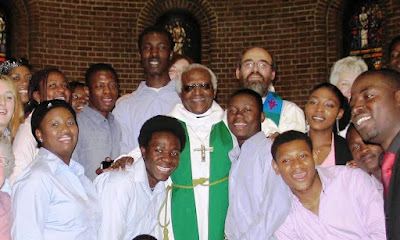
I had started coming to Lichfield as a teenager because of family connections with the area around Lichfield and Tamworth. The traditions of the chapel in Saint John’s Chapel subtly grew on me and became my own personal expression of Anglicanism, while and the liturgical traditions of Lichfield Cathedral nurtured my own liturgical spirituality.
That bright summer evening left me open to the world, with all its beauty, all its problems, all its perplexity and paradoxes, and all its promises.
The chapel in Saint John’s Hospital and Lichfield Cathedral remain my twin spiritual homes, and I had hoped to return to both again today (24 June 2026), to Saint John’s for the Patronal Festival Eucharist at Noon, and to the Cathedral for Choral Evensong at the end of the day.
Then, 11 years ago, Canon Andrew Gorham, the then Master of Saint John’s Hospital, invited me to preach at the Festal Eucharist in the chapel on the Feast of the Birth of Saint John the Baptist on 24 June 2015. It was also the anniversary of my ordination. The attendance included the Lord-Lieutenant of Staffordshire, Dr Ian Dudson, the Deputy Mayor of Lichfield, Mrs Sheelagh James, and a former Mayor, Mrs Norma Bacon.
Friends from Wexford, including priests, writers, journalists and historians, at my ordination to the priesthood in Chrust Church Cathedral, Dublin, on 24 June 2001
As priests, we normally celebrate the anniversary of our ordination to the priesthood and reflect on it sacramentally. However, I still await PTO in a new diocese and I have found unexpected restrictions on celebrating this day in a meaningful way.
This continues to be trying at a personal level, and I held these emotions and feelings in my heart today, deepened by my disappointment of not being at the mid-day Eucharist in Saint John’s and Evensong in Lichfield Cathedral, and those feelings and emotions were in my heart, silently, at the Parish Eucharist in Saint Mary and Saint Giles Church in Stony Stratford last Sunday (21 June 2026). There was further sadness today when I heard the news of the death of my lifelong friend, Ian Kirkpatrick. We had once lived around the corner from one another, and he was one of my best friends in my teens and my 20s. He died in Israel a few days ago.
Today was going to be a day for walks around Stowe Pool and Minster Pool, through the streets of Lichfield, along Beacon Street, and perhaps a walk out into the countryside along Cross in Hand Lane or a late lunch in the Hedgehog Vintage Inn at the corner of Stafford Road. Last year, I ended this day at Choral Evensong in Lichfield Cathedral, where the versicles and responses and the Collects for Peace and for Aid Against all Perils were so appropriate at this time of peril and war, and they continue to be meaningful in the same way today:
Give peace in our time, O Lord,
Because there is none other that fighteth for us,
but only thou, O God.
Here at home in Stony Stratford, we had a quiet celebration of the Eucharist. This has been a day to remind myself that I remain a priest forever, and to remind myself where this journey or pilgrimage began 55 years ago, in the summer of 1971, and I was encouraged by Timothy Dudley-Smith’s opening lines of the Post-Communion hymn in Saint John’s on this day last year:
Lord, for the years your love has kept and guided,
urged and inspired us, cheered us on our way,
sought us and saved us, pardoned and provided:
Lord for the years, we bring our thanks today.
Part of the family circle at my ordination to the priesthood in Chrust Church Cathedral, Dublin, on 24 June 2001
Patrick Comerford
Today is the Feast of the Birthday of Saint John the Baptist (24 June 2026). I had been planning to be back in Lichfield today for a day of prayer, reflection and thanksgiving, remembering that I was ordained priest 25 years ago on this day, 24 June 2001, and that tomorrow is the anniversary of the day I was ordained deacon 26 years ago (25 June 2000).
I decided not to travel to Lichfield this morning because of the warnings about the soaring temperatures and the advice against travel. But I have reflected throughout this day on these 26 years of ordained ministry, praying, reading, thinking, walking and giving thanks.
Bishops, in the charge to priests at their ordination, call on us to ‘preach the Word and to minister his (God’s) holy sacraments.’ But the bishop also reminds us to be ‘faithful in visiting the sick, in caring for the poor and needy, and in helping the oppressed,’ to ‘promote unity, peace, and love,’ to share ‘in a common witness in the world’ and ‘in Christ’s work of reconciliation,’ and to ‘search for God’s children in the wilderness of this world’s temptations.’
These charges remain a sacred commitment for life, even after a priest retires from parish ministry. I retired from full-time ministry over four ago (31 March 2022) after a stroke earlier that month (18 March 2022), and I am still in the process of seeking Permission to Officiate (PTO). But I shall always remain a priest.
With Archbishop Walton Empey at my ordination as priest in Christ Church Cathedral, Dublin, on 24 June 2001, and (from left) the Revd Tim Close and the Revd Avril Bennett (Photograph: Valerie Jones, 2001)
As I reflected today on the anniversaries of my ordination, I recalled too how my path to ordination began in Lichfield 55 years ago when I was a 19-year-old, following very personal and special experiences in the chapel dedicated to Saint John the Baptist – the Chapel of Saint John’s Hospital, Lichfield – and in Lichfield Cathedral, both of which I return to constantly, and which I continue to see as my personal homes.
It was the summer of 1971, and although I was training to be a chartered surveyor with Jones Lang Wootton and the College of Estate Management at Reading University, I was also trying to become a freelance journalist, contributing features to the Lichfield Mercury, the Rugeley Mercury and the Tamworth Herald.
Late one sunny Thursday afternoon, after a few days traipsing along Wenlock Edge and through Shropshire, and staying at Wilderhope Manor and in Shrewsbury, I had returned to Lichfield.
I was walking from Birmingham Road into the centre of Lichfield, and I was more interested in an evening’s entertainment than prayer or religious life when I stumbled into that chapel out of curiosity. Not because I wanted to see the inside of an old church or chapel, but because I was attracted by the architectural curiosity of the outside of the building facing onto the street, with its Tudor chimney stacks and its Gothic chapel.
I still remember lifting the latch, and stepping down into the chapel. It was late in the afternoon, so there was no light streaming through the East Window, and John Piper’s stained glass window was not yet in place. But as I turned towards the lectern, I was filled in one rush with the sensation of the light and the love of God.
This is not a normal experience for a young 19-year-old … certainly not for one who is focussing on an active social night later on, or on rugby and cricket in the weekend ahead.
But it was – and still is – a real and gripping moment. I have talked about this as my ‘self-defining moment in life.’ It still remains as a lived, living moment.
At the Patronal Festival Eucharist in the Chapel of Saint John’s Hospital, Lichfield, last year (Photograph: Patrick Comerford)
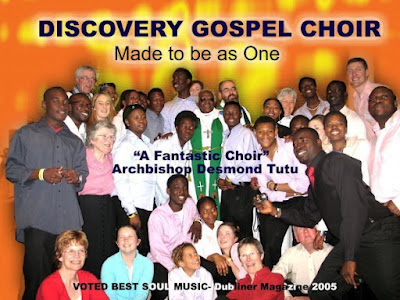
My first reaction was to make my way down John Street, up Bird Street and Beacon Street and into the Cathedral Close and Lichfield Cathedral. There I slipped into the choir stalls, just in time for Choral Evensong.
It was a tranquil and and exhilarating experience, all at once. But as I was leaving, a residentiary canon shook my hand – I think he was Canon John Yates (1925-2008), then the Principal of Lichfield Theological College (1966-1972) and later Bishop of Gloucester and Bishop at Lambeth. He looked at me amusingly and asked whether a young man like me had decided to start going back to church because I was thinking of ordination.
All that in one day, on that one summer afternoon.
The west front of Lichfield Cathedral in afternoon sunshine (Photograph: Patrick Comerford)
However, I took the scenic route to ordination. I was inspired by the story of Gonville ffrench-Beytagh (1912-1991), which was beginning to unfold at the time. He was then the Dean of Saint Mary’s Cathedral, Johannesburg, and facing trial when he opened his doors to black protesters who were being rhino-whipped by South African apartheid police on the steps of his cathedral.
My new-found adult faith led me to a path of social activism, campaigning on human rights, apartheid, the arms race, and issues of war and peace. I also moved into journalism full-time, first with the Wexford People and eventually becoming Foreign Desk Editor of The Irish Times.
While I was working as a journalist, I became a student once again, and completed degrees in theology at the Irish School of Ecumenics and Trinity College Dublin in 1984 and at the Kimmage Mission Institute and Maynooth in 1987. In the back of my mind, that startling choice I was confronted with after evensong in Lichfield Cathedral 55 years ago was gnawing away in the back of my mind.
Letters of ordination as priest by Archbishop Walton Empey (Photograph: Patrick Comerford)
Of course, it was a long road to ordination, from the age of 19 to the age of 48 … almost 30 years: I returned to study theology at the Church of Ireland Theological College (CITC, now CITI) in 1999, I was ordained deacon on 25 June 2000 and I was ordained priest a year later on 24 June 2001, the Feast of the Birth of Saint John the Baptist.
Since then, my ordained ministry has included two years as an NSM curate in Whitechurch Parish, Rathfarnham (2000-2002), while I continued to work as Foreign Desk Editor of The Irish Times; four years working with mission agencies and as a part-time lecturer in the Church of Ireland Theological College (2002-2006); 11 years on the staff of CITC and CITI as Director of Spiritual Formation, college chaplain, and then Lecturer in Anglicanism, Liturgy and Church History (2006-2017); six years also as an adjunct assistant professor in TCD (2011-2017); nine years as a canon of Christ Church Cathedral, Dublin (2008-2017); and five years in west Limerick and north Kerry in the Diocese of Limerick and Killaloe (now Tuam, Limerick and Killaloe) as priest-in-charge of the Rathkeale and Kilnaughtin Group of Parishes, Precentor of Saint Mary’s Cathedral, Limerick, Saint Flannan’s Cathedral, Killaloe, Co Clare, and Saint Brendan’s Cathedral, Clonfert, Co Galway, and Director for Education and Training (2017-2022).
That ministry has included school and hospital chaplaincy, membership of the General Synod and various church commissions and committees and school boards, mission agency visits to Egypt, China, Hong Kong, Italy, the Vatican, Rome, Romania, Hungary and Finland, and six years as a trustee of the Anglican mission agency USPG (United Society Partners in the Gospel). There were additional studies at the Institute for Orthodox Christian Studies and Sidney Sussex College, Cambridge, and the Institutum Liturgicum, based at the Benedictine Study and Arts Centre in Ealing Abbey and KU Leuven.
Archbishop Walton Empey’s inscription on the Bible he gave to me on my ordination to the priesthood on 24 June 2001 (Photograph: Patrick Comerford)
I had started coming to Lichfield as a teenager because of family connections with the area around Lichfield and Tamworth. The traditions of the chapel in Saint John’s Chapel subtly grew on me and became my own personal expression of Anglicanism, while and the liturgical traditions of Lichfield Cathedral nurtured my own liturgical spirituality.
That bright summer evening left me open to the world, with all its beauty, all its problems, all its perplexity and paradoxes, and all its promises.
The chapel in Saint John’s Hospital and Lichfield Cathedral remain my twin spiritual homes, and I had hoped to return to both again today (24 June 2026), to Saint John’s for the Patronal Festival Eucharist at Noon, and to the Cathedral for Choral Evensong at the end of the day.
Then, 11 years ago, Canon Andrew Gorham, the then Master of Saint John’s Hospital, invited me to preach at the Festal Eucharist in the chapel on the Feast of the Birth of Saint John the Baptist on 24 June 2015. It was also the anniversary of my ordination. The attendance included the Lord-Lieutenant of Staffordshire, Dr Ian Dudson, the Deputy Mayor of Lichfield, Mrs Sheelagh James, and a former Mayor, Mrs Norma Bacon.
Friends from Wexford, including priests, writers, journalists and historians, at my ordination to the priesthood in Chrust Church Cathedral, Dublin, on 24 June 2001
As priests, we normally celebrate the anniversary of our ordination to the priesthood and reflect on it sacramentally. However, I still await PTO in a new diocese and I have found unexpected restrictions on celebrating this day in a meaningful way.
This continues to be trying at a personal level, and I held these emotions and feelings in my heart today, deepened by my disappointment of not being at the mid-day Eucharist in Saint John’s and Evensong in Lichfield Cathedral, and those feelings and emotions were in my heart, silently, at the Parish Eucharist in Saint Mary and Saint Giles Church in Stony Stratford last Sunday (21 June 2026). There was further sadness today when I heard the news of the death of my lifelong friend, Ian Kirkpatrick. We had once lived around the corner from one another, and he was one of my best friends in my teens and my 20s. He died in Israel a few days ago.
Today was going to be a day for walks around Stowe Pool and Minster Pool, through the streets of Lichfield, along Beacon Street, and perhaps a walk out into the countryside along Cross in Hand Lane or a late lunch in the Hedgehog Vintage Inn at the corner of Stafford Road. Last year, I ended this day at Choral Evensong in Lichfield Cathedral, where the versicles and responses and the Collects for Peace and for Aid Against all Perils were so appropriate at this time of peril and war, and they continue to be meaningful in the same way today:
Give peace in our time, O Lord,
Because there is none other that fighteth for us,
but only thou, O God.
Here at home in Stony Stratford, we had a quiet celebration of the Eucharist. This has been a day to remind myself that I remain a priest forever, and to remind myself where this journey or pilgrimage began 55 years ago, in the summer of 1971, and I was encouraged by Timothy Dudley-Smith’s opening lines of the Post-Communion hymn in Saint John’s on this day last year:
Lord, for the years your love has kept and guided,
urged and inspired us, cheered us on our way,
sought us and saved us, pardoned and provided:
Lord for the years, we bring our thanks today.
Part of the family circle at my ordination to the priesthood in Chrust Church Cathedral, Dublin, on 24 June 2001
21 June 2026
Daily prayer in Ordinary Time 2026:
45, Sunday 21 June 2026,
Third Sunday after Trinity (Trinity III)
‘Whoever does not take the cross and follow me is not worthy of me’ (Matthew 10: 38) … the Byzantine-style crucifix by Laurence King (1907-1981) in the crypt of Saint Mary le Bow on Cheapside in London (Photograph: Patrick Comerford)
Patrick Comerford
We are in Ordinary Time in the Church Calendar, and this is the Third Sunday after Trinity (Trinity III, 21 June 2026). Tomorrow is also Father’s Day and the Summer Solstice, although next Wednesday (24 June) is officially Midsummer’s Day.
I hope to be involved in the Parish Eucharist in Saint Mary and Saint Giles Church later this morning. Meanwhile, before today begins, I am taking some quiet time this morning to give thanks, to reflect, to pray and to read in these ways:
1, reading today’s Gospel reading;
2, a short reflection;
3, a prayer from the USPG prayer diary;
4, the Collects and Post-Communion prayer of the day.
‘Whoever does not take up the cross and follow me is not worthy of me’ (Matthew 10: 37) … Station 5 in the Chapel at Saint John’s Hospital, Lichfield, Simon of Cyrene helps Jesus carry the Cross (Photograph: Patrick Comerford)
Matthew 10: 24-39 (NRSVA):
[Jesus said:] 24 ‘A disciple is not above the teacher, nor a slave above the master; 25 it is enough for the disciple to be like the teacher, and the slave like the master. If they have called the master of the house Beelzebul, how much more will they malign those of his household!
26 ‘So have no fear of them; for nothing is covered up that will not be uncovered, and nothing secret that will not become known. 27 What I say to you in the dark, tell in the light; and what you hear whispered, proclaim from the housetops. 28 Do not fear those who kill the body but cannot kill the soul; rather fear him who can destroy both soul and body in hell. 29 Are not two sparrows sold for a penny? Yet not one of them will fall to the ground unperceived by your Father. 30 And even the hairs of your head are all counted. 31 So do not be afraid; you are of more value than many sparrows.
32 ‘Everyone therefore who acknowledges me before others, I also will acknowledge before my Father in heaven; 33 but whoever denies me before others, I also will deny before my Father in heaven.
34 ‘Do not think that I have come to bring peace to the earth; I have not come to bring peace, but a sword.
35 For I have come to set a man against his father,
and a daughter against her mother,
and a daughter-in-law against her mother-in-law;
36 and one’s foes will be members of one’s own household.
37 Whoever loves father or mother more than me is not worthy of me; and whoever loves son or daughter more than me is not worthy of me; 38 and whoever does not take up the cross and follow me is not worthy of me. 39 Those who find their life will lose it, and those who lose their life for my sake will find it.’
‘What I say to you in the dark, tell in the light …’ (Matthew 10: 27) … a moment of prayer in Saint Titus Church, Iraklion (Photograph: Patrick Comerford, 2025)
Today’s Reflections:
In the Gospel reading last Sunday (Matthew 9: 35 to 10: 8 or 10: 23, Sunday 14 June 2026), Christ calls the Twelve together to prepare them for their ministry and mission. In today’s Gospel reading (Matthew 10: 24-39), Christ continues to prepare the Twelve for this mission, as both their teacher and their master. They are his students, and they are to be like him, they are told, and they receive their instructions and commission for mission, even in the most hostile of environments.
When the late Archbishop Desmond Tutu (1931-2021) received the Nobel Peace Prize in 1984, I profiled him for The Irish Times. We had met previously, at events co-hosted by AfrI and Christian CND and at dinner in Roebuck House, Seán MacBride’s house in Clonskeagh, Dublin.
I asked him about the death threats he faced in South Africa at the height of apartheid. He engaged me with that look that confirmed his deep hope, commitment and faith, and said: ‘But you know, death is not the worst thing that could happen to a Christian.’
He must have been tempted at times to give up being a thorn in the side of the regime, to stop being a ‘turbulent priest,’ and to live a comfortable life. But his conscience would never have been comfortable.
While apartheid was still in force, Desmond Tutu became Dean of Saint Mary’s Cathedral in Johannesburg, and when I first met him, he was the secretary general of the South African Council of Churches.
I was worried about the many death threats he was receiving, and I asked him how he lived with those threats. Was he worried about them? Did he ever consider modifying what he had to say because of them? His answer was similar to the one he gave when he was facing tough questioning before the regime’s Eloff Commission. He told that inquiry:
‘There is nothing the government can do to me that will stop me from being involved in what I believe God wants me to do. I do not do it because I like doing it. I do it because I am under what I believe to be the influence of God’s hand. I cannot help it. When I see injustice, I cannot keep quiet, for, as Jeremiah says, when I try to keep quiet, God’s Word burns like a fire in my breast. But what is it that they can ultimately do? The most awful thing that they can do is to kill me, and death is not the worst thing that could happen to a Christian.’
In 1987, Veritas invited me to write a short, 36-page biography of Archbishop Tutu, published as Desmond Tutu: Black Africa’s Man of Destiny. It was launched by the then Minister for Foreign Affairs, Brian Lenihan. It was a small book, hardly more than a pamphlet, but it came at an important time when both the Irish Government and the Irish Churches were becoming increasingly vocal about the evils of apartheid. It was republished in the US by Citadel (1988) and Hyperion Books (1989).
When I visited South Africa in 1990 with The Irish Times and Christian Aid, I met Archbishop Tutu in Cape Town, where once again he spoke powerfully about the changes that were beginning to take place.
Then, when my colleague Patsy McGarry was organising a monumental series of features in The Irish Times in 2000 to mark the millennium, Archbishop Tutu was one of the international contributors, along with Hans Küng, Andrew Greeley and Mary Robinson. The complete series was published by Veritas the following year as a book, Christianity, in which Part Two was my ‘Brief History of Christianity.’
I last met Archbishop Tutu when he visited Dublin in 2005, and he preached in Saint George’s and Saint Thomas’s Church in the inner city, where Canon Katharine Poulton was then the Rector, as part of the Discovery Gospel Choir services.
His unforgettable words to me echo Christ’s words to the disciples in today’s Gospel reading: ‘Do not fear those who kill the body but cannot kill the soul; rather fear him who can destroy both soul and body in hell’ (Matthew 10: 28).
‘The most awful thing that they can do is to kill me, and death is not the worst thing that could happen to a Christian’ … Archbishop Desmond Tutu visiting Saint George’s and Saint Thomas’s Church, Dublin, and the Discovery Gospel Choir
Today’s Prayers (Sunday 21 June 2026, Trinity III, Fathers Day):
In Pray with the World Church, the prayer diary of the Anglican mission agency USPG (United Society Partners in the Gospel), the theme this week, from 21 to 27 June 2026 (pp 12-13), is ‘Land Taken, Land Remembered’. This theme is introduced today with a reflection by the Venerable Rosalyn Kantlaht’ant Elm, Director of Indigenous Ministries, Anglican Church of Canada:
When I think about how land was taken from Indigenous communities in Canada, I see that it was not the work of one person or a single event. It happened slowly, over more than four hundred years. In the early days of European settlement, Indigenous peoples and settlers often lived and worked alongside one another. Though imperfect, there was a time of coexistence.
As Canada developed, laws such as the Civilization Act and the Indian Act enabled the government to take Indigenous lands and move our people onto reserves – fenced-in areas often far from our traditional territories, languages, medicines, ceremonies, and rituals. This process unfolded over generations. Today, Indigenous peoples occupy only a small fraction of our original lands. Much of the rest remains under treaty dispute or is unceded territory, often threatened by mining, forestry, and oil and gas development.
Churches also played a significant role. In partnership with the government, they sought to ‘civilise’ Indigenous children, attempting to erase our cultures. In doing so, they became complicit in what can rightly be described as a legislative form of cultural genocide.
These truths are difficult to speak and to hear. But just as Christians cannot have Easter without Good Friday, we cannot skip the hard history and move straight to celebration. Facing these truths together allows us to lament, to pray, and to understand ourselves not by what we own, but as people created by God, called to care for one another and for the land.
The USPG prayer diary today (Sunday 21 June 2026, Trinity III, Fathers Day, National Indigenous Peoples Day, Canada) invites us to pray:
Creator God, from you every family in heaven and earth takes its name. Rooted and grounded in your covenant love, empowered by your Spirit, help us speak the truth in love and walk in your way towards justice and wholeness. (Anglican Church of Canada)
The Collect of the Day:
Almighty God,
you have broken the tyranny of sin
and have sent the Spirit of your Son into our hearts
whereby we call you Father:
give us grace to dedicate our freedom to your service,
that we and all creation may be brought
to the glorious liberty of the children of God;
through Jesus Christ your Son our Lord,
who is alive and reigns with you,
in the unity of the Holy Spirit,
one God, now and for ever.
The Post-Communion Prayer:
O God, whose beauty is beyond our imagining
and whose power we cannot comprehend:
show us your glory as far as we can grasp it,
and shield us from knowing more than we can bear
until we may look upon you without fear;
through Jesus Christ our Saviour.
Additional Collect:
God our saviour,
look on this wounded world
in pity and in power;
hold us fast to your promises of peace
won for us by your Son,
our Saviour Jesus Christ.
Yesterday’s Reflections
Continued Tomorrow
‘Whoever does not take up the cross and follow me is not worthy of me’ (Matthew 10: 37) … Christ is given his cross, a fresco in Analipsi Church in Georgioupoli, Crete (Photograph: Patrick Comerford)
Scripture quotations are from the New Revised Standard Version Bible: Anglicised Edition copyright © 1989, 1995, National Council of the Churches of Christ in the United States of America. Used by permission. All rights reserved worldwide. http://nrsvbibles.org
‘Are not two sparrows sold for a penny? … you are of more value than many sparrows’ (Matthew 10: 29-30) … a mother sparrow feds her chicks in a church in the ceiling of Aghias Anna Church, Maroulas, near Rethymnon in Crete (Patrick Comerford)
Patrick Comerford
We are in Ordinary Time in the Church Calendar, and this is the Third Sunday after Trinity (Trinity III, 21 June 2026). Tomorrow is also Father’s Day and the Summer Solstice, although next Wednesday (24 June) is officially Midsummer’s Day.
I hope to be involved in the Parish Eucharist in Saint Mary and Saint Giles Church later this morning. Meanwhile, before today begins, I am taking some quiet time this morning to give thanks, to reflect, to pray and to read in these ways:
1, reading today’s Gospel reading;
2, a short reflection;
3, a prayer from the USPG prayer diary;
4, the Collects and Post-Communion prayer of the day.
‘Whoever does not take up the cross and follow me is not worthy of me’ (Matthew 10: 37) … Station 5 in the Chapel at Saint John’s Hospital, Lichfield, Simon of Cyrene helps Jesus carry the Cross (Photograph: Patrick Comerford)
Matthew 10: 24-39 (NRSVA):
[Jesus said:] 24 ‘A disciple is not above the teacher, nor a slave above the master; 25 it is enough for the disciple to be like the teacher, and the slave like the master. If they have called the master of the house Beelzebul, how much more will they malign those of his household!
26 ‘So have no fear of them; for nothing is covered up that will not be uncovered, and nothing secret that will not become known. 27 What I say to you in the dark, tell in the light; and what you hear whispered, proclaim from the housetops. 28 Do not fear those who kill the body but cannot kill the soul; rather fear him who can destroy both soul and body in hell. 29 Are not two sparrows sold for a penny? Yet not one of them will fall to the ground unperceived by your Father. 30 And even the hairs of your head are all counted. 31 So do not be afraid; you are of more value than many sparrows.
32 ‘Everyone therefore who acknowledges me before others, I also will acknowledge before my Father in heaven; 33 but whoever denies me before others, I also will deny before my Father in heaven.
34 ‘Do not think that I have come to bring peace to the earth; I have not come to bring peace, but a sword.
35 For I have come to set a man against his father,
and a daughter against her mother,
and a daughter-in-law against her mother-in-law;
36 and one’s foes will be members of one’s own household.
37 Whoever loves father or mother more than me is not worthy of me; and whoever loves son or daughter more than me is not worthy of me; 38 and whoever does not take up the cross and follow me is not worthy of me. 39 Those who find their life will lose it, and those who lose their life for my sake will find it.’
‘What I say to you in the dark, tell in the light …’ (Matthew 10: 27) … a moment of prayer in Saint Titus Church, Iraklion (Photograph: Patrick Comerford, 2025)
Today’s Reflections:
In the Gospel reading last Sunday (Matthew 9: 35 to 10: 8 or 10: 23, Sunday 14 June 2026), Christ calls the Twelve together to prepare them for their ministry and mission. In today’s Gospel reading (Matthew 10: 24-39), Christ continues to prepare the Twelve for this mission, as both their teacher and their master. They are his students, and they are to be like him, they are told, and they receive their instructions and commission for mission, even in the most hostile of environments.
When the late Archbishop Desmond Tutu (1931-2021) received the Nobel Peace Prize in 1984, I profiled him for The Irish Times. We had met previously, at events co-hosted by AfrI and Christian CND and at dinner in Roebuck House, Seán MacBride’s house in Clonskeagh, Dublin.
I asked him about the death threats he faced in South Africa at the height of apartheid. He engaged me with that look that confirmed his deep hope, commitment and faith, and said: ‘But you know, death is not the worst thing that could happen to a Christian.’
He must have been tempted at times to give up being a thorn in the side of the regime, to stop being a ‘turbulent priest,’ and to live a comfortable life. But his conscience would never have been comfortable.
While apartheid was still in force, Desmond Tutu became Dean of Saint Mary’s Cathedral in Johannesburg, and when I first met him, he was the secretary general of the South African Council of Churches.
I was worried about the many death threats he was receiving, and I asked him how he lived with those threats. Was he worried about them? Did he ever consider modifying what he had to say because of them? His answer was similar to the one he gave when he was facing tough questioning before the regime’s Eloff Commission. He told that inquiry:
‘There is nothing the government can do to me that will stop me from being involved in what I believe God wants me to do. I do not do it because I like doing it. I do it because I am under what I believe to be the influence of God’s hand. I cannot help it. When I see injustice, I cannot keep quiet, for, as Jeremiah says, when I try to keep quiet, God’s Word burns like a fire in my breast. But what is it that they can ultimately do? The most awful thing that they can do is to kill me, and death is not the worst thing that could happen to a Christian.’
In 1987, Veritas invited me to write a short, 36-page biography of Archbishop Tutu, published as Desmond Tutu: Black Africa’s Man of Destiny. It was launched by the then Minister for Foreign Affairs, Brian Lenihan. It was a small book, hardly more than a pamphlet, but it came at an important time when both the Irish Government and the Irish Churches were becoming increasingly vocal about the evils of apartheid. It was republished in the US by Citadel (1988) and Hyperion Books (1989).
When I visited South Africa in 1990 with The Irish Times and Christian Aid, I met Archbishop Tutu in Cape Town, where once again he spoke powerfully about the changes that were beginning to take place.
Then, when my colleague Patsy McGarry was organising a monumental series of features in The Irish Times in 2000 to mark the millennium, Archbishop Tutu was one of the international contributors, along with Hans Küng, Andrew Greeley and Mary Robinson. The complete series was published by Veritas the following year as a book, Christianity, in which Part Two was my ‘Brief History of Christianity.’
I last met Archbishop Tutu when he visited Dublin in 2005, and he preached in Saint George’s and Saint Thomas’s Church in the inner city, where Canon Katharine Poulton was then the Rector, as part of the Discovery Gospel Choir services.
His unforgettable words to me echo Christ’s words to the disciples in today’s Gospel reading: ‘Do not fear those who kill the body but cannot kill the soul; rather fear him who can destroy both soul and body in hell’ (Matthew 10: 28).
‘The most awful thing that they can do is to kill me, and death is not the worst thing that could happen to a Christian’ … Archbishop Desmond Tutu visiting Saint George’s and Saint Thomas’s Church, Dublin, and the Discovery Gospel Choir
Today’s Prayers (Sunday 21 June 2026, Trinity III, Fathers Day):
In Pray with the World Church, the prayer diary of the Anglican mission agency USPG (United Society Partners in the Gospel), the theme this week, from 21 to 27 June 2026 (pp 12-13), is ‘Land Taken, Land Remembered’. This theme is introduced today with a reflection by the Venerable Rosalyn Kantlaht’ant Elm, Director of Indigenous Ministries, Anglican Church of Canada:
When I think about how land was taken from Indigenous communities in Canada, I see that it was not the work of one person or a single event. It happened slowly, over more than four hundred years. In the early days of European settlement, Indigenous peoples and settlers often lived and worked alongside one another. Though imperfect, there was a time of coexistence.
As Canada developed, laws such as the Civilization Act and the Indian Act enabled the government to take Indigenous lands and move our people onto reserves – fenced-in areas often far from our traditional territories, languages, medicines, ceremonies, and rituals. This process unfolded over generations. Today, Indigenous peoples occupy only a small fraction of our original lands. Much of the rest remains under treaty dispute or is unceded territory, often threatened by mining, forestry, and oil and gas development.
Churches also played a significant role. In partnership with the government, they sought to ‘civilise’ Indigenous children, attempting to erase our cultures. In doing so, they became complicit in what can rightly be described as a legislative form of cultural genocide.
These truths are difficult to speak and to hear. But just as Christians cannot have Easter without Good Friday, we cannot skip the hard history and move straight to celebration. Facing these truths together allows us to lament, to pray, and to understand ourselves not by what we own, but as people created by God, called to care for one another and for the land.
The USPG prayer diary today (Sunday 21 June 2026, Trinity III, Fathers Day, National Indigenous Peoples Day, Canada) invites us to pray:
Creator God, from you every family in heaven and earth takes its name. Rooted and grounded in your covenant love, empowered by your Spirit, help us speak the truth in love and walk in your way towards justice and wholeness. (Anglican Church of Canada)
The Collect of the Day:
Almighty God,
you have broken the tyranny of sin
and have sent the Spirit of your Son into our hearts
whereby we call you Father:
give us grace to dedicate our freedom to your service,
that we and all creation may be brought
to the glorious liberty of the children of God;
through Jesus Christ your Son our Lord,
who is alive and reigns with you,
in the unity of the Holy Spirit,
one God, now and for ever.
The Post-Communion Prayer:
O God, whose beauty is beyond our imagining
and whose power we cannot comprehend:
show us your glory as far as we can grasp it,
and shield us from knowing more than we can bear
until we may look upon you without fear;
through Jesus Christ our Saviour.
Additional Collect:
God our saviour,
look on this wounded world
in pity and in power;
hold us fast to your promises of peace
won for us by your Son,
our Saviour Jesus Christ.
Yesterday’s Reflections
Continued Tomorrow
‘Whoever does not take up the cross and follow me is not worthy of me’ (Matthew 10: 37) … Christ is given his cross, a fresco in Analipsi Church in Georgioupoli, Crete (Photograph: Patrick Comerford)
Scripture quotations are from the New Revised Standard Version Bible: Anglicised Edition copyright © 1989, 1995, National Council of the Churches of Christ in the United States of America. Used by permission. All rights reserved worldwide. http://nrsvbibles.org
‘Are not two sparrows sold for a penny? … you are of more value than many sparrows’ (Matthew 10: 29-30) … a mother sparrow feds her chicks in a church in the ceiling of Aghias Anna Church, Maroulas, near Rethymnon in Crete (Patrick Comerford)
Labels:
Apartheid,
Canada,
CND,
Crete 2026,
Father's Day,
Georgioupoli,
Greece 2026,
Iraklion,
Lichfield,
Maroulas,
Mission,
Prayer,
Rethymnon,
Saint Matthew's Gospel,
South Africa,
The Irish Times,
USPG
17 June 2026
The Greeks have a word (or two)
for it: 62, Ελευθερία ή θάνατος,
‘Freedom or Death’,
an irreversible binomial
The nine blue and white stripes of the Greek flag represent the nine syllables of the rallying cry Ελευθερία ή θάνατος (‘Eleftheria i Thanatos’), ‘Freedom or Death’ (Photograph: Patrick Comerford)
Patrick Comerford
While I was wnandering aoround Oxford yesterday (16 June 2026), by the boathouses, the rivers and the islands in the river, I was musing on Bloomsday and the wandering of Ulysses. But I also recall a holiday on an Ionian island in Greece about 20-25 years ago, when I also visited Ithaki, the island home of Odysseus. On that same holiday, I met an Irish couple who introduced themselves as Joyce and James from Dublin.
They never, ever, introduced themselves in the reverse order, as in ‘I’m James, … Joyce.’
But inevitably, for many of the people staying in that same small apartment block, this became known as their ‘James Joyce holiday’. The pairing was irreversible.
Another holidaymaker in the same apartment block found out, as he was packing to go home, that his suitcase had ripped. Rather than buying a new case, he found a large, pre-used cardboard box, packed all his belongings inside and wrapped it up in bubble wrap, with strong brown masking tape.
At the airport, as he was about to place the box on the scanning machine, a policeman asked him to take it off, and open it.
‘I can’t,’ he pleaded.
‘Take it off’.
Lesson 1, Do not argue with a Greek police officer, any police officer, at an airport.
The lesson was being ignored, but two other tourists – eager to defuse the situation and more eager not to miss their flight – without any airs and graces or fuss and bother removed the box, hoping to restore peace and calm and wanting to minimalise any confrontation with law and order.
‘What is it in the box?’
‘Just me Bits and Bobs’, said the elderly Dub casually, unaware of the chaos or mess that could unfold around him – what Greeks call τα πάνω κάτω (ta páno káto), ‘the ups-downs’.
‘Bobs and Bits?’ the policeman asked.
We all began to smile, he noticed our spontaneous response, tensions were defused, and soon the box was on its way back through the scanner.
Pardon the pun, but it was an open and shut case. Perhaps all he had in his bag and baggage was odds and sods, six of one and half a dozen of the other. Not in there, I am sure from his holiday attire, were a shirt and tie.
Despite the smiles, we had all minded our Ps and Qs. No-one had to bow and scrape, no-one lost an arm and a leg, and we all went through security, happy after a holiday on a Greek island that for two weeks had been our Land of Milk and Honey.
When we got home, I am sure, nobody unpacked their flop flips, put their holidays nacks and nicks in appropriate crannies and nooks, or had conversations in the days that followed with their dad and mum about the days of the Tans and Blacks.
Who speaks of ‘breakfast and bed’ rather than ‘bed and breakfast’ for a B&B? … Park Villa Guest House in Kilkenny (Photograph: Patrick Comerford)
The pairing of words known in English as an irreversible binomial, or a frozen binomial, also exists in Greek. This is a pair of words linked by a conjunction such as και (‘and’) and that always occur in a fixed, non-reversible order. Έτσι κι έτσι (Etsi ki etsi), which means ‘so-so’, is a classic example of this paired rhythmic pattern in Greek. The phrase literally means ‘thus and thus’ and is used to describe average health, mood, or a mediocre experience:
Τι κάνεις; (ti káneis), How are you?
Έτσι κι έτσι (Etsi ki etsi), So-so.
Other common examples of the use of an irreversible binomial in Greek include:
Πέτσι και κόκαλο (pétsi ke kókalo, skin and bones), meaning emaciated or extremely thin.
Απ' έξω και ανακατωτά (ap' éxso ke anakatotá, inside out and upside down, completely mixed up), referring to knowing something perfectly.
Ήθη και έθιμα (íthi ke éthima, morals and customs), a standard frozen phrase encompassing cultural traditions.
Στο κάτω κάτω της γραφής (sto káto káto tis grafís, after all, bottom line), literally ‘at the bottom bottom of the writing’.
Τα πάνω κάτω (ta páno káto, upside down, chaos), literally ‘the ups-downs’, used to describe a mess.
Άνω κάτω (ano kato, ‘up down’) or ‘topsy-turvy’.
Μπρος πίσω (bros piso, ‘front back’) or back and forth.
Έθιμα και έθιμα (ethima kai ethima), ‘customs and habits’.
Μισός κι άλλος μισός (misos ki allos misos) ‘one and the other’.
Ένας κι ένας (enas ki enas), one by one.
Common Greek irreversible binomials feature entrenched phrases, historical idioms, and common collocations. In Greek linguistics, irreversible binomials or idiomatic, fixed-order word pairs, similar to the order of ‘bread and butter’ in English, are heavily shaped by iconicity or the chronological or logical sequence of events, and by end-weight, with longer or heavier words appearing toward the end of the phrase.
Verbs expressing sequential actions must follow their natural temporal order (as in going in before going out). In Greek, this appears as μπαινοβγαίνω (bainovgeno, ‘go in and out’) or ανεβοκατεβαίνω (anevokateveno, ‘go up and down’).
When nouns or adverbs of similar meaning are combined, the element with the more sonorous or longer vowel, or a greater number of syllables, is usually placed at the end to provide a rhythmic cadence.
The most famous example of an irreversible binomial in Greek is Ελευθερία ή θάνατος (Eleftheria i Thanatos), ‘Freedom or Death’. This pair of words is ordered by established convention, and they are fixed in sequence. Swapping their order, as in saying ‘Death or Freedom’, sounds jarring to any Greek speaker.
As a linguistic convention, the pairings in an irreversible binomial are anchored by cultural, psychological, and semantic rules. When faced with an ultimatum, we instinctively priorities the positive or desired outcome first, followed by the negative alternative. Positioning ‘Freedom’ before ‘Death’ frames the statement as a pursuit of life’s highest ideal, with death accepted only as a last resort.
The phrase Ελευθερία ή θάνατος (Eleftheria i Thanatos) has become the Greek national motto. It originated in the 1820s during the Greek War of Independence against the Ottoman Empire. The nine blue and white stripes of the Greek flag represent the nine syllables of this rallying cry.
The phrase gives its name to Freedom or Death, also known as Captain Michalis, a 1953 novel by the author Nikos Kazantzakis from Iraklion in Crete that is became a key work of modern Greek literature.
The binary choice between liberty and life without freedom is mirrored in other historic rallying cries, such as the Patrick Henry’s ‘Give me liberty, or give me death!’ The late Seumas Phelan, when he was a sub-editor at The Irish Times, would cry out during lulls and dull moments on the subs desk, ‘Give me copy, or give me death’.
In English, the fixed order of irreversible binomials or frozen binomials means that changing the order sounds jarring, even if the meaning remains clear. This fixed order is largely shaped by linguistic patterns rather than arbitrary rules.
The natural rhythm or ablaut means English speakers naturally prefer pairs with specific syllable stresses, or where a shorter, high-frequency word precedes a longer one, as with short and sweet or sick and tired.
Iconic sequencing means phrases often follow a chronological or logical order of events in the real world, such as cause and effect, or trial and error.
But cultural conventions and historical and semantic traditions also cement phrases into our long-term memory, processing them as single holistic units rather than individual words. In law and official documents, there are many irreversible binomials consisting of near synonyms, such as the oft-expressed terms and conditions and cease and desist.
There are hundreds of these expressions in English and they generally fall into a few key categories, such as food and objects. Think of how we link Fish and Chips, Salt and Pepper, Knife and Fork, or Bread and Butter. In everyday conversation and idioms, we refer to Give and Take, Back and Forth, Safe and Sound, Bed and Breakfast, but never to Roll and Rock or Blues and Rhythm, and we ask for explanations and excuses to be Short and Sweet.
The term ‘irreversible binomial’ was introduced in 1954 by the Ukrainian-born etymologist and philologist Yakov Malkiel (1914-1998), although aspects of the phenomenon had been discussed since at least 1903 under different names such as ‘terminological imbroglio’ and the now politically-incorrect ‘Siamese twins’.
Many irreversible binomials are catchy due to alliteration, rhyming, or ablaut reduplication, and have become clichés or catchphrases. The mix and match of idioms includes phrases such as rock and roll, the birds and the bees, and they have survived the wear and tear of generations among generation of native English speakers, even one word in a pairing has become obsolete as in spick and span. Spick is a fossil word that never appears outside the phrase spick and span. Who uses words such as such as vim or abet except when using sayings such as vim and vigour or aid and abet.
No-one is ever caught between a hard place and a rock, high water and hell never come, and I know no-one who has had a tuck and nip, even among the famous and rich. Although, if I wanted to be little more Greek in my turn of phrase, or a Joycean reference, then instead of ‘a rock and a hard place’ I might chose to be caught between the equally dangerous and threatening Scylla and Charybdis.
Ball and Chain? … ‘Sitting on History’ by Bill Woodrow in Milton Keynes (Photograph: Patrick Comerford)
Previous words in this series:
1, Neologism, Νεολογισμός.
2, Welcoming the stranger, Φιλοξενία.
3, Bread, Ψωμί.
4, Wine, Οίνος and Κρασί.
5, Yogurt, Γιαούρτι.
6, Orthodoxy, Ορθοδοξία.
7, Sea, Θᾰ́λᾰσσᾰ.
8,Theology, Θεολογία.
9, Icon, Εἰκών.
10, Philosophy, Φιλοσοφία.
11, Chaos, Χάος.
12, Liturgy, Λειτουργία.
13, Greeks, Ἕλληνες or Ρωμαίοι.
14, Mañana, Αύριο.
15, Europe, Εὐρώπη.
16, Architecture, Αρχιτεκτονική.
17, The missing words.
18, Theatre, θέατρον, and Drama, Δρᾶμα.
19, Pharmacy, Φᾰρμᾰκείᾱ.
20, Rhapsody, Ραψῳδός.
21, Holocaust, Ολοκαύτωμα.
22, Hygiene, Υγιεινή.
23, Laconic, Λακωνικός.
24, Telephone, Τηλέφωνο.
25, Asthma, Ασθμα.
26, Synagogue, Συναγωγή.
27, Diaspora, Διασπορά.
28, School, Σχολείο.
29, Muse, Μούσα.
30, Monastery, Μοναστήρι.
31, Olympian, Ολύμπιος.
32, Hypocrite, Υποκριτής.
33, Genocide, Γενοκτονία.
34, Cinema, Κινημα.
35, autopsy and biopsy
36, Exodus, ἔξοδος
37, Bishop, ἐπίσκοπος
38, Socratic, Σωκρατικὸς
39, Odyssey, Ὀδύσσεια
40, Practice, πρᾶξις
41, Idiotic, Ιδιωτικός
42, Pentecost, Πεντηκοστή
43, Apostrophe, ἀποστροφή
44, catastrophe, καταστροφή
45, democracy, δημοκρατία
46, ‘Αρχή, beginning, Τέλος, end
47, ‘Αποκάλυψις, Apocalypse
48, ‘Απόκρυφα, Apocrypha
49, Ἠλεκτρον (Elektron), electric
50, Metamorphosis, Μεταμόρφωσις
51, Bimah, βῆμα
52, ἰχθύς (ichthýs) and ψάρι (psari), fish.
53, Τὰ Βιβλία (Ta Biblia), The Bible
54, Φῐλοξενῐ́ᾱ (Philoxenia), true hospitality
55, εκκλησία (ekklesia), the Church
56, ναός (naos) and ἱερός (ieros), a church
57, Χριστούγεννα (Christougenna), Christmas
58, ἐπιφάνεια (epipháneia), θεοφάνεια, (theopháneia), Epiphany and Theophany
59, Ζέφυρος (Zéphuros), the West Wind
60, Αύριο (Avrio), Tomorrow
61, καλημέρα (κaliméra), ‘Good Morning’, and καλαμάρι, κalamári, ‘squid’
62, Ελευθερία ή θάνατος, ‘Freedom or Death’
63, Ποδόσφαιρο, ‘Football’
64, καφές (coffee), Φραπές (frappé)
65, Odyssey (η Οδύσσεια) and Odysseus (Ὀδυσσεύς)
Series to be continued
’Freedom or Death’ is one of the great literary works by Nikos Kazantzakis (Photograph: Patrick Comerford)
Patrick Comerford
While I was wnandering aoround Oxford yesterday (16 June 2026), by the boathouses, the rivers and the islands in the river, I was musing on Bloomsday and the wandering of Ulysses. But I also recall a holiday on an Ionian island in Greece about 20-25 years ago, when I also visited Ithaki, the island home of Odysseus. On that same holiday, I met an Irish couple who introduced themselves as Joyce and James from Dublin.
They never, ever, introduced themselves in the reverse order, as in ‘I’m James, … Joyce.’
But inevitably, for many of the people staying in that same small apartment block, this became known as their ‘James Joyce holiday’. The pairing was irreversible.
Another holidaymaker in the same apartment block found out, as he was packing to go home, that his suitcase had ripped. Rather than buying a new case, he found a large, pre-used cardboard box, packed all his belongings inside and wrapped it up in bubble wrap, with strong brown masking tape.
At the airport, as he was about to place the box on the scanning machine, a policeman asked him to take it off, and open it.
‘I can’t,’ he pleaded.
‘Take it off’.
Lesson 1, Do not argue with a Greek police officer, any police officer, at an airport.
The lesson was being ignored, but two other tourists – eager to defuse the situation and more eager not to miss their flight – without any airs and graces or fuss and bother removed the box, hoping to restore peace and calm and wanting to minimalise any confrontation with law and order.
‘What is it in the box?’
‘Just me Bits and Bobs’, said the elderly Dub casually, unaware of the chaos or mess that could unfold around him – what Greeks call τα πάνω κάτω (ta páno káto), ‘the ups-downs’.
‘Bobs and Bits?’ the policeman asked.
We all began to smile, he noticed our spontaneous response, tensions were defused, and soon the box was on its way back through the scanner.
Pardon the pun, but it was an open and shut case. Perhaps all he had in his bag and baggage was odds and sods, six of one and half a dozen of the other. Not in there, I am sure from his holiday attire, were a shirt and tie.
Despite the smiles, we had all minded our Ps and Qs. No-one had to bow and scrape, no-one lost an arm and a leg, and we all went through security, happy after a holiday on a Greek island that for two weeks had been our Land of Milk and Honey.
When we got home, I am sure, nobody unpacked their flop flips, put their holidays nacks and nicks in appropriate crannies and nooks, or had conversations in the days that followed with their dad and mum about the days of the Tans and Blacks.
The pairing of words known in English as an irreversible binomial, or a frozen binomial, also exists in Greek. This is a pair of words linked by a conjunction such as και (‘and’) and that always occur in a fixed, non-reversible order. Έτσι κι έτσι (Etsi ki etsi), which means ‘so-so’, is a classic example of this paired rhythmic pattern in Greek. The phrase literally means ‘thus and thus’ and is used to describe average health, mood, or a mediocre experience:
Τι κάνεις; (ti káneis), How are you?
Έτσι κι έτσι (Etsi ki etsi), So-so.
Other common examples of the use of an irreversible binomial in Greek include:
Πέτσι και κόκαλο (pétsi ke kókalo, skin and bones), meaning emaciated or extremely thin.
Απ' έξω και ανακατωτά (ap' éxso ke anakatotá, inside out and upside down, completely mixed up), referring to knowing something perfectly.
Ήθη και έθιμα (íthi ke éthima, morals and customs), a standard frozen phrase encompassing cultural traditions.
Στο κάτω κάτω της γραφής (sto káto káto tis grafís, after all, bottom line), literally ‘at the bottom bottom of the writing’.
Τα πάνω κάτω (ta páno káto, upside down, chaos), literally ‘the ups-downs’, used to describe a mess.
Άνω κάτω (ano kato, ‘up down’) or ‘topsy-turvy’.
Μπρος πίσω (bros piso, ‘front back’) or back and forth.
Έθιμα και έθιμα (ethima kai ethima), ‘customs and habits’.
Μισός κι άλλος μισός (misos ki allos misos) ‘one and the other’.
Ένας κι ένας (enas ki enas), one by one.
Common Greek irreversible binomials feature entrenched phrases, historical idioms, and common collocations. In Greek linguistics, irreversible binomials or idiomatic, fixed-order word pairs, similar to the order of ‘bread and butter’ in English, are heavily shaped by iconicity or the chronological or logical sequence of events, and by end-weight, with longer or heavier words appearing toward the end of the phrase.
Verbs expressing sequential actions must follow their natural temporal order (as in going in before going out). In Greek, this appears as μπαινοβγαίνω (bainovgeno, ‘go in and out’) or ανεβοκατεβαίνω (anevokateveno, ‘go up and down’).
When nouns or adverbs of similar meaning are combined, the element with the more sonorous or longer vowel, or a greater number of syllables, is usually placed at the end to provide a rhythmic cadence.
The most famous example of an irreversible binomial in Greek is Ελευθερία ή θάνατος (Eleftheria i Thanatos), ‘Freedom or Death’. This pair of words is ordered by established convention, and they are fixed in sequence. Swapping their order, as in saying ‘Death or Freedom’, sounds jarring to any Greek speaker.
As a linguistic convention, the pairings in an irreversible binomial are anchored by cultural, psychological, and semantic rules. When faced with an ultimatum, we instinctively priorities the positive or desired outcome first, followed by the negative alternative. Positioning ‘Freedom’ before ‘Death’ frames the statement as a pursuit of life’s highest ideal, with death accepted only as a last resort.
The phrase Ελευθερία ή θάνατος (Eleftheria i Thanatos) has become the Greek national motto. It originated in the 1820s during the Greek War of Independence against the Ottoman Empire. The nine blue and white stripes of the Greek flag represent the nine syllables of this rallying cry.
The phrase gives its name to Freedom or Death, also known as Captain Michalis, a 1953 novel by the author Nikos Kazantzakis from Iraklion in Crete that is became a key work of modern Greek literature.
The binary choice between liberty and life without freedom is mirrored in other historic rallying cries, such as the Patrick Henry’s ‘Give me liberty, or give me death!’ The late Seumas Phelan, when he was a sub-editor at The Irish Times, would cry out during lulls and dull moments on the subs desk, ‘Give me copy, or give me death’.
In English, the fixed order of irreversible binomials or frozen binomials means that changing the order sounds jarring, even if the meaning remains clear. This fixed order is largely shaped by linguistic patterns rather than arbitrary rules.
The natural rhythm or ablaut means English speakers naturally prefer pairs with specific syllable stresses, or where a shorter, high-frequency word precedes a longer one, as with short and sweet or sick and tired.
Iconic sequencing means phrases often follow a chronological or logical order of events in the real world, such as cause and effect, or trial and error.
But cultural conventions and historical and semantic traditions also cement phrases into our long-term memory, processing them as single holistic units rather than individual words. In law and official documents, there are many irreversible binomials consisting of near synonyms, such as the oft-expressed terms and conditions and cease and desist.
There are hundreds of these expressions in English and they generally fall into a few key categories, such as food and objects. Think of how we link Fish and Chips, Salt and Pepper, Knife and Fork, or Bread and Butter. In everyday conversation and idioms, we refer to Give and Take, Back and Forth, Safe and Sound, Bed and Breakfast, but never to Roll and Rock or Blues and Rhythm, and we ask for explanations and excuses to be Short and Sweet.
The term ‘irreversible binomial’ was introduced in 1954 by the Ukrainian-born etymologist and philologist Yakov Malkiel (1914-1998), although aspects of the phenomenon had been discussed since at least 1903 under different names such as ‘terminological imbroglio’ and the now politically-incorrect ‘Siamese twins’.
Many irreversible binomials are catchy due to alliteration, rhyming, or ablaut reduplication, and have become clichés or catchphrases. The mix and match of idioms includes phrases such as rock and roll, the birds and the bees, and they have survived the wear and tear of generations among generation of native English speakers, even one word in a pairing has become obsolete as in spick and span. Spick is a fossil word that never appears outside the phrase spick and span. Who uses words such as such as vim or abet except when using sayings such as vim and vigour or aid and abet.
No-one is ever caught between a hard place and a rock, high water and hell never come, and I know no-one who has had a tuck and nip, even among the famous and rich. Although, if I wanted to be little more Greek in my turn of phrase, or a Joycean reference, then instead of ‘a rock and a hard place’ I might chose to be caught between the equally dangerous and threatening Scylla and Charybdis.
Ball and Chain? … ‘Sitting on History’ by Bill Woodrow in Milton Keynes (Photograph: Patrick Comerford)
Previous words in this series:
1, Neologism, Νεολογισμός.
2, Welcoming the stranger, Φιλοξενία.
3, Bread, Ψωμί.
4, Wine, Οίνος and Κρασί.
5, Yogurt, Γιαούρτι.
6, Orthodoxy, Ορθοδοξία.
7, Sea, Θᾰ́λᾰσσᾰ.
8,Theology, Θεολογία.
9, Icon, Εἰκών.
10, Philosophy, Φιλοσοφία.
11, Chaos, Χάος.
12, Liturgy, Λειτουργία.
13, Greeks, Ἕλληνες or Ρωμαίοι.
14, Mañana, Αύριο.
15, Europe, Εὐρώπη.
16, Architecture, Αρχιτεκτονική.
17, The missing words.
18, Theatre, θέατρον, and Drama, Δρᾶμα.
19, Pharmacy, Φᾰρμᾰκείᾱ.
20, Rhapsody, Ραψῳδός.
21, Holocaust, Ολοκαύτωμα.
22, Hygiene, Υγιεινή.
23, Laconic, Λακωνικός.
24, Telephone, Τηλέφωνο.
25, Asthma, Ασθμα.
26, Synagogue, Συναγωγή.
27, Diaspora, Διασπορά.
28, School, Σχολείο.
29, Muse, Μούσα.
30, Monastery, Μοναστήρι.
31, Olympian, Ολύμπιος.
32, Hypocrite, Υποκριτής.
33, Genocide, Γενοκτονία.
34, Cinema, Κινημα.
35, autopsy and biopsy
36, Exodus, ἔξοδος
37, Bishop, ἐπίσκοπος
38, Socratic, Σωκρατικὸς
39, Odyssey, Ὀδύσσεια
40, Practice, πρᾶξις
41, Idiotic, Ιδιωτικός
42, Pentecost, Πεντηκοστή
43, Apostrophe, ἀποστροφή
44, catastrophe, καταστροφή
45, democracy, δημοκρατία
46, ‘Αρχή, beginning, Τέλος, end
47, ‘Αποκάλυψις, Apocalypse
48, ‘Απόκρυφα, Apocrypha
49, Ἠλεκτρον (Elektron), electric
50, Metamorphosis, Μεταμόρφωσις
51, Bimah, βῆμα
52, ἰχθύς (ichthýs) and ψάρι (psari), fish.
53, Τὰ Βιβλία (Ta Biblia), The Bible
54, Φῐλοξενῐ́ᾱ (Philoxenia), true hospitality
55, εκκλησία (ekklesia), the Church
56, ναός (naos) and ἱερός (ieros), a church
57, Χριστούγεννα (Christougenna), Christmas
58, ἐπιφάνεια (epipháneia), θεοφάνεια, (theopháneia), Epiphany and Theophany
59, Ζέφυρος (Zéphuros), the West Wind
60, Αύριο (Avrio), Tomorrow
61, καλημέρα (κaliméra), ‘Good Morning’, and καλαμάρι, κalamári, ‘squid’
62, Ελευθερία ή θάνατος, ‘Freedom or Death’
63, Ποδόσφαιρο, ‘Football’
64, καφές (coffee), Φραπές (frappé)
65, Odyssey (η Οδύσσεια) and Odysseus (Ὀδυσσεύς)
Series to be continued
’Freedom or Death’ is one of the great literary works by Nikos Kazantzakis (Photograph: Patrick Comerford)
Subscribe to:
Posts (Atom)


