Showing posts with label All Saints. Show all posts

06 January 2026

Christmas Cards from Patrick Comerford: 13, 6 January 2026

The Adoration of the Magi depicted in the reredos in All Saints’ Church, Calverton, near Stony Stratford (Photograph: Patrick Comerford, 2025; click on image for full-screen viewing)

Patrick Comerford

I sent out very few Christmas cards this year. Instead, at noon each day throughout the Twelve Days of Christmas, I offered an image or two as my virtual Christmas cards, without comment.

This is the Feast of the Epiphany (6 January 2026), and yesterday was the Twelfth Day of Christmas, and tomorrow. I conclude this noon-time, daily series of Christmas Cards today with the image of the Adoration of the Three Wise Men or Magi depicted on the reredos in All Saints’ Church, Calverton, near Stony Stratford.

02 January 2026

Christmas Cards from Patrick Comerford: 9, 2 January 2026

The Nativity scene in the frieze on the north wall was designed by Butterfield, painted by Alexander Gibbs, and fired by Henry Poole (Photograph: Patrick Comerford)

Patrick Comerford

I sent out very few Christmas cards this year. Instead, at noon each day throughout the Twelve Days of Christmas, I am offering an image or two as my virtual Christmas cards, without comment.

My images for my Christmas Card at noon today (2 January 2026), are of the Nativity scene in a frieze in All Saints’ Church, Margaret Street, London, designed in 1850 by William Butterfield (1814-1900).

The north wall of the church is dominated by this large ceramic tile frieze with a central Nativity scene, designed by Butterfield, painted by Alexander Gibbs, fired by Henry Poole and Sons, and installed in 1873.


Inside All Saints’ Church, Margaret Street, London (Patrick Comerford)

29 December 2025

Christmas Cards from Patrick Comerford: 5, 29 December 2025

The Christmas Crib in All Saints’ Church, Calverton, near Stony Stratford (Photograph: Patrick Comerford, 2025)

Patrick Comerford

I sent out very few Christmas cards this year. Instead, at noon each day throughout the Twelve Days of Christmas, I am offering an image or two as my virtual Christmas cards, without comment.

The Gospel reading this morning tells the story of the slaughter of the Holy Innocents (Matthew 2: 13-18). My image for my Christmas Card at noon today (29 December 2025), is of the Christmas Crib in All Saints’ Church, Calverton, Buckinghamshire, near Stony Stratford.

26 December 2025

Christmas Cards from Patrick Comerford: 2, 26 December 2025

The Christmas scene in a window in All Saints' Church, Calverton (Photograph: Patrick Comerford, 2025)

Patrick Comerford

I sent out very few Christmas cards this year. Instead, at noon each day throughout the Twelve Days of Christmas, I am offering an image or two as my virtual Christmas cards, without comment.

My images for my Christmas Card at noon today, on Saint Stephen’s Day (26 December 2025), are of the Christmas scene in the window by an unknown artist in the Baptistry in All Saints’ Church, Calverton, near Stony Stratford, on Christmas Night.

The Christmas scene in a window in All Saints' Church, Calverton (Photograph: Patrick Comerford, 2025)

17 December 2025

Daily prayer in Advent 2025:
18, Wednesday 17 December 2025

The west window in All Saints’ Church, Margaret Street, London, by Alexander Gibbs … inspired by the 14th-century Jesse Tree window in Wells Cathedral (Photograph: Patrick Comerford)

Patrick Comerford

We are two-thirds of the way through the Season of Advent, and Christmas Eve is just a week away. This week began with the Third Sunday of Advent (Advent III, 14 December 2025), also known as Gaudete Sunday. Today, the Calendar of the Church of England remembers Eglantyne Jebb (1928), Social Reformer and Founder of Save the Children.

Later this evening, I hope to take part in the choir rehearsals in Saint Mary and Saint Giles Church, Stony Stratford, as we continue to prepare for the Advent carol services and for Christmas Eve and Christmas Day.

But, before today begins, I am taking some quiet time this morning to give thanks, to reflect, to pray and to read in these ways:

1, today’s Gospel reading;

2, a short reflection;

3, a prayer from the USPG prayer diary;

4, the Collects and Post-Communion prayer of the day.

‘An account of the genealogy of Jesus the Messiah’ (Matthew 1: 1) … the Jesse Tree in a window by Clayton and Bell in the North Transept in Lichfield Cathedral (Photograph: Patrick Comerford)

Matthew 1: 1-17 (NRSVA):

1 An account of the genealogy of Jesus the Messiah, the son of David, the son of Abraham.

2 Abraham was the father of Isaac, and Isaac the father of Jacob, and Jacob the father of Judah and his brothers, 3 and Judah the father of Perez and Zerah by Tamar, and Perez the father of Hezron, and Hezron the father of Aram, 4 and Aram the father of Aminadab, and Aminadab the father of Nahshon, and Nahshon the father of Salmon, 5 and Salmon the father of Boaz by Rahab, and Boaz the father of Obed by Ruth, and Obed the father of Jesse, 6 and Jesse the father of King David.

And David was the father of Solomon by the wife of Uriah, 7 and Solomon the father of Rehoboam, and Rehoboam the father of Abijah, and Abijah the father of Asaph, 8 and Asaph the father of Jehoshaphat, and Jehoshaphat the father of Joram, and Joram the father of Uzziah, 9 and Uzziah the father of Jotham, and Jotham the father of Ahaz, and Ahaz the father of Hezekiah, 10 and Hezekiah the father of Manasseh, and Manasseh the father of Amos, and Amos the father of Josiah, 11 and Josiah the father of Jechoniah and his brothers, at the time of the deportation to Babylon.

12 And after the deportation to Babylon: Jechoniah was the father of Salathiel, and Salathiel the father of Zerubbabel, 13 and Zerubbabel the father of Abiud, and Abiud the father of Eliakim, and Eliakim the father of Azor, 14 and Azor the father of Zadok, and Zadok the father of Achim, and Achim the father of Eliud, 15 and Eliud the father of Eleazar, and Eleazar the father of Matthan, and Matthan the father of Jacob, 16 and Jacob the father of Joseph the husband of Mary, of whom Jesus was born, who is called the Messiah.

17 So all the generations from Abraham to David are fourteen generations; and from David to the deportation to Babylon, fourteen generations; and from the deportation to Babylon to the Messiah, fourteen generations.

Mary’s ‘husband Joseph [was] a righteous man’ (Matthew 1: 8-19) … the betrothal of Joseph and Mary, depicted in a window by Harry Clarke in Athlone (Photograph: Patrick Comerford)

Today’s Reflections:

In the Gospel reading at the Eucharist today (Matthew 1: 1-17), we begin a series of readings drawing on the early stages of the two nativity narratives found in Matthew 1: 1-24 and Luke 1: 5-79.

Today (17 December) marks the start of the week before the celebration of Christmas, the birth of Christ. The Gospels offer us two different genealogies for Jesus, in the Gospel according to Saint Matthew (1: 1-17) and the Gospel according to Saint Luke (Luke 3: 23-38). Both genealogies are almost exclusively male listings, but they reflect different priorities distinguished by some interesting variation in Matthew’s genealogical approach.

While Saint Luke traces the line of ancestry back to Adam, emphasising the universalist nature of the incarnation, Saint Matthew traces the line back to Abraham, rooting Jesus in space and time, placing him in the context of Israel’s story.

He is not ashamed to name some of the more colourful men in this family tree, including Jacob, who lied and cheated his old blind father; Judah who slept with his own daughter-in-law, mistaking her for a cult prostitute; David the bandit-shepherd who becomes king; Rehoboam, who encouraged pagan cults and male cult prostitutes; Jehoram (or Joram), who married Ahab’s sister and followed the depraved lifestyle of his brother-in-law and his wife, Jezebel; Uzziah the leper; and Manasseh and Amon (Amos) who burned babies alive.

This is a colourful interpretation of the family history of Jesus as offered by Saint Matthew. But perhaps it is more interesting to note that, unlike Luke, Matthew includes five women among the ancestors of Jesus. The choice of these five women has particular significance in Saint Matthew’s genealogy; a reader knowing that Matthew was anxious to prove the royal ancestry and lineage of Jesus, might expect any women selected for special mention would be queens, or the daughters of important kings, mighty warriors, or great prophets. Instead, the writer selects five women who were on the margins of society. Tamar, Rahab, Ruth, Bathsheba and Mary were not the sort of women one might want to boast about in some imaginary Biblical version of Burke’s Peerage or Burke’s Landed Gentry.

Tamar, Rahab, Ruth, Bathsheba and Mary are the sort of ancestors often overlooked by ancestor-searchers. But they challenged the Jewish restrictions on marriage to Gentiles and challenged the very definition of Jewish-ness which depends on a mother's authentic Jewish identity. By those rabbinical definitions of Jewish-ness, which perhaps were beginning to develop at the time the Gospels were written, we could not regard Perez, Boaz, or Solomon, or for that matter David and the whole line of kings of Israel and Judah as authentic, ethnic Jews.

Christ is coming, and he turns everything upside, removing our prejudices, calling in the outsiders and welcoming those who are on the marginalised and who are the victims of our prejudices.

The Jesse Tree depicted in the West Window in Christ Church, Cathedral, Dublin (Photograph: Patrick Comerford)

Today’s Prayers (Wednesday 17 December 2024):

The theme this week (14 to 20 December 2025) in Pray with the World Church, the prayer diary of the Anglican mission agency USPG (United Society Partners in the Gospel), is ‘The Floating Church’ (pp 10-11). This theme was introduced on Sunday with a Programme Update by Sister Veronica of the Community of the Sisters of the Church in Melanesia.

The USPG Prayer Diary today (Wednesday 17 December 2025) invites us to pray:

We pray for the Christian Care Centre in Honiara and the women and children who find refuge there. May they experience safety, healing, and hope, and may the Sisters be strengthened in compassion and wisdom.

The Collect:

O Lord Jesus Christ,
who at your first coming sent your messenger
to prepare your way before you:
grant that the ministers and stewards of your mysteries
may likewise so prepare and make ready your way
by turning the hearts of the disobedient to the wisdom of the just,
that at your second coming to judge the world
we may be found an acceptable people in your sight;
for you are alive and reign with the Father
in the unity of the Holy Spirit,
one God, now and for ever.

The Post-Communion Prayer:

We give you thanks, O Lord, for these heavenly gifts;
kindle in us the fire of your Spirit
that when your Christ comes again
we may shine as lights before his face;
who is alive and reigns now and for ever.

Additional Collect:

God for whom we watch and wait,
you sent John the Baptist to prepare the way of your Son:
give us courage to speak the truth,
to hunger for justice,
and to suffer for the cause of right,
with Jesus Christ our Lord.

Yesterday’s Reflections

>Continued Tomorrow

‘We give you thanks, O Lord, for these heavenly gifts’ (Post-Communion Prayer) … preparing for the Eucharist in Southwark Cathedral (Photograph: Patrick Comerford)

Scripture quotations are from the New Revised Standard Version Bible: Anglicised Edition copyright © 1989, 1995 National Council of the Churches of Christ in the United States of America. Used by permission. All rights reserved worldwide. http://nrsvbibles.org

02 November 2025

Daily prayer in the Kingdom Season 2025:
2, Sunday 2 November 2025,
All Saints’ Sunday

Saints and Martyrs … the ten martyrs of the 20th century above the West Door of Westminster Abbey (Photograph: Patrick Comerford)

Patrick Comerford

Today in the Church Calendar is All Souls’ Day (2 November). However, many churches and parishes are celebrating All Saints’ Day today as All Saints’ Sunday, transferring their All Saints celebrations from yesterday (1 November), including, for example, Saint Mary and Saint Giles Church in Stony Stratford, and All Saints’ Church, Margaret Street, London.

With All Saints’ Day, we move on in Ordinary Time in the Church Calendar to the Kingdom Season, the time between All Saints’ Day and Advent. Meanwhile, before today begins, before having breakfast, I am taking some quiet time early this morning to give thanks, and for reflection, prayer and reading in these ways:

1, today’s Gospel reading;

2, a short reflection;

3, a prayer from the USPG prayer diary;

4, the Collects and Post-Communion prayer of the day.

The 190 ft spire of All Saints’ Church, Leighton Buzzard, Bedfordshire, can be seen for miles around (Photograph: Patrick Comerford, 2025)

Luke 6: 20-31 (NRSVA):

20 Then he looked up at his disciples and said:
‘Blessed are you who are poor,
for yours is the kingdom of God.
21 ‘Blessed are you who are hungry now,
for you will be filled.
‘Blessed are you who weep now,
for you will laugh.

22 ‘Blessed are you when people hate you, and when they exclude you, revile you, and defame you on account of the Son of Man. 23 Rejoice on that day and leap for joy, for surely your reward is great in heaven; for that is what their ancestors did to the prophets.

24 ‘But woe to you who are rich,
for you have received your consolation.
25 ‘Woe to you who are full now,
for you will be hungry.
‘Woe to you who are laughing now,
for you will mourn and weep.

26 ‘Woe to you when all speak well of you, for that is what their ancestors did to the false prophets.

27 ‘But I say to you that listen, Love your enemies, do good to those who hate you, 28 bless those who curse you, pray for those who abuse you. 29 If anyone strikes you on the cheek, offer the other also; and from anyone who takes away your coat do not withhold even your shirt. 30 Give to everyone who begs from you; and if anyone takes away your goods, do not ask for them again. 31 Do to others as you would have them do to you.

Christ the Pantocrator surrounded by the saints in the Dome of the Church of Analipsi in Georgioupoli, Crete (Photograph: Patrick Comerford)

Today’s Reflections:

All Saints’ Day is one of the 12 ‘Principal Holy Days’ of the Church. November is a month when we traditionally remember the saints, the Communion of Saints, those who are blessed, those we love and who are now gathered around the throne of God, those who have died and who we still love.

We do that on All Souls’ Day, we do that on Remembrance Day and Remembrance Sunday, and we do that on All Saints; Day, all at the beginning of this month.

In today’s Gospel reading (Luke 6: 20-31), Saint Luke gives us his version of the beatitudes, with a different emphasis that the way Saint Matthew lists them (see Matthew 5: 3-12).

Christ speaks of four blessings or beatitudes and four parallel woes or warnings of the age to come. Some people are ‘blessed’ or ‘happy’ (μακάριος, makários) by being included in the Kingdom, but they are paired with those who are warned of coming woes:

• those who are poor now (verse 20) and those who are rich now (verse 24)
• those who are hungry now (verse 21) and those who are full now (verse 25)
• those who weep now (verse 21) and those who laugh now (verse 25)
• those who are persecuted, or hated, excluded, reviled and defamed (verse 22) and those who are popular (verse 26)

Who are the poor, the hungry, those who weep and those who are persecuted today? And do we see them as saints?

Bishop William Walsham How (1823-1897) wrote his hymn, ‘For all the saints, who from their labours rest’ (459), as a processional hymn for All Saints’ Day.

The saints recalled in his hymn are ordinary people in their weaknesses and their failings. In its original form, it had 11 verses, although three are omitted from most versions – the verses extolling ‘the glorious company of the Apostles,’ ‘the godly fellowship of the prophets’ and ‘the noble army of martyrs’ were inspired by the 1662 Book of Common Prayer version of the canticle Te Deum.

The tune Sine Nomine (‘Without Name,’ referring to the great multitude of unknown saints) was written for the hymn by Ralph Vaughan Williams (1872-1958) while he was editing the English Hymnal (1906) with Canon Percy Dearmer (1867-1936).

When he wrote this hymn, Walsham How was the Rector of Whittington, Shropshire, and a canon St Asaph Cathedral. He had spent time in Rome as chaplain of the Anglican Church there, All Saints’ Church, before returning to England.

While he was Bishop of Bedford, Walsham How became known as ‘the poor man’s bishop.’ He became the first Bishop of Wakefield, and died in Leenane, Co Mayo, in 1897 while he was on an Irish fishing holiday in Dulough.

The hymn vibrates with images from the Book of Revelation. The saints recalled by ‘the poor man’s bishop’ in this hymn are ordinary people who, in spite of their weaknesses and their failings, are able to respond in faith to Christ’s call to service and love, and who have endured the battle against the powers of evil and darkness.

The heart of the hymn is in the stanza that sings about the unity of the Church in heaven and on earth, ‘knit together in one communion and fellowship, in the mystical body of … Christ our Lord.’ Despite our ‘feeble struggles’ we are united in Christ and with one another in one ‘blest communion’ and ‘fellowship divine.’

It is a hymn that celebrates that there among the saints are the ordinary people, the people who are blessed and happy in Saint Luke’s version of the Beatitudes this morning.

All Saints’ Church, Rome … the Anglican church where the hymn writer Bishop William Walsham How was chaplain (Photograph: Patrick Comerford)

Today’s Prayers (Sunday 2 November 2025, All Saints’ Sunday):

The theme this week (2 to 8 November) in Pray with the World Church, the prayer diary of the Anglican mission agency USPG (United Society Partners in the Gospel), is ‘From Solitude to Connection’ (pp 52-53). This theme is introduced today with a Programme Update from Ljudmila, a Ukrainian Refugee living in Budapest, Hungary:

Next Step Hungary is a refugee-led NGO providing practical, costeffective interventions to support integration in Hungary. It is a partner organisation with Saint Margaret’s, Budapest, who reached out as part of USPG and the Diocese in Europe's joint appeal for Ukraine. Next Step is a lifeline for many like Ljudmila.

‘As a Ukrainian living in Budapest, my life was taken up by responsibilities – caring for my 12-year-old son, my parents, and even my cat – while balancing a demanding career as an architect. Despite my lifelong passion for art and design, the past few years had drained me emotionally and psychologically. Loneliness weighed heavily, and time for creativity felt like a luxury I couldn’t afford.

Then, at the end of summer, I signed up for a beading workshop run by Next Step. I was uncertain of what to expect, but from the very first session it turned out to be more than just a craft class. It was a welcoming community, a vibrant space for women filled with laughter, support, and shared creativity. Under the guidance of a fantastic teacher, I completed my first beaded ring and saw endless possibilities for new projects.

Each class became a highlight of my week, a space where I could reconnect with myself and others. This workshop didn’t just teach me a new skill – it rekindled my joy, creativity, and sense of belonging. For that, I am deeply grateful to Next Step.’

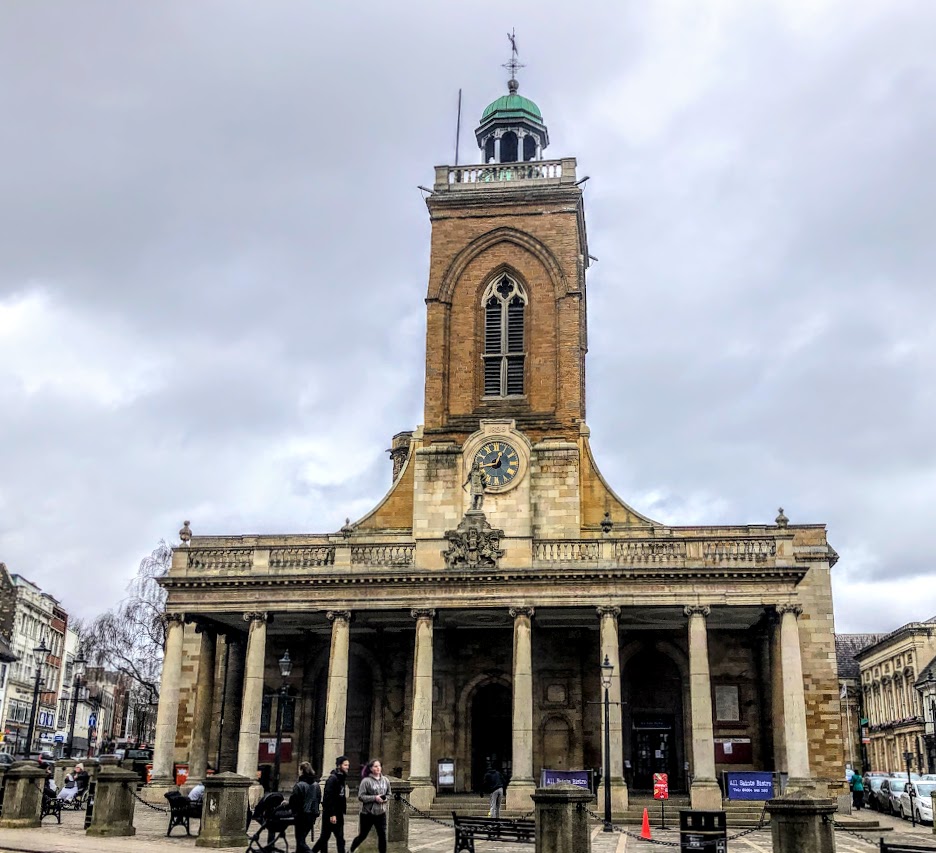
All Saints’ Church is the parish church in the centre of Northampton (Photograph: Patrick Comerford)

ions from the 17th to the 19th century (Photograph: Patrick Comerford, 2024)

The USPG Prayer Diary today (Sunday 2 November 2025, All Saints’ Sunday, All Souls’ Day) invites us to pray:

God of hope, grant that we, with all who have believed in you, may be united in the full knowledge of your love and the unclouded vision of your glory; through Jesus Christ our Lord. Amen (A Prayer Book for Australia, 1995).

The Collect:

Almighty God,
you have knit together your elect
in one communion and fellowship
in the mystical body of your Son Christ our Lord:
grant us grace so to follow your blessed saints
in all virtuous and godly living
that we may come to those inexpressible joys
that you have prepared for those who truly love you;
through Jesus Christ your Son our Lord,
who is alive and reigns with you,
in the unity of the Holy Spirit,
one God, now and for ever.

The Post Communion Prayer:

God, the source of all holiness and giver of all good things:
may we who have shared at this table
as strangers and pilgrims here on earth
be welcomed with all your saints
to the heavenly feast on the day of your kingdom;
through Jesus Christ our Lord.

Additional Collect:

God of holiness,
your glory is proclaimed in every age:
as we rejoice in the faith of your saints,
inspire us to follow their example
with boldness and joy;
through Jesus Christ our Lord.

Yesterday’s Reflections

Continued Tomorrow

Christ the King and the saints on the panels of the altar in All Saints’ Church, Berkhamsted (Photograph: Patrick Comerford)

Scripture quotations are from the New Revised Standard Version Bible: Anglicised Edition copyright © 1989, 1995 National Council of the Churches of Christ in the United States of America. Used by permission. All rights reserved worldwide. http://nrsvbibles.org

All Saints’ Church in Yelvertoft, Northamptonshire, was connected with the Comberford family for about a century … Henry Comberford of Lichfield Cathedral was the rector in 1546-1560 (Photograph: Patrick Comerford)

01 November 2025

Daily prayer in the Kingdom Season 2025:
1, Saturday 1 November 2025,
All Saints’ Day

Christ and the Saints depicted in a dome in Saint Mark’s Basilica, Venice (Photograph: Patrick Comerford)

Patrick Comerford

Today in the Church Calendar is All Saints’ Day (1 November), one of the 12 Principal Feasts of the Church. This celebration in the Church Calendar dates back to Pope Gregory III (731-741), who dedicated a chapel to All Saints in Saint Peter’s in Rome on 1 November to honour ‘the holy apostles and … all saints, martyrs, and confessors, … all the just made perfect who are at rest throughout the world.’

We move today from Ordinary Time in the Church Calendar to the Kingdom Season, the time between All Saints’ Day and Advent.

But many churches and parishes, including Saint Mary and Saint Giles in Stony Stratford, are going to mark All Saints’ Day tomorrow (2 November 2025) as All Saints’ Sunday.

All Saints’ Festival begins, for example, in All Saints’ Church, Margaret Street, London, this evening with the All Saintstide Choir Concert at 7 pm, following the Low Mass of All Saints at 5:15. But All Saints’ Day is being celebrated tomorrow with Low Mass at 8:30, High Mass at 11, 5.15pm Low Mass at 5:15, and Evensong and Benediction and Te Deum at 6 pm.

Later this morning, I hope to drop in to Το Στεκι Μας, Our Place, the pop-up Greek café the takes place every from 10:30 on the first Saturday of the month in the Swinfen Harris Church Hall at the Greek Orthodox Church in Stony Stratford. But before today begins, before having breakfast, I am taking some quiet time early this morning to give thanks, and for reflection, prayer and reading in these ways:

1, today’s Gospel reading (allowing for the celebration of All Saints’ Day tomorrow);

2, a short reflection;

3, a prayer from the USPG prayer diary;

4, the Collects and Post-Communion prayer of the day.

‘When you are invited … to a … banquet, do not sit down at the place of honour ... (Luke 14: 8) … inside the restored Desmond Banqueting Hall in Newcastle West, Co Limerick (Photograph: Patrick Comerford)

Luke 14: 1, 7-11 (NRSVA):

1 On one occasion when Jesus was going to the house of a leader of the Pharisees to eat a meal on the sabbath, they were watching him closely.

7 When he noticed how the guests chose the places of honour, he told them a parable. 8 ‘When you are invited by someone to a wedding banquet, do not sit down at the place of honour, in case someone more distinguished than you has been invited by your host; 9 and the host who invited both of you may come and say to you, “Give this person your place”, and then in disgrace you would start to take the lowest place. 10 But when you are invited, go and sit down at the lowest place, so that when your host comes, he may say to you, “Friend, move up higher”; then you will be honoured in the presence of all who sit at the table with you. 11 For all who exalt themselves will be humbled, and those who humble themselves will be exalted.’

‘When you are invited by someone to a wedding banquet, do not sit down at the place of honour …’ (Luke 14: 8) … preparing for a wedding meal in Southwark (Photograph: Patrick Comerford)

Today’s Reflections:

Today’s Gospel reading is part of one the longest accounts in Saint Luke’s Gospel of a meal with Jesus. This meal begins with Jesus’ invitation to the house of a leader of the Pharisees to eat a meal on the sabbath.

As he arrives, he heals a man with dropsy (verses 2-6), which we read about yesterday. In today’s reading, Jesus then discusses the ways in which guests like to be given the place of honour at a dinner, a wedding or a banquet (verses 7-11), and theme continues by discussing with his host who should be on our invitations lists (verses 12-14). As the meal goes on, Jesus is prompted to tell the Parable of the Great Dinner (verses 15-24). These conversations at the dinner continue in the lectionary readings next week.

Jesus is accused at times of eating with publicans and sinners, and his detractors point to him saying: ‘Look, a glutton and a drunkard, a friend of tax collectors and sinners!’ (Luke 7: 34). But Jesus also eats with Pharisees too. Indeed, he may have had many meals with Pharisees, although the Gospel writers simply make a passing reference to the host without naming him (see Luke 14: 1-24), or perhaps ignore the meals altogether.

However, at this meal, I imagine an evening when Jesus is found eating with an eminently respectable member of society, a Pharisee, and a leading Pharisee at that too.

Jesus is invited to dinner on Saturday evening by a leading Pharisee, yet we do not know the name of the host that evening, nor is it clear which city he lives in. Although, I am not sure whether either really matters.

Have you ever been at a dinner where you know some of the guests were invited simply to boost the ego of those who had invited them? The Pharisee in today’s reading may have been a genial host who thought he was doing the decent thing.

A Pharisee inviting a visiting rabbi and preacher to dinner would have been common courtesy and a common experience. Nor is there is anything unusual, anything offensive, about the behaviour of Jesus at this meal. He takes his allotted or allocated place at the table, and he probably enjoys the conversation and the company with the people beside him and opposite him.

But it’s not who were prepared to welcome that tells a lot about us; rather, it’s who we forget to count in, or even those we consciously decide to exclude.

The definitions of identity, of English-ness or Irish-ness, are being hotly debated, and flags that ought to be symbols of unity and inclusion have become symbols of division and exclusion.

The far-right Reform MP Sarah Pochin threw in her tuppence worth this week, saying, ‘it drives me mad when I see adverts full of black people, full of Asian people’. Earlier this year, she used Prime Minister’s Question Time to suggest women in Britain should be banned from wearing the burqa.

Who we want to sit with, who want to eat with, who we want to count in, and who want to count out, says more about us than about them. But in Christ there is no us and them, and ‘all who exalt themselves will be humbled, and those who humble themselves will be exalted’ (verse 11).

An end-of-term dinner with the Institute for Orthodox Christian Studies at Sidney Sussex College, Cambridge (Photograph: Patrick Comerford)

Today’s Prayers (Saturday 1 November 2025, All Saints’ Day):

The theme this week (26 October to 1 November) in Pray with the World Church, the prayer diary of the Anglican mission agency USPG (United Society Partners in the Gospel), has been ‘Bonds of Affection’ (pp 50-51). This theme was introduced last Sunday with reflections from Rachel Weller, Communications Officer, USPG.

The USPG Prayer Diary today (Saturday 1 November 2025, All Saints’ Day) invites us to pray:

O God, who has knit together your people in one communion and fellowship, grant us grace to follow the example of all your saints, that we may be made partakers of your heavenly kingdom.

The Collect:

Almighty God,
you have knit together your elect
in one communion and fellowship
in the mystical body of your Son Christ our Lord:
grant us grace so to follow your blessed saints
in all virtuous and godly living
that we may come to those inexpressible joys
that you have prepared for those who truly love you;
through Jesus Christ your Son our Lord,
who is alive and reigns with you,
in the unity of the Holy Spirit,
one God, now and for ever.

The Post Communion Prayer:

God, the source of all holiness and giver of all good things:
may we who have shared at this table
as strangers and pilgrims here on earth
be welcomed with all your saints
to the heavenly feast on the day of your kingdom;
through Jesus Christ our Lord.

Additional Collect:

God of holiness,
your glory is proclaimed in every age:
as we rejoice in the faith of your saints,
inspire us to follow their example
with boldness and joy;
through Jesus Christ our Lord.

Collect on the Eve of the Fourth Sunday before Advent:

Almighty and eternal God,
you have kindled the flame of love
in the hearts of the saints:
grant to us the same faith and power of love,
that, as we rejoice in their triumphs,
we may be sustained by their example and fellowship;
through Jesus Christ your Son our Lord,
who is alive and reigns with you,
in the unity of the Holy Spirit,
one God, now and for ever.

Yesterday’s Reflections

Continued Tomorrow


Scripture quotations are from the New Revised Standard Version Bible: Anglicised Edition copyright © 1989, 1995 National Council of the Churches of Christ in the United States of America. Used by permission. All rights reserved worldwide. http://nrsvbibles.org

31 October 2025

Daily prayer in Ordinary Time 2025:
172, Friday 31 October 2025

Liverpool Cathedral, where Justin Welby introduced a Hallowe’en service as ‘Night of the Living Dead’ (Photograph: Patrick Comerford)

Patrick Comerford

We are continuing in Ordinary Time in the Church Calendar, which changes to Kingdom-time or the Kingdom Season tomorrow with All Saints’ Day. In the Calendar of the Church of England in Common Worship and Exciting Holiness, today is not marked as Hallowe’en but, instead, remembers Martin Luther.

Before the day begins, before having breakfast, I am taking some quiet time early this morning to give thanks, and for reflection, prayer and reading in these ways:

1, today’s Gospel reading;

2, a short reflection;

3, a prayer from the USPG prayer diary;

4, the Collects and Post-Communion prayer of the day.

Stony Stratford prepares for Hallowe’en … but does Christ make a Hallowe’en choice between trick or treat? (Photographs: Patrick Comerford, 2025)

Luke 14:1-6 (NRSVA)

1 On one occasion when Jesus was going to the house of a leader of the Pharisees to eat a meal on the sabbath, they were watching him closely. 2 Just then, in front of him, there was a man who had dropsy. 3 And Jesus asked the lawyers and Pharisees, ‘Is it lawful to cure people on the sabbath, or not?’ 4 But they were silent. So Jesus took him and healed him, and sent him away. 5 Then he said to them, ‘If one of you has a child or an ox that has fallen into a well, will you not immediately pull it out on a sabbath day?’ 6 And they could not reply to this.

‘Ars Longa, Vita Brevis’ … words from Hippocrates at the Medical School in the Royal Hallamshire Hospital, Sheffield (Photograph: Patrick Comerford)

Today’s Reflections:

Tomorrow is All Saints’ Day, although this may be celebrated in many parishes and churches on Sunday (2 November 2025) as All Saints’ Sunday.

But if All Saints’ Day is not celebrated properly and appropriately in our churches, with a celebration of the Eucharist, whether that is tomorrow or on Sunday, how do we explain to a younger generation what Hallowe’en is truly about?

Hallowe’en is the ‘Night of the Living Dead’ ... for the saints are alive, and we are part of the Communion of Saints, the Church Triumphant (Ecclesia Triumphans) and the Church Militant (Ecclesia Militans), which are part of the one Church, and we are together.

Hallowe’en, or the Eve of All Hallows, is the evening before celebrating All the Saints, All the Holy Ones in Glory, the Saints of every time and place. This is the Eve of a Great Feast of Light – the Solemnity of All Saints, the saints in glory who have ‘inherited the light’ (Colossians 1: 12-13), whether we are alive or dead, whether we have been canonised or faded into obscurity, whether they have given heroic examples in their lives or are unsung and unknown. We are all with God in endless joy.

When he became Dean of Liverpool in 2007, the former Archbishop of Canterbury, Justin Welby, found himself in one of England’s largest and most deprived cathedrals. He doubled attendances, abseiled from the roof, and allowed John Lennon’s Imagine to be played on the cathedral bells – despite the line ‘imagine there is no heaven.’

He also encouraged a ‘Night of the Living Dead’ service on Hallowe’en, when a coffin was carried into the cathedral and a man rose from a coffin to represent the Resurrection.

If we cannot explain Hallowe’en and All Saints’ Day, how can we hope to explain the greater truths of Christmas and Easter?

In today’s Gospel reading (Luke 14:1-6), we are faced with a ‘trick or treat’ conundrum. It is the sabbath and Jesus is going to eat dinner at the home of a local religious leader: if he ignores the sick man’s plight, does he ignore that love and compassion are the core of true religion? Or, if heals this man, is he going to be accused of breaching religious rules, regulations traditions.

The discussion this prompts is not about whether Christ has the duty or responsibility, he legal right or power, the appropriate qualifications or the authority, to heal the man with dropsy, but whether doing this on the Sabbath shows disdain for the law of God.

This is the sole, lone and only Gospel incident in n which the Greek word ὑδρωπικός (hydropikos) is used to describe a person suffering from dropsy. It is a pathological retention of fluid that causes abnormal swelling. Although it is a medical term, its single New Testament appearance here becomes theologically rich when placed within the Gospel narrative.

In the world of the Biblical Mediterranean, dropsy was seen as incurable and associated with other systemic illnesses. Swelling of the limbs and abdomen visibly marked the sufferer, making him ritually unclean by religious understanding of the ay and socially marginalised.

Physicians such as Hippocrates discussed the malady, yet effective treatment was scarce. A hydropic person embodied chronic suffering and exclusion, providing a stark contrast to the wholeness of life envisioned in God’s covenant promises.

Should this man be left, as it were, among the living dead?

By asking whether it is it lawful to heal on the Sabbath or not (verse 3), Jesus exposes the discrepancy between the Law’s intent and the tradition-bound application of it. When he heals the man and sends him away whole, he affirms the Sabbath as a day ‘for doing good’.

Of course, the man is not dying. Although he has dropsy, his healing could take place on any other day, indeed at any other venue. But, even before they speak, Christ’s response to his potential protagonists is to ask a question: ‘Is it lawful to cure people on the sabbath, or not?’ (verse 4).

If they say no, they show their ignorance of the law and the rabbinical tradition; if they say yes, how could they possibly disagree with what they know he is about to do?

After this healing miracle, Christ goes on to share two parables about humility and the heavenly banquet (Luke 14: 7-24). The hydropic man’s restoration anticipates the inclusive feast of the Kingdom, where the physically and spiritually bloated pride of the self-righteous is contrasted with the humble who accept the invitation.

If mercy towards animals or family members is permitted, how much more should mercy for a suffering image-bearer of God be celebrated?

What better day is there than the Sabbath, a day meant to promote God’s commitment to humanity’s well-being, for the restoration of a man with a debilitating illness?

Trick or Treat?

In his response, Christ allows this man to return to work with dignity, and restores him to his full and rightful place in the community of faith that may have been denied to him by the very people who are present that Sabbath.

The man who must once have thought he might as well have been dead is given new life, and is assured he is a Child of God.

Later this evening, as children go knocking on doors in this town, under the watchful and loving eyes of parents or older siblins, I shall remind myself that in Christ there is no trick, there is only treat. And it would be reflective and approopriate to return to a prayer attributed to Saint Ambrose of Milana has become part of Anglican tradition as part of the office of Compline in the Book of Common Prayer:

Before the ending of the day,
Creator of the world, we pray
That thou with wonted love wouldst keep
Thy watch around us while we sleep.

O let no evil dreams be near,
Or phantoms of the night appear;
Our ghostly enemy restrain,
Lest aught of sin our bodies stain.

Almighty Father, hear our cry
Through Jesus Christ our Lord most high,
Who with the Holy Ghost and thee
Doth live and reign eternally. Amen.

A sign in Lichfield Cathedral this week about the true meaning of Hallowe’en (Photograph: Hugh Ashton, 2025)

Today’s Prayers (Friday 31 October 2025):

The theme this week (26 October to 1 November) in Pray with the World Church, the prayer diary of the Anglican mission agency USPG (United Society Partners in the Gospel), is ‘Bonds of Affection’ (pp 50-51). This theme was introduced on Sunday with reflections from Rachel Weller, Communications Officer, USPG.

The USPG Prayer Diary today (Friday 31 October 2025) invites us to pray:

Father, we pray that one day the group may get to meet in person in order that the bonds of affection might be strengthened.

The Collect:

Blessed Lord,
who caused all holy Scriptures to be written for our learning:
help us so to hear them,
to read, mark, learn and inwardly digest them
that, through patience, and the comfort of your holy word,
we may embrace and for ever hold fast
the hope of everlasting life,
which you have given us in our Saviour Jesus Christ,
who is alive and reigns with you,
in the unity of the Holy Spirit,
one God, now and for ever.

The Post Communion Prayer:

God of all grace,
your Son Jesus Christ fed the hungry
with the bread of his life
and the word of his kingdom:
renew your people with your heavenly grace,
and in all our weakness
sustain us by your true and living bread;
who is alive and reigns, now and for ever.

Additional Collect:

Merciful God,
teach us to be faithful in change and uncertainty,
that trusting in your word
and obeying your will
we may enter the unfailing joy of Jesus Christ our Lord.

Collect on the Eve of All Saints’ Day:

Almighty God,
you have knit together your elect
in one communion and fellowship
in the mystical body of your Son Christ our Lord:
grant us grace so to follow your blessed saints
in all virtuous and godly living
that we may come to those inexpressible joys
that you have prepared for those who truly love you;
through Jesus Christ your Son our Lord,
who is alive and reigns with you,
in the unity of the Holy Spirit,
one God, now and for ever.

Yesterday’s Reflections

Continued Tomorrow

A carvwd Hallowe’en pumpkin in Stony Stratford (Photograph: Patrick Comerford)

Scripture quotations are from the New Revised Standard Version Bible: Anglicised Edition copyright © 1989, 1995 National Council of the Churches of Christ in the United States of America. Used by permission. All rights reserved worldwide. http://nrsvbibles.org

17 August 2025

All Saints’ Church, Leighton Buzzard,
stands on a site where there has been
a church for the past 1,000 years

The spire of All Saints’ Church, Leighton Buzzard, at 190 ft can be seen for miles around (Photograph: Patrick Comerford, 2025)

Patrick Comerford

I spent an afternoon recently in Leighton Buzzard, a market town in south-west Bedfordshire, close to the Buckinghamshire border. It is between Aylesbury, Tring, Luton and Milton Keynes, and near the Chiltern Hills.

I pass through Leighton Buzzard regularly on the train between Milton Keynes and London, but this was my first time to walk around the town, visiting some churches and cafés, searching for the main historical buildings and sites, and walking by the banks of the Grand Union Canal in the afternoon summer sunshine.

All Saints’ Church stands at the end of Church Square in the heart of Leighton Buzzard, on a site where there has been a church for about 1,000 years. The present church was built in the early 13th century and its 190-ft spire is a dominant feature in the town that can be seen for miles around.

Inside All Saints’ Church, Leighton Buzzard, facing the east end (Photograph: Patrick Comerford, 2025)

The episcopal seat was moved from Dorchester to Lincoln in 1075. Saint Hugh of Lincoln is depicted in the great west window with his legendary pet swan. Around his time, Leighton became a prebendal ‘peculiar’ in 1189. The Prebendary of Leighton Buzzard was a canon of Lincoln Cathedral and received his income from a prebendal manor in Leighton. Peculiar parishes were outside the jurisdiction of the archdeacon, and, generally, the bishop as well.

One explanation for the name of Leighton Buzzard suggests an early prebendary, Theobald de Busar, gave his name to Leighton, which became Leighton de Busar, and later Leighton Buzzard, to distinguish it from Leighton Bromswold in the same diocese.

Former prebendaries included William de Packington (1389), who was also Archdeacon of Canterbury and Dean of Lichfield (1380-1390). Former vicars included Christopher Sclater, who was Vicar from 1624 until he died in 1642. A petition from local people shows that he was not popular. He was described as ‘a promoter of superstitious innovations and of a scandalous life’, and so they employed a lecturer, Samuel Fisher, for their better instruction.

In practice, the prebendaries of Leighton Buzzard endowed the Vicarage of Leighton with a portion of their income. Until the 19th century, the prebendary held visitations, duplicates of registers were sent to the Prebendary, and the Peculiar Court proved all wills and registered all places of worship. No marriage licences except those granted by the Peculiar were legal.

Legislation in 1835-1836 empowered the Ecclesiastical Commissioners to abolish Peculiars, and the last visitation of the prebendary was in 1852. Meanwhile, the parish was transferred to the Diocese of Ely in 1837, and then to St Albans in 1914. By the time these changes were made, the position had become simply an honorary title. There is still a prebendal stall for Leighton Buzzard in Lincoln Cathedral.

Inside All Saints’ Church, Leighton Buzzard, facing the west end (Photograph: Patrick Comerford, 2025)

The church is large, and of cruciform shape, with a central tower and spire, and with a long chancel that is only slightly shorter than the nave. Most of the walls, tower, spire and nave arcading date from the 13th century, and the ground plan remains basically the same with some later additions, such as porches and the coffee shop.

The tower is about 9 metres (30 ft) square and 21 metres (69 ft) high. On the sides of the tower are traces of the older 13th century high pitched roofs. The pinnacles were added in 1842. The spire is 58 metres (191 ft) high, and is built with a slight bulge designed to make the tower appear straight from a distance. The spire was struck by lightning in 1852 and the top 6 metres (20 ft) had to be rebuilt.

There are 25 15th century gargoyles around the outside of the church, dating from the 15th century. Five sundials are fixed to the outside of the church, including one on the north transept wall that only catches the sun soon after sunrise or just before sunset.

The great West Door has hinges made by Thomas of Leighton, a 13th century ironsmith who made the iron grill on the tomb of Queen Eleanor of Castile in Westminster Abbey.

The chancel is the oldest part of All Saints’ Church, Leighton Buzzard (Photograph: Patrick Comerford, 2025)

The chancel is the oldest part of the church. The wooden altar and altar rails date from the 17th century. The sedilia and piscinae are Early English and date from before 1288. There are two piscinae and the most important of the three sedilia seats is at the west end and is a step below the other two.

Before the fire in 1985, the window over the altar was a traditional stained glass window. After the fire, it was replaced with plain glass.

The reredos is a carved oak triptych designed by the Gothic Revival architect George Frederick Bodley (1827-1907). The central section has three alabaster panels, the work of the stonemason and sculptor Robert Bridgeman (1844-1918) of Lichfield, and depict the Crucifixion, the Virgin Mary and Saint John.

The side sections are of leather and have four angels embossed, richly coloured and lacquered and are the work of Minnie King and Arthur Smallbones of the Leighton Buzzard Handicraft Class for Cripples. All the panels have finely carved oak canopies and bordered with a deep cut, vine pattern.

The late 14th century stalls have 27 misericords or tip-up seats that may have come from St Albans Abbey (Photograph: Patrick Comerford, 2025)

On either side of the chancel are late 14th century stalls have 27 misericords or tip-up seats with ledges for resting against when standing. The carvings include 14 with heads, six of foliage, two heraldic birds, and one with two men (or monkeys) fighting. The carvings of the remaining four have been destroyed. The misericords probably originated from monastic stalls at St Albans Abbey.

The rood screen separated the chancel from the crossing and is a good example of 15th century work.

The nave arcades have four bays. The arches have a chamfered moulding and are supported by octagonal pillars that have moulded capitals and bases. Many of the bases were renewed in 1886.

The roof with magnificent carvings of angels poised on the ends of alternate beams is one of the finest features of the church (Photograph: Patrick Comerford, 2025)

The roof has magnificent carvings of angels, poised on the ends of alternate beams, and is one of the finest features in the church.

The roof was added in the 15th century, and paid for by Alice de la Pole, Duchess of Suffolk and granddaughter of Geoffrey Chaucer. On each corbel are carved figures representing various saints, and the carvings on the corbels themselves represent objects associated with Christ’s Passion.

Saint George, Saint Etheldreda, Saint Michael, Saint Hugh (with his pet swan) and Saint Alban in the west window by CE Kempe (Photograph: Patrick Comerford, 2025)

All Saints’ Church has a large collection of windows by Charles Eamer Kempe (1837-1907), including 12 at lower levels and 16 in the clerestory. Kempe was at the forefront of the Anglo Catholic revival and worked closely with the architect GF Bodley.

The windows depict various saints, and the great west window depicts Saint George, Saint Etheldreda, Saint Michael, Saint Hugh and Saint Alban.

The oak eagle lectern is the oldest piece of carved woodwork in the church and the oldest of its type in the country. The base appears to date from the 13th century and the eagle from the 14th century.

The oak eagle lectern is the oldest piece of carved woodwork in the church (Photograph: Patrick Comerford, 2025)

The Jacobean pulpit in the nave is of American cedar, given in 1638 by Edward Wilkes, a local benefactor. The Wilkes family also provided the almshouses in North Street.

The font is Early English in design (ca 1240) and is from an earlier church. It has of a large bowl supported on a large central column, with four smaller ones. The metal plug is of much later date (1630).

The Simon and Nellie graffiti, linked locally with the origin of the Simnel Cake or ‘Sim and Nell’ cake (Photograph: Patrick Comerford, 2025)

Mediaeval graffiti or scratchings can be seen throughout the church, on the pillars and walls. They include crosses, birds, a king’s head, strange beasts, coats of arms, names and initials and geometric designs.

The best-known and the one that is always pointed out to visitors is known as the Simon and Nellie graffiti, on the south-west pier of the tower. It is linked locally with the origin of the Simnel Cake or ‘Sim and Nell’ cake. It dates from ca 1400.

The story has it that Simon and Nellie were preparing to welcome their children home for Mothering Sunday. They had little in their larder to eat except a piece of left-over Christmas pudding mixture. They argued over which to how to cook it: boil or bake? The carving shows them about to come to blows: Nellie raised a wooden spoon, Simon was about to throw the dough at Nellie, but they made peace, compromised, and boiled and then baked the mix.

And so, it is said in Leighton Buzzard, the Simnel cake was made.

Some of the mediaeval graffiti or scratchings throughout the church (Photographs: Patrick Comerford, 2025)

The church was damaged extensively by fire in 1985. A vast restoration project included redecorating and refurbishing the carved angels, creating new vestries, and a small chapel dedicated to Saint Hugh from an old priests’ vestry upstairs. Other alterations include a meeting room named the Good Samaritan Room from the large window depicting the parable, a parish office, and a choir vestry and office. A new Harrison organ and new bells replaced those destroyed by fire. A new altar was placed under the tower, and a coffee shop is open to the public three days a week.

The lower level of the north transept has a 14th century piscina in the east wall, and combined with other architectural features in both the north and south transepts, point to the fact that they were both originally designed to contain altars. John Esgoer’s will in 1519 refers to two altars in each transept.

The south transept is now a Lady Chapel. It also has a piscina and fine trefoiled niche containing a statue of the Blessed Virgin Mary and Chrost Child. This niche was originally used to display relics, including the tunic of Saint Hugh of Lincoln'. Against the south wall is a single altar, which replaced the two against the east wall from before the fire.

The tower crossing suffered the most damage in the fire in 1985 (Photograph: Patrick Comerford, 2025)

The tower crossing suffered the most damage in the 1985 fire, and most of what is seen in this part of the church is new. The altar is of limestone, weighing 3.4 tonnes. The frontal depicts the 12 apostles, and is in gold thread, the work of Watts of London. The organ was built by Harrison & Harrison of Durham in 1989.

Directly above the crossing roof is the ringing chamber, and above that the bell chamber. All ten bells had to be replaced after the fire, and the church now has a ring of 12 bells by Taylors of Loughborough, cast in the key of C sharp. The peal is ranked 21st out of 92 peals of 12 bells in the world.

One old mediaeval bell was rescued from the fire. This bell called ‘Ting Tang’ because of its sound. It is the oldest bell in the diocese and is now housed in the ringing room.

Further restorations were carried out in 1999-2016 after the discovery of cracks in the tower and structural problems in other places, when the tower was stabilised with steel anchors.

All Saints is in the Liberal Catholic tradition and the Parish Eucharist is the main service each Sunday at 9:30 am (Photograph: Patrick Comerford, 2025)

The Vicar of All Saints, Canon David MacGeoch, was appointed earlier this year. All Saints has a strong choral tradition and its worship and liturgy is in the Liberal Catholic tradition.

The church has a wide range of weekly services, most of which focus on the Eucharist, using Common Worship. The Parish Eucharist is the main service each Sunday at 9:30 am. An All Age Service is at 11:30 am on the first and third Sunday each month. Evensong is at 6 pm on Sundays. The weekday services include Holy Communion and Morning Prayer.

The west end of All Saints’ Church, Leighton Buzzard (Photograph: Patrick Comerford, 2025)

29 May 2025

Daily prayer in Easter 2025:
40, Thursday 29 May 2025,
Ascension Day

The Ascension depicted in a window in Saint Mary and Saint Giles Church, Stony Stratford (Photograph: Patrick Comerford, 2025)

Patrick Comerford

Easter is a 50-day season, beginning on Easter Day (20 April 2025) and continuing until the Day of Pentecost or Whit Sunday in ten days’ time (8 June 2025). This week began with the Sixth Sunday of Easter (Easter VI, 25 May 2025), and today is Ascension Day (29 May 2025).

I had thought of being at the Ascension Day Eucharist in All Saints’ Church, Calverton, later this morning, and at the ‘Last Thursday History Club’ in Stony Stratford this afternoon. Instead, I may be going into London later this morning. However, before today begins, I am taking some quiet time at home this morning to give thanks, to reflect, to pray and to read in these ways:

1, reading today’s Gospel reading;

2, a short reflection;

3, a prayer from the USPG prayer diary;

4, the Collects and Post-Communion prayer of the day.

The Ascension depicted in a fresco in the ceiling in the parish church in Piskopianó in Crete (Photograph: Patrick Comerford, 2024)

Luke 24: 44-53 (NRSVA):

44 Then he said to them, ‘These are my words that I spoke to you while I was still with you – that everything written about me in the law of Moses, the prophets, and the psalms must be fulfilled.’ 45 Then he opened their minds to understand the scriptures, 46 and he said to them, ‘Thus it is written, that the Messiah[a] is to suffer and to rise from the dead on the third day, 47 and that repentance and forgiveness of sins is to be proclaimed in his name to all nations, beginning from Jerusalem. 48 You are witnesses of these things. 49 And see, I am sending upon you what my Father promised; so stay here in the city until you have been clothed with power from on high.’

50 Then he led them out as far as Bethany, and, lifting up his hands, he blessed them. 51 While he was blessing them, he withdrew from them and was carried up into heaven. 52 And they worshipped him, and returned to Jerusalem with great joy; 53 and they were continually in the temple blessing God.

The Ascension depicted in the East Window by Alexander Gibbs in the chapel of Keble College, Oxford (Photograph: Patrick Comerford, 2024)

Today’s Reflection:

Our view of the universe, our understanding of the cosmos, shapes how we image and think of God’s place in it, within it, above it, or alongside it. And sometimes, the way past and outdated understandings of the universe were used to describe or explain the Ascension now make it difficult to talk about its significance and meaning to today’s scientific mind.

When we believed in a flat earth, it was easy to understand how Christ ascended into heaven, and how he then sat in the heavens, on a throne, on the right hand of the Father. But once we lost the notion of a flat earth as a way of explaining the world and the universe, we failed to adjust our images or approaches to the Ascension narrative. Ever since, intelligent people have been left asking silly questions:

When Christ went up through the clouds, how long did he keep going?

When did he stop?

And where?

Standing there gaping at the sky could make us some kind of navel-gazers, looking for explanations within the universe and for life, but not as we know it. In our day and age, the idea of Christ flying up into the sky and vanishing through the great blue yonder strikes us as fanciful.

Does Jesus peek over the edge of the cloud as he is whisked away like Aladdin on a magic carpet?

Is he beamed up as if by Scotty?

Does he clench his right fist and take off like Superman?

Like the disciples, would we have been left on the mountain top looking up at his bare feet as they became smaller and smaller and smaller?

But the concept of an ascension was not one that posed difficulties in Christ’s earthly days. It is part of the tradition that God’s most important prophets were lifted up from the Earth rather than perish in the earth with death and burial.

Elijah and Enoch ascended into heaven. Elijah was taken away on a fiery chariot. Philo of Alexandria wrote that Moses also ascended. The cloud that Christ is taken up in reminds us of the shechinah – the presence of God in the cloud, for example, in the story of Moses receiving the law (Exodus 24: 15-17), or with the presence of God in the Tabernacle on the way to the Promised Land (see Exodus 40: 34-38).

Saint Luke makes a clear connection between the ascension of Moses and Elijah and the Ascension of Christ, when he makes clear links between the Transfiguration and the Ascension. At the Transfiguration, he records, a cloud descends and covers the mountain, and Moses and Elijah – who have both ascended – are heard speaking with Jesus about ‘his departure, which he was about to accomplish at Jerusalem’ (Luke 9: 30-31).

So, Saint Luke links all these elements as symbols as he tells this story. There is a direct connection between the Transfiguration, the Ascension and the Second Coming … the shechinah is the parousia. However, like the disciples in this reading from the Acts of the Apostles, we often fail to make these connections. We are still left looking up at the feet … an enigma posed by Salvador Dali almost 70 years ago in his painting, The Ascension (1958).

Let us just think of those feet for a moment.

In the Epistle reading that is provided in the Lectionary today (Ephesians 1: 15-23), the Apostle Paul tells says that with the Ascension the Father ‘has put all things under [Christ’s] feet and has made him the head over all things’ (Ephesians 1: 22).

‘Under his feet’ … Salvador Dali’s painting of the Ascension, with its depiction of the Ascension from the disciples’ perspective, places the whole of creation under Christ’s feet. Of course, Isaiah 52: 7 tells us: ‘How beautiful upon the mountains are the feet of the messenger who announces peace, who brings good news, who announces salvation, who says to Zion, “Your God reigns”.’

Feet are important to God. There are 229 references to feet in the Bible and another 100 for the word foot. When Moses stands before God on Mount Sinai, God tells him to take his sandals off his feet, for he is standing on ‘holy ground’ (Exodus 3: 5) – God calls for bare feet on the bare ground, God’s creation touching God’s creation.

Later, when the priests cross the Jordan into the Promised Land, carrying the ark of the Lord, the water stops when they put their feet down, and the people cross on dry land (Joshua 3: 12-17): walking in the footsteps of God, putting our feet where God wants us to, is taking the first steps in discipleship and towards the kingdom.

The disciples object when a woman washes and anoints Jesus’ feet and dries them with her hair, but he praises her faith (Luke 7: 36-50). On the night of his betrayal, the last and most important Christ Jesus does for his disciples is wash their feet (John 13: 3-12).

Footprints … many of us have learned off by heart or have a mug or a wall plaque with the words of the poem Footprints in the Sand. We long for a footprint of Jesus, an imprint that shows where he has been … and where we should be going. The place where the Ascension is said to have taken place is marked by a rock with what is claimed to be the footprint of Christ. And, as they continue gazing up, after his feet, the disciples are left wondering whether it is the time for the kingdom to come, are they too going to be raised up.

Yet it seems that the two men who stand in white robes beside them are reminding them Christ wants them not to stay there standing on their feet doing nothing, that he wants us to pay more attention to the footprints he left all over the Gospels. Christ’s feet took him to some surprising places – and he asks us to follow.

Can I see Christ’s footprints in the wilderness?

Can I see Christ walking on the wrong side of the street with the wrong sort of people?

Can I see Christ walking up to the tree, looking up at Zacchaeus in the branches (Luke 19: 1-10), and inviting him to eat with him?

Can I see his feet stumbling towards Calvary with a cross on his back, loving us to the very end?

Am I prepared to walk with him?

Since that first Ascension Day, the body of Christ is within us and among us and through us as the Church and as we go forth in his name, bearing that Good News as his ‘witnesses in Jerusalem, in all Judea and Samaria, and to the ends of the earth’ (Acts 1: 8).

Meanwhile, we are reminded by the two men in white: ‘This Jesus, who was taken up from you into heaven, will come in the same way as you saw him go into heaven’ (Acts 1: 11). Between now and then we are to keep in mind that the same Jesus is ‘with [us] always, to the end of the age’ (Matthew 28: 20).

The disciples who are left below are left not to ponder on what they have seen, but to prepare for Pentecost and to go out into the world as the lived Pentecost, as Christ’s hands and feet in the world, leaving behind us the footprints of Christ.

Saint Paul paraphrases Isaiah when he says: ‘How beautiful are the feet of those who bring good news!’ (Romans 10: 15). Our feet can look like Christ’s feet. Our feet can become his feet until he returns in glory once again (Acts 1: 11), when he returns exactly as he ascended. And we need to keep the tracks fresh so that others may follow us in word, deed, and sacrament, and follow him.

The disciples are sent back to Jerusalem not to be passive but to pray to God the Father and to wait for the gifts of the Holy Spirit. In time, the Holy Spirit will empower them, and they will be Christ’s witnesses not just in Judea and Samaria, but to the ends of the earth fulfilling that commission in Saint Matthew’s Gospel.

The disciples who are left below are left not to ponder on what they have seen, but to prepare for Pentecost and to go out into the world as the lived Pentecost, as Christ’s hands and Christ’s feet in the world.

Christ is risen!
The Lord is risen indeed. Alleluia!

The Ascension depicted in a tile frieze designed by William Butterfield in All Saints’ Church, Margaret Street, London (Photograph: Patrick Comerford, 2023)

Today’s Prayers (Thursday 29 May 2025, Ascension Day):

Today is the Feast of the Ascension is today (29 May 2025) and provides the theme for this week in ‘Pray With the World Church’, the Prayer Diary of the Anglican mission agency USPG (United Society Partners in the Gospel). This theme was introduced on Sunday with reflections from Dr Paulo Ueti, Theological Advisor and Regional Manager for Latin America and the Caribbean, USPG.

The USPG Prayer Diary today (Thursday 29 May 2025, Ascension Day) invites us to pray:

Grant, we pray, Almighty God, that as we believe your only-begotten Son to have ascended into heaven, so we may also in heart and mind there ascend, and with him continually dwell; who lives and reigns with you and the Holy Spirit, one God, for ever and ever.

The Collect:

Grant, we pray, almighty God
that as we believe your only-begotten Son our Lord Jesus Christ
to have ascended into the heavens,
so we in heart and mind may also ascend
and with him continually dwell;
who is alive and reigns with you,
in the unity of the Holy Spirit,
one God, now and for ever.

Post Communion Prayer:

God our Father,
you have raised our humanity in Christ
and have fed us with the bread of heaven:
mercifully grant that, nourished with such spiritual blessings,
we may set our hearts in the heavenly places;
through Jesus Christ our Lord.

Additional Collect:

Risen Christ,
you have raised our human nature to the throne of heaven:
help us to seek and serve you,
that we may join you at the Father’s side,
where you reign with the Spirit in glory,
now and for ever.

Yesterday’s Reflections

Continued Tomorrow

The Ascension depicted in a window in Saint Peter and Saint Paul Church, Olney, Buckinghamshire (Photograph: Patrick Comerford, 2025)

Scripture quotations are from the New Revised Standard Version Bible: Anglicised Edition copyright © 1989, 1995 National Council of the Churches of Christ in the United States of America. Used by permission. All rights reserved worldwide. http://nrsvbibles.org

The Ascension Window in the North Transept (Jebb Chapel), Saint Mary’s Cathedral, Limerick (Photograph: Patrick Comerford)