‘On another sabbath he entered the synagogue and taught, and there was a man there whose right hand was withered’ (Luke 6: 6) … ‘Healing Hands’, a sculpture by Shane Gilmore in Ennis, Co Clare (Photograph: Patrick Comerford)
Patrick Comerford
We are continuing in Ordinary Time in the Church Calendar and the week began with the Festival of Creation in Christ or the Fourteenth Sunday after Trinity (Trinity XIV, 6 September 2026).
Before today begins, I am taking some quiet time this morning to give thanks, for reflection, prayer and reading in these ways:
1, today’s Gospel reading;
2, a reflection on the Gospel reading;
3, a prayer from the USPG prayer diary;
4, the Collects and Post-Communion prayer of the day.
A Hamsa Hand from the Old Jewish Quarter in Prague with a prayer attributed to Rabbi Yehuda ben Bezalel Lewa ‘Maharal’ (Photograph: Patrick Comerford)
Luke 6: 6-11 (NRSVA):
6 On another sabbath he entered the synagogue and taught, and there was a man there whose right hand was withered. 7 The scribes and the Pharisees watched him to see whether he would cure on the sabbath, so that they might find an accusation against him. 8 Even though he knew what they were thinking, he said to the man who had the withered hand, ‘Come and stand here.’ He got up and stood there. 9 Then Jesus said to them, ‘I ask you, is it lawful to do good or to do harm on the sabbath, to save life or to destroy it?’ 10 After looking around at all of them, he said to him, ‘Stretch out your hand.’ He did so, and his hand was restored. 11 But they were filled with fury and discussed with one another what they might do to Jesus.
Father Michael Lapsley standing at the altar and presiding at the Eucharist in Saint George the Martyr, Silvertown, Cape Town, last month
Today’s Reflections:
This morning’s Gospel reading (Luke 6: 6-11) tells another story of healing in a synagogue and on the Sabbath.
At one time, not having two functioning hands was an impediment to ordination to the priesthood in the Roman Catholic Church. A priest without hands was regarded as unable to take the bread and wine in his hands at the words of institution, to raise them at the elevation, to distribute them at the Eucharist, to pronounce absolution, or to give a blessing.
In a similar way, not being able to stand on one’s own two legs was also an impediment, seen as stopping a priest from standing at the altar and presiding at the Eucharist.
Father Michael Lapsley, a Facebook friend, is a New Zealand-born Anglican priest in South Africa. At the height of apartheid, he was a university chaplain in Durban. At the time of the Soweto uprising and killings 50 years ago in 1976, he began to speak out on behalf of schoolchildren who were being shot, detained and tortured. His activism resulted in his expulsion from South Africa. He continued his studies in exile in in Lesotho, and became a chaplain to the African National Congress.
He moved to Zimbabwe in 1982, and there in 1990, three months after Nelson Mandela’s release from prison, he was sent a letter bomb. He lost both hands and the sight in one eye in the blast, and was seriously burnt. He was about to become a parish priest in Bulawayo. Instead, he spent months on end in hospitals first in Harare and then in Australia.
When he returned to Zimbabwe, his bishop had given the parish to someone else. ‘He looked at me and said, But you are disabled now. What can you do?’ He replied: ‘I think I can be more of a priest with no hands than I ever was with two hands.’
Archbishop Desmond Tutu invited him to work in his diocese, telling him, ‘I have a priest who’s deaf, one who’s blind, now one with no hands, come and work in my diocese.’
Father Michael has continued as a priest, working with the Truth and Reconciliation Commission, helping to set up the Institute for Healing of Memories in Cape Town, and creating the International Network for Peace to promote effective and nonviolent solutions to terrorism.
He has been a canon of the cathedral in both Cape Town and Edmonton, Canada, vice-president of the South African Council of Churches (2014-2017), and has been honoured with honorary doctorates and medals. Nelson Mandela said of him, ‘Michael’s life … is part of the tapestry of the many long journeys and struggles of our people.’
‘I can’t shake hands,’ he once told Chris Chivers of The Tablet, ‘but I do love hugs.’
I have a Hamsa Hand from Josefov, the Old Jewish Quarter in Prague, hanging above the kitchen door in Stony Stratford. The small Hamsa Hand points down and is decorated with an eye and some fish.
Some years ago, in Hamsa, a kosher and Middle Eastern restaurant in Kraków, I learned how the Hamsa is a popular talisman throughout the Middle East, a sign of protection and blessing. An introductory leaflet said the Hamsa hand ‘helps you make the right choices, find friends and in times of doubt gives us hope that everything will work out.’
The Hamsa Hand is used as a symbol throughout the Middle East, among Jews, Muslims and some Christians as a protective sign. The Hamsa Hand, particularly the open right hand, also represents blessings, power and strength. It is a common symbol in jewellery in the Middle East and is also painted on the walls of houses or on the doorways of rooms.
The Hamsa Hand has a wide variety of names and variant spellings, including hamesh, hamsa, chamsa, and khamsa. Different Jewish traditions identify it as the ‘Hand of Miriam,’ the sister of Aaron and Moses, while many Muslims refer to it as the ‘Hand of Fatima.’
The Hamsa Hand has two main styles. One is shaped like a regular hand, the other has two symmetrical thumbs. The second style is the most popular, and the hamsa can be worn facing up or down.
It is difficult to pinpoint when the Hamsa Hand emerged in Jewish culture, although it is clearly a symbol that is Sephardic in nature. Jews might have used the hamsa to invoke the hand of God, or to counteract the Evil Eye with the eye embedded in the palm of the hand. It is often worn as a pendant on a necklace but also is found on key chains, house decorations, baby carriages, and other jewellery items.
Some hamsa hands contain images of fish, referring to a saying in the Talmud by Rabbi Yose son of Hanina that the descendants of Joseph, who received Jacob’s blessing of multiplying like fish in Genesis 48: 16, are protected from the Evil Eye like fish. He explains: ‘the water covers the fish of the sea so the eye has no power over them’ (Berakhot 55b).
Other images that have found their way into the hamsa include the Star of David, prayers for travellers, the Shema, the blessing over the house, and the colours red and blue.
The meaning of the Hamsa Hand has a variety of interpretations, but the name hamsa seems to come from the five fingers of the hand. In Hebrew, the number five is hamesh and the fifth letter of the Hebrew alphabet, Hē (ה), is one of God’s holy names, an abbreviation for Hashem, which means ‘The Name’ and is a way of saying God without actually saying the name of God.
It can also represent the five books of the Torah or the five senses used to praise God.
The symbol of the hand appears in Kabbalistic manuscripts and amulets, doubling also as the Hebrew letter Shin (ש), the first letter of Shaddai, one of the names referring to God. In these variations of the hamsa, the index and middle fingers, and the ring and small finger, are joined, giving three upward strokes and the shape of the letter shin (ש). This calls on the all-sufficiency of Shaddai, ‘the Almighty,’ a name for God, to impart the blessing.
Some writers say the Hamsa has been present in Judaism since Biblical times, and cite Deuteronomy 5: 15, where it refers to the ‘strong hand’ of God who led the people out of slavery in Egypt.
Later, in late antiquity, the Byzantine period, and even in mediaeval Europe, including mediaeval Spain, the Hamsa Hand is seen in Jewish art as God’s hand reaching down from heaven.
In the Middle Ages, the Hamsa Hand became associated particularly with the medical arts, and was displayed by Maimonides as a token of the healings he sought to obtain from God and the orderly Creation. It has also been traditionally combined with the eye symbol, but this does not add any potency to either symbol used separately.
One of the most prominent early appearances of the Hamsa Hand is the image of a large open hand that appears on the Puerta Judiciaria (Gate of Judgment) of the Alhambra in southern Spain.
Some historians, including Shalom Sabar, argue that after the Jewish expulsion from Spain in 1492, exiled Jews used the hamsa as a sign of protection and ‘as a distinctive sign of the priesthood, especially when they wished to show that a person was of priestly descent ...’
The use of the hamsa in Jewish culture has been intermittent. It was often used by Sephardic Jews in the late 19th and early 20th centuries, but it was used less and less over time into the mid-20th century.
Among Jewish people, the hamsa has become a respected, holy and common symbol. It is used in the ketubot or marriage contracts, as well as items that dress the Torah such as pointers, and the Passover Haggadah.
In the kabbalah, the hamsa is the symbol of an extended hand and literally means ‘fivefold,’ from chamesh, five. It is usually depicted in an artificially stylised form, with the thumb and the small finger at identical lengths and the hand in a symmetrical shape rather than a left or right or right.
The first meaning is extending one’s hand towards another in a gesture of peace, blessing and fellowship. From this meaning is derived its symbolism for communal prayer, one for another, and particularly the two prayers of initiation and restoration.
From these meanings are derived its use as a symbol of welcome and of healing, including physical healing. It is said, therefore, that anyone who displays the Hamsa Hand has a responsibility to pray continually for those who may view it.
However, the power of the universal gesture is that the universal energy field, which works through order rather than force, is most easily transmitted through the hands. From this fact is derived the principle that smikhah (the ‘laying on of hands’) can physically confer benefits. It takes from what belongs to the giver, including status, authority, and leadership among others, health, vitality, and peace within oneself, and gives it to the receiver.
Some interpretations say the hands are depicted with the fingers spread apart to ward off evil, or closed together to bring good luck, that fingers point up to ward off evil and down to bestow blessings.
The left hand is often regarded as unclean in Middle Eastern cultures because of its function in personal cleanliness. The man in this morning’s Gospel reading is not merely ‘down on his luck’ but he is constantly forced into a state of ritual uncleanliness because of his withered right hand.
In his gestures to this man in the synagogue, Jesus uses his hand as a symbol of welcome and of healing, including physical healing.In his invitation to this man, ‘Come and stand here,’ Jesus calls him from the margins into a full place in the heart of the community of faith. Jesus has status, authority, and leadership among others, health, vitality, and peace within himself, and he gives these to those he heals and restore. Through taking his full place, the man finds healing and restoration.
A hand as a decorative door knocker on Souliou Street in Rethymnon, Crete (Photograph: Patrick Comerford)
Today’s Prayers (Monday 7 September 2026):
In Pray with the World Church, the prayer diary of the Anglican mission agency USPG (United Society Partners in the Gospel), the theme this week, from 6-12 September 2026 (pp 36-37), is ‘Turning Pain into Glory’. This theme was introduced yesterday with a Reflection by Nolene Sheppard, Leader of a Women’s Empowerment Group, Magnificat, and Ukraine Aid Project Support Lead at Saint Thomas à Becket, Hamburg, Germany.
The USPG Prayer Diary today (Monday 7 September 2026) invites us to pray:
Father in heaven, giver of life, I thank you for my breath and for making me in your image and likeness. Walk with me today and help me to live in the strength and wisdom you give.
The Collect of the Day:
Almighty God,
whose only Son has opened for us
a new and living way into your presence:
give us pure hearts and steadfast wills
to worship you in spirit and in truth;
through Jesus Christ your Son our Lord,
who is alive and reigns with you,
in the unity of the Holy Spirit,
one God, now and for ever.
The Post-Communion Prayer:
Lord God, the source of truth and love,
keep us faithful to the apostles’ teaching and fellowship,
united in prayer and the breaking of bread,
and one in joy and simplicity of heart,
in Jesus Christ our Lord.
Additional Collect:
Merciful God:
your Son came to save us
and bore our sins on the cross:
may we trust in your mercy
and know your love,
rejoicing in the righteousness
that is ours through Jesus Christ our Lord.
Yesterday’s reflections
Continued tomorrow
He said to him, ‘Stretch out your hand.’ He did so, and his hand was restored (Luke 6: 10) … the ‘Wishing Hand’ sculpture by Linda Brunker at the Department of Education on Marlborough Street, Dublin (Photograph: Patrick Comerford)
Scripture quotations are from the New Revised Standard Version Bible: Anglicised Edition copyright © 1989, 1995, National Council of the Churches of Christ in the United States of America. Used by permission. All rights reserved worldwide. http://nrsvbibles.org
A Hamsa Hand used to serve food in the Hamsa restaurant in Kraków (Photograph: Patrick Comerford)
Showing posts with label South Africa. Show all posts
07 September 2026
16 August 2026
Daily prayer in Ordinary Time 2026:
101, Sunday 16 August 2026,
Eleventh Sunday after Trinity (Trinity XI)
The Syro-Phoenician or Canaanite Woman … a modern icon by Brother Robert Lentz OFMPatrick Comerford
We are in Ordinary Time in the Church Calendar and today is the Eleventh Sunday after Trinity (Trinity XI, 16 August 2026). Later this morning, I hope to take part in the Parish Eucharist in Saint Mary and Saint Giles Church, Stony Stratford.
But, before today begins, I am taking some quiet time this morning to give thanks, to reflect, to pray and to read in these ways:
1, reading today’s Gospel reading;
2, a short reflection;
3, a prayer from the USPG prayer diary;
4, the Collects and Post-Communion prayer of the day.
The Crying Women of Sidon … a sarcophagus from Sidon now in the Istanbul Archaeological Museum
Matthew 15: [10-20] 21-24 (NRSVA):
[10 Then he called the crowd to him and said to them, ‘Listen and understand: 11 it is not what goes into the mouth that defiles a person, but it is what comes out of the mouth that defiles.’ 12 Then the disciples approached and said to him, ‘Do you know that the Pharisees took offence when they heard what you said?’ 13 He answered, ‘Every plant that my heavenly Father has not planted will be uprooted. 14 Let them alone; they are blind guides of the blind. And if one blind person guides another, both will fall into a pit.’ 15 But Peter said to him, ‘Explain this parable to us.’ 16 Then he said, ‘Are you also still without understanding? 17 Do you not see that whatever goes into the mouth enters the stomach, and goes out into the sewer? 18 But what comes out of the mouth proceeds from the heart, and this is what defiles. 19 For out of the heart come evil intentions, murder, adultery, fornication, theft, false witness, slander. 20 These are what defile a person, but to eat with unwashed hands does not defile.’]
21 Jesus left that place and went away to the district of Tyre and Sidon. 22 Just then a Canaanite woman from that region came out and started shouting, ‘Have mercy on me, Lord, Son of David; my daughter is tormented by a demon.’ 23 But he did not answer her at all. And his disciples came and urged him, saying, ‘Send her away, for she keeps shouting after us.’ 24 He answered, ‘I was sent only to the lost sheep of the house of Israel.’ 25 But she came and knelt before him, saying, ‘Lord, help me.’ 26 He answered, ‘It is not fair to take the children’s food and throw it to the dogs.’ 27 She said, ‘Yes, Lord, yet even the dogs eat the crumbs that fall from their masters’ table.’ 28 Then Jesus answered her, ‘Woman, great is your faith! Let it be done for you as you wish.’ And her daughter was healed instantly.
Today’s Reflections:
The Gospel reading at the Eucharist today comes in two parts: an optional prelude in Matthew 15: 10-20; and then Matthew 15: 21-24. We have read much of both parts in recent weeks: part of Matthew 15: 10-20 when we read Matthew 15: 1-2, 10-14 on 4 August; and Matthew 15: 21-28 as the reading on 5 August.
The second part of today’s Gospel reading (Matthew 15: 21-28) recalls how one of the first decisions of Jesus on his visit to Tyre and Sidon is to hear the cry for mercy from a Canaanite or Syro-Phoenician woman, to heal her daughter, and to commend their faith. The outsiders are counted in, and judgement is experienced as love and mercy, compassion and inclusion.
Can you recall a moment, a place, or an occasion when you felt rejected? To be rejected I do not need to be an outsider. We can be rejected by our own brothers or sisters, by those who live around us, by those who share our religious or cultural values.
We can be rejected because of our lifestyle, our family background, our political and social values, our ethnic or religious backgrounds, our personal habits, our family circumstances, our sexuality, or marital status or lack of marital status … the list is endless.
Can you think of how you feel when you are made to feel rejected, an outsider, sent away?
And, have you found yourself blaming yourself rather than those who reject or marginalise you?
If so, then you know what it is like to become a double victim: a victim of the prejudices of others, and a victim of the perceptions that are projected onto you.
The disciples reject the Canaanite woman who is pleading for mercy, seeing her as unclean and an outsider, and bring judgement down on this woman and her daughter in Tyre and Sidon.
Having heard the Pharisees suggest Jesus should reject them, they now say to Jesus, ‘send her away’ (verse 23).
But there is a paradox in their rejection of her, for they use a word (ἀπόλυσον, apoluson) that also means to set free, to let go, to give liberty to, to release.
The same verb is used to set a debtor free of debts, or to allow a woman to divorce her husband, setting her free from the bonds that tie husband and wife. In wanting to be free from her demanding calls, they – ironically – call for mother and daughter to be freed from their torments.
In our feelings of rejection and marginalisation, how do we find acceptance, liberation, and a place in God’s unfolding plan for his people, for all people, God’s future for us?
The disciples want to turn her away. They see her as a pest, a nuisance, a pushy woman, breaking into their closed space, their private area.
Christ and the Disciples are in the coastal area of Tyre and Sidon, an area of small villages, perhaps looking for a quiet break for a few days. But if they are planning to get away for a few quiet days, those plans are frustrated when this woman arrives with her pressing demands.
This is foreign territory, inhabited by Canaanites or Phoenicians, who were culturally Hellenised and mainly Greek-speaking. It is also the territory associated with Elijah, who raised the widow’s child from death (I Kings 17: 9-24) and who ‘was markedly open to foreigners.’
So, Christ could expect to find himself among a large number of Greek-speaking ‘Gentiles.’ Would the Disciples expect him to behave like Elijah and break all the rules in being open to them, taking miraculous care of a lone mother and her child?
In the classical world, Phoenician women were pushy women. About 400 years earlier, the great Greek playwright Euripides wrote his tragedy The Phoenician Women (Φοίνισσαι, Phoenissae).
The title of the play, The Phoenician Women, refers to the Greek chorus, which is composed of Phoenician women on their way to Delphi and who are trapped in Thebes by war.
The two key women in the play are Jocasta and her daughter Antigone, who have survived against all odds. They challenge the accepted concepts in Classical times of fate and free-will.
In the face of death, they refuse to accept what others see as their destiny, they refuse to be pushed aside, marginalised and dismissed as the men around then compete for power.
So, in Christ’s time, educated people could expect a Phoenician woman and her daughter to be pushy in the face of what appears to be a cruel fate, even if this involves confronting successful or ambitious men: they are prepared to stand up to kings and rulers, prepared to challenge them, and prepared to risk judgement that means rejection and exile.
Faced with her daughter’s needs, this woman ignores the disciples: she is direct and aggressive in demanding healing and justice. And in demanding justice and healing for her daughter, she is, of course, demanding these for herself too.
Nothing is said about the response of the disciples to the woman. They had been trying to push her away, despite her crying, her tears, her distress, her plight over her daughter.
Perhaps nothing is said about the response of the disciples … because we are the disciples. How do you and I respond to encounters like this?
As a social response, for example, we might consider that the confrontation is an illustration of how we might respond to the needs of strangers and foreigners.
Do we find them pushy and demanding?
How do we respond when the foreign woman in our society wants the same treatment in hospital for her child as a child born here?
How do we respond when foreigners who are more open and joyful in conversation, appear to be encroaching on our privacy on the bus, on the street or in a shop?
Are we like the Disciples, and want to send them away? Or are we like Jesus, and engage in conversation with them?
Do we think we have some privileges that should not be shared with the outsider and the stranger?
How do we respond to people who are pushy and continue to demand care for their children in the face of society’s decision to say no?
The parents who want teaching support for children with learning disabilities, the parents who want to know why children’s hospitals are so badly funded that they have to raise funds with charity events while their children wait for treatment.
But this Gospel story also raises questions at a personal, spiritual level too, when it comes to matters of faith.
How many people do you know who give up when they turn to God in prayer and find those who are supposed to represent Jesus appear to turn them away?
How many times have I dismissed the needs and prayers of others because they appear to be outside the community of faith as I understand it?
This woman is insistent, she is persistent; she refuses to accept what other people regard as her fate and destiny.
In the end, she receives the mercy and help she asks for, and much, much more … she is commended in front of the disciples for her faith, and her daughter is healed instantly.
We do not have to accept misery and rejection, especially when others see them as our fate or our destiny. And, in simple prayers, we may find more in the answer than we ever ask for.
‘What overwhelms us?’
‘What can we do about being overwhelmed?’
These questions were put to us some years ago by Bishop Margaret Vertue of the Diocese of False Bay in South Africa, at the USPG conference in High Leigh.
Bishop Margaret, who was the second woman to become a bishop in Africa, was leading that morning’s Bible study in 2017 on Matthew 11: 20-24.
She challenged us to think of how we respond in love and not in judgement. And, drawing on the wisdom of the Carthusian monks of Grand Chartreuse, she asked: ‘I became human for you, will you become God with me?’
To illustrate how we might respond in love and not in judgement, she shared ‘The Story of a Sign’ by Alonso Alvarez Barreda, with music by Giles Lamb. This short film from Purplefeather illustrates the power of words to radically change our message and our effect upon the world.
She challenged us that morning to consider our own contexts and to discuss: ‘What overwhelms us? What can we do about being overwhelmed?’
And she asked, in the words of the wisdom of the Carthusian monks of Grand Chartreuse: ‘I became human for you, will you become God with me?’
‘The Story of a Sign’ by Alonso Alvarez Barreda / Purplefeather, music by Giles Lamb
Today’s Prayers (Sunday 16 August 2026):
In Pray with the World Church, the prayer diary of the Anglican mission agency USPG (United Society Partners in the Gospel), the theme this week, from 16 to 22 August 2026 (pp 30-31), is ‘Hope in the Making’. This theme is introduced today with a reflection by Grace Murray, a USPG volunteer:
Last summer was my second time at Greenbelt. Volunteering on the USPG stand felt like a natural extension of the things that already shape my life. In my work at a small social impact consultancy, and at the UK Youth Climate Coalition, I spend a lot of time thinking about justice and how change happens. So, the chance to bring together faith, justice and creativity was a big part of what drew me to volunteer.
Being on the stand was a real gift, giving me the chance to learn more about USPG’s work and to have meaningful conversations with festivalgoers about faith, creativity, justice and mission. Getting to know the brilliant USPG staff was also a lot of fun!
One of the highlights for me was meeting Jocabed Solano, whose work with Memoria Indígena I had followed for some time. Hearing her speak alongside Dr Paulo Ueti in Prophetic Voices from the Earth and its Peoples was both grounding and challenging. They shared wisdom from Indigenous theological traditions, reminding us that we are deeply connected to the Earth and to one another. It was a powerful call to listen more closely - to creation, and to voices too often ignored. Back at the stall, we shared the work of the Diocese of Amazonia and invited festivalgoers to write their own prayers for creation.
I walked away with a deeper appreciation for the conversations USPG is willing to host, and a broader view of social, racial and environmental justice from a faith perspective.
Thanks to the team for bringing me along!
Contact volunteer@uspg.org.uk if you’d like to find out more about volunteering at a summer festival or event.
The USPG prayer diary today (Sunday 16 August 2026, Trinity XI) invites us to pray as we read and meditate on Matthew 15: (10-20), 21-28.
The Collect of the Day:
O God, you declare your almighty power
most chiefly in showing mercy and pity:
mercifully grant to us such a measure of your grace,
that we, running the way of your commandments,
may receive your gracious promises,
and be made partakers of your heavenly treasure;
through Jesus Christ your Son our Lord,
who is alive and reigns with you,
in the unity of the Holy Spirit,
one God, now and for ever.
The Post Communion Prayer:
Lord of all mercy,
we your faithful people have celebrated that one true sacrifice
which takes away our sins and brings pardon and peace:
by our communion
keep us firm on the foundation of the gospel
and preserve us from all sin;
through Jesus Christ our Lord.
Additional Collect:
God of glory,
the end of our searching,
help us to lay aside
all that prevents us from seeking your kingdom,
and to give all that we have
to gain the pearl beyond all price,
through our Saviour Jesus Christ.
Yesterday’s reflections
Continued tomorrow
Scripture quotations are from the New Revised Standard Version Bible: Anglicised Edition copyright © 1989, 1995, National Council of the Churches of Christ in the United States of America. Used by permission. All rights reserved worldwide. http://nrsvbibles.org
14 July 2026
Daily prayer in Ordinary Time 2026:
68, Tuesday 14 July 2026
The Crying Women of Sidon … a sarcophagus from Sidon now in the Istanbul Archaeological Museum
Patrick Comerford
We are in Ordinary Time in the Church Calendar and the week began with the Fourth Sunday after Trinity (Trinity VI, 12 July 2026), and last night in Saint Mary and Saint Giles Church, the Revd Dr David Jarratt was welcomed as the new Rector of Stony Stratford and Calverton.
The Calendar of the Church of England in Common Worship today remembers John Keble (1792-1866), priest, Tractarian and poet. Later today, I hope to take part in a meeting of the Town Centre Working Group, a working committee of Stony Stratford Town Council. But, before today begins, I am taking some quiet time this morning to give thanks, to reflect, to pray and to read in these ways:
1, reading today’s Gospel reading;
2, a short reflection;
3, a prayer from the USPG prayer diary;
4, the Collects and Post-Communion prayer of the day.
The Syro-Phoenician or Canaanite Woman … a modern icon by Brother Robert Lentz OFM
Matthew 11: 20-24 (NRSVA):
20 Then he began to reproach the cities in which most of his deeds of power had been done, because they did not repent. 21 ‘Woe to you, Chorazin! Woe to you, Bethsaida! For if the deeds of power done in you had been done in Tyre and Sidon, they would have repented long ago in sackcloth and ashes. 22 But I tell you, on the day of judgement it will be more tolerable for Tyre and Sidon than for you. 23 And you, Capernaum,
will you be exalted to heaven?
No, you will be brought down to Hades.
For if the deeds of power done in you had been done in Sodom, it would have remained until this day. 24 But I tell you that on the day of judgement it will be more tolerable for the land of Sodom than for you.’
Iokasti, a restaurant in Koutouloufari in Crete … are there comparisons between Iocasta and her daughter in ‘The Phoenician Women’ and the Greek-speaking Syro-Phoenician or Canaanite woman in Tyre and Sidon? (Photograph: Patrick Comerford)
Today’s Reflections:
The short Gospel reading at the Eucharist today (Matthew 11: 20-24) seems to threaten judgement and doom for two pairs of cities – Chorazin and Bethsaida, and Tyre and Sidon – and links Capernaum with Hades, but not Sodom with Gomorrah.
But what deeds of power are going to be done in Tyre and Sidon? What signs of the day of judgement are going to be seen in Tyre and Sidon?
Perhaps this passage should not be read without also skipping forward a few chapters to Matthew 15: 21-28:
21 Jesus left that place and went away to the district of Tyre and Sidon. 22 Just then a Canaanite woman from that region came out and started shouting, ‘Have mercy on me, Lord, Son of David; my daughter is tormented by a demon.’ 23 But he did not answer her at all. And his disciples came and urged him, saying, ‘Send her away, for she keeps shouting after us.’ 24 He answered, ‘I was sent only to the lost sheep of the house of Israel.’ 25 But she came and knelt before him, saying, ‘Lord, help me.’ 26 He answered, ‘It is not fair to take the children’s food and throw it to the dogs.’ 27 She said, ‘Yes, Lord, yet even the dogs eat the crumbs that fall from their masters’ table.’ 28 Then Jesus answered her, ‘Woman, great is your faith! Let it be done for you as you wish.’ And her daughter was healed instantly.
One of the first decisions of Jesus on that visit to Tyre and Sidon is to hear the cry for mercy from a Canaanite or Syro-Phoenician woman, to heal her daughter, and to commend their faith. The outsiders are counted in, and judgement is experienced as love and mercy, compassion and inclusion.
Can you recall a moment, a place, or an occasion when you felt rejected? To be rejected I do not need to be an outsider. We can be rejected by our own brothers or sisters, by those who live around us, by those who share our religious or cultural values.
We can be rejected because of our lifestyle, our family background, our political and social values, our ethnic or religious backgrounds, our personal habits, our family circumstances, our sexuality, or marital status or lack of marital status … the list is endless.
Can you think of how you feel when you are made to feel rejected, an outsider, sent away?
And, have you found yourself blaming yourself rather than those who reject or marginalise you?
If so, then you know what it is like to become a double victim: a victim of the prejudices of others, and a victim of the perceptions that are projected onto you.
The disciples reject the Canaanite woman who is pleading for mercy, seeing her as unclean and an outsider, and bring judgement down on this woman and her daughter in Tyre and Sidon.
Having heard the Pharisees suggest Jesus should reject them, they now say to Jesus, ‘send her away’ (verse 23).
But there is a paradox in their rejection of her, for they use a word (ἀπόλυσον, apoluson) that also means to set free, to let go, to give liberty to, to release.
The same verb is used to set a debtor free of debts, or to allow a woman to divorce her husband, setting her free from the bonds that tie husband and wife. In wanting to be free from her demanding calls, they – ironically – call for mother and daughter to be freed from their torments.
In our feelings of rejection and marginalisation, how do we find acceptance, liberation, and a place in God’s unfolding plan for his people, for all people, God’s future for us?
The disciples want to turn her away. They see her as a pest, a nuisance, a pushy woman, breaking into their closed space, their private area.
Christ and the Disciples are in the coastal area of Tyre and Sidon, an area of small villages, perhaps looking for a quiet break for a few days. But if they are planning to get away for a few quiet days, those plans are frustrated when this woman arrives with her pressing demands.
This is foreign territory, inhabited by Canaanites or Phoenicians, who were culturally Hellenised and mainly Greek-speaking. It is also the territory associated with Elijah, who raised the widow’s child from death (I Kings 17: 9-24) and who ‘was markedly open to foreigners.’
So, Christ could expect to find himself among a large number of Greek-speaking ‘Gentiles.’ Would the Disciples expect him to behave like Elijah and break all the rules in being open to them, taking miraculous care of a lone mother and her child?
In the classical world, Phoenician women were pushy women. About 400 years earlier, the great Greek playwright Euripides wrote his tragedy The Phoenician Women (Φοίνισσαι, Phoenissae).
The title of the play, The Phoenician Women, refers to the Greek chorus, which is composed of Phoenician women on their way to Delphi and who are trapped in Thebes by war.
The two key women in the play are Jocasta and her daughter Antigone, who have survived against all odds. They challenge the accepted concepts in Classical times of fate and free-will.
In the face of death, they refuse to accept what others see as their destiny, they refuse to be pushed aside, marginalised and dismissed as the men around then compete for power.
So, in Christ’s time, educated people could expect a Phoenician woman and her daughter to be pushy in the face of what appears to be a cruel fate, even if this involves confronting successful or ambitious men: they are prepared to stand up to kings and rulers, prepared to challenge them, and prepared to risk judgement that means rejection and exile.
Faced with her daughter’s needs, this woman ignores the disciples: she is direct and aggressive in demanding healing and justice. And in demanding justice and healing for her daughter, she is, of course, demanding these for herself too.
Nothing is said about the response of the disciples to the woman. They had been trying to push her away, despite her crying, her tears, her distress, her plight over her daughter.
Perhaps nothing is said about the response of the disciples … because we are the disciples. How do you and I respond to encounters like this?
As a social response, for example, we might consider that the confrontation is an illustration of how we might respond to the needs of strangers and foreigners.
Do we find them pushy and demanding?
How do we respond when the foreign woman in our society wants the same treatment in hospital for her child as a child born here?
How do we respond when foreigners who are more open and joyful in conversation, appear to be encroaching on our privacy on the bus, on the street or in a shop?
Are we like the Disciples, and want to send them away? Or are we like Jesus, and engage in conversation with them?
Do we think we have some privileges that should not be shared with the outsider and the stranger?
How do we respond to people who are pushy and continue to demand care for their children in the face of society’s decision to say no?
The parents who want teaching support for children with learning disabilities, the parents who want to know why children’s hospitals are so badly funded that they have to raise funds with charity events while their children wait for treatment.
But this Gospel story also raises questions at a personal, spiritual level too, when it comes to matters of faith.
How many people do you know who give up when they turn to God in prayer and find those who are supposed to represent Jesus appear to turn them away?
How many times have I dismissed the needs and prayers of others because they appear to be outside the community of faith as I understand it?
This woman is insistent, she is persistent; she refuses to accept what other people regard as her fate and destiny.
In the end, she receives the mercy and help she asks for, and much, much more … she is commended in front of the disciples for her faith, and her daughter is healed instantly.
We do not have to accept misery and rejection, especially when others see them as our fate or our destiny. And, in simple prayers, we may find more in the answer than we ever ask for.
‘What overwhelms us?’
‘What can we do about being overwhelmed?’
These questions were put to us some years ago by Bishop Margaret Vertue of the Diocese of False Bay in South Africa, at the USPG conference in High Leigh.
Bishop Margaret, who was the second woman to become a bishop in Africa, was leading that morning’s Bible study in 2017 on Matthew 11: 20-24.
She challenged us to think of how we respond in love and not in judgement. And, drawing on the wisdom of the Carthusian monks of Grand Chartreuse, she asked: ‘I became human for you, will you become God with me?’
To illustrate how we might respond in love and not in judgement, she shared ‘The Story of a Sign’ by Alonso Alvarez Barreda, with music by Giles Lamb. This short film from Purplefeather illustrates the power of words to radically change our message and our effect upon the world.
She challenged us that morning to consider our own contexts and to discuss: ‘What overwhelms us? What can we do about being overwhelmed?’
And she asked, in the words of the wisdom of the Carthusian monks of Grand Chartreuse: ‘I became human for you, will you become God with me?’
‘The Story of a Sign’ by Alonso Alvarez Barreda / Purplefeather, music by Giles Lamb
Today’s Prayers (Tuesday 14 July 2026):
In Pray with the World Church, the prayer diary of the Anglican mission agency USPG (United Society Partners in the Gospel), the theme this week, from 12 to 18 July 2026 (pp 18-19), is ‘The Land of the Highlanders’. This theme was introduced on Sunday with a reflection by the Most Revd Mark Strange, Primus of the Scottish Episcopal Church.
The USPG prayer diary today (Tuesday 14 July 2026) invites us to pray
Heavenly Father, we remember those displaced from ancestral lands during the Highland Clearances and all who continue to suffer the effects of dispossession. Grant justice, restoration, and dignity to communities longing to return and remain.
The Collect of the Day:
Father of the eternal Word,
in whose encompassing love
all things in peace and order move:
grant that, as your servant John Keble
adored you in all creation,
so we may have a humble heart of love
for the mysteries of your Church
and know your love to be new every morning,
in Jesus Christ your Son our Lord,
who is alive and reigns with you,
in the unity of the Holy Spirit,
one God, now and for ever.
The Post Communion Prayer:
God, shepherd of your people,
whose servant John Keble revealed the loving service of Christ
in his ministry as a pastor of your people:
by this eucharist in which we share
awaken within us the love of Christ
and keep us faithful to our Christian calling;
through him who laid down his life for us,
but is alive and reigns with you, now and for ever.
Yesterday’s reflections
Continued tomorrow
The Theatre of Dionysus, beneath the slopes of the Acropolis in Athens … plays by the great playwrights, Euripides, Aeschylus and Sophocles were first performed there (Photograph: Patrick Comerford)
Scripture quotations are from the New Revised Standard Version Bible: Anglicised Edition copyright © 1989, 1995, National Council of the Churches of Christ in the United States of America. Used by permission. All rights reserved worldwide. http://nrsvbibles.org
Patrick Comerford
We are in Ordinary Time in the Church Calendar and the week began with the Fourth Sunday after Trinity (Trinity VI, 12 July 2026), and last night in Saint Mary and Saint Giles Church, the Revd Dr David Jarratt was welcomed as the new Rector of Stony Stratford and Calverton.
The Calendar of the Church of England in Common Worship today remembers John Keble (1792-1866), priest, Tractarian and poet. Later today, I hope to take part in a meeting of the Town Centre Working Group, a working committee of Stony Stratford Town Council. But, before today begins, I am taking some quiet time this morning to give thanks, to reflect, to pray and to read in these ways:
1, reading today’s Gospel reading;
2, a short reflection;
3, a prayer from the USPG prayer diary;
4, the Collects and Post-Communion prayer of the day.
The Syro-Phoenician or Canaanite Woman … a modern icon by Brother Robert Lentz OFMMatthew 11: 20-24 (NRSVA):
20 Then he began to reproach the cities in which most of his deeds of power had been done, because they did not repent. 21 ‘Woe to you, Chorazin! Woe to you, Bethsaida! For if the deeds of power done in you had been done in Tyre and Sidon, they would have repented long ago in sackcloth and ashes. 22 But I tell you, on the day of judgement it will be more tolerable for Tyre and Sidon than for you. 23 And you, Capernaum,
will you be exalted to heaven?
No, you will be brought down to Hades.
For if the deeds of power done in you had been done in Sodom, it would have remained until this day. 24 But I tell you that on the day of judgement it will be more tolerable for the land of Sodom than for you.’
Today’s Reflections:
The short Gospel reading at the Eucharist today (Matthew 11: 20-24) seems to threaten judgement and doom for two pairs of cities – Chorazin and Bethsaida, and Tyre and Sidon – and links Capernaum with Hades, but not Sodom with Gomorrah.
But what deeds of power are going to be done in Tyre and Sidon? What signs of the day of judgement are going to be seen in Tyre and Sidon?
Perhaps this passage should not be read without also skipping forward a few chapters to Matthew 15: 21-28:
21 Jesus left that place and went away to the district of Tyre and Sidon. 22 Just then a Canaanite woman from that region came out and started shouting, ‘Have mercy on me, Lord, Son of David; my daughter is tormented by a demon.’ 23 But he did not answer her at all. And his disciples came and urged him, saying, ‘Send her away, for she keeps shouting after us.’ 24 He answered, ‘I was sent only to the lost sheep of the house of Israel.’ 25 But she came and knelt before him, saying, ‘Lord, help me.’ 26 He answered, ‘It is not fair to take the children’s food and throw it to the dogs.’ 27 She said, ‘Yes, Lord, yet even the dogs eat the crumbs that fall from their masters’ table.’ 28 Then Jesus answered her, ‘Woman, great is your faith! Let it be done for you as you wish.’ And her daughter was healed instantly.
One of the first decisions of Jesus on that visit to Tyre and Sidon is to hear the cry for mercy from a Canaanite or Syro-Phoenician woman, to heal her daughter, and to commend their faith. The outsiders are counted in, and judgement is experienced as love and mercy, compassion and inclusion.
Can you recall a moment, a place, or an occasion when you felt rejected? To be rejected I do not need to be an outsider. We can be rejected by our own brothers or sisters, by those who live around us, by those who share our religious or cultural values.
We can be rejected because of our lifestyle, our family background, our political and social values, our ethnic or religious backgrounds, our personal habits, our family circumstances, our sexuality, or marital status or lack of marital status … the list is endless.
Can you think of how you feel when you are made to feel rejected, an outsider, sent away?
And, have you found yourself blaming yourself rather than those who reject or marginalise you?
If so, then you know what it is like to become a double victim: a victim of the prejudices of others, and a victim of the perceptions that are projected onto you.
The disciples reject the Canaanite woman who is pleading for mercy, seeing her as unclean and an outsider, and bring judgement down on this woman and her daughter in Tyre and Sidon.
Having heard the Pharisees suggest Jesus should reject them, they now say to Jesus, ‘send her away’ (verse 23).
But there is a paradox in their rejection of her, for they use a word (ἀπόλυσον, apoluson) that also means to set free, to let go, to give liberty to, to release.
The same verb is used to set a debtor free of debts, or to allow a woman to divorce her husband, setting her free from the bonds that tie husband and wife. In wanting to be free from her demanding calls, they – ironically – call for mother and daughter to be freed from their torments.
In our feelings of rejection and marginalisation, how do we find acceptance, liberation, and a place in God’s unfolding plan for his people, for all people, God’s future for us?
The disciples want to turn her away. They see her as a pest, a nuisance, a pushy woman, breaking into their closed space, their private area.
Christ and the Disciples are in the coastal area of Tyre and Sidon, an area of small villages, perhaps looking for a quiet break for a few days. But if they are planning to get away for a few quiet days, those plans are frustrated when this woman arrives with her pressing demands.
This is foreign territory, inhabited by Canaanites or Phoenicians, who were culturally Hellenised and mainly Greek-speaking. It is also the territory associated with Elijah, who raised the widow’s child from death (I Kings 17: 9-24) and who ‘was markedly open to foreigners.’
So, Christ could expect to find himself among a large number of Greek-speaking ‘Gentiles.’ Would the Disciples expect him to behave like Elijah and break all the rules in being open to them, taking miraculous care of a lone mother and her child?
In the classical world, Phoenician women were pushy women. About 400 years earlier, the great Greek playwright Euripides wrote his tragedy The Phoenician Women (Φοίνισσαι, Phoenissae).
The title of the play, The Phoenician Women, refers to the Greek chorus, which is composed of Phoenician women on their way to Delphi and who are trapped in Thebes by war.
The two key women in the play are Jocasta and her daughter Antigone, who have survived against all odds. They challenge the accepted concepts in Classical times of fate and free-will.
In the face of death, they refuse to accept what others see as their destiny, they refuse to be pushed aside, marginalised and dismissed as the men around then compete for power.
So, in Christ’s time, educated people could expect a Phoenician woman and her daughter to be pushy in the face of what appears to be a cruel fate, even if this involves confronting successful or ambitious men: they are prepared to stand up to kings and rulers, prepared to challenge them, and prepared to risk judgement that means rejection and exile.
Faced with her daughter’s needs, this woman ignores the disciples: she is direct and aggressive in demanding healing and justice. And in demanding justice and healing for her daughter, she is, of course, demanding these for herself too.
Nothing is said about the response of the disciples to the woman. They had been trying to push her away, despite her crying, her tears, her distress, her plight over her daughter.
Perhaps nothing is said about the response of the disciples … because we are the disciples. How do you and I respond to encounters like this?
As a social response, for example, we might consider that the confrontation is an illustration of how we might respond to the needs of strangers and foreigners.
Do we find them pushy and demanding?
How do we respond when the foreign woman in our society wants the same treatment in hospital for her child as a child born here?
How do we respond when foreigners who are more open and joyful in conversation, appear to be encroaching on our privacy on the bus, on the street or in a shop?
Are we like the Disciples, and want to send them away? Or are we like Jesus, and engage in conversation with them?
Do we think we have some privileges that should not be shared with the outsider and the stranger?
How do we respond to people who are pushy and continue to demand care for their children in the face of society’s decision to say no?
The parents who want teaching support for children with learning disabilities, the parents who want to know why children’s hospitals are so badly funded that they have to raise funds with charity events while their children wait for treatment.
But this Gospel story also raises questions at a personal, spiritual level too, when it comes to matters of faith.
How many people do you know who give up when they turn to God in prayer and find those who are supposed to represent Jesus appear to turn them away?
How many times have I dismissed the needs and prayers of others because they appear to be outside the community of faith as I understand it?
This woman is insistent, she is persistent; she refuses to accept what other people regard as her fate and destiny.
In the end, she receives the mercy and help she asks for, and much, much more … she is commended in front of the disciples for her faith, and her daughter is healed instantly.
We do not have to accept misery and rejection, especially when others see them as our fate or our destiny. And, in simple prayers, we may find more in the answer than we ever ask for.
‘What overwhelms us?’
‘What can we do about being overwhelmed?’
These questions were put to us some years ago by Bishop Margaret Vertue of the Diocese of False Bay in South Africa, at the USPG conference in High Leigh.
Bishop Margaret, who was the second woman to become a bishop in Africa, was leading that morning’s Bible study in 2017 on Matthew 11: 20-24.
She challenged us to think of how we respond in love and not in judgement. And, drawing on the wisdom of the Carthusian monks of Grand Chartreuse, she asked: ‘I became human for you, will you become God with me?’
To illustrate how we might respond in love and not in judgement, she shared ‘The Story of a Sign’ by Alonso Alvarez Barreda, with music by Giles Lamb. This short film from Purplefeather illustrates the power of words to radically change our message and our effect upon the world.
She challenged us that morning to consider our own contexts and to discuss: ‘What overwhelms us? What can we do about being overwhelmed?’
And she asked, in the words of the wisdom of the Carthusian monks of Grand Chartreuse: ‘I became human for you, will you become God with me?’
‘The Story of a Sign’ by Alonso Alvarez Barreda / Purplefeather, music by Giles Lamb
Today’s Prayers (Tuesday 14 July 2026):
In Pray with the World Church, the prayer diary of the Anglican mission agency USPG (United Society Partners in the Gospel), the theme this week, from 12 to 18 July 2026 (pp 18-19), is ‘The Land of the Highlanders’. This theme was introduced on Sunday with a reflection by the Most Revd Mark Strange, Primus of the Scottish Episcopal Church.
The USPG prayer diary today (Tuesday 14 July 2026) invites us to pray
Heavenly Father, we remember those displaced from ancestral lands during the Highland Clearances and all who continue to suffer the effects of dispossession. Grant justice, restoration, and dignity to communities longing to return and remain.
The Collect of the Day:
Father of the eternal Word,
in whose encompassing love
all things in peace and order move:
grant that, as your servant John Keble
adored you in all creation,
so we may have a humble heart of love
for the mysteries of your Church
and know your love to be new every morning,
in Jesus Christ your Son our Lord,
who is alive and reigns with you,
in the unity of the Holy Spirit,
one God, now and for ever.
The Post Communion Prayer:
God, shepherd of your people,
whose servant John Keble revealed the loving service of Christ
in his ministry as a pastor of your people:
by this eucharist in which we share
awaken within us the love of Christ
and keep us faithful to our Christian calling;
through him who laid down his life for us,
but is alive and reigns with you, now and for ever.
Yesterday’s reflections
Continued tomorrow
Scripture quotations are from the New Revised Standard Version Bible: Anglicised Edition copyright © 1989, 1995, National Council of the Churches of Christ in the United States of America. Used by permission. All rights reserved worldwide. http://nrsvbibles.org
Labels:
Acropolis,
Athens,
Crete 2026,
Euripides,
Greece 2026,
Icons,
Istanbul,
Koutouloufari,
Mission,
Prayer,
Saint Matthew's Gospel,
Scotland,
South Africa,
Stony Stratford,
Theatre,
USPG
11 July 2026
Daily prayer in Ordinary Time 2026:
65, Saturday 11 July 2026
‘But you know, death is not the worst thing that could happen to a Christian’ … with Archbishop Desmond Tutu and members of the Discovery Gospel Choir in Dublin in 2005
Patrick Comerford
We are in Ordinary Time in the Church Calendar and tomorrow is the Sixth Sunday after Trinity (Trinity VI, 12 July 2026). The Calendar of the Church of England in Common Worship today remembers the life and witness of Saint Benedict of Nursia (550), Abbot of Monte Cassino and Father of Western Monasticism.
I may not venture out to the festival in the cricket club later today. But, before I make any decisions about what to do today, I am taking some quiet time this morning to give thanks, to reflect, to pray and to read in these ways:
1, reading today’s Gospel reading;
2, a short reflection;
3, a prayer from the USPG prayer diary;
4, the Collects and Post-Communion prayer of the day.
‘But you know, death is not the worst thing that could happen to a Christian’ … with Archbishop Desmond Tutu on the cover of a Discovery Gospel Choir CD
Matthew 10: 24-33 (NRSVA):
[Jesus said:] 24 ‘A disciple is not above the teacher, nor a slave above the master; 25 it is enough for the disciple to be like the teacher, and the slave like the master. If they have called the master of the house Beelzebul, how much more will they malign those of his household!
26 ‘So have no fear of them; for nothing is covered up that will not be uncovered, and nothing secret that will not become known. 27 What I say to you in the dark, tell in the light; and what you hear whispered, proclaim from the housetops. 28 Do not fear those who kill the body but cannot kill the soul; rather fear him who can destroy both soul and body in hell. 29 Are not two sparrows sold for a penny? Yet not one of them will fall to the ground unperceived by your Father. 30 And even the hairs of your head are all counted. 31 So do not be afraid; you are of more value than many sparrows.
32 ‘Everyone therefore who acknowledges me before others, I also will acknowledge before my Father in heaven; 33 but whoever denies me before others, I also will deny before my Father in heaven.’
‘What I say to you in the dark, tell in the light …’ (Matthew 10: 27) … 30 seconds of calm at Platanias in Rethymnon, Crete (Patrick Comerford)
Today’s Reflections:
When the late Archbishop Desmond Tutu (1931-2021) received the Nobel Peace Prize in 1984, I profiled him for The Irish Times. We had met previously, at events co-hosted by AfrI and Christian CND and at dinner in Roebuck House, Seán MacBride’s house in Clonskeagh, Dublin.
I asked him about the death threats he faced in South Africa at the height of apartheid. He engaged me with that look that confirmed his deep hope, commitment and faith, and said: ‘But you know, death is not the worst thing that could happen to a Christian.’
He must have been tempted at times to give up being a thorn in the side of the regime, to stop being a ‘turbulent priest,’ and to live a comfortable life. But his conscience would never have been comfortable.
While apartheid was still in force, Desmond Tutu became Dean of Saint Mary’s Cathedral, Johannesburg, and when I first met him he was the secretary general of the South African Council of Churches.
I was worried about the many death threats he was receiving, and I asked him how he lived with those threats. Was he worried about them? Did he ever consider modifying what he had to say because of them? His answer was similar to the one he gave when he was facing tough questioning before the regime’s Eloff Commission. He told that inquiry:
‘There is nothing the government can do to me that will stop me from being involved in what I believe God wants me to do. I do not do it because I like doing it. I do it because I am under what I believe to be the influence of God’s hand. I cannot help it. When I see injustice, I cannot keep quiet, for, as Jeremiah says, when I try to keep quiet, God’s Word burns like a fire in my breast. But what is it that they can ultimately do? The most awful thing that they can do is to kill me, and death is not the worst thing that could happen to a Christian.’
In 1987, Veritas invited me to write a short, 36-page biography of Archbishop Tutu, published as Desmond Tutu: Black Africa’s Man of Destiny. It was launched by the then Minister for Foreign Affairs, Brian Lenihan. It was a small book, hardly more than a pamphlet, but it came at an important time when both the Irish Government and the Irish Churches were becoming increasingly vocal about the evils of apartheid. It was republished in the US by Citadel (1988) and Hyperion Books (1989).
When I visited South Africa in 1990 with The Irish Times and Christian Aid, I met Archbishop Tutu in Cape Town, where once again he spoke powerfully about the changes that were beginning to take place.
Then, when my colleague Patsy McGarry was organising a monumental series of features in The Irish Times in 2000 to mark the millennium, Archbishop Tutu was one of the international contributors, along with Hans Küng, Andrew Greeley and Mary Robinson. The complete series was published by Veritas the following year as a book, Christianity, in which Part Two was my ‘Brief History of Christianity.’
I last met Archbishop Tutu when he visited Dublin in 2005, and he preached in Saint George’s and Saint Thomas’s Church in the inner city, where Canon (now Archdeacon) Katharine Poulton was then the Rector, as part of the Discovery Gospel Choir services.
His unforgettable words to me echo Christ’s words to the disciples in today’s Gospel reading: ‘Do not fear those who kill the body but cannot kill the soul; rather fear him who can destroy both soul and body in hell’ (Matthew 10: 28).
The Gospel reading at the Eucharist today (Matthew 10: 24-33) continues our readings from the commission and mission of the Twelve, as the Twelve continue to receive their instructions and commission for mission, even in the most hostile of environments.
‘What I say to you in the dark, tell in the light …’ (Matthew 10: 27) … walking through Galley Hill in Stony Stratford at night (Photograph: Patrick Comerford)
Today’s Prayers (Saturday 11 July 2026):
In Pray with the World Church, the prayer diary of the Anglican mission agency USPG (United Society Partners in the Gospel), the theme this week, from 5 to 11 July 2026 (pp 16-17), has been ‘Faith in the Midst of Fractures’. This theme was introduced last Sunday with a reflection by the Revd Godfrey Owino Adera, Anglican priest, theologian, and lecturer at Saint Paul’s University, Limuru, Kenya.
The USPG prayer diary today (Saturday 11 July 2026) invites us to pray:
God of truth and reconciliation, grant us courage to engage in difficult but necessary conversations. Where there is fear, give us boldness; where there is injustice, stir us to action; where there is brokenness, lead us toward healing and unity.
The Collect of the Day:
Eternal God,
who made Benedict a wise master
in the school of your service
and a guide to many called into community
to follow the rule of Christ:
grant that we may put your love before all else
and seek with joy the way of your commandments;
through Jesus Christ your Son our Lord,
who is alive and reigns with you,
in the unity of the Holy Spirit,
one God, now and for ever.
The Post-Communion Prayer:
Merciful God,
who gave such grace to your servant Benedict
that he served you with singleness of heart
and loved you above all things:
help us, whose communion with you
has been renewed in this sacrament,
to forsake all that holds us back from following Christ
and to grow into his likeness from glory to glory;
through Jesus Christ our Lord.
Collect on the Eve of Trinity VI:
Merciful God,
you have prepared for those who love you
such good things as pass our understanding:
pour into our hearts such love toward you
that we, loving you in all things and above all things,
may obtain your promises,
which exceed all that we can desire;
through Jesus Christ your Son our Lord,
who is alive and reigns with you,
in the unity of the Holy Spirit,
one God, now and for ever.
Collect on the Eve of Trinity VI:
O God, the protector of all who trust in you,
without whom nothing is strong, nothing is holy:
increase and multiply upon us your mercy;
that with you as our ruler and guide
we may so pass through things temporal
that we lose not our hold on things eternal;
grant this, heavenly Father,
for our Lord Jesus Christ’s sake,
who is alive and reigns with you,
in the unity of the Holy Spirit,
one God, now and for ever.
Yesterday’s reflections
Continued tomorrow
‘So do not be afraid; you are of more value than many sparrows’ (Matthew 10: 31) … Watching a mother sparrow feed her chicks in a nest in the ceiling of Aghias Anna Church, Maroulas, near Rethymnon in Crete (Patrick Comerford)
Scripture quotations are from the New Revised Standard Version Bible: Anglicised Edition copyright © 1989, 1995, National Council of the Churches of Christ in the United States of America. Used by permission. All rights reserved worldwide. http://nrsvbibles.org
Patrick Comerford
We are in Ordinary Time in the Church Calendar and tomorrow is the Sixth Sunday after Trinity (Trinity VI, 12 July 2026). The Calendar of the Church of England in Common Worship today remembers the life and witness of Saint Benedict of Nursia (550), Abbot of Monte Cassino and Father of Western Monasticism.
I may not venture out to the festival in the cricket club later today. But, before I make any decisions about what to do today, I am taking some quiet time this morning to give thanks, to reflect, to pray and to read in these ways:
1, reading today’s Gospel reading;
2, a short reflection;
3, a prayer from the USPG prayer diary;
4, the Collects and Post-Communion prayer of the day.
‘But you know, death is not the worst thing that could happen to a Christian’ … with Archbishop Desmond Tutu on the cover of a Discovery Gospel Choir CD
Matthew 10: 24-33 (NRSVA):
[Jesus said:] 24 ‘A disciple is not above the teacher, nor a slave above the master; 25 it is enough for the disciple to be like the teacher, and the slave like the master. If they have called the master of the house Beelzebul, how much more will they malign those of his household!
26 ‘So have no fear of them; for nothing is covered up that will not be uncovered, and nothing secret that will not become known. 27 What I say to you in the dark, tell in the light; and what you hear whispered, proclaim from the housetops. 28 Do not fear those who kill the body but cannot kill the soul; rather fear him who can destroy both soul and body in hell. 29 Are not two sparrows sold for a penny? Yet not one of them will fall to the ground unperceived by your Father. 30 And even the hairs of your head are all counted. 31 So do not be afraid; you are of more value than many sparrows.
32 ‘Everyone therefore who acknowledges me before others, I also will acknowledge before my Father in heaven; 33 but whoever denies me before others, I also will deny before my Father in heaven.’
‘What I say to you in the dark, tell in the light …’ (Matthew 10: 27) … 30 seconds of calm at Platanias in Rethymnon, Crete (Patrick Comerford)
Today’s Reflections:
When the late Archbishop Desmond Tutu (1931-2021) received the Nobel Peace Prize in 1984, I profiled him for The Irish Times. We had met previously, at events co-hosted by AfrI and Christian CND and at dinner in Roebuck House, Seán MacBride’s house in Clonskeagh, Dublin.
I asked him about the death threats he faced in South Africa at the height of apartheid. He engaged me with that look that confirmed his deep hope, commitment and faith, and said: ‘But you know, death is not the worst thing that could happen to a Christian.’
He must have been tempted at times to give up being a thorn in the side of the regime, to stop being a ‘turbulent priest,’ and to live a comfortable life. But his conscience would never have been comfortable.
While apartheid was still in force, Desmond Tutu became Dean of Saint Mary’s Cathedral, Johannesburg, and when I first met him he was the secretary general of the South African Council of Churches.
I was worried about the many death threats he was receiving, and I asked him how he lived with those threats. Was he worried about them? Did he ever consider modifying what he had to say because of them? His answer was similar to the one he gave when he was facing tough questioning before the regime’s Eloff Commission. He told that inquiry:
‘There is nothing the government can do to me that will stop me from being involved in what I believe God wants me to do. I do not do it because I like doing it. I do it because I am under what I believe to be the influence of God’s hand. I cannot help it. When I see injustice, I cannot keep quiet, for, as Jeremiah says, when I try to keep quiet, God’s Word burns like a fire in my breast. But what is it that they can ultimately do? The most awful thing that they can do is to kill me, and death is not the worst thing that could happen to a Christian.’
In 1987, Veritas invited me to write a short, 36-page biography of Archbishop Tutu, published as Desmond Tutu: Black Africa’s Man of Destiny. It was launched by the then Minister for Foreign Affairs, Brian Lenihan. It was a small book, hardly more than a pamphlet, but it came at an important time when both the Irish Government and the Irish Churches were becoming increasingly vocal about the evils of apartheid. It was republished in the US by Citadel (1988) and Hyperion Books (1989).
When I visited South Africa in 1990 with The Irish Times and Christian Aid, I met Archbishop Tutu in Cape Town, where once again he spoke powerfully about the changes that were beginning to take place.
Then, when my colleague Patsy McGarry was organising a monumental series of features in The Irish Times in 2000 to mark the millennium, Archbishop Tutu was one of the international contributors, along with Hans Küng, Andrew Greeley and Mary Robinson. The complete series was published by Veritas the following year as a book, Christianity, in which Part Two was my ‘Brief History of Christianity.’
I last met Archbishop Tutu when he visited Dublin in 2005, and he preached in Saint George’s and Saint Thomas’s Church in the inner city, where Canon (now Archdeacon) Katharine Poulton was then the Rector, as part of the Discovery Gospel Choir services.
His unforgettable words to me echo Christ’s words to the disciples in today’s Gospel reading: ‘Do not fear those who kill the body but cannot kill the soul; rather fear him who can destroy both soul and body in hell’ (Matthew 10: 28).
The Gospel reading at the Eucharist today (Matthew 10: 24-33) continues our readings from the commission and mission of the Twelve, as the Twelve continue to receive their instructions and commission for mission, even in the most hostile of environments.
‘What I say to you in the dark, tell in the light …’ (Matthew 10: 27) … walking through Galley Hill in Stony Stratford at night (Photograph: Patrick Comerford)
Today’s Prayers (Saturday 11 July 2026):
In Pray with the World Church, the prayer diary of the Anglican mission agency USPG (United Society Partners in the Gospel), the theme this week, from 5 to 11 July 2026 (pp 16-17), has been ‘Faith in the Midst of Fractures’. This theme was introduced last Sunday with a reflection by the Revd Godfrey Owino Adera, Anglican priest, theologian, and lecturer at Saint Paul’s University, Limuru, Kenya.
The USPG prayer diary today (Saturday 11 July 2026) invites us to pray:
God of truth and reconciliation, grant us courage to engage in difficult but necessary conversations. Where there is fear, give us boldness; where there is injustice, stir us to action; where there is brokenness, lead us toward healing and unity.
The Collect of the Day:
Eternal God,
who made Benedict a wise master
in the school of your service
and a guide to many called into community
to follow the rule of Christ:
grant that we may put your love before all else
and seek with joy the way of your commandments;
through Jesus Christ your Son our Lord,
who is alive and reigns with you,
in the unity of the Holy Spirit,
one God, now and for ever.
The Post-Communion Prayer:
Merciful God,
who gave such grace to your servant Benedict
that he served you with singleness of heart
and loved you above all things:
help us, whose communion with you
has been renewed in this sacrament,
to forsake all that holds us back from following Christ
and to grow into his likeness from glory to glory;
through Jesus Christ our Lord.
Collect on the Eve of Trinity VI:
Merciful God,
you have prepared for those who love you
such good things as pass our understanding:
pour into our hearts such love toward you
that we, loving you in all things and above all things,
may obtain your promises,
which exceed all that we can desire;
through Jesus Christ your Son our Lord,
who is alive and reigns with you,
in the unity of the Holy Spirit,
one God, now and for ever.
Collect on the Eve of Trinity VI:
O God, the protector of all who trust in you,
without whom nothing is strong, nothing is holy:
increase and multiply upon us your mercy;
that with you as our ruler and guide
we may so pass through things temporal
that we lose not our hold on things eternal;
grant this, heavenly Father,
for our Lord Jesus Christ’s sake,
who is alive and reigns with you,
in the unity of the Holy Spirit,
one God, now and for ever.
Yesterday’s reflections
Continued tomorrow
‘So do not be afraid; you are of more value than many sparrows’ (Matthew 10: 31) … Watching a mother sparrow feed her chicks in a nest in the ceiling of Aghias Anna Church, Maroulas, near Rethymnon in Crete (Patrick Comerford)
Scripture quotations are from the New Revised Standard Version Bible: Anglicised Edition copyright © 1989, 1995, National Council of the Churches of Christ in the United States of America. Used by permission. All rights reserved worldwide. http://nrsvbibles.org
Labels:
Apartheid,
Benedictines,
Books,
Crete 2026,
Galley Hill,
Greece 2026,
Kenya,
Maroulas,
Mission,
Platanias,
Prayer,
Racism,
Rethymnon,
Saint Matthew's Gospel,
South Africa,
Stony Stratford,
The Irish Times,
USPG
21 June 2026
Daily prayer in Ordinary Time 2026:
45, Sunday 21 June 2026,
Third Sunday after Trinity (Trinity III)
‘Whoever does not take the cross and follow me is not worthy of me’ (Matthew 10: 38) … the Byzantine-style crucifix by Laurence King (1907-1981) in the crypt of Saint Mary le Bow on Cheapside in London (Photograph: Patrick Comerford)
Patrick Comerford
We are in Ordinary Time in the Church Calendar, and this is the Third Sunday after Trinity (Trinity III, 21 June 2026). Tomorrow is also Father’s Day and the Summer Solstice, although next Wednesday (24 June) is officially Midsummer’s Day.
I hope to be involved in the Parish Eucharist in Saint Mary and Saint Giles Church later this morning. Meanwhile, before today begins, I am taking some quiet time this morning to give thanks, to reflect, to pray and to read in these ways:
1, reading today’s Gospel reading;
2, a short reflection;
3, a prayer from the USPG prayer diary;
4, the Collects and Post-Communion prayer of the day.
‘Whoever does not take up the cross and follow me is not worthy of me’ (Matthew 10: 37) … Station 5 in the Chapel at Saint John’s Hospital, Lichfield, Simon of Cyrene helps Jesus carry the Cross (Photograph: Patrick Comerford)
Matthew 10: 24-39 (NRSVA):
[Jesus said:] 24 ‘A disciple is not above the teacher, nor a slave above the master; 25 it is enough for the disciple to be like the teacher, and the slave like the master. If they have called the master of the house Beelzebul, how much more will they malign those of his household!
26 ‘So have no fear of them; for nothing is covered up that will not be uncovered, and nothing secret that will not become known. 27 What I say to you in the dark, tell in the light; and what you hear whispered, proclaim from the housetops. 28 Do not fear those who kill the body but cannot kill the soul; rather fear him who can destroy both soul and body in hell. 29 Are not two sparrows sold for a penny? Yet not one of them will fall to the ground unperceived by your Father. 30 And even the hairs of your head are all counted. 31 So do not be afraid; you are of more value than many sparrows.
32 ‘Everyone therefore who acknowledges me before others, I also will acknowledge before my Father in heaven; 33 but whoever denies me before others, I also will deny before my Father in heaven.
34 ‘Do not think that I have come to bring peace to the earth; I have not come to bring peace, but a sword.
35 For I have come to set a man against his father,
and a daughter against her mother,
and a daughter-in-law against her mother-in-law;
36 and one’s foes will be members of one’s own household.
37 Whoever loves father or mother more than me is not worthy of me; and whoever loves son or daughter more than me is not worthy of me; 38 and whoever does not take up the cross and follow me is not worthy of me. 39 Those who find their life will lose it, and those who lose their life for my sake will find it.’
‘What I say to you in the dark, tell in the light …’ (Matthew 10: 27) … a moment of prayer in Saint Titus Church, Iraklion (Photograph: Patrick Comerford, 2025)
Today’s Reflections:
In the Gospel reading last Sunday (Matthew 9: 35 to 10: 8 or 10: 23, Sunday 14 June 2026), Christ calls the Twelve together to prepare them for their ministry and mission. In today’s Gospel reading (Matthew 10: 24-39), Christ continues to prepare the Twelve for this mission, as both their teacher and their master. They are his students, and they are to be like him, they are told, and they receive their instructions and commission for mission, even in the most hostile of environments.
When the late Archbishop Desmond Tutu (1931-2021) received the Nobel Peace Prize in 1984, I profiled him for The Irish Times. We had met previously, at events co-hosted by AfrI and Christian CND and at dinner in Roebuck House, Seán MacBride’s house in Clonskeagh, Dublin.
I asked him about the death threats he faced in South Africa at the height of apartheid. He engaged me with that look that confirmed his deep hope, commitment and faith, and said: ‘But you know, death is not the worst thing that could happen to a Christian.’
He must have been tempted at times to give up being a thorn in the side of the regime, to stop being a ‘turbulent priest,’ and to live a comfortable life. But his conscience would never have been comfortable.
While apartheid was still in force, Desmond Tutu became Dean of Saint Mary’s Cathedral in Johannesburg, and when I first met him, he was the secretary general of the South African Council of Churches.
I was worried about the many death threats he was receiving, and I asked him how he lived with those threats. Was he worried about them? Did he ever consider modifying what he had to say because of them? His answer was similar to the one he gave when he was facing tough questioning before the regime’s Eloff Commission. He told that inquiry:
‘There is nothing the government can do to me that will stop me from being involved in what I believe God wants me to do. I do not do it because I like doing it. I do it because I am under what I believe to be the influence of God’s hand. I cannot help it. When I see injustice, I cannot keep quiet, for, as Jeremiah says, when I try to keep quiet, God’s Word burns like a fire in my breast. But what is it that they can ultimately do? The most awful thing that they can do is to kill me, and death is not the worst thing that could happen to a Christian.’
In 1987, Veritas invited me to write a short, 36-page biography of Archbishop Tutu, published as Desmond Tutu: Black Africa’s Man of Destiny. It was launched by the then Minister for Foreign Affairs, Brian Lenihan. It was a small book, hardly more than a pamphlet, but it came at an important time when both the Irish Government and the Irish Churches were becoming increasingly vocal about the evils of apartheid. It was republished in the US by Citadel (1988) and Hyperion Books (1989).
When I visited South Africa in 1990 with The Irish Times and Christian Aid, I met Archbishop Tutu in Cape Town, where once again he spoke powerfully about the changes that were beginning to take place.
Then, when my colleague Patsy McGarry was organising a monumental series of features in The Irish Times in 2000 to mark the millennium, Archbishop Tutu was one of the international contributors, along with Hans Küng, Andrew Greeley and Mary Robinson. The complete series was published by Veritas the following year as a book, Christianity, in which Part Two was my ‘Brief History of Christianity.’
I last met Archbishop Tutu when he visited Dublin in 2005, and he preached in Saint George’s and Saint Thomas’s Church in the inner city, where Canon Katharine Poulton was then the Rector, as part of the Discovery Gospel Choir services.
His unforgettable words to me echo Christ’s words to the disciples in today’s Gospel reading: ‘Do not fear those who kill the body but cannot kill the soul; rather fear him who can destroy both soul and body in hell’ (Matthew 10: 28).
‘The most awful thing that they can do is to kill me, and death is not the worst thing that could happen to a Christian’ … Archbishop Desmond Tutu visiting Saint George’s and Saint Thomas’s Church, Dublin, and the Discovery Gospel Choir
Today’s Prayers (Sunday 21 June 2026, Trinity III, Fathers Day):
In Pray with the World Church, the prayer diary of the Anglican mission agency USPG (United Society Partners in the Gospel), the theme this week, from 21 to 27 June 2026 (pp 12-13), is ‘Land Taken, Land Remembered’. This theme is introduced today with a reflection by the Venerable Rosalyn Kantlaht’ant Elm, Director of Indigenous Ministries, Anglican Church of Canada:
When I think about how land was taken from Indigenous communities in Canada, I see that it was not the work of one person or a single event. It happened slowly, over more than four hundred years. In the early days of European settlement, Indigenous peoples and settlers often lived and worked alongside one another. Though imperfect, there was a time of coexistence.
As Canada developed, laws such as the Civilization Act and the Indian Act enabled the government to take Indigenous lands and move our people onto reserves – fenced-in areas often far from our traditional territories, languages, medicines, ceremonies, and rituals. This process unfolded over generations. Today, Indigenous peoples occupy only a small fraction of our original lands. Much of the rest remains under treaty dispute or is unceded territory, often threatened by mining, forestry, and oil and gas development.
Churches also played a significant role. In partnership with the government, they sought to ‘civilise’ Indigenous children, attempting to erase our cultures. In doing so, they became complicit in what can rightly be described as a legislative form of cultural genocide.
These truths are difficult to speak and to hear. But just as Christians cannot have Easter without Good Friday, we cannot skip the hard history and move straight to celebration. Facing these truths together allows us to lament, to pray, and to understand ourselves not by what we own, but as people created by God, called to care for one another and for the land.
The USPG prayer diary today (Sunday 21 June 2026, Trinity III, Fathers Day, National Indigenous Peoples Day, Canada) invites us to pray:
Creator God, from you every family in heaven and earth takes its name. Rooted and grounded in your covenant love, empowered by your Spirit, help us speak the truth in love and walk in your way towards justice and wholeness. (Anglican Church of Canada)
The Collect of the Day:
Almighty God,
you have broken the tyranny of sin
and have sent the Spirit of your Son into our hearts
whereby we call you Father:
give us grace to dedicate our freedom to your service,
that we and all creation may be brought
to the glorious liberty of the children of God;
through Jesus Christ your Son our Lord,
who is alive and reigns with you,
in the unity of the Holy Spirit,
one God, now and for ever.
The Post-Communion Prayer:
O God, whose beauty is beyond our imagining
and whose power we cannot comprehend:
show us your glory as far as we can grasp it,
and shield us from knowing more than we can bear
until we may look upon you without fear;
through Jesus Christ our Saviour.
Additional Collect:
God our saviour,
look on this wounded world
in pity and in power;
hold us fast to your promises of peace
won for us by your Son,
our Saviour Jesus Christ.
Yesterday’s Reflections
Continued Tomorrow
‘Whoever does not take up the cross and follow me is not worthy of me’ (Matthew 10: 37) … Christ is given his cross, a fresco in Analipsi Church in Georgioupoli, Crete (Photograph: Patrick Comerford)
Scripture quotations are from the New Revised Standard Version Bible: Anglicised Edition copyright © 1989, 1995, National Council of the Churches of Christ in the United States of America. Used by permission. All rights reserved worldwide. http://nrsvbibles.org
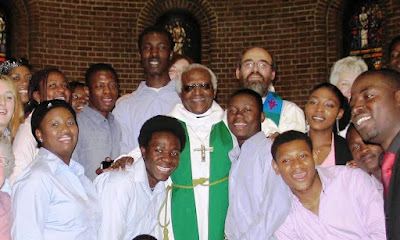
‘Are not two sparrows sold for a penny? … you are of more value than many sparrows’ (Matthew 10: 29-30) … a mother sparrow feds her chicks in a church in the ceiling of Aghias Anna Church, Maroulas, near Rethymnon in Crete (Patrick Comerford)
Patrick Comerford
We are in Ordinary Time in the Church Calendar, and this is the Third Sunday after Trinity (Trinity III, 21 June 2026). Tomorrow is also Father’s Day and the Summer Solstice, although next Wednesday (24 June) is officially Midsummer’s Day.
I hope to be involved in the Parish Eucharist in Saint Mary and Saint Giles Church later this morning. Meanwhile, before today begins, I am taking some quiet time this morning to give thanks, to reflect, to pray and to read in these ways:
1, reading today’s Gospel reading;
2, a short reflection;
3, a prayer from the USPG prayer diary;
4, the Collects and Post-Communion prayer of the day.
‘Whoever does not take up the cross and follow me is not worthy of me’ (Matthew 10: 37) … Station 5 in the Chapel at Saint John’s Hospital, Lichfield, Simon of Cyrene helps Jesus carry the Cross (Photograph: Patrick Comerford)
Matthew 10: 24-39 (NRSVA):
[Jesus said:] 24 ‘A disciple is not above the teacher, nor a slave above the master; 25 it is enough for the disciple to be like the teacher, and the slave like the master. If they have called the master of the house Beelzebul, how much more will they malign those of his household!
26 ‘So have no fear of them; for nothing is covered up that will not be uncovered, and nothing secret that will not become known. 27 What I say to you in the dark, tell in the light; and what you hear whispered, proclaim from the housetops. 28 Do not fear those who kill the body but cannot kill the soul; rather fear him who can destroy both soul and body in hell. 29 Are not two sparrows sold for a penny? Yet not one of them will fall to the ground unperceived by your Father. 30 And even the hairs of your head are all counted. 31 So do not be afraid; you are of more value than many sparrows.
32 ‘Everyone therefore who acknowledges me before others, I also will acknowledge before my Father in heaven; 33 but whoever denies me before others, I also will deny before my Father in heaven.
34 ‘Do not think that I have come to bring peace to the earth; I have not come to bring peace, but a sword.
35 For I have come to set a man against his father,
and a daughter against her mother,
and a daughter-in-law against her mother-in-law;
36 and one’s foes will be members of one’s own household.
37 Whoever loves father or mother more than me is not worthy of me; and whoever loves son or daughter more than me is not worthy of me; 38 and whoever does not take up the cross and follow me is not worthy of me. 39 Those who find their life will lose it, and those who lose their life for my sake will find it.’
‘What I say to you in the dark, tell in the light …’ (Matthew 10: 27) … a moment of prayer in Saint Titus Church, Iraklion (Photograph: Patrick Comerford, 2025)
Today’s Reflections:
In the Gospel reading last Sunday (Matthew 9: 35 to 10: 8 or 10: 23, Sunday 14 June 2026), Christ calls the Twelve together to prepare them for their ministry and mission. In today’s Gospel reading (Matthew 10: 24-39), Christ continues to prepare the Twelve for this mission, as both their teacher and their master. They are his students, and they are to be like him, they are told, and they receive their instructions and commission for mission, even in the most hostile of environments.
When the late Archbishop Desmond Tutu (1931-2021) received the Nobel Peace Prize in 1984, I profiled him for The Irish Times. We had met previously, at events co-hosted by AfrI and Christian CND and at dinner in Roebuck House, Seán MacBride’s house in Clonskeagh, Dublin.
I asked him about the death threats he faced in South Africa at the height of apartheid. He engaged me with that look that confirmed his deep hope, commitment and faith, and said: ‘But you know, death is not the worst thing that could happen to a Christian.’
He must have been tempted at times to give up being a thorn in the side of the regime, to stop being a ‘turbulent priest,’ and to live a comfortable life. But his conscience would never have been comfortable.
While apartheid was still in force, Desmond Tutu became Dean of Saint Mary’s Cathedral in Johannesburg, and when I first met him, he was the secretary general of the South African Council of Churches.
I was worried about the many death threats he was receiving, and I asked him how he lived with those threats. Was he worried about them? Did he ever consider modifying what he had to say because of them? His answer was similar to the one he gave when he was facing tough questioning before the regime’s Eloff Commission. He told that inquiry:
‘There is nothing the government can do to me that will stop me from being involved in what I believe God wants me to do. I do not do it because I like doing it. I do it because I am under what I believe to be the influence of God’s hand. I cannot help it. When I see injustice, I cannot keep quiet, for, as Jeremiah says, when I try to keep quiet, God’s Word burns like a fire in my breast. But what is it that they can ultimately do? The most awful thing that they can do is to kill me, and death is not the worst thing that could happen to a Christian.’
In 1987, Veritas invited me to write a short, 36-page biography of Archbishop Tutu, published as Desmond Tutu: Black Africa’s Man of Destiny. It was launched by the then Minister for Foreign Affairs, Brian Lenihan. It was a small book, hardly more than a pamphlet, but it came at an important time when both the Irish Government and the Irish Churches were becoming increasingly vocal about the evils of apartheid. It was republished in the US by Citadel (1988) and Hyperion Books (1989).
When I visited South Africa in 1990 with The Irish Times and Christian Aid, I met Archbishop Tutu in Cape Town, where once again he spoke powerfully about the changes that were beginning to take place.
Then, when my colleague Patsy McGarry was organising a monumental series of features in The Irish Times in 2000 to mark the millennium, Archbishop Tutu was one of the international contributors, along with Hans Küng, Andrew Greeley and Mary Robinson. The complete series was published by Veritas the following year as a book, Christianity, in which Part Two was my ‘Brief History of Christianity.’
I last met Archbishop Tutu when he visited Dublin in 2005, and he preached in Saint George’s and Saint Thomas’s Church in the inner city, where Canon Katharine Poulton was then the Rector, as part of the Discovery Gospel Choir services.
His unforgettable words to me echo Christ’s words to the disciples in today’s Gospel reading: ‘Do not fear those who kill the body but cannot kill the soul; rather fear him who can destroy both soul and body in hell’ (Matthew 10: 28).
‘The most awful thing that they can do is to kill me, and death is not the worst thing that could happen to a Christian’ … Archbishop Desmond Tutu visiting Saint George’s and Saint Thomas’s Church, Dublin, and the Discovery Gospel Choir
Today’s Prayers (Sunday 21 June 2026, Trinity III, Fathers Day):
In Pray with the World Church, the prayer diary of the Anglican mission agency USPG (United Society Partners in the Gospel), the theme this week, from 21 to 27 June 2026 (pp 12-13), is ‘Land Taken, Land Remembered’. This theme is introduced today with a reflection by the Venerable Rosalyn Kantlaht’ant Elm, Director of Indigenous Ministries, Anglican Church of Canada:
When I think about how land was taken from Indigenous communities in Canada, I see that it was not the work of one person or a single event. It happened slowly, over more than four hundred years. In the early days of European settlement, Indigenous peoples and settlers often lived and worked alongside one another. Though imperfect, there was a time of coexistence.
As Canada developed, laws such as the Civilization Act and the Indian Act enabled the government to take Indigenous lands and move our people onto reserves – fenced-in areas often far from our traditional territories, languages, medicines, ceremonies, and rituals. This process unfolded over generations. Today, Indigenous peoples occupy only a small fraction of our original lands. Much of the rest remains under treaty dispute or is unceded territory, often threatened by mining, forestry, and oil and gas development.
Churches also played a significant role. In partnership with the government, they sought to ‘civilise’ Indigenous children, attempting to erase our cultures. In doing so, they became complicit in what can rightly be described as a legislative form of cultural genocide.
These truths are difficult to speak and to hear. But just as Christians cannot have Easter without Good Friday, we cannot skip the hard history and move straight to celebration. Facing these truths together allows us to lament, to pray, and to understand ourselves not by what we own, but as people created by God, called to care for one another and for the land.
The USPG prayer diary today (Sunday 21 June 2026, Trinity III, Fathers Day, National Indigenous Peoples Day, Canada) invites us to pray:
Creator God, from you every family in heaven and earth takes its name. Rooted and grounded in your covenant love, empowered by your Spirit, help us speak the truth in love and walk in your way towards justice and wholeness. (Anglican Church of Canada)
The Collect of the Day:
Almighty God,
you have broken the tyranny of sin
and have sent the Spirit of your Son into our hearts
whereby we call you Father:
give us grace to dedicate our freedom to your service,
that we and all creation may be brought
to the glorious liberty of the children of God;
through Jesus Christ your Son our Lord,
who is alive and reigns with you,
in the unity of the Holy Spirit,
one God, now and for ever.
The Post-Communion Prayer:
O God, whose beauty is beyond our imagining
and whose power we cannot comprehend:
show us your glory as far as we can grasp it,
and shield us from knowing more than we can bear
until we may look upon you without fear;
through Jesus Christ our Saviour.
Additional Collect:
God our saviour,
look on this wounded world
in pity and in power;
hold us fast to your promises of peace
won for us by your Son,
our Saviour Jesus Christ.
Yesterday’s Reflections
Continued Tomorrow
‘Whoever does not take up the cross and follow me is not worthy of me’ (Matthew 10: 37) … Christ is given his cross, a fresco in Analipsi Church in Georgioupoli, Crete (Photograph: Patrick Comerford)
Scripture quotations are from the New Revised Standard Version Bible: Anglicised Edition copyright © 1989, 1995, National Council of the Churches of Christ in the United States of America. Used by permission. All rights reserved worldwide. http://nrsvbibles.org
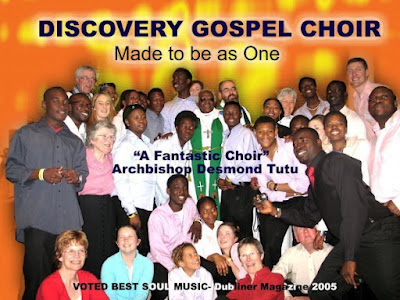
‘Are not two sparrows sold for a penny? … you are of more value than many sparrows’ (Matthew 10: 29-30) … a mother sparrow feds her chicks in a church in the ceiling of Aghias Anna Church, Maroulas, near Rethymnon in Crete (Patrick Comerford)
Labels:
Apartheid,
Canada,
CND,
Crete 2026,
Father's Day,
Georgioupoli,
Greece 2026,
Iraklion,
Lichfield,
Maroulas,
Mission,
Prayer,
Rethymnon,
Saint Matthew's Gospel,
South Africa,
The Irish Times,
USPG
11 April 2026
Daily prayer in Easter 2026:
7, Saturday 11 April 2026,
Saturday in Easter Week
The Paradise, inspired by a Byzantine fresco created by Theophanes of Crete in 1527 in Meteora, Greece … seen at Easter in a shopfront on Mavrokordatou Alexandrou street in Reththymnon, Crete (Photograph: Patrick Comerford)
Patrick Comerford
Our Easter celebrations continue in the Church Calendar, and tomorrow is the Second Sunday of Easter (Easter II) in the western church calendar and Easter Day in the calendar of the Orthodox Church.
I hope to be at the Easter celebrations in the Greek Orthodox Church in Stony Stratford tonight. But, before today begins, I am taking some quiet time this morning to give thanks, to reflect, to pray and to read in these ways:
1, reading today’s Gospel reading;
2, a short reflection;
3, a prayer from the USPG prayer diary;
4, the Collects and Post-Communion prayer of the day.
Μη μου άπτου, ‘Noli me Tangere’ … the Risen Christ appears to Saint Mary Magdalene (Mark 16: 9) … a fresco in the Church of Saint Constantine and Saint Helen in Rethymnon (Photograph: Patrick Comerford)
Mark 16: 9-15 (NRSVA):
9 Now after he rose early on the first day of the week, he appeared first to Mary Magdalene, from whom he had cast out seven demons. 10 She went out and told those who had been with him, while they were mourning and weeping. 11 But when they heard that he was alive and had been seen by her, they would not believe it.
12 After this he appeared in another form to two of them, as they were walking into the country. 13 And they went back and told the rest, but they did not believe them.
14 Later he appeared to the eleven themselves as they were sitting at the table; and he upbraided them for their lack of faith and stubbornness, because they had not believed those who saw him after he had risen. 15 And he said to them, ‘Go into all the world and proclaim the good news to the whole creation.’
The Risen Christ appears to the myrrh-bearing women (see Mark 16: 4-7) … a fresco in the Church of Saint Constantine and Saint Helen in Rethymnon (Photograph: Patrick Comerford)
Today’s Reflections:
This morning’s Easter Gospel reading at the Eucharist (Mark 16: 9-15) is part of what is known as ‘the Longer Ending of Mark’ and this section and the remaining verses in Saint Mark’s Gospel are often placed in parentheses in many modern translations of the Bible.
Mark 16 begins after the sabbath has ended, with Mary Magdalene, Mary the mother of James, and Salome buying spices to bring to the tomb next morning to anoint Jesus’ body. When they arrive, the see the stone has been rolled away, the tomb is open, and a young man dressed in a white robe announces that Jesus has been raised from the dead (verses 1-6).
The two oldest manuscripts of Mark 16 conclude with verse 8, which ends with the women fleeing from the empty tomb and saying nothing to anyone, ‘for they were afraid’.
The longer ending tells of three separate appearances of the Risen Christ: 1 his appearance early on the first day of the week to Mary Magdalene, who goes and tells the mourning disciples who do not believe her; 2, his appearance later that day to the two walking into the country, on the road to Emmaus, who go too and tell the others, although they refuse to believe them; and 3, a later appearance to remaining eleven of the twelve as they are eating at the table.
It is interesting that this reading places the first meal of the Risen Christ with disciples not at the inn in Emmaus, as in Wednesday’s reading (Luke 24: 13-35), nor by the shore of Tiberias, as in yesterday’s reading (John 21: 1-14), but at the table, perhaps in the ‘Upper Room’.
At the table, Jesus is critical of the disciples for their lack of faith and stubbornness, and because they had not believe the women who saw him after he had risen, or the two people who met him on the road.
As this is a post-resurrection narrative, we must understand Jesus becoming present at the table as a way of understanding how Christ becomes present among us at the table when we eat and drink together at the Eucharist.
In the Eucharist, I am challenged constantly to face the ways in which my faith is inadequate and the so many ways in which I am stubbornly set in my ways and in my prejudices. Yes, Jesus upbraids for all this, yet he becomes present at the table, and he welcomes me and I welcome him.
He upbraids me when I am complicit in the church looking into itself, being turned in on itself, too concerned with its own inner workings, and refusing to listen to the voice of women, the voice of those who find themselves outside the boundaries and yet have seen the living Lord, the Risen Christ.
Christ tells them the way forward is to move from looking inward to looking out. He tells them, ‘Go into all the world and proclaim the good news to the whole creation’ (verse 16).
Sending out is the act of mission. The original Greek phrases here show that the disciples are sent out in mission not to those like me, not to those who are the ‘saved’, the ‘chosen’ or the ‘elect’, not even to the whole of humanity or into ‘all the world’, as the NRSV recalls. The Greek text is all embracing: we are sent out into the whole cosmos or universe (κόσμον ἅπαντα), and out into the whole created order (πάσῃ τῇ κτίσει).
Creation is not an added-on dimension of mission, but integral to the Church’s theology of mission. The fifth of the five marks of mission accepted throughout the Anglican Communion is: ‘To strive to safeguard the integrity of creation and sustain and renew the life of the earth.’
In the Orthodox Church, care for the creation has become the defining hallmark of Patriarch Bartholomew. ‘Ecology is not a political or economic issue,’ the Ecumenical Patriarch said last year. ‘It is mainly a spiritual and religious issue because God created and gave it to us to protect it, to cultivate it, to use it, but not to abuse it. This is the spiritual dimension of ecology.’
The late Pope Francis, in his encyclical Laudato sí on care for our common home, made creation and the environment an important agenda item in all theological and ecumenical dialogue.
Perhaps the greatest ecumenical dialogue has yet to take place, and concerns not our differences on doctrine, liturgy and church order, but how must fulfil the commission from the Risen Christ: ‘Go into all the world and proclaim the good news to the whole creation’ (Mark 16: 15).
Χριστὸς ἀνέστη!
Christ is Risen!
‘Go into all the world and proclaim the good news to the whole creation’ (Mark 16: 15) … spring blooms on the street leading to Pavlos Beach in Platanias, near Rethymnon (Photograph: Patrick Comerford)
Today’s Prayers (Saturday 11 April 2026, Saturday in Easter Week):
‘In the Garden’ provides the theme this week (5-11 April 2026) in ‘Pray With the World Church’, the Prayer Diary of the Anglican mission agency USPG (United Society Partners in the Gospel), pp 44-45. This theme was introduced last Sunday with Reflections by Rachel Weller, Communications Officer, USPG.
The USPG Prayer Diary today (Saturday 11 April 2026, Saturday in Easter Week) invites us to pray:
Heavenly Father, we give thanks for Bishop Vikinduku Mnculwane and his leadership of the Diocese of Zululand. Strengthen him to seek your guidance above all else, trusting in you as a faithful God.
The Collect:
Lord of all life and power,
who through the mighty resurrection of your Son
overcame the old order of sin and death
to make all things new in him:
grant that we, being dead to sin
and alive to you in Jesus Christ,
may reign with him in glory;
to whom with you and the Holy Spirit
be praise and honour, glory and might,
now and in all eternity.
The Post-Communion Prayer:
God of Life,
who for our redemption gave your only-begotten Son
to the death of the cross,
and by his glorious resurrection
have delivered us from the power of our enemy:
grant us so to die daily to sin,
that we may evermore live with him in the joy of his risen life;
through Jesus Christ our Lord.
Additional Collect:
God of glory,
by the raising of your Son
you have broken the chains of death and hell:
fill your Church with faith and hope;
for a new day has dawned
and the way to life stands open
in our Saviour Jesus Christ.
Collect on the Eve of Easter II:
Almighty Father,
you have given your only Son to die for our sins
and to rise again for our justification:
grant us so to put away the leaven of malice and wickedness
that we may always serve you
in pureness of living and truth;
through the merits of your Son Jesus Christ our Lord,
who is alive and reigns with you,
in the unity of the Holy Spirit,
one God, now and for ever.
Yesterday’s Reflections
Continued Tomorrow
‘When the Sabbath was over … very early on the first day of the week' (Mark 16: 1-2) … walking through the streets of Rethymnon in the dark (Photograph: Patrick Comerford)
Scripture quotations are from the New Revised Standard Version Bible: Anglicised Edition copyright © 1989, 1995 National Council of the Churches of Christ in the United States of America. Used by permission. All rights reserved worldwide. http://nrsvbibles.org
Patrick Comerford
Our Easter celebrations continue in the Church Calendar, and tomorrow is the Second Sunday of Easter (Easter II) in the western church calendar and Easter Day in the calendar of the Orthodox Church.
I hope to be at the Easter celebrations in the Greek Orthodox Church in Stony Stratford tonight. But, before today begins, I am taking some quiet time this morning to give thanks, to reflect, to pray and to read in these ways:
1, reading today’s Gospel reading;
2, a short reflection;
3, a prayer from the USPG prayer diary;
4, the Collects and Post-Communion prayer of the day.
Μη μου άπτου, ‘Noli me Tangere’ … the Risen Christ appears to Saint Mary Magdalene (Mark 16: 9) … a fresco in the Church of Saint Constantine and Saint Helen in Rethymnon (Photograph: Patrick Comerford)
Mark 16: 9-15 (NRSVA):
9 Now after he rose early on the first day of the week, he appeared first to Mary Magdalene, from whom he had cast out seven demons. 10 She went out and told those who had been with him, while they were mourning and weeping. 11 But when they heard that he was alive and had been seen by her, they would not believe it.
12 After this he appeared in another form to two of them, as they were walking into the country. 13 And they went back and told the rest, but they did not believe them.
14 Later he appeared to the eleven themselves as they were sitting at the table; and he upbraided them for their lack of faith and stubbornness, because they had not believed those who saw him after he had risen. 15 And he said to them, ‘Go into all the world and proclaim the good news to the whole creation.’
The Risen Christ appears to the myrrh-bearing women (see Mark 16: 4-7) … a fresco in the Church of Saint Constantine and Saint Helen in Rethymnon (Photograph: Patrick Comerford)
Today’s Reflections:
This morning’s Easter Gospel reading at the Eucharist (Mark 16: 9-15) is part of what is known as ‘the Longer Ending of Mark’ and this section and the remaining verses in Saint Mark’s Gospel are often placed in parentheses in many modern translations of the Bible.
Mark 16 begins after the sabbath has ended, with Mary Magdalene, Mary the mother of James, and Salome buying spices to bring to the tomb next morning to anoint Jesus’ body. When they arrive, the see the stone has been rolled away, the tomb is open, and a young man dressed in a white robe announces that Jesus has been raised from the dead (verses 1-6).
The two oldest manuscripts of Mark 16 conclude with verse 8, which ends with the women fleeing from the empty tomb and saying nothing to anyone, ‘for they were afraid’.
The longer ending tells of three separate appearances of the Risen Christ: 1 his appearance early on the first day of the week to Mary Magdalene, who goes and tells the mourning disciples who do not believe her; 2, his appearance later that day to the two walking into the country, on the road to Emmaus, who go too and tell the others, although they refuse to believe them; and 3, a later appearance to remaining eleven of the twelve as they are eating at the table.
It is interesting that this reading places the first meal of the Risen Christ with disciples not at the inn in Emmaus, as in Wednesday’s reading (Luke 24: 13-35), nor by the shore of Tiberias, as in yesterday’s reading (John 21: 1-14), but at the table, perhaps in the ‘Upper Room’.
At the table, Jesus is critical of the disciples for their lack of faith and stubbornness, and because they had not believe the women who saw him after he had risen, or the two people who met him on the road.
As this is a post-resurrection narrative, we must understand Jesus becoming present at the table as a way of understanding how Christ becomes present among us at the table when we eat and drink together at the Eucharist.
In the Eucharist, I am challenged constantly to face the ways in which my faith is inadequate and the so many ways in which I am stubbornly set in my ways and in my prejudices. Yes, Jesus upbraids for all this, yet he becomes present at the table, and he welcomes me and I welcome him.
He upbraids me when I am complicit in the church looking into itself, being turned in on itself, too concerned with its own inner workings, and refusing to listen to the voice of women, the voice of those who find themselves outside the boundaries and yet have seen the living Lord, the Risen Christ.
Christ tells them the way forward is to move from looking inward to looking out. He tells them, ‘Go into all the world and proclaim the good news to the whole creation’ (verse 16).
Sending out is the act of mission. The original Greek phrases here show that the disciples are sent out in mission not to those like me, not to those who are the ‘saved’, the ‘chosen’ or the ‘elect’, not even to the whole of humanity or into ‘all the world’, as the NRSV recalls. The Greek text is all embracing: we are sent out into the whole cosmos or universe (κόσμον ἅπαντα), and out into the whole created order (πάσῃ τῇ κτίσει).
Creation is not an added-on dimension of mission, but integral to the Church’s theology of mission. The fifth of the five marks of mission accepted throughout the Anglican Communion is: ‘To strive to safeguard the integrity of creation and sustain and renew the life of the earth.’
In the Orthodox Church, care for the creation has become the defining hallmark of Patriarch Bartholomew. ‘Ecology is not a political or economic issue,’ the Ecumenical Patriarch said last year. ‘It is mainly a spiritual and religious issue because God created and gave it to us to protect it, to cultivate it, to use it, but not to abuse it. This is the spiritual dimension of ecology.’
The late Pope Francis, in his encyclical Laudato sí on care for our common home, made creation and the environment an important agenda item in all theological and ecumenical dialogue.
Perhaps the greatest ecumenical dialogue has yet to take place, and concerns not our differences on doctrine, liturgy and church order, but how must fulfil the commission from the Risen Christ: ‘Go into all the world and proclaim the good news to the whole creation’ (Mark 16: 15).
Χριστὸς ἀνέστη!
Christ is Risen!
‘Go into all the world and proclaim the good news to the whole creation’ (Mark 16: 15) … spring blooms on the street leading to Pavlos Beach in Platanias, near Rethymnon (Photograph: Patrick Comerford)
Today’s Prayers (Saturday 11 April 2026, Saturday in Easter Week):
‘In the Garden’ provides the theme this week (5-11 April 2026) in ‘Pray With the World Church’, the Prayer Diary of the Anglican mission agency USPG (United Society Partners in the Gospel), pp 44-45. This theme was introduced last Sunday with Reflections by Rachel Weller, Communications Officer, USPG.
The USPG Prayer Diary today (Saturday 11 April 2026, Saturday in Easter Week) invites us to pray:
Heavenly Father, we give thanks for Bishop Vikinduku Mnculwane and his leadership of the Diocese of Zululand. Strengthen him to seek your guidance above all else, trusting in you as a faithful God.
The Collect:
Lord of all life and power,
who through the mighty resurrection of your Son
overcame the old order of sin and death
to make all things new in him:
grant that we, being dead to sin
and alive to you in Jesus Christ,
may reign with him in glory;
to whom with you and the Holy Spirit
be praise and honour, glory and might,
now and in all eternity.
The Post-Communion Prayer:
God of Life,
who for our redemption gave your only-begotten Son
to the death of the cross,
and by his glorious resurrection
have delivered us from the power of our enemy:
grant us so to die daily to sin,
that we may evermore live with him in the joy of his risen life;
through Jesus Christ our Lord.
Additional Collect:
God of glory,
by the raising of your Son
you have broken the chains of death and hell:
fill your Church with faith and hope;
for a new day has dawned
and the way to life stands open
in our Saviour Jesus Christ.
Collect on the Eve of Easter II:
Almighty Father,
you have given your only Son to die for our sins
and to rise again for our justification:
grant us so to put away the leaven of malice and wickedness
that we may always serve you
in pureness of living and truth;
through the merits of your Son Jesus Christ our Lord,
who is alive and reigns with you,
in the unity of the Holy Spirit,
one God, now and for ever.
Yesterday’s Reflections
Continued Tomorrow
‘When the Sabbath was over … very early on the first day of the week' (Mark 16: 1-2) … walking through the streets of Rethymnon in the dark (Photograph: Patrick Comerford)
Scripture quotations are from the New Revised Standard Version Bible: Anglicised Edition copyright © 1989, 1995 National Council of the Churches of Christ in the United States of America. Used by permission. All rights reserved worldwide. http://nrsvbibles.org
Subscribe to:
Posts (Atom)


