Showing posts with label Mullingar. Show all posts

08 September 2025

Daily prayer in Ordinary Time 2025:
121, Monday 8 September 2025,
Birth of the Blessed Virgin Mary

A traditional Greek icon of the Nativity of the Blessed Virgin Mary

Patrick Comerford

We are continuing in Ordinary Time in the Church Calendar. The week began with the Twelfth Sunday after Trinity (Trinity XII, 7 September 2025), and today the Church celebrates the Birth of the Blessed Virgin Mary (8 September).

We got back to Stony Stratford late last night after a weekend visiting family and friends in York. As I awake slowly this morning, and before today begins, I am taking some quiet time this morning to give thanks, for reflection, prayer and reading in these ways:

1, today’s Gospel reading;

2, a reflection on the Gospel reading;

3, a prayer from the USPG prayer diary;

4, the Collects and Post-Communion prayer of the day.

Saint Anne with her young daughter, the Virgin Mary, holding the Christ Child, in a fresco by the icon writer Alexandra Kaouki of Rethymnon in Crete

Luke 1: 46-55 (NRSVA):

46 And Mary said,
‘My soul magnifies the Lord,
47 and my spirit rejoices in God my Saviour,
48 for he has looked with favour on the lowliness of his servant.
Surely, from now on all generations will call me blessed;
49 for the Mighty One has done great things for me,
and holy is his name.
50 His mercy is for those who fear him
from generation to generation.
51 He has shown strength with his arm;
he has scattered the proud in the thoughts of their hearts.
52 He has brought down the powerful from their thrones,
and lifted up the lowly;
53 he has filled the hungry with good things,
and sent the rich away empty.
54 He has helped his servant Israel,
in remembrance of his mercy,
55 according to the promise he made to our ancestors,
to Abraham and to his descendants for ever.’

The Virgin Mary with her parents, Saint Anne and Saint Joachim, in a mosaic by the Russian artist Boris Anrep (1883-1969) in Mullingar Cathedral (Photograph: Patrick Comerford; click on images for full-screen views)

Today’s Reflection:

Today is the Feast of the Birth of the Blessed Virgin Mary. This is one of four festivals in the Calendar of the Church of England that celebrate her life: the Annunciation (25 March), the Visitation (31 May), her death, the Dormition or the Assumption (15 August), and her birth (8 September).

There is a surprising number of cathedrals and churches in both the Church of England and the Church of Ireland that are dedicated to the Virgin Mary, including Saint Mary’s Church, Askeaton, Co Limerick, where I was the priest-in-charge for five years, Saint Mary’s Cathedral, Limerick, where I was once the canon precentor, and Saint Mary and Saint Giles, which is now my parish church in Stony Stratford.

Of course, the Gospels do not record the Virgin Mary’s birth. The earliest known account of her birth is found in the Protoevangelium of James (5: 2), a text from the late second century, in which her parents are named as Saint Anne and Saint Joachim. Tradition says they were childless and were fast approaching the years that would place Anna beyond the age of child-bearing.


Traditionally, the Church commemorates saints on the date of their death. The Virgin Mary, Saint John the Baptist and Christ are the only three whose birth dates are commemorated.

The reason for this is found in the singular mission each had in salvation history, but traditionally also because they were also seen as being holy in their birth – Saint John was believed to be sanctified in the womb of his mother, Saint Elizabeth, before his birth (see Luke 1: 15). In the same way, we respect that Christ first came to dwell among us in the womb of the Virgin Mary.

This morning’s Gospel reading includes the words of the canticle Magnificat:

My soul magnifies the Lord,
and my spirit rejoices in God my Saviour,
for he has looked with favour on the lowliness of his servant.
Surely, from now on all generations will call me blessed


The canticle Magnificat, which is part of the Gospel reading today, is traditionally associated with Evensong, sung every evening in cathedrals and many churches in the Anglican Communion across the world.

Differences of opinion about the Virgin Mary were not divisive arguments at the Reformation in the 16th century. Martin Luther emphasised that the Virgin Mary was a recipient of God’s love and favour, accepted the Marian decrees of the ecumenical councils and the dogmas of the Church, and held to the belief that the Virgin Mary was a perpetual virgin and the Theotókos, the Mother of God.

Luther accepted the view of the Immaculate Conception that was popular then, over three centuries before Pope Pius IX, and he believed in the Virgin Mary’s life-long sinlessness. Although he pointed out that the Bible says nothing about her Assumption, he believed that the Virgin Mary and the saints live on after death.

Luther approved keeping Marian paintings and statues in churches, said ‘Mary prays for the Church,’ and advocated the use of a portion of the ‘Hail Mary.’

In 2004, the report of the Second Anglican-Roman Catholic International Commission, Mary: Grace and Hope in Christ, noted: ‘In honouring Mary as Mother of the Lord, all generations of Anglicans and Roman Catholics have echoed the greeting of Elizabeth: ‘Blessed are you among women, and blessed is the fruit of your womb’ (Luke 1: 42).’

In its response the following year, the Church of Ireland pointed out that in recognising the role of Mary in the incarnation, Anglicans are following the Council of Ephesus (431), which used the term Theotókos (‘God-bearer’) to affirm the oneness of Christ’s person by identifying Mary as the Mother of God the Word incarnate. The Church of Ireland also identified with the statement that ‘in receiving the Council of Ephesus and the definition of Chalcedon, Anglicans and Roman Catholics together confess Mary as Theotókos.’

The response welcomed the acknowledgement that some of the non-scriptural devotions associated with the Virgin Mary have been to ‘excess.’ On the other hand, it said, the full significance of the role of Mary as the Theotókos or God-bearer ‘has sometimes been lacking in the consciousness of some Anglicans.’

Some widely used, unofficial Anglican office books, such as Celebrating Common Prayer, include the Angelus and Regina Coeli. But the response pointed out that language such as ‘co-redeemer’ are ‘theologically impossible for members of the Church of Ireland.’

So, is there a way that as Anglicans we can talk about the Virgin Mary that is theologically appropriate, without compromising key Anglican traditions and beliefs for the sake of being ‘ecumenically correct’ or on the other hand descending into accepting a series of devotional practices that most Roman Catholics have long since come to regard as outdated, irrelevant and theologically questionable?

In our responses, Anglicans can fall back on culturally defensive ways of thinking. I admit that many of the plaster cast statues and framed images of the Virgin Mary lack cultural finesse and taste. But they, like many other practices, including May processions and Rosary-based prayer cycles are recent innovations.

I am reminded that devotion to the Virgin Mary was part-and-parcel of the piety that sustained many Christians through decades of suffering and oppression in Eastern Europe. The use of icons of the Virgin Mary in the Orthodox tradition and talk about her as the Theotókos is consonant with Anglican thinking theologically if not always culturally.

The Orthodox Church disagrees with the concept of the Immaculate Conception. The Orthodox position is that since Jesus Christ is God, he alone is born without sin. Orthodox theologians argue that if the immaculate conception is taken literally, the Virgin Mary would assume the status of a goddess alongside God. At the same time, the popularity of the name Mary attests to the fact that the Virgin Mary is revered throughout the Orthodox world.

The Orthodox believe that she was conceived in the normal way of humanity, and so was in the same need of salvation as all humanity. Orthodox thinking varies on whether she actually ever sinned, though there is general agreement that she was cleansed from sin at the Annunciation.

It is easy to forget that the dogmas of the Immaculate Conception and the Assumption are recent innovations, having been proclaimed by Popes in 1854 and 1950. They did not divide us and could not have divided us at the Reformation, and many Roman Catholics are still confused about their meaning. Places like Lourdes, the Knock Shrine, Fatima and Medjugorje do not share the antiquity or history of Anglican Marian sites such as Walsingham, the Anglican tradition of singing Magnificat at Evensong, or the names of our cathedrals, churches and lady chapels.

The Anglican tradition of singing Magnificat at Evensong, and the names of our cathedrals and many churches both in England and Ireland remind me of a message that she proclaims in the Gospel reading that challenges the rise of far-right racism and populism in the world today:

‘He has scattered the proud in the thoughts of their hearts.
He has brought down the powerful from their thrones,
and lifted up the lowly;
he has filled the hungry with good things,
and sent the rich away empty.’

Saint Andrew of Crete writes: ‘This day is for us the beginning of all holy days. It is the door to kindness and truth.’

Indeed, without the birth of the Blessed Virgin Mary, there would have been no birth of Christ, and then no Good Friday, no Crucifixion, no Easter, no Resurrection.

And there are only 108 days to Christmas.

The Virgin Mary with the Crown of Thorns in a window in a church in Bansha, Co Tipperary … without the birth of the Blessed Virgin Mary, there would have been no birth of Christ, and then no Good Friday and no Crucifixion, no Easter and no Resurrection (Photograph: Patrick Comerford)

Today’s Prayers (Monday 8 September 2025, the Birth of the Blessed Virgin Mary):

In my prayers this morning, I am remembering my parents, Stephen Edward Comerford (1918-2004) of Terenure and Ellen Murphy (1919-2014) of Monkstown, Co Dublin, but originally from Millstreet, Co Cork, who were married in Blackrock, Co Dublin, 80 years ago on 8 September 1945. They had waited until the end of World War II to get married; after their marriage, they lived in Bray, Co Wicklow, and then in Harold’s Cross and Rathfarnham in Dublin. He died on 27 December 2004, she died on 20 May 2014; five of their six children and nine of their ten grandchildren survive, as well as great-grandchildren.

The theme this week (7 to 13 September) in Pray with the World Church, the prayer diary of the Anglican mission agency USPG (United Society Partners in the Gospel), is ‘Cementing a Legacy’ (pp 36-37). This theme was introduced yesterday with reflections from Rachel Weller, Communications Officer, USPG.

The USPG Prayer Diary today (Monday 8 September 2025, the Birth of the Blessed Virgin Mary) invites us to pray:

Lord, we thank you for the life and legacy of Ms Eira Lloyd and her faithful service to you in Tanzania. May her example continue to inspire us to serve with love, dedication, and generosity.

The Collect:

Almighty and everlasting God,
who stooped to raise fallen humanity
through the child–bearing of blessed Mary:
grant that we, who have seen your glory
revealed in our human nature
and your love made perfect in our weakness,
may daily be renewed in your image
and conformed to the pattern of your Son,
Jesus Christ our Lord,
who is alive and reigns with you,
in the unity of the Holy Spirit,
one God, now and for ever.

The Post Communion Prayer:

God most high,
whose handmaid bore the Word made flesh:
we thank you that in this sacrament of our redemption
you visit us with your Holy Spirit
and overshadow us by your power;
strengthen us to walk with Mary the joyful path of obedience
and so to bring forth the fruits of holiness;
through Jesus Christ our Lord.

Yesterday’s reflections

Continued tomorrow

The birth of the Virgin Mary depicted in an icon by Mihai Cocu in the Lady Chapel in Christ Church Cathedral, Dublin (Photograph: Patrick Comerford)

Scripture quotations are from the New Revised Standard Version Bible: Anglicised Edition copyright © 1989, 1995, National Council of the Churches of Christ in the United States of America. Used by permission. All rights reserved worldwide. http://nrsvbibles.org

A statue of Saint Anne with her young daughter, the Virgin Mary, in Nicker Church, Co Limerick (Photograph: Patrick Comerford)

12 May 2025

Daily prayer in Easter 2025:
23, Monday 12 May 2025

Christ as the Good Shepherd … a window in Saint Ailbe’s Church in Emly, Co Tipperary (Photograph: Patrick Comerford)

Patrick Comerford

Easter is a 50-day season, beginning on Easter Day (20 April 2025) and continuing until the Day of Pentecost (8 June 2025), or Whit Sunday. This week began with the Fourth Sunday of Easter (Easter IV, 11 May 2025), sometimes known as ‘Good Shepherd Sunday’.

The calendar of the Church of England in Common Worship today remembers Dom Gregory Dix (1901-1952), priest, monk, liturgical scholar and author of The Shape of the Liturgy (1945). Before today begins, I am taking some quiet time this morning to give thanks, to reflect, to pray and to read in these ways:

1, reading today’s Gospel reading;

2, a short reflection;

3, a prayer from the USPG prayer diary;

4, the Collects and Post-Communion prayer of the day.

Christ the Good Shepherd, with the Virgin Mary and Saint John the Baptist on each side … a stained-glass window in Saint Mary’s Church, Lichfield. The words below Christ read ‘Pastor Bonus’ … ‘The Good Shepherd’; the words on Saint John's scroll read ‘Ecce Agnus Dei’ … ‘This is the Lamb of God’ (Photograph: Patrick Comerford)

John 10: 1-10 (NRSVA):

[Jesus said:] 1 ‘Very truly, I tell you, anyone who does not enter the sheepfold by the gate but climbs in by another way is a thief and a bandit. 2 The one who enters by the gate is the shepherd of the sheep. 3 The gatekeeper opens the gate for him, and the sheep hear his voice. He calls his own sheep by name and leads them out. 4 When he has brought out all his own, he goes ahead of them, and the sheep follow him because they know his voice. 5 They will not follow a stranger, but they will run from him because they do not know the voice of strangers.’ 6 Jesus used this figure of speech with them, but they did not understand what he was saying to them.

7 So again Jesus said to them, ‘Very truly, I tell you, I am the gate for the sheep. 8 All who came before me are thieves and bandits; but the sheep did not listen to them. 9 I am the gate. Whoever enters by me will be saved, and will come in and go out and find pasture. 10 The thief comes only to steal and kill and destroy. I came that they may have life, and have it abundantly.’

Sheep at the Balancing Lakes in Wolverton (Photograph: Patrick Comerford, 2024)

Today’s Reflection:

The Gospel reading today (John 10: 1-10) continues the theme of the Good Shepherd, which we heard of yesterday’s portion (verses 22-30) of the ‘Good Shepherd Discourse’ (John 10: 1-42).

When I was a child on my grandmother’s farm at Cappoquin in West Waterford, all the summer days, it seems, were filled with sunshine, and there was endless time to go fishing in the brooks, and walking through the meadows.

But there were two tasks I hated. One was trying to milk the cows: the adults seemed to think it was funny in some way that only adults understood to send us out to herd the cattle in at evening time for milking. Inevitably, I ended up covered in something more odious than milk – and never even liked the smell of milk anyway.

The other task was one that came around, it seemed, every time I was around – the great sheep dip. My city friends and cousins joked at the time about television ads about liver fluke and sheep dipping. But I knew all about it – and it was no joking matter.

Sheep are easy to call together – that was not the problem – and no, I did not have to milk them. But the smell of the sheep dip was only surpassed by the smells I associate with milking the cows. It was pungent … and there was always some fresh-faced younger uncle who thought it funny, seeing my face, to ensure that I ended up in the dipping area too.

So, when Jesus says he is the Good Shepherd and the Gate for the sheep, he has no romantic city delusions.

I imagine that the Good Shepherd is one of the most popular images for stained glass windows in churches. But we portray him dressed in dry-cleaned or freshly-laundered and pressed red and white clothes, when everyone knows that it is impractical for any shepherd to dress like that.

He has a cuddly, white lamb draped around his shoulders, when any shepherd knows that a lamb that needs to be rescued is only that is likely to be covered in briars and brambles, cut and dirty, lost and bewildered and frightened.

At this time of the year, we have moved beyond lambing time, and the little ones are beginning to grow although still suckling.

I remember hearing many year ago on Achill Island about a man who died when he climbed down a cliff face in search of sheep that had strayed. He lost his footing and fell to the sea below. It was a risky undertaking, and he paid the price. And someone commented on the low price sheep were fetching marts at the time. The lost sheep worked their way back up the cliff face, in any case, but they were not worth it.

Shepherding has seldom been a good career move. It’s not on the list of most guidance teachers or careers advisers.

That’s why the Christmas story is so shocking to those who first heard about it.

Sheep were cheap meat, and the shepherds were easy prey – to wolves, to hyenas, to thieves and to sheep rustlers. Sheep provided wool, meat, milk, cheese and yoghurt. Yet, shepherds were cheap to hire, and they did a lowly job. They were exposed to unprotected heat in the day, and to the bitter cold at night.

Christ is humbling himself when he calls himself the Good Shepherd.

The Prophet Ezekiel compared the well-off politicians and rulers of his day with negligent, impoverished shepherds: ‘My sheep were scattered, they wandered over all the mountains and on every high hill; my sheep were scattered over all the face of the earth, with no one to search or seek for them’ (Ezekiel 34: 6).

And Ezekiel, of course, is reminding the people that they too were once like lost sheep. They had wandered like lost sheep in the wilderness.

Everyone expected the Messiah to be a king, but kings were not good role models. No-one expected the Messiah to be a shepherd, and so it is shocking when the shepherd boy David is chosen to be king, and shocking when Jesus compares himself not with kings but with shepherds.

This is costly leadership. This is leadership that allows itself to be vulnerable, to be a potentially victimised.

When Christ becomes the good shepherd, he becomes vulnerable and compassionate, and he expresses his compassion for the lost sheep in going to meet them where they are, in their towns and villages, teaching them, bringing them the good news of the kingdom and healing every disease and sickness.

Yes, the one who is hailed by Saint John the Baptist as the Lamb of God (John 1: 35), becomes the Good Shepherd. And the God Shepherd becomes the Lamb of God.

Christ calls us to turn our values upside down, not for the fun of it, but out of compassion for the vulnerable and the lost, those who have fallen by the wayside, those everyone else thinks are not worth the risk of going after.

Who are the lost sheep for you this morning?

Who do you think Christ is foolhardy in going after?

Will we follow him to find them?

Will they be welcome back in through the gate?

Christ is risen!
The Lord is risen indeed. Alleluia!

The Good Shepherd depicted in a stained glass window in Saint John-at-Hampstead Church (Photograph: Patrick Comerford, 2024)

Today’s Prayers (Monday 12 May 2025):

‘Health and Hope in the Manyoni District’ provides the theme this week in ‘Pray With the World Church’, the Prayer Diary of the Anglican mission agency USPG (United Society Partners in the Gospel). This theme was introduced yesterday with a programme update from Dr Frank Mathew Haji of the Integrated Child Health and End Mother-to-Child Transmission of HIV Programme in Tanzania.

The USPG Prayer Diary today (Monday 12 May 2025, International Mothers’ Day) invites us to pray:

Gracious God, on this International Mothers’ Day, we thank you for mothers and pray for the success of the Anglican Church of Tanzania’s healthcare programme in the Manyoni district.

The Collect:

Almighty God,
whose Son Jesus Christ is the resurrection and the life:
raise us, who trust in him,
from the death of sin to the life of righteousness,
that we may seek those things which are above,
where he reigns with you
in the unity of the Holy Spirit,
one God, now and for ever.

The Post-Communion Prayer:

Merciful Father,
you gave your Son Jesus Christ to be the good shepherd,
and in his love for us to lay down his life and rise again:
keep us always under his protection,
and give us grace to follow in his steps;
through Jesus Christ our Lord.

Additional Collect:

Risen Christ,
faithful shepherd of your Father’s sheep:
teach us to hear your voice
and to follow your command,
that all your people may be gathered into one flock,
to the glory of God the Father.

Yesterday’s Reflections

Continued Tomorrow

The Good Shepherd … the Hewson Memorial Window in Saint Mary’s Church, Askeaton, Co Limerick (Photograph: Patrick Comerford)

Scripture quotations are from the New Revised Standard Version Bible: Anglicised Edition copyright © 1989, 1995 National Council of the Churches of Christ in the United States of America. Used by permission. All rights reserved worldwide. http://nrsvbibles.org

18 December 2024

Daily prayer in Advent 2024:
18, Wednesday 18 December 2024

‘When Joseph awoke from sleep, he did as the angel of the Lord commanded him’ (Matthew 1: 24) … a mosaic in the Cathedral of Christ the King, Mullingar, Co Westmeath (Photograph: Patrick Comerford)

Patrick Comerford

We are in the final days of the Season of Advent, and Christmas Day is just a week away. The week began with the Third Sunday of Advent (Advent III, 15 December 2024), also known as Gaudete Sunday.

I am back in Stony Stratford this morning after my pre-Christmas family visit to Dublin, having caught a flight back to Birmingham late yesterday. Before today begins, I am taking some quiet time this morning to give thanks, to reflect, to pray and to read in these ways:

1, today’s Gospel reading;

2, a short reflection;

3, a prayer from the USPG prayer diary;

4, the Collects and Post-Communion prayer of the day.

The betrothal of Saint Joseph and the Virgin Mary … a panel in the Saint Joseph Window by the Harry Clarke studios in the Church of Saint Peter and Saint Paul, Kilmallock, Co Limerick (Photograph: Patrick Comerford)

Matthew 1: 18-24 (NRSVA):

18 Now the birth of Jesus the Messiah took place in this way. When his mother Mary had been engaged to Joseph, but before they lived together, she was found to be with child from the Holy Spirit. 19 Her husband Joseph, being a righteous man and unwilling to expose her to public disgrace, planned to dismiss her quietly. 20 But just when he had resolved to do this, an angel of the Lord appeared to him in a dream and said, ‘Joseph, son of David, do not be afraid to take Mary as your wife, for the child conceived in her is from the Holy Spirit. 21 She will bear a son, and you are to name him Jesus, for he will save his people from their sins.’ 22 All this took place to fulfil what had been spoken by the Lord through the prophet:

23 ‘Look, the virgin shall conceive and bear a son,
and they shall name him Emmanuel’,

which means, ‘God is with us.’ 24 When Joseph awoke from sleep, he did as the angel of the Lord commanded him; he took her as his wife.

The icon of the Nativity in the new iconostasis in the Greek Orthodox Church in Stony Stratford … Joseph is in the bottom right corner (Photograph: Patrick Comerford, 2024)

Today’s Reflection:

In the Gospel reading at the Eucharist today (Matthew 1: 18-24), we continue in a series of readings before Christmas that draw on the two nativity narratives found in Matthew 1: 1-24 and Luke 1: 5-79.

During the week before Christmas, the great canticle Magnificat at Evensong traditionally has a refrain or antiphon attached to it proclaiming the ascriptions or ‘names’ given to God through the Old Testament. Each name develops into a prophecy of the coming of the Messiah.

The Advent carol O come, O come, Emmanuel (New English Hymnal, No 11; Irish Church Hymnal, No 135) is a popular reworking of the seven ‘O Antiphons’.

O Sapientia, or O Wisdom, is the first of these days, and was marked yesterday (17 December). It is followed today (18 December) by O Adonai, O Root of Jesse tomorrow (19 December), and then O Key of David, O Dayspring, O King of the Nations, and, finally on 23 December, O Emmanuel.

In the old Sarum rite, these were sung one day earlier, beginning on 16 December, requiring another ascription for 23 December, this being O Virgin of Virgins. Since this was clearly apposite to the Blessed Virgin Mary, and not a ‘title’ of God, it was not adopted much beyond Sarum and, with the revision of the Calendar, Anglicans have adopted the more widely-used formulæ and dating.

The seven majestic Messianic titles for Christ are based on Biblical prophecies, and they help the Church to recall the variety of the ills of humanity before the coming of the Redeemer as each antiphon in turn pleads with mounting impatience for Christ to save his people.

The Gospel reading at the Eucharist today (Matthew 1: 18-24), continues the Nativity narrative in the first Gospel. This is a reading about choices, about obedience to God’s plans, and about the fulfilment of God’s plans for all nations.

So often we talk about the Virgin Mary and her obedience, about Mary’s ‘Yes’ to the birth of Christ But it means Joseph is often pushed to the side of the stage. Joseph says ‘Yes’ too, but he says it silently; he has no scripted lines; he has no dramatic part or role; he is mute; but he is obedient.

And, like the earlier Joseph, his Biblical namesake, he too is dreamer of dreams and a doer of deeds.

Saint Matthew’s nativity story lacks the romantic imagery of Saint Luke’s account, whose heady mixture of heavenly angels with earthy shepherds is missing here. Instead, the hope of all the earth takes shape under the sign of arrangements being made for a betrothal that is apparently violated. The gifts of God’s grace and the promise of God’s reign are hidden, are to be searched for and to be found in the midst of what appears be a tawdry story.

The Virgin Mary may have been a mere teenager at the time, just 14 or 15. And, like so many other teenage brides, she turns up for her wedding – pregnant! Joseph knows he could not possibly be the father. He decides to do the right thing and take off, quietly dropping out of the arrangement.

If Joseph goes ahead, then this child is going to be known in his family, among his neighbours, perhaps by everyone who needs to know, as illegitimate for the rest of his life. His critics indelicately remind him of this in Saint John’s Gospel: ‘You are indeed doing what your father does.’ They said to him, ‘We are not illegitimate children; we have one father, God himself’ (John 8: 41). The original Greek is more direct, crude and blunt: they taunt him that they were not conceived through illicit intercourse.

These fears and sneers, those social judgments and wagging fingers, must have been confronting Joseph like a nightmare. Yet the angel of Joseph’s dream makes a startling suggestion. He tells him to marry Mary, and then he is to name the child. To take on naming the child means becoming his father. And this is suggested not as a nice thing to do, a courteous thing to do, a gallant or gentlemanly sort of thing to do. Joseph is told why: ‘You are to name him Jesus, for he will save his people from their sins’ (verse 21).

It is not a promise of immediate reward. Joseph is not promised that if he does this he is going to earn points towards the forgiveness of his own sins; that God will see him as a nice guy; or even that if he lives long enough, this child may grow up, be apprenticed to him, take over the family business, and act as a future pension plan.

If Joseph is not the father of the Child Jesus, he must have wondered what the angel meant by ‘his people’ and ‘their sins.’ But the forgiveness here is spoken of in apocalyptic terms. It is the declaration of a new future. To be forgiven is to receive a future. Forgiveness breaks the simple link between cause and effect, action and reaction, failure and disaster, rebellion and recrimination.

Advent is a time of repentance, forgiveness and expectation. It is a time of preparation, anticipation and hope. It is a time for dreaming dreams, and putting behind us all our nightmares.

Joseph dreams something wonderful. God would enter the world; God would be born to his new, young wife, Mary. But to believe this, Joseph had to trust not only his dream, but to trust Mary, to trust the future child, to trust God.

Do you love the people you trust and trust the people you love?

To trust the Virgin Mary, Joseph must have truly loved her. But trust in this predicament must have gone beyond trust. Joseph must have truly glimpsed what it is to trust God, to have hope in God, to love God, to have faith in God.

Joseph dreams a dream not of his own salvation, but of the salvation of the world.

Sometimes, like Joseph, we are supposed to trust God and then get out of the way. Do you trust that God is working through the people you love? Do you trust that God is working through people you find it difficult not to love but merely to like … working through God’s people for their salvation?

Too often we forget about poor Joseph. Every year, we tend to focus on the story of the Virgin Mary. But this year, Year A, the Lectionary asks us to focus on Saint Joseph. The annunciation occurs not just to Mary, but to Joseph too. And they both say ‘Yes.’

And Joseph says a second ‘Yes’ too later in this Gospel, when he agrees to the angel’s prompting to flee with Mary and the Christ Child to Egypt.

Joseph listens, God sends a messenger again, Joseph dreams again, and he remains true to God, he answers God’s call.

Joseph has no speaking part; he just has a walk-on part in this drama. But his actions, his obedience to God’s call, speak louder than words. Yes, God appears over and over again, to men, women, to ‘all sorts and conditions of people.’

Joseph’s ‘Yes’ is not only a ‘Yes’ to the Christ Child but a ‘Yes’ to all children who seem unwanted and who are easily pushed to one side. Joseph’s ‘Yes’ is not only a ‘Yes’ to the Christ Child but a ‘Yes’ to the promises the Coming Christ brings to all who are marginalised and in danger today, for because of his ‘Yes’ God is among us.

Advent is an opportunity to echo that yes.

Mary’s ‘husband Joseph [was] a righteous man’ (Matthew 1: 8-19) … the betrothal of Joseph and Mary, depicted in a window by Harry Clarke in Athlone (Photograph: Patrick Comerford)

Today’s Prayers (TWednesday 18 December 2024):

The theme this week in ‘Pray With the World Church’, the Prayer Diary of the Anglican mission agency USPG (United Society Partners in the Gospel), is ‘Joy – Advent’. This theme was introduced on Sunday with Reflections by the Revd Sonja Hunter, Priest at All Saints’ Anglican Church in Samoa, Diocese of Polynesia.

The USPG Prayer Diary today (Wednesday 18 December 2024) invites us to pray:

Lord, we pray for The Revd Sonja and the wider ministry team at All Saints, Samoa. Thank you for their love and service of you. Give them rest over this busy period.

The Collect:

O Lord Jesus Christ,
who at your first coming sent your messenger
to prepare your way before you:
grant that the ministers and stewards of your mysteries
may likewise so prepare and make ready your way
by turning the hearts of the disobedient to the wisdom of the just,
that at your second coming to judge the world
we may be found an acceptable people in your sight;
for you are alive and reign with the Father
in the unity of the Holy Spirit,
one God, now and for ever.

The Post-Communion Prayer:

We give you thanks, O Lord, for these heavenly gifts;
kindle in us the fire of your Spirit
that when your Christ comes again
we may shine as lights before his face;
who is alive and reigns now and for ever.

Additional Collect:

God for whom we watch and wait,
you sent John the Baptist to prepare the way of your Son:
give us courage to speak the truth,
to hunger for justice,
and to suffer for the cause of right,
with Jesus Christ our Lord.

Yesterday’s Reflection

Continued Tomorrow

Saint Joseph and the Christ Child … a mosaic in the Cathedral of Christ the King, Mullingar, Co Westmeath (Photograph: Patrick Comerford)

Scripture quotations are from the New Revised Standard Version Bible: Anglicised Edition copyright © 1989, 1995 National Council of the Churches of Christ in the United States of America. Used by permission. All rights reserved worldwide. http://nrsvbibles.org

08 December 2023

Daily prayers in Advent with
Leonard Cohen and USPG:
(6) 8 December 2023

‘Forget your perfect offering / There is a crack, a crack in everything’ (Leonard Cohen) … cracked flowerpots in a doorway in Rethymnon, Crete (Photograph: Patrick Comerford)

Patrick Comerford

We are in the countdown to Christmas in the Church since Sunday, which was Advent Sunday or the First Sunday of Advent (3 December 2023), the first day in a new Church Year.

The Church Calendar today (8 December) remembers the Conception of the Blessed Virgin Mary.

Before this day begins, I am taking time early this morning for prayer and reflection.

Throughout Advent this year, my reflections each day include a poem or song by Leonard Cohen. My Advent reflections are following this pattern:

1, A reflection on a poem or song by Leonard Cohen;

2, the Gospel reading of the day in the Church of England lectionary;

3, a prayer from the USPG prayer diary.

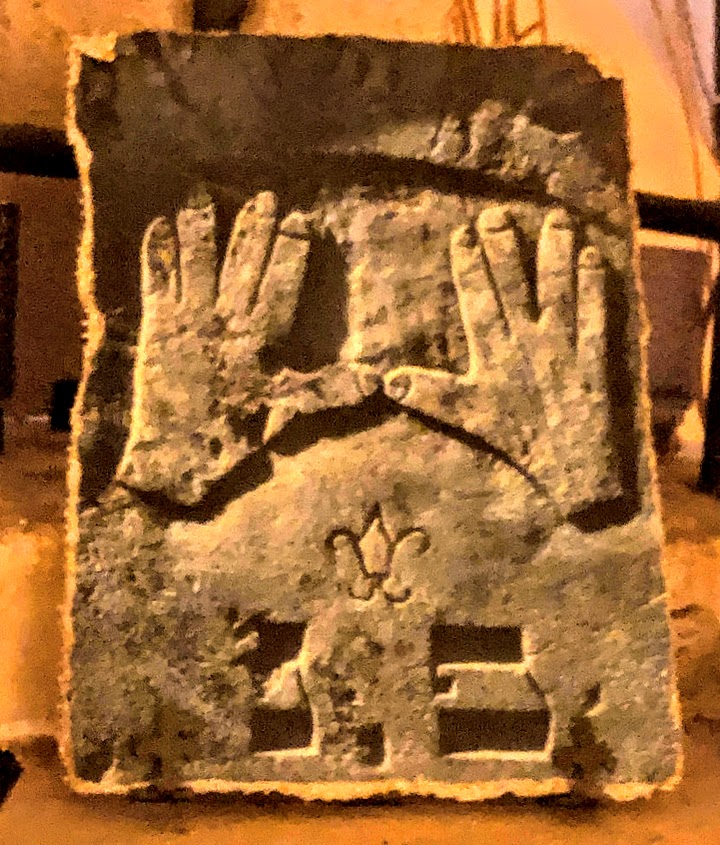
God’s light is thought to be present through the outstretched fingers of the Cohanim in the Priestly Blessing … a carving in the Black Star in Prague (Photograph: Patrick Comerford, 2023)

The Songs and Poems of Leonard Cohen: 6, ‘Anthem’:

In Jewish mysticism, God the Creator breaks through the cracks to pour his light into the world. The light of God breaks through in the crack in the skylight, and the rains fall like a blessing on all God’s creation. Or, as Leonard Cohen sings his song ‘Anthem’ (The Future, 1992), ‘There is a crack in everything, that’s how the light gets in.’

Perhaps it is no more than a coincidence that Leonard Cohen and the former Chief Rabbi, Lord (Jonathan) Sacks, both died on 7 November: Lord Sacks died in 2020 at the age of 72; Leonard Cohen died four years earlier in 2016 at the age of 82.

But it is perhaps less than coincidence that both of them have introduced me to the writings of the 16th century Jewish mystic, Rabbi Isaac Luria (1534-1572), considered the father of contemporary Kabbalah, and to his teachings, known as Lurianic Kabbalah. In his footnotes in the Authorised Prayer Book, one of two prayerbooks I regularly use for prayers and reflections on Friday evenings, Lord Sacks frequently refers to this rabbi.

I find it very difficult to read, think about or understand Kabbalistic writings, and can only deal with them when I read them as I would read poetry. Indeed, Luria’s writings are few, and include only a few poems.

According to Isaac Luria, God created vessels into which he poured his holy light. These vessels were not strong enough to contain such a powerful force and they shattered. The sparks of divine light were carried down to earth along with the broken shards.

The Kabbalah of Rav Yitzhak Luria had a notably strong effect on Leonard Cohen, and his key ideas are reflected in that line, ‘There is a crack in everything, it’s how the light gets in.’

This divine brokenness is a key to many of Leonard Cohen’s poems and songs, according to his rabbi, Mordecai Finley, who says Lurianic Kabbalah gives voice to the impossible brokenness of the human condition. ‘The pain of the Divine breakage permeates reality. We inherit it; it inhabits us. We can deny it. Or we can study and teach it, write it and sing its mournful songs.’

Cohen hints in his songs that redemption – the tikkun olam that will repair the broken world – remains possible. He regularly ended his concerts with the Priestly Blessing (ברכת כהנים‎; birkat Cohanim). It is also known in rabbinic literature as raising the hands or rising to the platform because the blessing is given from a raised rostrum.

The Jewish Sages stressed that although the Cohanim or priests pronounce the blessing, it is not them or the ceremonial practice of raising their hands that results in the blessing, but rather it is God’s desire that his blessing should be symbolised by the hands of the Cohanim.

Lord Sacks says the Torah explicitly says that though the Cohanim say the words, it is God who sends the blessing: ‘When the Cohanim bless the people, they are not doing anything in and of themselves. Instead, they are acting as channels through which God’s blessing flows into the world and into our lives.’

In many communities, it is customary for men in the congregation to spread their tallitot or prayer shawls over their own heads during the blessing and not look at the Cohanim. If a man has children, they come under his tallit to be blessed.

A tradition among Ashkenazim says that during this blessing, the Shekhinah becomes present where the Cohanim have their hands in the shin (ש) gesture, so that gazing there would be harmful.

An understanding of how God’s light is thought to be present through the outstretched fingers of the Cohanim may lie behind those lines in ‘Anthem’:

There is a crack in everything
That’s how the light gets in
.

In his final days, Leonard Cohen was spending two days a week at the Ohr HaTorah synagogue in Los Angeles and reading deeply in a multi-volume edition of the Zohar, the principal text of Jewish mysticism but a book that many find completely incomprehensible. He was also studying Gershom Scholem’s biography of the 17th century mystic and false messiah Shabbetai Tzvi.

His interest in Jewish mysticism seems to have been a constant throughout his life, reflected in his songs in ways that may not be understood by people who are not familiar with Jewish thinking.

The Kabbalah of Rav Yitzhak Luria had a notably strong effect on Leonard Cohen. Jonathan Freedland described it in a feature in the Atlantic in 2016, in which he said Luria’s key ideas are reflected in a line in Leonard Cohen’s song ‘Anthem’:

There is a crack in everything,
it’s how the light gets in
.

This divine brokenness is a key to many of Leonard Cohen’s poems and songs. His rabbi, Mordecai Finley, spoke of this when he wrote in the Jewish Journal and referred to his final album, You Want It Darker, released just months before his death:

‘If you are familiar with Lurianic Kabbalah … you will understand this album … and I think much of his body of poetry and lyrics. I think that whatever drew Leonard to me, for me to be his rabbi these last 10 years, was that for each of us, Lurianic Kabbalah gave voice to the impossible brokenness of the human condition. The pain of the Divine breakage permeates reality. We inherit it; it inhabits us. We can deny it. Or we can study and teach it, write it and sing its mournful songs.’

Cohen hints in his work that redemption – the tikkun olam that will repair the broken world – remains possible. Near the end of his life, using the Hebrew expression for ‘bless God,’ he told an interviewer, ‘Spiritual things, baruch Hashem, have fallen into place.’

Leonard Cohen, Anthem:

The birds they sang
At the break of day
Start again
I heard them say
Don’t dwell on what has passed away
Or what is yet to be

Ah, the wars they will be fought again
The holy dove, she will be caught again
Bought and sold, and bought again
The dove is never free

Ring the bells that still can ring
Forget your perfect offering
There is a crack, a crack in everything
That’s how the light gets in

We asked for signs
The signs were sent
The birth betrayed
The marriage spent
Yeah, and the widowhood
Of every government
Signs for all to see

I can’t run no more
With that lawless crowd
While the killers in high places
Say their prayers out loud
But they’ve summoned, they’ve summoned up
A thundercloud
They’re going to hear from me

Ring the bells that still can ring
Forget your perfect offering
There is a crack, a crack in everything
That’s how the light gets in

You can add up the parts
But you won’t have the sum
You can strike up the march
There is no drum
Every heart, every heart
To love will come
But like a refugee

Ring the bells that still can ring
Forget your perfect offering
There is a crack, a crack in everything
That’s how the light gets in

Ring the bells that still can ring
Forget your perfect offering
There is a crack, a crack in everything
That’s how the light gets in

That’s how the light gets in

‘There is a crack, a crack in everything / That’s how the light gets in’ (Leonard Cohen) … hands of a Cohan in the shin (ש) gesture … a gravestone in the Jewish cemetery in Prague (Photograph: Patrick Comerford, 2023)

Matthew 9: 27-31 (NRSVA):

27 As Jesus went on from there, two blind men followed him, crying loudly, ‘Have mercy on us, Son of David!’ 28 When he entered the house, the blind men came to him; and Jesus said to them, ‘Do you believe that I am able to do this?’ They said to him, ‘Yes, Lord.’ 29 Then he touched their eyes and said, ‘According to your faith let it be done to you.’ 30 And their eyes were opened. Then Jesus sternly ordered them, ‘See that no one knows of this.’ 31 But they went away and spread the news about him throughout that district.

‘Ring the bells that still can ring / Forget your perfect offering’ (Leonard Cohen) … one of the bells in the Campanile in Saint Mark’s Square, Venice (Photograph: Patrick Comerford)

Today’s Prayers (Friday 8 December 2023):

The theme this week in the new edition of ‘Pray With the World Church,’ the Prayer Diary of the Anglican mission agency USPG (United Society Partners in the Gospel), is ‘The Hope of Advent.’ This theme was introduced on Sunday.

The USPG Prayer Diary today (8 December 2023) invites us to pray in these words:

Lord, in a world that can often seem to be filled with pain, we ask for the hope of Christ to shine on the world.

The Virgin Mary with her parents, Saint Anne and Saint Joachim, in a mosaic by the Russian artist Boris Anrep (1883-1969) in Mullingar Cathedral … today the Church Calendar celebrates the Conception of the Virgin Mary (Photograph: Patrick Comerford)

The Collect:

Almighty and everlasting God,
who stooped to raise fallen humanity
through the child–bearing of blessed Mary:
grant that we, who have seen your glory
revealed in our human nature
and your love made perfect in our weakness,
may daily be renewed in your image
and conformed to the pattern of your Son
Jesus Christ our Lord,
who is alive and reigns with you,
in the unity of the Holy Spirit,
one God, now and for ever.

The Post-Communion Prayer:

God most high,
whose handmaid bore the Word made flesh:
we thank you that in this sacrament of our redemption
you visit us with your Holy Spirit
and overshadow us by your power;
strengthen us to walk with Mary the joyful path of obedience
and so to bring forth the fruits of holiness;
through Jesus Christ our Lord.

Yesterday’s Reflection

Continued Tomorrow


Anthem lyrics © Stranger Music Inc.

Scripture quotations are from the New Revised Standard Version Bible: Anglicised Edition copyright © 1989, 1995, National Council of the Churches of Christ in the United States of America. Used by permission. All rights reserved worldwide. http://nrsvbibles.org

27 November 2023

Daily prayers in the Kingdom Season
with USPG: (23) 27 November 2023

The Cathedral of Christ the King in Mullingar, Co Westmeath … a landmark building in the Irish Midlands (Photograph: Patrick Comerford)

Patrick Comerford

In this time between All Saints’ Day and Advent Sunday, we are in the Kingdom Season in the Calendar of the Church of England. The week began with the Feast of Christ the King and the Sunday next before Advent (26 November 2023).

Before today begins, I am taking some time for prayer and reflection early this morning.

Throughout this week, I am reflecting on Christ the King, as seen in churches and cathedrals I know or I have visited. My reflections are following this pattern:

1, A reflection on Christ the King;

2, the Gospel reading of the day in the Church of England lectionary;

3, a prayer from the USPG prayer diary.

Inside the Cathedral of Christ the King, Mullingar (Photograph: Patrick Comerford)

The Cathedral of Christ the King, Mullingar, Co Westmeath:

The Cathedral of Christ the King in the centre of Mullingar, Co Westmeath, is a landmark building in the Irish Midlands. The campanile towers and the dome dominate the skyline and approaches to Mullingar for many miles around, and the silhouette of the cathedral has become a symbol of Mullingar.

This is the cathedral of the Roman Catholic Diocese of Meath and it stands at the top of Mary Street, at the junction with College Street and Bishop’s Gate Street, towering above the centre of the county town of Westmeath.

Mullingar Cathedral is yet another statement by the Dublin-based architect Ralph Byrne of the confidence of Roman Catholicism in post-independence Ireland in the 1920s and 1930s, like his cathedral in Cavan and his strong emphatic churches in Athlone, Co Westmeath, and Harold’s Cross, Dublin.

Byrne’s cathedral in Mullingar replaced an earlier cathedral, dedicated to Saint Mary, that stood on the same site from 1836. This was a large Gothic Revival T-plan church, with four octagonal turrets at the west front, and this, in turn, had replaced the parish chapel dating from 1730.

Planning for a new cathedral began in 1920. The building work began in March 1933 and the foundation stone was laid on 6 August 1933 by Thomas Mulvany, Bishop of Meath (1929-1943).

The new cathedral was designed by the Dublin-based architect, Ralph Henry Byrne (1877-1947). Byrne was noted for his academic approach to architectural design. He favoured the classical idiom for much of his church designs, moving away from the Gothic Revival-style, which had been in vogue for Roman Catholic building projects since the early 19th century.

Byrne designed the cathedral to look like a basilica in form and renaissance in style. The distinctive twin towers, surmounted by bronze crosses, rise to a height of about 42.6 metres. The nave is 36.5 metres long and 15.2 metres wide. It follows the pattern of great Roman basilicas such as Saint Paul Outside the Walls.

Murphy of Dublin were the builders, while much of the artistic decoration work, including the marble altar goods and the bronze and brass fittings, was designed and fitted by Earley of Camden Street, Dublin, Gunning Smyth’s, and J and C McGloughlin of Dublin, and Oppenheimer of Old Trafford, Manchester.

The cathedral is designed on a complicated regular plan and on a north-south axis rather than the traditional, liturgical east-west axis. It has a seven-bay nave with a clerestory over and flanking single-storey side aisles, full-height transepts terminated by pediments, a broad apsidal chancel at the north or liturgical east end, and a circular drum with a copper dome above at the central crossing.

At the south side or liturgical west end, the cathedral has a central two-storey block with a pedimented breakfront and with colonnades or loggias at both the first and second floor levels. This is flanked by single-storey blocks on each side supporting the four-storey arcaded campanile towers, each crowned with limestone domes, topped with gilded cross finials.

The main, square-headed entrance has timber panelled double-doors, with a segmental-headed window over, to the centre of the south façade. It is set behind a Venetian-type arrangement of a central round-headed arch flanked by lower square-headed openings, divided by Doric columns in antis.

The elaborate sculpture on the pediment or tympanum is in Portland stone by Albert George Power (1881-1945), the leading Irish sculptor of the 1920s and 1930s. It depicts the Virgin Mary handing over a model of the previous Gothic Revival cathedral into the care of Christ the King. There are sculpted panels by H Thompson of Dublin on the front façade above the main entrances.

The cathedral is built of channelled ashlar granite, with extensive ashlar limestone and ashlar granite detailing. There is a variety of window openings, mostly square-headed with metal glazing bars and cut stone surrounds. The ground floor window openings in the nave are set in round-headed recesses. There are pitched roofs.

Inside, the vast open interior of the cathedral is reminiscent of the layout of a Roman basilica and seats over 1,800 people. It is lavishly decorated using different types and colours of marble and has least seven side chapels. There are numerous columns in various types of marble, including colonnades formed of paired Doric columns in Rochambeau marble, separated by high round-headed arches, giving access to the side aisles and to the transepts.

The mosaic in the apse in the sanctuary represents the Ascension. The cathedra or bishop’s throne and the chapter stalls were carved in Irish oak in Waterford.

There are seven side chapels in the cathedral, dedicated to Saint Patrick, Saint Anne, Saint Joseph and the Holy Family, Saint Therese of Lisieux as patron of Foreign Missions, a mortuary chapel, a Chapel of the Blessed Sacrament and a chapel dedicated to Our Lady of Lourdes. Some of these chapels are decorated with mosaics by the Russian artist Boris Anrep (1883-1969).

The Baptistry is now the cathedral shop and the double baptism font has been moved to the top of the west or right-hand aisle.

The Stations of the Cross are in opus sectile and mosaic. The pulpit, of white marble, has carvings depicting the Sermon on the Mount, Saint John the Baptist and Saint Patrick. There is an extensive collection of marble altar goods and a number of bronze fittings and railings.

The new cathedral was formally opened and dedicated on 6 September 1936. At the request of Pope Pius XI, this became the first cathedral in the world to be dedicated to Christ the King. The cathedral was solemnly consecrated on 4 September 1939. The total cost of the building, including decoration, was £250,000 to £275,000, an enormous sum for those days.

Boris Anrep’s image of Christ the King in his Saint Patrick mosaic is inspired by the Visitation of Abraham or Old Testament Trinity best known in the West in the work of Andrei Rublev (Photograph: Patrick Comerford)

The works of art for which Mullingar Cathedral is most noted are the mosaics in the chapels of Saint Anne and Saint Patrick. These are the work of the Russian-born mosaic artist Boris Anrep, a celebrated artist and socialite, best known for his monumental mosaics at the National Gallery, Westminster Cathedral, and the Bank of England in London.

The Saint Patrick mosaic depicts Saint Patrick lighting the Paschal fire on the Hill of Slane. Saint Patrick is seen lifting the cross with one hand in a vigorous movement, and in his other hand he is holding a torch. The firewood is arranged in a Christogram, signifying the symbolic importance of the fire.

In the Saint Anne mosaic, her name is spelled Anna, and the image of Saint Anne is said to resemble the poet Anna Akhmatova, with whom Anrep had an affair during World War I.

Byrne was the architect of choice for the Roman Catholic Church at this time and during the 1930s his commissions included the new cathedral in Cavan, the Church of Saint Peter and Saint Paul in Athlone, Co Westmeath, and the Rosary Church in Harold’s Cross, Dublin, during the 1930s.

In Mullingar, Byrne calls on an eclectic mix of architectural styles, drawing on the classical imperial traditions of Rome, the work of Palladio, the Italian Baroque, Webb and perhaps even the neoclassicism of James Gandon and the work of Sir Edwin Lutyens in New Delhi.

Despite Byrne’s seemingly ad hoc use of classical styles, his cathedral in Mullingar is a polished architectural work. The stark cold ashlar granite on the façade contrasts with the opulence of the marble interior. The façade is a complex arrangement of classical elements, giving out a strong message of triumphalism, and is dominated on the upper storey by the pedimented temple with inset Corinthian columns.

The cathedral is set back from a busy junction in the town centre in extensive mature grounds, with the Bishop’s Residence to one side, a school in its own grounds on the other side, north-east and a large forecourt and car park at the front.

Mullingar Cathedral has been compared in terms of architectural style and ambition to the state-sponsored architectural projects built in Nazi Germany and Fascist Italy at the same time. Other critics are kinder when they say this is one of the most stylishly triumphant cathedrals in Ireland, offering visitors ‘an overwhelming experience.’

Whatever you think of it, this massive and extensively detailed cathedral is a monumental statement of the confidence, power and the authority of the Roman Catholic Church in Ireland in the first decades after Irish independence.

Albert Power’s elaborate sculpture on the tympanum of Mullingar Cathedral (Photograph: Patrick Comerford)

Matthew 9: 18-34 (NRSVA):

18 While he was saying these things to them, suddenly a leader of the synagogue came in and knelt before him, saying, ‘My daughter has just died; but come and lay your hand on her, and she will live.’ 19 And Jesus got up and followed him, with his disciples. 20 Then suddenly a woman who had been suffering from haemorrhages for twelve years came up behind him and touched the fringe of his cloak, 21 for she said to herself, ‘If I only touch his cloak, I will be made well.’ 22 Jesus turned, and seeing her he said, ‘Take heart, daughter; your faith has made you well.’ And instantly the woman was made well. 23 When Jesus came to the leader’s house and saw the flute-players and the crowd making a commotion, 24 he said, ‘Go away; for the girl is not dead but sleeping.’ And they laughed at him. 25 But when the crowd had been put outside, he went in and took her by the hand, and the girl got up. 26 And the report of this spread throughout that district.

27 As Jesus went on from there, two blind men followed him, crying loudly, ‘Have mercy on us, Son of David!’ 28 When he entered the house, the blind men came to him; and Jesus said to them, ‘Do you believe that I am able to do this?’ They said to him, ‘Yes, Lord.’ 29 Then he touched their eyes and said, ‘According to your faith let it be done to you.’ 30 And their eyes were opened. Then Jesus sternly ordered them, ‘See that no one knows of this.’ 31 But they went away and spread the news about him throughout that district.

32 After they had gone away, a demoniac who was mute was brought to him. 33 And when the demon had been cast out, the one who had been mute spoke; and the crowds were amazed and said, ‘Never has anything like this been seen in Israel.’ 34 But the Pharisees said, ‘By the ruler of the demons he casts out the demons.’

The mosaic in the apse in the sanctuary in Mullingar depicts the Ascension (Photograph: Patrick Comerford)

Today’s Prayers (Monday 27 November 2023):

The theme this week in ‘Pray With the World Church,’ the Prayer Diary of the Anglican mission agency USPG (United Society Partners in the Gospel), is ‘Preventing Mother-to-Child HIV Transmission.’ This theme was introduced yesterday.

The USPG Prayer Diary today (27 November 2023) invites us to pray in these words:

We pray for the Anglican Church of Tanzania, for all the community programmes they are supporting including the PMTCT programme.

The Baptism Font in Mullingar has been moved to the top of the west (left) aisle (Photograph: Patrick Comerford)

The Collect:

Eternal Father,
whose Son Jesus Christ ascended to the throne of heaven
that he might rule over all things as Lord and King:
keep the Church in the unity of the Spirit
and in the bond of peace,
and bring the whole created order to worship at his feet;
who is alive and reigns with you,
in the unity of the Holy Spirit,
one God, now and for ever.

The Post-Communion Prayer:

Stir up, O Lord,
the wills of your faithful people;
that they, plenteously bringing forth the fruit of good works,
may by you be plenteously rewarded;
through Jesus Christ our Lord.

This Post Communion Prayer may be used as the Collect at Morning and Evening Prayer during this week.

Additional Collect

God the Father,
help us to hear the call of Christ the King
and to follow in his service,
whose kingdom has no end;
for he reigns with you and the Holy Spirit,
one God, one glory.

Yesterday’s Reflection (Cathedral of Christ the King, Liverpool)

Continued Tomorrow (Church of Christ the King, Turner’s Cross, Cork)

The entrance porch in the Cathedral of Christ the King, Mullingar (Photograph: Patrick Comerford)

Scripture quotations are from the New Revised Standard Version Bible: Anglicised Edition copyright © 1989, 1995, National Council of the Churches of Christ in the United States of America. Used by permission. All rights reserved worldwide. http://nrsvbibles.org

The towers and dome of Mullingar Cathedral (Photograph: Patrick Comerford)

15 January 2023

Praying through poems and
with USPG: 15 January 2023

A stained-glass window depicting the Baptism of Christ by Saint John the Baptist in the Church of Saint John the Baptist, Peterborough (Photograph: Patrick Comerford)

Patrick Comerford

Christmas is not a season of 12 days, despite the popular Christmas song. Christmas is a 40-day season that lasts from Christmas Day (25 December) to Candlemas or the Feast of the Presentation (2 February).

Throughout the 40 days of this Christmas Season, I am reflecting in these ways:

1, Reflecting on a seasonal or appropriate poem;

2, a prayer from the USPG prayer diary, ‘Pray with the World Church.’

Today is the Second Sunday of Epiphany (15 January 2023), and later this morning I hope to be at the Parish Eucharist in Saint Mary and Saint Giles Church, Stony Stratford.

The Baptism of Christ is one of the principal themes of the Epiphany, and the theme of the Gospel reading today (John 1: 29-42).

John 1: 29-42 (NRSVA):

29 The next day he saw Jesus coming towards him and declared, ‘Here is the Lamb of God who takes away the sin of the world! 30 This is he of whom I said, “After me comes a man who ranks ahead of me because he was before me.” 31 I myself did not know him; but I came baptizing with water for this reason, that he might be revealed to Israel.’ 32 And John testified, ‘I saw the Spirit descending from heaven like a dove, and it remained on him. 33 I myself did not know him, but the one who sent me to baptize with water said to me, “He on whom you see the Spirit descend and remain is the one who baptizes with the Holy Spirit.” 34 And I myself have seen and have testified that this is the Son of God.’

35 The next day John again was standing with two of his disciples, 36 and as he watched Jesus walk by, he exclaimed, ‘Look, here is the Lamb of God!’ 37 The two disciples heard him say this, and they followed Jesus. 38 When Jesus turned and saw them following, he said to them, ‘What are you looking for?’ They said to him, ‘Rabbi’ (which translated means Teacher), ‘where are you staying?’ 39 He said to them, ‘Come and see.’ They came and saw where he was staying, and they remained with him that day. It was about four o’clock in the afternoon. 40 One of the two who heard John speak and followed him was Andrew, Simon Peter’s brother. 41 He first found his brother Simon and said to him, ‘We have found the Messiah’ (which is translated Anointed). 42 He brought Simon to Jesus, who looked at him and said, ‘You are Simon son of John. You are to be called Cephas’ (which is translated Peter).

Christ’s Baptism is epiphany – or ‘showing forth’ – par excellence, for here we glimpse the whole Trinity: the Father blesses the Son, and the Spirit descends as a dove. This is not only a revelation about God, but also about us, for our own baptism draws us into the Son, so that the Spirit falls on us, and the Father says of us too ‘this is my beloved child’.

My choice of a seasonal poem this morning is ‘St John Baptist,’ by Thomas Merton (1915-1968).

Thomas Merton was a Trappist or Cistercian monk who was a writer, theologian, mystic, poet, pacifist, and a pioneer in interfaith dialogue. His life story is an ecumenical bridge between Anglicans, Quakers and Roman Catholics, between contemporary Christianity and the Desert Fathers, and between Christians and other religious traditions, particularly Zen Buddhism.

As my faith was developing and maturing, I was strongly influenced by his best-known book, The Seven Storey Mountain (1948), and his New Seeds of Contemplation (1962). His spiritual writings continued to influence me when I was on a student fellowship in Japan and when I was active in the Campaign for Nuclear Disarmament (CND).

Thomas Merton wrote more than 50 books over a period of 27 years, mostly on spirituality, social justice and pacifism, and many essays and reviews. His most enduring work, The Seven Storey Mountain (1948), was listed by National Review in the 100 best non-fiction books of the 20th century.

The Baptism of Christ by Saint John the Baptist … a fifth century mosaic in the Neonian Baptistry in Ravenna (Photograph: Patrick Comerford)

St John Baptist by Thomas Merton

I

When, for the fifteenth year, Tiberius Caesar
Cursed, with his reign, the Roman world,
Sharing the Near-East with a tribe of tetrarchs,
The Word of God was made in far-off province:
Deliverance from the herd of armored cattle,
When, from the desert, John came down to Jordan.

But his prophetic messages
Were worded in a code the scribes were not prepared to understand.
Where, in their lexicons, was written: “Brood of vipers,”
Applied, that is, to them?

“Who is this Lamb, Whose love
Shall fall upon His people like an army:
Who is this Savior, Whose sandal-latchet
This furious Precursor is afraid to loose?”

His words of mercy and of patience shall be flails
Appointed for the separation of the wheat and chaff.
But who shall fear the violence
And crisis of His threshing-floor
Except the envious and selfish heart?
Choose to be chaff, and fear the Winnower,
For then you never will abide His Baptism of Fire and Spirit.
You proud and strong,
You confident in judgment and in understanding,
You who have weighed and measured every sin
And have so clearly analyzed the prophecies
As to be blinded on the day of their fulfillment:
Your might shall crumble and fall down before Him like a wall,
And all the needy and the poor shall enter in,
Pass through your ruins, and possess your kingdom.

This is the day that you shall hear and hate
The voice of His beloved servant.
This is the day your scrutiny shall fear
A terrible and peaceful angel, dressed in skins,
Knowing it is your greedy eyes, not his, that die of hunger.
For God has known and loved him, from his mother’s womb,
Remembering his name, filling his life with grace,
Teaching him prophecy and wisdom,
To burn before the Face of Christ,
Name Him and vanish, like a proclamation.

II

Tell us, Prophet, Whom you met upon the far frontier
At the defended bridge, the guarded outpost.


“I passed the guards and sentries,
Their lances did not stay me, or the gates of spikes

Or the abysses of the empty night.
I walked on darkness

To the place of the appointed meeting:
I took my sealed instructions,
But did not wait
For compliment or for congratulation from my hidden Captain.
Even at my return
I passed unseen beside the stern defenders
In their nests of guns,
And while the spies were trying to decode some secret
In my plain, true name.
I left them like the night wind.”

What did you learn on the wild mountain
When hell came dancing on the noon-day rocks?


“I learned my hands could hold
Rivers of water
And spend them like an everlasting treasure.
I learned to see the waking desert
Smiling to behold me with the springs her ransom,
Open her clear eyes in a miracle of transformation,
And the dry wilderness
Suddenly dressed in meadows,
All garlanded with an embroidery of flowering orchards
Sang with a virgin’s voice,
Descending to her wedding in these waters
With the Prince of Life.
All barrenness and death lie drowned
Here in the fountains He has sanctified,
And the deep harps of Jordan
Play to the contrite world as sweet as heaven.”

But did your eyes buy wrath and imprecation
In the red cinemas of the mirage?


“My eyes did not consult the heat of the horizon:
I did not imitate the spurious intrepidity
Of that mad light full of revenge.
God did not hide me in the desert to instruct my soul
In the fascism of as asp or scorpion.
The sun that burned me to an Arab taught me nothing:
My mind is not in my skin.
I went into the desert to receive
The keys of my deliverance
From image and from concept and from desire.
I learned not wrath but love,
Waiting in darkness for the secret stranger
Who, like an inward fire,
Would try me in the crucibles of His unconquerable Law:
His heat, more searching than the breath of the Simoon,
Separates love from hunger
And peace from satiation,
Burning, destroying all the matrices of anger and revenge.
It is because my love, as strong as steel, is armed against all hate
That those who hate their own lives fear me like a sabre.”

III

St. John, strong Baptist,
Angel before the face of the Messiah
Desert-dweller, knowing the solitudes that lie
Beyond anxiety and doubt,
Eagle whose flight is higher than our atmosphere
Of hesitation and surmise,
You are the first Cistercian and the greatest Trappist:
Never abandon us, your few but faithful children,
For we remember your amazing life,
Where you laid down for us the form and pattern of
Our love for Christ,
Being so close to Him you were His twin.
Oh buy us, by your intercession, in your mighty heaven,
Not your great name, St. John, or ministry,
But oh, your solitude and death:
And most of all, gain us your great command of graces,
Making our poor hands also fountains full of life and wonder
Spending, in endless rivers, to the universe,
Christ, in secret, and His Father, and His sanctifying Spirit.

The Baptism of Christ … a stained glass window in the Cathedral of Christ the King, Mullingar, Co Westmeath (Photograph: Patrick Comerford)

USPG Prayer Diary:

The Week of Prayer for Christian Unity begins on Wednesday (18 January), and the theme in the USPG Prayer Diary this week is the ‘Week of Prayer For Christian Unity.’ This theme is introduced this morning with a reflection from the Pontifical Council for Promoting Christian Unity and the Commission on Faith and Order of the World Council of Churches:

‘Do good; seek justice (Isaiah 1: 17)

‘In the verse from Isaiah chosen for the Week of Prayer for Christian Unity, the prophet teaches that God requires righteousness and justice from all of us, all the time and in all spheres of life. The challenges wrought by division in our world today in many ways mirror the challenges Isaiah confronted in his preaching, when he called his listeners to do good and seek justice.

Justice, righteousness and unity originate from God’s profound love for each of us and are at the heart of who God is and how God expects us to be with one another. God’s commitment to create a new humanity ‘from every nation, from all tribes and peoples and languages’ (Revelation 7: 9) calls us to the peace and unity God has always wanted for creation.

Learning to do right requires the decision to engage in self-reflection. The Week of Prayer is the perfect time for Christians to recognize that the divisions between our churches and confessions cannot be separated from the divisions within the wider human family. Praying together for Christian unity allows us to reflect on what unites us and to commit ourselves to confront oppression and the divisions amongst humanity.’

The USPG Prayer Diary invites us to pray today in these words:

God of light and love,
you made us one in Christ Jesus.
Give us vision, courage and joy
as we work to heal divisions
and proclaim the good news.

Yesterday’s reflection

Continued tomorrow

Thomas Merton, monk, writer, theologian, mystic, poet, pacifist and pioneer in interfaith dialogue