Patrick Comerford
Εισαγωγή
Σε πολλούς είναι γνωστοί οι Φιλέλληνες – οι ξένοι εκείνοι, που αφιέρωσαν τη ζωή τους στην Ελλάδα στις αρχές του 19ου αιώνα. Αλλά λίγοι έχουν υπόψη τους τούς πολλούς Ιρλανδούς που αγωνίσθηκαν στον πόλεμο για την Ελληνική Ανεξαρτησία, ή για τους ρόλους των ως Φιλελλήνων. Διαβάζοντας πολλούς Βρετανούς ιστορικούς συγγραφείς (Βλ. Dakin, 1955 και 1972, Woodhouse, 1969 και St Clair, 1972), είναι εύκολο να πιστέψει κάποιος ότι όλοι οι φιλέλληνες ήταν Βρετανοί ρομαντικοί, από τους οποίους ο πλέον ευγενής και ενθουσιώδης ήταν ο Λόρδος Byron. Ίσως να υπήρξαν μερικοί Αμερικανοί, αλλά οι Γάλλοι ανάμεσά τους εμφανίζονταν ως απατεώνες και κατεργάρηδες, και άλλες εθνότητες, ιδίως οι Ρώσοι, ως ευαισθητοποιημένοι. Αυτή η κατηγοριοποίηση ήταν τόσο αγγλο-κεντρική που, τόσο ο Μπάιρον όσο και ο εκκεντρικός Λόρδος Κόχραν, δεν είναι πλέον Σκωτσέζοι αλλά τιμημένοι Άγγλοι. Το ίδιο και με τους Ιρλανδούς φιλέλληνες, ιδιαίτερα με τον Sir Richard Church (εφεξής: Τσωρτζ) από το Cork: Μία αναμνηστική πλάκα στην Αγγλικανική Εκκλησία του Αποστόλου Παύλου στην Αθήνα αναφέρει ότι ο Τσωρτζ κέρδισε την αγάπη του ελληνικού λαού «για τον ίδιο και για την Αγγλία».
Όμως ο Τσωρτζ ήταν ο κυριότερος Ιρλανδός φιλέλληνας, και τον περιέγραψαν κάποτε ως τον «αρχοντάνθρωπο όλων των αληθινών φιλελλήνων» (Woodhouse, 1969, σ. 157). Και υπήρχαν πολλοί περισσότεροι Ιρλανδοί ήρωες που κατατάχθηκαν σε εκείνες τις τάξεις.
Οι πρώτοι Ιρλανδοί Φιλέλληνες
Οι ναπολεόντειοι πόλεμοι στις αρχές του 19ου αιώνα, και η κατάληψη των Ιόνιων Νησιών έφεραν τους πρώτους μελλοντικούς Ιρλανδούς φιλέλληνες στην Ελλάδα, συμπεριλαμ-βανομένου του Sir Hudson Lowe (1769-1844) από το Galway. Τον θυμούμαστε συχνά ως δεσμοφύλακα του Ναπολέοντα, αλλά η εκστρατεία του για την κατάργηση της δουλείας έχει λησμονηθεί. Ήταν ο δεύτερος τη τάξει αρχηγός κατά την εκστρατεία για την κατάληψη των Ιόνιων Νησιών, ήταν παρών στην κατάληψη της Κεφαλληνίας, της Ιθάκης και της Λευκάδας, και αργότερα σχημάτισε μια προσωρινή διοίκηση για τα νησιά αυτά. Ο ελληνικός λαός τον εκτίμησε τόσο πολύ, που όταν αυτός απρόθυμα αποχώρησε του.
Ο Lowe συνοδευόταν από τον Richard Church (1784-1873), ο οποίος γεννήθηκε από μια διακεκριμένη οικογένεια Κουακέρων εμπόρων στο Cork. Όταν τα παράτησε όλα για να καταταγεί στον στρατό, προκάλεσε όνειδος στους Κουακέρους γονείς του που αποκηρύχθηκαν ή αφορίσθηκαν για την εξαγορά του αξιώματός του γιού τους. Ως 16χρονος δόκιμος το 1800, επισκέφθηκε την Ελλάδα για πρώτη φορά και έγραψε στους δικούς του: «Οι Έλληνες, που είναι σκλάβοι στους Τούρκους και είναι Χριστιανοί, … είναι λαός γενναίος, έντιμος, ανοιχτός και γενναιόδωρος, και συνεχώς μάς χαρίζουν φρούτα» (Ferriman, 1917, 112· Woodhouse, 1969, 20). Μετά την κατάληψη των Ιόνιων Νησιών από τους Βρετανούς το 1809, ο Τσωρτζ γρήγορα συγκρότησε ένα ελληνικό σύνταγμα ελαφρού Πεζικού και εντός έξι εβδομάδων ανάμειξε τις ελληνικές δυνάμεις στον αγώνα. Διεξήγαγε την απόβαση στη Ζάκυνθο, και συνέχισε να διακρίνεται στην κατάληψη της Ιθάκης και της Κέρκυρας.
Όταν τοποθετήθηκε στη Ζάκυνθο, ο Τσωρτζ άρχισε να παρέχει στρατιωτική εκπαίδευση στους Έλληνες, συμπεριλαμβανομένου του Θεοδώρου Κολοκοτρώνη, ο οποίος πολέμησε και διακρίθηκε κοντά στον Τσωρτζ και τον Lowe στη Λευκάδα και έγινε λοχαγός στο νέο σύνταγμα. Όταν ο Τσωρτζ υπέστη συντριπτικό κάταγμα στον βραχίονα. κατά την επίθεση εναντίον των επάλξεων, έφυγε με αναρρωτική άδεια, επισκέφθηκε την Αθήνα και, ταξιδεύοντας δια μέσου της Βορείου Ελλάδος, ενημέρωσε τη Βρετανική Πρεσβεία στην Κωνσταντινούπολη. Κατά την επιστροφή του στη Ζάκυνθο, στρατολόγησε περισσότερους Έλληνες, και σύντομα ανέφερε ότι 6.000 έως 8.000 Έλληνες θα μπορούσαν να είχαν στρατολογηθεί· τόσο ενθουσιώδες ήταν το ενδιαφέρον τους. Ένας Έλληνας αρχηγός υποσχέθηκε ότι, εάν ο Τσωρτζ μπορούσε να εκπαιδεύσει τους άνδρες του, θα κέρδιζαν γι’ αυτόν τη φήμη του Μιλτιάδη, του Λεωνίδα και του Θεμιστοκλή. Το 1812 ο Τσωρτζ πήγε στο Λονδίνο και ζήτησε άδεια να συγκροτήσει ένα δεύτερο σύνταγμα. Κατά την αναχώρησή του τού προσφέρθηκε μνημόνιο που τον περιέγραφε ως «ένδοξο αρχηγό» και άλλο ένα που ζητούσε βρετανική βοήθεια για την απελευθέρωση της Ελλάδας. Αλλά αν και ο Τσωρτζ είχε ανέλθει στον βαθμό του αντισυνταγματάρχη και του είχε δοθεί έγκριση να συγκροτήσει ένα δεύτερο σύνταγμα Ελλήνων, δεν κέρδισε την πολιτική υποστήριξη για την οποία είχε ελπίσει. Κατά την επιστροφή του στη Ζάκυνθο, έμεινε στη Βιέννη με τον κόμιτα Laval Nugent (1777-1862) από την κομιτεία Wicklow, στρατάρχη στον στρατό των Αψβούργων και εφ’ όρου ζωής υποστηρικτή της ελληνικής υπόθεσης.
Τα ελληνικά στρατεύματα του Τσωρτζ κατέλαβαν τους Παξούς και την πόλη της Πάργας στην ξηρά. Αργότερα έφυγε από τη Ζάκυνθο για τη Νάπολη, όπου βοήθησε στις διαπραγματεύσεις για την παράδοση της Κέρκυρας. Ως τότε ήταν, σύμφωνα με τα λόγια του St Clair, «περισσότερο Έλληνας από τους Έλληνες» (St Clair, 1972, 320). Αγωνίσθηκε παρασκηνιακά χωρίς επιτυχία στο Συνέδριο της Βιέννης για ένα ανεξάρτητο, κυρίαρχο ελληνικό Κράτος. Αντί αυτού, τον διέταξαν να διαλύσει τα ελληνικά συντάγματά του, τα Ιόνια Νησιά έγιναν βρετανικό τσιφλίκι και, με μια πράξη απατηλής προδοσίας, η Πάργα πουλήθηκε στον Αλή Πασά. Απογοητευμένος, o Τσωρτζ έφυγε από την Ελλάδα για στρατιωτική σταδιοδρομία που τον έφερε στην Αυστρία και στην Ιταλία.
Οι Ιρλανδοί Φιλέλληνες συμμετέχουν στον αγώνα
Στο μεταξύ, ένα νέο κύμα Ιρλανδών ριζοσπαστών ανέπτυξε ενδιαφέρον για την Ελλάδα, συμπεριλαμβα-νομένου του Edward Blaquière (+1832), ενός ρομαντικού Δουβλινέζου ναυτικού με καταγωγή από Ουγενότους, του Charles James Napier (1782-1853), από το Celbridge της κομιτείας Kildare, που ήταν πρώτος εξάδελφος του Λόρδου Edward FitzGerald. Ο Μπλακιέρ ήρθε για πρώτη φορά σε επαφή με τους Έλληνες επαναστάτες, όταν γνωρίστηκε με τον Ιωάννη Λουριώτη, ο οποίος έκανε έρανο στην Ισπανία και την Πορτογαλία. Η υπόδειξή του ότι το Λονδίνο ήταν καλύτερο μέρος για έρανο χρημάτων, οδήγησε στον σχηματισμό του Ελληνικού Κομιτάτου του Λονδίνου, που έπαιξε σημαντικό ρόλο για την ελληνική υπόθεση. Στους πρώτους Ιρλανδούς που ήταν μέλη της επιτροπής αυτής συμπεριλαμβανόταν ο ποιητής Thomas Moore και ο μελλοντικός Κυβερνήτης των Ιόνιων Νησιών, ο Λόρδος Νugent.
Ο Μπλακιέρ σύντομα κατευθύνθηκε προς την Ελλάδα, σταματώντας στη Γένοβα για να επισκεφθεί τον Μπάιρον, ο οποίος σχεδίαζε να ταξιδέψει στη Λατινική Αμερική. Ο Μπλακιέρ τον έπεισε να επιστρέψει στην Ελλάδα, συμβουλεύοντάς τον να πάει πρώτα στη Ζάκυνθο. Αντίθετα, ο Μπάιρον πήγε με πλοίο στην Κεφαλληνία, όπου Βρετανός κυβερνήτης ή διοικητής ήταν ο Νάπιερ από το Celbridge. Ο Μπάιρον αρχικά έμεινε ως φιλοξενούμενος του Νάπιερ, ο οποίος αργότερα του βρήκε μια βίλα στα Μεταξάτα, νότια από το Αργοστόλι. Εκεί ο Μπάιρον έγραψε: «Ο συνταγματάρχης Νάπιερ και εγώ είμαστε αποφασισμένοι για την υπόθεση της Ελλάδας όσο οποιοσδήποτε άλλος» (Woodhouse, 1969, 102). Μεταξύ των φίλων του Μπάιρον στα Μεταξάτα ήταν ο Ιρλανδός γιατρός τού συντάγματος James Kennedy, ο οποίος τον δίδαξε Νέα Ελληνικά, και μεταξύ των φιλελλήνων που επισκέφθηκαν τον Mπάιρον εκεί ήταν ο δημοσιογράφος από το Μπέλφαστ James Emerson (1804-1869).
Ο Νάπιερ, αντιμετωπίζοντας συνεχή αντίδραση από τους Βρετανούς αξιωματούχους στην Κέρκυρα, ανησυχούσε ότι η παρουσία του Μπάιρον και των επισκεπτών του απειλούσαν την ίδια του τη θέση. Ο Μπάιρον έφυγε από την Κεφαλληνία στις 30 Δεκεμβρίου του 1823 και έφθασε στο Μεσολόγγι στις 5 Ιανουαρίου του 1824, ελπίζοντας ότι σύντομα θα συντροφευόταν από τον Νάπιερ που θα ήταν αρχιστράτηγος του ελληνικού στρατού. Αλλά ο Μπάιρον πέθανε εκεί την Κυριακή του Πάσχα, στις 18 Απριλίου του 1824. Την προηγούμενη ημέρα είχε πει: «Θα ήθελα ο Νάπιερ και ο Χόμπχαουζ να ήταν εδώ, θα διευθετούσαμε σύντομα την υπόθεση αυτή». Τρεις μέρες μετά τον θάνατο του Μπάιρον, ο Μπλακιέρ επέστρεψε στη Ζάκυνθο μεταφέροντας την πρώτη δόση του βρετανικού δανείου. Εντός ολίγων ημερών, το φέρετρο του Μπάιρον άρχισε το ταξίδι του της επιστροφής στην Αγγλία επί του καταστρώματος του πλοίου Florida, αυτού που έφερε τον Μπλακιέρ στην Ελλάδα. Ο Μπλακιέρ τώρα προσπάθησε να στρατολογήσει είτε τον φίλο τού Τσωρτζ, τον κόμιτα Laval Nugent, είτε τον Νάπιερ, ως διοικητή του στρατού.
Ο Νάπιερ είχε φθάσει για πρώτη φορά στα Ιόνια Νησιά το 1819. Σε μια εμπιστευτική αποστολή από την Κέρκυρα στον Αλή Πασά, προσηλυτίσθηκε στην ελληνική υπόθεση και όταν ο πόλεμος της ανεξαρτησίας άρχισε στις 25 Μαρτίου 1821, αυτός άρχισε να παρέχει στρατιωτικές πληροφορίες στους Έλληνες και να δημοσιεύει φυλλάδια στα Αγγλικά, υποστηρίζοντας τον αγώνα. Παρά την εκτίμηση που είχε ως ριζοσπαστικός και φιλέλληνας, ο Νάπιερ διορίστηκε Βρετανός διοικητής της Κεφαλληνίας, όπου υπήρξε «φωτισμένος δεσπότης», κατασκεύασε δρόμους, γέφυρες και δημόσια κτίρια, βοηθούμενος από τον Διευθυντή Δημοσίων Έργων John Pitt Kennedy (1796-1879), γιο ενός ιερωμένου της Εκκλησίας της Ιρλανδίας από το Carndonagh, της κομιτείας Donegal.
Ο Νάπιερ και ο Κέννεντυ ανήγειραν τον κομψό, κυκλικό δωρικό φάρο στον Άγιο Θεόδωρο, μαζί με αγορές, προκυμαία, αποβάθρες, δικαστήρια, φυλακές, νοσοκομεία και σχολεία. Αυτοί άνοιξαν δρόμους στο άλλοτε αδιαπέραστο νησί, δίκτυο δρόμων και γεφυρών, άπλωσαν φαρδείς δρόμους και πλατείες στο Αργοστόλι και στο Ληξούρι, έκαναν μια δεντροφυτεμένη λεωφόρο προς το Μοναστήρι του Αγίου Γερασίμου. Ο Νάπιερ επίσης κατάργησε τα φεουδαρχικά προνόμια της αριστοκρατίας του νησιού, θέτοντας τη γεωργία σε στέρεες βάσεις. Ο John Αugustus Tool (περ. 1792-1829), ο οποίος ήρθε στην Κεφαλληνία ως μέλος του επιτελείου του Νάπιερ, εργάσθηκε στενά με τον Κέννεντυ για την κατασκευή δρόμων και γεφυρών. Ως τον χειμώνα 1826-1827 ήταν μεταξύ των υποστηρικτών του Καποδίστρια πού οργάνωναν τις δραστηριότητές τους στην Κέρκυρα κάτω από την κάλυψη μιας φιλανθρωπικής επιτροπής.
Ο χρόνος που πέρασε ο Νάπιερ στην Κεφαλληνία «ήταν ίσως ο ευτυχέστερος της ζωής του» (Dictionary of National Biography, xiv, 46). Εκεί ερωτεύθηκε μια Ελληνίδα, την Αναστασία, η οποία έγινε μητέρα των δύο θυγατέρων του. Πολύ αργότερα μετά τον θάνατο τού Μπάιρον, ο Νάπιερ συνέχισε να ελπίζει ότι θα γινόταν αρχιστράτηγος των ελληνικών δυνάμεων, ελπίδες που έτρεφαν και οι φίλοι του μεταξύ της ελληνικής ηγεσίας, συμπεριλαμβανομένου του Καποδίστρια και του Μαυροκορδάτου. Αλλά ο διορισμός δεν ήρθε ποτέ και ο Μπλακιέρ και ο Κολοκοτρώνης, που στράφηκαν πρώτα προς τον Laval Nugent, προσέφεραν μετά τη διοίκηση στον Τσωρτζ. Ο Νάπιερ τελικά έφυγε από την Κεφαλληνία, αφήνοντας πίσω τις γεννημένες στην Ελλάδα θυγατέρες του. Επέστρεφε κάποτε-κάποτε στην Ιρλανδία και επισκεπτόταν τον φίλο του Κέννεντυ στο Glasnevin, αλλά τελικά έγινε γνωστός ως ο Κατακτητής του Sind στην Ινδία.
Ο Τσωρτζ επιστρέφει στην Ελλάδα
Όταν ξέσπασε ο πόλεμος της Ανεξαρτησίας το 1821, ο Tσωρτζ εξέφρασε την ελπίδα ότι θα μπορούσε να αναμειχθεί για μια φορά ακόμα στην ελληνική υπόθεση. Ο Μπλακιέρ εργάσθηκε σκληρά πολιτικά για να προσκληθεί ο Τσωρτζ στην Ελλάδα και να ηγηθεί των ενόπλων δυνάμεων, αλλά ενώ αυτός περίμενε στη Ζάκυνθο για την επιστροφή του Tσωρτζ, οι ελπίδες του αποδείχθηκαν μάταιες. Δύο εβδομάδες μετά τον γάμο του Τσωρτζ με την Ελίζαμπεθ Αυγούστα Wilmot, κουνιάδα του κόμιτα του Kenmare, μακρινή συγγενή εξ αγχιστείας του Μπάιρον, και δύο εβδομάδες μετά την πτώση των Αθηνών στους Τούρκους, η ελληνική κυβέρνηση τελικά προσκάλεσε τον Τσωρτζ να αναλάβει τη διοίκηση.
Κατά την περίοδο αυτή της αναμονής, ο παλαιός φίλος του ο Κολοκοτρώνης είχε γράψει στον Τσωρτζ και τον ρωτούσε:
Τί κάνεις; Πού βρίσκεσαι; Η ψυχή μου δεν λείπει ποτέ από σένα. – Εμείς, οι παλαιοί συμπολεμισταί σου... πολεμούμε για τη χώρα μας – την Ελλάδα που είναι τόσο αγαπητή σε σένα! – ώστε να μπορέσουμε να αποκτήσουμε τα δικαιώματά μας ως άνθρωποι και ως λαός και την ελευθερία μας ! – Πώς μπόρεσε η ψυχή σου να αφήσει εσένα να παραμείνεις μακριά από εμάς, και να σε κρατήσει από το να πολεμήσεις μαζί μας; Σε περίμενα εδώ μπροστά σε άλλους Φιλέλληνες… Έλα! Έλα! και φέρε όπλα στην Ελλάδα ή βοήθησέ την με τα ταλέντα σου, τις αρετές σου και τις ικανότητές σου, ώστε να ζητήσεις την αιώνια ευγνωμοσύνη της...» (Dakin, 1955, 137, 141-142· St Clair, 1972, 321).
Εν τούτοις, όταν έμαθε για τις διενέξεις στην ελληνική κυβέρνηση, o Τσωρτζ εγκατέλειψε τα σχέδιά του να πλεύσει στα Ιόνια Νησιά και επέστρεψε στην Αγγλία με την ελπίδα να κάνει προσωπική έκκληση στον Canning εκ μέρους της Ελλάδος. Ο Μπλακιέρ έμενε στη Ζάκυνθο αναμένοντας την άφιξη του Tσωρτς. Αργότερα στάλθηκαν προσκλήσεις προς τον Καποδίστρια να γίνει Πρόεδρος, στον Τσωρτζ να διοικήσει τον Στρατό και στον Κόχραν το Ναυτικό. Και έτσι, σε λιγότερο από τρία χρόνια μετά τον θάνατο τού Μπάιρον, στις 9 Μαρτίου 1827, ο Τσωρτζ αποβιβάσθηκε στην ανατολική Πελοπόννησο. Το επόμενο πρωί, αυτός και ο Κολοκοτρώνης αγκαλιάσθηκαν κάτω από την ίδια τη σημαία πού ο Ιρλανδός είχε δώσει στο φίλο του στα Ιόνια Νησιά πριν από 12 χρόνια και ο Τσωρτζ έγινε δεκτός με επευφημίες ήρωα από τους πρώην συντρόφους του στα ιόνια συντάγματα, όπως τους είπε ο Κολοκοτρώνης: Ο πατέρας μας επιτέλους ήρθε! Δεν έχουμε παρά να τον υπακούωμε και η ελευθερία μας είναι σίγουρη! (Dakin, 1955, 141-143· Daikin, 1972, 56· Woodhouse, 1969, 121, 137· St Clair, 1972, 325).
O Τσωρτζ πήρε μαζί του έναν Ιρλανδό υπασπιστή, τον λοχαγό Charles Ο’Fallon, και έναν δεύτερο Ιρλανδό πλοίαρχο, τον Francis Castle. Αργότερα την ίδια μέρα, ο Tσωρτζ και ο Κολοκοτρώνης, μαζί με τον Μπλακιέρ και άλλες ηγετικές μορφές του αγώνα, γευμάτισαν επί του καταστρώματος του πλοίου Cambrian με τον κυβερνήτη της φρεγάτας, τον αρχιπλοίαρχο Gawin William Rowan Hamilton (1784-1834). Ο Χάμιλτον βρισκόταν στα ελληνικά ύδατα επί επτά ήδη έτη, χρησιμοποιώντας τη θέση του για να υποστηρίζει την ελληνική υπόθεση. Ήταν γιος του ηγέτη ιρλανδικής οργάνωσης, του Αrchibald Hamilton Rowan (1751-1834), και γαμπρός του Sir George Cockburn (1763-1847) από το Shanganagh Castle (βλ. Astbury, 1996).
Ο Κόχραν, που είχε πλεύσει από το Bantry Bay με τον Ιρλανδό γραμματέα του William Bennett Stevenson, έφτασε στο Αιγαίο μία εβδομάδα μετά τον Tσωρτζ, ανήμερα της γιορτής του Αγίου Πατρικίου το 1827, με το γαλλικό μπρίκι Saveur, του οποίου πλοίαρχος ήταν ένας Ιρλανδός αξιωματικός του Ναυτικού, ο George Τhomas. Στην Αίγινα ο Τσωρτζ και ο Κόχραν αρνήθηκαν να δεχθούν τους διορισμούς τους, ενώ οι ελληνικές παρατάξεις συνέχιζαν να ερίζουν και η υπομονετική μεσολάβηση του Τσωρτζ αφορούσε υρίως στη συμφιλίωση των αντιμαχόμενων φατριών. Όταν ο Τσωρτζ και ο Μπλακιέρ καταψήφησαν την εκλογή του Καποδίστρια, η άποψη του Τσωρτζ αποδείχθηκε ότι ήταν αποφασιστικής σημασίας, και την ημέρα του Πάσχα, στις 15 Απριλίου του 1827, ο Τσωρτζ ορκιζόταν και αναλάμβανε το αξίωμα.
Μία από τις πρώτες ενέργειες του Τσωρτζ ήταν η καταστρεπτική απόπειρά του να διώξει τις τουρκικές δυνάμεις που πολιορκούσαν τη μικρή ελληνική φρουρά στην Ακρόπολη των Αθηνών. Καθώς ο Κόχραν αμφιταλαντεύθηκε, η ελληνική δύναμη, αποτελούμενη από 10.000 άνδρες, αναστατώθηκε και με μια τουρκική επίθεση οι Έλληνες κατακόπηκαν. Ο Τσωρτζ, ο Ο’Φάλλον και οι άνδρες που βρίσκονταν δίπλα τους σκαρφάλωσαν σε ένα από τα μικρά πλοία πού ήταν στα ανοιχτά, αλλά 700 άλλοι σκοτώθηκαν, συμπεριλαμβανομέ-νων 22 φιλελλήνων. Ένας από τους πρώτους που έτρεξε να υπερασπισθεί τον Τσωρτζ ήταν ο φίλος του ο Μπλακιέρ. Αυστηρός απέναντι στους επικριτές του, ο Τσώρτζ τότε οδήγησε τις δυνάμεις του στην Αίγινα και απέκλεισε τον Κορινθιακό Κόλπο για να εγκαταστήσει νέο στρατηγείο στον Ακροκόρινθο, για να σχεδιάσει εκστρατεία δια μέσου της βορείου Πελοποννήσου και να προκαλέσει νέα εξέγερση. Για μία ακόμα φορά οι ενέργειες του Κόχραν απείλησαν τα σχέδια του Τσωρτζ, άλλα αυτός εξακολουθούσε να ελπίζει να επεκτείνει τον πόλεμο στην Αλβανία, ενθαρρύνοντας την εξέγερσης και εκεί.
Νίκη στο Ναυαρίνο
Μια σημαντική καμπή στον Πόλεμο της Ανεξαρτησίας συνέβη κατά τη ναυμαχία στο Ναυαρίνο. Χάρη κυρίως στις ενέργειες του Χάμιλτον και του Tσωρτζ, μεγάλη τουρκική ναυτική δύναμη περιορίστηκε στον κόλπο του Ναυαρίνου επί ένα μήνα. Τότε, σε μια τετράωρη ναυμαχία το πρωί της 20ης Οκτωβρίου 1827, οι σύμμαχοι εξουδετέρωσαν τον τουρκο-αιγυπτιακό στόλο κατά την τελευταία ναυμαχία της εποχής της ναυσιπλοΐας. Η ναυτική δύναμη της Τουρκίας εξουδετερώθηκε και η ελληνική ελευθερία ήταν αναμενόμενη. O Tσωρτζ χαιρόταν με αυτό που αποκαλούσε «σημάδι ανάμειξης της θείας Πρόνοιας», και σε ένα γράμμα του προς όλους τους Έλληνες αρχηγούς μιλούσε για την «υπερβολική χαρά να ακούει τη βροντή της μάχης» (Woodhouse 1969, 140-141). Σύντομα μετά το Ναυαρίνο, ο Χάμιλτον πέρασε στρατοδικείο αφού εγκατέλειψε το πλοίο Cabriant στα ανοιχτά των ακτών της Κρήτης – τον είχαν υποπτευθεί ότι επέσειε τον δικό του πόλεμο εναντίον του τουρκικού στόλου, παρά τις βρετανικές διαταγές από την Κωνσταντινούπολη, αλλά απαλλάχτηκε των κατηγοριών και μάλιστα τιμητιικά και επέστρεψε στην Ιρλανδία.
Μετά το Ναυαρίνο, o Τσωρτζ πίστευε ότι οι σύμμαχοι θα επέβαλαν κάποιον διακανονισμό στους Τούρκους. Αλλά οι ελπίδες του εξαφανίσθηκαν και ξαναξεκίνησε, όταν έλαβε 100.000 δολάρια και νέα εφόδια από την ελληνική κυβέρνηση. Ο Καποδίστριας έφθασε στην Ελλάδα ως Κυβερνήτης στις 18 Ιανουαρίου του 1828 και για έξι μήνες καθυστέρησε τα σχέδια τού Τσωρτζ, όπως υποσχέθηκε, αλλά δεν παρέδωσε περισσότερες στρατιωτικές δυνάμεις και έναν στολίσκο. Ο Τσωρτζ αφέθηκε να περιμένει και τότε αντιμετώπισε ανοιχτή εξέγερση μεταξύ των ανδρών του που τον κατηγόρησαν για το αποτέλεσμα των καπριτσιόζικων διαταγών από τον Καποδίστρια.
O Tσωρτζ το εύρισκε ολοένα και πιο δύσκολο να συεργάζεται με τον Κυβερνήτη, ο οποίος υπέδειξε, αν στον Τσωρτζ δεν άρεσε το νέο καθεστώς, ήταν ελεύθερος να παραιτηθεί. Αλλά o Τσωρτζ συνέχισε τον αγώνα με αντάρτες στην περιοχή του Αμβρακικού Κόλπου, και αν ο Καποδίστριας του είχε προσφέρειι έστω μέτρια υποστήριξη, ο Ιρλανδός στρατηγός εύκολα θα καταλάμβανε τη Θεσσαλία και μεγάλο μέρος της Ηπείρου. Όμως ο Καποδίστριας προώθησε τον αδερφό του Αυγουστίνο πάνω τόσο από τον Τσωρτζ όσο και από τον Υψηλάντη, και εμπόδισε τη νίκη του Τσωρτζ στη Βόνιτσα. Και, κάνοντας το κακό χειρότερο, ο Κυβερνήτης ήθελε τον κουρασμένο αδερφό του ως αρχηγό ενός στρατού, που δεν είχε ποτέ ρίξει ούτε μία τουφεκιά στη Δυτική Ελλάδα, να παραλάβει την παράδοση των πόλεων που θα είχαν πέσει στον Τσωρτζ. Όταν ο Τσωρτζ έφτασε στο Μεσολόγγι στις 19 Μαΐου 1829, διαπίστωσε ότι η φρουρά είχε συνθηκολογήσει την προηγούμενη ημέρα με τον Αυγουστίνο. Αλλά ο Τσωρτζ ήθελε πολύ να δει το σπίτι όπου είχε πεθάνει ο Μπάιρον και όταν εισήλθε στην πόλη στις 20 Μαΐου, τα στρατεύματα τον υποδέχθηκαν με αυθόρμητες ζητωκραυγές. Τελικά, στο νησί της Αίγινας τον Ιούνιο ο Τσωρτζ πληροφόρησε τον Καποδίστρια ότι δεν μπορούσε πλέον να υπηρετεί υπό την υπάρχουσα κυβέρνηση. Είχε να κάνει με αυτό που περιγράφει ο Dakin ως μία «ασυνήθιστα κακή συμφωνία» και έφυγε από την Ελλάδα σε λίγες μέρες (Dakin, 1955, 181-184 και 1972, 60).
Επιστροφή στην πολιτική
Η εκστρατεία του Τσωρτζ στη δυτική Ελλάδα καθόρισε την ελληνική αξίωση στα σύνορα της στρατηγικής περιοχής του Κόλπου τού Μακρυνόρους. Όμως αυτός θύμωσε όταν έμαθε ότι ο Καποδίστριας ήταν πρόθυμος να δεχθεί προτάσεις πού θα περιόριζαν το νέο ελληνικό κράτος στον Μοριά και θα εξαιρούσαν και τις δύο δυτικές επαρχίες, τις οποίες είχε βοηθήσει να ελευθερωθούν, όσο και τα νησιά της Κρήτης και της Σάμου. Επέστρεψε στη διαφωνία, και τον Φεβρουάριο του 1830, σε ένα πρόχειρα σχεδιασμένο φυλλάδιο, ισχυριζόταν ότι, το να επιβάλει και πάλι τον τουρκικό ζυγό σε έναν λαό που είχε πρόσφατα ελευθερωθεί, ήταν έγκλημα εναντίον ενός έθνους και έγκλημα εναντίον της ανθρωπότητας. Ο γυναικάδελφός του Sir Robert Wilmot-Ηorton (1784-1841) παρουσίασε ένα σχέδιο του φυλλαδίου στον πρίγκιπα Λεοπόλδο του Saxe-Coverg, ο οποίος ήλπιζε να γίνει βασιλιάς της Ελλάδας. Εντός δύο ημερών ο Λεοπόλδος απέσυρε τυπικά το όνομά του, διατυπώνοντας την άποψή του με λόγια που ήταν παράφραση τού φυλλαδίου τού Τσωρτζ. Ο Λεοπόλδος αργότερα έγινε βασιλιάς του Βελγίου. Όσον αφορά τον Τσωρτζ, επέστρεψε στην Ελλάδα μόνιμα για να αναλάβει ενεργό στρατιωτική και πολιτική σταδιοδρομία.
Το 1833, ο Όθων της Βαυαρίας έφθασε ως ο νέος Έλληνας μονάρχης. Έναν χρόνο αργότερα, όταν η Αθήνα αντικατέστησε το Ναύπλιο ως πρωτεύουσα, μόνο εφτά από τους πολλούς φιλέλληνες, οι οποίοι είχαν νωρίτερα πολεμήσει για την Ελλάδα, παρέμειναν στο νέο κράτος και από αυτούς τους εφτά οι δύο ήταν οι Ιρλανδοί: ο FitzGibbon και ο Τσωρτζ. Ο Rowan Hamilton πέθανε εκείνο το έτος στο Killyleagh Castle της κομιτείας Down, ο Νάπιερ ήταν στη Νορμανδία και έγραφε ποίηση και ιστορικά μυθιστορήματα, και ο Μπλακιέρ πνίγηκε το προηγούμενο έτος σε ένα σκάφος που έμπαζε νερά, αγωνιζόμενος για φιλελεύθερο σκοπό στην Πορτογαλία.
O Τσωρτζ είχε γίνει Έλληνας πολίτης και το 1834 αυτός και η γυναίκα του μετακόμισαν στην οδό Σχολείου αριθμός 5, σε ένα σπίτι που ανήκε στον Σκωτσέζο ιστορικό George Finley, κοντά στην οδό Αδριανού στην Πλάκα και κάτω από την Ακρόπολη. Υπήρχαν φήμες ότι ο Τσωρτζ θα αναλάμβανε την αρχηγία του στρατού και πάλι, αλλά ενώ αυτό ποτέ δεν πραγματοποιήθηκε, ο νέος βασιλιάς αποκατέστησε τον Τσωρτζ στον βαθμό του στρατηγού. Ο Τσωρτζ έγινε επίσης σύμβουλος του Κράτους, στρατιωτικός διοικητής της Ρούμελης και, το 1836 Γενικός Επιθεωρητής του Στρατού.
Ο Όθωνας αποδείχθηκε ότι φερόταν με δεσποτικό τρόπο και ο Τσωρτζ έπαιξε έναν φανερό ρόλο στο πραξικόπημα του Σεπτεμβρίου του 1843. Έγγραφο το οποίο περιείχε αξιώσεις για μεταρρυθμίσεις προσκομίσθηκε στο παλάτι από τον Τσωρτζ και από δύο άλλους ηγέτες της επανάστασης, δίνοντας στον βασιλιά την ευκαιρία να διαλέξει την αποδοχή των μεταρρυθμί-σεων ή την απόρριψη, αλλά για τον ρόλο τού Τσωρτζ ο Όθων δεν θα είχε καμία απολύτως άλλη επιλογή. Ο Όθων επέζησε και αργότερα πήρε την εκδίκησή του εναντίον του Τσωρτζ, διώχνοντάς τον από τη θέση του Γενικού Επιθεωρητή. Όμως ο ελληνικός Τύπος έκανε τα πάντα να απολογηθεί στον Tσωρτζ για τη μεταχείριση την οποία είχε αυτός λάβει. Αλλά ο Τσωρτζ παρέμεινε εφ’ όρου ζωής γερουσιαστής και Έλληνας πολίτης και κατά την έκρηξη του Κριμαϊκού πολέμου ο Όθων τον ανακάλεσε ως στρατηγό, σε βαθμό που δεν δόθηκε σε κανέναν άλλον ξένο. Μια λαϊκή εξέγερση το 1862 τελικά ανάγκασε τον Όθωνα να εγκαταλείψει την Ελλάδα.
Ο Τσωρτζ εξακολουθούσε να ζει στην Αθήνα κατά την αποστρατεία του. Λέγεται ότι ξόδεψε 10.000 λίρες από την τσέπη του για την υποστήριξη του ελληνικού αγώνα, αλλά ο ίδιος είπε για τον εαυτό του:
«Δεν λυπάμαι που θυσίασα τα πάντα για τον αγώνα πού αγκάλιασα … Παρ’ όλα όσα συνέβησαν, αν επρόκειτο να ξαναγίνουν, ευχαρίστως θα αναλάμβανα εθελοντικά τις ίδιες δυσκολίες και κινδύνους, και αν ακόμα αναμενόταν να καταστραφεί η οικογενειακή μου τύχη» (Dakin, 1955, 219-220· Woodhouse, 1969, 159· Dakin 1972, 159).
O Tσωρτζ πέθανε σε ηλικία 90 ετών στις 27 Μαρτίου 1873. Κηδεύθηκε δημοσία δαπάνη και ετάφη στο Α΄ Νεκροταφείο Αθηνών, κοντά στον Κολοκοτρώνη και στους ήρωες του Αγώνα της Επανάστασης. Ο Ιωάννης Γεννάδιος, στον επικήδειο λόγο του τον περιέγραψε ως τον «πιο αληθινό Έλληνα, τον πιο σταθερό και πλέον αφοσιωμένο από τα παιδιά της Ελλάδας»
(Dakin, 1955, 220). Ακόμα και ο Finley συγκινήθηκε και διόρθωσε μια προηγούμενη ρήξη της φιλίας του, δηλώνοντας: «Δεν μπορούσε να υπάρχει πιο ευγενική καρδιά και νομίζω ότι ήταν ένα τέλειο πρότυπο αυτού που ο ίδιος θεωρούσε τον τέλειο ιππότη» (Dakin, 1955, 219-220· Woodhouse 1969, 159).
Μερικοί άλλοι Φιλέλληνες
Υπήρξαν και άλλοι διακεκριμένοι Ιρλανδοί φιλέλληνες. Εξέχοντες μεταξύ αυτών ήταν οι συγγενείς James Emerson, αργότερα James Emerson Tennent (1804-1869), και Robert James Tennent (1803-1880), ο οποίος είχε την ιδιότητα του πολεμικού ανταποκριτή στις εφημερίδες του Λονδίνου για τους πολέμους στην Ελλάδα. Εκτός από τους Χάμιλτον και Μπλακιέρ, και άλλοι Ιρλανδοί αξιωματικοί του Ναυτικού πολέμησαν κατά τη διάρκεια του πολέμου της Ανεξαρτησίας. Ο George Thomas εφοδίασε τη γαλλική φρεγάτα Saveur (Σωτήρ) για τον Κόχραν και αργότερα βύθισε εφτά τουρκικά σκάφη στον Πατραϊκό Κόλπο. Ο Charles O’Fallon ήταν υπασπιστής τού Τσωρτζ, ο Francis Castle κατατάχθηκε στις ελληνικές δυνάμεις πολύ νωρίτερα από τον Τσωρτζ ή τον Κόχραν. Ο Francis Kirkpatrick ακολούθησε τον Τσωρτζ στην Ελλάδα το 1827 και ο Gibbon FitzGibbon (1802-1837), ο γιος ενός εξέχοντος καθολικού δικηγόρου του Δουβλίνου, υπηρέτησε στο ελληνικό Ναυτικό μέχρι το θάνατό του το 1837. Και υπήρχαν διοικητικοί - κλειδιά από την Ιρλανδία στα Ιόνια Νησιά με ανοιχτές φιλελληνικές συμπάθειες, συμπεριλαμβανομένου του Λόρδου Nugent από το Westmeath, του υποκόμιτα Kirkwall από την κομιτεία του Tipperary, του Sir
John Young από την κομιτεία Kavan, και μιας κόμισσας πού βρήκε τον δρόμο της από το Tipperary στη Ζάκυνθο.
Ο Ιρλανδός στρατηγός και ποιητής Λόρδος Nugent, φιλέλληνας και ένας από τα πρώτα μέλη του Ελληνικού Κομιτάτου του Λονδίνου, ήταν μεταξύ των πρώτων Βρετανών κυβερνητών των Ιόνιων Νησιών. Ως Λόρδος Ύπατος Αρμοστής από το 1832 ως το 1835, ο Nugent δεξιώθηκε τον βασιλιά Όθωνα στη βίλα τού Σολωμού στη Ζάκυνθο, και ίσως να ήταν εκεί όπου ο Nugent σύστησε την Ελίζα – Δωροθέα Tuite, από το Nenagh της κομιτείας Tipperary στον κόμιτα Τζιοβάννι Σαλομό ή Σολωμό της Ζακύνθου. Παντρεύτηκαν το 1838, δίνοντας στους Ιρλανδούς φιλέλληνες μία ενδιαφέρουσα οικογενειακή σχέση με τον Διονύσιο Σολωμό, συνθέτη του Ύμνου εις την Ελευθερίαν, του ελληνικού εθνικού ύμνου.
Ο σερ George FitzMaurice (1827-1889), γνωστός για το μεγαλύτερο μέρος της σταδιοδρομίας του ως υποκόμης Kirkwall και αργότερα έκτος κόμης του Orkney, ήταν μία από τις σπουδαίες ιρλανδικές μορφές στην Ελλάδα αμέσως μετά την ανεξαρτησία. Πέρασε τέσσερα χρόνια ως δημόσιος υπάλληλος στα Ιόνια Νησιά κατά τη δεκαετία του 1850 και άφησε μια εκτενή περιγραφή της ζωής στα νησιά πριν ενωθούν με την Ελλάδα. Ο σερ John Young (1807-1876), από το Βailieborough της κομιτείας Cavan, ο οποίος ήρθε στα Ιόνια Νησιά το 1855, ήταν ένας καλοκάγαθος, αν και αναποτελεσματικός μεταρρυθμιστής. Το 1857 ελευθέρωσε εξέχοντες πατριώτες, ριζοσπαστικούς και δημοσιογράφους από την Κεφαλληνία, που είχαν φυλακισθεί ή είχαν εξορισθεί. Όμως, σε μια αναφορά προς τον Βρετανό Υπουργό των Αποικιών, ο Young συνιστούσε η Κέρκυρα και οι Παξοί να μετατραπούν σε πλήρεις βρετανικές αποικίες. Όταν η αναφορά αυτή διέρρευσε, ήταν αδύνατο αυτός να διατηρηθεί και αντικαταστάθηκε από τον Gladstone. Όμως, οι άκαιρες προτάσεις του Young επέσπευσαν το αναπόφευκτο, και τα Ιόνια Νησιά ενώθηκαν με την Ελλάδα το 1864, κάνοντας πραγματικότητα τις ελπίδες του Τσωρτζ και του Νάπιερ, που κάποτε έτρεφαν για τη Ζάκυνθο και την Κεφαλληνία.
Ο σερ Thomas Wyse (1791-1862), από το Waterford, έπαιξε έναν ρόλο - κλειδί κατά τη διάρκεια των δεκαετιών αμέσως μετά την ελληνική ανεξαρτησία. Πρωτοεπισκέφθηκε την Αθήνα, τα ελληνικά νησιά και την Κωνσταντινούπολη το 1818. Μετά από ατυχή γάμο με την ανιψιά τού Ναπολέοντα και για λίγον χρόνο ως μέλος του Κοινοβουλίου για το Tipperary και το Waterford, επέστρεψε στην Αθήνα το 1849 ως Βρετανός διπλωματικός εκπρόσωπος ή πρέσβυς. Αναμείχθηκε στην υπόθεση Ντον Πατσίφικο το 1850 και στον σχεδιασμό από κοινού κατάληψης του Πειραιά από τη Βρετανία και τη Γαλλία κατά τη διάρκεια του Κριμαϊκού πολέμου. Αφιέρωσε όμως το υπόλοιπο της ζωής του βοηθώντας ελληνικές καλλιτεχνικές, λογοτεχνικές και εκπαιδευτικές δραστηριότητες και κηδεύθηκε δημοσία δαπάνη στην Αθήνα το 1862.
Λίγους μήνες μετά τον θάνατο τού Wyse, ο Όθων αναγκάσθηκε να εκθρονισθεί. Όταν οι Μεγάλες Δυνάμεις συζητούσαν ποιος θα ήταν ο επόμενος βασιλιάς, μια ιδιάζουσα πρόταση προήλθε από τη Γαλλία: 50 μέλη της κινήσεως “Felibrige” δημοσίευσαν επιστολή η οποία έγραφε: «Ως απόγονοι μίας στην Προβηγκία γεννημένης Βασίλισσας της Ελλάδας, διεκδικούμε το δικαίωμα και τον χρίομεν διάδοχον… αυτός είναι ποιητής, ωραίος σαν τον Άδωνι και ικανός να παλινορθώσει στην Ελλάδα τον αιώνα του Περικλέους». O μελλοντικός βασιλιάς της Ελλάδας ήταν ο γιος του Wyse που γεννήθηκε στο Waterford, o William Charles Bonaparte Wyse (1826-1892).
Η ιρλανδική έλξη;
Αντίθετα από τον Μπάιρον, λίγοι από τους Ιρλανδούς φιλέλληνες ήταν ρομαντικοί: τα κίνητρά τους ήταν περισσότερο πολιτικά και ενίοτε ακόμα και θρησκευτικά. Μερικοί είχαν στενούς δεσμούς με τους Ριζοσπαστικούς Ενωμένους Ιρλανδούς της Επανάστασης του 1798, συμπεριλαμβανομένου του Hamilton, που ήταν γιος τού Αrchibald Hamilton Rowan. Ο Νάπιερ, πρώτος εξάδελφος τού Λόρδου Edward FitzGerald κάποτε έγραψε: «Οι Έλληνες είναι περισσότερο σαν τους Ιρλανδούς από οποιονδήποτε άλλον λαό, τόσο όμοιοι ακόμα και στην καταπίεση που υφίστανται, ώστε αφού δεν μπορούσα να κάνω καλό στην Ιρλανδία, η επομένη ευχαρίστηση ήταν να υπηρετήσω ανθρώπους που στενάζουν κάτω από παρόμοια τυραννία» (Lawrence, 1952, 65). Αυτός διατήρησε μία εφόρου ζωής τρυφερή φιλία με την θυγατέρα τού FitzGerald, Πάμελα, μία από τους τελευταίους ανθρώπους που τον επισκέφθηκαν στο κρεβάτι τού θανάτου του. Ο James Emerson, αργότερα Sir James Emerson Tennent, σχετιζόταν με τους δύο Ενωμένους Ιρλανδούς ηγέτες τού Μπέλφαστ, τον William Tennent και τον Henry Joy McCracken.
Ο Τσωρτζ, ο Νάπιερ και πολλοί από τους Ιρλανδούς φιλέλληνες ήταν ριζοσπαστικοί Ουίγοι μάλλον παρά Ιρλανδοί εθνικιστές. Το 1825, ενώ ο Νάπιερ βρισκόταν στο Λονδίνο, ο Lowe προσπάθησε να τον επισκεφθεί, αλλά ο Νάπιερ αρνήθηκε την επίσκεψη, εξηγώντας: «Δεν είναι πρόθεσή μου να συνωμοτώ με δεσμοφύλακες» (Ferriman, 1917, 27). Άλλοι ριζοσπαστικοί Ουίγοι ήταν ο Λόρδος Νugent, πρόμαχος της Καθολικής Χειραφέτησης και της κατάργησης της δουλείας και της θανατικής ποινής. Ο Μπλακιέρ, ο Τσωρτζ και άλλοι επίσης παρακινούνταν από την βαθιά τους χριστιανική πίστη. Ο Τσωρτζ, ο οποίος συχνά ταξίδευε με τίποτε άλλο εκτός από την Αγία Γραφή και το σπαθί του, πίστευε ότι ο ελληνικός αγώνας ήταν ένας ιερός πόλεμος και έβλεπε τον εαυτό του ως σταυροφόρο. Οι Ιρλανδοί αυτοί φιλέλληνες μοιράζονταν επίσης μια απλή και γνήσια αγάπη για την Ελλάδα. Ο Τσωρτζ έγραψε στην αδερφή του: «Οι Έλληνες, οι οποίοι είναι σκλάβοι στους Τούρκους και είναι Χριστιανοί, είναι τόσο αντίθετοι άνθρωποι όσο είναι δυνατόν –γενναίοι, τίμιοι και ανοιχτά γενναιόδωροι άνθρωποι» (Ferriman, 1917, 112· Woodhouse 1969, 20).
O Νάπιερ συνέκρινε τους Έλληνες με τους δικούς του ανθρώπους:
«Οι εύθυμοι Έλληνες... αξίζουν όσο όλα τα άλλα έθνη μαζί. Μου αρέσει να τους ακούω. Μου αρέσουν τα αστεία τους, το καλό τους χιούμορ, οι ιρλανδικοί τους τρόποι, επειδή είναι πολύ όμοιοι με τους Ιρλανδούς. Όλες οι κακές συνήθειές τους είναι βενετσιάνικες. Το πνεύμα τους, η ευγλωττία τους, η καλόβουλη διάθεσή τους είναι δικά τους» (Lawrence, 1952, 62).
Ο ίδιος κάποτε δήλωσε επίσης: «Είμαι Έλληνας ως τα νύχια των ποδιών μου και ως το μεδούλι των οστών μου» (Φόρτου, 2000, 66-69). Ο Μπλακιέρ επικρίνεται από τον St Clair ως «αφελής και επιπόλαιος κουτσομπόλης» και «ψεύτης και κατεργάρης» πού ποτέ δεν κατάλαβε το υπόβαθρο των αιτίων του ελληνικού αγώνα (St Clair, 1972, 144, 146, 208). Αλλά κανείς δεν μπορεί να έχει αντίρρηση για τη γνήσια αγάπη του για την Ελλάδα· γι’ αυτόν ο αγώνας της Ελλάδας ήταν «ο πιο ένδοξος πού κόσμησε ποτέ τις σελίδες της
ιστορίας [και] δεν θα πρέπει να θυσιάζεται στον ανίερο βωμό της πλεονεξίας, του φθόνου ή της αγνωμοσύνης» (Blaquière, 1825, xiv). Η Ελλάδα ήταν, σύμφωνα με τους βιβλικούς όρους, η χώρα όπου έτρεχε το γάλα και το μέλι, και η Κρήτη ήταν «το πιο παραγωγικό και όμορφο σημείο επί της γης» (Blaquière, 1824, 301-302).
Η ιρλανδική κληρονομιά
Αντίθετα με τη μνήμη του Μπάιρον και του Κόχραν, η μνήμη τού Τσωρτζ και των άλλων φιλελλήνων της Ιρλανδίας έχει παραμεληθεί στη χώρα που τους γέννησε. Υπάρχουν ανδριάντες του Νάπιερ στην Πλατεία Τραφάλγκαρ και στον καθεδρικό ναό τού Αποστόλου Παύλου στο Λονδίνο, αλλά εκτός από το ολόσωμο πορτρέτο τού James Emerson στο Δημαρχείο του Μπέλφαστ, οι Ιρλανδοί φιλέλληνες είναι χωρίς κάποιο δημόσιο μνημείο στην πατρίδα τους. Τα έγγραφα του Τσωρτζ παραμένουν στο Βρετανικό Μουσείο σχεδόν αδημοσίευτα και αυτός δεν υπήρξε ποτέ αντικείμενο μιάς σημαντικής μελέτης ή βιογραφίας.
Στην Αθήνα έγιναν τα αποκαλυπτήρια μιας αναμνηστικής πλάκας από τον Gladstone στην Εκκλησία του Αποστόλου Παύλου, όπου υπάρχουν δύο σειρές παραθύρων στη μνήμη του, εικόνες από την Παλαιά Διαθήκη, οι οποίες παριστάνουν τους Έλληνες ως τον περιούσιο λαό και την Ελλάδα ως γη της επαγγελίας, ενώ o Τσωρτζ παρουσιάζεται ως Χάλεβ, που τους βοηθά να καταλάβουν τη χώρα από την φυλή Γαδ ή, όπως ο Δαβίδ, ο οποίος, παρ’ όλο το μικρό ανάστημά του, νικά τους κραταιούς Φιλισταίους. Το συμπέρασμα είναι ότι οι Τούρκοι ήταν παρόμοιοι με τους Αμαλεκίτες ή τους Φιλισταίους, οι οποίοι στέρησαν από τον Περιούσιο Λαό τη Γη της Επαγγελίας. Στα δύο βόρεια παράθυρα απεικονίζονται ο Ωσηέ και ο Χάλεβ (Αριθμοί, 34: 19· Ωσηέ, 15: 13 και εξής)· η μπρούτζινη ταμπέλα πιο κάτω φέρει την επιγραφή που συνέταξε ο Gladstone:
«Το παράθυρο αυτό είναι αφιερωμένο από τη Βρετανική Κυβέρνηση στη μνήμη του Sir Richard Church, ο οποίος μετά από διακεκριμένη υπηρεσία στον Βρετανικό Στρατό στις ακτές της Μεσογείου, αφιέρωσε τον εαυτό του στην Επανάσταση της Ελλάδας ως στρατιωτικός και πολίτης, και κέρδισε, με το παράδειγμα ενός μακρού και ευγενούς βίου, την αγάπη του λαού της για τον ίδιον και για την Αγγλία - 1873».
Τα νότια παράθυρα, τα οποία δωρίθηκαν το 1875 από την οικογένεια Τσωρτζ, δείχνουν τον Γεδεών, ο οποίος αρνήθηκε το στέμμα, αφού απελευθέρωσε τους Ισραηλίτες από τους Μαδιανίτες, και τον Δαβίδ να κρατά το κομμένο κεφάλι του Γολιάθ. Κάτω από τον Γεδεών υπάρχει μία αναπαράσταση της ιστορίας (Κριταί 6: 38), αναφορά στις απαιτήσεις του Tσωρτζ, η Ελλάδα να έχει τα ευρύτερα σύνορα που είναι δυνατόν. Κάτω από τον Δαβίδ υπάρχει μια παράστασή του να σφάζει τον Γολιάθ, υπαινιγμός στο γεγονός ότι ο Τσωρτζ
ήταν μεν μικρόσωμος στο ανάστημα, αλλά νίκησε την οθωμανική δύναμη.
Ο χορταριασμένος τάφος του Τσωρτζ σημαδεύεται με μια ψηλή, λεπτή κολόνα, με σκαλισμένο το προφίλ του, όπου στην κορυφή υπάρχουν ελληνικός σταυρός και στεφάνι. Μία απλή επιγραφή γράφει:
Ώδε κείται εν ειρήνη και πίστει ο Στρατηγός Ριχάρδος Τσωρτζ, αφιερώσας εαυτόν και πάντα τα εαυτού υπέρ τής από της δουλείας απελευθερώσεως φυλής χριστιανικής, συντελέσας ίνα η Ελλάς καταστή έθνος, ζήσας όπως υπηρετήση αυτήν και αποβιώσας μεταξύ του λαού αυτής.
Tο κάποτε γραφικό σπίτι του στην Πλάκα έχει από καιρό εγκαταλειφθεί και οι τοίχοι καλύπτονται από γκράφιτι.
Η οδός «Τσωρτζ», πλησίον της Ομονοίας και του Πολυτεχνείου των Αθηνών, δόθηκε προς τιμήν του, χρησιμοποιώντας μεταγραφή τού ονόματός του, όπως ο ίδιος το έγραφε στα Ελληνικά. Η γραφή Τσωρτζ παραμένει στις ταμπέλες σήμανσης στα Ελληνικά σε κάθε άκρη της οδού, αλλά στις περισσότερες στήλες και στους χάρτες η λέξη Church έχει άσχημα μεταγραφεί από τα Ελληνικά στα Αγγλικά ως ‘George’, παρά ως ‘Church’.
Τα ενθύμια που ακόμα παραμένουν για τον Νάπιερ και τον Κέννεντυ είναι οι δρόμοι και οι γέφυρες στην Κεφαλληνία και ο φάρος του Αγίου Θεοδώρου. Oι Κήποι τού Νάπιερ δόθηκαν στο Αργοστόλι το 1906 από τη γεννημένη στην Ελλάδα κόρη του. Κατά τα πρόσφατα χρόνια οι Κήποι αναδιαμορφώθηκαν από τον Δήμο Αργοστολίου και διακοσμήθηκαν από έναν παλιό, ανακαινισμένο ανδριάντα τού Νάπιερ. Ίσως το μνημείο που παραμένει γι’ αυτούς τους Ιρλανδούς φιλέλληνες είναι ότι η Ελλάδα είναι ελεύθερη, αλλά αυτοί αξίζουν περισσότερη γενναιόδωρη δημοσία αναγνώριση για τη συμμετοχή τους στον αγώνα για την ελευθερία που χαιρόμαστε στις δύο αυτές χώρες και που τις ονομάζω πατρίδες μου.
(The Lure of Greece. Irish Involvement in Greek Culture, Literature, History and Politics. Published by Hinds Publishing, 13 Carlisle Avenue, Dublin 4, Ireland).
Μετάφραση από την αγγλική γλώσσα: Πανοσ Καραγιωργοσ
Βιβλιογραφία
Astbury, R., ‘Sir George Cockburn: An Irish Traveler and Collector’, Classics Ireland 3, 1-17, 1996.
Blaquière, E., The Greek Revolution, its origins and program, London, 1824.
Blaquière, E., Narrative of the second visit to Greece, London, 1825.
Dakin, D., British and American Philhellenes during Greek War of Independence, 1821-1833, Θεσσαλονίκη, 1955.
Dakin, D., The Unification of Greece 1770-1923, E. Benn, London, 1972.
DNB: Dictionary of National Biography.
Ferriman, Z.D., Some English Philhellenes, Anglo-Hellenic League, London, 1917.
Fortou, O., ‘I am a Greek down to the nails of toes and the marrow of my bones’, 66-9 in Odyssey: Kephalonia – Ithaka, Αργοστόλι, 2000.
Lawrence, R.N., Charles Napier, Friend and Fighter, 1782-1853, Murray, London, 1952.
St Clair, W., That Greece might still be free: The Philhellenes in the War of Independence, Oxford and London, 1972.
Woodhouse, C.M., The Philhellenes, Hodder & Stoughton, London, 1969.
Πάτρικ Κόμερφορντ είναι Αγγλικανός Ιερέας, θεολόγος και ιστορικός. Τορα ζει ος συνταξιουχος στην Αγγλία, εισαι προην επικουρος καθηγητης στο Trinity College του Δουβλίνου και πρώην σιντάκτης του Foreign Desk της εφημερίδας The Irish Times. Επισκέπτεται τακτικά την Ελλάδα και έχει δημοσιεύσει για την ελληνική ιστορία σε πολλά βιβλία και περιοδικά. www.patrickcomerford.com
Patrick Comerford, the Revd Canon Professor, is an Anglican priest, theologian and historian. Now living in retirement in England, he is a former Adjunct Assistant Professor in Trinity College, Dublin, and a former Foreign Desk Editor of The Irish Times (Dublin). He is a regular visitor to Greece, and has contributed to many books and journals on Greek history. www.patrickcomerford.com
<<Ο Sir Richard Church και οι Ιρλανδοι Φιλελληνεσ στον Πολεμο των Ελληνων για την Ανεξαρτησια>>, pp 53-75, in Πανος Καραγιώργος και Patrick Comerford, Ο Φιλελληνισμοσ και η Ελληνικη Επανασταση του 1821 (Θεσσαλονικη: Εκδοτικοσ Οικοσ Κ κ Σταμουλη, 2023, 78 pp), ISBN: 978-960-656-115-9.
Showing posts with label History. Show all posts
05 April 2023
23 December 2021
Two chapters in a new book
on ‘Birth and the Irish’
published this week
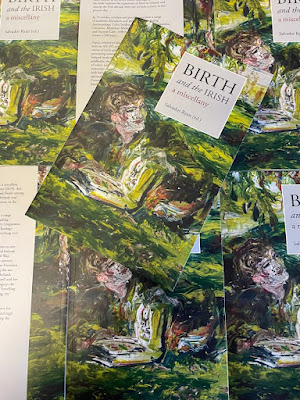
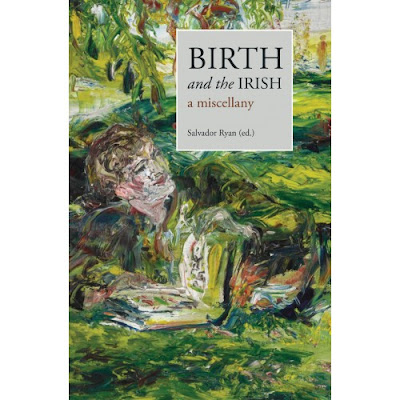
Birth and the Irish … the third in a series of books edited by Professor Salvador Ryan of Maynooth
Patrick Comerford
After a suitable period of gestation, Birth and the Irish: a miscellany, a new book by my friend and colleague, Professor Salvador Ryan of Maynooth, has been published this week by Wordwell Books, Dublin, in time for the Christmas market.
This new book follows the success of Death and the Irish: a Miscellany (2016), and Marriage and the Irish: a Miscellany (2019), and is the third volume in the series ‘Birth, Marriage and Death among the Irish.’
I have contributed to chapters to this book, which explores the experience of birth in Ireland, and among the Irish abroad, from the seventh century to the present day. The 78 chapters or papers reflect on pregnancy and birthing over almost 1,500 years. Salvador has brough together the work of scholars and practitioners from a range of academic disciplines and professions, including anthropology, Celtic studies, folklore, history, linguistics, literature, medicine, midwifery, obstetrics, theology and pastoral care.
The topics covered in this work include an 180-million-to-one birth in 657AD; pregnancy cravings in medieval Ireland; stories of birth and loss from the American Civil War; preventing unwanted pregnancies in 19th century Ireland; birth on the battlefield; childbirth on the Victorian goldfields; the caul in Irish folk belief; predicting the sex of babies – and chickens; infanticide in modern Ireland; maternity and ante-natal care, 1922-1960; foreign adoptions; Jane Russell and her Irish baby; childbirth in Irish film; LGBTQ surrogacy; the spirituality of birthing; birth customs among the Travelling Community; the Doula movement; hypnobirthing; the Mother and Baby Home report, and many more.
My two contributions to this new book, Chapters 23 and 32, are: ‘Albert Grant, the Victorian Fraudster Born in Poverty in Dublin’ (pp 104-107); and ‘Six Boys from Ballaghadreen with the Same Parents … but who was Born the Legitimate Heir?’ (pp 144-148). But … more about these topics in time in some future postings on this blog.
Meanwhile, the publishers promise this new anthology will serve as an indispensable resource for anyone interested in the social, cultural, religious and legal history of pregnancy and birth in Ireland and among the Irish from the earliest times to the present day.
Salvador Ryan is Professor of Ecclesiastical History, Saint Patrick’s College, Maynooth. His other published titles include Death and the Irish and Marriage and the Irish (Wordwell Books), Treasures of Irish Christianity (Veritas) and Religion and Politics in Urban Ireland (Four Courts Press).
● Birth and the Irish: a miscellany, Salvador Ryan (ed), Wordwell Books, Dublin, 288 pp, ISBN: 978-1-913934-61-3; €25.
Birth and the Irish … I have two chapters in this new book edited by Professor Salvador Ryan of Maynooth
Patrick Comerford
After a suitable period of gestation, Birth and the Irish: a miscellany, a new book by my friend and colleague, Professor Salvador Ryan of Maynooth, has been published this week by Wordwell Books, Dublin, in time for the Christmas market.
This new book follows the success of Death and the Irish: a Miscellany (2016), and Marriage and the Irish: a Miscellany (2019), and is the third volume in the series ‘Birth, Marriage and Death among the Irish.’
I have contributed to chapters to this book, which explores the experience of birth in Ireland, and among the Irish abroad, from the seventh century to the present day. The 78 chapters or papers reflect on pregnancy and birthing over almost 1,500 years. Salvador has brough together the work of scholars and practitioners from a range of academic disciplines and professions, including anthropology, Celtic studies, folklore, history, linguistics, literature, medicine, midwifery, obstetrics, theology and pastoral care.
The topics covered in this work include an 180-million-to-one birth in 657AD; pregnancy cravings in medieval Ireland; stories of birth and loss from the American Civil War; preventing unwanted pregnancies in 19th century Ireland; birth on the battlefield; childbirth on the Victorian goldfields; the caul in Irish folk belief; predicting the sex of babies – and chickens; infanticide in modern Ireland; maternity and ante-natal care, 1922-1960; foreign adoptions; Jane Russell and her Irish baby; childbirth in Irish film; LGBTQ surrogacy; the spirituality of birthing; birth customs among the Travelling Community; the Doula movement; hypnobirthing; the Mother and Baby Home report, and many more.
My two contributions to this new book, Chapters 23 and 32, are: ‘Albert Grant, the Victorian Fraudster Born in Poverty in Dublin’ (pp 104-107); and ‘Six Boys from Ballaghadreen with the Same Parents … but who was Born the Legitimate Heir?’ (pp 144-148). But … more about these topics in time in some future postings on this blog.
Meanwhile, the publishers promise this new anthology will serve as an indispensable resource for anyone interested in the social, cultural, religious and legal history of pregnancy and birth in Ireland and among the Irish from the earliest times to the present day.
Salvador Ryan is Professor of Ecclesiastical History, Saint Patrick’s College, Maynooth. His other published titles include Death and the Irish and Marriage and the Irish (Wordwell Books), Treasures of Irish Christianity (Veritas) and Religion and Politics in Urban Ireland (Four Courts Press).
● Birth and the Irish: a miscellany, Salvador Ryan (ed), Wordwell Books, Dublin, 288 pp, ISBN: 978-1-913934-61-3; €25.
Birth and the Irish … I have two chapters in this new book edited by Professor Salvador Ryan of Maynooth
28 October 2017
When Greece said ‘No’
and played its part
in saving democracy
The Greek flag flies beside the European flag and the flag of the Ecumenical Patriarchate at Arkadi Monastery in Crete (Photograph: Patrick Comerford, 2017)
Patrick Comerford
Today is Ohi Day or Oxi Day (Επέτειος του «'Οχι»), and it is celebrated throughout Greece and Cyprus and by Greek communities around the world on 28 October each year.
Ohi Day commemorates the day the Greek Prime minister Ioannis Metaxas rejected the ultimatum from the Italian Fascist dictator Benito Mussolini on 28 October 1940. This day also recalls the Greek counter-attack against invading Italian forces in the mountains of Pindus during World War II, and he Greek Resistance during the occupying Italians and Germans.
Mussolini’s ultimatum was presented to Metaxas by the Italian ambassador to Greece, Emanuele Grazzi, around 3 a.m. on the morning of 28 October 1940.
Mussolini demanded Greece would allow Axis forces to enter Greek territory and occupy certain unnamed strategic locations – or face war. It is said Metaxas replied with a one-word laconic response: Όχι (No!).
Despite popular aside, the actual reply was in French: ‘Alors, c’est la guerre!’ (‘Then it is war!’)
In an immediate response to Metaxas’s ‘No’, Italian troops based in Albania attacked the Greek border two hours later at 5.30 a.m. That ‘No!’ brought Greece into World War II on the side of the Allies. Indeed, for a period, Greece was Britain’s only ally against Hitler.
Without that ‘No,’ some historians argue, World War II could have lasted much longer. One theory is that had Greece surrendered without any resistance, Hitler could have invaded Russia in the spring, rather than his disastrous attempt to capture it during winter.
On this morning 77 years ago, 28 October 1940, Greek people of all political persuasions took to the streets in masses, shouting «'Οχι», ‘No!’ From 1942, this day was celebrated as Ohi Day, first within the resistance and then after the war by all the Greeks.
The Battle of Crete and the extra resources required to subdue Greece drained and distracted Nazi Germany from its efforts on other war fronts.
Today, Ohi Day is a public holiday in Greece and Cyprus. The events of 1940 are commemorated with military and student parades, public buildings are decorated with Greek flags, there folk dances, and Greek Orthodox churches hold special services. Coastal towns may have naval parades or other celebrations on the seafront. In Thessaloniki, reverence is also paid to the city’s patron, Saint Dimitrios, and the city celebrates its freedom from Turkey.
There are traffic delays, especially near parade routes, some streets are blocked off, and most archaeological sites are closed for the day, along with most businesses and services.
In Dublin, Ochi Day and the fallen will be marked at 11 a.m. tomorrow morning [Sunday 29 October 2017], during the Divine Liturgy in the Greek Orthodox Church, with the Greek Diplomatic Corps in attendance. This will be followed by a holiday banquet at the Mykonos Restaurant with Irish and Greek music.
In the West, politicians are always happy to credit ancient Greece with the development of democracy. But in the present crises in Europe, when Greece is often seen as a burden rather than a partner, it may be worth remembering that Europe owes modern Greece an unacknowledged debt for helping to preserve democracy against the Nazis and Fascists during World War II.
The Greek flag at the church in Tsesmes, near Rethymnon in Crete (Photograph: Patrick Comerford, 2017)
Patrick Comerford
Today is Ohi Day or Oxi Day (Επέτειος του «'Οχι»), and it is celebrated throughout Greece and Cyprus and by Greek communities around the world on 28 October each year.
Ohi Day commemorates the day the Greek Prime minister Ioannis Metaxas rejected the ultimatum from the Italian Fascist dictator Benito Mussolini on 28 October 1940. This day also recalls the Greek counter-attack against invading Italian forces in the mountains of Pindus during World War II, and he Greek Resistance during the occupying Italians and Germans.
Mussolini’s ultimatum was presented to Metaxas by the Italian ambassador to Greece, Emanuele Grazzi, around 3 a.m. on the morning of 28 October 1940.
Mussolini demanded Greece would allow Axis forces to enter Greek territory and occupy certain unnamed strategic locations – or face war. It is said Metaxas replied with a one-word laconic response: Όχι (No!).
Despite popular aside, the actual reply was in French: ‘Alors, c’est la guerre!’ (‘Then it is war!’)
In an immediate response to Metaxas’s ‘No’, Italian troops based in Albania attacked the Greek border two hours later at 5.30 a.m. That ‘No!’ brought Greece into World War II on the side of the Allies. Indeed, for a period, Greece was Britain’s only ally against Hitler.
Without that ‘No,’ some historians argue, World War II could have lasted much longer. One theory is that had Greece surrendered without any resistance, Hitler could have invaded Russia in the spring, rather than his disastrous attempt to capture it during winter.
On this morning 77 years ago, 28 October 1940, Greek people of all political persuasions took to the streets in masses, shouting «'Οχι», ‘No!’ From 1942, this day was celebrated as Ohi Day, first within the resistance and then after the war by all the Greeks.
The Battle of Crete and the extra resources required to subdue Greece drained and distracted Nazi Germany from its efforts on other war fronts.
Today, Ohi Day is a public holiday in Greece and Cyprus. The events of 1940 are commemorated with military and student parades, public buildings are decorated with Greek flags, there folk dances, and Greek Orthodox churches hold special services. Coastal towns may have naval parades or other celebrations on the seafront. In Thessaloniki, reverence is also paid to the city’s patron, Saint Dimitrios, and the city celebrates its freedom from Turkey.
There are traffic delays, especially near parade routes, some streets are blocked off, and most archaeological sites are closed for the day, along with most businesses and services.
In Dublin, Ochi Day and the fallen will be marked at 11 a.m. tomorrow morning [Sunday 29 October 2017], during the Divine Liturgy in the Greek Orthodox Church, with the Greek Diplomatic Corps in attendance. This will be followed by a holiday banquet at the Mykonos Restaurant with Irish and Greek music.
In the West, politicians are always happy to credit ancient Greece with the development of democracy. But in the present crises in Europe, when Greece is often seen as a burden rather than a partner, it may be worth remembering that Europe owes modern Greece an unacknowledged debt for helping to preserve democracy against the Nazis and Fascists during World War II.
The Greek flag at the church in Tsesmes, near Rethymnon in Crete (Photograph: Patrick Comerford, 2017)
17 October 2017
A lecture in Dublin marking
the ‘Year of Kazantzakis’
The grave of Nikos Kazantzakis in Crete has a simple epitaph: ‘I hope for nothing, I fear for nothing, I am free’ (Photograph: Patrick Comerford)
Patrick Comerford
The Greek Ministry of Culture has declared this year [2017] the ‘Year of Kazantzakis.’ Nikos Kazantzakis (1883-1957), one of the great Greek writers of the 20th century, died 60 years ago on 26 October 1957.
Kazantzakis was nominated on nine occasions for the Nobel Prize in Literature. His books include Zorba the Greek, Christ Recrucified, Captain Michalis (first published as Freedom or Death) and The Last Temptation of Christ.
By one vote, he lost the Nobel Prize for Literature to Albert Camus a few days before he died in 1957. He is buried on the bastion above Iraklion.
The Irish Hellenic Society opens its new season of lectures with an inaugural meeting in University College Dublin this Friday [20 October 2017] with a fresh look at the work of this great figure in modern Greek literature and philosophy.
Niki Stavrou is the publisher of Kazantzakis’s works and the Director of Kazantzakis Publications since May 2014. Her godmother, Eleni Kazantzakis, gave her the name Niki to honour and commemorate her late husband, Nikos Kazantzakis.
Niki spent her childhood listening to stories from the life of Eleni and her Nikos. Eleni read to her and meticulously explained one by one all the books of Nikos Kazantzakis, starting with his children’s books, Alexander the Great and At the Palaces of Knossos, and continuing with his translations of Dante and theatrical plays, enlightening every line with her deep knowledge of her beloved husband.
Even though at the time, Eleni lived in Geneva and the Stavrou family lived in Cyprus, Eleni regularly visited Cyprus and Greece to spend her holidays and work with Patroclos Stavrou.
When Eleni adopted Patroclos Stavrou in 1982, this formalised the already profound family relationship between Eleni Kazantzakis and the Stavrou family. Eleni used to quip that with that once official act of adoption she had acquired a son, a daughter-in-law, a granddaughter as well as a goddaughter. In July 1974, at the time of the Turkish invasion in Cyprus, Eleni Kazantzakis, Mary Stavrou and Niki’s nanny Angela Kapodistrias were together at the apartment Eleni had just bought in Kyrenia, as a gift to Niki.
Patroclos Stavrou was the chief of staff in the Presidential Palace for Archbishop Makarios, at the time of the coup and was arrested by the junta leaders. Meanwhile, from 1967 until 1974, Eleni Kazantzakis was unable to travel to Greece until the fall of the colonels’ junta. Ever since, she spent her summers and holidays with the Stavrou family.
Eleni Kazantzakis died on 18 February 2004 in the Henry Dunant Hospital in Athens, holding the hand of her adopted son, Patroclos Stavrou. I was visiting Athens at the time, and had arranged to meet her, only to find she died on the night I arrived.
Niki Stavrou studied philosophy and political sciences at the University of Indianapolis. She holds a master’s degree in English Literature and taught English and American History, Literature and Poetry before becoming the Director of Kazantzakis Publications.
In her research on the life of Nikos Kazantzakis and the real people behind the characters of Report to Greco, she has identified the first love of Nikos Kazantzakis, Kathleen Forde from Ireland.
Niki Stavrou is still working with a deep sense of commitment and respect for the promotion and dissemination of the work of Nikos Kazantzakis, following in the steps of her godmother, Eleni Kazantzakis, and her father, Patroclos Stavrou.
I have been invited to follow Niki Stavrou with next month’s lecture in this season’s programme of the Irish Hellenic Society. I am speaking on ‘Sir Edward Law (1846-1908): the Irish Philhellene who rescued the Greek economy in the 1890s.’ The lecture takes place on Wednesday 22 November 2017, at 7.30 pm in the United Arts Club, 3 Upper Fitzwilliam Street, Dublin 2.
Sir Edward Law (1846-1908): the subject of my lecture at the Irish Hellenic Society next month.
Patrick Comerford
The Greek Ministry of Culture has declared this year [2017] the ‘Year of Kazantzakis.’ Nikos Kazantzakis (1883-1957), one of the great Greek writers of the 20th century, died 60 years ago on 26 October 1957.
Kazantzakis was nominated on nine occasions for the Nobel Prize in Literature. His books include Zorba the Greek, Christ Recrucified, Captain Michalis (first published as Freedom or Death) and The Last Temptation of Christ.
By one vote, he lost the Nobel Prize for Literature to Albert Camus a few days before he died in 1957. He is buried on the bastion above Iraklion.
The Irish Hellenic Society opens its new season of lectures with an inaugural meeting in University College Dublin this Friday [20 October 2017] with a fresh look at the work of this great figure in modern Greek literature and philosophy.
Niki Stavrou is the publisher of Kazantzakis’s works and the Director of Kazantzakis Publications since May 2014. Her godmother, Eleni Kazantzakis, gave her the name Niki to honour and commemorate her late husband, Nikos Kazantzakis.
Niki spent her childhood listening to stories from the life of Eleni and her Nikos. Eleni read to her and meticulously explained one by one all the books of Nikos Kazantzakis, starting with his children’s books, Alexander the Great and At the Palaces of Knossos, and continuing with his translations of Dante and theatrical plays, enlightening every line with her deep knowledge of her beloved husband.
Even though at the time, Eleni lived in Geneva and the Stavrou family lived in Cyprus, Eleni regularly visited Cyprus and Greece to spend her holidays and work with Patroclos Stavrou.
When Eleni adopted Patroclos Stavrou in 1982, this formalised the already profound family relationship between Eleni Kazantzakis and the Stavrou family. Eleni used to quip that with that once official act of adoption she had acquired a son, a daughter-in-law, a granddaughter as well as a goddaughter. In July 1974, at the time of the Turkish invasion in Cyprus, Eleni Kazantzakis, Mary Stavrou and Niki’s nanny Angela Kapodistrias were together at the apartment Eleni had just bought in Kyrenia, as a gift to Niki.
Patroclos Stavrou was the chief of staff in the Presidential Palace for Archbishop Makarios, at the time of the coup and was arrested by the junta leaders. Meanwhile, from 1967 until 1974, Eleni Kazantzakis was unable to travel to Greece until the fall of the colonels’ junta. Ever since, she spent her summers and holidays with the Stavrou family.
Eleni Kazantzakis died on 18 February 2004 in the Henry Dunant Hospital in Athens, holding the hand of her adopted son, Patroclos Stavrou. I was visiting Athens at the time, and had arranged to meet her, only to find she died on the night I arrived.
Niki Stavrou studied philosophy and political sciences at the University of Indianapolis. She holds a master’s degree in English Literature and taught English and American History, Literature and Poetry before becoming the Director of Kazantzakis Publications.
In her research on the life of Nikos Kazantzakis and the real people behind the characters of Report to Greco, she has identified the first love of Nikos Kazantzakis, Kathleen Forde from Ireland.
Niki Stavrou is still working with a deep sense of commitment and respect for the promotion and dissemination of the work of Nikos Kazantzakis, following in the steps of her godmother, Eleni Kazantzakis, and her father, Patroclos Stavrou.
I have been invited to follow Niki Stavrou with next month’s lecture in this season’s programme of the Irish Hellenic Society. I am speaking on ‘Sir Edward Law (1846-1908): the Irish Philhellene who rescued the Greek economy in the 1890s.’ The lecture takes place on Wednesday 22 November 2017, at 7.30 pm in the United Arts Club, 3 Upper Fitzwilliam Street, Dublin 2.
Sir Edward Law (1846-1908): the subject of my lecture at the Irish Hellenic Society next month.
21 August 2017
A statue and small square in Athens honour George Canning, ‘an Irishman born in London’
The statue of George Canning in Πλατεία Κάνιγγος or Canning Square in central Athens (Photograph: Patrick Comerford, 2017)
Patrick Comerford
Akadimias Street (Οδός Ακαδημίας) in Athens, which runs parallel to Panepistimiou Street and Stadiou Street, runs for more than 1 km from Vassilissis Sofias Avenue at its south-east end in the Kolonaki district, to the junction of Kaningos Square and Tzortz Street in the Exarcheia district at its north-west end.
Following my visit to the Acropolis and the Parthenon at the weekend, I visited Tzortz Street, which is named after the Irish Philhellene, Sir Richard Church, and Tzortz is a poor Greek transliteration of Church.
This street leads off Πλατεία Κάνιγγος (Plateía Káningos) or Canning Square, which I also visited at the weekend. Plateía Káningos is named after George Canning in appreciation of his support of Greece during the Greek War of Independence (1821-1830).
George Canning, who was Britain’s shortest-serving prime minister, once described himself as ‘an Irishman born in London.’ He was born in London on 11 April 1770, and both his father and his mother were Irish-born.
His father, also George Canning, from Garvagh, Co Derry, was a gentleman of limited means, a failed wine merchant and barrister, who was disowned by his own father and renounced his right to inherit the family estate in exchange for the payment of substantial debts. George senior eventually abandoned the family and died in poverty in London on 11 April 1771, his son’s first birthday.
His mother, Mary Ann Costello (1747-1827), an actor, was born in Caher, Aghamore, Co Mayo. Her father, Jordan Costello, has been described as a Connacht squire. Mary Ann was apparently orphaned at an early age, and was brought up by her maternal grandfather in London.
Penniless but renowned for her beauty, she married George Canning in 1768. Their first child, a daughter, died within a few months. On 11 April 1770, Mary gave birth to a son, named George after his father.
When George senior died, Mary was pregnant and penniless again. To support herself and her small child, she became an actress and had her debut in Jane Shore at Drury Lane in November 1773. She toured provincial theatres with Samuel Reddish, and together they five children, including two sets of twins. Although there is no evidence they married, she called herself as Mrs Reddish.
Young George was taken from Mary and was made the ward of his wealthy uncle, Stratford Canning, a Whig banker also from Garvagh. She did not see him for eight years. In February 1783, she married her second or third husband, Richard Hunn, an unsuccessful silk mercer from Plymouth, and had five more children, including another set of twins.
Her career on stage continued to cause public scandal, and at the age of 12 George was told that his mother was unfit for respectable society.
The young George Canning was sent to Eton and then to Christ Church, Oxford. His time at Eton has been described as ‘a triumph almost without parallel. He proved a brilliant classicist, came top of the school, and excelled at public orations.’ In 1789, he won a prize for his Latin poem, The Pilgrimage to Mecca, which he recited in the Oxford Theatre.
At Eton and Oxford, he was acutely aware of his modest beginnings and his mother’s career. Perhaps as compensation, he developed early political ambitions, trained as a lawyer, and became an MP at the age of 23, under the patronage of the Tory Prime Minister, William Pitt the Younger.
He advocated amending the Corn Laws, Catholic emancipation and abolishing slavery. His first ministerial appointment came in 1795 as Under Secretary for Foreign Affairs. During the Napoleonic Wars, he was Paymaster of the Forces (1800-1801), Treasurer of the Navy (1804-1806) and Foreign Secretary (1807-1809).
While he was Foreign Secretary, Canning disagreed openly with the Secretary of State for War and the Colonies, Lord Castlereagh. When Castlereagh learned that Canning was plotting to have him dismissed, he challenged Canning to a duel. The two men faced each other at dawn on 21 September 1809 on Putney Heath. Canning had never before fired a pistol, and Castlereagh wounded him in the thigh.
King George III was furious and both men were forced to resign. Canning was generally blamed for the duel, and remained out of office for many years.
When Lord Liverpool became prime minister in 1812, he offered Canning the post of Foreign Secretary. Canning declined, because he wanted to be Leader of the House of Commons, a post held by Castlereagh. Instead, Canning accepted a diplomatic appointment to Portugal.
When Canning returned to London in 1816, he became president of the Board of Control. He resigned in 1820 in opposition to King George IV’s attempt to divorce Queen Caroline. Canning was her friend and adviser, and may have been her lover, but he was also out of sympathy with government policies on Europe.
Lord Liverpool wanted Canning back in the Cabinet, and in June 1821 tried to offer him the Admiralty or the Home Office to Canning. But King George IV refused, and wanted to get Canning out of the way by appointing him Governor-General of India.
Castlereagh – who was then foreign secretary – completed suicide on 12 August 1822. A month later, despite the king’s objections, Canning became Foreign Secretary and leader of the Commons.
Although Canning was a Tory, his foreign policy alarmed his conservative colleagues. After the Congress of Verona in 1822, he declined to take part in any further European Congresses. He boasted he had frustrated the ambitions of the continental powers, but the Duke of Wellington thought that Canning was trying to destroy the alliance on which the peace of Europe depended.
However, Canning was no forerunner of today’s ‘Brexiteers.’ On the contrary, he encouraged liberal and constitutional movements abroad, and his policies prevented any general interference by the reactionary powers with the development of liberty and national freedom in Europe and overseas.
Canning opposed the 1823 French invasion of Spain, was determined to keep France out of Spain’s Latin American colonies, and advocated the independence of Spain’s colonies, to the point of threatening to resign if Britain did not recognise the new republics. Although most of his colleagues disliked him and King George IV hated him, the Tories found they could not stay in power without him.
When Lord Liverpool suffered a stroke in February 1827 and resigned, Canning was the most senior minister in the Commons and was popular with the public. On 10 April 1827, George IV asked Canning to form a government. Once again, the snobbery about his humble origins surfaced, with Lord Grey remarking that ‘the son of an actress is, ipso facto, disqualified from becoming Prime Minister.’
The Duke of Wellington, Sir Robert Peel and five other members of Liverpool’s cabinet declined to serve under Canning, and many other Tories joined them in opposition. The Tories were split between the ‘High Tories’ and the moderates supporting Canning. Canning found it difficult to form a government and invited a number of Whigs to join his Cabinet, including Henry Petty-Fitzmaurice, 3rd Lord Lansdowne (and 4th Earl of Kerry).
Canning initiated a programme of progressive reforms, but he could not see them through. He was already ill when he took office, and he died in London 190 years ago on 8 August 1827. He was 57. He was Prime Minister for just 119 days – the shortest tenure of any British Prime Minister. Huge crowds attended his funeral at Westminster Abbey, where he is buried.
Canning gave diplomatic support to the Greeks in the struggle against the Turks for freedom, and ensured the eventual creation of an independent Greek state. In 1823, he extended recognition to the Greeks as belligerents, giving them rights in international law.
In 1827, he signed the Treaty of London with Russia and France, with the object of securing Greek independence. The treaty isolated Austria and put a check on Russian ambitions in the Eastern Mediterranean.
Two months after his death, Canning’s policy of ‘peaceful interference’ in the Greek War of Independence brought about the eventual destruction of the Turkish and Egyptian fleets by a combined British, French, and Russian fleet at the Battle of Navarino in October 1827.
This was the last great naval battle of the age of sail and was instrumental in ensuring that an independent Greece came into existence, although its precise borders took some years to negotiate.
Canning’s successor as Prime Minister, the Dublin-born Duke of Wellington, tried to undo his work by making a truce with Turkey, but the Treaty of London had secured Greek independence.
The statue of George Canning has a simple inscription: ‘George Canning 1770-1827’. It was unveiled by the Greek Prime Minister, Eleftherios Venizelos, on 6 April 1931, at a ceremony attended by Sir Patrick Ramsay, the British ambassador, and the English builder and developer Charles Boot (1874-1945), who donated the statue to the Greek nation.
Canning’s statue in Kaningos Square is carved in white Carrara marble and is the work of Sir Francis Chantrey. Perhaps Chantrey’s most famous works is ‘The Sleeping Children,’ a monument in Lichfield Cathedral to two girls of the Robinson family asleep in each other’s arms. Chantrey is also sculptor of the statue of Canning in the north transept in Westminster Abbey.
On the left side of the statue in Athens, under Canning’s books, is the discreet signature of the sculptor, ‘Chantrey Sculptor 1834’.
Why did Charles Boot donate the state to the Greek nation? The statue had been commissioned by the Duke of Sutherland, who had served in Canning’s statue. It remained at the Trentham estate until Boot bought it around the same time as his firm opened offices in Athens in 1920. One of the largest contracts his firm received was a £10 million Greek irrigation contract, awarded in 1927.
Boot donated the statue to the Greek nation, the Greek sculptor Dimitrios Perrakis (1893-1965) designed a new podium and plinth, and the statue was unveiled on 6 May 1931 as part of the celebrations of the centenary of the modern Greek State.
However, due to problems in the Greek economy and World War II and the Greek Civil War, Boot’s contract was not completed until 1952, seven years after he had died.
Today the plinth is covered in graffiti, but it is possible to pick out the name of Walter Reginald Basil Long (1918-1941) in a later, smaller inscription below Canning’s name: ‘Walter Reginald Basil Long 1918-1941 Τρισεγγονοσ του Καννιγκ Επεσεν υπερ τησ Ελλαδοσ’. Long was a lieutenant in Royal Artillery, and during World War II he was drowned in Greece on 28 April 1941 during the evacuation of British troops from mainland Greece.
Words at the back of the statue read: ‘Εισ τον Γεωργιο Καννιγκα 1770-1827 εκ των πρωτεργατων τησ Ελληνικησ Ελευθεριασ επι Δημαρχου Σπυρου Μερκουρη 1931,’ ‘In memory of George Canning 1770-1870, Champion of Greek Independence, [unveiled] by the Mayor, Spiros Mercouri, 1931.’
Spyridon Mercouris (1856-1939) was a long-time Mayor of Athens in the early 20th century. He was born into a prominent family that had taken part in the Greek War of Independence in the 1820s.
He became Mayor of Athens in 1899, and held the post until 1914. He was a right-wing conservative royalist, and was accused of complicity in riots in 1916. He was sentenced to death, but this was commuted by the Venizelist government to exile in Corsica in 1917. He was released from prison in 1920, was elected to Parliament in 1928, and was re-elected Mayor of Athens in 1929. He continued as Mayor of Athens until 1932, and died in 1939.
His granddaughter, the actor Melina Mercouri (1920-1994), was Minister of Culture and Tourism (1981-1989, 1993-1994) in the governments of Andreas Papandreou. She was a strong advocate for the return of the Parthenon Marbles to Athens from the British Museum in London. Her statue stands on Leoforos Vasilissis Amalias (Queen Amalia Avenue), near the entrance to the Acropolis and on the edges of the Plaka.
The statue of Melina Mercouri near the Acropolis … her grandfather unveiled the statue of George Canning (Photograph: Patrick Comerford, 2017)
Patrick Comerford
Akadimias Street (Οδός Ακαδημίας) in Athens, which runs parallel to Panepistimiou Street and Stadiou Street, runs for more than 1 km from Vassilissis Sofias Avenue at its south-east end in the Kolonaki district, to the junction of Kaningos Square and Tzortz Street in the Exarcheia district at its north-west end.
Following my visit to the Acropolis and the Parthenon at the weekend, I visited Tzortz Street, which is named after the Irish Philhellene, Sir Richard Church, and Tzortz is a poor Greek transliteration of Church.
This street leads off Πλατεία Κάνιγγος (Plateía Káningos) or Canning Square, which I also visited at the weekend. Plateía Káningos is named after George Canning in appreciation of his support of Greece during the Greek War of Independence (1821-1830).
George Canning, who was Britain’s shortest-serving prime minister, once described himself as ‘an Irishman born in London.’ He was born in London on 11 April 1770, and both his father and his mother were Irish-born.
His father, also George Canning, from Garvagh, Co Derry, was a gentleman of limited means, a failed wine merchant and barrister, who was disowned by his own father and renounced his right to inherit the family estate in exchange for the payment of substantial debts. George senior eventually abandoned the family and died in poverty in London on 11 April 1771, his son’s first birthday.
His mother, Mary Ann Costello (1747-1827), an actor, was born in Caher, Aghamore, Co Mayo. Her father, Jordan Costello, has been described as a Connacht squire. Mary Ann was apparently orphaned at an early age, and was brought up by her maternal grandfather in London.
Penniless but renowned for her beauty, she married George Canning in 1768. Their first child, a daughter, died within a few months. On 11 April 1770, Mary gave birth to a son, named George after his father.
When George senior died, Mary was pregnant and penniless again. To support herself and her small child, she became an actress and had her debut in Jane Shore at Drury Lane in November 1773. She toured provincial theatres with Samuel Reddish, and together they five children, including two sets of twins. Although there is no evidence they married, she called herself as Mrs Reddish.
Young George was taken from Mary and was made the ward of his wealthy uncle, Stratford Canning, a Whig banker also from Garvagh. She did not see him for eight years. In February 1783, she married her second or third husband, Richard Hunn, an unsuccessful silk mercer from Plymouth, and had five more children, including another set of twins.
Her career on stage continued to cause public scandal, and at the age of 12 George was told that his mother was unfit for respectable society.
The young George Canning was sent to Eton and then to Christ Church, Oxford. His time at Eton has been described as ‘a triumph almost without parallel. He proved a brilliant classicist, came top of the school, and excelled at public orations.’ In 1789, he won a prize for his Latin poem, The Pilgrimage to Mecca, which he recited in the Oxford Theatre.
At Eton and Oxford, he was acutely aware of his modest beginnings and his mother’s career. Perhaps as compensation, he developed early political ambitions, trained as a lawyer, and became an MP at the age of 23, under the patronage of the Tory Prime Minister, William Pitt the Younger.
He advocated amending the Corn Laws, Catholic emancipation and abolishing slavery. His first ministerial appointment came in 1795 as Under Secretary for Foreign Affairs. During the Napoleonic Wars, he was Paymaster of the Forces (1800-1801), Treasurer of the Navy (1804-1806) and Foreign Secretary (1807-1809).
While he was Foreign Secretary, Canning disagreed openly with the Secretary of State for War and the Colonies, Lord Castlereagh. When Castlereagh learned that Canning was plotting to have him dismissed, he challenged Canning to a duel. The two men faced each other at dawn on 21 September 1809 on Putney Heath. Canning had never before fired a pistol, and Castlereagh wounded him in the thigh.
King George III was furious and both men were forced to resign. Canning was generally blamed for the duel, and remained out of office for many years.
When Lord Liverpool became prime minister in 1812, he offered Canning the post of Foreign Secretary. Canning declined, because he wanted to be Leader of the House of Commons, a post held by Castlereagh. Instead, Canning accepted a diplomatic appointment to Portugal.
When Canning returned to London in 1816, he became president of the Board of Control. He resigned in 1820 in opposition to King George IV’s attempt to divorce Queen Caroline. Canning was her friend and adviser, and may have been her lover, but he was also out of sympathy with government policies on Europe.
Lord Liverpool wanted Canning back in the Cabinet, and in June 1821 tried to offer him the Admiralty or the Home Office to Canning. But King George IV refused, and wanted to get Canning out of the way by appointing him Governor-General of India.
Castlereagh – who was then foreign secretary – completed suicide on 12 August 1822. A month later, despite the king’s objections, Canning became Foreign Secretary and leader of the Commons.
Although Canning was a Tory, his foreign policy alarmed his conservative colleagues. After the Congress of Verona in 1822, he declined to take part in any further European Congresses. He boasted he had frustrated the ambitions of the continental powers, but the Duke of Wellington thought that Canning was trying to destroy the alliance on which the peace of Europe depended.
However, Canning was no forerunner of today’s ‘Brexiteers.’ On the contrary, he encouraged liberal and constitutional movements abroad, and his policies prevented any general interference by the reactionary powers with the development of liberty and national freedom in Europe and overseas.
Canning opposed the 1823 French invasion of Spain, was determined to keep France out of Spain’s Latin American colonies, and advocated the independence of Spain’s colonies, to the point of threatening to resign if Britain did not recognise the new republics. Although most of his colleagues disliked him and King George IV hated him, the Tories found they could not stay in power without him.
When Lord Liverpool suffered a stroke in February 1827 and resigned, Canning was the most senior minister in the Commons and was popular with the public. On 10 April 1827, George IV asked Canning to form a government. Once again, the snobbery about his humble origins surfaced, with Lord Grey remarking that ‘the son of an actress is, ipso facto, disqualified from becoming Prime Minister.’
The Duke of Wellington, Sir Robert Peel and five other members of Liverpool’s cabinet declined to serve under Canning, and many other Tories joined them in opposition. The Tories were split between the ‘High Tories’ and the moderates supporting Canning. Canning found it difficult to form a government and invited a number of Whigs to join his Cabinet, including Henry Petty-Fitzmaurice, 3rd Lord Lansdowne (and 4th Earl of Kerry).
Canning initiated a programme of progressive reforms, but he could not see them through. He was already ill when he took office, and he died in London 190 years ago on 8 August 1827. He was 57. He was Prime Minister for just 119 days – the shortest tenure of any British Prime Minister. Huge crowds attended his funeral at Westminster Abbey, where he is buried.
Canning gave diplomatic support to the Greeks in the struggle against the Turks for freedom, and ensured the eventual creation of an independent Greek state. In 1823, he extended recognition to the Greeks as belligerents, giving them rights in international law.
In 1827, he signed the Treaty of London with Russia and France, with the object of securing Greek independence. The treaty isolated Austria and put a check on Russian ambitions in the Eastern Mediterranean.
Two months after his death, Canning’s policy of ‘peaceful interference’ in the Greek War of Independence brought about the eventual destruction of the Turkish and Egyptian fleets by a combined British, French, and Russian fleet at the Battle of Navarino in October 1827.
This was the last great naval battle of the age of sail and was instrumental in ensuring that an independent Greece came into existence, although its precise borders took some years to negotiate.
Canning’s successor as Prime Minister, the Dublin-born Duke of Wellington, tried to undo his work by making a truce with Turkey, but the Treaty of London had secured Greek independence.
The statue of George Canning has a simple inscription: ‘George Canning 1770-1827’. It was unveiled by the Greek Prime Minister, Eleftherios Venizelos, on 6 April 1931, at a ceremony attended by Sir Patrick Ramsay, the British ambassador, and the English builder and developer Charles Boot (1874-1945), who donated the statue to the Greek nation.
Canning’s statue in Kaningos Square is carved in white Carrara marble and is the work of Sir Francis Chantrey. Perhaps Chantrey’s most famous works is ‘The Sleeping Children,’ a monument in Lichfield Cathedral to two girls of the Robinson family asleep in each other’s arms. Chantrey is also sculptor of the statue of Canning in the north transept in Westminster Abbey.
On the left side of the statue in Athens, under Canning’s books, is the discreet signature of the sculptor, ‘Chantrey Sculptor 1834’.
Why did Charles Boot donate the state to the Greek nation? The statue had been commissioned by the Duke of Sutherland, who had served in Canning’s statue. It remained at the Trentham estate until Boot bought it around the same time as his firm opened offices in Athens in 1920. One of the largest contracts his firm received was a £10 million Greek irrigation contract, awarded in 1927.
Boot donated the statue to the Greek nation, the Greek sculptor Dimitrios Perrakis (1893-1965) designed a new podium and plinth, and the statue was unveiled on 6 May 1931 as part of the celebrations of the centenary of the modern Greek State.
However, due to problems in the Greek economy and World War II and the Greek Civil War, Boot’s contract was not completed until 1952, seven years after he had died.
Today the plinth is covered in graffiti, but it is possible to pick out the name of Walter Reginald Basil Long (1918-1941) in a later, smaller inscription below Canning’s name: ‘Walter Reginald Basil Long 1918-1941 Τρισεγγονοσ του Καννιγκ Επεσεν υπερ τησ Ελλαδοσ’. Long was a lieutenant in Royal Artillery, and during World War II he was drowned in Greece on 28 April 1941 during the evacuation of British troops from mainland Greece.
Words at the back of the statue read: ‘Εισ τον Γεωργιο Καννιγκα 1770-1827 εκ των πρωτεργατων τησ Ελληνικησ Ελευθεριασ επι Δημαρχου Σπυρου Μερκουρη 1931,’ ‘In memory of George Canning 1770-1870, Champion of Greek Independence, [unveiled] by the Mayor, Spiros Mercouri, 1931.’
Spyridon Mercouris (1856-1939) was a long-time Mayor of Athens in the early 20th century. He was born into a prominent family that had taken part in the Greek War of Independence in the 1820s.
He became Mayor of Athens in 1899, and held the post until 1914. He was a right-wing conservative royalist, and was accused of complicity in riots in 1916. He was sentenced to death, but this was commuted by the Venizelist government to exile in Corsica in 1917. He was released from prison in 1920, was elected to Parliament in 1928, and was re-elected Mayor of Athens in 1929. He continued as Mayor of Athens until 1932, and died in 1939.
His granddaughter, the actor Melina Mercouri (1920-1994), was Minister of Culture and Tourism (1981-1989, 1993-1994) in the governments of Andreas Papandreou. She was a strong advocate for the return of the Parthenon Marbles to Athens from the British Museum in London. Her statue stands on Leoforos Vasilissis Amalias (Queen Amalia Avenue), near the entrance to the Acropolis and on the edges of the Plaka.
The statue of Melina Mercouri near the Acropolis … her grandfather unveiled the statue of George Canning (Photograph: Patrick Comerford, 2017)
20 August 2017
The Greeks have a word for it:
(18) theatre and drama
The Odeon or Theatre of Herodes Atticus on the southern slopes of the Acropolis (Photograph: Patrick Comerford, 2017)
Patrick Comerford
As I climbed the Acropolis in the summer sun on Saturday afternoon [19 August 2017], I stopped a number of times to admire the other sites that illustrate how this place was essential to the life and culture of ancient Athens.
They include, for example, the Theatre of Dionysus and the Herodium or Theatre of Herodes Atticus.
While I was in Crete in June and July, I blogged regularly about Greek words that we have adapted and integrated into the English language. But climbing up the Acropolis on Saturday, I was reminded too that words such as theatre, drama and tragedy are derived from Greek and the cultural life of classical Athens.
The word theatre comes from the Ancient Greek θέατρον (théatron), ‘a place for viewing’, itself from θεάομαι (theáomai), to see, to watch, or to observe.
Modern Western theatre comes owes its ideas, concepts and inspiration to ancient Greek drama, and borrows technical terminology, classification into genres, and many of its themes, stock characters, and plot elements.
Our concept of theatre originated in the city-state of Athens, where theatre was part of a broader culture of theatricality that included festivals, religious rituals, politics, law, athletics, the gymnasium, music, poetry, weddings, funerals, and symposia.
Taking part in the City Dionysia was mandatory for citizens of Athens,, either as member sof the audience or as participants, and was an important part of citizenship. Civic participation also involved the evaluation of the rhetoric of orators in the law courts and political assembly, both of which were analogous to the theatre and came to absorb its dramatic vocabulary.
The Theatre of Dionysus … the site of the great drama competitions in Athens (Photograph: Patrick Comerford, 2017; click on image for full-screen view)
The Theatre of Dionysus was the site of the great drama competitions, where tragedies and comedies by the great playwrights were performed before audiences of 15,000 people, with the engraved marble seats in the front rows reserved for the priests of Dionysus.
The Greeks also developed the concepts of dramatic criticism and theatre architecture. Actors were either amateur or semi-professional.
The theatre of ancient Greece consisted of three types of drama: tragedy, comedy, and the satyr play.
Aristotle was the first theoretician of theatre, and his Poetics (ca 335 BC) is the earliest work of dramatic theory. Aristotle considered drama as a genre of poetry in general, and he contrasted the dramatic mode with the epic and the lyrical modes.
He traced the origins of the theatre in ancient Greece to the festivals that honoured Dionysus. The performances took place in semi-circular auditoria cut into hillsides and seating 10,000 to 20,000 people in the audience. The stage consisted of a dancing floor (orchestra), dressing room and the scene-building area (skene).
Since the words were the most important part of the play, good acoustics and clear delivery mattered. The actors, who were always men, wore masks appropriate to the characters they represented, and each actor might play several parts.
Athenian tragedy – the oldest surviving form of tragedy – is a type of dance-drama that formed an important part of the theatrical culture of Athens. It emerged in the 6th century BC, flowered in the 5th century BC, and continued to be popular until the beginning of the Hellenistic period.
The word τραγῳδία (tragoidia), which gives us the word ‘tragedy,’ is a compound of two Greek words: τράγος (tragos) or ‘goat’ and ᾠδή (ode) meaning ‘song,’ from ἀείδειν (aeidein), ‘to sing.’ This etymology indicates a link with the practices of the ancient Dionysian cults.
We have no surviving tragedies from the 6th century BC, and only 32 of more than 1,000 that were performed in the 5th century BC have survived, with complete texts for plays by Aeschylus, Sophocles and Euripides.
The origins of tragedy remain obscure, though by the 5th century BC it was institutionalised in competitions (agon) held as part of the festivities celebrating Dionysus, the god of wine and fertility.
The Dionysian competition was the most prestigious of the festivals to stage drama. Playwrights were required to present plays that usually consisted of three tragedies and one satyr play. The performance of tragedies at the City Dionysia may have begun as early as 534 BC, when Pisistratus, the ruler of Athens, formalised the Dionysian festivals into full drama competitions that took place each year.
The first competition was won by Thespis, who is remembered for his innovation of the solo narrative. He gives his name to the word thespian, and the role he created is now known as the protagonist.
Most Athenian tragedies dramatise events from Greek mythology, although the notable exception is The Persians, which tells of the Persian response to the news of their military defeat at the Battle of Salamis in 480 BC. When Aeschylus won first prize for it at the City Dionysia in 472 BC, he had been writing tragedies for more than 25 years. However, this tragic treatment of recent history is the earliest example of drama to survive. His Oriestea tells of the house of Atreus, the most dysfunctional family in ancient Greece.
Aeschylus, who is regarded as the ‘Father of Tragedy,’ introduced the second innovation with the antagonist. Sophocles, who defeated Aeschylus in 468 BC, introduced a third innovation – a third character. Only seven plays by Sophocles have survived, and his reputation rests on the three plays in the Theban tragedies: Oedipus Rex, which is still considered the greatest masterpiece of tragedy, Oedipus at Colonus and Antigone.
After the age of great tragedy, Aristophanes, the greatest comic playwright, brought a breath of fresh air to Athenian drama. His raunchy, hilarious Lysistrata is one of the great anti-war protests of all time. The play tells of how the women of warring Sparta and Athens refused to sleep with their husbands until they stopped fighting.
Athenian comedy is usually divided into three periods, ‘Old Comedy,’ ‘Middle Comedy’ and ‘New Comedy.’ Old Comedy survives today largely in the 11 surviving plays of Aristophanes, while Middle Comedy is largely lost. New Comedy is known primarily from the substantial papyrus fragments of Menander, whose statue stands in front of the Theatre of Dionysus.
The statue of Menander in front of the Theatre of Dionysus (Photograph: Patrick Comerford, 2017)
Aristotle defined comedy as a representation of laughable people that involves some kind of blunder or ugliness that does not cause pain or disaster.
Drama is the specific mode of fiction represented in performance. Considered as a genre of poetry in general, the dramatic mode has been contrasted with the epic and the lyrical modes ever since Aristotle.
The word drama comes from the Greek word δρᾶμα (drama), meaning action, and which is derived from the verb δράω (drao), to do or to act. In Ancient Greece, however, the word drama encompassed all theatrical plays, tragic, comic, or anything in between.
Classical masks from the theatre in Athens on display in the Acropolis Museum (Photograph: Patrick Comerford, 2017)
The two masks associated with drama represent the traditional generic division between comedy and tragedy, and are symbols of the ancient Greek Muses, Thalia, and Melpomene. Thalia was the Muse of comedy (the laughing face), while Melpomene was the Muse of tragedy (the weeping face).
The Odeon of Herodes Atticus is a late addition to the Acropolis. It was built on the south slopes of the Acropolis in the year 161 CE by Herodes Atticus, a wealthy Roman, in memory of his wife Regilla. For almost 2,000 years, this amphitheatre was the premiere showcase for the performing arts in Athens.
The theatre was excavated in 1857-1858, and was restored between 1950 and 1961. In summer months, it is now a venue for summer festivals, concerts and plays.
Actors promoting a theatrical performance of classical drama in the square at Monastiraki (Photograph; Patrick Comerford, 2017)
Patrick Comerford
As I climbed the Acropolis in the summer sun on Saturday afternoon [19 August 2017], I stopped a number of times to admire the other sites that illustrate how this place was essential to the life and culture of ancient Athens.
They include, for example, the Theatre of Dionysus and the Herodium or Theatre of Herodes Atticus.
While I was in Crete in June and July, I blogged regularly about Greek words that we have adapted and integrated into the English language. But climbing up the Acropolis on Saturday, I was reminded too that words such as theatre, drama and tragedy are derived from Greek and the cultural life of classical Athens.
The word theatre comes from the Ancient Greek θέατρον (théatron), ‘a place for viewing’, itself from θεάομαι (theáomai), to see, to watch, or to observe.
Modern Western theatre comes owes its ideas, concepts and inspiration to ancient Greek drama, and borrows technical terminology, classification into genres, and many of its themes, stock characters, and plot elements.
Our concept of theatre originated in the city-state of Athens, where theatre was part of a broader culture of theatricality that included festivals, religious rituals, politics, law, athletics, the gymnasium, music, poetry, weddings, funerals, and symposia.
Taking part in the City Dionysia was mandatory for citizens of Athens,, either as member sof the audience or as participants, and was an important part of citizenship. Civic participation also involved the evaluation of the rhetoric of orators in the law courts and political assembly, both of which were analogous to the theatre and came to absorb its dramatic vocabulary.
The Theatre of Dionysus … the site of the great drama competitions in Athens (Photograph: Patrick Comerford, 2017; click on image for full-screen view)
The Theatre of Dionysus was the site of the great drama competitions, where tragedies and comedies by the great playwrights were performed before audiences of 15,000 people, with the engraved marble seats in the front rows reserved for the priests of Dionysus.
The Greeks also developed the concepts of dramatic criticism and theatre architecture. Actors were either amateur or semi-professional.
The theatre of ancient Greece consisted of three types of drama: tragedy, comedy, and the satyr play.
Aristotle was the first theoretician of theatre, and his Poetics (ca 335 BC) is the earliest work of dramatic theory. Aristotle considered drama as a genre of poetry in general, and he contrasted the dramatic mode with the epic and the lyrical modes.
He traced the origins of the theatre in ancient Greece to the festivals that honoured Dionysus. The performances took place in semi-circular auditoria cut into hillsides and seating 10,000 to 20,000 people in the audience. The stage consisted of a dancing floor (orchestra), dressing room and the scene-building area (skene).
Since the words were the most important part of the play, good acoustics and clear delivery mattered. The actors, who were always men, wore masks appropriate to the characters they represented, and each actor might play several parts.
Athenian tragedy – the oldest surviving form of tragedy – is a type of dance-drama that formed an important part of the theatrical culture of Athens. It emerged in the 6th century BC, flowered in the 5th century BC, and continued to be popular until the beginning of the Hellenistic period.
The word τραγῳδία (tragoidia), which gives us the word ‘tragedy,’ is a compound of two Greek words: τράγος (tragos) or ‘goat’ and ᾠδή (ode) meaning ‘song,’ from ἀείδειν (aeidein), ‘to sing.’ This etymology indicates a link with the practices of the ancient Dionysian cults.
We have no surviving tragedies from the 6th century BC, and only 32 of more than 1,000 that were performed in the 5th century BC have survived, with complete texts for plays by Aeschylus, Sophocles and Euripides.
The origins of tragedy remain obscure, though by the 5th century BC it was institutionalised in competitions (agon) held as part of the festivities celebrating Dionysus, the god of wine and fertility.
The Dionysian competition was the most prestigious of the festivals to stage drama. Playwrights were required to present plays that usually consisted of three tragedies and one satyr play. The performance of tragedies at the City Dionysia may have begun as early as 534 BC, when Pisistratus, the ruler of Athens, formalised the Dionysian festivals into full drama competitions that took place each year.
The first competition was won by Thespis, who is remembered for his innovation of the solo narrative. He gives his name to the word thespian, and the role he created is now known as the protagonist.
Most Athenian tragedies dramatise events from Greek mythology, although the notable exception is The Persians, which tells of the Persian response to the news of their military defeat at the Battle of Salamis in 480 BC. When Aeschylus won first prize for it at the City Dionysia in 472 BC, he had been writing tragedies for more than 25 years. However, this tragic treatment of recent history is the earliest example of drama to survive. His Oriestea tells of the house of Atreus, the most dysfunctional family in ancient Greece.
Aeschylus, who is regarded as the ‘Father of Tragedy,’ introduced the second innovation with the antagonist. Sophocles, who defeated Aeschylus in 468 BC, introduced a third innovation – a third character. Only seven plays by Sophocles have survived, and his reputation rests on the three plays in the Theban tragedies: Oedipus Rex, which is still considered the greatest masterpiece of tragedy, Oedipus at Colonus and Antigone.
After the age of great tragedy, Aristophanes, the greatest comic playwright, brought a breath of fresh air to Athenian drama. His raunchy, hilarious Lysistrata is one of the great anti-war protests of all time. The play tells of how the women of warring Sparta and Athens refused to sleep with their husbands until they stopped fighting.
Athenian comedy is usually divided into three periods, ‘Old Comedy,’ ‘Middle Comedy’ and ‘New Comedy.’ Old Comedy survives today largely in the 11 surviving plays of Aristophanes, while Middle Comedy is largely lost. New Comedy is known primarily from the substantial papyrus fragments of Menander, whose statue stands in front of the Theatre of Dionysus.
The statue of Menander in front of the Theatre of Dionysus (Photograph: Patrick Comerford, 2017)
Aristotle defined comedy as a representation of laughable people that involves some kind of blunder or ugliness that does not cause pain or disaster.
Drama is the specific mode of fiction represented in performance. Considered as a genre of poetry in general, the dramatic mode has been contrasted with the epic and the lyrical modes ever since Aristotle.
The word drama comes from the Greek word δρᾶμα (drama), meaning action, and which is derived from the verb δράω (drao), to do or to act. In Ancient Greece, however, the word drama encompassed all theatrical plays, tragic, comic, or anything in between.
Classical masks from the theatre in Athens on display in the Acropolis Museum (Photograph: Patrick Comerford, 2017)
The two masks associated with drama represent the traditional generic division between comedy and tragedy, and are symbols of the ancient Greek Muses, Thalia, and Melpomene. Thalia was the Muse of comedy (the laughing face), while Melpomene was the Muse of tragedy (the weeping face).
The Odeon of Herodes Atticus is a late addition to the Acropolis. It was built on the south slopes of the Acropolis in the year 161 CE by Herodes Atticus, a wealthy Roman, in memory of his wife Regilla. For almost 2,000 years, this amphitheatre was the premiere showcase for the performing arts in Athens.
The theatre was excavated in 1857-1858, and was restored between 1950 and 1961. In summer months, it is now a venue for summer festivals, concerts and plays.
Actors promoting a theatrical performance of classical drama in the square at Monastiraki (Photograph; Patrick Comerford, 2017)
18 November 2016
Richard Church (1784-1873):
an Irish Anglican in the Greek
Struggle for Independence
Image of Sir Richard Church from his grave in the First Cemetery, Athens. Photograph: Patrick Comerford
Patrick Comerford
The poet Lord Byron and the Philhellenes are often portrayed as English romantics who devoted their lives to the cause of Greek independence in the early 19th century. But there were Irish Philhellenes too, including Sir Richard Church (1784-1873), who has been described as the ‘liege lord of all true Philhellenes.’ This forgotten Irish hero is commemorated in windows and memorials in Saint Paul’s Anglican Church in Athens, where a plaque claims he won the affection of the people of Greece ‘for himself and for England.’ Yet Church was Irish-born and his commitment to Greece was fired by his faith as an Anglican.
Church was born in Cork into a Quaker merchant family. In his youth, he ran away to join the army. His Quaker parents were disowned or excommunicated for buying him a commission and so they became Anglicans. He arrived in Greece in 1800 as a 16-year-old ensign serving under Sir Hudson Lowe from Galway. Lowe, who is remembered as Napoleon’s jailer, was the second-in-command in the expedition to the Ionian Islands.
Church took part in the capture of Kephalonia, Ithaki, Lefkhada, Zakynthos and Kythera. He wrote home: ‘The Greeks, who are slaves to the Turks and are Christians, are ... a brave, honest, open generous people.’ He soon began providing military training for Greek revolutionaries, including Theodoros Kolokotronis, who became the pre-eminent general in the Greek War of Independence. Church recruited the Greeks troops who captured Paxos and the town of Parga on the mainland, and assisted in the negotiations for the surrender of Corfu. By then, he had become ‘more Greek than the Greeks.’
At the Congress of Vienna, he argued for an independent Greece. But he was ordered to disband his Greek regiments, the Ionian Islands became a British colony, and, in an act of treachery, Parga was sold to Ali Pasha (1740-1822). A disappointed Church left Greece for a military career in Austria and Italy. But when the Greek War of Independence broke out in 1821, Kolokotronis and Edward Blaquière, a Dublin seaman of Huguenot descent, campaigned to bring Church back to lead the armed forces.
Two weeks after Church married Elizabeth Augusta Wilmot, who was sister-in-law of the Earl of Kenmare and related by marriage to Byron, the Greek government invited Church to take command of the army. After an absence of 12 years, he returned to Greece in 1827 to a hero’s welcome. He played a decisive role in uniting the Greek factions and in the election of Ioannis Kapodistrias as President, and Church was sworn into office on Easter Day, 15 April 1827.
One of his first actions was a disastrous attempt to drive off a Turkish force besieging the tiny Greek garrison in the Acropolis in Athens. But he soon rallied his forces and stirred a fresh rebellion across the northern Peloponnese. A major turning point in the War of Independence came at the Battle of Navarino, the last sea battle of the age of sail. Thanks largely to the actions of Church and Gawin Rowan Hamilton, an Irish officer in the British navy, a large Turkish naval force was defeated in a four-hour battle in October 1827. Turkey’s naval power was broken and Church rejoiced at what he called “this signal interposition of divine Providence.”
Church found it increasingly difficult to work with Kapodistrias, resigned and left Greece. But he soon relented, returned to Greece permanently, and became a Greek citizen. In 1834, he and his wife moved into a house in the heart of the Plaka, beneath the Acropolis in Athens.
King Otho (r. 1832-62) restored Church to the rank of general and appointed him Inspector-General of the army. But Otho was a despot, and in 1843 Church played a key role in a coup d’état, presenting the king with an ultimatum that demanded reforms or his abdication. Otho later took his revenge on Church, dismissing him as Inspector-General. But Church remained a life senator and during the Crimean War (1853-56) he was recalled as a general. A popular revolt in 1862 finally forced Otho to abdicate.
When Church died in his ninetieth year on 27 March 1873, he received a public funeral and was buried in the First Cemetery of Athens, close to Kolokotronis and the heroes of the War of Independence. In his oration, the Greek Ambassador to London, Ioannis Gennadios, described Church as ‘the truest Hellene, the most steadfast and most affectionate of the sons of Greece.’
In all, 31 people of Irish birth or with an Irish identity took part in Greek political life during the struggle for the independence and consolidation of the modern Greek state. But, unlike Byron, few of the Irish Philhellenes were romantics: their motivations were often political, and many saw the cause of Greece as the cause of an oppressed and persecuted Christian people. Church, who often travelled with nothing more than his Bible and his sword, believed the Greek struggle was a holy war.
This connection between his faith and action is seen in Saint Paul’s Anglican Church, Athens, where two sets of windows to his memory use Old Testament imagery to represent the Greeks as the chosen people and Greece as the Promised Land. Church is represented as Caleb who helps them capture the land from the Gentiles, and as David who, despite his stature, defeats the Philistines. The inference is that the Turks were Amalekites or the Philistines who deprived the Chosen People of the Promised Land.
The inscription on the brass tablet below the two-light north window was composed by the British Prime Minister, William Gladstone, who unveiled the plaque in 1873. The south windows were presented in 1875 by the Church family, including his nephew, Richard Church, Dean of Saint Paul’s Cathedral, London, and a friend of Newman and the Tractarians.
Church’s grave is marked by a tall slender column with his carved profile, and topped with a Greek cross and a laurel wreath. The simple inscription reads: ‘Richard Church General who having given himself and all that he had to rescue a Christian race from oppression and to make Greece a nation lived for her service and died amongst her people rests here in peace and faith.’
Further Reading:
Douglas Dakin, British and American Philhellenes during the Greek War of Independence, 1821–1833 (Thessaloniki: Institute for Balkan Studies, 1955). William St Clair, That Greece Might Still be Free: the Philhellenes in the War of Independence (Oxford and London: OUP, 1972).
C.M. Woodhouse, The Philhellenes (London: Hodder & Stoughton, 1969).
Biographical Note from List of Contributors:
Patrick Comerford is Lecturer in Anglicanism and Liturgy and Church History at the Church of Ireland Theological Institute and a canon of Christ Church Cathedral, Dublin.
‘Richard Church (1784–1873): An Irish Anglican in the Greek Struggle for Independence’, was first published in Salvador Ryan (ed), Treasures of Ireland, Vol III, To the Ends of the Earth (Dublin, Veritas, 2015), pp 117–120.
Patrick Comerford
The poet Lord Byron and the Philhellenes are often portrayed as English romantics who devoted their lives to the cause of Greek independence in the early 19th century. But there were Irish Philhellenes too, including Sir Richard Church (1784-1873), who has been described as the ‘liege lord of all true Philhellenes.’ This forgotten Irish hero is commemorated in windows and memorials in Saint Paul’s Anglican Church in Athens, where a plaque claims he won the affection of the people of Greece ‘for himself and for England.’ Yet Church was Irish-born and his commitment to Greece was fired by his faith as an Anglican.
Church was born in Cork into a Quaker merchant family. In his youth, he ran away to join the army. His Quaker parents were disowned or excommunicated for buying him a commission and so they became Anglicans. He arrived in Greece in 1800 as a 16-year-old ensign serving under Sir Hudson Lowe from Galway. Lowe, who is remembered as Napoleon’s jailer, was the second-in-command in the expedition to the Ionian Islands.
Church took part in the capture of Kephalonia, Ithaki, Lefkhada, Zakynthos and Kythera. He wrote home: ‘The Greeks, who are slaves to the Turks and are Christians, are ... a brave, honest, open generous people.’ He soon began providing military training for Greek revolutionaries, including Theodoros Kolokotronis, who became the pre-eminent general in the Greek War of Independence. Church recruited the Greeks troops who captured Paxos and the town of Parga on the mainland, and assisted in the negotiations for the surrender of Corfu. By then, he had become ‘more Greek than the Greeks.’
At the Congress of Vienna, he argued for an independent Greece. But he was ordered to disband his Greek regiments, the Ionian Islands became a British colony, and, in an act of treachery, Parga was sold to Ali Pasha (1740-1822). A disappointed Church left Greece for a military career in Austria and Italy. But when the Greek War of Independence broke out in 1821, Kolokotronis and Edward Blaquière, a Dublin seaman of Huguenot descent, campaigned to bring Church back to lead the armed forces.
Two weeks after Church married Elizabeth Augusta Wilmot, who was sister-in-law of the Earl of Kenmare and related by marriage to Byron, the Greek government invited Church to take command of the army. After an absence of 12 years, he returned to Greece in 1827 to a hero’s welcome. He played a decisive role in uniting the Greek factions and in the election of Ioannis Kapodistrias as President, and Church was sworn into office on Easter Day, 15 April 1827.
One of his first actions was a disastrous attempt to drive off a Turkish force besieging the tiny Greek garrison in the Acropolis in Athens. But he soon rallied his forces and stirred a fresh rebellion across the northern Peloponnese. A major turning point in the War of Independence came at the Battle of Navarino, the last sea battle of the age of sail. Thanks largely to the actions of Church and Gawin Rowan Hamilton, an Irish officer in the British navy, a large Turkish naval force was defeated in a four-hour battle in October 1827. Turkey’s naval power was broken and Church rejoiced at what he called “this signal interposition of divine Providence.”
Church found it increasingly difficult to work with Kapodistrias, resigned and left Greece. But he soon relented, returned to Greece permanently, and became a Greek citizen. In 1834, he and his wife moved into a house in the heart of the Plaka, beneath the Acropolis in Athens.
King Otho (r. 1832-62) restored Church to the rank of general and appointed him Inspector-General of the army. But Otho was a despot, and in 1843 Church played a key role in a coup d’état, presenting the king with an ultimatum that demanded reforms or his abdication. Otho later took his revenge on Church, dismissing him as Inspector-General. But Church remained a life senator and during the Crimean War (1853-56) he was recalled as a general. A popular revolt in 1862 finally forced Otho to abdicate.
When Church died in his ninetieth year on 27 March 1873, he received a public funeral and was buried in the First Cemetery of Athens, close to Kolokotronis and the heroes of the War of Independence. In his oration, the Greek Ambassador to London, Ioannis Gennadios, described Church as ‘the truest Hellene, the most steadfast and most affectionate of the sons of Greece.’
In all, 31 people of Irish birth or with an Irish identity took part in Greek political life during the struggle for the independence and consolidation of the modern Greek state. But, unlike Byron, few of the Irish Philhellenes were romantics: their motivations were often political, and many saw the cause of Greece as the cause of an oppressed and persecuted Christian people. Church, who often travelled with nothing more than his Bible and his sword, believed the Greek struggle was a holy war.
This connection between his faith and action is seen in Saint Paul’s Anglican Church, Athens, where two sets of windows to his memory use Old Testament imagery to represent the Greeks as the chosen people and Greece as the Promised Land. Church is represented as Caleb who helps them capture the land from the Gentiles, and as David who, despite his stature, defeats the Philistines. The inference is that the Turks were Amalekites or the Philistines who deprived the Chosen People of the Promised Land.
The inscription on the brass tablet below the two-light north window was composed by the British Prime Minister, William Gladstone, who unveiled the plaque in 1873. The south windows were presented in 1875 by the Church family, including his nephew, Richard Church, Dean of Saint Paul’s Cathedral, London, and a friend of Newman and the Tractarians.
Church’s grave is marked by a tall slender column with his carved profile, and topped with a Greek cross and a laurel wreath. The simple inscription reads: ‘Richard Church General who having given himself and all that he had to rescue a Christian race from oppression and to make Greece a nation lived for her service and died amongst her people rests here in peace and faith.’
Further Reading:
Douglas Dakin, British and American Philhellenes during the Greek War of Independence, 1821–1833 (Thessaloniki: Institute for Balkan Studies, 1955). William St Clair, That Greece Might Still be Free: the Philhellenes in the War of Independence (Oxford and London: OUP, 1972).
C.M. Woodhouse, The Philhellenes (London: Hodder & Stoughton, 1969).
Biographical Note from List of Contributors:
Patrick Comerford is Lecturer in Anglicanism and Liturgy and Church History at the Church of Ireland Theological Institute and a canon of Christ Church Cathedral, Dublin.
‘Richard Church (1784–1873): An Irish Anglican in the Greek Struggle for Independence’, was first published in Salvador Ryan (ed), Treasures of Ireland, Vol III, To the Ends of the Earth (Dublin, Veritas, 2015), pp 117–120.
30 October 2016
Walking on the beaches in Portrane and
Donabate as the evening closes in
Evening lights on the Burrow Beach in Portrane (Photograph; Patrick Comerford, 2016; click on image for full-screen view)
Patrick Comerford
These last few days have been beautiful, with clear blue skies and warm sunshine. The clocks went back last night, so the mornings are brighter but it was noticeable this evening how the darkness is going to close in so early from now on.
Tomorrow’s unusual bank holiday has added to the opportunities provided this weekend, and so there have been visits to Wexford on Friday [28 October 2016] to enjoy some of the programmes of the Wexford Festival Opera, and to Co Meath yesterday [29 October 2016], which included a walk along the banks of the River Boyne at Trim and through the vast ruins of Trim Castle.
I was in my stall in Christ Church Cathedral this morning for the Sung Eucharist, and later six of us went for lunch in Mykonos, the Greek taverna on Dame Street.
But the afternoon was still warm and bright, and rather than staying on in the city centre, two of us went out to Portrane and Donabate to walk on the beaches and to catch the sunset.
I had ideas too of photographing Stella’s Tower in Portrane. Next year marks the 350th anniversary of the birth of Jonathan Swift, and as I began to plan an essay on the best-known Dean of Saint Patrick’s Cathedral, I thought the story of Stella’s Tower or Portrane Castle and its associations with Swift would be worth taking another look at.
After a walk on the beach at Portrane, and a visit to cousins at the Quay, the early dusk caught me unawares, and I never found my way into the field where the ruins of the castle stand.
Instead, we went on to Donabate, where the tide was out and two of us enjoyed a long walk on the sandy beach, catching glimpses of the setting sun behind the sand dunes.
I was back in south Dublin in time to hear the History Show presented by Myles Dungan on RTÉ Radio 1, and my interviews with Louise Dervin about how the bodies of JJ Murphy and the ‘Pickled’ Earl of Mayo were brought back from Italy and India in unusual circumstances for burial in Ireland.
Sunset behind the sand dunes on the beach in Donabate this evening (Photograph; Patrick Comerford, 2016; click on image for full-screen view)
Patrick Comerford
These last few days have been beautiful, with clear blue skies and warm sunshine. The clocks went back last night, so the mornings are brighter but it was noticeable this evening how the darkness is going to close in so early from now on.
Tomorrow’s unusual bank holiday has added to the opportunities provided this weekend, and so there have been visits to Wexford on Friday [28 October 2016] to enjoy some of the programmes of the Wexford Festival Opera, and to Co Meath yesterday [29 October 2016], which included a walk along the banks of the River Boyne at Trim and through the vast ruins of Trim Castle.
I was in my stall in Christ Church Cathedral this morning for the Sung Eucharist, and later six of us went for lunch in Mykonos, the Greek taverna on Dame Street.
But the afternoon was still warm and bright, and rather than staying on in the city centre, two of us went out to Portrane and Donabate to walk on the beaches and to catch the sunset.
I had ideas too of photographing Stella’s Tower in Portrane. Next year marks the 350th anniversary of the birth of Jonathan Swift, and as I began to plan an essay on the best-known Dean of Saint Patrick’s Cathedral, I thought the story of Stella’s Tower or Portrane Castle and its associations with Swift would be worth taking another look at.
After a walk on the beach at Portrane, and a visit to cousins at the Quay, the early dusk caught me unawares, and I never found my way into the field where the ruins of the castle stand.
Instead, we went on to Donabate, where the tide was out and two of us enjoyed a long walk on the sandy beach, catching glimpses of the setting sun behind the sand dunes.
I was back in south Dublin in time to hear the History Show presented by Myles Dungan on RTÉ Radio 1, and my interviews with Louise Dervin about how the bodies of JJ Murphy and the ‘Pickled’ Earl of Mayo were brought back from Italy and India in unusual circumstances for burial in Ireland.
Sunset behind the sand dunes on the beach in Donabate this evening (Photograph; Patrick Comerford, 2016; click on image for full-screen view)
Talking about the ‘Pickled Earl’ and bringing
the bodies home on ‘The History Show’
Palmerstown House, near Johnstown, the family home of the Earls of Mayo outside Naas, Co Kildare (Photograph: Patrick Comerford, 2016)
Patrick Comerford
I have contributed two essays to a new book on death and the Irish, which has been edited by my friend and colleague, Salvador Ryan, Professor of Church History in Maynooth. Death and the Irish: a miscellany is published by Wordwell, and is being launched next week [10 November 2016] in the Royal Irish Academy, Dublin. I was interviewed by Louise Dervin in Christ Church Cathedral and Saint Patrick's Cathedral, Dublin, yesterday about these chapters for The History Show, presented by Myles Dungan and which goes out on RTÉ Radio 1 at 6.05 p.m. this evening [30 October 2016].
In one chapter, ‘Bringing the bodies home,’ I tell the story of the difficulties faced by the families of Jeremiah James Murphy and the 6th Earl of Mayo when it came to bringing their bodies home after their tragic deaths abroad in the 1850s and the 1870s.
Air travel has reduced the stress when grieving Irish families have to arrange to bring home the bodies of loved ones, but it was not so easy in Victorian days. Families either had to accept someone was going to be buried overseas and or had to find innovative, sometimes even irreverent, ways to bring home the bodies for burial.
Jeremiah James Murphy (1795-1851), of Lota Park, outside Cork, was in his 50s when he went on the grand tour of Italy. He died in Pisa on 29 November 1851, but getting his body home to Ireland proved difficult for his family. The sailors at Naples feared taking the coffin on board would bring them bad luck at sea. The Murphy family, however, out-witted the sailors by putting his body in an upright piano which they then shipped back to Ireland. He was buried almost two months later on 18 January 1852 in Carrigrohane, Co Cork ... still in the upright piano.
Richard Southwell Bourke (1822-1872), of Palmerstown House, Co Kildare, was the 6th Earl of Mayo. He was murdered in India in 1872 and is buried in Johnstown Churchyard, near Naas, Co Kildare. He is known as the ‘Pickled Earl’ since his body was preserved in a vat of rum on the long journey back to Ireland following his assassination.
When he became the Viceroy and Governor-General of India in 1869, .he gave instructions that should anything happen to him his body was to be brought back for burial in Johnstown. He was visiting a convict settlement in the Andaman Islands when he was attacked by an Afghan convict, Sher Ali Afridi, who murdered him on 8 February 1872. His partially-embalmed body was shipped home to Ireland, but in order to delay decomposition, his body was placed in a rum-filled cask ... and so he became known as the ‘Pickled Earl.’
To add spice to the story, when the cask was opened the body was there but there was no rum. Had it leaked out? Had it evaporated? Had it been drained off by the crew?
The memorial window in Saint Patrick’s Cathedral, Dublin, commemorating Richard Burke, 6th Earl of Mayo, and his murder in India (Photograph: Patrick Comerford, 2016)
In my second contribution to the book, I tell the story of ‘Abide with Me,’ one of the most popular funeral hymns in the English-speaking world. It is said to have been a favourite of a wide range of people, from George V to Gandhi, it was played by the band on the deck as the Titanic was sinking, and Nurse Edith Cavell repeated its words as she faced her firing squad. Since 1927, this hymn has been sung at every FA Cup Final in Wembley.
This perennially popular funeral hymn was written as he was dying by a priest of the Church of Ireland, the Revd Henry Francis Lyte (1793-1847). Although born in Scotland, Lyte was brought to Ireland, and was educated in Portora and Trinity College Dublin.
After his ordination, Lyte’s first appointment was as curate of Saint Munn’s Church, Taghmon, Co Wexford. He described his 18 months in Taghmon as a ‘dreary curacy.’ Taghmon was too remote from town life, and he bemoaned the loss of ‘the comfort, the society and the carelessness’ of constant intrusions, the long dinner parties, and the time he had to give to neighbours and parishioners.
But the spiritual outlook and religious values of the unhappy curate were changed as he watched the death of a neighbouring rector, the Revd Abraham Swanne, and took over his duties in the parish of Killurin, on the banks of the Slaney, between Wexford and Enniscorthy.
Lyte’s health never recovered fully after his experiences in Taghmon and Killurin. In September 1847, he preached his farewell sermon, on the subject of the Eucharist, returned to his vicarage and that evening wrote ‘Abide with Me.’ The hymn is marked in part by Lyte’s experience of comforting the dying Abraham Swanne, who kept repeating the words ‘Lord, abide with me.’
Lyte died in Nice on 20 November 1847 and was buried in the English Cemetery there. He is commemorated by plaques in Saint Munn’s Church in Taghmon, Co Wexford, but ‘Abide with Me’ is his greatest memorial.
The History Show seeks to bring the past to life and to explain ourselves to ourselves, searching out fresh angles on familiar topics, with informative, reflective, stimulating and entertaining radio. It is broadcast on Sundays from 6.05 p.m. on RTÉ Radio 1.
Henry Francis Lyte’s first appointment was as curate of Saint Munn’s Church, Taghmon, Co Wexford (Photograph: Patrick Comerford, 2015)
Patrick Comerford
I have contributed two essays to a new book on death and the Irish, which has been edited by my friend and colleague, Salvador Ryan, Professor of Church History in Maynooth. Death and the Irish: a miscellany is published by Wordwell, and is being launched next week [10 November 2016] in the Royal Irish Academy, Dublin. I was interviewed by Louise Dervin in Christ Church Cathedral and Saint Patrick's Cathedral, Dublin, yesterday about these chapters for The History Show, presented by Myles Dungan and which goes out on RTÉ Radio 1 at 6.05 p.m. this evening [30 October 2016].
In one chapter, ‘Bringing the bodies home,’ I tell the story of the difficulties faced by the families of Jeremiah James Murphy and the 6th Earl of Mayo when it came to bringing their bodies home after their tragic deaths abroad in the 1850s and the 1870s.
Air travel has reduced the stress when grieving Irish families have to arrange to bring home the bodies of loved ones, but it was not so easy in Victorian days. Families either had to accept someone was going to be buried overseas and or had to find innovative, sometimes even irreverent, ways to bring home the bodies for burial.
Jeremiah James Murphy (1795-1851), of Lota Park, outside Cork, was in his 50s when he went on the grand tour of Italy. He died in Pisa on 29 November 1851, but getting his body home to Ireland proved difficult for his family. The sailors at Naples feared taking the coffin on board would bring them bad luck at sea. The Murphy family, however, out-witted the sailors by putting his body in an upright piano which they then shipped back to Ireland. He was buried almost two months later on 18 January 1852 in Carrigrohane, Co Cork ... still in the upright piano.
Richard Southwell Bourke (1822-1872), of Palmerstown House, Co Kildare, was the 6th Earl of Mayo. He was murdered in India in 1872 and is buried in Johnstown Churchyard, near Naas, Co Kildare. He is known as the ‘Pickled Earl’ since his body was preserved in a vat of rum on the long journey back to Ireland following his assassination.
When he became the Viceroy and Governor-General of India in 1869, .he gave instructions that should anything happen to him his body was to be brought back for burial in Johnstown. He was visiting a convict settlement in the Andaman Islands when he was attacked by an Afghan convict, Sher Ali Afridi, who murdered him on 8 February 1872. His partially-embalmed body was shipped home to Ireland, but in order to delay decomposition, his body was placed in a rum-filled cask ... and so he became known as the ‘Pickled Earl.’
To add spice to the story, when the cask was opened the body was there but there was no rum. Had it leaked out? Had it evaporated? Had it been drained off by the crew?
The memorial window in Saint Patrick’s Cathedral, Dublin, commemorating Richard Burke, 6th Earl of Mayo, and his murder in India (Photograph: Patrick Comerford, 2016)
In my second contribution to the book, I tell the story of ‘Abide with Me,’ one of the most popular funeral hymns in the English-speaking world. It is said to have been a favourite of a wide range of people, from George V to Gandhi, it was played by the band on the deck as the Titanic was sinking, and Nurse Edith Cavell repeated its words as she faced her firing squad. Since 1927, this hymn has been sung at every FA Cup Final in Wembley.
This perennially popular funeral hymn was written as he was dying by a priest of the Church of Ireland, the Revd Henry Francis Lyte (1793-1847). Although born in Scotland, Lyte was brought to Ireland, and was educated in Portora and Trinity College Dublin.
After his ordination, Lyte’s first appointment was as curate of Saint Munn’s Church, Taghmon, Co Wexford. He described his 18 months in Taghmon as a ‘dreary curacy.’ Taghmon was too remote from town life, and he bemoaned the loss of ‘the comfort, the society and the carelessness’ of constant intrusions, the long dinner parties, and the time he had to give to neighbours and parishioners.
But the spiritual outlook and religious values of the unhappy curate were changed as he watched the death of a neighbouring rector, the Revd Abraham Swanne, and took over his duties in the parish of Killurin, on the banks of the Slaney, between Wexford and Enniscorthy.
Lyte’s health never recovered fully after his experiences in Taghmon and Killurin. In September 1847, he preached his farewell sermon, on the subject of the Eucharist, returned to his vicarage and that evening wrote ‘Abide with Me.’ The hymn is marked in part by Lyte’s experience of comforting the dying Abraham Swanne, who kept repeating the words ‘Lord, abide with me.’
Lyte died in Nice on 20 November 1847 and was buried in the English Cemetery there. He is commemorated by plaques in Saint Munn’s Church in Taghmon, Co Wexford, but ‘Abide with Me’ is his greatest memorial.
The History Show seeks to bring the past to life and to explain ourselves to ourselves, searching out fresh angles on familiar topics, with informative, reflective, stimulating and entertaining radio. It is broadcast on Sundays from 6.05 p.m. on RTÉ Radio 1.
Henry Francis Lyte’s first appointment was as curate of Saint Munn’s Church, Taghmon, Co Wexford (Photograph: Patrick Comerford, 2015)
Subscribe to:
Posts (Atom)