Showing posts with label Canterbury. Show all posts

19 May 2026

Daily prayer in Easter 2026:
45, Tuesday 19 May 2026

‘Father … glorify your Son’ (John 17: 1) … a modern icon in the Monastery of Varlaam in Meteora (Photograph: Patrick Comerford)

Patrick Comerford

Easter is a 50-day season, beginning on Easter Day (5 April 2026) and continuing through Ascension Day until the Day of Pentecost or Whit Sunday next Sunday (24 May 2026). This week began with the Seventh Sunday of Easter (Easter VII, 17 May 2026). The calendar of the Church of England in Common Worship today remembers Saint Dunstan, Archbishop of Canterbury, Restorer of Monastic Life, 988.

Before today begins, I am taking some quiet time this morning to give thanks, to reflect, to pray and to read in these ways:

1, reading today’s Gospel reading;

2, a short reflection;

3, a prayer from the USPG prayer diary;

4, the Collects and Post-Communion prayer of the day.

‘For the words that you gave to me I have given to them’ (John 17: 7) … Christ as the Great High Priest with an open Bible … an icon in the Church of Saint Spyridon in Palaiokastritsa, Corfu (Photograph: Patrick Comerford)

John 17: 1-11 (NRSVA):

1 After Jesus had spoken these words, he looked up to heaven and said, ‘Father, the hour has come; glorify your Son so that the Son may glorify you, 2 since you have given him authority over all people, to give eternal life to all whom you have given him. 3 And this is eternal life, that they may know you, the only true God, and Jesus Christ whom you have sent. 4 I glorified you on earth by finishing the work that you gave me to do. 5 So now, Father, glorify me in your own presence with the glory that I had in your presence before the world existed.

6 ‘I have made your name known to those whom you gave me from the world. They were yours, and you gave them to me, and they have kept your word. 7 Now they know that everything you have given me is from you; 8 for the words that you gave to me I have given to them, and they have received them and know in truth that I came from you; and they have believed that you sent me. 9 I am asking on their behalf; I am not asking on behalf of the world, but on behalf of those whom you gave me, because they are yours. 10 All mine are yours, and yours are mine; and I have been glorified in them. 11 And now I am no longer in the world, but they are in the world, and I am coming to you. Holy Father, protect them in your name that you have given me, so that they may be one, as we are one.’

‘For the words that you gave to me I have given to them’ (John 17: 7) … Christ as the Great High Priest with an open Bible in an icon in the Church of the Metamorphosis in Piskopiano, Crete (Photograph: Patrick Comerford)

Today’s Reflection:

As I was saying in my reflections on Sunday, we are, in some ways, caught in the church calendar in an in-between time, between Ascension Day, last Thursday [14 May 2026], and the Day of Pentecost next Sunday [24 May 2026].

The Gospel reading at the Eucharist today (John 17: 1-11) follows Christ’s ‘Farewell Discourse’ at the Last Supper (John 14: 1 to 16: 33), and Christ has just ended his instructions to his disciples, which conclude with the advice, ‘In the world you face persecution But take courage; I have conquered the world!’ (John 16: 33).

We now read from his prayer to the Father (John 17: 1-26), in which he summarises the significance of his life as the time for his glory – his Crucifixion, Resurrection and Ascension – has arrived.

This prayer is often referred to as the High Priestly Prayer, as it includes many of the elements of prayer a priest offers when a sacrifice is about to be made: glorification (verses 3-5, 25), remembrance of God’s work (verses 2, 6-8, 22, 23), intercession on behalf of others (verses 9, 11, 15, 20, 21, 24), and a declaration of the offering itself (verses 1, 5).

In the Orthodox Church, this passage is also read on the Seventh Sunday of Easter, a day remembering the Fathers of the First Ecumenical Council at Nicaea in the year 325. We were celebrating the 1,700th anniversary of that council last year and its formulation of the Nicene Creed. That council condemned the heresy of Arianism that taught that the Son of God was created by the Father and that there was a time when the Son of God did not exist. Christ’s words in today’s Gospel reading bear witness to his divinity and to his filial relationship with the Father.

Verses 1-2: the Father gives this glory to the Son, and this adds to the Father’s glory because of the authority the Father has given to the Son over all people, with the promise of eternal life.

Verse 3: this eternal life is knowing the Father and Christ, who has been sent by the Father.

Verses 4-5: Christ glorifies the Father by finishing the work he has been given, and he is being restored to glory in the Father’s presence, a glory Christ had in God’s presence before the world existed.

Verse 6: Christ has made God’s name known in the world, and those who have heard him and have been obedient to the word of God.

Verses 7-8: the disciples now know that the Father is the source of all that the Christ has been given, they know that he has been sent from the Father, and that the Father sent him into the world.

Verse 9: Christ’s petitions are on behalf of his followers.

Verse 10: Those who follow Christ are committed to God’s care.

Verse 11: Looking forward to the time after his departure – after his Crucifixion, Resurrection and Ascension – Christ now asks the Father to protect the disciples in the world, and prays that they may have a unity that reflects the unity of the Father and the Son … ‘that they may be one, as we are one.’

Christ is risen!
The Lord is risen indeed. Alleluia!

‘So now, Father, glorify me in your own presence with the glory that I had in your presence before the world existed’ (John 17: 5) … candles in the narthex of Saint Titus Church in Iraklion, Crete (Photograph: Patrick Comerford)

Today’s Prayers (Tuesday 19 May 2026):

The theme this week (17-23 May 2026) in ‘Pray With the World Church’, the Prayer Diary of the Anglican mission agency USPG (United Society Partners in the Gospel) has been ‘Breaking Barriers: Gender Justice in Malawi’ (pp 56-57). This theme was introduced on Sunday with Reflections from Tamara Khismisi, Projects Coordinator, Anglican Church in Malawi.

The USPG prayer diary invites us to pray today (Tuesday 19 May 2026):

Heavenly Father, bless the Anglican Church in Malawi as it advocates for girls’ education. Strengthen Bishops, parish priests, volunteers, and community leaders to speak out against child marriage and champion safe, supportive learning environments.

The Collect:

Almighty God,
who raised up Dunstan to be a true shepherd of the flock,
a restorer of monastic life
and a faithful counsellor to those in authority:
give to all pastors the same gifts of your Holy Spirit
that they may be true servants of Christ and of all his people;
through Jesus Christ your Son our Lord,
who is alive and reigns with you,
in the unity of the Holy Spirit,
one God, now and for ever.

The Post-Communion Prayer:

God, shepherd of your people,
whose servant Dunstan revealed the loving service of Christ
in his ministry as a pastor of your people:
by this eucharist in which we share
awaken within us the love of Christ
and keep us faithful to our Christian calling;
through him who laid down his life for us,
but is alive and reigns with you, now and for ever.

Yesterday’s Reflections

Continued Tomorrow

Saint Dunstan depicted in a stained glass window above the High Altar in Saint Dunstan-in-the-West Church, Fleet Street, London (Photograph: Patrick Comerford)

Scripture quotations are from the New Revised Standard Version Bible: Anglicised Edition copyright © 1989, 1995 National Council of the Churches of Christ in the United States of America. Used by permission. All rights reserved worldwide. http://nrsvbibles.org

25 March 2026

Daily prayer in Lent 2026:
36, Wednesday 25 March 2026,
The Annunciation

Tthe Della Robbia terracotta panel in the Shrine Church in Walsingham shows the Angel Gabriel greeting the Blessed Virgin Mary at the Annunciation (Photograph: Patrick Comerford, 2026)

Patrick Comerford

We are in Passiontide or the last two weeks of Lent, which began on Ash Wednesday (18 February 2026), and this week began with the Fifth Sunday in Lent (Lent V), still known as Passion Sunday. Today is the Feast of the Annunciation or, more formally, the Annunciation of Our Lord to the Blessed Virgin Mary. My prayers this morning include Archbishop Sarah Mullally, who is being enthroned as Archbishop of Canterbury today.

Today is also celebrated in Greece as Greek Independence Day or the Greek National Day, commemorating the start of the Greek War of Independence 205 years ago on 25 March 1821, when Bishop Germanos of Patras raised the Greek flag of revolution over the Monastery of Agia Lavra in the Peloponnese. This is a national holiday and a day of great pride and celebration for Greeks around the world.

Later this evening, I hope to join the Choir Rehearsals in Saint Mary and Saint Giles Church, Stony Stratford. But before today begins, I am taking some quiet time this morning to give thanks, to reflect, to pray and to read in these ways:

1, reading today’s Gospel reading;

2, a short reflection;

3, a prayer from the USPG prayer diary;

4, the Collects and Post-Communion prayer of the day.

The Annunciation depicted on the tower of the Catholic Church of the Annunciation in Walsingham (Photograph: Patrick Comerford, 2026)

Luke 1: 26-38 (NRSVA):

26 In the sixth month the angel Gabriel was sent by God to a town in Galilee called Nazareth, 27 to a virgin engaged to a man whose name was Joseph, of the house of David. The virgin’s name was Mary. 28 And he came to her and said, ‘Greetings, favoured one! The Lord is with you.’ 29 But she was much perplexed by his words and pondered what sort of greeting this might be. 30 The angel said to her, ‘Do not be afraid, Mary, for you have found favour with God. 31 And now, you will conceive in your womb and bear a son, and you will name him Jesus. 32 He will be great, and will be called the Son of the Most High, and the Lord God will give to him the throne of his ancestor David. 33 He will reign over the house of Jacob for ever, and of his kingdom there will be no end.’ 34 Mary said to the angel, ‘How can this be, since I am a virgin?’ 35 The angel said to her, ‘The Holy Spirit will come upon you, and the power of the Most High will overshadow you; therefore the child to be born will be holy; he will be called Son of God. 36 And now, your relative Elizabeth in her old age has also conceived a son; and this is the sixth month for her who was said to be barren. 37 For nothing will be impossible with God.’ 38 Then Mary said, ‘Here am I, the servant of the Lord; let it be with me according to your word.’ Then the angel departed from her.

The ‘angel Gabriel was sent by God to a town in Galilee called Nazareth’ (Luke 1: 26) … the ‘Holy House’ of Nazareth in the Shrine Church, Walsingham, with the Annunciation depicted in the left panel of the reredos (Photograph: Patrick Comerford, 2026)

Today’s Reflection:

I spent almost a week earlier this month, in Walsingham, where I had been invited to speak on ‘Pilgrimage’ at the Anglican Shrine in Walsingham during the Ecumenical Pilgrimage which takes place every two years.

The focus of pilgrimage in Walsingham, which was revived in the 1920s and the 1930s, is the ‘Holy House’, built as devotional copy of the house in Nazareth where the Annunciation took place, and which made Walsingham known from the Middle Ages on as ‘England’s Nazareth’.

In the Greek Church, the Feast of the Annunciation is one of the 12 Great Feasts of the Church. It is so important in Orthodox theology that the only time the Divine Liturgy may be celebrated on Good Friday, or ‘Great and Holy Friday,’ is if it falls on 25 March.

In Greece, Orthodox icons and frescoes of the Annunciation are in sharp contrast to the plaster-cast statue images of the Virgin Mary we see so often in churches in the west: her demure robes of white and blue hardly portray the strong Mary in the canticle Magnificat, the strong Mary who stands by the Cross when most of the disciples have run away, the strong Mary of the Pieta.

The canticle Magnificat, the Mary who stands by the Cross, the strong Mary of the Pieta, all make the connection between the Annunciation and Good Friday and Easter morning.

The date of the feast of the Annunciation, 25 March, was actually chosen to match the supposed historical date of the Crucifixion. This was to underline the idea that Christ came into the world on the same day that he left it: his life formed a perfect circle. In other words, 25 March was both the first day and the last day of his earthly life, the beginning and the completion of his work on earth.

Saint Augustine of Hippo explains it in this way:

He is believed to have been conceived on 25 March, upon which day also he suffered; so the womb of the Virgin, in which he was conceived … corresponds to the new grave in which he was buried …

Both events were understood to have happened in the spring, when life returns to the earth, and at the vernal equinox, once the days begin to grow longer than the nights and light triumphs over the power of darkness. Fans of JRR Tolkien and the Lord of the Rings cycle know that the final destruction of the Ring takes place on 25 March, to align Tolkien’s own ‘eucatastrophe’ with this most powerful of dates.

The early English historian, the Venerable Bede, says this dating is symbolic but it is not only a symbol: it reveals the deep relationship between Christ’s death and all the created world, including the sun, the moon and everything on earth.

The Annunciation and the Crucifixion are often paired together in mediaeval art. This pairing inspired the development of a distinctive and beautiful image found almost uniquely in English mediaeval art: the lily crucifix – on painted screens, stained glass windows, carvings on stone tombs, misericords, wall-paintings and the painted ceiling of cathedrals, churches and chapels.

The link between the Annunciation and the Crucifixion brings together in one circle the beginning and the end of Mary’s motherhood, its joys and its sorrows, as well as completing the circle of Christ’s life on earth.

When Good Friday fell on 25 March 1608, John Donne marked this conjunction of ‘feast and fast,’ falling ‘some times and seldom,’ with a well-known poem in which he draws on the same parallels found in those mediaeval texts and images.

In Michelangelo’s great sculpture of the Pieta, the weeping Mary bears on her lap the body of the Crucified Christ who has been taken down from the Cross.

In that moment of searing sorrow, she must have wondered: Is this what it was all for, is this the end? Without the benefit of foresight, she could not have known the Easter story.

In her womb, she has carried the Christ Child. Now she cradles the Crucified Christ on her lap. The lap on which he had once played is now the lap on which his limp and lifeless body lies dead.

Was this the journey – from the Annunciation to the Crucifixion?

When I see images of the Pieta, I imagine the Virgin Mary as a mother who knows the fears and lost hopes of so many women: the women who see the death of their own children; the women who hope to be mothers and grandmothers, but never are; the women who see, experience and feel violence and violation at first-hand in their own lives; the women whose own grief is hijacked by others for their own agendas.

But Mary’s yes was to all this: ‘Here am I, the servant of the Lord; let it be with me according to your word’ (Luke 1: 38).

The Virgin Mary’s ‘Yes’ at the Annunciation is her yes, is our yes, is the ‘Yes’ of humanity and of creation, not only to the Incarnation, but to the Crucifixion on Good Friday, and to the Resurrection on Easter Day, and all the hope for the future that Easter brings.

The Annunciation depicted in the West Window by Alfred Fisher (1997) in the Slipper Chapel near Walsingham (Photograph: Patrick Comerford, 2026)

Today’s Prayers (Wednesday 25 March 2026, the Annunciation):

The theme this week (22-28 March 2026) in ‘Pray With the World Church,’ the Prayer Diary of the Anglican mission agency USPG (United Society Partners in the Gospel), is ‘Myanmar Earthquake: One Year On’ (pp 40-41). This theme was introduced on Sunday with a programme update by the Revd Davidson Solanki, the USPG Senior Regional Manager for Asia and the Middle East.

The USPG Prayer Diary today (Wednesday 25 March 2026, the Annunciation) invites us to pray:

We give thanks for Mary’s courage in saying ‘Yes’ to God’s call. May her example inspire ongoing trust and faithful service among all believers.

The Collect:

We beseech you, O Lord,
pour your grace into our hearts,
that as we have known the incarnation of your Son Jesus Christ
by the message of an angel,
so by his cross and passion
we may be brought to the glory of his resurrection;
through Jesus Christ your Son our Lord,
who is alive and reigns with you,
in the unity of the Holy Spirit,
one God, now and for ever.

The Post Communion Prayer:

God most high,
whose handmaid bore the Word made flesh:
we thank you that in this sacrament of our redemption
you visit us with your Holy Spirit
and overshadow us by your power;
strengthen us to walk with Mary the joyful path of obedience
and so to bring forth the fruits of holiness;
through Jesus Christ our Lord.

Yesterday’s Reflections

Continued Tomorrow

The Annunciation depicted in a window in Saint Mary and Saint Giles Church, Stony Stratford (Photograph: Patrick Comerford, 2026)

Scripture quotations are from the New Revised Standard Version Bible: Anglicised Edition copyright © 1989, 1995 National Council of the Churches of Christ in the United States of America. Used by permission. All rights reserved worldwide. http://nrsvbibles.org

A pair of royal doors by Hanna-Leena Ward depicting the Archangel Gabriel and the Virgin Mary at the Annunciation, in her exhibition in Lichfield Cathedral last month (Photograph: Patrick Comerford, 2026)

28 May 2024

Daily prayer in Ordinary Time 2024:
20, 28 May 2024

The Monastery of the Holy Trinity is one of the six surviving cliff-top monasteries in Meteora (Photograph: Patrick Comerford)

Patrick Comerford

After a bank holiday weekend in England, this is an ordinary working day. Today, the calendar of the Church of England in Common Worship remembers Lanfranc (1089), Prior of Le Bec, Archbishop of Canterbury and Scholar.

The week began with Trinity Sunday (26 May 2024), and during this week after Trinity Sunday, I am illustrating my prayers and reflections with images of six churches, chapels, cathedral or monasteries I know in Greece that are dedicated to the Holy Trinity.

Before today begins, I am taking some quiet time this morning to give thanks, for reflection, prayer and reading in these ways:

1, today’s Gospel reading;

2, a prayer from the USPG prayer diary;

3, the Collects and Post-Communion prayer of the day.

Six of the original 24 monasteries in Meteora remain the homes of monastic communities (Photograph: Patrick Comerford)

Mark 10: 28-31 (NRSVUE):

28 Peter began to say to him, “Look, we have left everything and followed you.” 29 Jesus said, “Truly I tell you, there is no one who has left house or brothers or sisters or mother or father or children or fields for my sake and for the sake of the good news 30 who will not receive a hundredfold now in this age – houses, brothers and sisters, mothers and children, and fields, with persecutions – and in the age to come eternal life. 31 But many who are first will be last, and the last will be first.”

The name Meteora means ‘suspended in the air’ in Greek (Photograph: Patrick Comerford)

Holy Trinity Monastery, Meteora:

This week I am reflecting on churches, cathedrals and chapels named after the Holy Trinity. These Trinity-themed reflections continue this morning (28 May 2024) with images of Meteora in central Greece, where the Monastery of the Holy Trinity (Μονή Αγίας Τριάδος, or Agia Triada), is one of the six surviving cliff-top monasteries.

The monastery is in the Peneas Valley north-east of the town of Kalambaka, at the top of a rocky precipice over 400 metres high. It is one of the 24 monasteries originally built in Meteora and one of the oldest of the surviving monasteries that form the UNESCO list of World Heritage Sites at Meteora.

The name Meteora means ‘suspended in the air’ in Greek. Six of the 24 monasteries atop ‘heavenly columns’ are still active and open to visitors.

The monasteries of Saint Stephen and Holy Trinity are separated from the main group, which are further to the north. Before the 20th century, the entrance Holy Trinity had a very difficult approach that involved crossing a valley and climbing through the rock outcrop. Provisions were placed in baskets drawn up by rope-ladders, but are now provided by using a winch.

Today, one can walk from Kalambaka for 3 km along a foot track to reach the monastery, or use a winch-operated lift. It is reached through tunnels and 130 steps of stone, and at the summit the grounds include a 2 acres (0.81 ha) garden.

Dometius is said to have been the first monk at the site of Holy Trinity and to have arrived in 1438. Holy Trinity is said to have been built in 1475-1476, although some sources say the dates for building the monastery and its adjoining chapel, dedicated to Saint John the Baptist, are of a much earlier date.

By end of the 15th century, there were 24 such monasteries in Meteora, but only six are still inhabited today – Holy Trinity, Saint Stephen, Rousanou, Saint Nicholas Anapafsas, Varlaam, and the Great Meteoron – and they make up the UNESCO World Heritage Site of Meteora.

The main church in Holy Trinity is cruciform in shape, with a dome supported on two columns. This church was built in the 15th century and decorated with frescoes in 1741 by two monks. A pseudo-trefoil window is part of the apse. There are white columns and arches, as well as rose-coloured tiles. The small chapel of Saint John the Baptist, carved into the rock, has 17th century frescoes.

At one time, 50 monks lived at Holy Trinity, but by the early 20th century there were only five. When the writer Patrick Leigh Fermor visited the monasteries as a guest of the Abbot of Varlaam, Holy Trinity was one of the poorest monasteries in Meteora. Holy Trinity was once richly decorated and had precious manuscripts, but its treasures were looted by the Nazis when they occupied the monastery during World War II.

Holy Trinity Monastery features in the James Bond film For Your Eyes Only (1981). In the climax to the film, Bond climbs the rock cliff and finds upon Aristotle Kristatos and Erich Kriegler who are using the monastery in the film as a hideout.

The monastery also features in the film Tintin and the Golden Fleece (1961) and the film Boy on a Dolphin (1957) was partly shot in Meteora, where Clifton Webb’s character goes up to Holy Trinity monastery to do some library research.

The early winches, ropes and pulleys still survive in many monasteries (Photograph: Patrick Comerford)

Today’s Prayers (Tuesday 28 May 2024):

The theme this week in ‘Pray With the World Church,’ the Prayer Diary of the Anglican mission agency USPG (United Society Partners in the Gospel), is ‘Renewal and Reconciliation.’ This theme was introduced on Sunday with a Programme Update by Rachael Anderson, Senior Communications and Engagement Manager, USPG.

The USPG Prayer Diary today (28 May 2024) invites us to pray:

Heavenly Father, we pray for the countries of the Caribbean and their peoples. May they stand strong under the weight of their colonial history and find freedom to grow their identity and prosper.

The Collect:

Almighty and everlasting God,
you have given us your servants grace,
by the confession of a true faith,
to acknowledge the glory of the eternal Trinity
and in the power of the divine majesty to worship the Unity:
keep us steadfast in this faith,
that we may evermore be defended from all adversities;
through Jesus Christ your Son our Lord,
who is alive and reigns with you,
in the unity of the Holy Spirit,
one God, now and for ever.

Post Communion Prayer:

Almighty and eternal God,
you have revealed yourself as Father, Son and Holy Spirit,
and live and reign in the perfect unity of love:
hold us firm in this faith,
that we may know you in all your ways
and evermore rejoice in your eternal glory,
who are three Persons yet one God,
now and for ever.

Additional Collect:

Holy God,
faithful and unchanging:
enlarge our minds with the knowledge of your truth,
and draw us more deeply into the mystery of your love,
that we may truly worship you,
Father, Son and Holy Spirit,
one God, now and for ever.

Yesterday’s reflection

Continued tomorrow


Scripture quotations are from the New Revised Standard Version, Updated Edition copyright © 2021, National Council of the Churches of Christ in the United States of America. Used by permission. All rights reserved worldwide.

Archbishop Lanfranc of Canterbury in the window above the High Altar in the Church of Saint Dunstan-in-the-West, Fleet Street, London … he is remembered in ‘Common Worship’ on 28 May (Photograph: Patrick Comerford, 2024)

21 March 2024

Daily prayer in Lent with
early English saints:
37, 21 March 2024,
Saint Thomas Becket

Saint Thomas Becket (or Saint William of York?) in the Saint Thomas Window in All Saints’ Church, North Street, York (Photograph: Patrick Comerford)

Patrick Comerford

Passiontide – the last two weeks of Lent – began on Sunday, the Fifth Sunday in Lent (Lent V), also known as Passion Sunday (17 March 2024). Today, the Calendar of the Church of England in Common Worship remembers Thomas Cranmer (1556), Archbishop of Canterbury and Reformation Martyr (21 March).

Throughout Lent this year, I am taking time each morning to reflect on the lives of early, pre-Reformation English saints commemorated in Common Worship.

Before today begins, I am taking some quiet time this morning to give thanks for life and love, for reflection, prayer and reading in these ways:

1, A reflection on an early, pre-Reformation English saint;

2, today’s Gospel reading;

3, a prayer from the USPG prayer diary.

Two plaques on a street corner in London recall Saint Thomas Becket, Archbishop of Canterbury, who was murdered on 29 December 1170 (Photographs: Patrick Comerford)

Early English pre-Reformation saints: 37, Saint Thomas Becket

Saint Thomas Becket, Archbishop of Canterbury, is remembered in Common Worship on 29 December.

Thomas was born in London in 1118, into a family of merchants. After a good education he served as clerk to another burgess then entered the service of Archbishop Theobald of Canterbury. Thomas proved himself an excellent administrator and skilled diplomat. In 1155 he was appointed Chancellor by Henry II.

For several years king and chancellor worked harmoniously together in mutual admiration and personal friendship. As a result, the king nominated Thomas as Archbishop of Canterbury to succeed Theobald in 1161.

When Thomas Becket was consecrated Archbishop of Canterbury on the Sunday after Pentecost, his first act was to decree that the day of his consecration should be observed as a new festival in honour of the Holy Trinity.

From the start, there was friction between the king and the archbishop, with Thomas insisting on every privilege of the Church. The conflict worsened until 1164 when Thomas fled to France. Encouraged by the pope he pursued his arguments from exile, sending letters and pronouncing excommunications. Three efforts at mediation failed before an apparent reconciliation brought him back triumphant to Canterbury in 1170.

But the nobility still opposed him, and words of anger at court led four knights to journey to Canterbury where they finally chased Thomas into the cathedral, and murdered him there on 29 December 1170.

Thomas was undoubtedly a proud and stubborn man, for all his gifts, and his personal austerities as archbishop were probably an attempt at self-discipline after years of ostentatious luxury. His conflict with Henry stemmed from their equal personal ambitions, exacerbated by the increasingly international claims of the papacy, played out in the inevitable tension between Church and State.

A statue of Saint Thomas Becket in Northampton Cathedral … he escaped during his trial by Henry II in Northampton in 1164 (Photograph: Patrick Comerford, 2023)

John 8: 51-59 (NRSVA):

[Jesus said:] 51 ‘Very truly, I tell you, whoever keeps my word will never see death.’ 52 The Jews said to him, ‘Now we know that you have a demon. Abraham died, and so did the prophets; yet you say, “Whoever keeps my word will never taste death.” 53 Are you greater than our father Abraham, who died? The prophets also died. Who do you claim to be?’ 54 Jesus answered, ‘If I glorify myself, my glory is nothing. It is my Father who glorifies me, he of whom you say, “He is our God”, 55 though you do not know him. But I know him; if I were to say that I do not know him, I would be a liar like you. But I do know him and I keep his word. 56 Your ancestor Abraham rejoiced that he would see my day; he saw it and was glad.’ 57 Then the Jews said to him, ‘You are not yet fifty years old, and have you seen Abraham?’ 58 Jesus said to them, ‘Very truly, I tell you, before Abraham was, I am.’ 59 So they picked up stones to throw at him, but Jesus hid himself and went out of the temple.

Selskar Abbey, Wexford … Henry II is said to have spent Lent 1172 here in penance after the murder of Saint Thomas Becket (Photograph: Patrick Comerford)

Today’s Prayers (Wednesday 21 March 2024):

The theme this week in ‘Pray With the World Church,’ the Prayer Diary of the Anglican mission agency USPG (United Society Partners in the Gospel), is ‘Lent Reflection: True repentance is the key to Christian Freedom.’ This theme was introduced on Sunday by the Revd Dr Simon Ro, Dean of Graduate School of Theology at Sungkonghoe (Anglican) University, Seoul, Korea.

The USPG Prayer Diary today (21 March 2024, United Nations International Day for the Elimination of Racial Discrimination) invites us to pray in these words:

Let us pray for all victims of racial prejudice, discrimination, and persecution. May we be aware of our own bias and be strengthened to stand up for racial justice and equality.

The Collect:

Father of all mercies,
who through the work of your servant Thomas Cranmer
renewed the worship of your Church
and through his death revealed your strength in human weakness:
by your grace strengthen us to worship you
in spirit and in truth
and so to come to the joys of your everlasting kingdom;
through Jesus Christ our Mediator and Advocate,
who is alive and reigns with you,
in the unity of the Holy Spirit,
one God, now and for ever.

The Post-Communion Prayer:

God our redeemer,
whose Church was strengthened by the blood of your martyr Thomas Cranmer:
so bind us, in life and death, to Christ’s sacrifice
that our lives, broken and offered with his,
may carry his death and proclaim his resurrection in the world;
through Jesus Christ our Lord.

Yesterday: Saint Aelred of Rievaulx

Tomorrow: Gilbert of Sempringham, Founder of Gilbertine Order

A plaque at Peterborough Cathedral recalls Saint Thomas Becket (Photograph: Patrick Comerford)

Scripture quotations are from the New Revised Standard Version Bible: Anglicised Edition copyright © 1989, 1995, National Council of the Churches of Christ in the United States of America. Used by permission. All rights reserved worldwide. http://nrsvbibles.org

18 March 2024

Daily prayer in Lent with
early English saints:
34, 18 March 2024,
Saint Anselm of Canterbury

Saint Anselm depicted in Westminster Cathedral (Photograph: Patrick Comerford)

Patrick Comerford

Passiontide – the last two weeks of Lent – began yesterday, the Fifth Sunday in Lent (Lent V), also known as Passion Sunday. Today, the Calendar of the Church of England in Common Worship remembers the life of Saint Cyril (386), Bishop of Jerusalem, Teacher of the Faith.

Throughout Lent this year, I am taking time each morning to reflect on the lives of early, pre-Reformation English saints commemorated in the Calendar of the Church of England in Common Worship.

Today, I am remembering that it is two years today since I suffered a stroke in Milton Keynes on 18 March 2022. But, before today begins, I am taking some quiet time this morning to give thanks for life and love, for reflection, prayer and reading in these ways:

1, A reflection on an early, pre-Reformation English saint;

2, today’s Gospel reading;

3, a prayer from the USPG prayer diary.

Saint Anselm depicted in the window above the High Altar in Saint Dunstan-in-the-West Church, Fleet Street, London (Photograph: Patrick Comerford, 2024)

Early English pre-Reformation saints: 34, Saint Anselm of Canterbury

Saint Anselm (1109) of Canterbury is remembered in Common Worship on 21 April as Abbot of Le Bec, Archbishop of Canterbury and Teacher of the Faith, 1109.

Saint Anselm was born in Aosta, northern Italy, in 1033. As a young man, he left home and travelled north, visiting many monasteries and other centres of learning. One of his visits was to the abbey of Le Bec, where he met Lanfranc, who advised him to embrace monastic life.

Anselm had a powerful and original mind and, during his 34 years at Bec (as monk, prior and finally abbot), he taught many others and wrote theological, philosophical and devotional works.

When Lanfranc died Anselm was made Archbishop of Canterbury and had to subordinate his scholarly work to the needs of the diocese and nation. When Queen Matilda, wife of King Henry I, founded the Priory of the Holy Trinity, also known as Christchurch Aldgate, for the Austin canons or Black Canons ca 1108, she was advised and helped by Saint Anselm.

Twice he endured exile for championing the rights of the Church against the authority of the king. But, despite his stubbornness, intellectual rigour, and personal austerity, he was admired by the Norman nobility as well as much loved by his monks. He died in 1109.

Saint Anselm (third from left), with Archbishop Lanfranc, Saint Dunstan and Archbishop Langton depicted in the window above the High Altar in Saint Dunstan-in-the-West Church, Fleet Street, London (Photograph: Patrick Comerford, 2024)

John 8: 1-11 (NRSVA):

1 Jesus went to the Mount of Olives. 2 Early in the morning he came again to the temple. All the people came to him and he sat down and began to teach them. 3 The scribes and the Pharisees brought a woman who had been caught in adultery; and making her stand before all of them, 4 they said to him, ‘Teacher, this woman was caught in the very act of committing adultery. 5 Now in the law Moses commanded us to stone such women. Now what do you say?’ 6 They said this to test him, so that they might have some charge to bring against him. Jesus bent down and wrote with his finger on the ground. 7 When they kept on questioning him, he straightened up and said to them, ‘Let anyone among you who is without sin be the first to throw a stone at her.’ 8 And once again he bent down and wrote on the ground. 9 When they heard it, they went away, one by one, beginning with the elders; and Jesus was left alone with the woman standing before him. 10 Jesus straightened up and said to her, ‘Woman, where are they? Has no one condemned you?’ 11 She said, ‘No one, sir.’ And Jesus said, ‘Neither do I condemn you. Go your way, and from now on do not sin again.’

‘Let anyone among you who is without sin be the first to throw a stone’ (John 8: 7) … rocks, stone and pebbles on the shoreline at Robin Hood’s Bay, Yorkshire (Photograph: Patrick Comerford, 2024)

Today’s Prayers (Monday 18 March 2024):

The theme this week in ‘Pray With the World Church,’ the Prayer Diary of the Anglican mission agency USPG (United Society Partners in the Gospel), is ‘Lent Reflection: True repentance is the key to Christian Freedom.’ This theme was introduced yesterday by the Revd Dr Simon Ro, Dean of Graduate School of Theology at Sungkonghoe (Anglican) University, Seoul, Korea.

The USPG Prayer Diary today (18 March 2024) invites us to pray reflecting on these words:

As yesterday was Saint Patrick’s Day, let us pray for the Church of Ireland and give thanks for the life and legacy of Saint Patrick.

The Collect:

Most merciful God,
who by the death and resurrection of your Son Jesus Christ
delivered and saved the world:
grant that by faith in him who suffered on the cross
we may triumph in the power of his victory;
through Jesus Christ your Son our Lord,
who is alive and reigns with you,
in the unity of the Holy Spirit,
one God, now and for ever.

The Post-Communion Prayer:

Lord Jesus Christ,
you have taught us
that what we do for the least of our brothers and sisters
we do also for you:
give us the will to be the servant of others
as you were the servant of all,
and gave up your life and died for us,
but are alive and reign, now and for ever.

Additional Collect:

Gracious Father,
you gave up your Son
out of love for the world:
lead us to ponder the mysteries of his passion,
that we may know eternal peace
through the shedding of our Saviour’s blood,
Jesus Christ our Lord.

Collect on the Eve of Joseph of Nazareth:
God our Father,
who from the family of your servant David
raised up Joseph the carpenter
to be the guardian of your incarnate Son
and husband of the Blessed Virgin Mary:
give us grace to follow him
in faithful obedience to your commands;
through Jesus Christ your Son our Lord,
who is alive and reigns with you,
in the unity of the Holy Spirit,
one God, now and for ever.

Yesterday: Saint Osmund of Salisbury

Tomorrow: Saint William of York

The ‘Site of the Priory of the Holy Trinity Founded 1108’ in London, founded by Queen Matilda with the advice and help of Saint Anselm (Photograph: Patrick Comerford)

Scripture quotations are from the New Revised Standard Version Bible: Anglicised Edition copyright © 1989, 1995, National Council of the Churches of Christ in the United States of America. Used by permission. All rights reserved worldwide. http://nrsvbibles.org

A blessing in the Chapel of the John Radcliffe Hospital, Oxford, seen shortly after my stroke two years ago (Photograph: Patrick Comerford, 2022)

15 March 2024

Daily prayer in Lent with
early English saints:
31, 15 March 2024,
Lanfranc of Canterbury

Archbishop Lanfranc of Canterbury in the window above the High Altar in the Church of Saint Dunstan-in-the-West, Fleet Street, London (Photograph: Patrick Comerford, 2024)

Patrick Comerford

Lent began over a month ago on Ash Wednesday (14 February 2024), and this week began with the Fourth Sunday in Lent (Lent IV), also known as Laetare Sunday and Mothering Sunday or Mother’s Day (10 March 2024).

Throughout Lent this year, I am taking time each morning to reflect on the lives of early, pre-Reformation English saints commemorated in the Calendar of the Church of England in Common Worship.

Before this day begins, I am taking some quiet time this morning for reflection, prayer and reading in these ways:

1, A reflection on an early, pre-Reformation English saint;

2, today’s Gospel reading;

3, a prayer from the USPG prayer diary.

Archbishop Lanfranc of Canterbury (left) with Saint Dunstan, Saint Anselm and Archbishop Stephen Langton in the window above the High Altar in Saint Dunstan-in-the-West, Fleet Street, London (Photograph: Patrick Comerford, 2024)

Early English pre-Reformation saints: 31, Archbishop Lanfranc of Canterbury

Lanfranc (1089), Prior of Le Bec, Archbishop of Canterbury is remembered with a commemoration in Common Worship on 28 May. Lanfranc was born in Pavia, Italy, ca 1005. At the age of 35, he became a monk of the Benedictine Abbey in Le Bec, Normandy. There he founded the school that rose rapidly to renown throughout Europe.

William of Normandy appointed him Abbot of Caen in 1062, and then in 1070 Archbishop of Canterbury in 1070. Lanfranc was a great ecclesiastical statesman, overseeing administrative, judicial and ecclesial reforms with the same energy and rigour that the Conqueror displayed in his new kingdom.

Lanfranc did not forget his monastic formation: he wrote Constitutions for Christchurch, Canterbury, based on the customs of Le Bec, and appointed many Norman abbots to implement his vision in the English abbeys. He died in 1089.

The Church of Saint Mary-le-Bow, London, was built ca 1080 by Archbishop Lanfranc of Canterbury, who had accompanied William the Conqueror from Bec in Normandy (Photograph: Patrick Comerford)

John 7: 1-2, 10, 25-30 (NRSVA):

7 After this Jesus went about in Galilee. He did not wish to go about in Judea because the Jews were looking for an opportunity to kill him. 2 Now the Jewish festival of Booths was near.

10 But after his brothers had gone to the festival, then he also went, not publicly but as it were in secret.

25 Now some of the people of Jerusalem were saying, ‘Is not this the man whom they are trying to kill? 26 And here he is, speaking openly, but they say nothing to him! Can it be that the authorities really know that this is the Messiah? 27 Yet we know where this man is from; but when the Messiah comes, no one will know where he is from.’ 28 Then Jesus cried out as he was teaching in the temple, ‘You know me, and you know where I am from. I have not come on my own. But the one who sent me is true, and you do not know him. 29 I know him, because I am from him, and he sent me.’ 30 Then they tried to arrest him, but no one laid hands on him, because his hour had not yet come.

Archbishop Lanfranc depicted in a stained-glass window in Canterbury

Today’s Prayers (Friday 15 March 2024):

The theme this week in ‘Pray With the World Church,’ the Prayer Diary of the Anglican mission agency USPG (United Society Partners in the Gospel), is ‘Lent Reflection: JustMoney Movement.’ This theme was introduced on Sunday by Matt Ceaser, Movement Builder, JustMoney Movement.

The USPG Prayer Diary today (15 March 2024) invites us to pray in these words:

We pray Lord for the mission of the JustMoney Movement and their vision of a world where money is used to shape a fairer, greener future for everyone.

The Collect:

Merciful Lord,
absolve your people from their offences,
that through your bountiful goodness
we may all be delivered from the chains of those sins
which by our frailty we have committed;
grant this, heavenly Father,
for Jesus Christ’s sake, our blessed Lord and Saviour,
who is alive and reigns with you,
in the unity of the Holy Spirit,
one God, now and for ever.

The Post-Communion Prayer:

Lord God,
whose blessed Son our Saviour
gave his back to the smiters
and did not hide his face from shame:
give us grace to endure the sufferings of this present time
with sure confidence in the glory that shall be revealed;
through Jesus Christ our Lord.

Additional Collect:

Merciful Lord,
you know our struggle to serve you:
when sin spoils our lives
and overshadows our hearts,
come to our aid
and turn us back to you again;
through Jesus Christ our Lord.

Yesterday: Saint Edward the Confessor

Tomorrow: Saint Wulfstan, Bishop of Worcester

Archbishop Lanfranc depicted in a statue at Canterbury Cathedral

Scripture quotations are from the New Revised Standard Version Bible: Anglicised Edition copyright © 1989, 1995, National Council of the Churches of Christ in the United States of America. Used by permission. All rights reserved worldwide. http://nrsvbibles.org

13 March 2024

Daily prayer in Lent with
early English saints:
29, 13 March 2024,
Saint Alphege of Canterbury

The site of Saint Alphege or Saint Alphage London Wall, also known as Saint Alphege Cripplegate (Photograph: Patrick Comerford)

Patrick Comerford

Lent began four weeks ago on Ash Wednesday (14 February 2024), and this week began with the Fourth Sunday in Lent (Lent IV), also known as Laetare Sunday and Mothering Sunday or Mother’s Day (10 March 2024).

Throughout Lent this year, I am taking time each morning to reflect on the lives of early, pre-Reformation English saints commemorated in the Calendar of the Church of England in Common Worship.

I am taking part in a meeting of local clergy later this morning in Water Eaton, and later this evening hope to take part in a choir rehearsal in Stony Stratford. But, before this day begins, I am taking some quiet time this morning for reflection, prayer and reading in these ways:

1, A reflection on an early, pre-Reformation English saint;

2, today’s Gospel reading;

3, a prayer from the USPG prayer diary.

The west end of Bath Abbey … Saint Dunstan called on Saint Alphege to be Abbot of Bath (Photograph: Patrick Comerford)

Early English pre-Reformation saints: 29, Saint Alphege of Canterbury

Saint Alphege of Canterbury (1012), Martyr, is commemorated in Common Worship on 19 April. He became a monk at Deerhurst near Gloucester and withdrew in later life to be a hermit in Somerset. Saint Dunstan, Archbishop of Canterbury, called him back to be Abbot of Bath and, in 984, Bishop of Winchester.

Saint Alphege became Archbishop of Canterbury in 1005. His austere life and lavish almsgiving made him a revered and much-loved man. In the year 1011, the Danes overran south-east England, taking Alphege prisoner. They put the enormous ransom of £3,000 on his head, but Alphege refused to pay it and forbade anyone from doing so, knowing that it would impoverish the ordinary people even more. He was brutally murdered by his captors at Greenwich on 19 April 1012.

Saint Dunstan depicted in a stained glass window in Saint Dunstan-in-the-West Church, London … he called Alphege back to be Abbot of Bath and then Bishop of Winchester (Photograph: Patrick Comerford, 2024)

John 5: 17-30 (NRSVA):

17 But Jesus answered them, ‘My Father is still working, and I also am working.’ 18 For this reason the Jews were seeking all the more to kill him, because he was not only breaking the sabbath, but was also calling God his own Father, thereby making himself equal to God.

19 Jesus said to them, ‘Very truly, I tell you, the Son can do nothing on his own, but only what he sees the Father doing; for whatever the Father does, the Son does likewise. 20 The Father loves the Son and shows him all that he himself is doing; and he will show him greater works than these, so that you will be astonished. 21 Indeed, just as the Father raises the dead and gives them life, so also the Son gives life to whomsoever he wishes. 22 The Father judges no one but has given all judgement to the Son, 23 so that all may honour the Son just as they honour the Father. Anyone who does not honour the Son does not honour the Father who sent him. 24 Very truly, I tell you, anyone who hears my word and believes him who sent me has eternal life, and does not come under judgement, but has passed from death to life.

25 ‘Very truly, I tell you, the hour is coming, and is now here, when the dead will hear the voice of the Son of God, and those who hear will live. 26 For just as the Father has life in himself, so he has granted the Son also to have life in himself; 27 and he has given him authority to execute judgement, because he is the Son of Man. 28 Do not be astonished at this; for the hour is coming when all who are in their graves will hear his voice 29 and will come out – those who have done good, to the resurrection of life, and those who have done evil, to the resurrection of condemnation.

30 ‘I can do nothing on my own. As I hear, I judge; and my judgement is just, because I seek to do not my own will but the will of him who sent me.’

The outline of the mediaeval church marked out in Saint Alphage Gardens in London (Photograph: Patrick Comerford)

Today’s Prayers (Wednesday 13 March 2024):

The theme this week in ‘Pray With the World Church,’ the Prayer Diary of the Anglican mission agency USPG (United Society Partners in the Gospel), is ‘Lent Reflection: JustMoney Movement.’ This theme was introduced on Sunday by Matt Ceaser, Movement Builder, JustMoney Movement.

The USPG Prayer Diary today (13 March 2024) invites us to pray in these words:

Oh Lord, may you keep our minds open and our hearts generous.

The Collect:

Merciful Lord,
absolve your people from their offences,
that through your bountiful goodness
we may all be delivered from the chains of those sins
which by our frailty we have committed;
grant this, heavenly Father,
for Jesus Christ’s sake, our blessed Lord and Saviour,
who is alive and reigns with you,
in the unity of the Holy Spirit,
one God, now and for ever.

The Post-Communion Prayer:

Lord God,
whose blessed Son our Saviour
gave his back to the smiters
and did not hide his face from shame:
give us grace to endure the sufferings of this present time
with sure confidence in the glory that shall be revealed;
through Jesus Christ our Lord.

Additional Collect:

Merciful Lord,
you know our struggle to serve you:
when sin spoils our lives
and overshadows our hearts,
come to our aid
and turn us back to you again;
through Jesus Christ our Lord.

Yesterday: Saint Dunstan of Canterbury

Tomorrow: Saint Edward the Confessor

Bath Abbey seen above the city’s ancient Roman baths (Photograph: Patrick Comerford)

Scripture quotations are from the New Revised Standard Version Bible: Anglicised Edition copyright © 1989, 1995, National Council of the Churches of Christ in the United States of America. Used by permission. All rights reserved worldwide. http://nrsvbibles.org

12 March 2024

Daily prayer in Lent with
early English saints:
28, 12 March 2024,
Saint Dunstan of Canterbury

Saint Dunstan depicted in a stained glass window above the High Altar in Saint Dunstan-in-the-West Church, Fleet Street, London (Photograph: Patrick Comerford, 2024)

Patrick Comerford

We are more than half-way through the Season of Lent, which began on Ash Wednesday (14 February 2024), and this week began with the Fourth Sunday in Lent (Lent IV), also known as Laetare Sunday and Mothering Sunday or Mother’s Day (10 March 2024).

Throughout Lent this year, I am taking time each morning to reflect on the lives of early, pre-Reformation English saints commemorated in the Calendar of the Church of England in Common Worship.

Later this afternoon, I am taking part by Zoom in an academic meeting in Cambridge, and in the evening I am attending a meeting of the Town Centre Working Group in Stony Stratford. But, before this day begins, I am taking some quiet time this morning for reflection, prayer and reading in these ways:

1, A reflection on an early, pre-Reformation English saint;

2, today’s Gospel reading;

3, a prayer from the USPG prayer diary.

Saint Dunstan (second from left) with Archbishop Lanfranc, Saint Anselm and Archbishop Langton depicted in a window above the High Altar in Saint Dunstan-in-the-West Church, Fleet Street, London (Photograph: Patrick Comerford, 2024)

Early English pre-Reformation saints: 28, Saint Dunstan of Canterbury

Saint Dunstan (988), Archbishop of Canterbury and Restorer of Monastic Life, is commemorated in Common Worship on 19 May. He was born near Glastonbury ca 910 into a noble family. He received a good education and spent time at the court of the King of Wessex.

A saintly uncle urged him to enter the monastic life; he delayed, but followed the advice in time, on recovering from an illness. Returning to Glastonbury, Dunstan lived as a monk, devoting his work time to creative pursuits: illuminating, music, and metalwork.

The new king made him abbot in 943, and this launched a great revival of monastic life in England. Starting with Glastonbury, Dunstan restored discipline to several monasteries and promoted study and teaching.

Under two later kings, he rose to political and ecclesiastical eminence, being chief minister, Bishop of London and then Archbishop of Canterbury under King Edgar. This enabled him and his followers to extend his reforms to the whole English Church.

As Bishop of London and lord of the manor of Stepney, Saint Dunstan, replaced an existing wooden structure with a stone church ca 952 and dedicated it to All the Saints.

Dunstan fell from political favour in 970, but he continued as Archbishop of Canterbury, preaching and teaching. He died in 988.

Saint Dunstan was canonised by acclamation in 1029, and the church in Stephney was rededicated to Saint Dunstan and All Saints, a dedication it retains to this day.

Saint Dunstan’s Church, Stepney … dates back to long before 952 (Photograph: Patrick Comerford, 2023)

John 5: 1-3, 5-16 (NRSVA):

1 After this there was a festival of the Jews, and Jesus went up to Jerusalem.

2 Now in Jerusalem by the Sheep Gate there is a pool, called in Hebrew Beth-zatha, which has five porticoes. 3 In these lay many invalids – blind, lame, and paralysed.

5 One man was there who had been ill for thirty-eight years. 6 When Jesus saw him lying there and knew that he had been there a long time, he said to him, ‘Do you want to be made well?’ 7 The sick man answered him, ‘Sir, I have no one to put me into the pool when the water is stirred up; and while I am making my way, someone else steps down ahead of me.’ 8 Jesus said to him, ‘Stand up, take your mat and walk.’ 9 At once the man was made well, and he took up his mat and began to walk.

Now that day was a sabbath. 10 So the Jews said to the man who had been cured, ‘It is the sabbath; it is not lawful for you to carry your mat.’ 11 But he answered them, ‘The man who made me well said to me, “Take up your mat and walk”.’ 12 They asked him, ‘Who is the man who said to you, “Take it up and walk”?’ 13 Now the man who had been healed did not know who it was, for Jesus had disappeared in the crowd that was there. 14 Later Jesus found him in the temple and said to him, ‘See, you have been made well! Do not sin any more, so that nothing worse happens to you.’ 15 The man went away and told the Jews that it was Jesus who had made him well. 16 Therefore the Jews started persecuting Jesus, because he was doing such things on the sabbath.

The carvings of a ship (left) and the devil and Saint Dunstan’s tongs (right) above the west door (Photograph: Patrick Comerford, 2023)

Today’s Prayers (Tuesday 12 March 2024):

The theme this week in ‘Pray With the World Church,’ the Prayer Diary of the Anglican mission agency USPG (United Society Partners in the Gospel), is ‘Lent Reflection: JustMoney Movement.’ This theme was introduced on Sunday by Matt Ceaser, Movement Builder, JustMoney Movement.

The USPG Prayer Diary today (12 March 2024) invites us to pray in these words:

Help us Lord to be advocates for a fairer economy which prevents poverty and the lack of freedom that comes along with this.

The Collect:

Merciful Lord,
absolve your people from their offences,
that through your bountiful goodness
we may all be delivered from the chains of those sins
which by our frailty we have committed;
grant this, heavenly Father,
for Jesus Christ’s sake, our blessed Lord and Saviour,
who is alive and reigns with you,
in the unity of the Holy Spirit,
one God, now and for ever.

The Post-Communion Prayer:

Lord God,
whose blessed Son our Saviour
gave his back to the smiters
and did not hide his face from shame:
give us grace to endure the sufferings of this present time
with sure confidence in the glory that shall be revealed;
through Jesus Christ our Lord.

Additional Collect:

Merciful Lord,
you know our struggle to serve you:
when sin spoils our lives
and overshadows our hearts,
come to our aid
and turn us back to you again;
through Jesus Christ our Lord.

Yesterday: Alfred the Great

Tomorrow: Saint Alphege of Canterbury (1012), Martyr

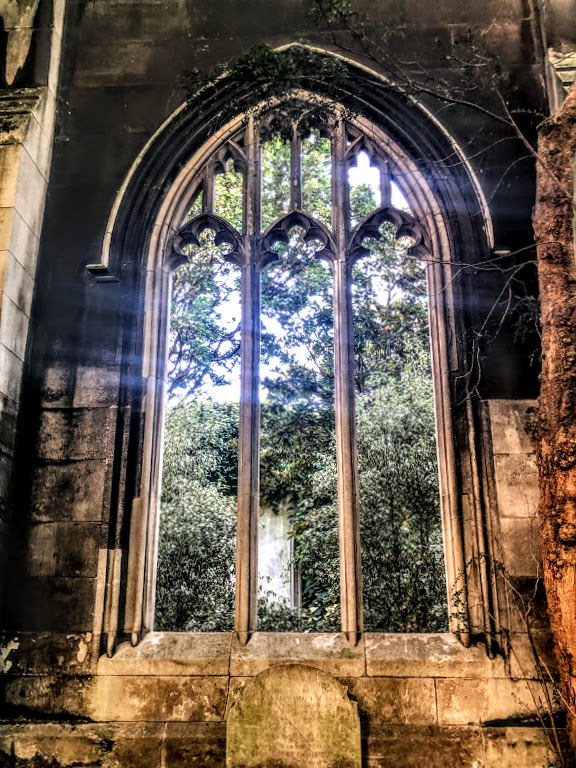
The ruined Church of Saint Dunstan in the East is a tranquil oasis in the heart of the City of London (Photograph: Patrick Comerford, 2022)

Scripture quotations are from the New Revised Standard Version Bible: Anglicised Edition copyright © 1989, 1995, National Council of the Churches of Christ in the United States of America. Used by permission. All rights reserved worldwide. http://nrsvbibles.org

Saint Dunstan in the East is now a popular venue for parties, receptions and photoshoots (Photograph: Patrick Comerford, 2022)