Showing posts with label Castletown. Show all posts

12 November 2025

A memorial in Maids Moreton
and an Irish-born rector’s strong
family links with Co Limerick

The memorial to the Revd Bolton Waller Johnstone in Maids Moreton, decorated with an elaborate Celtic cross (Photograph: Patrick Comerford, 2025)

Patrick Comerford

I was in Maids Moreton, on the edges of Buckingham, twice in the past ten days, looking at the Old Rectory designed by the architect Edward Swinfen Harris (1841-1924) from Stony Stratford, visiting Saint Edmund’s Church, enjoying the timber-framed houses and thatched cottages, and researching the stories and legends of the ‘Maids of Moreton’, the sisters said in local lore to have given Maids Moreton its name.

In Saint Edmund’s Church in Maids Moreton, I noticed a brass tablet on the south wall with a very elaborate and decorated Celtic cross and the inscription below: ‘To the Glory of God and in loving memory of Bolton Waller Johnstone, MA, Rector of this Parish for 26 years who died Nov 8th 1903 Also of Charlotte Lydia his wife who died April 6th 1892. This Tablet is erected by their children RIP’.

At the time Swinfen Harris was working on the Old Rectory and the Victorian monument commemorating the ‘Maids of Moreton’ was being placed in the nave floor, the Revd Bolton Waller Johnstone (1823-1903) was the Rector of Maids Moreton.

He was an Irish-born priest, and I was interested in his connections with my former diocese and parishes: his parents, the Revd John Beresford Johnstone and Elizabeth Waller of Castletown Park, Co Limerick, were married in Saint Mary’s Cathedral, Limerick, where I was once the canon precentor.

His mother was a member of the Waller family whose monuments and memorials line the walls of Castletown Church, Kilcornan, where I was the priest-in-charge for five years. His siblings were born in Co Limerick and were baptised in Saint Michael’s Church, Limerick, while he was born in Kilkenny and educated at Trinity College Dublin.

The monument to Bolton Waller Johnstone is between the windows on the south wall of Saint Edmund’s Church, Maids Moreton (Photograph: Patrick Comerford, 2025)

The Revd Bolton Waller Johnstone, who died at the Rectory in Maids Moreton on 8 November 1892 at the age of 80, was the second son of the Revd John Beresford Johnstone, a former Rector of Tullow, Co Carlow, and Elizabeth Waller, a daughter of Thomas Waller of Castletown Park, Co Limerick. Bolton Waller Johnstone was named after his grandfather, Bolton Waller (1769-1854) of Castletown and Shannon Grove, an MP, High Sheriff, who owned large estates in the Castletown and Kilcornan areas near Pallaskenry, Co Limerick. The Waller family eventually sold off the Castletown estates in 1936.

Bolton Waller Johnstone was born in Kilkenny in 1823 and was named after his maternal grandfather, Bolton Waller (1769-1854) of Castletown. He was educated at Sherborne School and Trinity College Dublin. He was ordained deacon by the Archbishop of York in 1846 and priest by the Bishop of Durham in 1847. He was a curate in many parishes before becoming the perpetual curate (vicar) of Smithill (1850), curate of Holy Trinity, Marylebone (1851), and the Vicar of Farndon near Chester (1854). A year later, in 1855, Johnstone married Charlotte Lydia Coker (1823-1892), the eldest daughter of Captain Thomas Lewis Coker of Bicester House, Oxfordshire.

Johnstone became the Rector of Maids Moreton in 1877, and he remained there until he died 26 years later in 1903. During his time in Maids Moreton, Saint Edmund’s Church underwent a complete restoration, he installed the East Window and also oversaw the building of a new rectory, designed by Edward Swinfen Harris, and the expansion of the village school.

Bolton and Charlotte Johnstone were the parents of one son, the Revd Edward Aubrey Johnstone (1857-1928) and four daughters. During his final illness, his son, Revd Edward Aubrey Johnstone, carried out his duties, in the parish.

Two of his Irish-born sisters, Elizabeth Johnstone (1819-1895) and Sidney Janes Johnston (1820-1900), also came to live in the Rectory in Maids Moreton, and they too are buried there in the churchyard.

The monument to Bolton Waller (1769-1854), grandfather of Bolton Waller Johnstone, in Castletown Church (Photograph: Patrick Comerford)

Bolton Johnstone’s father, the Revd John Beresford Johnstone (1793-1860), was the Rector of Tullow, Co Carlow, and married Elizabeth Waller in Saint Mary’s Cathedral, Limerick, on 12 June 1806; he died in Dublin on 17 June 1860. She was a daughter of Bolton Waller (1769-1854) of Castletown and Shannon Grove, Co Limerick.

The Waller family of Castletown was descended from the regicide, Sir Hardress Waller (1604-1666), who was MP for Askeaton in 1634 and 1640 and one of the judges who passed the sentence of death on King Charles I in 1649. At the restoration of Charles II in 1660, all his friends deserted him, and he fled to France. When he returned to England, he pleaded guilty to regicide. His death sentence was reduced to exile, and he died in Jersey in 1666.

John Thomas Waller, MP for Limerick and High Sheriff, and his wife Elizabeth Maunsell were the parents of John Waller (1763-1836) of Castletown Manor and estate, who initiated the building of Castletown Church.

John Waller was succeeded by his brother, Bolton Waller, High Sheriff of Limerick, whose large estates in Co Limerick included lands in the parishes of Ardcanny and Kilcornan.

The monument to the Revd William Waller (1794-1863) in Castletown Church (Photograph: Patrick Comerford)

Bolton Waller’s son, the Revd William Waller (1794-1863), who was Elizabeth’s brother and Bolton Johnstone’s uncle, was the Rector of Kilcornan from 1842. He married Maria O’Grady, and inherited Castletown from his father in 1854, so that he was both lord of the manor and rector of the parish. He increased the Waller estates by buying up the neighbouring Bury estate.

William Waller’s son, the Revd John Thomas Waller (1827-1911), who was Bolton Johnstone’s first cousin, was also the Rector of Kilcornan, and was appointed to the parish by his father and predecessor.

John Waller was the secretary of the Irish Church Missions, and in that role he was an ardent and zealous evangelical who did much damage to community relations in West Limerick. He used vile language in his tirades, thrived on creating sectarian tensions and stirred up a riot in Pallaskenry in 1861. His land ownings extended to over 6,600 acres.

The monument to the Revd John Thomas Waller in Castletown Church (Photograph: Patrick Comerford)

John Waller’s three sons were also clergymen. The Very Revd Edward Hardress Waller (1859-1938), who was born in Castletown, was the Rector of Athy, Co Kildare (1891-1913), a canon of Christ Church Cathedral, Dublin (1908-1913), before becoming the Dean of Kildare (1913-1928). During the Irish Civil War, when Erskine Childers was about to face the firing squad in Beggar’s Bush Barracks on 24 November 1922, he asked for Dean Waller to be present and to pray with him. He died in Delgany, Co Wicklow, in 1938.

Another son, the Revd John Thomas Waller, was the Rector of Saint Lawrence and Trinity Church, Limerick.

A third son, the Revd Bolton Waller, who was also born at Castletown Manor, was the Rector of Saint Munchin’s in Limerick (1892-1895), and died in Switzerland in 1897. His son, the Revd Bolton Charles Waller (1890-1936), was one of the early forerunners of the modern international peace movement.

Bolton Charles Waller was born in Cork and spent much of his childhood and teenage years on Meath Road and then Carlton Terrace in Bray, Co Wicklow. While he was a student at TCD, Bolton Waller wrote a prizewinning essay, ‘Paths to Peace.’ In the immediate aftermath of World War I, an American had created a prize fund for essays on better ways than war to deal with international conflict. The prize fund totalled £3,000, with a first prize of £1,000 and another £2,000 shared among the writers of rest of the ten best essays.

Bolton Waller’s essay, ‘Paths to Peace’ not only won first prize in the competition, but was also adopted by the League of Nations and subsequently by the United Nations.

Waller was an early advocate of the Irish Free State being admitted to the League of Nations, and was the secretary of the League of Nations Society Ireland. He went on to publish four titles on world peace: Towards the Brotherhood of Nations (1921), Ireland and the League of Nations (1925), Paths to World Peace (1926), and Hibernia, or the Future of Ireland (1928), as well as a 20-page pamphlet on Saint Patrick to mark the Patrician anniversary, Patrick – the Man (Dublin: APCK, 1932).

Bolton Waller was ordained deacon in 1931 and priest in 1932. He was the curate of Holy Trinity, Rathmines (1931-1936), Dublin, and then Rector of Saint John’s Parish, Clondalkin, Co Dublin (1936). But within six months of his appointment to Clondalkin he died in Kilpeacon, Co Limerick, in July 1936 at rhe age of 46. He is buried in Saint John’s Churchyard, Clondalkin.

A year earlier, his first cousin, John Thomas (‘Jack’) Waller (1889-1965), had demolished Castletown Manor, and in 1936 he sold the Castletown estate on behalf of his dying father, William Waller (1857-1937).

There are still traces of Castletown Manor and the Castletown estates in Kilcornan Parish, and memorials to members of the Waller family line the walls of Castletown Church. There is still a need for priests like Bolton Charles Waller who have a vision of finding alternatives to international conflict and a vision of working for world peace.

The walls of Castletown Church, Co Limerick, are lined with memorials to the Waller family (Photograph: Patrick Comerford)

27 March 2022

Rathkeale and Kilnaughtin
Group of Parishes: a statement

This statement was read out this morning and was circulated in the diocese this afternoon:

The United Dioceses of Tuam, Limerick and Killaloe

27th March 2022

To: Rathkeale & Kilnaughtin Group of Parishes


Dear Parishioner,

As you are aware Canon Comerford has been on leave for the last number of weeks for personal and private reasons. This situation has not changed and in addition recent health reasons has led Canon Comerford to tender his retirement from the Rathkeale & Kilnaughtin Group of Parishes and other diocesan positions. This is with effect from 31st March 2022.

Whilst this may come as a surprise, I (as Commissary) have been offering what support I can to Patrick and Barbara over the last number of weeks and will endeavour to do so in the weeks ahead. Furthermore, I along with diocesan colleagues will help and support the parish in whatever way we can over the next period.

We thank Patrick and Barbara for their loyal and dedicated service to the parish and diocese over the last number of years and wish them every blessing.

On behalf of Patrick, Barbara and myself, I want to thank everyone, in particular the parishioners of the Rathkeale & Kilnaughtin Group of Parishes for their prayerful support.

Service cover will be organized by the diocese and communicated to the parish as soon as possible (with the service schedule remaining as it is already established). Pastoral emergencies will be covered by the Limerick Ministry Area Team (in the first instance please contact Canon Liz Beasley).

With every good wish

Niall

The Very Rev’d Niall J. Sloane
Dean of Limerick and Archbishop’s Commissary

13 February 2022

Sunday intercessions, 13 February 2022,
the Third Sunday before Lent

The reliquary with the remains of Saint Valentine in the Carmelite Church in Whitefriar Street, Dublin (Photograph: Patrick Comerford)

Let us pray:

‘Blessed are you who are poor, for yours is the kingdom of God’ (Luke 6: 20):

Heavenly Father,
we pray that your love fills the nations and kingdoms of the world
and that your love spreads throughout our land …
that all may know God’s love and God’s blessing.

Lord have mercy,
Lord have mercy.

‘Blessed are you who are hungry now, for you will be filled’ (Luke 6: 21):

We pray for the Church,
that we may hunger for the love of God
and be filled with it so that we share it with all.

In the Church of Ireland this month,
we pray for the Diocese of Clogher and Bishop Ian Ellis …

We pray too for the Diocese of Tuam, Limerick and Killaloe,
and the new bishop, Bishop Michael Burrows …

In the Anglican Cycle of Prayer,
we pray this week for the Nippon Sei Ko Kai, the Anglican Church in Japan.

In the Diocesan Cycle of Prayer,
we pray for for Tuam Group of parishes and for Dean Alistair Grimason.

In our community,
we pray for our parishes and people …
we pray for our neighbouring churches and parishes …
and people of faith everywhere,
that we may be blessed in our variety and diversity.

Christ have mercy,
Christ have mercy.

‘Blessed are you who weep now’ (Luke 6: 21):

Holy Spirit, help us to share God’s love with all who suffer …

We pray for all who are sick or isolated,
at home, in hospital …

We pray for all who feel pain and loss …
We pray for all we love and all who love us …
We pray for our families, friends and neighbours …

We remember all who have died recently …
and all whose anniversaries are at this time,
including Kevin Doyle, Lynda Smith, Maurice and Pamela Hewson …

May their memories be a blessing to us.

Lord have mercy,
Lord have mercy.

The Prayer today (13 February 2022, the Third Sunday before Lent) in the Prayer Diary of the Anglican mission agency USPG (United Society Partners in the Gospel) invites us to pray:

Redeemer God,
may we share your blessings
with the marginalised,
the disenfranchised and the oppressed.

Merciful Father …

Italian romance … locks secured to fencing along the Via d’Amore in the Cinque Terre in Italy (Photograph: Patrick Comerford)

‘Romeo, Romeo, wherefore art thou?’ … Juliet’s balcony in Verona (Photograph: Patrick Comerford)

Hearts and gifts for Saint Valentine’s Day in a shopfront in Askeaton, Co Limerick (Photograph: Patrick Comerford)

03 February 2022

Rathkeale and Kilnaughtin
Group parish notes in
‘Newslink’ February 2022

The Baptism of Ella Roseline Hilary Delbarry in Saint Mary’s Church, Askeaton

Rathkeale and Kilnaughtin Group of Parishes

Rathkeale, Askeaton, Castletown and Kilnaughtin

Priest-in-Charge: Revd Canon Patrick Comerford,
The Rectory, Askeaton, Co Limerick.

Parish Facebook page: https://www.facebook.com/RathkealeGroup/

Welcoming the new Bishop:

Congratulations to Bishop Michael Burrows on his election as the Bishop of Tuam, Limerick and Killaloe. Patrick and the new bishop have worked together on many projects, including the Decade of Evangelism, USPG and USPG Ireland, and the talks between the Church of Ireland and the Moravian Church.

Christmas and Carol services:

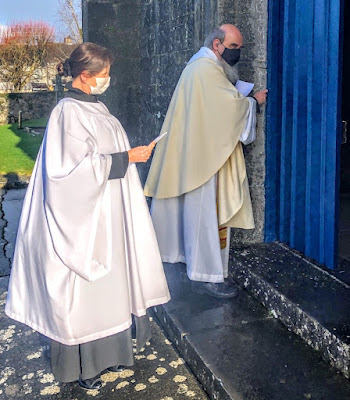
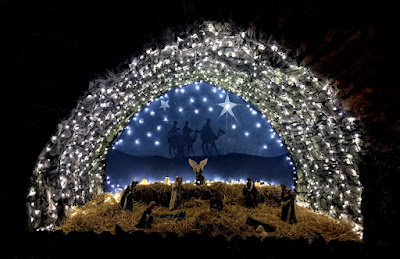
Christmas celebrations included the Carols and lighting the Christmas tree at the Old Abbey, in Rathkeale, the Service of Nine Lessons and Carols in Askeaton, and the Epiphany chalking of the church and rectory doors in Askeaton. Thanks to Michael Holly for the generous gift of flowers and candles in Tarbert, and to our Parish Reader, Siobhán Wheeler, for looking after Sunday services on Saint Stephen’s Day.

Baptism:

Ella Roseline Hilary Delbarry, daughter of Elizabeth (Ebie) Delbarry and Emanuel (Manu) Delbarry, was baptised on 27 December in Saint Mary’s Church, Askeaton. The sponsors were Samantha Bowen, Wendy Mullins and Rob Foley. Ella is a granddaughter of Hilary and Simon White of Nantenan.

Parish services in February 2022:

Sunday 6 February 2022 (Fourth Sunday before Lent):

9.30, Askeaton, the Parish Eucharist; 11.30, Saint Brendan’s Church, Tarbert, Morning Prayer.

Sunday 13 February 2022 (Third Sunday before Lent): 9.30, Castletown Church, Parish Eucharist; 11.30, Holy Trinity Church, Rathkeale, Morning Prayer.

Sunday 20 February 2022 (Second Sunday before Lent): 9.30, Askeaton, Morning Prayer; 11.30, Tarbert, Parish Eucharist.

Sunday 27 February 2022 (The Sunday before Lent): 9.30, Castletown, Morning Prayer; 11.30, Rathkeale, Parish Eucharist.

Wednesday 2 March 2022 (Ash Wednesday): 11 a.m., the Ash Wednesday Eucharist, with traditional Ash Wednesday distribution of ashes, Saint Mary’s Church, Askeaton.

Lent 2022: ‘Living Stones, Living Hope’

‘Living Stones, Living Hope’ is the title of the new course for Lent 2022produced by the Anglican mission agency USPG (United Society Partners in the Gospel). The title of this course comes from I Peter 2, the epistle for the Bible study at the Lambeth Conference later this year.

We, the Church, are the living stones, and we are called to bring living hope though faith in Christ, who is the cornerstone of our faith. ‘Living Stones, Living Hope’ explores this from the perspective of five partner churches around the world, inviting us to reflect on our own experience of being ‘living stones’ bringing ‘living hope’ in our own situations, in the light of the experiences of others.

Canon Patrick Comerford is one of the international theologians invited by USPG to contribute one of the five studies in this new Lent course. In his Bible study and video, he draws on his experiences in ministry and mission in the Rathkeale area, including ecumenical engagement with the Traveller community.

It is planned to use this USPG course during Lent in this group of parishes. Subject to COVID regulations, dates and details will be announced in the coming weeks.

The Epiphany chalking of the church doors in Askeaton

This is an edited version of the Rathkeale and Kilnaughtin Group parish notes in the February 2022 edition of ‘Newslink’, the Limerick and Killaloe diocesan magazine

23 January 2022

Sunday intercessions, 23 January 2022,
Epiphany III (Week of Prayer for Christian Unity)

‘He went to the synagogue on the sabbath day, as was his custom’ (Luke 4: 16) … inside the Etz Hayyim Synagogue in Chania, Crete (Photograph: Patrick Comerford)

Let us pray:

‘For this day is holy to our Lord … for the joy of the Lord is your strength’ (Nehemiah 8: 10):

Heavenly Father,
we pray for the nations of the world and for own country…
we pray for all who make decisions about our health …
we pray for the poor, the captives,
the blind, and all who need freedom …
may they know God’s favour and God’s blessing.

Lord have mercy,
Lord have mercy.

We are the body of Christ and members of it (see I Corinthians 12: 27):

We pray for the Church,
that we may find unity in our respect for one another
in our differences …

In the Church of Ireland this month,
we pray for the Diocese of Armagh and Archbishop John McDowell.

We pray too for the Diocese of Tuam, Limerick and Killaloe,
and the new bishop, Bishop Michael Burrows.

In the Anglican Cycle of Prayer,
we pray this week for the Anglican Church in Hong Kong.

In the Diocesan Cycle of Prayer,
we pray for our schools,
all teachers and students,
boards of management,
school secretaries and cleaners.

In our community,
we pray for our parishes and people …
we pray for our neighbouring churches and parishes …
and people of faith everywhere,
that we may be blessed in our variety and diversity.

Christ have mercy,
Christ have mercy.

‘The Spirit of the Lord is upon me, because he has anointed me to bring good news to the poor’ (Luke 4: 18):

Holy Spirit, help us to bring good news to all who suffer …

We pray for all who are sick or isolated,
at home, in hospital …
Ruby … Daphne … Sylvia … Ajay …
Cecil … Pat … Mary … Ann … Vanessa …

We pray for all who feel pain and loss …
We pray for all we love and all who love us …
We pray for our families, friends and neighbours …

We remember all who have died recently, including Louise Corbett …
and all whose anniversaries are at this time,
including Cathy Casey-Byrne, Dorothy Bracken, and Kathleen Shire …

May their memories be a blessing to us.

Lord have mercy,
Lord have mercy.

The Prayer in the USPG Prayer Diary today (23 January 2022, the Second Sunday after the Epiphany) invites us to pray:

Liberator God,
you teach us to resist oppression,
lift up the disadvantaged
and centre the marginalised.
May we always pursue justice.

Merciful Father …

‘So they read from the book, from the law of God’ (Nehemiah 8: 8) … Torah scrolls in Venice (Photograph: Patrick Comerford)

‘The Spirit of the Lord is upon me,
because he has anointed me
to bring good news to the poor’

‘Now you are the body of Christ and individually members of it’ (I Corinthians 12: 27) … the Menqa or Boat Shelter in Saint Paul’s Bay on the north coast of Malta (Photograph: Patrick Comerford, 2022)

Patrick Comerford

Sunday 23 January 2022

The Third Sunday after the Epiphany (Epiphany III):

9.30: Castletown Church, Morning Prayer;

11.30: Holy Trinity Church, Rathkeale, the Parish Eucharist.

The Readings: Nehemiah 8: 1-3, 5-6, 8-10; Psalm 19; I Corinthians 12: 12-31a; Luke 4: 14-21.

There is a link to the readings HERE.

‘He went to the synagogue on the sabbath day, as was his custom’ (Luke 4: 16) … inside La Scuola Greca Synagogue in Corfu (Photograph: Patrick Comerford

May I speak to you in the name of God + Father, Son and Holy Spirit, Amen

Our Gospel reading this morning (Luke 4: 14-21) is set in in an in-between time in the Church Calendar, between the Christmas and Epiphany stories and the beginning of Christ’s public ministry in Galilee.

Our Epiphany stories over the last three weeks or so were telling us who Christ is, as priest, prophet and king. Those Epiphany moments are brought together in this Gospel reading.

Instead of succumbing to the temptations of a dramatic but false start to his ministry (Luke 4: 1-14), Christ begins his ministry in a very slow, thoughtful and considerate way. We are told that it was habit in the first stage of his ministry for Jesus to attend the synagogue on a Saturday, and we are told too that he taught in the synagogues regularly (verse 15).

Regular worship, scripture reading and teaching are the foundations of this ministry and for all his actions.

In the synagogue in those days, there were two readings in Hebrew, with a running translation into the vernacular, perhaps in Aramaic or in Greek.

In accordance with Jewish practice, on this particular Saturday, Jesus may have been the third person called on to read, after the priests and the Levites. Indeed, he may even have been further down the list.

The scroll of Isaiah was given to him to read and he returns the scroll when he is finished reading (verse 20).

The portion Christ reads from (verse 18-19) is actually three verses, and they do not come in sequence (Isaiah 61: 1, part of Isaiah 61: 2 and a portion of Isaiah 58: 6). So, even if he had been handed a pre-selected portion of Scripture to read – perhaps following in sequence from two or more previous readers – he makes a deliberate choice to roll back the scroll and to insert a portion of an earlier, extra verse (Isaiah 58: 6).

Christ tells the congregation in the synagogue that morning that the Scripture has been fulfilled in their hearing. Scripture has not been read that morning just to comply with part of the ritual; it actually has immediate meaning, significance and relevance that day. Christ is not merely reading the words, he is promising to see them put into action, to transform hope into reality.

It is as though these verses become his inaugural address or his campaign promises. He sets out his priorities, his hopes, his expectations. He tells those who are listening what is at the heart of everything he does and everything he asks us to do:

● to bring good news to the poor
● to proclaim release to the captives
● to proclaim recovery of sight to the blind
● to let the oppressed go free
● to proclaim the year of the Lord’s favour.

These are the core values of Christ’s ministry and these are the core values shared by the Church, no matter what our differences are today.

As I was walking around the churches of Malta over the last week – Anglican, Roman Catholic, Orthodox, Methodist, Presbyterian – I realised how so many of the differences between the Churches today were created in the past at the Reformation and in the generations that followed by people who never asked you and me about how we would like to shape the agenda for the Church of the future.

And, quite frankly, I do not want to share in an agenda that I had no part in shaping.

Instead of seeing the differences between the churches as threats to one another, I want to see them as gifts that remind us of who we might be.

And Christ’s agenda in this morning’s Gospel reading is not about how to respond when we differ about liturgy or about how we speak about our faith through doctrine.

This has been the Week of Prayer for Christian Unity, which ends on Tuesday (25 January), the Feast of the Conversion of Saint Paul. As I stood looking out onto Saint Paul’s Bay on Thursday and the site of his shipwreck in Malta, I was reminded that Saint Paul was arrested after a vigorous ministry in which the values that Christ proclaims this morning were at the heart of his thoughts, words and deeds.

In our Epistle reading (I Corinthians 12: 12-31a), Saint Paul turns to the nature of the Church, drawing on images of the human body.

He talks about how all the members of the Church are one together and share in the one Spirit. Whatever our ethnic or social origins, ‘we were all baptised into one body’ (verse 13), into the risen glorified body of Christ, and empowered by the same Holy Spirit acting in the Church.

The key verse is verse 14: the body needs a variety of members; so too the Church needs a variety of spiritual gifts, each making its own contribution.

At the time, the Church in Corinth was divided by exclusivism and by the refusal of some of the Corinthians to share the meals, to share communion, to share sacred time with fellow Church members from different backgrounds.

When Saint Paul’s letter arrived, it must have shaken some of the Corinthian Christians out of their comfort zone too. They are to respect one another, no matter what their background is, they are to share and to eat with one another, they are to share each other’s news, rejoicing at their good news and weeping at their bad news (see verse 26).

Saint Paul lists three groups with God-given gifts:

● apostles who continue spreading the good news;
● prophets who have new insights into God’s plan;
● teachers who teach the faith.

He then lists some other gifts: some help the poor and needy; others are leaders, managers, in church affairs. Perhaps we all need to grow in the use of the gifts, great or small, given to us.

We are no longer the children of the Reformation, and we need to get on with the challenge Christ poses in his choice of reading this morning. Who are the poor, the captives, the blind and the oppressed in our midst today? Compassion for them is at the heart of Christ’s ministry and mission, and is at the very core of why we should be actively working for ecumenism and the unity of the Church. Will they know we are Christians by our love?

And so, may all we think, say and do be to praise, honour and glory of God, + Father, Son and Holy Spirit.

‘He stood up to read and … he unrolled the scroll’ (Luke 4: 18-19) … a scroll in the Jewish Museum in the Ghetto in Venice (Photograph: Patrick Comerford)

Luke 4: 14-21 [22-30] (NRSVA):

14 Then Jesus, filled with the power of the Spirit, returned to Galilee, and a report about him spread through all the surrounding country. 15 He began to teach in their synagogues and was praised by everyone.

16 When he came to Nazareth, where he had been brought up, he went to the synagogue on the sabbath day, as was his custom. He stood up to read, 17 and the scroll of the prophet Isaiah was given to him. He unrolled the scroll and found the place where it was written:

18 ‘The Spirit of the Lord is upon me,
because he has anointed me
to bring good news to the poor.
He has sent me to proclaim release to the captives
and recovery of sight to the blind,
to let the oppressed go free,
19 to proclaim the year of the Lord’s favour.’

20 And he rolled up the scroll, gave it back to the attendant, and sat down. The eyes of all in the synagogue were fixed on him. 21 Then he began to say to them, ‘Today this scripture has been fulfilled in your hearing.’

Saint Paul’s Church at Saint Paul’s Bay in Malta … the Week of Prayer for Christian Unity ends on the Feast of the Conversion of Saint Paul (Photograph: Patrick Comerford, 2022)

Liturgical Colour: White

The Penitential Kyries:

God be merciful to us and bless us,
and make his face to shine on us.

Lord, have mercy.
Lord, have mercy.

May your ways be known on earth,
your saving power to all nations.

Christ, have mercy.
Christ, have mercy.

You, Lord, have made known your salvation,
and reveal your justice in the sight of the nations.

Lord, have mercy.
Lord, have mercy.

The Collect:

Almighty God,
whose Son revealed in signs and miracles
the wonder of your saving presence:
Renew your people with your heavenly grace,
and in all our weakness
sustain us by your mighty power;
through Jesus Christ our Lord.

The Collect of the Word:

Life-giving God,
who sent your Son Jesus to proclaim your kingdom
and to teach with authority:
anoint us with your Spirit,
that we too may bring good news to the poor,
bind up the broken-hearted,
and proclaim liberty to the captive;
through Jesus Christ our Lord,
who lives and reigns with you
in the unity of the Holy Spirit,
one God, for ever and ever.

Introduction to the Peace:

Our Saviour Christ is the Prince of Peace.
Of the increase of his government and of peace
there shall be no end. (cf Isaiah 9: 6, 7)

Preface:

For Jesus Christ our Lord
who in human likeness revealed your glory,
to bring us out of darkness
into the splendour of his light:

The Post-Communion Prayer:

Almighty Father,
your Son our Saviour Jesus Christ is the light of the world.
May your people,
illumined by your word and sacraments,
shine with the radiance of his glory,
that he may be known, worshipped,
and obeyed to the ends of the earth;
for he is alive and reigns with you and the Holy Spirit,
one God, now and for ever.

The Blessing:

Christ the Son be manifest to you,
that your lives may be a light to the world:

Jesus in the Synagogue, as imagined by the Northern Ireland-born artist Greg Olsen

Hymns:

381, God has spoken – by his prophets (CD 23)
218, And can it be (CD 14)
494, Beauty for brokenness (CD 29)

Scripture quotations are from the New Revised Standard Version Bible: Anglicised Edition copyright © 1989, 1995, National Council of the Churches of Christ in the United States of America. Used by permission. All rights reserved worldwide. http://nrsvbibles.org

Material from the Book of Common Prayer is copyright © 2004, Representative Body of the Church of Ireland.


09 January 2022

Sunday intercessions, 9 January 2022,
The First Sunday after Epiphany

The Baptism of Christ by Saint the Baptist depicted at the Duomo in Florence (Photograph: Patrick Comerford)

Let us Pray

Thank you God our Father for being with us all the time.
We are glad that you are our Father and that you love us as your children.
Bless all your children around the world, that they may be free and know your love.

Lord have mercy
Lord have mercy

Thank you Jesus for being with us
at Christmas and at all times.
Help us to love one another as you love us.

Christ have mercy
Christ have mercy

Holy Spirit,
stay with us at all times,
be with those we love,
be with those who are sick, sad and lonely,
and be a comfort to all who are suffering loss.

Lord have mercy
Lord have mercy

In our prayers this morning and all this week,
let us we remember those who died recently
and those who died at this time of the year, including Cathy …
May their memories be blessings unto us

The prayer today in the prayer diary of the Anglican mission agency USPG (United Society Partners in the Gospel) invites us to pray:

O Lord,
may we feel the presence of the
Holy Spirit in our daily lives.
Help us to be led by the Spirit.

Merciful Father …

The Baptism of Christ depicted in stucco relief in the Baptistery in the Church of Saint Nicholas of Myra, Dublin (Photograph: Patrick Comerford)

Who speaks out like Saint John
the Baptist in the world today?

An icon of the Baptism of Christ, worked on a cut of olive wood by Eleftheria Syrianoglou, in an exhibition in the Fortezza in Rethymnon, Crete (Photograph: Patrick Comerford)

Patrick Comerford

Sunday 9 January (Epiphany 1):

9.30: Castletown Church, the Parish Eucharist;

11.30: Holy Trinity Church, Rathkeale, Morning Prayer.

Readings: Isaiah 43: 1-7; Psalm 29; Acts 8: 14-17; Luke 3: 15-17, 21-22

There is a link to the readings HERE.

The Baptism of Christ … a stained glass window by AE Child in Saint Brendan’s Cathedral, Loughrea, Co Galway (Photograph: Patrick Comerford, 2021)

May I speak to you in the name of God, + Father, Son and Holy Spirit, Amen.

Christmas appears to have come to an end. Many people are back at work, most schools have reopened, Christmas decorations have been taken down, the trees and the tinsel have gone, and the shopping centres have stopped blaring out those awful versions of carols.

But Christmas is not over. Christmas lasts until Candlemas, the pivotal feastday between Christmas and Easter, that links the cradle with the cross, the Incarnation with the Resurrection.

We celebrated the Visit of the Magi on Thursday (6 January 2022). This Epiphany story is a Theophany, in which the kingdoms of the world are seen bowing down before the King of Kings, sacramentally laying before him, in their gifts, all the wealth of the world.

The Wedding at Cana, which we read about next Sunday [16 January 2022], is an Epiphany event too when, even before his time has come, Christ shows who he is.

This morning’s Gospel reading, Saint Luke’s account of the Baptism of Christ in the River Jordan (Luke 3: 15-17, 21-22), marks the beginning of Christ’s public ministry and is an Epiphany event too.

It is a Trinitarian moment, when the Father, Son and Holy Spirit come together, acting as one, with distinctive roles: when Christ is baptised, heaven opens, the Holy Spirit descends upon him, and God the Father declares: ‘You are my Son, the Beloved; with you I am well pleased’ (Luke 3: 21-22).

People flock to Saint John the Baptist in the wilderness in response to his call to start new, ethical lives – as a way of preparing for Christ. He tells them that the ‘one who is … coming’ is so great that he is unworthy even to ‘untie … his sandals,’ the task of a slave. Christ is then baptised, the Holy Spirit descends on him, and God the Father proclaims, ‘You are my Son, the Beloved; with you I am well pleased.’

Are there people who remind you of Saint John the Baptist, or who are bit like Saint John the Baptist in your life?

Are there people who are alive today or in your past who challenged you to turn towards Christ, to see the love of God the Father for creation, to share Christ’s hope and offer of salvation for all; who have challenged you to be guided by the Holy Spirit in the priorities and values that serve as road-markers in your life?

They are not necessarily the same as saints. They are not necessarily the sort of people you want to spend time with. I cannot imagine many people wanted to spend time with John the Baptist, or would have appreciated him as a neighbour. They probably felt deeply uncomfortable by both his lifestyle and his challenges.

But challenge them he did, and he pointed them to Christ and to the values of the Kingdom of God.

I want to share just one example this morning.

I might have chosen Archbishop Desmond Tutu, who died just after Christmas, or some other well-known world figures. Or I might have chosen people who have had a strong influence on my spiritual growth and values … the German theologian Dietrich Bonhoeffer, who resisted the Nazis and paid the ‘Cost of Discipleship’ when he died in a concentration camp … Gonville ffrench-Beytagh, who flung open the doors of Saint Mary’s Cathedral, Johannesburg, to black protesters being beaten by the apartheid police …

But this morning I want to share the work of Rebecca Comerford, a professional singer and actor. She has been involved in bringing the children’s opera Brundibár and the story of the children in the concentration camp in Terezín to American audiences. It was a deliberate decision in light of the political climate created in America by the Trump administration.

Rebecca Comerford is a founder of Ojai Youth Opera Company. She has sung internationally as an opera soloist with some of the world’s finest houses.

Rebecca and the Ojai Youth Opera Company have revived Brundibár and she has taken the story of Terezín to synagogues, churches and theatres throughout the US.

Only 20 of the 400 original performers of Brundibár survived to see liberation. ‘They were making art up until the very end,’ Rebecca Comerford says.

Theresienstadt or Terezín was set up as a concentration camp and a ghetto by the SS in World War II in a fortress town about 70 km north of Prague, then in part of German-occupied Czechoslovakia and now part of the Czech Republic.

Terezín was both a waystation to the extermination camps, and a ‘retirement settlement’ for elderly and prominent Jews to mislead everyone about the Nazis’ plan for genocide. The conditions were created deliberately to hasten the death of the prisoners. The ghetto also had a propaganda role in Red Cross visits and in making propaganda films.

About 33,000 people died at Terezín, mostly from malnutrition and disease. More than 88,000 people were held there for months or years before being deported to extermination camps and other killing sites. About 23,000 people survived Theresienstadt.

Many prominent Jews were held at Terezín, which was known for a cultural life that included concerts, lectures and clandestine education for children.

All education was forbidden, but teachers still to taught clandestine classes and cultural activities for the children in the evenings. Hundreds of children were encouraged by a Viennese art therapist, Friedl Dicker-Brandeis (1898-1944) to make paintings and drawings until was deported to Auschwitz and murdered in Birkenau in 1944.

The children’s opera Brundibár was composed in 1938 by Hans Krása and Adolf Hoffmeister for the Children’s Orphanage of Prague. It was first performed at Terezín in 23 September 1943, and it was performed 55 times, or about once a week, for about a year, until the transports of autumn 1944.

The opera tells of a brother and a sister who stand up to a bully in order to afford milk to save their sick mother. It was meant to teach the children at the orphanage about how to deal with a bully, and how to remain positive in difficult situations.

When Hans Krása was deported to Terezín, he rewrote the opera for the children in the camp. The antagonist, an organ grinder who sang loudly on the strees to make money and drown out the townspeople, was symbolic of Hitler’s tyrannical reign. The Nazis failed to make this connection, and so the resistance opera continued to be performed under their noses.

At the end of Brundibár, the chorus sings:

We’ve won a victory over the tyrant mean.
Sound trumpets, beat your drum, and show us your esteem.
We’ve won a victory because we were not fearful,
because we were not tearful.
Because we marched along singing our happy song,
bright joyful and cheerful.


It is as though a voice comes from heaven and says, ‘You are my Children, my Beloved; with you I am well pleased.’

Rebecca Comerford says she chose Brundibár in the Trump years because of ‘the current political climate, and the rise of fascism across the globe, and the pervasive rise of intolerance, not just nationally, but on a macro level, too.’

She says the company had to decide what they were going to teach their performers about how to promote tolerance and inclusion, and about how to deal with bullies and negativity.

‘We decided that this would be really timely and relevant in terms of our mission, and said let’s do this outreach component, too. We’ll really discuss the messages. How do we deal with a bully? What does that mean to our children? And why do they need to know this story, so history doesn’t repeat itself again?’ Rebecca says.

‘It’s our obligation as a human family to share the story,’ she tells her audiences. It’s our obligation.

So, for me, Rebecca Comerford is like Saint John the Baptist. She is not afraid to speak out about – to name – evil in the past and in the present, to separate the chaff from the wheat, to make way for the values of the coming kingdom. Yet she points not to herself, but in the midst of everything that goes wrong, in the past and today, she points to hope in the future, and to the values of justice, mercy and peace, values that for me express exactly what the Kingdom of God is like.

Who are figures that for you are like Saint John the Baptist in your life, in your community, in the world today?

(Allow time for discussion; suggest Charlie Bird and Vicky Phelan from Friday’s ‘Late Late Show’)

And so, may all we think, say and do be to the praise, honour and glory of God, + Father, Son and Holy Spirit, Amen.

A suitcase packed for Theresienstadt, seen in an exhibition in Prague … Rebecca Comerford shas revived ‘Brundibár’ for an American audience (Photograph: Patrick Comerford)

Luke 3: 15-17, 21-22 (NRSVA):

15 As the people were filled with expectation, and all were questioning in their hearts concerning John, whether he might be the Messiah, 16 John answered all of them by saying, ‘I baptize you with water; but one who is more powerful than I is coming; I am not worthy to untie the thong of his sandals. He will baptize you with the Holy Spirit and fire. 17 His winnowing-fork is in his hand, to clear his threshing-floor and to gather the wheat into his granary; but the chaff he will burn with unquenchable fire.’

21 Now when all the people were baptized, and when Jesus also had been baptized and was praying, the heaven was opened, 22 and the Holy Spirit descended upon him in bodily form like a dove. And a voice came from heaven, ‘You are my Son, the Beloved; with you I am well pleased.’

John answered all of them by saying, ‘I baptize you with water; but one who is more powerful than I is coming’ (Luke 3: 16) … a fresco in a church in the mountain village of Maroulas, near Rethymnon in Crete (Photograph: Patrick Comerford)

Liturgical colour: White

The Penitential Kyries:

God be merciful to us and bless us,
and make his face to shine on us.

Lord, have mercy.
Lord, have mercy.

May your ways be known on earth,
your saving power to all nations.

Christ, have mercy.
Christ, have mercy.

You, Lord, have made known your salvation,
and reveal your justice in the sight of the nations.

Lord, have mercy.
Lord, have mercy.

The Collect:

Eternal Father,
who at the baptism of Jesus
revealed him to be your Son,
anointing him with the Holy Spirit:
Grant to us, who are born of water and the Spirit,
that we may be faithful to our calling as your adopted children;
through Jesus Christ our Lord.

The Collect of the Word:

Spirit of energy and change,
in whose power Jesus was anointed
to be the hope of the nations:
be poured out also upon us
without reserve or distinction,
that we may have confidence and strength
to implant your justice on the earth;
through Jesus Christ.

Introduction to the Peace:

Our Saviour Christ is the Prince of Peace.
Of the increase of his government and of peace
there shall be no end. (cf Isaiah 9: 6, 7)

Preface:

For Jesus Christ our Lord
who in human likeness revealed your glory,
to bring us out of darkness
into the splendour of his light:

Post-Communion Prayer:

Refreshed by these holy gifts, Lord God,
we seek your mercy:
that by listening faithfully to your only Son,
and being obedient to the prompting of the Spirit,
we may be your children in name and in truth;
through Jesus Christ our Lord.

The Blessing:

Christ the Son be manifest to you,
that your lives may be a light to the world:

The fifth century mosaic of the Baptism of Christ in the Neonian Baptistry in Ravenna (Photograph: Patrick Comerford)

Hymns:

22, You shall cross the barren desert (#2, CD 1, Love of God, Life of Faith)
(Alternative, 204, When Jesus came to Jordan, CD 13)
136, On Jordan’s bank, the Baptist’s cry (CD 8)
294, Come down, O love divine (CD 18)

Scripture quotations are from the New Revised Standard Version Bible: Anglicised Edition copyright © 1989, 1995, National Council of the Churches of Christ in the United States of America. Used by permission. All rights reserved worldwide. http://nrsvbibles.org


Material from the Book of Common Prayer is copyright © 2004, Representative Body of the Church of Ireland.

With the Saints through Christmas (15):
9 January 2022, the ‘Black Nazarene’ of Manila

The ‘Black Nazarene’ of Manila in the Basilica of Saint John the Baptist or Quiapo Church (Photograph: Constantine Agustin / Wikpedia)

Patrick Comerford

This morning is the First Sunday after the Epiphany, and later this morning I am presiding and preaching at the Parish Eucharist at 9:30 in Castletown Church, Castletown, Co Limerick, and preaching at Morning Prayer in Holy Trinity Church, Rathkeale, Co Limerick.

Before this day gets busy, I am taking some time early this morning for prayer, reflection and reading.

I have been continuing my Prayer Diary on my blog each morning, reflecting in these ways:

1, Reflections on a saint remembered in the calendars of the Church during the Season of Christmas, which continues until Candlemas or the Feast of the Presentation (2 February);

2, the day’s Gospel reading;

3, a prayer from the USPG prayer diary.

This morning’s Gospel reading (Luke 3: 15-17, 21-22) is a reminder that Saint John the Baptist – like all the saints – draws attention not to himself, but to Christ. And so, this morning, I am reflecting on the Black Nazarene of Manila or ‘Nuestro Padre Jesús Nazareno.’

The ‘Black Nazarene’ is a blackened, life-sized wooden statue of Christ carrying a cross.

The ‘Black Nazarene’ was made in Mexico in the early 17th century by an Aztec carpenter, and was brought to Manila in the Philippines by Spanish Augustinian missionaries in 1606. On the journey, the ship caught fire, burning the icon, but local people saved the charred statue., which was enshrined in the Church of San Juan Bautista in Bagumbayan (now Luneta) until 31 May 1606. In 1608, it was enshrined in the Church of San Nicolás de Tolentino in Intramuros. It was moved to the Basilica of Saint John the Baptist, known popularly as the Quiapo Church, on 9 January.

Miracles, especially healings, have been reported in its presence ever since. The Church of Saint John the Baptist in Quiapo was burned down around it in 1791 and in 1929, it was destroyed by earthquakes in 1645 and 1863, and it was damaged during bombing in 1945.

Pope Innocent X issued a papal bull in 1650 that canonically established the Cofradia de Jesús Nazareno to encourage devotion to the ‘Black Nazarene.’ In the 19th century, Pope Pius VII granted indulgences to people who prayed piously before the image.

For many centuries, it was carried through the streets of Manila on 9 January every year, and people would rub cloths on it to make healing relics. However, centuries of this popular devotion have left the statue in bad shape, and since 1998 a replica is paraded at the feast day celebrations on this day.

The replica continues to be carried through the streets of Manila on a gilded carriage by barefoot men shouting ‘Viva Señor’, while the crowds try to touch the statue.

People come from all over Manila in the hope of getting close enough to touch the image. At times, people who touch the statue are reported to be healed of diseases. They also throw towels to the police who guard the statue and ask them to rub the towel on the statue in hopes of carrying some of that power away with them. Most in the crowd go barefoot as a sign of humility as they follow the statue.

Luke 3: 15-17, 21-22 (NRSVA):

15 As the people were filled with expectation, and all were questioning in their hearts concerning John, whether he might be the Messiah, 16 John answered all of them by saying, ‘I baptize you with water; but one who is more powerful than I is coming; I am not worthy to untie the thong of his sandals. He will baptize you with the Holy Spirit and fire. 17 His winnowing-fork is in his hand, to clear his threshing-floor and to gather the wheat into his granary; but the chaff he will burn with unquenchable fire.’

21 Now when all the people were baptized, and when Jesus also had been baptized and was praying, the heaven was opened, 22 and the Holy Spirit descended upon him in bodily form like a dove. And a voice came from heaven, ‘You are my Son, the Beloved; with you I am well pleased.’

The prayer in the prayer diary of the Anglican mission agency USPG (United Society Partners in the Gospel) invites us to pray this morning (9 January 2022):

O Lord,
may we feel the presence of the
Holy Spirit in our daily lives.
Help us to be led by the Spirit.

Yesterday: Saint Albert of Cashel

Tomorrow: William Laud

Scripture quotations are from the New Revised Standard Version Bible: Anglicised Edition copyright © 1989, 1995, National Council of the Churches of Christ in the United States of America. Used by permission. All rights reserved worldwide. http://nrsvbibles.org

03 January 2022

Epiphany and January 2022
in the Rathkeale and
Kilnaughtin Group of Parishes

The Magi arrive at the Community Crib at the Old Abbey in Rathkeale (Photograph: Patrick Comerford)

Sunday 2 January 2022 (Christmas 2):

9.30: Saint Mary’s Church, Askeaton, the Parish Eucharist;

11.30: Saint Brendan’s Church, Tarbert, Morning Prayer.

Readings: Numbers 6: 22-27, Psalm 8; Galatians 4: 4-7; Luke 2: 15-21.

Hymns:

166, Joy to the world, the Lord is come! (CD 10)
133, Long ago, prophets knew (CD 8)
152, Come and join the celebration (CD 9)

Thursday 6 January 2022 (The Epiphany):

11 am: Saint Mary’s Church, Askeaton, the Epiphany Eucharist, followed by traditional Epiphany ‘chalking’ of the church doors and the doors of the Rectory.

Readings: Isaiah 60: 1-6; Psalm 72: 1-7, 10-15; Ephesians 3: 1-12; Matthew 2: 1-12.

Hymns:

202, What child is this, who laid to rest (CD 13)
201, We three kings of Orient are (CD 13)
189, As with gladness men of old (CD 12)

Sunday 9 January (Epiphany 1):

9.30: Castletown Church, the Parish Eucharist;

11.30: Holy Trinity Church, Rathkeale, Morning Prayer.

Readings: Isaiah 43: 1-7; Psalm 29; Acts 8: 14-17; Luke 3: 15-17, 21-22

Hymns:

22, You shall cross the barren desert (#2, CD 1, Love of God, Life of Faith)
(Alternative, 204, When Jesus came to Jordan, CD 13)
136, On Jordan’s bank, the Baptist’s cry (CD 8)
294, Come down, O love divine (CD 18)

Sunday 16 January (Epiphany 2):

9.30: Saint Mary’s Church, Askeaton, Morning Prayer;

11.30: Saint Brendan’s Church, Tarbert, the Parish Eucharist.

Readings: Isaiah 62: 1-5; Psalm 36: 5-10; I Corinthians 12: 1-11; John 2: 1-11

Hymns:

553, Jesu, lover of my soul (CD 32)
52, Christ whose glory fills the skies (CD 4)
445, Soul, array thyself with gladness (CD 26)

Sunday 23 January (Epiphany 3):

9.30: Castletown Church, Morning Prayer;

11.30: Holy Trinity Church, Rathkeale, the Parish Eucharist.

Readings: Nehemiah 8: 1-3, 5-6, 8-10; Psalm 19; I Corinthians 12: 12-31a; Luke 4: 14-21 [22-30]

Hymns:

381, God has spoken – by his prophets (CD 23)
218, And can it be (CD 14)
494, Beauty for brokenness (CD 29)

Saturday 29 January: afternoon ‘Muddy Church’ in Curraghchase for the Limerick, Adare and Rathkeale groups of parishes, organised by the Revd Dr Leonard Madden, Cathedral Curate. Postponed

Sunday 30 January (Epiphany 4, the Presentation):

11 a.m.: United Parish Eucharist, Holy Trinity Church, Rathkeale.

Readings: Malachi 3: 1-5; Psalm 24: 1-10 or Psalm 24: 7-10 or Psalm 84; Hebrews 2: 14-18; Luke 2: 22-40

Hymns:

52, Christ, whose glory fills the skies (CD 4)
119, Come, thou long-expected Jesus (CD 8)
691, Faithful vigil ended (CD 39)

Saints Days and Holy Days in January:

6 January: The Epiphany
25 January: The Conversion of Saint Paul

24 December 2021

Christmas intercessions, 24 December 2021,
Christmas Night

The Birth of Christ … an icon by Juliet Venter

Let us pray:

‘Glory to God in the highest heaven’ (Luke 2: 14):

Heavenly Father,
as we wait for the coming of your Kingdom,
we pray for the world,
that all people may rejoice in the message,
peace on earth, good will to all.

Lord have mercy,
Lord have mercy.

‘I bring you news of great joy’ (see Luke 2: 10):

Lord Jesus Christ,
we thank you for coming among us at Christmas,
we pray for the Church,
that we may share this good news and your love …

Christ have mercy,
Christ have mercy.

‘The angel said to them, Do not be afraid’ (Luke 2: 50):

Holy Spirit, we pray for all who are afraid, alone and grieving this Christmas …
we pray for all who feel rejected and discouraged …
we pray for all in need and who seek healing …
and we pray for those we promised to pray for …
and we pray for one another and for ourselves …
We remember those who are remembered and mourned by parishioners,
May their memories be a blessing to us.

Lord have mercy,
Lord have mercy.

The Prayer in the USPG Prayer Diary on Christmas Day invites us to pray:

Today we give thanks for the birth of Jesus Christ.
May the light of his love shine around the world,
filling all with hope and wonder.

Merciful Father …

‘Do not be afraid; for see –
I am bringing you good news
of great joy for all the people’

‘The Nativity of Christ’ by Francesco Bassano (1549-1592) in the Church of Il Redentore in Venice (Photograph: Patrick Comerford, 2021)

Patrick Comerford

Christmas Night, Friday 24 December:

6 p.m., Saint Brendan’s Church, Kilnaughtin (Tarbert), Co Kerry

8 p.m., Castletown Church, Co Limerick

The Christmas Eucharist (Holy Communion 2)

Readings: Isaiah 9: 2-7; Psalm 96; Titus 2: 11-14; Luke 2: 1-14

May I speak to you in the name of God, + Father, Son and Holy Spirit, Amen.

On the first Christmas night, the angels announce to the frightened shepherds in the fields: ‘Do not be afraid; for see – I am bringing you good news of great joy for all the people’ (Luke 2: 10).

In a fearful and fretful world facing so many crises, where are people going to find ‘good news of great joy for all people’ this night?

Instead of preaching a sermon this Christmas night, I thought – as I have done in previous years – that I should read an adaptation of the editorial published in The Irish Times this morning to mark Christmas Eve. It is a reminder of the message of Christmas, the message of the Incarnation, the message that God has come among us.

It is headed, ‘Inspiring the hopeless,’ and it reads:

In the opening lines of TS Eliot’s poem The Journey of the Magi, one of the three wise men recalls his visit many years earlier to the Christmas Crib and the Christ Child in Bethlehem:

A cold coming we had of it,
Just the worst time of the year
For a journey, and such a long journey:
The ways deep and the weather sharp,
The very dead of winter.


Eliot’s poem recalls that first Christmas as a time of conflict and death, set in a severe climate. The old man recalls “the night-fires going out”, “the lack of shelters”, and “the cities hostile and the towns unfriendly”. It is a poem set in a hostile climate and a violent-ridden atmosphere, written in 1927, in the inter-war years, as a looming financial crisis would soon lead to the Wall Street collapse. It speaks more of death than of birth and is without any hint of the sentimentality found almost a generation later in Eliot’s poem The Cultivation of Christmas Trees (1954), the “accumulated memories of annual emotion … concentrated into a great joy”.

A sanitised story

This year, Christmas is without sentimentality or great joy for an accumulating number of people across the world. It is a Christmas marked by too many crises that are replacing joy with fear and hope with terror: the Christmas crises of Covid, climate change and conflict. Trócaire launched its Christmas appeal this year saying: “The climate crisis, along with Covid-19 and conflict, has resulted in 30 million people currently facing life-threatening food shortages”.

The interconnected nature of this triple-lock crisis was underlined by Minister for Foreign Affairs Simon Coveney when he responded to the Russian veto of the Irish motion on climate change at the Security Council, saying, “It is telling that 80 per cent of UN peacekeepers are deployed in countries that are the most exposed to climate change … Where climate change is a factor in exacerbating instability and undermining peace and security, the Security Council should use the tools at its disposal to tackle it”.

Poverty, rather than problems of supply and distribution, explains why so many people in Asia, sub-Saharan Africa and Latin America remain unvaccinated as the Covid-19 virus continues to mutate and spread. Poverty, climate change and conflict explain why so many migrants have been willing to risk their lives and the lives of their children in the English Channel or the borders of Belarus. Yet, governments with the responsibility and the resources to respond, continue to address the presenting problem rather than tackling its underlying causes.

The Christmas story has been sanitised in its telling and retelling over the centuries. It is set in a cold climate, at a time of oppression and discrimination, corruption and conflict, migration and mass murder. The Christ Child is born in Bethlehem because his parents have been forced to leave Nazareth; Herod’s horrid schemes become known to the visiting Magi and force the family to seek refuge in neighbouring Egypt. Even then, children were the innocent victims of the power games of capricious rulers and despots, unaware or unwilling to face the global consequences of their self-centred decision-making.

Comforting the afflicted

It is a story of rejection, discrimination and marginalisation, of violence without restraint, of poverty caused by the priorities of those who also had the power to change. The victims in the first Christmas story include a single mother and a homeless child. But, in that story, those who are awake to the potential the birth of a child has to change the world are simple shepherds and visitors from afar. As the American theologian Nadia Bolz-Weber says: “The birth of Jesus was not elegantly staged. It is how we experience life – messy, surprising, unexpected, imperfect”. With her innate irreverence, she continues to challenge all who would make Christianity too comfortable and too cosy at Christmas-time, saying, “People don’t leave Christianity because they stop believing in the teachings of Jesus. People leave Christianity because they believe in the teachings of Jesus so much, they can’t stomach being part of an institution that claims to be about that and clearly isn’t”.

In a time of crisis, marked by conflict, Covid and climate change, marked by the plight of refugees, migrants and the homeless, the Churches can put Christ back at the heart of Christmas not by worrying about declining churchgoing figures and finances, but by returning to the priorities of feeding the hungry, comforting the afflicted, loving the outcast, forgiving the wrongdoer, inspiring the hopeless, and emphasising time and again Christ’s core message of loving one another. Then, in the words of TS Eliot,

The accumulated memories of annual emotion
May be concentrated into a great joy …
Because the beginning shall remind us of the end
And the first coming of the second coming.


And so, may all we think, say and so be to the praise, honour and glory of God, + Father, Son and Holy Spirit, Amen.

The Nativity Christmas Card, Gwen Raverat (© The Raverat Archive)

Luke 2: 1-14 (NRSVA):

1 In those days a decree went out from Emperor Augustus that all the world should be registered. 2 This was the first registration and was taken while Quirinius was governor of Syria. 3 All went to their own towns to be registered. 4 Joseph also went from the town of Nazareth in Galilee to Judea, to the city of David called Bethlehem, because he was descended from the house and family of David. 5 He went to be registered with Mary, to whom he was engaged and who was expecting a child. 6 While they were there, the time came for her to deliver her child. 7 And she gave birth to her firstborn son and wrapped him in bands of cloth, and laid him in a manger, because there was no place for them in the inn.

8 In that region there were shepherds living in the fields, keeping watch over their flock by night. 9 Then an angel of the Lord stood before them, and the glory of the Lord shone around them, and they were terrified. 10 But the angel said to them, ‘Do not be afraid; for see – I am bringing you good news of great joy for all the people: 11 to you is born this day in the city of David a Saviour, who is the Messiah, the Lord. 12 This will be a sign for you: you will find a child wrapped in bands of cloth and lying in a manger.’ 13 And suddenly there was with the angel a multitude of the heavenly host, praising God and saying,

14 ‘Glory to God in the highest heaven,
and on earth peace among those whom he favours!’

The Nativity depicted in the reredos in Saint Mary’s Church, Lichfield (Photograph: Patrick Comerford)

Liturgical Colour: White, or Gold.

Penitential Kyries:

Lord God, mighty God,
you are the creator of the world.
Lord, have mercy.
Lord, have mercy.

Lord Jesus, Son of God and Son of Mary,
you are the Prince of Peace.
Christ, have mercy.
Christ, have mercy.

Holy Spirit,
by your power the Word was made flesh
and came to dwell among us.
Lord, have mercy.
Lord, have mercy.

The Collect:

Eternal God,
who made this most holy night
to shine with the brightness of your one true light:
Bring us, who have known the revelation
of that light on earth,
to see the radiance of your heavenly glory;
through Jesus Christ our Lord.

Introduction to the Peace:

Unto us a child is born, unto us a son is given,
and his name shall be called the Prince of Peace. (Isaiah 9: 6)

Preface:

You have given Jesus Christ your only Son
to be born of the Virgin Mary,
and through him you have given us power
to become the children of God:

The Post Communion Prayer:

God our Father,
in this night you have made known to us again
the power and coming of our Lord Jesus Christ:
Confirm our faith and fix our eyes on him
until the day dawns
and Christ the Morning Star rises in our hearts.
To him be glory both now and for ever.

Blessing:

Christ, who by his incarnation gathered into one
all things earthly and heavenly,
fill you with his joy and peace:

Hymns:

174, O little town of Bethlehem (CD 11)
160, Hark! the herald angels sing (CD 9)
182, Silent night, holy night (CD 11)


Scripture quotations are from the New Revised Standard Version Bible: Anglicised Edition copyright © 1989, 1995, National Council of the Churches of Christ in the United States of America. Used by permission. All rights reserved worldwide. http://nrsvbibles.org

Material from the Book of Common Prayer is copyright © 2004, Representative Body of the Church of Ireland.

12 December 2021

Sunday intercessions, 12 December 2021,
the Third Sunday of Advent (‘Gaudete Sunday’)

The Baptism of Christ by Saint John the Baptist … a fifth century mosaic in the Neonian Baptistry in Ravenna (Photograph: Patrick Comerford)

‘Let your gentleness be known to everyone. The Lord is near. Do not worry about anything, but in everything by prayer and supplication with thanksgiving let your requests be made known to God’ (Philippians 4: 5-6). Let us pray:

‘Surely God is my salvation; I will trust, and will not be afraid’ (The Song of Isaiah, 1, Isaiah 12: 2):

Heavenly Father,
As we wait in Advent for the coming of the Kingdom,
let us give thanks to Lord … make known your deeds among the nations …
May those in power and in government
hear the cry of all in who ‘sit in darkness and in the shadow of death,’
especially refugees, asylum seekers, migrants,
prisoners of conscience, the victims of people trafficking,
that they may be met with mercy and justice,
and know love and peace.

Lord have mercy,
Lord have mercy.

‘Rejoice in the Lord always; again I will say, Rejoice. Let your gentleness be known to everyone. The Lord is near’ (Philippians 4: 4-5):

Lord Jesus Christ,
as we wait in Advent for your coming,
we pray for the Church,
that we may eagerly prepare the way for your coming among us …

In the Church of Ireland this month,
we pray for this Diocese of Tuam, Limerick and Killaloe,
the Archbishop’s Commissaries,
Archdeacon Stephen McWhirter and Dean Niall Sloane,
and for the Episcopal Electoral College called to fill the vacant see.

In the Anglican Cycle of Prayer,
we pray for the Anglican Church of Canada,
and the Primate, Archbishop Linda Nicholls.

In the Diocesan Cycle of Prayer,
we pray for the Roscrea Group of parishes,
Canon Jane Galbraith, and the congregations of
Saint Cronan’s, Roscrea, Saint Burchin’s, Bourney,
Christ Church, Corbally, and Saint St Molua’s, Kyle.

In our community,
we pray for our schools,
we pray for our parishes and people …
we pray for our neighbouring churches and parishes …
and people of faith everywhere,
that we may be blessed in our variety and diversity.

Christ have mercy,
Christ have mercy.

‘I will save the lame and gather the outcast … At that time I will bring you home, at the time when I gather you’ (Zephaniah 3: 19-20):

Holy Spirit, we pray for one another …

We remember those who are remembered and mourned by parishioners,
May their memories be a blessing to us.

We pray for all who are sick or isolated,
at home, in hospital …
Ruby … Daphne … Sylvia … Ajay …
Cecil … Pat … Mary … Ann … Vanessa …

We pray for those who feel pain and loss …
for those who are bewildered and without answers …
for those we love and those who love us …
for our families, friends and neighbours …

We pray for all who feel rejected and discouraged …
we pray for all in need and who seek healing …
and we pray for those we promised to pray for …
and we pray for one another and for ourselves …

May your generosity and love to us be reflected in our love and generosity to others.

Lord have mercy,
Lord have mercy.

The Prayer in the USPG Prayer Diary today (12 December 2021, Third Sunday of Advent) invites us to pray:

Gentle God,
we rejoice in You.
Let us strive for truth, honour,
and all that is praiseworthy.
May we find peace through prayer.

Merciful Father …

‘And the peace of God, which surpasses all understanding, will guard your hearts and your minds in Christ Jesus’ (Philippians 4: 7) … ‘The Passion,’ a sculpture by Enzo Plazzotta (1921-1981) in Saint Bene’t’s Church, Cambridge (Photograph: Patrick Comerford)