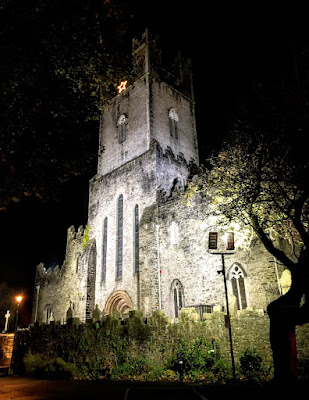
The latest edition of the ‘Old Limerick Journal’ … the front cover includes my photograph of Saint Mary’s Cathedral, Limerick
Patrick Comerford
I had an afternoon in Limerick earlier this week, browsing in the book shops, buying a few journals and books, and also visiting Saint Mary’s Cathedral.
I failed, in all the bookshops I visited to find a copy of Hilary Dully’s new book, her edited volume of the papers of the revolutionary Máire Comerford, On Dangerous Ground. Although it is only three weeks since it was published, the book seems to be a best-seller already, if not sold out.
Among the journals I bought was the latest edition of the Old Limerick Journal (No 56, Winter 2021), edited by Tom Donovan and published by the Limerick Museum at the Old Franciscan Friary on Henry Street, Limerick.
It is a particular pleasure for me that this new edition of the Old Limerick Journal features one of my photographs of Saint Mary’s Cathedral, Limerick, as its front cover illustration, with a complimentary credit and description of me inside on the title page.
As always, this edition of the Old Limerick Journal is filled with fascinating research by local historians.
For example, Des Ryan in his paper searches for ‘The Origins of the Limerick Jewish Community’ (pp 13-15), and asks whether the local newspapers were right in the 1890s to describe them as ‘Polish’ or even, on one occasion, ‘a Polish colony.’
He looks at the background of the 31 Jewish families living in Limerick at the time of the 1901 census, and finds that while one family give Poland as their place of origin, the other 30 families record Russia as their place of birth. In reality, most of them came from Lithuania, then part of the Russian Empire.
At the time, more than 5 million people were living in an area known as ‘the Pale,’ which stretched from parts of Latvia in the north, to Odessa and the Black Sea in the south, including large parts of present-day Lithuania, Latvia, Ukraine, Moldova, Belarus and Poland.
Many of Jewish families in these regions fled the persecutions and pogroms that intensified after the assassination of Tsar Alexander II in 1881.
Des Ryan, who is the longest-running contributor to Old Limerick Journal and a member of the journal’s editorial committee, provides an interesting and invaluable list of the Jewish families living in Limerick in 1901, many of them in Collooney Street (now Wolfe Tone Street) and the surrounding area. Once, again, I believe Limerick needs a Jewish Walking Trail, like those in many European cities.
Joseph Lennon asks how the castle in Limerick became known as ‘King John’s Castle’ (pp 29-36). This particular name first appears in 1787, but King John also gives his name to a castle in Carlingford, Co Louth, and to a number of castles in England.
King John gave Limerick its first charter in 1197, and confirmed it as king in 1199. But there is no primary evidence that he ever visited Limerick. The castle was known throughout most of its history as Limerick Castle, although on occasions it was referred to as ‘the king’s castle.’
The Limerick-born historian John Ferrar was the first to refer to it as ‘King John’s Castle’ when he published a new edition of his History of Limerick in 1787, and this has influenced writers and historians ever since.
Brian Hodkinson, a former curator of the Limerick Museum, is thorough in examining the myths that the Knights Templar established a number of houses in Co Limerick (pp 37-39). These include house at Askeaton, Ballingarry, Castle Matrix, Kildimo, Morgans Newcastle, Shanid, Templecolman and Templeglantine, all in this part of West Limerick.
I have long argued that there is no evidence for a Templar foundation at Saint Mary’s Church, Askeaton. This is a misinterpretation of the significance of the ‘unusual shape’ of the tower, which changes from a square base to an octagonal structure as it rises.
But Askeaton, like many of these churches, was a dependency of Keynsham Abbey, an Augustinian house in Somerset. He poses the question, ‘The Knights Templar in Limerick; fact or fiction?’ He concludes ‘the answer to the question posed in the title is, fiction.’
The Old Limerick Journal Number 56, Winter 2021, ISBN: 9781916294332, €10 is available in all good bookshops in Limerick and through the museums in Limerick.
Saint Mary’s Cathedral, Limerick … my photograph on the cover of the latest edition of the ‘Old Limerick Journal’ (Photograph: Patrick Comerford, 2021)
Showing posts with label Keynsham. Show all posts
27 May 2021
The ruins of a church in
Askeaton destroyed by fire
at the height of the Famine
The ruins of the former church in Askeaton, destroyed by fire in 1847 (Photograph: Patrick Comerford, 2021)
Patrick Comerford
Askeaton is bookended by two churches named Saint Mary’s, the Roman Catholic and Church of Ireland parish churches. It is as though the town is held or enclosed by two hands joined in prayer.
But Askeaton had other churches in the past too. The most notable among these is the Franciscan Friary, whose dramatic ruins stand on the east bank of the Deel, just north of the town. Historians agree too there was also a chapel or church within the walls of the Desmond castle in Askeaton.
Other churches within a short distance of Askeaton included the former churches at Lismakeery, Tomdeely, Morgans North or Mount Pleasant, and Beagh, near Ballysteen, served in pre-Reformation days probably by the Augustinian canons sent to Askeaton from Keynsham Abbey, and working like priests moving out from a minster.
In the 17th and early 18th century, the Catholics of Askeaton may have been served by Franciscan friars who remained around the ruined friary and living in the town. The list of parish priests of Askeaton dates back to 1704, and this list is complete from the end of the 18th century.
As the Penal Laws eased at the end of the 18th century or the beginning of the 19th century, a Catholic church was built close to the friary ruins, facing the mills and on the east bank of the Deel.
The 1842 map of Askeaton shows the church was a large building before the Famine (Photograph: Patrick Comerford, 2021)
A neighbour called around to the Rectory in recent days with a map of Askeaton dated 9 July 1842, showing that this church, although it was thatched, was a substantial building on the north edge of the town.
John Norris Russell & Co began as corn merchants and millers, but soon expanded to other areas. John Norris Russell (1771-1853), the founder, has been called ‘the most enterprising businessman Limerick ever saw.’
Russell was a merchant, shipowner and industrialist. He built the Newtown Pery Mills on Russell’s Quay, Limerick, and the Newtown Pery store nearby on Henry Street, and he was one of the founders of the Limerick Savings Bank. The Russells also acquired large landholdings in Limerick, Ballinacarriga, Kildimo, and Milltown, Askeaton.
Russell bought Paul Erson’s mill in Askeaton in the 1840s and expanded the business. But disaster struck on 10 March 1847 when fire broke out at the Russell Mills, now known as the Old Creamery. The fire killed a mill worker named Costello and several other workers were burned and injured.
A spark from the fire set ablaze the thatched roof of the church and the whole building perished in the ensuing conflagration. During the fire, the parish priest, Father Edward Cussen, put his life at risk as he worked rescuing several men from the blaze.
The thatch-roof church was destroyed by a fire that spread from the neighbouring mill (Photograph: Patrick Comerford, 2021)
Askeaton was without a Catholic church and Father Cussen was offered Corbett’s flour mill in Brewery Lane, later Fitzgibbon’s store. Mass was celebrated there for the next four years until the present Saint Mary’s Catholic Church was built in 1851-1853.
The fire happened at the height of the Great Famine, and there were no funds locally to build a new church. And so, Father James Enright was sent to US to raise funds for a new church.
Between the burning of the old church in 1847 and the opening of the new one in 1851, Askeaton suffered through the Famine. A famine or fever hospital was set up to take care of the dying and the very ill. The ruins of the hospital can still be seen on the main bypass opposite the turn off to the Wyeth plant.
Before the Famine, this building was a treatment centre and a home for lepers. It seems that leprosy may have occurred in the area, as a stream near the four roads also refers to leprosy – Lochan Lobhar, or the Lepers’ Pond.
The population of Askeaton in 1841, four years before the Famine, was 1,862; 40 years later, the population in 1881 was 804, and today it is about 1,137, illustrating graphically how Askeaton has never fully recovered from the impact of the Famine.
Father Cussen died in 1860 and he is buried under the main aisle of the church he built.
The church fire left Askeaton without a Roman Catholic church for four years (Photograph: Patrick Comerford, 2021)
As for John Norris Russell, he died in 1853 and is buried at Saint John’s Church in Limerick, where the Russell mausoleum was erected 20 years later.
This is a fine classical mausoleum built of limestone in 1873, with a tetrastyle temple front in the Doric order, limestone ashlar walls with Doric pilasters supporting a plain entablature and pediment. The heraldic decorations include a cast-iron relief goat figure above ribbon band with the Russell motto and date: Che Sara Sara 1873.
A plaque reads: ‘Here lieth the mortal remains of Francis Russell who died the 25th day of August 1800. He was an affectionate husband, a kind and indulgent parent, a true friend & an honest man.’ Another plaque reads: ‘John Norris Russell dedicated this monument to his father Francis Russell. A tender husband, an affectionate parent, a kind friend & an honest man.’
The ruins of the church destroyed by fire in 1847 still stand beside the Friary ruins close to the east bank of the River Deel on the north edge of Askeaton.
The ruins of the church destroyed by fire in 1847 stand by the Friary ruins (Photograph: Patrick Comerford, 2021)
Patrick Comerford
Askeaton is bookended by two churches named Saint Mary’s, the Roman Catholic and Church of Ireland parish churches. It is as though the town is held or enclosed by two hands joined in prayer.
But Askeaton had other churches in the past too. The most notable among these is the Franciscan Friary, whose dramatic ruins stand on the east bank of the Deel, just north of the town. Historians agree too there was also a chapel or church within the walls of the Desmond castle in Askeaton.
Other churches within a short distance of Askeaton included the former churches at Lismakeery, Tomdeely, Morgans North or Mount Pleasant, and Beagh, near Ballysteen, served in pre-Reformation days probably by the Augustinian canons sent to Askeaton from Keynsham Abbey, and working like priests moving out from a minster.
In the 17th and early 18th century, the Catholics of Askeaton may have been served by Franciscan friars who remained around the ruined friary and living in the town. The list of parish priests of Askeaton dates back to 1704, and this list is complete from the end of the 18th century.
As the Penal Laws eased at the end of the 18th century or the beginning of the 19th century, a Catholic church was built close to the friary ruins, facing the mills and on the east bank of the Deel.
The 1842 map of Askeaton shows the church was a large building before the Famine (Photograph: Patrick Comerford, 2021)
A neighbour called around to the Rectory in recent days with a map of Askeaton dated 9 July 1842, showing that this church, although it was thatched, was a substantial building on the north edge of the town.
John Norris Russell & Co began as corn merchants and millers, but soon expanded to other areas. John Norris Russell (1771-1853), the founder, has been called ‘the most enterprising businessman Limerick ever saw.’
Russell was a merchant, shipowner and industrialist. He built the Newtown Pery Mills on Russell’s Quay, Limerick, and the Newtown Pery store nearby on Henry Street, and he was one of the founders of the Limerick Savings Bank. The Russells also acquired large landholdings in Limerick, Ballinacarriga, Kildimo, and Milltown, Askeaton.
Russell bought Paul Erson’s mill in Askeaton in the 1840s and expanded the business. But disaster struck on 10 March 1847 when fire broke out at the Russell Mills, now known as the Old Creamery. The fire killed a mill worker named Costello and several other workers were burned and injured.
A spark from the fire set ablaze the thatched roof of the church and the whole building perished in the ensuing conflagration. During the fire, the parish priest, Father Edward Cussen, put his life at risk as he worked rescuing several men from the blaze.
The thatch-roof church was destroyed by a fire that spread from the neighbouring mill (Photograph: Patrick Comerford, 2021)
Askeaton was without a Catholic church and Father Cussen was offered Corbett’s flour mill in Brewery Lane, later Fitzgibbon’s store. Mass was celebrated there for the next four years until the present Saint Mary’s Catholic Church was built in 1851-1853.
The fire happened at the height of the Great Famine, and there were no funds locally to build a new church. And so, Father James Enright was sent to US to raise funds for a new church.
Between the burning of the old church in 1847 and the opening of the new one in 1851, Askeaton suffered through the Famine. A famine or fever hospital was set up to take care of the dying and the very ill. The ruins of the hospital can still be seen on the main bypass opposite the turn off to the Wyeth plant.
Before the Famine, this building was a treatment centre and a home for lepers. It seems that leprosy may have occurred in the area, as a stream near the four roads also refers to leprosy – Lochan Lobhar, or the Lepers’ Pond.
The population of Askeaton in 1841, four years before the Famine, was 1,862; 40 years later, the population in 1881 was 804, and today it is about 1,137, illustrating graphically how Askeaton has never fully recovered from the impact of the Famine.
Father Cussen died in 1860 and he is buried under the main aisle of the church he built.
The church fire left Askeaton without a Roman Catholic church for four years (Photograph: Patrick Comerford, 2021)
As for John Norris Russell, he died in 1853 and is buried at Saint John’s Church in Limerick, where the Russell mausoleum was erected 20 years later.
This is a fine classical mausoleum built of limestone in 1873, with a tetrastyle temple front in the Doric order, limestone ashlar walls with Doric pilasters supporting a plain entablature and pediment. The heraldic decorations include a cast-iron relief goat figure above ribbon band with the Russell motto and date: Che Sara Sara 1873.
A plaque reads: ‘Here lieth the mortal remains of Francis Russell who died the 25th day of August 1800. He was an affectionate husband, a kind and indulgent parent, a true friend & an honest man.’ Another plaque reads: ‘John Norris Russell dedicated this monument to his father Francis Russell. A tender husband, an affectionate parent, a kind friend & an honest man.’
The ruins of the church destroyed by fire in 1847 still stand beside the Friary ruins close to the east bank of the River Deel on the north edge of Askeaton.
The ruins of the church destroyed by fire in 1847 stand by the Friary ruins (Photograph: Patrick Comerford, 2021)
22 December 2020
A good reason to revisit
the Augustinian priory
ruins in Rathkeale
The south side of the ruins of the Augustinian Priory of Saint Mary in Rathkeale, Co Limerick … the church of Rathkeale and nine dependent chapels in Co Limerick were part of the possessions of Keynsham Abbey (Photograph: Patrick Comerford, 2020)
Patrick Comerford
I have spent much of this morning in Rathkeale, at a school Christmas service in Holy Trinity Church. As I was researching my paper last week on Keynsham Abbey in Somerset and its dependent house in Co Limerick, including Saint Mary’s Church, Askeaton, I was interested to come across the many links that also exist between Keynsham Abbey and Rathkeale, Co Limerick.
So, early last week, as part of my research, I returned to visit the ruins of Saint Mary’s, the former Augustinian priory or abbey in Rathkeale.
At the turn of the 12th and 14th centuries, Keynsham Abbey acquired considerable property in Ireland, including the churches at Askeaton, Rathkeale, Lismakeera, Croagh and Bruree in Co Limerick.
Sir Roger Waspail granted the church of Rathkeale to Keynsham Abbey ca 1213-1226. He died in 1226 and was succeeded by his son, Henry Waspail, who reconfirmed his father’s grant of Rathkeale to Keynsham Abbey ca 1226-1228.
The ruins of Rathkeale Priory seen from the north-east (Photograph: Patrick Comerford, 2020)
Following Roger Waspail’s grant of Rathkeale, Keynsham managed its new benefice, collecting income and appointing clerics. But the politically unstable situation in Ireland made it difficult to collect revenue.
Some time after 1237, under the direction of John de Bureford, a canon of the abbey and their proctor in Ireland, Keynsham granted the church of Rathkeale and nine dependent chapels and property rights in the cantred of Askeaton to the Bishop of Limerick.
The Augustinians at Keynsham were Augustinian canons regular and they adopted the rule of the Order of Saint Victor. The head of the house was always called an abbot, and the house was known as the House of the Canons of Saint Austin and Saint Victor.
Inside the ruins of the priory church in Rathkeale (Photograph: Patrick Comerford, 2020)
The remains of the Augustinian Priory or abbey in Rathkeale are at the top of the east end of the town, on the old Limerick Road. This priory or abbey was founded in 1280 by Gilbert Hervey not for the Augustinians of Keynsham Abbey but for the Augustinian Canons of the Order of Aroasia.
The Augustinians of Keynsham and of Rathkeale followed different traditions and disciplines, and were members of different, distinct orders. The Augustinian Canons of Aroasia were founded in the Diocese of Arras in France in 1097, and were a separate order from the Augustinians at Keynsham.
The number of friars or monks in Rathkeale seems to have been supplemented by Augustinians from Rattoo, 10 km outside Listowel, Co Kerry. The Augustinians in Rattoo were also Aroasian Canons, and their abbot was a Lord of Parliament.
The Augustinian Abbey in Rathkeale was founded in 1280 by Gilbert Hervey (Photograph: Patrick Comerford, 2020)
Soon after the Augustinian Abbey in Rathkeale was founded by Gilbert Hervey, it was endowed by his niece, Elinor Purcell, with the tenth loaf of every baking, the tenth flagon of every brewing, the tenth pork, the tenth mutton and a large portion of every ox killed in the Manor of Mayer or Croagh.
In 1290, Benedict, the Prior of Saint Mary’s, Rathkeale, was involved in a law suit against Thomas Le Chapelin, Guardian of the house of Saint Senan on Scattery Island.
Elinor Purcell’s son, Hugh Purcell, was sued in 1307 by the Prior of Saint Mary’s for not fulfilling the grants made by his mother. The case ended in a compromise in which Hugh agreed to give to the Prior each year two crannogs of bread corn, three crannogs of oats on the Feast of Saint Michael and four porks on the Feast of Saint Martin forever.
The four-light, tracieried East Window in the ruins of the priory church (Photograph: Patrick Comerford, 2020)
Thomas Purcell was Prior of the Abbey in 1318, when he was accused of violence at Croagh.
It was claimed that in 1436 the Virgin Mary had worked several miracles at the abbey.
Pope Pius III addressed a letter to the prior of Rathkeale in 1463, giving instructions about appointing David Fitzmaurice as the Rector of Randbarad (Ryndbera) in the Diocese of Ardfert. JB Leslie identified this parish with Aglish, north-west of Killarney, between Killarney and Killorgin. Fitzmaurice was also Chancellor of Ardfert.
The priory in Rathkeale owned the mill and a great island and a large part of the water weir. There were six ploughlands and six quarters and it all belonged to the church with all kinds of tithes.
In 1513, Thomas Hayes bound himself to the Apostolic Chamber for the first fruits of the Priory of the Blessed Virgin, order of Saint Augustine, Rathkeale. But O’Dowd says that the ‘original building must have been destroyed for the present structure is not later than the 16th century.’
There are few records of the priory between then and the suppression of the monastic houses in Ireland at the Reformation. The monastery was officially suppressed in 1542, but it is thought that a small community of Augustinian canons may have remained there until 1581.
The Gothic arch is all that survives from the former south transept (Photograph: Patrick Comerford, 2020)
According to an inquisition during the reign of Queen Elizabeth I, the priory was in the possession of Gerot Baluff or Gerald Balfe, who was killed during the Desmond Rebellion. After the death of this last prior, the abbey was granted to Sir Henry Wallop, who also received large tracts of land on the banks of the Slaney at Enniscorthy, Co Wexford, and was the ancestor of the Earls of Portsmouth.
Peyton’s Survey in 1586 noted: ‘It was found that the site of the Monastery – a castle called Cam-ne-Monaster, alias The Castle at the Head of the Monastery – together with 20 gardens, one of which was called the Prior’s Garden, contained three acres.’
In addition, there were 20 more acres in Temple Trenode in Rathkeale, eight acres in Ardagh, eight acres in Callow, and 10 acres in Nantenan, between Rathkeale and Askeaton, that were described as ‘very bad land.’
A small, vaulted chamber outside the building, against the north wall (Photograph: Patrick Comerford, 2020)
Although the Augustinian priory in Rathkeale was founded in the late 13th century, the present structures may date from the early 16th century, replacing the earlier buildings on the site. Although its roof is gone and many of its historical details have been lost in time, the abbey is a beautiful, peaceful place.
The ruins include is a rectangular church with a vaulted room at the north side. It has a simple four-light traceried east window.
The south wall is the most complete, but it does not reach its original total length. There are five round headed windows in the south wall of the chancel.
The nave section is in ruins. There was once a south transept, but only the arch of this remains. Another segment of the nave wall stands detached from the rest of the building.
There is a small, vaulted chamber outside the building, against the north wall.
Remains of the abbey building are scattered through the surrounding town park (Photograph: Patrick Comerford, 2020)
It was reported many years ago that the bell of the abbey had been discovered and given to the local bell-man, but no more is known of its whereabouts. It may have been given to Jim Murray, the last bell-man in Rathkeale.
In recent years, the ruins were renovated by Rathkeale Community Council and FÁS in 1988 and the surrounding grounds were landscaped and developed as the town's park.
Holy Trinity Church, the Church of Ireland parish church in Rathkeale, stands on a site at the west end of the town that has been a place of worship since the 13th century, although the present church building dates from 1831.
A blocked-up arch in the north wall (Photograph: Patrick Comerford, 2020)
But because the two Augustinians in Rathkeale and Keynsham Abbey followed different traditions, it appears the earlier church on the site of Holy Trinity Church can be identified with the church in Rathkeale that was a dependency of Keynsham.
It is as though Holy Trinity Church at the west end and the ruined Augustinian Abbey at the east end of the town bookend Rathkeale as complementary churches, both with links to the different Augustinian traditions in the mediaeval church.
The abbey ruins were renovated by Rathkeale Community Council and FÁS in 1988 and the surrounding grounds were landscaped (Photograph: Patrick Comerford, 2020)
Patrick Comerford
I have spent much of this morning in Rathkeale, at a school Christmas service in Holy Trinity Church. As I was researching my paper last week on Keynsham Abbey in Somerset and its dependent house in Co Limerick, including Saint Mary’s Church, Askeaton, I was interested to come across the many links that also exist between Keynsham Abbey and Rathkeale, Co Limerick.
So, early last week, as part of my research, I returned to visit the ruins of Saint Mary’s, the former Augustinian priory or abbey in Rathkeale.
At the turn of the 12th and 14th centuries, Keynsham Abbey acquired considerable property in Ireland, including the churches at Askeaton, Rathkeale, Lismakeera, Croagh and Bruree in Co Limerick.
Sir Roger Waspail granted the church of Rathkeale to Keynsham Abbey ca 1213-1226. He died in 1226 and was succeeded by his son, Henry Waspail, who reconfirmed his father’s grant of Rathkeale to Keynsham Abbey ca 1226-1228.
The ruins of Rathkeale Priory seen from the north-east (Photograph: Patrick Comerford, 2020)
Following Roger Waspail’s grant of Rathkeale, Keynsham managed its new benefice, collecting income and appointing clerics. But the politically unstable situation in Ireland made it difficult to collect revenue.
Some time after 1237, under the direction of John de Bureford, a canon of the abbey and their proctor in Ireland, Keynsham granted the church of Rathkeale and nine dependent chapels and property rights in the cantred of Askeaton to the Bishop of Limerick.
The Augustinians at Keynsham were Augustinian canons regular and they adopted the rule of the Order of Saint Victor. The head of the house was always called an abbot, and the house was known as the House of the Canons of Saint Austin and Saint Victor.
Inside the ruins of the priory church in Rathkeale (Photograph: Patrick Comerford, 2020)
The remains of the Augustinian Priory or abbey in Rathkeale are at the top of the east end of the town, on the old Limerick Road. This priory or abbey was founded in 1280 by Gilbert Hervey not for the Augustinians of Keynsham Abbey but for the Augustinian Canons of the Order of Aroasia.
The Augustinians of Keynsham and of Rathkeale followed different traditions and disciplines, and were members of different, distinct orders. The Augustinian Canons of Aroasia were founded in the Diocese of Arras in France in 1097, and were a separate order from the Augustinians at Keynsham.
The number of friars or monks in Rathkeale seems to have been supplemented by Augustinians from Rattoo, 10 km outside Listowel, Co Kerry. The Augustinians in Rattoo were also Aroasian Canons, and their abbot was a Lord of Parliament.
The Augustinian Abbey in Rathkeale was founded in 1280 by Gilbert Hervey (Photograph: Patrick Comerford, 2020)
Soon after the Augustinian Abbey in Rathkeale was founded by Gilbert Hervey, it was endowed by his niece, Elinor Purcell, with the tenth loaf of every baking, the tenth flagon of every brewing, the tenth pork, the tenth mutton and a large portion of every ox killed in the Manor of Mayer or Croagh.
In 1290, Benedict, the Prior of Saint Mary’s, Rathkeale, was involved in a law suit against Thomas Le Chapelin, Guardian of the house of Saint Senan on Scattery Island.
Elinor Purcell’s son, Hugh Purcell, was sued in 1307 by the Prior of Saint Mary’s for not fulfilling the grants made by his mother. The case ended in a compromise in which Hugh agreed to give to the Prior each year two crannogs of bread corn, three crannogs of oats on the Feast of Saint Michael and four porks on the Feast of Saint Martin forever.
The four-light, tracieried East Window in the ruins of the priory church (Photograph: Patrick Comerford, 2020)
Thomas Purcell was Prior of the Abbey in 1318, when he was accused of violence at Croagh.
It was claimed that in 1436 the Virgin Mary had worked several miracles at the abbey.
Pope Pius III addressed a letter to the prior of Rathkeale in 1463, giving instructions about appointing David Fitzmaurice as the Rector of Randbarad (Ryndbera) in the Diocese of Ardfert. JB Leslie identified this parish with Aglish, north-west of Killarney, between Killarney and Killorgin. Fitzmaurice was also Chancellor of Ardfert.
The priory in Rathkeale owned the mill and a great island and a large part of the water weir. There were six ploughlands and six quarters and it all belonged to the church with all kinds of tithes.
In 1513, Thomas Hayes bound himself to the Apostolic Chamber for the first fruits of the Priory of the Blessed Virgin, order of Saint Augustine, Rathkeale. But O’Dowd says that the ‘original building must have been destroyed for the present structure is not later than the 16th century.’
There are few records of the priory between then and the suppression of the monastic houses in Ireland at the Reformation. The monastery was officially suppressed in 1542, but it is thought that a small community of Augustinian canons may have remained there until 1581.
The Gothic arch is all that survives from the former south transept (Photograph: Patrick Comerford, 2020)
According to an inquisition during the reign of Queen Elizabeth I, the priory was in the possession of Gerot Baluff or Gerald Balfe, who was killed during the Desmond Rebellion. After the death of this last prior, the abbey was granted to Sir Henry Wallop, who also received large tracts of land on the banks of the Slaney at Enniscorthy, Co Wexford, and was the ancestor of the Earls of Portsmouth.
Peyton’s Survey in 1586 noted: ‘It was found that the site of the Monastery – a castle called Cam-ne-Monaster, alias The Castle at the Head of the Monastery – together with 20 gardens, one of which was called the Prior’s Garden, contained three acres.’
In addition, there were 20 more acres in Temple Trenode in Rathkeale, eight acres in Ardagh, eight acres in Callow, and 10 acres in Nantenan, between Rathkeale and Askeaton, that were described as ‘very bad land.’
A small, vaulted chamber outside the building, against the north wall (Photograph: Patrick Comerford, 2020)
Although the Augustinian priory in Rathkeale was founded in the late 13th century, the present structures may date from the early 16th century, replacing the earlier buildings on the site. Although its roof is gone and many of its historical details have been lost in time, the abbey is a beautiful, peaceful place.
The ruins include is a rectangular church with a vaulted room at the north side. It has a simple four-light traceried east window.
The south wall is the most complete, but it does not reach its original total length. There are five round headed windows in the south wall of the chancel.
The nave section is in ruins. There was once a south transept, but only the arch of this remains. Another segment of the nave wall stands detached from the rest of the building.
There is a small, vaulted chamber outside the building, against the north wall.
Remains of the abbey building are scattered through the surrounding town park (Photograph: Patrick Comerford, 2020)
It was reported many years ago that the bell of the abbey had been discovered and given to the local bell-man, but no more is known of its whereabouts. It may have been given to Jim Murray, the last bell-man in Rathkeale.
In recent years, the ruins were renovated by Rathkeale Community Council and FÁS in 1988 and the surrounding grounds were landscaped and developed as the town's park.
Holy Trinity Church, the Church of Ireland parish church in Rathkeale, stands on a site at the west end of the town that has been a place of worship since the 13th century, although the present church building dates from 1831.
A blocked-up arch in the north wall (Photograph: Patrick Comerford, 2020)
But because the two Augustinians in Rathkeale and Keynsham Abbey followed different traditions, it appears the earlier church on the site of Holy Trinity Church can be identified with the church in Rathkeale that was a dependency of Keynsham.
It is as though Holy Trinity Church at the west end and the ruined Augustinian Abbey at the east end of the town bookend Rathkeale as complementary churches, both with links to the different Augustinian traditions in the mediaeval church.
The abbey ruins were renovated by Rathkeale Community Council and FÁS in 1988 and the surrounding grounds were landscaped (Photograph: Patrick Comerford, 2020)
15 December 2020
Keynsham Abbey, its
Co Limerick churches,
and legends about the
Knights Templar in Askeaton
The octagonal tower at Saint Mary’s Church, Askeaton … but is there any evidence for the presence of the Knights Templar? (Photograph: Patrick Comerford 2020)
Patrick Comerford
It is a common belief in Askeaton that Saint Mary’s Church, Askeaton, Co Limerick, was a foundation of the Knights Templar, and that the neighbouring octagonal tower was built by the Knights Templar.
However, it seems, there may be no primary, documentary evidence or sources to show that the Knights Templar ever had a foundation in Askeaton.
On the other hand, I have been challenged by my findings in recent weeks that the Augustinian Abbey of Keynsham in Somerset held Askeaton in the early mediaeval period, along with a number of other parish churches in this part of west Co Limerick, including Askeaton, Ballingarry, Bruree, Croagh, Lismakeera, and, for a time, Rathkeale.
Keynsham Abbey also had close links with successive proprietors of Askeaton Castle until the Reformation. Could it be, I was forced to ask, that Saint Mary’s was a dependent house of Keynsham Abbey, and was never associated with the Knights Templar?
The remaining ruins of Keynsham Abbey, between Bath and Bristol (Photograph: Rick Crowley/Wikipedia)
Keynsham Abbey in Somerset was founded ca 1166 by William, Earl of Gloucester. It was founded as a house of Augustinian canons regular, and continued until the dissolution of the monastic houses in 1539. Keynsham Abbey stood on the south side of the River Avon, where the River Avon meets the River Chew in the Keynsham Hams, an alluvial flood plain with open fields, pastures and meadows, divided by hedgerows and ditches.
This was the site of a fourth century Roman settlement, possibly called Trajectus, that was abandoned when the Roman legions left Britain. The Abbey was built near the old Roman Road that became the Bath Road connecting London with Bath and Bristol.
There was a religious settlement in Keynsham from the ninth or tenth centuries. Some sources say a later mediaeval abbey was established ca 1170, when Bartholomew de Sancto Mauro (Seymour) witnessed the founding charter. Other sources say the main abbey was founded by William de Clare, Earl of Gloucester, in 1166, the year his son Robert de Clare died, traditionally at his son’s dying request, or in the year 1180.
The priests at Keynsham Abbey were Augustinian canons regular and they adopted the rule of the Order of Saint Victor, so that the head of the religious house was always called an abbot, and the house was known as the House of the Canons of Saint Austin and Saint Victor. Other abbeys following this rule included Worspring (also called Woodspring), near Weston-super-Mare, and Stavordale near Wincanton, both in Somerset; Saint Augustine’s Abbey, Bristol; and Wormeley and Wigmore, both in Herefordshire.
At its foundation, the abbey was endowed with the Manor and the Hundred of Keynsham, totalling 9,920 ha (24,520 acres), and the parishes of Brislington, Burnett, Chelwood, Compton Dando, Farmborough, Keynsham, Marksbury, Nempnett Thrubwell, Pensford, Priston, Publow, Queen Charlton, Saltford, Stanton Drew, Stanton Prior, and Whitchurch. It also included many parish properties such as the church of Saint Mary and Saint Peter and Saint Paul and the chapels of Brislington, Charlton, Felton (or Whitchurch), Publow and Pensford.
The abbey also acquired considerable property in Ireland, including the churches at Askeaton, Rathkeale, Lismakeera, Croagh and Bruree in Co Limerick.
Askeaton Castle … part of the large estates granted to Hamo de Valognes in 1199 (Photograph: Patrick Comerford, 2020)
King John granted large parts of mid-west Limerick to Hamo de Valognes, justiciar of Ireland, in 1199, including Askeaton, Rathkeale and Bruree, an area where the manor of Askeaton held sway. Hamo de Valognes had died by 1207, and his son and heir, Hamo de Valognes, was a minor. King John then granted much of the de Valognes estate to Hugh de Neville in 1207, and other lands in the area to Sir Roger Waspail, who held extensive estates in Dorset, Wiltshire and Gloucestershire, and also owned estates in present-day Co Laois, Co Dublin and Co Kildare.
Waspail, who became Seneschal of Ulster, granted the church of Rathkeale to Keynsham Abbey ca 1213-1226. He died in 1226 and was succeeded by his son, Henry Waspail, who reconfirmed his father’s grant of Rathkeale to Keynsham Abbey ca 1226-1228.
Henry died in 1233 and was succeeded by his brother Roger Waspail, who received a grant of Rathkeale in 1251 and became Deputy Justiciar of Ireland in 1262. He exchanged the manor of Rathkeale with John Maltravers in 1280 for a life interest in the manor of Wolcomb Maltravers, Dorset.
Following Roger Waspail’s grant of Rathkeale, Keynsham managed its new benefice, collecting income and appointing clerics. But the politically unstable situation in Ireland made it difficult to collect revenue.
Some time after 1237, under the direction of John de Bureford, a canon of the abbey and their proctor in Ireland, Keynsham granted the church of Rathkeale and nine dependent chapels and property rights in the cantred of Askeaton to the Bishop of Limerick. These nine chapels were Rathofergus [Rathfergus], Mayntaueny [Moytawnach], Mayryne [Kiltanna], Browry [Bruree], Culbalysward [Howardstown], Karracnefy [Cathernasse and Cahernarry], Mayncro [Croagh], Maymolcally [Kilnecally] and Orosse [unknown].
At the same time, Keynsham granted the church of Askeaton to the Priory of Saint Catherine outside the walls of Waterford. This priory was founded before 1207, and, like Keynsham, it followed the Augustinian rule of Saint Victor.
The ruins of the Augustinian Priory of Saint Mary in Rathkeale … the church of Rathkeale and nine dependent chapels were part of the possessions of Keynsham Abbey (Photograph: Patrick Comerford, 2020)
The grants to the Bishop of Limerick benefitted both sides. Keynsham realised capital without the expense of collecting while the bishop acquired another source of income. At the time, Bishop Hubert de Burgh was involved in costly disputes with the pope in Rome and the government in Dublin, and was forced to borrow money from Italian bankers. He had difficulty repaying these loans and interest was accumulating. In 1237, the year he received the Keynsham parishes, Bishop Hubert repaid 160 marks on a loan that included 54 marks of interest.
The early 13th century grant by Roger Waspail of Rathkeale to Keynsham Abbey failed to mention any other parishes. But the grant to Bishop Hubert ca 1237 shows Rathkeale had nine dependent chapels in area that extended from Askeaton to Bruree. The church of Askeaton was not named as a benefice but must have formed part of Waspail’s grant to the abbey. The church in Askeaton was given to the priory of Saint Catherine in Waterford ca 1237. Sometime afterwards, Askeaton was granted to Bishop Hubert of Limerick by the priory. Before 1250, Bishop Hubert granted Askeaton to Keynsham.
An early Vicar of Askeaton, Thomas de Cardiff, is named in 1237, and it is said that Saint Mary’s Church in Askeaton was built in 1291. It is also said that the Knights Templars had a commandery in Askeaton from 1298 until they were disbanded in 1307. But all the available documentary evidence shows Askeaton remained in the hands of Keynsham Abbey and its dependency in Waterford.
Keynsham Abbey also held the parish of Ballingarry from the mid-1200s, and by the 15th century, Ballingarry was the chief parish held by Keynsham, with Askeaton a junior parish. Ballingarry may have been transferred by Keynsham to another religious house in the 13th century, like its other Limerick possessions, but it is also possible that the abbey kept control of Ballingarry without interruption.
From 1294 on, the Abbots of Keynsham appointed attorneys to manage their Irish property, which suggests that Ballingarry and Askeaton were under its direct ownership. These attorneys collected the tithes and incomes from the Limerick parishes and sent the surplus back to Keynsham.
The former parish church in Ballingarry … Ballingarry and Askeaton were owned directly by the Abbots of Keynsham (Photograph: Patrick Comerford)
The barony, castle and manor of Askeaton were held by the late Thomas de Clare, son of Richard de Clare, in 1320.
At the same time, the Abbot of Keynsham held the Rectory of Askeaton in 1320, and the income from the rectory was for the abbot’s own use. The abbey also had the right to nominate the Vicars of Askeaton. The rectory of Askeaton was valued at 16 marks while the vicarage was valued at 8 marks.
The responsibilities of the abbey’s Irish attorneys increased in the early 1320s. But the abbey suffered considerable financial losses in England, its revenues could not meet its needs, and it lost the income from many parishes through fraud, default, theft, the death of cattle, poor crops, flood damage and wars.
Those wars were caused mainly by Maurice FitzThomas FitzGerald, 1st Earl of Desmond, as he tried to acquire the Irish estates of the de Clare absentee heirs. When Thomas de Clare, son of Richard de Clare, died in 1321 without any direct heirs, his possessions were divided between his aunts, Margaret, wife of Sir Bartholomew de Badlesmere, and Maud, wife of Sir Robert de Wells, while the de Clare estates that included the Limerick parishes owned by Keynsham Abbey passed as dower land to Joan, widow of Richard de Clare.
Maurice FitzGerald regarded all the former de Clare lands in Co Kerry, Co Limerick and Co Cork as his by descent, along with those in Thomond. However, the losses suffered by Keynsham in these wars is unknown.
The church ruins at Affane, near Cappoquin … one of the parishes in west Waterford acquired by Kenynsham Abbey in 1413 (Photograph: Patrick Comerford, 2020)
When the Bishop of Bath and Wells visited Keynsham Abbey in 1350, he reported the abbey neglected to keep its gates safely closed, leaving the church ornaments and valuables open to being stolen. Lay people were allowed into the refectory contrary to the rules, nightly offices were irregularly kept, poor financial accounts were kept, estates were let out at low rents, and the title deeds and charters of the abbey were not stored in a secure location. Lay men and women entered the abbey at unlawful hours, the abbey’s staff were involved in stealing, the poor were not being served, and the monks used sporting dogs.
Keynsham Abbey acquired the Rectory of Dungarvan, Co Waterford, from Thomas FitzGerald, 5th Earl of Desmond, in 1413, and with it the right of presentation to 13 parishes across mid-Co Waterford: Affane, Aglish, Clashmore, Clonea, Colligan, Fews, Kilgobinet, Kilronan, Kinsalebeg, Lisgenan, Ringagonagh and Whitechurch.
It has been suggested that Keynsham gave Desmond the advowsons for its Co Limerick parishes in exchange for Dungarvan, but there is no evidence to support this. A document in 1427 shows Keynsham as holding two Limerick parishes, Askeaton and Ballingarry.
The Limerick parishes of Askeaton and Ballingarry were situated in the heart of the earldom. A stable earldom was to the obvious benefit of Keynsham. It would appear that the abbey opened doors for the Earl of Desmond in London and among the regional magnates.
Sometime before 1427, a new vicar was appointed to Askeaton. Edmund McAdam, had tendered his resignation to Cornelius O’Dea, Bishop of Limerick. The Rector of Ballingarry, John Kyndton, was asked by William, Abbot of Keynsham, to present a new vicar. Kyndton selected James Oleayn, a priest of the Diocese of Killaloe, and Bishop Cornelius instituted Cleayn, despite Gillabertus Ykatyl illegally holding Askeaton for more than a year.
But James Oleayn had doubts about whether the presentation and institution were valid, and petitioned the Pope for papal letters to make good his position. He held Askeaton in June 1427 when he was charged to pay 6 marks in first fruits.
Edmund McAdam later revoked his resignation and recovered possession of Askeaton. But McAdam resigned as Vicar of Askeaton again by 1458, and the public notary of Limerick and other judges gave the vicarage to Thomas Macega. John Maclanchie presented a claim of false possession and took his case to Rome, although the vicarage had not lawfully devolved to the Pope.
Pope Eugene IV sent the case to a papal auditor who favoured Thomas Macega over John Maclanchie. Subsequently, Philip Offlait, a priest of Limerick, brought false charges against Macega and demanded the removal of Macega from Askeaton. Macega appealed to Rome where Pope Nicholas V sent the case to a papal auditor who ruled against Offlait.
The Bishop of Limerick then admitted Macega to Askeaton, but Offlait objected, and faced with a choice between two priests in his diocese, the bishop expelled both candidates and appointed Philip Ocathill, a priest of Limerick, to Askeaton.
Macega appealed to Rome once again, was granted a dispensation from his illegitimacy as the son of unmarried parents, and received a new mandate for Askeaton. The vicarage was valued at 8 marks and the previous Vicars of Askeaton were named as Gilbert Itaschill and William Ymolcorkra, along with Edmund McAdam. It is not known if Macega succeeded to the vicarage or if more appeals were made, and Keynsham Abbey is not mentioned in these cases.
The Rector of Ballingarry was proctor of Keynsham Abbey in 1427 (Photograph: Patrick Comerford)
The rights of Keynsham Abbey’s in Ballingarry were also challenged. Sometime ca 1399-1426, John Fitzgerald of Pobbnesheagh had founded a Franciscan house at Kilshane. In 1488, John Lesse, the minister of the Ballingarry community was in a dispute over tithes.
The vicarage of Ballingarry became vacant ca 1409 with the death of William, son of Thomas Ymalcorkra. The vicarage was then valued at 12 marks. Thomas Saleys alias Cristour, was presented to Ballingarry by Keynsham Abbey as patron of the parish. But Thomas had doubts about the abbey’s authority and petitioned the Pope for a mandate that was issued to the Chancellor of Limerick.
John Kyndton, Rector of Ballingarry, seems to have acted as the abbey’s proctor a in 1427, collecting tithes and income from farming the landed estates.
Gilbert O’Liathain or O’Loan, the Vicar of Ballingarry in 1445, exchanged the parish for Croom with Malachy O’Condoub (O’Conify), with the sanction of the Bishop of Limerick. But Malachy had doubts about the exchange and in July 1445 he received a papal mandate to confirm the exchange. Ballingarry was valued at 16 marks. At the same time, Malachy was made Prebendary of Kilrossanty in Lismore.
Gillacius (or Walter) O’Keyt, a canon of Lismore, became Dean of Lismore and Prebendary of Kilrossanty in 1450, as well as Prebendary of Saint Munchin’s (Limerick) and Vicar of Ballingarry. O’Keyt got a papal dispensation on account of charges of simony, perjury and other irregularities to legitimise these appointments. Keynsham Abbey was acknowledged as holding the right of presentation to Ballingarry and a new claimant emerged in 1452, when William Torriger was presented to Ballingarry by Keynsham Abbey.
Torringer was instituted by John Mothell, Bishop of Limerick, in succession to Malachy O’Conify, but he was opposed by Gillacius O’Keyt, the former vicar. Torriger and O’Keyt both petitioned Pope Nicholas V. The papal auditor judged in favour of Torriger, and issued a perpetual silence on O’Keyt.
O’Keyt surrendered the vicarage to Torriger, but a sentence of excommunication threatened his role as Dean of Lismore. O’Keyt was further reprimanded when he tried to celebrate masses. He petitioned the pope in 1454, and the Bishop of Lismore received a mandate to lift the sentence of excommunication and to restore Okeyt to full cleric status.
O’Keyt filed another petition relating to Ballingarry in 1457, receiving absolution from the pope for simony and a mandate to remain Dean of Lismore.
Matthew (Mahon or Malachi) O’Griffa, a canon of Limerick, received a Papal dispensation because his illegitimacy as the son of a priest. He was then appointed Vicar of Dysert in Killaloe Diocese, Prebendary of Saint Munchin’s (Limerick), Archdeacon of Limerick, and Vicar of Ballingarry in 1458. He was also Dean of Cashel (1455), and later became Bishop of Killaloe (1463-1483).
The financial details of some of Keynsham’s Limerick parishes are disclosed in a papal mandate in 1460. According to Cornelius Ydeayd, a priest of the Diocese of Limerick, the abbey held a number of rectorial tithes in the parishes of Ballingarry and Askeaton. These tithes were not collected by the abbey’s representative, but were leased to lay people who paid a yearly rent. Ydeayd feared they could easily pass to these lay people to the loss of Keynsham, and Pope Pius II asked the Bishop of Limerick to investigate.
Nicholas Wale, a priest of Limerick diocese, was appointed the Vicar of Ballingarry in 1488, and Philip O’Kail was to be removed. William O’Muleoni, a priest of Limerick, became Vicar of Ballingarry and Kilscannell in 1492.
Saint Carthage’s Cathedral, Lismore … Gillacius O’Keyt was Dean of Lismore and Vicar of Ballingarry (Photograph: Patrick Comerford, 2020)
As for Keynsham Abbey, Edward I stayed at the Abbey in 1276 on his way from Bath to Bristol. A small town eventually grew up around Keynsham Abbey, and in 1307 Edward II granted the abbey a weekly market on Tuesdays and a yearly fair on the Feast of the Assumption (15 August).
As the centuries progressed, the abbey became embroiled in a number of disputes over monastic life and discipline. When the bishop visited Keynsham in 1350, he found the canons were failing to properly guard and secure the outer gate of the abbey, so that the ornaments of the church and treasures of the house could be easily stolen. The canons were also admonished to keep better household accounts, attend prayers more regularly, and give up luxuries such as hunting dogs and dining abroad.
When the bishop visited again in 1353, he found there was great neglect throughout the abbey. The doors were unguarded, household accounts were not properly kept, prayers were not attended to regularly, and up to two-thirds of the canons were regularly missing community meals and engaging in gaming.
Similar issues arose again in 1450, when the bishop made more complaints about the management of the abbey. Bishop Beckington of Bath and Wells found several poor standards at Keynsham in 1451, but Abbot Walter Bekynsfield was aged and unable to introduce changes. Another commission in 1455 found no improvements and forced the abbot to resign. Thomas Tyler was appointed the new abbot, but resistance was still strong.
When Canon John Ledbury, a leader of this resistance, was transferred to Worspring Abbey in 1458, matters began to settle. But resistance resurfaced, and further commissions were issued in 1458 and 1459.
The fortunes of Keynsham Abbey received a boost in 1495 when Jasper Tudor (1431-1495), Duke of Bedford and Earl of Pembroke, asked to be buried in a tomb within Keynsham Abbey and gave 100 marks to make the tomb. He was a maternal half-brother of King Henry VI and uncle of Henry VII. He left income for four priests to sing perpetually in the abbey for his soul and the souls of his father, mother brother and his predecessors. Jasper Tudor also gave his best gown of gold to the abbey for vestments.
But Keynsham Abbey and its English and Irish interests was facing increasing and eventually irresistible demands for reform. The Augustinian general chapter in 1518 heard that without reform the order faced imminent ruin.
Cardinal Wolsey obtained papal approval to reform all monastic houses in England, including the Augustinians following the rule of Saint Victor at Keynsham. His new rules were presented at a conference of leading Augustinians, Benedictines and Cistercians in 1519. The Benedictines rejected the rules almost immediately, followed by the Augustinians in 1520.
Keynsham Abbey was in urgent need of reform and visitation in 1526 on behalf of the bishop of Bath and Wells found a deplorable situation. Things were so bad that the abbot, John Stourton, admitted the abbey was in ruins. The choir of the church was in a filthy state, frequented by dogs as if it were a kennel, water and fuel were scarce and there was a lack of books for divine service. None of the brothers studied at Oxford and many of the novices were illiterate.
The last Abbot of Keynsham, John Staunton, the prior, William Herne, the subprior John Arnold, and 12 other canons, subscribed to the Act of Supremacy at the Tudor Reformation in 1534.
The Irish properties of Keynsham Abbey were seized under the Act of Absentees (1536), and this prevented the Earls of Desmond from having any further claims to Dungarvan.
John Tregonwell and William Petre, Henry VIII’s and Secretary of State were sent to the abbey as ‘visitors’ in 1539. The abbot and ten monks surrendered the abbey, and the abbot and canons received pensions or annuities.
When Keynsham’s possessions in Co Waterford were surveyed in 1541, they included the rectory of Dungarvan and its vicarages. The income from Dungarvan and its vicarages was granted for 21 years to James Butler, Earl of Ormond, and James Butler, Viscount Thurles. The Vicar of Dungarvan, Maurice Connell, was left in office for life, as were any vicars of the dependent parishes.
For many years after the dissolution the name of Keynesham Abbey and its Irish possessions continued to appear in the state papers.
The surrender of Keynsham Abbey began a 400-year period of the buildings and site being torn apart and plundered for building materials. Within two years of the surrender of the abbey, the conventual church was torn down and sold off. Richard Walker was paid £12 for melting the lead on the church, the cloister, and the steeple. Frances Edwards bought the seven bells of the church and other buildings attached to it.
The site was sold to Thomas Bridges, who tore down the remaining buildings and built a family house on the site and who handed over and left-over stone from the abbey church for the repair of the bridge and causeway over the River Avon.
The family home built by Bridges was demolished in 1776. Victorian housebuilders and excavators began actively taking stone from the site in 1865, and this continued until the beginning of the 20th century, when only isolated stretches of unsuitable stone or stone buried under discarded material were left. In some places, so much material was disturbed and excavated for reuse that quarrying had reached down to bedrock.
There were proposals in 1964 for the Keynsham bypass of the A4 to pass directly through the site of the abbey, destroying what was left on the site. Since then, the remains have been designated a Grade I listed building and scheduled ancient monument. The abbey ruins can be seen in the Memorial Park at Keynsham, near the A4 and Keynsham railway station.
Saint Mary’s Church and the tower at Askeaton … the Abbots of Keynsham retained the Rectory of Askeaton until the Reformation (Photograph: Patrick Comerford, 2020)
The Abbots of Keynsham (and Rectors of Askeaton):
William, fl 1175, 1205
George de Eston
Richard, fl1225, 1230
John, fl 1233
Peter, fl 1253, 1259
Gilbert, 1274
Robert, fl1272, 1277
Adam, 1308
Nicholas de Taunton, fl 1308, 1343
John Bradford, elected 1348
William Peschon, 1377
Thomas, occurs 1396, 1427
Walter Bekynsfield, fl 1438, 1455
Thomas or John Tyler, elected 1456
John Gybruyn, 1486
John Graunt, elected 1496
Philip Keynsham, 1499, died 1505
William Rolfe, elected 1506, fl 1514
John Staunton or Sturton, 1528-1539
The tower at Saint Mary’s Church, Askeaton, Co Limerick (Photograph: Patrick Comerford, 2020)
Sources include:
JB Leslie (ed), Clergy of Limerick, Clergy of Ardfert and Aghadoe, Biographical Succession Lists, (2015 edition, ed DWT Crooks, Ulster Historical Foundation for the Diocesan Council of Limerick and Killaloe
‘Houses of Augustinian canons: The abbey of Keynsham,’ in A History of the County of Somerset: Volume 2, ed William Page (London, 1911), pp 129-132. British History Online, http://www.british-history.ac.uk/vch/som/vol2/pp129-132 (last accessed, 14 December 2020)
(Revd) Iain Knox (ed), Clergy of Waterford, Lismore and Ferns (originally compiled by Henry Cottom, JB Leslie and WH Rennison (Ulster Historical Foundation, for the Diocesan Councils of Cashel and Ossory, and Ferns, 2008). Niall C.E.J. O’Brien, ‘Keynesham Abbey in Ireland’ (Medieval News, 30 September 2014), http://celtic2realms-medievalnews.blogspot.com/2014/09/ (last accessed, 14 December 2020)
Patrick J Cronin, Eas Céad Tine, ‘The Waterfall of the Hundred Fires’ (Askeaton: Askeaton Civic Trust, 1999)
Patrick Comerford
It is a common belief in Askeaton that Saint Mary’s Church, Askeaton, Co Limerick, was a foundation of the Knights Templar, and that the neighbouring octagonal tower was built by the Knights Templar.
However, it seems, there may be no primary, documentary evidence or sources to show that the Knights Templar ever had a foundation in Askeaton.
On the other hand, I have been challenged by my findings in recent weeks that the Augustinian Abbey of Keynsham in Somerset held Askeaton in the early mediaeval period, along with a number of other parish churches in this part of west Co Limerick, including Askeaton, Ballingarry, Bruree, Croagh, Lismakeera, and, for a time, Rathkeale.
Keynsham Abbey also had close links with successive proprietors of Askeaton Castle until the Reformation. Could it be, I was forced to ask, that Saint Mary’s was a dependent house of Keynsham Abbey, and was never associated with the Knights Templar?
The remaining ruins of Keynsham Abbey, between Bath and Bristol (Photograph: Rick Crowley/Wikipedia)
Keynsham Abbey in Somerset was founded ca 1166 by William, Earl of Gloucester. It was founded as a house of Augustinian canons regular, and continued until the dissolution of the monastic houses in 1539. Keynsham Abbey stood on the south side of the River Avon, where the River Avon meets the River Chew in the Keynsham Hams, an alluvial flood plain with open fields, pastures and meadows, divided by hedgerows and ditches.
This was the site of a fourth century Roman settlement, possibly called Trajectus, that was abandoned when the Roman legions left Britain. The Abbey was built near the old Roman Road that became the Bath Road connecting London with Bath and Bristol.
There was a religious settlement in Keynsham from the ninth or tenth centuries. Some sources say a later mediaeval abbey was established ca 1170, when Bartholomew de Sancto Mauro (Seymour) witnessed the founding charter. Other sources say the main abbey was founded by William de Clare, Earl of Gloucester, in 1166, the year his son Robert de Clare died, traditionally at his son’s dying request, or in the year 1180.
The priests at Keynsham Abbey were Augustinian canons regular and they adopted the rule of the Order of Saint Victor, so that the head of the religious house was always called an abbot, and the house was known as the House of the Canons of Saint Austin and Saint Victor. Other abbeys following this rule included Worspring (also called Woodspring), near Weston-super-Mare, and Stavordale near Wincanton, both in Somerset; Saint Augustine’s Abbey, Bristol; and Wormeley and Wigmore, both in Herefordshire.
At its foundation, the abbey was endowed with the Manor and the Hundred of Keynsham, totalling 9,920 ha (24,520 acres), and the parishes of Brislington, Burnett, Chelwood, Compton Dando, Farmborough, Keynsham, Marksbury, Nempnett Thrubwell, Pensford, Priston, Publow, Queen Charlton, Saltford, Stanton Drew, Stanton Prior, and Whitchurch. It also included many parish properties such as the church of Saint Mary and Saint Peter and Saint Paul and the chapels of Brislington, Charlton, Felton (or Whitchurch), Publow and Pensford.
The abbey also acquired considerable property in Ireland, including the churches at Askeaton, Rathkeale, Lismakeera, Croagh and Bruree in Co Limerick.
Askeaton Castle … part of the large estates granted to Hamo de Valognes in 1199 (Photograph: Patrick Comerford, 2020)
King John granted large parts of mid-west Limerick to Hamo de Valognes, justiciar of Ireland, in 1199, including Askeaton, Rathkeale and Bruree, an area where the manor of Askeaton held sway. Hamo de Valognes had died by 1207, and his son and heir, Hamo de Valognes, was a minor. King John then granted much of the de Valognes estate to Hugh de Neville in 1207, and other lands in the area to Sir Roger Waspail, who held extensive estates in Dorset, Wiltshire and Gloucestershire, and also owned estates in present-day Co Laois, Co Dublin and Co Kildare.
Waspail, who became Seneschal of Ulster, granted the church of Rathkeale to Keynsham Abbey ca 1213-1226. He died in 1226 and was succeeded by his son, Henry Waspail, who reconfirmed his father’s grant of Rathkeale to Keynsham Abbey ca 1226-1228.
Henry died in 1233 and was succeeded by his brother Roger Waspail, who received a grant of Rathkeale in 1251 and became Deputy Justiciar of Ireland in 1262. He exchanged the manor of Rathkeale with John Maltravers in 1280 for a life interest in the manor of Wolcomb Maltravers, Dorset.
Following Roger Waspail’s grant of Rathkeale, Keynsham managed its new benefice, collecting income and appointing clerics. But the politically unstable situation in Ireland made it difficult to collect revenue.
Some time after 1237, under the direction of John de Bureford, a canon of the abbey and their proctor in Ireland, Keynsham granted the church of Rathkeale and nine dependent chapels and property rights in the cantred of Askeaton to the Bishop of Limerick. These nine chapels were Rathofergus [Rathfergus], Mayntaueny [Moytawnach], Mayryne [Kiltanna], Browry [Bruree], Culbalysward [Howardstown], Karracnefy [Cathernasse and Cahernarry], Mayncro [Croagh], Maymolcally [Kilnecally] and Orosse [unknown].
At the same time, Keynsham granted the church of Askeaton to the Priory of Saint Catherine outside the walls of Waterford. This priory was founded before 1207, and, like Keynsham, it followed the Augustinian rule of Saint Victor.
The ruins of the Augustinian Priory of Saint Mary in Rathkeale … the church of Rathkeale and nine dependent chapels were part of the possessions of Keynsham Abbey (Photograph: Patrick Comerford, 2020)
The grants to the Bishop of Limerick benefitted both sides. Keynsham realised capital without the expense of collecting while the bishop acquired another source of income. At the time, Bishop Hubert de Burgh was involved in costly disputes with the pope in Rome and the government in Dublin, and was forced to borrow money from Italian bankers. He had difficulty repaying these loans and interest was accumulating. In 1237, the year he received the Keynsham parishes, Bishop Hubert repaid 160 marks on a loan that included 54 marks of interest.
The early 13th century grant by Roger Waspail of Rathkeale to Keynsham Abbey failed to mention any other parishes. But the grant to Bishop Hubert ca 1237 shows Rathkeale had nine dependent chapels in area that extended from Askeaton to Bruree. The church of Askeaton was not named as a benefice but must have formed part of Waspail’s grant to the abbey. The church in Askeaton was given to the priory of Saint Catherine in Waterford ca 1237. Sometime afterwards, Askeaton was granted to Bishop Hubert of Limerick by the priory. Before 1250, Bishop Hubert granted Askeaton to Keynsham.
An early Vicar of Askeaton, Thomas de Cardiff, is named in 1237, and it is said that Saint Mary’s Church in Askeaton was built in 1291. It is also said that the Knights Templars had a commandery in Askeaton from 1298 until they were disbanded in 1307. But all the available documentary evidence shows Askeaton remained in the hands of Keynsham Abbey and its dependency in Waterford.
Keynsham Abbey also held the parish of Ballingarry from the mid-1200s, and by the 15th century, Ballingarry was the chief parish held by Keynsham, with Askeaton a junior parish. Ballingarry may have been transferred by Keynsham to another religious house in the 13th century, like its other Limerick possessions, but it is also possible that the abbey kept control of Ballingarry without interruption.
From 1294 on, the Abbots of Keynsham appointed attorneys to manage their Irish property, which suggests that Ballingarry and Askeaton were under its direct ownership. These attorneys collected the tithes and incomes from the Limerick parishes and sent the surplus back to Keynsham.
The former parish church in Ballingarry … Ballingarry and Askeaton were owned directly by the Abbots of Keynsham (Photograph: Patrick Comerford)
The barony, castle and manor of Askeaton were held by the late Thomas de Clare, son of Richard de Clare, in 1320.
At the same time, the Abbot of Keynsham held the Rectory of Askeaton in 1320, and the income from the rectory was for the abbot’s own use. The abbey also had the right to nominate the Vicars of Askeaton. The rectory of Askeaton was valued at 16 marks while the vicarage was valued at 8 marks.
The responsibilities of the abbey’s Irish attorneys increased in the early 1320s. But the abbey suffered considerable financial losses in England, its revenues could not meet its needs, and it lost the income from many parishes through fraud, default, theft, the death of cattle, poor crops, flood damage and wars.
Those wars were caused mainly by Maurice FitzThomas FitzGerald, 1st Earl of Desmond, as he tried to acquire the Irish estates of the de Clare absentee heirs. When Thomas de Clare, son of Richard de Clare, died in 1321 without any direct heirs, his possessions were divided between his aunts, Margaret, wife of Sir Bartholomew de Badlesmere, and Maud, wife of Sir Robert de Wells, while the de Clare estates that included the Limerick parishes owned by Keynsham Abbey passed as dower land to Joan, widow of Richard de Clare.
Maurice FitzGerald regarded all the former de Clare lands in Co Kerry, Co Limerick and Co Cork as his by descent, along with those in Thomond. However, the losses suffered by Keynsham in these wars is unknown.
The church ruins at Affane, near Cappoquin … one of the parishes in west Waterford acquired by Kenynsham Abbey in 1413 (Photograph: Patrick Comerford, 2020)
When the Bishop of Bath and Wells visited Keynsham Abbey in 1350, he reported the abbey neglected to keep its gates safely closed, leaving the church ornaments and valuables open to being stolen. Lay people were allowed into the refectory contrary to the rules, nightly offices were irregularly kept, poor financial accounts were kept, estates were let out at low rents, and the title deeds and charters of the abbey were not stored in a secure location. Lay men and women entered the abbey at unlawful hours, the abbey’s staff were involved in stealing, the poor were not being served, and the monks used sporting dogs.
Keynsham Abbey acquired the Rectory of Dungarvan, Co Waterford, from Thomas FitzGerald, 5th Earl of Desmond, in 1413, and with it the right of presentation to 13 parishes across mid-Co Waterford: Affane, Aglish, Clashmore, Clonea, Colligan, Fews, Kilgobinet, Kilronan, Kinsalebeg, Lisgenan, Ringagonagh and Whitechurch.
It has been suggested that Keynsham gave Desmond the advowsons for its Co Limerick parishes in exchange for Dungarvan, but there is no evidence to support this. A document in 1427 shows Keynsham as holding two Limerick parishes, Askeaton and Ballingarry.
The Limerick parishes of Askeaton and Ballingarry were situated in the heart of the earldom. A stable earldom was to the obvious benefit of Keynsham. It would appear that the abbey opened doors for the Earl of Desmond in London and among the regional magnates.
Sometime before 1427, a new vicar was appointed to Askeaton. Edmund McAdam, had tendered his resignation to Cornelius O’Dea, Bishop of Limerick. The Rector of Ballingarry, John Kyndton, was asked by William, Abbot of Keynsham, to present a new vicar. Kyndton selected James Oleayn, a priest of the Diocese of Killaloe, and Bishop Cornelius instituted Cleayn, despite Gillabertus Ykatyl illegally holding Askeaton for more than a year.
But James Oleayn had doubts about whether the presentation and institution were valid, and petitioned the Pope for papal letters to make good his position. He held Askeaton in June 1427 when he was charged to pay 6 marks in first fruits.
Edmund McAdam later revoked his resignation and recovered possession of Askeaton. But McAdam resigned as Vicar of Askeaton again by 1458, and the public notary of Limerick and other judges gave the vicarage to Thomas Macega. John Maclanchie presented a claim of false possession and took his case to Rome, although the vicarage had not lawfully devolved to the Pope.
Pope Eugene IV sent the case to a papal auditor who favoured Thomas Macega over John Maclanchie. Subsequently, Philip Offlait, a priest of Limerick, brought false charges against Macega and demanded the removal of Macega from Askeaton. Macega appealed to Rome where Pope Nicholas V sent the case to a papal auditor who ruled against Offlait.
The Bishop of Limerick then admitted Macega to Askeaton, but Offlait objected, and faced with a choice between two priests in his diocese, the bishop expelled both candidates and appointed Philip Ocathill, a priest of Limerick, to Askeaton.
Macega appealed to Rome once again, was granted a dispensation from his illegitimacy as the son of unmarried parents, and received a new mandate for Askeaton. The vicarage was valued at 8 marks and the previous Vicars of Askeaton were named as Gilbert Itaschill and William Ymolcorkra, along with Edmund McAdam. It is not known if Macega succeeded to the vicarage or if more appeals were made, and Keynsham Abbey is not mentioned in these cases.
The Rector of Ballingarry was proctor of Keynsham Abbey in 1427 (Photograph: Patrick Comerford)
The rights of Keynsham Abbey’s in Ballingarry were also challenged. Sometime ca 1399-1426, John Fitzgerald of Pobbnesheagh had founded a Franciscan house at Kilshane. In 1488, John Lesse, the minister of the Ballingarry community was in a dispute over tithes.
The vicarage of Ballingarry became vacant ca 1409 with the death of William, son of Thomas Ymalcorkra. The vicarage was then valued at 12 marks. Thomas Saleys alias Cristour, was presented to Ballingarry by Keynsham Abbey as patron of the parish. But Thomas had doubts about the abbey’s authority and petitioned the Pope for a mandate that was issued to the Chancellor of Limerick.
John Kyndton, Rector of Ballingarry, seems to have acted as the abbey’s proctor a in 1427, collecting tithes and income from farming the landed estates.
Gilbert O’Liathain or O’Loan, the Vicar of Ballingarry in 1445, exchanged the parish for Croom with Malachy O’Condoub (O’Conify), with the sanction of the Bishop of Limerick. But Malachy had doubts about the exchange and in July 1445 he received a papal mandate to confirm the exchange. Ballingarry was valued at 16 marks. At the same time, Malachy was made Prebendary of Kilrossanty in Lismore.
Gillacius (or Walter) O’Keyt, a canon of Lismore, became Dean of Lismore and Prebendary of Kilrossanty in 1450, as well as Prebendary of Saint Munchin’s (Limerick) and Vicar of Ballingarry. O’Keyt got a papal dispensation on account of charges of simony, perjury and other irregularities to legitimise these appointments. Keynsham Abbey was acknowledged as holding the right of presentation to Ballingarry and a new claimant emerged in 1452, when William Torriger was presented to Ballingarry by Keynsham Abbey.
Torringer was instituted by John Mothell, Bishop of Limerick, in succession to Malachy O’Conify, but he was opposed by Gillacius O’Keyt, the former vicar. Torriger and O’Keyt both petitioned Pope Nicholas V. The papal auditor judged in favour of Torriger, and issued a perpetual silence on O’Keyt.
O’Keyt surrendered the vicarage to Torriger, but a sentence of excommunication threatened his role as Dean of Lismore. O’Keyt was further reprimanded when he tried to celebrate masses. He petitioned the pope in 1454, and the Bishop of Lismore received a mandate to lift the sentence of excommunication and to restore Okeyt to full cleric status.
O’Keyt filed another petition relating to Ballingarry in 1457, receiving absolution from the pope for simony and a mandate to remain Dean of Lismore.
Matthew (Mahon or Malachi) O’Griffa, a canon of Limerick, received a Papal dispensation because his illegitimacy as the son of a priest. He was then appointed Vicar of Dysert in Killaloe Diocese, Prebendary of Saint Munchin’s (Limerick), Archdeacon of Limerick, and Vicar of Ballingarry in 1458. He was also Dean of Cashel (1455), and later became Bishop of Killaloe (1463-1483).
The financial details of some of Keynsham’s Limerick parishes are disclosed in a papal mandate in 1460. According to Cornelius Ydeayd, a priest of the Diocese of Limerick, the abbey held a number of rectorial tithes in the parishes of Ballingarry and Askeaton. These tithes were not collected by the abbey’s representative, but were leased to lay people who paid a yearly rent. Ydeayd feared they could easily pass to these lay people to the loss of Keynsham, and Pope Pius II asked the Bishop of Limerick to investigate.
Nicholas Wale, a priest of Limerick diocese, was appointed the Vicar of Ballingarry in 1488, and Philip O’Kail was to be removed. William O’Muleoni, a priest of Limerick, became Vicar of Ballingarry and Kilscannell in 1492.
Saint Carthage’s Cathedral, Lismore … Gillacius O’Keyt was Dean of Lismore and Vicar of Ballingarry (Photograph: Patrick Comerford, 2020)
As for Keynsham Abbey, Edward I stayed at the Abbey in 1276 on his way from Bath to Bristol. A small town eventually grew up around Keynsham Abbey, and in 1307 Edward II granted the abbey a weekly market on Tuesdays and a yearly fair on the Feast of the Assumption (15 August).
As the centuries progressed, the abbey became embroiled in a number of disputes over monastic life and discipline. When the bishop visited Keynsham in 1350, he found the canons were failing to properly guard and secure the outer gate of the abbey, so that the ornaments of the church and treasures of the house could be easily stolen. The canons were also admonished to keep better household accounts, attend prayers more regularly, and give up luxuries such as hunting dogs and dining abroad.
When the bishop visited again in 1353, he found there was great neglect throughout the abbey. The doors were unguarded, household accounts were not properly kept, prayers were not attended to regularly, and up to two-thirds of the canons were regularly missing community meals and engaging in gaming.
Similar issues arose again in 1450, when the bishop made more complaints about the management of the abbey. Bishop Beckington of Bath and Wells found several poor standards at Keynsham in 1451, but Abbot Walter Bekynsfield was aged and unable to introduce changes. Another commission in 1455 found no improvements and forced the abbot to resign. Thomas Tyler was appointed the new abbot, but resistance was still strong.
When Canon John Ledbury, a leader of this resistance, was transferred to Worspring Abbey in 1458, matters began to settle. But resistance resurfaced, and further commissions were issued in 1458 and 1459.
The fortunes of Keynsham Abbey received a boost in 1495 when Jasper Tudor (1431-1495), Duke of Bedford and Earl of Pembroke, asked to be buried in a tomb within Keynsham Abbey and gave 100 marks to make the tomb. He was a maternal half-brother of King Henry VI and uncle of Henry VII. He left income for four priests to sing perpetually in the abbey for his soul and the souls of his father, mother brother and his predecessors. Jasper Tudor also gave his best gown of gold to the abbey for vestments.
But Keynsham Abbey and its English and Irish interests was facing increasing and eventually irresistible demands for reform. The Augustinian general chapter in 1518 heard that without reform the order faced imminent ruin.
Cardinal Wolsey obtained papal approval to reform all monastic houses in England, including the Augustinians following the rule of Saint Victor at Keynsham. His new rules were presented at a conference of leading Augustinians, Benedictines and Cistercians in 1519. The Benedictines rejected the rules almost immediately, followed by the Augustinians in 1520.
Keynsham Abbey was in urgent need of reform and visitation in 1526 on behalf of the bishop of Bath and Wells found a deplorable situation. Things were so bad that the abbot, John Stourton, admitted the abbey was in ruins. The choir of the church was in a filthy state, frequented by dogs as if it were a kennel, water and fuel were scarce and there was a lack of books for divine service. None of the brothers studied at Oxford and many of the novices were illiterate.
The last Abbot of Keynsham, John Staunton, the prior, William Herne, the subprior John Arnold, and 12 other canons, subscribed to the Act of Supremacy at the Tudor Reformation in 1534.
The Irish properties of Keynsham Abbey were seized under the Act of Absentees (1536), and this prevented the Earls of Desmond from having any further claims to Dungarvan.
John Tregonwell and William Petre, Henry VIII’s and Secretary of State were sent to the abbey as ‘visitors’ in 1539. The abbot and ten monks surrendered the abbey, and the abbot and canons received pensions or annuities.
When Keynsham’s possessions in Co Waterford were surveyed in 1541, they included the rectory of Dungarvan and its vicarages. The income from Dungarvan and its vicarages was granted for 21 years to James Butler, Earl of Ormond, and James Butler, Viscount Thurles. The Vicar of Dungarvan, Maurice Connell, was left in office for life, as were any vicars of the dependent parishes.
For many years after the dissolution the name of Keynesham Abbey and its Irish possessions continued to appear in the state papers.
The surrender of Keynsham Abbey began a 400-year period of the buildings and site being torn apart and plundered for building materials. Within two years of the surrender of the abbey, the conventual church was torn down and sold off. Richard Walker was paid £12 for melting the lead on the church, the cloister, and the steeple. Frances Edwards bought the seven bells of the church and other buildings attached to it.
The site was sold to Thomas Bridges, who tore down the remaining buildings and built a family house on the site and who handed over and left-over stone from the abbey church for the repair of the bridge and causeway over the River Avon.
The family home built by Bridges was demolished in 1776. Victorian housebuilders and excavators began actively taking stone from the site in 1865, and this continued until the beginning of the 20th century, when only isolated stretches of unsuitable stone or stone buried under discarded material were left. In some places, so much material was disturbed and excavated for reuse that quarrying had reached down to bedrock.
There were proposals in 1964 for the Keynsham bypass of the A4 to pass directly through the site of the abbey, destroying what was left on the site. Since then, the remains have been designated a Grade I listed building and scheduled ancient monument. The abbey ruins can be seen in the Memorial Park at Keynsham, near the A4 and Keynsham railway station.
Saint Mary’s Church and the tower at Askeaton … the Abbots of Keynsham retained the Rectory of Askeaton until the Reformation (Photograph: Patrick Comerford, 2020)
The Abbots of Keynsham (and Rectors of Askeaton):
William, fl 1175, 1205
George de Eston
Richard, fl1225, 1230
John, fl 1233
Peter, fl 1253, 1259
Gilbert, 1274
Robert, fl1272, 1277
Adam, 1308
Nicholas de Taunton, fl 1308, 1343
John Bradford, elected 1348
William Peschon, 1377
Thomas, occurs 1396, 1427
Walter Bekynsfield, fl 1438, 1455
Thomas or John Tyler, elected 1456
John Gybruyn, 1486
John Graunt, elected 1496
Philip Keynsham, 1499, died 1505
William Rolfe, elected 1506, fl 1514
John Staunton or Sturton, 1528-1539
The tower at Saint Mary’s Church, Askeaton, Co Limerick (Photograph: Patrick Comerford, 2020)
Sources include:
JB Leslie (ed), Clergy of Limerick, Clergy of Ardfert and Aghadoe, Biographical Succession Lists, (2015 edition, ed DWT Crooks, Ulster Historical Foundation for the Diocesan Council of Limerick and Killaloe
‘Houses of Augustinian canons: The abbey of Keynsham,’ in A History of the County of Somerset: Volume 2, ed William Page (London, 1911), pp 129-132. British History Online, http://www.british-history.ac.uk/vch/som/vol2/pp129-132 (last accessed, 14 December 2020)
(Revd) Iain Knox (ed), Clergy of Waterford, Lismore and Ferns (originally compiled by Henry Cottom, JB Leslie and WH Rennison (Ulster Historical Foundation, for the Diocesan Councils of Cashel and Ossory, and Ferns, 2008). Niall C.E.J. O’Brien, ‘Keynesham Abbey in Ireland’ (Medieval News, 30 September 2014), http://celtic2realms-medievalnews.blogspot.com/2014/09/ (last accessed, 14 December 2020)
Patrick J Cronin, Eas Céad Tine, ‘The Waterfall of the Hundred Fires’ (Askeaton: Askeaton Civic Trust, 1999)
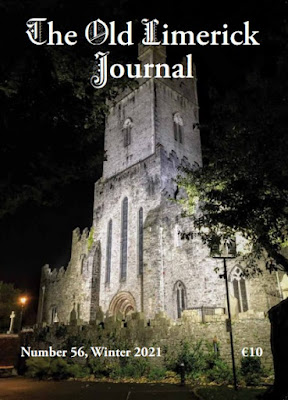
Labels:
Affane,
archaeology,
Askeaton,
Augustinians,
Ballingarry,
Bath,
Bristol,
Bruree,
Cappoquin,
Church History,
Co Limerick,
Dungarvan,
Keynsham,
Limerick Churches,
Local History,
Monasticism,
Rathkeale,
Somerset
Subscribe to:
Posts (Atom)