Showing posts with label Milan. Show all posts

07 February 2026

Cormac Comerford makes his
Olympic debut on the opening
day of the Winter Olympics

Team Ireland alpine skiier Cormac Comerford from Glenageary, Co Dublin, in Piazza Walther (Photograph: David Fitzgerald/ Sportsfile/ Irish Examiner)

Patrick Comerford

Cormac Comerford from Glenageary, Co Dublin, finished 34th in the men’s downhill today on the opening day of the Alpine skiing at the Milano Cortina Winter Olympics, where Franjo von Allmen from Switzerland delivered a sensational performance to win the first gold medal of the Games.

Cormac Comerford made his Olympic debut this afternoon in skiing’s queen event at the Stelvio Ski Centre in Bormio, finishing the 3,442-metre course in a time of 2:04.40. He started out last among the field and came 34th among the 36 starters, well pleased with his effort on a highly technical, and in parts treacherous, course.

‘It’s an incredible feeling to make my Olympic debut today in this weather, on this slope,’ he told The Irish Times. ‘To bring it down Stelvio is a huge achievement, coming from the artificial slope back home. There’s a huge sense of pride. I made a few mistakes in the run, it felt smoother in training, but that’s racing and I’m really proud to have brought it down.’

‘I’m excited to be here,’ he said. ‘If I’m proud, I hope I can make Ireland proud as well.’ He was the first member of Team Ireland to compete in this year’s Winter Olympics in Milan and Cortina when he hit the slopes on the opening day of the games.

Ireland has been sending teams to the Winter Olympics for many years, but it is 24 years since Dublin-born Clifton Wrottesley (Lord Wrottesley) came up one place shy of a medal for Ireland in the skeleton at the Salt Lake City Games in 2002.

Cormac Comerford’s Olympic scholarship meant fewer pressures in a sport that costs him €40,000 a year to compete in. This is important for him, as he remembers how hard it was when first started out professionally after starting to study engineering at TU Dublin (Technological University Dublin). His summer work included ‘a lot of sailing instruction and labour on construction sites.’

He says he spent too many of his early years on the circuit sleeping in bus stations and carting a ski bag the weight of his own body to different events and different countries in order to shave pennies off his budget.

It took him six years to qualify for his engineering degree because of the time spent away from home. He could, as he joked himself, be a doctor by now. But scholarships from Trinity, FBD and from the Olympic Federation of Ireland were critical in allowing him to stay on track and in pursuit of his dream.

He competed in the World Championships in 2017 for first time. He is now at his peak, among the top five per cent in the world, 23rd in the World Championships, ‘and hopefully going a lot higher.’

Cormac Comerford found that breaking into a sport where Ireland have no tradition was hard, and his achievements were often belittled. ‘I remember watching Shane O’Connor on the TV at the 2010 Olympics in Vancouver and thinking, ‘Imagine if I could do that, how cool would that be?’ So going into Milan-Cortina would be massive for me. To achieve that childhood dream would be the cherry on the cake.’

When Cormac Comerford was eight and growing up in Glenageary, his aunt first took him up the dry ski slopes in Kilternan in south Co Dublin. Now, 21 years later, after his fourth qualification attempt, Comerford is among the four Irish athletes taking part in Milano Cortina 2026.

Cormac Comerford … ‘It’s been a childhood dream of mine’ (Photograph: RTÉ)

The 25th Winter Olympics are spread across six locations in north Italy this year. They opened last night (6 February 2026) and continue for the next two weeks until Sunday 22 February. Cormac Comerford’s journey there has been has been a difficult one and his childhood dream of reaching the Olympics has been tested repeatedly over the years.

‘It’s been a childhood dream of mine, since I first put on a pair of skis, up at the Ski Club of Ireland. I fell in love with the sport, and when I got to watch Shane O’Connor at the Olympics in 2010, that’s when the seed was really sown’, he says.

Cormac is competing in all four events in Milano Cortina: the downhill, super-G, giant slalom and slalom. He has also competed in five World Championships, when he finished inside top-30 in the European Cup. The three other Irish athletes are Anabelle Zurbay (17), who was born in Minnesota; Thomas Maloney Westgård born on the island of Leka in Norway to a Galway mother and Norwegian father, and Ben Lynch, who has lived in Vancouver since he was three.

Cormac Comerford previously reached the minimal qualifying criteria in alpine skiing for Sochi 2014, Pyeongchang 2018, and Beijing 2022, but each time he missed out on the strict quota for Irish representatives. Yet he never let go of that dream. ‘Being an Irish ski racer can also be incredibly lonely, there aren’t many of us, it’s a really hard path to forge.’

‘There were a few turning points,’ he recalls, ‘like when I started in Dublin Institute of Technology (DIT), my whole career was hanging on me getting a scholarship there. Thankfully they believed in me, I got some extra support, and it was enough to help me keep the dream alive.’

None of his family are skiers. He grew up playing GAA underage with Cuala, alongside Con O’Callaghan, and was also involved in rugby, hockey, sailing, and surfing. But, ultimately, skiing came out on top.

His specialist event is the slalom, the mix of technical and physical demands, dodging between 50 or 60 gates, 8 to 11 metres apart, while flat-out downhill at 60 kph for between 40 seconds to a minute.

His first event was on Saturday, the day after the opening ceremony in the San Siro Stadium in Milan.

It is 34 years since Team Ireland first competed at the Winter Olympics, at Albertville 1992, and the four athletes selected for Milano Cortina bringing to 37 the number of Irish Winter Olympians. For Cormac, the lifelong dream is finally being realised.

Cormac Comerford works as a mechanical engineer in the off-season, and spends most of the winter travelling Europe, training and competing. He recalls how he spent too many of his early years on the circuit sleeping in bus stations and carting a ski bag the weight of his own body to different events and different countries in order to shave pennies off his budget.

Cormac Comerford grew up in Glenageary in south Dublin. He was a sporty child, lining out for Cuala in both GAA codes, and playing rugby at Newpark Comprehensive in Blackrock. His mother’s passion for sailing also meant he spent a lot of time on the water. But trips with his aunt to Ireland’s only artificial ski slope in Kilternan caught his imagination from the age of eight.

He loved the individuality of downhill skiing, its niche status in Ireland appealing because it meant Comerford could hone his craft under the radar. ‘There was no noise around the sport, especially in Ireland,’ he says. ‘It was just me in my own world with the racing. That's what really pulled me in and kept me hooked.’

He is competing in four different events at the Milano Cortina Winter Olympics and faces three more Alpine skiing events: on Wednesday (11 February) in the Super-G (Alpine Skiing) in Bormio; next Saturday (14 February), in the Giant Slalom Run 1 and 2 (Alpine Skiing) in Bormio; and on Monday 16 February in the Slalom Run 1 and 2 (Alpine Skiing), also in Bormio.

The closing ceremony is in Verona on Sunday 22 February.

Alpine skier Cormac Comerford from Glenageary … representing Ireland in skiing at the Winter Olympics in Milan (Photograph: Harry Murphy/Sportsfile)

21 July 2024

Saint Sophia in icons
with her daughters,
Faith, Hope and Love:
martyrs or pious myth?

Saint Sophia and her daughters Pistis, Elpis and Agape depicted in a fresco in the Church of the Transfiguration in Piskopianó in Crete (Photograph: Patrick Comerford, 2024)

Patrick Comerford

In recent weeks, I was reflecting in my prayer diary on my blog each morning on the icons in the new iconostasis or icon screen in the Orthodox Church in Stony Stratford.

There is a pattern and a set of traditional norms that decides the place and themes of icons in the icon screens in churches and the themes in the frescoes around the apse and behind and above the altar. But quite often many of the other icons and frescoes in churches are accidental or a random choice, reflecting the interests and piety of the commissioning priest, donors, parishioners or even the artists completing the icons and frescoes.

The new Church of the Transfiguration in the village of Piskopianó in the hills above Hersonissos in Crete, for example, is being gradually filled with new and interesting frescoes, with more added each time I return to visit the village over the years.

Because this is a very wide church, compared to its length, it has a large number of walls and pillars to be filled with frescoes, and it is interesting to see how their themes are being chosen thoughtfully and carefully.

One pillar has been filled with four figures I have often seen in churches in Greece but that I seldom see outside Greece: Saint Sophia and her daughters Pistis, Elpis and Agape.

For a long time I simply thought that was a pious or figurative representation of Wisdom as the mother of the three theological virtues, Faith, Hope and Love.

The name Sophia (Σοφία) means ‘wisdom’ in Greek. The Greek lettering over the other three figures in these icons names them as Pistis, Elpis, and Agape, or Πίστις (Faith), Ελπίδα (Hope) and Αγάπη (Love). In Latin their names would be Fides, Spes and Caritas.

I had always read these figures and their names in these icons and frescoes as allegorical or figurative – until I was back in Piskopianó some weeks ago. Then I heard of the tradition that these four were saints from Italy – a mother and her three daughters, who were martyrs for the Christian faith round the year 126 CE, during the reign of the Emperor Hadrian.

According to this tradition, Saint Sophia of Rome was the mother of Faith (12), Hope (10) and Love (9). An official named Antiochus denounced them to the Emperor Hadrian (117-138), who ordered them to be brought to Rome. Realising that they would be taken before the emperor, the mother and daughters prayed for the strength not to fear torture and death.

When they were brought before the emperor, all present were amazed at their composure. Summoning each sister in turn, Hadrian demanded they offer sacrifices to the goddess Artemis. The girls remained unyielding, and the emperor ordered them to be tortured. They were burned over iron gratings, physically mutilated, sexually assaulted, and thrown into red-hot ovens and cauldrons of boiling tar, and yet they survived. The youngest child, Love, was tied to a wheel and beaten with rods until her body was covered with bloody welts.

Saint Sophia was forced to watch their suffering, but remained courageous and urged her daughters to endure their suffering. All three girls were then beheaded by the sword.

The emperor allowed Sophia to take away the bodies of her daughters. She placed them in coffins, loaded them onto a wagon, drove beyond the city limits, and buried the girls on a high hill. Saint Sophia sat by the graves of her daughters for three days, and finally died. Other Christians buried her beside her daughters, and all four were soon venerated as martyrs.

Pistis, Elpis, and Agape, or Πίστις (Faith), Ελπίδα (Hope) and Αγάπη (Love), are known in Latin as Fides, Spes and Caritas (Photograph: Patrick Comerford, 2024)

However, there are conflicting traditions about Saint Sophia and her daughters, and whether Saint Sophia of Rome is to be identified with Saint Sopia of Milan. Another tradition says Saint Sophia was a martyr during the Diocletian Persecution (303-304). This conflicts with widespread tradition in Greek, Armenian and Georgian sources that place Sophia and her daughters in the reign of Hadrian and that say she died not as a martyr but mourning her martyred daughters.

The veneration of Saint Sophia of Milan became indistinguishable from that of Saint Sophia of Rome. References from the time of Gregory the Great suggest two groups of martyrs, mother and daughters, one buried on the Aurelian Way and the other on the Via Appia. Their tomb in a crypt beneath the church afterwards erected to Saint Pancratius was visited by pilgrims from the seventh century on.

The relics were moved to the women’s convent at Eschau in Alsace in 778, and from there the cult spread to Germany. There is a 14th-century fresco of the saints in a chapel in Cologne Cathedral, and Saint Sophia is depicted on a column in Saint Stephen’s Cathedral, Vienna, dating from the 15th century. Her feast day of 15 May was observed in German, Belgian and English breviaries in the 16th century.

Although earlier editions of the Roman Martyrology commemorated Faith, Hope and Love on 1 August and their mother Sophia on 30 September, the present catalogue of saints in the Roman Catholic Church has no feast dedicated to these three girls or their mother. The only Saint Sophia included today is an early Christian virgin martyr of Picenum in Italy, commemorated with her companion Vissia on 12 April.

An early Christian martyr, Saint Faith (Fides) of Aquitania in southern Franc, is celebrated on 6 October; a Saint Hope (Spes), an abbess of Nursia who died ca 517, is commemorated on 23 May; and Saint Charity (Caritas) is included among saints with similar names on 16 April and 7 September. Their feast day of 1 August was not entered in the General Roman Calendar, and they have since been removed from the Roman Martyrology.

Perhaps the veneration of the three saints named after the three theological virtues arose in the sixth century, based on common inscriptions found in the catacombs. Critical scholarship now agrees that the tradition is invented, part of a tradition inspired and developed through pious readings of Latin inscriptions referring to women who were named after Holy Wisdom and after the theological virtues of Faith, Hope and Love.

But all four – Wisdom, Faith, Hope and Love – remain a pillar of the Church, at least in Piskopianó.

Wisdom, Faith, Hope and Love remain a pillar of the Church in Piskopianó in Crete (Photograph: Patrick Comerford, 2024)

22 June 2024

Daily prayer in Ordinary Time 2024:
44, 22 June 2024

The icon of Saint Ambrose in the new iconostasis in the Greek Orthodox Church in Stony Stratford (Photograph: Patrick Comerford, 2024)

Patrick Comerford

Tomorrow is the Fourth Sunday after Trinity (Trinity IV, 23 June 2024). The calendar of the Church of England in Common Worship today (22 June) remembers Saint Alban (ca 250), first Martyr of Britain.

Before today begins (21 June 2024), I am taking some quiet time this morning to give thanks, for reflection, prayer and reading in these ways:

1, today’s Gospel reading;

2, a reflection on the icons in the new iconostasis or icon stand in the Greek Orthodox Church in Stony Stratford.

3, a prayer from the USPG prayer diary;

4, the Collects and Post-Communion prayer of the day.

Saint Ambrose’s right hand raised in blessing and his left hand holding the Bible … a detail in the icon of Saint John the Forerunner in the new iconostasis in Stony Stratford (Photograph: Patrick Comerford, 2024)

Matthew 6: 24-34 (NRSVUE):

[Jesus said:] 24 “No one can serve two masters, for a slave will either hate the one and love the other or be devoted to the one and despise the other. You cannot serve God and wealth.

25 “Therefore I tell you, do not worry about your life, what you will eat or what you will drink, or about your body, what you will wear. Is not life more than food and the body more than clothing? 26 Look at the birds of the air: they neither sow nor reap nor gather into barns, and yet your heavenly Father feeds them. Are you not of more value than they? 27 And which of you by worrying can add a single hour to your span of life? 28 And why do you worry about clothing? Consider the lilies of the field, how they grow; they neither toil nor spin, 29 yet I tell you, even Solomon in all his glory was not clothed like one of these. 30 But if God so clothes the grass of the field, which is alive today and tomorrow is thrown into the oven, will he not much more clothe you – you of little faith? 31 Therefore do not worry, saying, ‘What will we eat?’ or ‘What will we drink?’ or ‘What will we wear?’ 32 For it is the gentiles who seek all these things, and indeed your heavenly Father knows that you need all these things. 33 But seek first the kingdom of God and his righteousness, and all these things will be given to you as well.

34 “So do not worry about tomorrow, for tomorrow will bring worries of its own. Today’s trouble is enough for today.”

An icon of Saint Ambrose near the church door in Stony Stratford (Photograph: Patrick Comerford, 2024)

The Stony Stratford iconostasis 7: Saint Ambrose of Milan:

Over the last few weeks, I have been watching the building and installation of the new iconostasis or icon screen in the Greek Orthodox Church in Stony Stratford. In my prayer diary over these weeks, I am reflecting on this new iconostasis, and the theological meaning and liturgical significance of its icons and decorations.

The lower, first tier of a traditional iconostasis is sometimes called Sovereign. On the right side of the Royal Doors or Beautiful Gates facing the people is an icon of Christ, often as the Pantokrator, representing his second coming, and on the left is an icon of the Theotokos (the Virgin Mary), symbolising the incarnation. It is another way of saying all things take place between Christ’s first coming and his second coming.

Other icons on this tier usually include depictions of the patron saint or feast day of the church, Saint John the Baptist, one or more of the Four Evangelists, and so on.

The six icons on the lower, first tier of the iconostasis in Stony Stratford depict Christ to the right of the Royal Doors or Beautiful Gates, as seen from the nave of the church, and the Theotokos or Virgin Mary to the left. All six icons depict (from left to right): the Dormition, Saint Stylianos, the Theotokos, Christ Pantocrator, Saint John the Baptist and Saint Ambrosios.

The church in Stony Stratford is dedicated to Saint Ambrosios (Ambrose) and Saint Stylianos, and both saints are depicted in the new iconostasis in the church.

Saint Ambrose (339-397) is a Doctor of the Church, Bishop of Milan, and strongly influenced Saint Augustine. He was born in Trier into an aristocratic Roman family. After his father’s death he went to Rome with his mother and brother. He was trained as a lawyer, and was appointed the governor of northern Italy, with his headquarters in Milan.

He was a highly educated and intellectual man who sought to harmonise Greek and Roman thinking with the Christian faith. While Ambrose was the Governor of Milan, Auxentius was the Bishop of Milan. Auxentius was an excellent public speaker and had a forceful personality, but he was a follower of Arius and accepted the Arian heresy which denied the divinity of Christ.

Although the Council of Nicaea reasserted the Orthodox teachings on the divinity of Christ, Bishop Auxentius clung to Arianism and became notorious for forcing clergy throughout the region to accept the Arian heresy.

When Bishop Auxentius died and the See of Milan fell vacant, it seemed likely that rioting would erupt, because the city was evenly divided between the Arians and the Athanasians. Ambrose, who had not yet been baptised, went to the meeting where the election was to take place, and appealed to the crowd for order and goodwill on both sides.

But his deep understanding and love of the Christian faith were well-known throughout Milan, and the Milanese mob saw him as the most logical choice to succeed Auxentius as bishop. Although he was still a catechumen, a child’s voice proclaimed Ambrose bishop, and – against his will but with the support of the Emperor Valentinian – he was elected Bishop of Milan with the support of both sides.

Eight days after his baptism, Ambrose was ordained priest and consecrated bishop on 7 December 374, a date that eventually became his liturgical feast.

As Bishop of Milan, Saint Ambrose began his ministry by giving his possessions to the poor and to the Church. He devoted himself wholeheartedly to the study of theology, and looked to the writings of Greek theologians like Saint Basil for help in explaining the traditional teachings of the Church to the people during times of doctrinal confusion.

Like the fathers of the Eastern Church, Saint Ambrose drew from the intellectual reserves of pre-Christian philosophy and literature to make the faith more comprehensible to his hearers. This harmony of faith with other sources of knowledge served to attract, among others, the young professor Aurelius Augustinus – a man Ambrose taught and baptised in 387 and who became known as Saint Augustine of Hippo.

Saint Ambrose lived a simple lifestyle, gave away his wealth, wrote prolifically, preached every Sunday and celebrated the Eucharist each day. He found time to counsel many public officials, those who were inquiring about the faith or who were confused, and penitent sinners.

He resisted the interference of the secular powers in the rights of the Church, opposed heretics, and was instrumental in bringing about the conversion of Augustine. He composed many hymns, promoted sacred chant, and took a great interest in the Liturgy.

By his preaching, he converted his diocese to the Athanasian position, except for the Goths and some members of the imperial household. Among those who plotted to remove him from the diocese were the Western Empress Justina and a group of her advisers, who opposed the tenets of the Nicene Creed and sought to impose Arian bishops in Italy. Once, when the Empress ordered him to turn over a church to her Gothic troops so the Arians among them could worship, Ambrose refused, and he and his people occupied the church.

Ambrose composed Latin hymns in the rhythm of ‘Praise God from whom all blessings flow,’ and taught them to the people, who sang them in the church as the soldiers surrounded it. The Goths were unwilling to attack a hymn-singing congregation, and Ambrose won that dispute.

Ambrose confronted Maximus, the murderer of the Emperor Gratian. When Maximus refused to do penance, Ambrose excommunicated him.

Saint Ambrose also displayed courage when he publicly denied Communion to the Emperor Theodosius, who had ordered the massacre of 7,000 people in Thessaloniki. It was on this occasion that allusion was made to King David as a murderer and adulterer, and Ambrose retorted: ‘You have followed him in sin, now follow him in repentance.’

The chastened Theodosius took Ambrose’s rebuke to heart, publicly repenting of the massacre and doing penance for the murders. He reconciled himself with the Church and the bishop, who attended the emperor on his deathbed and spoke at his funeral.

The canticle Te Deum Laudamus (‘We praise thee, O God’) was long thought to have been composed by Ambrose in thanksgiving for the conversion of Augustine. He is also said to have been the author of what we now know as the Athanasian Creed.

Ambrose is the first writer of hymns with rhyme and meter, and northern Italy still uses his style of plainchant, known as Ambrosian chant, rather than the more widespread Gregorian chant.

His 23 years in episcopal ministry had turned a deeply troubled diocese into an exemplary outpost of Christianity. His writings remained an important point of reference for the Church well into the mediaeval era and beyond.

Saint Ambrose died on 4 April 397, but because this date so often falls in Holy Week or Easter Week he is commonly remembered on the anniversary of his consecration as a bishop on 7 December. The Greek Orthodox Community of Milton Keynes was founded on 7 December 1989.

The Fifth Ecumenical Council of the Church in Constantinople in 553 named Saint Ambrose and Saint Augustine among the foremost ‘holy fathers’ of the Church, whose teaching all bishops should ‘in every way follow.’ Ambrose is regarded as one of the Eight Great Doctors of the Church. The list includes four Latin Doctors – Ambrose, Jerome, Augustine, and Pope Gregory the Great, and four Greek Doctors – Athanasius, John Chrysostom, Basil the Great, and Gregory of Nazianzus.

The three icons to the right on the lower, first tier of the iconostasis in Stony Stratford depict (from left) Christ Pantocrator, Saint John the Forerunner and Saint Ambrosios (Photograph: Patrick Comerford, 2024)

Today’s Prayers (Saturday 22 June 2024):

The theme this week in ‘Pray With the World Church,’ the Prayer Diary of the Anglican mission agency USPG (United Society Partners in the Gospel), has been ‘Windrush Day.’ This theme was introduced last Sunday with reflections by the Right Revd Dr Rosemarie Mallett, Bishop of Croydon.

The USPG Prayer Diary today (Saturday 22 June 2024, Windrush Day) invites us to pray:

We pray for the Windrush generation and their descendants. We acknowledge who they are, their gifts, culture, and talents. We thank You for the many contributions they have made to our society, and we pray a blessing over them and their generations.

The Collect:

Eternal Father,
when the gospel of Christ first came to our land
you gloriously confirmed the faith of Alban
by making him the first to win a martyr’s crown:
grant that, following his example,
in the fellowship of the saints
we may worship you, the living God,
and give true witness to Jesus Christ your Son our Lord,
who is alive and reigns with you,
in the unity of the Holy Spirit,
one God, now and for ever.

Post Communion Prayer:

God our redeemer,
whose Church was strengthened by the blood of your martyr Alban:
so bind us, in life and death, to Christ’s sacrifice
that our lives, broken and offered with his,
may carry his death and proclaim his resurrection in the world;
through Jesus Christ our Lord.

Collect on the eve of Trinity IV:

O God, the protector of all who trust in you,
without whom nothing is strong, nothing is holy:
increase and multiply upon us your mercy;
that with you as our ruler and guide
we may so pass through things temporal
that we lose not our hold on things eternal;
grant this, heavenly Father,
for our Lord Jesus Christ’s sake,
who is alive and reigns with you,
in the unity of the Holy Spirit,
one God, now and for ever.

The lower, first tier of the iconostasis in Stony Stratford, with the central doors open during the Divine Liturgy, and with the icon of Saint Ambrose at the right end of the icons (Photograph: Patrick Comerford, 2024)

Last Saturday’s introduction to the Stony Stratford iconostasis

Yesterday’s reflection

Continued tomorrow

Saint Ambrose among seven Fathers of the Church above the south door of Lichfield Cathedral (from left): Saint Augustine, Saint Jerome, Saint Ambrose, Saint Gregory, Saint John Chrysostom, Saint Athanasius and Saint Basil (Photograph: Patrick Comerford)

Scripture quotations are from the New Revised Standard Version, Updated Edition copyright © 2021, National Council of the Churches of Christ in the United States of America. Used by permission. All rights reserved worldwide.

30 March 2022

23 Albert Grant, the Victorian
fraudster born in poverty
in Dublin’s slums

Baron Albert Grant was born Abraham Zachariah Gotheimer in poverty in Dublin on 18 November 1831

Patrick Comerford

When Abraham Zachariah Gotheimer was born on 18 November 1831, his parents were living in abject poverty in a lane off Fleet Street, Dublin. Yet he grew up to become one of the richest men in England, a public benefactor, a Conservative MP, an Italian baron – and one of the greatest political and banking fraudsters of the Victorian era.

How did this poor-born babe from inner city Dublin become so wealthy and such a fraud?

Throughout much of the nineteenth century, as Albert Grant, he was engaged in banking and business frauds on a global scale. Although the scale of his frauds was extraordinary in his day, he was born into conditions of stark poverty and the respectable politician he defeated by bribery and buying votes was also born in Dublin.

Abraham’s father, Berton Gottheimer, was born Dov Behr ben Moshe in 1796 in Pozna, then in Prussia and now in Poland. In his teens, he was a Jewish refugee, first living in Liverpool. Abraham’s mother, Julia Zachariah, was born in Portsmouth, the daughter of Jewish refugees from Germany. The couple moved to Dublin by 1829, where Berton eked out a precarious living as a poor pedlar.

When Julia gave birth to Abraham in a lane off Fleet Street in Dublin, the family was so poor they had to beg their neighbours to provide swaddling clothes for the baby.

The child was circumcised by Alexander Lazarus Benmohel, president of the synagogue in Stafford Street (now Wolfe Tone Street), Dublin, and his ‘sandak’ or godfather was Joseph Wolfe Cohen, also from Pozna and a later president of the synagogue in Dublin. Abraham began his working life in Dublin as a humble clerk and then worked for a retailer who sold imported French musical boxes, clock parts and other pieces. The family moved to London, where Berton became a partner in a business importing fancy goods and a commission agent.

But Abraham soon denied his humble origins in the slums of Dublin, his lowly birth and his refugee parents. He claimed he was educated in London and Paris, and by 1851, he was working as a merchant’s clerk and then a travelling salesman of fine wines. He was baptised into the Church of England and changed his name to Albert Grant before marrying Emily Isabella Robinson in 1856. Emily was the daughter of Skeffington Robinson from Antrim, a slave-owning sugar planter in Dominica.

As Albert Grant, he was admitted as a freeman of the city of London, and by 1858, he had established himself as a banker and discount agent in Lombard Street. He set up the Mercantile Discount Company in 1859. Concerns were aired about the large salaries and beneficial financial guarantees Grant paid himself and his partners.

When the company failed in 1861 with liabilities of £1.5 million, Grant escaped any personal loss. He was soon financing railway schemes in Yorkshire, Essex and Wales, and in 1863, he set up Crédit Foncier and Mobilier of England to launch ventures for which he found investors by using directories and targeting financially naïve groups, including Anglican clergy and widows.

Soon Grant had built an opulent house at Cooper’s Hill near Egham, Surrey, designed in the Gothic revival style by F & H Francis in 1865. He was selected that year as the Conservative candidate in Kidderminster, standing against the sitting Liberal MP, Dublin-born Colonel Luke White (1829–1888) of Luttrellstown Castle. White was a Junior Lord of the Treasury and had previously been MP for County Clare (1859–60) and County Longford (1861–2). During the campaign, Grant was denounced as ‘a fraudulent adventurer’, but he was elected and held the seat for three years.

Victor Emmanuel II of Italy gave Grant the hereditary title of baron in May 1868. Supposedly this was in recognition of Grant’s role in raising finances to build the Galleria Vittorio Emanuele in Milan, one of the largest and earliest fashionable shopping centres in Europe. However, even then, it was alleged that Grant had bought the title. Later, when he was made a Commander of the Portuguese Order of Christ, it was alleged once again that he had bought the honour.

Each of the companies Grant set up in 1864–72 collapsed amid controversy and allegations of fraud. Crédit Foncier fell in July 1868 when Grant left the company, amidst allegations that large commissions had been improperly pocketed by the directors. As the scandals gathered steam, he decided not to contest the general election that year, and Thomas Lea regained Kidderminster for the Liberals.

Between 1871 and 1874, Grant floated many British and foreign companies, including the Belgian Public Works, Cadiz Waterworks, Central Uruguay Railway, Labuan Coal Company, Imperial Bank of China, Imperial Land Company of Marseilles, Lima Railways, Odessa Waterworks and Russian Copper Company. Most of these ventures later proved to be fraudulent.

Grant financed the construction of the North Wales Narrow Gauge Railways (Moel Tryfan Undertaking) in 1872. By then, he was immensely wealthy and that year, he bought Horstead Hall, near Norwich. A year later, he acquired a large slum area south of Kensington Gardens and built Kensington House, a ninety-room Italianate palace, at a cost of almost £350,000.

When a general election was called in early 1874, Grant stood again as the Conservative candidate in Kidderminster and was returned with a majority of 111.This was the only modern British election when a party has been defeated despite winning an absolute majority of the popular vote. The Liberals, with 1,281,159 votes, received 242 seats, while the Conservatives with 1,091,708 votes, received 350 seats. The Conservatives were a minority party in Ireland, Scotland and Wales, but still formed a majority, mainly because so many English seats were not contested.

Grant boosted his public image that year when he presented Leicester Square to the people of London on 3 July 1874.The square, then known as Leicester Fields, had long been in a dilapidated state and had become a dumping ground for dead cats and dogs. Grant bought out the rights of the many, individual owners, planted an ornamental garden, erected a statue of Shakespeare and busts of Isaac Newton, William Hogarth, Joshua Reynolds and John Hunter, and transferred ownership of the site to the Metropolitan Board of Works at a personal cost of £28,000. On the plinth of Shakespeare’s statue, he is described as ‘Albert Grant, Esq, MP’ and not as Baron Albert Grant.

Meanwhile, however, Grant and his election agents were accused of bribery and of buying votes with drinks and food. His declared election expenses were only £300, but he had spent over £1,200 during the campaign. In a ruling in July 1874, Grant was unseated and ordered to pay costs.

Grant was constantly pursued by creditors from 1876 and was declared bankrupt in 1877. He tried to put a railway company in Wales that he had helped finance into receivership over a loan of £7,000, although he had made a clear profit of £8,800 from the project. The company appealed and secured a ruling that it was not liable for the debt and Grant lost the £7,000. He was also involved in the fraudulent sale of shares in an exhausted silver mine in Utah after making a profit of £200,000 from the flotation.

He stood again in Kidderminster in 1880, but was defeated by the Liberal candidate, John Brinton. Brinton’s first wife, who died in 1863, Ann Oldham, was from Dublin; his second wife, Mary Chaytor, was from Limerick.

Grant became the model for the corrupt Augustus Melmotte in Anthony Trollope’s The Way We Live Now. The large house he had built in Kensington was demolished in 1883, the site sold and the marble staircase bought by Madame Tussaud’s. His last bank failed with liabilities of £800,000 and he was back in the bankruptcy court in 1885.

Once one of the richest men in Britain, Grant spent his last years in poverty, and another order was made against him just days before he died in Bognor on 30 August 1899 at the age of 67.As his coffin was carried to his grave, a rainstorm began and half the mourners decided to stay inside the church. The burial rites at his graveside were very brief.

Further Reading:

Louis Hyman, The Jews of Ireland (Shannon, 1972).
Paul H. Emden, Money Powers of Europe in the Nineteenth and Twentieth Centuries (London, 1937).
Thomas Secombe, ‘Grant, Albert’, DNB, 1901 Supplement, Vol 2, 338–9.

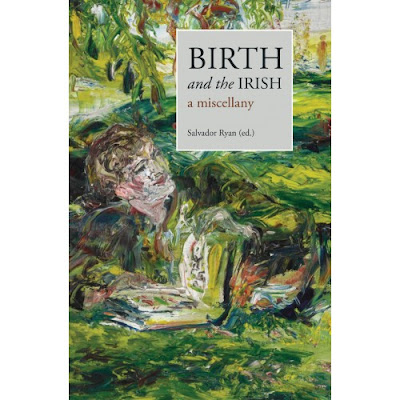
‘Albert Grant, the Victorian Fraudster, Born in Poverty in Dublin’s Slums’ is Chapter 23 in Salvador Ryan (ed), Birth, Marriage and Death among the Irish, Dublin: Wordwell, 288 pp, ISBN: 978-1-913934-61-3, €25, pp 104-107.

Birth and the Irish … a new book edited by Professor Salvador Ryan of Maynooth